by Tom Gurney
Tom Gurney BSc (Hons) is an art history expert with over 20 years experience
Email: tomgurney1@gmail.com / Phone: +44 7429 011000
Queen Victoria and Prince Albert at the Bal Costumé of 12 May 1842: Introduction
Edwin Landseer's double portrait presents Queen Victoria and Prince Albert as monarchs from another century. Dressed as Philippa of Hainault and Edward III, they stand beneath a heraldic canopy, their joined hands bringing a personal connection into a setting of conspicuous ceremony. The picture commemorates the costume ball held at Buckingham Palace on 12 May 1842, but its making extended to 1846. Commissioned by Victoria and painted in oil on canvas, it remains in the Royal Collection as RCIN 404540.[1][2]
The disguise does not conceal the sitters' identities. Instead, it places their familiar faces inside an elaborate reconstruction of royal history. Brocade, fur, crowns, chairs and hanging cloth establish a past that the pair can temporarily inhabit. Small attendants gather the queen's train while the two principal figures occupy almost the whole height of the composition. Landseer turns a crowded evening's entertainment into a concentrated image of a royal couple, making historical costume carry the authority and intimacy of portraiture.[3]
At a Glance
This work across Edwin Landseer’s career
The Cat's Paw
c. 1824 [5]The Hunting of Chevy Chase
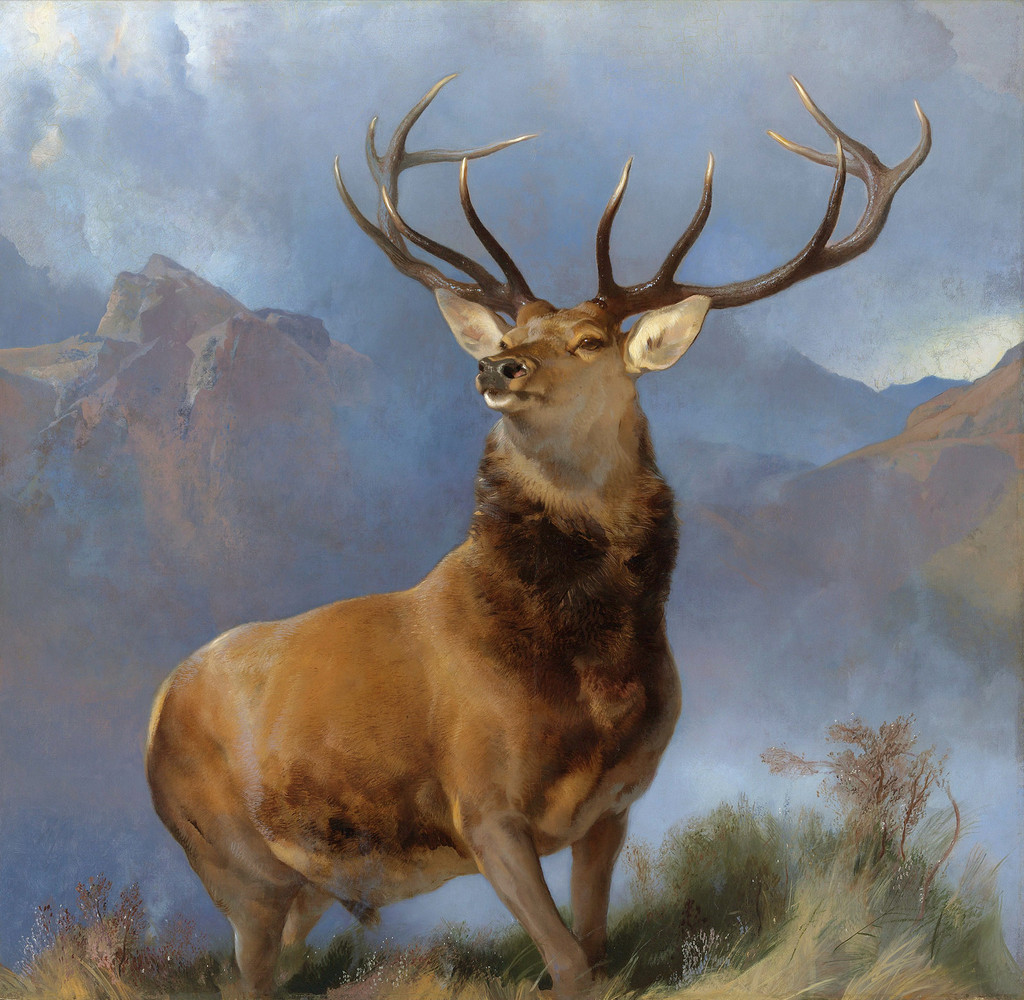
1825–26 [6]The Monarch of the Glen
about 1851 [11]Contents
- Two figures and one central gesture
- The work of the attendants
- A room dressed for history
- Preparing to become Philippa and Edward
- Historical knowledge and its limits
- Vouillon, Laure and the richness of cloth
- Splendour and the claim to useful spending
- Victorian bodies inside medieval roles
- From sittings to a finished canvas
- The ball in print and paint
Two figures and one central gesture
Victoria stands to the left, facing almost directly outwards. Her pale face and shoulders rise above the bright, shaped bodice, while the red skirt gives her lower body a broad, relatively simple form. Albert is taller and more expansive, his head turned towards her in profile. His patterned robe and open cloak occupy much of the right side. The two figures are therefore balanced without being symmetrical: one meets the viewer more directly, while the other turns across the picture and supplies a strong lateral movement.[3]
Their hands meet near the centre, just above Victoria's waist. This small action crosses the interval between the large masses of their clothes. Albert's extended arm leads towards the queen, and her hand answers it without disturbing the uprightness of her pose. The gesture joins figures whose faces do not turn into a mutual exchange. It allows companionship to become visible while the portrait retains its formal address. The couple can appear connected to each other and available to be seen in state at the same time.[3]
The hands also provide a useful pause within the richness of the surface. Around them, embroidery, jewellery, pale fur and gold fabric compete for attention. The relatively clear forms of fingers and cuffs make a smaller, more comprehensible point of contact. Landseer does not need to explain it through an elaborate incident. Its visual purpose is sufficient: the gesture holds together a composition in which almost everything else emphasises the individual splendour of each costume.[3]
At the bottom, the stepped dais carries the figures towards the spectator. Victoria's pointed shoe projects beneath her skirt; Albert's extends farther forward from the patterned robe. These small flashes of red repeat the larger areas of the skirt and cloak, giving the clothing a bodily termination. The sitters are not dissolved into their garments, despite the quantity of material surrounding them. Faces, hands and feet establish a sequence of human points within an image otherwise dominated by the workmanship and weight of costume.[3]
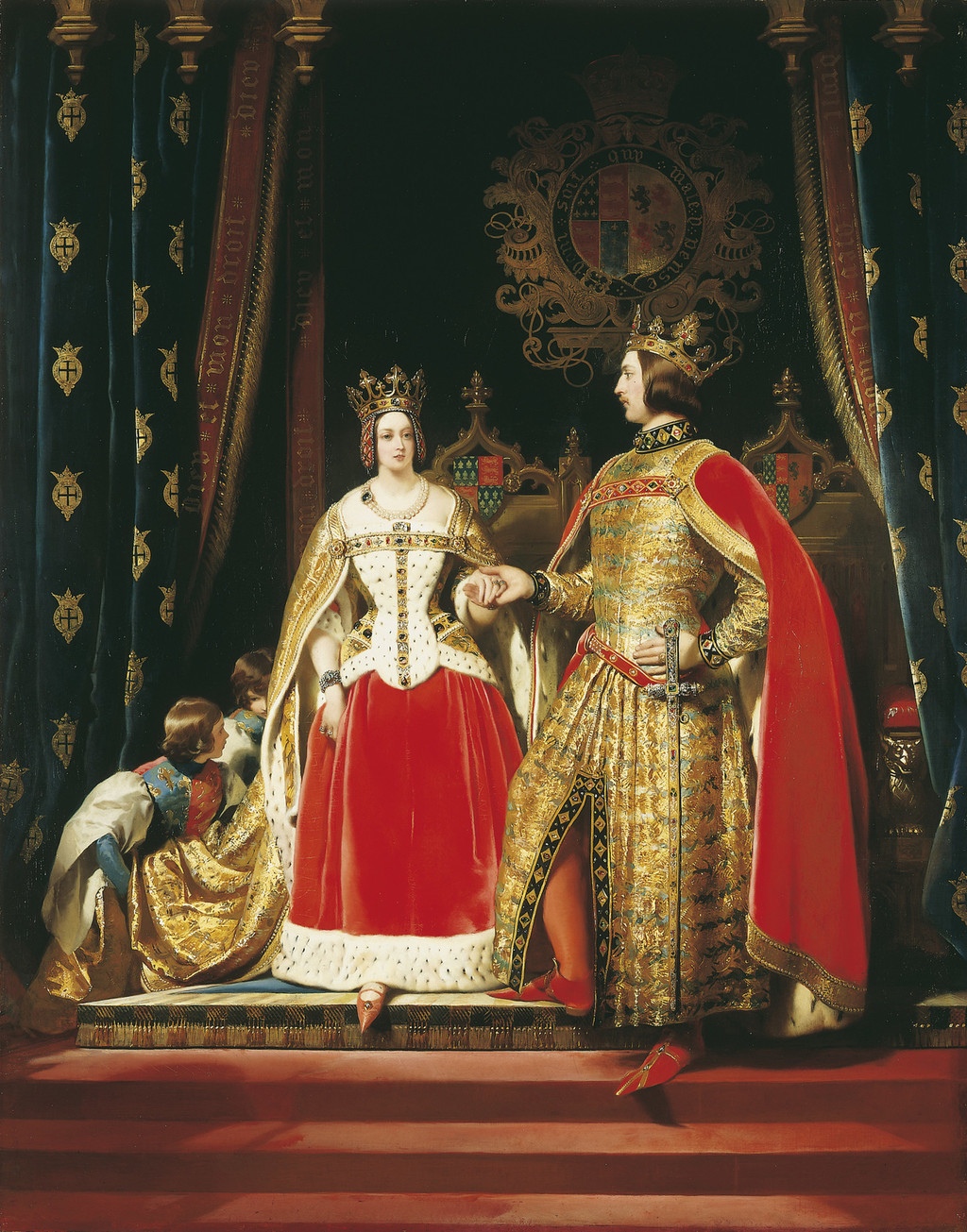
Queen Victoria and Prince Albert at the Bal Costumé of 12 May 1842. Royal Collection. Image source. Public domain.
The work of the attendants
Two small attendants appear at the lower left, partly absorbed into the folds of the queen's mantle. One bends forward, looking upwards, while the other is more deeply obscured. Their size and low position make the difference in rank visible without requiring a separate narrative. The royal couple can stand upright because others handle the material that would impede their movement. The train is both an ornament and something that must be carried, gathered and kept clear of the floor.[3]
The nearer attendant's pale sleeve makes a bright diagonal below Victoria's arm. It leads into the gold fabric spreading behind her, where changes in light reveal the mantle's folds. His movement prevents this corner from becoming a motionless heap of decoration. There is an action taking place within the drapery, and the viewer can understand why the cloth has accumulated there. The portrait presents splendour through the practical service that sustains it, even though the servants themselves remain subordinate in scale and position.[3]
This difference between effortless appearance and supporting labour extends beyond the pictured attendants. The costumes were made by people whose work is not visible as individual action on the canvas. The Illustrated London News explicitly credited Vouillon and Laure for the queen's dress, while describing the materials that Spitalfields weavers supplied.[14] Landseer shows the finished result rather than the workshop. Yet the train-bearers offer a point at which the labour of managing royal appearance enters the image itself, close to the spectator and below the principal figures.
A room dressed for history
The hanging cloths create a dark enclosure around the bright figures. Vertical strips at either side and the curved fall above Albert give the pair a framed space within the painting. Behind their heads, the chairs introduce pointed forms and heraldic colour, while the large emblem above them extends the royal identities into the setting. These objects are not distant background information. They stand close enough to the sitters to make costume, furniture and hanging fabric parts of one continuous presentation.[3]
The event took place in Buckingham Palace's Throne Room, rearranged for the occasion. The contemporary newspaper described the removal of the ordinary throne and the creation of a setting with Gothic chairs, tracery and purple velvet, carrying the arms of England and France.[14] Landseer's portrait preserves the essential idea of this transformation. A modern royal room had been made to accommodate an earlier court, so that the guests could encounter Victoria and Albert within a setting consonant with their assumed roles.
The royal arms of Edward III, combining French and English quarterings, reinforce that historical identification.[1] Their position above the couple gives the impersonation a structure larger than either body. The sitters wear crowns, but the canopy and heraldry supply an environment in which those crowns belong. The effect depends on several forms of recognition working together: the viewer sees the contemporary sovereign and her husband, reads their costumes as historical, and finds the same historical claim repeated in the furniture and cloth behind them.[3]
The setting also constrains movement. The dais, chairs and heavy hangings leave little suggestion of an open ballroom beyond. Landseer concentrates attention on the couple's appearance before us, rather than on the circulation of hundreds of guests. This is one reason the image can feel poised and still even though it commemorates a dance. Its immediate space is the place of presentation, where the royal figures are looked at, rather than the larger room in which the evening's varied movements took place.[3]
Preparing to become Philippa and Edward
Victoria's letter to her uncle Leopold on 19 April 1842 reveals how much preparation the historical appearance required. She described herself as bewildered by the arrangements, explaining that she and Albert would become Philippa and Edward III and that much of the court would wear the dress of their period. Silks, drawings and crowns all demanded decisions. Her insistence on correctness coexisted with impatience at the volume of questions about clothes.[15] The letter brings planning and choice into an image whose finished surface gives little sign of either.
That private account differs in tone from the public rhetoric surrounding the ball. The queen did not simply announce a complete vision that others then executed. Her description suggests a succession of proposals and objects to consider, with the historical effect dependent on many decisions. The portrait's apparent unity conceals that process. The colours, shapes and ornaments have become a coherent pair of costumes, but before they could be worn they existed as competing possibilities in drawings, samples and discussions.[3][15]
The distinction between the royal party and the other guests was deliberate. Planché recalled that the household and great officers were to wear the dress of Edward III's reign, while the rest of the company could choose another age or country, provided that the costume had historical authority. National dress was permitted, whereas merely fanciful or emblematic disguises were excluded.[16] The ball was consequently more varied than a gathering in which every guest attempted the same fourteenth-century style. A particular historical court stood within a much wider assembly of periods and places.
The Illustrated London News described the staged meeting of the courts of Edward and Philippa and Anne of Brittany, the latter headed by the Duchess of Cambridge. Heralds and ushers marshalled the groups, which passed before the sovereigns and formed for their dances.[14] These were acts of organised representation. Their sequence gave the gathering an intelligible order, enabling people in different kinds of dress to appear as groups rather than as an accidental assortment of expensive costumes.
Historical knowledge and its limits
Planché's account shows that a demand for accurate dress created practical problems. In his memoir he described advising the Cambridge royal group and other members of the aristocracy, drawing on the material he had assembled for his costume histories and editions of earlier works. Familiar theatrical wardrobes did not necessarily contain suitable examples from Edward III's reign.[16] Historical knowledge had to be sought, interpreted and converted into things that could be made and worn. It was not enough to request something vaguely old-fashioned.
The costumes drew authority from medieval effigies, including those of Edward III and Philippa at Westminster Abbey.[1][2] Such sources made the impersonations recognisable, but they did not remove the need for interpretation. A sculpted royal body offered a model for robes, crowns and arrangement; the living wearer still required materials, fastening, fit and freedom to stand or move. The passage from stone to clothing was therefore a creative undertaking, even where historical correctness remained the stated aim.
Planché's recollections also preserve the pressure placed on an expert whose knowledge became fashionable. He received elaborate questions from people with whom he had little or no acquaintance and had to reconcile their wishes with the evidence he could find.[16] The significance lies beyond the humour of an antiquary besieged by aristocrats. A royal entertainment briefly made specialist knowledge necessary to social appearance. The ability to look correct depended on someone else's command of books, images and distinctions between different periods.
The resulting portrait should therefore be understood as an image of historical selection. Landseer presents a persuasive ensemble, but its persuasiveness is not equivalent to a complete reconstruction of fourteenth-century dress. The costumes had to serve the bodies, expectations and occasions of the 1840s. Their historical references and their modern uses remain visible together, allowing the picture to reveal how the past was made present rather than merely how the past had once looked.[3][16]
Vouillon, Laure and the richness of cloth
The newspaper's account places the making of Victoria's costume in the hands of Vouillon and Laure. It singled out the contribution of Laure, identified as his sister, as well as describing the firm's experience in elaborate dress.[14] That credit restores particular makers to a scene easily discussed only through the royal wearers. Historical advice could establish a design's authority, but the finished appearance also depended on practical judgement about cutting, combination, ornament and the behaviour of costly cloth.
The report described a red velvet skirt with a short train, blue-and-gold brocade, pale fur and a mantle woven with gold and silver effects. It emphasised that both the mantle and brocade came from Spitalfields.[14] These descriptions help explain the different kinds of brightness in the painting. The red skirt forms a relatively continuous field, while the mantle breaks into small reflections and folded planes. Pale spotted trimming defines edges and divides the costume into recognisable parts, preventing its gold surfaces from becoming an undifferentiated blaze.[3]
Albert's costume offers a related but differently arranged richness. The contemporary description identified a scarlet velvet cloak lined with fur and a robe combining gold, blue and satin silk.[14] In the portrait, the cloak makes a broad red boundary down the right-hand side, while the robe carries a dense pattern across the chest and legs. The open fall of the cloak allows both kinds of material to remain visible. It enlarges the figure without hiding the garment whose intricacy contributes so much to his historical appearance.[3]
The contrast between the two costumes also organises the pair. Victoria's largest red area lies low and central; Albert's extends high and outwards. Gold spreads behind the queen in the train but across the prince's body in the robe. Similar colours are therefore redistributed rather than simply repeated. Landseer can make the costumes belong together while preserving the distinction between their wearers. The bright surfaces communicate an association before the viewer has identified every object or understood the historical models behind them.[3]
Jewels add a more concentrated kind of emphasis. They gather around the necks, crowns, cuffs and borders, linking faces and hands to the elaborate clothing. The newspaper treated their value and brilliance as part of the evening's spectacle.[14] In the painting, their immediate function is visual: small points of light punctuate larger passages of fabric. They give the eye places to pause within the general richness, without making the image depend on a viewer's ability to identify or price every stone.[3]
Splendour and the claim to useful spending
The ball's relation to trade was part of its contemporary meaning. The Royal Collection explains the costumes' intended support for the declining Spitalfields silk industry.[1] The Illustrated London News made a broader argument, presenting extravagant expenditure as a means of helping suffering traders and artisans. Its account defended courtly pleasure by insisting that the orders generated by the entertainment had a useful economic purpose.[14] The luxurious surface of the portrait thus belongs to a setting in which the display of expense could itself require justification.
The newspaper did not disguise the social hierarchy being celebrated. Its descriptions move repeatedly between beauty, rank, wealth and the materials through which these were made visible. It defended the right of the wealthy to enjoy their splendour while claiming that spending allowed affluence to perform a beneficial role.[14] That argument should be distinguished from proof of the ball's economic effects. It records how a supporter wished the event to be understood, rather than establishing how many workers gained employment or how long any improvement lasted.
The picture shows the goods at the end of that chain of work. The cloth has become robes, the ornaments have become insignia, and the labour of many hands has been concentrated into the appearance of two bodies. The attendants manage the train, but the weaving and making remain outside the frame. This absence is part of the portrait's social structure. It displays the results of production in a form that can signify royal magnificence, while the contemporary account supplies the argument connecting that magnificence to the trades that produced it.[3][14]
There is a productive tension between the temporary entertainment and the lasting painting. The costumes were assembled for a particular evening, yet Landseer gives their materials a durable visibility. A spectator can examine the robe's pattern or the queen's mantle long after the guests have dispersed. The portrait preserves an ideal concentration of the ball's expenditure and workmanship, selecting the royal pair from the larger crowd and allowing their completed appearance to stand for an event whose practical demands were much more extensive.[3][14]
Victorian bodies inside medieval roles
The historical allusions never entirely displace the time in which the picture was made. The Royal Collection points to Victoria's stays and multiple petticoats, which give her the silhouette of her own era, and to Albert's jewelled Sword of Offering, made for George IV's coronation in 1821.[1] These details complicate a simple opposition between accurate costume and careless fancy dress. The portrait combines carefully chosen medieval authorities with forms and possessions that remained useful or meaningful to the contemporary court.
Victoria's narrow waist and spreading skirt make the modern shaping particularly apparent. The bodice draws the eye inward before the red fabric expands below it, producing a strong transition between torso and lower body. Albert's robe is more continuous, its pattern running down the figure beneath the cloak. Their different silhouettes reinforce the asymmetry of their poses. Historical identity is communicated through clothing, but the clothed bodies still belong to a nineteenth-century system of appearance and to Landseer's particular arrangement of the pair.[3]
The sword likewise works as more than an archaeological detail. Its vertical line falls near Albert's hand and leg, helping to organise the lower part of his figure. In its ceremonial association it belongs to the monarchy that the sitters actually inhabited, even as the costume evokes a much earlier reign.[1][3] The picture allows these times to overlap. Victoria and Albert do not cease to be themselves when they become Philippa and Edward; the credibility of the portrait depends on the viewer recognising both identities.
From sittings to a finished canvas
The production history places the painting's apparent immediacy in perspective. Ormond records Victoria's journal references to Landseer beginning sketches on 21 May 1842 and to her sitting on 2 June. He also cites Haydon's July account of John Lucas being shown the picture by the queen, when Landseer stressed its unfinished state.[17] The work developed through encounters after the ball. It should not be treated as though the painter had simply fixed a single view of the royal couple during the evening itself.
By 12 August 1846 Caroline Fox saw the completed picture in Landseer's studio, having been taken there by Jacob Bell. Her entry says that he showed the painting of the queen and Albert in their ball dresses just finished.[18] This is a valuable point of contact between the object and its making. It establishes a viewer seeing the result four years after the event, while leaving the precise sequence of work between the early sittings and completion open.
The long interval helps explain why the portrait belongs to commemoration rather than immediate reportage. Its figures have the poise of a completed arrangement, and the clothing has been given a visibility that an evening's movement would continually interrupt. The work holds the event still, preserving its selected historical appearance. That achievement does not require a claim that every passage was painted at one sitting or that the final pose records an identifiable moment in the ball's proceedings.[3][17][18]
The ball in print and paint
The first issue of the Illustrated London News appeared on 14 May 1842, only two days after the entertainment. Its account combined descriptions of the clothes and proceedings with wood engravings of the royal figures and groups of guests.[14] These images belong to the ball's immediate public presentation. They are earlier records of the event, not reproductions of Landseer's canvas after its completion. The distinction matters because the different images offer different kinds of access to the same royal performance.
The newspaper's pages make room for an assembly. Figures appear in groups, costume types can be compared, and the reader moves between individual descriptions and larger scenes of dancing or presentation.[14] Landseer makes a different selection. The two royal bodies fill the canvas, their faces and joined hands remaining the principal points of human attention. The wider gathering is condensed into the attendants, chairs and cloths that establish their ceremonial position.[3] A spectator confronts a portrait rather than surveying an illustrated account of the whole entertainment.
This concentration gives the painting a particular historical force. The ball brought many periods and identities into the palace, but the portrait fixes the royal pair's chosen roles as the enduring centre. Its gold fabric, red garments and dark canopy turn a temporary appearance into a coherent image. Still in the Royal Collection, the work retains the purpose of a sovereign's commission while also revealing the makers, materials and historical choices that allowed nineteenth-century monarchy to picture itself through the past.[1][3][14][2]
Artworks directory
This directory gathers works discussed in the articles, including drawings, original etchings and prints after Landseer. It is not a complete catalogue of every drawing, version, plate or impression. Distinct media are kept separate; uncertain dates are left blank. Linked titles open individual articles.
| Name | Date | Medium |
|---|---|---|
| A Bellowing Stag | Drawing | |
| A Deerhound | 1826 | Painting |
| A Distinguished Member of the Humane Society | 1838 | Painting |
| A Highland Breakfast | 1834 | Painting |
| A Highland Landscape | c. 1830 | Painting |
| A Highland Shepherd's Home | Painting | |
| A Horse, Goat and Bull | 1811 | |
| A Hunting Horse | Drawing | |
| A Jack in Office | Painting | |
| A Lion Disturbed at His Repast | Painting | |
| A Random Shot | Painting | |
| A Scene at Abbotsford | Painting | |
| Adversity | Painting | |
| Alexander and Diogenes | exhibited 1848 | Painting |
| Alpine Mastiffs Reanimating a Distressed Traveler | 1820 | Painting |
| Contending Group after Nature | Drawing | |
| Copy after Rubens's Wolf and Fox Hunt | c. 1824–26 | Painting |
| Dash | Painting | |
| Deer and Deer Hounds in a Mountain Torrent ('The Hunted Stag') | c. 1832 / exhibited 1833 | Painting |
| Deer Family | ||
| Dignity and Impudence | 1839 | Painting |
| Dog Resting Upon a Couch | Drawing | |
| Eos | 1841 | Painting |
| Favourites, the Property of H.R.H. Prince George of Cambridge | 1834–35 | Painting |
| Her Majesty Sketching at Loch Laggan | ||
| High Life | 1829 / exhibited 1831 | Painting |
| Highland Lassie | Drawing | |
| Isaac van Amburgh and his Animals | 1839 | Painting |
| Lady Godiva's Prayer | Painting | |
| Laying Down the Law | 1840 | Painting |
| Lion Defending Its Prey | c. 1840 | Painting |
| Lioness | Drawing | |
| Little Strollers | ||
| Low Life | 1829 / exhibited 1831 | Painting |
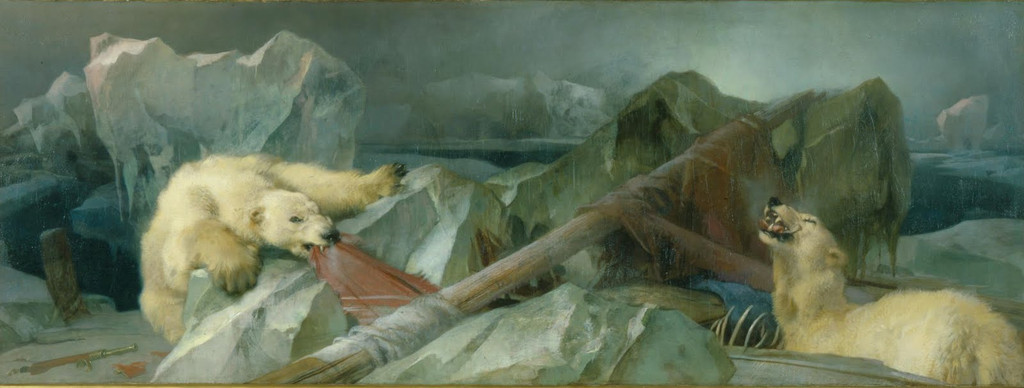
| Man Proposes, God Disposes | 1864 | Painting |
| Nell Gwynne / Diana Vernon | Painting | |
| Neptune | ||
| No Hunting Till the Weather Breaks | Painting | |
| Otterhounds | Drawing | |
| Peace | Painting | |
| Pensioners | Painting | |
| Portrait of a Mule | Painting | |
| Portrait of Mr Van Amburgh, as He Appeared with His Animals at the London Theatres | 1846–47 | Painting |
| Portraits of a Pointer Bitch and Puppy | Painting | |
| Pray Let Me Out | ||
| Prosperity | Painting | |
| Ptarmigan in a Landscape | by 1833 | Painting |
| Queen Victoria and Prince Albert at the Bal Costumé of 12 May 1842 | 1842–46 | Painting |
| Queen Victoria at Loch Laggan | Painting | |
| Queen Victoria at Osborne | 1865–67 | Painting |
| Queen Victoria landing at Loch Muick | Painting | |
| Rat-catching | 1823 | |
| Reclining Lion | Drawing | |
| Reclining Lion, From Back | Drawing | |
| Rent-day in the Wilderness | 1855–68 | Painting |
| Return from Deer Stalking | 1839 | |
| Royal Sports on Hill and Loch | Painting | |
| Sam Lovill, Porter at the Royal Academy | Drawing | |
| Scene from A Midsummer Night's Dream | 1848–51 | Painting |
| Scene in the Highlands, with portraits of the Duchess of Bedford, the Duke of Gordon and Lord Alexander Russell | Painting | |
| Scottish Highlands, Lochs and Figures | Drawing | |
| Shoeing | exhibited 1844 | Painting |
| Sleeping Bloodhound | exhibited 1835 | Painting |
| Spaniel and Rabbit | Painting | |
| Stag at Bay | 1866 | Sculpture |
| Stag at Bay | 1846 | Painting |
| Studies of a staghound and the head of a stag for painting ‘The Hunting of Chevy Chase’ | Drawing | |
| Study for Alpine Mastiffs Reanimating a Distressed Traveler | Drawing | |
| Study for the Monkey in The Cat's Paw | Drawing | |
| Study of a Dog | Drawing | |
| Study of a herding dog facing right | Drawing | |
| Study of the horse of Selene, from the East pediment of the Parthenon | Drawing | |
| Suspense | Painting | |
| Taking a Buck | ||
| The Arab Tent | c. 1865–66 | Painting |
| The Barn | Drawing | |
| The Best Run of the Season | ||
| The Cat's Paw | c. 1824 | Painting |
| The Cavalier’s Pets | ||
| The Challenge | Painting | |
| The Chase | Drawing | |
| The Connoisseurs: Portrait of the Artist with Two Dogs | 1865 | Painting |
| The Death of a Stag in Glen Tilt | Painting | |
| The Drive—Shooting Deer in the Pass | Painting | |
| The Drover's Departure | Painting | |
| The Highland Shepherd’s Dog | 1824; portfolio issue 1848 | |
| The Honourable Mrs Norton | Painting | |
| The Hunting of Chevy Chase | 1825–26 | Painting |
| The Illicit Highland Whisky Still | Painting | |
| The Keeper John Crerar with his Pony | Painting | |
| The Larder Invaded | ||
| The Lion-Dog of Malta | ||
| The Lions at the Base of Nelson's Column | 1867 | Sculpture |
| The Monarch of the Glen | about 1851 | Painting |
| The Mountain Torrent | ||
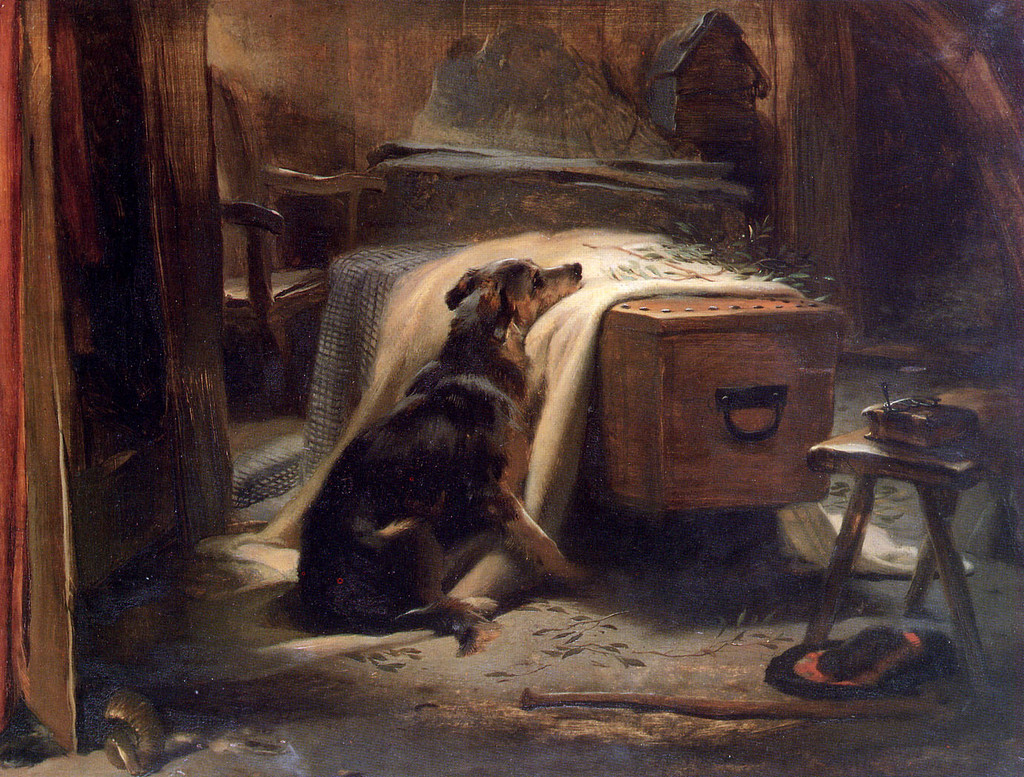
| The Old Shepherd's Chief Mourner | 1837 | Painting |
| The Sanctuary | 1842 | Painting |
| The Stricken Deer | Painting | |
| The Twa Dogs | Painting | |
| Time of Peace | ||
| Two stags running | Drawing | |
| Victoria, Princess Royal, with Eos | Painting | |
| View of Glenfeshie | Painting | |
| War | Painting | |
| White Horse in a Stable | Painting | |
| Windsor Castle in Modern Times | 1841–43 | Painting |
| Woburn Abbey Game Card | 1825; portfolio issue 1848 |
Discussion
Use the article’s images and evidence to develop your own reading of Queen Victoria and Prince Albert at the Bal Costumé of 12 May 1842.
Reader Insights
Which detail is most revealing when you consider “Two figures and one central gesture”?
How does the evidence in “The work of the attendants” affect your reading of Queen Victoria and Prince Albert at the Bal Costumé of 12 May 1842?
What further question would you bring to “The ball in print and paint”?
Join the Conversation
Share a detail, comparison or question about Queen Victoria and Prince Albert at the Bal Costumé of 12 May 1842 below.
References
- Royal Collection Trust, Queen Victoria and Prince Albert at the Bal Costumé of 12 May 1842, RCIN 404540; Buckingham Palace: Creative Writing Workshops: Teacher Notes, 2019, pp. 8–9. Accessed 31 October 2026. View source 1. View source 2.
- University of Virginia, Rossetti Archive, Queen Victoria and Prince Albert at the Bal Costumé of 12 May 1842, electronic archive edition 1, op130.rap.xml. Accessed 31 October 2026. View source.
- Edwin Landseer, Queen Victoria and Prince Albert at the Bal Costumé of 12 May 1842, colour photograph, Web Gallery of Art photograph. Accessed 31 October 2026. View source.
- National Gallery of Art, Alpine Mastiffs Reanimating a Distressed Traveler. View source.
- Minneapolis Institute of Art, The Cat's Paw. View source.
- Birmingham Museums Trust, The Hunting of Chevy Chase. View source.
- Victoria and Albert Museum, The Old Shepherd's Chief Mourner. View source.
- Tate, Dignity and Impudence. View source.
- Royal Collection, Eos. View source.
- Royal Collection, Queen Victoria and Prince Albert at the Bal Costumé of 12 May 1842. View source.
- National Galleries of Scotland, The Monarch of the Glen. View source.
- Royal Holloway, University of London, Man Proposes, God Disposes. View source.
- Trafalgar Square / Greater London Authority, The Lions at the Base of Nelson's Column. View source.
- “Her Majesty's Bal Masque,” The Illustrated London News, 14 May 1842, vol. 1, no. 1, pp. 7–9, including costume descriptions and illustrations. Accessed 31 October 2026. View source.
- Queen Victoria to the King of the Belgians, 19 April 1842, in A. C. Benson and Viscount Esher, eds., The Letters of Queen Victoria, vol. I, London: John Murray, 1908, pp. 392–393. Accessed 31 October 2026. View source.
- J. R. Planché, Recollections and Reflections: A Professional Autobiography, vol. II, London: Tinsley Brothers, 1872, pp. 53–57. Accessed 31 October 2026. View source.
- Richard Ormond, Sir Edwin Landseer, Philadelphia Museum of Art and Tate Gallery, 1981, entry 109, p. 156 and plate p. 157. Includes accounts of Victoria's 21 May and 2 June 1842 journal entries and Haydon's July 1842 testimony. Accessed 31 October 2026. View source.
- Caroline Fox, Memories of Old Friends, edited by Horace N. Pym, London: Smith, Elder, 1882, p. 209, entry 12 August 1846. Accessed 31 October 2026. View source.
- Splash image, Queen Victoria and Prince Albert at the Bal Costumé of 12 May 1842. Royal Collection. Image source. Public domain.
- Navigation image, One of the bronze lions at Nelson’s Column: modelled by Edwin Landseer and cast by Carlo Marochetti. Photograph by Amanda Slater. CC BY-SA 2.0. Image source. CC BY-SA 2.0. Resized.