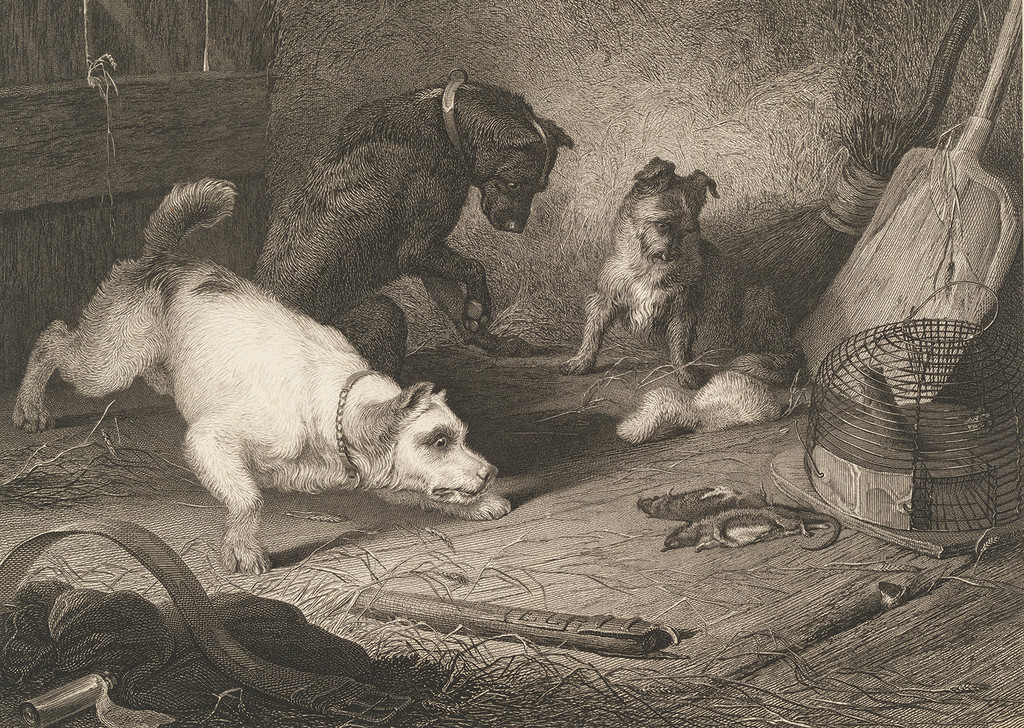
 by Tom Gurney
Tom Gurney BSc (Hons) is an art history expert with over 20 years experience
Email: tomgurney1@gmail.com / Phone: +44 7429 011000
Prints and Reproductive Fame: Introduction
“A Landseer print” sounds like a simple object. In practice, the phrase can describe very different things. It may mean an etching for which Edwin Landseer worked the copper plate himself. It may mean an engraving made by his brother Thomas from one of Edwin’s paintings. It may refer to a proof pulled before a publisher added the title, a later impression from an old plate, an illustration bound into a book, or merely a modern reproduction of a painting. Those objects do not have the same makers, dates, materials or histories.
That distinction is central to Landseer’s fame. Most viewers who encountered one of his animal subjects in the nineteenth century could not stand before its source painting. A painting remained in a royal residence, private collection, exhibition, dealer’s room or museum; a prepared plate could yield multiple impressions that travelled. Engravers translated colour and brushwork into printable lines and tones. Printers managed ink, paper and pressure. Publishers selected formats, commissioned lettering, organised portfolios and placed their names and cities beneath images. The printed “Landseer” was therefore a shared production, even when Edwin’s name supplied its chief attraction.[1]
Edwin was not absent from printmaking. Current museum records classify him as an etcher and preserve prints made from plates by his own hand. Yet the far larger reproductive system involved Thomas Landseer and a broad company of engravers, printers and publishers. Reading their work accurately means resisting two convenient errors: treating every print after Edwin as though he made it, and treating the engraver as a neutral machine. A reproductive print begins with another work, but it is also a material interpretation whose scale, technique, paper, inscriptions and publication history shape what an audience receives.
At a Glance
- MakersEdwin Landseer, Thomas Landseer and other engravers [1]
- ProcessesOriginal etching and reproductive engraving [1][2]
- Print identityPlate, state and individual impression [3]
Contents
- What a print record is telling you
- Edwin at the copper plate
- Seventeen old plates in a new portfolio
- Inside the royal print room
- Thomas Landseer was a printmaker, not a footnote
- From drawing or painting to plate
- More than one engraver made the public Landseer
- Reading technique and proof language
- Publishers made sequences and markets
- When old plates returned
Explore a print after Landseer
What a print record is telling you
A catalogue’s maker line is the best place to begin. “Print made by Edwin Landseer” assigns the printing matrix to Edwin. “After Edwin Landseer” assigns him a different role: his painting or drawing supplied the design from which another maker worked. The word “after” is neither an accusation of forgery nor a judgement of quality. It is a compact description of relationship. If the next field names Thomas Landseer, Charles George Lewis or Thomas Lewis Atkinson as engraver, that person made the plate through which Edwin’s design became printable.
Other roles may appear. A printer inked a matrix and pulled impressions, sometimes as a specialist whose name is known and sometimes anonymously. A publisher financed, issued or marketed the print and might control the plate, commission its lettering, arrange publication in different cities or return to it years later. A source artist, plate maker, printer and publisher could be four different people or firms. They might also overlap. The record has to be read rather than simplified in advance.
The printed object itself has several identities. A plate is the worked metal matrix. An impression is one physical sheet printed from it. A state is a phase in the plate’s development, defined by an alteration to that matrix. An edition is a group issued under a publication programme. A proof is an impression outside or before the regular issue, but the word covers several possible functions; it does not automatically mean that Edwin approved, owned, signed or printed the sheet. These terms describe different layers of production and cannot safely replace one another.[3]
Nor does a large online result set supply an output total. The British Museum currently connects Edwin with 1,062 related objects, but that group includes prints by him, prints after him, drawings, albums, letters and other kinds of association. Even within prints, one design may appear through several states, impressions, acquisition records and later publications. Adding search results would confuse images, matrices, sheets and catalogue entries. No complete census of every print by or after Landseer is established here.[2]
The useful question is therefore not “How many Landseer prints are there?” but “What exactly is this printed object?” Once its maker roles, process, state, support and issue are clear, it can become evidence for collaboration and circulation rather than another unnamed copy of a famous picture.
Edwin at the copper plate
The British Museum’s A Horse, Goat and Bull establishes Edwin’s printmaking at an exceptionally early date. Catalogued to 1811, it is an etching made by him, 196 by 120 millimetres. A bull stands across the top of the narrow plate while a recumbent horse looks towards a goat below. The grouped studies fit several animal bodies into a small vertical field. The date is remarkable, but the sheet need not be inflated into a complete story about a nine-year-old prodigy. What the object securely demonstrates is more useful: printmaking belonged to Edwin’s visual practice long before the great reproductive engravings made his paintings widely familiar.[2]
Etching suited a draughtsman because its first act resembled drawing. A copper plate was coated with an acid-resistant ground. The maker drew through that coating with a pointed tool, exposing metal wherever a printable line was wanted. Acid then bit those exposed paths into the plate. After the ground was removed, ink could be worked into the recesses, the surface wiped and damp paper pressed against it. The process reversed the design when it reached the sheet. A line that felt direct at the needle therefore passed through ground, acid, inking, wiping and pressure before it became visible as an impression.[3]
Edwin’s original etching was not only a childhood activity. The Metropolitan Museum’s Return from Deer Stalking, dated 1839, is an etching on chine collé. Its plate measures 25 by 33.7 centimetres. Rather than isolate three animal studies, the print draws figures and their burden through a Highland setting. The later date matters because it prevents a false division in which Edwin experimented with print as a boy and then surrendered the medium entirely to professional engravers.[4]
The British Museum’s Terrier Begging extends that record to 1842. Edwin etched Queen Victoria’s terrier Islay sitting upright on its hind legs, paws raised. The small image, 152 by 114 millimetres, is printed on chine collé. The museum records that Landseer made it from memory while advising Victoria and Albert on printmaking, and that the Queen watched him bite the copper plate in acid on 2 July 1842. Here the otherwise hidden chemical stage enters a dated account. The witness does not make Victoria a co-maker of Edwin’s plate; it locates his own etching within a sociable lesson at court.[5]
These three works do not form a catalogue of all Edwin’s original prints. They offer a safer argument about range. An 1811 study plate, an 1839 Highland subject and a royal-dog etching of 1842 show continued engagement with the medium. They also make the contrast with reproductive engraving clearer. When a later sheet says “after Edwin”, the distinction is not between an artist who understood print and a technician who did not. It is between different assignments of labour around a particular matrix.
Seventeen old plates in a new portfolio
Ernest Gambart’s 1848 portfolio Etchings by Edwin Landseer demonstrates why a print needs more than one date. The British Museum’s controlling record is The Highland Shepherd’s Dog, an etching made by Edwin and dated 1824. A dog lies beside its master’s stick and hat. The impression belongs to a surviving group of seventeen etchings, now numbered `1876,1014.335–351`, which Gambart gathered and issued in a uniform portfolio in 1848.[2]
The earlier dates did not disappear when the publisher reorganised the plates. Gambart added titles, his publication line and numbers from one to seventeen. The plate for The Highland Shepherd’s Dog remained an 1824 matrix, while its lettering and place within the portfolio belonged to a later act of publication. Calling the sheet simply “1848” would misdate Edwin’s plate work; calling it only “1824” would conceal Gambart’s intervention and the new context in which the impression circulated.
A second set makes the distinction visible. The museum records proofs before the added lettering, `1849,1208.110–126`, but these are not publisher-free remnants of an untouched studio. Gambart’s blindstamp appears on each impression. “Before letters” describes what had not yet been added to the plate. It does not mean “before the publisher” or prove that Edwin personally selected and signed the sheets. A proof can belong to a commercial programme even when its image field lacks the title and publication line found in another state.[2]
The portfolio also has a physical afterlife. The lettered prints were mounted on similar backings or printed on larger uniform sheets, then cut down for arrangement in albums following Algernon Graves’s catalogue. When those albums were dismantled, the set returned to its original portfolio. That journey altered the sheets without requiring a new design: mounting, trimming, binding and disassembly affected the form in which each impression survived. The present portfolio is historical evidence, but it is not a sealed container that travelled unchanged from 1848.
One member, the Woburn Abbey Game Card, clarifies how varied the earlier plates were. Dated 1825, it contains six small groups of game used as headings and is described as a first plate. In Gambart’s issue, a design connected with a practical or social card sat beside animal studies and small narrative subjects. The publisher did more than multiply isolated images. He made a retrospective identity—“Etchings by Edwin Landseer”—out of plates produced at different moments and for different purposes.[2]
Inside the royal print room
Victoria and Albert’s etching offers an illuminating contrast to Gambart’s commercial portfolio. Royal Collection Trust records that the newly married couple learned the process from professional artists including George Hayter and Edwin Landseer. During the 1840s they produced ninety-three plates, separately and together. Their etchings and occasional lithographs were privately printed for personal enjoyment and sometimes presented to family or friends. More than eight hundred impressions by the couple remain in the Royal Collection.[5]
Those figures belong to the royal makers, not to Edwin. His role was instruction. The record for Two peasant women, dated 13 January 1842 and made after one of his drawings, separates tasks that the convenient word “etching” can hide. A press had been installed at Buckingham Palace. Hayter bit the earliest plates in acid; Queen Victoria’s dresser Marianne Skerrett later undertook that work, and Colnaghi sometimes handled more complicated plates. From 1842, Edwin tutored the couple, who sometimes copied his drawings.[5]
The royal print room therefore reveals a chain even in amateur and private practice. One person could draw through the ground, another manage the acid and another pull the impression. A royal name on the design did not make every stage royal labour. Edwin’s Terrier Begging belongs beside this activity because Victoria witnessed him biting his own plate, yet it remains his print. Conversely, Two peasant women remains a royal etching after his design rather than an etching by Edwin.
Private circulation also sets a limit on the word fame. A gift can move an image and more than one impression can survive, but neither fact creates a mass-market edition. The court examples show how printmaking joined instruction, companionship and exchange. They should not be used to turn every plate connected with Landseer into a commercial product or to repeat the larger history of his royal patronage.
Thomas Landseer was a printmaker, not a footnote
Thomas Landseer’s contribution is easy to hide because the source painter’s surname was also his own. The British Museum identifies Thomas, who lived from 1795 to 1880, as a draughtsman and printmaker chiefly concerned with animal and satirical subjects. He studied with his brothers Charles and Edwin under Benjamin Robert Haydon and published his first aquatint after Haydon in 1816. His career included sporting prints, independent publications after artists such as Rembrandt, Rubens and Stubbs, and more than 125 etchings and engravings after paintings by Edwin. In 1867 he was elected an Associate Engraver of the Royal Academy.[6]
“More than 125” is an important threshold and a poor census. It tells us that translating Edwin’s work was sustained rather than occasional. It does not count every print made after Edwin, define an edition size or mean that exactly 126 plates exist. Thomas worked alongside other engravers, and one plate could be known through different states or issues. The museum’s biographical statement should remain attached to Thomas’s career instead of becoming a total for the whole Landseer print world.
Reproductive work required interpretation. An oil painting offers colour, varied surface, and often a scale unlike the intended print. The engraver had to build tonal relations from systems of line, stipple, etched texture or other processes; decide how to maintain separations within fur, shadow, landscape and fabric; and manage the reversal produced by printing. A large plate could demand years of labour. Even when the aim was fidelity, fidelity had to be manufactured through choices. Thomas was not copying pixels. He was making a new matrix capable of generating a different class of objects.
The British Museum notes that Edwin often retouched Thomas’s plates. That statement reveals collaboration without erasing authorship. Retouching could bring the source artist back into the matrix, but it does not prove Edwin’s intervention on every print or turn a plate catalogued to Thomas into one made solely by Edwin. The appropriate maker line remains “Thomas Landseer after Edwin Landseer” unless a specific record assigns further roles.
Thomas’s work after Edwin also began in publishing contexts less grand than the large Victorian exhibition print. The Shooter’s Companion, issued in London by Sherwood, Jones & Co in 1823, contains two full-page etchings by Thomas after Edwin—one titled Down charge, the other showing pheasant shooting with springers—along with a woodcut tailpiece. The printed images met readers inside a small bound book, where page sequence, letterpress and handling differed from a separately framed proof.[7]
That format matters to reputation. An image in a sporting book reached an audience through reading and use, not only connoisseurship. Thomas’s role also connected Edwin’s designs with a field of animal and sporting print culture that the family already knew through their father John, a line engraver. None of this makes the brothers’ work interchangeable. It shows why the most accurate account of Edwin’s printed fame has to give Thomas a biography, craft and professional standing of his own.
From drawing or painting to plate
The National Gallery of Art’s Contending Group after Nature preserves an unusually direct bridge. Edwin made the drawing in 1822: a lion, tiger and leopard compressed into a violent interlocking group. The museum’s display record identifies it as a model for an etching by Thomas. The sheet and the print are therefore related but separate objects. Edwin organised the design on paper; Thomas translated it into a matrix that could produce impressions.[8]
Translation did not mean tracing every visible mark at the same scale. A line drawn in ink and wash operates differently from a line bitten or cut into metal. Wash can mass a shadow in one fluid area, while an intaglio plate may build comparable darkness through many incisions, overlapping systems or combined techniques. Paper drawing and printed impression also respond differently to pressure, reversal and repeated use. The relation can be close without becoming material identity.
The title After Nature adds another caution. Anatomical credibility does not prove that Edwin witnessed a lion, tiger and leopard fighting as a complete event. He could study bodies closely and still construct their encounter. Thomas then made a second act of construction by adapting that design for print. Reproduction transmitted invention as well as observation.
Source paintings posed related problems. The Met’s Alexander and Diogenes, engraved by Thomas in 1852 after Edwin’s painting exhibited in 1848, combines etching, engraving and stipple on chine collé. A white dog stands over another lying inside a pipe, with tools and further dogs completing the scene. The printmaker had to retain differences of coat, masonry, hollow space, metal and ground without the painter’s pigments. The catalogue’s compound technique is evidence that one process alone did not carry every part of the translation.[9]
The time between source and print could be short or long. A plate might follow a recent Royal Academy success, return to an older painting or even begin from a drawing rather than an oil. The printed image acquired its own date, maker and dimensions. To identify it only by the painting’s title and year is to stop the history precisely where the reproductive work begins.
More than one engraver made the public Landseer
Thomas was the most extensive collaborator, but he was not a monopoly. The Met preserves reproductive prints after Edwin by Charles George Lewis, John Outrim, James Tibbits Willmore, Thomas Oldham Barlow and Thomas Lewis Atkinson, among others. Their names change the question from “How was Landseer reproduced?” to “Who translated which design, by what means, at what date and for which publisher?”[10][11]
Lewis made The Best Run of the Season in 1853 after a painting shown at the Royal Academy two years earlier. The Met describes the large sheet as a mixed-method engraving on chine collé and a proof before letters. John Outrim’s The Cavalier’s Pets, dated 1850 after an 1845 painting, carries the same broad process and proof description at a smaller scale. James Tibbits Willmore’s Her Majesty Sketching at Loch Laggan of 1858 is more specifically etching and engraving on chine collé. Thomas Oldham Barlow’s Little Strollers, made in 1875 after an image Edwin painted in 1836, shows how reproductive activity continued beyond Edwin’s death and could return to a design nearly four decades old.[10]
Atkinson is essential because he corrects a likely assumption. Time of Peace is often folded into a generic story of “Landseer engravings”, but the Met names Thomas Lewis Atkinson as engraver and Henry Graves & Co as publisher. The 1850 mixed-method plate reproduced one half of Edwin’s paired Peace and War. Thomas Landseer did not make it. Exact credit allows Atkinson’s labour to remain visible and prevents the famous brother from absorbing another specialist’s work.[11]
Even a single publication could distribute labour. The British Museum’s The Forest contains twenty large mixed-method plates after paintings Edwin made between 1845 and 1861. Thomas engraved many, but Charles George Lewis and John Outrim also contributed. The plates were produced between 1852 and 1868, then issued together by Henry Graves & Co in 1868. The portfolio’s unity belongs to its title, format, dedication and publisher; its matrices came from three engravers working across sixteen years.[12]
A remarkable historical mount turns this professional field into faces. The British Museum’s Sir Edwin Landseer and his Engravers assembles twenty-one carte-de-visite portraits. Alongside Edwin are Thomas, Atkinson, John Burnet, Samuel Cousins, Robert Graves, Charles George Lewis, John Outrim, Henry Thomas Ryall, William Henry Simmons and others. The mount is not a complete roster, and not every sitter necessarily made a plate after Edwin. It nevertheless records a contemporary urge to picture the celebrated painter within the network that translated and published art.[13]
Restoring these names does more than distribute praise fairly. It explains variation. Different engravers brought different training, tools and publisher relationships. A proof by Lewis and a lettered plate by Thomas need not present the same tonal decisions even when both are “after Landseer”. The painter’s reproductive fame was coherent enough for his surname to lead, but materially diverse enough that the smaller lettering below it matters.
Reading technique and proof language
Etching and engraving both belong to intaglio printmaking: ink sits in recessed lines and transfers under pressure to damp paper. They create those recesses differently. In etching, acid bites lines exposed through a resistant ground. In engraving, a burin cuts bare metal directly. The distinction is practical and visual, but many nineteenth-century reproductive plates combined processes. When a museum says “mixed method”, the responsible description is mixed method—not a guessed recipe derived from a screen image.[3]
Chine collé describes the paper construction seen repeatedly in Landseer records. A thin sheet carrying the image is bonded to a larger, stronger support as both pass through the press, sometimes with adhesive assisting the bond. The technique can provide a smooth, responsive surface and a distinct tone. It is not a place, a publisher or proof of luxury. The boundary of the thin paper, the plate mark and the larger sheet are physical features that a tight digital crop may conceal.[3]
Proof language requires similar care. The Met describes Thomas’s Alexander and Diogenes as a proof before letters. It gives the same phrase to Lewis’s Best Run, Outrim’s Cavalier’s Pets, Willmore’s Her Majesty Sketching and Barlow’s Little Strollers. In each case, the designation refers to a state before identifying or publication text was added. It does not establish that the impression was the first pulled from the plate. There may have been working proofs or other unlettered stages, and “before letters” does not mean “before all change”.[9][10]
Nor is every proof an artist’s proof. MoMA’s terminology distinguishes trial and working proofs from artist’s or printer’s proofs held outside an edition. Nineteenth-century catalogues and markets did not always apply modern edition conventions uniformly. Unless a holder identifies the category, it is safer to repeat “proof” or “proof before letters” than to award an impression special proximity to Edwin. A handwritten signature, if present, must also be separated from a name engraved in the plate, which prints mechanically on every impression from that state.[3]
State concerns the matrix; impression concerns the sheet. If Gambart adds titles and numbers to Edwin’s old plates, the alteration produces a different state. If a printer pulls two sheets without changing the plate, they are two impressions of the same state. Differences in ink, wiping or paper can make those impressions look unlike one another without creating a new state. Conversely, a tiny added publication line may establish a new state even when the central image appears unchanged.
Condition complicates the matter further. Repeated printing may wear a plate, but a later impression is not automatically poor, and an early proof is not automatically beautiful. Inking, wiping, pressure, paper, storage, trimming and conservation all affect the surviving object. Judgement requires the actual sheet and comparative evidence. Catalogue terms guide attention; they do not replace looking.
Publishers made sequences and markets
Publishers gave reproductive prints dates and destinations beyond the source painting. The Met’s The Mountain Torrent was engraved by Thomas after Edwin and issued in 1856, more than twenty years after the source painting was exhibited in 1833. Its publication line names Henry Graves & Co and Williams, Stevens, Williams & Co of New York. The print could therefore be addressed through British and American commercial channels even though the painting itself remained one object.[11]
The line proves an intended geography, not a sales total. It does not tell us how many impressions crossed the Atlantic, who bought them or where they hung. It does show that publisher identity belongs to interpretation. London and New York names beneath the same large mixed-method plate positioned the image for more than a local audience. Other prints connected British firms with continental publishers: Thomas’s The Lion-Dog of Malta carries Thomas McLean and Goupil et Vibert, while late plates such as Taking a Buck were issued by Thomas Agnew & Sons.[9]
Publishers also made sets. Henry Graves & Co’s The Forest did not merely place twenty unrelated sheets in a folder. A title and dedication joined sporting and Highland subjects made after paintings from different years. The order supplied a route through Edwin’s imagery, while the division among Thomas, Lewis and Outrim became legible in the plate credits. A buyer could encounter a retrospective body of work through a coordinated printed object rather than by tracking individual canvases.[12]
The publisher’s contribution could include waiting, investment and risk. A large reproductive plate took time to make, after which its commercial value depended on paper, printing, publicity and demand. Proofs and lettered impressions could create differentiated forms of the same image. Yet surviving catalogue descriptions rarely provide complete print runs or sales accounts. Publisher names reveal the infrastructure of circulation; they should not be turned into unmeasured claims that an image was universally popular.
When old plates returned
The 1853 volume Engravings of Lions, Tigers, Panthers, Leopards, Dogs, &c. makes plate survival unusually explicit. Its title identifies Thomas as the principal engraver, says the designs are chiefly after Edwin and announces that the book was printed from original plates published between 1823 and 1828. Henry G. Bohn issued the volume in London. Library of Congress records preserve the publication as a book, while the New York Public Library identifies Neptune, a Newfoundland dog, as one item within it.[14]
The word “original” in the title concerns the matrices, not a newly created 1853 series. Old plates had been gathered and brought back to the press. Their subjects entered a new binding and market context decades after their first publication. That reissue extended the life of the designs, but it also placed Thomas and Edwin inside Bohn’s editorial frame. A reader encountered a retrospective animal world selected, titled and sequenced by the later publisher.
An old matrix does not guarantee an identical image every time it returns. Wear, repair, wiping, ink and paper can affect an impression even if no deliberate change creates a new state. Nor does the survival of a plate tell us how many sheets were pulled in 1853. What the book proves is a mechanism of renewed circulation: metal could preserve a printable design long enough for a publisher to revive it for another generation of viewers.
Copyright could be worth arguing over
Reproductive prints were not simply a cultural after-effect of successful paintings. They were assets around which artists, owners, engravers and publishers negotiated. A National Gallery archive record dated 5 February 1851 documents a letter forwarding an agreement among Edwin Landseer, collector Robert Vernon and Graves & Wrench concerning copyright in Peace and War. The short record does not settle every payment or clause, but it proves that control of reproduction was explicit enough to require a named written arrangement.[15]
The resulting print history preserves distinct roles. Vernon had purchased Edwin’s two paintings, exhibited in 1846, and arranged for their publication before his death. Thomas Lewis Atkinson engraved Time of Peace; Henry Graves & Co published the large mixed-method engraving in 1850. Ownership of the paintings, the agreement around copyright, the labour of making the plate and the issue of impressions intersected without becoming the same activity.[11]
Historical writers understood the value but disagreed on numbers. A legal treatise published in 1853 reported that the paintings cost £1,000 while their copyright brought £2,500. Frederick G. Stephens wrote in 1880 that Vernon paid £1,500 and that the publisher’s copyright payment was said to be £3,000. Stephens also warned that he could not verify every monetary statement he repeated. The discrepancy is more instructive than a falsely exact price: substantial engraving rights formed part of Landseer’s contemporary reputation, while the surviving published figures remain reports rather than audited accounts.[16][17]
The legal framework changed during Landseer’s career. Britain had protected engravings through eighteenth-century statutes, but paintings and drawings did not possess an equivalent general statutory copyright. Commercial practice nevertheless allowed artists or owners to sell an exclusive privilege to engrave, reinforced by access to the physical painting and by the protected status of the resulting print. These overlapping arrangements help explain why a “copyright” could be discussed before Parliament protected paintings themselves in the modernising statute of 1862.[18][16]
The Fine Arts Copyright Act received Royal Assent on 29 July 1862. It extended statutory protection to original paintings, drawings and photographs for the life of the author plus seven years. The change did not make every earlier transaction simple, nor did it collapse a painting and an engraving after it into one object. Physical ownership, permission to access and reproduce, copyright in a print, and copyright in a painting remained questions with their own histories.[18]
This context explains why inscriptions below a reproductive image can carry more than identification. A publisher’s line could state a claim to issue; a registration or declared publication date could help structure protection; a named engraver could be both a maker and a rights holder. It also explains why source owners controlled access to paintings that engravers needed to study. The commercial chain was vulnerable because another printer might use the same design, copy a protected plate’s image or adopt a new technology that made duplication faster and cheaper.
The page of legal history should stop there. Nineteenth-century statutes are not current advice, and the existence of a historical right does not determine the status of a digital image today. Its value for Landseer is interpretive: reproductive fame had contracts, capital and contested control behind it. The seemingly secondary print could command sums and disputes large enough to rival attention paid to the canvas.
Photography enters the chain
The 1863 case Gambart v Ball shows what happened when photographic copying entered the established engraving trade. Ernest Gambart sued over small photographs made from two protected engravings: one after Rosa Bonheur’s The Horse Fair, the other after Holman Hunt’s The Light of the World. The defendant argued in part that the reduced photographs could not be mistaken for the large engraved sheets. The court nevertheless treated photographic multiplication as capable of infringing the engravings’ protected commercial value.[16]
“Landseer” appears in scholarship on the case, but it means Thomas, not Edwin. The National Gallery’s reduced 1855 version of Bonheur’s Horse Fair was painted for Gambart for Thomas Landseer’s use as engraver. William Henry Simmons made the Hunt plate. The case therefore belongs only at the edge of Edwin’s print history. It illuminates the legal and publishing world in which Thomas worked; it is not a reproductive print after an Edwin painting.[19]
That boundary prevents a useful example from becoming a false credit. It also reveals a new layer in the image chain. Painting could become engraving; engraving could become photograph; the photographic image could be smaller, cheaper and more easily multiplied. Each transfer raised the question of what had been copied: a subject, a design, the engraver’s particular translation or the investment embodied in a published sheet.
No general verdict about every photograph follows. The case does not make all later photographs of Landseer unlawful, and not every photograph depended on a reproductive engraving. It demonstrates that new technologies did not replace the existing print economy overnight. They entered it, borrowed from it and forced courts to examine where artistic and commercial value was thought to reside.
How reproductive fame worked
Landseer’s printed reputation grew through repetition, but repetition was never one process. Edwin could etch a plate, as in Terrier Begging. Thomas could translate a drawing into an etching or a painting into a large mixed-method engraving. Another specialist could take a different painting. A publisher could issue a proof, add lettering, organise a portfolio, partner with a firm abroad or bring old matrices back into print. An image might be handled as a single sheet, encountered on a book page or copied again through photography.
The surviving evidence establishes scale without supplying an audience count. Thomas made more than 125 etchings and engravings after Edwin. Gambart assembled seventeen of Edwin’s own etchings. The Forest joined twenty reproductive plates. Bohn reissued animal plates from the 1820s in 1853. These numbers describe works, plates or portfolio structures, not buyers. They cannot be added together to calculate how many people knew Landseer.[2][6][12][14]
What they do prove is persistence. A painting exhibited for one season could generate a plate years later; that plate could remain printable after the painting changed hands or disappeared from view. Publication lines carried Edwin’s name into London, Paris, Berlin and New York networks. Books placed images among letterpress and other plates. Proofs invited collectors to value an unlettered state, while standard issues made the title and publisher conspicuous. Later bindings reorganised old material into a retrospective career.[9][11][14]
This circulation could strengthen recognition of a subject while altering its encounter. A viewer of a monochrome print did not receive the painting’s colour, surface or exact scale. The engraver’s tonal system and the publisher’s format became part of “Landseer”. Repeated translation could make an image familiar precisely by changing its material form. Reproductive fame was not the painting duplicated without loss; it was a family of related objects through which the design became portable.
The chain also redistributed authority. Edwin’s name led because the source composition was his and because it attracted buyers. Thomas and other engravers made that composition available as a printable matrix. Printers produced the sheets. Publishers coordinated capital, timing and markets. Collectors preserved proofs and portfolios; museums later separated maker roles and states in catalogues. The public Landseer was made by all of them, although not on equal contractual terms and not always with equal visibility.[1][13][17]
How to read a Landseer print
Begin with the names, not the subject. If the record says “print made by Edwin Landseer”, you are looking at an impression from a matrix assigned to him. If it says “Thomas Landseer, after Edwin Landseer”, Thomas made the plate and Edwin supplied the source design. Continue through every credited role. A printer and publisher may explain features that neither artist controlled alone.
Next identify the process. Etching means acid bit exposed lines through a ground; engraving means a burin cut the metal. “Etching and engraving” records a combination. “Mixed method” should remain broad unless a holder specifies its components. Stipple, aquatint and mezzotint are not interchangeable labels for soft tone. Each process describes a way of making printable recesses or textures, and none should be diagnosed confidently from a small online image.[3]
Read measurements with equal care. Plate size describes the metal field and often corresponds to the plate mark pressed into the paper. Sheet size describes the surviving paper, which may extend well beyond it or may have been trimmed. An image reproduced edge-to-edge online can make a small etching and a monumental reproductive engraving appear equal. The physical dimensions restore the different labour of hand, press and viewing distance.
If the support is chine collé, look for a thin image-bearing paper attached to a stronger sheet. Do not assume that discolouration or a visible boundary is damage, and do not assume that every reproduction shows the join. Margins may carry a blindstamp, handwritten signature or annotation. Lettering beneath the image may name the painter, engraver, printer, publisher, dedicatee, title, place or publication date. Cropping those areas removes evidence even when it makes the composition look cleaner.[2][3]
Then ask about state and impression. A proof before letters tells you that specified lettering was absent when that impression was pulled. It does not prove that no earlier stage existed. A lettered state may postdate the matrix’s first work. Two impressions of one unchanged state can differ through ink, wiping, paper and pressure. A later reissue can use the same old plate under a new publisher. Keep all those dates separate: source painting or drawing, plate, altered state, publication, impression if known, and museum acquisition.
Compare the source only when an authoritative record identifies it. Notice what the reproductive process could not carry directly—oil colour, raised brushwork, canvas scale—and what it created instead. Lines can be tightened, shadows reorganised and textures differentiated. Reversal may change a composition’s direction. Lettering can supply a title or moral emphasis not visible within the picture. The goal is not to catch an engraver failing to be a camera; it is to understand how one medium interprets another.
Treat proof and publisher language without romantic shortcuts. “Proof” does not mean Edwin pulled or signed the sheet. A publisher’s blindstamp does not mean that the plate was newly made for that issue. “Original plates” in Bohn’s 1853 title refers to reused matrices from the 1820s, not original 1853 designs. “More than 125” on Thomas’s authority page is not an edition size. Exact words answer exact questions only.[6][3][14]
Finally, ask what circulation can actually be shown. A London and New York publication line supports transatlantic intention. A surviving book supports bound distribution. Multiple recorded states support alteration of a plate. A reissue supports renewed availability. None supplies a household census or proves that every impression sold. Reputation can be argued from connected mechanisms and contemporary records without pretending to know every viewer.
That method changes the phrase with which this page began. Instead of “a Landseer print”, one might identify an 1856 mixed-method engraving by Thomas Landseer after Edwin, published in Britain and New York; an 1848 lettered impression from an etching Edwin made in 1824; or an 1850 plate by Thomas Lewis Atkinson after one half of Peace and War. The longer description is not pedantry. It restores the people, materials and time through which the image became public.
Landseer’s reproductive fame depended on recognisable designs, but it also depended on copper and steel, acid and burin, thin paper and strong backing, presswork, contracts, publishers’ capital and plates durable enough to return. Edwin was an etcher within that history and the source artist at its centre. He was never its only maker. The printed record becomes most revealing when his name opens the investigation rather than closing it.
Artworks directory
This directory gathers works discussed in the articles, including drawings, original etchings and prints after Landseer. It is not a complete catalogue of every drawing, version, plate or impression. Distinct media are kept separate; uncertain dates are left blank. Linked titles open individual articles.
| Name | Date | Medium |
|---|---|---|
| A Bellowing Stag | Drawing | |
| A Deerhound | 1826 | Painting |
| A Distinguished Member of the Humane Society | 1838 | Painting |
| A Highland Breakfast | 1834 | Painting |
| A Highland Landscape | c. 1830 | Painting |
| A Highland Shepherd's Home | Painting | |
| A Horse, Goat and Bull | 1811 | |
| A Hunting Horse | Drawing | |
| A Jack in Office | Painting | |
| A Lion Disturbed at His Repast | Painting | |
| A Random Shot | Painting | |
| A Scene at Abbotsford | Painting | |
| Adversity | Painting | |
| Alexander and Diogenes | exhibited 1848 | Painting |
| Alpine Mastiffs Reanimating a Distressed Traveler | 1820 | Painting |
| Contending Group after Nature | Drawing | |
| Copy after Rubens's Wolf and Fox Hunt | c. 1824–26 | Painting |
| Dash | Painting | |
| Deer and Deer Hounds in a Mountain Torrent ('The Hunted Stag') | c. 1832 / exhibited 1833 | Painting |
| Deer Family | ||
| Dignity and Impudence | 1839 | Painting |
| Dog Resting Upon a Couch | Drawing | |
| Eos | 1841 | Painting |
| Favourites, the Property of H.R.H. Prince George of Cambridge | 1834–35 | Painting |
| Her Majesty Sketching at Loch Laggan | ||
| High Life | 1829 / exhibited 1831 | Painting |
| Highland Lassie | Drawing | |
| Isaac van Amburgh and his Animals | 1839 | Painting |
| Lady Godiva's Prayer | Painting | |
| Laying Down the Law | 1840 | Painting |
| Lion Defending Its Prey | c. 1840 | Painting |
| Lioness | Drawing | |
| Little Strollers | ||
| Low Life | 1829 / exhibited 1831 | Painting |
| Man Proposes, God Disposes | 1864 | Painting |
| Nell Gwynne / Diana Vernon | Painting | |
| Neptune | ||
| No Hunting Till the Weather Breaks | Painting | |
| Otterhounds | Drawing | |
| Peace | Painting | |
| Pensioners | Painting | |
| Portrait of a Mule | Painting | |
| Portrait of Mr Van Amburgh, as He Appeared with His Animals at the London Theatres | 1846–47 | Painting |
| Portraits of a Pointer Bitch and Puppy | Painting | |
| Pray Let Me Out | ||
| Prosperity | Painting | |
| Ptarmigan in a Landscape | by 1833 | Painting |
| Queen Victoria and Prince Albert at the Bal Costumé of 12 May 1842 | 1842–46 | Painting |
| Queen Victoria at Loch Laggan | Painting | |
| Queen Victoria at Osborne | 1865–67 | Painting |
| Queen Victoria landing at Loch Muick | Painting | |
| Rat-catching | 1823 | |
| Reclining Lion | Drawing | |
| Reclining Lion, From Back | Drawing | |
| Rent-day in the Wilderness | 1855–68 | Painting |
| Return from Deer Stalking | 1839 | |
| Royal Sports on Hill and Loch | Painting | |
| Sam Lovill, Porter at the Royal Academy | Drawing | |
| Scene from A Midsummer Night's Dream | 1848–51 | Painting |
| Scene in the Highlands, with portraits of the Duchess of Bedford, the Duke of Gordon and Lord Alexander Russell | Painting | |
| Scottish Highlands, Lochs and Figures | Drawing | |
| Shoeing | exhibited 1844 | Painting |
| Sleeping Bloodhound | exhibited 1835 | Painting |
| Spaniel and Rabbit | Painting | |
| Stag at Bay | 1866 | Sculpture |
| Stag at Bay | 1846 | Painting |
| Studies of a staghound and the head of a stag for painting ‘The Hunting of Chevy Chase’ | Drawing | |
| Study for Alpine Mastiffs Reanimating a Distressed Traveler | Drawing | |
| Study for the Monkey in The Cat's Paw | Drawing | |
| Study of a Dog | Drawing | |
| Study of a herding dog facing right | Drawing | |
| Study of the horse of Selene, from the East pediment of the Parthenon | Drawing | |
| Suspense | Painting | |
| Taking a Buck | ||
| The Arab Tent | c. 1865–66 | Painting |
| The Barn | Drawing | |
| The Best Run of the Season | ||
| The Cat's Paw | c. 1824 | Painting |
| The Cavalier’s Pets | ||
| The Challenge | Painting | |
| The Chase | Drawing | |
| The Connoisseurs: Portrait of the Artist with Two Dogs | 1865 | Painting |
| The Death of a Stag in Glen Tilt | Painting | |
| The Drive—Shooting Deer in the Pass | Painting | |
| The Drover's Departure | Painting | |
| The Highland Shepherd’s Dog | 1824; portfolio issue 1848 | |
| The Honourable Mrs Norton | Painting | |
| The Hunting of Chevy Chase | 1825–26 | Painting |
| The Illicit Highland Whisky Still | Painting | |
| The Keeper John Crerar with his Pony | Painting | |
| The Larder Invaded | ||
| The Lion-Dog of Malta | ||
| The Lions at the Base of Nelson's Column | 1867 | Sculpture |
| The Monarch of the Glen | about 1851 | Painting |
| The Mountain Torrent | ||
| The Old Shepherd's Chief Mourner | 1837 | Painting |
| The Sanctuary | 1842 | Painting |
| The Stricken Deer | Painting | |
| The Twa Dogs | Painting | |
| Time of Peace | ||
| Two stags running | Drawing | |
| Victoria, Princess Royal, with Eos | Painting | |
| View of Glenfeshie | Painting | |
| War | Painting | |
| White Horse in a Stable | Painting | |
| Windsor Castle in Modern Times | 1841–43 | Painting |
| Woburn Abbey Game Card | 1825; portfolio issue 1848 |
Discussion
Use the article’s images and evidence to develop your own reading of Prints and Reproductive Fame.
Reader Insights
Which detail is most revealing when you consider “What a print record is telling you”?
How does the evidence in “Edwin at the copper plate” affect your reading of Prints and Reproductive Fame?
What further question would you bring to “How to read a Landseer print”?
Join the Conversation
Share a detail, comparison or question about Prints and Reproductive Fame below.
References
- Richard Ormond, with Joseph Rishel and Robin Hamlyn, Sir Edwin Landseer, Philadelphia Museum of Art / Tate Gallery / Rizzoli, 1981, ISBN 0-87633-044-8.
- British Museum, “Edwin Landseer”; “A Horse, Goat and Bull”; “The Highland Shepherd’s Dog”; “Woburn Abbey Game Card”. View source 1. View source 2. View source 3. View source 4.
- Victoria and Albert Museum, “What is print?”; Museum of Modern Art, “Art terms: Print”, “Art terms: Engraving and Etching” and “Chine collé”; National Gallery of Australia, “Printmaking glossary”. View source 1. View source 2. View source 3. View source 4. View source 5.
- Metropolitan Museum of Art, “Return from Deer Stalking”. View source.
- British Museum, “Terrier Begging”; Royal Collection Trust, “Queen Victoria”, “Two peasant women” and “Highlights from the print collection”. View source 1. View source 2. View source 3. View source 4.
- British Museum, “Thomas Landseer”. View source.
- British Museum, “The Shooter’s Companion”. View source.
- National Gallery of Art, “Contending Group after Nature” and Drawing in Britain, 1700–1900 wall text. View source 1. View source 2.
- Metropolitan Museum of Art, “The Larder Invaded”; “Alexander and Diogenes”; “The Lion-Dog of Malta—The Last of His Tribe”; “Pray Let Me Out”; “Taking a Buck”; “Deer Family”. View source 1. View source 2. View source 3. View source 4. View source 5. View source 6.
- Metropolitan Museum of Art, “The Best Run of the Season”; “The Cavalier’s Pets”; “Her Majesty Sketching at Loch Laggan”; “Little Strollers”. View source 1. View source 2. View source 3. View source 4.
- Metropolitan Museum of Art, “The Mountain Torrent” and “Time of Peace”. View source 1. View source 2.
- British Museum, “The Forest”. View source.
- British Museum, “Sir Edwin Landseer and his Engravers”. View source.
- Library of Congress, Engravings of lions, tigers, panthers, leopards, dogs, &c.; New York Public Library, “Neptune, the property of W. E. Gosling Esqr.” View source 1. View source 2.
- National Gallery, “Letter to S. C. Hall”, 5 February 1851, archive reference `NG6/1/625`. View source.
- Marie-Stéphanie Delamaire and Will Slauter, eds., Circulation and Control: Artistic Culture and Intellectual Property in the Nineteenth Century, Open Book Publishers, 2021; Simon Stern, “The Scope of Artistic Copyright in Nineteenth-Century England”; Will Slauter, “The ‘Death of Chatterton’ Case”. View source 1. View source 2. View source 3.
- Frederick G. Stephens, Sir Edwin Landseer, 1880; Algernon Graves, Catalogue of the Works of the Late Sir Edwin Landseer, R.A. View source 1. View source 2.
- Ronan Deazley, “Commentary on Fine Arts Copyright Act 1862”, Primary Sources on Copyright (1450–1900), 2008. View source.
- National Gallery, Rosa Bonheur, “The Horse Fair”. View source.
- Splash image, Rat-catching, 1823, engraving after Edwin Landseer. State Library of New South Wales, SV/136. Image source. Public domain.
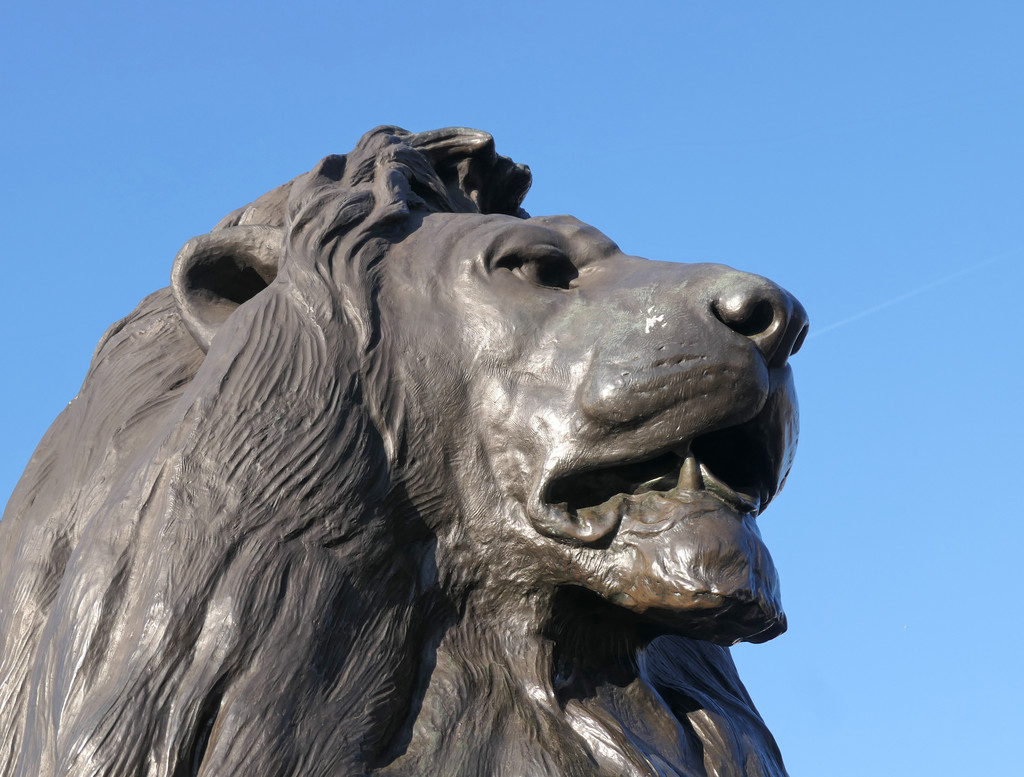
- Navigation image, One of the bronze lions at Nelson’s Column: modelled by Edwin Landseer and cast by Carlo Marochetti. Photograph by Amanda Slater. CC BY-SA 2.0. Image source. CC BY-SA 2.0. Resized.