 by Tom Gurney
Tom Gurney BSc (Hons) is an art history expert with over 20 years experience
Email: tomgurney1@gmail.com / Phone: +44 7429 011000
Queen Victoria Prince Albert and Royal Patronage: Introduction
Sir Edwin Henry Landseer's association with Queen Victoria and Prince Albert lasted for more than thirty years, but longevity is the least informative thing about it. The familiar description of Landseer as Victoria's favourite painter makes a complicated professional relationship sound like a permanent state of approval. It hides who initiated a picture, who paid for it, whom it was meant to please, where it was placed, how access was arranged and what happened when the artist did not deliver the likeness or finish that his patrons expected. Royal favour opened exceptional opportunities. It also brought unusually exact demands.[1][2][3]
The surviving pictures and records do not describe one role called “court painter”. They show Landseer moving among several roles. He portrayed a princess's dog at her mother's request. He turned a sovereign's enthusiasm for an animal performance into a large commission. He supplied birthday and Christmas presents between a married couple, taught that couple to etch, worked through members of the royal household, painted family life at Windsor, received a highly detailed Highland brief and struggled for years with a composition whose royal sitters remained dissatisfied. After Albert's death, he helped Victoria construct a very different image of monarchy at Osborne.[3][4][5]
That range matters because patronage was not simply money flowing from a throne to an artist. It joined affection to ownership, collecting to family ritual, private rooms to public exhibitions and artistic discretion to correction. A picture might begin as a surprise for one person and later become known through prints or photographs. Another might be bought only after somebody else had commissioned or acquired it. A third could be publicly displayed while still unfinished. To understand Landseer at court is therefore to follow a chain of actions rather than repeat a compliment.
At a Glance
- PatronsQueen Victoria and Prince Albert [3]
- PatronageCommissions, purchases, gifts and teaching [3]
- CollectionRoyal Collection [2][3]
Contents
- Patronage was a set of acts
- Before the crown: Dash and a birthday present
- From spectator to commissioner
- Marriage made art into exchange
- Pets, property and the royal household
- A family pictured at Windsor
- Patrons who also made images
- The household between artist and sovereign
- Commission, purchase and present are not synonyms
- Residences shaped the work
Patronage was a set of acts
“Royal patronage” can suggest a single act of choosing an artist. Victoria and Albert's practice was more various. They commissioned living artists, bought works already made, exchanged art on birthdays and at Christmas, visited studios, requested changes, arranged sittings and organised what they owned inside several residences. They also drew, painted and printed themselves. Landseer entered this culture as a professional whose animal subjects especially interested Victoria, but he worked alongside portraitists, sculptors, architects, designers, dealers and advisers. The scale of the couple's collecting makes it misleading to imagine him as an isolated genius with a private route to the sovereign.[5]
Each form of exchange created different obligations. A direct commission began with an instruction, however open or precise, and normally ended with delivery and payment. A purchase from an existing owner required negotiation over an object whose first destination had already been decided. A commissioned gift added secrecy, a recipient and a date charged with personal meaning. Teaching placed the royal couple in the position of pupils even though their status could never disappear. A sitting gave the artist access to a royal body while allowing the sitter to judge the result. Display in a dressing room, writing room, drawing room or Academy exhibition changed the audience for which the image worked.[2][3][5]
These categories overlap without becoming identical. Victoria could commission a picture for Albert, pay Landseer, hide the plan from the recipient and then decide where the finished work should hang. She could also see a painting at the Royal Academy, persuade its owner to give it up and convert the purchase into a birthday present. A royal picture might represent a private attachment yet carry monarchical significance because the people, animals and rooms belonged to the ruling household. The relation between private feeling and public office was negotiated object by object, not settled by the word “royal”.
The objects themselves preserve only part of that process. Current collection records identify titles, dates, materials and locations. Inventories and room views show where pictures went. Journals record anticipation, delight and disappointment. Letters expose requests and delays. Bills restore the economic exchange that sentimental stories often omit. The archive is rich precisely because courtly art passed through organised households. Its evidence also warns against treating Victoria's reaction as an objective judgement of quality or Landseer's complaint as a final verdict on the queen.[2][3][4][6]
Remington's study of Victoria, Albert and the artists who served them estimates that Landseer's royal relationship produced almost forty oil paintings over more than three decades.[3] That is a measure of sustained work, not an exact count of direct commissions. Some pictures were initiated by relatives; some were bought after exhibition; some were gifts; some projects never reached a stable conclusion. The number becomes meaningful only after those differences have been restored.
Before the crown: Dash and a birthday present
The relationship began before Victoria's accession. In 1836 the Duchess of Kent commissioned Landseer to paint Dash, the spaniel who had become her daughter's favourite companion, and presented the picture to Victoria for her birthday.[7] Victoria was still a princess. Her mother was the patron who placed the order, Victoria the recipient, and Dash the named subject. This three-part structure is more exact than saying that the future queen discovered or commissioned Landseer herself.
The Royal Collection identifies Dash as the first painting Landseer produced for Victoria.[7] That phrase does not mean it was Victoria's first personal commission, still less that it created a formal office. It means that a family gift brought one of his animal portraits into her possession. Landseer was already an established Royal Academician whose patrons extended far beyond the royal household. The picture introduced his work through a subject Victoria knew closely and through a form—an individual animal portrait—in which observation, ownership and attachment could be held together.
The commission also reveals why pets mattered to this relationship without making them trivial. Dash was neither generic emblem nor anonymous spaniel. His identity belonged to Victoria's daily life, and the picture's success depended upon recognition by a recipient who knew the model. A portrait of a familiar animal tested likeness differently from a public history painting. The sitter could not comment on the result, but the owner could judge posture, expression and character against repeated experience. That intimate standard later helped make Landseer useful to Victoria and Albert as they assembled images of their own animals.
Yet the birthday picture should not be turned into a simple origin myth. Victoria's fondness for Dash did not cause Landseer's whole career, and Landseer did not create royal pet culture by himself. Dogs, horses, birds and other animals already occupied royal households as companions, working bodies, breeding stock, gifts and signs of status. What Dash provided was a precise point of contact: a mother used a professional animal painter to materialise her daughter's attachment. The transaction joined kinship, property, surprise and likeness before sovereign power entered the story.
That distinction became easy to lose once Victoria ascended the throne in 1837. Later summaries could look backwards and describe every object as a commission by the queen. Doing so removes the Duchess of Kent's agency and makes the first picture appear more official than it was. It also obscures the change that followed, when Victoria began placing orders in her own right. Dash belongs at the threshold: royal-family patronage, but not yet a sovereign's commission.
From spectator to commissioner
Victoria's first commission to Landseer arose not from a pet sitting quietly at home but from public entertainment. In 1839 she attended the performances of the American animal trainer Isaac van Amburgh seven times within six weeks. The Royal Collection's account at St James's Palace identifies the resulting Landseer painting as her first commission to the artist.[8] The sequence is unusually clear: repeated spectatorship preceded an order, and the order transferred a theatrical act into a durable royal picture.
This did not make the painting a straightforward record of what the queen saw. Van Amburgh's act depended upon staged command over captive animals, while a large oil had to reorganise performer, creatures, enclosure and spectators into a composition. Victoria's attendance tells us that the spectacle interested her; it does not by itself explain every decision Landseer made or endorse every modern judgement about captivity. The separate history of the work requires its own treatment. For the patronage relationship, the important point is that royal enthusiasm could be activated by an event outside the palace and then converted into a commission with its own material afterlife.
The 1839 order also corrects the chronology established by Dash. The spaniel was the first Landseer painting made for Victoria, but her mother commissioned it. Van Amburgh was the first commission Victoria herself placed. The two “firsts” describe different agents. Keeping both allows royal patronage to emerge gradually rather than appearing fully formed in a single anecdote.
Another project from the opening years of the reign shows that personal interest did not guarantee a finished object. A circa-1837–39 oil sketch presents Victoria on horseback, accompanied by favourite dogs and lancers before an idealised Windsor. She appears in medievalising costume within a design grand enough to suggest an official equestrian image. The Royal Collection describes the sheet as a study for an ambitious portrait that failed to materialise.[9] What survives is therefore a proposal, not a reduced version of a completed monument.
Failure at this early stage is important. Landseer's later delays are sometimes told as though illness or declining capacity suddenly disrupted an otherwise effortless court career. The unrealised equestrian design demonstrates an older truth: a royal project could stop for reasons the surviving sketch does not fully disclose. Patron, artist, concept, sittings and circumstances all had to align. Court approval increased the stakes but did not abolish contingency.
These two 1839 cases pull in opposite directions. Van Amburgh moved from repeated viewing to commission and completed picture. The equestrian scheme remained an idea embodied in a study. Together they show Victoria exploring what Landseer might do for her—as interpreter of animal spectacle, as painter of a sovereign, and as maker of an image joining monarchy, horses, dogs, military retinue and Windsor. They also establish the governing rule of the relationship: proposal and achievement must be distinguished.
Marriage made art into exchange
Victoria's marriage to Prince Albert in 1840 changed the structure of patronage because art became part of a continuing exchange between two people who collected and made images together. Birthdays, Christmas and anniversaries created recurring deadlines. A commissioned picture could be both a professional transaction with Landseer and an intimate communication between spouses. The Royal Collection's survey of their gifts treats these occasions as a major engine of collecting, not a peripheral domestic habit.[5]
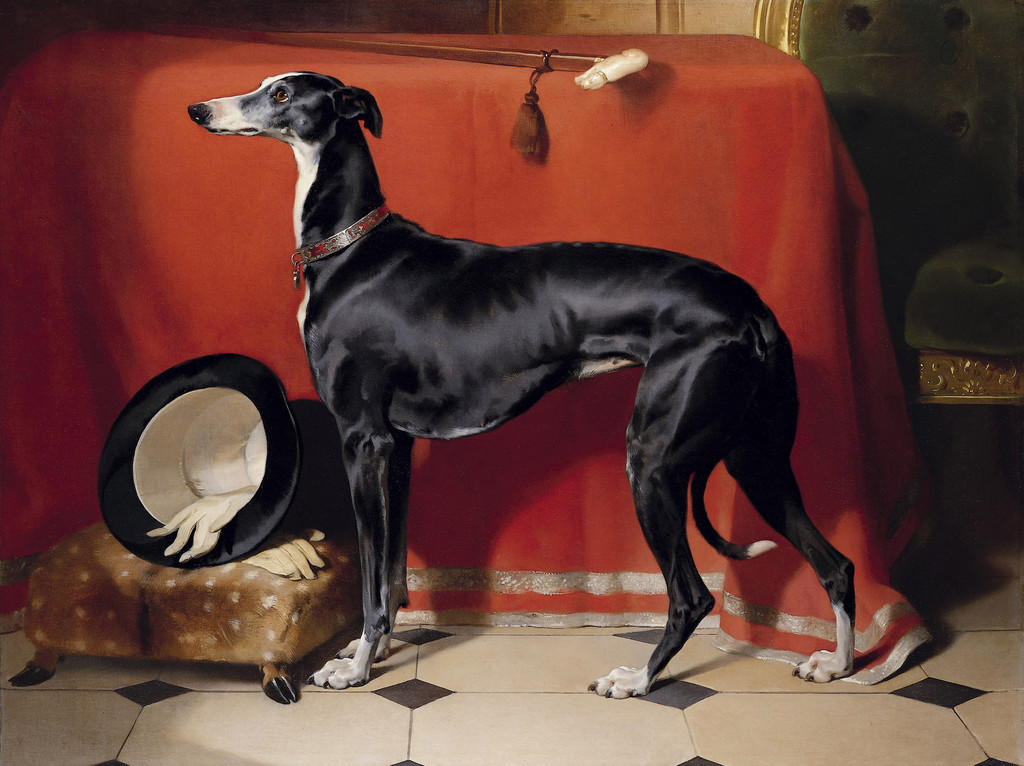
Landseer's 1841 portrait of Eos makes that structure visible. Eos was Albert's greyhound and had accompanied him from Germany to Britain. Victoria commissioned a life-size portrait as a surprise Christmas present. The painting connected the alert dog to its absent owner through Albert's gloves, top hat and cane, and the finished work hung in his Dressing Room at Buckingham Palace.[10] Commissioner, subject, recipient and destination each belonged to Albert's biography, even though Victoria directed the gift and Landseer made it.
The intended surprise imposed practical demands. The artist needed knowledge of the animal and access to possessions recognisable as Albert's without prematurely revealing the plan. A popular story says that Landseer borrowed the hat and gloves, alarming servants when the prince wanted them. The current catalogue presents that episode cautiously, and it should remain an anecdote rather than the foundation of the commission.[10] What is secure is more revealing: secrecy shaped the work, Albert responded with delight, and a room associated with dressing and personal routine became its first home.
Eos entered another Landseer painting in the same year. A separate image shows the eight-month-old Princess Royal with the greyhound and was given by Victoria to Albert for his birthday on 26 August 1841.[11] The two works must not be merged. One makes Eos the principal sitter accompanied by objects standing for Albert; the other places the dog beside the royal couple's first child. Their proximity shows how gift culture could build a network of family memory around the same animal without reducing every picture to repetition.
Gift exchange did not remove hierarchy. Victoria could command access and resources unavailable to an ordinary patron, and Landseer remained responsible for satisfying a recipient whose response mattered politically as well as personally. Nor did payment make the gift insincere. Professional labour enabled the private gesture. The work's emotional meaning depended in part upon a successful transaction with an artist who was not a member of the marriage.
The distinction between an intimate origin and a later audience also matters. Eos began in secrecy and occupied Albert's Dressing Room, but the composition later became widely known, while a glass-plate photograph from around 1870–73 records the painting in that room after his death.[10] Documentation, reproduction and institutional collecting moved the image beyond the Christmas morning for which it had been planned. Patronage gave the picture its first use, not its only life.
Pets, property and the royal household
Landseer's royal animal pictures are often approached through affection, and the evidence for attachment is abundant. Dash accompanied Victoria in youth; Eos linked Albert to Coburg and his new British household; several terriers recur in paintings and decorative objects. But “beloved pet” is not a complete historical category. These animals were owned, named, housed and cared for within a royal establishment that also maintained working horses, shooting dogs, breeding programmes and kennels. Their individuality existed inside systems of property and labour.[12]
The distinction helps explain why a named animal could bear several meanings at once. Eos was a companion, a greyhound associated with hunting and an element in family imagery. Albert's accessories in her portrait identify ownership without requiring his body to appear. In the painting with the Princess Royal, her gentleness around a child supported another kind of household narrative. After her death in 1844, the painted likeness helped inform memorial sculpture. None of these functions cancels the others; each depends upon the animal's documented identity.[10][11][12]
Victoria and Albert did not rely on Landseer alone to preserve such identities. The Royal Collection's dog histories include work by Friedrich Keyl and later systematic photography of animals associated with the Windsor kennels. Photographs could document staff, breed and animal with a different claim to immediacy from oil painting, while albums assembled separate likenesses into household records.[12] Landseer occupied an influential place in that visual system, but he neither invented it single-handedly nor controlled its later expansion.
Royal animals also travelled between media. Prince Albert designed a silver-gilt centrepiece with Garrard in 1842–43 that incorporated models of Islay, Eos and Cairnach. Islay appears in the same distinctive pose used in Windsor Castle in Modern Times.[13] The relation does not turn Landseer into the centrepiece's designer. It shows that a memorable pose could move from a painted royal dog into decorative art made through a different collaboration. An animal's image became part of the household's shared visual vocabulary.
This movement complicates any neat separation between private sentiment and public influence. A dog portrait could begin as a spouse's gift, a centrepiece could translate familiar animals into precious metal, and an object might later appear at a major exhibition or in a photographic record. The royal family's attachment made these subjects desirable; royal ownership gave them social visibility; other makers and media carried them onwards. It is unnecessary to claim that Victoria made Britain a “nation of animal lovers” to recognise that royal example helped make certain breeds, poses and forms of animal portraiture conspicuous.[12]
Landseer's contribution lay partly in making property appear as relationship. Collars, names, human possessions, rooms and bodily proximity located an animal within a particular household. Viewers could register affection, but they were also seeing who owned the dog, whose gift the portrait was and which family narrative it served. That combination made animal painting unusually adaptable to royal patronage: likeness could remain specific while the scene carried wider ideas about loyalty, domestic order, sport and inheritance.
A family pictured at Windsor
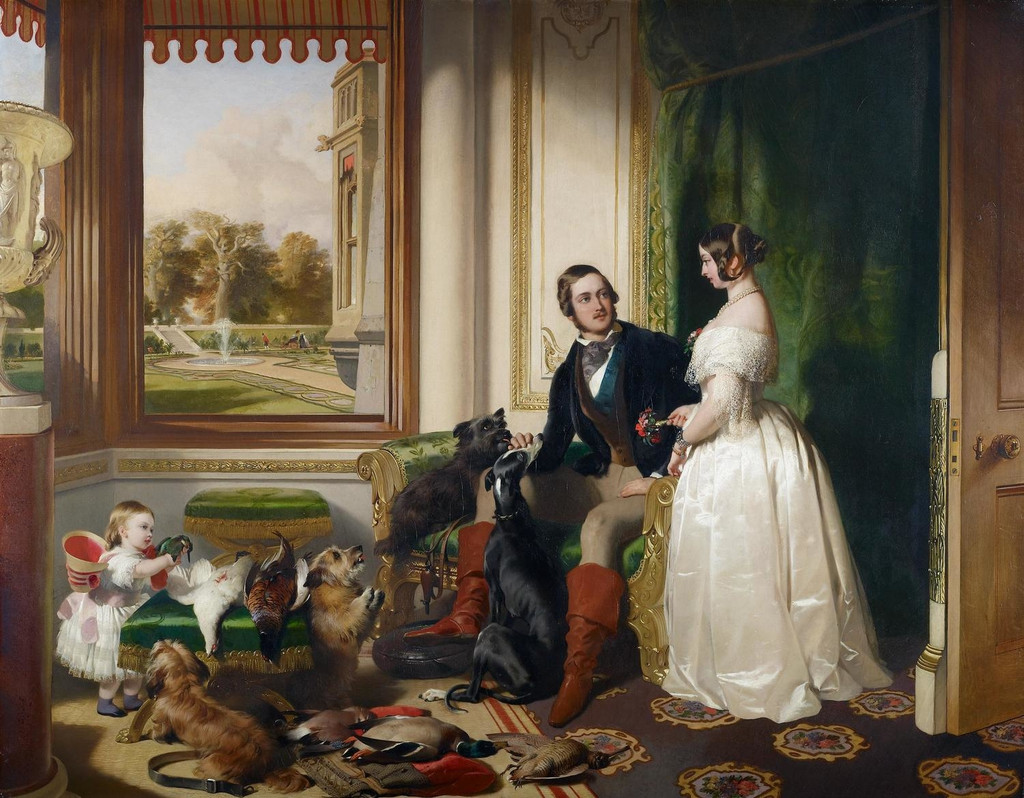
Windsor Castle in Modern Times, dated 1841–43 by the Royal Collection, expanded the pet portrait into a family conversation piece. Albert has returned from shooting; Victoria greets him with flowers; their infant daughter occupies the room with several dogs. Through the opening beyond the interior, the East Terrace locates the encounter at Windsor, while the Duchess of Kent appears outside. The picture thus joins spouse, child, mother, animals, game, furniture and residence in a carefully arranged account of family life.[13]
Its apparent informality is constructed. Game is brought into an elegant drawing room, outdoor sport meets domestic welcome, and the royal child participates in an image of continuity. The painting does not cease to be monarchical because it avoids throne, regalia or state ceremony. Windsor itself supplies dynastic history, and the people represented were not an ordinary household. What was new was the use of a modern family scene to express roles that remained public: ruling queen, consort, heir and royal mother.
Animals help the composition negotiate those roles. They connect Albert's shooting to the interior and make the room feel inhabited rather than ceremonial. Because the dogs were named individuals known to the family, they also gave Landseer a field in which his authority as an animal painter could support the human group. Yet their presence does not resolve the picture's balance of power. Victoria is wife and sovereign; Albert is husband, sportsman and consort; their positions cannot be reduced to a single domestic hierarchy.
The residence matters as more than scenery. The Green Drawing Room and East Terrace created a recognisable environment shaped by earlier royal furnishing and by Victoria and Albert's own use. A painting of modern monarchy could draw upon the material authority of Windsor while claiming access to everyday family feeling. The title's “modern times” therefore marks a representational problem: how could an old institution appear familial, active and contemporary without surrendering rank?
The long production of the picture kept that problem open. It was not a candid moment secured in one visit. Sittings, studies, revisions and the changing age of the child intervened between conception and completion. By the time a royal family image was finished, the household it represented had moved onwards. Landseer's task was to produce coherence from different sittings and known likenesses, not merely to copy an afternoon at Windsor.
Later objects amplified parts of that coherence. Albert's centrepiece carried Islay's pose into another medium, while photographs and prints preserved rooms, paintings and animals in new forms.[13][6] These afterlives should not be mistaken for proof that the oil was conceived solely for mass persuasion. They demonstrate instead how a family picture made within a royal residence could become available for broader monarchical memory.
Patrons who also made images
Victoria and Albert's own artistic practice altered their relation to professional artists. They had been taught drawing before Landseer entered their household, and they began etching in 1840 under George Hayter's guidance. From 1842 Landseer also tutored them, sometimes providing drawings for them to copy. The couple produced ninety-three etched plates, separately and together, during the 1840s. These were primarily printed for private enjoyment, with some impressions presented to relatives and friends.[14]
Landseer was therefore not only a supplier receiving instructions. At particular moments he was a teacher explaining or demonstrating a process to two unusually powerful pupils. That reversal was limited but real. The queen and prince could set aside some of the distance of commission while learning how a line bitten into copper differed from a mark drawn on paper. Their interest in practice helped them look at the labour of other artists with more knowledge than passive consumers possessed.
It would be wrong, however, to credit Landseer with all ninety-three plates or with inventing the couple's interest in art. Hayter preceded him in the printmaking lessons; Edwin Dalton later supervised their experiments in lithography. The plates include independent and collaborative efforts, not one body of work after Landseer. His role from 1842 belongs within a sequence of professional instruction.[14]
The printing itself depended on more people than teacher and royal pupils. A press was established at Buckingham Palace. Hayter initially managed the biting of plates; Marianne Skerrett later performed some of that work, while Colnaghi assisted with more complicated printing.[14] The apparently intimate pastime therefore joined palace infrastructure, household skill and commercial expertise. Even private art-making was organised labour.
Copying Landseer's drawings was part of that process rather than evidence of concealed authorship. In nineteenth-century artistic education, copying allowed a learner to study contour, grouping and the translation of an existing design into another medium. Victoria also copied one of Landseer's wall images at Ardverikie in September 1847. Her pencil sheet eventually acquired documentary importance after the old house and wall scheme were destroyed by fire.[15] The act began as practice and admiration; history changed its value.
These exchanges make influence harder to describe in one direction. Landseer supplied models, instruction and professional knowledge. Victoria and Albert supplied access, patronage, subjects, rooms and sustained attention. Their practical experience could encourage informed engagement, but it could also make them exacting. A patron who drew and etched might feel entitled to discuss composition, likeness or detail closely. The lessons therefore belong to the same history as later corrections: participation created rapport while increasing the possibility of intervention.[3][14]
The household between artist and sovereign
Stories of court artists often compress every exchange into a conversation with the monarch. The Royal Archives show a more populated system. Marianne Skerrett, head dresser to Victoria from 1837 to 1862, managed clothing and wardrobe accounts, but her duties also extended to bills, artists, sittings and purchases. On 8 April 1842 she wrote to Landseer to arrange a day on which Victoria could meet him. The letter is a small document with a large implication: access to the queen passed through calendars and staff work.[16]
The following month Victoria watched Landseer begin sketches of herself and Albert in costume at the Buckingham Palace ball. The proximity of these events makes a connection possible, but the evidence does not prove that the April appointment concerned only that painting.[16][17] Preserving uncertainty is useful. It shows how easily an archival letter can be forced into a satisfying anecdote when the household's actual business was broader.
Skerrett's position also complicates the division between servant and adviser. Victoria later remembered her arranging with artists and called her a friend of Landseer and several others. Landseer in turn valued her. Yet friendship should not dissolve her professional function into the stereotype of a woman smoothing difficult tempers. She communicated, coordinated, reviewed bills and helped purchases happen. Those are concrete forms of cultural labour.[3][16]
Other intermediaries entered particular transactions. In September 1847 Victoria sent detailed instructions for a Highland picture to George Anson, Albert's secretary, so that he could convey them to Landseer. Lord Abercorn was mentioned as someone who might help secure the artist's action.[18] Ludwig Gruner served the royal couple in wider artistic and advisory capacities.[3] The network changed with the object: dresser, secretary, adviser, existing owner, dealer, printer or host might stand between idea and delivery.
Mediation did not mean Victoria and Albert were remote. The queen could specify subject, scale, deadline and intended recipient in detail. Albert could visit artists, design objects and offer criticism. Informality could exist within the same system as strict protocol. The point is not to choose between intimate friendship and bureaucracy, but to see how one depended on the other. Repeated artistic contact with a sovereign required people who made meetings, materials, payments and rooms available.
This institutional view also protects Landseer from a flattering but implausible legend of permanent access. He visited royal residences and joined Highland occasions, but he did not simply wander into private apartments whenever inspiration struck. Sittings had to be fitted around engagements. Objects had to be moved, borrowed or recorded. Staff knew where pictures hung and when the queen was available. Patronage became durable because the household could translate personal wishes into scheduled work.
Commission, purchase and present are not synonyms
Two transactions in the 1840s expose the difference between acquiring a picture and causing it to be made. The Sanctuary was already owned by William Wells of Redleaf when it appeared at the Royal Academy in 1842. Victoria saw it, secured Wells's agreement to relinquish it, bought it as a birthday present for Albert and placed it in his Writing Room at Windsor.[19] The queen's action was decisive for its entry into the Royal Collection, but she did not originate the painting as its commissioner.
That history gives the work at least three distinct contexts. Landseer made a Highland stag picture that Wells acquired. The Academy exhibition placed it before a public. Victoria then transformed it into a marital gift with a new domestic destination. None of those stages cancels the previous one. Calling the whole process a royal commission would erase Wells and confuse acquisition with creation.
The 1847 picture now called Queen Victoria at Loch Laggan followed the opposite path. During the royal stay at Ardverikie, Victoria wanted a memento for Albert at Christmas. In a letter dated 4 September to George Anson, she proposed a small cabinet picture with a dead stag, recognisable local scenery, a Highlander and perhaps distant royal figures. She reduced the importance of likeness and allowed the size or elaboration to contract if that would secure delivery. She also required secrecy.[18]
The letter reads less like an abstract expression of admiration than a working brief. It identifies recipient and occasion, suggests content, addresses scale, anticipates delay, names an intermediary and accepts a smaller result to protect the deadline. The language reveals a patron managing risk. Landseer completed the picture for Christmas, received £200, and Victoria gave it to Albert on 24 December 1847.[18]
Payment matters here. The picture could be emotionally meaningful to both royal spouses and still be paid professional labour. The recorded £200 prevents the Christmas story from floating free of economics. It also demonstrates why “favour” is inadequate: an artist had to turn a private wish into an object by a certain date, and the patron assigned monetary value to that service.
The detailed instruction did not make Victoria the painter. A brief can delimit subject and use while leaving innumerable decisions of arrangement, light, surface and expression to the artist. Nor does successful delivery prove that every royal order proceeded smoothly. The Loch Laggan case is valuable because its chain is unusually complete. Set beside The Sanctuary, it gives two models: purchase and redestination of an existing work; commission and delivery of a new one.
Residences shaped the work
Landseer's royal pictures moved among Buckingham Palace, Windsor, temporary Highland houses, Balmoral and Osborne. These places were not interchangeable signs of wealth. Each offered different forms of access, activity and display. A Dressing Room made Eos part of Albert's personal environment. A Writing Room placed The Sanctuary beside work and correspondence. The Green Drawing Room allowed Windsor Castle in Modern Times to imagine family life inside a dynastic residence.[10][13][19]
Buckingham Palace was at once official home, event space, workplace and site of private experiment. The 1842 costume ball involved thousands of guests and elaborate historical dress, while Landseer's later painting required sketches and sustained work. Elsewhere in the palace, Victoria and Albert used an etching press and worked with teachers and printers. The same building could host public spectacle, private gift planning and practical image-making.[14][17]
Windsor joined longer historical authority to family routine. Landseer could represent Albert returning from sport while Victoria and their child occupied a furnished room, or a purchased deer painting could enter Albert's Writing Room as a birthday gift. The picture's address inside the castle changed what it did. The Sanctuary was not only an exhibited hunting image once it became part of Albert's daily surroundings; Windsor Castle in Modern Times made the residence itself a participant in the royal family's self-description.
The Highland settings changed relations again. At Ardverikie, Victoria copied Landseer's wall design and sent instructions for a portable Christmas picture tied to the scenery of the stay.[18][15] At Loch Muick, a small 1850 oil sketch preserved the conception of a meeting between her fishing party and Albert's stalking party.[20] In both cases, the royal household temporarily reorganised itself around travel, sport and landscape. Servants, ghillies, animals and equipment made the apparent freedom possible.
Victoria's claim that the Loch Muick conception accorded with the truth of royal Highland life is evidence of how she wanted the experience understood.[4][20] It is not proof that the image contains the whole social history of the region. Landseer's royal task involved giving pictorial form to the couple's sense of a peaceful, independent life. The selected scene could feel truthful to its patrons while omitting the property arrangements, labour and political histories that enabled it. Recognising that selection belongs to the history of patronage without assigning Landseer one total political intention.
Osborne acquired a different charge after Albert's death. In Queen Victoria at Osborne, residence no longer frames marital exchange. It anchors widowhood, household attendance and continuing official work.[21] The place helps the painting say that personal loss and sovereign duty occupy the same world. Thus residences did more than locate royal bodies. They organised which version of monarchy a commission could make visible.
When likeness became negotiation
Royal sitters brought a demanding standard of recognition. Landseer's authority with animals could not simply be transferred to human faces, and a patron who knew her own appearance through mirrors, photographs and other artists possessed many grounds for comparison. Sittings were therefore occasions of review as well as access. A likeness had to satisfy the person represented, the family around her and the larger function of the picture.
The costume-ball portrait shows how event, memory and likeness separated over time. Victoria and Albert had appeared as Edward III and Queen Philippa on 12 May 1842. Landseer began sketches around the occasion, but the current picture is dated 1842–46.[17] The task was not to report the crowded ball comprehensively. It was to reconstruct the sovereigns' historical performance after the event, using costumes based on tomb effigies and bodies available only through arranged sittings.
Historical dress did not reduce the need for personal resemblance. Indeed, it created two standards at once: the sitters had to be recognisable as Victoria and Albert while appearing in the guise of medieval rulers. The commission also carried a public-economic association because the costumes were intended partly to support work in the declining Spitalfields silk industry.[17] Fabric, industry, historical citation and royal likeness met in a picture whose execution extended for years.
The larger problem became unmistakable with Royal Sports on Hill and Loch. Remington records Landseer's difficulty in securing satisfactory royal likenesses and the involvement of Franz Xaver Winterhalter, an artist whose court portrait practice gave him particular expertise. Victoria sat again on 5 April 1854 and judged the picture strong in general while finding the likenesses inadequate. Her last sitting followed on 10 April.[3][4] This was not rejection of the entire work; it was a precise division between composition and portraiture.
Winterhalter's advice should not be dramatised as a contest in which one court artist defeated another. It shows a collaborative correction process under pressure. Landseer retained responsibility for the picture, but another professional was asked to help solve the queen's face. Royal patronage could connect artists as well as patrons and staff, especially when a large commission approached public exhibition without satisfying its sitter.
Correction also had an asymmetry. Victoria could request another sitting or demand a closer likeness; Landseer could complain, delay or revise, but the subject's status gave her judgement unusual force. At the same time, the artist's reputation and personal access gave him more room for resistance than a simple servant might have possessed. The conflict was neither full artistic freedom nor mechanical obedience. It was negotiation conducted under unequal conditions.
The Balmoral project that would not settle
The small oil Queen Victoria landing at Loch Muick dates from 1850 and measures 42.9 by 76.5 centimetres. It preserves a compact conception: Victoria reaches the shore after fishing and encounters Albert's stalking party amid Highland landscape, attendants, animals and game.[20] The design promised to unite family, sport, sovereignty and place. Its scale and freshness make it especially important because the large project that grew from it became one of the clearest limits of Landseer's royal favour.
At the Royal Academy in 1854 the expanded composition appeared as Royal Sports on Hill and Loch, naming Victoria, Albert, the Prince of Wales and Viscountess Jocelyn. It was explicitly marked unfinished.[22] An Academy display ordinarily exposed a work to comparison and criticism; showing a royal commission in that condition made its incompletion public. Attention generated by the sitters could not shield the canvas from reviews that considered whether its composition and likenesses succeeded.
The contrast with Loch Laggan is sharp. In 1847 Victoria had narrowed her request, accepted limited likeness and allowed reduced scale so that a Christmas present could be completed. The 1850 conception expanded instead into a large group whose individual identities and details demanded prolonged attention. More figures, more exactness and more public expectation multiplied the points at which patron and artist could disagree.[18][20][22]
Landseer continued to wrestle with the project. In 1870 he looked back on it as his “Balmoral misfortune” and complained that visits to Windsor brought corrections over details as minute as a servant's shirt and stockings.[3] The phrase is worth retaining only as an attributed expression of frustration. It does not prove that every royal request was petty, nor that Landseer always resisted accuracy. It records how a commission once imagined as a truthful image of peaceful Highland life became, for its artist, associated with repeated interference and failure to conclude.
The two perspectives do not have to be reconciled into a winner. Victoria saw historical and personal significance in exact people, dress and activities. Landseer had to make a coherent picture rather than an inventory of remembered facts. The patron's desired truth was cumulative: every recognisable detail strengthened the scene's claim to lived experience. The artist's problem was selective: too many obligations could weaken pictorial unity or extend revision indefinitely.
Nor should the long execution become a medical parable. Landseer's health history is real, but a difficult commission cannot be diagnosed from delay or complaint. The surviving evidence supports a professional explanation before any retrospective psychology: ambitious scale, multiple sitters, changing circumstances, likeness problems, detailed correction and the exceptional scrutiny attached to a royal family image. Incompleteness belongs to the transaction itself.
The project therefore clarifies what favour could and could not do. It secured access, patience and repeated opportunities to revise. It kept an unsatisfactory work alive far longer than an ordinary commission might have survived. But it could not manufacture agreement, fix every likeness or guarantee that the image's private conception would become a successful public object. Royal support prolonged the negotiation; it did not resolve it.
After Albert: patronage in mourning
Albert's death in December 1861 changed Victoria's life and altered the structure of artistic exchange. The birthdays and Christmases through which the couple had commissioned gifts for one another could no longer operate in the same reciprocal way. The Royal Collection remained full of objects carrying their shared history, and Victoria continued to commission images, but remembrance now addressed an absent recipient. Landseer's previous work made him a plausible artist for that altered task because he had already pictured family, animals, residences and Highland experience.[1][2][5]
Queen Victoria at Osborne, worked in 1865–67, presents the widowed queen in deep mourning on her pony Flora. John Brown holds the reins; daughters, dogs and Osborne occupy the scene, while a red dispatch box and papers connect the figure to official business.[21] The commission did not recreate the bright marital exchange of Eos or Windsor Castle in Modern Times. It joined grief to the machinery of sovereign work.
Victoria's stated conception emphasised loneliness, her pony, Brown and the residence.[21] That degree of participation recalls the Loch Laggan brief, but the emotional and political setting was very different. A private wish to show bereavement could not remain only private once embodied in a large portrait of the monarch. The dispatch box invited viewers to read mourning alongside duty; Brown's proximity invited other interpretations of dependence and intimacy. The picture's public exhibition in 1867 exposed those meanings to an audience that the patron could not fully control.
This is a crucial limit on royal patronage. Victoria could choose artist, subject and elements of the scene, but she could not dictate reception. A representation intended to make sorrow and continuing work visible might instead intensify criticism or speculation. The public did not encounter only an image of duty. Viewers brought expectations about the sovereign's visibility, widowhood, class and the proper place of a male servant near the queen.
Landseer's role after Albert was therefore neither unchanged service nor abrupt exclusion. He helped carry familiar elements—animals, riding, residence and household attendants—into a new representation of monarchy. Their meanings shifted because the consort was absent. A pony led by Brown was not equivalent to Eos guarding Albert's possessions; Osborne in mourning was not Windsor arranged around a sporting return. The same artist and patron could produce a profoundly different image because the relationship around them had changed.
The full history of Queen Victoria at Osborne belongs to the painting itself, including its versions and reception. Within the patronage story, it establishes continuity under altered conditions. Victoria still trusted Landseer with an ambitious statement about her life, but trust did not ensure public success. The picture makes visible both the durability of their association and its exposure to meanings neither patron nor artist could close.
Favour had limits
Landseer's royal career is strongest when it is not treated as a parade of honours. It began with a picture commissioned by the Duchess of Kent for a princess, developed through Victoria's own interest in animal spectacle, expanded after marriage into gifts and family pictures, and acquired additional forms through teaching, copying and residence. Household staff and advisers translated wishes into appointments, bills and deliveries. Some works moved smoothly from request to room; others changed owners, extended over years or remained unresolved.[3][5][7][8]
The completed objects do not all testify in the same way. Eos demonstrates how a professional commission could serve a private surprise and occupy an intimate room.[10] The Sanctuary shows Victoria acquiring an existing Academy picture from another patron and redirecting it as a gift.[19] Queen Victoria at Loch Laggan records a detailed instruction successfully delivered by Christmas for a documented price.[18] Windsor Castle in Modern Times joins family, animals and residence in an image that looks informal because it is carefully constructed.[13]
The unfinished and difficult projects are equally important. The late-1830s equestrian design did not advance beyond its surviving study.[9] Royal Sports on Hill and Loch turned a compelling small conception into a large, publicly exhibited problem of likeness, detail and completion.[3][20][22] These failures do not cancel the successful pictures. They reveal the conditions under which success had to be made.
Nor did artistic exchange flow one way. Victoria and Albert drew, etched, copied and discussed art. Landseer taught them from 1842, while other professionals supplied earlier and later instruction. Their knowledge encouraged engagement with process but could sharpen correction. Marianne Skerrett's practical participation in printmaking and artist liaison demonstrates that even the most personal activity rested on household work.[16][14]
The best measure of favour is therefore not access alone. It is the amount of negotiation the relationship could sustain. Victoria and Albert returned to Landseer because his treatment of animals, family action and setting served purposes they valued. Landseer continued to accept royal work because it offered subjects, visibility, payment and relationships unavailable elsewhere. Repetition created familiarity, but familiarity did not remove difference in status or judgement.
By the time Queen Victoria at Osborne entered public view, patronage had outlived Albert and changed its emotional centre.[21] Landseer could still help the queen imagine herself through animals, residence and attendants, yet the audience could refuse the intended balance of sorrow and duty. Commission did not equal control. A patron could originate an image and still lose authority over its reception.
The phrase “Victoria's favourite painter” is useful only if it opens questions rather than closes them. Favourite for which subjects, through whose arrangement, on what terms and with what result? The answers vary. A mother, queen, consort, dresser, secretary, earlier owner, printer and fellow artist all enter the record. So do rooms, deadlines, payments, corrections and works that never settled into completion. Royal patronage gave Landseer an extraordinary field of work. Its limits are what make that field historically legible.
Artworks directory
This directory gathers works discussed in the articles, including drawings, original etchings and prints after Landseer. It is not a complete catalogue of every drawing, version, plate or impression. Distinct media are kept separate; uncertain dates are left blank. Linked titles open individual articles.
| Name | Date | Medium |
|---|---|---|
| A Bellowing Stag | Drawing | |
| A Deerhound | 1826 | Painting |
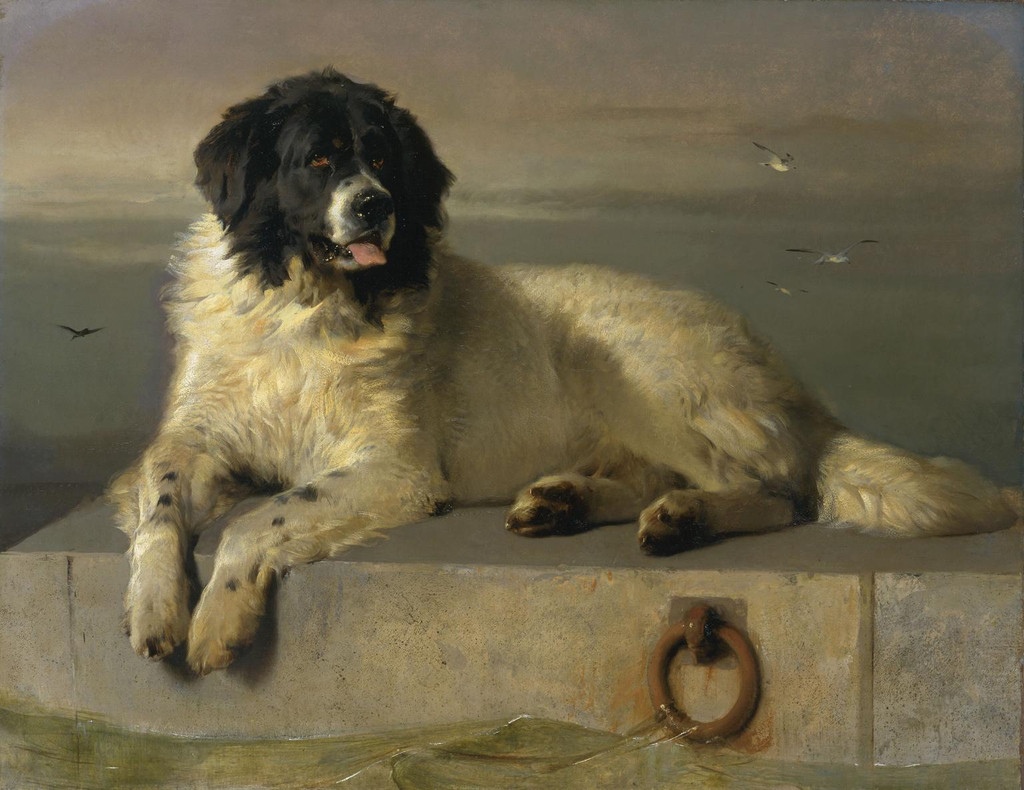
| A Distinguished Member of the Humane Society | 1838 | Painting |
| A Highland Breakfast | 1834 | Painting |
| A Highland Landscape | c. 1830 | Painting |
| A Highland Shepherd's Home | Painting | |
| A Horse, Goat and Bull | 1811 | |
| A Hunting Horse | Drawing | |
| A Jack in Office | Painting | |
| A Lion Disturbed at His Repast | Painting | |
| A Random Shot | Painting | |
| A Scene at Abbotsford | Painting | |
| Adversity | Painting | |
| Alexander and Diogenes | exhibited 1848 | Painting |
| Alpine Mastiffs Reanimating a Distressed Traveler | 1820 | Painting |
| Contending Group after Nature | Drawing | |
| Copy after Rubens's Wolf and Fox Hunt | c. 1824–26 | Painting |
| Dash | Painting | |
| Deer and Deer Hounds in a Mountain Torrent ('The Hunted Stag') | c. 1832 / exhibited 1833 | Painting |
| Deer Family | ||
| Dignity and Impudence | 1839 | Painting |
| Dog Resting Upon a Couch | Drawing | |
| Eos | 1841 | Painting |
| Favourites, the Property of H.R.H. Prince George of Cambridge | 1834–35 | Painting |
| Her Majesty Sketching at Loch Laggan | ||
| High Life | 1829 / exhibited 1831 | Painting |
| Highland Lassie | Drawing | |
| Isaac van Amburgh and his Animals | 1839 | Painting |
| Lady Godiva's Prayer | Painting | |
| Laying Down the Law | 1840 | Painting |
| Lion Defending Its Prey | c. 1840 | Painting |
| Lioness | Drawing | |
| Little Strollers | ||
| Low Life | 1829 / exhibited 1831 | Painting |
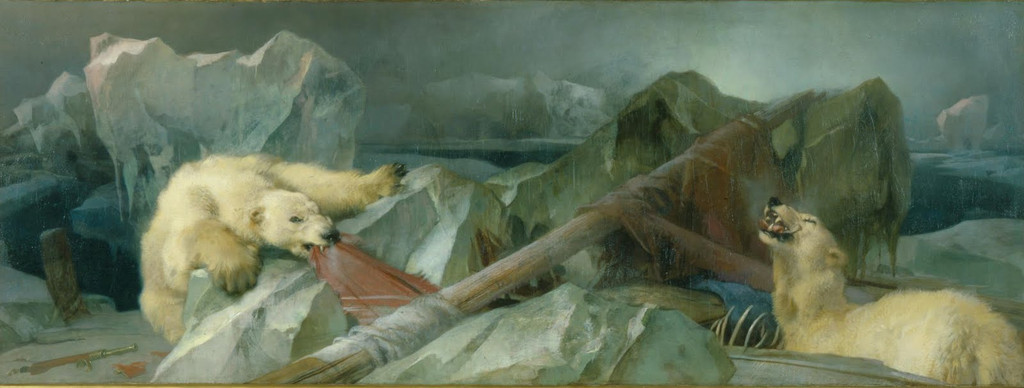
| Man Proposes, God Disposes | 1864 | Painting |
| Nell Gwynne / Diana Vernon | Painting | |
| Neptune | ||
| No Hunting Till the Weather Breaks | Painting | |
| Otterhounds | Drawing | |
| Peace | Painting | |
| Pensioners | Painting | |
| Portrait of a Mule | Painting | |
| Portrait of Mr Van Amburgh, as He Appeared with His Animals at the London Theatres | 1846–47 | Painting |
| Portraits of a Pointer Bitch and Puppy | Painting | |
| Pray Let Me Out | ||
| Prosperity | Painting | |
| Ptarmigan in a Landscape | by 1833 | Painting |
| Queen Victoria and Prince Albert at the Bal Costumé of 12 May 1842 | 1842–46 | Painting |
| Queen Victoria at Loch Laggan | Painting | |
| Queen Victoria at Osborne | 1865–67 | Painting |
| Queen Victoria landing at Loch Muick | Painting | |
| Rat-catching | 1823 | |
| Reclining Lion | Drawing | |
| Reclining Lion, From Back | Drawing | |
| Rent-day in the Wilderness | 1855–68 | Painting |
| Return from Deer Stalking | 1839 | |
| Royal Sports on Hill and Loch | Painting | |
| Sam Lovill, Porter at the Royal Academy | Drawing | |
| Scene from A Midsummer Night's Dream | 1848–51 | Painting |
| Scene in the Highlands, with portraits of the Duchess of Bedford, the Duke of Gordon and Lord Alexander Russell | Painting | |
| Scottish Highlands, Lochs and Figures | Drawing | |
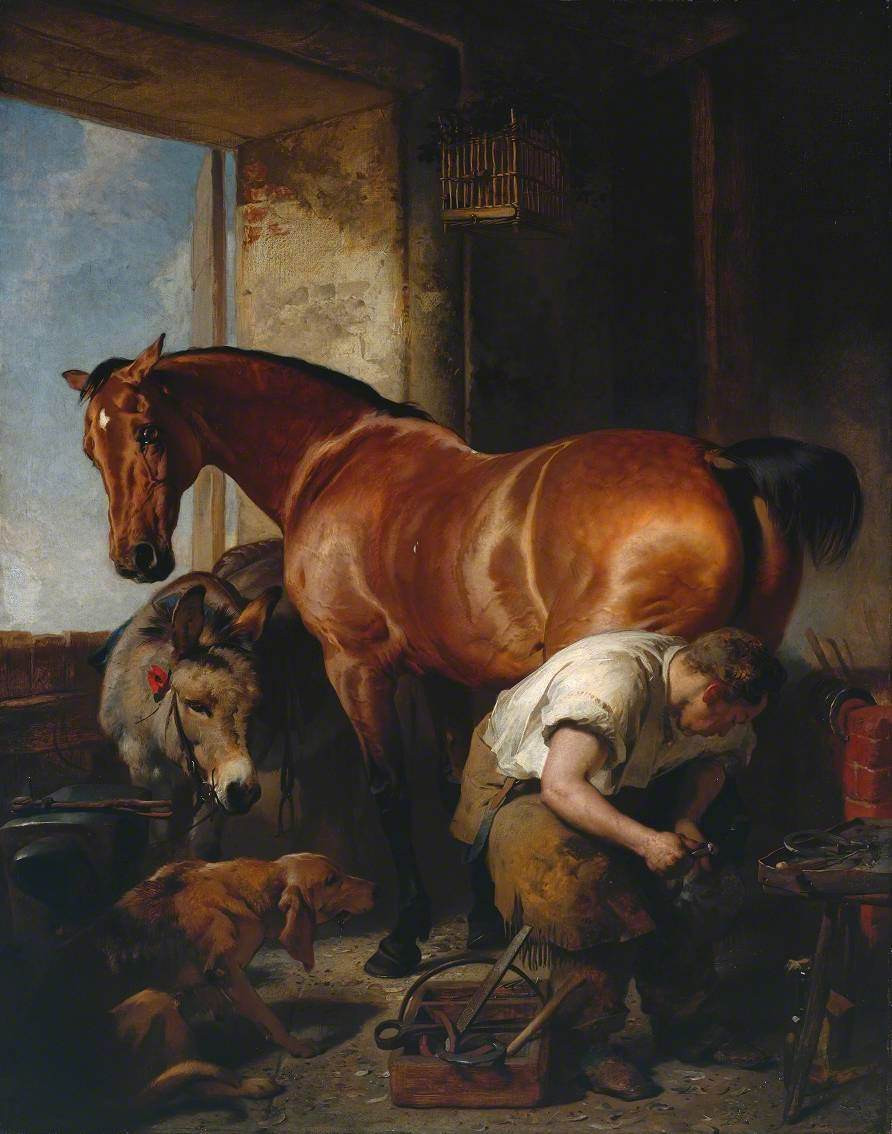
| Shoeing | exhibited 1844 | Painting |
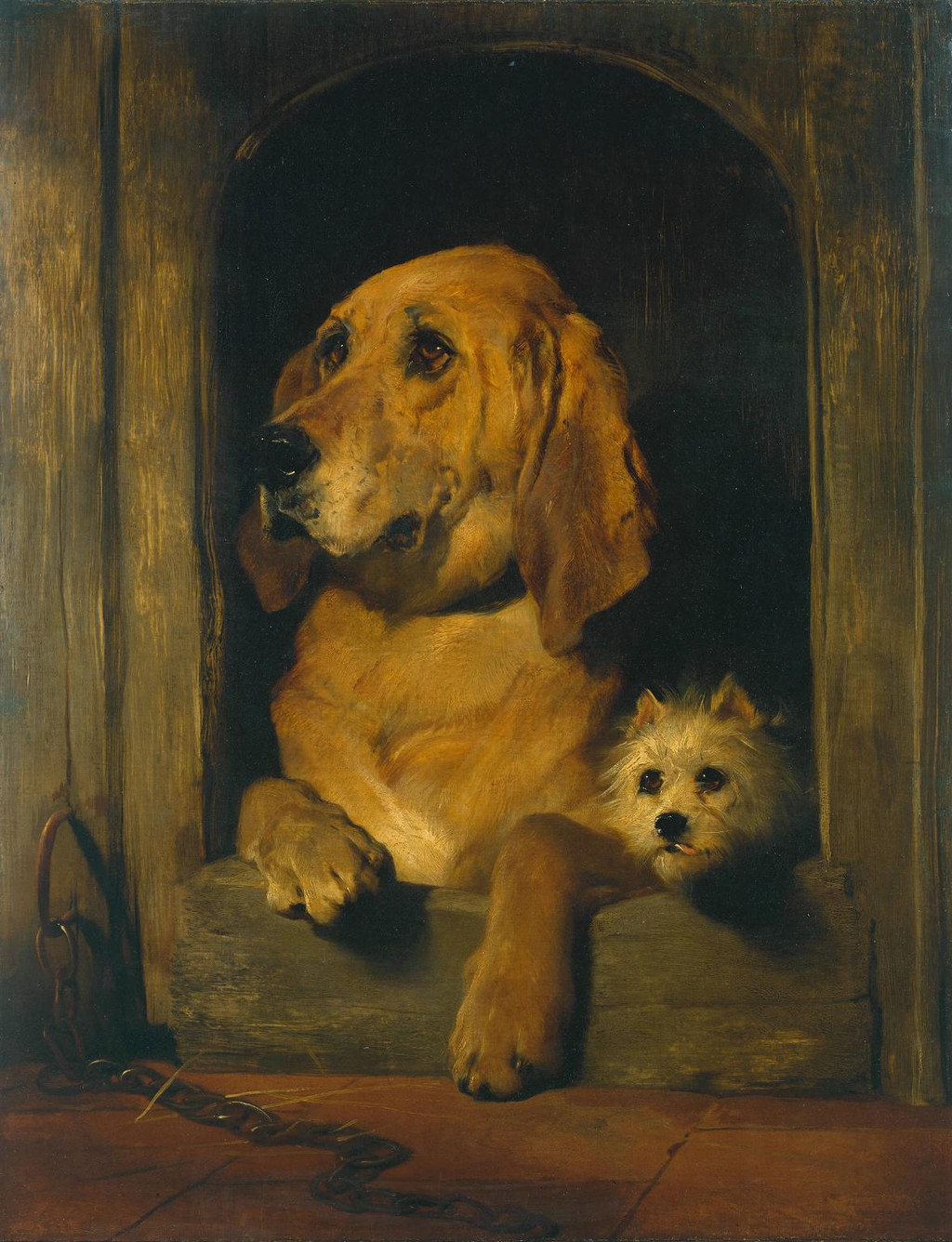
| Sleeping Bloodhound | exhibited 1835 | Painting |
| Spaniel and Rabbit | Painting | |
| Stag at Bay | 1866 | Sculpture |
| Stag at Bay | 1846 | Painting |
| Studies of a staghound and the head of a stag for painting ‘The Hunting of Chevy Chase’ | Drawing | |
| Study for Alpine Mastiffs Reanimating a Distressed Traveler | Drawing | |
| Study for the Monkey in The Cat's Paw | Drawing | |
| Study of a Dog | Drawing | |
| Study of a herding dog facing right | Drawing | |
| Study of the horse of Selene, from the East pediment of the Parthenon | Drawing | |
| Suspense | Painting | |
| Taking a Buck | ||
| The Arab Tent | c. 1865–66 | Painting |
| The Barn | Drawing | |
| The Best Run of the Season | ||
| The Cat's Paw | c. 1824 | Painting |
| The Cavalier’s Pets | ||
| The Challenge | Painting | |
| The Chase | Drawing | |
| The Connoisseurs: Portrait of the Artist with Two Dogs | 1865 | Painting |
| The Death of a Stag in Glen Tilt | Painting | |
| The Drive—Shooting Deer in the Pass | Painting | |
| The Drover's Departure | Painting | |
| The Highland Shepherd’s Dog | 1824; portfolio issue 1848 | |
| The Honourable Mrs Norton | Painting | |
| The Hunting of Chevy Chase | 1825–26 | Painting |
| The Illicit Highland Whisky Still | Painting | |
| The Keeper John Crerar with his Pony | Painting | |
| The Larder Invaded | ||
| The Lion-Dog of Malta | ||
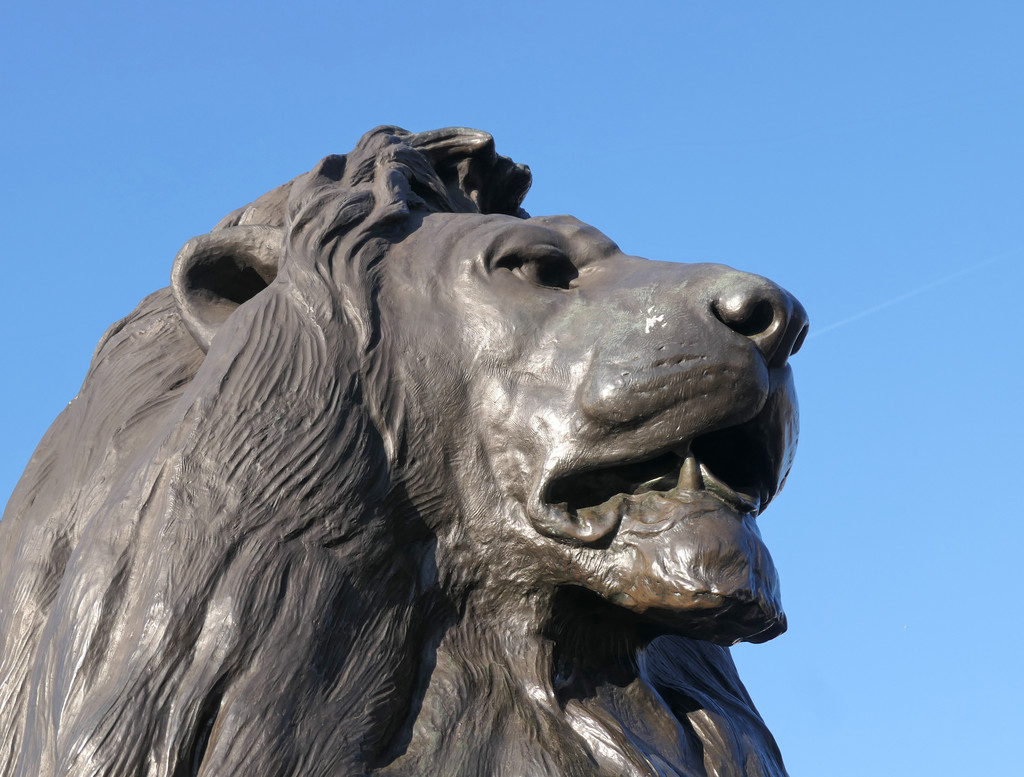
| The Lions at the Base of Nelson's Column | 1867 | Sculpture |
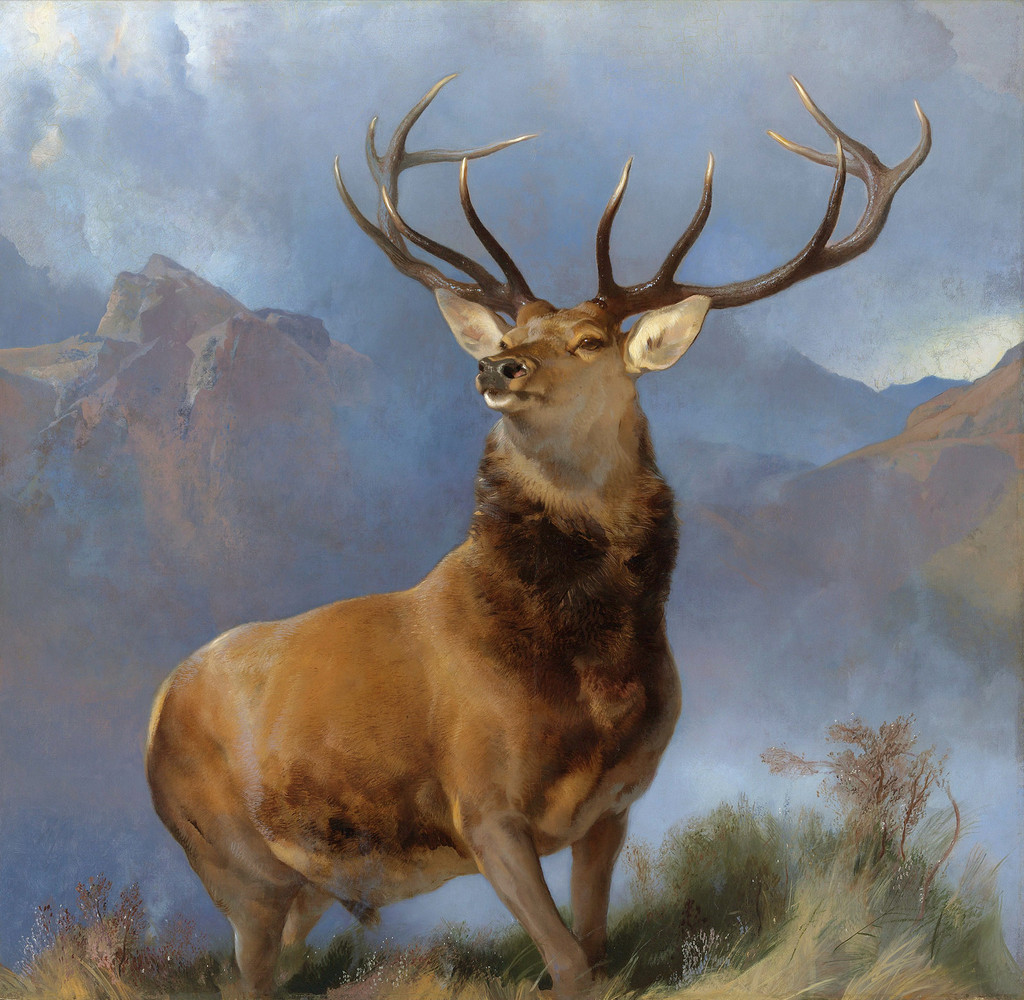
| The Monarch of the Glen | about 1851 | Painting |
| The Mountain Torrent | ||
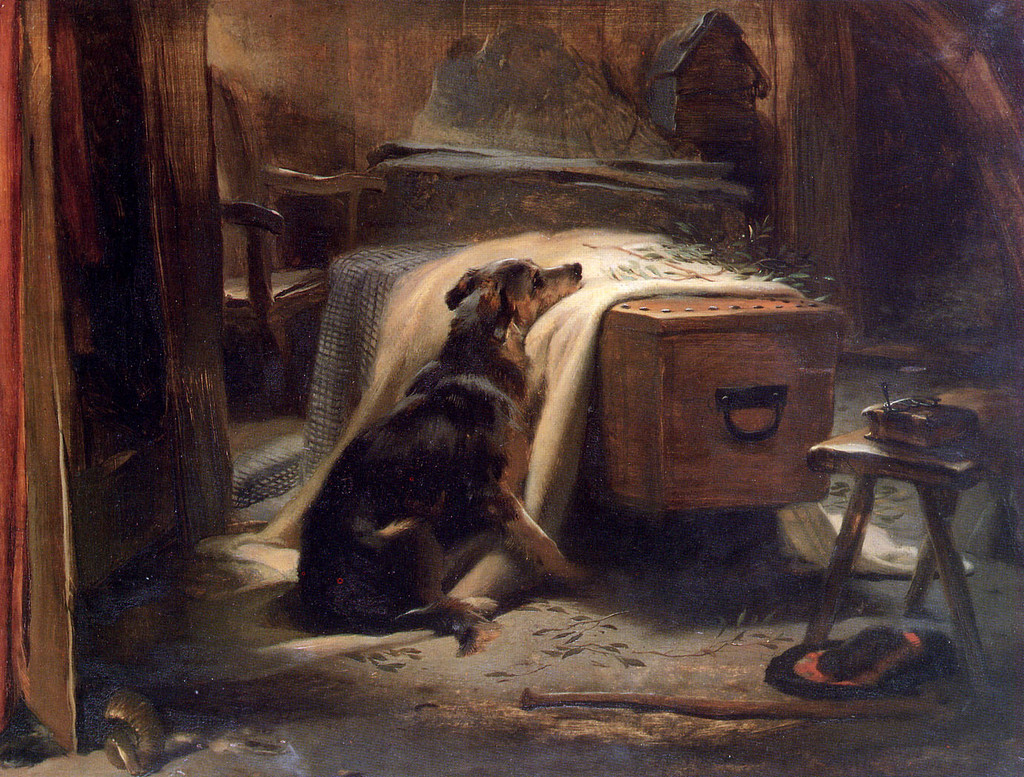
| The Old Shepherd's Chief Mourner | 1837 | Painting |
| The Sanctuary | 1842 | Painting |
| The Stricken Deer | Painting | |
| The Twa Dogs | Painting | |
| Time of Peace | ||
| Two stags running | Drawing | |
| Victoria, Princess Royal, with Eos | Painting | |
| View of Glenfeshie | Painting | |
| War | Painting | |
| White Horse in a Stable | Painting | |
| Windsor Castle in Modern Times | 1841–43 | Painting |
| Woburn Abbey Game Card | 1825; portfolio issue 1848 |
Discussion
Use the article’s images and evidence to develop your own reading of Queen Victoria Prince Albert and Royal Patronage.
Reader Insights
Which detail is most revealing when you consider “Patronage was a set of acts”?
How does the evidence in “Before the crown: Dash and a birthday present” affect your reading of Queen Victoria Prince Albert and Royal Patronage?
What further question would you bring to “Favour had limits”?
Join the Conversation
Share a detail, comparison or question about Queen Victoria Prince Albert and Royal Patronage below.
References
- Richard Ormond, with Joseph Rishel and Robin Hamlyn, Sir Edwin Landseer, Philadelphia Museum of Art / Tate Gallery / Rizzoli, 1981, ISBN 0-87633-044-8.
- Oliver Millar, The Victorian Pictures in the Collection of Her Majesty The Queen, 2 vols, Cambridge University Press, 1992.
- Vanessa Remington, “Queen Victoria, Prince Albert and their relations with artists”, Royal Collection Trust, Victoria & Albert: Art & Love, 2012. View source.
- Queen Victoria's Journals, Royal Archives, dated entries cited in the Royal Collection object records. View source.
- Royal Collection Trust, “The patronage and collecting of Queen Victoria and Prince Albert”, “Paintings” and “Victoria and Albert: Gifts Exchanged”. and and View source 1. View source 2. View source 3.
- Royal Collection Trust, “Drawings, Watercolours and Prints”. View source.
- Royal Collection Trust, Sir Edwin Landseer, Dash, 1836, RCIN 403096. View source.
- Royal Collection Trust, Sir Edwin Landseer, Isaac van Amburgh and his Animals, 1839, RCIN 406346, and “Highlights of St James's Palace”. and View source 1. View source 2.
- Royal Collection Trust, Sir Edwin Landseer, Queen Victoria (1819–1901) on Horseback, c. 1837–39, RCIN 400200. View source.
- Royal Collection Trust, Sir Edwin Landseer, Eos, 1841, RCIN 403219, and Prince Consort's Dressing Room, Buckingham Palace, c. 1870–73, RCIN 2084378. and and View source 1. View source 2. View source 3.
- Royal Collection Trust, after Sir Edwin Landseer, Victoria, Princess Royal, with Eos, glass-plate record for the 1841 painting, RCIN 2084685 / RCIN 401548. View source.
- Royal Collection Trust, “Royal Pets” and Sophie Gordon, Noble Hounds and Dear Companions: The Royal Photograph Collection. and View source 1. View source 2.
- Royal Collection Trust, Sir Edwin Landseer, Windsor Castle in Modern Times; Queen Victoria, Prince Albert and Victoria, Princess Royal, 1841–43, RCIN 406903; “Castle and Terrace Garden”; and Prince Albert with Garrard & Co., Centrepiece, 1842–43, RCIN 1570. and and View source 1. View source 2. View source 3.
- Royal Collection Trust, “Queen Victoria” in Royal Art to 1901 and Victoria and Albert after Landseer, Two peasant women, 1842, RCIN 816723. and View source 1. View source 2.
- Royal Collection Trust, Queen Victoria after Landseer, Copied from Landseer's drawing on the Dining room at Ardverikie, 5 September 1847, RCIN 980027.d. View source.
- Royal Collection Trust / Royal Archives, “From the Royal Archives: Queen Victoria's Household Staff”. View source.
- Royal Collection Trust, Sir Edwin Landseer, Queen Victoria and Prince Albert at the Bal Costumé of 12 May 1842, 1842–46, RCIN 404540. View source.
- Royal Collection Trust, Sir Edwin Landseer, Queen Victoria at Loch Laggan, September–December 1847, RCIN 403119. View source.
- Royal Collection Trust, Sir Edwin Landseer, The Sanctuary, 1842, RCIN 403195. View source.
- Royal Collection Trust, Sir Edwin Landseer, Queen Victoria landing at Loch Muick, 1850, RCIN 403221; John Morrison, “The whole is quite consonant with the truth: Queen Victoria and the myth of the Highlands”, Victoria & Albert: Art & Love. and View source 1. View source 2.
- Royal Collection Trust, Sir Edwin Landseer, Queen Victoria at Osborne, 1865–67, RCIN 403580. View source.
- Royal Academy of Arts, Exhibition of the Royal Academy, 1854, no. 63, Royal Sports on Hill and Loch: The Queen, the Prince Consort, the Prince of Wales, and the Viscountess Jocelyn.
- Splash image, Windsor Castle in Modern Times: Queen Victoria, Prince Albert and Victoria, Princess Royal. Royal Collection. Image source. Public domain.
- Navigation image, One of the bronze lions at Nelson’s Column: modelled by Edwin Landseer and cast by Carlo Marochetti. Photograph by Amanda Slater. CC BY-SA 2.0. Image source. CC BY-SA 2.0. Resized.