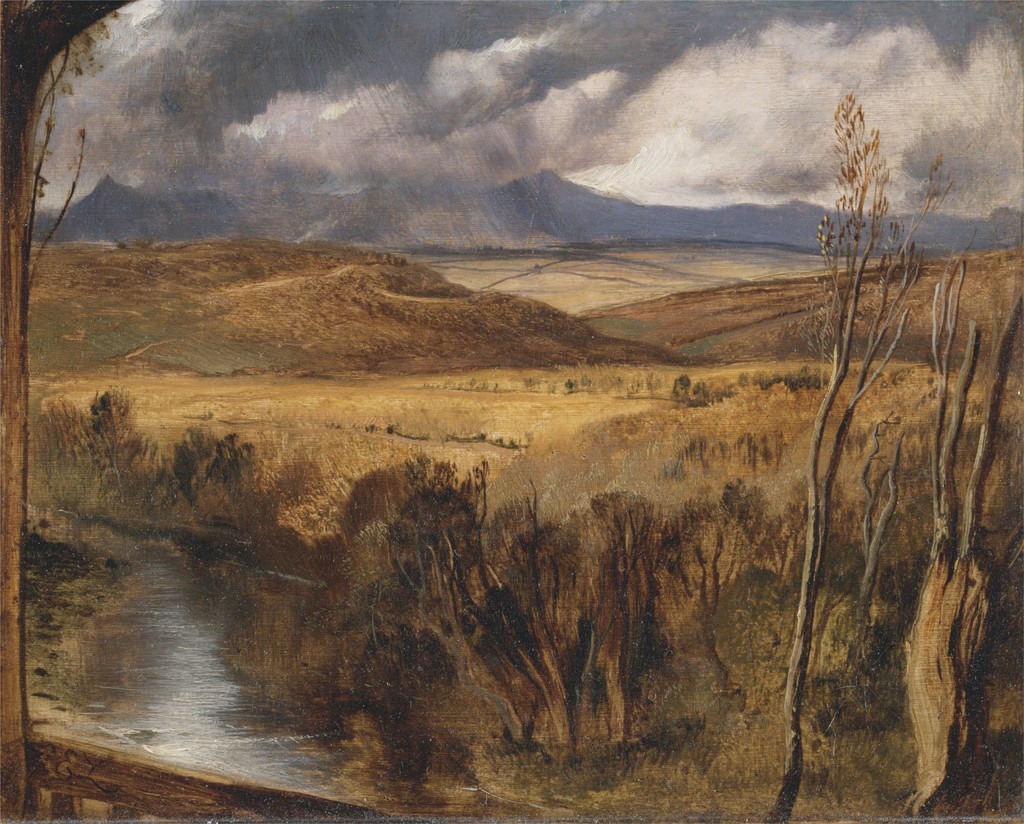
 by Tom Gurney
Tom Gurney BSc (Hons) is an art history expert with over 20 years experience
Email: tomgurney1@gmail.com / Phone: +44 7429 011000
Landseer and the Scottish Highlands: Introduction
The Scottish Highlands became one of Edwin Landseer's defining subjects, but they never entered his art as an untouched world waiting to be discovered. He reached them through roads, letters of introduction, houses, sporting parties and systems of landownership. Keepers found deer, hosts controlled access, servants sustained temporary residences, and patrons carried pictures back into metropolitan collections. Even an apparently solitary mountain animal could emerge from a crowded chain of human decisions.
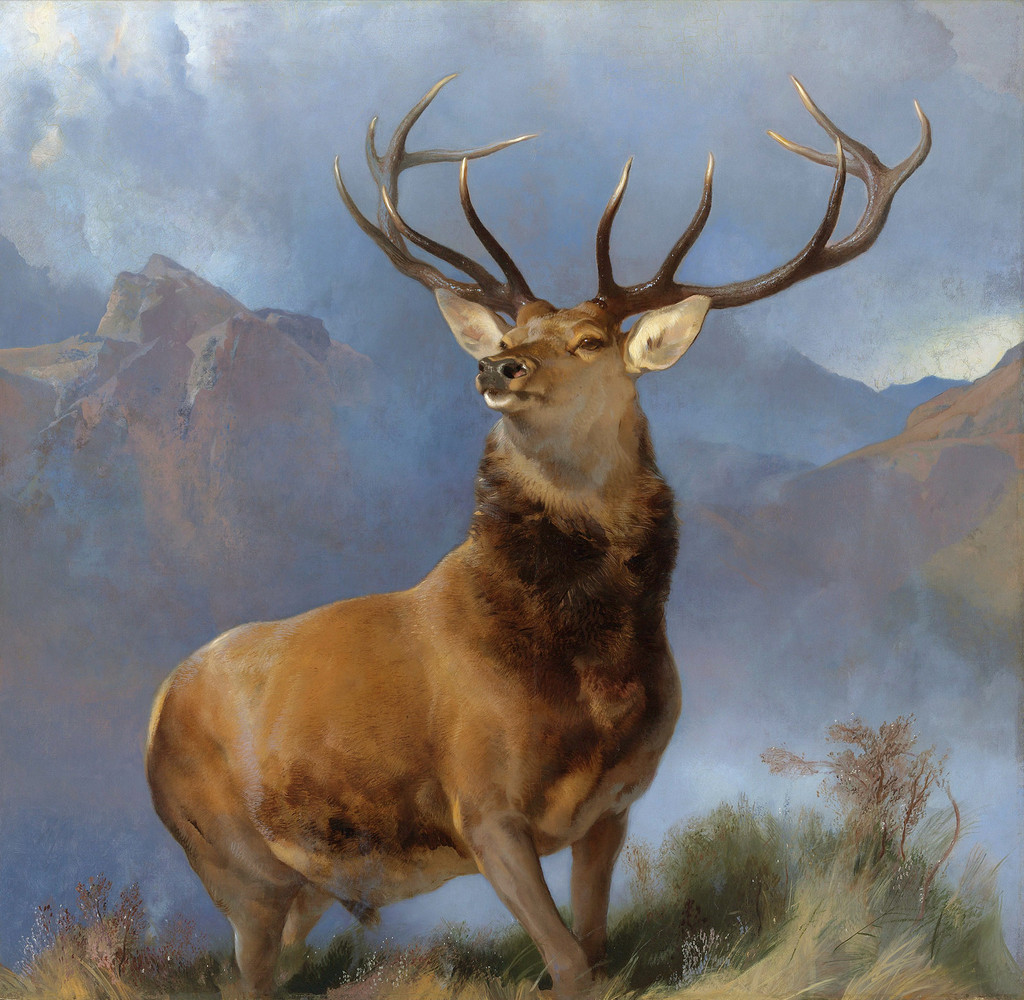
That chain matters because Landseer's images have outlived the circumstances of their making. They helped Victorian audiences imagine the Highlands as a place of arduous sport, atmospheric grandeur, animal drama and historical memory. Prints widened that audience. Later advertising detached familiar motifs from particular estates and commissions. In the twentieth and twenty-first centuries, the stag in The Monarch of the Glen became at once a cherished emblem, a commercial cliché, a focus of criticism and a prompt for arguments about land and ecology.[1][2][3][4]
No one interpretation fits this history. Landseer participated in deer shooting, yet he also made pictures that direct sympathy towards hunted animals. He portrayed landowners and their guests, but he also pictured named keepers, drovers, domestic work, illegal distillation and rent. His landscapes can seem empty of property and settlement, while the conditions that allowed him to see them were intensely social. The persuasive beauty of the Highlands in his art does not cancel those tensions. It makes careful historical reading more necessary.
The useful question, then, is not whether Landseer gave a “true” or “false” Scotland. It is how particular encounters became pictures, whose presence or labour remained visible, what the composition left outside its frame, and how later users changed the image again. That approach keeps a small oil study distinct from a patronal group portrait, a deer drive from an animal's refuge, and a nineteenth-century painting from a whisky label or modern environmental debate. It also prevents the most famous stag from speaking for every place, person and animal Landseer represented.
At a Glance
- First Scottish journey1824 [1][5]
- SubjectsLandscape, animals, sport and Highland life [1]
- InterpretationPatronage, land use and Scottish identity [1][2]
Contents
- A Scottish threshold in 1824
- Blair Atholl: access has names
- Glen Feshie and the theatre of hospitality
- From particular ground to a Highland picture
- What stalking required
- What a deer forest was
- People inside and outside the picture
- Clearances: connection without a shortcut
- The deer as quarry, fugitive and sovereign
- Royal Scotland without a publicity myth
A Scottish threshold in 1824
Landseer was twenty-two when he first travelled to Scotland in 1824. By then he was already an exhibited animal painter, so the journey did not create his powers of observation. It altered the field in which he could use them. The trip brought him into contact with Scottish scenery, writers, landowners, estate workers and deer at a scale that would recur throughout his career.[1][5][6]
Sir Walter Scott was central to this opening, but geographical precision is important. Scott's home at Abbotsford is in the Scottish Borders, not the Highlands. It was a literary and social threshold: a place where an artist already familiar with Scott's writing could encounter the author, his collections and his way of turning Scottish place and history into modern cultural experience. A letter of 18 May 1824 asks Landseer for a promised sketch of Abbotsford, making the exchange more concrete than the vague claim that the painter simply “fell in love with Scotland”.[7]
Two objects at the Morgan Library provide additional witnesses. A visitor-book leaf carries Landseer's name during the journey. More importantly, Scottish Highlands, Lochs and Figures is signed and dated 1824. The sheet combines watercolour and opaque watercolour, with selective gum arabic glazing; an inscription on the reverse associates it with a drawing made for Scott during the visit.[8] It proves that Highland scenery was being transformed into a portable image in that first year. It does not supply a complete itinerary, nor does its title turn an arranged set of lochs, peaks and figures into a literal map.
The distinction between witness and itinerary protects the journey from later anecdote. Early biographies offer colourful accounts of routes, encounters and instantaneous inspiration, but exact stops need dated correspondence, objects or specialist reconstruction. It is safer to say that Landseer moved from a Scottish literary network into Highland sporting and patronal ones than to narrate every stage as settled fact.[1][5]
Scott also belonged to a larger transformation in the way the Highlands were imagined. Anne MacLeod traces a long change from eighteenth-century accounts that often found the region bleak or unproductive towards a culture of antiquity, picturesque irregularity and sublime attraction. Literary fashion, the supposed ancient poetry associated with Ossian, tourism, military history and visual art all contributed. National Museums Scotland shows that Highland dress underwent a comparable process: older Gaelic, aristocratic, Jacobite and military histories were reworked into materially modern Georgian forms, especially through clubs, commerce, Scott's writing and George IV's carefully staged Edinburgh visit of 1822.[2][9]
Landseer therefore arrived neither before representation nor outside politics. He entered a landscape already supplied with stories, costumes and expectations. His importance lies partly in how effectively he joined that cultural inheritance to close animal study, memorable narrative and the particular social worlds he encountered. The Highlands gave him new material; he, in turn, gave widely circulating visual form to selected versions of them.
Blair Atholl: access has names
Blair Atholl supplies the first secure Highland case because objects and institutional records preserve names. The Art Fund record for The Keeper John Crerar with his Pony states that Landseer met Crerar at Blair during the 1824 visit. Crerar had entered the Duke of Atholl's service in 1776 and combined work as a gamekeeper with a reputation as a musician and composer. The record is an older archive entry and carries a warning that some language or information may be outdated, but the identity, encounter and work remain a valuable correction to the idea of an anonymous Highland attendant.[10]
The portrait makes access personal. Crerar's knowledge of animals, routes and seasonal conditions belonged to decades of estate service. The pony is not a picturesque accessory accidentally placed beside him. Together, keeper and animal represent mobility and work on ground that a visiting painter could not master simply by looking from a carriage. To notice that relationship is not to turn the portrait into a complete employment history. It is to recognise that “Landseer in the Highlands” included people whose expertise preceded his arrival.
The more elaborate Death of a Stag in Glen Tilt widens the structure. The original painting and the later print must not be confused: the National Portrait Gallery holds a mezzotint published by John Charles Bromley in 1833 after Landseer's design. Its catalogue identifies John Murray, fourth Duke of Atholl; the future sixth duke; the keepers John and Charles Crerar; and Donald McIntyre. The British Museum's related record describes men, horse, dogs, gun, telescope, dead stag and a distant deer drive.[10] The group is not merely a collection of animal likenesses. It makes hierarchy, labour and succession visible around the quarry.
The duke occupies a privileged role, but he does not perform the day's work alone. Someone has watched the herd, handled the animals, known the ground and helped recover the stag. The telescope extends sight; the gun delivers force; horse and dogs supply movement and scent; keepers coordinate knowledge that the finished sporting memory can place at different distances from the patron. A dead deer thus becomes part of a social portrait as well as the result of a hunt.
Landseer's introduction to stalking is also associated with Glen Bruar and William Scrope, later known for writing about deer stalking and fishing. The evidence is clearest when used modestly: Scrope belongs to the early network through which the young painter experienced Highland deer and sporting practice, not to a tale of one perfect lesson that instantly determined every later stag.[1][11] Learning continued through repetition, field observation and association with different estates.
These named connections change how the resulting landscape should be read. The path into a glen was not open in the same way to every person. Invitation provided accommodation and permission; estate employment provided practical guidance; wealth made seasonal travel possible. A picture might suppress those arrangements by concentrating on weather, rock and animal, or it might display them through a patronal group. In either case, the access has a history.
The distinction also keeps class analysis from becoming a caricature. Crerar was neither scenery nor a simple emblem of oppression; the surviving records describe a skilled worker with a long career and cultural life. The Duke of Atholl was not merely a generic top-hatted tourist; his ownership and commission structured the image. Historical reading becomes stronger when it names both positions and examines their relationship instead of turning every person into a moral type.
Glen Feshie and the theatre of hospitality
Glen Feshie in the Cairngorms became one of Landseer's most productive social landscapes. The Duke and Duchess of Bedford were crucial patrons and hosts. Archaeological work in the upper glen records the Bedfords' seasonal association with the Invereshie estate and the group of buildings linked to their stays. National Galleries of Scotland connects the glen directly with Scene in the Highlands, with portraits of the Duchess of Bedford, the Duke of Gordon and Lord Alexander Russell, painted about 1825–28 and exhibited in 1828.[12]
The title prevents the work from dissolving into a generic panorama. It identifies sitters and makes their relation to the ground part of the subject. The Duchess of Bedford, her brother the Duke of Gordon and the young Lord Alexander Russell occupy a sporting landscape with animals, attendants and dead deer. Portrait, landscape and field sport are joined. The composition offers a view of Glen Feshie, but it also stages a family's place within it.
That staging complicates stories about escape from society. The Bedford party used rustic buildings often described as huts or cottages. Their modest outward appearance supported a fantasy of informal Highland life, yet the ability to withdraw seasonally into such a setting depended upon aristocratic resources, leased ground and domestic provision. Simplicity could be performed. It was not the same as the material insecurity experienced by people whose household depended on the local economy.
This does not make every moment at Glen Feshie fraudulent. Landseer could genuinely value rough accommodation, sociability, fishing, stalking and sustained looking. A patron could have detailed local knowledge. The point is that pleasure and privilege need not cancel one another. The “natural” life of the party was organised, and its apparent spontaneity rested upon work that images and anecdotes often leave at the edge.
Small landscapes made in or associated with the glen further disrupt the idea that Landseer's Scottish art consists only of grand narratives. An Ormond-informed identification of View of Glenfeshie, about 1830–33, locates the opening of the upper glen and a recognisable hill. Its oil-on-paper surface and modest dimensions preserve a different relation to place from the large group portrait.[12] The Yale Center for British Art's A Highland Landscape, about 1830, is likewise a small oil on board.[13] Such objects can hold rapid decisions about light, recession, water and mass without carrying the burden of a major exhibition story.
Yet even a topographically recognisable sketch is selective. The edge of a settlement, the party behind the artist, a path, cut timber or the property's legal boundary may fall outside the chosen field. A precise hill does not make a complete social document. Conversely, composition does not make the place imaginary. Landseer worked between observed particulars and the requirements of a picture: compressing distance, coordinating weather, clarifying silhouettes and deciding what sort of attention the surface should demand.
The Glen Feshie circle also shows that a subject could move through different kinds of ownership. Ground belonged or was leased within estate systems; a portrait belonged to patrons or collectors; a sketch might remain in the studio and enter the market after the artist's death; a later reproduction could detach the view from both. “The Highlands” became mobile in objects even when access to the represented land remained controlled.
From particular ground to a Highland picture
Landseer's reputation for observation can obscure how much pictorial construction observation requires. A field study selects a position and duration. A finished work chooses scale, support, lighting, incident and title. Memory may bring observations from different days into one convincing atmosphere. The result can feel immediate because the decisions are coherent, not because the canvas is an untouched fragment of weather.[1][5]
The difference appears across the Highland objects. A Highland Landscape is small and concentrated. Ptarmigan in a Landscape, recorded by the Philadelphia Museum of Art as an oil on panel made by 1833, gives birds and ground a prominence quite unlike the public address of a monumental stag.[13][14] Scene in the Highlands enlarges the field to accommodate named sitters and sport. Rent-day in the Wilderness extends landscape across a crowded historical reconstruction. Size does not measure truthfulness; it changes the kind of encounter offered.
Weather is especially powerful because it can make an arrangement seem discovered. Mist breaks distant form, cloud directs light, water divides planes and rough ground interrupts easy movement. These features can be locally credible while also doing compositional work. A veil of vapour can isolate a stag as effectively as an empty stage. A torrent can convert pursuit into bodily emergency. An evening glow can suspend action and create refuge. Atmospheric observation and narrative design operate together.
MacLeod's history of Highland representation is helpful here. Across a large corpus, landscape came to dominate visual accounts of the region. That emphasis allowed viewers to value visible antiquity, grandeur and permanence while contemporary poverty, famine and political conflict were reported elsewhere.[2] The claim concerns a pattern, not a secret instruction followed by every artist. It asks what a visual culture repeatedly made easy to see.
Trevor Pringle's influential critique sharpens the point by describing a “privation of history”: Highland scenery can appear most pure when the processes that produced elite solitude are removed from view.[15] Applied carefully, this does not mean that every empty mountain is a lie. It means that emptiness should be treated as an effect requiring questions. Where is the settlement? Who maintains the route? Who owns the shooting? What activity is seasonal? What does the title tell us that the image withholds?
Those questions can lead to different answers. In a bird study, the absence of people may focus attention on habitat and camouflage. In The Monarch of the Glen, it helps transform one stag into an autonomous presence. In an estate picture, distant figures may disclose a coordinated drive. In a domestic scene, close human and animal bodies replace the panoramic view entirely. There is no fixed rule that more figures create more truth.
Landseer's Highlands are therefore neither pure field record nor free fantasy. They are made where looking, access, memory, patronage and exhibition meet. Their historical force lies in the success with which those ingredients are fused. A viewer can feel that the place continues beyond the frame even when the frame has been rigorously designed.
What stalking required
Deer stalking depended upon a relation among animal senses, human skill and uneven ground. Wind mattered because scent could warn a herd. Distance and cover shaped the approach. A stalker needed to read movement, wait, crawl or change direction. The shot was only one moment. A wounded deer might travel; dogs could be needed to follow it; people and ponies helped recover and transport the body. Drives altered the arrangement by coordinating a larger movement of deer towards selected ground.[16][11]
Landseer's pictures separate and recombine these phases. The Death of a Stag in Glen Tilt presents an accomplished kill within a social group. The Hunted Stag concentrates bodily crisis in a mountain torrent. The Sanctuary suspends pursuit when an exhausted stag reaches an island. The Deer-Drive expands human organisation across a named pass. The Monarch of the Glen removes the visible hunt altogether while retaining an animal central to sporting culture.[10][17][18][19][3]
Keepers and ghillies were essential to this world. They knew routes, weather, herds and the capacities of dogs and ponies. They might guide visitors whose social authority exceeded their practical knowledge. They also worked within an estate hierarchy that regulated employment, game and access. To call them merely attendants hides skill; to romanticise them as timeless clan retainers hides labour and property.
Animals other than the quarry shaped the process. Deerhounds could pursue, hold or track. Ponies carried people, equipment or carcasses. Their represented bodies reveal strain and trained behaviour, but they also reveal allocation of work. A sporting image that appears to celebrate a single marksman may depend visually and materially on several human and non-human contributors.
The dead stag had several possible functions. It was flesh and hide, a recovered body, a trophy, a measure of sporting success and a sign through which status could be remembered. In a group portrait it could connect patron to land. In a genre scene, poaching could relate it to household survival and criminal law. In an image of suffering, the same species could attract sympathy. Those meanings cannot be read from antlers alone.
Landseer understood the action from participation, but participation does not dictate a uniform verdict. The Royal Collection's account of The Sanctuary places his deer shooting beside a documented degree of moral conflict about cruelty.[18] That tension is more credible than either extreme: the modern fiction of a consistent animal-rights campaigner or the assumption that a sportsman could never represent the animal's vulnerability.
Nor should visual sympathy be confused with practical opposition. A spectator may pity a hunted stag while continuing to value field sport. A patron may purchase an image of refuge as an emotionally satisfying counterpart to the chase. A painter may intensify suffering because drama sells, because he has observed it, because he feels unease, or through several motives at once. Intention needs documentary support; the picture's visible devices can be analysed without pretending to read a private conscience.
Stalking, then, is not background colour. It supplies a structure of looking: notice traces, anticipate movement, separate an animal from a herd, measure distance and wait for a decisive instant. Landseer's art converts parts of that structure into visual attention. The transformation becomes ethically and socially significant because a painted viewpoint can give the viewer effortless command over ground that real access made exclusive and arduous.
What a deer forest was
The phrase “deer forest” can mislead a modern reader. In nineteenth-century Scottish sporting usage it often meant an extensive area of hill and mountain managed for red deer, much of it open and largely treeless. It named a reserved hunting ground more than a botanical condition. The Scottish Government's historical review records a fashion beginning in the late eighteenth century and expanding through the nineteenth. Its count rises from nine deer forests in 1790 to 213 in 1912, an endpoint reached decades after Landseer's death.[20]
Those numbers show transformation, not uniformity. An Atholl concentration, Black Mount drive, Glen Feshie lease and later commercial forest had different owners, terrain and histories. Some sporting ground overlapped other uses. Some estates claimed income and employment from visitors. The law, leasing arrangements and market value of sport changed. A general term cannot replace a local estate account.
Grant Jarvie and Lorna Jackson analyse the sporting estate as a social and economic institution. It was a status possession and a place of private leisure, but it could also be defended through employment, expenditure, rent and a language of responsible estate duty.[16] Those claims were contested because benefit was uneven and because the value attached to exclusive sport did not necessarily follow the land's agricultural output. The sporting landscape carried an argument about what land was for.
That argument alters the meaning of apparent wilderness. A hill reserved for deer could look free of visible cultivation precisely because it was actively managed for a chosen use. Solitude might be produced by permission, season and exclusion. Visitors purchased or received access to an experience of remoteness whose organisation required estate boundaries and labour. “Wild” described an aesthetic and sporting sensation as much as an absence of human influence.
The deer themselves had a longer ecological history. The Scottish Government review describes red and roe deer as woodland species that survived major losses of tree cover and hunting pressure, with eighteenth-century red-deer concentrations around areas including Atholl and Black Mount. Red deer adapted to open hill, and their range and numbers grew during the nineteenth century alongside enthusiasm for stalking and the establishment of open-hill forests.[20] The animal in a bare glen was therefore neither a decorative import nor proof of an eternally treeless habitat.
This history prevents two opposite mistakes. One is to see Landseer's red deer as purely natural bodies untouched by management. The other is to reduce them to symbols so completely that their animal presence disappears. Deer move, feed, watch, flee, suffer and reproduce within conditions shaped by people. The painter's command of stance and alertness gives them persuasive bodily agency, even when their habitat and survival are entangled with human sport.
Modern ecological concerns add another layer. High deer browsing pressure can obstruct the regeneration of native woodland; contemporary management involves public policy, conservation organisations, landowners and culling debates very different from Victorian sporting codes.[20] That knowledge changes how a present viewer may see a treeless backdrop. It does not disclose what Landseer intended in 1851. The responsible distinction is between the historical picture, the environmental history it can help us question, and the current decisions for which it was never a plan.
The phrase “deer forest” thus holds a revealing contradiction. It evokes woodland in ordinary speech but historically describes ground often maintained as open hill for a privileged quarry. Landseer's stags could make such ground feel sovereign and self-possessed. The estate record reminds us that sovereignty was pictorial: rights over the land remained human, legal and unequal.
People inside and outside the picture
The familiar lone stag can make Landseer's Highland corpus seem emptier of people than it is. Domestic, occupational and historical subjects run beside the deer pictures. A Highland Breakfast of 1834 brings people and animals together around food and interior work. A Highland Shepherd's Home, about 1836, locates animal care and household life within a constrained space. The Drover's Departure turns movement of livestock and people into a large public scene. These works do not dissolve the estate landscape, but they prevent wildlife from becoming its only history.[5][21]
The Illicit Highland Whisky Still, exhibited in 1829, makes law and economy unusually visible. Its combination of distillation, poaching, family and dead deer can be related to changing Highland livelihoods, restrictions on customary practices and pressure on household income. Deborah Worthing's study places such subjects within transformations of work and land rather than treating the whisky equipment as picturesque comedy alone.[22] The painting is still an arranged work made for a powerful patron and metropolitan exhibition. Social content does not guarantee radical intention.
That caution applies to every apparently humble interior. A viewer may receive hardship as colourful local character. Carefully painted vessels, clothes, dogs and food can make difference pleasurable to inspect. Children or women may carry the emotional burden while remaining unnamed. The image may acknowledge labour while making the labouring body available to a collector. Recognition and appropriation can coexist.
Named figures supply a valuable resistance to type. John Crerar's identity, long service and work at Blair Atholl survive in institutional records. The keepers in The Death of a Stag in Glen Tilt are not merely interchangeable Highlanders in tartan. Once names are available, they change the picture's structure: the patron is surrounded not by a generic local population but by people with specific competence and employment histories.[10]
When names are absent, invention is not a remedy. Dress cannot establish a clan, language, political allegiance or experience of clearance. “The Highlander” was itself a powerful nineteenth-century type, capable of combining martial loyalty, picturesque poverty, ancient custom and service to an estate. Real inhabitants differed by locality, tenure, work, gender, religion and linguistic practice. A painting's generalisation should be identified rather than repeated.
Rent-day in the Wilderness demonstrates another way people enter landscape. Painted between 1855 and 1868 for the geologist Sir Roderick Impey Murchison, it reconstructs an episode after the Jacobite rising of 1715. Murchison posed for his ancestor Colonel Donald Murchison, who collects rents on behalf of the exiled Earl of Seaforth while redcoats appear across the loch. National Galleries of Scotland notes that animals and landscape carry weight comparable to the figures.[23]
The work is historical fiction rooted in patronal memory. It does not document the event as an eyewitness would, and its long execution does not turn it into a transparent record of Landseer's health. Instead, it shows how a nineteenth-century estate patron could use Highland landscape to materialise loyalty, outlawed authority and family descent. Rent, normally an economic transaction, becomes a dramatic sign of Jacobite fidelity.
Across these works, inclusion cannot be judged by counting bodies. A crowded history painting can still privilege a landowning family's version of the past. A domestic scene can reveal work while withholding names. An apparently empty landscape can register animal habitat with unusual concentration. What matters is the relation among title, action, identity, destination and the social knowledge that survives outside the image.
The absent person may also be the person whose labour made the view possible. A stag observed at distance implies tracking; a recovered carcass implies transport; a temporary lodge implies cooking, cleaning and maintenance. Historical reading can restore these conditions without claiming to find invisible portraits. It marks the limits of what the picture shows and the dependence of vision upon an organised world.
Clearances: connection without a shortcut
Landseer's working life overlapped profound transformation in the Highlands. Agricultural reorganisation and sheep farming had displaced communities in many areas from the later eighteenth century. The potato failures beginning in the mid-1840s brought famine, relief measures, migration and intensified pressure, with severe but regionally varied effects. Later in the century, crofters and their supporters challenged landholding, access and the expansion of sporting estates.[24][25]
These histories are indispensable to the visual landscape, but the term “Highland Clearances” must not be made to explain everything at once. Martin MacGregor's reassessment emphasises a large and contested field, in which political economy encountered Gaelic moral understandings of obligation between people, chiefs or proprietors and land. Estate papers, local chronology, oral culture, demography and material conditions do not always tell one simple story.[25]
Ewen Cameron provides a crucial causal distinction. The great early episodes of mass displacement were principally connected with sheep and agricultural restructuring. The major expansion of deer forests in the Victorian period did not directly cause those earlier evictions in the same straightforward manner. Yet exclusive sporting appropriation became an intense grievance by the 1880s because critics believed land might support grazing, settlement or a larger population rather than private leisure.[24]
Both parts of that conclusion matter. Saying that every deer forest cleared a village collapses chronology and local evidence. Saying that sport was therefore unrelated to the land question ignores access, competing uses and the political symbolism accumulated by the red deer. Historical accuracy does not require choosing between a total accusation and total innocence.
Landseer's pictures are related to this history in several distinct ways. He worked through aristocratic estates whose power determined access. He represented practices—stalking, rent, droving, poaching and seasonal hospitality—embedded in land relations. His exhibitions helped metropolitan audiences imagine the Highlands. Compositions that minimised settlement could make sporting solitude feel natural and timeless. None of those facts proves that a specific canvas records an eviction or that Landseer designed the policies of his hosts.[2][15][16]
The timing of later agitation further prevents projection. Landseer died in 1873. The Napier Commission began its inquiry into Highland and Island conditions in 1883, and the Crofters Act followed in 1886. By that decade, Cameron notes, the red deer could symbolise human displacement in political argument.[24][25] That later meaning is part of the pictures' reception, but it cannot be inserted unchanged into their original conception.
An empty glen may still deserve scrutiny. If a viewer knows that Highland landscapes were inhabited, worked and altered, a picturesque “wilderness” no longer appears self-explanatory. The absence of houses or cultivated ground can be compared with the history of the site. But unless a particular settlement and act of removal are documented, it is wrong to announce that the canvas depicts the aftermath of clearance. The picture poses a question; it does not automatically answer it.
The people who do appear require equal care. A poacher is not necessarily a spokesman for all displaced tenants. A drover's departure is not automatically an emigration scene. Tartan is not a census of Gaelic continuity. A rent collector in Jacobite costume belongs to a patron's historical reconstruction. Material particulars can connect an object to wider change, but analogy must not replace identity.
MacLeod observes that the prominence of landscape imagery helped visual culture avoid social difficulties that were being reported in print during famine and later land agitation.[2] That is a powerful corpus-level finding. It allows Landseer to be read as part of a selective visual economy without claiming that every brushstroke was a deliberate concealment. What audiences repeatedly consumed was a Highlands in which grandeur, antiquity and sport were exceptionally visible.
Pringle's critique asks what that visibility cost: history can be removed so thoroughly that a produced solitude appears natural.[15] The strongest response is not to reject the landscapes as mere propaganda. It is to return time, ownership and labour to the act of looking. A beautiful mountain remains beautiful; its representation is also a choice made within a historical distribution of access.
The deer as quarry, fugitive and sovereign
Landseer's red deer do not perform one stable role. In one work the animal is quarry and trophy; in another it is a fugitive; elsewhere it is a distant moving herd, a corpse tied to household economy or a solitary emblem. The species connects the images, but action, scale and human presence change the argument.[1][5]
The dead stag in The Death of a Stag in Glen Tilt anchors a patronal group. Its body records success and mortality while bringing keepers, descendants, horse, dogs and equipment into relation. In The Illicit Highland Whisky Still, a deer belongs to a scene of unlawful provision and economic pressure. The distinction between authorised sport and poaching is therefore not simply a difference between identical dead animals. It is a legal and social classification of who may take them.
The Hunted Stag shifts attention from possession to pursuit. A mountain torrent contests the animal's movement, and the viewer confronts exertion rather than a completed trophy. The Sanctuary carries that vulnerability into temporary reprieve. The exhausted deer reaches an island on Loch Maree that hunting cannot immediately penetrate; disturbed birds and evening light transform a sporting subject into an interval of protection.[17][18]
The Royal Collection's account of The Sanctuary is particularly revealing because Victoria bought it from William Wells before her first Scottish visit as Queen. After travelling north, she praised the truth of Landseer's representations.[18] Her response demonstrates the authority the pictures could acquire for someone who subsequently compared them with experience. It does not establish cartographic exactitude or an identical response from every viewer.
The Deer-Drive restores the human system. Painted in 1847, the large canvas is tied to Black Mount and a pass in Glenorchy; Lord Breadalbane's hounds participate, and Prince Albert bought the work.[19] What might at first look like an elemental collision of animals and terrain is a managed event on named ground. Movement across the picture has been produced by coordinated people, even where not every organiser commands equal visual attention.
Then The Monarch of the Glen removes visible pursuit. A twelve-point “royal” stag stands monumental and alert before mountains and vapour. Its title and scale elevate it from one animal to a figure of sovereignty.[3] Yet this autonomy is a pictorial achievement. The stag belonged to a species preserved, managed and killed within sporting estates; the work originated in a parliamentary decorative commission. The absence of hunter and property is not evidence that they did not exist.
It would be equally reductive to say the animal is nothing but a mask for ownership. Landseer's bodily specificity gives the stag an address of its own: mass, breath, balance, sensory attention and the potential for sudden motion. The image succeeds because viewers encounter an animal that seems capable of looking back. Social analysis should retain that encounter rather than replacing a living body with a diagram.
The sequence from quarry to sovereign is not a moral conversion story. Landseer could return to refuge, death, pursuit and command in overlapping years. The roles expose the flexibility of deer imagery within sporting culture. A species valued as quarry could also embody suffering, endurance, nobility and national grandeur. That flexibility helped the pictures reach audiences who did not share one relation to hunting.
Royal Scotland without a publicity myth
Queen Victoria and Prince Albert intensified the cultural visibility of the Highlands, but they did not originate Landseer's Scottish career. He had been travelling, sketching and exhibiting Highland subjects since 1824. Victoria bought The Sanctuary before her first Scottish tour as queen in 1842, and her response after the journey shows images shaping expectation before experience confirmed their appeal.[18]
Ardverikie in 1847 gives the relationship a material setting. The royal party stayed at a lodge borrowed from the Duke of Abercorn. On 5 September, Victoria copied one of Landseer's designs from the dining-room wall and recorded her attempt in her journal. The old house later burned, leaving her pencil sheet among the few witnesses to the lost decoration.[26] The episode joins artist, temporary estate interior and royal practice without becoming a grand commission narrative.
It also reveals how informal image-making could be embedded in hospitality. A drawing on a wall differed from an Academy canvas in support, durability and audience. The queen's copy translated it again into a portable sheet. “Landseer at Ardverikie” therefore describes not simply a famous visitor but a chain of making in a house whose later destruction altered what could survive.
Royal attention amplified a larger culture of estate sport and Highland retreat. It brought acquisitions, images of travel and a powerful example of seasonal withdrawal from court. The purchase of Balmoral in 1852 gave that culture a permanent royal centre. Yet amplification is not identical with control. Landseer continued to work for other patrons, and the sites associated with his Highland art include Atholl, Bedford, Breadalbane, Wells and Murchison networks as well as royal ones.[1][5]
There is no sound evidence for the repeated claim that Victoria commissioned Landseer to improve her reputation in Scotland. Political symbolism may attach to royal Highland imagery, but a specific publicity motive cannot be inferred from royal status. Nor was The Monarch of the Glen painted for Balmoral. Its original 1849 commission concerned a refreshment room in the rebuilt Houses of Parliament, and the painting was completed around 1851, before Victoria and Albert bought Balmoral.[3][4]
Keeping those facts separate produces a more interesting history. Landseer's Highland authority helped royalty imagine and collect Scotland; royal enthusiasm increased his visibility; later culture fused stags, tartan, monarchy and Balmoral into a convenient package. That fusion was cumulative. It was not the execution of a single plan.
Romanticism arranges history
Romanticism in Landseer's Highlands is not simply inaccuracy. It is a way of arranging attention and time. Ancient associations, rough terrain, dramatic weather and animal encounter can be brought into the present while recent economic change recedes. A modern sporting party may wear a visual aura of clan history. A historical narrative may make loyalty seem rooted in the land itself. A stag may possess the mountains as if legal ownership were irrelevant.
The culture was already layered before Landseer. Macpherson's supposed ancient Gaelic poetry offered a language of melancholy antiquity. Scott's writing and collecting made historical difference available to a wide readership. George IV's 1822 visit turned selected Highland forms into national spectacle. Military service had preserved and reshaped dress after the Jacobite risings. Manufacturers and clubs helped stabilise clan patterns and accessories as marketable identity.[2][9]
National Museums Scotland stresses the contradiction within Georgian Highland style. Elites could celebrate the costume and warrior traditions of earlier clan society while pursuing forms of estate improvement that disrupted tenants' lives.[9] Dress did not become false because it changed, but the claim of timeless continuity hid innovation and unequal power. The same caution applies to painted landscape.
Landseer's naturalism made Romantic selection persuasive. Carefully observed antlers, wet fur, dog posture and broken rock gave viewers material reasons to believe in the scene. Those particulars could support a larger fiction of permanence. The more convincing the stag, the easier it was to accept the surrounding solitude as the essential Highlands rather than one constructed view.
Exhibition and reproduction extended the arrangement. A London viewer did not need access to an estate to experience the drama. Paintings turned seasonal privilege into public spectacle, while engravings translated scale and colour into repeatable tonal design. The Highlands could hang in a domestic interior far from the land and its conflicts. The image's portability contrasted with the controlled movement represented within it.
Travel itself also changed. National Records of Scotland notes that passenger railways from the 1840s opened long-distance journeys and Highland tourism to a much wider public.[27] Landseer's first 1824 journey belonged to an earlier infrastructure; later visitors approached the region with new guidebooks, timetables and expectations. Increased access did not abolish class difference or estate boundaries, but it altered the audience able to compare images with places.
Romanticism could accommodate modernity rather than simply oppose it. Railways delivered tourists seeking ancient scenery. Industrial printing multiplied images of apparent isolation. Urban exhibitions celebrated open ground maintained through estate management. Commercial goods later used the stag to guarantee heritage. The modern system carried an image of escape from modern systems.
This arrangement helps explain why visual omission has political force without requiring conspiracy. A composition does not need to depict every cottage, road or worker. Repeated cultural preference can do the work: publishers, patrons and audiences reward the subjects that make a desired Scotland visible. Artists still make individual choices, and objects still differ, but the field of success is historically shaped.
The resulting pictures remain open to more than exposure. Their atmosphere can preserve a felt encounter with scale, weather and animal alertness. Their historical fiction can reveal how nineteenth-century patrons imagined ancestry. Their omissions can prompt questions that a literal survey might not. Romanticism is most useful as an analytical term when it identifies this organisation of evidence and desire, not when it serves as a dismissive synonym for falsehood.
From Monarch to a contested Scottish icon
The Monarch of the Glen shows how an object can accumulate meanings that were not present at one moment. National Galleries of Scotland dates the oil painting to about 1851 and identifies the stag as a twelve-pointer. The composition was intended for a refreshment room in the House of Lords but was never installed there. Its immediate design joined monumental animal painting to a public architectural scheme, not to a whisky campaign or national tourist office.[3][4]
The first major expansion of meaning came through reproduction. Nineteenth-century prints carried the stag beyond owners and exhibitions. The animal's strong silhouette, direct gaze and legible title survived translation particularly well. Repetition increased recognition while making knowledge of the original support, size and commission less necessary. A viewer could know the image without knowing the object.[3]
Twentieth-century marketing widened that detachment. Corporate and product use made the stag a portable certificate of Scottishness, heritage and natural quality. Packages and advertisements selected its emblematic force while discarding the parliamentary origin and much of the landscape's historical context. Commercial familiarity could produce affection, fatigue or embarrassment. The image became available as a cliché precisely because it remained visually powerful.
The National Galleries of Scotland acquired the painting in 2017 through a part gift from Diageo Scotland, institutional and charitable funding, and a public appeal.[3] Movement from corporate ownership into a national collection did not settle its meaning. It made questions of belonging newly visible: what does it mean for an image made by an English artist, long used by businesses and often criticised as a Highland myth, to enter Scotland's national holdings through public participation?
Current NGS interpretation preserves disagreement. Lachlan Goudie treats the work as both a formidable technical construction and an image burdened by cultural and political association. Educational material invites debate about Scottish identity. Highland writer Jenna Watt reads the stag and treeless upland through modern rural economies, deer management and woodland restoration.[4] These are not interchangeable claims, and none gives direct access to Landseer's intention.
The Clearances argument is especially sensitive. For some viewers, the isolated stag represents a land system that privileged wealthy sport while people were displaced. That symbolism has genuine historical roots in later nineteenth-century land agitation. But the painting does not depict an eviction, and the earlier large clearances were not all caused by deer forests. The responsible account keeps the force of the modern reading while correcting its chronology.[24][25]
The ecological reading works similarly. Red deer have a deep woodland history, and excessive browsing can prevent regeneration. The treeless setting can now prompt viewers to question whether the familiar open moor is natural or historically produced.[20][4] Yet one painted background cannot diagnose a whole catchment, and contemporary restoration priorities are not concealed instructions from 1851.
The stag's fame also changes its visual experience. Before interpretation begins, many viewers already recognise a version from souvenirs, television, food or drink packaging. The original may appear unexpectedly painterly, coloured or physically scaled compared with memory. That gap between object and reproduction is part of the work's history. Recognition is not the same as having looked closely.
Calling the picture an icon should therefore describe circulation rather than authenticity. It has become a concentrated sign through repetition. Icons can carry contradictory uses: national pride and satire, wildlife admiration and land criticism, technical respect and commercial exhaustion. No tribunal can select one permanent reaction on behalf of Scotland.
The most revealing fact may be that the image remains capable of argument. A merely obsolete emblem would not require continual reinterpretation. The Monarch of the Glen still condenses animal presence, Romantic solitude, status, reproduction and contested ownership with unusual efficiency. Its difficulty belongs to its success.
How to read Landseer's Highlands
A disciplined reading begins with the object rather than the legend. Establish the title, date, medium, size, present holder and whether the thing being viewed is an original painting, preparatory study, drawing, print after Landseer or later commercial reuse. The differences are historical, not administrative. They determine what kind of surface, audience and circulation is being examined.
Next identify the place at the level the evidence permits. “Scotland”, “the Highlands”, Glen Feshie, Glen Tilt, Black Mount and Loch Maree are not equivalent labels. A named site can connect an image to an estate and journey. Where the location is disputed, as with claims for the precise landscape in The Monarch of the Glen, uncertainty is better than a picturesque guess.
Then ask how access was obtained. Was Landseer a guest, a commissioned painter, a participant in sport or a traveller making a study? Who owned or leased the ground? Which keeper, ghillie, servant, guide, dog or pony made the encounter possible? Not every answer survives, but the question prevents the artist's viewpoint from appearing universal.
Separate the event from its pictorial reconstruction. A stalk, drive, domestic meal, illegal still, rent collection or refuge has practical components. The composition selects and arranges them. Weather may be observed and heightened; several moments may be condensed; the title may redirect an ambiguous action. “Lifelike” should prompt analysis of the method that creates conviction, not end it.
Attend to the animal's role. Is the deer alive, dead, wounded, pursued, sheltered, watched or enthroned? Is it one member of a herd or an isolated body? Do dogs and horses work, attack, carry or accompany? Animal agency and human classification meet in these relations. The same species does not guarantee the same moral position.
Read human presence with equal precision. A named keeper differs from a picturesque type; a patronal portrait differs from an interior sold to a collector; Jacobite history differs from contemporary labour. Clothing and setting contribute to identity but cannot establish language, clan or political allegiance on their own.
Now compare what lies outside the frame with secure history. Land ownership, settlement, agricultural change, famine, migration and sporting conversion may be materially relevant. They should be connected through site, date and institution rather than attached as a universal caption. Absence becomes evidence of selection, not automatic proof of one concealed event.
Finally, restore the object's afterlives in order. Exhibition, sale, engraving, advertising, corporate ownership, public acquisition and modern interpretation are different episodes. A later whisky label cannot explain a parliamentary commission, and a present woodland debate cannot prove Victorian intention. Later uses still matter because they shape what viewers can see today.
This sequence does not drain feeling from the pictures. It makes response more exact. Sympathy for an exhausted stag can coexist with knowledge of sporting patronage. Admiration for atmospheric skill can coexist with questions about produced solitude. Attachment to a Scottish emblem can coexist with criticism of the identity it has been made to carry.
The Highlands do not resolve into one picture
Landseer's Highland art begins in movement: a young painter travelling through literary and patronal connections, learning places through people who controlled or worked them. It develops through repeated returns, small studies, large commissions, sport, domestic scenes and historical reconstruction. Its later history moves again, through prints, brands, museums and public argument.
That movement is lost when the story becomes a timeless love of Scotland. Love may describe an attachment, but it does not explain access, labour, property or form. Nor does a single accusation explain why the works differ. The Highlands in Landseer can be a host's seasonal retreat, a keeper's place of work, a deer's refuge, a patron's ancestral stage, a household economy or an image consumed far away.
The paintings deserve neither innocence nor summary conviction. They are exceptionally effective constructions made within unequal historical conditions. Some disclose their social organisation; others convert it into apparent solitude. Many give animals an intensity that exceeds their role as property or quarry. Later users have made those animals carry national, commercial and ecological meanings that the first viewers could not have known.[1][2][4]
To look well is to hold those layers apart long enough to see how they interact. Name the place when possible. Name the people when the record permits. Distinguish a deer forest from woodland, an earlier sheep clearance from later sporting conflict, a royal purchase from a publicity theory, and an original canvas from its branded descendants. Then return to the picture. Its beauty will not have disappeared. It will have recovered its history.
Artworks directory
This directory gathers works discussed in the articles, including drawings, original etchings and prints after Landseer. It is not a complete catalogue of every drawing, version, plate or impression. Distinct media are kept separate; uncertain dates are left blank. Linked titles open individual articles.
| Name | Date | Medium |
|---|---|---|
| A Bellowing Stag | Drawing | |
| A Deerhound | 1826 | Painting |
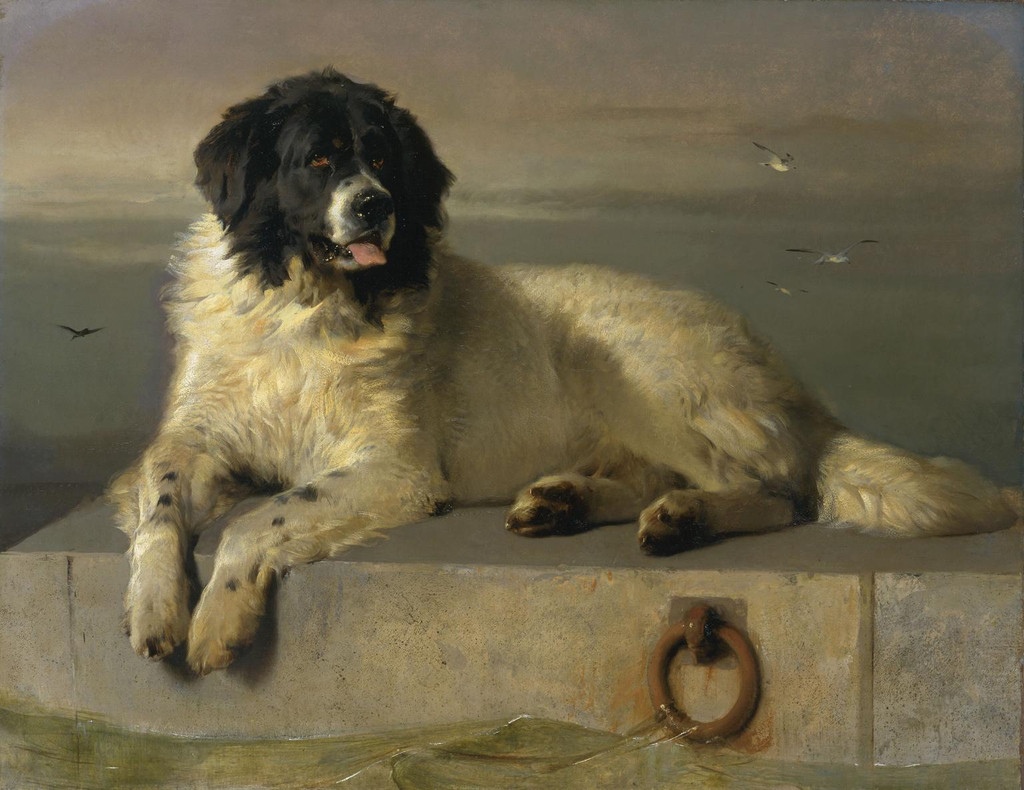
| A Distinguished Member of the Humane Society | 1838 | Painting |
| A Highland Breakfast | 1834 | Painting |
| A Highland Landscape | c. 1830 | Painting |
| A Highland Shepherd's Home | Painting | |
| A Horse, Goat and Bull | 1811 | |
| A Hunting Horse | Drawing | |
| A Jack in Office | Painting | |
| A Lion Disturbed at His Repast | Painting | |
| A Random Shot | Painting | |
| A Scene at Abbotsford | Painting | |
| Adversity | Painting | |
| Alexander and Diogenes | exhibited 1848 | Painting |
| Alpine Mastiffs Reanimating a Distressed Traveler | 1820 | Painting |
| Contending Group after Nature | Drawing | |
| Copy after Rubens's Wolf and Fox Hunt | c. 1824–26 | Painting |
| Dash | Painting | |
| Deer and Deer Hounds in a Mountain Torrent ('The Hunted Stag') | c. 1832 / exhibited 1833 | Painting |
| Deer Family | ||
| Dignity and Impudence | 1839 | Painting |
| Dog Resting Upon a Couch | Drawing | |
| Eos | 1841 | Painting |
| Favourites, the Property of H.R.H. Prince George of Cambridge | 1834–35 | Painting |
| Her Majesty Sketching at Loch Laggan | ||
| High Life | 1829 / exhibited 1831 | Painting |
| Highland Lassie | Drawing | |
| Isaac van Amburgh and his Animals | 1839 | Painting |
| Lady Godiva's Prayer | Painting | |
| Laying Down the Law | 1840 | Painting |
| Lion Defending Its Prey | c. 1840 | Painting |
| Lioness | Drawing | |
| Little Strollers | ||
| Low Life | 1829 / exhibited 1831 | Painting |
| Man Proposes, God Disposes | 1864 | Painting |
| Nell Gwynne / Diana Vernon | Painting | |
| Neptune | ||
| No Hunting Till the Weather Breaks | Painting | |
| Otterhounds | Drawing | |
| Peace | Painting | |
| Pensioners | Painting | |
| Portrait of a Mule | Painting | |
| Portrait of Mr Van Amburgh, as He Appeared with His Animals at the London Theatres | 1846–47 | Painting |
| Portraits of a Pointer Bitch and Puppy | Painting | |
| Pray Let Me Out | ||
| Prosperity | Painting | |
| Ptarmigan in a Landscape | by 1833 | Painting |
| Queen Victoria and Prince Albert at the Bal Costumé of 12 May 1842 | 1842–46 | Painting |
| Queen Victoria at Loch Laggan | Painting | |
| Queen Victoria at Osborne | 1865–67 | Painting |
| Queen Victoria landing at Loch Muick | Painting | |
| Rat-catching | 1823 | |
| Reclining Lion | Drawing | |
| Reclining Lion, From Back | Drawing | |
| Rent-day in the Wilderness | 1855–68 | Painting |
| Return from Deer Stalking | 1839 | |
| Royal Sports on Hill and Loch | Painting | |
| Sam Lovill, Porter at the Royal Academy | Drawing | |
| Scene from A Midsummer Night's Dream | 1848–51 | Painting |
| Scene in the Highlands, with portraits of the Duchess of Bedford, the Duke of Gordon and Lord Alexander Russell | Painting | |
| Scottish Highlands, Lochs and Figures | Drawing | |
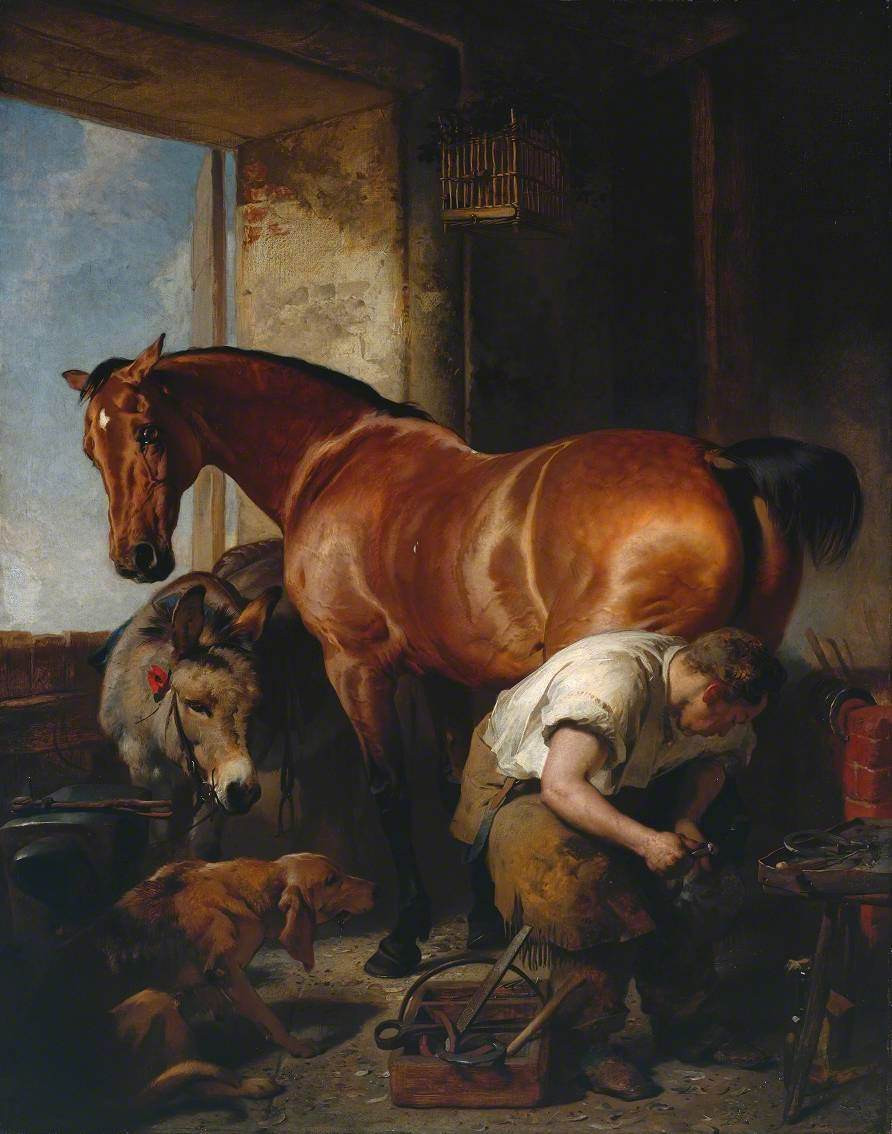
| Shoeing | exhibited 1844 | Painting |
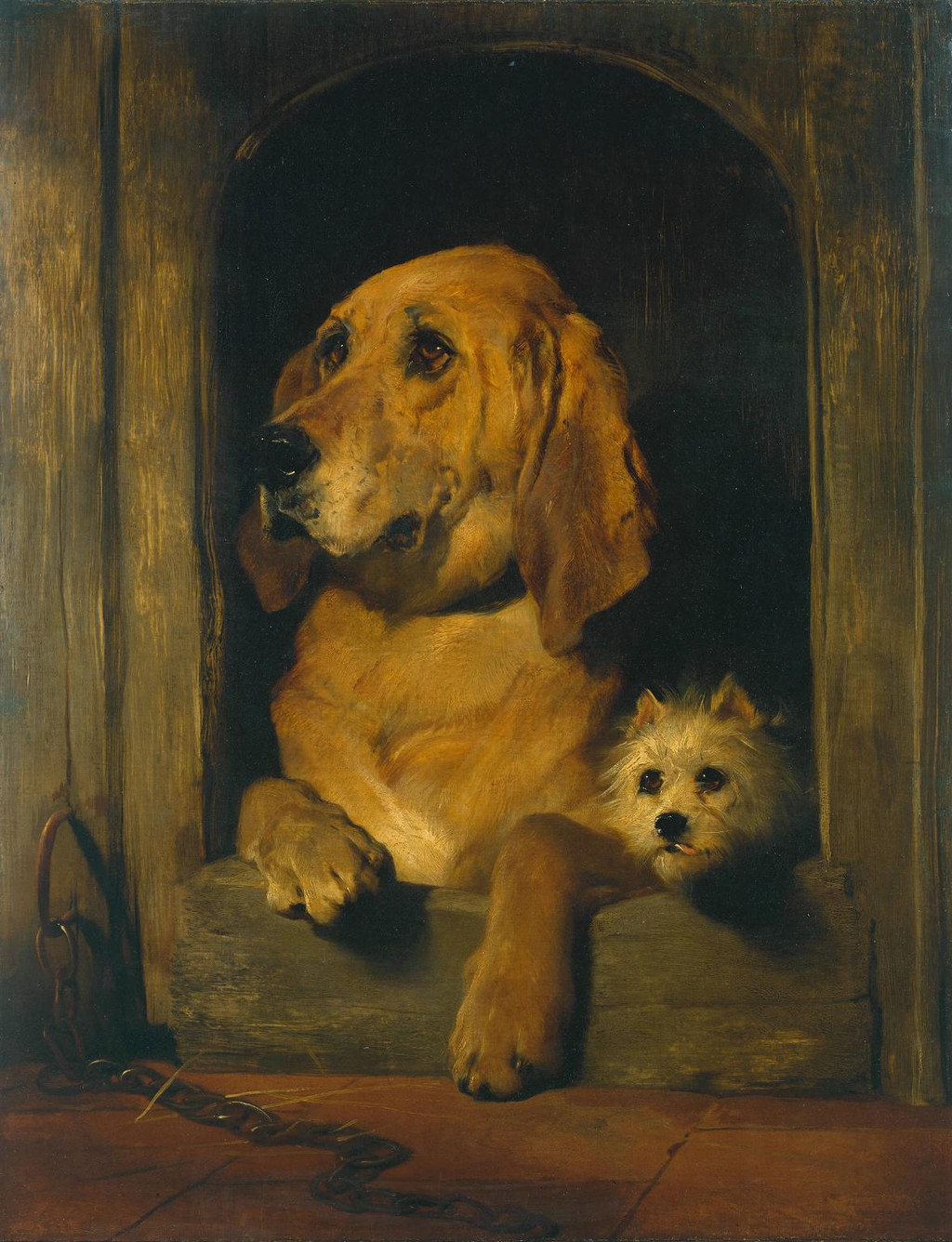
| Sleeping Bloodhound | exhibited 1835 | Painting |
| Spaniel and Rabbit | Painting | |
| Stag at Bay | 1866 | Sculpture |
| Stag at Bay | 1846 | Painting |
| Studies of a staghound and the head of a stag for painting ‘The Hunting of Chevy Chase’ | Drawing | |
| Study for Alpine Mastiffs Reanimating a Distressed Traveler | Drawing | |
| Study for the Monkey in The Cat's Paw | Drawing | |
| Study of a Dog | Drawing | |
| Study of a herding dog facing right | Drawing | |
| Study of the horse of Selene, from the East pediment of the Parthenon | Drawing | |
| Suspense | Painting | |
| Taking a Buck | ||
| The Arab Tent | c. 1865–66 | Painting |
| The Barn | Drawing | |
| The Best Run of the Season | ||
| The Cat's Paw | c. 1824 | Painting |
| The Cavalier’s Pets | ||
| The Challenge | Painting | |
| The Chase | Drawing | |
| The Connoisseurs: Portrait of the Artist with Two Dogs | 1865 | Painting |
| The Death of a Stag in Glen Tilt | Painting | |
| The Drive—Shooting Deer in the Pass | Painting | |
| The Drover's Departure | Painting | |
| The Highland Shepherd’s Dog | 1824; portfolio issue 1848 | |
| The Honourable Mrs Norton | Painting | |
| The Hunting of Chevy Chase | 1825–26 | Painting |
| The Illicit Highland Whisky Still | Painting | |
| The Keeper John Crerar with his Pony | Painting | |
| The Larder Invaded | ||
| The Lion-Dog of Malta | ||
| The Lions at the Base of Nelson's Column | 1867 | Sculpture |
| The Monarch of the Glen | about 1851 | Painting |
| The Mountain Torrent | ||
| The Old Shepherd's Chief Mourner | 1837 | Painting |
| The Sanctuary | 1842 | Painting |
| The Stricken Deer | Painting | |
| The Twa Dogs | Painting | |
| Time of Peace | ||
| Two stags running | Drawing | |
| Victoria, Princess Royal, with Eos | Painting | |
| View of Glenfeshie | Painting | |
| War | Painting | |
| White Horse in a Stable | Painting | |
| Windsor Castle in Modern Times | 1841–43 | Painting |
| Woburn Abbey Game Card | 1825; portfolio issue 1848 |
Discussion
Use the article’s images and evidence to develop your own reading of Landseer and the Scottish Highlands.
Reader Insights
Which detail is most revealing when you consider “A Scottish threshold in 1824”?
How does the evidence in “Blair Atholl: access has names” affect your reading of Landseer and the Scottish Highlands?
What further question would you bring to “The Highlands do not resolve into one picture”?
Join the Conversation
Share a detail, comparison or question about Landseer and the Scottish Highlands below.
References
- Richard Ormond, The Monarch of the Glen: Landseer in the Highlands, National Galleries of Scotland, 2005, paperback ISBN 9781903278574.
- Anne MacLeod, “The Highland Landscape: Visual Depictions, 1760–1883”, in Dauvit Broun and Martin MacGregor (eds), Mìorun Mòr nan Gall?, University of Glasgow. View source.
- National Galleries of Scotland, Edwin Landseer, The Monarch of the Glen, about 1851, NG 2881. View source.
- National Galleries of Scotland, “Monarch of the Glen: The Creation of an Icon”, “Real or Romantic? Uncovering The Monarch of the Glen”, and “Scottish identity: Who decides who we are?”. and and View source 1. View source 2. View source 3.
- Richard Ormond, Joseph Rishel and Robin Hamlyn, Sir Edwin Landseer, Philadelphia Museum of Art, Tate Gallery and Rizzoli, 1981, ISBN 0-87633-044-8.
- National Galleries of Scotland, “Sir Edwin Landseer”. View source.
- Sir Walter Scott, letter of 18 May 1824, The Letters of Sir Walter Scott, volume 12, University of Edinburgh digital edition. View source.
- Morgan Library & Museum, Edwin Landseer, Scottish Highlands, Lochs and Figures, 1824, 2002.73, and Landseer visitor-book leaf. and View source 1. View source 2.
- National Museums Scotland, “Highland Style: Tartan trends in Georgian Britain”. View source.
- Art Fund, The Keeper John Crerar with his Pony, 1824; National Portrait Gallery and British Museum, John Charles Bromley after Landseer, The Death of a Stag in Glen Tilt, published 1833. and and View source 1. View source 2. View source 3.
- Lucy King, “Noble Beasts”, Deer, Autumn 2022, pp. 23–26, British Deer Society. View source.
- National Galleries of Scotland, Scene in the Highlands, with portraits of the Duchess of Bedford, the Duke of Gordon and Lord Alexander Russell, NGL 004.91; Grantown Museum, “Landseer”; North of Scotland Archaeological Society, Upper Glen Feshie Archaeological Survey, 2005; Christie's, View of Glenfeshie, about 1830–33. and and and View source 1. View source 2. View source 3. View source 4.
- Yale Center for British Art, Edwin Landseer, A Highland Landscape, about 1830, B1981.25.400. View source.
- Philadelphia Museum of Art, Edwin Landseer, Ptarmigan in a Landscape, by 1833, 1986-26-280. View source.
- Trevor R. Pringle, “The privation of history: Landseer, Victoria and the Highland myth”, in Denis Cosgrove and Stephen Daniels (eds), The Iconography of Landscape, Cambridge University Press, 1988, pp. 142–61.
- Grant Jarvie and Lorna Jackson, “Deer forests, sporting estates and the aristocracy”, Sports Historian, 18.1, 1998, pp. 24–54. View source.
- Tate, Edwin Landseer, Deer and Deer Hounds in a Mountain Torrent (“The Hunted Stag”), 1833–38. View source.
- Royal Collection Trust, Edwin Landseer, The Sanctuary, 1842, RCIN 403195. View source.
- Royal Collection Trust, Edwin Landseer, The Deer-Drive, 1847, RCIN 403136. View source.
- Scottish Government, The Management of Wild Deer in Scotland: Report of the Deer Working Group, 2020, sections 2, 14, 16 and 20. and and and View source 1. View source 2. View source 3. View source 4.
- Victoria and Albert Museum, Edwin Landseer, A Highland Breakfast, 1834, FA.87[O]; Government Art Collection, A Highland Shepherd's Home, about 1836. and View source 1. View source 2.
- Deborah Worthing, The Development of Images of the Highland Landscape in Scottish Art, c.1750–1850, PhD thesis, University of Glasgow, 2006. View source.
- National Galleries of Scotland, Edwin Landseer, Rent-day in the Wilderness, 1855–68, NG 586. View source.
- Ewen A. Cameron, The History of Gaelic Scotland: The Highlands since 1880, University of Edinburgh, 2013. View source.
- Martin MacGregor, “The Highland Clearances: a reassessment”, Journal of Scottish Historical Studies, 45.2, 2025, pp. 103–46; Scottish History Society, “The Highland Clearances”. and View source 1. View source 2.
- Royal Collection Trust, Queen Victoria, Copied from Landseer's drawing on the Dining room at Ardverikie, dated 5 September 1847, RCIN 980027.d, and Edwin Landseer, Queen Victoria at Loch Laggan, RCIN 403119. and View source 1. View source 2.
- National Records of Scotland, “Scots on the Move: Railways and Tourism in Victorian Scotland”. View source.
- Splash image, A Highland Landscape. Yale Center for British Art. Image source. Public domain.
- Navigation image, One of the bronze lions at Nelson’s Column: modelled by Edwin Landseer and cast by Carlo Marochetti. Photograph by Amanda Slater. CC BY-SA 2.0. Image source. CC BY-SA 2.0. Resized.