by Tom Gurney
Tom Gurney BSc (Hons) is an art history expert with over 20 years experience
Email: tomgurney1@gmail.com / Phone: +44 7429 011000
Portrait of Mr Van Amburgh, as He Appeared with His Animals at the London Theatres: Introduction
Edwin Landseer's portrait of the American animal tamer Isaac Van Amburgh places a standing man between five captive cats and makes a pointing hand appear to govern the enclosure. A white tunic catches the light; a whip hangs from the other hand; a lion raises its muzzle above a horizontal bar. The painting, made between summer 1846 and March 1847, is an oil on canvas measuring 175.9 × 238.8 cm. Yale Center for British Art holds the canvas under accession B1977.14.61, with the credit Paul Mellon Collection. Its patron was the Duke of Wellington. [1] [2] [3]
The contrast with Landseer's earlier treatment of the same performer is fundamental. In the picture of 1839, Van Amburgh reclines among animals. Here he stands apart from them, directing attention across the cage. The later composition gives bodily command a public, almost declarative form. Yet the means by which it makes that claim remain conspicuous: theatrical dress, iron bars, a whip, a printed advertisement and flowers left outside the enclosure. This is a portrait of authority surrounded by reminders that authority is being performed. [2] [4] [5]
Wellington wanted the subject connected with the dominion over living creatures granted to humanity in Genesis. The painting's history therefore involves more than a famous entertainer receiving an imposing likeness. A patron sought a religious meaning in a commercial attraction; an artist gave that meaning a persuasive arrangement of bodies; a contemporary critic objected to the very connection that the commission was intended to proclaim. The surviving picture allows all three positions to be considered without making any one of them its final explanation. [3] [6]
At a Glance
- ArtistEdwin Landseer [1]
- Date1846–47 [1]
- Collection or siteYale Center for British Art [1]
- ObjectB1977.14.61 / TMS 410 [1]
This work across Edwin Landseer’s career
The Cat's Paw
c. 1824 [8]The Hunting of Chevy Chase
1825–26 [9]Portrait of Mr Van Amburgh, as He Appeared with His Animals at the London Theatres (current article)
1846–47 [13]The Monarch of the Glen
about 1851 [14]Contents
- A portrait seen through iron
- The white tunic and the extended arm
- Five bodies that do not respond alike
- Control as a visible relationship
- Flowers, peel and a printed promise
- Wellington's chosen meaning
- Genesis inside a theatrical cage
- A finished picture awaiting its patron
- What the thousand pounds establishes
- The Royal Academy and a hostile notice
A portrait seen through iron
The cage front fills almost the entire composition. Its thin uprights fall across faces, costume, fur and bare legs, while one horizontal rail cuts through the lower part of the group. A heavy surrounding structure turns the enclosure into a rectangle within the picture. Behind the animals, two arched doorways interrupt the brown wall. There is no distant country into which the eye can escape. Every opening appears to belong to the management of this interior, and every body has to be understood within its boundaries. [2]
That frontal barrier determines our relationship with the performer. We stand on the side from which a paying audience might watch, facing the man through the bars. They partly obscure him without preventing us from studying his pose. One upright passes close to the face and another crosses the light tunic; the rigid intervals continue regardless of what lies behind them. The man may command the animals, but the enclosure imposes its own order on his appearance. Its repeated lines make him one occupant among others even as his gesture announces a different status. [2]
The painting does not provide an audience of recognisable faces. Instead, it offers us an audience's position. We must supply the looking that turns the caged group into a spectacle. This absence of depicted spectators makes the encounter unusually direct: there is no crowd whose reactions tell us how to respond, and no intervening observer whose courage or amusement we can borrow. Van Amburgh's face turns towards the animals rather than addressing us, so we observe a demonstration apparently in progress. We are invited to assess its success from the visible arrangement alone. [2]
The barrier also protects and frustrates. It promises separation from the cats while making their confinement impossible to ignore. At the right, the lion rests its forepaws against the horizontal rail, bringing the body into contact with the very structure through which we look. The animal is neither an unbounded threat nor a harmless decorative emblem. Its size and teeth remain present, but so does the material restriction around it. The effect depends on maintaining both perceptions at once. Remove the bars and the scene would suggest a different kind of encounter; remove the cats' evident strength and the demonstration would lose its force. [2]
The floorboards give this closed space a measurable depth. Their long seams run back beneath the figure, while the animals crowd the sides and leave a relatively clear strip around his feet. We can imagine the room the man has to occupy without confusing it with an unlimited stage. The rear arches repeat the upright emphasis of his body but remain dark and recessive. Against those openings, the outstretched arm establishes a conspicuously lateral movement: it seems to direct what the architecture contains. Depth, gesture and barrier therefore contribute different kinds of order. The doors suggest access to the enclosure, the pointing hand organises attention within it, and the front bars govern our view from outside. This layered arrangement makes the simple claim that one man controls the scene more persuasive, while keeping the surrounding apparatus visibly indispensable. [2]
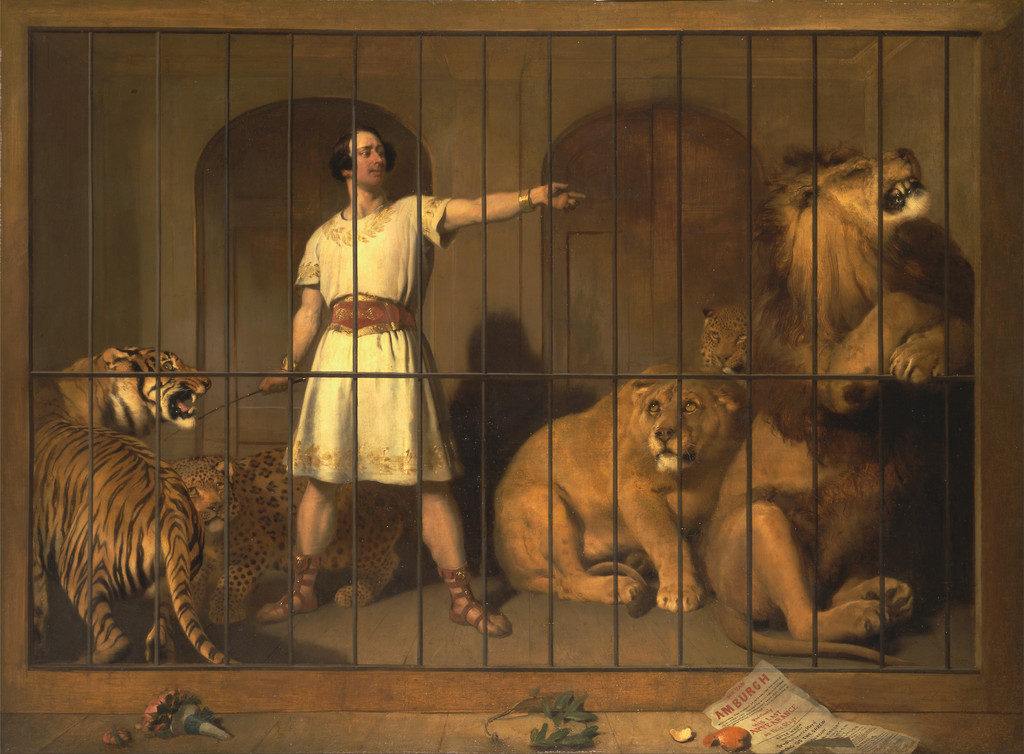
Portrait of Mr Van Amburgh, as He Appeared with His Animals at the London Theatres. Yale Center for British Art. Image source. Public domain.
The white tunic and the extended arm
Van Amburgh occupies the clearest vertical space in the den. His feet are set well apart, his torso faces towards the viewer and his head turns to his left. The extended arm crosses the upper middle of the canvas towards the lions. This broad arrangement gives the gesture room to register before we inspect the smaller details of his face. The body has the stability of a demonstrator who expects to be seen from a distance. Its spread stance belongs to the physical work of holding a position, even while the pointing hand makes command appear almost effortless. [2]
The costume separates him from an ordinary visitor. His short pale tunic has gold decoration at the neckline, sleeves and hem; a broad red belt gathers it at the waist. The sandals leave much of the lower legs exposed, and bright bands at the wrists reinforce the theatrical finish. These elements suggest an imagined classical dignity. They do not make the cage an ancient setting, because its timber, bars and advertisement retain the appearance of a modern show. The clothing gives the performer an elevated role within the entertainment rather than transporting the whole event into a convincing historical world. [2]
The tunic is particularly effective because it creates a large light surface between darker animals and background. The eye can find the man immediately, then travel along the arm towards the lion. Gold ornament and the red belt give the costume internal distinctions, but they do not break its basic unity. By comparison, striped and spotted coats produce restless patterns. The light figure seems to organise that variety without needing to match its colours. This visual separation helps make a human gesture appear sufficient to coordinate several much heavier bodies. [2]
His hands give different accounts of that coordination. The raised one indicates a direction; the lowered one holds the whip, whose thin length extends towards the tiger. Command is presented as a visible intention, while its instrument remains available below. It would be too simple to choose one hand and ignore the other. The pointing gesture supplies the drama's grandest expression, but the whip prevents the scene from becoming a demonstration of influence without material means. Landseer places both within the same clearly illuminated figure, allowing us to see how the performance's appearance of personal power is constructed. [2]
Five bodies that do not respond alike
The animals divide into unequal groups around the man. At the left, the tiger's broad striped back turns away, while its head swings towards the centre with its mouth open. A spotted cat crouches lower behind it. At the right, a lioness sits close to the foreground, a second spotted head appears farther back, and the large maned lion rises against the bars. These positions are legible as a single display, but they do not amount to one repeated pose. Each animal adds a different bodily response to the apparent act of command. [2]
The tiger is seen from a particularly revealing angle. Its back and flank establish the bulk of an animal facing into the den, but the turned head redirects attention towards the performer. The open mouth introduces pale teeth into a dense pattern of black and orange. The effect is more active than a simple frontal likeness: the body and head appear to belong to different possible movements. The man stands within reach of that turning animal, yet remains upright. Their relationship is made impressive through the distance between the tiger's muscular mass and the slender human hand nearby. [2]
The lioness offers another kind of tension. Her forelegs support a seated body, and her head tilts upwards towards the man's side of the composition. The light catches her eyes and muzzle, giving the face a concentration that contrasts with the tiger's exposed mouth. A dark tail curves across the floor, joining the lower forms without closing them into a rigid pattern. She can be read as attentive, but the picture does not give us a secure measure of what she feels. Her posture belongs to the painting's argument about command; it is not a recorded diagnosis of an individual animal's experience. [2]
The two spotted cats are less fully displayed. One is partly screened by the tiger and the man's legs; the other looks out from behind the lioness and beside the mane. Partial visibility makes the enclosure seem more densely occupied than a row of equally spaced animal portraits would have done. It also means that some of the most watchful faces emerge from bodies we cannot readily follow. Their spots add a different scale of pattern, close and broken beside the tiger's long stripes. They help make the gathering varied without requiring us to assign every hidden limb to a complete anatomical outline. [2]
At the right, the lion supplies the composition's greatest upward force. Its forepaws rest on the rail, its head lifts and its mouth opens, while the mane spreads around the neck and shoulder. It rises to a height that competes with the standing man. Van Amburgh's arm points towards this area, but the animal's muzzle turns upwards rather than meeting his hand in a neat line. The command therefore does not end in an uncomplicated illustration of obedience. A powerful creature remains physically and visually expansive within the very arrangement that is supposed to demonstrate its subjection. [2]
Control as a visible relationship
The historian of performance Peta Tait reads this particular composition as an image in which Van Amburgh's forceful central stance and pointing arm make the animals appear to cower. She connects it with the suggestion that his commanding presence could itself produce submission. Her discussion also distinguishes pictorial arrangements from the changing partitions and distances that could structure a live act. The distinction is useful here: a painted den gives us a chosen conjunction of bodies, not a continuous account of how those bodies were brought together. [17]
The apparent power of the man depends on differences that the picture preserves. His pale costume stands upright between patterned animals; his lifted forearm remains clear against the darker wall; their gazes distribute attention around his position. A viewer can connect these details into a relationship of command. Yet no single feature proves that connection by itself. An open mouth might contribute to the spectacle of danger, a low posture to the appearance of submission, and an upturned face to the impression of vigilance. Their meanings emerge from their conjunction with the performer and the setting. [2]
This is why the picture should not be reduced to animals acting like people. The cats do not wear social costumes or enact a recognisable human profession. Their bodies remain those of large carnivores, made intelligible through weight, coat, mouth, eyes and muscular position. The interpretation of authority arises because the human figure appears able to direct those bodies. It does not require every animal expression to be translated into a familiar human emotion. The difference between species is one of the things the spectacle needs: control would signify less if the animals seemed merely to share the man's intentions. [2]
Nor does the composition establish the whole history of its subjects' treatment. Its force lies in what it shows at a selected moment: confinement, close proximity, an instrument of control and several differently disposed animals. We can acknowledge those facts without pretending that the still image reveals every preceding action. The cats' powers are made visible at the same time as their restricted circumstances. That conjunction gives the painting a more difficult content than a straightforward celebration of courage. The performer stands securely enough to point; the question of how such security is obtained remains attached to the whip and the bars. [2]
Flowers, peel and a printed promise
The narrow space outside the cage contains a second, quieter scene. A bouquet lies at the left, a green wreath or leafy circlet rests nearer the middle, and orange peel and a folded playbill occupy the right. These small things sit beneath the much larger animal bodies, on the near side of the barrier. They bring the spectators' world into a picture that otherwise withholds its human audience. A viewer encounters traces of attendance before looking through the bars, as though approaching a performance that has already attracted notice. [2] [3]
The bouquet and wreath suggest forms of acclaim. They introduce softness, foliage and bright accents into an enclosure dominated by iron and large bodies. Their placement also gives the painted lower edge unusual significance. These are objects that could be picked up, carried away or trodden on, yet Landseer allows them a distinct presence. The picture's grand human gesture rises above things associated with an event's brief social life. What may look heroic at the centre has, at its feet, the portable and perishable materials of public entertainment. [2]
The peel introduces a less ceremonial register. Beside the flowers and printed sheet, it belongs to the small disorder left around a spectacle. It is too slight to compete with the animals, but specific enough to interrupt an entirely elevated reading. The painting accommodates both a wreath and discarded food. That mixture matters because the commission attached a large religious proposition to an attraction presented before an audience. The low foreground keeps the material setting of such attendance within sight. It does not allow the subject to shed every ordinary association as it assumes a grander meaning. [2]
The playbill is the most explicit statement that the man has a public identity beyond this one moment. His name appears prominently in red, accompanied by smaller lines of promotional text. The printed sheet promises an attraction; the painted group supplies its impressive embodiment. Because it lies at an angle and partly folds, it remains an object rather than becoming a substitute caption for the whole scene. It advertises the celebrity whose pose we are examining, while also reminding us that celebrity is announced, distributed and sold. The picture contains its own smaller image of publicity. [2]
Wellington's chosen meaning
The Apsley House catalogue published by Evelyn Wellington in 1901 preserves a sequence of correspondence about the commission. In its transcription of Landseer's letter of 26 March 1848, the painter assigns the Duke a decisive role in selecting the subject's meaning. Thanking him for his praise and payment, Landseer attributes any grandeur or dignity to the patron's choice of the scriptural point. He then writes: “The mind and thought belonging to the work is yours, the matter only mine.” [3]
The sentence is generous to a patron, but its distinction between thought and matter is especially revealing. It represents the picture as a collaboration in which Wellington supplied the governing idea and Landseer gave it material form. We need not assume that the formula tells us every detail of their negotiations. Its courteous purpose remains evident. Nevertheless, it is direct evidence, through the catalogue's transcription, that the painter acknowledged a particular intellectual contribution. The Duke's relation to the work extended beyond the payment for an already completed likeness. [3]
The catalogue states that a text from Genesis was placed on the frame at Wellington's direction. An independent notice in the Examiner in May 1847 also refers to a biblical inscription above the picture. Together these accounts establish that scriptural wording accompanied its historical presentation. The important point is the connection made available to a viewer: a scene of animal handling was offered as an illustration of a divine grant of dominion. The inscription guided interpretation from outside the painted cage, just as the playbill identified the commercial performer from the lower foreground. [3] [6]
That juxtaposition gives the picture two kinds of accompanying language. One is the public announcement of an attraction; the other places human authority within the story of creation. The human figure stands between them, carrying a whip and wearing a decorated tunic. The result can seem grand because a particular bodily feat is connected with a universal human condition. It can also seem strained because an entertainer's specialised skill cannot simply represent the relation of all humanity to every living creature. The painting's ambition depends on that enlargement, and its difficulty begins there too. [2] [3]
Genesis inside a theatrical cage
In Genesis 1:26, humanity is made in God's image and granted dominion over other forms of life. Verse 28 repeats that grant within the command to multiply and replenish the earth. The passage concerns humankind's place within creation, rather than the exceptional abilities of a single performer. Its scope includes fish, birds and creatures moving upon the earth. Wellington's chosen connection therefore asks the viewer to see a general relationship condensed into one man standing among a small collection of captive predators. [18]
The painting gives that condensation an immediately visible form. A standing human directs an arm towards large animals; they remain contained around him; his light costume makes him conspicuous. The difference between bodily scale and apparent control helps the scriptural proposition acquire pictorial force. The man does not need to be larger than the lion to claim authority over it. Indeed, the lion's bulk makes the claim more remarkable. A relationship that might otherwise remain abstract becomes an arrangement of limbs, gazes and positions on a wooden floor. [2] [18]
Yet the picture also makes the limits of the analogy visible. The front bars give the human viewer safety, while the back doors suggest a managed interior. The whip brings an instrument into a scene that might otherwise be read as the triumph of presence alone. Dress and publicity establish the event as theatre. These elements do not cancel the intended religious association; they specify the circumstances through which it is being conveyed. The viewer must decide whether the material reality supports the elevated idea or exposes too great a distance between an act of showmanship and a statement about creation. [2] [3]
The wider chapter offers another reason to resist extracting a single word as an exhaustive explanation. After the grant of dominion, Genesis describes food provided for humans and other living creatures, and concludes with divine approval of the created world. The text includes relationships of provision as well as rank. Landseer's enclosure, by contrast, concentrates on the visible demonstration of one person's power. To recognise that selectivity is not to deny the commission's biblical programme. It is to see how a large text was narrowed into a specific pictorial proposition, one whose persuasiveness could be disputed by viewers sharing knowledge of the same scripture. [2] [18]
A finished picture awaiting its patron
The letters printed in the Apsley House catalogue separate the painting's completion from its payment and delivery. On 22 March 1848, according to the catalogue's summary, Landseer reminded Wellington that the picture ordered by him had been finished for more than a year and asked what should be done with it. This places a practical difficulty beside the grand subject: a completed commission still needed instructions from its owner. The object had a life in the artist's possession after it had reached the condition in which it could be publicly exhibited. [3]
Wellington replied on 25 March. In the catalogue's transcription, he acknowledged that he had lost sight of the picture since it went to the exhibition, apart from admiring it there. He praised the care and effort devoted to it, enclosed a token of gratitude and asked that it be sent to his house. His answer combines appreciation with an admission of inattention. It is a useful corrective to an account in which an enthusiastic patron's admiration automatically produces an immediate, uncomplicated transfer from studio to collection. [3]
The Duke's pleasure was real enough to enter the correspondence, but his expansive praise belongs to a private exchange with the artist. It should be read in that setting. A patron thanking a painter does something different from a critic assessing a work among competing pictures at an exhibition. The courtesy does not diminish the letter's value; it identifies the sort of value it has. We hear how Wellington wanted the transaction to be understood, and how he answered the reminder that a work commissioned for him was still awaiting a destination. [3]
On 17 April, Landseer announced his intention to send the picture to Apsley House on the following Thursday, again as recorded in the catalogue's account. That announcement provides a proposed next step rather than an independently documented arrival time. The sequence remains clear enough: the picture was completed and exhibited before the March 1848 exchange, payment was acknowledged that month, and arrangements for delivery were still being discussed in April. Keeping those stages distinct prevents a date attached to a cheque or a letter from becoming a mistaken date for the painting itself. [3]
What the thousand pounds establishes
Landseer's reply of 26 March 1848 acknowledges Wellington's enclosed draft for one thousand pounds. The sum is securely attached to this picture through the catalogue's transcription of the receipt. It belongs to the later commission, not to the earlier royal painting of the same performer. The letter also records the artist's response to its generosity. Landseer says the amount was greater than he would have asked and offers to paint another subject of the Duke's choosing in addition to the Van Amburgh work. [3]
The financial evidence is more precise than a story in which an unexpectedly delighted Duke simply doubles a quoted price. The transcribed letter establishes the sum received and the painter's statement that it exceeded his expectation. It does not give a prior asking price from which an exact multiplication can be calculated. What emerges is a transaction framed by gratitude and the possibility of further service. The painter answers money and approval with an offer of additional work, extending the relationship beyond the single completed canvas. [3]
This exchange also complicates the division between the patron's thought and the artist's matter. Landseer praises Wellington's contribution to the idea at the same time as he acknowledges the payment. The letter is both an explanation of authorship and an act of professional courtesy. Its two functions need to be held together. To treat every phrase as a disinterested account of who invented which detail would be excessive; to dismiss the entire passage as empty flattery would lose its unusually clear record of the biblical programme and the artist's response to the patron. [3]
The painting itself offers a parallel arrangement of different kinds of value. Its white tunic and extended arm create dignity; its cats provide the dangerous attraction; its playbill announces a commodity; its flowers imply public appreciation. The commission adds another measure, the fee paid for the painted object. None of these values is identical. The picture's interest grows from their proximity: a commercial performance became the subject of a costly commission whose patron wished it to express a universal religious claim. The thousand pounds belongs to that history without becoming proof that everyone found the claim convincing. [2] [3]
The Royal Academy and a hostile notice
The work appeared at the Royal Academy in 1847 as number 186, distinct from the Van Amburgh picture exhibited there in 1839. [19] Its public presentation exposed the Duke's chosen subject to a judgement quite different from his own. In the Examiner of 8 May 1847, the reviewer turned to Landseer's portrait after praising The Drive—Shooting Deer in the Pass. The Highland work was admired for landscape, movement and execution. The change of subject brought a sharp change of tone, although the painter remained the same. [6]
The reviewer regretted turning from the Highland picture to the theatrical or menagerie scene opposite. The playbill was dismissed for its stale jokes, the bouquet associated with Covent Garden, and the scriptural inscription made the principal object of ridicule. Rather than accepting the animal tamer as a persuasive expression of humanity in God's image, the notice found the figure and his surrounding stage sentiment inadequate to the proposition. Its criticism therefore reached the composition's governing connection, rather than merely a faulty limb or an unsuccessful passage of colour. [6]
The attack is particularly revealing because the small foreground things were central to it. The playbill and bouquet might seem incidental beside a lion's body, yet for this viewer they helped prevent the intended elevation. They insisted too strongly on the commercial stage and its forms of applause. What the commission asked to be understood as a large truth about humankind was pulled back towards an entertainer's occupation. The critic's discomfort can be explained through the very objects that make the painting so specific. Its worldly evidence resisted being absorbed into the scriptural explanation. [2] [6]
The notice also repeated the identification of the work as painted for the Field Marshal, the Duke of Wellington. The patron's name did not protect the subject from criticism. On the contrary, it sharpened the mismatch between prestigious sponsorship and what the writer considered an unsuitable subject. This is one dated and forceful response, not a verdict delivered by every visitor. Its importance lies in its independence from the grateful private letters: admiration by the commissioner and objection by a contemporary reviewer coexisted. The painting was contested at the point where public entertainment, artistic dignity and religious language met. [3] [6]
Admiring the animals, questioning the man
Later criticism could separate the success of the animals from the success of the human figure. Evelyn Wellington's catalogue quotes Gustav Friedrich Waagen's judgement that the lions and tigers were animated and masterfully executed, while the performer appeared theatrical and common. The assessment reaches us there as a quotation from his Treasures of Art in Great Britain. It preserves a revealing division: Landseer's animal painting could be admired even when the person supposed to govern it was considered the composition's weak element. [3]
That response corresponds to an imbalance we can examine for ourselves. The lion's mane, the tiger's turned head and the lioness's attentive face offer several distinct concentrations of pictorial interest. Van Amburgh, by comparison, has to carry a more demanding role. He must be recognisable as an individual, legible as a performer and convincing as the bearer of the patron's large idea. A face or stance that satisfies one purpose might trouble another. The painting needs his particularity to remain a portrait, yet asks that particular man to stand for something much wider than himself. [2] [3]
Frederick G. Stephens, writing in 1880, preferred the Van Amburgh picture of 1839 to the one shown in 1847, and placed both below certain earlier lion paintings by Landseer. His judgement belongs to a retrospective comparison across the artist's work. [4] It differs from the Examiner's immediate objection to the theatrical subject and biblical association. The two responses should not be folded into a single timeless dislike. One concerns how the commission entered an exhibition; the other concerns where two related works should stand within an artistic career. [6] [4]
Praise also continued. The Apsley catalogue reproduces an Art Journal judgement of 1879 that celebrated the naturalness and beauty of the animal portraiture. [3] The contrast between these positions helps identify the picture's persistent difficulty. Its animal bodies can persuade a viewer through the specificity of their representation, while the larger claim placed around them remains open to disagreement. The work does not have to be either an unqualified triumph or a failure without interest. Its capacity to hold strong animal painting together with an awkwardly ambitious human role is precisely what makes its reception instructive. [2] [3]
Reproduction and the picture's later life
Wellington's interest extended to the possibility of an engraving. The catalogue records his suggestion of 28 March 1848 that reproduction might benefit the artist. Landseer replied on 17 April that an engraver's existing work would prevent a start for at least a year. The exchange shows a proposed further life for the image at a moment when its delivery as a painting was still being arranged. Ownership of the canvas and wider circulation of its design were distinct matters, both present in the correspondence. [3]
The delay is worth preserving because an intention to reproduce is not itself a completed print. Nor does the unnamed engraver in this exchange securely identify the maker of every later version. The same catalogue records an engraving by A. C. and W. J. Alais in the Art Journal of October 1879 and another by James Scott for Henry Graves's Library Edition of Landseer's works. These entries document later reproductive activity; they do not turn a print into the original painting or establish that all subsequent images came from the plan discussed in 1848. [3]
The catalogue also records appearances at the Royal Academy's Old Masters exhibition in 1874 and the Victorian Era Exhibition at Earl's Court in 1897. Such entries show the picture being encountered beyond the circumstances of its first exhibition and commission. [3] Its present institutional identity is different again: the canvas is now at Yale, under the Paul Mellon Collection credit. [1] The shifts in setting allow an object once made for Wellington's house to be approached through the history of British art and the representation of animals, with the original patron's explanation available for scrutiny rather than functioning as an unquestioned instruction.
The strongest approach to that history begins with the painting's own competing evidence. A raised arm proposes command; a lowered whip specifies a means; bars establish the limits within which both operate. The animals remain varied in their attention and substantial in their bodies. Below them, flowers, peel and advertising preserve the social life of an entertainment. Wellington's Genesis programme enlarges the scene, while the Examiner's response reveals the cost of that enlargement. Landseer made a portrait in which one man seems to control every creature around him, but the meaning of that control escapes the certainty of the pointing hand. [2] [3] [6]
Artworks directory
This directory gathers works discussed in the articles, including drawings, original etchings and prints after Landseer. It is not a complete catalogue of every drawing, version, plate or impression. Distinct media are kept separate; uncertain dates are left blank. Linked titles open individual articles.
| Name | Date | Medium |
|---|---|---|
| A Bellowing Stag | Drawing | |
| A Deerhound | 1826 | Painting |
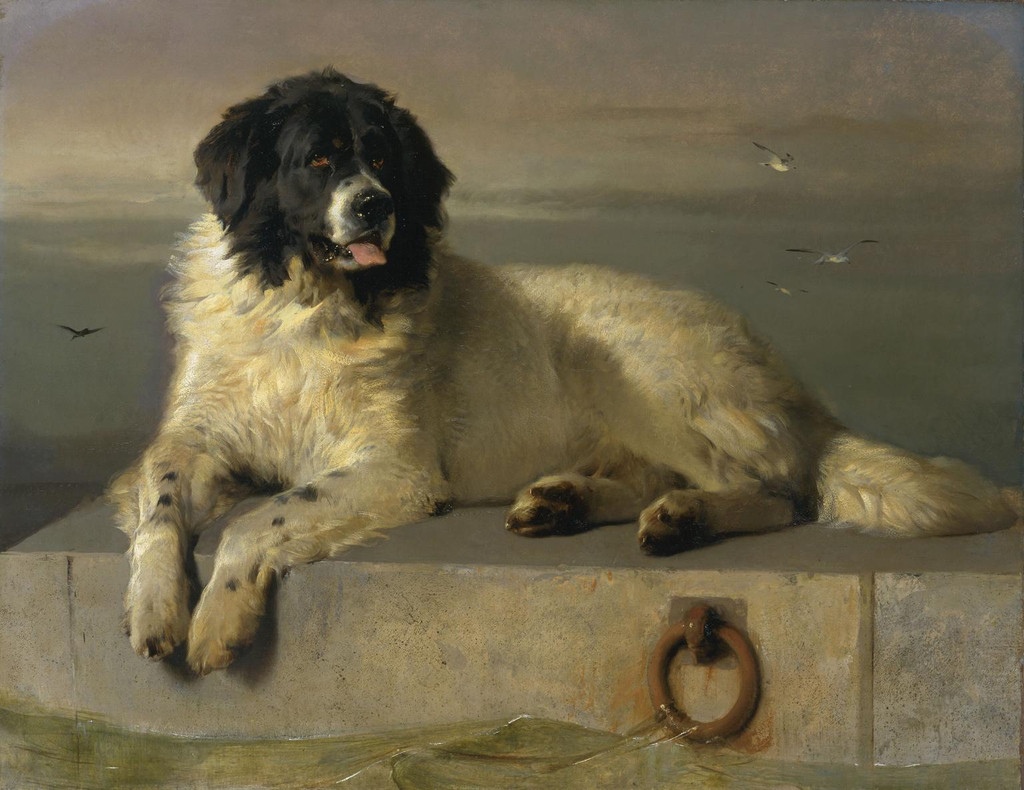
| A Distinguished Member of the Humane Society | 1838 | Painting |
| A Highland Breakfast | 1834 | Painting |
| A Highland Landscape | c. 1830 | Painting |
| A Highland Shepherd's Home | Painting | |
| A Horse, Goat and Bull | 1811 | |
| A Hunting Horse | Drawing | |
| A Jack in Office | Painting | |
| A Lion Disturbed at His Repast | Painting | |
| A Random Shot | Painting | |
| A Scene at Abbotsford | Painting | |
| Adversity | Painting | |
| Alexander and Diogenes | exhibited 1848 | Painting |
| Alpine Mastiffs Reanimating a Distressed Traveler | 1820 | Painting |
| Contending Group after Nature | Drawing | |
| Copy after Rubens's Wolf and Fox Hunt | c. 1824–26 | Painting |
| Dash | Painting | |
| Deer and Deer Hounds in a Mountain Torrent ('The Hunted Stag') | c. 1832 / exhibited 1833 | Painting |
| Deer Family | ||
| Dignity and Impudence | 1839 | Painting |
| Dog Resting Upon a Couch | Drawing | |
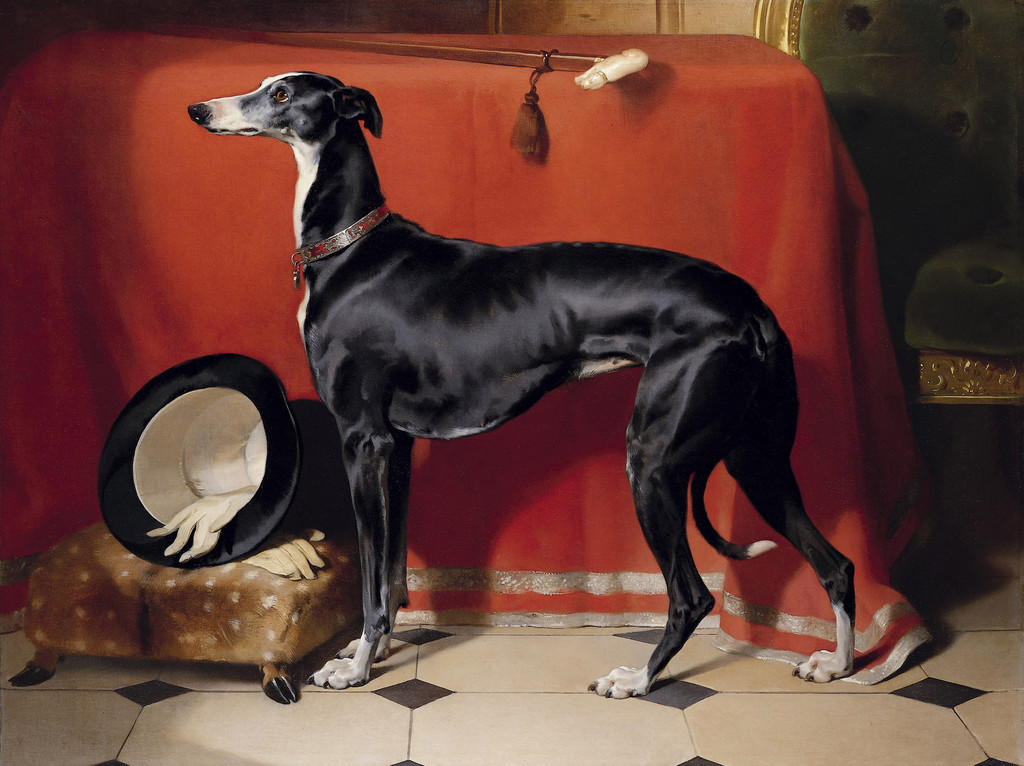
| Eos | 1841 | Painting |
| Favourites, the Property of H.R.H. Prince George of Cambridge | 1834–35 | Painting |
| Her Majesty Sketching at Loch Laggan | ||
| High Life | 1829 / exhibited 1831 | Painting |
| Highland Lassie | Drawing | |
| Isaac van Amburgh and his Animals | 1839 | Painting |
| Lady Godiva's Prayer | Painting | |
| Laying Down the Law | 1840 | Painting |
| Lion Defending Its Prey | c. 1840 | Painting |
| Lioness | Drawing | |
| Little Strollers | ||
| Low Life | 1829 / exhibited 1831 | Painting |
| Man Proposes, God Disposes | 1864 | Painting |
| Nell Gwynne / Diana Vernon | Painting | |
| Neptune | ||
| No Hunting Till the Weather Breaks | Painting | |
| Otterhounds | Drawing | |
| Peace | Painting | |
| Pensioners | Painting | |
| Portrait of a Mule | Painting | |
| Portrait of Mr Van Amburgh, as He Appeared with His Animals at the London Theatres | 1846–47 | Painting |
| Portraits of a Pointer Bitch and Puppy | Painting | |
| Pray Let Me Out | ||
| Prosperity | Painting | |
| Ptarmigan in a Landscape | by 1833 | Painting |
| Queen Victoria and Prince Albert at the Bal Costumé of 12 May 1842 | 1842–46 | Painting |
| Queen Victoria at Loch Laggan | Painting | |
| Queen Victoria at Osborne | 1865–67 | Painting |
| Queen Victoria landing at Loch Muick | Painting | |
| Rat-catching | 1823 | |
| Reclining Lion | Drawing | |
| Reclining Lion, From Back | Drawing | |
| Rent-day in the Wilderness | 1855–68 | Painting |
| Return from Deer Stalking | 1839 | |
| Royal Sports on Hill and Loch | Painting | |
| Sam Lovill, Porter at the Royal Academy | Drawing | |
| Scene from A Midsummer Night's Dream | 1848–51 | Painting |
| Scene in the Highlands, with portraits of the Duchess of Bedford, the Duke of Gordon and Lord Alexander Russell | Painting | |
| Scottish Highlands, Lochs and Figures | Drawing | |
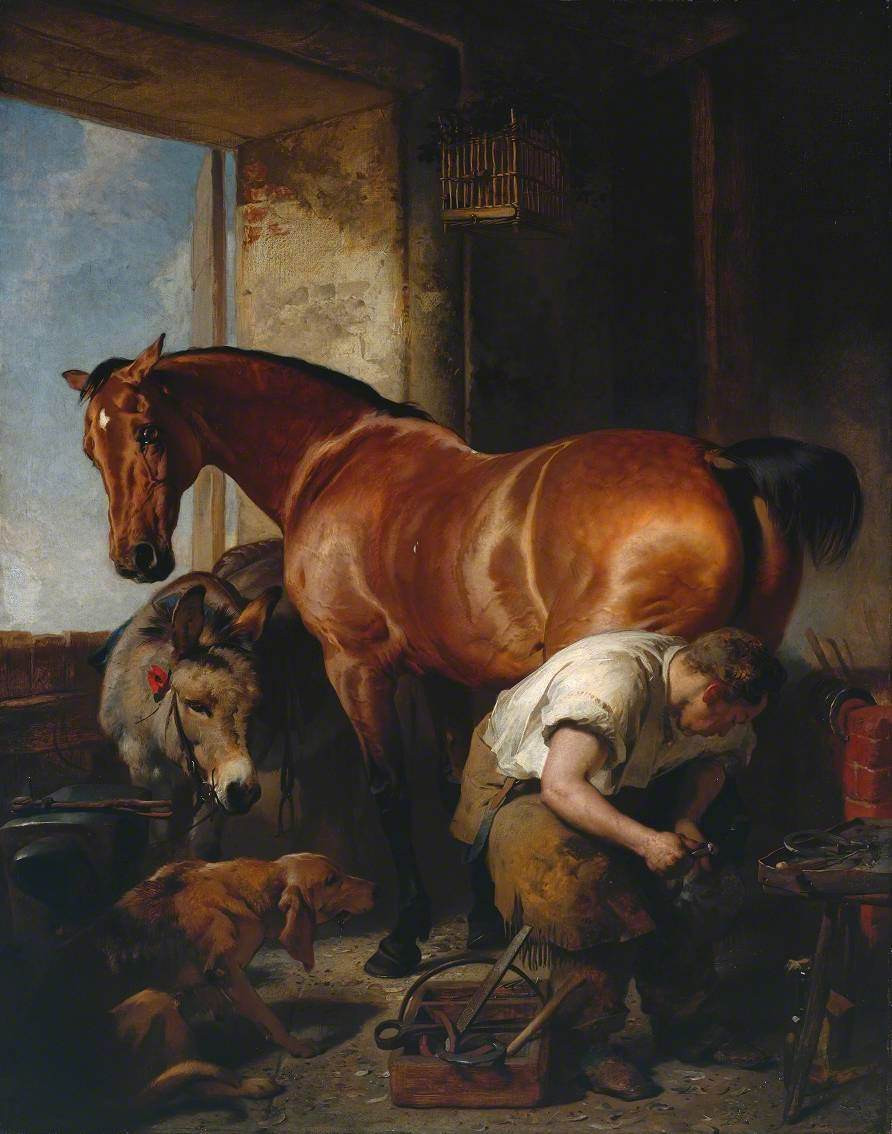
| Shoeing | exhibited 1844 | Painting |
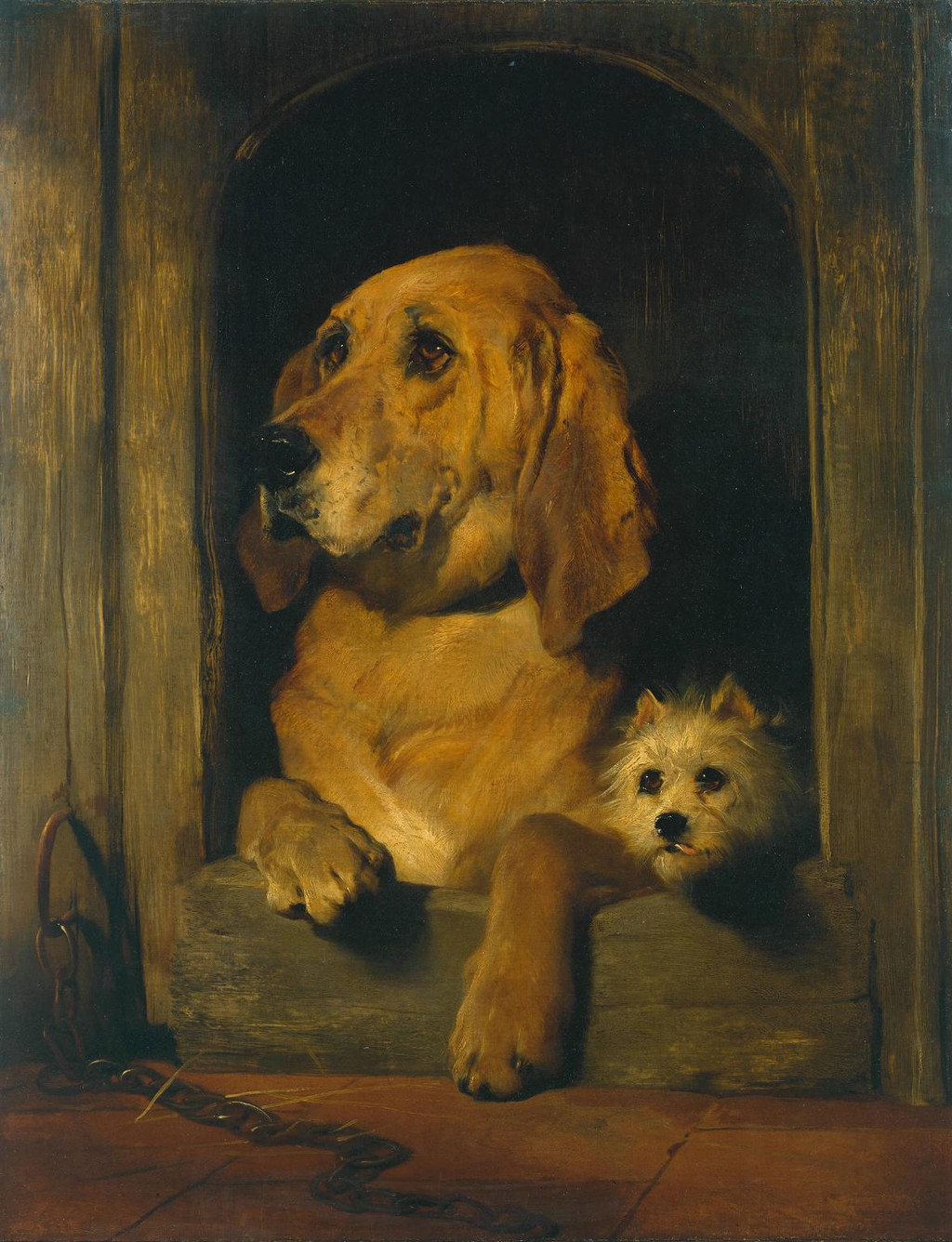
| Sleeping Bloodhound | exhibited 1835 | Painting |
| Spaniel and Rabbit | Painting | |
| Stag at Bay | 1866 | Sculpture |
| Stag at Bay | 1846 | Painting |
| Studies of a staghound and the head of a stag for painting ‘The Hunting of Chevy Chase’ | Drawing | |
| Study for Alpine Mastiffs Reanimating a Distressed Traveler | Drawing | |
| Study for the Monkey in The Cat's Paw | Drawing | |
| Study of a Dog | Drawing | |
| Study of a herding dog facing right | Drawing | |
| Study of the horse of Selene, from the East pediment of the Parthenon | Drawing | |
| Suspense | Painting | |
| Taking a Buck | ||
| The Arab Tent | c. 1865–66 | Painting |
| The Barn | Drawing | |
| The Best Run of the Season | ||
| The Cat's Paw | c. 1824 | Painting |
| The Cavalier’s Pets | ||
| The Challenge | Painting | |
| The Chase | Drawing | |
| The Connoisseurs: Portrait of the Artist with Two Dogs | 1865 | Painting |
| The Death of a Stag in Glen Tilt | Painting | |
| The Drive—Shooting Deer in the Pass | Painting | |
| The Drover's Departure | Painting | |
| The Highland Shepherd’s Dog | 1824; portfolio issue 1848 | |
| The Honourable Mrs Norton | Painting | |
| The Hunting of Chevy Chase | 1825–26 | Painting |
| The Illicit Highland Whisky Still | Painting | |
| The Keeper John Crerar with his Pony | Painting | |
| The Larder Invaded | ||
| The Lion-Dog of Malta | ||
| The Lions at the Base of Nelson's Column | 1867 | Sculpture |
| The Monarch of the Glen | about 1851 | Painting |
| The Mountain Torrent | ||
| The Old Shepherd's Chief Mourner | 1837 | Painting |
| The Sanctuary | 1842 | Painting |
| The Stricken Deer | Painting | |
| The Twa Dogs | Painting | |
| Time of Peace | ||
| Two stags running | Drawing | |
| Victoria, Princess Royal, with Eos | Painting | |
| View of Glenfeshie | Painting | |
| War | Painting | |
| White Horse in a Stable | Painting | |
| Windsor Castle in Modern Times | 1841–43 | Painting |
| Woburn Abbey Game Card | 1825; portfolio issue 1848 |
Discussion
Use the article’s images and evidence to develop your own reading of Portrait of Mr Van Amburgh, as He Appeared with His Animals at the London Theatres.
Reader Insights
Which detail is most revealing when you consider “A portrait seen through iron”?
How does the evidence in “The white tunic and the extended arm” affect your reading of Portrait of Mr Van Amburgh, as He Appeared with His Animals at the London Theatres?
What further question would you bring to “Reproduction and the picture's later life”?
Join the Conversation
Share a detail, comparison or question about Portrait of Mr Van Amburgh, as He Appeared with His Animals at the London Theatres below.
References
- Yale Center for British Art, Portrait of Mr. Van Amburgh, As He Appeared with His Animals at the London Theatres, Summer 1846 to March 1847, Paul Mellon Collection, B1977.14.61. Collection record. Accessed 31 October 2026. View source.
- Edwin Landseer, Portrait of Mr. Van Amburgh, As He Appeared with His Animals at the London Theatres, Yale Center for British Art. Complete colour photograph, recto; institutional image, supplied through the Yale IIIF manifest. Accessed 31 October 2026. View source 1. View source 2.
- Evelyn Wellington, A Descriptive and Historical Catalogue of the Collection of Pictures and Sculpture at Apsley House, London, vol. II (London: Longmans, Green, 1901), pp. 335–337, no. 199, including transcriptions and summaries of Landseer–Wellington correspondence, March–April 1848, and extracts from later criticism. Digitised original volume. Accessed 31 October 2026. View source.
- Frederick G. Stephens, Sir Edwin Landseer (London: Sampson Low, Marston, Searle & Rivington, 1880), pp. 80–81. Project Gutenberg transcription. Accessed 31 October 2026. View source.
- Edwin Landseer, Isaac van Amburgh and his Animals, 1839, Royal Collection, RCIN 406346. Complete colour photograph from Royal Collection Trust, preserved with its institutional source in the Wikimedia Commons file record. Accessed 31 October 2026. View source.
- ‘Fine Arts: Seventy-ninth Exhibition of the Royal Academy’, The Examiner, 8 May 1847, no. 2049, p. 293. Original issue. Accessed 31 October 2026. View source.
- National Gallery of Art, Alpine Mastiffs Reanimating a Distressed Traveler. View source.
- Minneapolis Institute of Art, The Cat's Paw. View source.
- Birmingham Museums Trust, The Hunting of Chevy Chase. View source.
- Victoria and Albert Museum, The Old Shepherd's Chief Mourner. View source.
- Tate, Dignity and Impudence. View source.
- Royal Collection, Eos. View source.
- Yale Center for British Art, Portrait of Mr Van Amburgh, as He Appeared with His Animals at the London Theatres. View source.
- National Galleries of Scotland, The Monarch of the Glen. View source.
- Royal Holloway, University of London, Man Proposes, God Disposes. View source.
- Trafalgar Square / Greater London Authority, The Lions at the Base of Nelson's Column. View source.
- Peta Tait, Fighting Nature: Travelling Menageries, Animal Acts and War Shows (Sydney: Sydney University Press, 2016), chapter 1, p. 17 and notes. Publisher's open edition. Accessed 31 October 2026. View source.
- The Holy Bible, King James Version, Genesis 1, especially verses 26–30. Complete chapter. Accessed 31 October 2026. View source.
- Richard Ormond, Sir Edwin Landseer, exhibition catalogue, Philadelphia Museum of Art and Tate Gallery, 1981, p. 205, Royal Academy exhibition references for the two Van Amburgh pictures. Digitised catalogue. Accessed 31 October 2026. View source.
- Splash image, Portrait of Mr Van Amburgh, as He Appeared with His Animals at the London Theatres. Yale Center for British Art. Image source. Public domain.
- Navigation image, One of the bronze lions at Nelson’s Column: modelled by Edwin Landseer and cast by Carlo Marochetti. Photograph by Amanda Slater. CC BY-SA 2.0. Image source. CC BY-SA 2.0. Resized.