


 by Tom Gurney
Tom Gurney BSc (Hons) is an art history expert with over 20 years experience
Published on July 14, 2026 / Updated on July 16, 2026
Email: tomgurney1@gmail.com / Phone: +447429011000
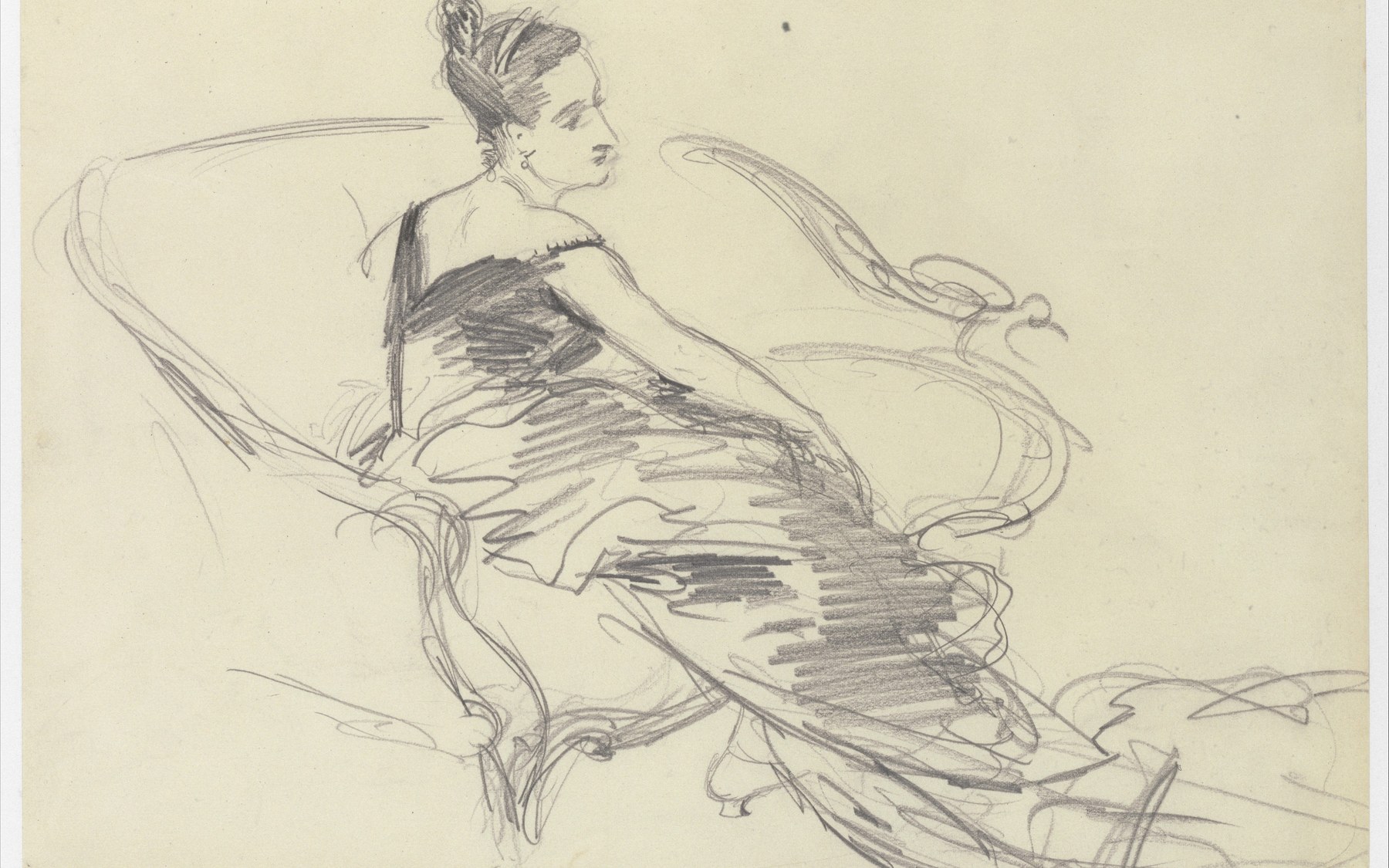
Madame X (Madame Pierre Gautreau) MET DT202019.jpg by John Singer Sargent; CC0 via Wikimedia Commons. Cropped for TheHistoryOfArt.org. · Image source
What to expect
Sargent. Dazzling Paris was a Musée d'Orsay exhibition in Paris, shown from 23 September 2025 to 11 January 2026. Because it has now closed, this page is an archive record rather than a current visit-planning page. It remains valuable because the exhibition filled a surprising gap: Orsay states that no monographic exhibition had previously been devoted to John Singer Sargent in France, even though Paris was where the young painter trained, formed his network and first made his name.
The exhibition was designed in partnership with the Metropolitan Museum of Art in New York and brought together over 90 works by Sargent, including works that had never previously been exhibited in France. Its focus was deliberately early. Orsay traced Sargent from his arrival in Paris in 1874, aged eighteen, to the mid-1880s, when the scandal around his portrait of Virginie Gautreau, later known as Madame X, helped push him toward London. That arc makes the exhibition a clear story of formation, brilliance, risk and social consequence.
Sargent is often claimed by several places at once. He was born in Florence, trained in Paris, became internationally famous, built much of his later career in Britain and is revered in the United States. The Orsay exhibition made Paris central again. It showed the city not as background scenery, but as the crucible in which Sargent learned from Carolus-Duran, studied old and modern masters, met artists and patrons, moved through cosmopolitan society and developed the technical confidence that made his portraits so startling.
Why it mattered
The strongest reason to preserve this page is that the exhibition corrected the geography of Sargent's reputation. In the United States, Madame X is one of the defining images of American museum culture at the Met. In Britain, Sargent's society portraits and later career are familiar. In France, Orsay notes that his name and work remained less widely known. A major Paris exhibition therefore did more than import a famous painter; it restored the French context in which his public career first took shape.
The exhibition also mattered because it treated Sargent as a painter of modern society, not only as a virtuoso portraitist. Orsay describes a rapidly changing cosmopolitan world in which European aristocracy met moneyed youth from the New World. Sargent's portraits of that circle are not neutral records of elegant people. They are performances of status, pose, fabric, skin, ambition, self-invention and public exposure. His technical brilliance made those performances seductive, but also unstable.
Madame X gave the exhibition its most dramatic historical hinge. Orsay states that the painting returned to Paris for the first time since 1884, when it provoked hostile reactions at the Salon. The scandal was not simply about a dress strap or one sitter's reputation. It exposed the social pressures around public portraiture in late nineteenth-century France: who could be looked at, how much theatricality was acceptable, and when elegance became accusation.
What to look for in the archive record
Begin with the early Paris years. Sargent arrived in 1874 to study with Carolus-Duran, whose method encouraged directness, tonal breadth and bravura handling. That training matters because Sargent's later fluency did not appear from nowhere. His rapid brushwork, confident edges and luminous surfaces were learned, tested and sharpened in a city where naturalism, Impressionism, Salon ambition and international competition all pressed on a young painter.
Then look at portraiture as theatre. Sargent's best portraits do not merely resemble the sitter. They arrange the sitter as a public event. Costume, pose, scale, hand, glance, bare skin, dark ground and empty space all control how the viewer enters the image. Orsay's page emphasises the provocative assurance of his compositions and the iridescence of his colour. Those qualities help explain why he could be admired as a successor to Velázquez while still unsettling contemporary viewers.
The exhibition's travel material also matters. Orsay notes that Sargent used Paris as a base for frequent journeys around Europe and North Africa, returning with landscapes and genre scenes that combined exoticism, mystery and sensuality. Those works should be approached carefully. They show the mobility of an ambitious nineteenth-century artist, but they also belong to a European culture that often turned travel, costume and unfamiliar places into pictorial spectacle.
Finally, consider the Manet connection. Orsay notes Sargent's support for the acquisition of Manet's Olympia for the French national collections in 1890. That detail is valuable because it shows Sargent not only as a painter shaped by Paris, but as someone who remained invested in the city's modern-art debates after leaving. His relationship with France did not end with scandal.
How it fits Orsay and Paris
This page strengthens the Musée d'Orsay cluster by adding another transatlantic route beside Mary Cassatt. Cassatt and Sargent are very different artists, but both complicate a simple French Impressionist story. Each was American, each worked deeply in Europe, and each reveals how nineteenth-century modernity moved through travel, training, exhibitions, collectors and social networks. For Orsay, that makes the museum less purely French and more international without losing its Paris centre.
For Paris planning, the show has ended, so the practical value is retrospective. The archive page can still help readers understand why Sargent belongs in the Orsay story and why future Sargent, portraiture or transatlantic exhibitions may be worth watching. It also gives the Paris location page a stronger recent archive record alongside upcoming Orsay and Prado-season material elsewhere in the batch.
The page has future reader interest around John Singer Sargent, Madame X, Velázquez, Manet, Olympia, Paris Salon culture, expatriate artists, society portraiture, Carolus-Duran, Henry James, travel painting and the politics of public portraiture. Those links should be added only where the destination page already gives readers a real continuation path.
Image and rights note
The underlying works are historic because Sargent died in 1925, so public-domain image routes may be possible. However, the Orsay page's Madame X image is credited through The Metropolitan Museum of Art, GrandPalaisRmn and Art Resource, and should not be reused casually. Other Orsay, Met, RMN, lender and press images may carry separate restrictions. This page remains image-free until a reviewed source and credit route is selected.
How to use this page
Because Sargent. Dazzling Paris has ended, the page should function as an archive record and a route into related artists, works and venues. The most reliable fixed details are the venue, dates, broad subject, media and official source link. The interpretive notes help place the exhibition in art-historical context: what kind of show it is, why it may matter, and which artists or topics are worth exploring next.
It is marked as a major exhibition in this guide, so it should be useful for readers choosing between several possible museum visits.
Looking notes
For a visitor, the most useful approach is to look for patterns rather than isolated highlights. With John Singer Sargent, Madame X, Portrait of Madame Gautreau, Carolus-Duran, Henry James, Velázquez, Manet's Olympia, expatriate artists, Paris Salon, cosmopolitan society, ask how the exhibition frames the subject: as biography, period survey, focused theme, collection display or reassessment. With media such as painting, portraiture, landscape, genre scene, society portrait, naturalism, impressionism, exhibition history, pay attention to changes of scale, surface, lighting, material and display sequence, because those details are often lost in online listings.
The guide avoids over-specific claims where the public source does not yet support them. If a museum has not published a full object list, it is better to stay clear about what is confirmed than to imply certainty.
Who it is best for
Sargent. Dazzling Paris is most likely to help readers who are already interested in John Singer Sargent, Madame X, Portrait of Madame Gautreau, Carolus-Duran, Henry James, Velázquez, Manet's Olympia, expatriate artists, Paris Salon, and cosmopolitan society, but it may also be useful for visitors building a wider route around Musée d'Orsay in Paris. If time is limited, use this page to decide whether the subject fills a gap in your knowledge, whether it connects to artists you already follow, and whether the official venue information makes the visit practical.
_MET_DT202019.jpg)