


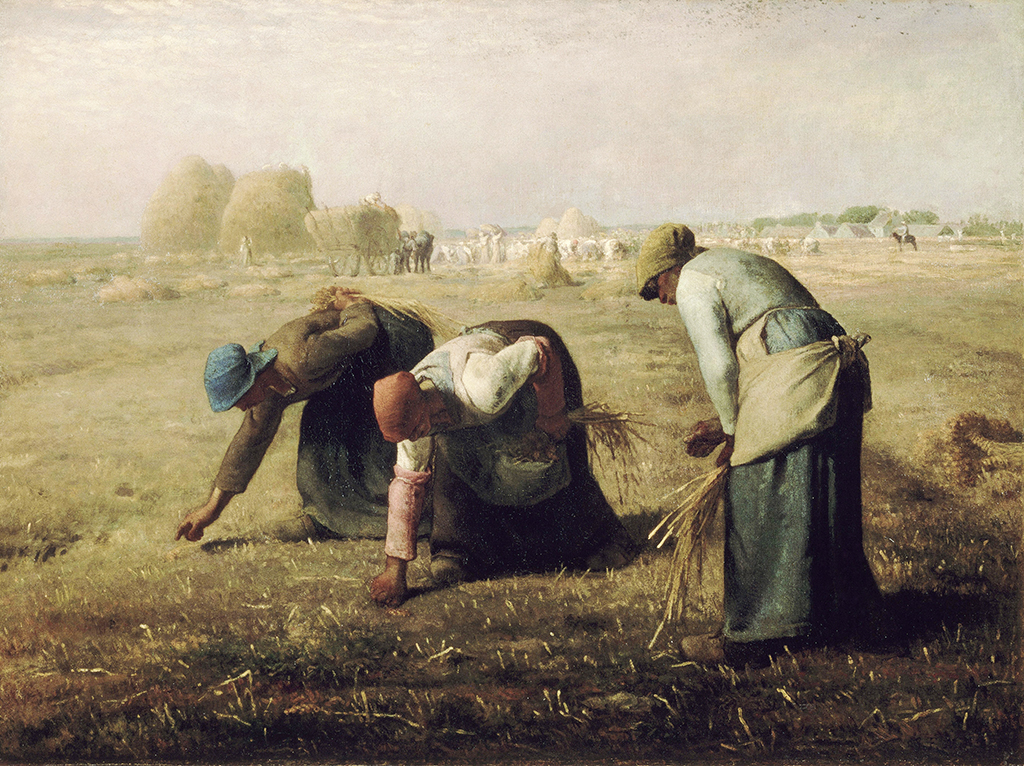
 by Tom Gurney
Tom Gurney BSc (Hons) is an art history expert with over 20 years experience
Published on June 19, 2020 / Updated on April 30, 2026
Email: tomgurney1@gmail.com / Phone: +44 7429 011000
The Barbizon School: Origins, Artists, and the Birth of Modern Landscape Painting
The Barbizon School was a group of French painters who, in the mid-19th century, transformed landscape painting by turning away from idealised studio compositions and towards direct observation of nature. Working in and around the village of Barbizon near the Forest of Fontainebleau, these artists laid the foundations for modern art, influencing both Realism and Impressionism.
- Movement: Barbizon School
- Period: c. 1830s – 1870s
- Location: Barbizon, France (Forest of Fontainebleau)
- Key Artists: Millet, Rousseau, Corot, Daubigny, Diaz
- Style: Realism / Naturalism
- Focus: Landscape, rural life, peasant labour
- Legacy: Influenced Impressionism and modern landscape painting
What Was the Barbizon School?
The Barbizon School was not a formal academy or institution, but rather a loose group of artists who shared a common approach to painting. Instead of creating idealised landscapes based on classical models, they sought to depict nature as it actually appeared — changing, imperfect, and deeply tied to human experience.
This shift marked a decisive break from academic tradition. For centuries, landscape painting had often served as a backdrop for historical or mythological scenes. The Barbizon painters reversed this hierarchy. Nature itself became the subject.
At the centre of this movement was the village of Barbizon, located on the edge of the Forest of Fontainebleau. Here, artists could work directly from observation, studying light, atmosphere, and seasonal change in a way that had rarely been attempted before.
The Origins of the Movement
The Barbizon School emerged in the 1830s and 1840s, at a time when French art was still dominated by the traditions of Neoclassicism and Romanticism. While artists such as Eugène Delacroix explored dramatic emotion and colour, and others followed classical ideals, the Barbizon painters pursued something quieter but no less radical: truth to nature.
They were influenced by earlier landscape painters, particularly the English artist J.M.W. Turner and the Dutch Golden Age masters, but their approach was distinctly modern. They painted outdoors (or prepared studies outdoors), observing how light changed throughout the day and how weather transformed the landscape.
This practice — sometimes referred to as painting en plein air — would later become central to Impressionism.
Key Artists of the Barbizon School
The Barbizon School included a number of important painters, each contributing a slightly different approach to landscape and rural life.
Jean-François Millet
Jean-François Millet is perhaps the most famous figure associated with the movement. Unlike some of his contemporaries, he focused not only on landscape but also on the people who lived and worked within it.
Paintings such as The Gleaners, The Angelus, and The Sower present rural labour with dignity and seriousness. Rather than idealising peasant life, Millet emphasised its physical demands and emotional weight.
Théodore Rousseau
Théodore Rousseau was a central figure in the Barbizon group and one of its earliest leaders. His landscapes are characterised by their dense, carefully observed natural forms, particularly trees and forest scenes. Rousseau played a key role in establishing Barbizon as a centre for landscape painting.
Camille Corot
Camille Corot occupies a unique position, bridging the gap between classical landscape traditions and the emerging realism of the Barbizon School. His atmospheric paintings, often featuring soft tonal transitions, had a profound influence on later artists.
Charles-François Daubigny
Daubigny was known for his river landscapes and his use of a floating studio boat, which allowed him to paint directly on water. His work moves even closer to the concerns of Impressionism, particularly in its attention to light and reflection.
Narcisse Virgilio Díaz de la Peña
Díaz brought a more decorative and colour-focused approach to Barbizon painting. His works often feature rich tones and dramatic lighting, adding variety to the movement's overall style.
Painting Nature: Technique and Approach
The defining characteristic of the Barbizon School was its commitment to observation. Rather than constructing landscapes from imagination or classical models, these artists worked directly from nature.
This approach involved several key elements:
- Careful study of natural light and atmosphere
- Attention to seasonal and weather changes
- Focus on ordinary, everyday landscapes
- Reduction of narrative or mythological content
In works such as Millet's labour scenes, the landscape is not simply a backdrop. It becomes an active participant in the composition, shaping the mood and meaning of the painting.
Barbizon and the Rise of Realism
The Barbizon School is closely linked to the development of Realism in 19th-century art. Artists associated with Realism sought to depict life as it was, rather than as it ought to be.
In this sense, the Barbizon painters were part of a broader movement that included artists such as Gustave Courbet. However, their focus remained distinct: instead of urban or political subjects, they concentrated on the natural world and rural life.
This emphasis on honesty and direct observation represented a major shift in artistic values, paving the way for later developments in modern art.
Influence on Impressionism
The influence of the Barbizon School on Impressionism cannot be overstated. Artists such as Claude Monet, Pierre-Auguste Renoir, and Camille Pissarro built upon the foundations established by Barbizon painters.
The practice of painting outdoors, the focus on light and atmosphere, and the interest in capturing fleeting visual effects all have their roots in Barbizon methods.
Monet's later series, including the Haystacks and Rouen Cathedral, can be seen as an extension of these ideas, taken to new levels of intensity and abstraction.
Why the Barbizon School Matters
The Barbizon School represents a crucial turning point in the history of art. It marks the moment when artists began to prioritise direct experience over tradition, observation over idealisation, and the present moment over historical narrative.
By focusing on ordinary landscapes and rural life, these artists expanded the possibilities of what art could be about. They demonstrated that even the simplest subject — a field, a tree, a group of workers — could carry profound meaning.
This shift continues to shape how we understand art today.