


 by Tom Gurney
Tom Gurney BSc (Hons) is an art history expert with over 20 years experience
Published on October 6, 2016 / Updated on April 11, 2026
Email: tomgurney1@gmail.com / Phone: +44 7429 011000
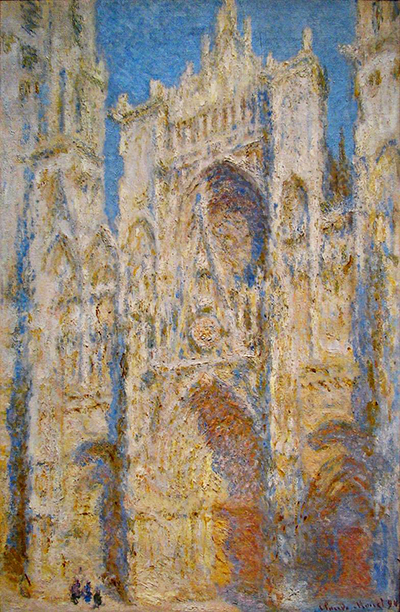
Rouen Cathedral is Claude Monet's celebrated series of paintings of the cathedral's west façade, created between 1892 and 1894.
By returning to the same subject under changing light and weather conditions, Monet transformed a Gothic monument into a study of colour, atmosphere and perception.
In the Rouen Cathedral series, Monet was not simply recording architecture. He was testing how a monumental stone façade could appear unstable, luminous, and almost immaterial when seen through shifting light.
Table of Contents
- Overview
- Viewpoints and Variations
- Monet in Rouen
- A Brief History of Rouen Cathedral
- Why Monet Painted the Cathedral Repeatedly
- How Monet Worked on the Series
- Technique and Visual Analysis
- Standout Versions from the Series
- Selected Views from the Rouen Cathedral Series
- How the Rouen Cathedral Series Fits into Monet's Career
- Exhibition and Reception
- Legacy and Influence of the Rouen Cathedral Series
- Where the Paintings Are Today
- References
- Artist: Claude Monet
- Date: 1892-1894
- Movement: Impressionism
- Medium: Oil on canvas
- Subject: Rouen Cathedral façade
- Location: Various collections worldwide
- Significance: Study of light, perception, and modern painting
Viewpoints and Variations
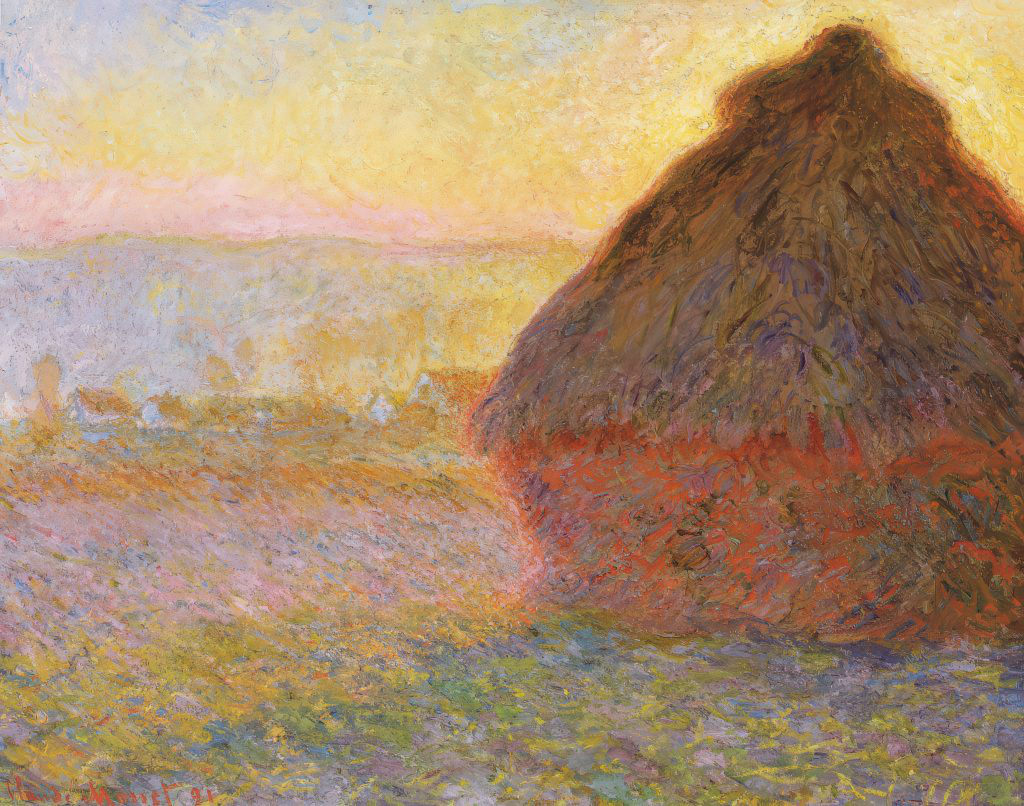
Monet returned to Rouen Cathedral repeatedly in order to study how changing light and atmosphere transformed the same architectural subject. As in his Haystacks series, he treated colour and light as shifting forces rather than fixed qualities.
Monet used five different viewpoints for the series: two from the square and three from rooms in the building opposite the cathedral. Some views focus on the central portal, while others include the d'Albane tower, yet all maintain a strikingly close vantage point.
The palette shifts with the time of day and weather, ranging from cool morning blues to ochres, golds, browns, and greys under warmer or cloudier conditions.
Monet in Rouen
Monet worked on the Rouen Cathedral series in Rouen during the winters of 1892 and 1893 [7], renting spaces opposite the cathedral so he could observe the façade at close range. This practical arrangement was essential to the project, because even minor changes in weather or daylight could alter the entire appearance of the building.
From these temporary studios, Monet watched the cathedral repeatedly as light moved across its surface. The west front was not treated as a static monument, but as something constantly transformed by mist, sun, shadow, and atmosphere. Rouen itself therefore became more than a location: it was the working environment that made the series possible.
Claude Monet worked on 30 canvases, all of them depicting the facade of Rouen's great Gothic cathedral in the Normandy region of France. Built in the span of about 800 years, the cathedral was Rouen's most famous landmark. Generations of artists had painted it before Monet. But no one had thought to paint it the way he would.
The Washington Post [15]
The city also offered Monet a subject that combined history and modern observation. The cathedral was ancient and monumental, yet his treatment of it was radically new, grounded not in architectural description but in the changing experience of seeing.
A Brief History of Rouen Cathedral
Long before Claude Monet painted its façade, Rouen Cathedral was one of the most important religious and architectural monuments in France. The site had earlier Christian associations, but the present cathedral was built over many centuries, with major phases of construction running from the twelfth century into the late Gothic period. As a result, the building combines different stages of medieval architecture within a single vast structure.
The west façade that Monet painted is especially famous for its dense Gothic ornament, deep portals, towers, tracery, and sculptural decoration. Rather than presenting a simple, unified front, it offers an intricate stone surface full of recesses, projections, and carved detail. This complexity made it an ideal subject for Monet, because changing light could strike each part of the façade differently.
Rouen Cathedral also carried historical and cultural importance beyond its architecture. It was closely connected to the religious life of Normandy and to the prestige of Rouen itself, one of the great historic cities of northern France. By the nineteenth century, the cathedral was already a celebrated landmark, admired by visitors, historians, and artists alike.
For Monet, this mattered. He was not choosing an ordinary building, but one already weighted with age, memory, and monumental presence. That is part of what makes the series so powerful: a structure associated with permanence and history is transformed into something shifting, atmospheric, and unstable under the effects of light.
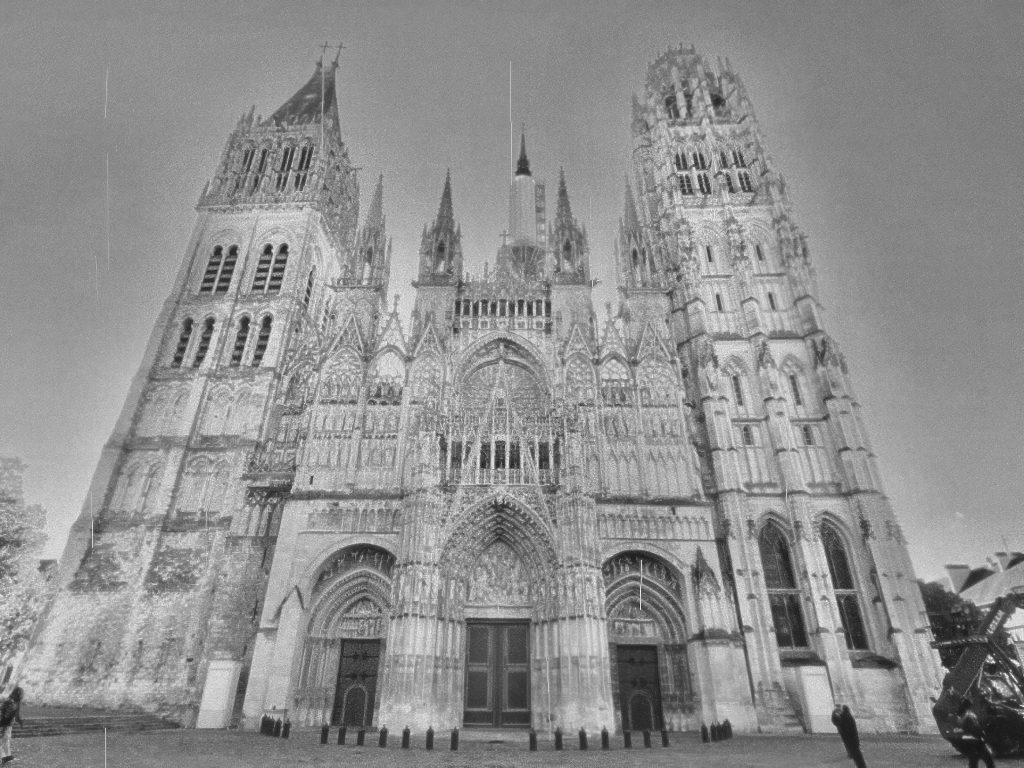
Photograph of West Facade Rouen Cathedral
Vintage Map of Rouen
To better understand Claude Monet's Rouen Cathedral series, it is helpful to see the cathedral within the urban fabric of Rouen itself. This early twentieth-century French map of the city shows the cathedral positioned at the heart of a dense network of medieval streets, surrounded by narrow lanes and tightly packed buildings.
From this setting, Monet worked in rooms opposite the west façade, observing how light moved across the stone surface throughout the day. The map therefore not only locates the cathedral geographically, but also helps explain the practical conditions that shaped one of Monet's most ambitious series of paintings.
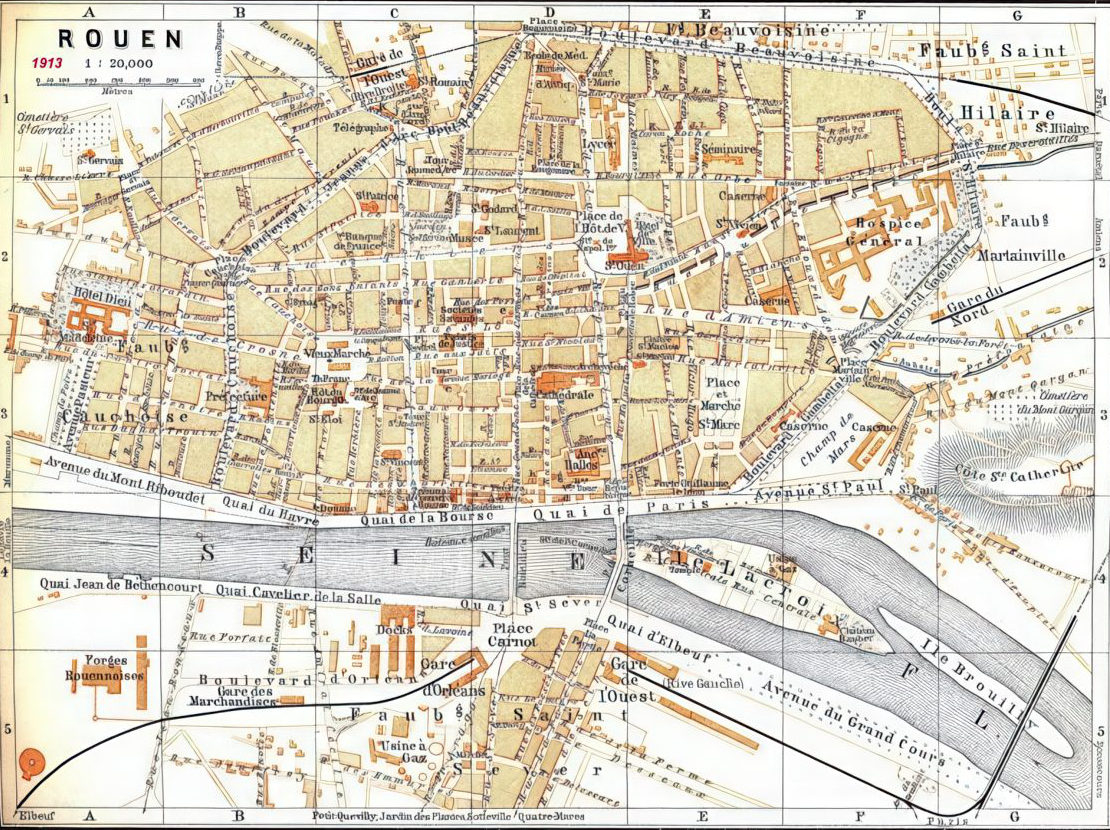
Vintage Rouen Map
Why Monet Painted the Cathedral Repeatedly
By choosing a solid Gothic cathedral as his subject, Monet set permanence against change. The stone façade remains fixed, yet light and atmosphere constantly alter how it is seen, and his thick impasto reinforces that tension between structure and perception.
The result is a series of shimmering images in which the cathedral seems to dissolve and reform under changing conditions. Monet discovered that light itself, because of its subtle and shifting nature, was almost impossible to fix on canvas.
He was helped by his ability to seize the essential effect quickly, then develop the work later in the studio from sketches and visual memory.
Series was a Matter of Settling an Inheritance
In order to settle his half-sister (Adolphe Monet's legitimate daughter) Marie's estate, Claude Monet travelled to the city of a hundred bells. Staying in an empty apartment opposite the cathedral, the artist was instantly captivated by the light shifting across the enormous façade.
"Cathedrals upon cathedrals...", ClaudeMonetGiverny.fr [12]
Documentary Video on Monet's Rouen Cathedral Series
How Monet Worked on the Series
Monet did not approach the Rouen Cathedral series as a single, continuous painting project in the ordinary sense. Instead, he worked across multiple canvases at once, switching between them as the light changed.[14] A façade seen in cool morning mist required a different canvas from one struck by midday sun or evening shadow.
This method allowed him to follow the shifting conditions of the day with unusual precision. Rather than forcing one painting to contain every effect, Monet treated each canvas as the record of a particular visual moment. The cathedral remained the same, but its appearance altered constantly under changing atmosphere.
He worked in an improvised studio in the front room of a dressmaker's shop across from the cathedral. [7] After creating a coherent ensemble, Monet selected twenty paintings for an exhibition at his Paris dealer's gallery in May 1895.
Many of the paintings were begun in Rouen from rooms and temporary studios opposite the cathedral, then later refined in Monet's studio in Giverny [9]. This combination of direct observation and later reworking was essential to the series. It allowed him to capture fleeting impressions on the spot while also shaping the group into a more coherent artistic achievement.
Claude Monet in Rouen painted up to fourteen versions at a time, switching from one painting to another according to the variations in light according to the time of day. [8]
Technique
For the Rouen Cathedral paintings, Monet used thick, richly textured paint suited to the intricacy of the subject. His sensitivity to natural effects is central to the series, but so too is his handling of paint itself, which gives the works much of their force.
The surfaces of these canvases are heavily built up with paint, so that the impasto echoes the masonry of the cathedral itself.
The interweaving of colour and texture allows the façade to appear unstable and luminous, as if the stone itself were changing with the light.
Extending the building's encrusted stone surface to the richly varied impasto surface of his painting, he portrayed the cathedral perpetually re-emerging in the suffused light of early morning.
The Challenge of Painting Light
What Monet sought to paint in the Rouen Cathedral series was not simply the cathedral itself, but the changing conditions through which it was seen. This made the project unusually difficult, because light could never be held still. A cloud passing overhead, a patch of sun, or a shift in the weather could change the façade within minutes.
Whilst working long, arduous hours, Monet achieved best results between midday and two o'clock (two hours behind current French time), when the light fell across the facade from right to left. [1]
That difficulty is built into the series itself. Each canvas captures only a partial truth: not the cathedral as a permanent object, but the cathedral as it appeared at one fleeting moment. Taken together, the paintings suggest that vision is never fixed, and that even stone can seem unstable when transformed by atmosphere.
From Architecture to Atmosphere
One of the most remarkable qualities of the Rouen Cathedral series is the way Monet shifts the viewer's attention away from architecture as fixed structure and toward architecture as visual experience. The cathedral remains identifiable throughout the series, yet its carved stone, deep portals, and Gothic ornament are repeatedly softened by atmosphere.
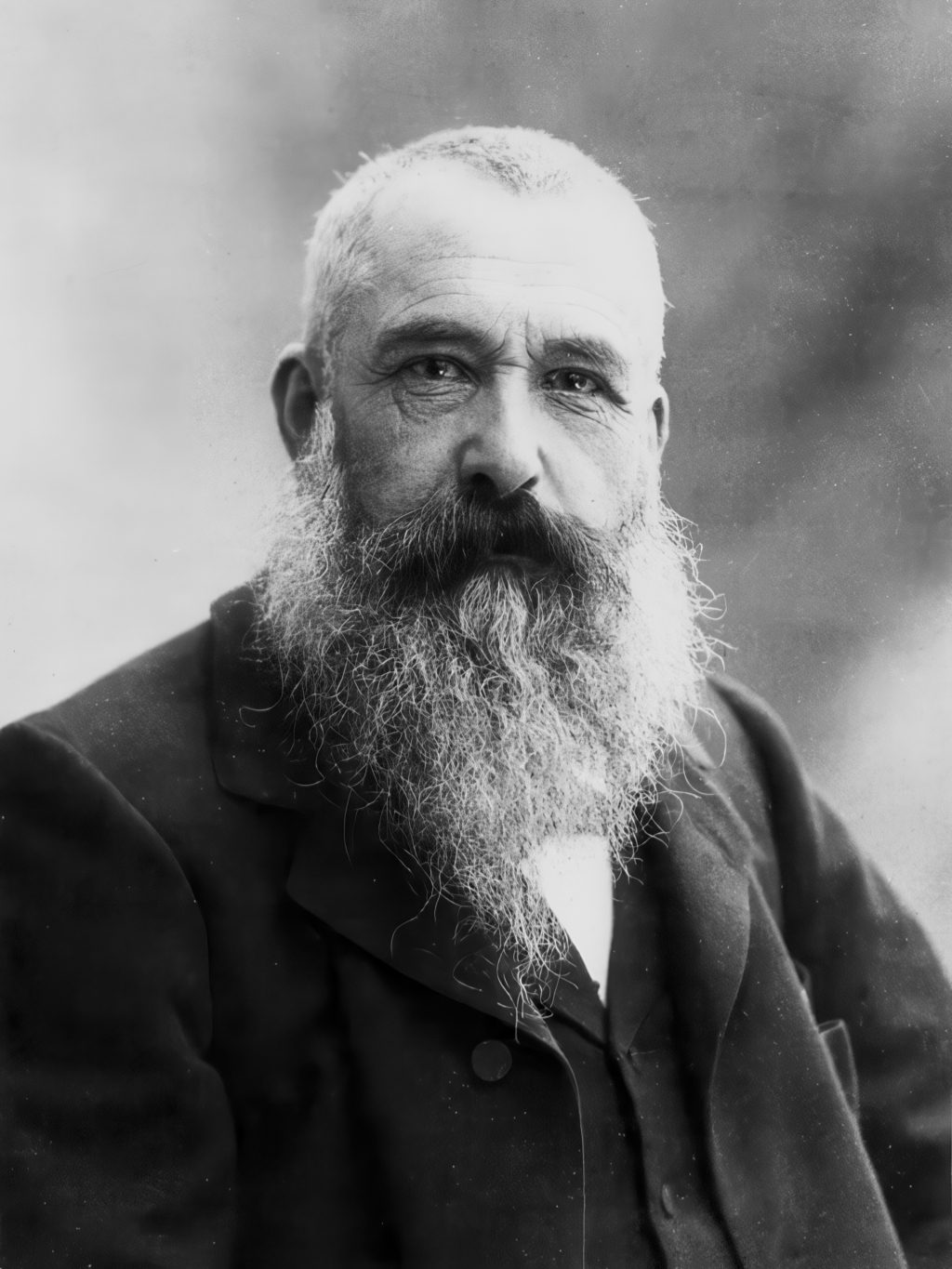
Everything changes, even stone.
In traditional architectural painting, clarity and precision would normally be the goal. Monet moved in the opposite direction. He allowed the façade to blur, flicker, and dissolve, so that light becomes as important as stone. In some versions the building seems almost to vanish into mist; in others it glows with surprising warmth under direct sun.
This transformation is central to the meaning of the series. Monet was not denying the solidity of the cathedral, but showing that what we actually see is always filtered through changing conditions. The façade becomes a meeting point between permanence and perception.
Close Visual Analysis of the Façade
At first glance, the cathedral appears solid and imposing, yet Monet's brushwork prevents it from ever becoming completely fixed. Architectural details such as arches, tracery, and sculptural ornament are suggested rather than sharply described, so that the stone surface seems to flicker between structure and atmosphere.
Instead of outlining every carved element of the façade, Monet allowed colour and texture to carry much of the image. Blues, violets, creams, ochres, and greys are layered and broken across the surface, creating the sensation that the building is being remade by light at every moment. The cathedral is still recognisable, but it is also unstable, almost dissolving before the eye.
This tension is central to the achievement of the series. Rouen Cathedral is both monument and mirage: a permanent Gothic structure translated into paint as something shifting, luminous, and temporary.
Your experience of these paintings changes depending on where you stand. From afar, the architecture of Rouen Cathedral seems sturdy and imposing. The thick texture of Monet's paint heightens the effect. But as you move closer, the cathedral seems to dissolve into fragments of color. The illusion of its solidity comes apart.
The National Gallery of Art [11]
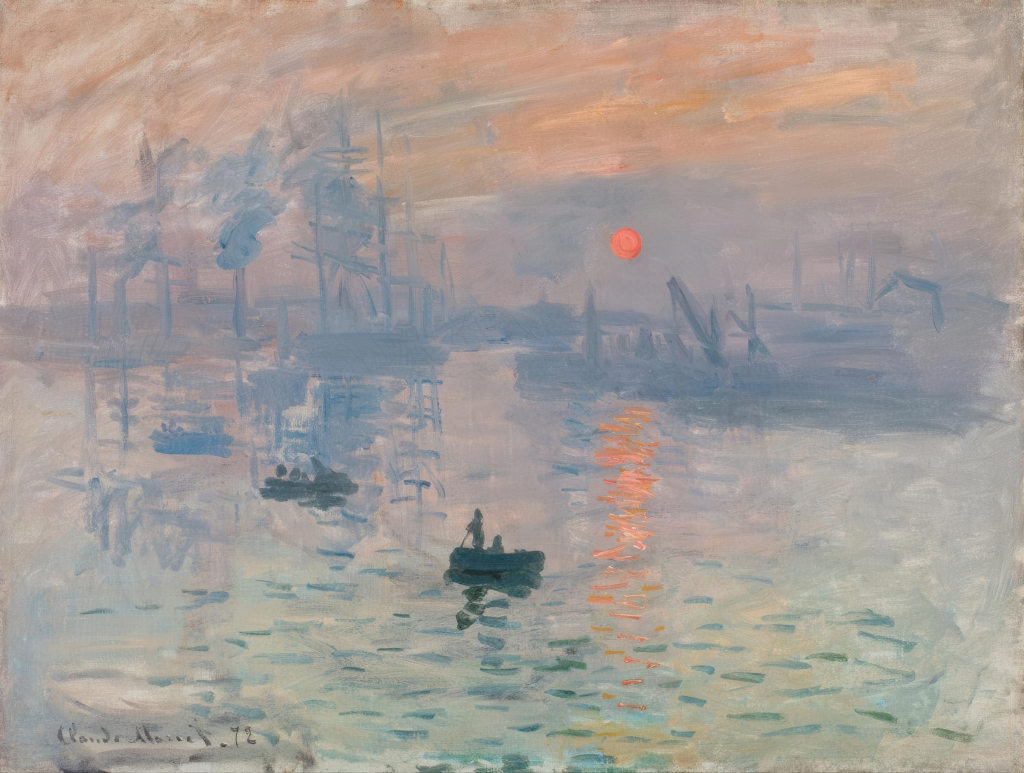
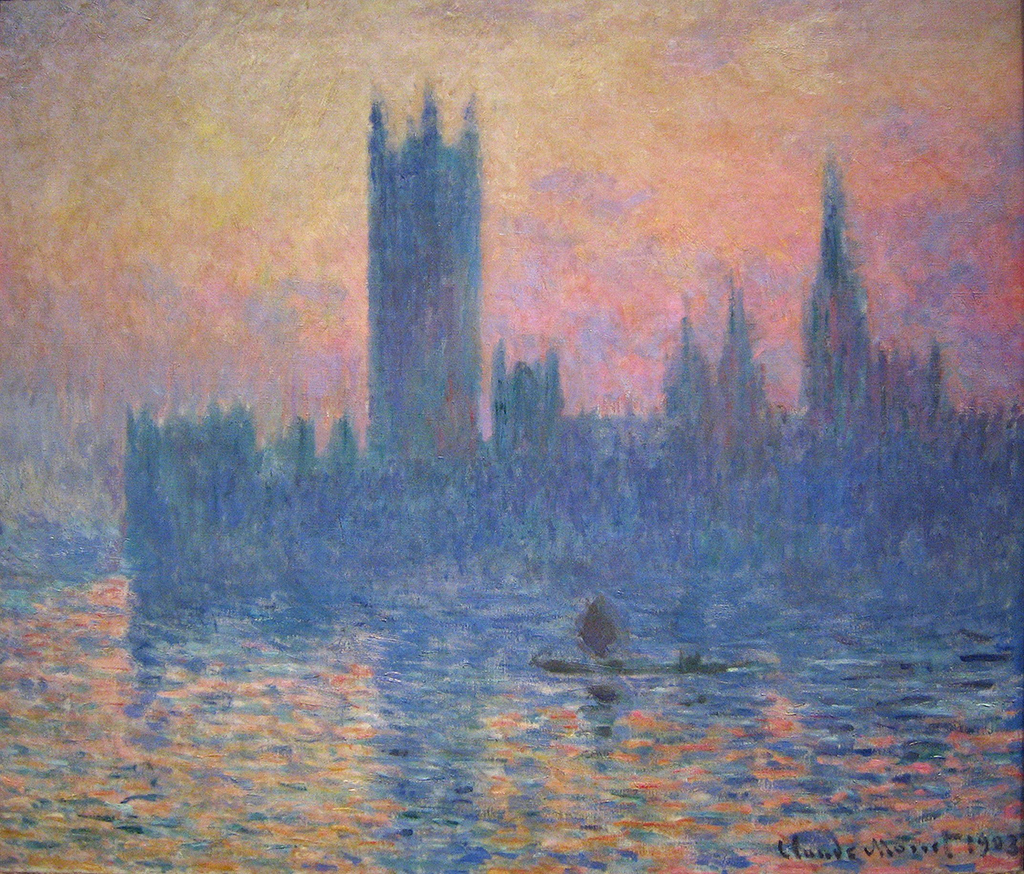
While the cathedral series focused on light across stone, Monet's later London series pushed this idea further, allowing entire buildings to dissolve into atmosphere.
Standout Versions from the Series
Although the Rouen Cathedral series is often discussed as a whole, several individual versions stand out for the clarity with which they express Monet's aims. These paintings do not simply record the cathedral, but reveal how dramatically its appearance can change under different conditions of light and atmosphere.
One of the most celebrated examples is Rouen Cathedral, Symphony in Grey and Pink. In this work, the façade is bathed in soft, diffused light, dissolving the stone structure into a delicate harmony of muted greys and warm pinks. Architectural detail is subdued, and the cathedral appears almost weightless, as if suspended in coloured air.
By contrast, the morning-light versions emphasise clarity and coolness. In paintings such as Rouen Cathedral, Portal, Morning Light, the façade is rendered in blues, violets, and pale creams, suggesting the crisp atmosphere of early day. The structure appears more defined, yet still flickers under the unstable effects of light.
In the sunlit versions, Monet explores the opposite extreme. Works such as Rouen Cathedral, the Façade in Sunlight are built from warmer tones—ochres, golds, and browns—so that the stone seems to glow under direct illumination. Here the cathedral regains a sense of mass, but it is still transformed by the intensity of light striking its surface.
Taken together, these variations show that Monet was not painting a single object, but a range of visual experiences. Each version captures a different moment, and no single canvas can fully define the cathedral.
Selected Views from the Rouen Cathedral Series
The Rouen Cathedral series can only be fully understood through comparison. These selected views illustrate how dramatically light, weather, and time of day transform the same façade.
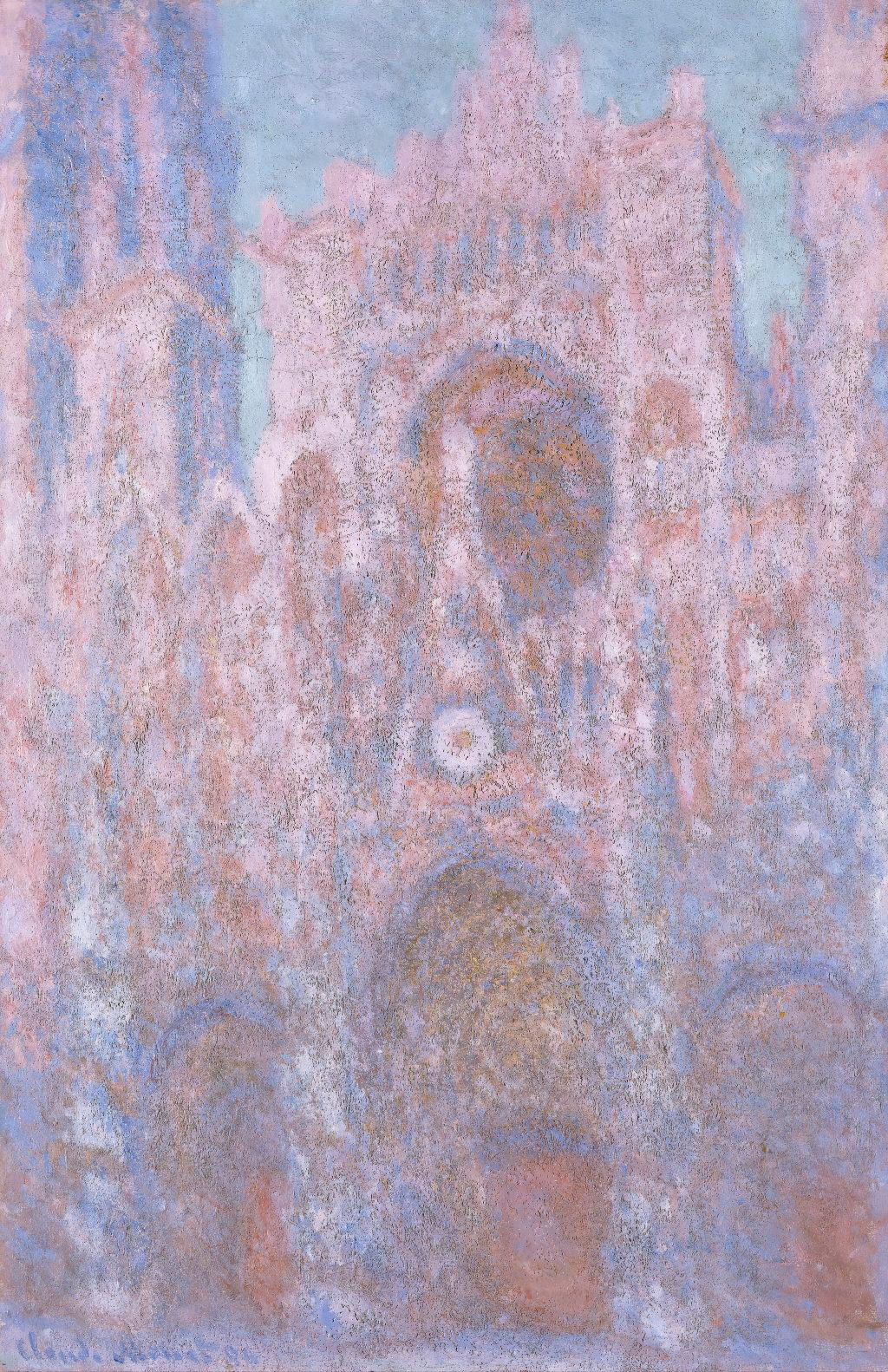
Symphony in Grey and Pink
One of the most atmospheric versions, with the façade dissolving into muted greys and soft pinks.
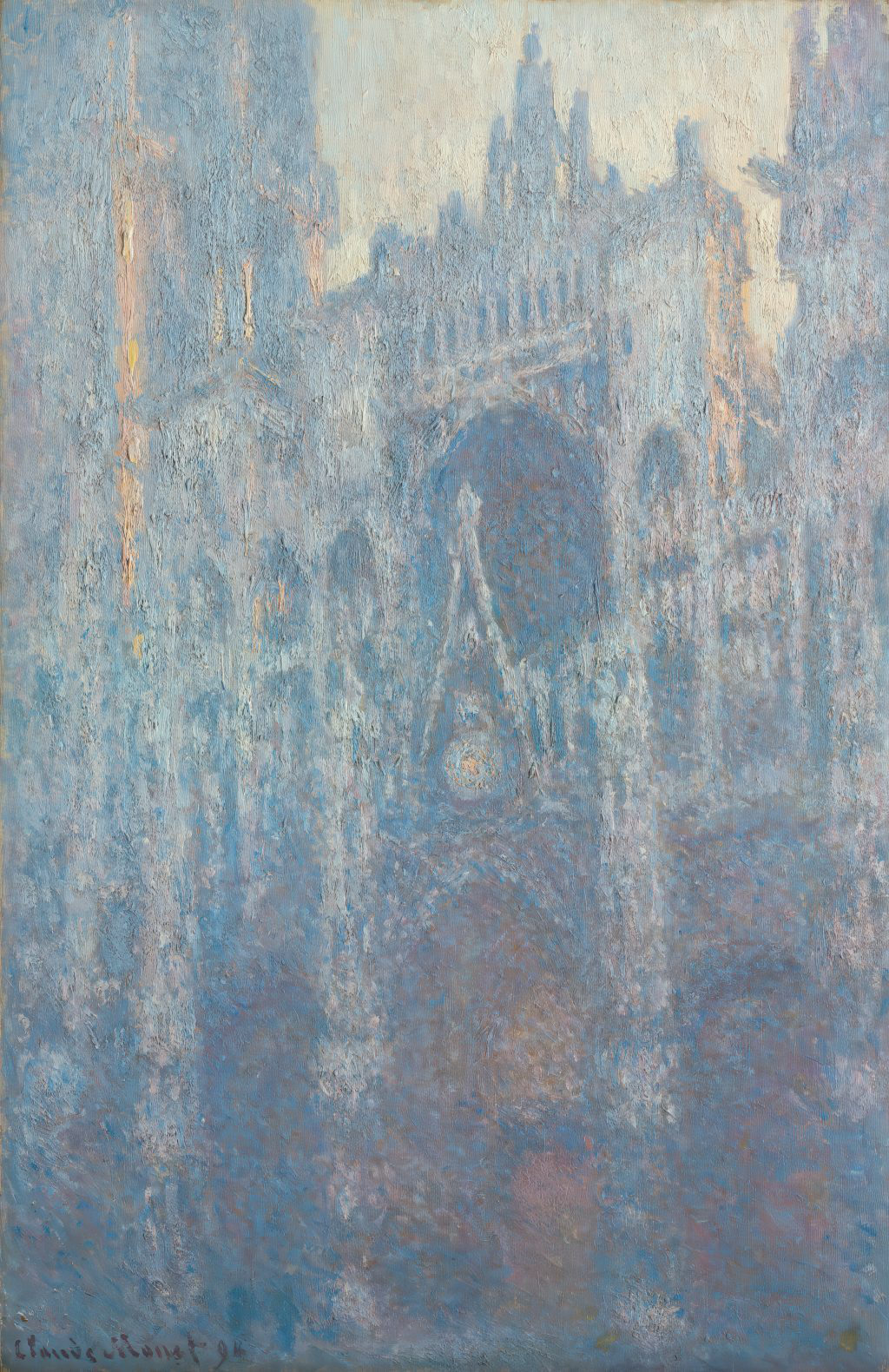
Portal, Morning Light
A cooler, clearer variation in which blues and pale creams suggest the crisp atmosphere of early day.

Façade in Sunlight
A warmer version built from ochres and golds, showing how direct light transforms the stone surface.
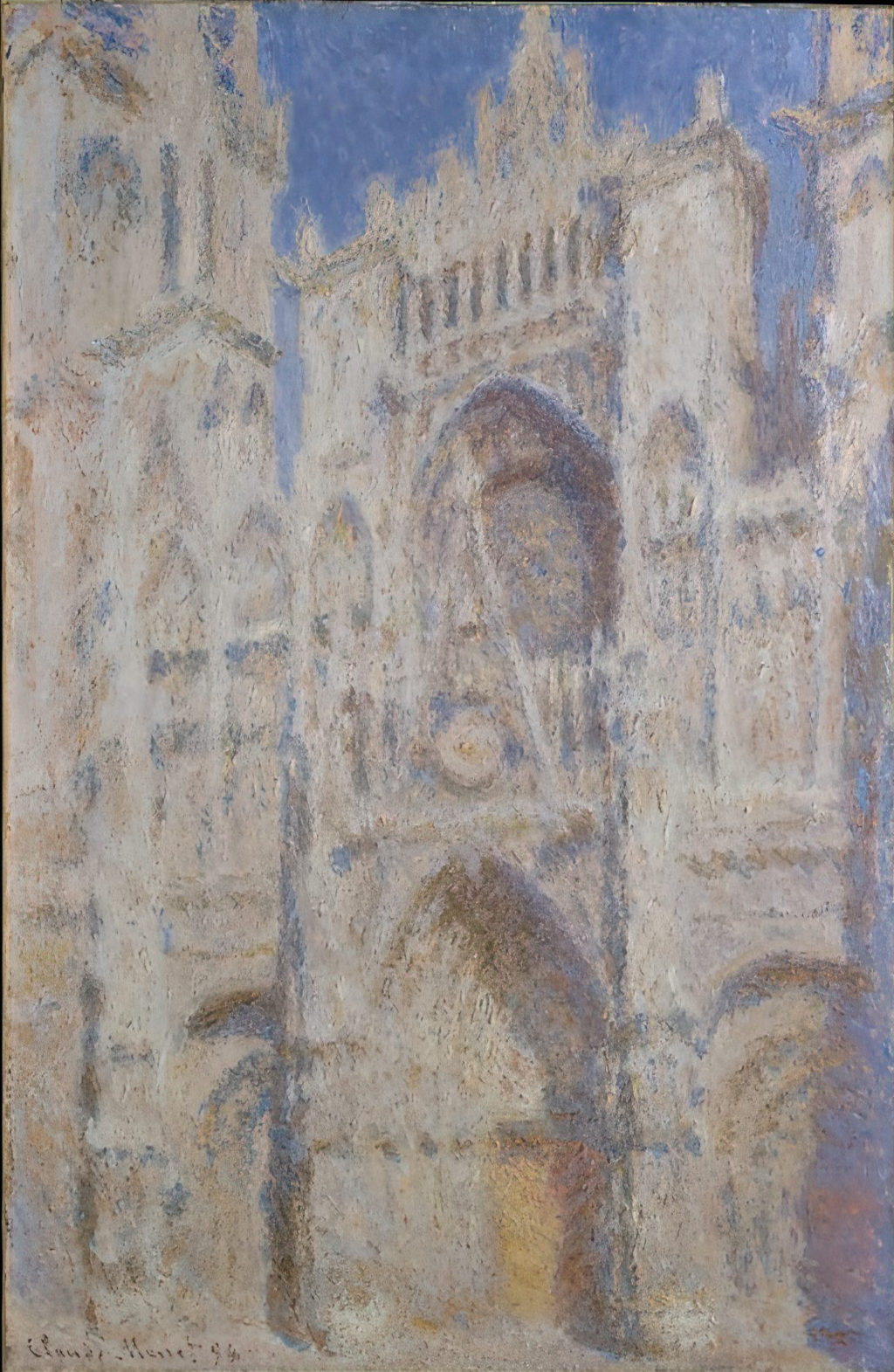
The Portal (Sunlight)
The Metropolitan Museum version, where strong sunlight intensifies colour and structure.
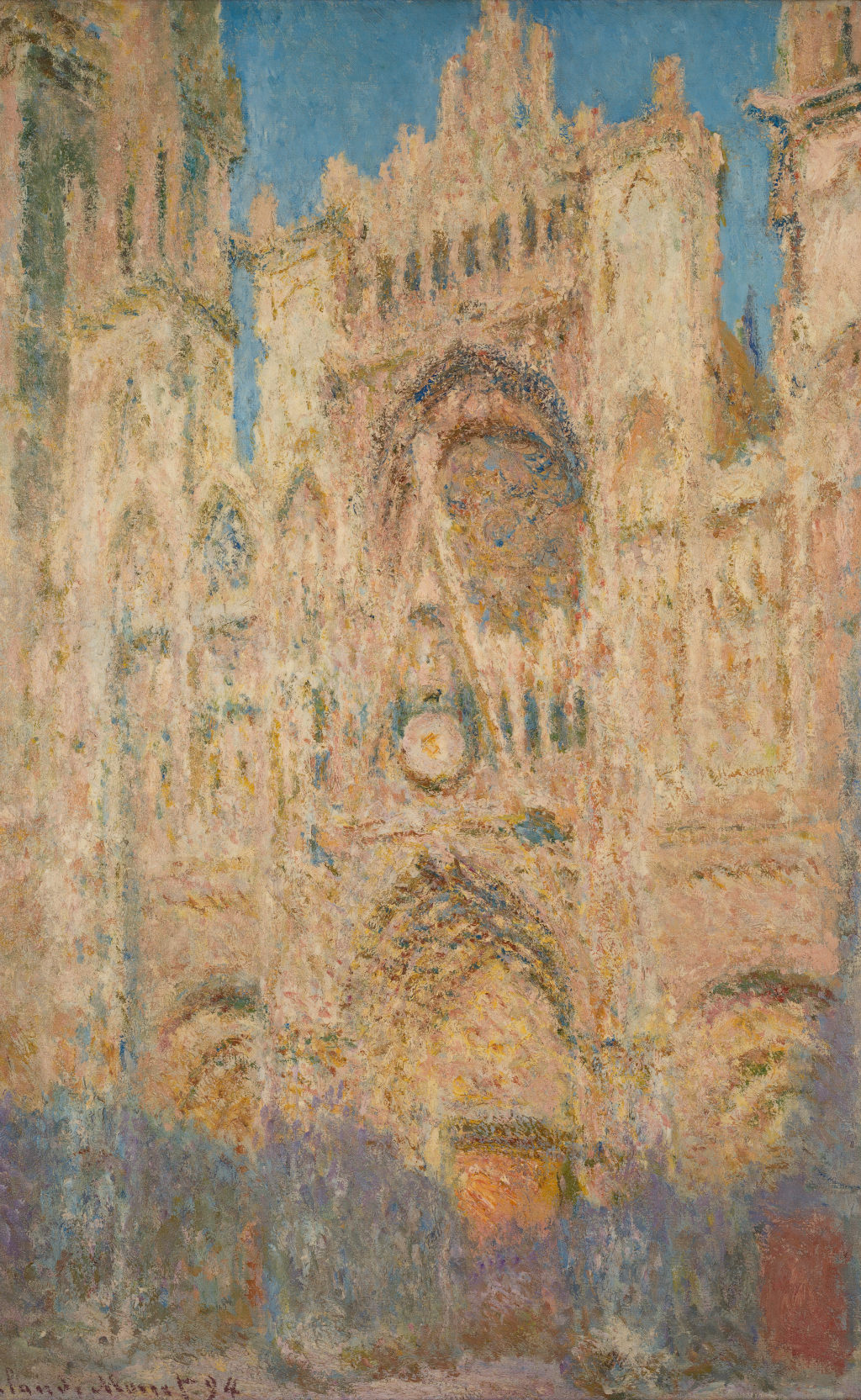
End of the Day
An evening effect in which fading light softens the façade into muted, atmospheric tones.
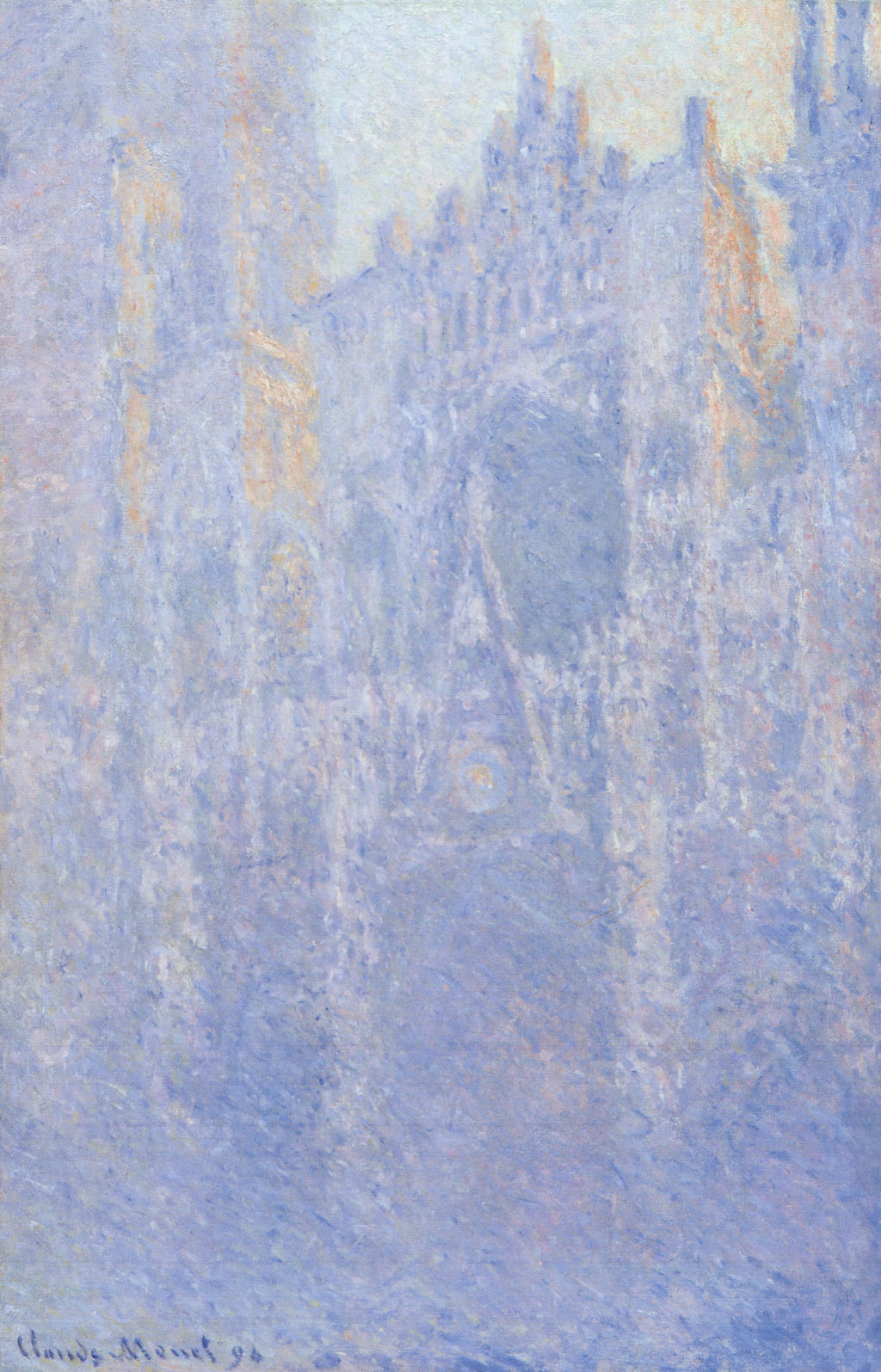
Morning Fog
A celebrated atmospheric version where the cathedral emerges gradually through mist.
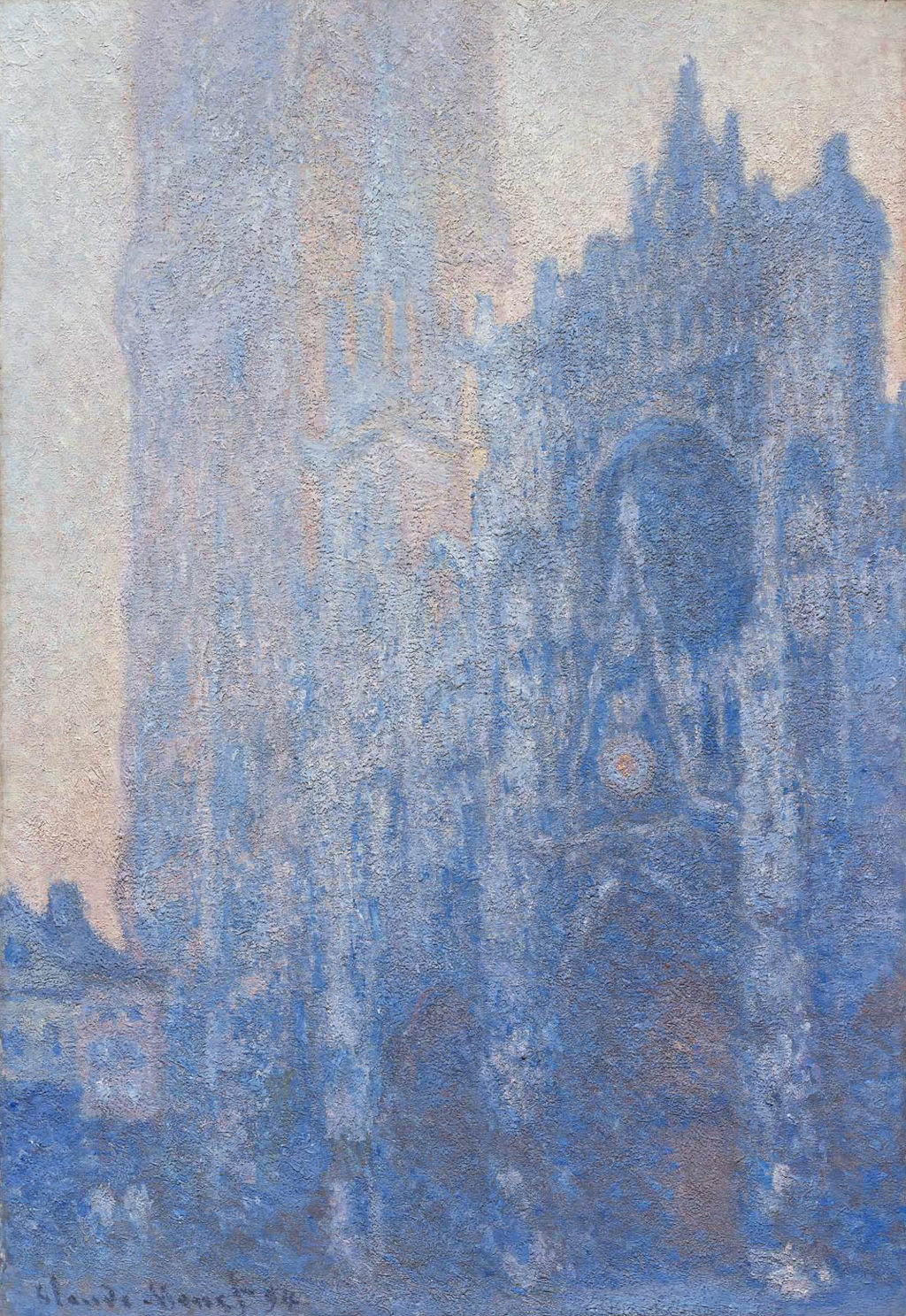
Dawn
A delicate early morning study with cool tones and softened architectural definition.
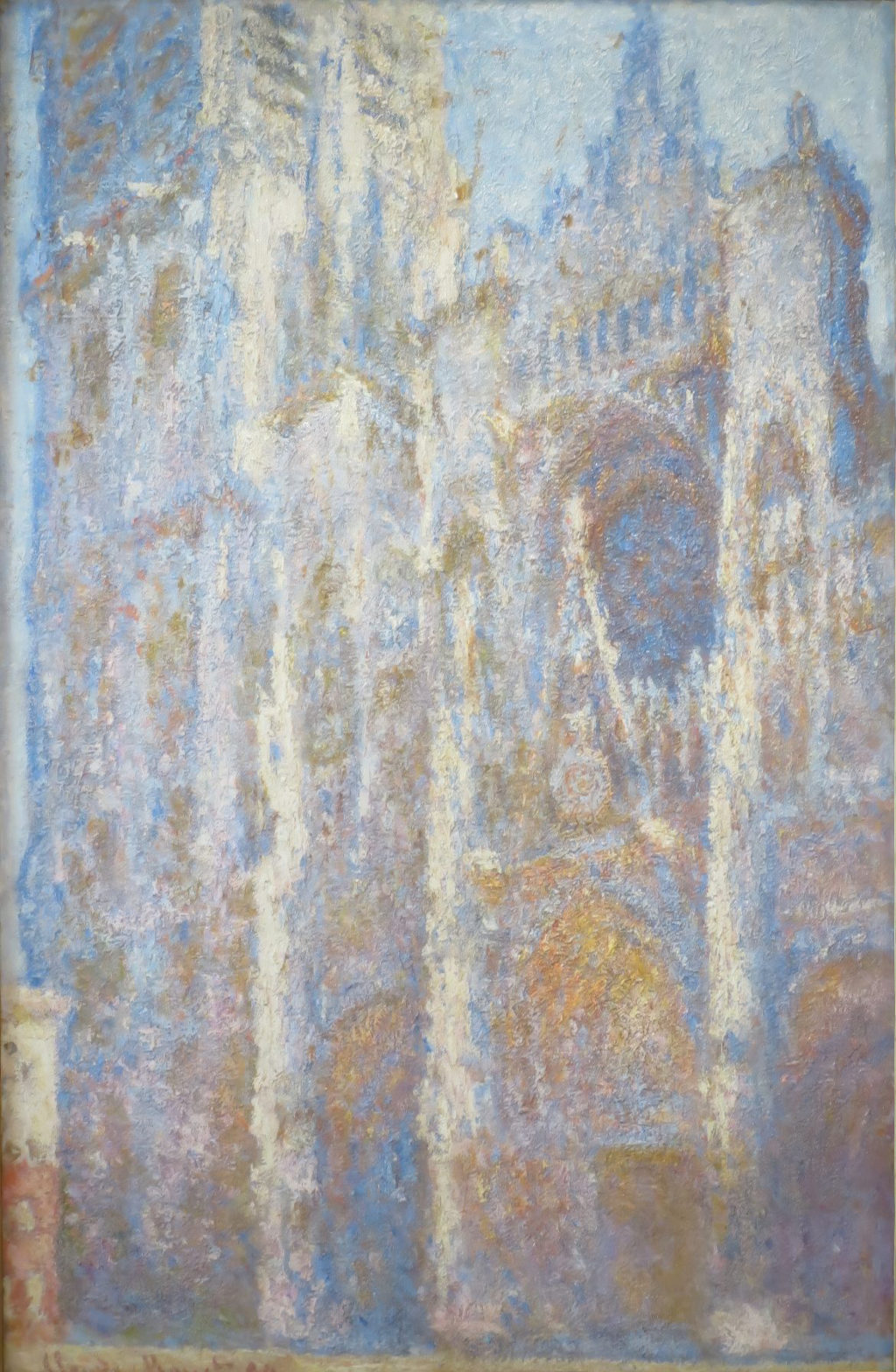
Midday
Bright, direct light flattens shadows and emphasises the façade's textured surface.
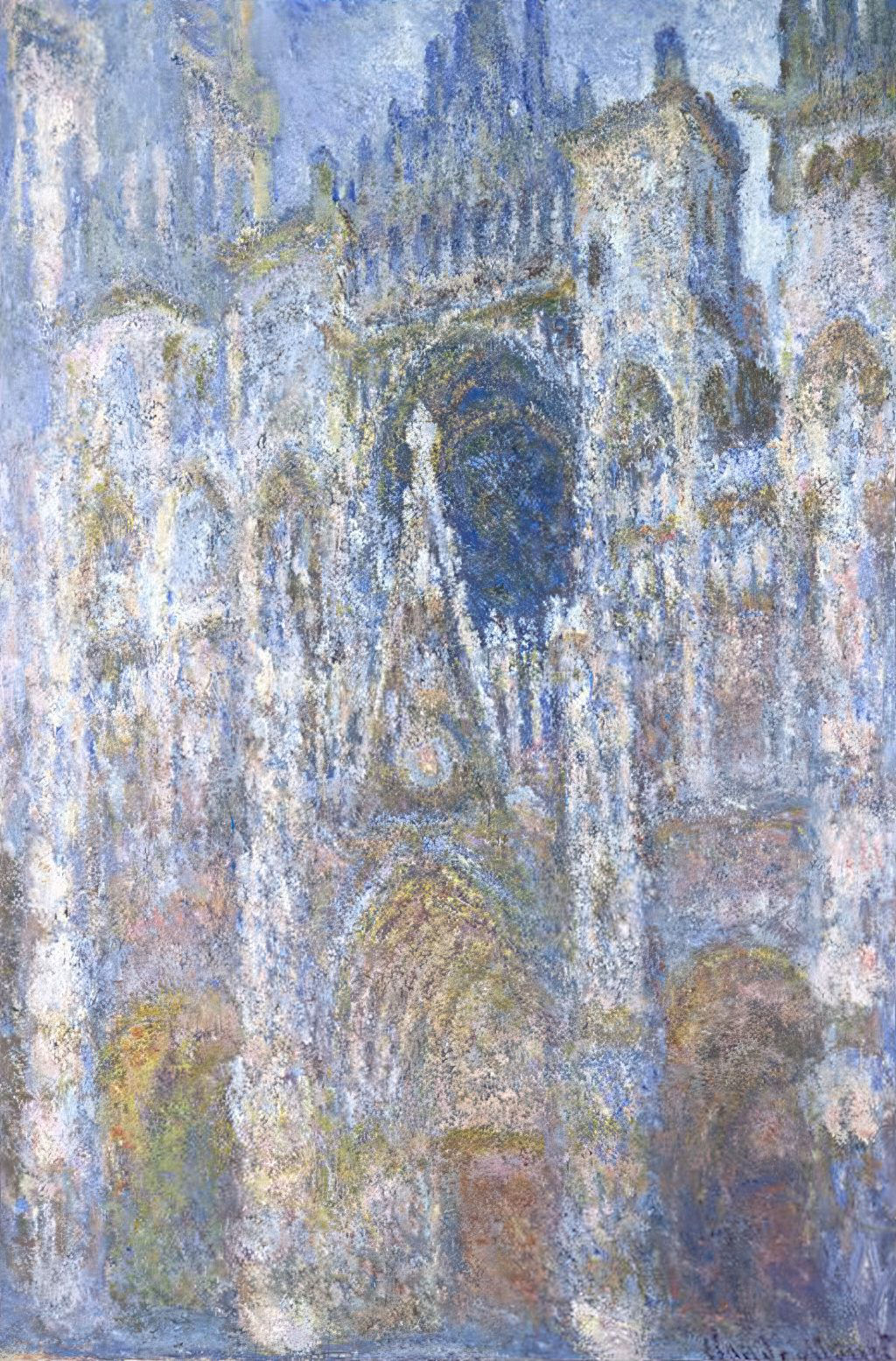
Blue Harmony
A cooler tonal study where blues dominate, highlighting Monet's exploration of colour relationships.
Colour Harmonies in the Rouen Cathedral Series
Colour plays a central role in the Rouen Cathedral series, not merely as a descriptive tool, but as the primary means through which Monet explored perception. Rather than relying on fixed local colour, he constructed each painting from harmonies that reflect the conditions of light and atmosphere.
In some works, Monet builds the façade from cool harmonies of blue and gold. These combinations suggest shifting daylight, in which warm sunlight is filtered through cooler shadows. The result is a surface that seems to vibrate between warmth and coolness, never fully settling into a single tone.
Other paintings, such as the well-known Symphony in Grey and Pink, are organised around more subtle relationships. Here, muted greys are infused with soft pinks, creating a delicate balance that reduces the solidity of the stone. The cathedral appears less like architecture and more like a veil of colour.
The contrast between fog and sunlight provides another key axis in the series. In foggy conditions, the façade dissolves into pale, diffuse tones, with edges softened almost to the point of disappearance. In bright sunlight, by contrast, colour becomes richer and more saturated, and the surface appears more tactile and immediate.
Monet's titles often reflect these colour harmonies. Terms such as “grey and pink,” “morning light,” or “sunlight” do not simply describe the scene, but guide the viewer toward the dominant visual effect. In this way, the titles reinforce the idea that each painting represents a specific optical experience rather than a fixed depiction of the cathedral itself.
How the Rouen Cathedral Series Fits into Monet's Career
Monet created several groups of paintings exploring the colour, light and form of a single subject at various times of day, but his Rouen Cathedral series was his most intense effort on a single site. He painted there in late winter in both 1892 and 1893, then reworked his thirty canvases from memory in the studio through 1894.
The intensity was so great, as he detailed in letters to Alice Hoschedé, that Monet was exhausted upon completing this series [2] - he worked very little in the year that followed but had been able to generate a real sense of excitement about these paintings. The challenge of drawing life, light and colour from architecture pushed the artist to his limits, but the results drew praise from those around him.
I am worn out, I give up, and what's more, something that never happens to me, I couldn't sleep for nightmares: the cathedral was coming down on top of me, it was blue or pink or yellow.
Claude Monet [1]
Twenty-five of the views are dated 1894, one is dated 1893, and five are signed but undated. Because Monet completed many of the works in the studio, the dates on the canvases are less important than the years in which they were begun, mainly 1892 and 1893.
Exhibition and Reception
After Monet completed the series, twenty paintings were shown at his dealer's gallery in Paris in 1895. The exhibition was admired by fellow artists including Pissarro and Cézanne, and several works were quickly purchased, confirming the series as one of Monet's most ambitious achievements.
...a visionary picture of a church facade - incredible, fascinating, fantastic as an idea...
Prince Eugen of Sweden [2], after glimpsing one of the series at the Grand Hotel in Kristiania, Oslo
Why the Rouen Cathedral Series Matters in Monet's Career
The Rouen Cathedral paintings mark one of the most important turning points in Monet's career. Earlier in his life he had painted landscapes, rivers, gardens, and scenes of modern life, but here he subjected a single monumental structure to an unusually intense and sustained investigation.
The series helped confirm Monet's move away from straightforward description and toward a painting of visual sensation. Although the subject is architectural and seemingly stable, the real focus is on light, atmosphere, and the changing act of perception. In this sense, the cathedral becomes less an object than a surface upon which colour and time can act.
This is one reason the series is often seen as a major step toward modernism. In the Rouen Cathedral paintings, Monet does not abandon representation, but he pushes it to the edge, allowing surface, colour, and optical effect to become almost as important as the subject itself.
Why the Series Feels Modern
The Rouen Cathedral paintings still feel modern because they shift attention away from subject matter alone and toward the process of seeing. Instead of asking the viewer to admire only the cathedral itself, Monet invites them to notice instability, variation, and optical change.
This is one reason the series has often been linked to the beginnings of modern painting. Surface, colour, and sensation begin to compete with description. The façade is still present, but it no longer dominates the work in the traditional way. What matters equally is the viewer's awareness that appearance changes from moment to moment.
By turning a single Gothic monument into a sequence of changing visual events, Monet expanded what painting could do. The series remains rooted in observation, yet it points toward later art in which perception, colour, and surface become central subjects in their own right.
Legacy and Influence of the Rouen Cathedral Series
In his later years, Monet also became increasingly sensitive to the decorative qualities of colour and form. He began to apply paint in smaller strokes, building it up in broad fields of colour, and exploring the possibilities of a decorative paint surface of harmonies and contrasts of colour.
The effects that he achieved, particularly in the series paintings of the 1890s, represent a remarkable advance towards abstraction and towards a modern painting focused purely on surface effects.
Where the Paintings Are Today
Claude Monet's Rouen Cathedral series consists of dozens of canvases painted between 1892 and 1894, each capturing the cathedral's façade under different conditions of light, weather, and time of day. Rather than depicting a single, fixed view, Monet explored how perception itself shifts, producing variations that range from cool morning tones to glowing sunlight and atmospheric fog.
The table below lists the principal works from the series, based on their catalogue raisonné numbers, along with their dates, commonly used titles, and current known locations. Together, these paintings demonstrate Monet's most sustained and ambitious investigation into light and colour.
Titles and locations below are based primarily on Wildenstein's catalogue raisonné, with museum collection pages used where institutional titles differ.
| Wildenstein No. | Date | Title | French Title | Current Location | Notes |
|---|---|---|---|---|---|
| W1319 | 1892 | Rouen Cathedral, Portal, Front View [16] | La Cathédrale de Rouen, le portail, vu de face | Musée d'Orsay, Paris | Front-view portal composition; one of the key early views in the series. |
| W1321 | 1892 | Rouen Cathedral, Portal, Cloudy Weather [16] | La Cathédrale de Rouen, le portail, temps gris | Musée d'Orsay, Paris | Grey-weather variant emphasizing softened façade detail. |
| W1322 | 1892 | Rouen Cathedral, Portal, Sunlight [16] | La Cathédrale de Rouen, le portail, soleil | Unknown / private collection | No public institutional location listed in the accessible catalog source. |
| W1323 | 1892 | Rouen Cathedral, Symphony in Grey and Pink [16] | La Cathédrale de Rouen, symphonie en gris et rose | Amgueddfa Cymru - Museum Wales, Cardiff | Among the best-known harmony-titled versions. |
| W1324 | 1892 | Rouen Cathedral, Portal, Sunlight [16] | La Cathédrale de Rouen, le portail, soleil | National Gallery of Art, Washington, D.C. | Washington version of the sunlight effect. |
| W1325 | 1892 / 1894 | Rouen Cathedral: The Portal (Sunlight) [16] | La Cathédrale de Rouen, le portail, soleil | The Metropolitan Museum of Art, New York | Met title uses 1894; catalog entry is grouped with the 1892 campaign. |
| W1326 | 1892 / 1894 | Rouen Cathedral, End of the Day [16] | La Cathédrale de Rouen, fin de journée | Pushkin State Museum of Fine Arts, Moscow | Evening effect; catalog line shows 1892 and 1894. |
| W1327 | 1892 | Rouen Cathedral, Portal, Sunlight, End of the Day [16] | La Cathédrale de Rouen, le portail, soleil, fin de journée | Musée Marmottan Monet, Paris | Late-day sunlight effect. |
| W1328 | 1892 | Rouen Cathedral, Portal [16] | La Cathédrale de Rouen, le portail | Pola Museum of Art, Hakone | Close portal view; public Japanese collection. |
| W1329 | 1892 | Rouen Cathedral [16] | La Cathédrale de Rouen | National Museum of Serbia, Belgrade | General title in the catalog source. |
| W1345 | 1893 | Rouen Cathedral, Portal and Tower d'Albane, Cloudy Weather [16] | La Cathédrale de Rouen, portail et tour d'Albane, temps gris | Musée des Beaux-Arts de Rouen | One of the versions including the d'Albane tower. |
| W1346 | 1893 | Rouen Cathedral, Portal and Tower Saint-Romain, Morning Light [16] | La Cathédrale de Rouen, le portail et la tour Saint-Romain, lumière matinale | Musée d'Orsay, Paris | Morning-light view with Saint-Romain tower. |
| W1347 | 1893 | Rouen Cathedral, Portal, Morning Light [16] | La Cathédrale de Rouen, le portail, lumière matinale | Fondation Beyeler, Riehen / Basel | Morning-light portal study. |
| W1348 | 1893 | Rouen Cathedral, Portal and Tower d'Albane, Dawn [16] | La Cathédrale de Rouen, portail et tour d'Albane, aube | Museum of Fine Arts, Boston | Dawn effect with d'Albane tower. |
| W1349 | 1893 | Rouen Cathedral, Fog [16] | La Cathédrale de Rouen, brouillard | Unknown / private collection | No public institutional location listed in the accessible catalog source. |
| W1350 | 1893 / 1894 | Rouen Cathedral, Portal and Tower d'Albane, Midday [16] | La Cathédrale de Rouen, portail et tour d'Albane, plein midi | Pushkin State Museum of Fine Arts, Moscow | Midday effect; catalog line shows 1893 and 1894. |
| W1351 | 1893 | Rouen Cathedral, Portal [16] | La Cathédrale de Rouen, le portail | National Gallery of Art, Washington, D.C. | Another Washington-held version from the 1893 campaign. |
| W1352 | 1893 | Rouen Cathedral, Portal, Morning Fog [16] | La Cathédrale de Rouen, le portail, brouillard matinal | Museum Folkwang, Essen | Strong atmospheric version with morning fog. |
| W1353 | 1893 | Rouen Cathedral, Portal, Morning Light [16] | La Cathédrale de Rouen, le portail, lumière matinale | Basil & Elise Goulandris Foundation, Athens | Foundation page identifies the work as the pink-dominant morning-light version. |
| W1354 | 1894 | The Portal of Rouen Cathedral in Morning Light [16] | La Cathédrale de Rouen, le portail, lumière matinale | J. Paul Getty Museum, Los Angeles | Getty title uses “The Portal of Rouen Cathedral in Morning Light.” |
| W1355 | 1893 | Rouen Cathedral, Portal, Morning Sun [16] | La Cathédrale de Rouen, le portail, soleil matinal | Musée d'Orsay, Paris | Wikidata records the French title and subtitle “Harmonie bleue.” |
| W1356 | 1893 | Rouen Cathedral, Façade [16] | La Cathédrale de Rouen, façade | Museum of Fine Arts, Boston | Broad façade view rather than a tightly named portal effect. |
| W1357 | 1893 | Rouen Cathedral, Portal [16] | La Cathédrale de Rouen, le portail | Schlossmuseum Weimar | Held in Weimar; catalog source lists “Schloss Weimar.” |
| W1358 | 1893 | Rouen Cathedral, the Façade in Sunlight [16] [13] | La Cathédrale de Rouen, la façade au soleil | The Clark Art Institute, Williamstown | Clark version emphasizing full sunlight on the façade. |
| W1359 | 1893 | Rouen Cathedral, Portal [16] | La Cathédrale de Rouen, le portail | Unknown / private collection | No public institutional location listed in the accessible catalog source. |
| W1360 | 1893 | Rouen Cathedral, Portal and Tower Saint-Romain in the Sun [16] | La Cathédrale de Rouen, le portail et la tour Saint-Romain, plein soleil | Musée d'Orsay, Paris | Musée d'Orsay merchandise/records use the subtitle “harmonie bleue et or.” |
| W1361 | 1893 | Rouen Cathedral [16] | La Cathédrale de Rouen | Unknown / private collection | No public institutional location listed in the accessible catalog source. |
3 Things Most People Miss
- The cathedral is never quite fixed: even though the subject is monumental stone architecture, Monet paints it as something unstable and changing.
- The series depends on comparison: no single canvas explains the project on its own; the deeper meaning emerges when different versions are seen together.
- Colour replaces description: Monet often lets harmonies of blue, pink, gold, and grey do the work that line and detail would normally do in architectural painting.
FAQs
Discussion
Claude Monet's Rouen Cathedral series continues to fascinate viewers because it turns a familiar Gothic monument into something unstable, atmospheric, and deeply modern. Rather than presenting the cathedral as fixed architecture, Monet shows how light, colour, and weather can transform even stone into a shifting visual experience.
The series often prompts discussion about perception, repetition, and the role of colour in Impressionism. Which version of the cathedral speaks to you most strongly?
Reader Insights
Light & Colour: The different versions show how radically colour changes the mood of the same subject — from cool morning blues and greys to warm golds and pinks in sunlight.
Question: Do you think Monet was more interested in painting the cathedral itself, or in painting the changing act of seeing it?
Join the Conversation
Have a thought or observation about Rouen Cathedral? Share it below — selected insights may be featured on this page.
References
- Daniel Wildenstein, Monet: The Triumph of Impressionism, Cologne: Taschen, 2015.
- Jackie Wullschlager, Monet - The Restless Vision, Milton Keynes: Allen Lane, 2023.
- Tamsin Pickeral, Monet - The World's Greatest Art, London: Flame Tree Publishing, 2011.
- Birgit Zeidler, Monet - Art in Focus, Florence: Konemann, 2005.
- Stephen Farthing, 1000 Paintings You Must See, Beijing: Cassell Illustrated, 2008.
- Wikipedia, "List of Paintings by Claude Monet", View source.
- The National Gallery, London, "Monet's Rouen painting series", Google Arts and Culture, View source.
- VisitRouen.com, "The Cathedrals series", View source.
- The Metropolitan Museum of Art, "Rouen Cathedral: The Portal (Sunlight)", View source.
- Getty, "The Portal of Rouen Cathedral in Morning Light", View source.
- The National Gallery of Art, "Rouen Cathedral, West Façade, Sunlight", View source.
- ClaudeMonetGiverny.fr, "Cathedrals upon cathedrals...", View source.
- Clark Art Institute, "Rouen Cathedral, the Façade in Sunlight", View source.
- Dr. Beth Harris and Dr. Steven Zucker, "Claude Monet, Rouen Cathedral Series", Smart History, View source.
- Sebastian Smee, "Monet's towering obsession", The Washington Post, View source.
- Daniel Wildenstein, Gilles Neret, Monet: Catalogue Raisonne, Cologne: Wildenstein Institute and Taschen, 1996.

Observation: What strikes me most is that the cathedral never seems completely solid. Even though it is a massive Gothic building, Monet makes it feel as if it could dissolve into light at any moment.