 by Tom Gurney
Tom Gurney BSc (Hons) is an art history expert with over 20 years experience
Published on May 22, 2026 / Updated on May 25, 2026
Email: tomgurney1@gmail.com / Phone: +44 7429 011000
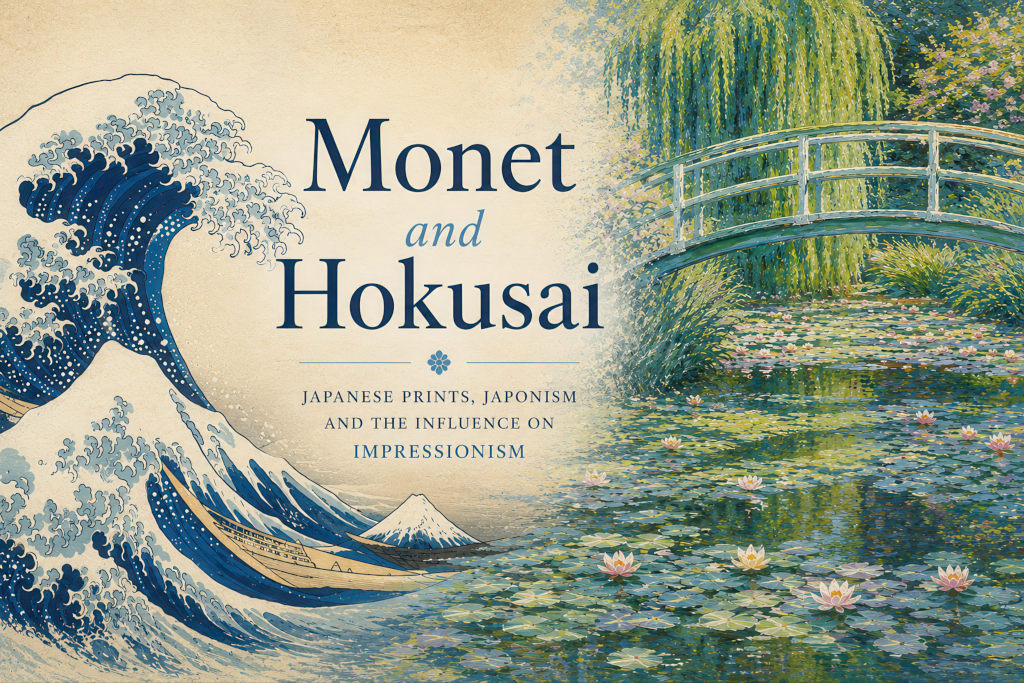
Claude Monet and the Influence of Hokusai
Although Claude Monet never met Katsushika Hokusai, the Japanese artist became one of the most important indirect influences on Monet's mature style. During the second half of the nineteenth century, Japanese ukiyo-e prints entered France in large numbers following the opening of trade with Japan, profoundly shaping European art and design, also influenced by the work of Hiroshige.
Monet was among the artists most deeply fascinated by Japanese prints. He collected them extensively throughout his life, eventually owning more than 200 examples at his home in Giverny. Among the Japanese artists he admired, Hokusai stood out for his bold compositions, flattened perspective, rhythmic patterns and innovative treatment of water and atmosphere.
Many of Monet's paintings reveal clear parallels with Hokusai's visual language. Both artists explored reflections, bridges, changing weather, water surfaces and seasonal transformation. Hokusai's woodblock prints encouraged a more modern approach to composition, where asymmetry, cropped viewpoints and decorative surface pattern could become central artistic tools.
These ideas helped Monet move away from traditional European academic composition toward the freer visual structures associated with Impressionism. The influence can be felt across works painted at Argenteuil, London and especially Giverny, where Monet created his famous Japanese bridge and water garden partly inspired by the Japanese aesthetics he admired so deeply.
Today, the relationship between Monet and Hokusai is regarded as one of the most important examples of cross-cultural influence in nineteenth-century art, connecting Japanese ukiyo-e with the rise of European modernism.
- Artists Claude Monet, Katsushika Hokusai
- Main Influence Japanese Ukiyo-e Prints
- Movement Japonism & Impressionism
- Key Themes Water, Atmosphere, Bridges, Reflections, Nature
- Major Hokusai Series Thirty-Six Views of Mount Fuji
- Important Monet Connections Japanese Bridge, Water Lilies, Giverny Garden
- Artistic Influence Flattened Perspective & Cropped Composition
- Monet's Collection Over 200 Japanese Prints at Giverny
- Historical Context Rise of Japonism in France after 1854
- Legacy Japanese Art Helped Shape Modern European Painting
Monet, Hokusai and the Birth of Japonisme
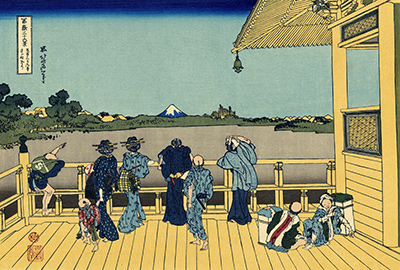
One of the clearest examples of Japanese influence on Monet can be seen by comparing Terrace at Sainte-Adresse with Hokusai's The Sazaido of the Gohyaku Rakanji Temple. Both works use elevated viewpoints, decorative colour, carefully arranged figures and bold horizontal composition to transform landscape into structured visual design.
Hokusai and MONET Compared
Monet's Terrace at Sainte-Adresse is often considered one of the earliest and strongest examples of Japonisme within Impressionism. The elevated terrace, decorative organisation of figures and compressed spatial structure strongly recall Hokusai's famous print of visitors standing upon the balcony of the Sazaido temple overlooking Edo.
Hokusai: Elevated Viewing Platform
In The Sazaido of the Gohyaku Rakanji Temple, Hokusai arranges figures upon a raised viewing platform overlooking the distant landscape of Edo and Mount Fuji. The composition uses strong horizontal divisions, decorative patterning and unusual perspective to create an image that feels carefully designed rather than traditionally naturalistic.
Monet: Terrace at Sainte-Adresse
Monet adopts a remarkably similar arrangement in Terrace at Sainte-Adresse (W.986), where figures stand upon a flower-filled terrace overlooking the English Channel. The elevated viewpoint, flattened colour areas, decorative flags and compressed depth reveal how Japanese prints helped Monet rethink traditional European composition during the 1860s.
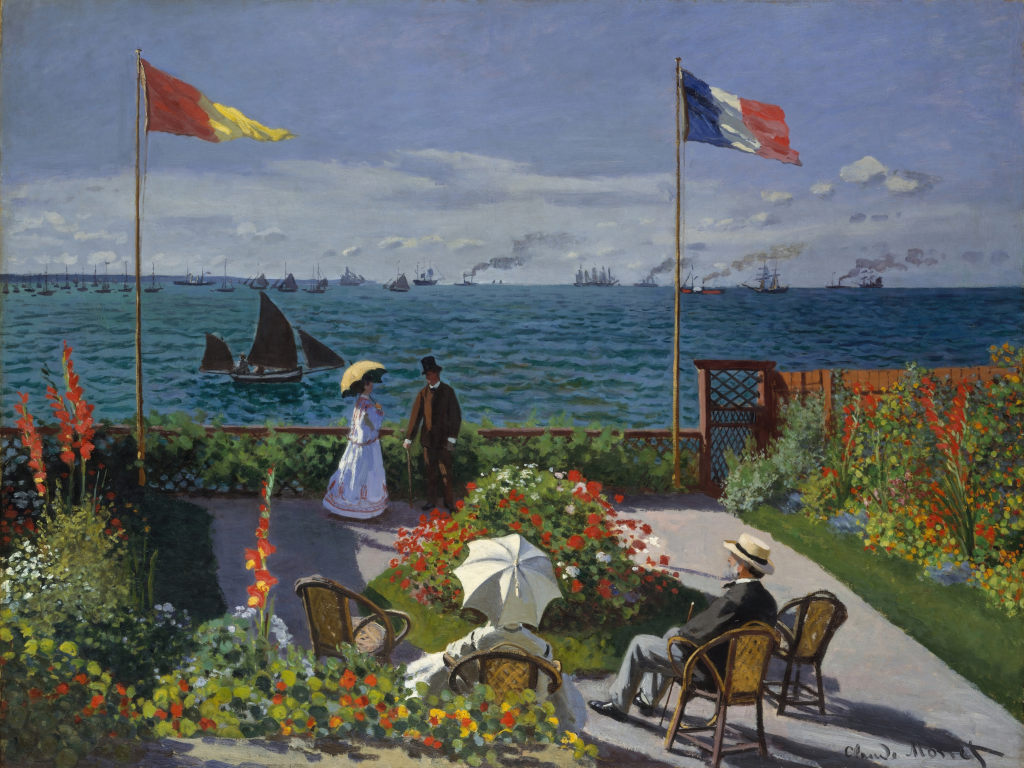
[For Terrace at Sainte-Adresse] Monet modelled the composition, high angle, figures on a platform before a landscape, on Hokusai's The Sazaido of the Gohyaku Rakanji Temple. Especially after the Exposition Universelle, Japanese ukiyo-e woodcuts were revelatory. Their sharp contours, planes of vivid colour, odd perspectives, and favouring of bold, and formal, composition over naturalistic representation were inspirational to French artists striving against the academic manner.
Terrace fantastically bringing the floating world of Edo to Normandy, was the real pioneer, and was referred to by Monet and his friends as the "Japanese" painting.
Jackie Wullschlager, Monet - The Restless Vision [3]
[Armand Silvestre] noted the influence of Japanese images [on Monet's] study of the reflections in the water. We do not know where Monet first encountered the prints of artists such as Hiroshige or Hokusai, whether in Le Havre, Paris, Zaandam, Amsterdam or London, but we do know that they interested him intensely.
Daniel Wildenstein, Monet: The Triumph of Impressionism [2]
Japanese Composition and the Birth of Monet's Modern Style
Among all the possible comparisons between Monet and Japanese art, the relationship between Terrace at Sainte-Adresse and Hokusai's The Sazaido of the Gohyaku Rakanji Temple may be the clearest. Monet was not simply borrowing exotic visual motifs from Japan. Instead, he appears to have absorbed specifically Japanese ideas about composition, space and design at a moment when many younger French artists were searching for alternatives to academic painting.
Both works place elegantly dressed figures upon an elevated viewing platform overlooking a distant landscape. In Hokusai's print, visitors stand along the balcony of the Sazaido temple while Edo stretches into the distance beyond them. Monet creates a strikingly similar arrangement at Sainte-Adresse, where family members gather upon a flower-filled terrace above the English Channel. In each image, the spectator experiences the landscape from a raised position, transforming the act of viewing itself into part of the subject.
The similarities extend far beyond general atmosphere. Both artists organise their compositions through broad horizontal bands rather than deep traditional perspective. Foreground platform, middle distance and sky are stacked one above another, compressing space into flatter decorative zones. Monet's bright flowerbeds and flags function almost like patterned areas within a Japanese print, while the sea and sky become large fields of simplified colour rather than carefully modelled naturalistic space.
These qualities reflected the growing impact of Japanese ukiyo-e prints upon European artists during the 1860s. Following the reopening of trade between Japan and the West, large numbers of woodblock prints entered Paris through dealers, collectors and international exhibitions such as the Exposition Universelle of 1867. Artists including Monet, Degas, Whistler and later Van Gogh were fascinated by the asymmetrical arrangements, elevated viewpoints, flattened colour and bold outlines found in works by Hokusai and Hiroshige.
For Monet, this encounter helped encourage a more decorative and modern conception of painting. Rather than treating the canvas as a transparent window into reality, Japanese prints suggested that composition itself could become expressive. The unusual viewpoint, cropped forms and strong structural design of Terrace at Sainte-Adresse reveal Monet experimenting with these ideas remarkably early in his career.
This influence would continue throughout Monet's life. His later Japanese bridge paintings, water garden at Giverny and increasingly flattened Water Lilies all show how deeply Japanese aesthetics became embedded within his artistic vision. Yet already in Terrace at Sainte-Adresse, Monet had begun translating the visual language of Edo-period Japan into the emerging world of Impressionism.
Specific Similarities Between Hokusai and Monet
-
1. Elevated Viewing Platform
Both images place figures upon a raised terrace or balcony overlooking a distant landscape. Hokusai uses the circular balcony of the Sazaido temple, while Monet positions his family upon the terrace at Sainte-Adresse above the sea. -
2. Figures Arranged Along the Edge
In both works, the figures are carefully positioned along the outer edge of the platform, directing attention outward toward the landscape beyond rather than inward toward one another. -
3. Horizontal Layering of Space
Both compositions are organised through stacked horizontal zones: foreground terrace/platform, middle-distance landscape, far horizon and expansive sky. This reduces the illusion of deep European perspective. -
4. Flattened Decorative Colour
Monet simplifies areas of colour in a way that resembles Japanese woodblock design. The flowerbeds, flags, sea and sky become broad decorative surfaces rather than heavily modelled naturalistic forms. -
5. High Horizon Line
Both works push the horizon unusually high within the composition, compressing spatial depth and giving greater emphasis to surface design and pattern. -
6. Strong Graphic Shapes
Hokusai uses sharply defined architectural forms and silhouettes, while Monet similarly employs bold flags, flowerbeds and dark figure shapes to structure the composition graphically. -
7. Decorative Foreground Patterning
The foregrounds in both works function almost as ornamental design. Hokusai uses repeating architectural lines and clothing patterns; Monet uses vivid flowerbeds and garden forms arranged like patterned decoration. -
8. Emphasis on Viewing and Spectatorship
Both images are partly about the act of looking itself. The figures stand observing the world beyond them, turning spectatorship into a central theme of the composition. -
9. Unusual Perspective
Neither composition follows conventional academic perspective strictly. Instead, both artists use elevated angles and compressed depth to create more dynamic and modern spatial arrangements. -
10. Balance Between Structure and Atmosphere
Both works combine carefully organised composition with open air and distant atmosphere. The structured terrace/platform contrasts with expansive sky and landscape beyond.
How did Hokusai's Japanese prints help shape Claude Monet's art? These five visual comparisons show the connection clearly: bridges, water, cropping, serial views and flattened decorative colour.
Hokusai and MONET Compared
Monet did not copy Hokusai directly, but Japanese prints helped change the way he thought about composition, colour and space. Hokusai's bold viewpoints, cropped forms, bridges, water surfaces and repeated views of the same motif offered Monet a new visual language beyond traditional European perspective.
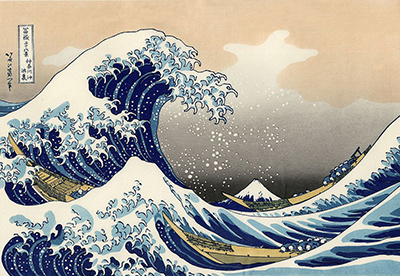
Hokusai: The Great Wave
Hokusai's The Great Wave off Kanagawa turns water into a powerful decorative form. The wave is not simply naturalistic; it becomes rhythm, pattern and movement, with Mount Fuji reduced to a tiny point in the distance.
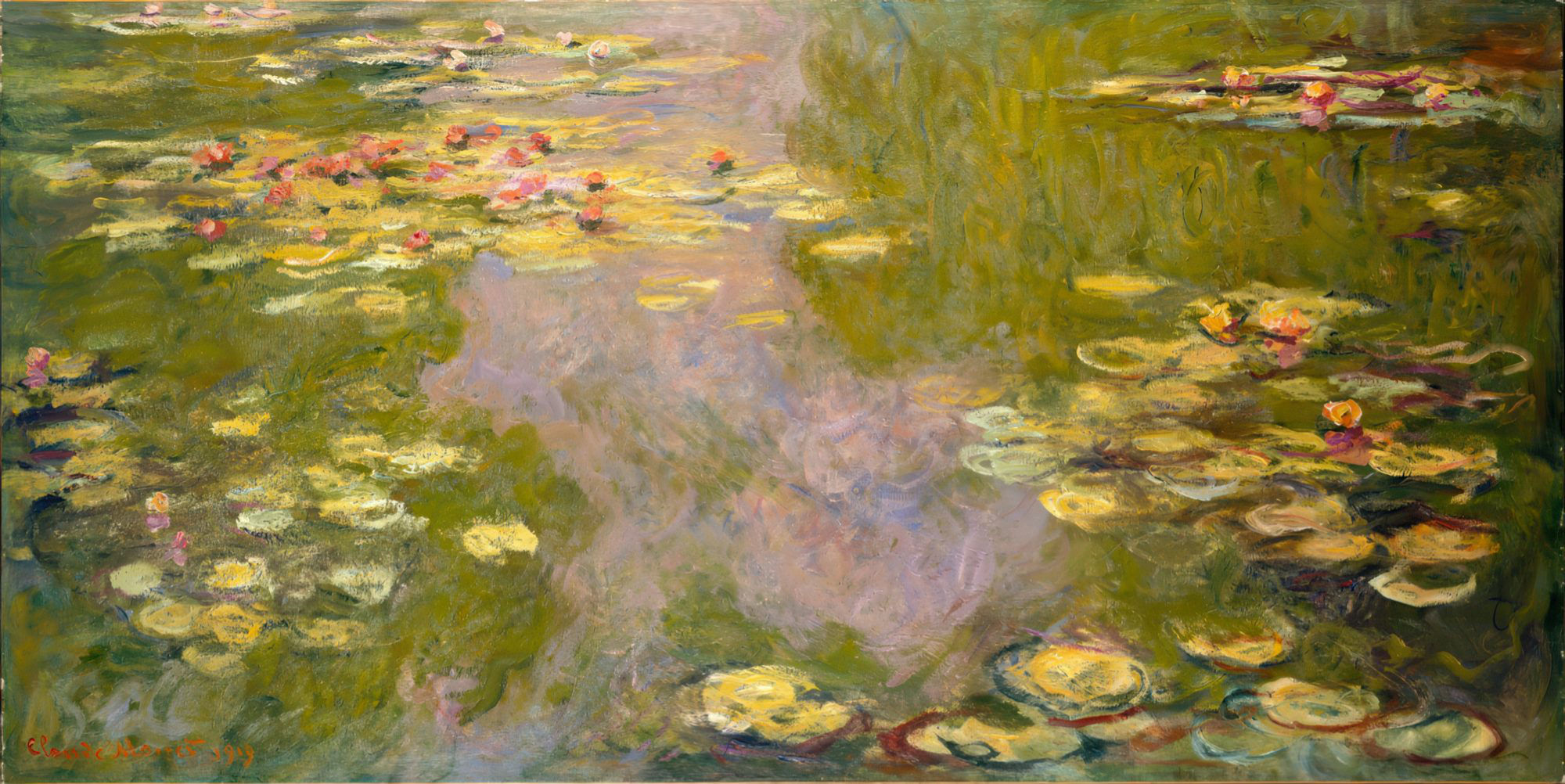
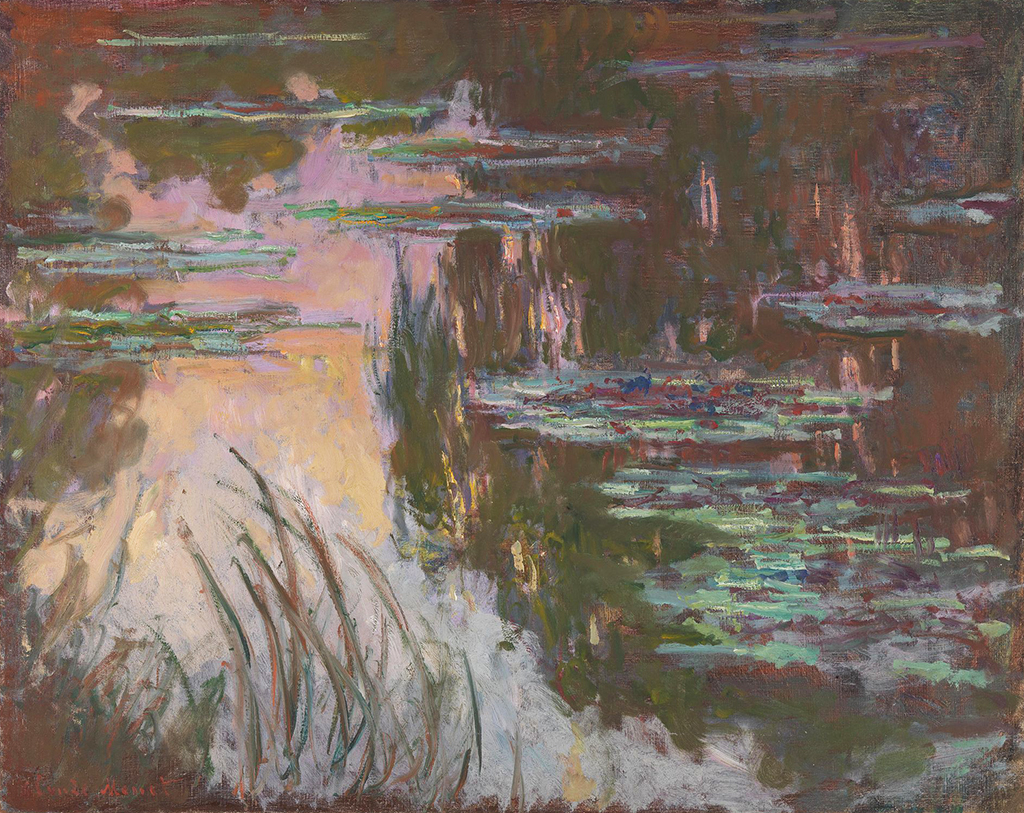
Monet: Water as Surface
Monet also made water a central visual subject. In his later Water Lilies, reflections, ripples and floating plants dissolve solid space, turning the surface of water into a field of colour and movement.
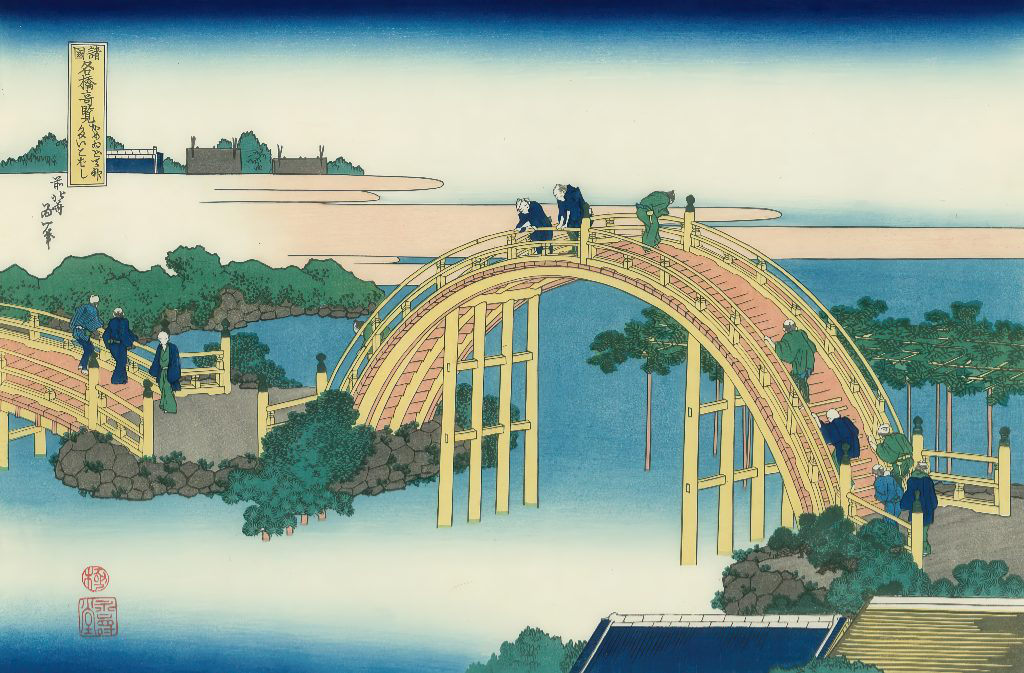
Hokusai: Bridge Composition
Hokusai often used bridges as strong structural devices, cutting across the image and guiding the eye through the scene. His bridges are both architecture and design, shaping the whole composition.
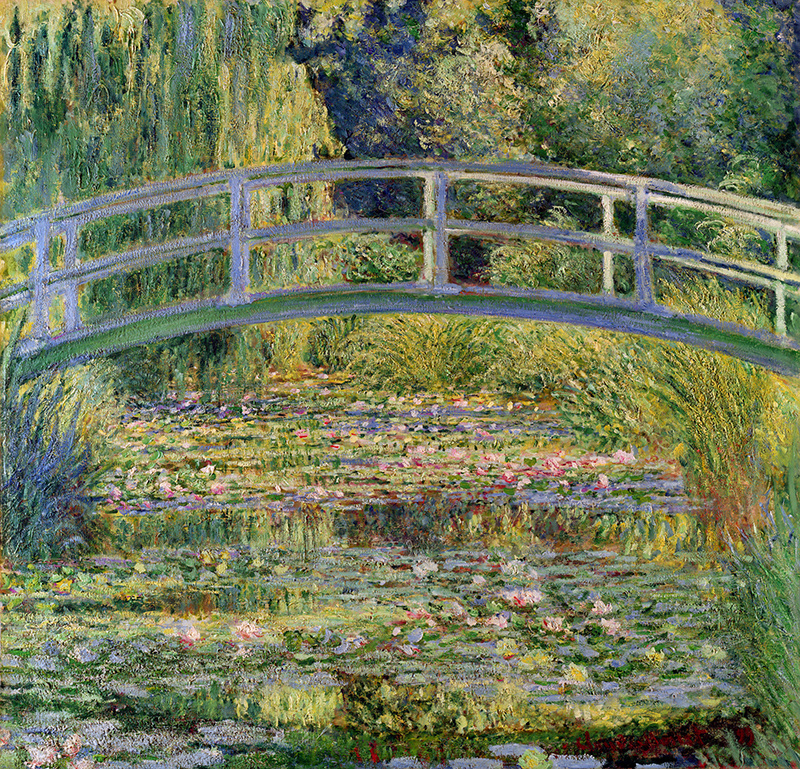
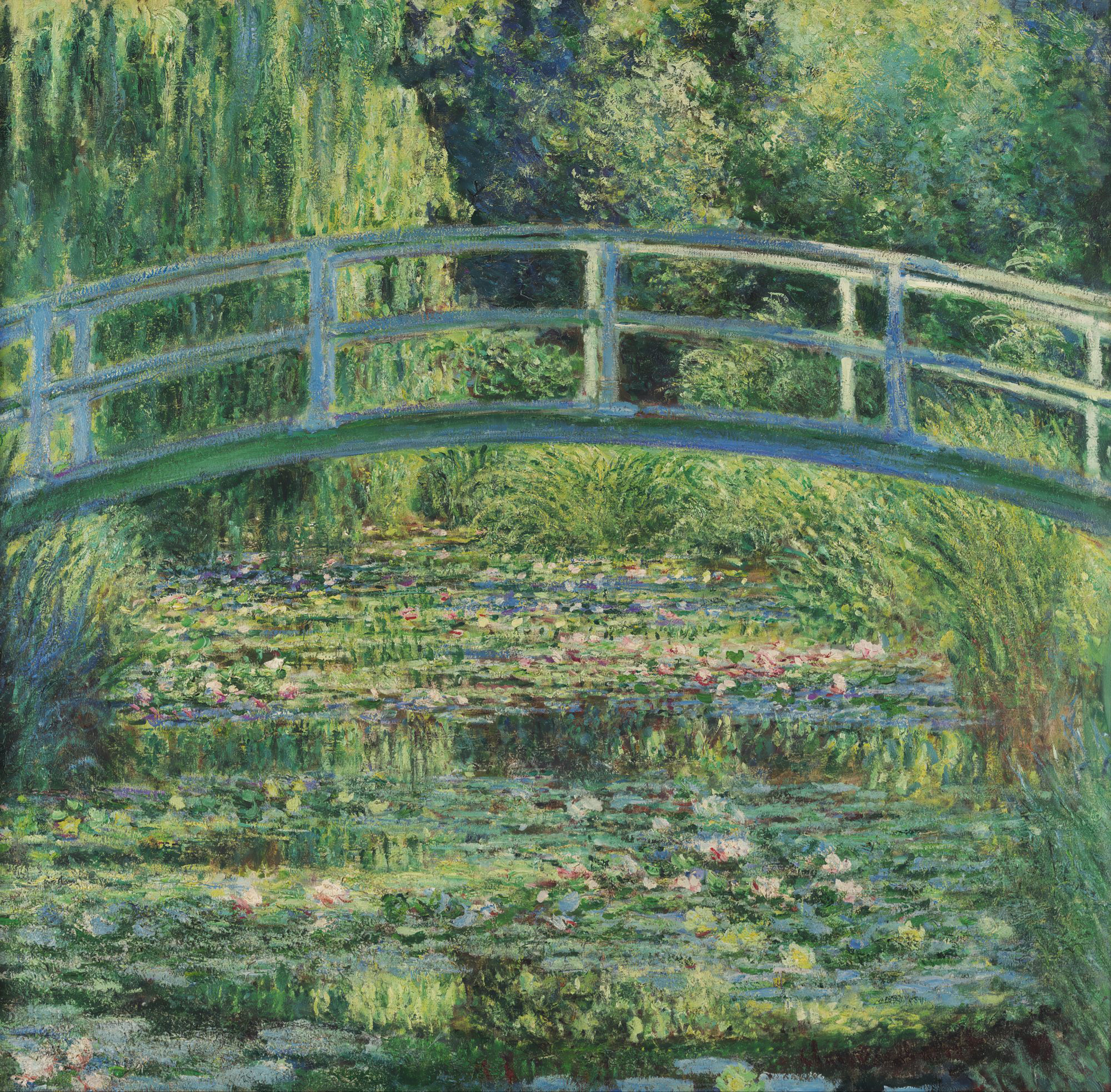
Monet: The Japanese Bridge
Monet's Japanese bridge at Giverny became one of the clearest signs of Japanese influence in his art. The curved bridge, pond and plants create a decorative world in which nature and design become inseparable.
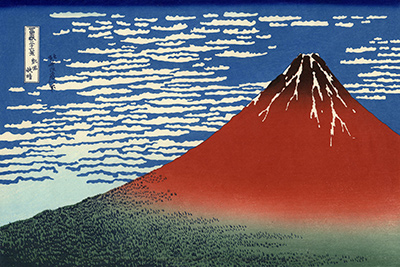
Hokusai: Repeated Views
In Thirty-Six Views of Mount Fuji, Hokusai explored the same landmark again and again under changing conditions. Fuji becomes a fixed motif through which weather, distance, season and human activity can vary.
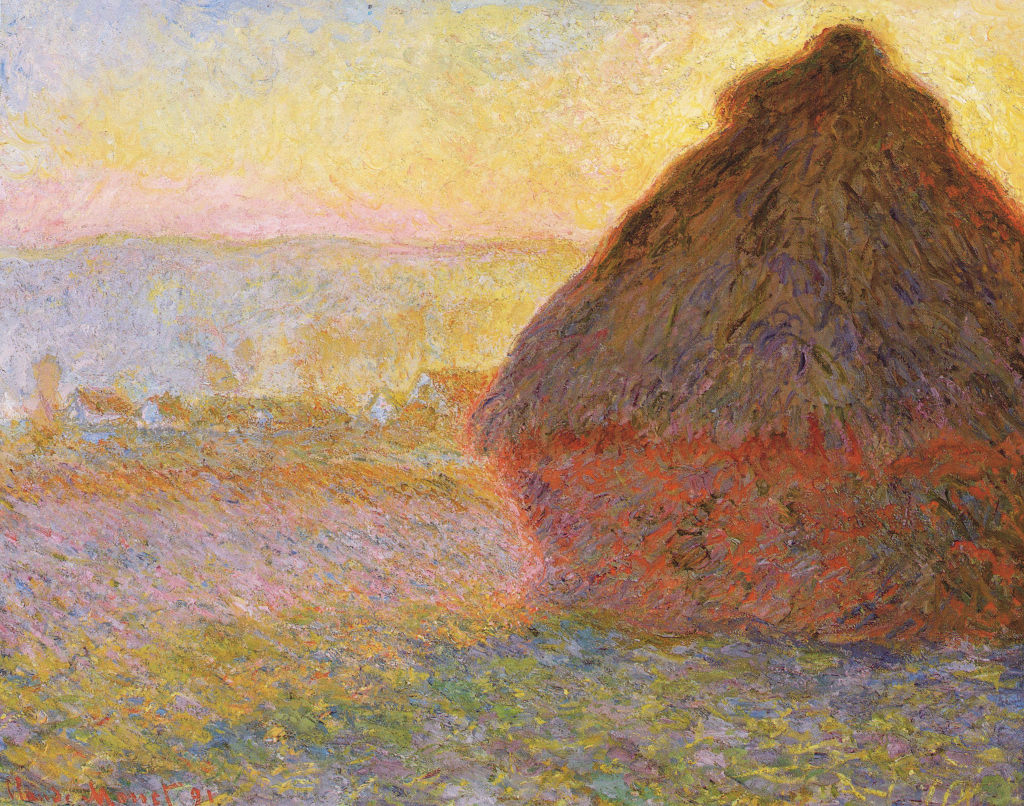
Monet: Serial Painting
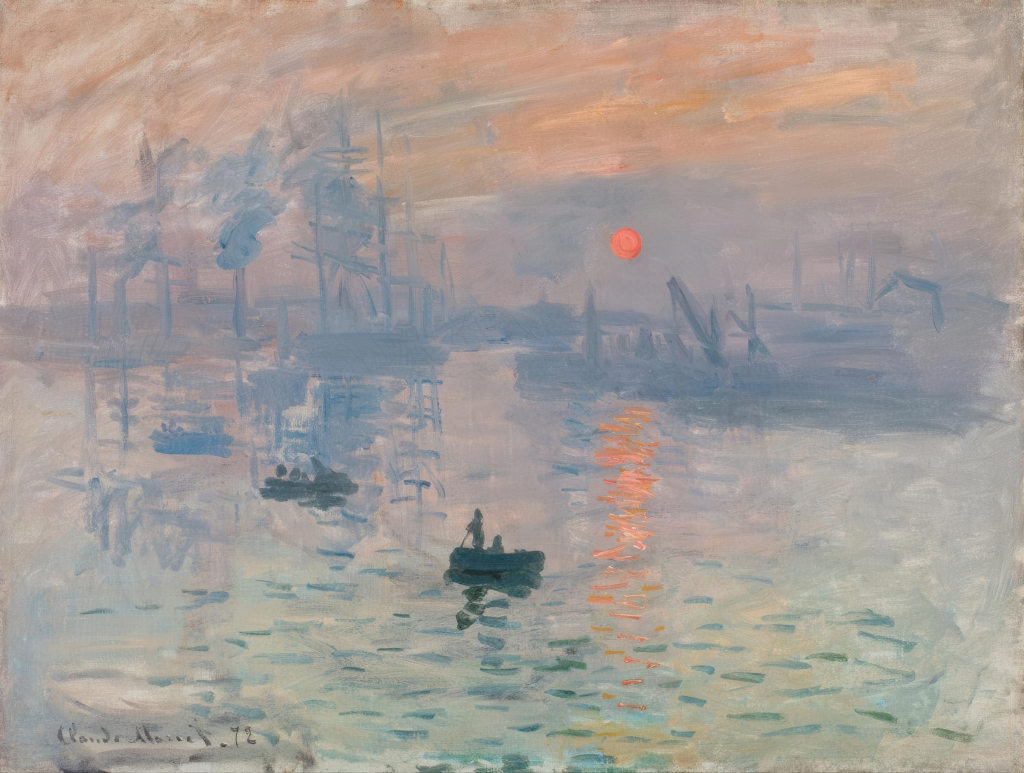
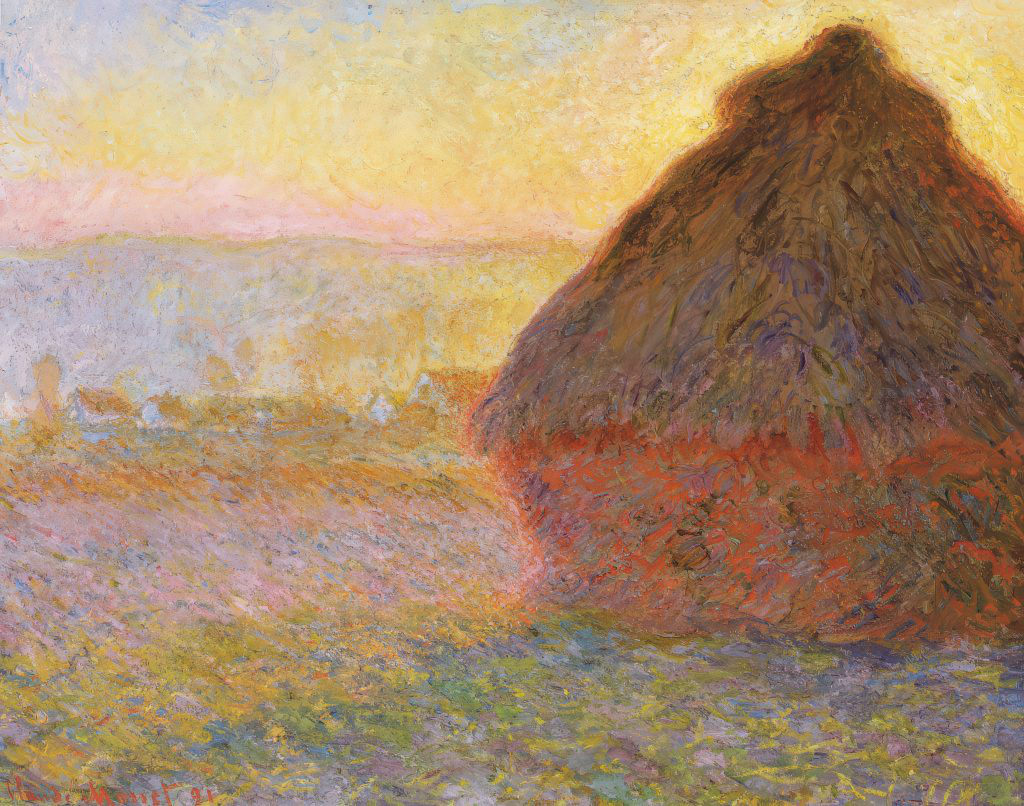
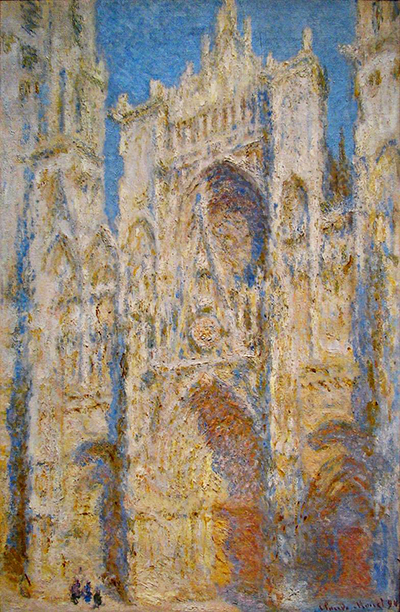
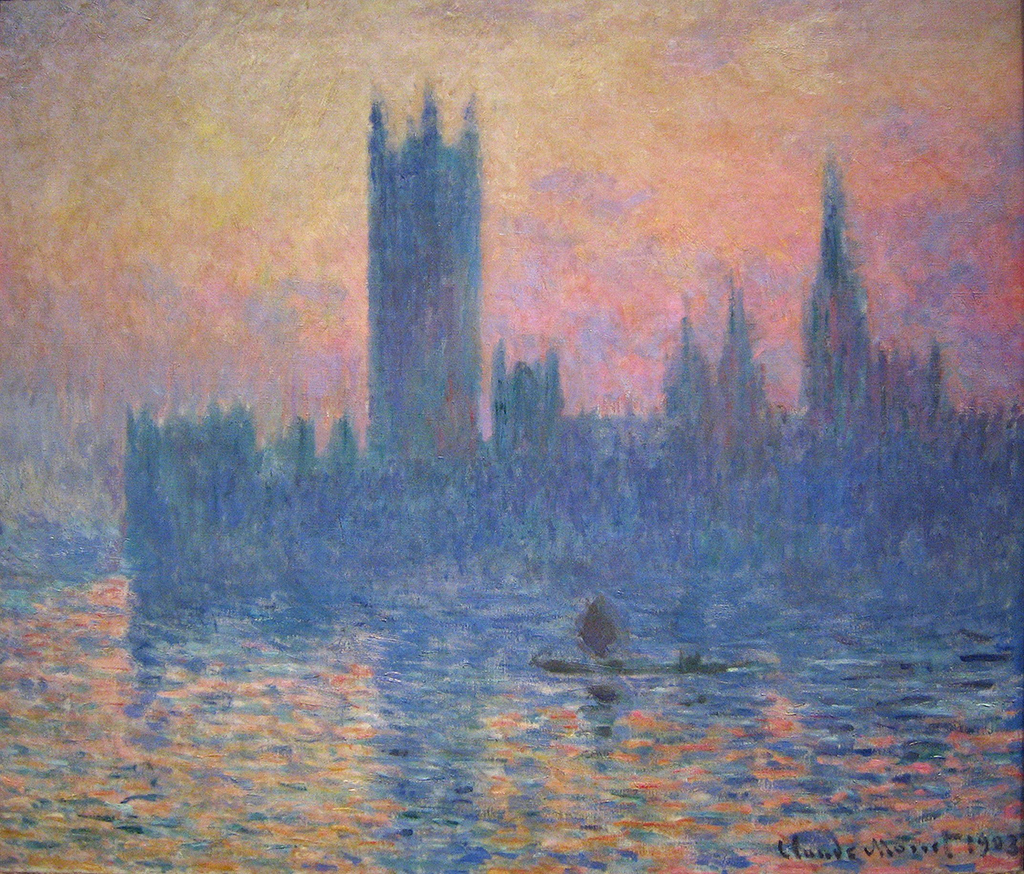
Monet developed a similar idea in his own series paintings. Haystacks, Rouen Cathedral, the Houses of Parliament and Water Lilies all show the same subject transformed by light, weather and time of day.
Hokusai: Cropping and Asymmetry
Hokusai's prints often use unusual angles, cropped forms and asymmetrical layouts. Rather than placing the subject neatly in the centre, he lets forms enter from the edge, creating energy and immediacy.
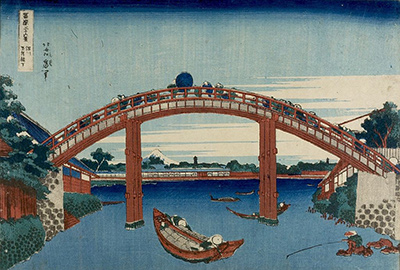
Monet: Cropped Modern Views
Monet increasingly used cropped, partial and immersive compositions. In the late garden paintings, the viewer is brought close to the surface, with no conventional horizon and no traditional framed landscape depth.

Hokusai: Flattened Colour
Japanese woodblock prints often use flat areas of colour, strong outlines and decorative patterning. Hokusai's landscapes suggest depth, but they also remain beautifully arranged surfaces.
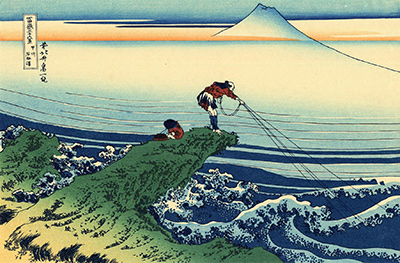
Monet: Colour and Decoration
Monet's late paintings move closer to decorative surface. Colour, reflection and plant forms often matter more than perspective, helping to bridge Impressionism, Japonism and the beginnings of modern abstraction.
How Hokusai Changed the Way Monet Composed Paintings
Hokusai's influence on Monet was not limited to a few shared subjects. It affected the deeper structure of Monet's art: where the viewer stands, how space is flattened, how motifs are repeated, and how nature can become decorative design. This is why the comparison between Terrace at Sainte-Adresse and Hokusai's The Sazaido of the Gohyaku Rakanji Temple is so valuable. It shows influence at the level of composition itself, not merely at the level of theme or atmosphere. [4]
The Metropolitan Museum of Art describes Monet's Garden at Sainte-Adresse as a daring work in which the artist adopted an elevated viewpoint and arranged the terrace, sea and sky as three distinct bands of high-keyed colour. This structure emphasises the flat surface of the canvas and reflects Monet's admiration for Japanese prints. [4] That observation supports the strongest argument on this page: Hokusai helped Monet rethink the painting as a designed surface rather than simply a window into deep perspectival space.
Monet's Japanese Print Collection at Giverny
Monet's interest in Japanese art was not casual. His house at Giverny preserved one of the clearest signs of his long-term engagement with ukiyo-e prints. The Fondation Claude Monet states that his collection includes 46 prints by Utamaro, 23 by Hokusai and 48 by Hiroshige, forming a major part of the Japanese prints still displayed at Giverny today. [5] This matters because Monet did not simply encounter Japanese prints once in Paris and move on. He lived with them, studied them and surrounded himself with them.
The influence also moved from wall to garden. Giverny itself became a kind of living extension of Monet's Japanese interests: the water garden, pond and bridge all reflect his fascination with the visual world of ukiyo-e. The Japanese bridge was not only a garden feature but also a compositional device, allowing Monet to turn Hokusai's and Hiroshige's bridge imagery into a personal pictorial language. [5]
From Japanese Print to French Garden
The comparison with Hokusai becomes even more persuasive when seen as part of a longer development. In Terrace at Sainte-Adresse, Monet uses Japanese print composition within a Normandy seaside setting. At Giverny, decades later, he went further: rather than simply painting a French view through Japanese eyes, he built an environment in which Japanese-inspired bridges, water surfaces and plant forms could become his main subjects.
This progression gives the page a strong narrative arc. Hokusai first helps Monet flatten and organise space in the 1860s; Japanese prints then become part of his collecting life; finally, at Giverny, Japanese visual ideas are absorbed into the garden, the bridge and the late Water Lilies. Monet's Japonism was therefore not a brief fashion, but a lifelong source of pictorial experiment.
A Newer Research Angle: Flowers and Decorative Surface
Recent exhibitions have also expanded the discussion beyond waves, bridges and Mount Fuji. The Minneapolis Institute of Art's 2025 exhibition Hokusai | Monet paired Monet's Massif de chrysanthèmes with Hokusai's Large Flowers series, arguing that Hokusai's dramatic compositions and unexpected perspectives helped shape Monet's decorative floral paintings of the 1890s. [6]
This is useful for understanding Monet's late career. The influence of Hokusai was not only about landscape. It also encouraged Monet to treat flowers, ponds and garden surfaces as all-over decorative arrangements. This helps connect the early Sainte-Adresse comparison to the later Giverny paintings, where flowers, water and reflection often fill the canvas without a conventional horizon.
What Monet Learned from Hokusai
-
1. Composition could be bold rather than naturalistic
Hokusai's prints showed that strong design, unusual viewpoint and flattened space could be more powerful than traditional academic depth. -
2. Water could become pattern
In Hokusai, water is often rhythmic and graphic. Monet later transformed water into a surface of reflection, colour and movement. -
3. A repeated motif could generate endless variation
Hokusai's Thirty-Six Views of Mount Fuji helped establish a model of serial looking: the same subject altered by weather, distance, season and viewpoint. -
4. Nature could be decorative without becoming superficial
Hokusai's flowers, waves and landscapes are both observed and designed. Monet's late garden paintings work in a similar way. -
5. The edge of the image could be active
Cropping, asymmetry and partial views gave Monet alternatives to centred European composition.
Which Hokusai Prints Did Monet Collect?
Claude Monet's Japanese print collection at Giverny included at least twenty-three works by Katsushika Hokusai. [5] Although a complete online catalogue of every surviving Hokusai print in Monet's collection remains difficult to access outside specialist publications and archival databases, several important works are strongly associated with the collection.
Among the Hokusai prints linked to Monet are The Great Wave off Kanagawa, The Sazaido of the Gohyaku Rakanji Temple, bridge compositions from Thirty-Six Views of Mount Fuji and several Mount Fuji landscapes exploring dramatic perspective and changing atmospheric conditions. [8]
What makes this especially revealing is that Monet appears to have been drawn toward precisely those Hokusai images that explored:
-
Water as rhythm and pattern
Seen in The Great Wave and later echoed in Monet's Water Lilies. -
Bridge structures and elevated viewpoints
Important in Hokusai's bridge prints and later central to Monet's Japanese bridge paintings at Giverny. -
Serial exploration of a repeated motif
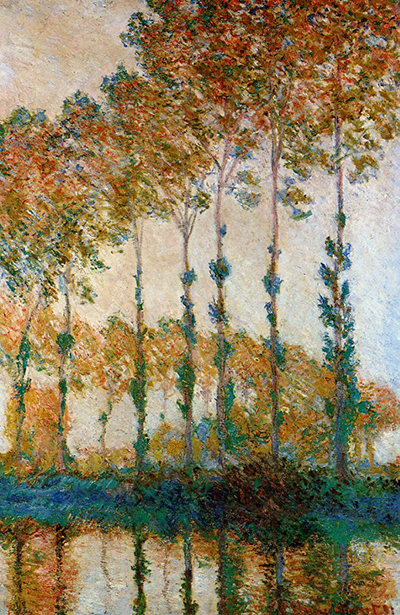
Hokusai's repeated views of Mount Fuji anticipate Monet's serial studies of haystacks, poplars, Rouen Cathedral and the Houses of Parliament. -
Flattened decorative space
Hokusai's landscapes often prioritise strong surface design over traditional Western depth, something Monet increasingly explored throughout his career. -
Asymmetry and cropped composition
Japanese print design offered Monet alternatives to rigid academic balance and centred perspective.
This suggests that Monet did not simply collect Japanese prints as fashionable objects. Instead, he seems to have been deeply attracted to particular compositional ideas within Hokusai's art: water, bridges, rhythm, seriality, decorative surface and unusual perspective. These became some of the defining characteristics of Monet's own mature painting.
FAQs
References
- Daniel Wildenstein, Gilles Neret, Monet: Catalogue Raisonne, Cologne: Wildenstein Institute and Taschen, 1996.
- Daniel Wildenstein, Monet: The Triumph of Impressionism, Cologne: Taschen, 2015.
- Jackie Wullschlager, Monet - The Restless Vision, Milton Keynes: Allen Lane, 2023.
- The Metropolitan Museum of Art, “Claude Monet: Garden at Sainte-Adresse,” The Met Collection, View source.
- Fondation Claude Monet, “Japanese Prints,” Maison et jardins de Claude Monet - Giverny, View source.
- Minneapolis Institute of Art, “Blossoming Connections: Hokusai's Influence on Monet Unveiled at Mia,” Minneapolis Institute of Art, View source.
- Museum of Fine Arts, Boston, “Hokusai: Inspiration and Influence,” MFA Boston, View source.
- InterMonet, “Japanese Woodblocks by Hokusai in Claude Monet's Collection,” InterMonet, View source.