 by Tom Gurney
Tom Gurney BSc (Hons) is an art history expert with over 20 years experience
Published on May 21, 2026 / Updated on May 22, 2026
Email: tomgurney1@gmail.com / Phone: +44 7429 011000
Claude Monet and Eugène Boudin
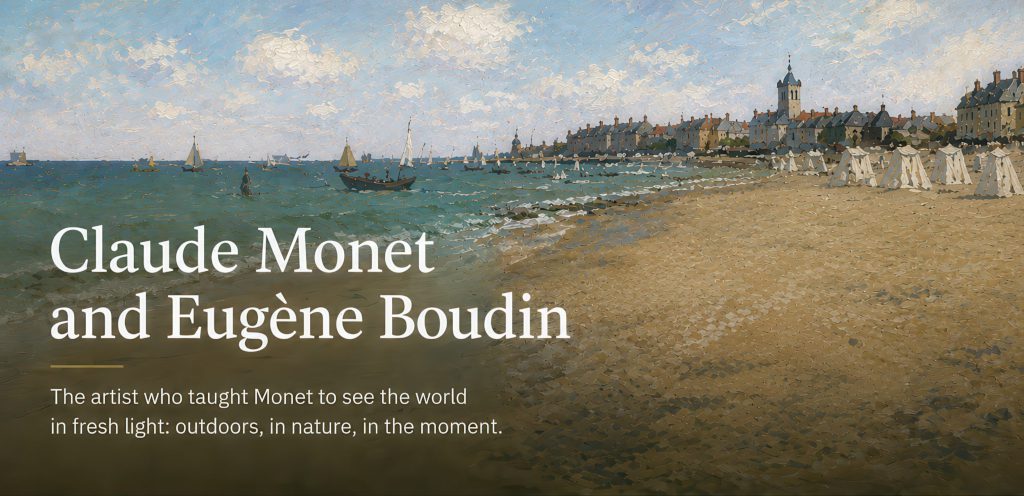
Eugène Boudin played a decisive role in the artistic development of Claude Monet. Long before Impressionism emerged in Paris, Boudin encouraged the young Monet to leave the studio behind and paint directly from nature. Their relationship helped shape Monet's lifelong fascination with atmosphere, skies, coastal light and outdoor painting.
Meeting in Normandy during the late 1850s, Boudin introduced Monet to plein-air methods that were still unconventional at the time. Rather than constructing landscapes from memory inside the studio, Boudin worked outdoors, rapidly observing changing weather and light conditions. Monet later acknowledged that these experiences fundamentally transformed his understanding of painting.
This page explores how Boudin influenced Monet's technique, how their paintings compare, and why their artistic relationship became one of the most important foundations of Impressionism.
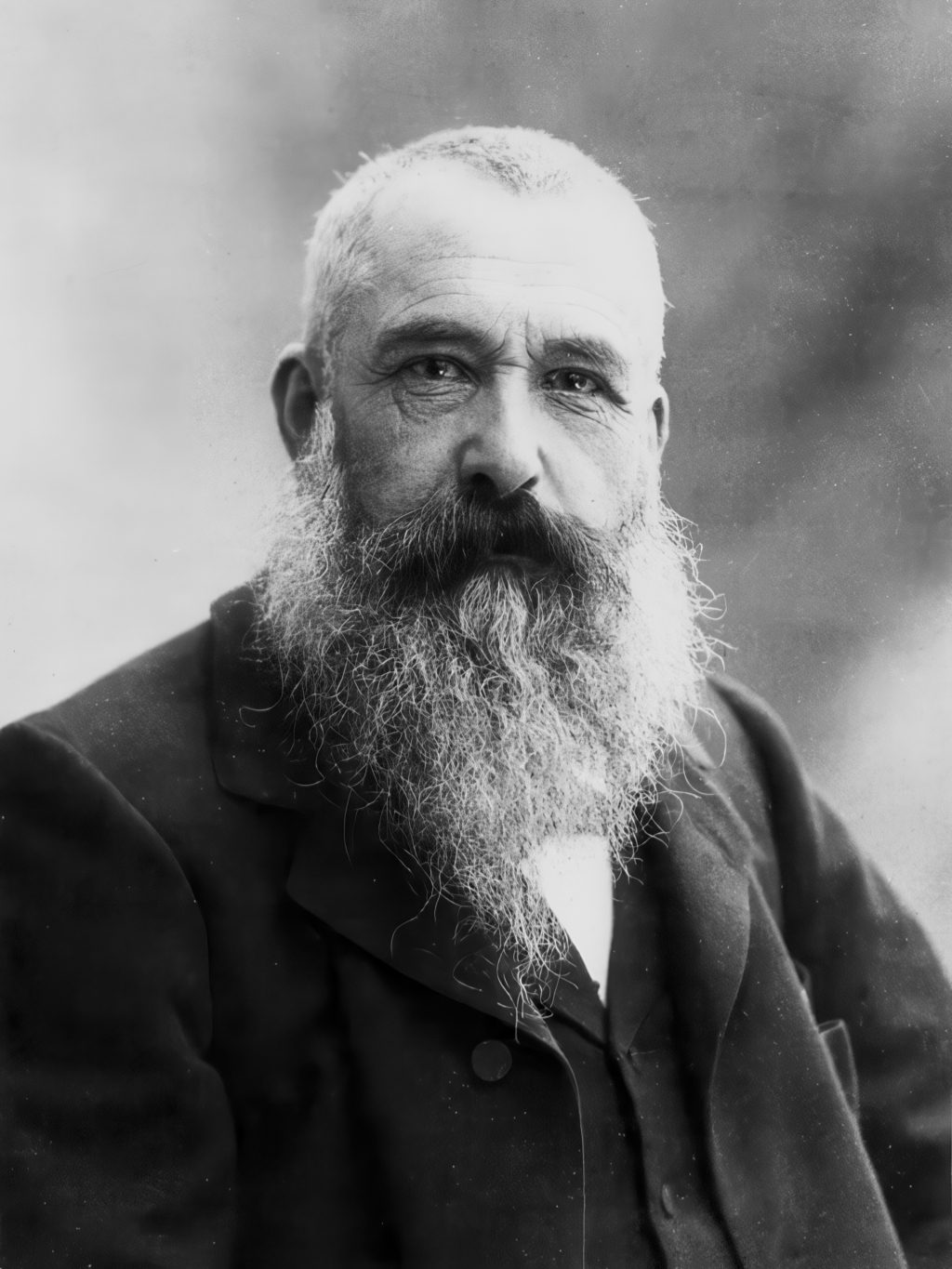
If I became a painter, it is entirely due to Eugène Boudin.
- Artists Claude Monet · Eugène Boudin
- First Meeting Le Havre, late 1850s
- Key Influence Plein-air painting
- Main Subjects Normandy coast · skies · beaches · atmosphere
- Shared Locations Le Havre · Honfleur · Trouville · Normandy
- Artistic Connection Outdoor observation and atmospheric light
- Historical Importance Foundation of Impressionism
Table of Contents
- How Claude Monet Met Eugène Boudin
- Monet Before Boudin
- Boudin Introduces Monet to Plein-Air Painting
- Painting the Normandy Coast Together
- Boudin and Monet Compared
- Timeline of Monet and Boudin
- What Monet Learned From Boudin
- Boudin's Influence on Impressionism
How Claude Monet Met Eugène Boudin
Claude Monet first met Eugène Boudin in Le Havre during the late 1850s, when Monet was still a teenager known mainly for his caricature drawings. [2] At the time, Monet had little interest in landscape painting and earned small amounts of money by selling humorous portraits of local figures.
Boudin, already an established painter of Normandy coastal scenes, recognised potential in the young artist. [10] Rather than encouraging studio practice or academic training, Boudin introduced Monet to the idea of painting directly outdoors from nature itself. [1]
This encounter became one of the defining turning points in Monet's artistic life. Without Boudin's intervention, Monet may never have developed the observational methods that later helped shape Impressionism. [8]
Monet Before Boudin
Before meeting Boudin, Monet's artistic ambitions were still uncertain. He enjoyed drawing caricatures and local sketches in Le Havre, but had not yet developed a serious approach to landscape painting. [13]
Academic painting in France during this period was still heavily based around studio work, historical subjects and carefully finished surfaces. [6] Outdoor painting existed, but was often treated merely as preparation for larger studio compositions.
Boudin offered Monet something radically different: direct observation of changing skies, shifting weather and natural light painted rapidly outdoors. [5]
Boudin Introduces Monet to Plein-Air Painting
Eugène Boudin frequently worked outdoors along the Normandy coast, producing small oil studies that captured changing atmospheric conditions. [3] He invited Monet to accompany him on sketching trips around Le Havre, Honfleur and nearby beaches.
At first, Monet resisted. He later admitted that he found Boudin's insistence on outdoor observation difficult to appreciate. [1] Gradually, however, he began to understand the freedom and immediacy of painting directly from nature.
These early plein-air experiences laid the foundations for Monet's lifelong fascination with atmosphere, reflections, clouds and temporary effects of light. [9]
Painting the Normandy Coast Together
Boudin and Monet shared a deep interest in the Normandy coastline. Beaches, harbours, skies and changing weather became central subjects for both artists during the 1860s. [12]
Where traditional landscape painters often focused on dramatic compositions or historical narratives, Boudin concentrated on atmosphere itself. His beach scenes and sky studies treated weather and light as worthy subjects in their own right. [11]
Monet absorbed many of these ideas and later expanded them into the broader Impressionist project. Paintings such as Impression, Sunrise, the Normandy coastal scenes and later London fog paintings all reveal traces of Boudin's early lessons in atmospheric observation. [4]
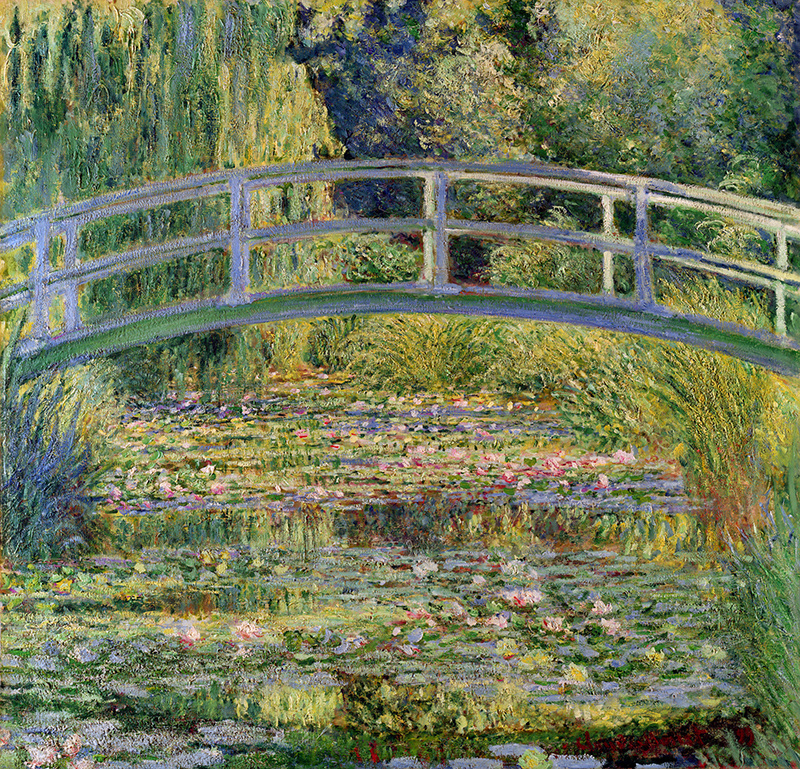
Even in Monet's final Water Lilies paintings, the emphasis on light, air and shifting visual sensation can still be connected back to the outdoor methods first encouraged by Boudin in Normandy. [8]
How did Eugène Boudin's coastal painting help shape Claude Monet's Impressionism? These five visual comparisons show the relationship clearly: skies, beaches, harbours, reflections and open-air observation.
Boudin and MONET Compared
Boudin did not simply give Monet a subject; he helped give him a way of seeing. By comparing their skies, beach scenes, harbour views and coastal effects, we can see how Monet transformed Boudin's lessons in plein-air observation into the more radical language of Impressionism.
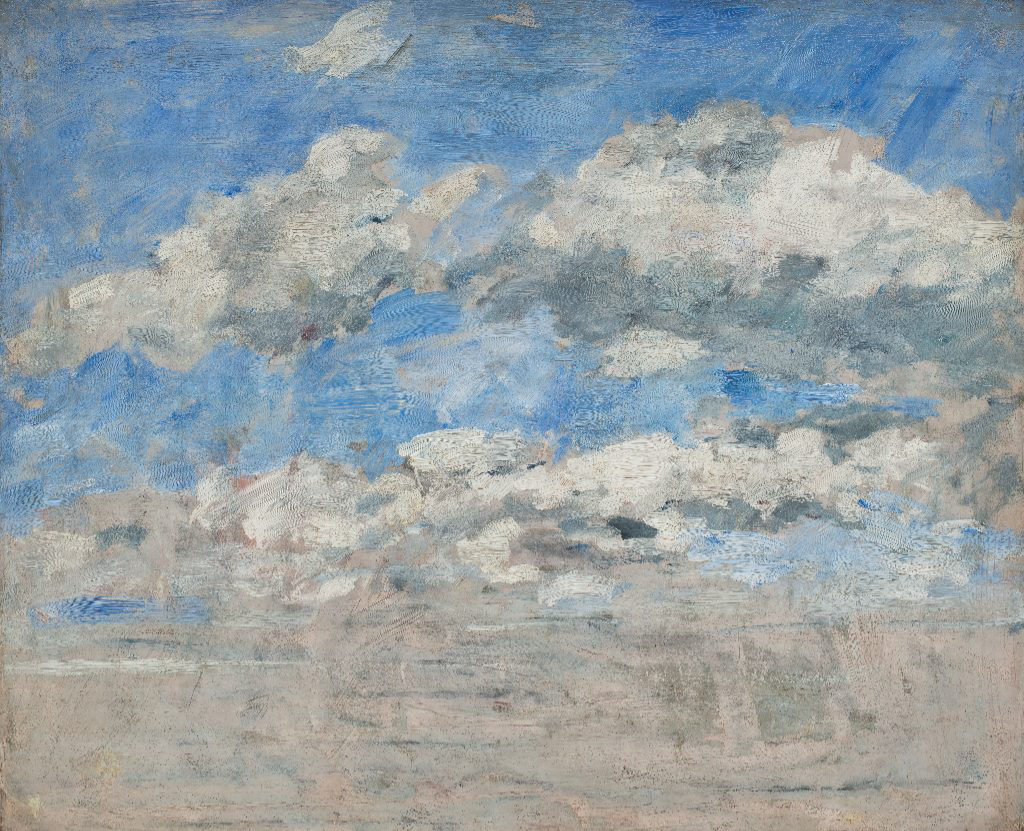
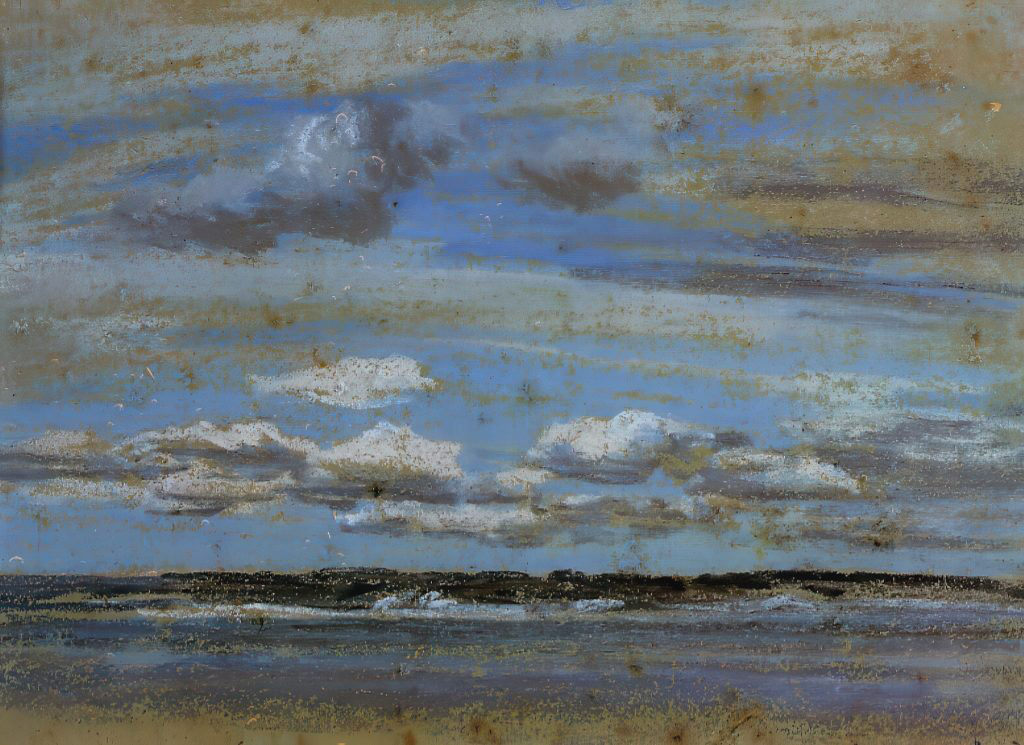
Boudin: Normandy Skies
Boudin was celebrated for his skies, often giving clouds and weather more visual importance than buildings or figures. His coastal views show atmosphere as a living subject, constantly shifting above the beach or harbour.
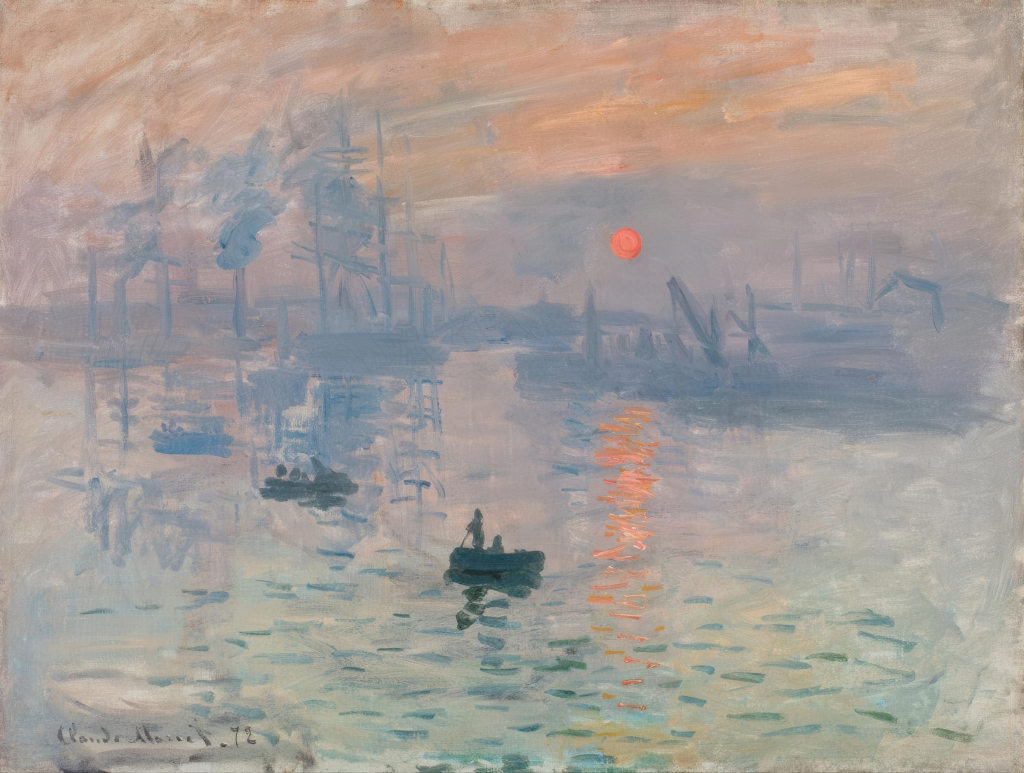
Monet: Sky as Impression
Monet took Boudin's concern with skies further, using clouds, mist and light as active forces within the whole painting. In works such as Impression, Sunrise, atmosphere becomes almost inseparable from colour and perception.
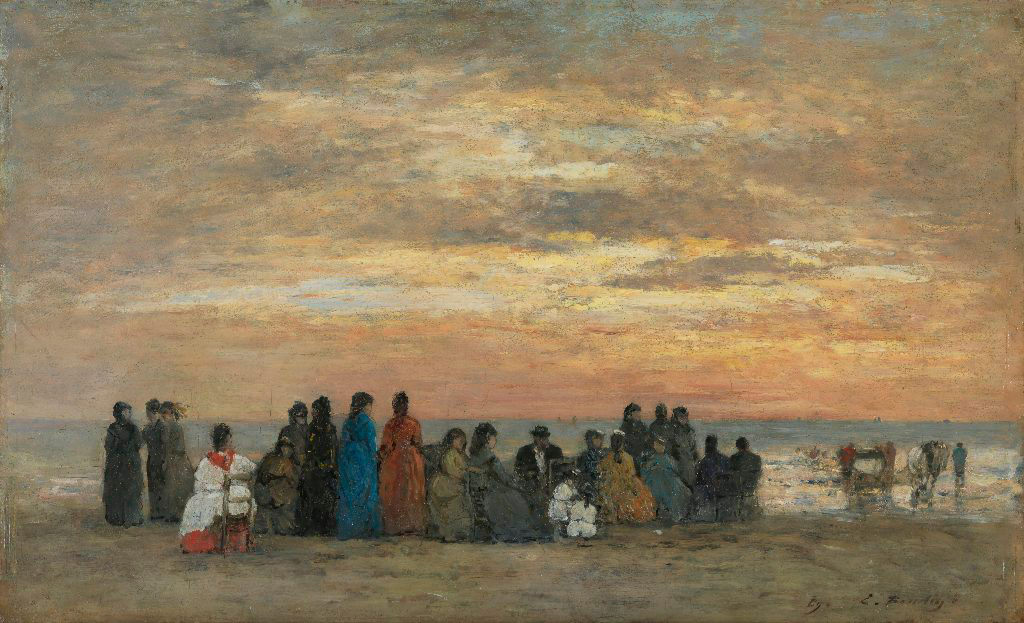
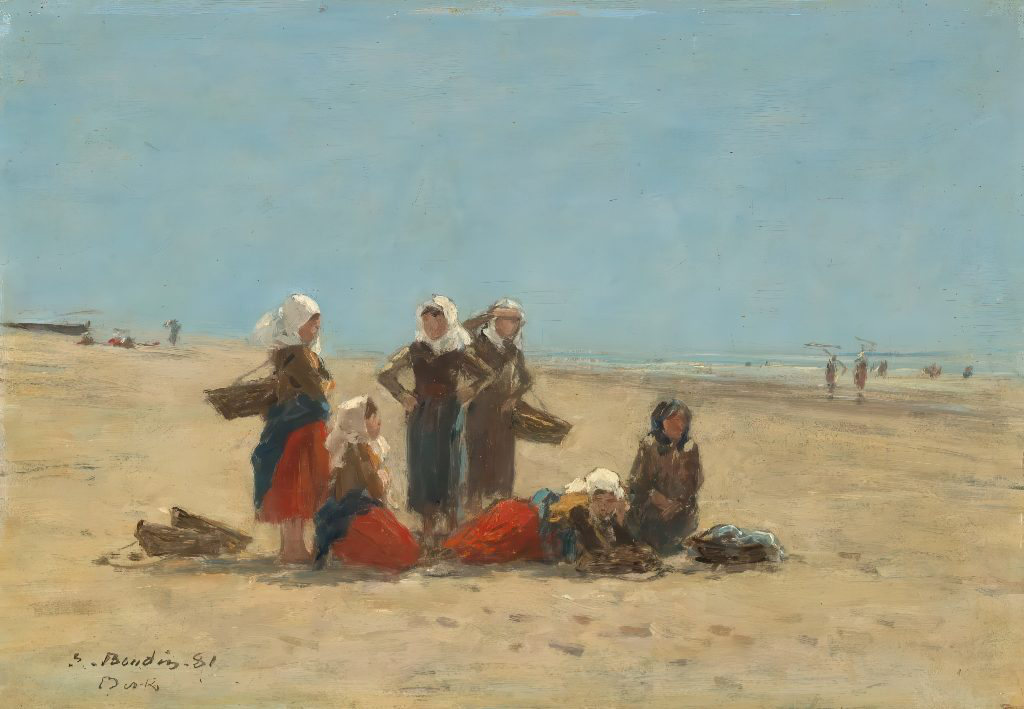
Boudin: Beach Scenes
Boudin's beach paintings often combine fashionable modern leisure with wide skies and open coastal space. Figures are present, but they are absorbed into a broader environment of wind, cloud, sand and sea air.
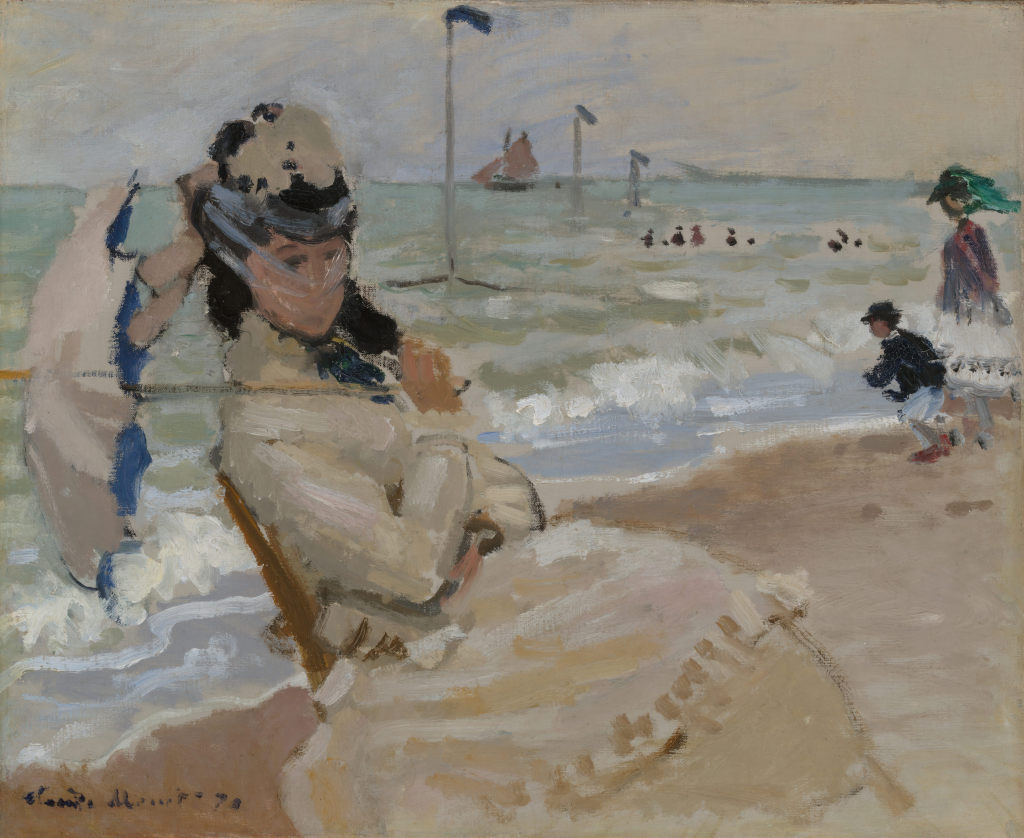
Monet: Beach and Family Life
Monet's beach paintings build on Boudin's modern coastal subjects but push further into immediacy. His figures feel less posed and more fleeting, caught within temporary light, moving air and the social world of the Normandy coast.
Boudin: Harbour Views
Boudin frequently painted harbours, boats and quays along the Normandy coast. These scenes balance structure and atmosphere: masts, sails and buildings are visible, but weather and light soften every form.
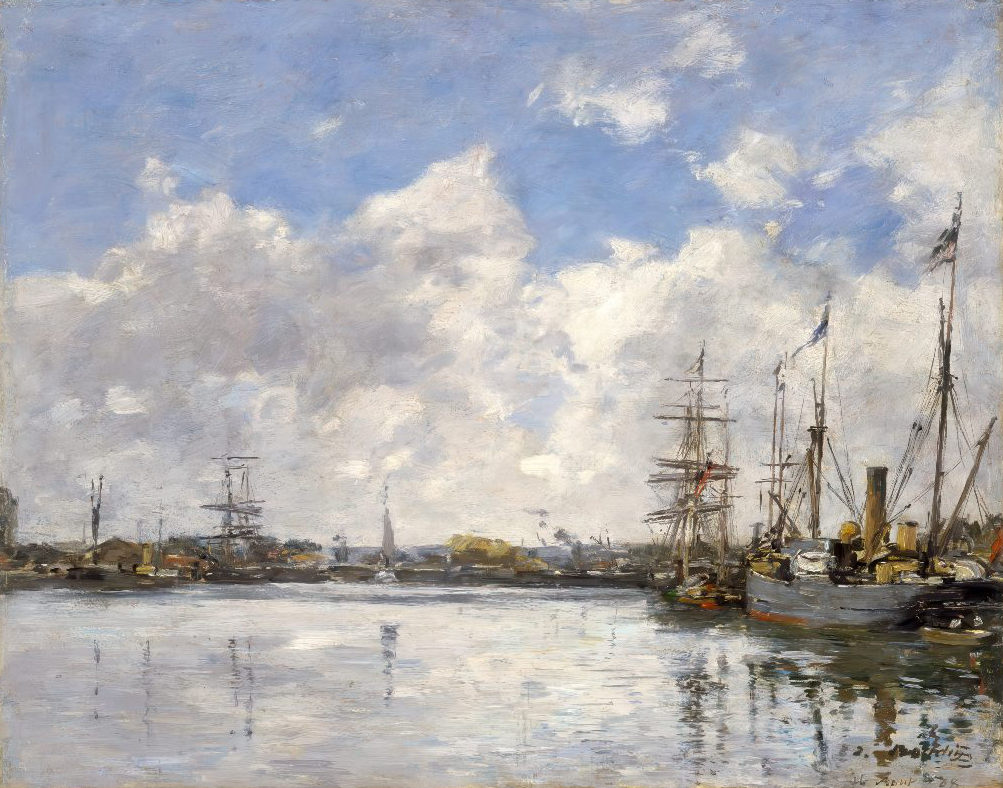
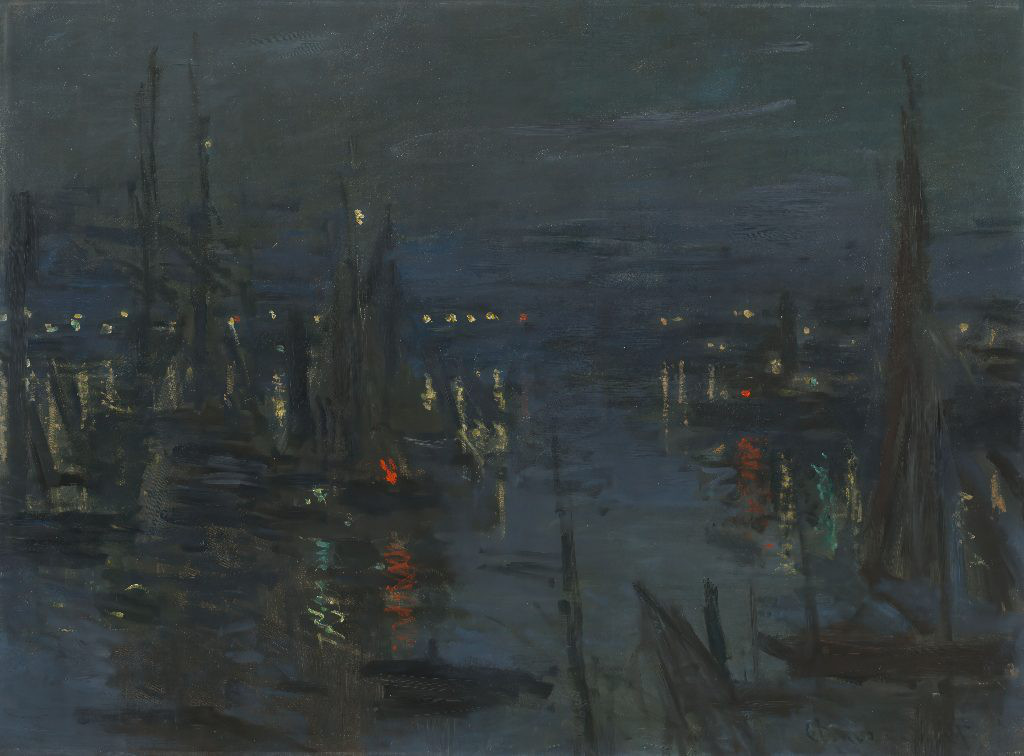
Monet: Harbour Atmosphere
Monet transformed the harbour subject into a field of colour, mist and reflection.
Boudin: Reflections and Wet Sand
Boudin understood how coastal surfaces reflect light. Wet sand, shallow water and harbour basins allowed him to blur the boundary between sky and ground, giving ordinary beach scenes a shimmering atmospheric quality.
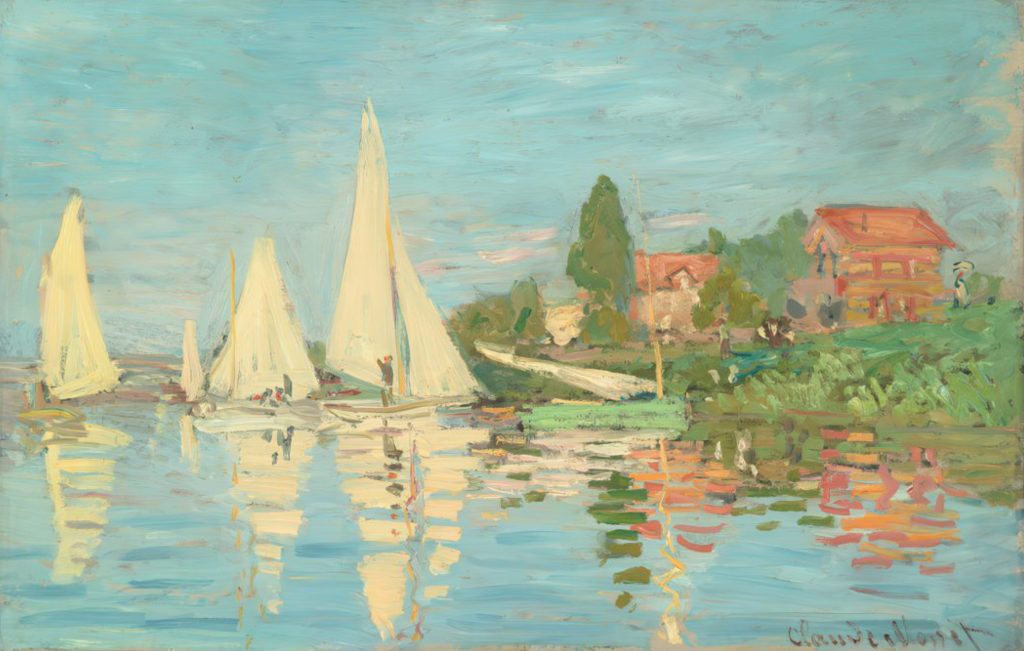
Monet: Reflections on Water
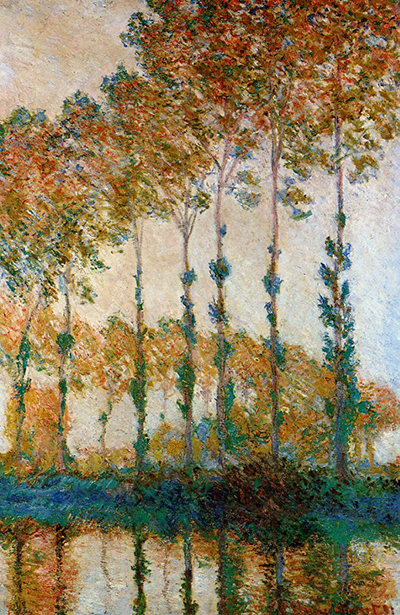
Monet expanded this interest in reflection throughout his career. From Argenteuil to London and Giverny, water became one of his most important visual tools, dissolving solid forms into colour, light and movement.
Boudin: Direct Observation
Boudin's small outdoor oil studies helped make direct observation central to modern landscape painting. Their freshness lies in the sense that the artist is responding immediately to weather, light and place.
Monet: From Observation to Impressionism
Monet converted Boudin's lesson in outdoor observation into a lifelong method. Whether painting the sea, a river, a garden or a city in fog, he used direct perception as the foundation for a new modern art.

Timeline of Monet and Boudin
Claude Monet often described Eugène Boudin as one of the most important influences on his early artistic development. Their relationship stretched from Monet's teenage years in Le Havre through to Monet's later international success, with Boudin helping introduce the young painter to outdoor painting, coastal light and direct observation from nature.
This timeline follows the major stages in their artistic relationship, from their first meeting in Normandy during the 1850s to Monet's later public tributes to his mentor.
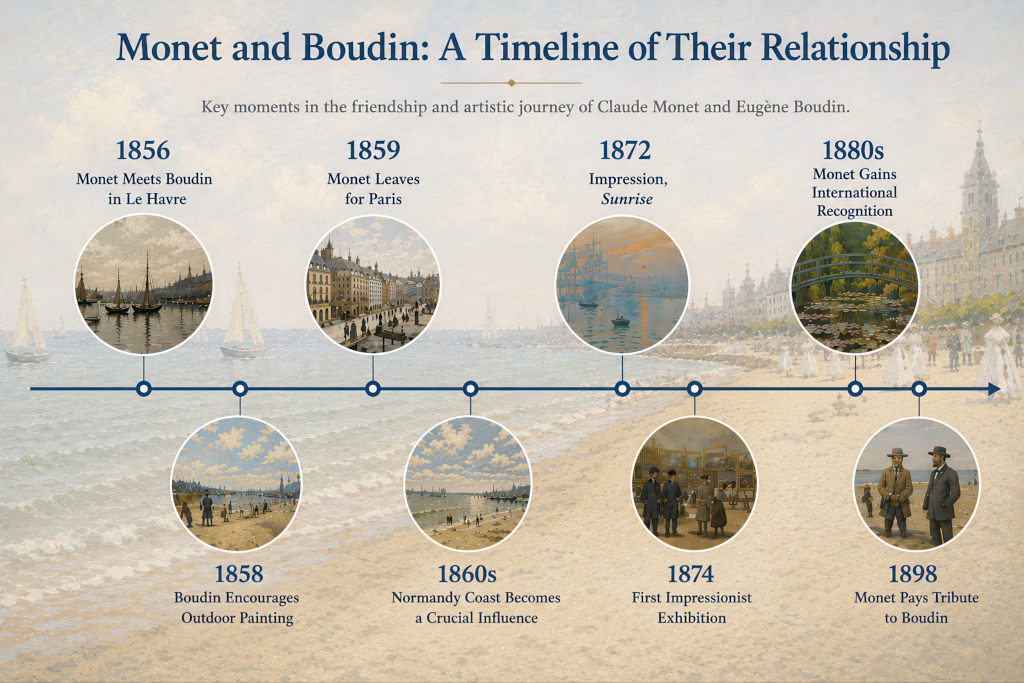
Timeline of the relationship between Claude Monet and Eugène Boudin, tracing the artistic influence that helped shape the foundations of Impressionism.
What Monet Learned From Boudin
Eugène Boudin influenced Claude Monet in ways that extended far beyond simple subject matter. He helped shape Monet's entire approach to painting, observation and atmosphere. Many of the techniques associated with Impressionism can be traced back to lessons Monet first encountered while painting alongside Boudin in Normandy. [8]
Painting Outdoors
Perhaps the most important lesson Boudin taught Monet was the value of painting directly outdoors. During the 1850s, many French artists still treated outdoor sketches merely as preparation for larger studio paintings. Boudin instead encouraged direct engagement with nature itself. [2]
Monet later recalled how Boudin persuaded him to work outside among the beaches, skies and changing weather of Normandy. These early plein-air experiences became fundamental to Monet's later Impressionist method. [1]
Observing Skies and Atmosphere
Boudin was especially admired for his skies. His Normandy beach scenes often dedicate large areas of the canvas to clouds, changing weather and atmospheric effects. Monet absorbed this fascination with the sky and later developed it further in paintings of the Seine, London fog and the Normandy coast. [4]
The idea that atmosphere itself could become the true subject of a painting became central to Monet's mature work. Rather than treating skies as backgrounds, both artists understood them as living, changing elements that shaped the entire visual experience.
Fast and Responsive Brushwork
Outdoor painting required speed. Light conditions could change within minutes, especially along the coast. Boudin therefore worked with rapid, economical brushstrokes designed to capture temporary effects before they disappeared. [5]
Monet gradually adopted a similarly responsive technique. His later Impressionist brushwork became even looser and more fragmented, but the underlying principle remained the same: paint directly from visual experience rather than carefully polished studio formulas.
Capturing Weather and Temporary Effects
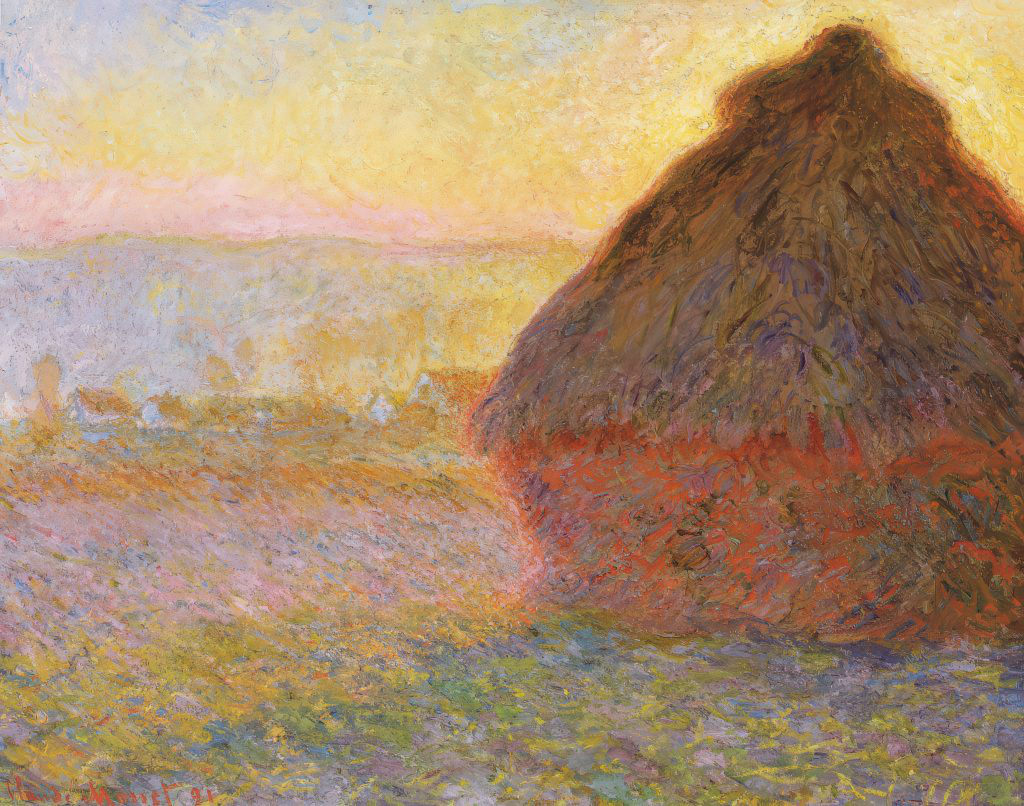
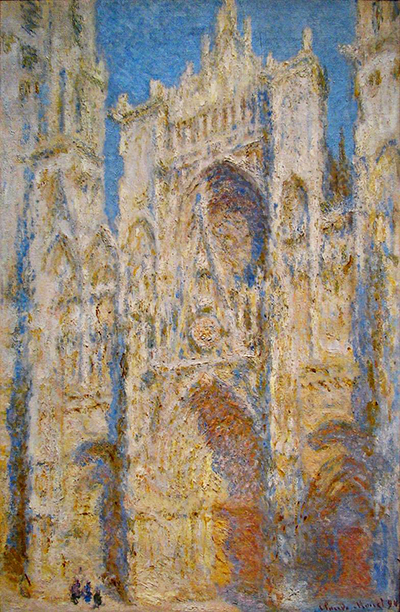
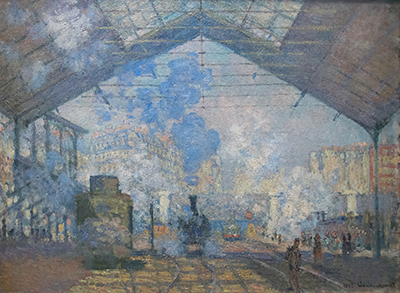
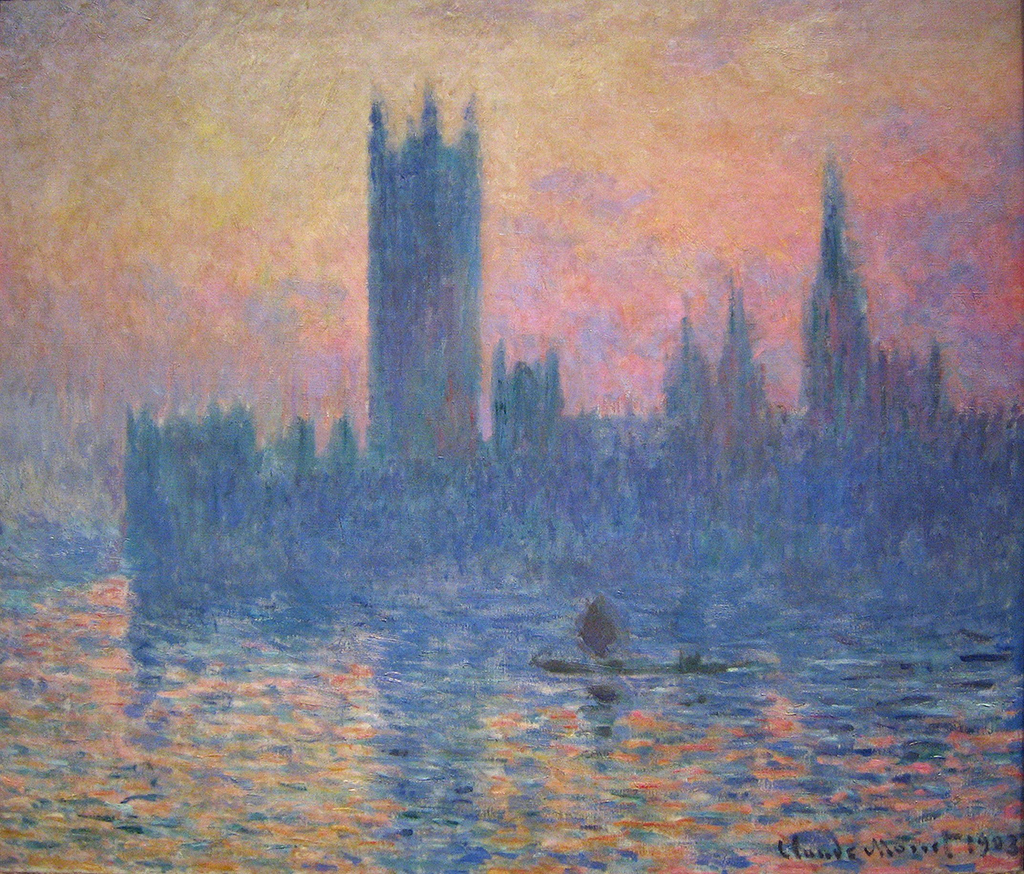
Boudin taught Monet to observe the instability of nature. Clouds moved, reflections shifted and coastal weather changed rapidly across the Normandy shoreline. These temporary effects later became central to Monet's serial paintings, including Haystacks, Rouen Cathedral and Houses of Parliament. [9]
Rather than painting fixed objects alone, Monet increasingly painted changing conditions of perception itself.
Working Directly From Nature
Boudin encouraged direct visual observation instead of academic idealisation. This approach aligned Monet more closely with modern life and contemporary experience. Boats, beaches, rivers, gardens and ordinary landscapes became worthy artistic subjects without needing mythological or historical narratives. [6]
This shift helped prepare the way for the wider Impressionist movement during the 1870s.
Coastal Light and Reflections
The Normandy coast offered endlessly changing reflections across wet sand, water and harbour surfaces. Boudin showed Monet how light behaved differently depending on weather, moisture and atmosphere. [3]
These lessons remained visible throughout Monet's career, from the reflections of Argenteuil to the mirrored surfaces of the late Water Lilies.
Boudin's Influence on Impressionism
Although Eugène Boudin is not usually considered a central Impressionist painter in the same way as Monet or Renoir, his artistic methods helped lay important foundations for the movement. [10]
Long before the first Impressionist exhibition of 1874, Boudin was already painting outdoors, studying temporary weather conditions and treating atmosphere as a serious artistic subject. His beach scenes, harbour views and sky studies anticipated many of the concerns later associated with Impressionism.
Sky Studies and Atmospheric Observation
Boudin became especially famous for his cloud studies and atmospheric coastal paintings. The French writer Camille Corot reportedly described him as the “king of the skies”, reflecting widespread admiration for his ability to capture weather and light. [11]
This concentration on atmosphere strongly influenced Monet and also aligned with broader developments within French landscape painting during the mid-19th century.
Beach Scenes and Modern Life
Boudin frequently painted middle-class leisure scenes along the Normandy coast, particularly around Trouville and Deauville. These modern beach subjects later became important themes for Impressionist painters interested in contemporary life rather than historical narrative. [12]
Artists such as Monet and Berthe Morisot would later expand this interest in modern leisure, gardens and outdoor recreation.
Outdoor Oil Sketches
Boudin's small oil sketches painted directly outdoors helped normalise plein-air methods for younger artists. Rather than using sketches only as references for studio paintings, Boudin increasingly treated outdoor studies as complete works in themselves. [7]
This approach became central to Impressionism, where immediacy and direct observation often mattered more than polished academic finish.
Boudin, Jongkind and the Origins of Impressionism
Boudin was not the only important precursor to Impressionism. Artists such as Johan Barthold Jongkind, Charles-François Daubigny and Camille Corot also encouraged freer landscape methods and atmospheric observation. [13]
However, Boudin's relationship with Monet was especially significant because it directly shaped the future leader of Impressionism. Monet later acknowledged that Boudin had opened his eyes to outdoor painting and visual sensation itself. [1]
Through Monet, Boudin's influence ultimately extended into the wider history of modern art. Many of the qualities associated with Impressionism — immediacy, atmosphere, changing light and direct observation — can be traced back to the Normandy beaches where the two artists first painted together.
FAQs
References
- Claude Monet quoted in: Gustave Geffroy, Claude Monet: Sa Vie, Son Temps, Son Œuvre, Paris, 1922
- John House, Monet: Nature Into Art, Yale University Press, 1986
- Musée Eugène Boudin, Honfleur — collections and artist biography
- National Gallery London — essays on Monet and atmospheric painting
- André Dombrowski, Monet's Minutes, Yale University Press, 2023
- Robert Herbert, Impressionism: Art, Leisure and Parisian Society, Yale University Press
- The Met — essays on plein-air painting and early Impressionism
- Paul Hayes Tucker, Claude Monet: Life and Art, Yale University Press
- Marianne Mathieu, Monet: The Triumph of Impressionism
- Musée d'Orsay — Eugène Boudin artist overview
- Camille Corot quoted in discussions of Boudin's cloud studies and Normandy skies
- Art Institute of Chicago — Boudin beach scenes and modern leisure subjects
- Sylvie Patin, Monet and the Birth of Impressionism