by Tom Gurney
Tom Gurney BSc (Hons) is an art history expert with over 20 years experience
Published on May 20, 2026 / Updated on May 21, 2026
Email: tomgurney1@gmail.com / Phone: +44 7429 011000
Claude Monet's Artistic Influences
Claude Monet did not develop Impressionism in isolation. His art was shaped by teachers, friends, rivals, older landscape painters and later artists who responded to his work. This section explores the artists who influenced Monet, worked alongside him, or helped extend his ideas into modern art.
From Eugène Boudin's lessons in painting outdoors to Turner's atmospheric London views, Monet absorbed ideas from many sources before transforming them into his own language of light, colour and perception.
These pages focus not on general biographies, but on artistic relationships: how each painter helped shape Monet's development, how they compared with him, and how their work connects to Monet's major subjects, places and series.
- Section Focus Artists who influenced or interacted with Monet
- Key Themes Plein-air painting, light, atmosphere, colour, modern life
- Major Periods Early training, Impressionism, late legacy
- Related Sections Places, Paintings, Technique, People
Artists Who Influenced Claude Monet
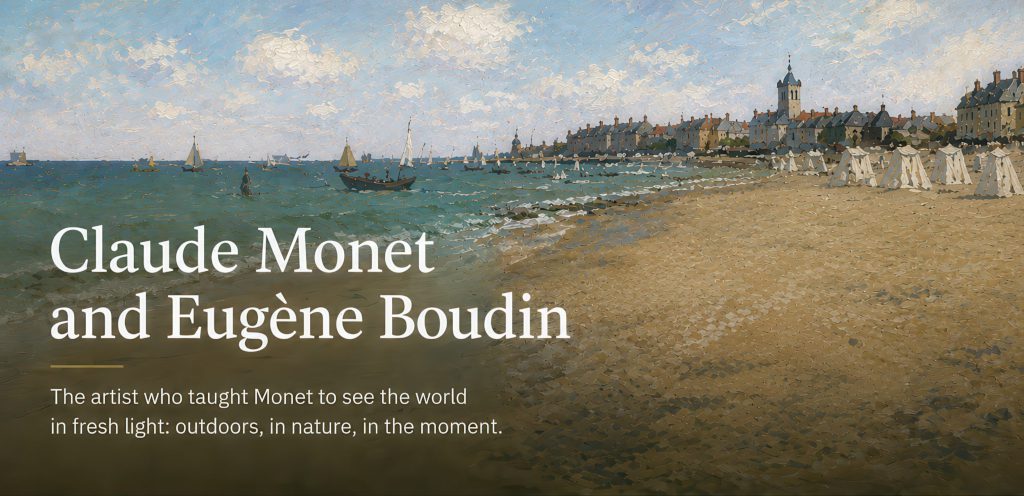
Eugène Boudin
Boudin encouraged the young Monet to paint outdoors and study skies, beaches and coastal light directly from nature.
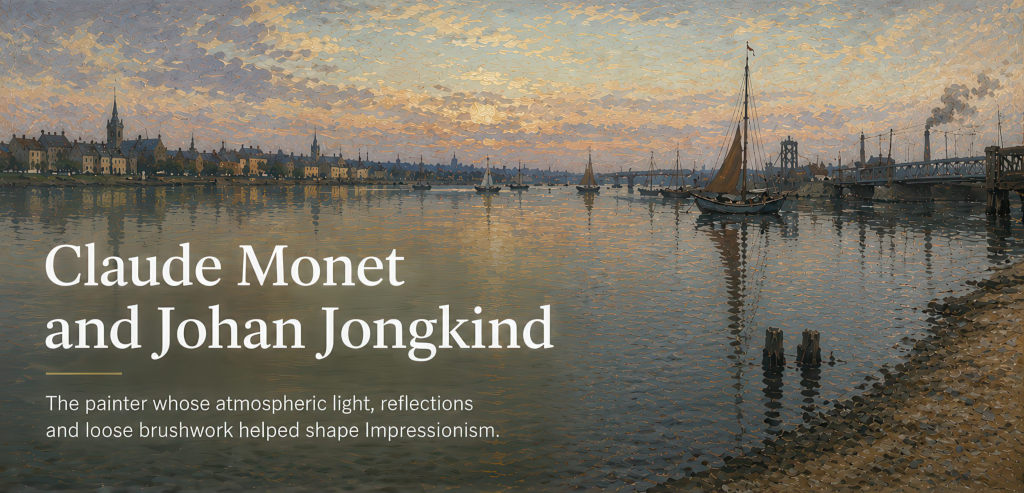
Johan Jongkind
Jongkind helped Monet understand broken light, lively surfaces and atmospheric landscape painting.
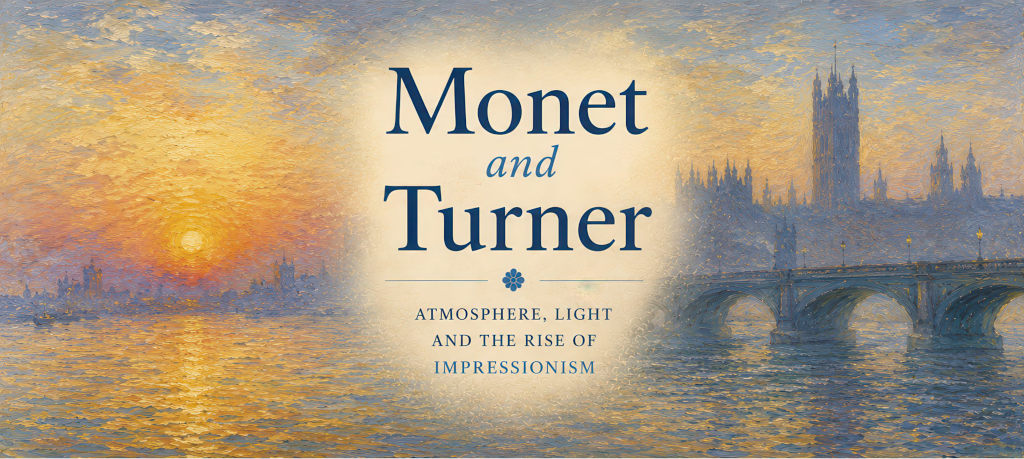
JMW Turner
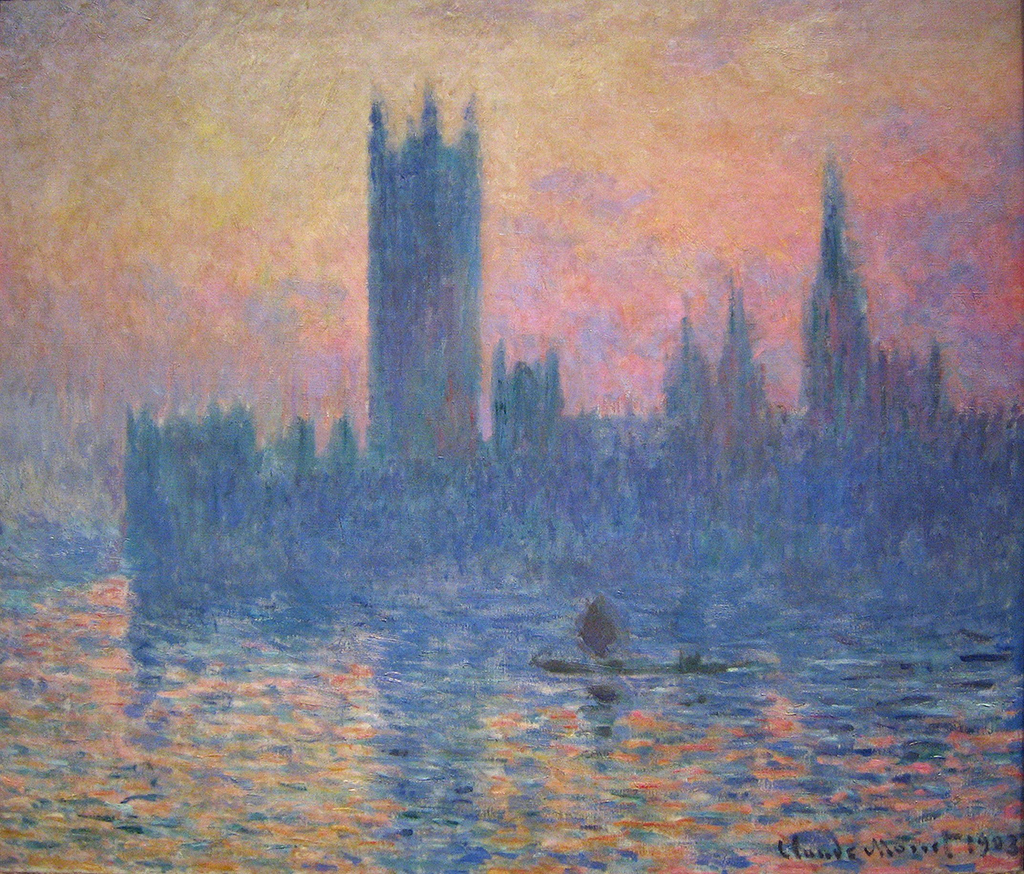
Turner's treatment of fog, light and dissolving architecture became especially relevant to Monet's London paintings.
Monet's Impressionist Friends and Rivals
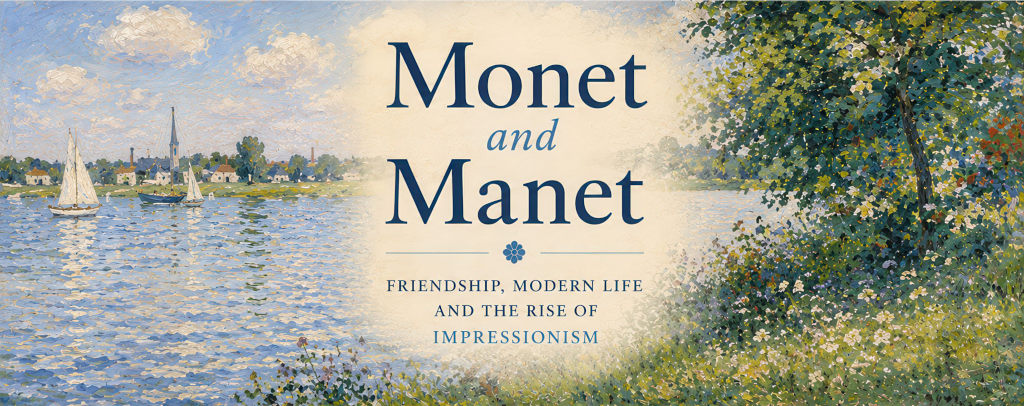
Édouard Manet
Manet helped define modern painting, while Monet pushed outdoor colour and atmosphere further into Impressionism.
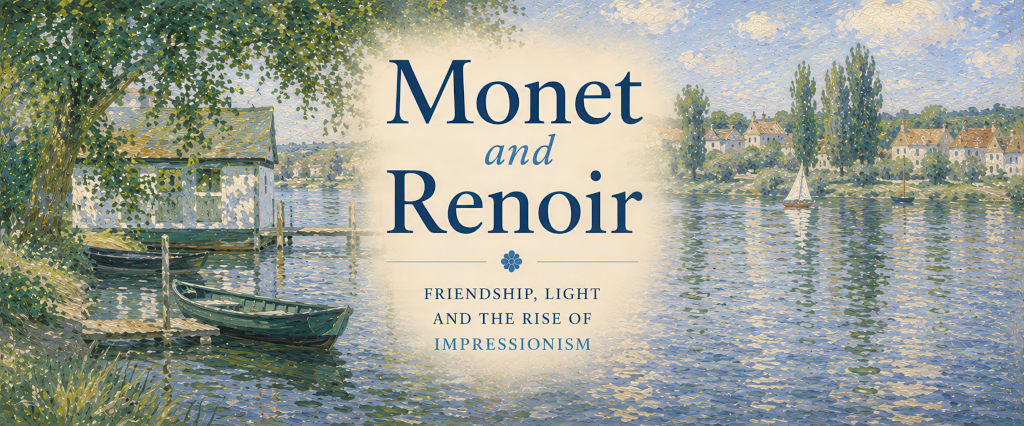
Pierre-Auguste Renoir
Renoir and Monet painted together at key moments, including La Grenouillère and Argenteuil.
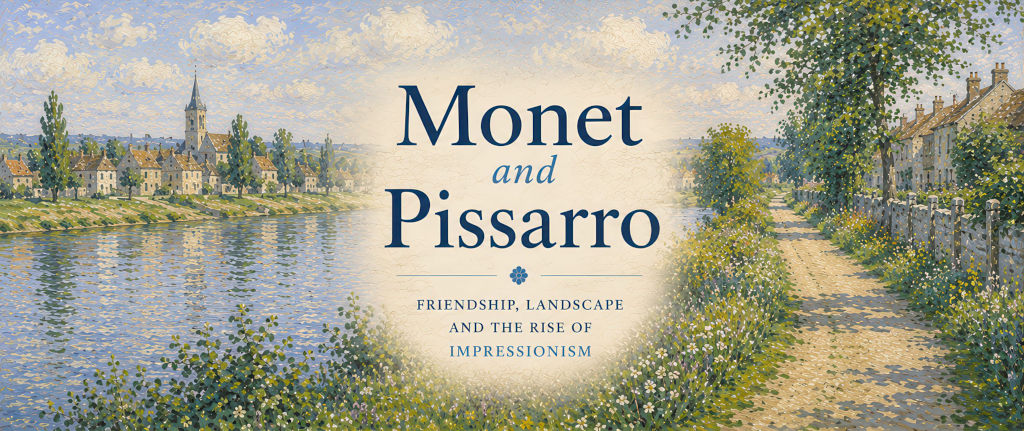
Camille Pissarro
Pissarro shared Monet's commitment to modern life, outdoor painting and the Impressionist exhibitions.
Japanese Influence on Monet
Among all the artistic influences on Claude Monet, few proved as transformative as Japanese art. During the second half of the nineteenth century, Japanese woodblock prints began arriving in Paris in large numbers following the reopening of trade between Japan and the West. These prints — known as ukiyo-e — introduced European artists to entirely different ways of organising space, colour and composition.
Monet became one of the great collectors of Japanese prints. He owned works by artists such as Utagawa Hiroshige, Katsushika Hokusai and Kitagawa Utamaro, many of which later hung in his house at Giverny. Their influence can be seen throughout Monet's paintings: unusual viewpoints, asymmetrical compositions, flattened colour areas, cropped forms, reflections and the growing emphasis on atmosphere over strict realism.
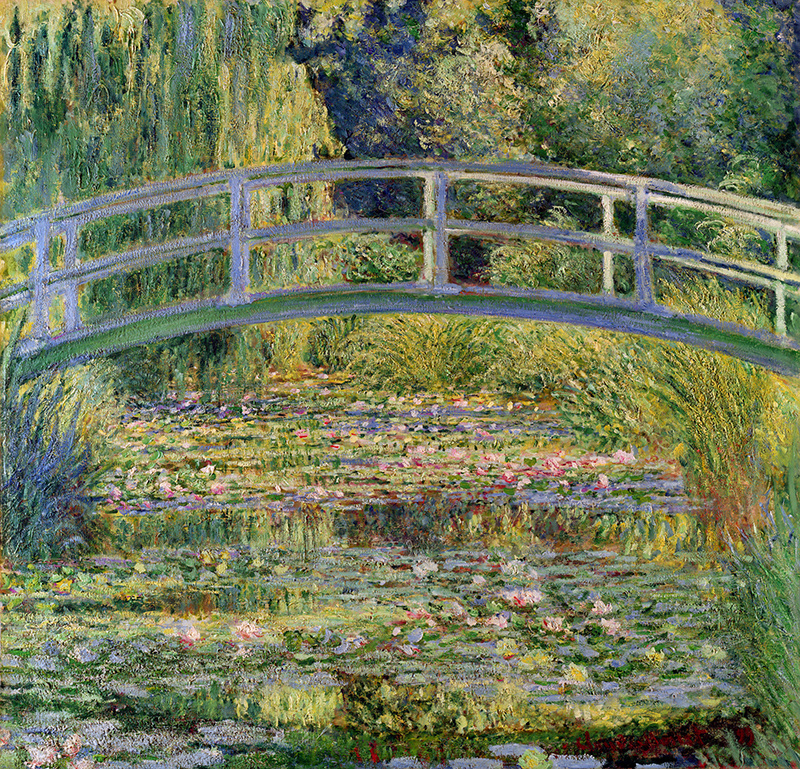
Japanese art also encouraged Monet to think differently about serial imagery and seasonal change. Hiroshige's bridge scenes, rainstorms and river landscapes anticipate many aspects of Monet's later work, particularly the Japanese Bridge, the Water Lilies and even aspects of his London and Venice paintings.
The connection went beyond painting alone. Monet designed parts of his garden at Giverny with Japanese aesthetics in mind, including the famous arched bridge and water garden. These elements transformed Giverny into a living extension of the artistic ideas he admired in Japanese prints.
Today, Monet's relationship with Japanese art is recognised as one of the defining cultural exchanges of nineteenth-century art history. The movement known as Japonism reshaped Impressionism, Post-Impressionism and eventually modern art itself.
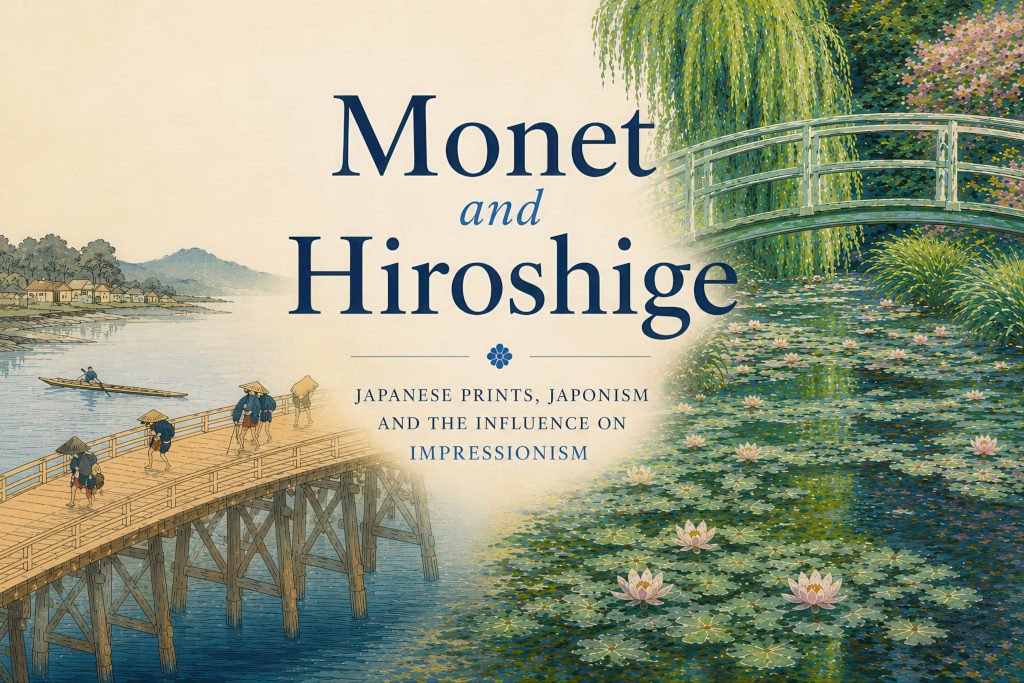
Hiroshige
Bridge compositions, rain scenes, seasonal atmosphere and unusual viewpoints.
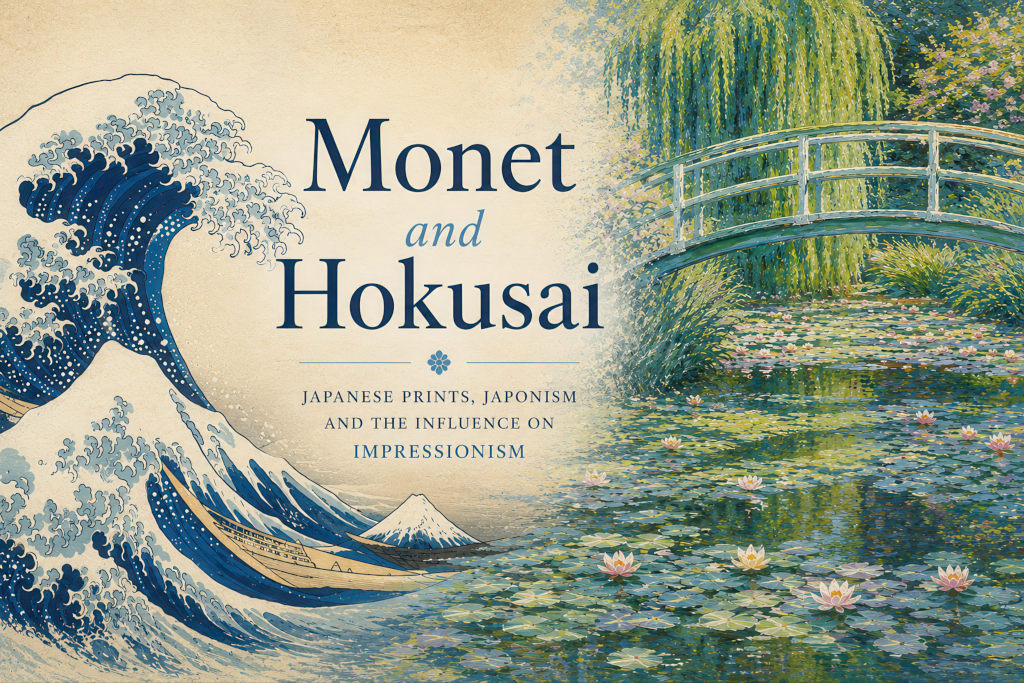
Hokusai
Serial imagery, waves, nature, atmosphere and the abstraction of landscape.