 by Tom Gurney
Tom Gurney BSc (Hons) is an art history expert with over 20 years experience
Published on October 6, 2016 / Updated on May 11, 2026
Email: tomgurney1@gmail.com / Phone: +44 7429 011000
Claude Monet in Argenteuil
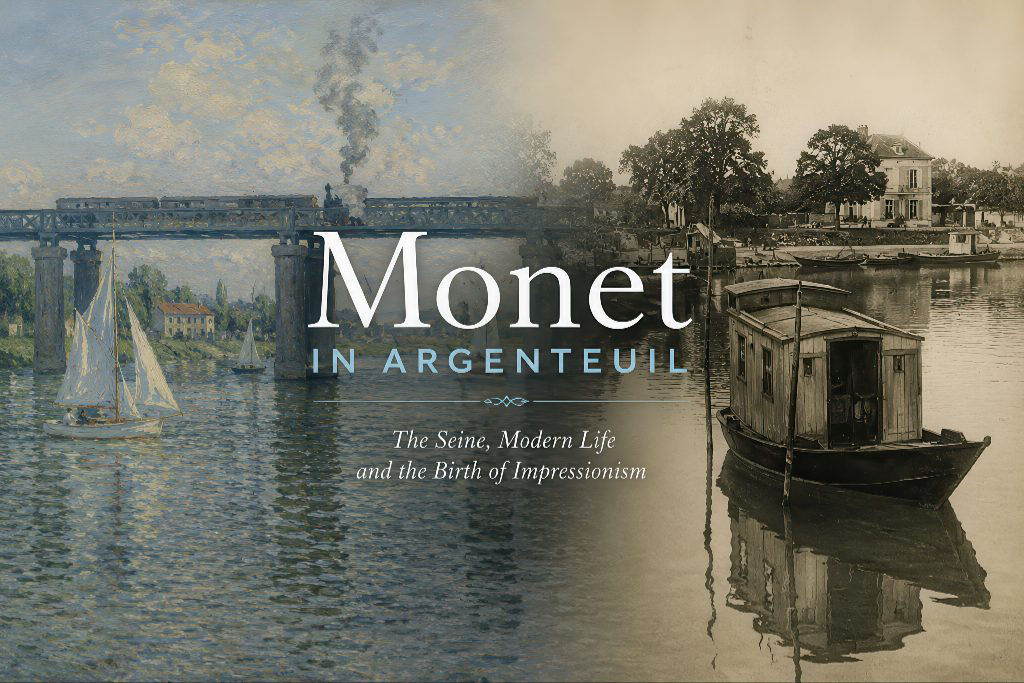
Between 1871 and 1878, Claude Monet lived in the riverside town of Argenteuil, just northwest of Paris.
During this time Monet painted more than 150 works depicting the River Seine, sailing boats, bridges, suburban gardens and the changing society in and around Paris at that time. The emerging style of Impressionism would be finetuned here, in what became one of the most productive and innovative periods of his career.
Argenteuil had become a popular leisure destination for Parisians and its position along a brend of the Seine ensured it could host a variety of activities for tourists from the capital. The expansion of railway lines enabled easy access to the river for boating, regattas and weekend excursions. Monet found in this modern suburban landscape a rich subject for painting: shimmering water, colourful sails, railway bridges and sunlight reflecting across the river.
Monet Moves to Argenteuil
Monet moved to Argenteuil in late 1871 after returning to France from London, where he had taken refuge during the Franco-Prussian War. Monet rented a modest house with a garden close to the banks of the Seine, and he shared this home with his wife Camille and son Jean, both of whom appear in some of his Argenteuil paintings.
Argenteuil provided Monet with open space, water and constantly changing light - which was perfect for his evolving Impressionist style. The Seine became the central motif in many of thees paintings, though he also captured his home life in others.
From early morning mist to the bright reflections of midday sunlight, Monet studied the shifting atmosphere of the river in a way that would become fundamental to the Impressionist approach.
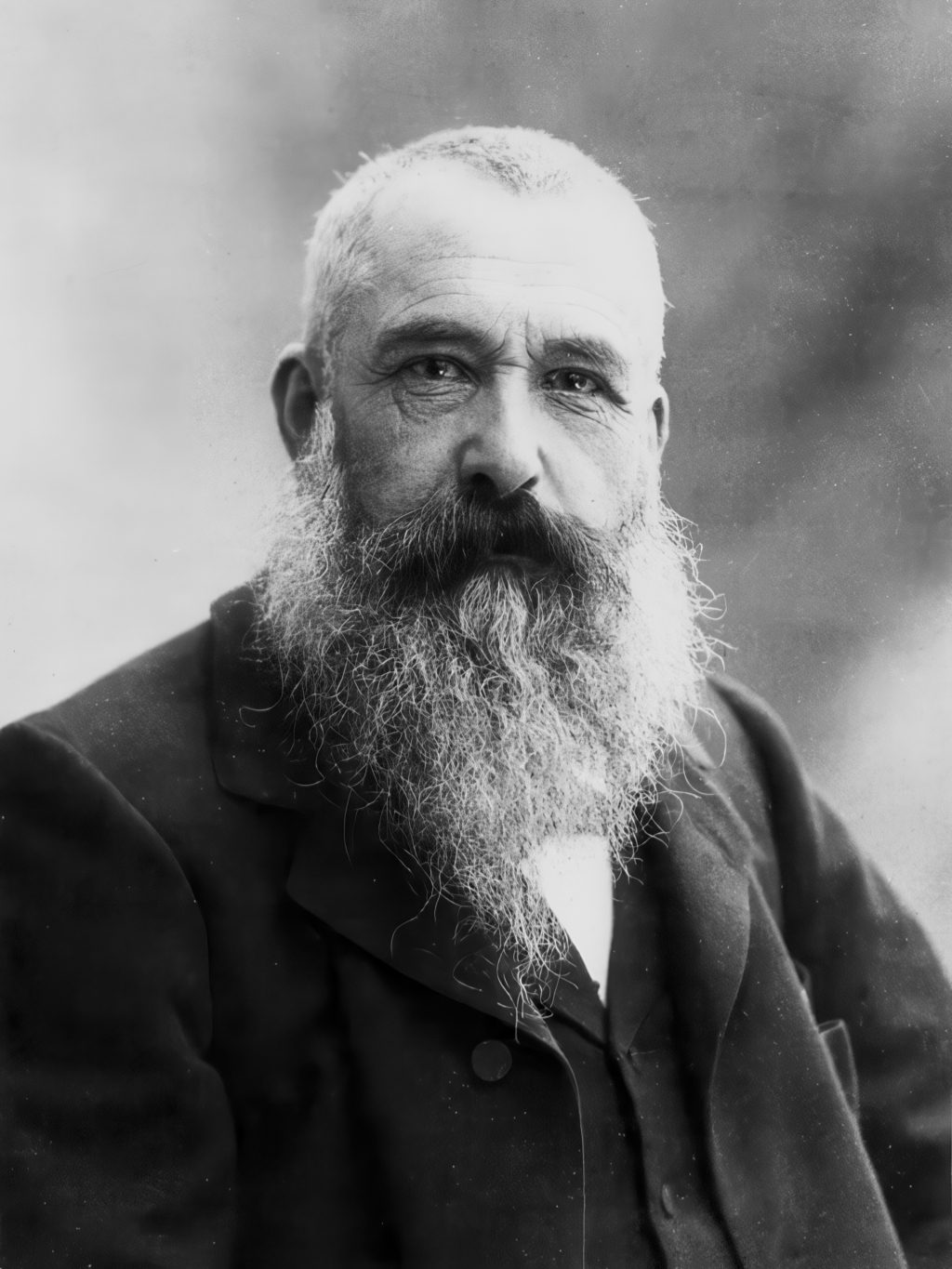
I want to paint the air in which the bridge, the house and the boat are to be found.
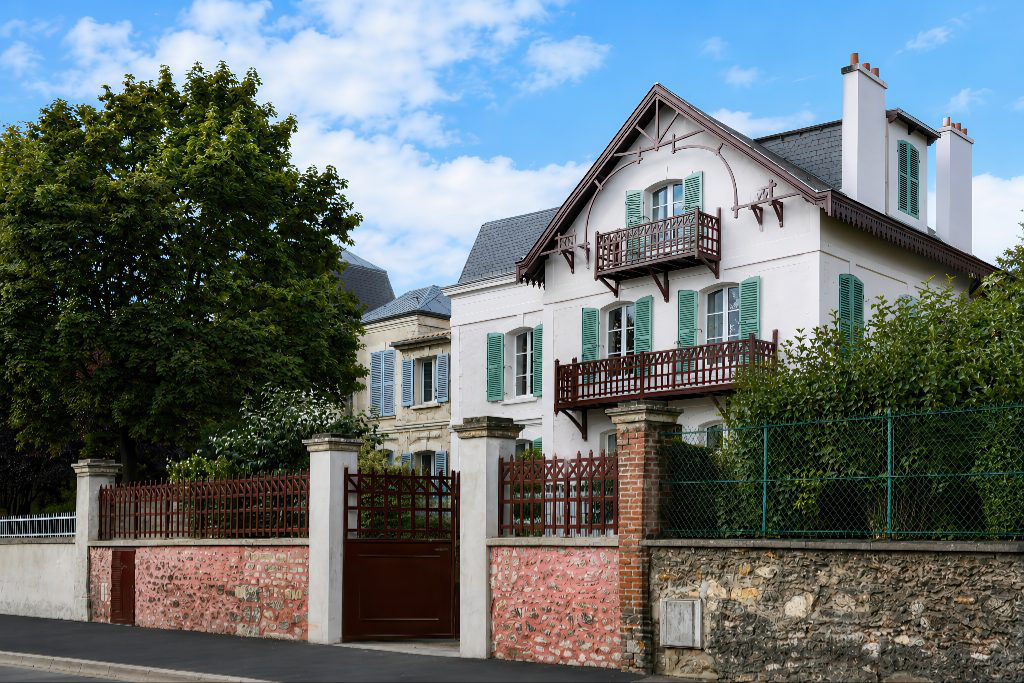
The restored house associated with Claude Monet in Argenteuil, where the artist lived during some of the most important years of early Impressionism in the 1870s. From here, Monet painted the Seine, railway bridges, regattas and suburban life that helped define the movement.
- Location: Argenteuil, Île-de-France, France
- Years Lived: 1871-1878
- Total Paintings: Approximately 150+
- Key Subjects: Seine River, bridges, regattas, gardens, railway bridge
- Most Famous Works: The Bridge at Argenteuil, Regatta at Argenteuil, Poppies
The Seine and Modern Leisure
During the 1870s Argenteuil frequently hosted regattas along the river and elegant yachts frequently appeared along the banks. Monet captured these leisure pursuits in paintings such as Regatta at Argenteuil. These were landscape paintings with modern features, including railways, bridges, and pleasure boats alongside quiet riverbanks and gardens.
The Bridges of Argenteuil
Many bridges in this region were destroyed in the Franco-Prussian War, but those that were rebuilt helped to symbolise the country's recovery. One of the most recognisable structures in Monet's Argenteuil paintings is the bridge that crossed the Seine near the town centre. Monet had also witnessed the frequent appearance of bridges in Japanese prints, and this may have encouraged him to include them in his Argenteuil period.
In works such as The Bridge at Argenteuil, the structure appears framed by sailing boats and reflections on the water. The crisp geometry of the bridge contrasts with the fluid brushstrokes used to depict the river and sky. This contrast between industrial modernity and natural light became a recurring theme in Monet's work during the 1870s. Water and architecture were both key focues of his work, with bridges able to bring the two together seamlessly.
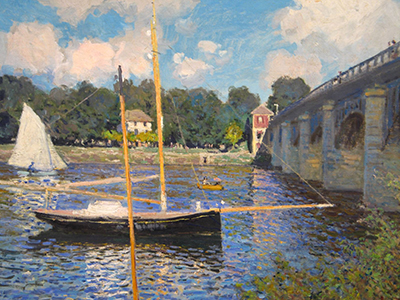
Claude Monet's Sailing Boat in Argenteuil captures the leisure culture of the Seine during the 1870s, when Argenteuil became a popular destination for boating and regattas. The quiet boat, reflected water and loose brushwork show how Monet turned everyday riverside life into a central subject of Impressionism.
The Floating Studio
Monet's connection with water was critical to his oeuvre, and he would go to extraordinary lengths in order to achieve just the right look for his work. This led to him constructing a small floating studio boat that allowed him to paint directly on the Seine, as well as offering alternative perspectives that would have been impossible from the bank.
From this movable platform he could observe the reflections of boats, clouds, and sunlight from the centre of the water rather than from the riverbank. It also enabled him to move from his home to a suitable spot as quickly as possible, first thing in the morning.
Discover more on Monet's Floating Studio in this detailed article which also includes several paintings of his unusual setup.
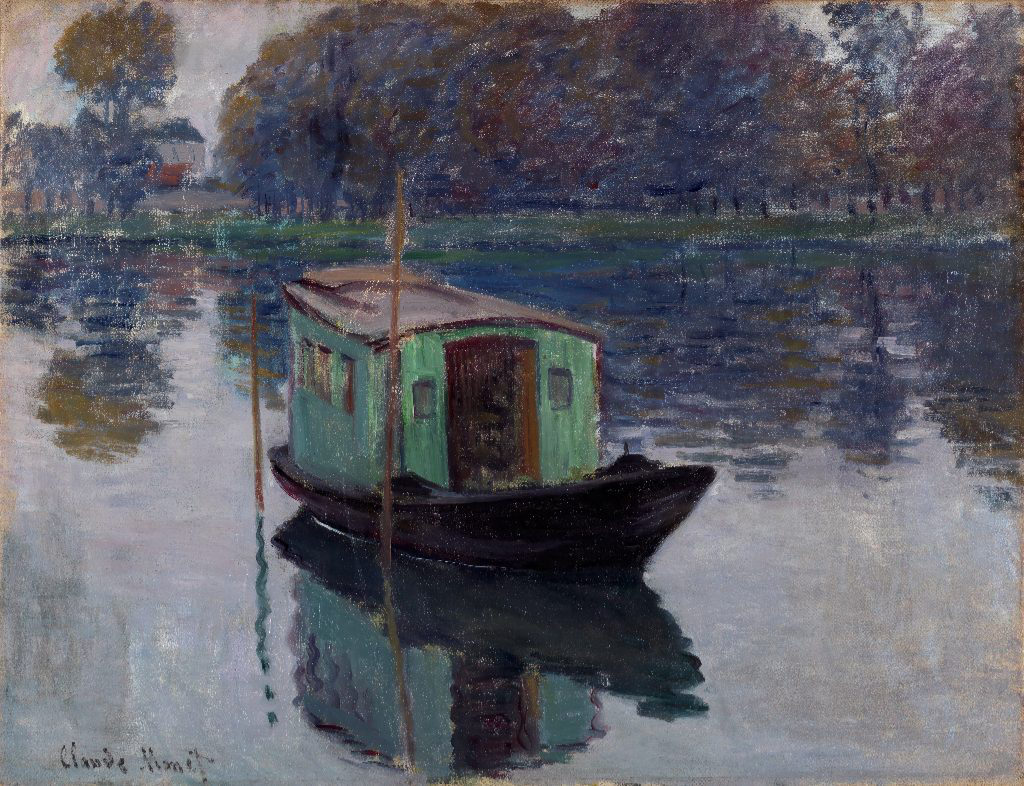
Claude Monet's floating studio boat at Argenteuil, painted in the 1870s during one of the most innovative periods of Impressionism. The small boat allowed Monet to work directly on the Seine, studying reflections, weather and shifting light from the surface of the river itself.
Important Paintings Monet Created at Argenteuil
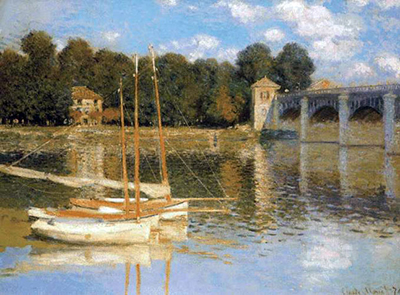
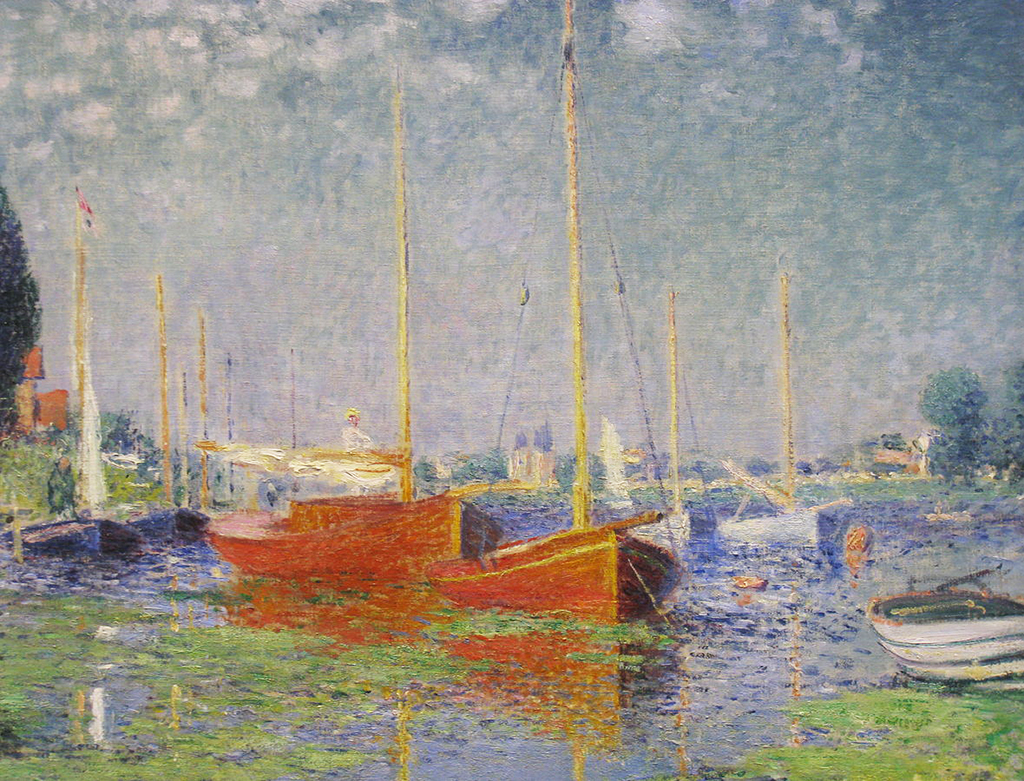
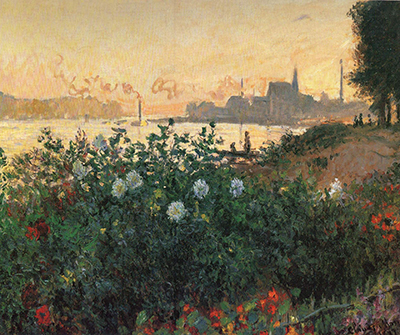
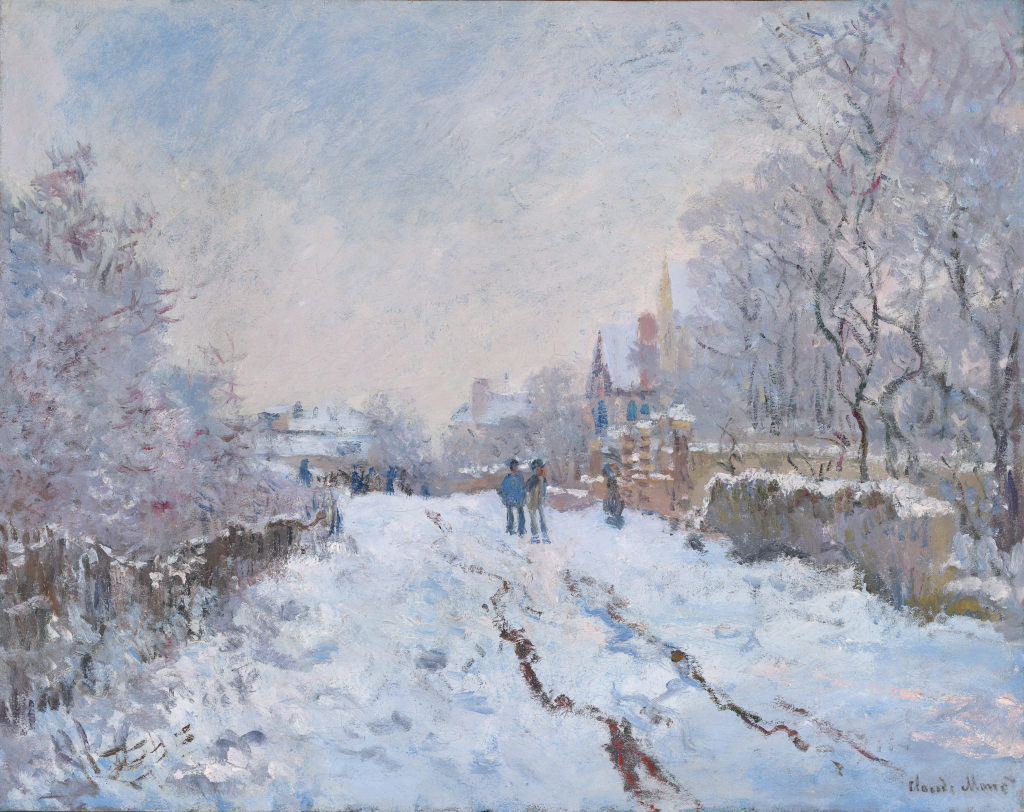
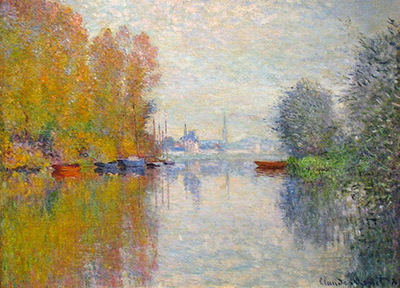
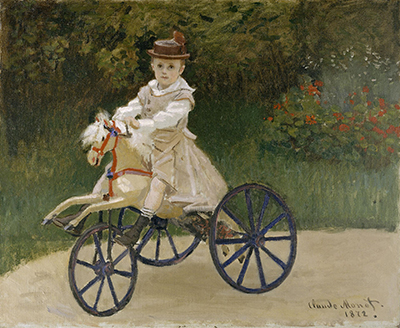
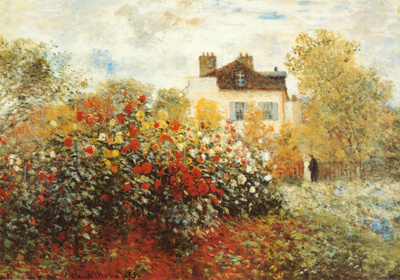
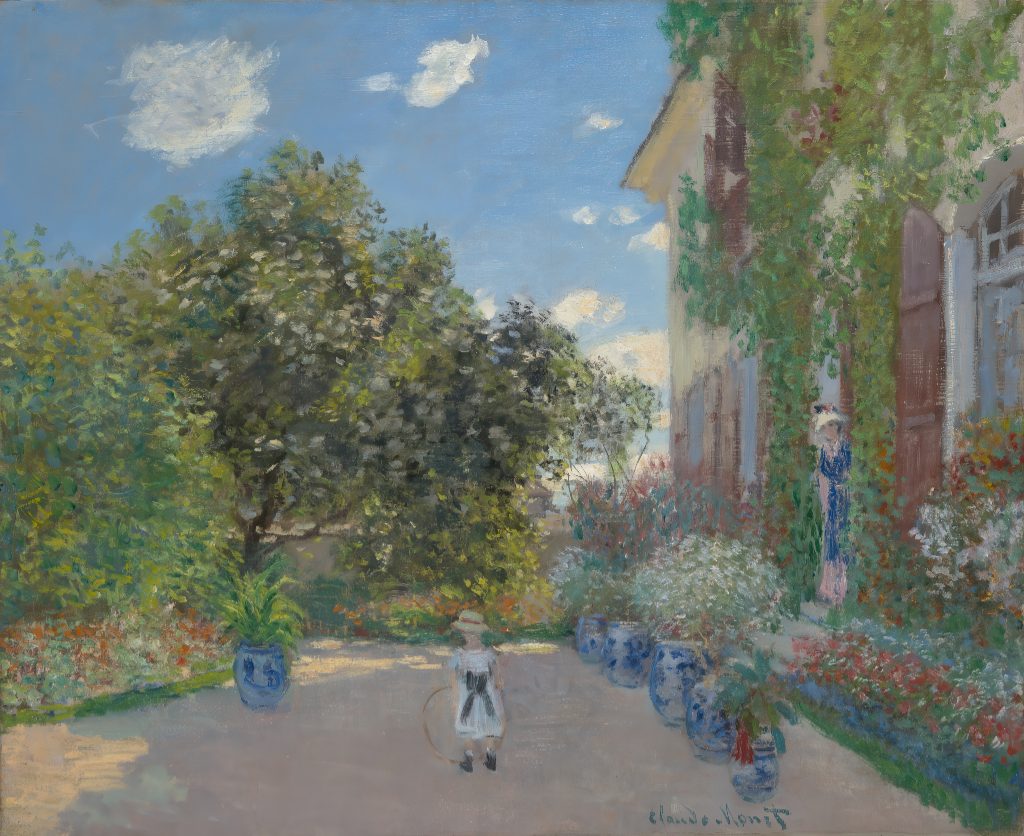
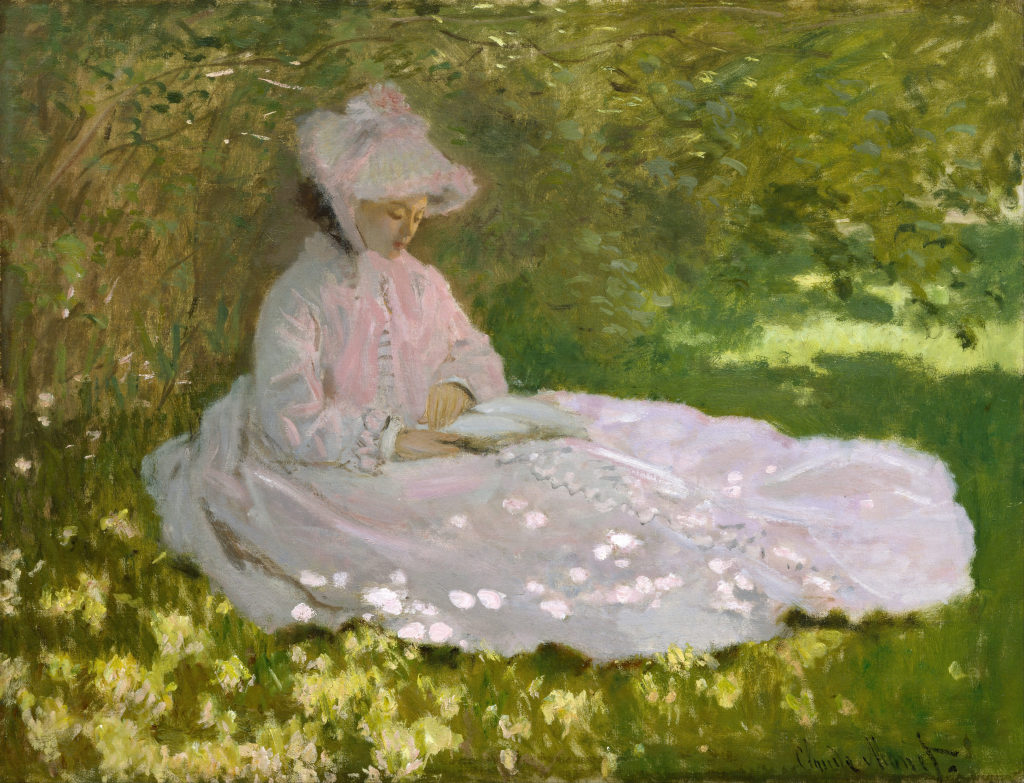
"Argenteuil was one of the single most important sites in the development of Impressionism."
Art Institute of Chicago commentary on Monet's Argenteuil years 4
Historical Background to Monet's Time in Argenteuil
Argenteuil is a French commune which is located in the suburbs to the north west of Paris. It has so much to inspire the artist - bustling human life, languid canals, and some natural scenery too.
In 1872, after travelling around London to work and sight see, Monet returned to his native France. He pretty much made straight for Argenteuil where he painted some of his most beloved works of art.
He was fascinated, whilst he stayed in Argenteuil, by the effects of sunlight and the water and by the figures of the looming boats made colourful with rust and use. As a result, he wanted to get as close as possible to what he was painting, putting himself in the midst of the landscape.
Bridges in Argenteuil were a subject that Monet kept returning to during his time in Argenteuil: the bridges themselves as well as the way that the sunlight played both on the edifice of the bridge itself and on the water beneath it. Carefully drawn boats also feature in this painting, as they did in so many of Monet's Argenteuil art works.
To summarise Monet's stay in Argenteuil, we can say that this was a period of intense activity, and of being inspired both by the unique landscapes of Argenteuil and by the company of like minded artists around him. In Argenteuil, Monet also came back to some of his favourite topics for paintings: bridges, boats, and light.
Monet's stay at Argenteuil coincided with the first Impressionist art exhibition and the moment when (in 1874) as a result of this exhibition the words 'Impressionism' and 'Impressionist' entered the vocabulary of art critics and the general public for the first time.
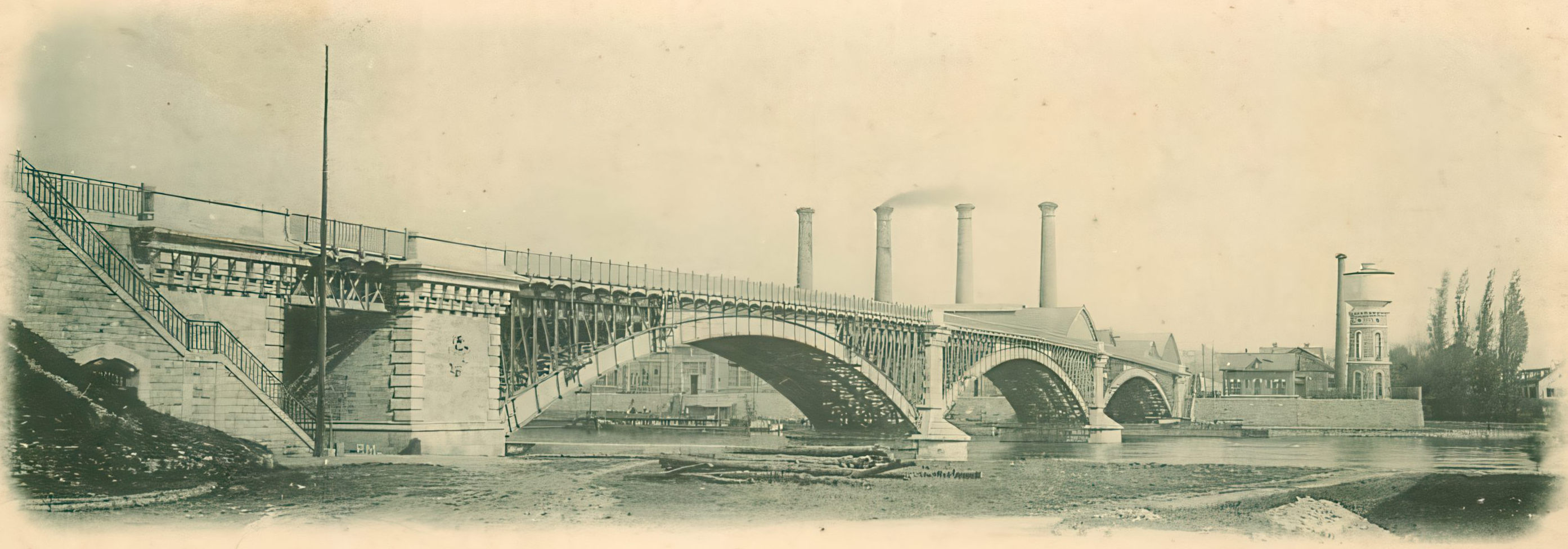
A historic view of one of the bridges at Argenteuil crossing the Seine near the end of the nineteenth century. Railway bridges and industrial structures became major subjects in Monet's Argenteuil paintings, where steam, iron and reflections were treated as symbols of modern life and changing Parisian suburbia.
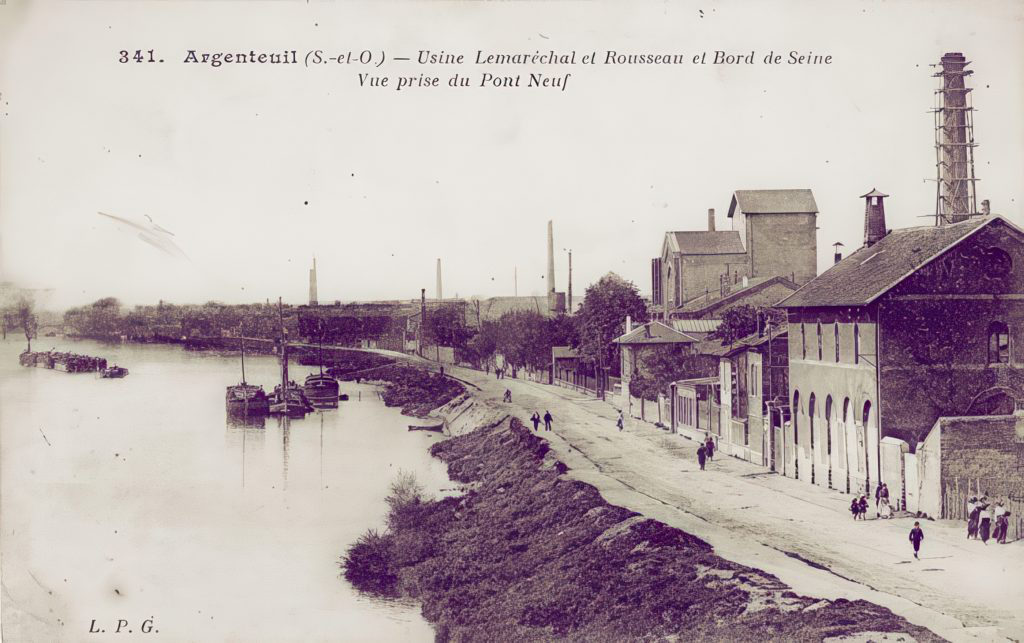
A vintage photograph of industrial Argenteuil along the banks of the Seine. Monet was fascinated by the contrast between leisure boating, suburban growth and expanding industry, often including factories, smoke and riverside activity within his Impressionist landscapes.
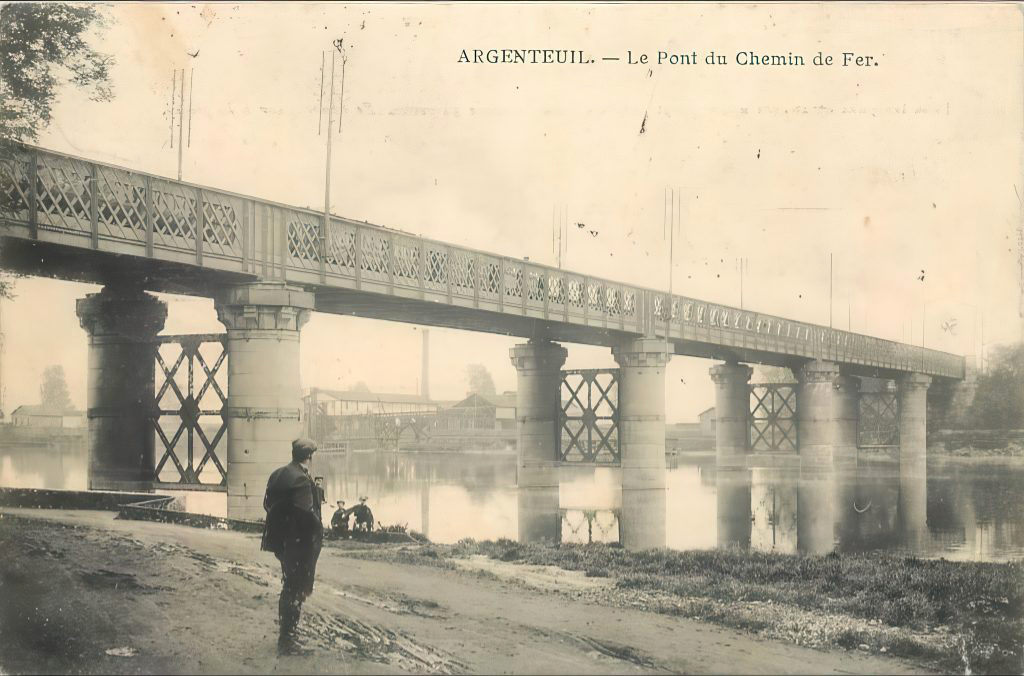
The railway bridge at Argenteuil was one of the defining modern landmarks of the region during Monet's stay there in the 1870s. Its iron structure, reflections and passing trains appeared repeatedly in his paintings, helping to connect Impressionism with themes of industry, transport and modern urban expansion.
Map of Argenteuil, Showing Proximity to Paris
Friends and Fellow Impressionists
Argenteuil also became a gathering place for several of Monet's friends and fellow artists. Pierre-Auguste Renoir visited frequently and painted alongside Monet along the riverbanks. Édouard Manet also travelled to Argenteuil and produced a number of paintings inspired by the boating culture of the Seine.
These visits helped strengthen the circle of artists who would soon become known as the Impressionists. Their shared interest in outdoor painting, modern subjects and rapidly applied brushwork formed the foundation of the movement that would transform European art.
Gardens and Family Life
While the river provided Monet with many subjects, he also painted scenes closer to home. The garden of his Argenteuil house appears in several works, often featuring his wife Camille and their son Jean. These intimate domestic scenes contrast with the busy river views and show Monet experimenting with colour and light among flowers, trees and garden paths.
Paintings such as The Artist's Garden at Argenteuil reveal Monet's growing fascination with flowers and cultivated landscapes. This interest would later reach its full expression in the famous gardens he created at Giverny decades later.
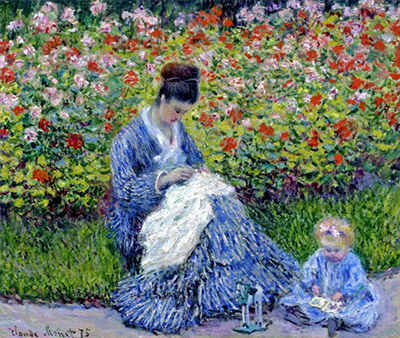
Camille Monet and a Child in the Artist's Garden in Argenteuil reveals the more intimate side of Monet's years in the town. While the Seine provided bridges, boats and reflections, his garden offered a domestic setting where family life, flowers and sunlight became part of the same Impressionist experiment.
Poppies and Fields Near Argenteuil
The countryside surrounding Argenteuil offered another rich subject for Monet's brush. In the nearby fields he painted one of his most beloved works, Poppies. The painting shows Camille and Jean walking through a field of red flowers beneath a wide summer sky.
The loose brushwork and vibrant colour of this painting demonstrate the developing language of Impressionism. Rather than carefully outlining individual flowers, Monet used quick touches of colour to suggest the overall effect of a field shimmering in sunlight.
 Claude Monet.jpg)
Monet's Poppy Field near Argenteuil is one of the most famous paintings from his years in the region. The scattered red flowers, open sky and figures of Camille and Jean Monet show how he used quick touches of colour to capture the sensation of a summer field rather than describe every detail individually.
The Development of Impressionism
The years in Argenteuil were crucial for the development of Monet's mature style. Here he refined the short brushstrokes, bright palette and emphasis on fleeting light that would define Impressionist painting. Many of the works created in Argenteuil were later shown in the early Impressionist exhibitions of the 1870s.
Scenes of river reflections, regattas, railway bridges, and suburban gardens helped introduce viewers to a new way of seeing the modern world. Instead of historical subjects or carefully finished academic paintings, Monet presented moments of everyday life captured through colour and light.
Leaving Argenteuil
By 1878 Monet's financial situation had become increasingly difficult, and he eventually left Argenteuil for Vétheuil along the Seine. Despite this departure, the paintings he created during his years in Argenteuil remain some of the most celebrated works of the Impressionist movement.
Today these paintings are held in major museums around the world, including the Musée d'Orsay in Paris, the National Gallery in London and the Metropolitan Museum of Art in New York. Together they capture a remarkable period when Monet transformed the riverside town of Argenteuil into one of the central landscapes of modern art.
Claude Monet Paintings from Argenteuil (Chronological List)
During the seven years that Claude Monet lived in Argenteuil between 1871 and 1878, he produced more than 150 paintings of the town and its surrounding landscapes. The works listed below include many of the most important paintings created during this formative period of Impressionism.
| Painting | Date | Current Location | Notes |
|---|---|---|---|
| The Bridge at Argenteuil | 1871 | Musée d'Orsay, Paris | One of Monet's earliest paintings after moving to Argenteuil. |
| Regatta at Argenteuil | 1872 | Musée d'Orsay, Paris | Shows sailing boats on the Seine during popular regattas. |
| The Seine at Argenteuil | 1872 | Private Collection | Early exploration of reflections on the river. |
| Boats on the Seine at Argenteuil | 1872 | National Gallery of Art, Washington | Example of Monet's interest in leisure boating culture. |
| Sailboats at Argenteuil | 1872 | Private Collection | Bright sails and reflections emphasise the movement of water. |
| The Artist's Garden at Argenteuil | 1873 | National Gallery of Art, Washington | View of Monet's garden at his Argenteuil home. |
| Poppies | 1873 | Musée d'Orsay, Paris | Famous painting featuring Camille and Jean walking through poppy fields. |
| The Railway Bridge at Argenteuil | 1873 | Philadelphia Museum of Art | Modern industrial subject combined with river reflections. |
| Snow at Argenteuil | 1873 | Private Collection | Winter landscape painted with cool light and snow reflections. |
| Red Boats at Argenteuil | 1873 | Private Collection | Bold use of colour and reflections on the river surface. |
| The Boulevard Saint-Denis, Argenteuil | 1872 | National Gallery of Art, Washington | Depicts the main street of Argenteuil. |
| The Promenade at Argenteuil | 1872 | Private Collection | Shows leisure life in the town. |
| The Bridge at Argenteuil (Second View) | 1873 | Private Collection | Alternative view of the reconstructed bridge. |
| Argenteuil Basin | 1872 | Private Collection | Focuses on the harbour area along the Seine. |
| Fishing Boats at Argenteuil | 1873 | Private Collection | Small working boats alongside leisure vessels. |
| Regatta at Argenteuil (Second Version) | 1874 | Private Collection | Continuation of Monet's regatta subjects. |
| The Argenteuil Bridge | 1874 | Private Collection | Painted from a viewpoint along the riverbank. |
| Boats on the Seine | 1874 | Hermitage Museum, St Petersburg | Rich reflections and movement on the water. |
| The Seine at Argenteuil | 1874 | Private Collection | Loose brushwork emphasising light. |
| Camille Monet in the Garden at Argenteuil | 1873 | Private Collection | Domestic scene from Monet's home garden. |
| The Artist's House at Argenteuil | 1873 | Art Institute of Chicago | Shows Monet's residence surrounded by flowers. |
| Garden Path at Argenteuil | 1873 | Private Collection | Focus on sunlight filtering through foliage. |
| Boats at Argenteuil | 1874 | Private Collection | Painted from Monet's floating studio. |
| Argenteuil, Late Afternoon | 1874 | Private Collection | Atmospheric study of light at sunset. |
| The Seine with Sailboats | 1874 | Private Collection | Depicts sailing activity along the river. |
| Bridge at Argenteuil in Autumn | 1874 | Private Collection | Seasonal variation of the bridge subject. |
| The Basin at Argenteuil | 1874 | Private Collection | Calm reflections across still water. |
| Argenteuil in Winter | 1875 | Private Collection | Snow-covered landscape. |
| The Railway Bridge at Argenteuil | 1875 | Musée Marmottan Monet | Steam trains crossing the bridge over the Seine. |
| Boats on the Seine | 1875 | Private Collection | Painted from the floating studio. |
| The Promenade at Argenteuil | 1875 | Private Collection | Shows fashionable visitors strolling. |
| The Seine near Argenteuil | 1875 | Private Collection | Broad river views with luminous skies. |
| Regatta at Argenteuil | 1876 | Private Collection | Later regatta scene showing more developed Impressionist brushwork. |
| Sailing Boats on the Seine | 1876 | Private Collection | Bright sails reflecting sunlight. |
| The Bridge at Argenteuil | 1876 | Private Collection | Late version painted shortly before Monet left the town. |
| The Banks of the Seine at Argenteuil | 1877 | Private Collection | Quiet riverbank landscape. |
| Argenteuil Harbour | 1877 | Private Collection | View of the busy boat basin. |
| The Seine at Sunset | 1877 | Private Collection | Warm evening light over the river. |
| Boats on the Seine at Argenteuil | 1877 | Private Collection | One of Monet's final Argenteuil river scenes. |
| The Seine near Argenteuil | 1878 | Private Collection | Painted shortly before Monet left the town. |
References
- Daniel Wildenstein, Gilles Neret, Monet: Catalogue Raisonne, Cologne: Wildenstein Institute and Taschen, 1996.
- Daniel Wildenstein, Monet: The Triumph of Impressionism, Cologne: Taschen, 2015.
- Jackie Wullschlager, Monet - The Restless Vision, Milton Keynes: Allen Lane, 2023.
- Art Institute of Chicago, “The Artist's House at Argenteuil,” Monet Exhibition Catalogue, View source.
- Goodreads, “Claude Monet Quotes,” Goodreads, View source.