 by Tom Gurney
Tom Gurney BSc (Hons) is an art history expert with over 20 years experience
Published on October 6, 2016 / Updated on May 18, 2026
Email: tomgurney1@gmail.com / Phone: +44 7429 011000
Springtime (The Reader) by Claude Monet
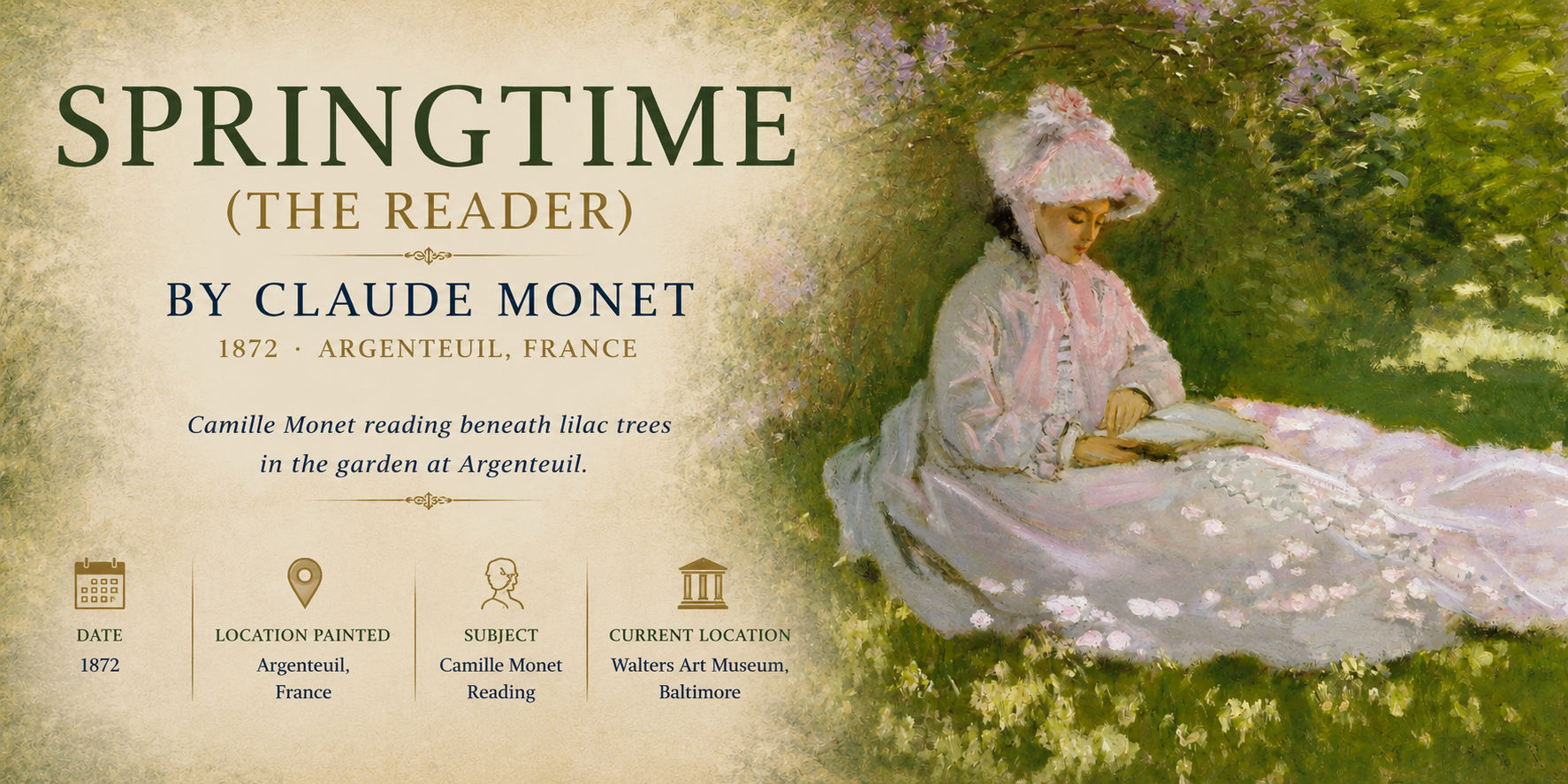
Springtime, also known as The Reader or La Liseuse, is one of Claude Monet's most delicate Argenteuil-period paintings. Created in 1872, it shows his first wife, Camille Monet, seated beneath lilac trees in the garden of their home at Argenteuil. [1]
At first glance, the painting appears to be a quiet domestic scene: a woman reading outdoors in spring. Yet it also reveals many of the qualities that would define Monet's early Impressionism: filtered sunlight, broken brushwork, modern dress, intimate observation and the close relationship between figure, garden and atmosphere. [2] Many similar interpretations would also be produced of Camille in this garden, by Monet, Renoir and Manet.
Unlike Monet's more famous river views and boating scenes from Argenteuil, Springtime turns inward, showing the private world of family life and the garden. It is an ideal accompaniment to Monet in Argenteuil, The Artist's House at Argenteuil and Camille Monet and a Child in the Artist's Garden.
- Artist Claude Monet
- Title Springtime
- Alternative Titles The Reader - La Liseuse
- Date 1872
- Wildenstein Number W.318
- Medium Oil on canvas
- Dimensions 50 x 65.5 cm
- Subject Camille Monet Reading Beneath Lilacs in Argenteuil, near Paris
- Current Location Walters Art Museum, Baltimore
Who Is the Woman in Springtime?
The woman in Springtime is Camille Monet, born Camille Doncieux, Claude Monet's first wife. She was also one of his most important early models. She appears in several of Monet's best-known paintings from the 1860s and 1870s, including garden scenes, portraits and outdoor figure paintings. [4]
Monet's Garden at Argenteuil
Monet and his family moved to Argenteuil in late 1871, shortly before this painting was made. The town offered him access to the Seine, open light, gardens and modern suburban life. Many of his most important early Impressionist works were painted there. [2]
The Walters Art Museum describes Springtime as showing Camille seated under lilac trees in the garden of the Monet family house at Argenteuil. This makes the painting especially valuable because it links Monet's domestic life with his developing interest in cultivated outdoor spaces. [1]
That interest would become increasingly important throughout his career. The gardens at Argenteuil prepared the way for later garden subjects at Vétheuil and, ultimately, the famous garden and lily pond at Giverny.
Analysis of Springtime
Springtime is built around contrasts between figure and foliage, stillness and movement, white dress and purple-lilac surroundings. Camille sits quietly with her book, while the garden around her seems to shimmer with reflected light.
The painting is not arranged like an academic portrait. Monet does not isolate Camille against a neutral background. Instead, he places her inside the living atmosphere of the garden. Leaves, branches, flowers, shadows and fabric all participate in the same broken surface. [6]
The light is particularly important. It filters through the lilac trees and falls in patches across Camille's dress and the ground. Rather than modelling form with hard outlines, Monet uses touches of colour to suggest how sunlight moves through the scene.
This is one reason why Springtime works so well as an early Impressionist painting. Its subject is not just Camille reading, but the experience of seeing her through spring light, foliage and air. [7]
In Springtime, Camille is shown not as a formal portrait sitter, but as part of the garden environment. Her pale dress catches the light beneath the lilac trees, while her lowered head and absorbed posture create an atmosphere of calm privacy.
This makes Springtime different from Monet's more public paintings of Argenteuil's bridges, boats and riverbanks. It belongs instead to his domestic world: the garden, the family home, and the quieter spaces around everyday life. [5]
Large Image of Springtime by Claude Monet
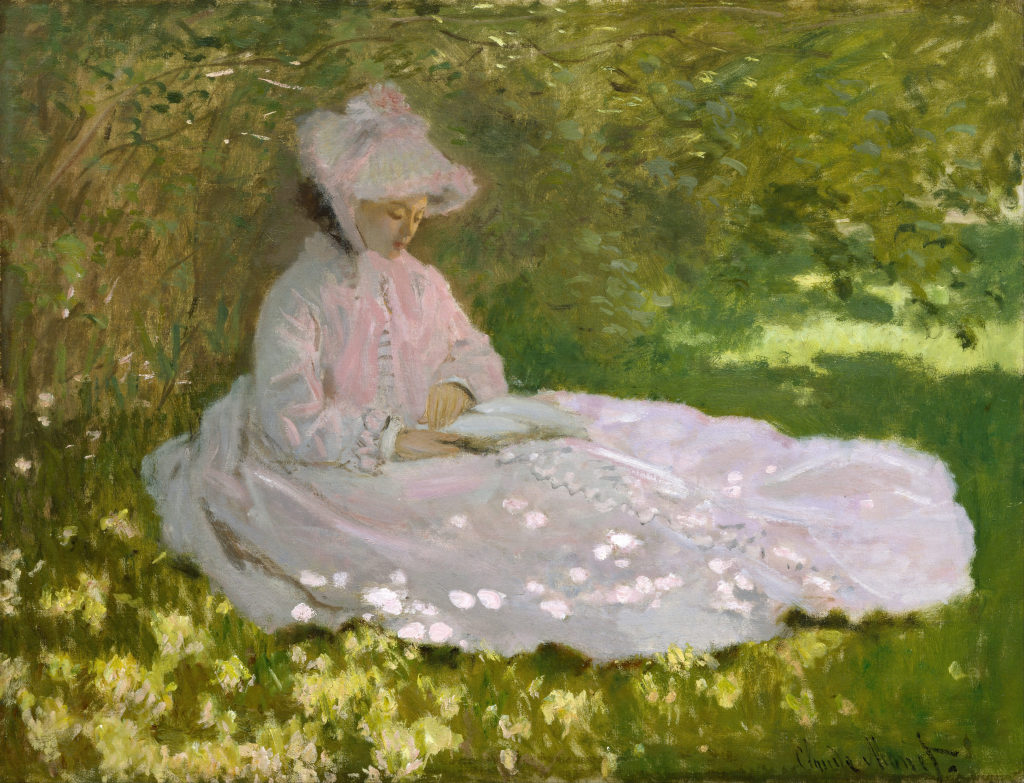
Springtime, Claude Monet, 1872, Walters Art Museum, Baltimore
The Lilacs and the Meaning of Spring
The lilac trees are central to the mood of the painting. They frame Camille, soften the composition and give the work its seasonal identity. Their blossoms suggest renewal, fragrance, shelter and the arrival of spring as well as allowing Monet to implement a bright colour palette.
Monet avoids heavy symbolism, but the emotional tone is clear. The painting presents a moment of domestic peace after a turbulent period in French history. Monet had recently returned from London after the Franco-Prussian War, and Argenteuil offered the family a new beginning. [4]
The garden setting also matters because it combines privacy with modernity. Camille's fashionable dress roots the image in contemporary life, while the lilacs create a more timeless atmosphere of nature, reading and spring. By capturing Camille in a relaxed posture and activity, the painting itself also provides this feeling to the viewer.
Springtime and Monet's Argenteuil Period
Argenteuil was one of the most productive periods of Monet's career. During the 1870s he painted river scenes, railway bridges, regattas, gardens, suburban streets and family subjects. Springtime belongs to the more intimate side of this period. [2]
It should be read alongside other Argenteuil garden paintings, including The Artist's House at Argenteuil, The Artist's Garden in Argenteuil and Camille Monet and a Child in the Artist's Garden. Together, these works show how Monet treated the garden as a modern subject in its own right.
Where the Seine paintings show movement, boating and reflections, Springtime shows stillness, shade and domestic calm. This contrast makes it especially useful for understanding the full range of Monet's Argenteuil ouevre.
Impressionist Technique
Monet's technique in Springtime is subtle rather than dramatic. The brushwork is loose, but not chaotic. The figure remains readable, while the garden around her dissolves into broken strokes of green, violet, cream and shadow.
The white dress is especially important. Monet uses it as a surface for reflected colour, allowing surrounding greens and lilacs to influence the fabric - he would do the same with water in his cityscapes. This approach adds depth to the dress. It becomes part of the same optical environment as the trees and flowers. [9]
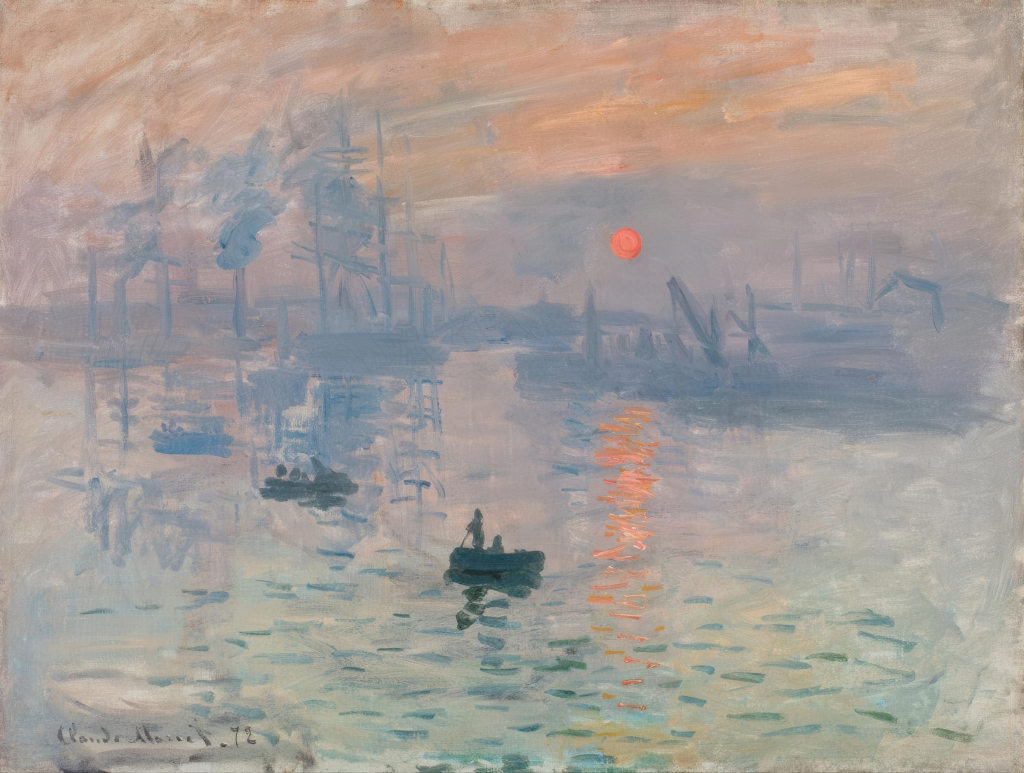
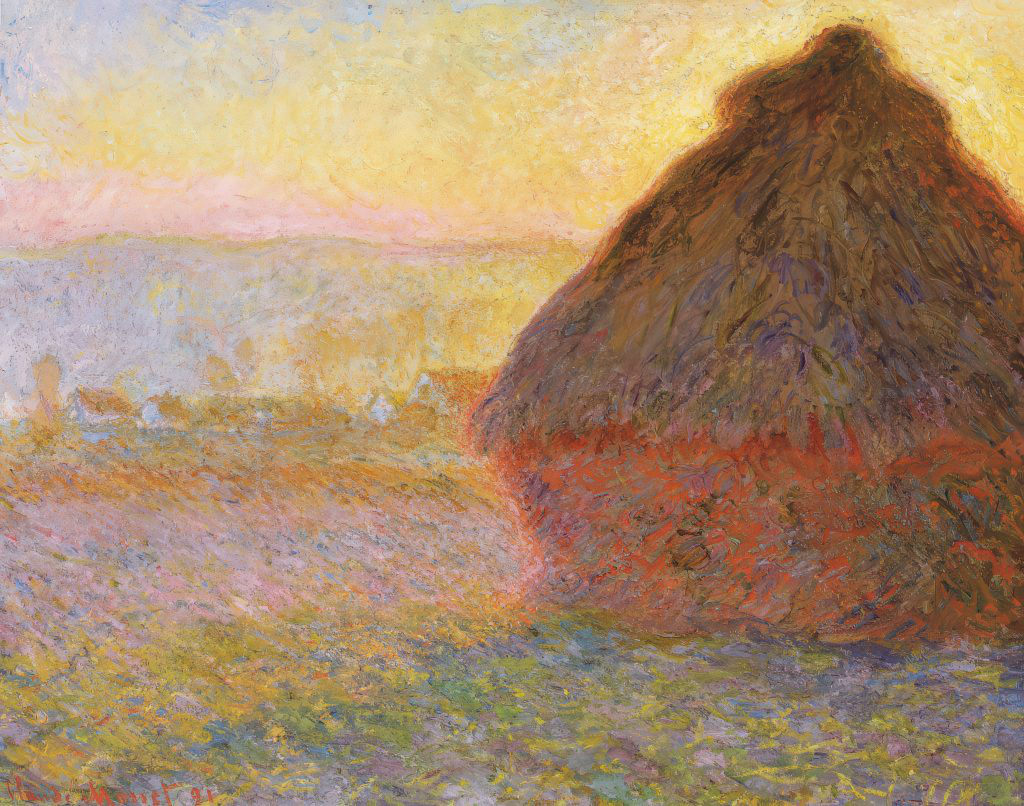
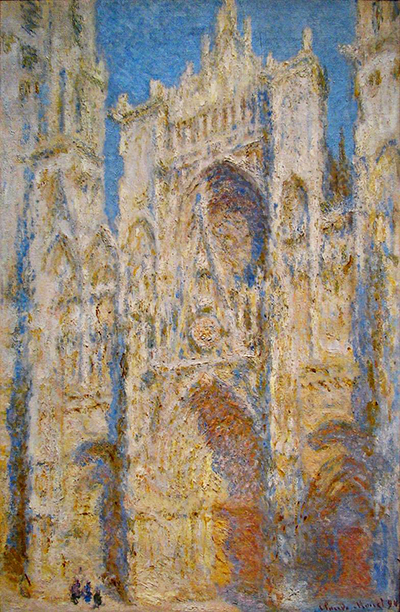
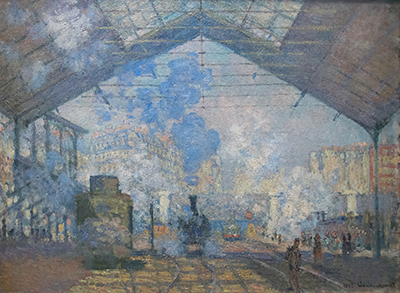
In this sense, Springtime connects directly with Monet's wider Impressionist project. Whether painting a river, railway station, garden or figure, he was increasingly interested in how light changes the appearance of everything it touches. He would later switch to whole series in which he could examine items under changing conditions, as seen with his Haystacks, Water Lilies and Rouen Cathedral.
Why Does This Painting Have Different Names?
This painting is usually known in English as Springtime, but it is also widely called The Reader. The French title La Liseuse translates directly as "The Reader", which explains why both titles appear in books, museum references and image archives. [3] Additionally, when first displayed at the Second Impressionist Exhibition in 1876, this painting was titled Woman Reading. [12]
The title Springtime emphasises the season, the lilacs and the fresh outdoor setting. The Reader, by contrast, draws attention to Camille herself, absorbed in her book beneath the trees. Both titles are useful because they describe different aspects of the same painting: the seasonal atmosphere and the quiet act of reading.
For search and internal linking, the best page title is therefore Springtime (The Reader) by Claude Monet, because it captures both the best-known English title and the most common alternative title.
Provenance and Exhibition History
The Walters Art Museum records that the painting was probably purchased by Paul Durand-Ruel from Monet in 1872 under the title Figure en rose. It was later owned by Ernest Hoschedé, sold in 1878, acquired by Mary Cassatt around 1889, and purchased by Henry Walters in 1903. [1]
The painting was shown at the second Impressionist group exhibition in 1876, making it part of the early public history of Impressionism. It also appeared in later exhibitions devoted to Monet, Impressionism and 19th-century French painting. [10]
This provenance is useful for the page because it connects Springtime not only to Monet's family life, but also to major Impressionist networks: Durand-Ruel, Hoschedé, Cassatt and the early group exhibitions.
Why Springtime Matters
Springtime matters because it shows Monet applying Impressionist ideas to an intimate domestic subject. The painting is not monumental, dramatic or narrative-driven. Its importance lies in its atmosphere.
Camille's book reading, the lilac shade, the broken light and the garden setting all combine to create a moment that feels temporary and observed from life. It is a painting about quietness, but also about perception.
For readers exploring Monet's career, Springtime offers an important bridge between his figure paintings, his Argenteuil garden scenes and his later obsession with cultivated nature at Giverny. [11]
Camille appears less as a formal sitter than as part of the garden itself, absorbed into light and foliage.
Jackie Wullschläger, Monet: The Restless Vision, on Monet's paintings of Camille during the early 1870s. [4]
Related Paintings
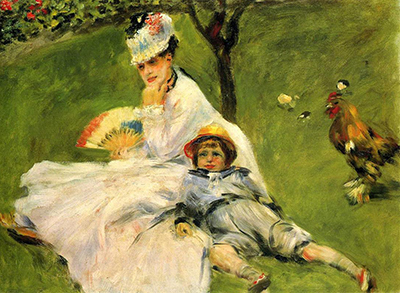
Camille Monet and her Son Jean in the Garden at Argenteuil, Pierre-Auguste Renoir
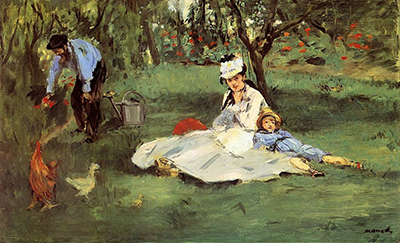
The Monet Family, Edouard Manet
Close-up Details of Monet's Springtime
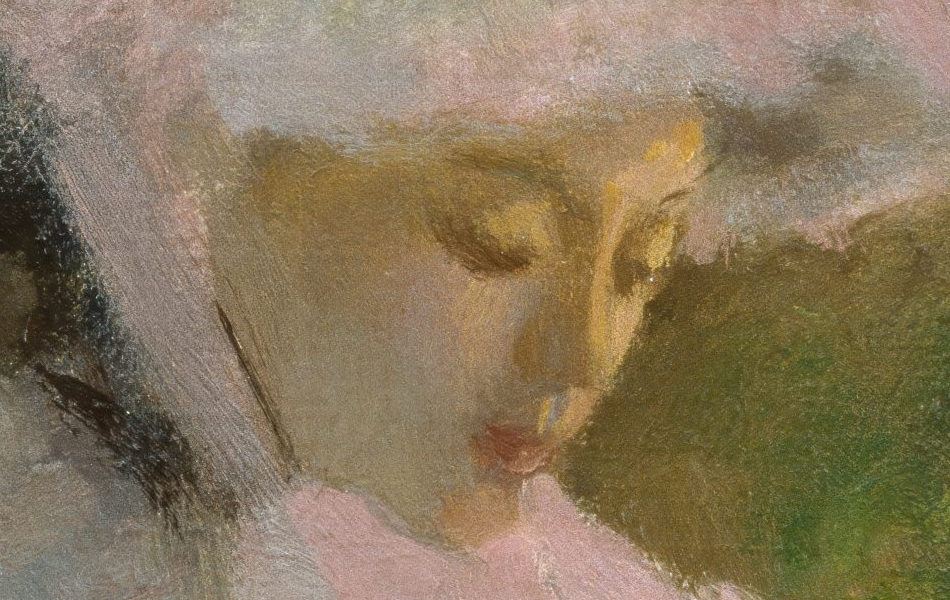
Close-up detail of Camille Monet's face. Rather than presenting her as a formal portrait sitter, Monet shows her absorbed in reading, allowing the moment to feel natural, private and quietly observed.
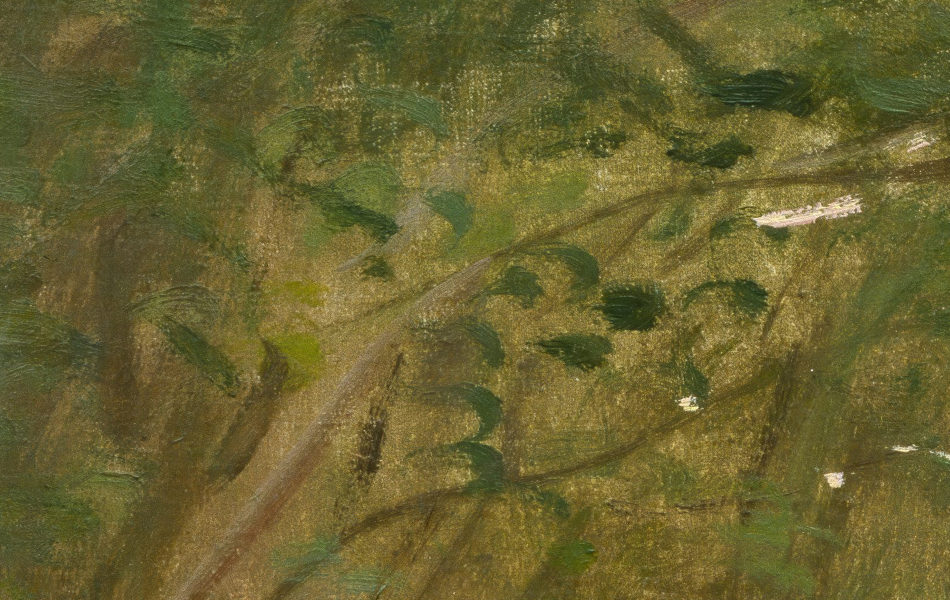
Detail of the lilac canopy above Camille Monet. The branches and blossoms form a natural screen of colour and shade, turning the garden into an enveloping Impressionist atmosphere.
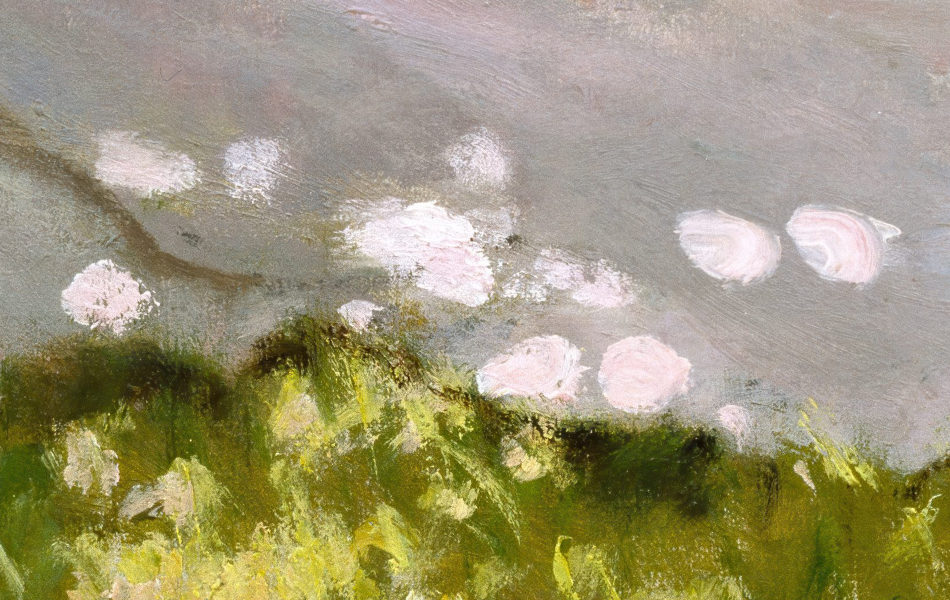
Detail of the shaded garden surrounding Camille. Monet uses layers of green, violet and muted shadow to create the feeling of dappled light beneath the lilac trees.
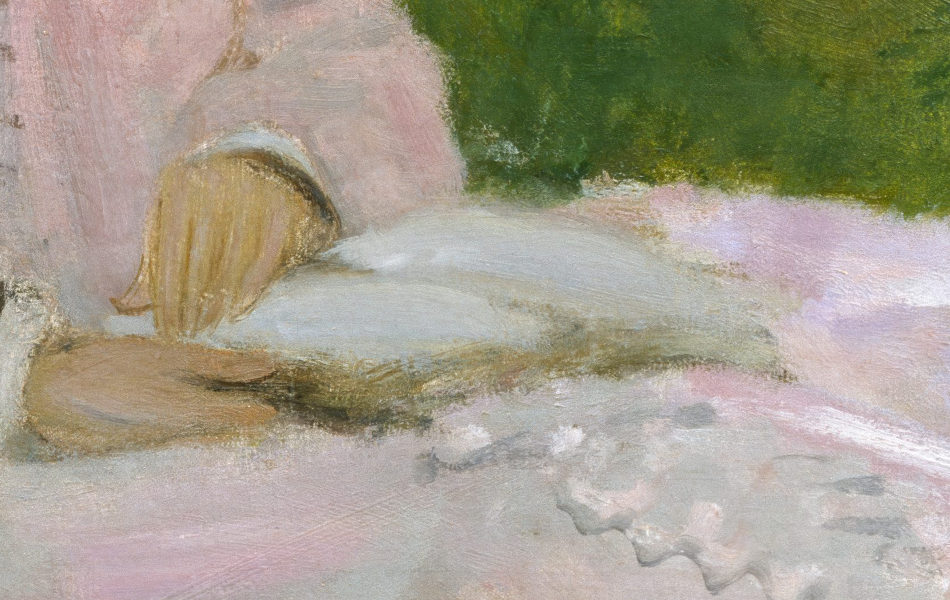
Close-up of the book in Springtime, which explains the painting's alternative title, The Reader. This small detail shifts the scene from a simple garden portrait to a quiet moment of domestic life.
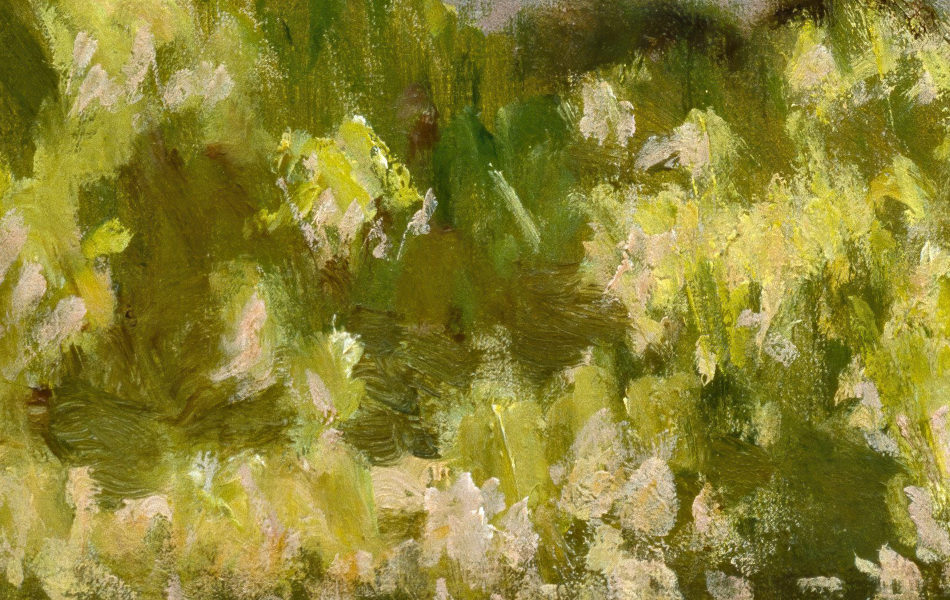
Detail of the lilac flowers in Springtime. The blossoms help give the painting its seasonal character, surrounding Camille with soft colour, shade and the feeling of spring renewal.
FAQs
References
- The Walters Art Museum, “Springtime,” The Walters Art Museum Collection, View source.
- Daniel Wildenstein, Monet: The Triumph of Impressionism, Cologne: Taschen, 2015.
- Wildenstein Institute, Claude Monet: Catalogue Raisonné, Paris: Wildenstein Institute, 1996.
- Jackie Wullschläger, Monet: The Restless Vision, London: Allen Lane, 2023.
- Robert L. Herbert, Impressionism: Art, Leisure, and Parisian Society, New Haven: Yale University Press, 1988.
- John House, Monet: Nature into Art, New Haven: Yale University Press, 1986.
- Paul Hayes Tucker, Claude Monet: Life and Art, New Haven: Yale University Press, 1995.
- John Rewald, The History of Impressionism, New York: Museum of Modern Art, 1973.
- National Gallery of Art, “Paris 1874: The Impressionist Moment,” National Gallery of Art, View source.
- Musée Marmottan Monet, “Claude Monet and the Gardens,” Musée Marmottan Monet, View source.
- Google Arts & Culture, “Springtime - Claude Monet,” View source.