by Tom Gurney
Tom Gurney BSc (Hons) is an art history expert with over 20 years experience
Published on October 6, 2016 / Updated on March 28, 2026
Email: tomgurney1@gmail.com / Phone: +44 7429 011000
Claude Monet and the Seine River
The Seine River played a central role in the life and art of Claude Monet. Even before his devotion to art, he enjoyed strolling along many scenic spots of this river. He would also later take in other rivers too, such as Epte, Petite Creuse and the Thames.
Water was, of course, a key ingredient in his work - its ability to reflect light provided a perfect avenue of study for his Impressionist style, which he developed over a number of years. Additionally, with changing weather, so other conditions would also impact these scenes, providing different opportunities across each season.
Whilst Monet's career can be categorised into different periods, he would return to the Seine river right across the breadth of his career, constantly finding inspiration for his work. In tracking the length of the river, Monet came into contact with the likes of Argenteuil, Vétheuil, Rouen and Le Havre.
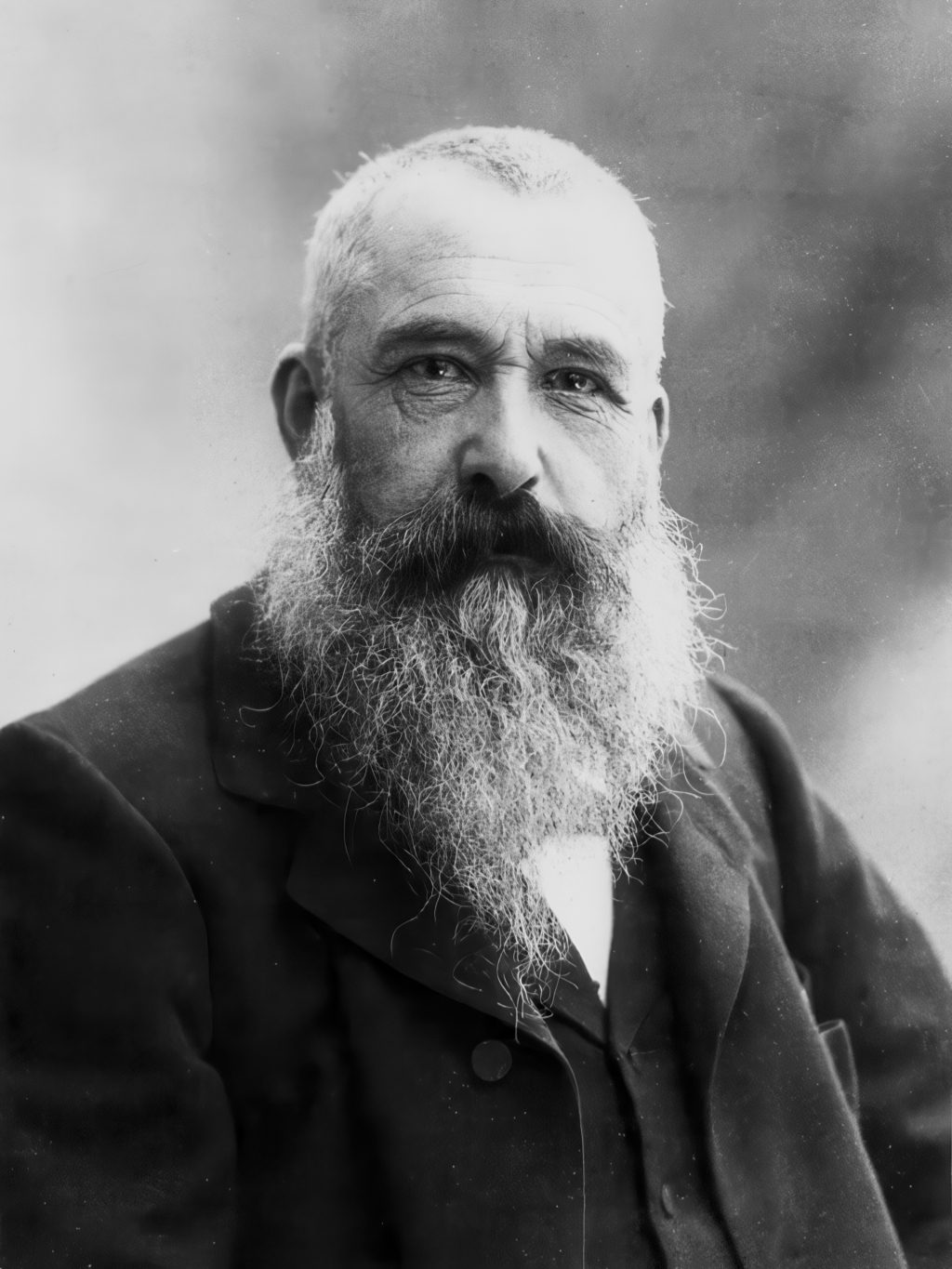
The Seine. I have painted it all my life, at all hours of the day, at all times of the year, from Paris to the sea… Argenteuil, Poissy, Vétheuil, Giverny, Rouen, Le Havre.
In taking in different towns, and alternating angles, Monet was able to create different balances in his paintings of the seine river. Content, as you will see from the examples below, would vary and his knowledge and experimentation of composition also brought variety to this body of work.
In this article we will examine the majestic paintings of Monet which captured the Seine river in all its glory. We will answer the question as to how he managed to, with the help of a number of other significant painters, to transform the Seine into one of the most iconic landscapes in the history of art.
- Artist: Claude Monet
- Primary Subject: The Seine River
- Art Movement: Impressionism
- Active Period: 1860s - early 1900s
- Key Locations: Argenteuil, Vétheuil, Rouen, Le Havre
- Themes: Light, reflections, modern life, river landscapes
- Notable Series: Argenteuil scenes, Rouen Cathedral, Thames and Seine studies
- Technique: Plein air painting and broken brushwork
- Importance: Central landscape in Monet's development of Impressionism
The Seine and the Origins of Impressionism
The Seine valley became one of the most important locations for the birth of Impressionism. During the 1860s and 1870s Monet and several of his fellow artists travelled along the river in search of new subjects and painting locations - many were already familiar to them, having visited previously in their leisure time.
Nature and light were key to Impressionism, and the Seine River offered all the aspects that would eventually be found in the matured style. Whilst mythological or historical content in classical painting techniques was encouraged at the time, Monet and his colleagues had a great desire to come up with something new.
Up and down the river, the artists would come across different vessels and leisure activities, as well as variations in trees, plants and other conditions. The environment could also change on a whim, even in-land, and so these artists learnt to work quickly whilst outdoors. The variations in content up-and-down the Seine also brought changes in their working palettes too, with colour being another integral part of this new movement.
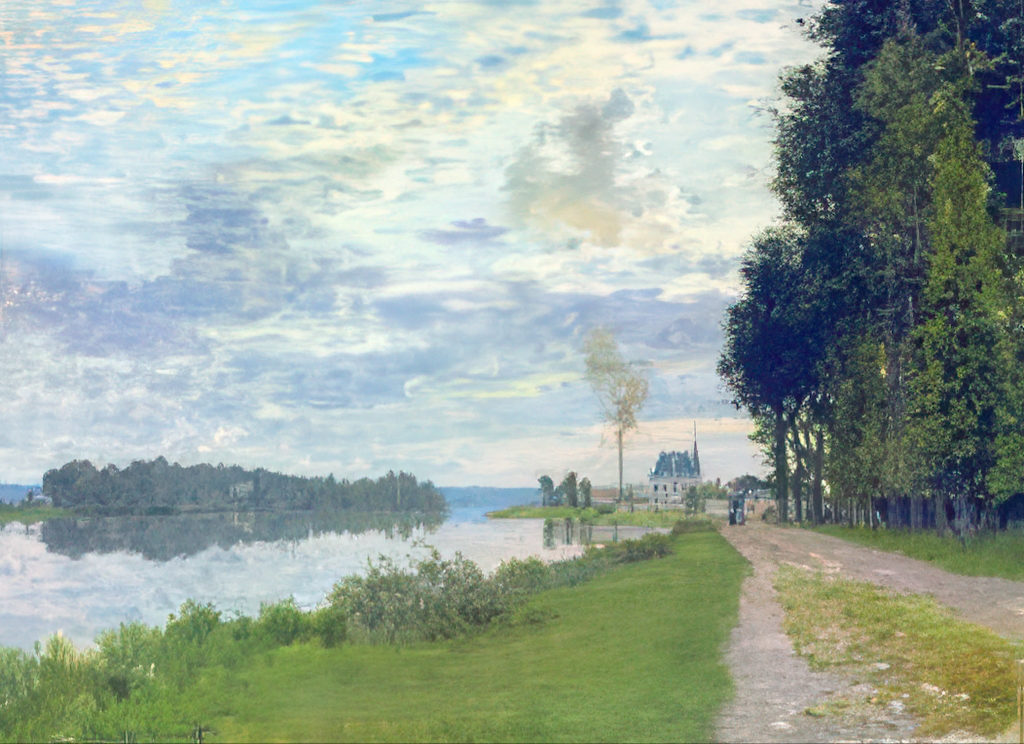
The Promenade at Argenteuil / The Seine at Argenteuil, Claude Monet, 1872
Argenteuil: Monet's Early Seine Paintings
Monet lived in Argenteuil, a suburban town just outside Paris, between 1871 and 1878. Here he would observe many boating and leisure pursuits, both from locals and also visitors from nearby central Paris. This period was actually his most prolific use of the Seine in his work.
He worked in a relaxed manner here, with loose brushwork and bold colours. His content included sailboats, bridges and riverside life. The Seine in this region offered plenty of visual interest alongside the subjects of his work. Regatta at Argenteuil and The Bridge at Argenteuil were produced here.
Not only would Monet help to evolve the style of Impressionism in these early Seine works, but he also captured a busier atmosphere, due to his proximity to Paris.
Vétheuil: A Quiet River Landscape
After leaving Argenteuil, Monet settled in the small village of Vétheuil on the banks of the Seine. This more rural location offered a different atmosphere to Monet's previous work along the Seine. It was a chance to reflect, both for the artists and also those strolling down the riverbank. Even the curve of the river was a little different, whilst steep hills brought new content to his work.
During the late 1870s Monet created many paintings of the Seine at Vétheuil, often depicting the village rising above the water on the opposite bank. The artist loved to experiment with different angles, and the changing seasons and light across the day brought endless new combinations of opportunity to him.
Although this period was marked by personal tragedy, including the death of Monet's first wife Camille in 1879, the river landscapes from Vétheuil remain among the most atmospheric paintings of his career and remain entirely unique against his many other river scenes.
The Seine at Rouen
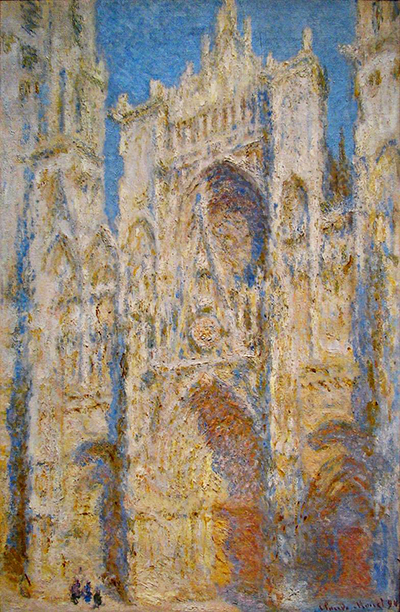
Travelling westwards down the Seine, we pass through the historic city of Rouen, famous in Monet's career for his depictions of its extraordinary cathedral. The Seine itself was key to the city's economic success and ensured this region held excellent connections to the English Channel and the port of Le Havre.
The Industrial Seine
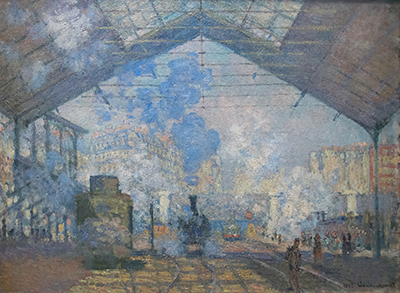
The Seine helped many towns and cities in this part of France directly benefit from the industrial boom of the late nineteenth century. Whilst Monet did not capture this in his work, alongside the Seine itself, he did feature some of the results of this improved economic development. Steamships, factories and railway bridges may not have suited his style, but his Gare Saint-Lazare series in Paris showed how he could adapt effectively.
He would become fascinated by both modern and traditional life, with the Seine playing a key role in both. It also varied in impact, as you travelled along its path from Paris, heading west.
The River as a Source of Light and Reflection
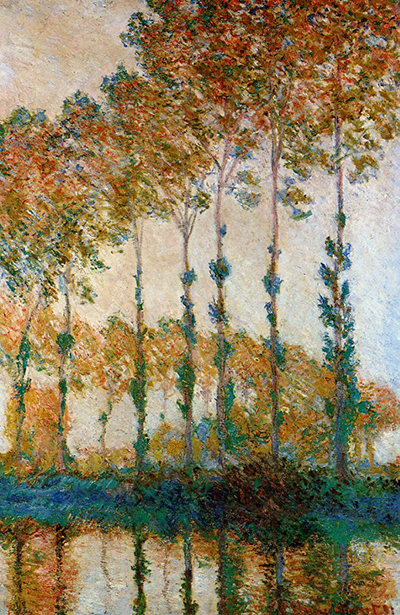
For Monet the Seine was not simply a geographical feature but a laboratory for studying light and colour. Water offered him reflections, and the Seine provided variety all along its winding path. Monet often used quick, broken brushstrokes to capture these shimmering reflections. Instead of carefully outlining objects, he allowed patches of colour to suggest forms and movement - he was slowly forming a style that would become known to us as Impressionism.
In-land, with calmer weather conditions, Monet could focus on more subtle changes in light, before moving to the coast for dramatic, almost Romanticist imagery. He also liked to work outdoors, and having lived in several locations along the river, these places were highly accessible to him. Were conditions to change suddenly, he could run off home without a fuss.
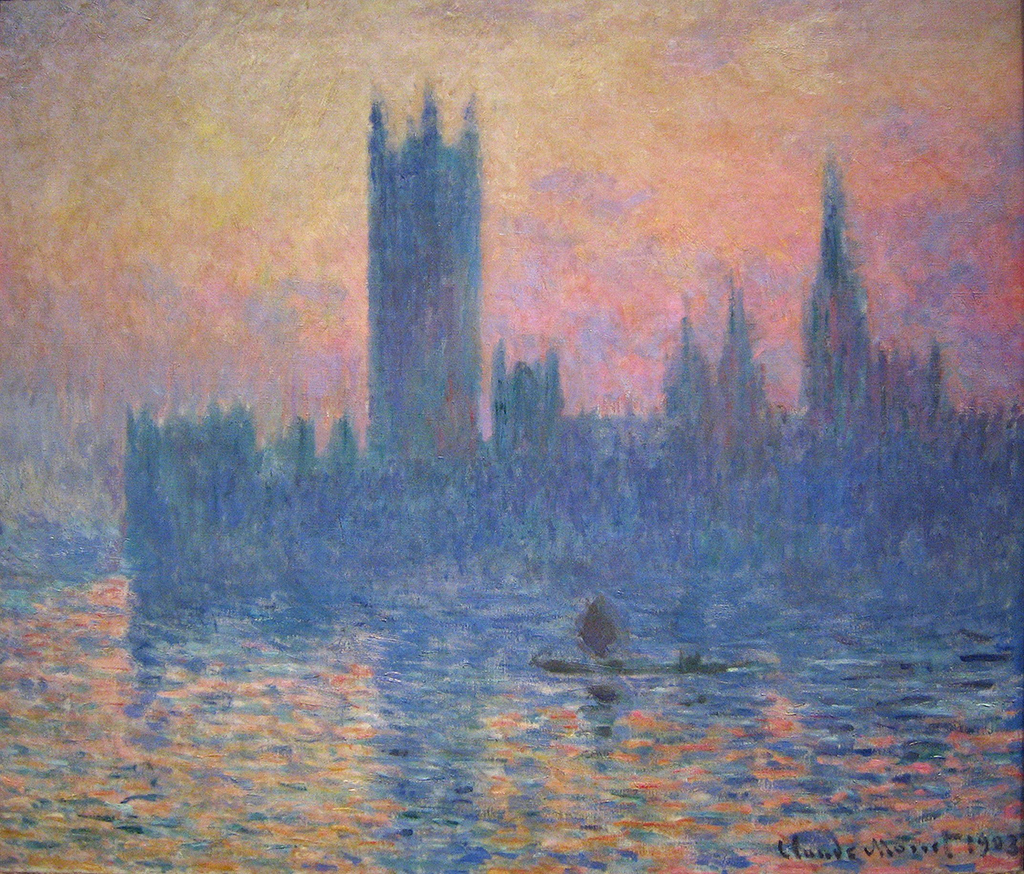
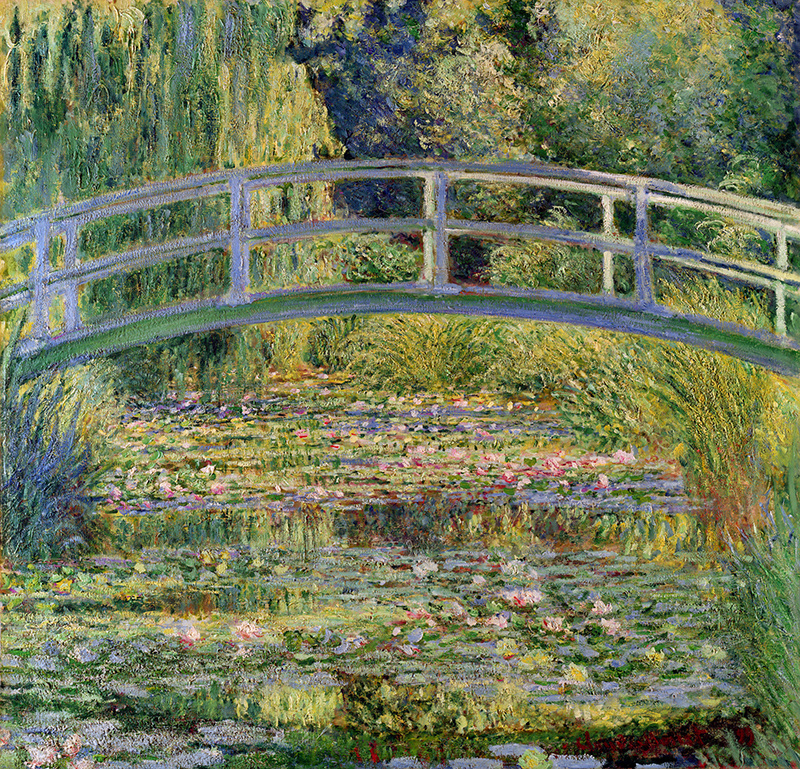
The reflections of clouds and sunlight on the Seine also helped Monet explore the relationship between sky and water, a theme that would later reach its fullest expression in his famous Water Lilies paintings.
The Seine and Monet's Later Career
Although Monet eventually settled permanently in Giverny, the Seine remained an important presence in his life. The village itself lies close to the river, and Monet frequently travelled along the Seine valley in search of new painting locations.
In the final decades of his career he became increasingly interested in creating series of paintings, producing multiple iterations of the same subject under different lighting conditions. This approach had its roots in the earlier river landscapes where shifting reflections and changing weather conditions constantly altered the scene before him.
Monet's desire to spend so much time, and invest so much effort into his garden in Giverny was also inspired by his love of water, which itself was impacted by his strolls and studies along the Seine river, in all its guises.
The Legacy of Monet's Seine Paintings
To summarise the influence of the Seine on Monet's career, it provided huge inspiration, but also variety in the various towns and cities that lie besides its path. Today the Seine valley is inseparable from the history of Impressionism, with other members of this movement also drawing similar inspiration in their own careers.
The Seine offers tranquil countryside and urban energy in equal measure, and Monet knew this part of France well enough to harness its different flavours. Many of the towns and locations he painted remain popular destinations for visitors seeking to experience the landscapes that inspired these masterpieces, the Seine continues to evoke the same atmosphere today that Monet captured with such extraordinary sensitivity.
Through his paintings, Claude Monet turned the Seine River into one of the most recognisable and celebrated landscapes in the world of art, and his success here encouraged him to experiment with other rivers in later work.
Claude Monet and the Seine: Key Painting Locations
The River Seine shaped Claude Monet's artistic journey, providing both subject matter and inspiration throughout his career. From the bustling suburbs of Paris to the शांत rural landscapes of Normandy, Monet followed the river westward, developing his distinctive approach to light, colour, and reflection.
Map of the River Seine highlighting the principal locations where Claude Monet painted. From Argenteuil near Paris to Giverny and the Seine estuary at Le Havre, these sites trace the development of Impressionism and Monet's lifelong study of light and reflection.
As the map illustrates, Monet's work along the Seine follows a clear geographical progression. His early Impressionist experiments took place near Paris at Argenteuil and Bougival, where modern life and leisure activities dominated his subjects. Further downstream, at Vétheuil and Lavacourt, his work became more introspective, focusing on seasonal change and atmosphere.
By the time Monet settled at Giverny, near the confluence of the Epte and the Seine, his focus had shifted almost entirely to light and reflection. This evolution would culminate in the celebrated Water Lilies series, where the influence of the river is still present, transformed into an increasingly abstract vision of nature.
Claude Monet's Paintings of the Seine River
The River Seine was central to Claude Monet's life and artistic development. From the early years of Impressionism at Argenteuil to his later work at Giverny, Monet returned repeatedly to the river as both subject and source of inspiration.
The table below brings together key paintings and series created along the Seine and its surrounding landscapes. Rather than listing every individual work, it highlights the most important locations and periods, showing how Monet's approach evolved—from lively scenes of modern life to increasingly atmospheric studies of light, reflection, and colour.
Together, these works demonstrate how the Seine was not simply a setting, but a unifying thread throughout Monet's career, shaping both his technique and the development of Impressionism itself./p>
| Year | Title (English) | Title (French) | Approximate Location | Notes |
|---|---|---|---|---|
| 1867 | Garden at Sainte-Adresse | Jardin à Sainte-Adresse | Sainte-Adresse (near Le Havre) | Early coastal work near the Seine estuary; shows Monet’s developing interest in light and atmosphere. |
| 1868–1869 | La Grenouillère (series) | La Grenouillère | Bougival / Seine near Paris | Painted alongside Renoir; captures modern leisure on the Seine and early Impressionist technique. |
| 1871 | Houses on the Bank of the Zaan | Maisons au bord de la Zaan | Zaandam (related river studies) | Not on the Seine, but important transitional river study influencing later Seine works. |
| 1872 | Regatta at Argenteuil | Régate à Argenteuil | Argenteuil (Seine) | One of Monet’s first major depictions of boating culture on the Seine. |
| 1872–1875 | Argenteuil (multiple views) | Argenteuil | Argenteuil (Seine) | Extensive series painted from his studio boat; explores reflections, bridges, and suburban life. |
| 1873 | Poppies | Coquelicots | Argenteuil region | Landscape near the Seine; demonstrates early atmospheric colour and depth. |
| 1874 | The Railway Bridge at Argenteuil | Le Pont du chemin de fer à Argenteuil | Argenteuil (Seine) | Combines industrial modernity with river reflections; key Impressionist subject. |
| 1875 | Woman with a Parasol | La Promenade (Femme à l’ombrelle) | Argenteuil (Seine region) | Painted outdoors; captures light, wind, and movement near the river landscape. |
| 1878–1879 | Vétheuil (series) | Vétheuil | Vétheuil (Seine) | Painted during a difficult period; focuses on seasonal changes and river views. |
| 1880–1882 | Seine at Lavacourt (series) | La Seine à Lavacourt | Lavacourt (Seine) | Snow scenes and seasonal variations; increasing interest in serial observation. |
| 1883–1886 | Seine near Giverny | La Seine près de Giverny | Giverny (Seine / Epte confluence) | Transition toward later style; quieter, more contemplative river scenes. |
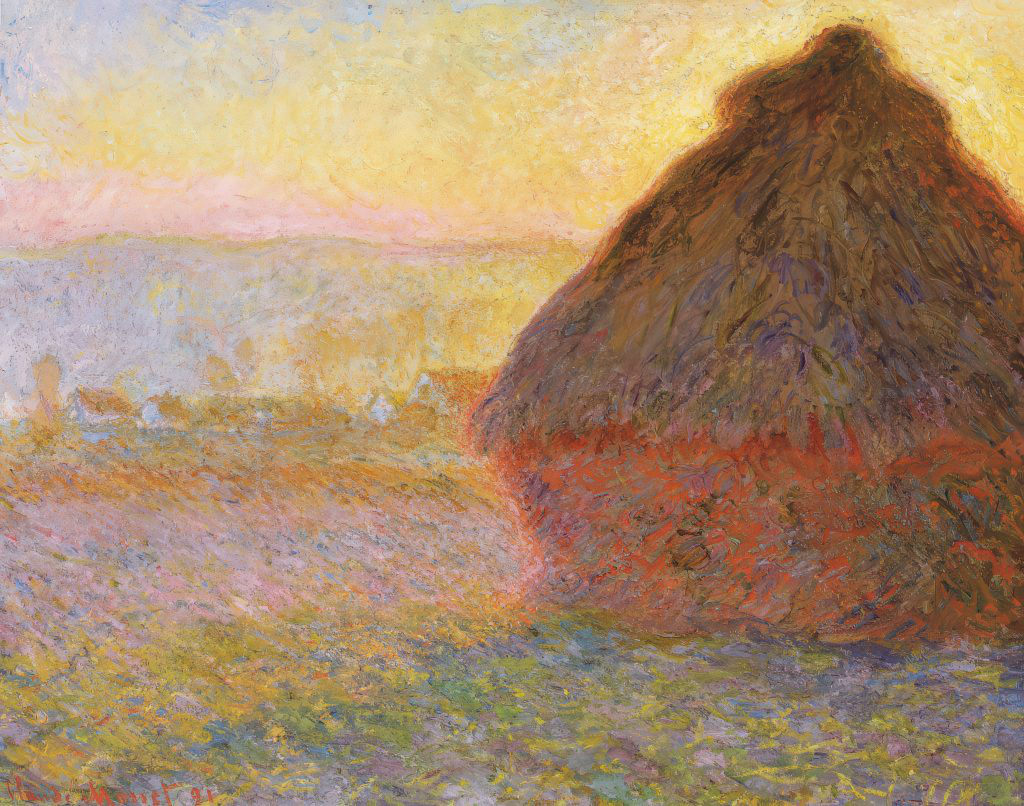
| 1890–1891 | Haystacks (series) | Les Meules | Near Giverny (Seine valley) | Not directly river views, but part of the same landscape and light studies. |
| 1896–1897 | Morning on the Seine (series) | Matinée sur la Seine | Giverny (Seine / Epte) | Highly atmospheric works focusing on mist, reflection, and near-abstraction. |
| 1899–1904 | Water Lilies (early series) | Nymphéas | Giverny (garden, inspired by Seine studies) | Culmination of river-based reflection studies; increasingly abstract. |
The Critic's Eye
Significance of The Seine to Monet's Oeuvre
Art historians often emphasise the importance of the Seine in Monet's life and work. As noted by Jackie Wullschlager, the river was not simply a subject, but a defining structure in the development of Impressionism.
In spring 1869, Monet moved his family to a small rented house at Saint-Michel in the hills above the river at Bougival, twenty minutes by train from the capital. It was the first of his five homes on the Seine as it loops around Paris and then flows north-west into Normandy.
From now on, Monet would live nowhere else in France, and four of these places - Bougival, Argenteuil, Vetheuil and Giverny - are inescapably connected with the staging posts of Impressionism.
Jackie Wullschlager, Monet - The Restless Vision, Allen Lane, PP126-127
This observation highlights how closely Monet's artistic evolution followed the course of the Seine. Each location became the setting for major developments in his style, from early plein air experiments to the mature series paintings of his later years.
Working Methods
Few descriptions capture Monet's working method on the Seine as vividly as this contemporary account. It reveals not only the discipline of his daily routine, but also the physical commitment required to paint directly from nature. Rising before dawn and working from his floating studio, Monet placed himself within the landscape, allowing him to observe the most subtle changes in light and atmosphere.
The crack of dawn, in August, 3:30 a.m. His torso snug in a white woolen hand-knit, his feet in a pair of sturdy hunting boots with thick, dew-proof soles, his head covered by a picturesque, battered, brown felt hat, with the brim turned up to keep off the sun, ...he pushes open the door, walks down the steps, follows the central path through his garden...and comes to the river.
There he unties his rowboat moored in the reeds along the bank, and with a few strokes reaches the large punt at anchor which serves as his studio...
Fourteen paintings have been started at the same time...each the translation of a single, identical motif whose effect is modified by the time of day, the sun, and the clouds. This is where the Epte river flows into the Seine, among tiny islands shaded by tall trees, where branches of the river, like peaceful solitary lakes beneath the foliage, form mirrors of water reflecting the greenery.
Maurice Guillemot, as reported in: Claude Monet La Revue Illustrée, 15 March 1898; in C.F. Stuckey, ed., Monet: A Retrospective, New York, 1985, pp. 195-201
This account highlights the intensity of Monet's process. Rather than completing a single painting, he worked on multiple canvases simultaneously, each corresponding to a precise moment of light. The Seine, with its reflective surfaces and shifting conditions, became the ideal setting for this method, enabling him to capture variations that would otherwise be impossible to recreate.
It also reveals the extraordinary patience behind Impressionism. What may appear spontaneous and immediate is in fact the result of prolonged observation, careful study, and repeated return to the same motif. Monet's studio boat was therefore not simply a convenience, but an essential tool in his pursuit of capturing the fleeting effects of nature.
From Subject to Light: Monet's Radical Simplification
This observation goes to the heart of Monet's artistic breakthrough in the Matinée sur la Seine series. What critics perceived as simplicity was, in fact, a deliberate reduction of subject matter. By stripping the scene down to water, sky, and foliage, Monet removed narrative and detail in order to focus entirely on the changing effects of light and reflection.
The Seine provided the perfect environment for this experiment. Its surface acted as a constantly shifting mirror, dissolving solid forms into colour and atmosphere. In these works, Monet moves beyond traditional landscape painting, treating nature not as a fixed subject, but as a field of visual sensations.
Inevitably the Matinée sur la Seine series was criticised because of the apparent simplicity of its subject, but such criticism ironically struck at the very heart of Monet's intentions: only by getting to the very essence of the landscape by creating a composition of sky, foliage and water could Monet begin his real work which was to capture the effects of light, shadow and reflection. The natural culmination of this process outside this series were the waterlilies paintings which preoccupied him at the end of his life. Monet revealed how succcesful he felt that his emancipation from subject had been when he told his fellow artist Lilla Cabot Perry in the late 1890s that in this series he had, 'carried his effects as far as he could.'
Christie's entry for Matinée sur la Seine, près de Giverny, Impressionist and Modern Art (Evening Sale), 25 June 2001
Seen in this light, the series represents a decisive step toward abstraction. Monet's aim was no longer to describe a place, but to translate perception itself onto the canvas. This explains the direct link to his later Nymphéas, where form dissolves almost entirely into colour, reflection, and light.