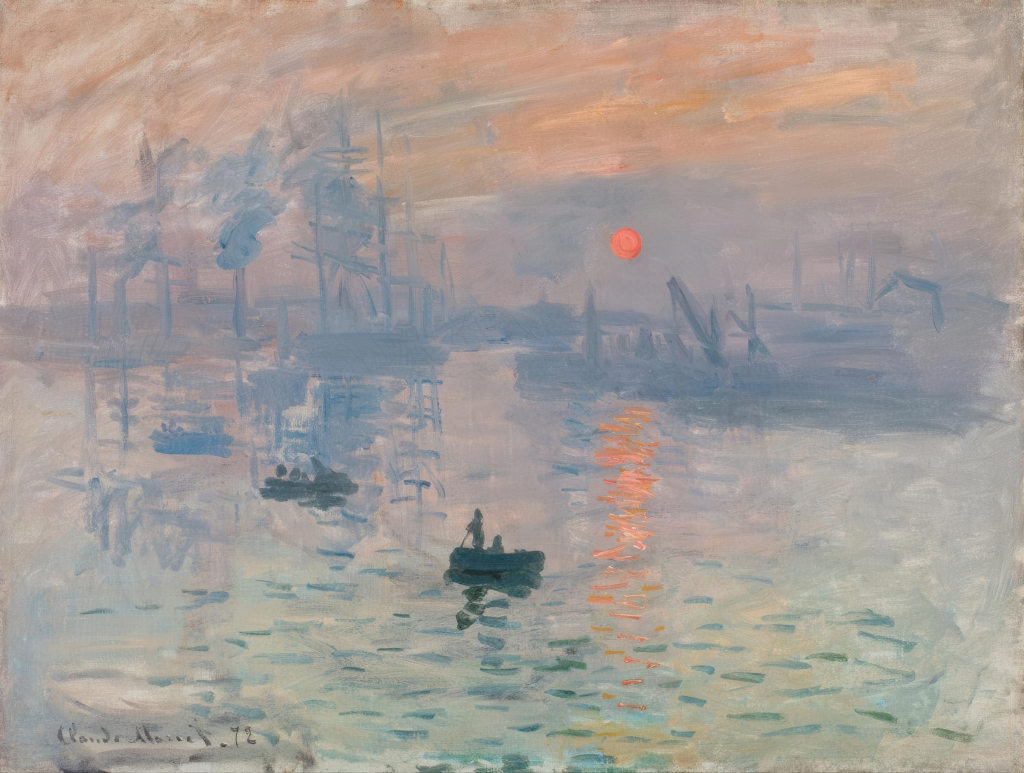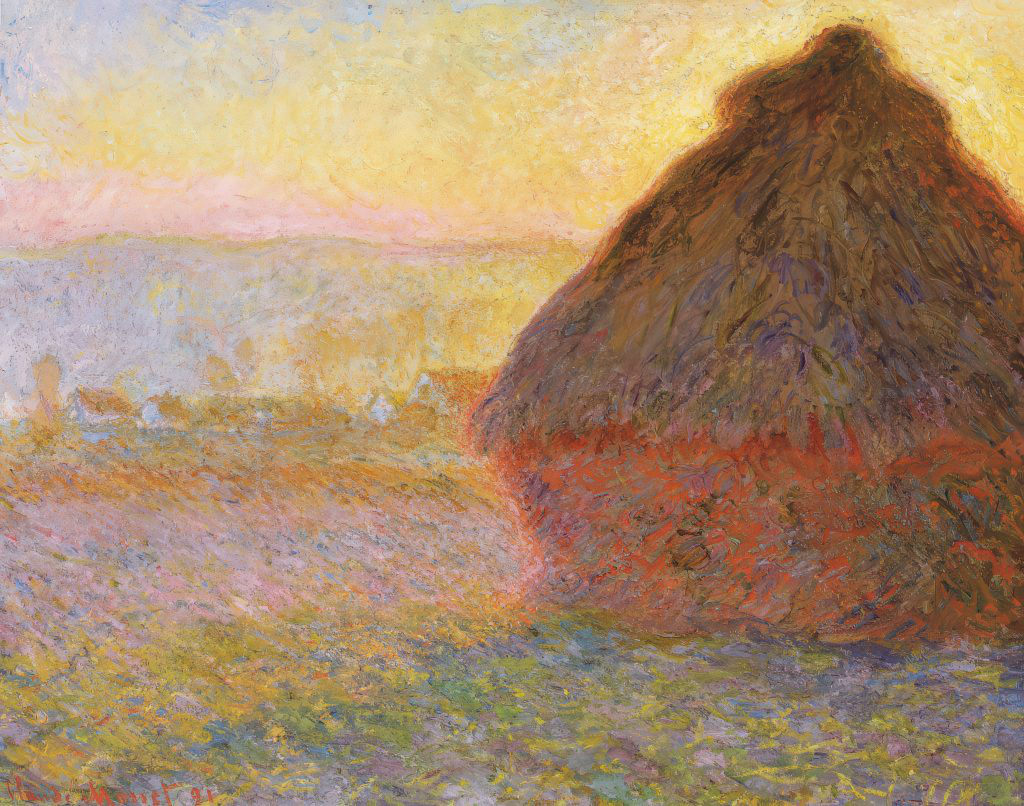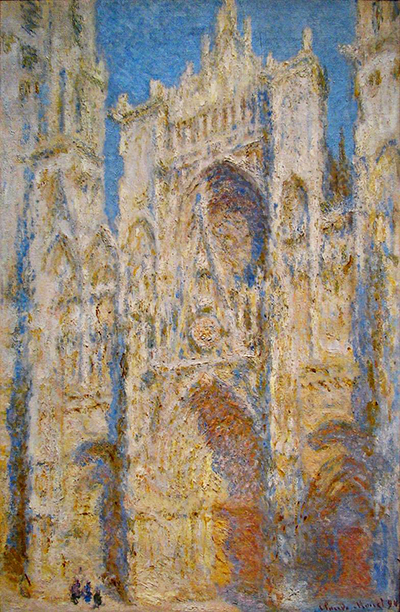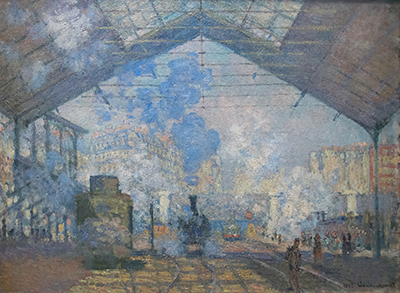
 by Tom Gurney
Tom Gurney BSc (Hons) is an art history expert with over 20 years experience
Published on May 21, 2026 / Updated on May 29, 2026
Email: tomgurney1@gmail.com / Phone: +44 7429 011000
Claude Monet and the Influence of Pierre-Auguste Renoir
Claude Monet and Pierre-Auguste Renoir shared one of the closest friendships within the Impressionist movement. During the 1860s and 1870s, the two artists often painted side by side, exploring rivers, gardens, boating scenes and modern leisure around Paris.
Although their mature styles eventually diverged, Monet and Renoir helped shape each other's early development through their shared commitment to plein-air painting and direct observation. Together, they rejected the rigid traditions of academic art in favour of modern life, changing atmosphere and visible brushwork.
Their friendship became especially important during the formative years of Impressionism, when both artists faced financial difficulties and struggled for recognition outside the official Salon system. Painting together allowed them to exchange ideas about colour, light and composition in real time.
Despite their similarities, important differences also emerged. Monet increasingly focused on atmosphere, reflections and serial observation, while Renoir retained a stronger interest in figures, sociability and human warmth. These differences eventually gave each artist a distinctive place within the Impressionist movement.
Today, Monet and Renoir are remembered not only as two of the leading Impressionists, but also as close artistic companions whose shared experiments helped transform modern painting.
- Artists Claude Monet, Pierre-Auguste Renoir
- Main Connection Friendship & Shared Plein-Air Painting
- Movement Impressionism
- Key Themes Modern Leisure, Rivers, Gardens, Outdoor Light
- Major Difference Monet Focused More on Atmosphere While Renoir Emphasised Figures
Monet and Renoir at a Glance
Although Monet and Renoir worked closely together during the early years of Impressionism, their artistic priorities gradually moved in different directions. This quick comparison summarises the main differences between them.
| Topic | Claude Monet | Pierre-Auguste Renoir |
|---|---|---|
| Main Interest | Atmosphere | People |
| Favourite Subjects | Landscape, water, gardens and changing light | Figures, portraits, social scenes and human warmth |
| Shared Interest | Outdoor light | Outdoor light |
| Later Direction | Water Lilies, serial painting and dissolved form | Classical figures, fuller forms and warmer colour |
| Legacy | Toward abstraction | Toward figurative modernism |
Monet and Renoir Timeline
The friendship between Claude Monet and Pierre-Auguste Renoir lasted more than fifty years. Although their artistic styles gradually diverged, they remained connected through Impressionism, mutual respect and a shared commitment to modern painting.
| Year | Event |
|---|---|
| 1862 | Monet and Renoir meet while studying in the studio of Charles Gleyre in Paris. |
| 1869 | They paint side-by-side at La Grenouillère on the Seine, producing some of the defining works of early Impressionism. |
| 1874 | Both participate in the First Impressionist Exhibition, helping launch the movement publicly. |
| 1880s | Their artistic paths begin to diverge. Renoir moves toward more classical figure painting, while Monet becomes increasingly focused on landscape and atmosphere. |
| 1890s | Renoir visits Monet at Giverny as Monet develops his great series paintings, including Haystacks and Rouen Cathedral. |
| 1919 | Renoir dies at Cagnes-sur-Mer at the age of 78. |
| 1926 | Monet dies at Giverny, leaving behind the monumental Water Lilies cycle. |
Visual Timeline
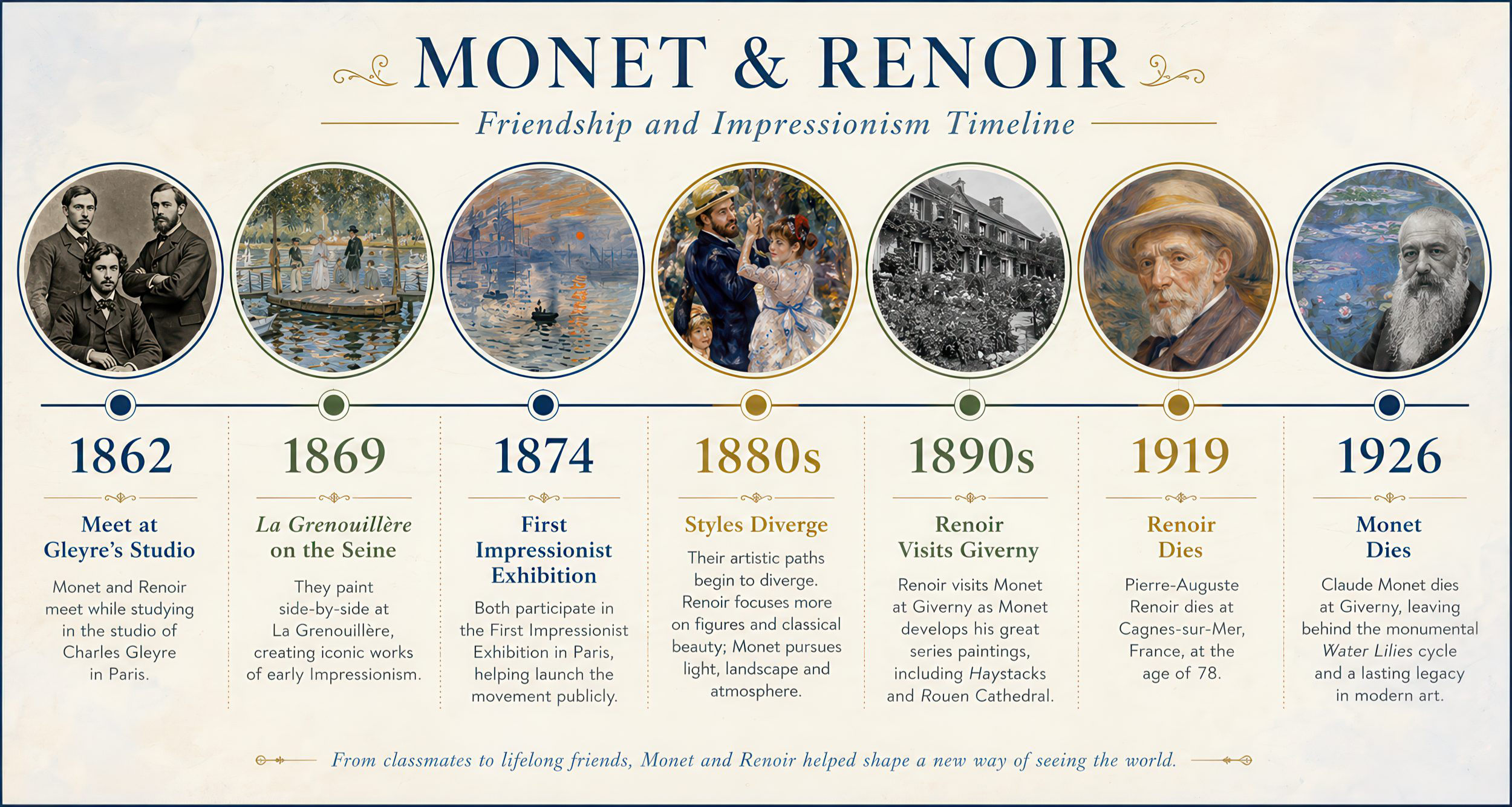
Painting Side-by-Side: Monet and Renoir at La Grenouillère
Among all the friendships within Impressionism, the relationship between Claude Monet and Pierre-Auguste Renoir was one of the closest and most artistically important.
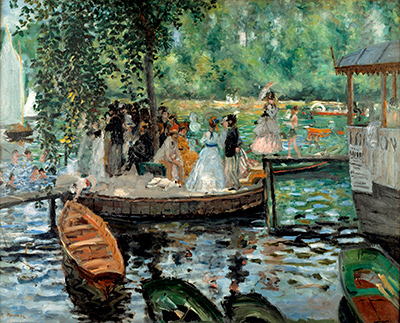
One of the clearest examples of this collaboration can be seen at La Grenouillère, a popular riverside leisure resort on the Seine near Bougival and Croissy. [4] In the summer of 1869, Monet and Renoir painted the same floating café, bathing area and boating scenes side-by-side, often from almost identical viewpoints. These paintings are extraordinarily important because they reveal Impressionism developing collaboratively in real time.
The location itself was perfectly suited to the new Impressionist style. La Grenouillère combined boating, cafés, reflections, moving water, fashionable Parisian leisure and rapidly changing sunlight. Instead of historical subjects or carefully staged studio compositions, Monet and Renoir painted ordinary modern life directly from observation. [5]
Monet and Renoir painted the same floating café and bathing resort at La Grenouillère in 1869, producing one of the clearest visual demonstrations of Impressionism emerging through collaboration.
La GRENOUILLÈRE Compared
Painted side-by-side in 1869, these two works show Monet and Renoir observing the same scene while revealing the subtle differences that would later define their artistic personalities.
Renoir: Social Warmth and Figures
Renoir focuses strongly on people, leisure and social interaction. His figures remain central to the composition, while the flickering reflections and moving water create an atmosphere of pleasure and modern Parisian life.
Monet: Water, Light and Atmosphere
Monet paints the same scene but places greater emphasis on reflections, movement and changing light. The floating café and boats dissolve into broken brushwork and shimmering colour, anticipating the increasingly atmospheric direction of his later art.
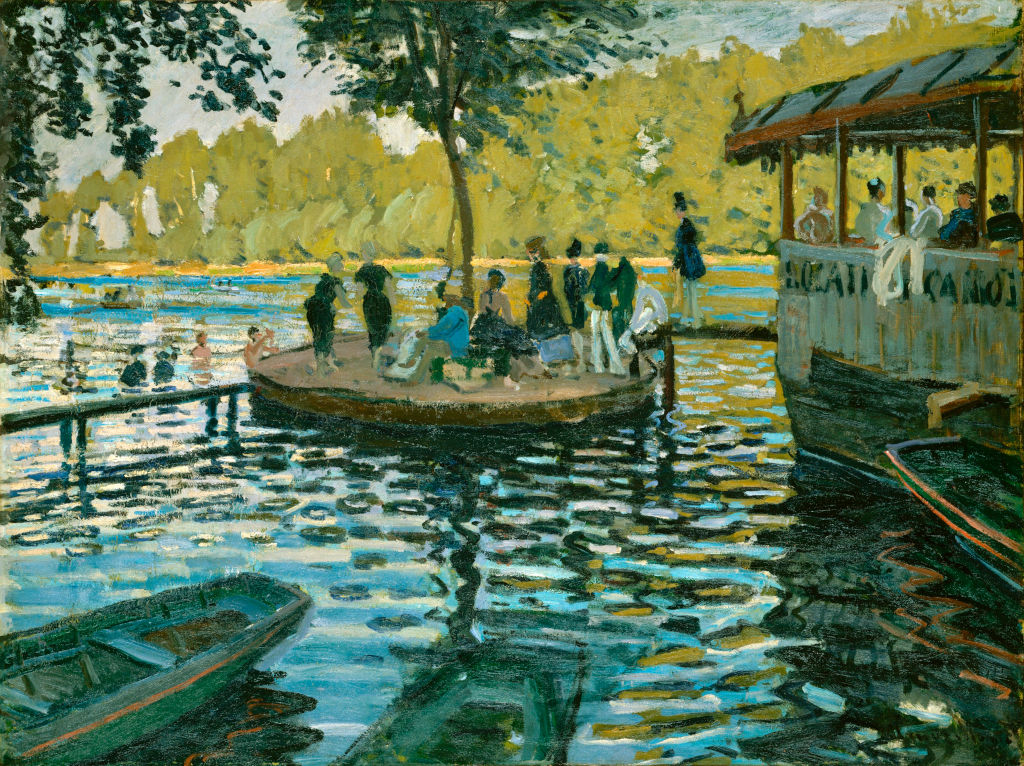
Two Versions of Impressionism Emerging
The comparison between these paintings reveals something fundamental about the development of Impressionism. At this stage, Monet and Renoir were working so closely that their paintings can initially appear remarkably similar. Both use broken brushwork, outdoor light, rapidly painted reflections and modern leisure subjects. Both reject the dark academic finish still dominant within Salon painting. [6]
This divergence would become even stronger later in their careers. Renoir moved increasingly toward figure painting, sensuality and classical softness, while Monet pursued serial landscapes, water surfaces and the dissolution of solid form through changing light.[7]
The Importance of Modern Leisure
La Grenouillère also mattered because it represented a new kind of modern subject. The railway system had made riverside resorts outside Paris easily accessible to the growing middle class, turning places such as Bougival, Chatou and Argenteuil into fashionable leisure destinations. [8]
Monet and Renoir recognised that these modern experiences deserved serious artistic attention. Rather than painting mythology, religion or historical events, they painted boating, cafés, reflections, parasols, bathing platforms and summer afternoons on the Seine. Impressionism therefore emerged not only as a new style, but as a new way of seeing contemporary life.
Painting Together Outdoors
The collaboration at La Grenouillère also demonstrates the importance of plein-air painting to early Impressionism. Monet and Renoir worked rapidly outdoors, trying to capture changing effects before light and weather altered. Their brushwork became looser and more immediate partly because the conditions demanded speed and direct observation.
This shared experience helped strengthen their friendship. During these years both artists also struggled financially, often facing rejection from the Salon and uncertain sales. [9] The development of Impressionism therefore depended not only on individual genius, but on mutual encouragement between artists working under difficult circumstances.
Why La Grenouillère Matters
-
1. It shows Impressionism developing collaboratively
Monet and Renoir painted the same subject side-by-side, allowing us to compare two versions of Impressionism emerging simultaneously. -
2. It introduces modern leisure as a serious subject
Boating, cafés and suburban recreation become worthy of ambitious painting. -
3. It reveals their artistic differences early
Renoir focuses more on people and sociability; Monet increasingly prioritises light, water and atmosphere. -
4. It demonstrates the importance of plein-air painting
Both artists paint directly outdoors, responding to rapidly changing conditions. -
5. It captures the birth of modern Impressionism
The broken brushwork, reflections and immediacy of these paintings helped define the movement itself.
Renoir the Figure Painter, Monet the Landscape Painter
One of the clearest ways to understand the difference between Monet and Renoir is to look at what each artist placed at the centre of Impressionism. Renoir was deeply drawn to people: faces, gestures, conversations, bodies, dresses, dances and social warmth. Monet, by contrast, increasingly treated people as part of a wider environment of light, air, water and weather.
Two Different Temperaments
| Renoir | Monet |
|---|---|
| Interested above all in people, sociability and the human figure | Interested increasingly in landscape, light, water and atmosphere |
| Often turns outdoor scenes into social encounters | Often turns outdoor scenes into optical experiences |
| Uses sunlight to animate faces, clothing and bodies | Uses sunlight to transform water, fields, gardens and buildings |
| Figures remain emotionally and visually important | Figures often become small accents within the landscape |
| Later moved back toward fuller figure painting and classical form | Later moved toward serial landscapes, water surfaces and near-abstraction |
Renoir: Figures in Sunlight
Renoir's genius lay in turning outdoor light into human intimacy. In works such as The Swing, he captures not only dappled sunlight but also a moment of social exchange. The Musée d'Orsay describes the painting as a scene in which a young woman on a swing is watched by a young man, a child and another figure, creating the impression of a conversation suddenly caught in progress. [10]
This is typical of Renoir's early Impressionism. Light flickers across dresses, faces and foliage, but the human encounter remains the emotional centre of the picture. Even when Renoir paints outdoors, the landscape often becomes a stage for sociability.
Monet: Figures Absorbed into Landscape
Monet also painted figures, especially during the 1860s and 1870s, but he increasingly absorbed them into the larger visual field. In Poppy Field, shown at the first Impressionist exhibition in 1874, the Musée d'Orsay emphasises the vibrant atmosphere of a summer walk through the fields. [11] The people are present, but the painting is ultimately about light, colour, air and the sensation of moving through landscape.
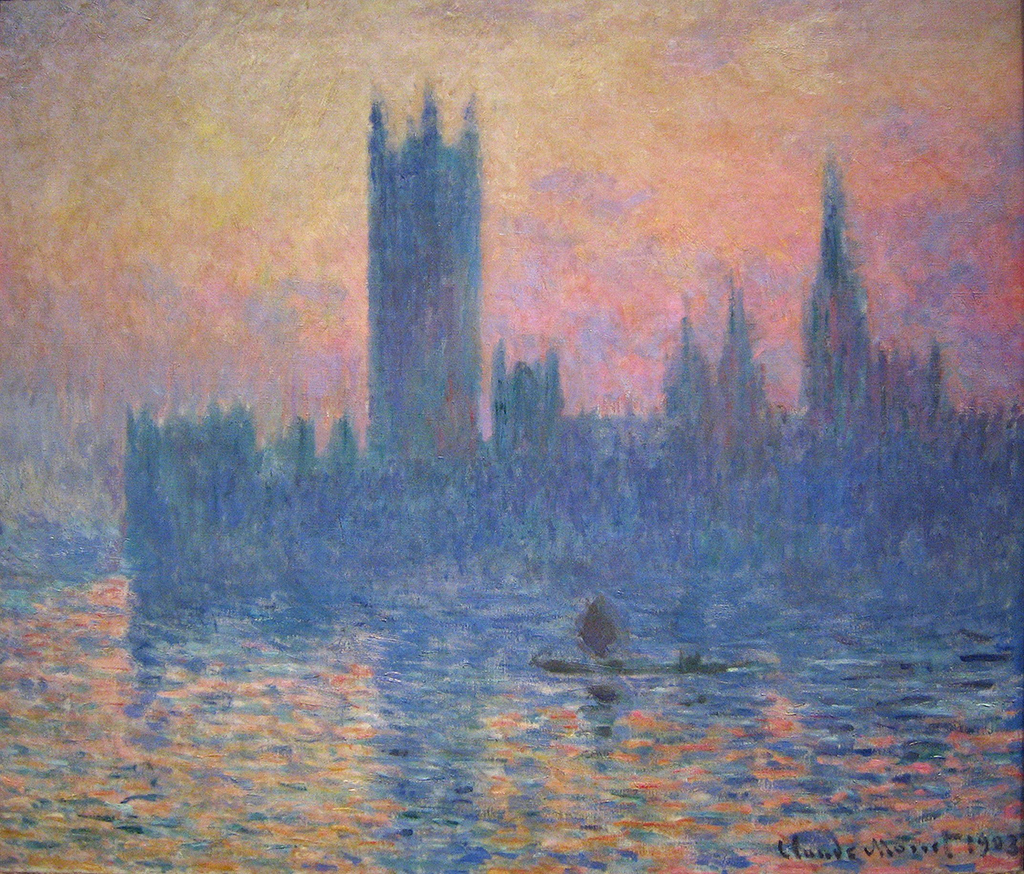
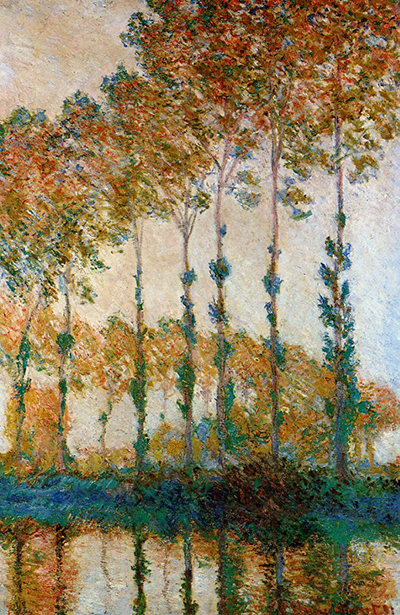
This difference becomes increasingly important across Monet's career. By the time of his later series — Haystacks, Poplars, Rouen Cathedral, London and the Water Lilies — human figures almost disappear. Renoir's Impressionism remained closely tied to people; Monet's increasingly moved toward the environment itself.
Renoir often used landscape to frame human warmth; Monet increasingly used figures as small elements within a larger study of atmosphere.
Figures and LANDSCAPE Compared
These two paintings show how Renoir and Monet could both work within Impressionism while placing emphasis on very different things: human presence for Renoir, atmospheric environment for Monet.
Renoir: The Swing
Renoir turns flickering outdoor light into a scene of human interaction. The figures, glances and social tension matter as much as the broken patches of sunlight.

Monet: Poppy Field
Monet includes figures, but they are absorbed into the landscape. The real subject is the summer atmosphere: red poppies, blue-green field, open air and movement through light.
 Claude Monet.jpg)
Monet and the Dissolution of Form
Monet's late paintings moved in almost the opposite direction. In series such as the Water Lilies, objects become increasingly unstable: reflections merge with sky, horizons disappear and forms dissolve into colour and surface rhythm.[7]
This development has often been connected to modern abstraction. The friendship between Monet and Renoir is therefore fascinating because it begins with two artists painting side-by-side in near harmony, but gradually reveals two very different interpretations of what Impressionism could become.
Why Their Differences Matter
-
1. They show that Impressionism was never a single style
Even artists working closely together could move in very different directions. -
2. Renoir preserved the centrality of the human figure
His art remained rooted in sociability, beauty and human interaction. -
3. Monet increasingly prioritised atmosphere over narrative
Light, reflection and perception became more important than human drama. -
4. Their divergence shaped later modern art
Renoir influenced later figurative painting, while Monet helped open pathways toward abstraction. -
5. Their friendship reveals Impressionism as collaborative yet diverse
The movement grew through shared experimentation rather than strict stylistic unity.
Renoir Visiting Giverny: Friendship in Later Life
Although Monet and Renoir gradually moved in different artistic directions during the later nineteenth century, their friendship endured for decades. Renoir remained one of the artists most closely associated with Monet personally, and visits to Giverny during Monet's later years reveal how the Impressionist circle continued into old age.
Giverny was more than Monet's home. By the late nineteenth century it had become a gathering place for artists, collectors, dealers and friends connected to Impressionism. [21] Renoir visited Monet there repeatedly, joining conversations about painting, gardening, light and the changing future of modern art.
Giverny as an Impressionist Garden
Renoir's visits to Giverny also underline how important Monet's garden became to the final phase of Impressionism. Monet did not simply paint nature passively; he actively designed and cultivated the environment that would become the subject of his art.[24]
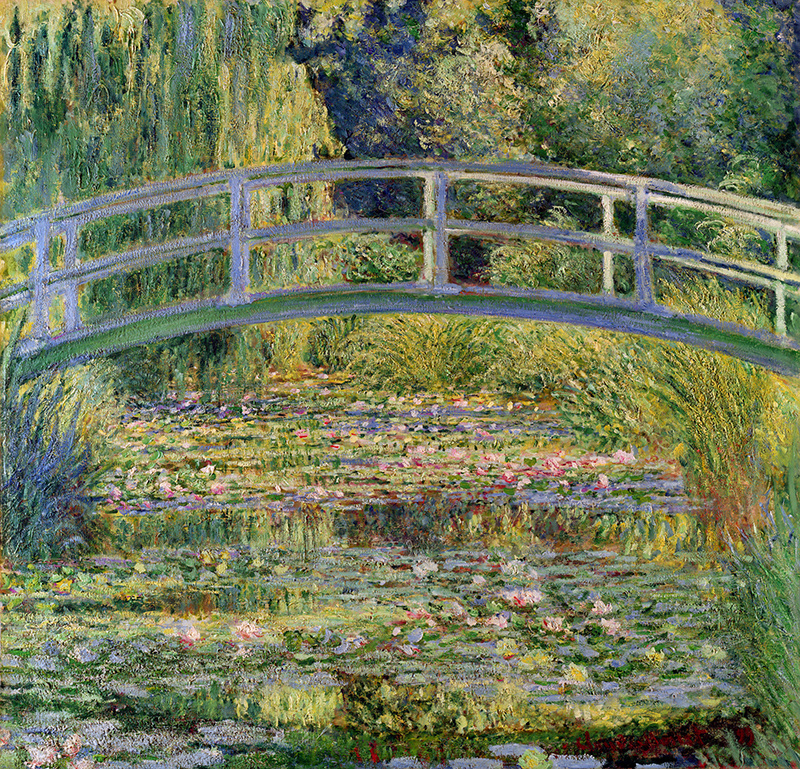
The Japanese bridge, water-lily pond, flower borders and carefully arranged planting schemes transformed Giverny into a living artistic laboratory. Renoir, whose own art remained closely tied to sunlight, warmth and outdoor pleasure, would have recognised the continuity between Monet's earlier Seine paintings and the later garden world of Giverny.
Giverny became both Monet's private world and one of the symbolic centres of late Impressionism.
Late IMPRESSIONISM Compared
By the late nineteenth century, Monet and Renoir were moving toward different artistic futures, yet both remained committed to colour, light and modern painting.
Renoir: Classical Warmth
Renoir's later paintings increasingly emphasise rounded figures, warm flesh tones and stable composition. The human body remained central to his vision of beauty.
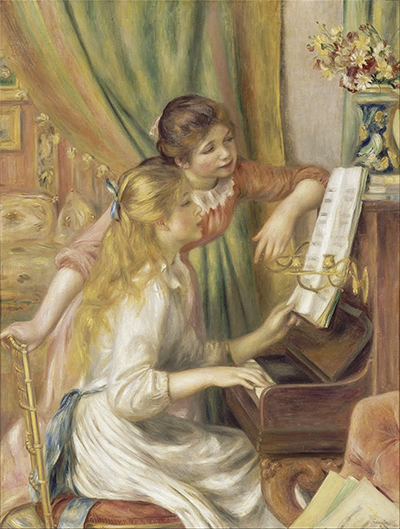
Monet: Water Lilies and Atmosphere
Monet's late paintings dissolve solid form into reflection, water and colour. Human figures disappear almost entirely as atmosphere itself becomes the main subject.
 Claude Monet.jpg)
The Aging Impressionists
The later friendship between Monet and Renoir also carries a certain emotional weight because it reflects the survival of the Impressionist generation into the twentieth century. Many of their closest early companions — including Frédéric Bazille, Gustave Caillebotte and Berthe Morisot — had already died by this point.[9]
Monet and Renoir therefore became living links to the origins of Impressionism itself. Their conversations at Giverny connected the experimental outdoor painting of the 1860s and 1870s to the dramatically changing art world of the twentieth century.
Different Endings to Impressionism
The friendship between Monet and Renoir is particularly fascinating because it demonstrates how Impressionism could lead toward entirely different conclusions.
-
Renoir's direction
A return toward the figure, stability, sensuality and classical beauty. -
Monet's direction
An increasingly immersive exploration of light, atmosphere and dissolved form. -
What they shared
A lifelong belief in colour, outdoor observation and the importance of modern painting.
This is one reason the Monet-Renoir relationship remains so important. Together they helped invent Impressionism, yet their later work reveals that the movement contained many possible futures within it.
Monet and Renoir in the Water: Reflections, Movement and Light
Water became one of the most important subjects shared by Monet and Renoir during the development of Impressionism. Rivers, boating scenes, reflections and shimmering surfaces allowed both artists to explore movement, changing light and the fleeting nature of modern experience. Yet despite their shared fascination with the Seine, the two painters approached water in strikingly different ways.
Renoir generally used water as part of a social world filled with figures, conversation and leisure. Monet increasingly treated water itself as the primary subject: a changing surface capable of reflecting sky, colour, atmosphere and time.[24]
Renoir: Water as Social Space
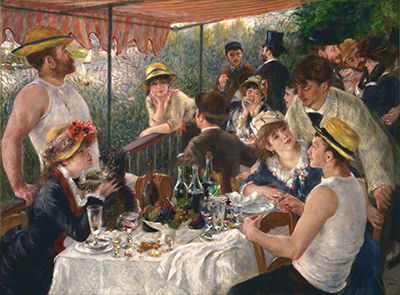
Renoir's boating and riverside scenes often emphasise companionship, pleasure and sociability. In works such as Luncheon of the Boating Party, the river forms part of a larger atmosphere of friendship and modern leisure.[28]
Even when Renoir paints reflections or moving water, the emotional centre of the painting usually remains human. Faces, gestures, conversation and fashionable dress continue to dominate the scene. Water enriches the setting, but rarely overwhelms it.
Renoir uses water to create warmth, sociability and pleasure; Monet increasingly uses water to dissolve form and transform perception itself.
Water and REFLECTION Compared
Although Monet and Renoir both painted riverside leisure and reflections, their artistic priorities gradually became very different.
Renoir: Boating and Sociability
Renoir's river scenes celebrate modern leisure, companionship and outdoor pleasure. The reflections and water movement support the social atmosphere rather than dominating the composition.
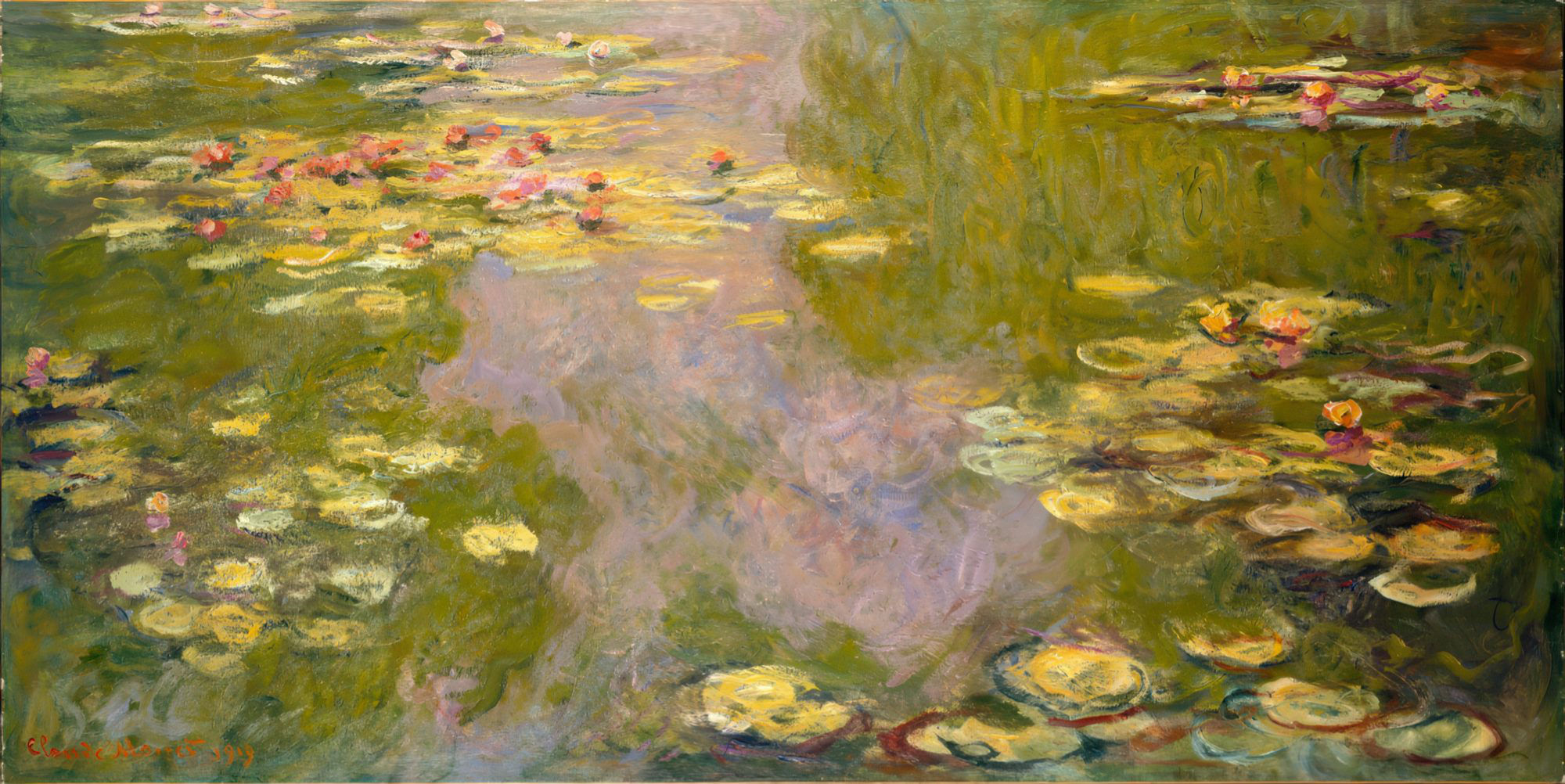
Monet: Reflection as Subject
Monet increasingly turns reflection itself into the main subject of the image. Water becomes unstable, immersive and atmospheric, anticipating the radical surfaces of the late Water Lilies.
Monet and the Dissolution of Solid Form
Monet gradually pushed the study of water further than any other Impressionist. In the Water Lilies, reflections of clouds, trees and sky merge together upon the pond surface until conventional distinctions between objects begin to disappear.[29]
This transformation is one of the reasons Monet became so important to later modern art. Water allowed him to create paintings without fixed horizon lines, stable perspective or clearly separated forms. The surface of the pond became an almost abstract field of colour, rhythm and atmosphere.
Renoir never moved so far in this direction. His paintings remained anchored by the human figure and by the emotional warmth of social experience.
The Shared Language of Broken Brushwork
Despite these differences, Monet and Renoir still shared many technical innovations. Both artists used:
-
Broken colour
Small strokes of separate colour create vibrating reflections and shimmering surfaces. -
Rapid outdoor brushwork
Paint was applied quickly to capture changing conditions before the light altered. -
High-keyed palettes
Both artists rejected the dark tonalities common in academic painting. -
Modern riverside subjects
Boating, cafés and leisure on the Seine became central themes of Impressionism.
These innovations helped define the visual identity of Impressionism itself. Water was especially important because it constantly challenged traditional ways of representing stable form.
From the Seine to the Water Lilies
The evolution of Monet's art can almost be traced through water alone. Early Seine paintings at Argenteuil explore reflections and boating culture; later works from London investigate fog and atmosphere over the Thames; finally, the ponds at Giverny become immersive worlds of reflection and colour.
In this sense, Monet transformed the Impressionist fascination with riverside modernity into something much more radical. Water ceased to be merely part of the landscape and became the landscape itself.
Why Water Mattered to Impressionism
-
1. Water reflected changing light instantly
It allowed Impressionists to study shifting colour and atmosphere directly. -
2. Water encouraged broken brushwork
Ripples and reflections were difficult to render through smooth academic painting. -
3. Water symbolised modern leisure
Boating and riverside recreation became defining subjects of Impressionist modernity. -
4. Monet pushed water toward abstraction
The Water Lilies transformed reflection into immersive atmospheric surface. -
5. Renoir kept water connected to people
His river scenes remained rooted in friendship, conversation and social warmth.
Painting Camille Monet: Friendship, Family and the Impressionist Muse
One of the most revealing aspects of the friendship between Monet and Renoir is the way both artists painted members of each other's social circle, especially Camille Monet. During the late 1860s and 1870s, Camille became one of the defining figures of early Impressionism, appearing repeatedly in outdoor scenes, gardens, promenades and domestic interiors.
Her presence within the art of both Monet and Renoir demonstrates how closely connected the Impressionist circle really was. These artists were not isolated painters working separately, but friends who shared models, locations, family life and artistic ideas.[9]
Camille Monet and Early Impressionism
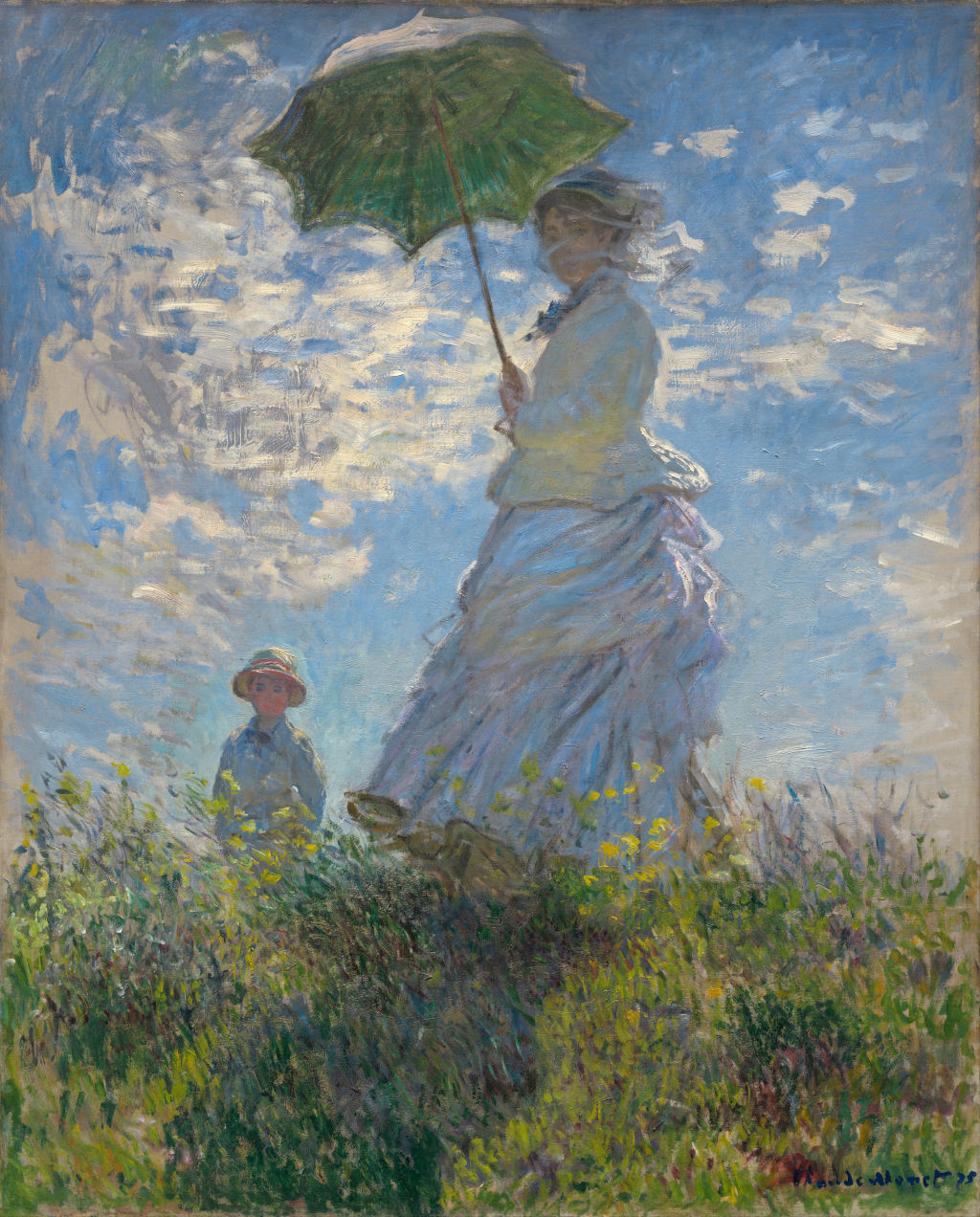
Camille Doncieux first met Claude Monet during the 1860s and quickly became both his companion and one of his most important artistic subjects. She appears in many of Monet's major early works, including Women in the Garden, La Japonaise, Woman with a Parasol and numerous garden and riverside scenes.[31]
These paintings helped define some of the essential qualities of Impressionism itself: sunlight filtering through fabric, movement in outdoor air, fleeting shadows, fashionable modern dress and the merging of figure with landscape.
But Camille was not important only to Monet. Renoir also painted members of the Monet household and moved within the same close social environment. This overlapping network of families and friendships became central to the collaborative atmosphere from which Impressionism emerged.
Modern Life and the Impressionist Woman
Camille Monet represented a new kind of artistic subject. Rather than mythological heroines or aristocratic portraits, she appeared as a modern woman moving through gardens, fields, promenades and riverside settings. Impressionism transformed ordinary contemporary experience into a worthy subject for ambitious painting.
Renoir and Monet approached these scenes differently. Renoir tended to emphasise sociability, intimacy and the emotional warmth of human presence, while Monet increasingly integrated figures into the broader atmosphere of the landscape itself.
Camille Monet became one of the central figures through which Impressionism explored modern fashion, sunlight, movement and outdoor life.
Camille and IMPRESSIONISM Compared
Monet and Renoir both painted within the same social world of gardens, leisure and modern Parisian life, yet each artist approached the figure differently.
Renoir: Intimacy and Human Warmth
Renoir's paintings often place emotional warmth and human presence at the centre of Impressionism. Figures remain socially and psychologically important even within outdoor settings.
Monet: Camille in Landscape
Monet increasingly merges Camille with atmosphere and environment. Light, wind, grass and sky become as important as the figure itself.
The Emotional Dimension of Impressionism
The friendship between Monet and Renoir also reminds us that Impressionism contained a deeply emotional and personal dimension. These paintings are not detached observations of modern life. They depict friends, partners, children and shared experiences.
Camille Monet's repeated presence gives many early Impressionist works a sense of intimacy and humanity that helps explain their enduring appeal. The movement was revolutionary in technique, but it was also built upon ordinary human relationships.
Why Camille Monet Matters
-
1. She became one of the defining figures of Impressionism
Camille appears in many of Monet's most important early paintings. -
2. She connected art with modern life
Instead of mythological subjects, Impressionism focused on contemporary people and everyday experience. -
3. She reveals the collaborative nature of the Impressionist circle
Monet and Renoir moved within overlapping social and artistic networks. -
4. She helped Monet study movement and atmosphere
Wind, fabric, light and landscape merge together in works such as Woman with a Parasol. -
5. She humanises the history of Impressionism
The movement developed through friendship, family and personal relationships as much as through formal theory.
Monet and Renoir During Poverty and Struggle
The early years of Impressionism were shaped not only by artistic innovation, but also by financial hardship, rejection and uncertainty. Before Monet and Renoir became celebrated figures in modern art, both artists struggled for years with poverty, unstable housing, lack of official recognition and repeated rejection from the Salon.
This shared experience helped strengthen the friendship between them. Monet and Renoir were not simply artistic allies; they belonged to a younger generation of painters attempting to survive outside the traditional academic system.[9]
Rejected by the Salon
During the 1860s and early 1870s, official recognition in France depended heavily upon acceptance into the annual Paris Salon. Paintings rejected by the Salon were difficult to sell, and artists outside the academic system often faced severe financial insecurity.[27]
Monet and Renoir both struggled within this environment. Their rapidly painted outdoor scenes, broken brushwork and modern subjects challenged academic expectations that favoured historical painting, polished surfaces and idealised compositions.
The rejection of these younger artists by official institutions eventually helped lead to the independent Impressionist exhibitions beginning in 1874. What later became celebrated as revolutionary modern art was initially viewed by many critics as unfinished or even incompetent.
Painting Together Under Difficult Conditions
The friendship between Monet and Renoir deepened partly because they experienced these difficulties together. During the late 1860s they often painted side-by-side outdoors at locations such as La Grenouillère, sharing materials, ideas and encouragement while living under constant financial pressure.[12]
Both artists frequently struggled to afford canvases, rent and daily necessities. Monet's letters from the period repeatedly describe debt, unpaid bills and anxiety about supporting Camille and their growing family.[17]
Renoir faced similar uncertainty. Despite his immense later fame, he spent many years dependent upon irregular commissions and occasional support from friends or patrons.
The birth of Impressionism was not glamorous. Monet and Renoir often painted together while facing debt, rejection and uncertain futures.
Struggle and AMBITION Compared
Even during years of poverty and rejection, Monet and Renoir continued experimenting with new ways of painting modern life outdoors.
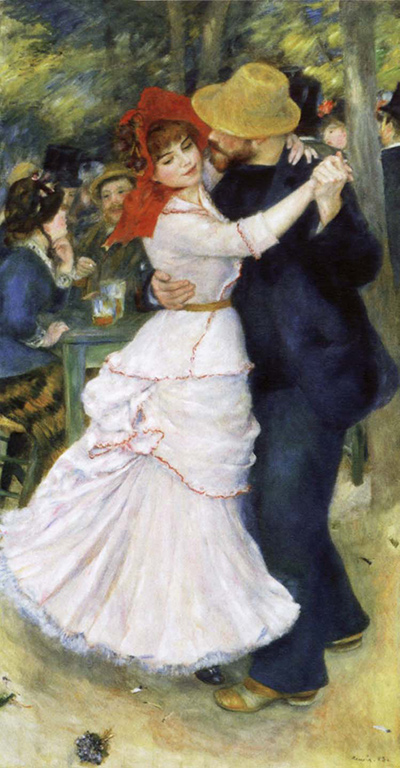
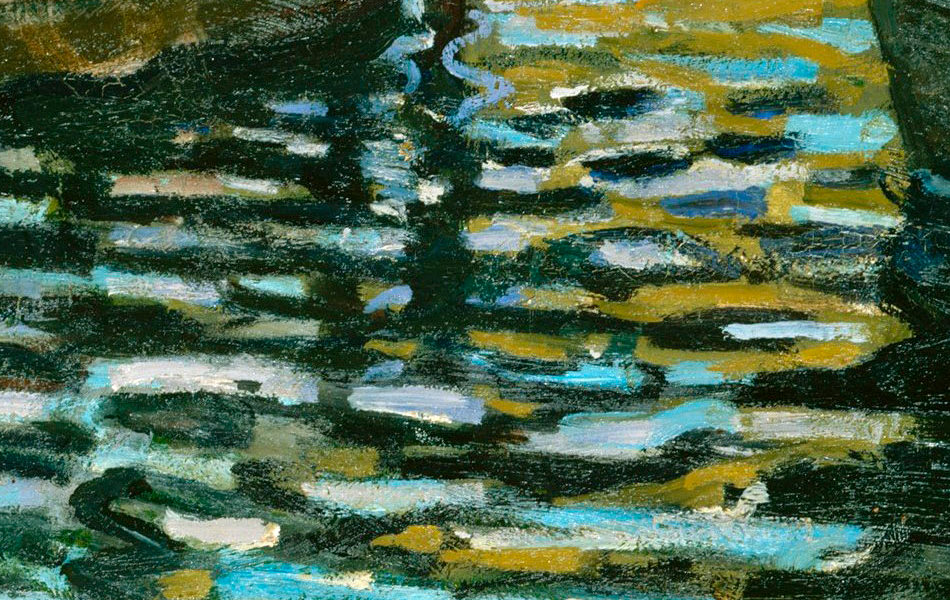
Renoir: Modern Leisure Despite Hardship
Renoir's paintings often celebrate warmth, sociability and pleasure, even though many were created during periods of financial instability and artistic uncertainty.
Monet: Experimentation in Difficult Years
Monet continued exploring outdoor light and atmosphere despite severe financial pressures. Many of his most innovative early paintings were created during periods of hardship.
Collectors and Survival
The survival of Monet and Renoir during these difficult years also depended upon a small number of supportive collectors and dealers. Figures such as Paul Durand-Ruel played a crucial role by purchasing works and promoting Impressionist painting despite widespread scepticism.[40]
Without this fragile support system, Impressionism might easily have collapsed under financial pressure. The movement survived partly because artists, dealers and collectors formed unusually close networks of mutual dependence.
Monet's Financial Crises
Monet's financial situation during the 1860s and 1870s was often severe. At times he struggled to pay rent, purchase supplies or support Camille and their children. Letters from the period describe debt collectors, unpaid bills and moments of deep despair.[7]
This reality gives additional meaning to the bright sunlight and leisure scenes of early Impressionism. The paintings often depict pleasure, boating and gardens, yet they were created under conditions of instability and uncertainty.
Renoir's Persistence
Renoir likewise spent many years without secure success. His later reputation for warmth, beauty and pleasure can sometimes obscure how difficult the early years were financially.[42]
Like Monet, Renoir continued painting because he believed modern life required a new artistic language. Their perseverance under difficult circumstances helped transform the direction of Western painting.
Why Their Struggles Matter
-
1. Impressionism emerged through hardship
Monet and Renoir developed their ideas while facing poverty and rejection. -
2. Friendship sustained artistic experimentation
The Impressionists encouraged and supported one another emotionally and creatively. -
3. The Salon system resisted modern painting
Early Impressionist works were often dismissed as unfinished or amateur. -
4. Dealers and collectors became essential
Support from figures such as Durand-Ruel helped the movement survive financially. -
5. Their success was never guaranteed
The future masters of Impressionism spent years struggling for recognition and stability.
The Break Between Monet and Renoir: Two Different Futures for Impressionism
Although Monet and Renoir remained lifelong friends, their artistic paths gradually separated during the late nineteenth century. By the 1880s, the similarities that had once united them at places such as La Grenouillère became less pronounced, and each artist began pursuing a very different vision of what Impressionism could become.
This divergence is one of the most fascinating aspects of their relationship. Monet and Renoir helped invent Impressionism together, yet they ultimately arrived at almost opposite conclusions about the future of modern painting.
Renoir's Dissatisfaction with Impressionism
By the early 1880s, Renoir had begun to feel dissatisfied with certain aspects of Impressionist painting. He later remarked:
"I had travelled as far as Impressionism could take me."
Pierre-Auguste Renoir [23]
Renoir increasingly worried that Impressionism lacked permanence, structure and solidity. After travelling to Italy and studying Raphael and other Renaissance masters, he began moving toward firmer outlines, more sculptural figures and clearer composition.[18]
This transition is often described as Renoir's so-called "Ingres period", during which he reintroduced stronger drawing and more classical forms into his work. While he retained Impressionist colour and outdoor light, he no longer wanted painting to dissolve entirely into fleeting optical sensation.
Monet Moves in the Opposite Direction
Monet responded very differently to the challenges of Impressionism. Rather than returning toward structure and solidity, he pushed even further into the study of changing atmosphere and perception.
During the 1880s and 1890s Monet increasingly abandoned traditional single-image compositions in favour of serial painting. Haystacks, poplars, Rouen Cathedral, London bridges and finally the Water Lilies became opportunities to study how light transformed the same motif under different conditions.[17]
This represented a radically different vision of modern painting from Renoir's. Monet became less interested in permanent form and more interested in instability: reflection, weather, fog, changing seasons and the passage of time itself.
Where Renoir sought stability and human beauty, Monet increasingly embraced instability, atmosphere and optical transformation.
Two Different FUTURES for Impressionism
By the late nineteenth century, Monet and Renoir had moved toward very different interpretations of modern painting, despite their shared beginnings within Impressionism.
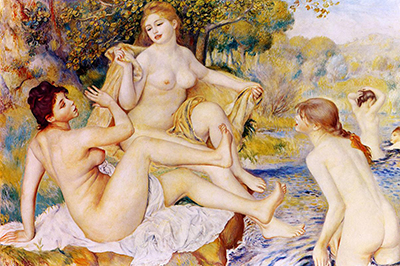
Renoir: Return to Form
Renoir increasingly emphasised stable figures, warm flesh tones and classical balance. Human beauty remained central to his artistic vision.
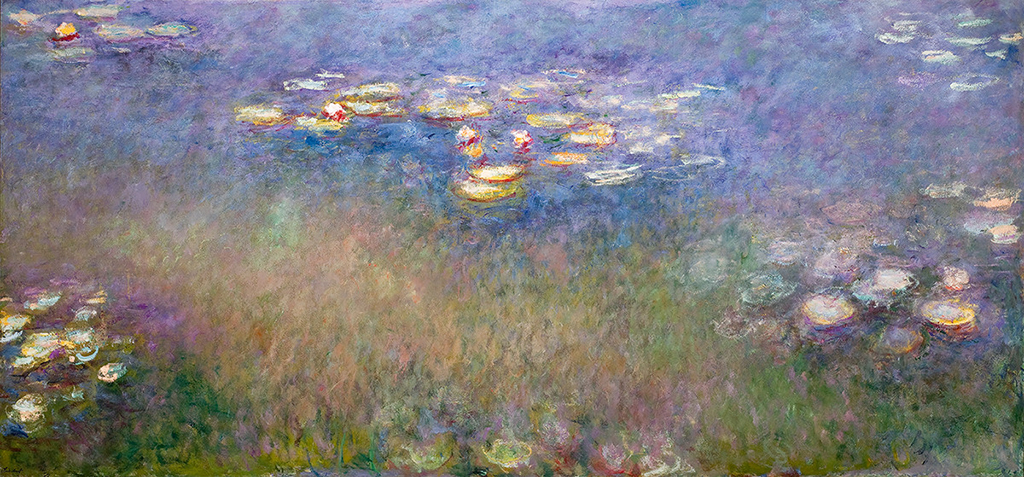
Monet: Atmosphere and Dissolution
Monet increasingly dissolved solid forms into reflection, colour and changing light. His late paintings approach abstraction through atmosphere alone.
Different Philosophies of Painting
The separation between Monet and Renoir eventually became philosophical as well as stylistic.
Renoir believed painting should preserve a sense of timeless beauty, human warmth and permanence. Even while embracing modern life and outdoor colour, he remained deeply committed to the figure tradition that stretched back through Titian, Rubens and Raphael.[42]
Monet, by contrast, increasingly abandoned traditional ideas of composition and permanence. His late works often eliminate stable horizons entirely, immersing the viewer within floating surfaces of colour and reflection. [24]
This is why Monet became so important to later twentieth-century abstraction. Artists such as Mark Rothko, Jackson Pollock and the Abstract Expressionists later admired the immersive atmospheric quality of the Water Lilies. [48]
Friendship Despite Difference
Despite these artistic differences, Monet and Renoir remained close personally. Renoir continued visiting Monet at Giverny during later life, and both artists retained deep respect for one another's achievements. [9]
This enduring friendship is one reason their relationship remains so compelling historically. The story is not about rivalry or hostility, but about two artists beginning from shared experimentation and gradually discovering different futures within modern art.
The Legacy of Their Divergence
The divergence between Monet and Renoir shaped later art history profoundly:
-
Renoir's legacy
Later figurative painters admired his warmth, colour, sensuality and devotion to the human body. -
Monet's legacy
Modern abstraction and colour-field painting drew inspiration from his immersive atmospheric surfaces. -
Shared legacy
Both artists helped establish modern painting as a direct response to perception, light and contemporary life.
References
- The Metropolitan Museum of Art, “Claude Monet: La Grenouillère,” The Met Collection, View source.
- The Metropolitan Museum of Art, “Claude Monet and Pierre-Auguste Renoir at La Grenouillère,” The Met Heilbrunn Timeline of Art History, View source.
- The National Gallery, London, “Pierre-Auguste Renoir: La Grenouillère,” The National Gallery Collection, View source.
- John House, Impressionism: Paint and Politics, New Haven: Yale University Press, 2004.
- John House, Renoir, London: Thames & Hudson, 1985.
- Jackie Wullschlager, Monet - The Restless Vision, Milton Keynes: Allen Lane, 2023.
- Musée d'Orsay, “La Grenouillère and Modern Leisure on the Seine,” Musée d'Orsay Collection, View source.
- Musée d'Orsay, “Auguste Renoir: La Balançoire,” Musée d'Orsay Collection, View source.
- Musée d'Orsay, “Claude Monet: Coquelicots,” Musée d'Orsay Collection, View source.
- Sue Roe, The Private Lives of the Impressionists, London: HarperCollins, 2006.
- T.J. Clark, The Painting of Modern Life: Paris in the Art of Manet and His Followers, Princeton: Princeton University Press, 1985.
- Daniel Wildenstein, Monet: The Triumph of Impressionism, Cologne: Taschen, 2015.
- Daniel Wildenstein, Monet: Catalogue Raisonne, Cologne: Wildenstein Institute and Taschen, 1996.
- The Art Institute of Chicago, “Pierre-Auguste Renoir and the Italian Journey,” Art Institute Essays, View source.
- Fondation Claude Monet, “Monet's House and Gardens at Giverny,” Maison et jardins de Claude Monet, View source.
- Ambroise Vollard, Renoir: An Intimate Record, New York: Dover Publications, 2001.
- Marianne Mathieu, Monet: The Water Lily Obsession, Paris: Musée Marmottan Monet, 2018.
- John Rewald, The History of Impressionism, New York: Museum of Modern Art, 1973.
- The Phillips Collection, “Pierre-Auguste Renoir: Luncheon of the Boating Party,” The Phillips Collection, View source.
- The Museum of Modern Art, "Claude Monet: Water Lilies," MoMA Collection, View source.
- National Gallery of Art, "Claude Monet: Woman with a Parasol - Madame Monet and Her Son," National Gallery of Art Collection, View source.
- Musée Marmottan Monet, “Impression, Sunrise and the Birth of Impressionism,” Musée Marmottan Monet, View source.
- Paul Durand-Ruel, Memoirs of the First Impressionist Art Dealer, Paris: Flammarion, 2014.
- Barbara Ehrlich White, Renoir: His Life, Art and Letters, New York: Abrams, 1984.
- The Museum of Modern Art, "Monet's Water Lilies and Modern Painting," MoMA Essays, View source.