by Tom Gurney
Tom Gurney BSc (Hons) is an art history expert with over 20 years experience
Published on October 6, 2016 / Updated on March 17, 2026
Email: tomgurney1@gmail.com / Phone: +44 7429 011000
Brought to life in 1869, Claude Monet's La Grenouillere epitomises the Impressionist style of painting,
This masterpiece exemplifies the use of light and dark shades to give a feeling of depth, a principle which resonates the canvas and brings the painting to life.
Description
Dressed in all manner of outfits, from long black bathing costumes on the women at left to the higher-class top-hatted tier of men in white pants, as well as, crinolined long-skirted women to the right, a mass and multiplicity of coloured keys invade the foreground of the painting
Surrounded by rowboats for rent in the focal point, with shirtless swimmers to the left, and visitors to the magnificent floating restaurant to the right, the mixture of all classes at La Grenouillere makes it an unusual spectacle to behold.
- Artist: Claude Monet
- Year: 1869
- Medium: Oil on canvas
- Movement: Impressionism
- Location Painted: La Grenouillère, Seine River, France
- Current Locations: Metropolitan Museum of Art (New York) & Nationalmuseum (Stockholm)
- Subject: Boating, leisure, riverside life
- Key Themes: Modern life, light on water, Impressionist technique
Technique
Fast, sharp, brilliant and vibrant, with brushstrokes detached from each other but collectively capturing the ephemerality of nature, stunning and transient moments illuminated by carefully placed strokes of colour creating a magnificent contrast vivid and breath-taking to the eye, and relishing to the soul.
Throughout the canvas, Monet makes use of white spots to bring out the light, with blue spreads representing the sky, and different green intensities testifying mobility of the foliage, an astute combination of keys and pure colours enabling Monet to obtain beautiful reflections of the water.
Monet paid close attention to the repetitive elements of the painting, from the ripples on the water, the boats, the human figures, to the foliage, weaving a fabric of beautiful brushstrokes retaining a robust descriptive quality.
The palette is also noticeably lighter than in Monet's earlier works. Blues, greens, and soft earth tones dominate the composition, punctuated by brighter highlights that suggest sunlight glinting on the water.
Importantly, Monet was not attempting to produce a perfectly finished image. Instead, he was trying to capture a moment — an impression — of what he saw before him. This shift in artistic intention lies at the heart of Impressionism.
Where is La Grenouillere?
La Grenouillere, located on the Seine between Chatou and Bougival, was a renowned, fashionable, deluxe middle-class resort, consisting of a floating café, a boating establishment and a spa for the emerging middle class to fully marvel and relish the new found pleasures of suburban Paris and escape the heat of the city.
The atmosphere was lively, informal, and distinctly modern — exactly the kind of subject that appealed to both artists.
Easily accessible by train from Paris, Monet recognised La Grenouillere, as the ideal subject for epitome images of leisure he hoped to sell. Accessible by wooden walkways, people would meet and socialise before progressing to the bar of La Grenouillere.
The most distinctive feature of the site was a small circular island planted with a single tree. This island became known as the Camembert due to its shape and was frequently included in both Monet and Renoir's compositions.
Meaning of La Grenouillere
The name La Grenouillere gained a lot tact and attention because of its double meaning; being that it's not only the French term for 'Frog Pond', but also was colloquially used to describe a class of unattached young women. Satisfying any whim, and going nonchalantly from a mansion on the Champs-Elysees, to a garret in the Batignolles.
Connection to Impressionism
Born in Paris 1840, Claude Monet is one of the applauded leaders of Impressionism during his era. The term Impressionism was first launched in 1874, for the group of painters whose work was deemed indefinable and scandalous. Impressionists, had two grounded wills in common, to paint modern life in all its magnificence and bravura, and the second being clear depictions in variations of light and time.
It was during their studies in furthering their careers that Claude Monet and Renoir met in the Gleyre workshop, their master of whom encourage them to embrace and paint in the open air. It was in 1869, that Monet and Renoir brought the La Grenouillere painting to life.
Claude Monet and Pierre-Auguste Renoir worked side by side at La Grenouillère, and had both planned to capture this location in their work for many months. Their paintings of this location are now widely regarded as some of the earliest true expressions of what would soon become Impressionism. It was particularly their attention to the water surface which connects to the later movement.
Both Renoir and Monet were focused on modern life, and how to make use of it in their work. They struggled for acceptance, due to this modern mindset, and so financial security was a long way away at this point. It was then that everyday leisure would start to appear in their work - people bathing, boating, socialising and enjoying leisure time along the river.
Large Image of Monet's La Grenouillere
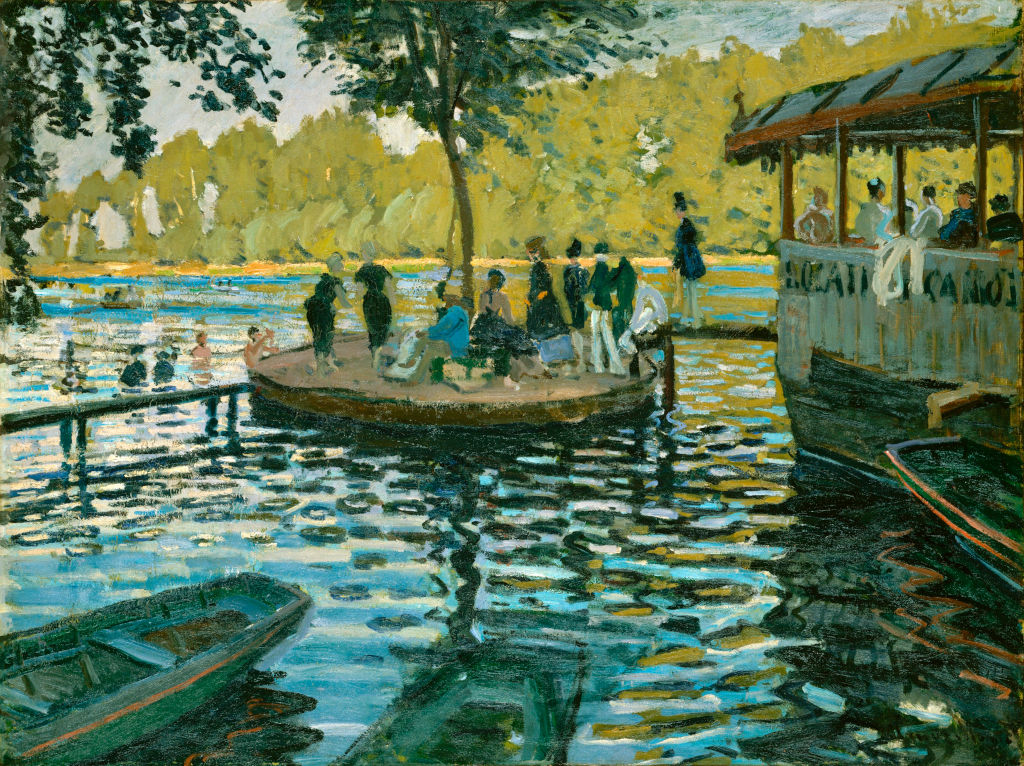
La Grenouillere, Claude Monet, 1869
Monet and Renoir Painting Together
One of the most remarkable aspects of the La Grenouillère paintings is that Monet and Renoir worked side by side, depicting the same scene from nearly identical viewpoints. They did, however, differ greatily in the manner in which they displayed the scene on canvas.
Both focused on the shimmering light, particularly in how it impacted the water surface of the pond. Such a focus was not suited to traditional painting techniques, and so both artist brought about new methods for capturing a very unique moment. Their discovery was in free, relaxed brushwork, brighter tones and a willingness to purposely reduce detail.
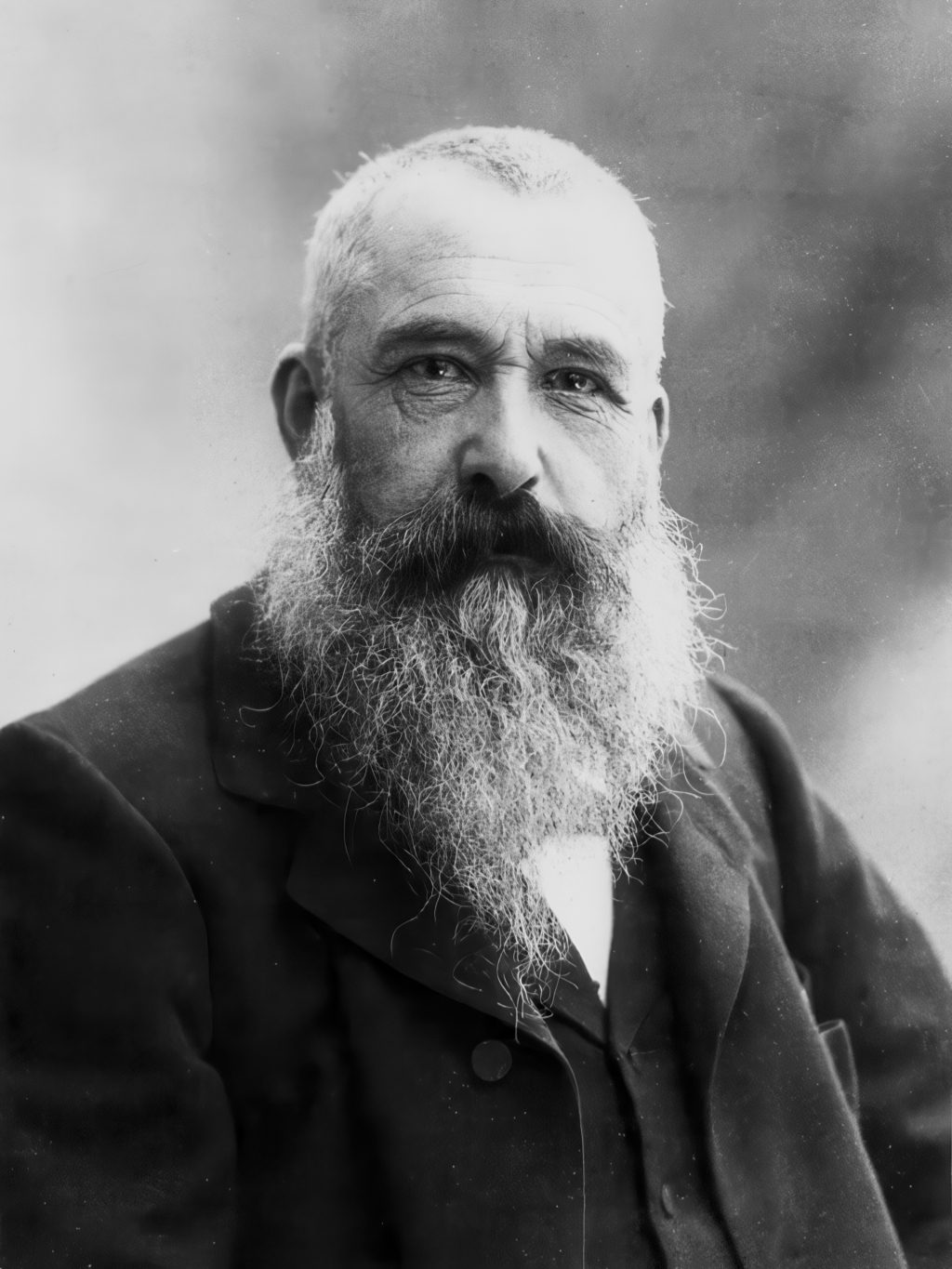
I indeed have a dream, a painting of bathing at La Grenouillère, for which I have made some bad sketches, but it's a dream. Renoir, who has been spending two months here, also wants to do this picture.
Both paintings are shown here, side-by-side. Renoir focused more on the figures, giving them more detail, and telling us more about their lives and behaviour, reflecting his lifelong interest in people and social interaction. Monet, by contrast, focused on the light and water, and his depiction of the pond using dabs of bold paint remains one of his finest achievements.
This comparison highlights the diversity within early Impressionism. Even at this early stage, Monet and Renoir were developing distinct artistic identities while working within a shared set of ideas. Many understand Impressionism purely through the work of Monet, but actually there was more variety than that, across the careers of others such as Renoir, Degas and more.
In total, Claude Monet and Pierre-Auguste Renoir produced six paintings of La Grenouillère.
Large Image of Renoir's La Grenouillere
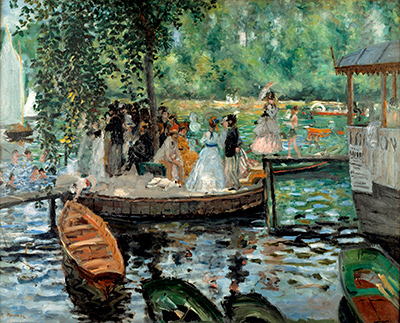
La Grenouillere, Pierre-Auguste Renoir, 1869
The Seine as a Modern Landscape
The Seine was one of the persistent influences on Monet - throughout his career, he returned again and again to its banks, painting scenes of boating, industry, leisure and nature. It influenced his choices of content, and also the way in which he devoted his time to the study of light and water in combination.
At La Grenouillère, the river becomes more than a setting — it becomes the subject itself.
The Influence of Japanese Prints
Monet is well known for having collected Japanese prints after they started to arrive in France from the mid-19th century onwards. They impacted his compositional methods, as demonstrated in Garden at Sainte-Adresse. Here in La Grenouillère Monet arranges boats and figures in a manner which is non-traditional in European art, and likely influenced by Monet's knowledge of the likes of Hokusai and Hiroshige.
Colour and composition were the two main aspects of Japanese prints which most imapcted the Impressionists, but each artist took their own direction in slightly different ways.
The Legacy of Monet's La Grenouillère
From this painting Monet would develop a love of capturing water in light. Whilst he had considered this aspect many times before, it was here that he really evolved his technique, with a beautiful array of dabs of paint, almost approaching abstraction.
Although these paintings were not widely recognised at the time, they are now seen as foundational works. They demonstrate Monet's move toward painting directly from observation, his interest in modern life and his willingness to abandon traditional techniques in favour of something entirely new.
This fascination would lead to other key works such as his paintings of the Seine, the Thames in London and the water lilies at Giverny. The loose brushwork, the focus on atmosphere, and the interest in modern leisure all find their origins here on the banks of the Seine, and eventually found their way into the oeuvre of Claude Monet.
Close-up Image Details of La Grenouillère
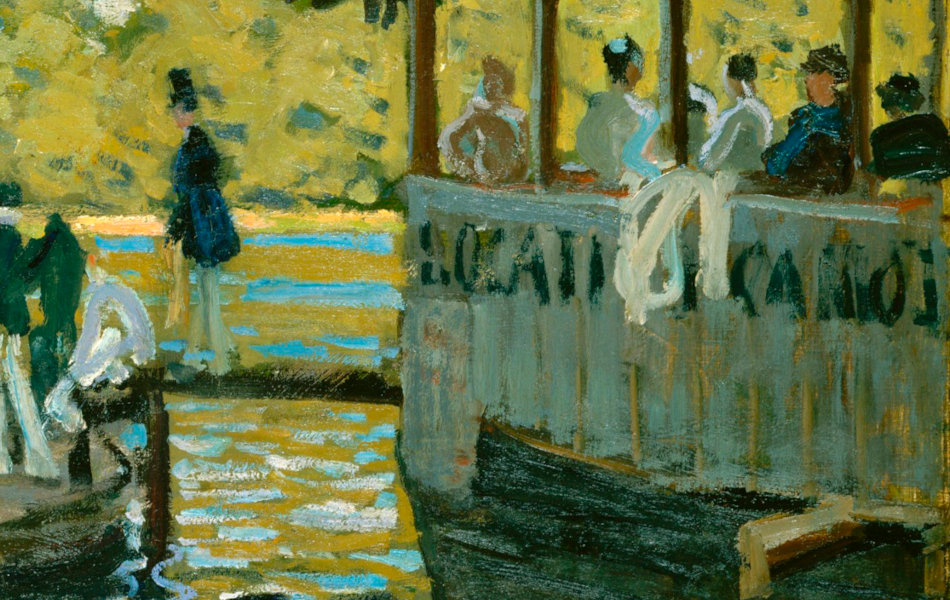
Groups of figures socialising on platforms and boats, capturing the rise of modern leisure along the Seine.
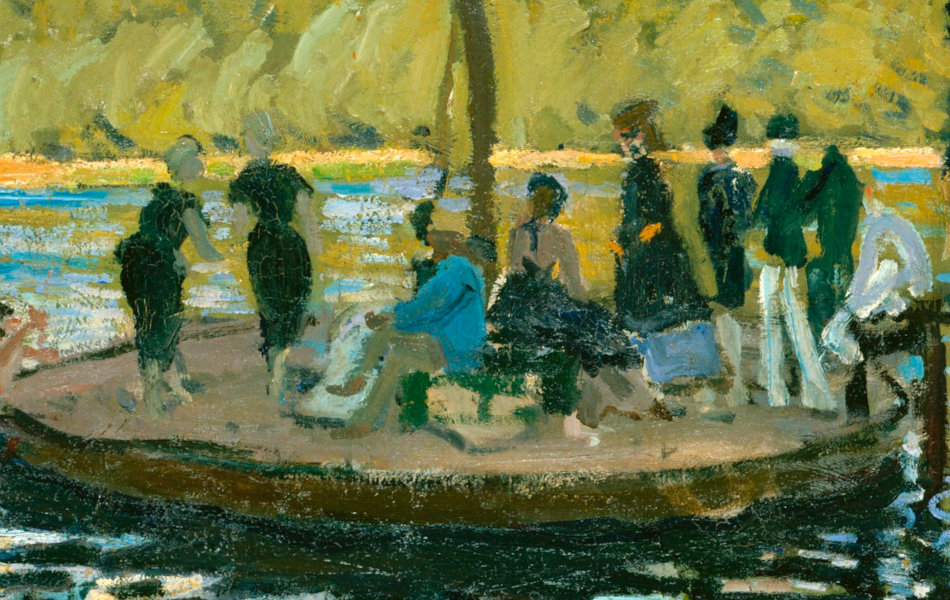
The small circular island known as the “Camembert,” a central feature of La Grenouillère, connected by narrow walkways and topped with a single tree.
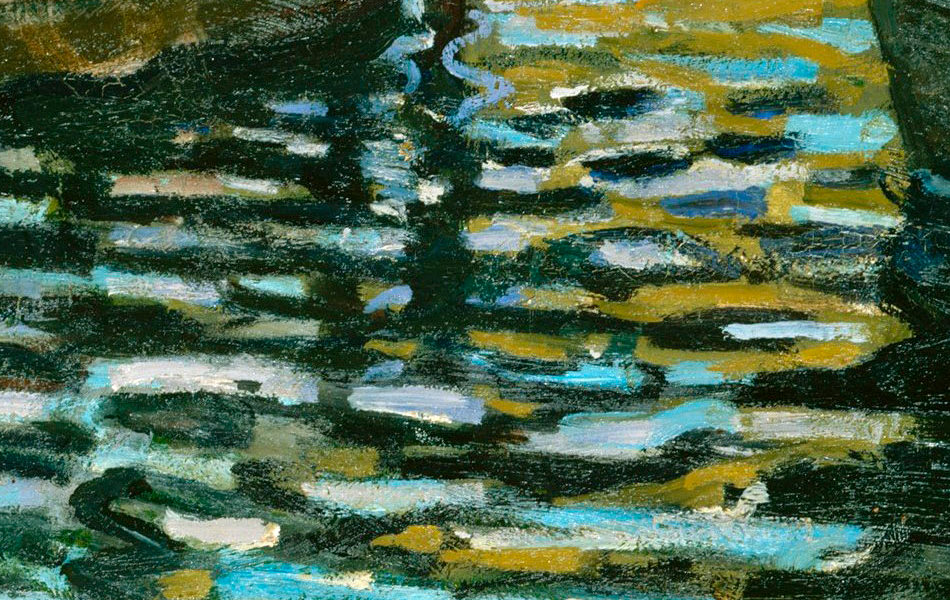
Close-up of shimmering water reflections, where Monet uses broken brushstrokes to capture the constantly shifting light on the Seine.