 by Tom Gurney
Tom Gurney BSc (Hons) is an art history expert with over 20 years experience
Published on May 21, 2026 / Updated on May 31, 2026
Email: tomgurney1@gmail.com / Phone: +44 7429 011000
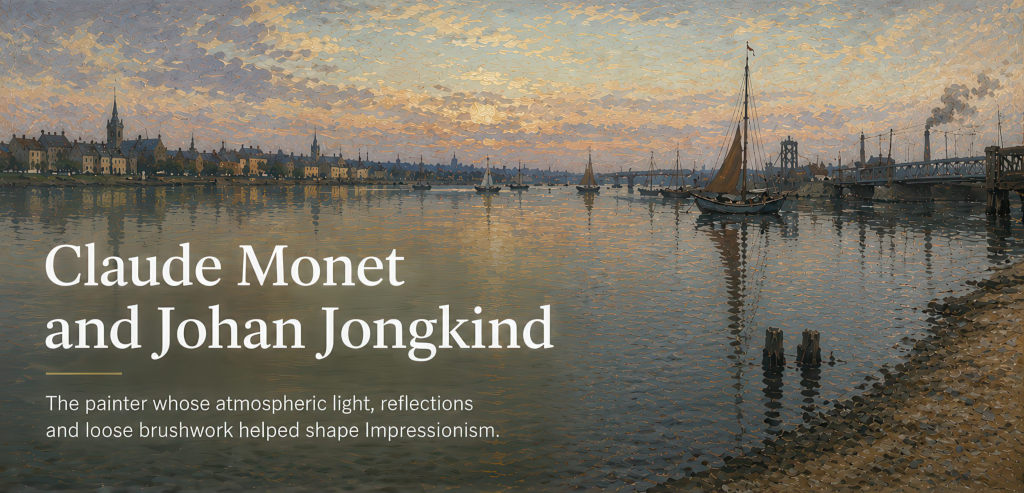
Claude Monet and Johan Jongkind
Johan Barthold Jongkind was one of the most important artistic influences on the young Claude Monet. Although less famous today than the Impressionists themselves, Jongkind helped transform French landscape painting through loose brushwork, luminous atmosphere and direct observation of nature.
Monet greatly admired Jongkind's ability to capture reflections, changing skies and vibrating light with remarkable freshness. Their artistic connection formed an important bridge between Realism, the Barbizon tradition and the emergence of Impressionism.
This page explores how Jongkind influenced Monet's technique, how their paintings compare, and why many art historians consider Jongkind one of the true precursors of Impressionism.
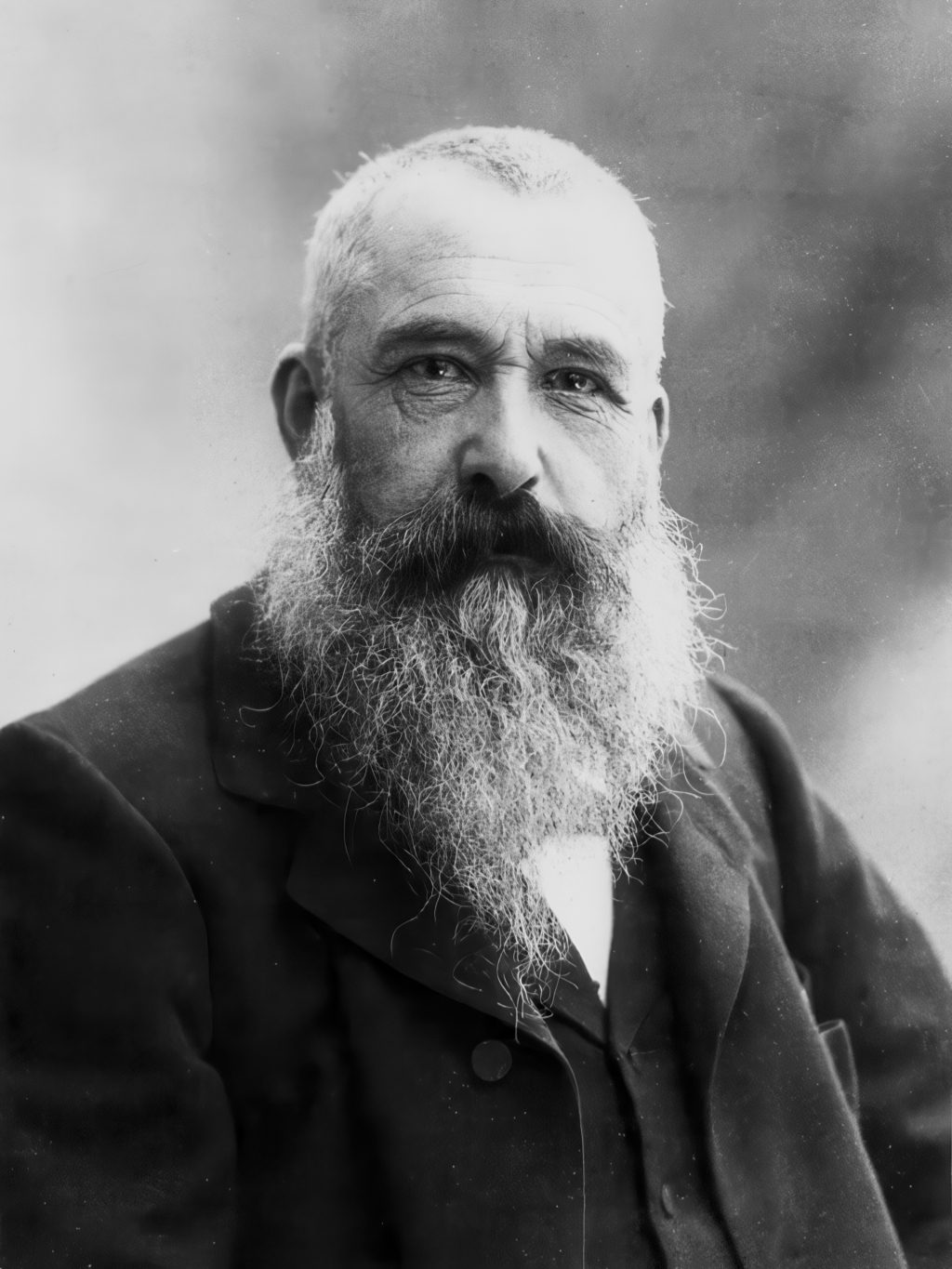
It was from him that I received the definitive education of my eye.
- Artists Claude Monet, Johan Barthold Jongkind
- Nationality French, Dutch
- Key Influence Atmospheric landscape painting
- Main Subjects Water, skies, rivers, reflections
- Shared Themes Light, movement and atmosphere
- Artistic Importance Precursor to Impressionism
- Legacy Bridge between Realism and Impressionism
Honfleur, Boats and Reflections
One of the clearest ways to understand Jongkind's influence on Monet is through harbour painting. Both artists were fascinated by water, boats, reflections and the changing skies of northern France. Jongkind's views of harbours such as Honfleur helped show how ordinary coastal scenes could become studies of light and atmosphere.
For the young Monet, this was crucial. Jongkind did not simply paint boats and buildings; he made the air around them feel alive. His loose handling, low horizons and luminous skies helped prepare the way for Monet's later Impressionist treatment of rivers, harbours and reflections.
Jongkind's harbour scenes helped prepare Monet for the atmospheric river and coastal paintings that would later define Impressionism.
Harbours and REFLECTIONS Compared
Jongkind and Monet both used harbour scenes to explore reflections, skies and changing atmosphere, but Monet pushed these lessons further into Impressionism.
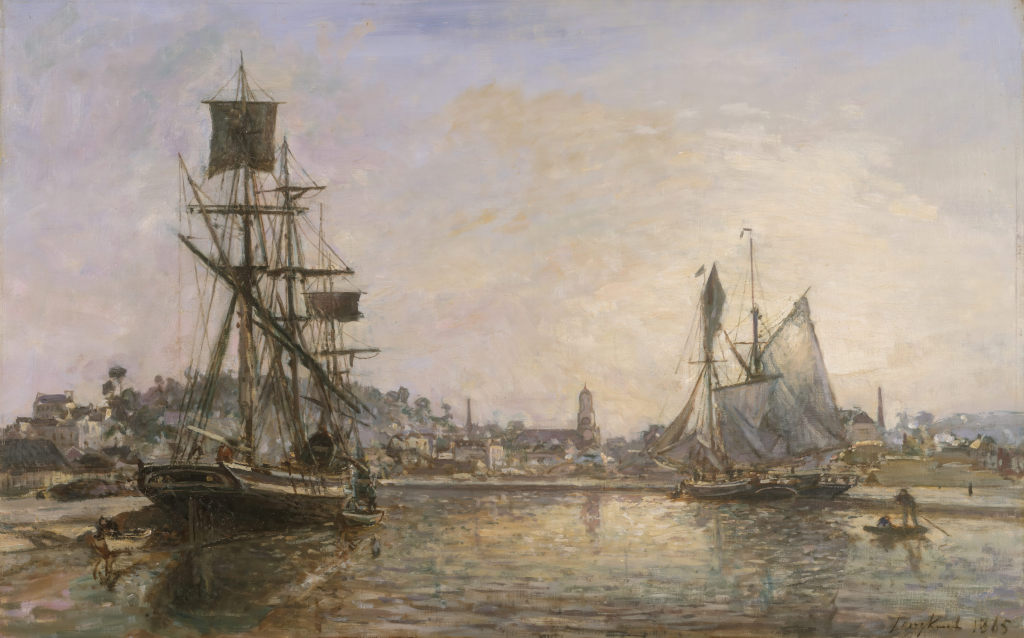
Jongkind: Harbour Atmosphere
Jongkind's harbour scenes often combine boats, water and open sky with lively, economical brushwork. The scene feels observed quickly, with atmosphere more important than architectural detail.
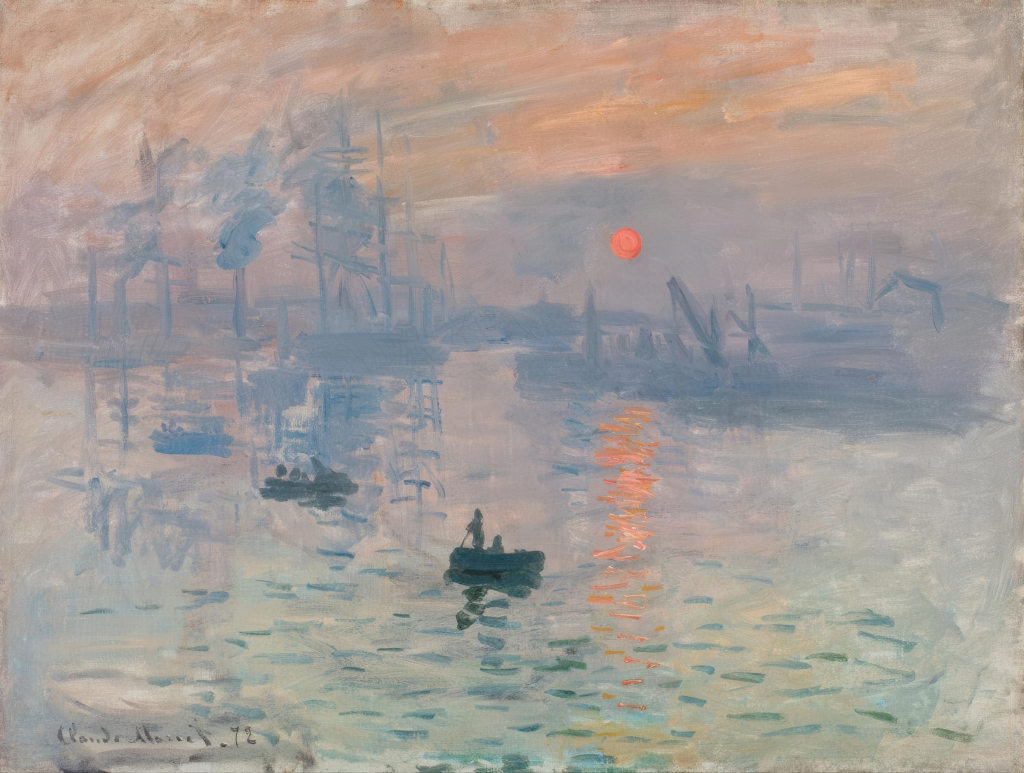
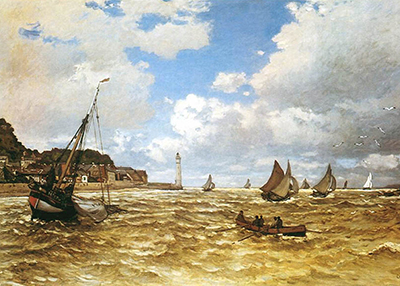
Monet: Reflections and Light
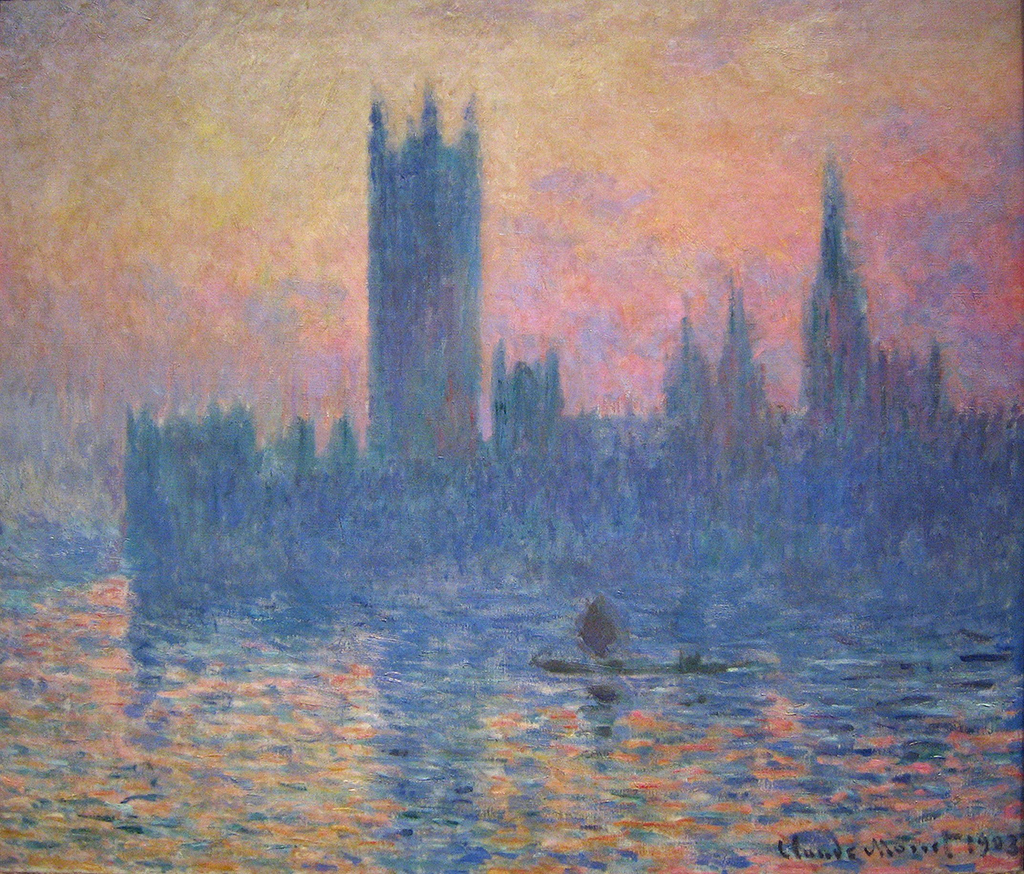
Monet developed Jongkind's lessons into a more radical Impressionist language. Water, boats and sky are broken into colour and light, making the harbour feel immediate and atmospheric.
This canvas, Honfleur, was painted in August-September 1865, during Jongkind's third visit to Honfleur on the Normandy coast, where the younger Claude Monet also worked in the early and mid-1860s. Three years later, in 1868, the critic Théophile Thoré observed:
"M. Jongkind's manner does not appeal to everyone, but it delights all who love spontaneous painting, in which strong feelings are rendered with originality... True painters work at speed, under the influence of impressions."
Théophile Thoré, quoted by The Metropolitan Museum of Art [2]
The quotation is striking because it anticipates many of the ideas later associated with Impressionism itself: spontaneity, speed, atmosphere and the direct recording of visual impressions. Jongkind's example helped prepare Monet for precisely this kind of painting.
What to Compare
-
Low horizons
Both artists often give the sky a major role, allowing atmosphere to dominate the composition. -
Reflections
Water becomes a changing surface of light rather than a flat descriptive element. -
Loose brushwork
Jongkind's lively handling helped prepare Monet for the freer technique of Impressionism. -
Everyday coastal subjects
Harbours, boats and rivers are treated as serious artistic subjects. -
Atmosphere over detail
Both artists care less about exact description than the sensation of light, air and water.
Monet and Jongkind at a Glance
Jongkind's influence on Monet was different from Renoir's or Manet's. He was not primarily a collaborator or rival, but an older example of how landscape painting could become more immediate, atmospheric and observational.
| Topic | Johan Barthold Jongkind | Claude Monet |
|---|---|---|
| Main Interest | Atmospheric landscape | Atmosphere, light and perception |
| Favourite Subjects | Harbours, canals, rivers, boats and skies | Rivers, coasts, gardens, bridges and reflections |
| Technique | Loose, lively Realist handling | Broken Impressionist brushwork |
| Use of Light | Suggests changing weather and atmosphere | Makes changing light the central subject |
| Relationship to Impressionism | Precursor to Impressionism | Central figure of Impressionism |
| Legacy | Bridge between Realism and Impressionism | Expanded Impressionism toward serial painting and abstraction |
Timeline: Jongkind and Monet
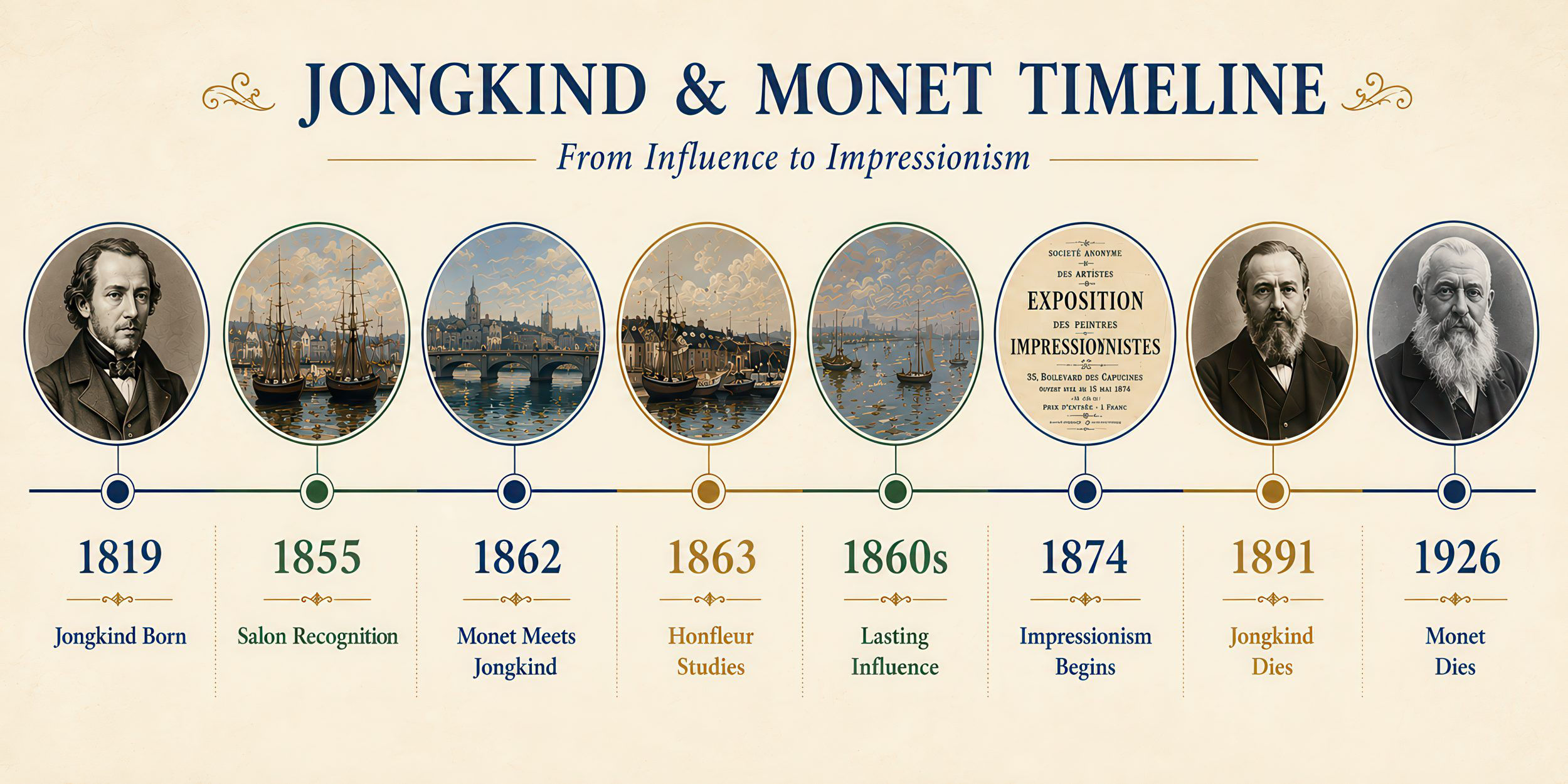
Jongkind's career began earlier than Monet's, but their paths crossed at a crucial moment in Monet's artistic development. This brief timeline shows how Jongkind's atmospheric example helped prepare the way for Impressionism.
| Year | Event |
|---|---|
| 1819 | Johan Barthold Jongkind is born in Lattrop, Netherlands. |
| 1855 | Jongkind exhibits at the Paris Salon and gains recognition as a marine and landscape painter. |
| 1862 | Monet meets Jongkind in Paris and studies his paintings closely. |
| 1863 | Monet travels to Normandy and paints alongside Jongkind in Honfleur. |
| 1860s | Monet continues to be strongly influenced by Jongkind's loose brushwork and atmospheric approach to landscape. |
| 1874 | Monet helps organise the First Impressionist Exhibition in Paris. |
| 1891 | Jongkind dies in La Côte-Saint-André, France. |
| 1926 | Monet dies in Giverny. |
Visual Timeline
The Education of Monet's Eye
Monet later gave Jongkind one of the most important tributes in the history of Impressionism, saying that it was from him that he received the "definitive education of my eye." This phrase helps explain why Jongkind mattered so much to Monet's development.
Boudin had encouraged Monet to paint outdoors, but Jongkind showed him how much could be achieved through atmosphere, reflections, skies and rapidly changing light. Jongkind's example helped Monet understand that landscape painting did not need to depend on precise detail. It could be built from freshness, movement and visual sensation.
What Jongkind Taught Monet
-
See atmosphere, not just objects
Jongkind showed Monet how sky, water and air could be just as important as boats, buildings or figures. -
Observe reflections
Harbours, rivers and canals became living surfaces of light and movement, constantly changing with weather and time of day. -
Capture changing light
Jongkind's quick studies of clouds, mist and shifting skies helped Monet pursue momentary effects rather than fixed appearances. -
Paint freely and rapidly
Jongkind's loose, economical brushwork encouraged Monet to work with confidence and spontaneity. -
Simplify and suggest
Detail was less important than the overall impression. This helped shape Monet's later approach to composition and form.
This is why Jongkind deserves a central place in Monet's story. He was not merely a minor precursor to Impressionism, but one of the artists who helped Monet develop the visual habits that would later define his mature work.
FAQs
References
- Claude Monet, quoted in: Gustave Geffroy, Claude Monet: Sa Vie, Son Œuvre, Paris: G. Crès et Cie, 1922.
- The Metropolitan Museum of Art, “Johan Barthold Jongkind: The Port of Honfleur,” The Met Collection, View Source.