 by Tom Gurney
Tom Gurney BSc (Hons) is an art history expert with over 20 years experience
Published on October 6, 2016 / Updated on February 26, 2026
Email: tomgurney1@gmail.com / Phone: +44 7429 011000
Claude Monet in Honfleur
Honfleur played a crucial role in Monet's artistic development. This small Normandy harbour town, facing the mouth of the Seine, became the place where Monet abandoned caricature, embraced plein air painting, and absorbed the lessons of Eugène Boudin.
Monet would obsess about water throughout his career, and Honfleur would provide yet another environment in which to study and perfect his understanding of this natural inspiration.
Claude Monet first began painting outdoors in Normandy in 1858 (aged 18), after meeting Eugène Boudin in 1856 in Le Havre. By the summer of 1858 Monet was already accompanying Boudin along the Normandy coast — including Honfleur and the Seine estuary.
However, his main body of work in Honfleur came during the years of 1864-1866, at which point he covered the harbour basin, jetty and fishing boats and a number of estuary views. Monet chose to spend parts of his summers here, whilst also covering Le Havre at the same time and so was never permanently based in Honfleur.
Honfleur in the Mid-Nineteenth Century
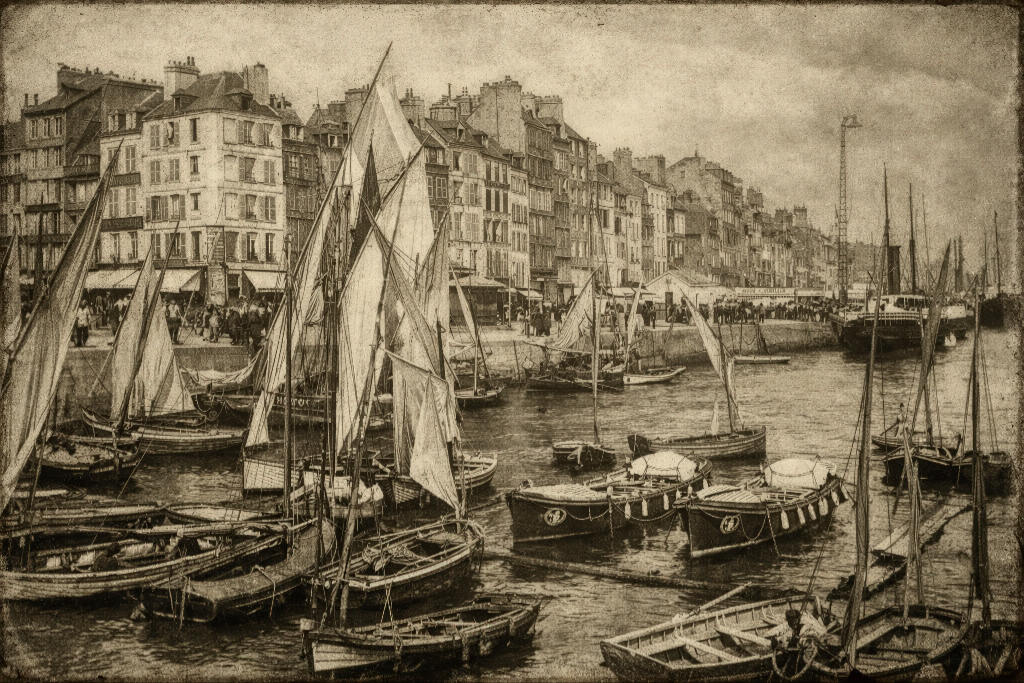
Honfleur during the 1850s and 1860s served as a working port but also attracted a number of artists from across northern France. They would find inspiration for their work in the fishing boats and merchant vessels as well as the natural features of the region, such as its coastal elements and also the wide, open skies.
There was also the irresistable Vieux Bassin, where tall, narrow houses lined the harbour route, contrasting against the extended horizontal. There was much to work with, and whilst some would focus on the ordinary lives of local working people, others focused purely on the natural aesthetic of Honfleur.
Additionally, artists were also some distance from the world of Paris. In Honfleur artists could feel free, and experiment with their technique, without the gaze of more established, stubborn minds. Despite being a more traditional setting, artistically, the likes of Monet felt much more comfortable with their contemporary methods.
- Location Honfleur, Normandy, France
- Years Active Primarily 1864-1866
- Key Influence Eugène Boudin
- Main Subjects Harbour, jetty, boats, skies, reflections
- Art Historical Importance Foundation of Monet's plein air technique and early Impressionism
Monet Before Honfleur: The Caricaturist of Le Havre
In order to understand the impact of Honfleur and other coastal towns on Monet's work, it is necessary to consider his work prior to this point. In nearby Le Havre Monet successfully sold sketches for nominal fees - his satirical caricatures helped to build his confidence as a teenage artist, but would never bring the sort of fame or respect that he craved.
His ability to scan a face and body quickly in order to plan his caricature flourishes helped to build his artistic eye. He would then encounter Eugène Boudin, who introduced him to seascape painting, and from this point onwards Monet took off on a new artistic direction. Even as a young man, Monet was already strong willed and initially rejected the idea of working outdoors, but eventually Boudin convinced him to try outdoor painting.
Essentially, after much resistance, Monet had now set himself free - the unstructured world of nature painting which initially appeared reckless, was in fact exactly what he needed. It was here in Honfleur that much of this discovery was made, and this was something Monet recognised openly in later years.
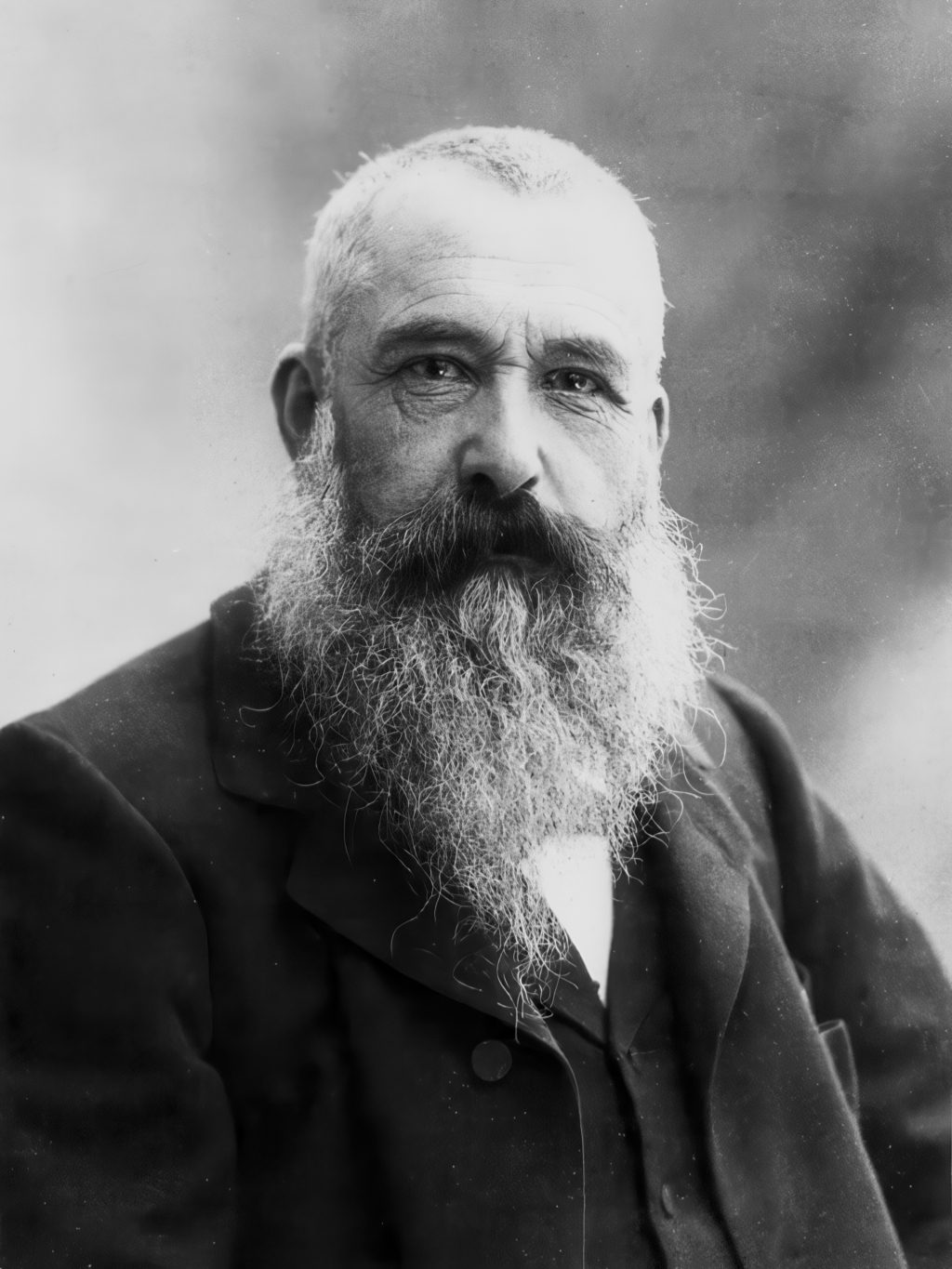
If I have become a painter, I owe it to Eugène Boudin.
Clouds, Reflection, and Atmosphere
Monet learnt in Honfleur to use clouds and other elements of the sky as integral parts of his compositions. In some cases, he would devote huge parts of the scene to the sky alone, much more than other artists would have done at that time. He would find a symmetry between the sky and sea, with the latter reflecting the former.
Within Honfleur, Monet discovered that water is not a surface — it is a reflector of light. His harbour paintings paid particular attention to this - water echoing the details of the sky above. We would later see the same again in his famous series of paintings in which he studied the effect of changing conditions on the same objects.
Featured Monet Paintings from Honfleur
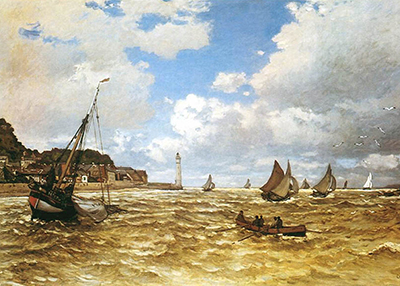
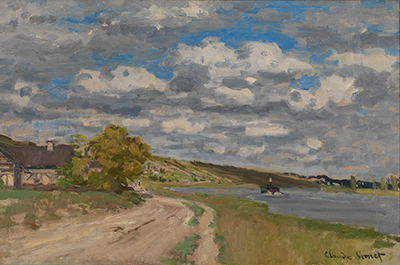
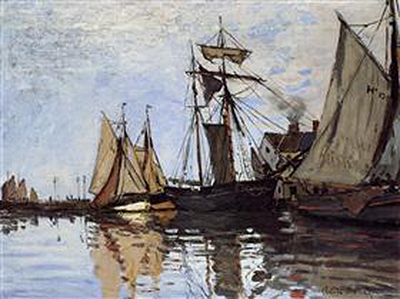
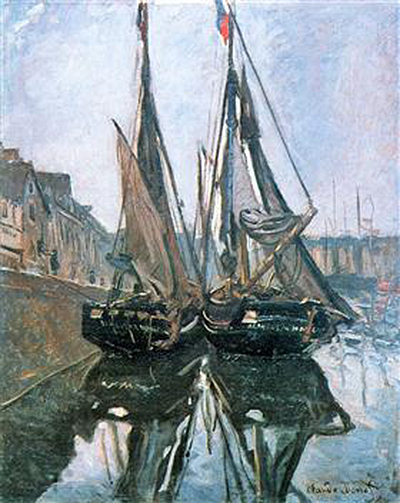
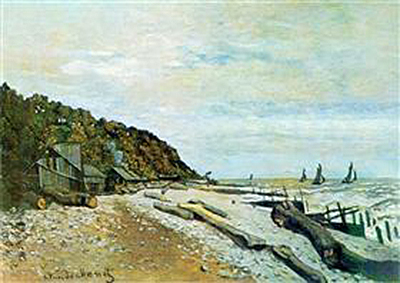
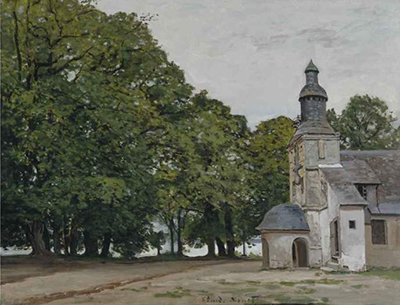
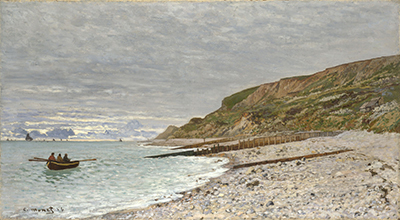
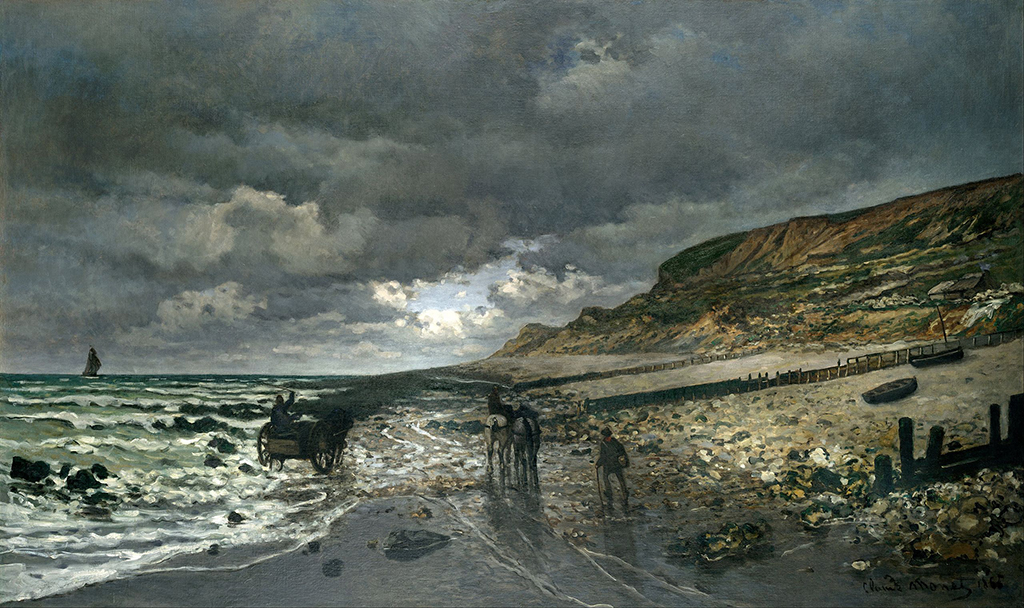
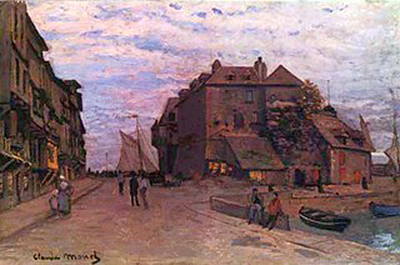
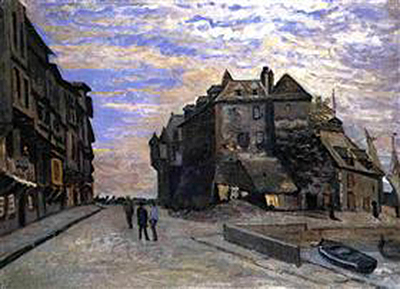
Complete List of Claude Monet Paintings in Honfleur
| Painting | Year | Subject / Motif | Current Location |
|---|---|---|---|
| The Mouth of the Seine at Honfleur | 1865 | River Estuary | Norton Simon Museum, Pasadena |
| The Jetty at Honfleur | 1864 | Harbour Structure | Private Collection |
| Boats at Honfleur | 1866 | Marine Scene | Private Collection |
| Fishing Boats at Honfleur | 1864-1866 | Working Boats | Musée d'Orsay, Paris |
| Honfleur Harbour | 1866 | Port View | National Gallery of Art, Washington, D.C. |
| The Lieutenancy at Honfleur | 1864 | Town Architecture | Private Collection |
| The Beach at Honfleur | 1864 | Coastal Scene | Art Institute of Chicago |
| Sunset at Honfleur | 1866 | Evening Harbour | Private Collection |
| Low Tide at Honfleur | 1864 | Tidal Flats | Musée Malraux (MuMa), Le Havre |
| The Seine Estuary near Honfleur | 1865 | River & Sky | Private Collection |
| Ships Leaving the Port of Honfleur | 1866 | Marine Movement | Private Collection |
| Harbour at Honfleur in Morning Light | 1865 | Atmospheric Study | Private Collection |
| Boats on the Beach at Honfleur | 1864 | Beached Vessels | Private Collection |
| The Old Harbour Basin, Honfleur | 1866 | Urban Harbour | Private Collection |
| Honfleur, Study of Clouds | c. 1865 | Sky Study | Private Collection |
| Honfleur from the Heights | 1864-1865 | Elevated View | Private Collection |