 by Tom Gurney
Tom Gurney BSc (Hons) is an art history expert with over 20 years experience
Published on October 6, 2016 / Updated on April 23, 2026
Email: tomgurney1@gmail.com / Phone: +44 7429 011000
Monet in London: Fog, Light and the Birth of the Thames Series
Claude Monet's connection with London stretches across two very different moments in his life, namely the 1870s and much later at the turn of the century. Monet first arrived in London in 1870, escaping the Franco-Prussian War and the instability that had overtaken France.
Whilst the artist's first visit did not prove artistically prolific, the city left a significant mark on Monet and encouraged him to return later in his life, which he did. He was particularly taken by the mist, smoke, water and shifting light which would prove ideal for the Impressionist style which he would later develop. His follow-up visits came about in 1899, 1900 and 1901 [3], all of which were in the winter in order to get the dark and foogy conditions that Monet loved so much.
Whilst visiting the city, he sketched and painted some of the capital's most famous landmarks, such as the Houses of Parliament and the iconic bridges across the Thames.
By the end of the 19th century Monet was one of Europe's most celebrated painters and he came back with a more deliberate aim: to turn the Thames and its monuments into one of the greatest serial achievements of his career. The growing market in London also offered potential financial reward for the artist, and choosing landmarks could prove commercially successful.
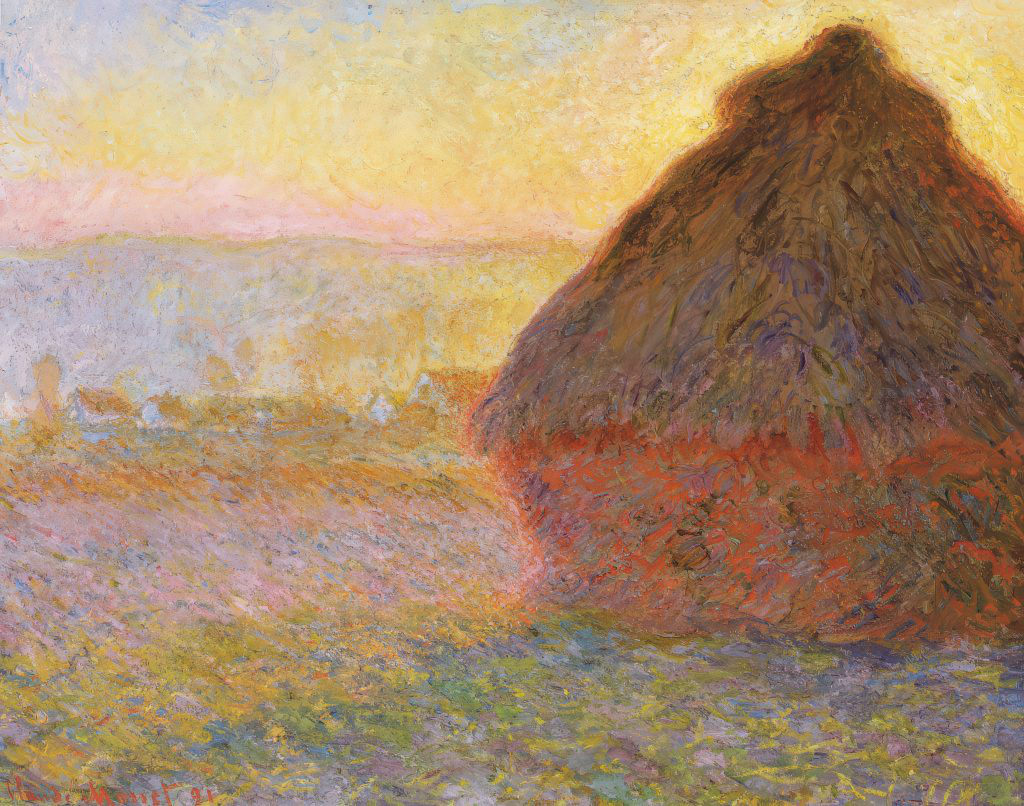
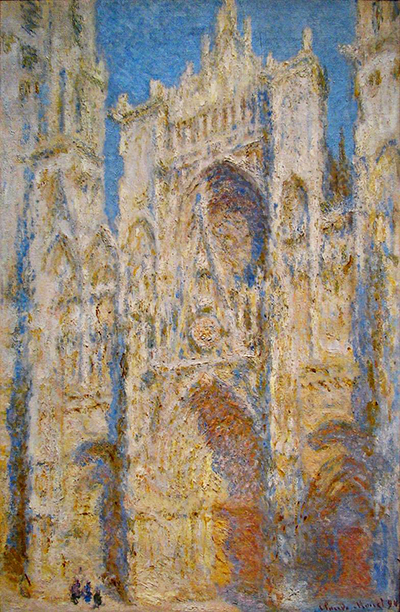
The London paintings belong to the same broad artistic development as the Haystacks, Poplars, Rouen Cathedral, and later Water Lilies. In each case, Monet returned to a motif again and again, not because the subject itself changed, but because light changed it. London, however, gave him an especially elusive subject. The city's fog, industrial haze, and river reflections allowed architecture to dissolve into atmosphere. In these paintings, stone, iron, smoke, and water become almost inseparable.
London was therefore not just another location in Monet's travels; it was one of the clearest demonstrations of his growing interest in light as a force capable of remaking the visible world. In this article we will examine this entire series, outlining Monet's working practices and the factors about London that inspired his paintings.
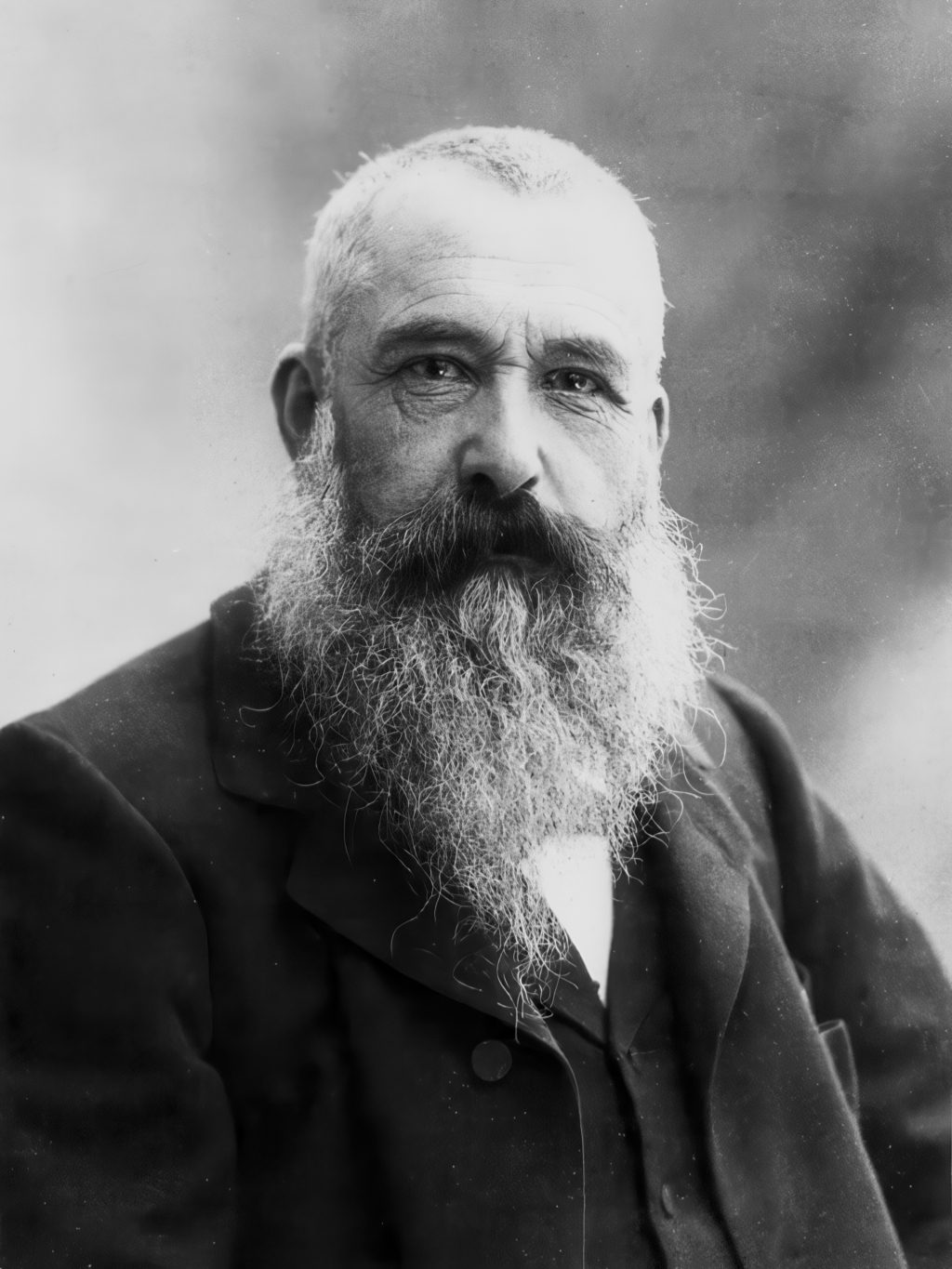
I so love London! But I only love it in winter for without the fog London wouldn't be a beautiful city. It's the fog that gives it its magnificent breadth.
Table of Contents
- Introduction
- Monet's First London Visit, 1870-1871
- Three Return Visits: 1899, 1900 and 1901
- Monet's Working Method in London
- The Commercial Success of the London Works
- London and Monet - A Summary
- Featured Paintings from Claude Monet's London Series
- Complete List of Claude Monet's London Series
- Artist: Claude Monet
- Location: London, England
- Key visits: 1870-1871, 1899, 1900, 1901
- Main motifs: Houses of Parliament, Waterloo Bridge, Charing Cross Bridge
- Main working bases: Savoy Hotel and St Thomas's Hospital
- Best-known London series: Houses of Parliament
- Major London exhibition: Durand-Ruel, Paris, 1904
- Artistic significance: Serial study of fog, light, atmosphere, and near-abstraction
Monet's First London Visit, 1870-1871
Claude Monet's first stay in London came about at a time of turmoil in his native France. The Franco-Prussian War was in progress and the artist himself was struggling to make any progress in his career. A number of artists, including Monet, decided to head across the Channel in order to seek refuge in England.
It was here that the artist came into direct contact with the work of famous British Romanticism artists, JMW Turner and John Constable. Despite their strongly contrasting styles, he was able to elements of both artists' work and absorb some of these ideals into his own.
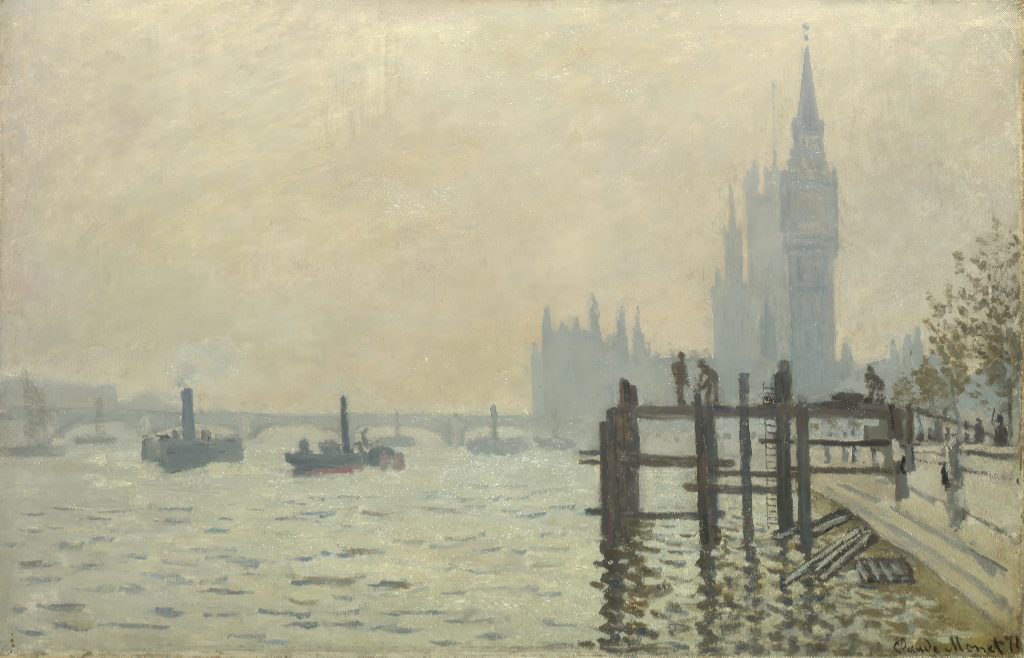
The Thames below Westminster, painted about 1871, showed that Monet had already taken notice of the Houses of Parliament and the Thames during his exile years. It was not a prolific period, however, but seeds were sown that would later draw the artist back to London.
How London Tempted Monet to Return
By the late 19th century London had a major art market, a cosmopolitan audience, and a visual character unlike Paris. Its population was growing at speed, and its economy was able to support growing levels of wealth in the richer parts of society.
Bridges, trains, smoke and monumental government buildings all stood within a shifting veil of fog and reflected light, offering something very different to Paris and rural France. Monet also saw the same elements change in appearance at an extraordinary speed, which proved ideal for the artistic style which was now forming in his work in line with the ideals of Impressionism.
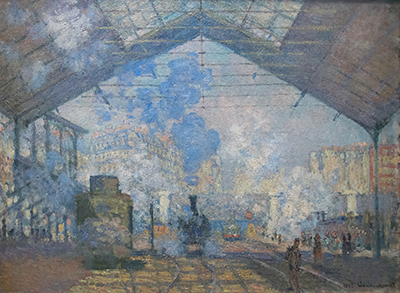
Monet had already painted modern Paris in the Gare Saint-Lazare works, but London gave him a different kind of modernity. Here, industrial effects did not merely signal progress; they altered visibility itself. Smoke from trains and city fires joined with river mist to produce the strange veils of colour that fascinated him. The city could appear grand and monumental one moment, then almost dematerialised the next. That was exactly the sort of instability Monet had been moving toward in his later serial paintings.
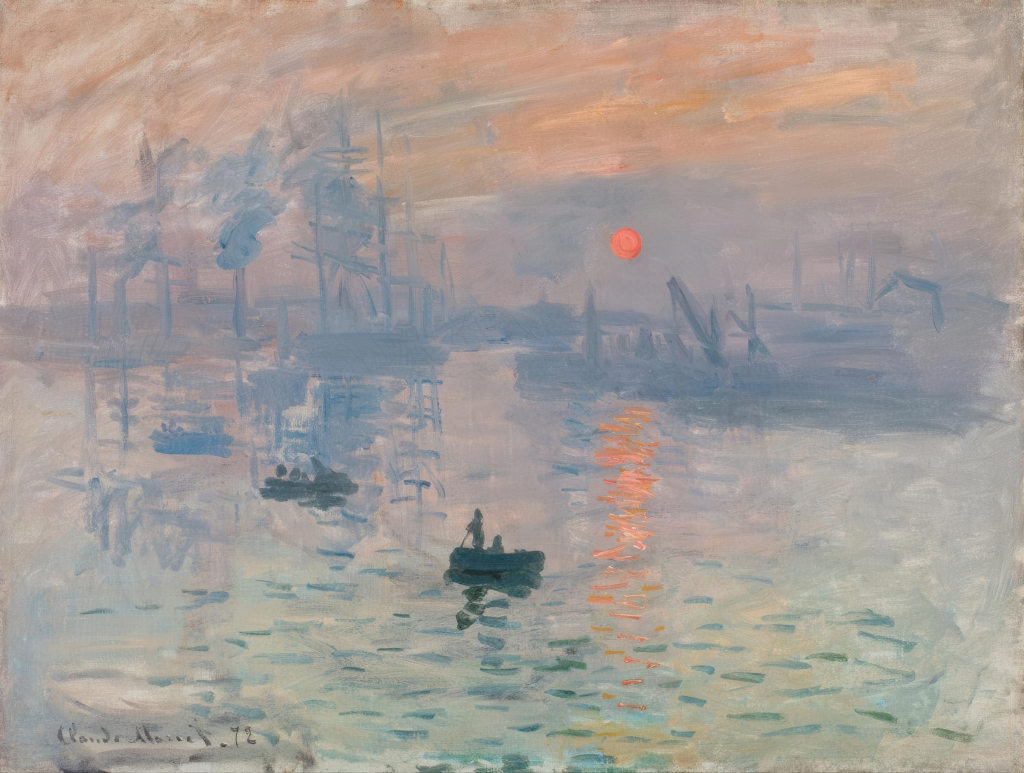
Additionally, Monet's early years in Le Havre and its port industry would have connected with his experiences in London, even the groundbreaking Impression, Sunrise features factories and other industry blowing out plumes of smoke in the distance.
Three Return Visits: 1899, 1900 and 1901
Monet returned to London for three consecutive winter campaigns: 1899, 1900, and 1901. Winter gave him the low sun, mist, smoke, and damp atmosphere that made the Thames views so distinctive, and so his choice of this season was no coincidence. It seemed that the foggier, colder and darker London became, the more Monet was inspired in his work. One can draw comparisons with the work of Whistler in that regard.
During this second spell Monet was highly prolific, and had arrived with a clearer plan in mind. His output would reach around one hundred paintings, capturing three great motifs: Waterloo Bridge, Charing Cross Bridge and the Houses of Parliament. As was typical with his other series, however, he chose to complete his canvases at home in Giverny, having captured his initial experiences whilst on location.
The essence of Monet in these series was to capture a fleeting moment through years of careful evolution of each canvas.
Which of Monet's London paintings is the most atmospheric, the most radical, or the most revealing? These ten are among the best places to begin.
Top 10 LONDON Paintings Explained
Monet's London paintings are not simply repeated views of the same city. Some belong to his first stay in 1870-1871, while others come from the great Thames campaigns of 1899-1901. Across them all, the real subject is not architecture alone, but atmosphere: fog, smoke, water, winter light, and the changing rhythm of the river. Below are ten of the most interesting London paintings, each revealing a different side of Monet's ambition.
The Thames below Westminster
This is one of the best starting points for understanding Monet's connection with London. Painted during his earlier stay, it already shows his attraction to the Thames, to broad horizontal structure, and to the instability of weather over water. The scene still feels relatively clear and descriptive, but the atmospheric instinct that would later dominate the London series is already in place.
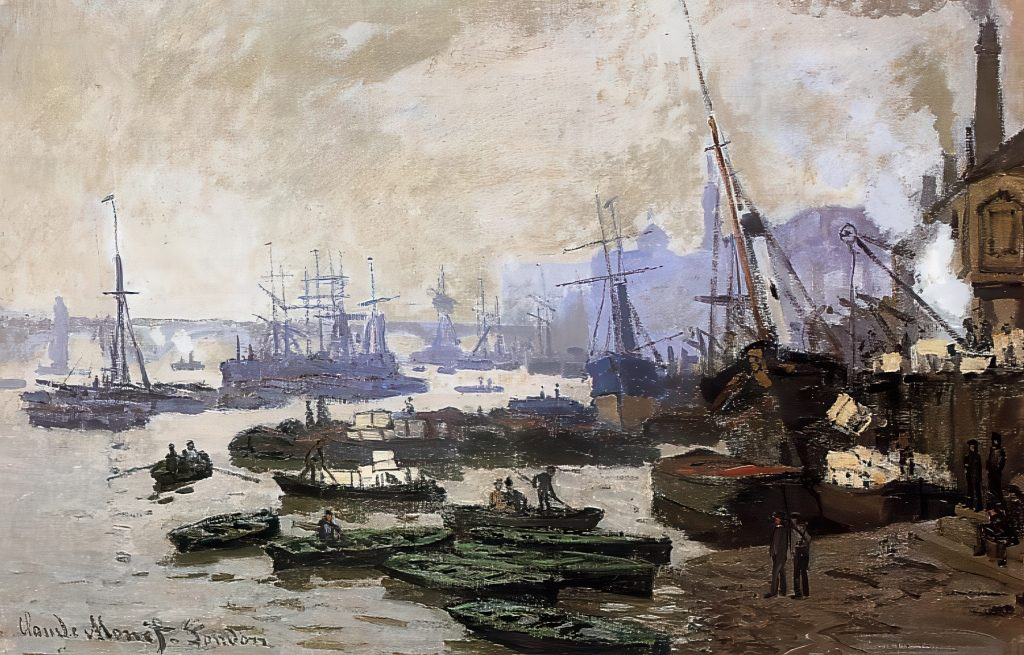
Boats in the Pool of London
This painting captures Monet's early interest in London's working river. Rather than choosing a grand monument, he focuses on shipping, water, and the dense life of the port. The result still feels rooted in direct observation, but it also hints at the themes of smoke, reflection, and urban movement that would return in a more advanced form decades later.
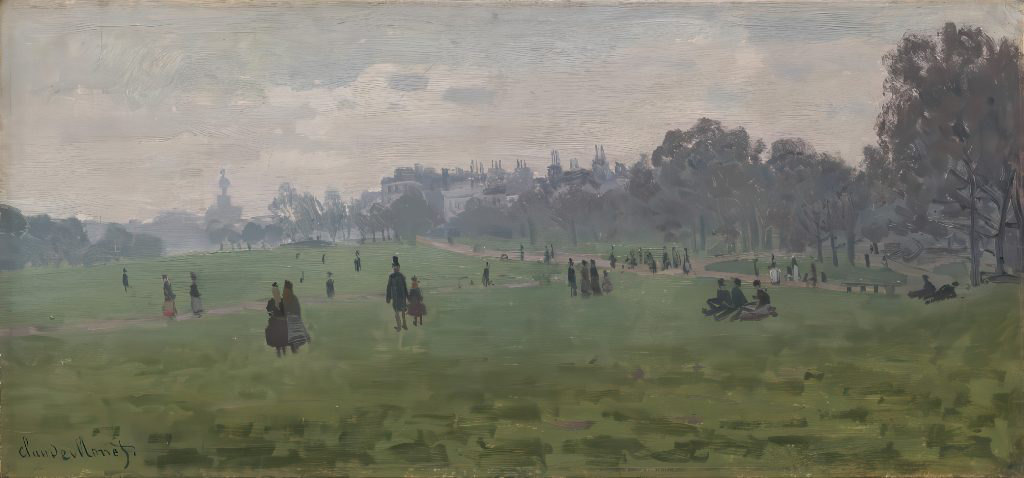
Green Park in London
This work reminds us that Monet's first London experience was not confined to the Thames. The park scene shows him testing English light in a quieter setting, with softened greens and a more intimate urban mood. It matters because it reveals how London first entered his imagination: not yet as the great serial city of fog, but as a place of weather, openness, and changing natural conditions.
Charing Cross Bridge, Reflections on the Thames
This is one of the clearest introductions to Monet's mature London project. The bridge is recognisable, but the true drama lies in the water beneath it. Reflections fragment the scene and turn the Thames into a surface of shifting colour. Modern infrastructure remains present, yet Monet uses it less as a subject in itself than as a structure through which light can move.
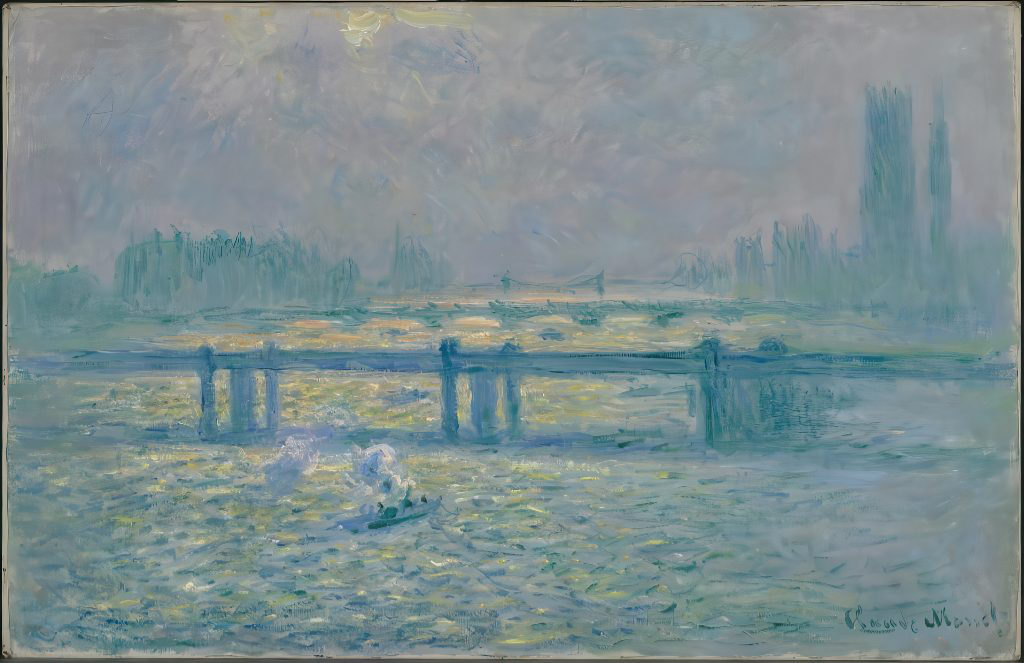
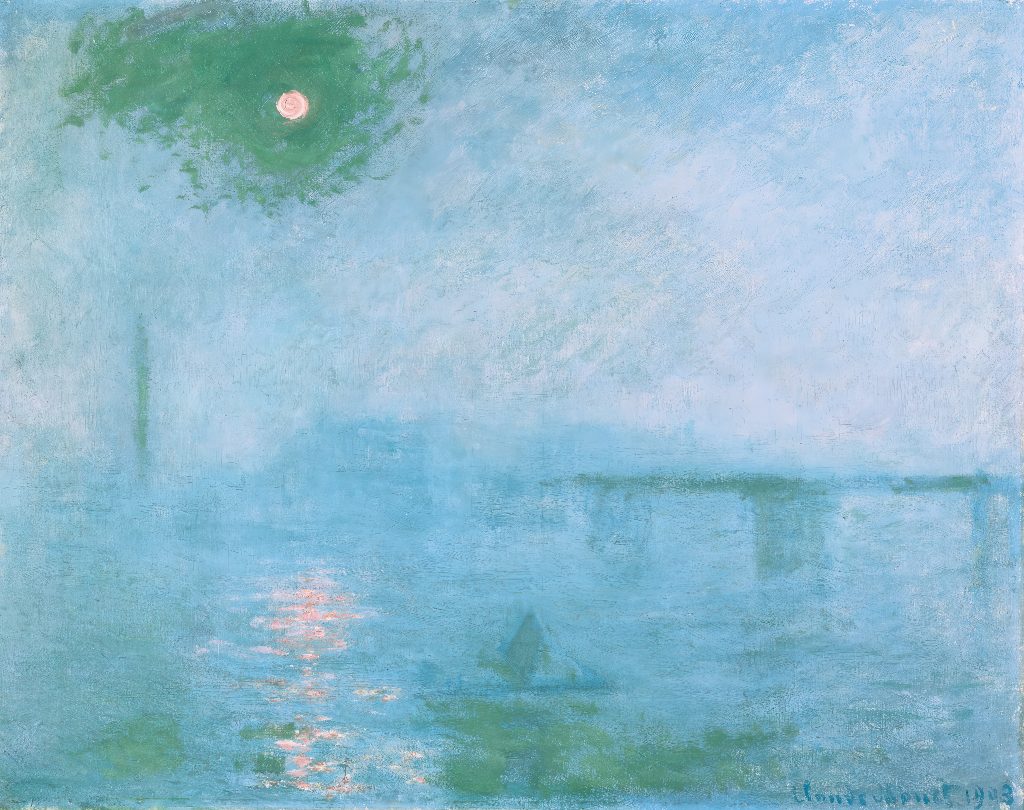
Charing Cross Bridge, Fog on the Thames
This work is quieter and more veiled, but no less ambitious. Monet reduces contrast and lets the fog flatten distance, making the scene feel hushed and suspended. The bridge is less a piece of engineering than a rhythm across the surface of the mist. It is one of the best examples of London as a city remade by atmosphere.
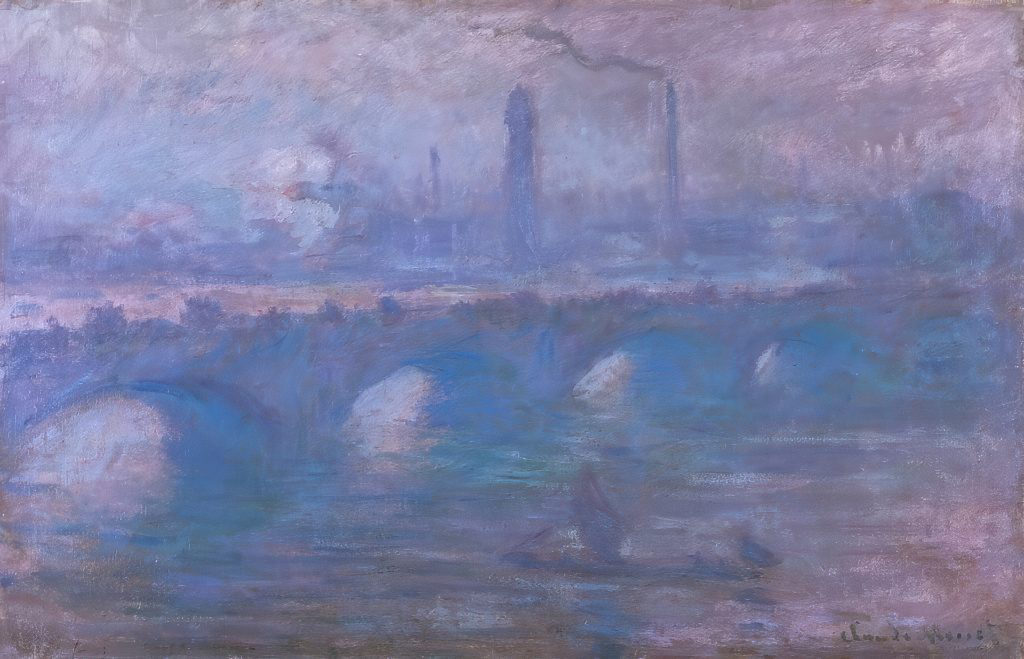
Waterloo Bridge, Morning Fog
The morning pictures often feel especially delicate. In this version, Waterloo Bridge sits within a pale envelope of mist, with the low light of early day softening every edge. Monet is not trying to record the bridge with engineering precision. Instead, he captures the fragile moment when the city is only just beginning to become visible.
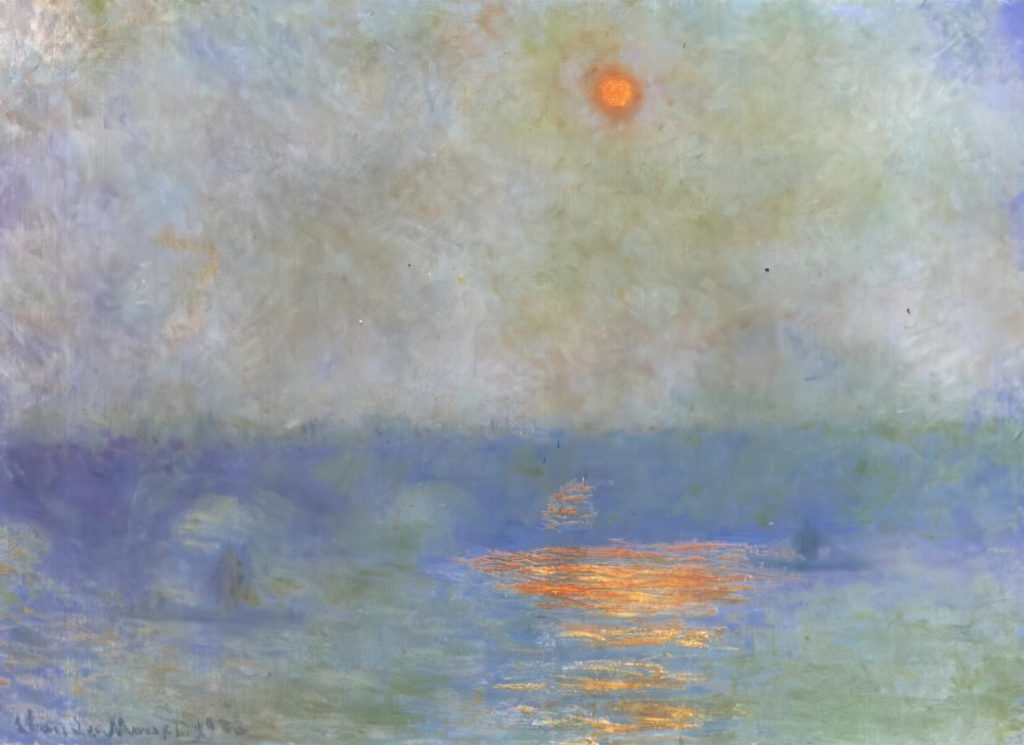
Waterloo Bridge, Sunlight in the Fog
This painting shows why Monet loved London in winter. Sunlight does not simply illuminate the scene; it struggles through the haze and transforms it from within. The bridge remains stable, but the atmosphere around it becomes radiant and uncertain. The effect is both urban and dreamlike, poised between observation and transformation.
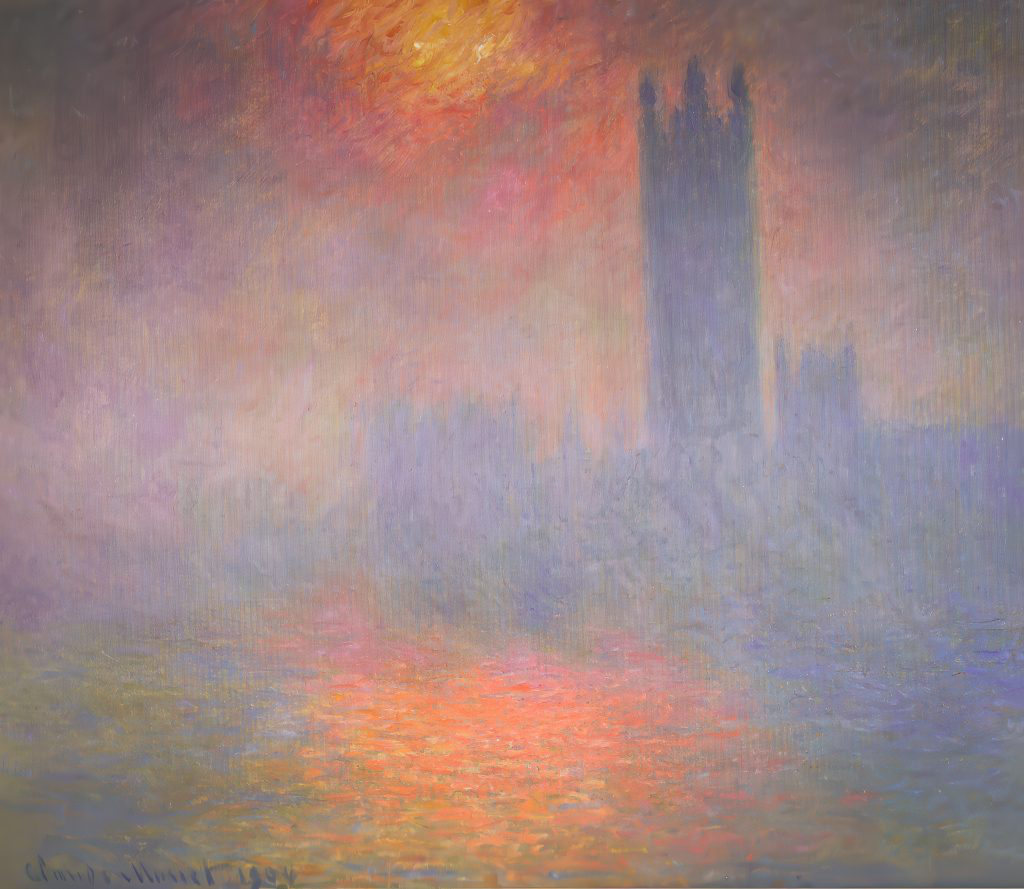
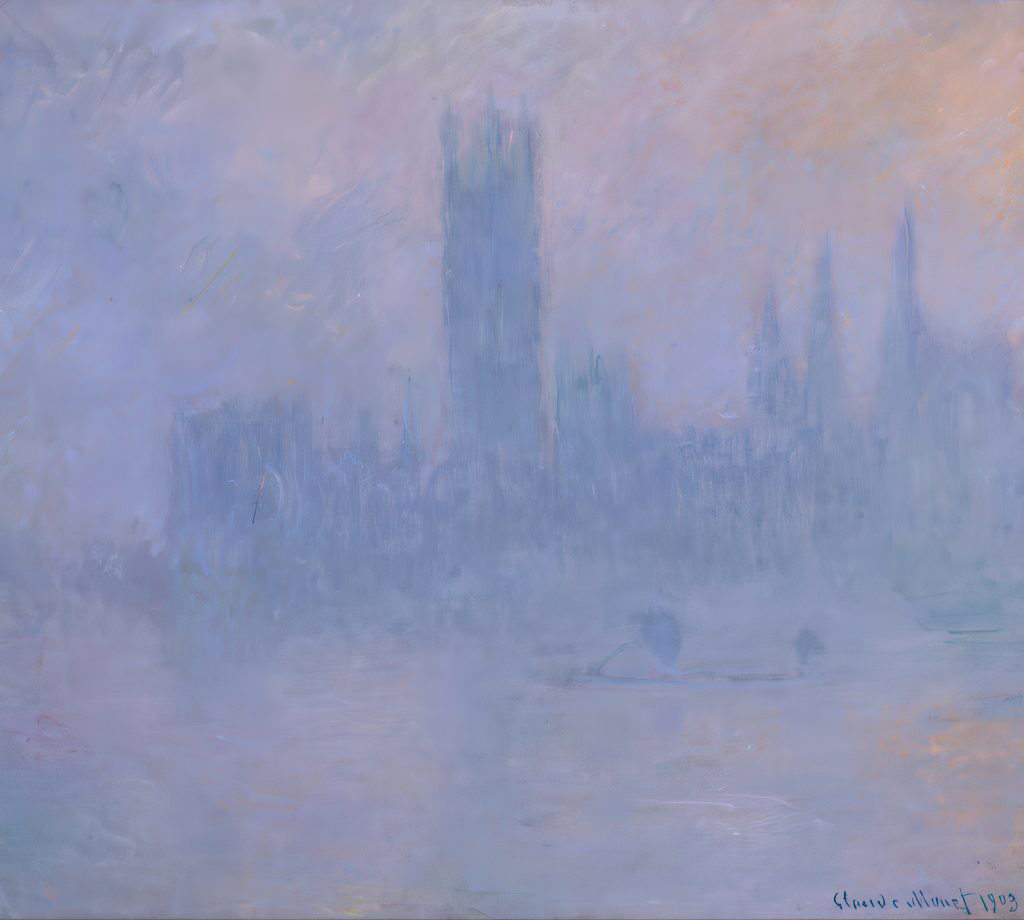
Houses of Parliament, Effect of Sunlight in the Fog
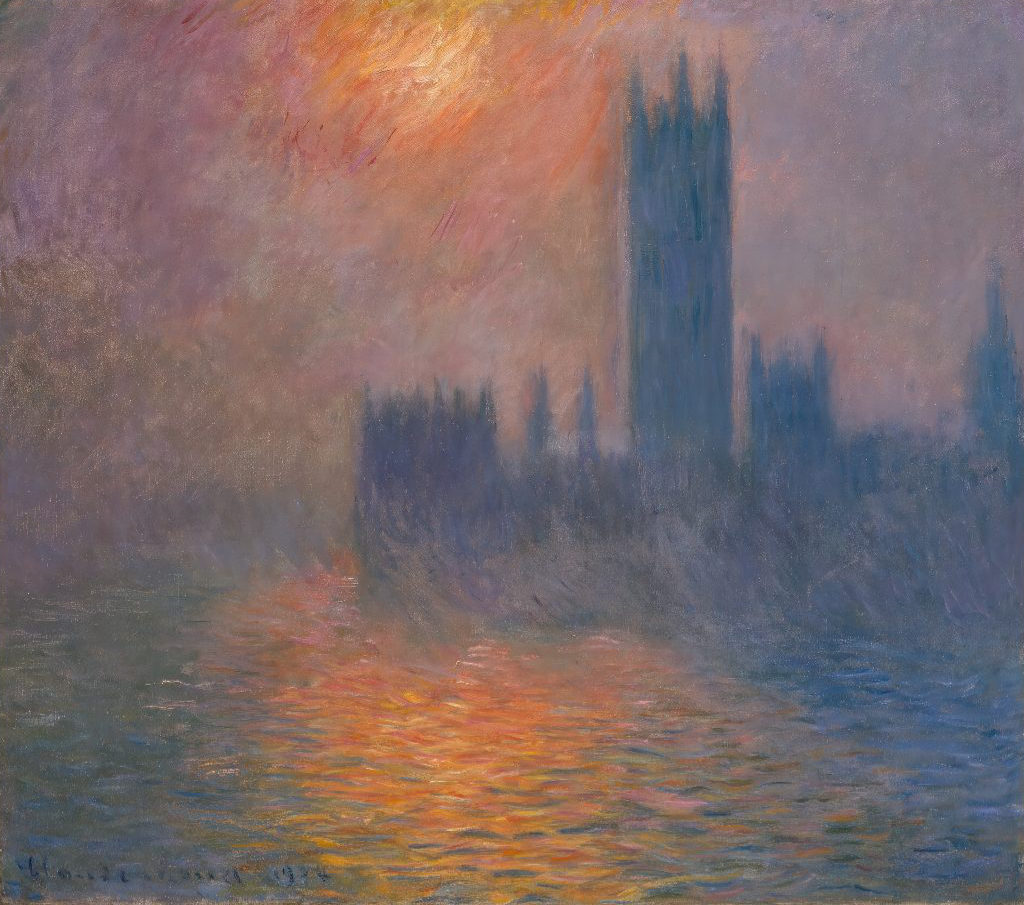
This is one of the defining ideas of the Parliament series. The building is reduced to a dark silhouette, while the real drama takes place in the air around it. Sunlight glows through the fog and dissolves stone into atmosphere. Monet shows that a monumental subject can be made almost immaterial through light alone.
Houses of Parliament, London, Symphony in Blue
This is one of the most poetic works in the London group. Blue dominates the scene, but never flatly. Instead, it shifts across the river, sky, and architecture in layered tonal changes. Parliament remains visible, yet the composition feels governed less by architectural description than by colour harmony and mood. It is one of Monet's clearest steps toward abstraction.
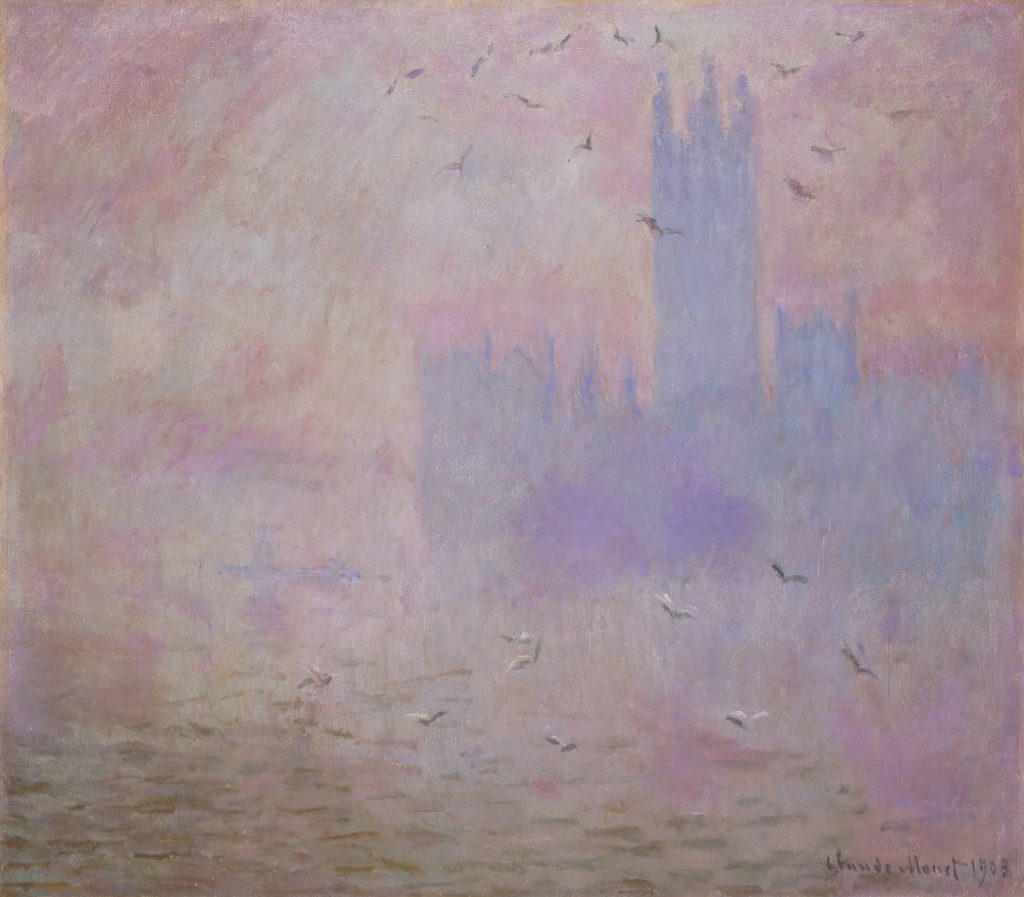
Houses of Parliament, Seagulls
This is one of the most lyrical variants in the series. The birds animate the air around the building and emphasise how alive the atmosphere feels. Parliament itself remains dark and still, but the seagulls bring motion and lightness to the scene. Monet turns a famous London monument into something fleeting, rhythmic, and almost musical.
Monet's Working Method in London
Monet's London routine was more methodical than many visitors realise. During the morning and early afternoon, he usually worked from the Savoy Hotel on the bridge subjects. Later in the day, he crossed the river and worked from St Thomas's Hospital, whose terrace gave him the best angle on the Houses of Parliament.
Letters and later scholarship make clear that this was demanding work. Monet often had several canvases on the go, switching between them as effects changed. A sudden shift in fog, a burst of sun, or a different density of haze might require another canvas rather than a continuation of the first one. Monet had dozens of canvases in his hotel room, all half-complete and ready to be taken back to his studio in Giverny.
He also knew that London's atmosphere could not be controlled. The same effect might not return at all, or it might reappear altered beyond usefulness. This helps explain why the London paintings took so long to complete. Monet himself admitted that London was not a place where one could simply finish everything on the spot. The city was too unstable, too elusive, too dependent on accidental conjunctions of weather, sun, and smoke.
The Savoy Hotel and the East-West Views
For his second spell, visiting London in the winters of 1899, 1900 and 1901, Monet famously stayed at the Savoy Hotel. His choice was carefully considered, as his room offered him a remarkable view over the Thames. The balcony, which no longer survives in its old form, was especially important because it gave him an elevated and open view over the river. He was able to alter his viewpoint across the day, adapting to changing light.
From the Savoy, he could look in one direction toward Charing Cross Bridge and in the other toward Waterloo Bridge. The hotel therefore functioned almost like an observation post and Monet turned one room in his suite into a working studio. He is believed to have stayed on the sixth floor, high enough to directly view some of the landmarks that dominated his London series, with others available from his alternative position from St Thomas's Hospital [3].
Looking one way, he saw the traffic, trains, smoke, and urban rhythm around Charing Cross Bridge. Looking the other, he could concentrate on the long arches of Waterloo Bridge, with industry and atmosphere dissolving into the distance. These east-west shifts helped structure his days. The Savoy was not merely accommodation; it was a working base that allowed him to organise serial painting by motif, angle and time of day.
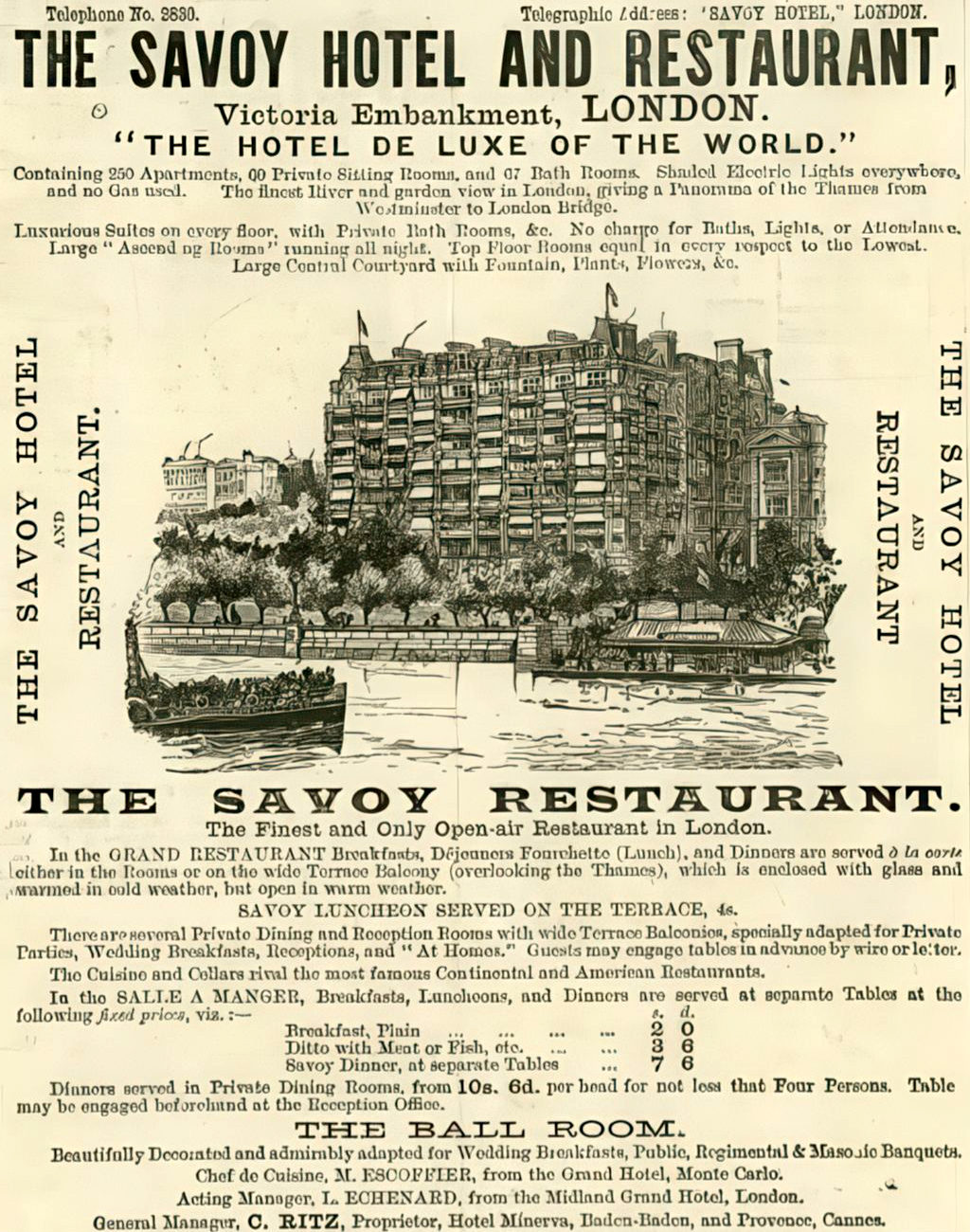
Historic Savoy Hotel and Restaurant advertisement, Victoria Embankment London, circa 1900
Correspondence back to France
Monet's letters reveal both delight and frustration. He could be exhilarated by a particular effect and then immediately discouraged by the city's refusal to repeat it. He wrote of wanting to paint “effects of fog on the Thames,” and during the campaigns he described moments of intense enthusiasm when a sunset or veil of mist suddenly produced the exact sensation he sought. Yet he also admitted that London was difficult beyond measure, because effects vanished too quickly and could not simply be resumed the next day.
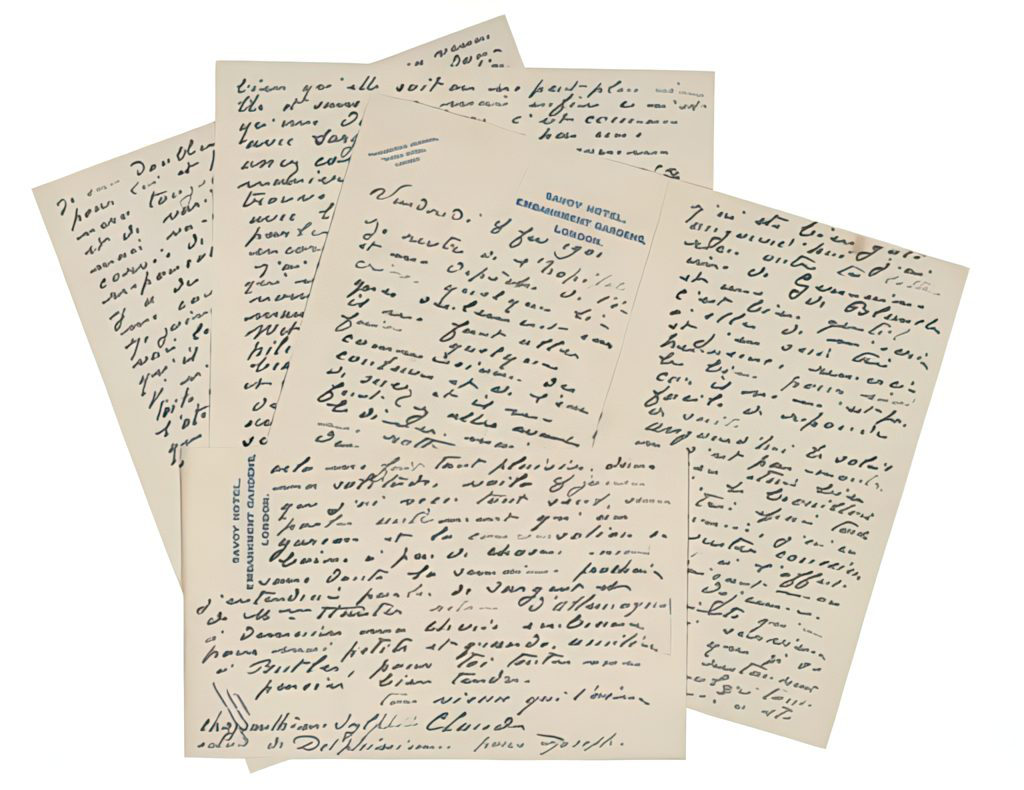
Three Autographed Letters Sent by Claude Monet to Wife Alice from Savoy Hotel, London [4]
Monet In London: letters displaying Monet's sensitivity to light and weather conditions as he struggles with the London fog during the painting of the London series. In the first letter his efforts have been altogether frustrated by the fog.
Christie's auction listing [4]
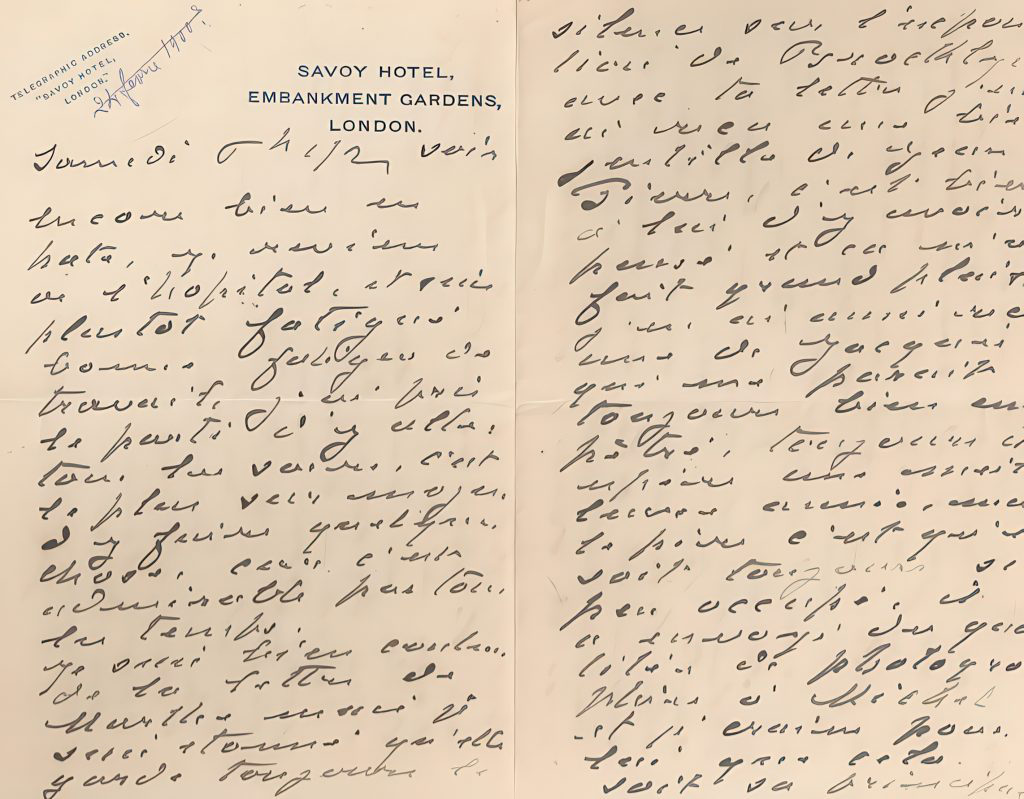
A letter sent by Claude Monet, written in the Savoy Hotel, Embankment Gardens, London, 1900 [5]
A very, very fine day.
Cleaned, readable translation of letter above sent by Claude Monet from the Savoy Hotel
One has here a beautiful light, and at moments an extraordinary brightness that I have never seen before.
I am working a great deal, and I am finding effects that are quite new to me.
What is especially striking is the fog, which transforms everything and gives the Thames a completely different character.
I persist in working, even if it is difficult, because these are impressions that one cannot find elsewhere.
Everything changes from one moment to the next, and one must work quickly.
I hope to bring something back from this.
From Hotel to Hospital
Monet's daily switch from hotel to hospital allowed him to capture the Parliament motif when backlit toward sunset, whilst his work earlier in the day on bridges suited the broader spread of daylight and fog across the river.
Mrs Charles Hunter, as mentioned in some of Monet's letters written in the Savoy hotel, was a friend of John Singer Sargent. She had arranged for Monet to have a room in St Thomas's Hospital. It was from here that he painted the series of views of the Houses of Parliament. [4]
Map of Monet in London
The map below shows the locations from where Monet worked, the landmarks that he captured and also the locations in London today that display some of his work.
Whilst in London, particularly in his second spell at around the turn of the century, Monet would socialise with collectors, artists and critics. He had a number of dinners at Mary Hunter's home (wife of Charles, who owned several coal mines - they were key to his arrangements at St Thomas' Hospital), others with G. Moore, as well as a number with the American artist John Singer Sargent. He also met up with Raymond Koechlin, London correspondent of Le Figaro. Monet would not particularly seek out French contacts whilst in London, but in some cases they would track him down for an evening's socialising. [2]
Why Monet Finished the London Paintings in Giverny
Whilst the artist worked tirelessly during his second spell in London, at the turn of the century, his paintings were never intended to be finished here. Instead, he transported them back to his studio in Giverny, northern France. Here he was able to finetune each iteration. Monet also wanted to display the paintings as a true series, and so continued to work on them simultaneously in order to ensure that they worked together, side-by-side.
Indeed, Monet even refused to unveil them until years later. Monet was no longer simply recording effects as they appeared. He was constructing a coherent body of work in which each picture had to relate to the others. The London paintings were serial not only in subject, but in the way they were completed. Giverny became the place where observation, memory, and artistic synthesis were fused into finished works. His collectors would eventually understand this as being his working practice with regards his series of paintings.
The Houses of Parliament Series
For many, the highlight of Monet's time in London was his series focused on the iconic motif of the Houses of Parliament. From St Thomas's Hospital, Monet painted the building as a dark silhouette rising through mist, often backlit by the setting sun. The result was extraordinary: an iconic London landmark transformed into a trembling arrangement of violet, blue, gold, rose and grey.
This series was significant for a number of reasons. Firstly, there is a push towards abstraction which points towards later series by Monet. Indeed, he is also now firmly rooted in the mindset of producing groups of paintings, with repeating motifs. The Houses of Parliament are reduced to an outline of structure, with different elements playing off it, just as was seen in his Rouen Cathedral series.
Monet in this series was focusing on atmosphere, and using recognisable details of the London skyline to indicate its changes across the day.
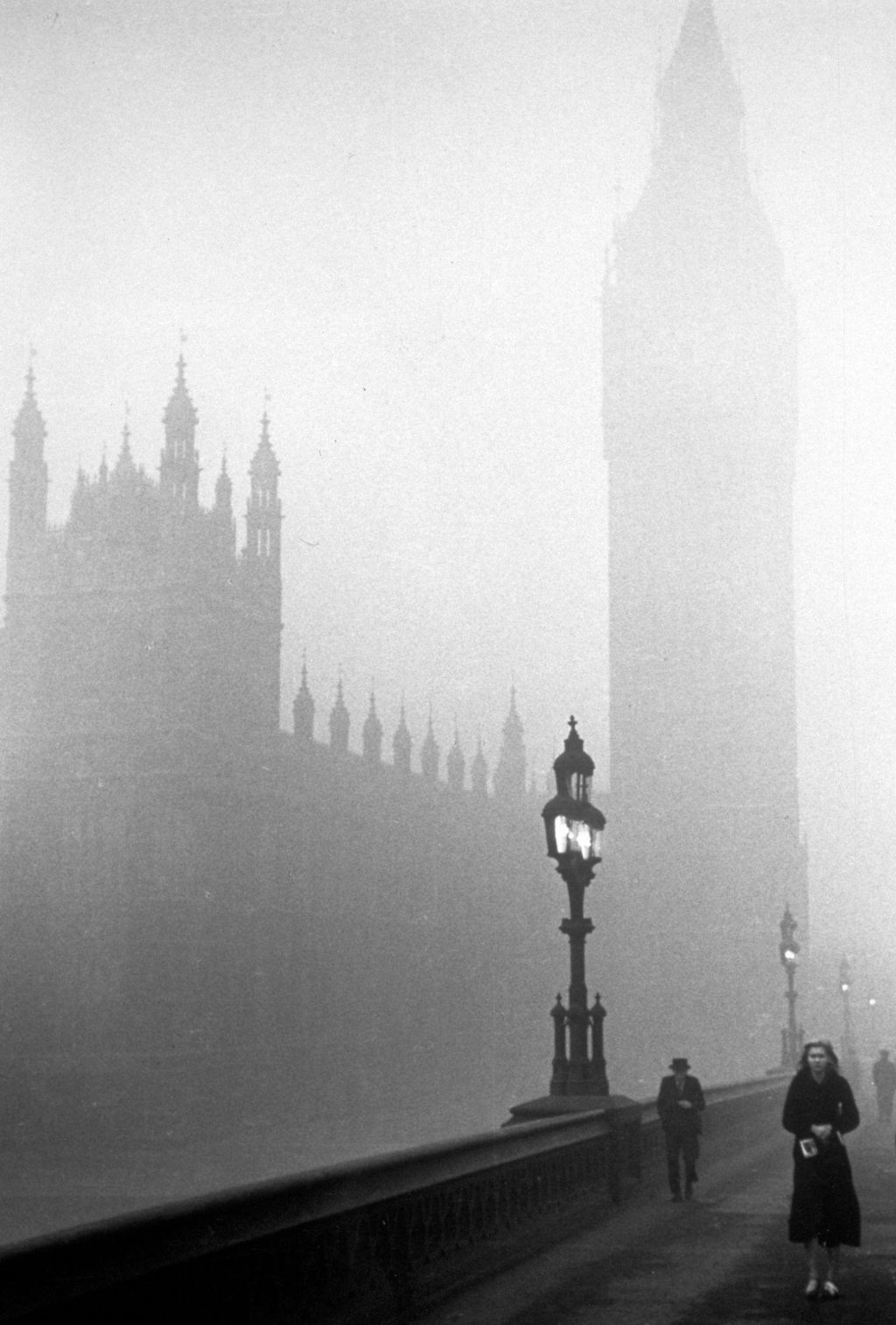
A Foggy Morning on Westminster Bridge in London
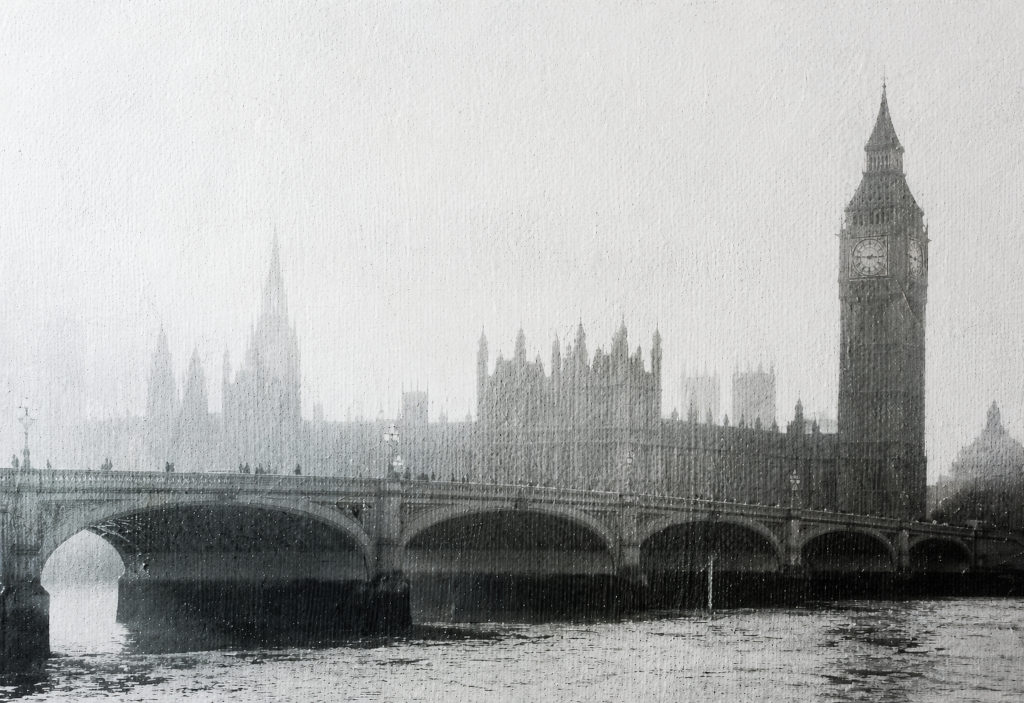
Vintage Photograph of Misty Thames with Gothic London Skyline
What Else Did Monet Paint in London?
Whilst his Houses of Parliament series dominates the artist's time in London, they are only one part of his Thames campaign. The London body of work also includes the Waterloo Bridge and Charing Cross Bridge series, and these are vital for understanding how he approached the city as a whole. Waterloo Bridge allowed for long rhythms of arches dissolving into smoke and haze. Charing Cross Bridge introduced trains, steam, and stronger signs of modern urban life. Parliament, by contrast, gave him monumentality and a Gothic silhouette that could be reduced almost to pure form.
By reflecting on all canvases as a whole, Monet was selecting different types of structures that would bring different effects from light and atmospheric conditions. Bridges and towers offer horizontal and vertical contrast, as well as interacting with the rising or falling sun in a different manner. Other artists would travel around the city, capturing different landmarks, one per canvas as a sort of visual diary, but Monet's interest was in celebrating the atmospheric conditions that seemed so unique to him.
Monet's Love of London Fog
Monet's most famous response to London centres on its fog. He was fascinated by the way it softened forms, altered colour, and gave the city a beauty that was inseparable from its climate and pollution. It provided an endless variarions of the skyline, changing from one minute to the next. Despite the connection to pollution and over-population, for a tourist such as Claude Monet, it was strangely charming. He saw that fog did not hide the city so much as remake it.
His work in London, therefore, had to be commenced quickly, with fast brushwork to capture a specific moment in time. Greater care could then be taken at a later date to complete each work. Buildings become veils, bridges become rhythms, and the river becomes a field of coloured vibration. Monet loved the city because its atmosphere unsettled fixed form. Without that instability, the city would not have offered him the same artistic challenge or reward.
Decades later, London's fog would become part of popular culture, captured in songs like A Foggy Day (In London Town) by Louis Armstrong & Ella Fitzgerald (1950s) - an atmosphere that Monet had already transformed into paint.
Monet and Science - The Challenge of Time, Sun and Season
A fascinating aspect of the London series is that some paintings can be studied in relation to the actual position of the sun and Monet's vantage point. The artist worked repeatedly from fixed locations, enabling modern scholars to accurately calculate the times of day and seasonal conditions represented in many of his London series. This is especially compelling in the Parliament series, where the low sun and changing backlight play such an important role.
The possibility to link these works to solar position and exact viewpoint shows how closely observed they were at their starting point. London gave Monet a subject that was atmospheric, but not vague; elusive, but still measurable in relation to the real world.
Family Strains and Personal Context
There was much going on in Monet's personal life at the time of his various trips to London. His first stay came during a period of anxiety, exile and insecurity, both personally and professionally. Family movements between France, London, and even America formed part of the background to these years, and practical questions of health, travel, and domestic arrangements surrounded the trips. In some senses, London offered the artist respite from his own problems, a chance to escape and lose himself in the swathes of fog that pervaded this unique skyline.
He could never totally disconnect, however, as found in the many letters that he wrote during his time in England. There were always other matters to attend to, but whilst painting he could at least enjoy some respite.
On the docks at Le Havre, in September 1899, an emotional Alice waved goodbye to Marthe, Butler and her grandchildren as they sailed for New York. Then she, Monet and Germaine took the boat to England.
Jackie Wullschlager, Monet - The Restless Vision [3]
Monet, Whistler, Turner and Constable
London also invites comparison with other artists. Turner and Constable had already shown what English landscape painting could do with weather, sky, and light - Monet studied their work during his initial visit to the city. Turner showed him how to depict atmosphere effectively, whilst Constable alerted him to accurately depicting changing natural conditions. They may have been from the same Romanticism movement, but their influences on Monet were quite different.
Monet did not imitate either painter directly, but both formed part of the artistic background against which his own London project developed. They also helped to lure him back to London several decades later.
Whistler is another key comparison. His Thames subjects and Nocturnes had already explored fog, tonal harmony, and London's mysterious twilight atmosphere. Monet's London works differ in their serial logic and brighter chromatic range, yet the comparison remains valuable. Whistler helped establish London mist as a modern poetic subject. Monet then pushed that idea into a more sustained and systematic investigation of changing light over time.
The 1904 Exhibition and Monet's Control Over the Series
In 1904, Durand-Ruel exhibited thirty-seven London works in Paris: eight Charing Cross Bridge views, eighteen Waterloo Bridge views, and eleven Houses of Parliament paintings. Monet's insistence on grouping them gave the public a chance to grasp the full artistic idea behind the series. The full series was simply too large to show in its entirety, and so this proved an acceptable compromise for both parties.
Did Monet ever Exhibit the Series in London?
Claude Monet wished to exhibit his London series in the city itself, but sadly this ambition was never achieved.
The Commercial Success of the London Works
Monet's London series was a commercial success. Contemporary and later accounts describe the 1904 exhibition as a triumph. Durand-Ruel anticipated strong demand and bought important works from the group before the exhibition opened. The Parliament subjects in particular appear to have occupied a privileged position within the series. Monet included more than half of the Parliament canvases in the 1904 show and asked higher prices for them than for the Charing Cross or Waterloo Bridge works.
By the turn of the century, he was no longer the embattled Impressionist of the 1870s. The London works showed that serial painting could be both aesthetically radical and commercially powerful. Major collectors acquired these pictures, and the success of the show reinforced Monet's standing as one of the leading artists of his age.
Reviewers of the 1904 exhibition praised their vaporous subtlety and their astonishing ability to make the intangible visible. One critic marvelled that Monet had somehow managed to “build on the fogs of the Thames.” Another admired the increased abstraction and synthesis of the paintings. These reactions matter because they show that Monet's contemporaries understood the London works not merely as descriptive cityscapes, but as ambitious experiments at the limits of representation - this reaction contrasts markedly from Monet's contributions to the initial Impressionist exhibitions, where the whole stylistic point was lost on most.
London and Monet - A Summary
London occupies a distinctive place within Monet's oeuvre. It links his earlier engagement with modernity, seen in Paris and the railway pictures, with the more immersive, atmospheric and increasingly abstract ambitions of his final decades. It also shows him returning to an old city with a new artistic language. The young exile of 1870-1871 had observed London with uncertainty. The mature Monet of 1899-1901 returned to transform it into a grand serial meditation on light, fog, and time.
Monet's London paintings are among the key works through which he tested how far atmosphere could remake form. The bridges, the river, the smoke and above all the Houses of Parliament became means of exploring a profound artistic question: how can painting hold what is visible only for a moment? In London, Monet found one of his richest answers.
Looking Toward Abstraction
The London paintings are also amongst the best evidence of Monet's movement toward abstraction. Although they remain anchored in the visible world, many of them verge on dissolving subject into coloured atmosphere. This is especially true in fog-heavy scenes, where the buildings and bridges barely hold together as coherent forms.
The paintings do not cease to be representational, but they do ask the viewer to accept atmosphere, colour and sensation as primary. In that sense, London forms a crucial bridge between the great serial works of the 1890s and the far more immersive late Water Lilies.
Featured Paintings from Claude Monet's London Series
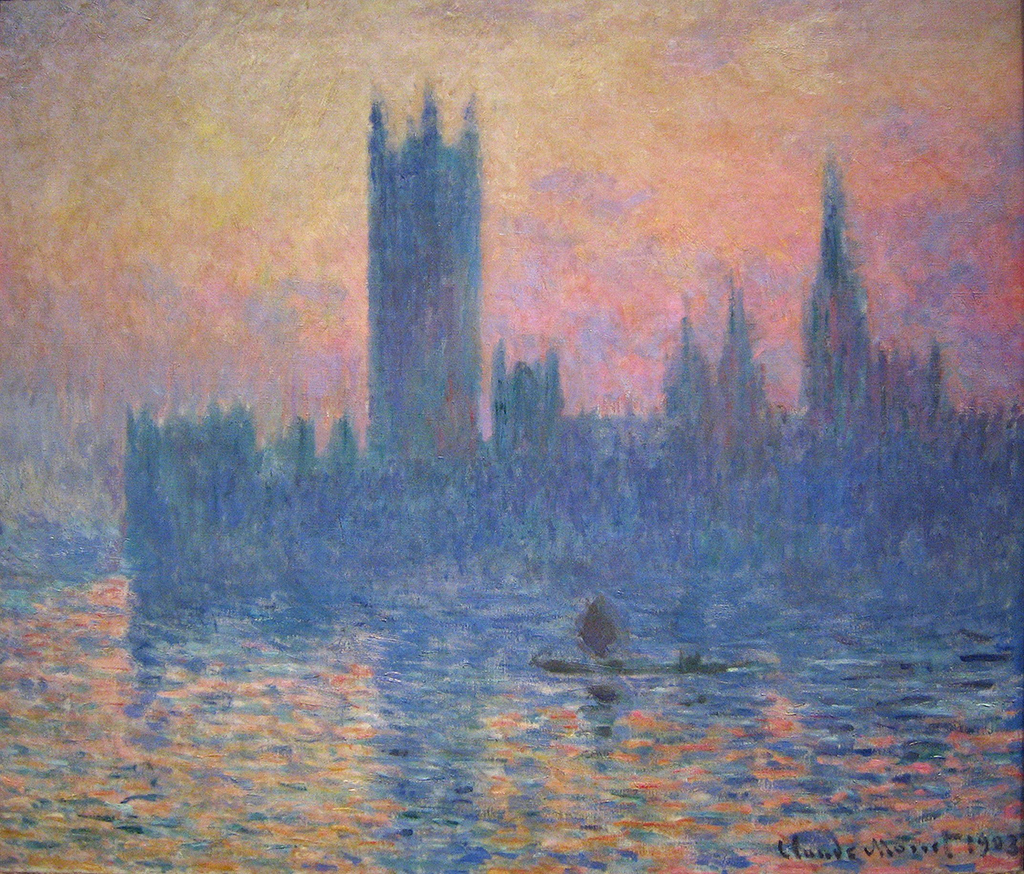
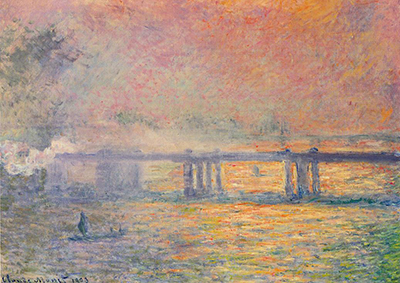


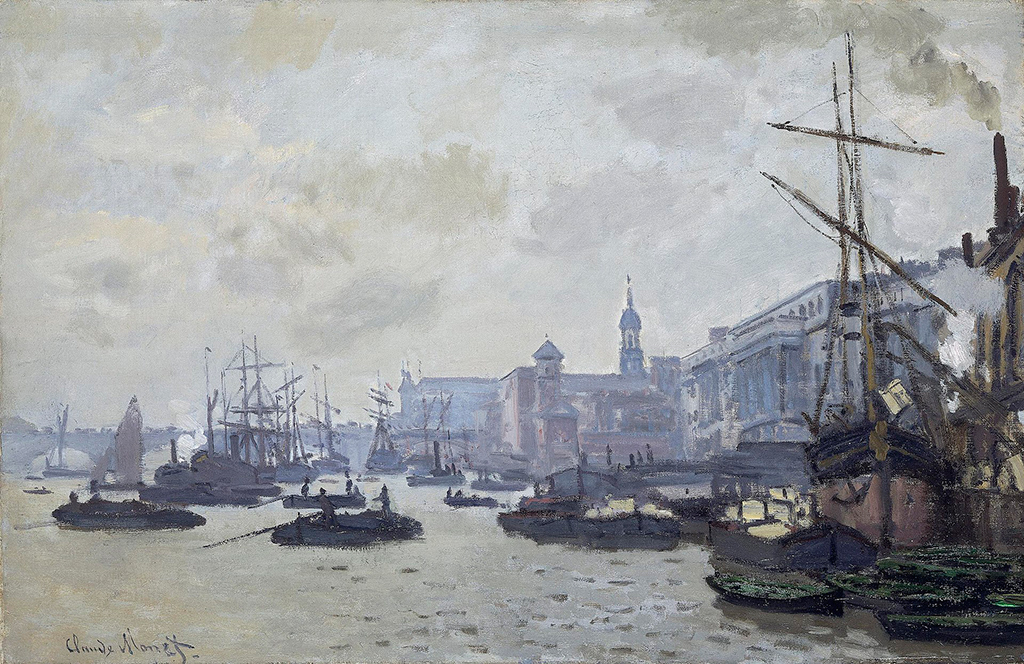
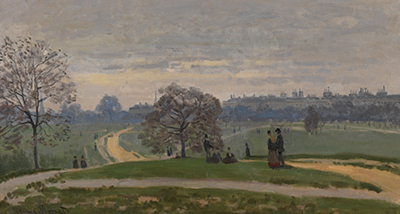

Monet's Love of London
By most accounts, Monet loved his time in London, and was pleased with the work that he got done whilst he was there. The letters that he wrote at this time to his second wife Alice were filled with a palpable sense of excitement and enjoyment as well as satisfaction with the quality of the work that he had produced.
Monet's letters from London in the first few years of the 20th century show that he was particularly intrigued by the fog that settled on the Thames. Looking at his many paintings of the Houses of Parliament shows the various ways in which this fog played on his mind whilst he was in London.
The fog appears thick and blue, often alleviated by glints of pinkish or orange light almost like fireworks in their deftness and brilliant. Sometimes the figures of boaters on the water can be seen silhouetted in dark paint within the fog, and in the background there rise the dark buildings of the Houses of Parliament themselves, made obscure and mysterious by the clammy air that surrounds them.
Sunshine can be rare in this city and Monet's letters to Alice reveal that whenever he did see a patch of sun or clear sky he would rush for his artist's materials so that he could capture their unique effect on the water of the Thames and on the edifices around him.
Monet's Movement to Series of Paintings
Painting in a series such as this enabled Monet to come at the same object from different angles, and see how different lighting effects (such as dusk, sunrise, and the middle of the day) made it look entirely different. Whilst in London, Monet worked on several series of paintings, and one of the most salient ones was a series of paintings that depicted the Houses of Parliament.
Monet painted the Houses of Parliament partly from a suite that he had at the exclusive Savoy hotel. But, he also worked from a small terraced property on the South Bank of the River Thames. The effect of light on water was one of the key preoccupations of Monet's career as an artist, and his dreamy pictures of the River Thames indicate that he did not leave this obsession behind in France when he came to London.
Working Methods for the London Series
Monet's method of painting whilst he was in London was one that involved a substantial amount of multi tasking. His contemporary and friend the painter John Singer Sargent (see Madame X and Claude Monet Painting by the Edge of a Wood), remarked that during his stay in London, Monet could often be found to be working on as many as 80 paintings at any one time.
He was aided in this method of working by two relatively recent inventions. The first was a special type of easel known as the box easel. This easel was able to fold up to create a kind of briefcase that was made of wood. Thus folded, it was easy for the artist to carry it around, filled with her or his art materials.
Once the artist reached the location that they wished to paint in, they could simply unfold the easel to create a traditional style painting easel. The other invention was of paint in tubes, which could be carried around without spillages.
Tin paint tubes were invented in the early 19th century by an American artist and they quickly caught on in Europe - not least amongst Monet and his fellow Impressionist painters who relished the opportunity to be able to paint with ease in their preferred style 'en plein aire'.
This simply means 'in fresh air' or 'in the open air', like 'al fresco' in Italian. Painting in this way helped the Impressionists to conjure up a strong immediate emotional effect with their paintings. A lot of Monet's painting in London was conducted in this way, though, as mentioned above, he also worked from carefully positioned indoor locations in the heart of the city.
Complete List of Claude Monet's London Series
Claude Monet created nearly 100 paintings of London between 1899 and 1904. The table below lists all known works from the Thames series, including the Waterloo Bridge, Charing Cross Bridge, and Houses of Parliament groups.
| Wildenstein No. | Title | Year | Current Location |
|---|---|---|---|
| W.1521 | Charing Cross Bridge | 1899-1901 | Shelburne Museum Vermont House |
| W.1522 | Charing Cross Bridge | 1899-1901 | Santa Barbara Museum of Art |
| W.1523 | Charing Cross Bridge | 1899-1901 | Murauchi Art Museum, Hachioji |
| W.1524 | Charing Cross Bridge | 1899-1901 | Menard Art Museum, Komaki |
| W.1525 | Charing Cross Bridge | 1899-1901 | National Museum of Western Art, Tokyo |
| W.1526 | Charing Cross Bridge, Overcast Day | 1899-1901 | Museum of Fine Arts, Boston |
| W.1527 | Charing Cross Bridge | 1899-1901 | Art Institute of Chicago |
| W.1528 | Charing Cross Bridge | 1899-1901 | Private collection |
| W.1529 | Charing Cross Bridge | 1899-1901 | National Museum Cardiff |
| W.1530 | Charing Cross Bridge | 1899-1901 | Indianapolis Museum of Art |
| W.1531 | Charing Cross Bridge | 1899 | Thyssen-Bornemisza Museum, Madrid |
| W.1532 | Charing Cross Bridge, Reflections on the Thames | 1899-1901 | Baltimore Museum of Art |
| W.1533 | Charing Cross Bridge, Trains Crossing | 1899-1901 | Private collection |
| W.1534 | Charing Cross Bridge, Smoke in Fog | 1899-1901 | Private collection |
| W.1535 | Charing Cross Bridge, Smoke in Fog | 1899-1901 | Musée Marmottan Monet, Paris |
| W.1536 | Charing Cross Bridge, The Thames | 1899-1901 | Yamagata Museum of Art |
| W.1537 | Charing Cross Bridge, The Thames | 1899-1901 | Museum of Fine Arts of Lyon |
| W.1538 | Charing Cross Bridge, Train Passing | 1899-1901 | Private collection |
| W.1539 | Charing Cross Bridge, Evening Effect | 1899-1901 | Private collection |
| W.1540 | Charing Cross Bridge | 1899-1901 | Private collection |
| W.1541 | Charing Cross Bridge, Fog | 1899-1901 | Art Gallery of Ontario, Toronto |
| W.1542 | Charing Cross Bridge | 1899-1901 | Private collection |
| W.1543 | Cleopatra's Needle and Charing Cross Bridge | 1899-1901 | Mohamed Mahmoud Khalil Museum, Cairo |
| W.1544 | Cleopatra's Needle and Charing Cross Bridge | 1899-1901 | Private collection |
| W.1545 | Charing Cross Bridge | 1899-1901 | Private collection |
| W.1546 | Charing Cross Bridge | 1899-1901 | Private collection |
| W.1547 | Charing Cross Bridge | 1899-1901 | Private collection |
| W.1548 | Charing Cross Bridge | 1899-1901 | Saint Louis Art Museum |
| W.1549 | Charing Cross Bridge | 1899-1901 | Private collection |
| W.1550 | Charing Cross Bridge | 1899-1901 | Private collection |
| W.1551 | Charing Cross Bridge | 1899-1901 | Private collection |
| W.1552 | Charing Cross Bridge with tugs | 1899-1901 | Private collection |
| W.1552a | London, Charing Cross Bridge | 1899-1901 | Private collection |
| W.1553 | Charing Cross Bridge (study) | 1899-1901 | Private collection |
| W.1554 | Charing Cross Bridge, Fog on the Thames | 1899-1901 | Fogg Museum, Cambridge |
| W.1555 | Waterloo Bridge | 1899-1901 | Santa Barbara Museum of Art |
| W.1556 | Waterloo Bridge, London | 1899-1901 | Dublin City Gallery The Hugh Lane |
| W.1557 | Waterloo Bridge, Grey Weather | 1899-1901 | Art Institute of Chicago |
| W.1558 | Waterloo Bridge, Overcast | 1899-1901 | Private collection |
| W.1559 | Waterloo Bridge, Morning Fog | 1901 | Philadelphia Museum of Art |
| W.1560 | Waterloo Bridge | 1902 | Kunsthalle Hamburg |
| W.1561 | Waterloo Bridge, Misty Morning | 1899-1901 | Ordrupgaard, Copenhagen |
| W.1562 | Waterloo Bridge, Misty Weather | 1899-1901 | Berne Museum |
| W.1563 | Waterloo Bridge, Overcast | 1899-1901 | Private collection |
| W.1564 | Waterloo Bridge, at Dusk | 1904 | National Gallery of Art, Washington D.C. |
| W.1565 | Waterloo Bridge | 1899-1901 | Denver Art Museum |
| W.1566 | Waterloo Bridge, Effect of Sun in the Mist | 1903 | Baltimore Museum of Art |
| W.1567 | Waterloo Bridge, Sun Effect | 1903 | Milwaukee Art Museum |
| W.1568 | Waterloo Bridge | 1903 | Worcester Art Museum |
| W.1569 | Waterloo Bridge, Grey Day | 1903 | National Gallery of Art, Washington D.C. |
| W.1570 | Waterloo Bridge, Grey Weather, Smoky | 1899-1901 | Private collection |
| W.1571 | Waterloo Bridge, Grey Weather | 1899-1901 | Private collection |
| W.1572 | Waterloo Bridge, Sun in the Fog | 1899-1901 | Private collection |
| W.1573 | Waterloo Bridge, Sunlight in the Fog | 1899-1900 | National Gallery of Canada, Ottawa |
| W.1574 | Waterloo Bridge | 1899-1901 | Private collection |
| W.1575 | Waterloo Bridge | 1901 | Davis Museum and Cultural Center, Wellesley |
| W.1576 | Waterloo Bridge | 1899-1901 | Private collection |
| W.1577 | Waterloo Bridge, Fog, Sunlight Effect | 1899-1901 | Caracas Museum of Contemporary Art |
| W.1578 | Waterloo Bridge | 1899-1901 | Matsushita Museum of Art |
| W.1579 | Waterloo Bridge | 1899-1901 | Private collection |
| W.1580 | Waterloo Bridge | 1901 | Hermitage Museum, St Petersburg |
| W.1581 | Waterloo Bridge | 1901-02 | Kunsthaus Zürich |
| W.1582 | Waterloo Bridge, Mist Effect | 1904 | Private collection |
| W.1583 | Waterloo Bridge at Sunset, Pink Effect | 1904 | National Gallery of Art, Washington D.C. |
| W.1584 | Waterloo Bridge | 1899-1901 | Lowe Art Museum, Coral Gables |
| W.1585 | Waterloo Bridge | 1899-1901 | Private collection |
| W.1586 | Waterloo Bridge, Sunlight Effect | 1903 | Art Institute of Chicago |
| W.1587 | Waterloo Bridge, Sunlight Effect | 1899-1901 | Art Gallery of Hamilton |
| W.1588 | Waterloo Bridge, Sunlight Effect | 1903 | Carnegie Museum of Art, Pittsburgh |
| W.1589 | Waterloo Bridge, Sunlight Effect | 1903 | Private collection |
| W.1590 | Waterloo Bridge, Hazy Sun | 1903 | Memorial Art Gallery, Rochester |
| W.1591 | Waterloo Bridge, Hazy Sun | 1903 | Private collection |
| W.1592 | Waterloo Bridge, Fog | 1903 | Private collection |
| W.1593 | Waterloo Bridge, Sun Effect | 1899-1901 | Foundation E.G. Bührle, Zürich |
| W.1594 | Waterloo Bridge, London | 1900 | National Museum of Western Art, Tokyo |
| W.1595 | Waterloo Bridge, Fog | 1899-1901 | Private collection |
| W.1596 | Houses of Parliament, Effect of Sunlight in the Fog | 1900-01 | Private collection |
| W.1597 | Houses of Parliament, Sunlight Effect | 1903 | Brooklyn Museum, New York |
| W.1598 | Houses of Parliament, Sunset | 1903 | National Gallery of Art, Washington D.C. |
| W.1599 | Houses of Parliament, London, Symphony in Rose | 1900-01 | Private collection |
| W.1600 | Houses of Parliament | 1900-03 | Art Institute of Chicago |
| W.1601 | Houses of Parliament, London, Symphony in Blue | 1901-02 | High Museum of Art, Atlanta |
| W.1602 | Houses of Parliament, Sunset | 1901-02 | Kunstmuseen Krefeld |
| W.1603 | Houses of Parliament, Sunset | 1900-01 | Private collection |
| W.1604 | Houses of Parliament, Sunset | 1903 | Private collection |
| W.1605 | Houses of Parliament, Stormy Sky | 1900-01 | Palais des Beaux-Arts de Lille |
| W.1606 | Houses of Parliament, Reflection of the Thames | 1905 | Musée Marmottan Monet, Paris |
| W.1607 | Houses of Parliament, Sunset | 1904 | Kunsthaus Zürich |
| W.1608 | Houses of Parliament, Fog Effect | 1903 | MuMa Le Havre |
| W.1609 | Houses of Parliament, Fog Effect | 1903 | Metropolitan Museum of Art, New York |
| W.1610 | Houses of Parliament, Effect of Sunlight in the Fog | 1904 | Musée d'Orsay, Paris |
| W.1611 | Houses of Parliament, Fog Effect | 1903 | Museum of Fine Arts, St. Petersburg, Florida |
| W.1612 | Houses of Parliament, Seagulls | 1903 | Princeton University Art Museum |
| W.1613 | Houses of Parliament, Seagulls | 1904 | Pushkin Museum, Moscow |
| W.1614 | Houses of Parliament, Evening | 1900-01 | Private collection |
| W.1615 | Leicester Square at Night | 1900-01 | Private collection |
| W.1616 | Leicester Square at Night | 1900-01 | Private collection |
| W.1617 | Leicester Square at Night | 1900-01 | Private collection |
Frequently Asked Questions
References
- Daniel Wildenstein, Gilles Neret, Monet: Catalogue Raisonne, Cologne: Wildenstein Institute and Taschen, 1996.
- Daniel Wildenstein, Monet: The Triumph of Impressionism, Cologne: Taschen, 2015.
- Jackie Wullschlager, Monet - The Restless Vision, Milton Keynes: Allen Lane, 2023.
- Christie's Auction Listing, "MONET, Claude (1840-1926). Three autograph letters signed ('ton vieux qui t'aime Claude') to [his wife, Alice]", Christie's, View source.
- Autographen, "Claude Monet : Back in the Savoy hotel from St. Thomas hospital", ArtAutographs, View source.
- Tate, "[Eight things to know: Impressionists in London", View source.
- Christie's, "Monet's London Paintings", View source.
- William Cook, "Monet for nothing: How Paul Durand-Ruel risked it all for Impressionism", BBC Arts, View source.
- The Courtauld Institute of Art, "Monet and London: View of the Thames", View source.
- The Savoy Hotel, London, "The Courtauld Gallery Announces Major Exhibition Monet and London Views of the Thames", Savoy Media Hub, View source.
- Kelly Grovier, "A mesmerising mirage: How Monet's paintings changed the way we see London", BBC Culture, View source.
- Art Institute Chicago, "Houses of Parliament, London", View source.