 by Tom Gurney
Tom Gurney BSc (Hons) is an art history expert with over 20 years experience
Published on November 6, 2026 / Updated on November 6, 2026
Email: tomgurney1@gmail.com / Phone: +44 7429 011000
Introduction
Fra Angelico and Masaccio are often placed on opposite sides of a misleading divide. Masaccio becomes the revolutionary. Angelico becomes the pious survivor of Gothic tradition. One represents the Renaissance. The other represents medieval spirituality. Modern museum research makes this contrast increasingly difficult to sustain. The Museo del Prado’s 2019 exhibition Fra Angelico and the Rise of the Florentine Renaissance placed Angelico directly within the central artistic transformations of Florence and argued that, alongside the younger Masaccio, he helped formulate a new way of seeing that would shape Western painting for centuries.
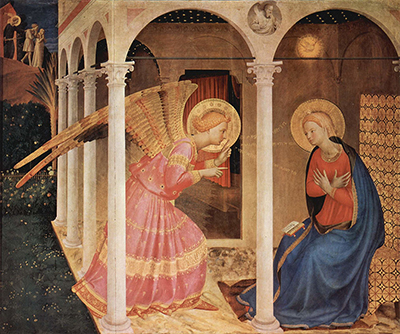
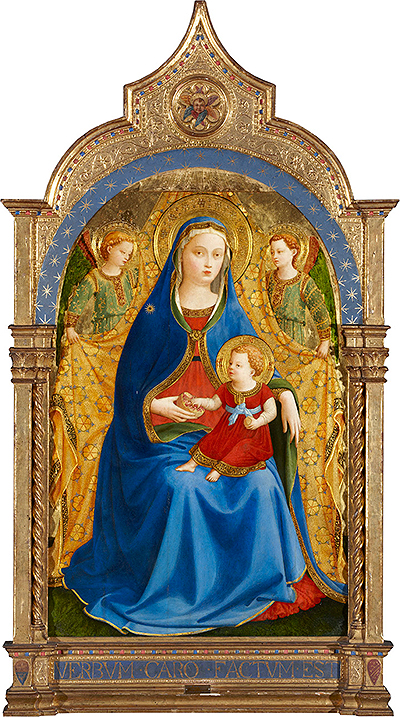
The Prado also identifies specific evidence of Angelico’s knowledge of Masaccio. The Virgin with the Pomegranate of around 1426 reveals knowledge of Masaccio and Masolino’s Sant’Anna Metterza. The Prado Annunciation shows spatial experimentation related to Masolino and Masaccio in the Brancacci Chapel. The exhibition further describes Angelico’s mature Linaioli Tabernacle as closer in spatial conception and monumentality to Masaccio and Ghiberti than to many painters of Angelico’s own generation.
This does not make Angelico a follower. The more interesting interpretation is that both painters were responding to the same rapidly changing Florentine environment. Masaccio developed one powerful language of body, space and light. Angelico developed another. Their solutions overlap. Their emotional registers differ. Together they demonstrate that the Early Renaissance had more than one route into modern pictorial space. [1]
At a Glance
- Fra Angelicoc. 1395–1455 [1]
- Masaccio1401–1428 [1]
- Shared environmentFlorence in the 1420s [1]
- Key issuesvolume, perspective, architecture, light and human presence [1]
- Direct documentary evidence of personal relationshipnot secure [1]
- Visual evidenceAngelico knew and responded to Masaccio’s work [1]
- Prado evidenceVirgin with the Pomegranate responds to Sant’Anna Metterza [2]
- Prado Annunciationspatial depth related to Masolino and Masaccio’s Brancacci innovations [3]
- Major differenceAngelico combines Renaissance naturalism with gold, miniaturist detail and contemplative Dominican function [5]
- Best modelparallel innovators rather than revolutionary and follower [1]
Contents
- Introduction
- Florence in the 1420s
- Masaccio’s Revolution
- Angelico’s Different Starting Point
- The Prado Annunciation
- Virgin with the Pomegranate
- Body
- Perspective
- Early Renaissance Pluralism
- Why Angelico and Masaccio Matter Together
Florence in the 1420s
The Florence in which both artists worked was undergoing extraordinary artistic change. Brunelleschi was transforming architecture. Ghiberti and Donatello were transforming sculpture. Perspective became an increasingly important means of organising pictorial space. Painters faced new expectations about bodies, light and architectural realism. Angelico and Masaccio belong inside this same environment. [1]
Masaccio’s Revolution
Masaccio’s reputation rests on extraordinary concentration. Bodies possess weight. Figures occupy space convincingly. Light describes volume. Emotion becomes physically immediate. The Brancacci Chapel gave these innovations monumental public form. His death in 1428 ended a career of astonishing brevity. [1]
Angelico’s Different Starting Point
Angelico emerged from another artistic world. His early formation was tied to manuscript illumination and Lorenzo Monaco’s refined Gothic culture. Gold. Precise line. Brilliant colour. Ornamental elegance. Small-scale sacred narrative. This starting point differs from Masaccio’s mature monumentality. But it did not prevent Angelico from embracing Renaissance innovation. [1]
One of the most important aspects of Angelico’s development is the breadth of sources he could combine. Lorenzo Monaco remained important. Gentile da Fabriano contributed descriptive refinement. Ghiberti contributed sculptural and spatial ideas. Masaccio contributed bodily and pictorial force. Angelico’s originality lies in synthesis. [4]
The Prado Annunciation
The Prado Annunciation of 1425–26 is one of the clearest places to see the relationship. The painting retains brilliant detail and gold. Yet Mary’s room and the architectural structure create new depth. The Prado explicitly relates this spatial investigation to what Masolino and Masaccio had been doing in the Brancacci Chapel. This is contemporary exchange, not retrospective influence. [3]
Masaccio’s Brancacci frescoes demonstrated how figures could inhabit unified architecture and light. The chapel became one of the most influential artistic sites in Florence. Angelico’s awareness of these developments places him directly inside the Renaissance conversation. [1]
Virgin with the Pomegranate
The Prado’s Virgin with the Pomegranate, painted around 1426, provides even more specific evidence. The museum states that it reveals Angelico’s knowledge of Masaccio’s Sant’Anna Metterza, painted with Masolino for Sant’Ambrogio around 1423–24. The bodily arrangement and monumentality become a point of artistic dialogue. [2]
Masaccio’s contribution to the Sant’Anna Metterza gives the Virgin and Child remarkable physical weight. Angelico absorbs this lesson without abandoning his own elegance. The comparison demonstrates transformation rather than copying. He can learn mass from Masaccio and still remain Angelico. [2]
Body
Masaccio’s bodies often feel almost sculptural. Weight dominates. Angelico increasingly gives bodies real mass too, especially by the later 1420s and 1430s. Yet his figures frequently retain greater linear grace. The difference is one of emphasis rather than naturalism versus non-naturalism. [1]
Both painters use light structurally. Masaccio’s light can be severe and unified, giving figures dramatic physical presence. Angelico’s light often becomes luminous and devotional. At San Marco, light supports quiet spiritual clarity. The same Renaissance tool serves different emotional purposes. [1]
Perspective
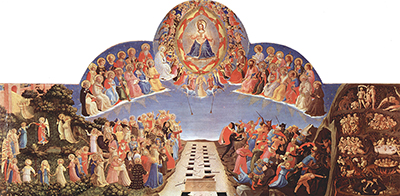
Masaccio’s perspective is famously monumental in works such as the Trinity. Angelico likewise uses perspective increasingly early. The central tombs of the Last Judgement create dramatic recession. The Prado Annunciation uses architecture to organise sacred space. The comparison demonstrates that perspective quickly became part of Angelico’s language. [1]
Brunelleschi’s architectural ideas shaped the wider environment for both painters. The Prado notes that the Annunciation’s square structure follows the kind of recommendation Brunelleschi made for San Lorenzo altars in 1425. Architecture and painting were transforming together. [1]
Ghiberti is equally important to Angelico’s Renaissance development. The National Gallery and Prado both stress his role. This is another reason not to make Masaccio the single cause of Angelico’s change. Florentine innovation was networked. [4]
Masaccio and Angelico also differ in narrative temperament. Masaccio often concentrates dramatic human action. Angelico can be equally dramatic in the Deposition or Last Judgement. But his San Marco cells later demonstrate radical reduction. Narrative becomes contemplation. This difference reflects function as much as personality. [1]
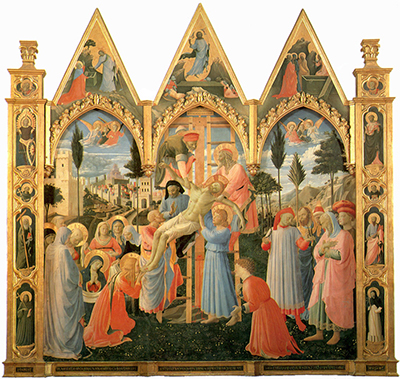
Angelico’s Santa Trinita Deposition is particularly useful for comparison. Bodies possess weight. Christ must be physically lowered and supported. Mourners occupy one coherent space. The work demonstrates how fully Angelico had absorbed Renaissance bodily logic without becoming stylistically Masaccian. [1]
The Last Judgement shows another path. Perspective organises resurrection. The saved and damned move through structured zones. Angelico uses geometric innovation on a cosmic subject. Masaccio’s naturalism therefore does not represent the only way Renaissance spatial thinking could operate. [1]
Gold
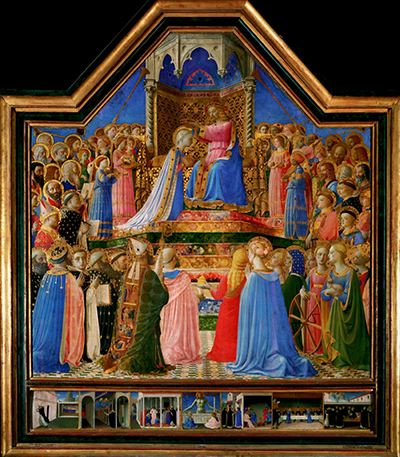
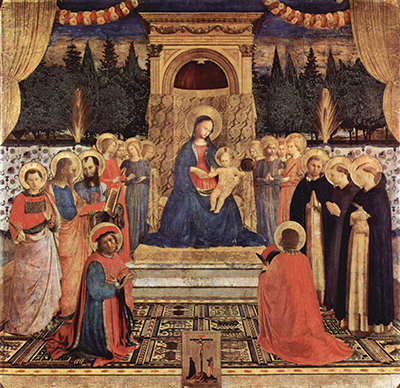
One of the biggest visual differences is Angelico’s continued love of gold. Masaccio generally moves towards more fully illusionistic environments. Angelico continues using gold when it serves sacred function. The Uffizi Glorification of Mary creates depth within a gold-ground heaven. This is not incomplete Renaissance development. It is deliberate material choice. [1]
The comparison therefore reveals two different ideas of pictorial truth. Illusionistic space makes painted worlds physically believable. Gold creates real reflective light on the surface. Angelico often wants both. His art refuses to choose between material sacred splendour and illusionistic depth. [1]
Angelico’s religious vocation also creates audiences Masaccio did not share in the same way. A friar’s cell needs another kind of painting from a public civic chapel. The San Marco frescoes are therefore intentionally quiet. Comparing them directly with Brancacci drama without considering function would be misleading. [5]
Public versus Private
Masaccio’s most famous frescoes serve public or communal settings. Angelico could produce public monumentality too. The Niccoline Chapel proves that. When audience changes, Angelico’s visual density changes. This reinforces the need to compare equivalent functions rather than stereotypes. [1]
Masaccio is often associated with extraordinary human emotion, especially grief. Angelico can likewise create intense grief in the Deposition. His difference lies not in absence of emotion. It lies in a greater willingness to modulate emotion according to devotional purpose. [1]
The Linaioli Tabernacle was decisive in Angelico’s mature development. The Prado emphasises the monumentality of its figures and its proximity to the advanced ideas represented by Masaccio and Ghiberti. By the mid-1430s, Angelico is not catching up. He is participating fully in the new language. [1]
Early Renaissance Pluralism
This comparison helps redefine the Early Renaissance. There was no single correct path. One artist could pursue austere bodily monumentality. Another could combine that monumentality with gold and illuminator refinement. Both could be Renaissance. Pluralism is historically more accurate than a ladder of progress. [1]
Direct documentary evidence of personal interaction is not secure. They worked in the same Florentine environment and responded to overlapping artistic problems. The visual evidence for Angelico’s knowledge of Masaccio’s work is strong. That is sufficient. We do not need invented friendship. [1]
“Masaccio influenced Angelico” is not wrong in the broadest sense. But it is incomplete. The Prado’s stronger framing is that the two artists participated in creating a new way of seeing. Dialogue better captures the complexity. Angelico learns from Masaccio. He also transforms what he learns. [1]
The Prado exhibition was especially important because it repositioned Angelico historically. His status as friar had often caused critics to emphasise theology at the expense of artistic innovation. The exhibition placed light, perspective, narrative and space back at the centre. Masaccio became part of that reassessment. [1]
Why Angelico and Masaccio Matter Together
Angelico and Masaccio matter together because they show how misleading it is to define the Renaissance through one style. Masaccio gives bodies unprecedented weight and emotional immediacy. Angelico absorbs the same new interest in body and space but joins it with a different inheritance. Illumination. Gold. Gothic elegance. Dominican theology. His art therefore demonstrates continuity inside revolution.
The two painters should not be ranked simply as revolutionary and conservative. They are better understood as parallel protagonists of a rapidly changing visual culture. Masaccio proves how radically painting can embody the human world. Angelico proves that the same Renaissance discoveries can transform sacred contemplation without destroying inherited devotional forms. Together they make the Early Renaissance larger. [1]
Frequently Asked Questions
Discussion
Where does comparison reveal genuine exchange between Fra Angelico and Masaccio, and where do their different artistic purposes remain decisive?
Reader Insights
Which work most clearly shows Angelico transforming Masaccio’s monumentality into his own visual language?
Does Angelico’s continued use of gold resist Renaissance illusionism, or expand what Renaissance painting could be?
How should devotional function alter a direct comparison between San Marco and the Brancacci Chapel?
Join the Conversation
Share your reading of Fra Angelico and Masaccio below.
References
- Museo Nacional del Prado, Fra Angelico and the Rise of the Florentine Renaissance, 2019. Museo Nacional del Prado Fra Angelico and the Rise of the Florentine Renaissance.
- Museo Nacional del Prado, Fra Angelico, The Virgin with the Pomegranate, c. 1426. Museo Nacional del Prado The Virgin with the Pomegranate.
- Museo Nacional del Prado, Fra Angelico, The Annunciation, 1425–26. Museo Nacional del Prado The Annunciation.
- National Gallery, London, Fra Angelico artist biography. The National Gallery Fra Angelico artist biography.
- Museo di San Marco, Fra Angelico’s mature Florentine works and San Marco context. Direzione regionale Musei nazionali Toscana Museo di San Marco.
.jpg)
 Fra Angelico.jpg)