 by Tom Gurney
Tom Gurney BSc (Hons) is an art history expert with over 20 years experience
Published on November 6, 2026 / Updated on November 6, 2026
Email: tomgurney1@gmail.com / Phone: +44 7429 011000
Introduction
Fra Angelico’s frescoes in the Niccoline Chapel at the Vatican belong among the greatest surviving achievements of the Italian fifteenth century. They also mark the culmination of a career that had begun in the world of Florentine manuscript illumination and Dominican panel painting. At San Marco, Angelico had created one of the most coherent monastic environments of the Early Renaissance. In Rome, he worked for a pope. The audience changed. The scale changed. The architectural language changed.
The intellectual ambition expanded. Yet the religious purpose remained central. The chapel takes its name from Pope Nicholas V, Tommaso Parentucelli, who reigned from 1447 to 1455. The Vatican Museums identify Nicholas as one of the leading humanists of his age and state that he called Fra Angelico to decorate the private chapel of his apartments in the first year of his pontificate. Two payments made in February and March 1448 provide secure documentary evidence for Angelico’s involvement.
Few major projects in his career possess such a firm institutional anchor. The Vatican describes the decoration as one of the great works of fifteenth-century Italy and probably the summit of what can be called Angelico’s “Christian humanism.” That phrase is especially important because it is not a modern slogan invented to make the work sound sophisticated. It reflects the chapel’s actual structure. The walls present parallel cycles from the lives of Saints Stephen and Lawrence.
The vault carries the Four Evangelists. Eight Doctors of the Church occupy niches in the arches beneath. Architecture and figure poses repeatedly refer to antiquity. Yet the entire programme remains Christian. Classical dignity is absorbed into sacred history. The Niccoline Chapel therefore gives perhaps the clearest answer to a question that runs through Angelico’s whole career: could Renaissance humanism, classical form and Dominican spirituality inhabit the same visual world? Here, the answer is emphatically yes. [1]
At a Glance
- ArtistFra Angelico, with workshop collaboration [5]
- LocationApostolic Palace, Vatican City [1]
- PatronPope Nicholas V, Tommaso Parentucelli [2]
- Pontificate1447–55 [1]
- Documentationtwo payments in February and March 1448 [1]
- Date of decorationprincipally 1448–50 [1]
- Original functionprivate papal chapel [2]
- Lower cyclestories of Saint Lawrence [1]
- Upper cyclestories of Saint Stephen [1]
- VaultFour Evangelists [1]
- ArchesEight Doctors of the Church [1]
- Programmeparallel lives moving from consecration to witness and martyrdom [1]
- StyleRenaissance architecture, classical references, heroic dignity, Christian narrative [1]
- Vatican interpretationsummit of Fra Angelico’s “Christian humanism” [2]
- Restorationmajor restoration completed in 1995–96 [3]
Contents
- Introduction
- Pope Nicholas V
- A Private Papal Chapel
- Why Stephen and Lawrence?
- Parallel Structure
- The Four Evangelists
- Classical Architecture
- Christian Humanism
- Restoration of 1995–96
- Why the Niccoline Chapel Matters
Pope Nicholas V
Nicholas V was one of the defining humanist popes of the fifteenth century. Born Tommaso Parentucelli, he was deeply interested in books, learning, architecture and the revival of Rome. His papacy helped establish a cultural programme in which the prestige of classical antiquity could be used to reinforce Christian and papal authority.
This made Fra Angelico an unusually appropriate painter. Angelico had already spent decades combining inherited sacred traditions with the newest Florentine visual language. He understood perspective. He understood monumental figure design. He understood Dominican theology. He also knew how to make sacred narrative intellectually ordered. The Niccoline Chapel required all of these abilities at once. [2]
A Private Papal Chapel
The chapel belonged to Nicholas V’s private apartments inside the Apostolic Palace. This original function matters. The frescoes were not made for a public nave or large civic hall. They belonged to the pope’s own devotional and residential environment. The audience was elite and informed. The programme could therefore sustain complex theological and historical relationships. The chapel also occupied a highly privileged position in the palace. Its proximity to papal rooms made its imagery part of the daily environment of pontifical authority. [2]
Why Stephen and Lawrence?
Saint Stephen and Saint Lawrence are both deacons and martyrs. This shared identity made them ideal subjects for parallel treatment. Stephen belongs to the earliest history of the Church and is traditionally regarded as the first Christian martyr. Lawrence belonged to the Roman Church and became one of the city’s most revered martyrs. The pair therefore connects apostolic beginnings with Roman Christianity. For a pope seeking to renew Rome through Christian humanism, this relationship was exceptionally powerful. Stephen represents the Church’s first martyrdom. Lawrence represents the sanctity of Christian Rome. [1]
Parallel Structure
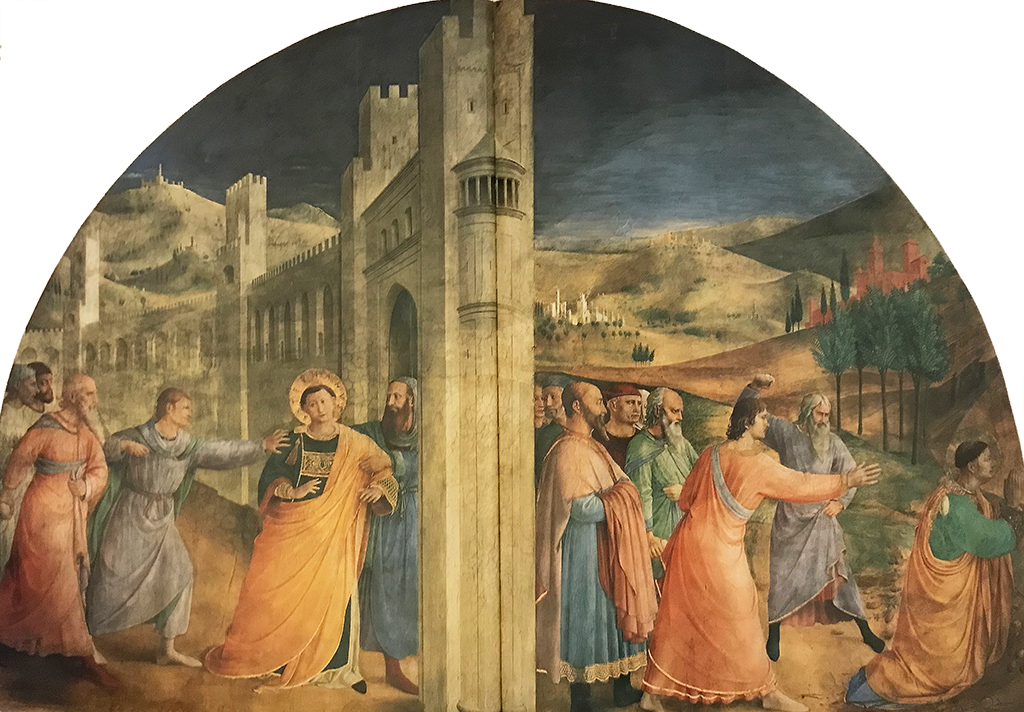
The Vatican explicitly describes the two cycles as arranged according to a rhetorical law of correspondence. The lives of Stephen and Lawrence do not simply appear in the same room. They are structurally paired. Both begin with diaconal consecration. Both demonstrate service and witness. Both encounter hostile authority. Both culminate in martyrdom. This arrangement gives the chapel the logic of a visual argument. The viewer compares as well as reads. One saint explains the other. [1]
The frescoes unfold around the room in two superimposed registers. Stephen occupies the upper cycle. Lawrence occupies the lower. This vertical relationship reinforces the parallelism while keeping the narratives distinct. The viewer can follow each saint horizontally and compare corresponding episodes vertically. The room therefore behaves almost like an illustrated theological text. [1]
The shared office of deacon is central to the programme. Deacons served the Church through liturgy, charity and administration. The cycles repeatedly emphasise responsibility before martyrdom. Stephen and Lawrence do not become saints merely because they die violently. Their martyrdom completes lives already defined by service. This is one reason the scenes of almsgiving and distribution matter so much. Christian authority is represented through service before sacrifice. [1]
Saint Stephen
Stephen’s story comes principally from the Acts of the Apostles. He is chosen among the seven deacons. He preaches powerfully. He is brought before the council. He sees a vision of divine glory. He is stoned to death. The narrative combines service, rhetoric, revelation and martyrdom. Angelico gives each phase monumental dignity. [1]
Lawrence’s cycle belongs to Roman martyr tradition. He is ordained deacon by Pope Sixtus II. He receives responsibility for Church treasure. He distributes wealth to the poor. He confronts imperial authority. He is martyred. This structure makes him an especially appropriate saint for a papal chapel in Rome. His story transforms material treasure into charitable responsibility. [1]
Pope Sixtus II appears within the Lawrence cycle. This is important for papal identity. Nicholas V viewed a painted predecessor exercising sacred authority. The historic pope ordains Lawrence and entrusts him with responsibility. Papal office therefore appears inside the chapel’s saintly history. The image connects Nicholas’s contemporary papacy with the ancient Roman Church. [1]
The Four Evangelists
The vault is divided into four sections containing the Four Evangelists. Their placement establishes scriptural authority above the wall narratives. The Vatican explains that the authority of the Evangelists is symbolically transmitted to the Doctors of the Church below. This creates a hierarchy of Christian knowledge. Scripture at the summit. Interpretation beneath. Martyr history on the walls. The whole chapel becomes an ordered system of authority. [1]
Eight Doctors appear in niches on the arches framing the walls. These figures represent theological interpretation and intellectual continuity. Their inclusion is particularly significant within a humanist papal environment. Christian learning is not represented as secondary to devotion. It is built into the architecture of the chapel. The room therefore unites sanctity and scholarship. [1]
The programme can be understood in three levels. The Evangelists represent authoritative sacred text. The Doctors represent interpretation. Stephen and Lawrence represent lived witness. This structure turns the chapel into a visual model of Christianity itself. Word becomes teaching. Teaching becomes action. Action culminates in martyrdom. [1]
Classical Architecture
The Vatican draws particular attention to references to antiquity within the architecture. Angelico fills the Roman scenes with buildings that evoke classical forms. Columns. Arches. Arcades. Monumental civic spaces. These settings differ markedly from the sparse convent architecture of San Marco. The change reflects both place and patron. Papal Rome required another visual language. [1]
Angelico was not reconstructing ancient Rome archaeologically. He was imagining a Christian antiquity through Renaissance architectural vocabulary. The result is historically idealised. Early Christian martyrs inhabit a dignified classical city. The visual message is clear. Christian history belongs within the grandeur of Rome. It does not exist outside classical civilisation. It inherits and transforms it. [1]
The Vatican also emphasises the heroic dignity of the figures. They possess the moral force of protagonists in classical history. This comparison is crucial. Angelico is not simply decorating Christian stories with antique architecture. He adopts the ethical grandeur associated with classical history painting. Saints become heroic public actors. Christian virtue assumes civic dignity. [1]
Christian Humanism
This is the core of the Vatican’s description of the chapel as Christian humanism. Humanist admiration for antiquity is not used to weaken Christian narrative. It strengthens it. Ancient architectural order gives historical authority. Heroic poses dignify martyrs. Rhetorical parallelism structures sacred biography. Learning and faith coexist. The chapel therefore demonstrates how Renaissance humanism could function from inside Christianity. [2]
Angelico’s Roman work should not be seen as a sudden abandonment of his Florentine identity. Many earlier concerns remain. Clear narrative. Ordered space. Brilliant colour. Moral hierarchy. Workshop organisation. What changes is scale and cultural vocabulary. San Marco trains contemplation through simplicity. The Vatican chapel communicates papal Christian history through magnificence. Angelico proves capable of both. [6]
The contrast with San Marco is one of the best ways to appreciate the Niccoline Chapel. At San Marco, private cells may contain only a few figures. Architecture is restrained. Dominic models meditation. At the Vatican, architecture becomes monumental. Crowds appear. Public action matters. Saints preach, distribute wealth and confront authority. The difference is not a change from religious to secular art. It is a change in religious function. [6]
A Papal Audience
The chapel’s audience was far more politically charged than that of a Dominican cell. Papal visitors, officials and clerics could read the stories through questions of authority, charity and martyrdom. The cycle therefore has institutional relevance. What should Christian power look like? Stephen and Lawrence answer through service. What should Church wealth do? Lawrence answers through distribution to the poor. What gives authority legitimacy? The programme answers through scripture, doctrine and witness. [2]
Charity is one of the most important themes in the chapel. Stephen and Lawrence both represent service to Christian communities. Lawrence’s distribution of treasure to the poor is especially forceful. The Church’s true treasure is redefined. Gold is converted into care. This would have had pointed meaning inside an exceptionally wealthy papal palace. The image does not reject institutional wealth. It places ethical obligations upon it. [1]
Both saints ultimately die because Christian witness collides with hostile power. Their martyrdom is not represented as defeat. It confirms moral authority. The state can kill the body. It cannot invalidate the saint’s witness. This gave the stories powerful relevance within papal ideology. The Church understands itself as historically tested and ultimately vindicated. [1]
Rhetoric
The Vatican’s use of the phrase “rhetorical law of correspondence” is especially revealing. The chapel thinks rhetorically. Episodes answer one another. Architecture frames argument. Figures act almost like speakers in a historical drama. Angelico’s work therefore belongs not only to painting but to the culture of humanist rhetoric. [1]
Gestures carry much of the narrative. A preacher addresses listeners. A pope confers office. A deacon distributes wealth. An official commands. A martyr accepts fate. These gestures have civic clarity. They make moral action visible. [1]
The Roman frescoes also show Angelico handling crowds with exceptional skill. This differs from his deliberately sparse cell frescoes. Listeners cluster around preaching. Poor recipients gather for alms. Officials and attendants create public ceremony. The groups remain legible because architecture and gesture organise them. [1]
Perspective serves narrative clarity. Streets and buildings create believable civic settings. Figures occupy measurable ground. The viewer can understand where actions occur. Yet perspective also gives Christian history monumental reality. The saints inhabit the same kind of ordered world admired in Renaissance Rome. [1]
The palette remains characteristically luminous. Rich robes distinguish roles and groups. Architectural colour helps articulate space. The chapel demonstrates that Angelico’s mature fresco technique could sustain both large-scale narrative and chromatic sophistication. [4]
Gold and Haloes
Gold and metallic effects continue to identify sacred status. The late frescoes incorporate halos with a refined material presence. This demonstrates again that Renaissance naturalism did not require abandonment of sacred convention. Angelico continues to combine systems. [4]
The project involved workshop assistance. Benozzo Gozzoli is closely associated with Angelico’s Roman activity and is documented as a collaborator in this period. Vatican catalogue material also attributes decorative elements of the Niccoline Chapel jointly to Angelico and Benozzo. The conventional label of “pupil” should therefore be handled carefully. Collaboration is more secure. [5]
Benozzo’s role is particularly important because he would later develop into a major independent painter. His work with Angelico in Rome therefore becomes a point of transmission. The Niccoline Chapel is not only a culmination for Angelico. It is also part of the formation of the next generation. [5]
Angelico worked on other papal projects that have not survived. This makes the Niccoline Chapel even more valuable. It is the principal surviving witness to his mature Roman language. The cycle allows us to infer the scale of a broader papal career now largely lost. [6]
Restoration of 1995–96
The Vatican carried out a major restoration in 1995 and 1996. The treatment addressed the fresco surfaces and generated substantial technical scholarship. The Vatican later published a dedicated volume on the restoration, combining art history and conservation. This work clarified colour, materials and execution. [3]
As with San Marco, restoration does more than improve appearance. It helps distinguish hands. It reveals original colour. It clarifies architectural construction. It can identify later repairs. The Niccoline restoration therefore contributes directly to our understanding of Angelico’s late technique. [4]
The chapel was designed as a functioning interior within the papal palace. Its lighting, furnishings and movement patterns differed from modern museum viewing. Today visitors encounter the space through institutional access conditions. The frescoes remain in situ, which preserves architectural relationships better than detached panels. But the original papal devotional environment can only be reconstructed historically. [4]
The late Armadio degli Argenti provides an important comparison. Both projects use extensive narrative cycles. Both connect image and text. Both belong to Angelico’s late career. Yet one is monumental fresco for papal Rome. The other is a painted movable furnishing for Santissima Annunziata in Florence. The comparison demonstrates the range of his late narrative intelligence. [6]
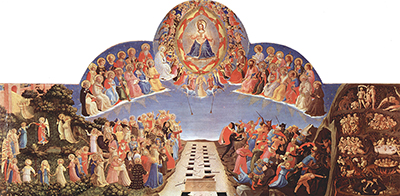
The early Last Judgement and late Niccoline Chapel show continuity in Angelico’s ability to organise complex sacred systems. The early panel uses cosmic geometry. The late chapel uses rhetorical parallelism and monumental architecture. Across two decades, he remains a painter of structure. [6]
No individual fresco explains the chapel fully. Stephen only becomes clearer beside Lawrence. Martyrdom only becomes clearer after consecration and service. Wall narratives only become clearer beneath Evangelists and Doctors. Architecture only becomes clearer within humanist Rome. The chapel is therefore a total programme. Its meaning is relational. [1]
Why the Niccoline Chapel Matters
The Niccoline Chapel matters because it is the most complete surviving demonstration of Fra Angelico as a painter of papal humanism. The old stereotype of the isolated mystical friar becomes impossible here. Angelico works inside the Apostolic Palace. He serves one of Europe’s leading humanist popes. He organises complex parallel narratives. He fills the space with classical architecture. He gives Christian martyrs the dignity of ancient historical protagonists. He coordinates scripture, theology and sacred history across vault, arches and walls. Yet the project never stops being Christian.
That is precisely its achievement. Humanist form becomes a vehicle for Christian meaning. The Vatican’s phrase “Christian humanism” therefore captures something fundamental. The chapel also proves Angelico’s extraordinary adaptability. The painter of silent San Marco cells could become a monumental narrator of public action. The same religious intelligence survives. Its visual form changes because audience, architecture and patron change. For these reasons, the Niccoline Chapel is not merely an appendix to Angelico’s Roman career but one of the culminating works of the Early Renaissance. [1]
Frequently Asked Questions
Discussion
How does the Niccoline Chapel transform Fra Angelico’s contemplative language for a private papal audience and a programme of Christian authority?
Reader Insights
What is gained by pairing Stephen and Lawrence from consecration through charity to martyrdom?
How do classical architecture and rhetorical gesture serve Christian history rather than compete with it?
How should a small private chapel alter our sense of these frescoes’ scale, audience and purpose?
Join the Conversation
Share your reading of Fra Angelico’s Niccoline Chapel below.
References
- Vatican Museums, Niccoline Chapel, institutional collection record. Vatican Museums Niccoline Chapel collection record.
- Vatican Museums, History of the Vatican Museums: Nicholas V, on the pope’s humanism and commissioning of Fra Angelico. Vatican Museums history of Nicholas V and the chapel.
- Vatican Museums, Department of XV–XVI Century Art, Niccoline Chapel chronology. Vatican Museums XV–XVI Century Art restoration chronology.
- Vatican Museums, Fra Angelico and the Chapel of Nicholas V: Recent Restorations, conservation volume. Vatican Museums Fra Angelico and the Chapel of Nicholas V restoration volume.
- Vatican Museums catalogue records for Fra Angelico and Benozzo Gozzoli decorative work in the chapel. Vatican Museums evidence for Benozzo Gozzoli’s Roman collaboration; Museo di San Marco research on Benozzo and the Roman workshop.
- Museo di San Marco, research on Fra Angelico’s Roman period and relationship with late Florentine works. Palazzo Strozzi and Museo di San Marco Fra Angelico Roman-period record; Museo di San Marco research on Fra Angelico in Rome.
.jpg)
 Fra Angelico.jpg)