 by Tom Gurney
Tom Gurney BSc (Hons) is an art history expert with over 20 years experience
Published on August 14, 2026 / Updated on August 14, 2026
Email: tomgurney1@gmail.com / Phone: +44 7429 011000
Sweet Summer: Introduction
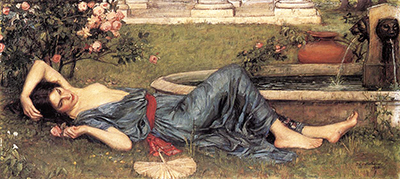
John William Waterhouse's Sweet Summer shows a young woman reclining beside a rose-covered garden wall and a stone fountain. Wrapped in blue drapery with a red sash, she leans back with eyes closed and holds a pink rose loosely in one hand. The long, low canvas turns summer into an interval of warmth, scent, water and suspended effort.
Painted in 1912, the oil measures approximately 38 × 84 cm and is privately owned. [1] Its title is descriptive rather than literary: no known poem or classical episode is required to understand the scene. Yet its combination of rose, fountain and sleeping or dreaming woman gives a simple seasonal subject the inwardness characteristic of Waterhouse's late art.
At a Glance
- ArtistJohn William Waterhouse
- TitleSweet Summer [1]
- Date1912 [1]
- MediumOil on canvas [1]
- DimensionsApproximately 38 × 84 cm [1]
- CollectionPrivate collection [1]
- FormatLong horizontal garden scene
- SubjectA reclining woman holding a rose beside a fountain and flowering trellis
- Literary sourceNone securely established
- ContextOne of Waterhouse's late paintings linking women, flowers, gardens and seasons
Contents
- Introduction
- What the painting shows
- The meaning of “sweet summer”
- Rest, sleep and reverie
- The rose
- Fountain, water and heat
- The unusual horizontal format
- Colour and late handling
- Garden, privacy and the viewer
- Place among Waterhouse's seasonal pictures
What the painting shows
A young woman reclines across most of a narrow horizontal canvas. Her body follows the picture's long axis, making pose and format inseparable.
She leans back against a garden support or raised edge, one arm lifted behind or near her head. Her eyes appear closed, and her face turns slightly upward.
Blue fabric wraps her lower body and legs. A stronger red or crimson sash crosses the drapery, creating a warm accent near the centre.
Her upper body is partly uncovered in the idealised manner Waterhouse used for classical and poetic figures. The exposure belongs to a private garden fantasy rather than a society portrait.
In one hand she holds a pink rose. The flower is not presented upright like an emblem; it rests within the loose gesture of repose.
Behind her, clusters of pink roses spread across a trellis, wall or mass of foliage. Their abundance turns the single held flower into part of a larger environment.
A stone fountain stands nearby. Water emerges from carved masks or lion-like heads into a basin, introducing coolness and quiet sound.
A terracotta pot and fragments of garden structure give the setting material specificity. This is an imagined retreat, but it is built from recognisable objects.
No companion enters and no narrative event interrupts. The subject is duration: a body at rest during a mature season.
The painting's surface and cropping can vary in reproductions, but its essential design remains clear—a reclining figure stretched between flower and fountain.
The meaning of “sweet summer”
The title names a quality of experience rather than a character or story. “Sweet” can refer to pleasure, fragrance, gentleness and affection.
Summer is made sweet through several senses. Roses imply scent; water suggests sound and cool touch; colour evokes warmth; the relaxed body communicates release.
Waterhouse does not show the hard labour, glare or drought that can also define summer. He selects the season's cultivated pleasures.
The adjective therefore announces idealisation. This is summer remembered or desired as fullness without discomfort.
The phrase has a lyrical cadence, but no securely documented poem has been identified as its source. It should not be attached to a convenient verse merely because the words sound literary.
Waterhouse frequently borrowed titles from poetry, yet he also used descriptive and evocative names. Responsible interpretation begins by accepting that range.
“Sweet” may also describe the woman's state. Her closed eyes and loose grip suggest a pleasurable surrender to atmosphere.
The title does not specify whether she sleeps, listens, remembers or simply rests. Its emotional direction is positive without narrating her thoughts.
Unlike A Song of Springtime, which fills its season with children and growth, Sweet Summer contracts the season into solitary sensation.
Spring is arrival and movement; summer here is ripeness and pause.
Rest, sleep and reverie
Waterhouse repeatedly painted figures whose consciousness turns away from ordinary social exchange. Some sleep; others listen, dream, read or gaze into water.
This continuity belongs to an artist whose Academy career extended from his first exhibition in 1874 through election as a Royal Academician in 1895 and continued late submissions. [5] Sweet Summer is intimate in scale, but its controlled figure design grows from sustained professional practice rather than a casual private sketch.
The woman in Sweet Summer appears to have closed her eyes, but the painting does not prove deep sleep. Her hand still holds a rose, and her lifted arm may support a chosen resting posture.
“Reverie” is therefore a useful broad term. It allows for wakeful dreaming, sensory absorption or the edge of sleep.
Closed eyes change the viewer's relation to the figure. She cannot return our gaze, so we observe a private interval without acknowledgment.
That asymmetry can make the scene feel peaceful, but it also deserves attention. Her unawareness makes the idealised body available to spectators.
Waterhouse softens this exposure through the garden's enclosure and the coherence of her pose. She does not seem displayed on a public stage.
The raised arm lengthens the torso and supports the body's curve. It is both a credible gesture of rest and a carefully designed line.
The other hand's rose prevents complete inertness. A small act of holding remains within repose.
The ambiguity between sleep and wakefulness is central to the mood. A sleeping figure belongs wholly to an inaccessible inner world; a resting figure may be intensely aware of scent and water.
Waterhouse lets both possibilities coexist. The painting is less a record of unconsciousness than a study of withdrawing from action.
Summer itself encourages that withdrawal. Heat slows movement, while a shaded garden and fountain offer relief.
The rose
The held rose is the picture's most concentrated natural object. Its pink bloom echoes the flowers massed behind the woman.
Roses traditionally signify love, beauty, desire and transience. Their meanings vary by context and should not be reduced to a single code.
Here the flower first connects the reclining woman with the garden. She has selected one bloom from surrounding abundance and brought it close to her body.
Its fragrance cannot be painted, but the title's “sweetness” makes scent imaginatively present.
The rose's softness relates to flesh and drapery. Its saturated colour punctuates the cooler blue fabric.
Because a cut flower fades, it can also imply the brevity of both summer and youth. Waterhouse does not show withered petals, so mortality remains an undertone rather than a moral lesson.
The woman does not smell the rose in the explicit gesture used in The Soul of the Rose. She holds it during rest, making fragrance ambient rather than demonstrative.
This distinction helps separate two late garden pictures. The Soul of the Rose concentrates face, wall and flower into an intense act of inhalation; Sweet Summer disperses sensation across a long reclining body, many roses and moving water. [2]
The single flower also marks time. It has been picked before the painted moment, while its loosened hold suggests that action has given way to stillness.
It would be tempting to identify a named rose variety or attach a precise courtly-love source. The accessible object record does not justify either move.
The rose's secure role is simpler and richer: summer's beauty has been gathered, held and allowed to accompany a private reverie.
Fountain, water and heat
The stone fountain is the painting's second major sensory device. Its carved spouts release visible water near the reclining figure.
Water implies coolness in contrast with summer heat. It makes the garden habitable as a retreat.
It also introduces imagined sound. A continuous trickle supplies the scene with a quiet rhythm even though the painting is silent.
This sound helps explain the woman's closed eyes. She may be withdrawing from sight to attend to scent, temperature and water.
Waterhouse often used pools and streams as narrative agents: mirrors for Narcissus, boundaries for the Lady of Shalott, habitats for nymphs or mermaids.
In Sweet Summer, water is not dangerous and does not reflect a decisive image. It is domestic, controlled and refreshing.
The carved masks or lion heads give the fountain an antique flavour without fixing the setting to a documented ancient site.
Stone, terracotta, water and roses create contrasting materials. Hard architecture contains fluid and living growth.
The fountain may also imply a continuing cycle. Water flows while the human body pauses; the garden's life depends upon movement she need not perform.
Its placement balances the elongated figure. Vertical stone and falling water interrupt the strong horizontal drift.
The garden thus becomes more than background. It is an instrument designed for summer sensation: shade, fragrance, cool liquid and visual privacy.
The unusual horizontal format
At roughly 38 centimetres high and 84 centimetres wide, Sweet Summer is more than twice as wide as it is tall. [1]
That proportion distinguishes it from Waterhouse's many upright canvases of standing or seated women.
The format follows the reclining body. Head, torso, drapery and legs extend laterally, making rest visible as length.
The low shape also resembles decorative overdoor or frieze-like designs, although no specific architectural commission is documented.
Waterhouse uses the available width to place figure, fountain and roses within one continuous garden band.
There is little need for deep landscape. The pleasure comes from moving across adjacent textures and colours.
The viewer reads the scene slowly from one end to the other: carved stone, face, flower, sash, blue folds and roses.
This lateral movement differs from the downward action of Narcissus or central pyramid of A Song of Springtime.
It also prevents the reclining woman from appearing monumentally heroic. She belongs to a decorative environment rather than rising above it.
At the same time, her body occupies enough width to dominate. The garden is experienced through her scale and posture.
The narrow height crops away open sky and distant view. Enclosure becomes structural, strengthening the sense of private retreat.
The format therefore serves both mood and meaning. Summer is pictured not as expanding landscape but as a prolonged horizontal pause.
Colour and late handling
Blue drapery gives the painting its broadest colour mass. In a rose garden, the cool fabric immediately distinguishes the human figure from the warm blooms.
The red sash intensifies the centre and connects blue cloth with pink flowers. It also articulates the body within loose folds.
Pale skin catches light against foliage and stone. Waterhouse uses this contrast to keep the relaxed pose readable even where edges soften.
Pink roses recur behind and in the woman's hand, producing colour continuity across depth.
Earthy terracotta and weathered stone keep the palette from becoming purely confectionary. Material neutrals stabilise the floral colour.
The handling appears freer than in Waterhouse's large Academy narratives of the 1880s and 1890s. Broad drapery and foliage prioritise atmosphere over uniform detail.
That freedom is consistent with his late work, but a digital image cannot establish technical sequence, pigments or conservation history.
The painting's small height requires economy. Faces, fingers and rose carry concentrated descriptive information, while extensive folds can be stated more broadly.
Edges alternate between clear and dissolved. The red sash may cut sharply across blue, while vegetation merges into a floral screen.
This variation helps simulate languor. Nothing in the picture has the brittle definition of a sudden alarm.
Colour does the emotional work usually assigned to plot. Cool blue is relieved by warm red; shaded stone is animated by pink bloom; pale flesh rests within both.
Garden, privacy and the viewer
The setting offers privacy without showing a literal locked enclosure. Roses, wall and fountain imply a cultivated garden apart from public movement.
Cultivation matters. This is not wilderness but nature shaped for pleasure.
The woman benefits from that shaping: a place to recline, water for coolness, flowers within reach and visual shelter.
The garden can therefore represent privilege and retreat. The scene excludes labour required to maintain roses, stonework and flowing water.
Such omission is part of idealisation, not a factual statement about ordinary Edwardian summer life.
The viewer enters the private space by pictorial permission. Because the woman does not look back, that entry remains one-sided.
Waterhouse's composition can be enjoyed as peaceful while still prompting questions about the tradition of the sleeping or unaware female nude.
Her agency is not entirely absent. She has chosen a rose and adopted a pose of rest; no visible captor or watcher exists within the scene.
Yet the image arranges body and garden for an external gaze. Modern interpretation can hold serenity and display together.
The fountain complicates privacy by creating an acoustic veil. Its continuous sound might mask distant noises and deepen the woman's withdrawal.
Roses form a second veil, turning the background into colour and scent rather than navigable public space.
The result is a garden that seems to close around an internal state.
Place among Waterhouse's seasonal pictures
Sweet Summer belongs chronologically and thematically near Waterhouse's late flower-gathering and seasonal works.
Christie's traces a group from Windflowers and Boreas to Narcissus and A Song of Springtime, emphasising the artist's repeated exploration of women in flowering landscapes. [3]
The 1912 date places Sweet Summer immediately before the two Royal Academy paintings of 1913. [1] [3]
It differs from them through inactivity. The woman does not bend to gather or stand among playing children; she has already picked her flower and come to rest.
This shift makes summer a later phase in an implicit seasonal sequence. Spring produces action and new growth; summer permits fullness and repose.
The picture can also be compared with Waterhouse's images of sleep and enchanted stillness. Rest may be pleasurable, dangerous or suspended between states depending on context.
Here no threatening narrative is supplied. The fountain and roses support comfort rather than enchantment's trap.
The work is not documented as one panel in an official Four Seasons cycle. It should not be presented as part of a commissioned set.
Its relation is thematic: repeated bodies, flowers, weather and seasons across independent paintings.
That network shows Waterhouse's late interest in reducing narrative. A title such as Sweet Summer can organise sensation without naming a heroine.
The painting's modest scale relative to major exhibition canvases also suits intimacy. It asks close looking rather than public spectacle.
Date, ownership and interpretation
Standard image and catalogue records date Sweet Summer to 1912 and identify it as oil on canvas in a private collection. [1]
Measurements vary slightly across secondary sources, usually around 38–38.7 × 83–84 cm. A page should use approximate dimensions and acknowledge that small discrepancies may reflect rounding or source transmission. [1] [4]
Private ownership limits access to current conservation and provenance information. The absence of a public museum record means unsupported ownership claims should be avoided.
The 1912 date provides a secure late-career position, but it does not by itself prove a particular personal meaning.
Waterhouse was in his early sixties and remained active. It is unnecessary to turn every reclining late figure into an allegory of illness or approaching death.
The painting offers enough evidence for a strong interpretation through visible form: summer fullness, sensory retreat, flower, water and rest.
Possible symbolic readings should grow from those facts. Rose may imply love or transience; fountain may imply renewal; closed eyes may imply sleep or reverie.
None requires a hidden literary code.
This restraint improves rather than reduces the page. Sweet Summer is valuable precisely because Waterhouse makes an ordinary wish—to rest in a cool fragrant garden—feel timeless.
Its current private status also makes careful digital presentation important. Accurate scale and colour cannot be assumed from commercial reproductions.
Nor should availability in reproduction create false documentary confidence. Images reveal the broad blue drapery, red sash, roses and fountain, but they do not supply a complete provenance, exhibition history or technical report. Where public documentation falls silent, the manuscript should say so rather than fill the gap with atmosphere presented as fact.
That limitation directs attention back to what Waterhouse made visible. The woman's posture establishes rest; the closed eyes suspend exchange; the held rose links her body to the flowering wall; and the fountain opposes cool movement to human stillness. These relationships are sufficiently rich without a named heroine.
The painting's narrow scale also changes how such richness is encountered. It invites close domestic viewing rather than the long-range impact of a monumental Academy canvas. Minute differences in hand, face and flower gain weight because the composition contains no secondary actors or distant episode.
Related Pages
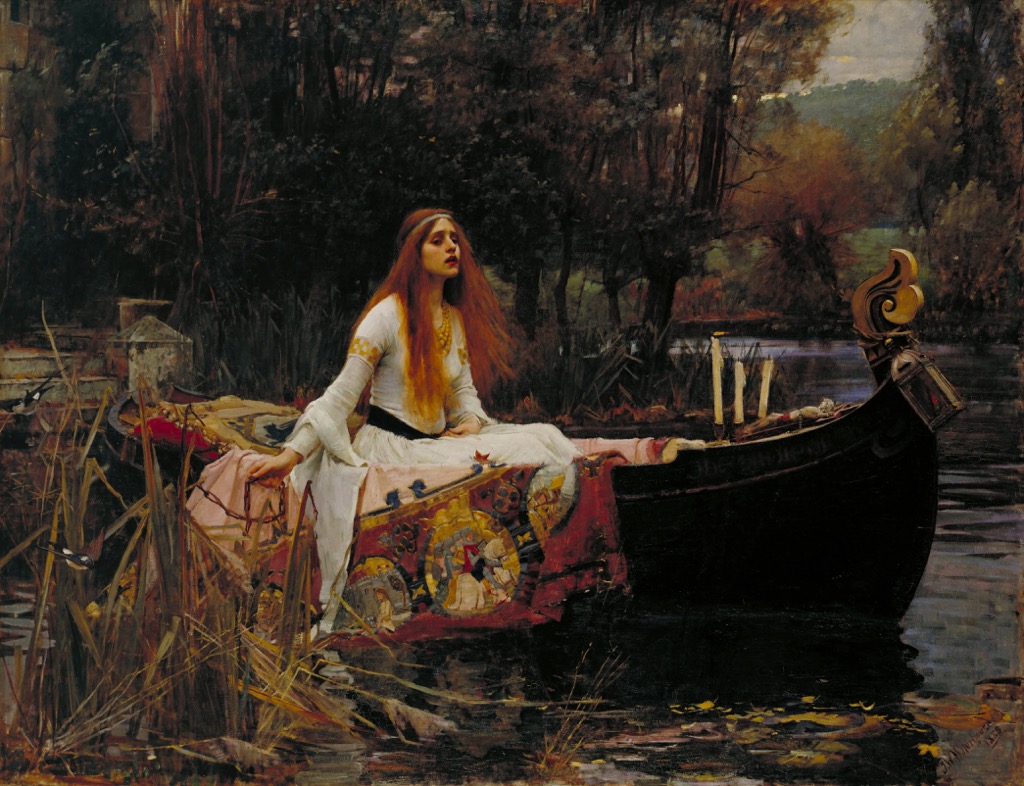
- The Lady of Shalott: Compare Waterhouse's best-known literary composition.
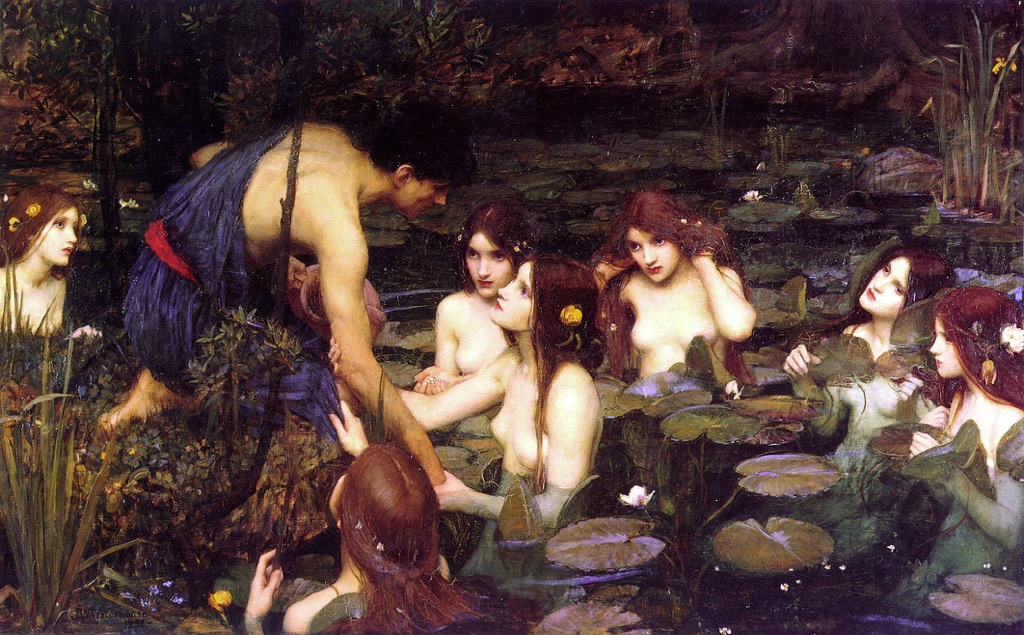
- Hylas and the Nymphs: Compare another major mythological scene.
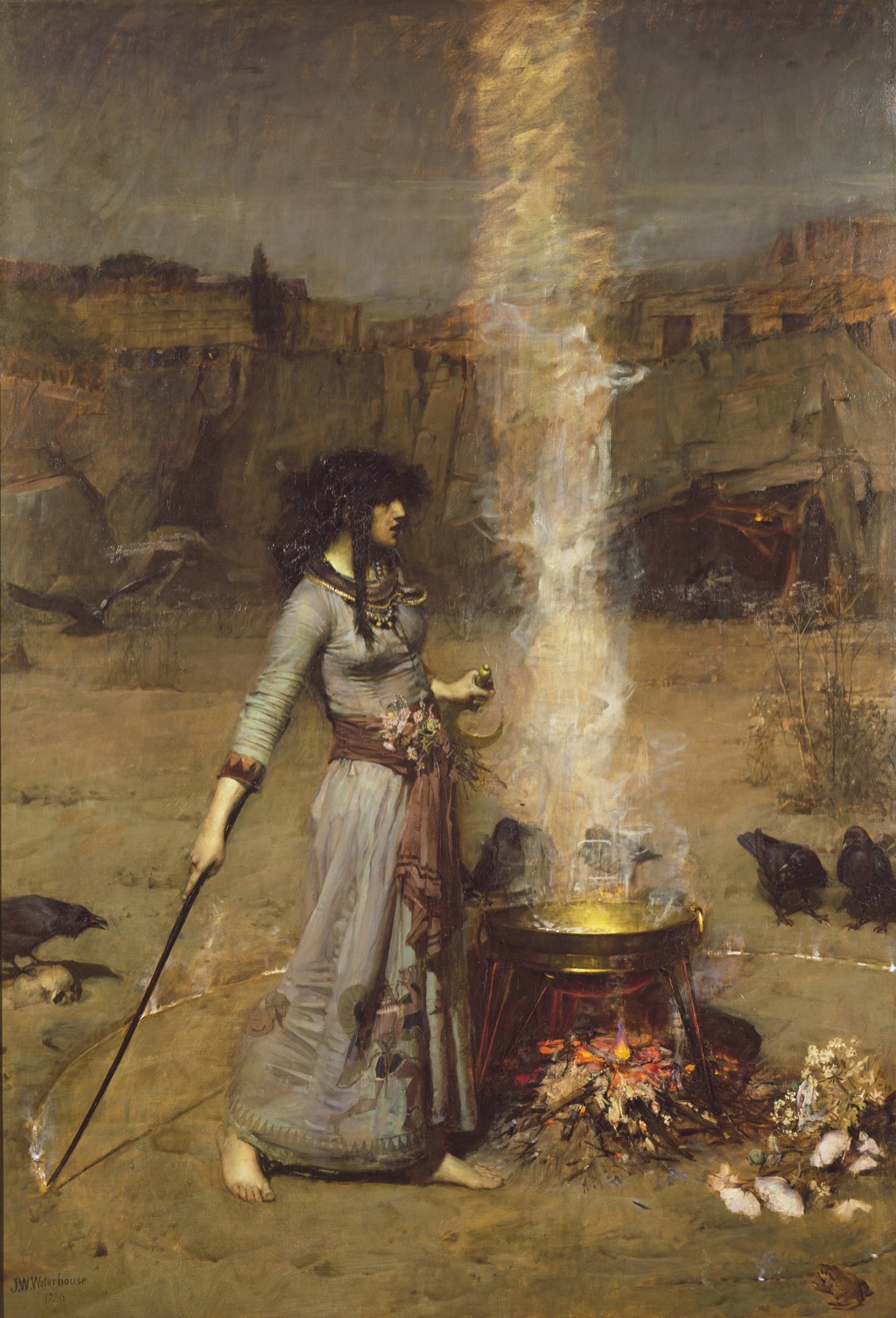
- The Magic Circle: Compare Waterhouse's treatment of ritual and symbolism.
Frequently Asked Questions
It is dated 1912 in standard records. [1]
It is recorded in a private collection. [1] No current public display should be promised without a recent exhibition source.
Her closed eyes and reclining pose suggest sleep or reverie. Because she still holds a rose and no textual explanation survives, “resting with eyes closed” is the safest description.
No securely documented poetic source has been established. The phrase works as an evocative description of summer pleasure.
No formal series is documented. It belongs to a broader group of independent late paintings in which Waterhouse explored women, flowers and seasons.
Discussion
The achievement of Sweet Summer is its conversion of atmosphere into structure. The long canvas slows the eye along a resting body; the fountain supplies imagined coolness and sound; roses provide colour and scent. Narrative has not vanished so much as dissolved into sensation.
The held flower records the smallest possible action before repose. She has gathered summer into one rose, then stopped. Around her, water continues to fall and blossoms continue to open, so stillness belongs only to the human figure.
Reader Insights
Which visible detail most changes the way you read this page?
Which source or comparison helps the work feel less familiar and more specific?
What question would you bring back to the painting after reading?
Join the Conversation
Share your reading of this page below.
References
- Wikimedia Commons, “John William Waterhouse, 1912 — Sweet Summer,” object and image metadata, recording oil on canvas, approximately 38 × 84 cm, private collection. View source.
- Christie's, “John William Waterhouse: The Soul of the Rose,” lot record and essay, for comparison with Waterhouse's late rose imagery. View source.
- Christie's, “John William Waterhouse: Boreas,” lot essay discussing the late sequence of women and flowers. View source.
- WikiArt, “John William Waterhouse: Sweet Summer,” artwork record, recording dimensions of 38.74 × 83.5 cm and private ownership. View source.
- Royal Academy of Arts, “John William Waterhouse RA,” artist profile and collection context. View source.