 by Tom Gurney
Tom Gurney BSc (Hons) is an art history expert with over 20 years experience
Published on August 14, 2026 / Updated on August 14, 2026
Email: tomgurney1@gmail.com / Phone: +44 7429 011000
A Song of Springtime: Introduction
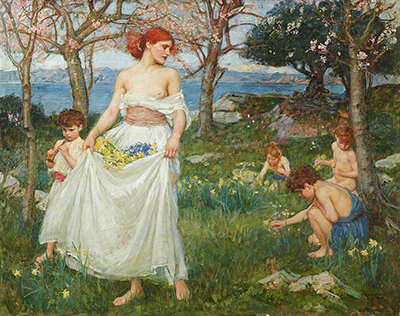
In A Song of Springtime, John William Waterhouse turns the arrival of spring into a gathering of bodies, blossoms and moving colour. A barefoot young woman stands at the centre of a flower-filled orchard while small children cluster, reach and play around her. Her loose white dress, rose sash and dark red hair make her both human protagonist and personification of the season.
Waterhouse signed and dated the oil in 1913 and exhibited it at the Royal Academy that year, alongside Narcissus. [1] [2] No instrument is visible and no securely documented poem supplies the title. The “song” is therefore best understood as a visual metaphor: a composition in which flowers, figures and gestures combine like parts of seasonal music.
At a Glance
- ArtistJohn William Waterhouse
- TitleA Song of Springtime [1]
- Date1913; signed and dated lower right [1]
- MediumOil on canvas [1]
- Dimensions71.5 × 92.4 cm [1]
- CollectionPrivate collection; recorded in the Pérez Simón Collection, Mexico [1]
- ExhibitedRoyal Academy, London, 1913 [2]
- SubjectA young woman and children among spring flowers and blossoming trees
- Related groupWaterhouse's late paintings of women, flowers and the seasons [2] [3]
- Interpretive cautionOften associated with Persephone, but the title does not identify the woman by name
Contents
- Introduction
- What the painting shows
- Why the picture is a “song”
- The central woman
- Children, putti and spring energy
- Flowers and the Persephone possibility
- Composition, colour and movement
- The 1913 Royal Academy pairing
- Waterhouse's late seasonal pictures
- Meaning without a fixed story
What the painting shows
The painting spreads its figures across a horizontal canvas. At the centre stands a young woman in a pale, loosely draped garment. One shoulder and part of her upper body are exposed, and a deep pink or rose-coloured sash passes around the white fabric.
Her auburn hair is gathered back but not severely arranged. She looks down and to one side rather than addressing the spectator.
She holds or gathers blue and purple flowers. More blooms cover the foreground in white, yellow, blue and pink, creating a low band of colour across the entire scene.
Several small nude or lightly draped children occupy the meadow around her. One reaches upward; others bend, crawl, sit or carry flowers. Their varied poses turn the lower half into a sequence of quick accents.
Fruit trees or orchard branches rise behind the group. Pale blossom makes the background seem to flower into light.
There is no architectural setting, no distant city and no adult companion. The figures inhabit an idealised natural enclosure.
The central woman is larger than the children but not separated from them by a pedestal or rigid symmetry. Their movements cross the space around her and connect her to the ground.
Her vertical form gives stability. The children provide rhythm. Blossoms repeat their small heads and limbs as if human and natural growth shared one seasonal pulse.
Waterhouse withholds a single dramatic event. Nothing has just happened and no visible danger approaches. The painting presents a state of renewal rather than a narrative climax.
That absence of plot is deliberate. The viewer is invited to experience abundance, warmth and motion before deciding whether the figures belong to mythology, allegory or poetic fantasy.
Why the picture is a “song”
No one in the scene clearly plays a musical instrument. The title does not require literal performance.
“Song” can mean a poem or lyrical celebration as well as vocal music. Waterhouse makes paint perform that celebratory function.
Repeated flowers resemble visual notes. The children's arms and legs create changing intervals, while the central woman supplies a sustained vertical line.
Colour also works musically. White drapery and blossom recur at different scales; pink sash and warm flesh form stronger accents; blue flowers introduce cooler notes.
The composition is not chaotic despite its abundance. Groups answer one another across the canvas, producing variation around a stable centre.
Victorian and Edwardian art frequently translated music into mood, rhythm and reverie. Waterhouse himself painted women listening, singing and playing instruments, but here he could evoke song without depicting a musician.
The title's indefinite article is significant. This is “a” song, not The Song of Spring or an illustration of a named text.
That openness protects the picture from being forced into a literary source that Waterhouse did not document.
It also lets the season appear as something heard metaphorically through movement: children rustling among plants, bodies bending and rising, an orchard alive with new growth.
The title guides the viewer towards synthesis. Individual flowers, gestures and expressions are not isolated symbols; together they become the seasonal utterance.
The central woman
The standing figure anchors the painting. Her scale and position make her the natural first focus, yet her lowered gaze avoids the command of a ruler or goddess enthroned.
She is both part of the meadow and different from it. The children are physically small and active; she is mature, upright and contemplative.
Her white garment associates her with blossom and light. The rose sash introduces warmth and defines the body without turning the dress into archaeological costume.
Bare feet connect her directly to the flowering earth. They also remove the social specificity that fashionable shoes would supply.
The partly exposed bodice belongs to Waterhouse's idealising classical language. It should not be treated as evidence for one mythic identity.
Her hands attend to flowers, continuing the action found throughout the artist's late flower-gathering pictures.
The downward glance suggests care for the children or contemplation of what she holds. It softens the central hierarchy: she is not displaying herself to us.
Viewers have associated her with Persephone, the maiden whose return from the underworld brings the renewal of the earth. Christie's discusses A Song of Springtime within Waterhouse's “Persephone” group, showing that the association has a place in modern scholarship and cataloguing. [3]
The title itself, however, does not say Persephone. No Hades, Demeter or explicit moment from the myth appears.
It is therefore more accurate to say that the figure may evoke Persephone or a personification of Spring than to claim a fixed identity.
Her ambiguity is productive. She can be simultaneously a young woman gathering flowers, a seasonal presence and an echo of classical return.
Children, putti and spring energy
The small figures are sometimes described as children, cupids or putti. Their nudity and idealised forms recall the putti of Renaissance and classical revival art, but they do not all carry Cupid's defining bow and arrows.
“Children” is the safest descriptive term. “Putti” is useful for their artistic type, provided it does not turn every figure into the god of erotic love.
Their principal function is kinetic. Each child does something different, converting the flower bed into a field of activity.
Some reach towards the woman or her flowers. Others attend to the ground, carry blossoms or turn towards companions.
The variation conveys growth as restless energy. Spring is not only the calm beauty of the standing woman; it is also childhood's movement and curiosity.
Scale creates an allegorical possibility. They seem too numerous and freely arranged for an ordinary family outing, and the setting lacks domestic markers.
At the same time, their credible bodily poses keep the fantasy rooted in observed life. Knees press into grass, arms extend for balance, and attention shifts from one object to another.
The children prevent the central figure from becoming an isolated pin-up. Their presence makes her part of a social and generative environment.
They also complicate the mood. Ideal spring imagery can become static sweetness; the varied bodies introduce interruption, asymmetry and play.
Because no child is individually named, it is unhelpful to assign each one a symbolic role. Collectively they embody beginnings, abundance and the multiplicity of new life.
The visual rhyme between children and flowers is central. Both are small, numerous and newly opened into the world around the mature figure.
Flowers and the Persephone possibility
Flowers are not decorative additions to a completed figure group. They form the setting, activity and interpretive language of the painting.
The Homeric Hymn to Demeter describes Persephone gathering roses, crocuses, violets, iris, hyacinth and narcissus in a marvellous meadow before the earth opens and Hades carries her away. [4]
That ancient passage made the flower meadow a charged place: beautiful, fertile and perilous.
Waterhouse knew and repeatedly used classical stories, so the hymn provides relevant context for a flower-gathering woman associated with Persephone.
Yet A Song of Springtime omits abduction. No chariot breaks the ground, and the central woman's expression does not register sudden terror.
If she evokes Persephone, the picture may belong more to return than departure: spring restored, flowers abundant and youthful life surrounding her.
This reading fits the seasonal title but remains interpretive. Waterhouse may have condensed a general classical mood rather than illustrated a textual line.
Individual flower identification should also remain careful. Reproductions vary, and painterly blossoms do not always permit botanical certainty.
Blue flowers in the woman's hands form a particularly strong colour cluster. Pale orchard blossom expands upward; mixed meadow blooms spread below.
Together they create a vertical ecology from ground to branch. The woman stands within that continuum, neither entirely goddess nor ordinary visitor.
Flowers carry the double meaning common in Waterhouse: intense visible beauty and inevitable brevity. Spring's song matters because the season passes.
The painting does not show decay, but seasonal consciousness includes change. Abundance is heightened by its temporary nature.
Composition, colour and movement
Waterhouse organises a potentially crowded scene through a strong central pyramid. The standing woman supplies its peak, while the children and flowers broaden across the base.
Her white dress forms the largest continuous light mass. Blossom behind it prevents the silhouette from becoming harsh, allowing figure and orchard to merge at the edges.
The pink sash crosses the pale fabric and gives the eye a route through the torso. Warm hair provides a compact counterweight above.
The children distribute flesh tones throughout the foreground. Repetition unifies them, while differing poses resist mechanical symmetry.
Blue and violet flowers punctuate the warmer palette. Their cooler colour helps distinguish the woman's hands from her dress.
The landscape is shallow enough to remain decorative but deep enough for bodies to overlap convincingly.
Branches create a screen rather than a distant vista, similar to the enclosed natural settings Waterhouse favoured in the late 1900s and 1910s.
Movement circulates rather than pointing towards one conclusion. A reaching arm leads upward; a bending child redirects the eye down; blossom carries it sideways.
This circulation supports the musical title. The composition can be entered at many points and experienced as repetition with variation.
Waterhouse's finish balances description and softness. Faces and important hands are legible, while flowers and foliage can dissolve into smaller touches at a distance.
The horizontal format is essential. It provides a stage for plurality and contrasts directly with the narrow, descending action of Narcissus.
The 1913 Royal Academy pairing
A Song of Springtime and Narcissus were both shown at the Royal Academy in 1913. [2] Their shared exhibition gives unusually firm context for comparison.
Both centre women and flowers. Both minimise explicit historical setting. Both use classical resonance without spelling out a full plot.
Their formal solutions are almost opposites. Narcissus is a tall canvas dominated by one stooping figure; A Song of Springtime is horizontal, multi-figured and expansive.
One concentrates attention on a single act of reaching. The other orchestrates many bodies into collective seasonal abundance.
The pairing demonstrates Waterhouse's capacity for variation within a motif. It also suggests that flower gathering was important enough to sustain more than one major Academy submission.
Christie's traces this late group back through Boreas and Windflowers, paintings in which women move through landscapes animated by season and weather. [2]
By 1913, romantic literary painting no longer held the unquestioned prestige it had enjoyed in the mid-Victorian Academy. Christie's notes the declining critical fashion for such subjects. [2]
Waterhouse nevertheless retained a loyal audience and a recognisable pictorial language. Seasonal pictures offered an accessible form of his symbolism.
The Royal Academy's artist record confirms the institutional position from which he submitted these late works: elected Associate in 1885 and Royal Academician in 1895, Waterhouse was a long-established member adapting his language within the Academy rather than an outsider briefly borrowing its platform. [5]
The exhibition context also guards against calling A Song of Springtime a private fantasy or incomplete studio work. It was signed, dated and publicly submitted.
Its current private ownership means the Academy record remains an important anchor in its public history.
Waterhouse's late seasonal pictures
Throughout his later career, Waterhouse returned to women among flowers: gathering rosebuds, bending in meadows, holding blossom or pausing in gardens.
These pictures retain Pre-Raphaelite interests in natural detail and poetic suggestion, but Waterhouse's handling and compositions are distinctly his own.
They also move between myth and genre. A titled heroine may occupy one canvas; an unnamed flower gatherer another; a seasonal personification can hover between the two.
A Song of Springtime sits near the allegorical end because of its unusual gathering of children and its idealised abundance.
It does not require an emblem book to be understood. Spring is communicated through blossom, youth, bare feet, flowers and light.
At the same time, the possible Persephone echo deepens the celebration. Spring may be imagined not simply as weather but as return after absence.
Waterhouse's late art often makes female attention central. His women do not merely decorate nature; they gather, arrange, listen and choose.
The standing woman here holds flowers but also seems to preside over the children's movements. Her stillness is active compositional control.
Comparison with Sweet Summer shows another seasonal contrast. Spring is upright, populated and newly active; summer reclines amid mature roses and water.
The group should not be treated as an officially titled Four Seasons series. It is a meaningful cluster of recurring subjects, not a documented commission for four matching panels.
Meaning without a fixed story
The picture's clearest subject is spring. Its clearest emotional register is lyrical abundance.
Beyond that, Waterhouse leaves room. The central woman can evoke Flora, Persephone, Spring personified or an ideal flower gatherer without being securely reducible to one.
This openness is not a research failure. It is part of the painting's construction.
A fixed narrative would require attributes and action. Flora might carry distinctive classical associations; Persephone might appear with Demeter, Hades, pomegranate or an abduction. None is decisive here.
Instead, Waterhouse builds meaning cumulatively. Youth plus blossom suggests beginning. Reaching plus gathering suggests participation. Bare feet plus open dress suggest natural freedom.
The title gives these elements a lyrical frame. Viewers are asked to hear a song in the visual ensemble, not solve a rebus.
Modern interpretation can also question the ideal. The scene presents femininity, childhood and nature as harmonious, removing labour, weather and social conflict from the seasonal landscape.
Recognising idealisation does not cancel pleasure. It clarifies how the painting produces it.
Waterhouse offers a cultivated dream of nature in which every body belongs to the composition and every flower appears at the right moment.
The lack of story therefore makes the image more, not less, revealing about his late priorities: atmosphere, rhythm, beauty and suspended meaning.
Collection, viewing and legacy
The painting is recorded in a private collection and associated in image metadata with the Pérez Simón Collection in Mexico. [1]
Private status can change, so a public page should avoid implying permanent display unless a current exhibition source confirms it.
High-resolution photography has made the work widely familiar despite limited direct access. That visibility increases the importance of accurate object facts and cautious interpretation.
The lower-right signature and date provide unusually clear chronological evidence. [1] They distinguish the work from late Waterhouse canvases left unsigned or undated in his studio.
Its 1913 Academy exhibition connects private ownership to a documented public debut. [2]
The work's legacy lies partly in its immediate appeal. The scene reads quickly as spring and rewards decorative reproduction.
But close study reveals more than seasonal prettiness: sophisticated grouping, a deliberately ambiguous protagonist, classical memory and a carefully sustained relation between human growth and natural bloom.
Its place beside Narcissus sharpens both paintings. The solitary stooping woman and the communal spring chorus show Waterhouse testing how far one motif could stretch.
Today A Song of Springtime is valuable evidence that his late career did not simply repeat earlier narrative successes. It increasingly translated story into atmosphere and bodily rhythm.
Related Pages
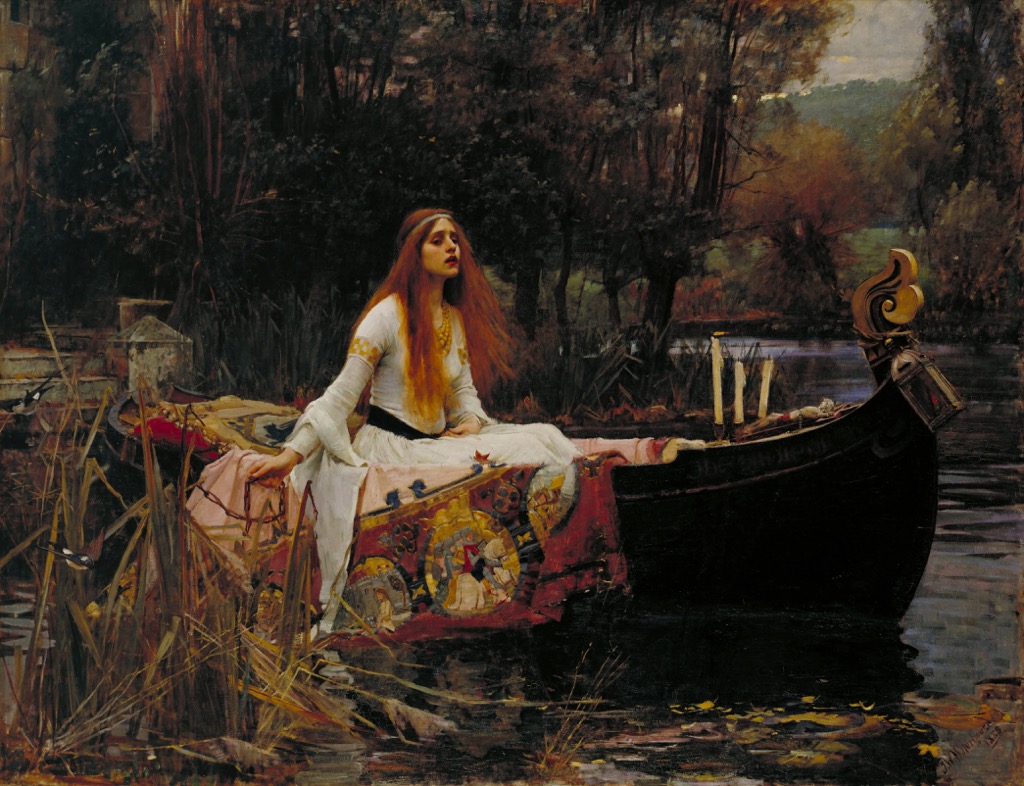
- The Lady of Shalott: Compare Waterhouse's best-known literary composition.
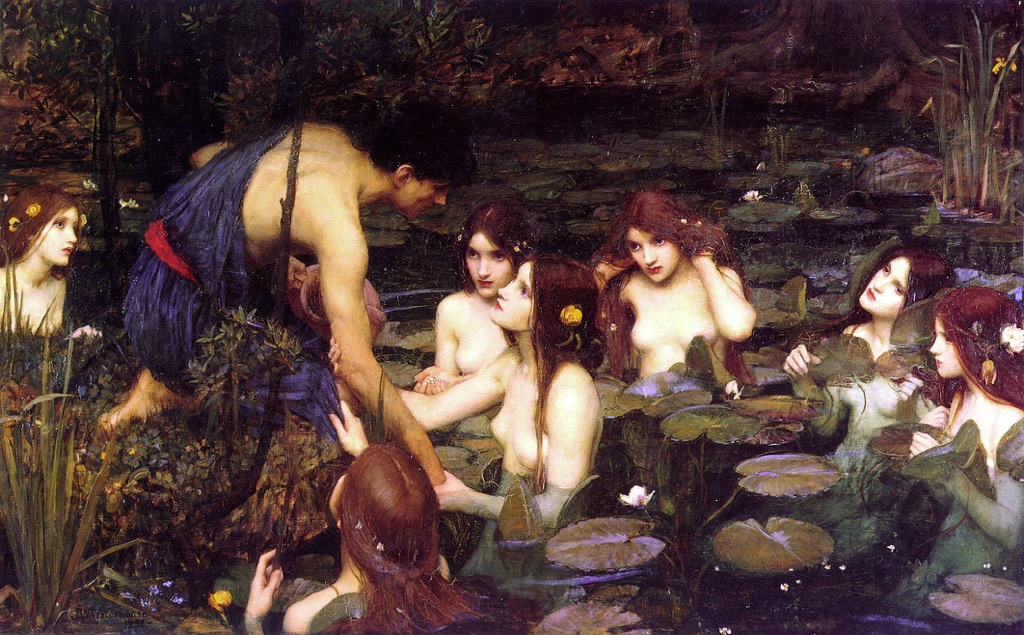
- Hylas and the Nymphs: Compare another major mythological scene.
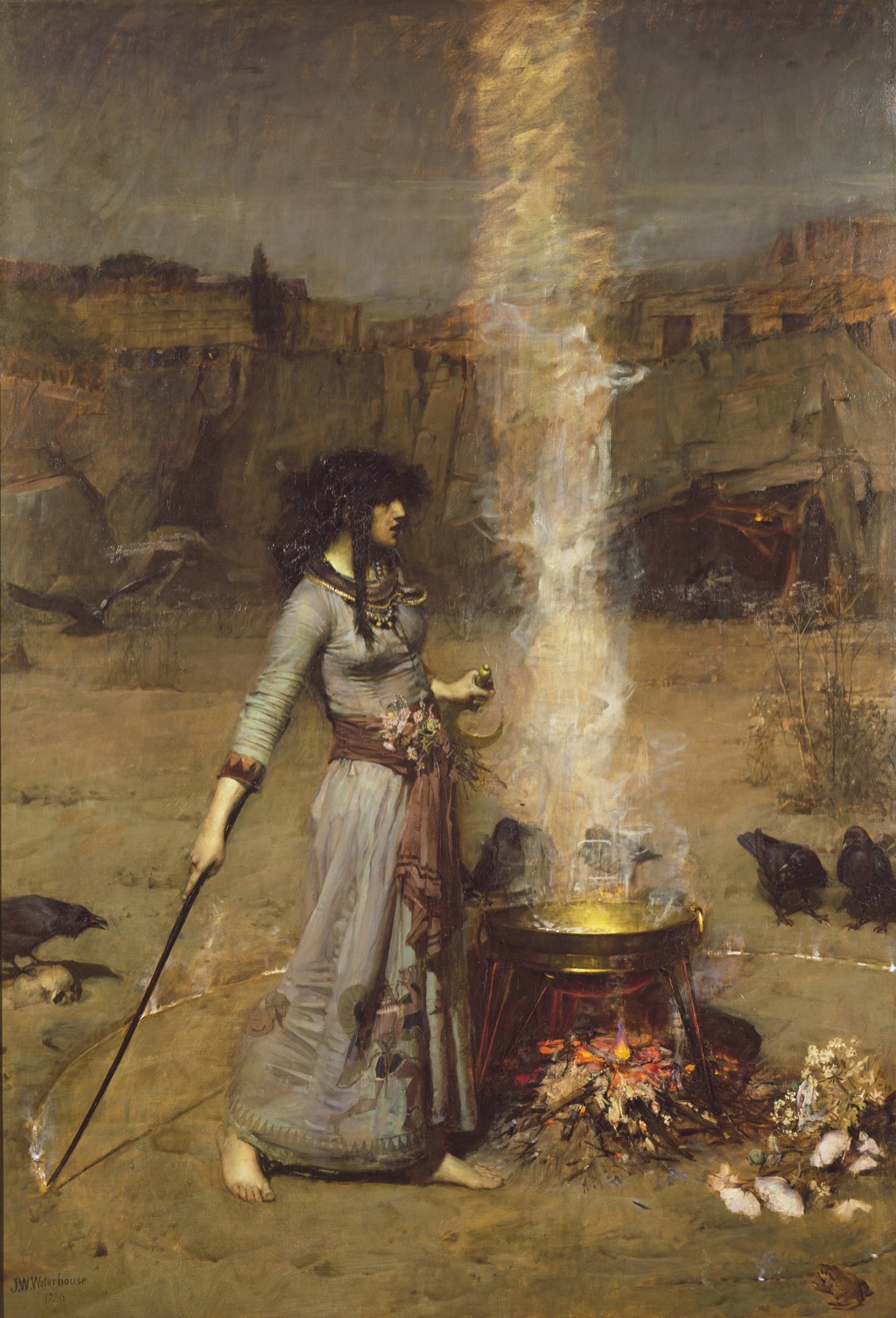
- The Magic Circle: Compare Waterhouse's treatment of ritual and symbolism.
Frequently Asked Questions
It is privately owned and recorded with the Pérez Simón Collection in Mexico. [1] Current public display should be checked against any temporary exhibition announcement.
She is often associated with Persephone and appears in discussion of Waterhouse's Persephone-related pictures. [3] The painting's title does not name her, so “may evoke Persephone” is more accurate than a definitive identification.
They resemble putti, the nude child figures familiar from classical and Renaissance art. Because they lack consistent Cupid attributes, “children” or “putti” is safer than identifying every one as Cupid.
No securely documented poem has been established for the title. “Song” works naturally as a metaphor for the painting's lyrical rhythm and celebration of spring.
Yes. Both flower-gathering pictures appeared at the Royal Academy in 1913. [2]
Discussion
A Song of Springtime succeeds because it makes allegory feel like physical life. Spring is not represented by a labelled emblem standing outside nature. It is enacted through feet in grass, hands among flowers, children changing direction and blossom multiplying behind a woman in white.
The possible Persephone reference adds emotional depth without controlling the scene. If spring is return, abundance carries memory of absence; if the woman is simply an ideal gatherer, the same forms still communicate renewal.
Reader Insights
Which visible detail most changes the way you read this page?
Which source or comparison helps the work feel less familiar and more specific?
What question would you bring back to the painting after reading?
Join the Conversation
Share your reading of this page below.
References
- Wikimedia Commons, “John William Waterhouse: A Song of Springtime,” object and image metadata, including signature, date, medium, dimensions and collection. View source.
- Christie's, “John William Waterhouse: Boreas,” lot essay discussing the late flower-gathering group and recording Narcissus and A Song of Springtime at the Royal Academy in 1913. View source.
- Christie's, “John William Waterhouse: The Soul of the Rose,” lot essay referring to the artist's Persephone sequence and A Song of Springtime. View source.
- Homeric Hymn to Demeter, translated by Gregory Nagy, Center for Hellenic Studies, Harvard University. View source.
- Royal Academy of Arts, “John William Waterhouse RA,” artist profile and collection context. View source.