 Buy Art Prints Now
from Amazon
* As an Amazon Associate I earn from qualifying purchases.
Image reference [image]
 by Tom Gurney
Tom Gurney BSc (Hons) is an art history expert with over 20 years experience
Published on August 14, 2026 / Updated on August 14, 2026
Email: tomgurney1@gmail.com / Phone: +44 7429 011000
Undine: Introduction
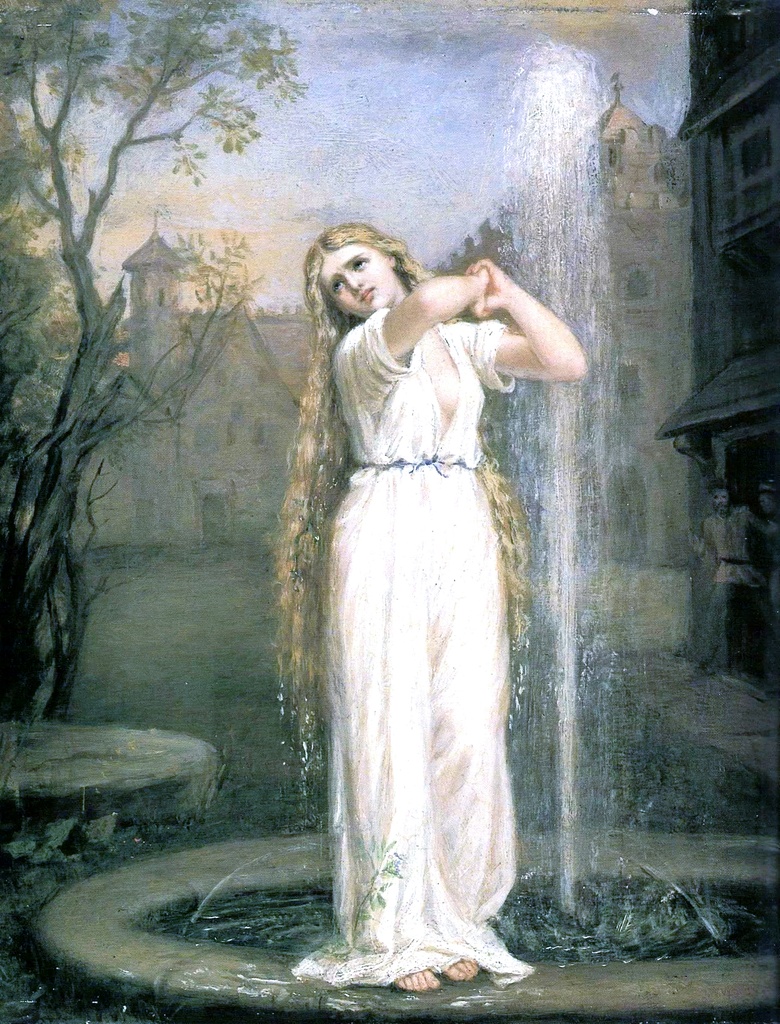
John William Waterhouse's Undine is an early, small painting of a water spirit suspended between fountain and street. A pale young woman stands on or beside a stone basin, her hands gathered near her head while water rises behind her. In the distance, figures emerge from a doorway. The setting looks inhabited, yet the central woman appears separate from ordinary life.
Painted in 1872, when Waterhouse began exhibiting with the Society of British Artists, Undine predates the classical histories and literary heroines for which he became famous. Its title connects the figure with Friedrich de la Motte Fouqué's enormously influential 1811 tale of a water spirit who gains a soul through marriage. The composition, however, does not securely illustrate one identifiable chapter. It is best read as an early experiment in giving supernatural identity to an emotionally ambiguous female figure. [1] [2] [3]
At a Glance
- ArtistJohn William Waterhouse
- Date1872 [1]
- MediumOil on canvas [1]
- DimensionsApproximately 25.4 × 20.3 cm [1]
- CollectionPrivate collection / current location not publicly established [1]
- SubjectUndine, a water spirit associated especially with Friedrich de la Motte Fouqué's 1811 tale [2]
- Career contextWaterhouse began exhibiting at the Society of British Artists in 1872 [3]
- SettingA fountain or basin within an architectural outdoor space
- Narrative statusNo exact episode from Fouqué's tale has been securely identified
- Related later interestsNaiads, mermaids, sirens, pools and water-bound women
Contents
- Introduction
- What the painting shows
- Who is Undine?
- Fouqué's tale of water, soul and marriage
- Is this one specific scene?
- Fountain, street and divided worlds
- Gesture, expression and white dress
- Scale, surface and early technique
- Waterhouse at the start of his career
- Relation to his later water women
What the painting shows
A young woman in a pale dress occupies the foreground of a narrow upright composition. She stands at a stone fountain or water basin. Behind and around her, water rises in an animated jet, visually attaching the figure to the element named by her title.
Her long hair falls freely, and her arms lift so that her hands gather near her face or head. The gesture can suggest listening, alarm, self-protection, grief or the adjustment of hair. Waterhouse does not make its practical purpose certain.
Architecture opens behind the fountain into a street or courtyard. A doorway frames smaller figures, including a person who appears to move outward. Their distance creates a social world from which Undine is spatially and psychologically separated.
The fountain is not a neutral prop. It gives water an architectural form: nature is channelled through human masonry, just as the supernatural woman is placed within a human settlement.
The figure's pale dress distinguishes her from the darker surrounding tones. She seems at once physically present and less substantial than stone, tree and building.
No knight, wedding or supernatural confrontation is plainly staged. The image's narrative energy arises from uncertainty about what the background figures mean to her.
The small scale concentrates the effect. This is not a panoramic fairy-tale illustration but an intimate image whose emotional signals must carry more than detailed storytelling.
Who is Undine?
“Undine” names a female water spirit within European learned tradition and later literature. The word is connected with Latin unda, wave, and became associated with elemental beings of water.
For nineteenth-century audiences, the most powerful reference was Friedrich de la Motte Fouqué's Undine, first published in 1811. The tale circulated widely in translation and generated illustrations, plays, operas and other adaptations. [2]
Fouqué's Undine is not simply a mermaid with a fish tail. She appears in human form and lives with a fisherman and his wife before marrying the knight Huldbrand. Her supernatural nature is disclosed within a story about acquiring a soul, love, fidelity and fatal return to water. [2]
That literary identity differentiates her from a Greek Naiad. Waterhouse later painted A Naiad and other classical water figures, but the titles arise from different traditions.
Nor is Undine “undead,” a modern error encouraged by the similarity of words. She is a water spirit, not a corpse restored to life.
Water connects beauty with danger throughout the tradition. It is Undine's native element and the boundary between her supernatural origin and human attachments.
Waterhouse's title gives viewers enough information to recognise this field of meaning. It does not require every object in the painting to correspond to a line in Fouqué.
Fouqué's tale of water, soul and marriage
In Fouqué's story, a fisherman and his wife raise Undine after the mysterious loss of their own child. The knight Huldbrand arrives at their isolated home and becomes attracted to the strange young woman. Flooded waters cut the household off, and a priest marries the pair. [2]
Undine explains that elemental beings exist without immortal human souls. Through loving union with a human, she has gained one. The gift makes her morally and emotionally vulnerable.
The story becomes a tragedy of divided loyalty. Huldbrand's earlier fascination with Bertalda returns. Undine's powerful water-uncle Kühleborn threatens and intervenes. Human prejudice and supernatural law tighten around the marriage.
When Huldbrand rejects Undine on the water and later prepares to marry Bertalda, the conditions of catastrophe are fulfilled. Undine returns at his wedding and kills him with a fatal embrace or kiss. Water then appears as a spring around his grave. [2]
This summary matters because casual descriptions often distort the tale into “a nymph dies when a man is unfaithful.” Fouqué's plot is more complex. Undine gains a soul, suffers rejection, returns to the water world and becomes the agent of Huldbrand's death.
The story's emotional force comes from incompatible systems. Human marriage promises fidelity, while supernatural kinship imposes laws that Undine cannot simply escape.
Waterhouse's young figure could evoke anticipation, separation or return, but the painting supplies too little narrative apparatus to choose one chapter confidently.
Is this one specific scene?
The title establishes the protagonist, not the moment. No authoritative object record used here names a chapter or quotes Fouqué.
The fountain could invite comparison with the tale's ending, where water marks Undine's continuing presence at Huldbrand's grave. Yet Waterhouse does not clearly show a grave, wedding or dead knight.
The background man might be imagined as Huldbrand, but distance and limited detail prevent secure identification. Another figure appears nearby, further complicating any one-to-one reading.
Undine's raised hands may express shock at an approaching person. They might equally belong to a decorative pose shaped by hair, water and the upright format.
An artist can paint a literary character outside a text's exact chronology. The work may condense her defining predicament: a water being visible within human space yet unable to belong fully to it.
This approach is especially plausible in a small early exhibition picture, where title and mood could do more work than elaborate narrative props.
A cautious caption can describe the visible scene as “Undine at a fountain, with figures in the background” rather than identify the moment as “Undine confronts her unfaithful husband” without new documentary evidence.
Uncertainty does not make interpretation empty. It directs attention towards the painting's actual achievement: turning elemental otherness into posture and spatial distance.
Fountain, street and divided worlds
The fountain joins wild water to civic architecture. Its basin controls flow, but the rising jet remains energetic. Undine stands precisely at that meeting point.
Behind her, buildings and a doorway imply domestic or communal life. People can enter, leave and recognise one another within that world. The supernatural figure remains outside its threshold.
This arrangement creates two kinds of depth. The street recedes physically, while the title opens a legendary world beneath or within the visible water.
The fountain's circular or curved edge contrasts with vertical walls and doorframes. It creates a local enclosure around Undine, almost a boundary she occupies alone.
Water also complicates reflection and identity. A basin can mirror a face, yet agitation breaks the image. Although no readable reflection dominates this painting, the motif anticipates Waterhouse's later use of pools as unstable thresholds between self and other.
The background figures may be approaching, withdrawing or merely passing. Their reduced scale makes human society visible without making it emotionally available.
This is why the scene can feel melancholic even without a fixed episode. The title tells us that the woman belongs to water; the architecture shows her surrounded by a world built for humans.
Gesture, expression and white dress
Undine's raised arms prevent the figure from settling into a simple standing portrait. They compress emotion near the head while exposing the vertical fall of her dress.
The hands do not point towards the water or beckon the background figures. Their inward turn keeps feeling private.
Her face appears directed away from direct engagement with the spectator. The viewer sees distress or abstraction without receiving a clear appeal.
White clothing carries several associations: water foam, bridal dress, innocence, spirit presence and visual separation from darker surroundings. None should be made exclusive.
Within Fouqué's tale, marriage and the acquisition of a soul are central, so bridal resonance is relevant. The painting nevertheless lacks the priest, knight and ceremony required to call the dress a documented wedding garment. [2]
The long hair contributes natural movement. Its waviness can echo flowing water, joining human body and element without transforming anatomy.
Waterhouse would later refine this strategy. His mermaids, Naiads and nymphs are recognisably human in form, while hair, water, flowers and light communicate their unstable relation to nature.
Here the device is still direct. Pale figure, flowing hair and fountain tell the story's supernatural identity before detailed symbolism begins.
Scale, surface and early technique
Published object data gives the canvas as approximately 25.4 by 20.3 centimetres. [1] That small size makes it closer to a cabinet picture than to the large Royal Academy canvases of Waterhouse's maturity.
At this scale, facial expression and setting must be stated economically. The background can remain suggestive, and the fountain's bright movement can stand for a larger watery environment.
Digital enlargements risk making the surface appear coarser or more detailed than the object feels in person. Reproduction should retain the entire composition so that foreground and distant doorway remain in proportion.
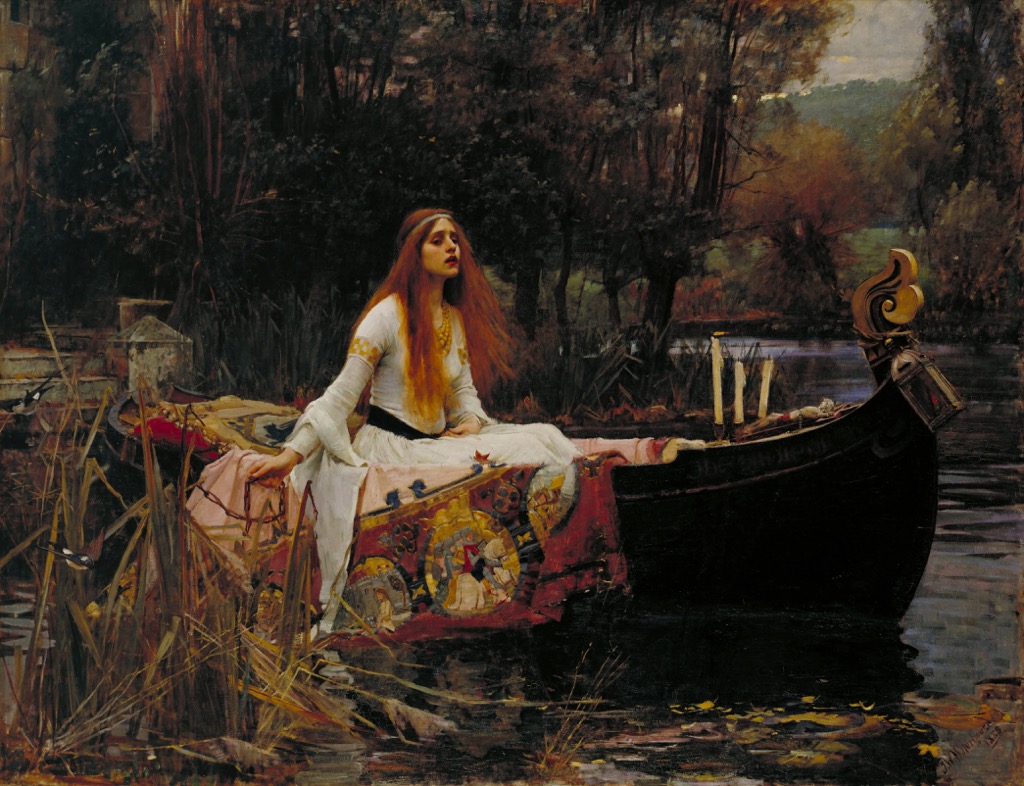
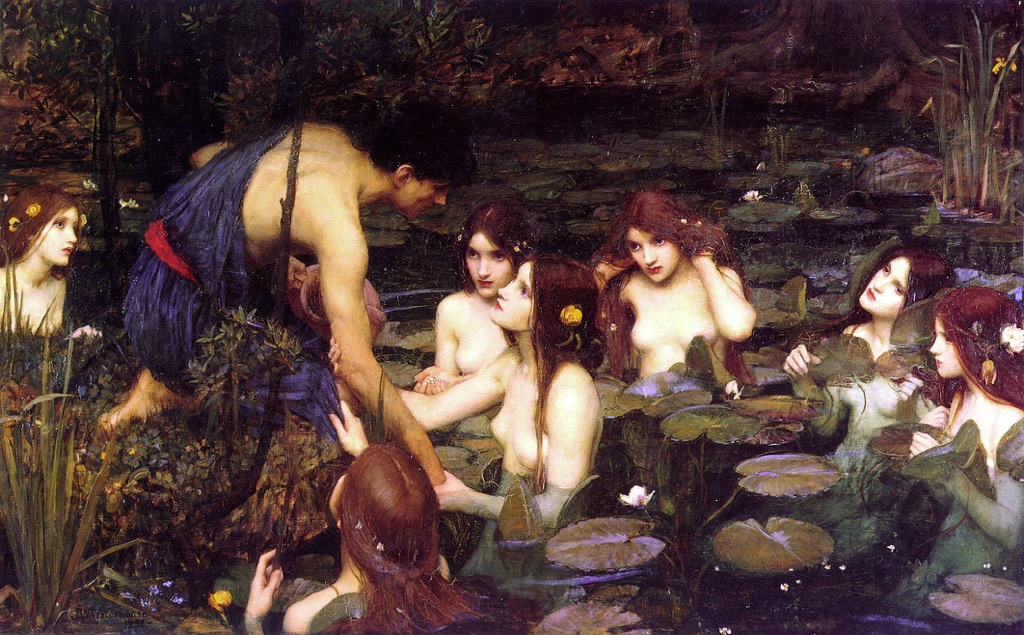
The painting predates Waterhouse's most characteristic mature handling. It should not be judged only by the finish of The Lady of Shalott or Hylas and the Nymphs.
Instead, its interest lies in problem-solving: how to distinguish a supernatural heroine, imply narrative and create emotional atmosphere within a small vertical field.
The fountain jet is particularly effective because it adds movement without requiring many figures. Water becomes event.
The early palette is comparatively subdued. White dress and water create fragile light within an earthier architectural world, a contrast that reinforces separation.
Waterhouse at the start of his career
Waterhouse entered the Royal Academy Schools in 1870. A professional biography records that he began exhibiting at the Society of British Artists in 1872 and made his Royal Academy debut two years later with Sleep and His Half-Brother Death. [3]
Undine therefore belongs to his first public phase. He had not yet become a Royal Academician, nor had he established the large classical subjects that brought attention later in the decade.
That institutional rise came gradually: the Royal Academy records his election as an Associate in 1885 and as a full Academician in 1895. [4] The distance between those dates and Undine helps restore the painting's genuinely provisional place in his development.
The picture is revealing precisely because it contains future interests before their mature synthesis. There is a solitary woman, a literary-supernatural title, water as boundary and an uncertain emotional event.
At the same time, calling it “Pre-Raphaelite” without qualification can flatten chronology. Waterhouse was never a member of the original Brotherhood, founded before his childhood. His later art absorbed aspects of its colour, literary interest and figure types.
In 1872 his position was exploratory. British exhibition culture offered multiple venues, and young artists tested subjects likely to attract attention.
Fouqué's famous water spirit provided recognisable Romantic material. Waterhouse's choice suggests that literary women and aquatic ambiguity were not late additions to his career.
The work is not “his most famous painting,” as some reproduction sites claim. Its importance is developmental rather than dependent on popularity.
Relation to his later water women
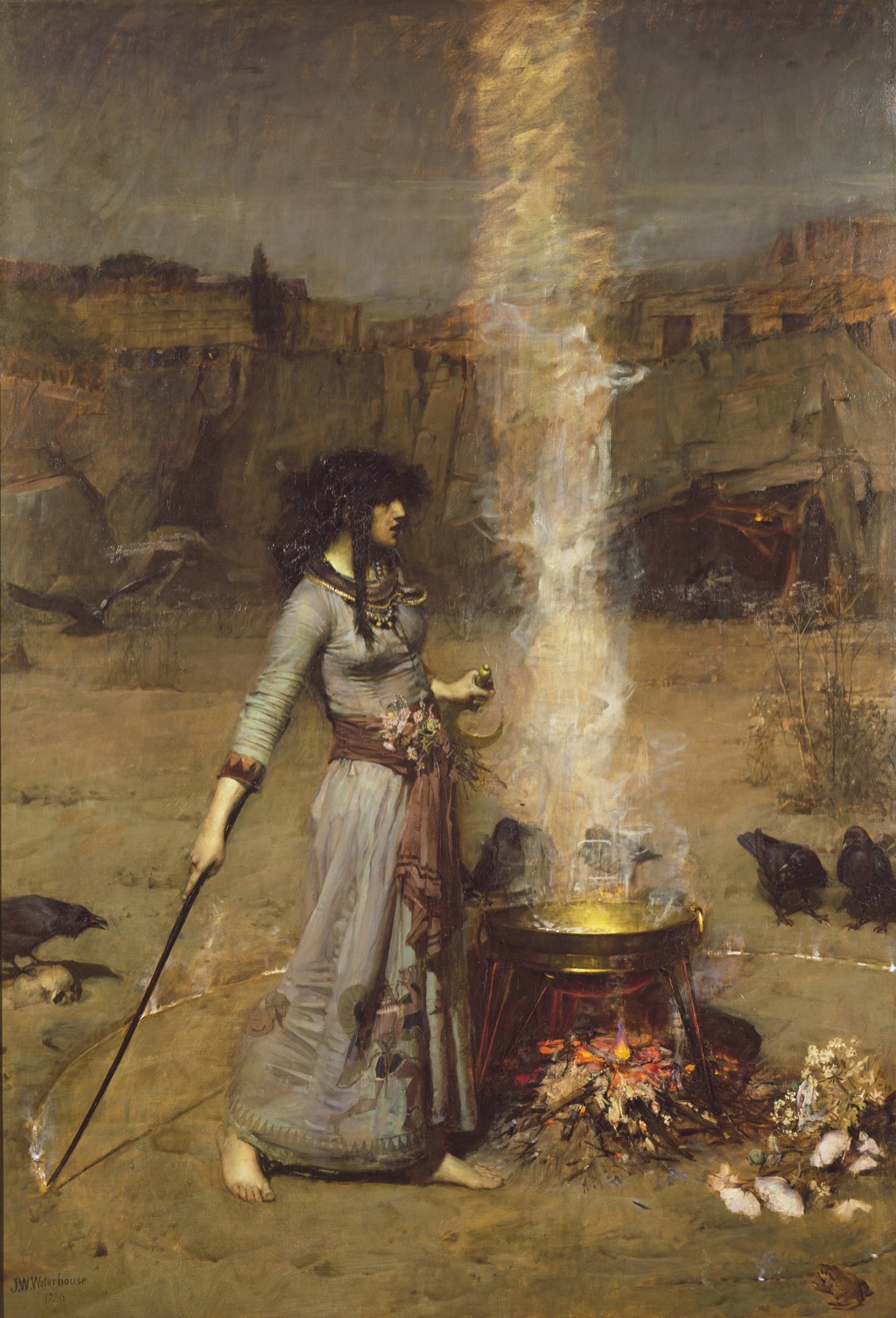
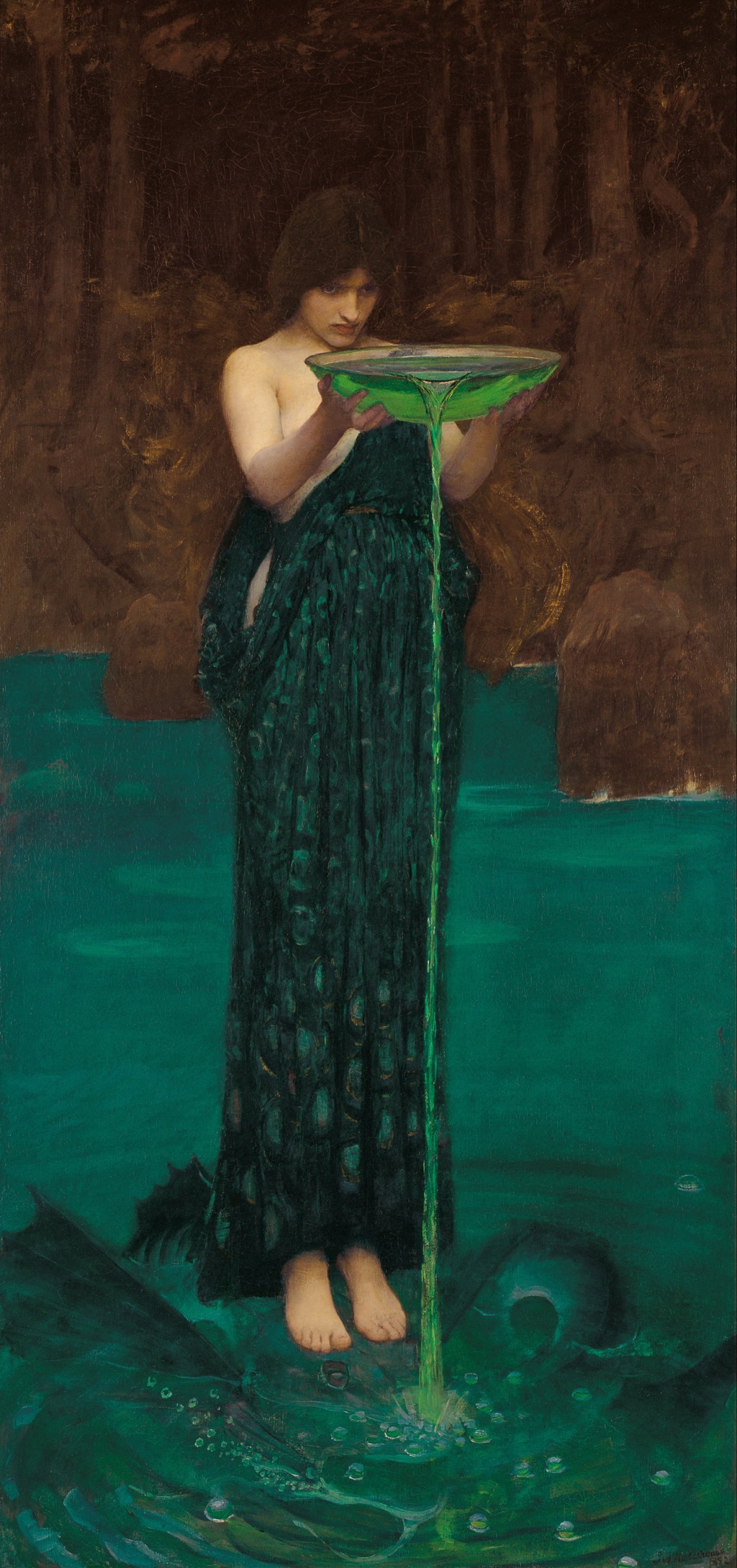
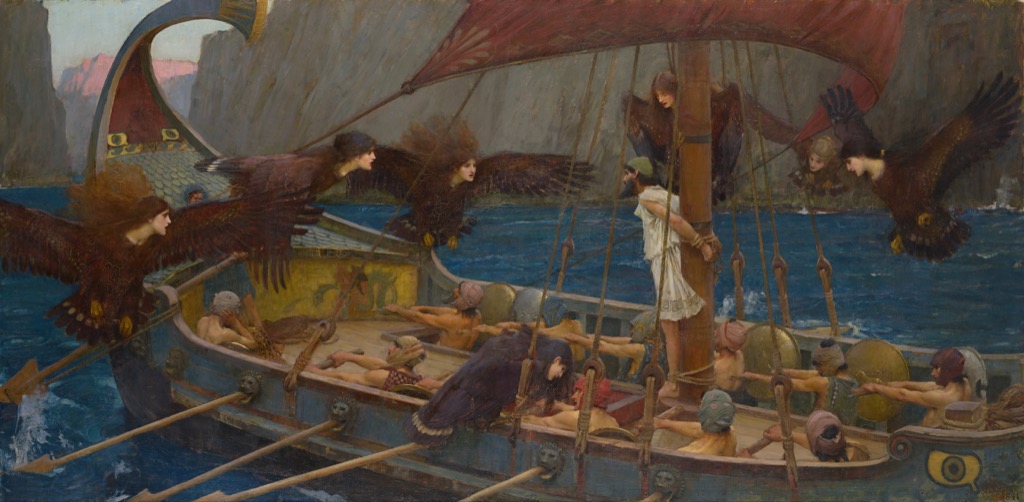
Waterhouse returned repeatedly to women whose identities are shaped by water: Naiads, mermaids, sirens, nymphs, Circe at the sea and the drowned or river-bound heroines Ophelia and the Lady of Shalott.
Undine should not be treated as a literal study for those later canvases. More than two decades separate it from many of them, and no source establishes a direct preparatory chain.
It is better understood as an early statement of a durable visual problem. Water can be setting, substance, mirror, boundary and threat at once.
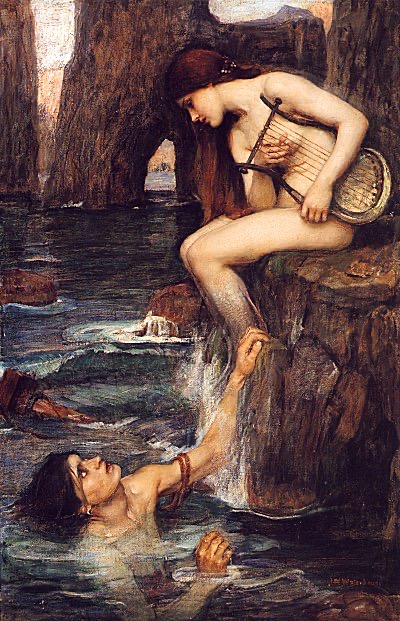
The 1893 A Naiad brings a water spirit close to a sleeping youth. Hylas and the Nymphs turns a pool into the site of collective enticement. A Mermaid isolates a hybrid figure at the shore. Each develops a different tradition.
Undine differs because her story is about entering human moral life through love. Her water identity is not merely alluring; it makes human attachment tragic.
The small fountain also differs from the immersive pools and seas of later works. Water is contained within architecture, a sign that the supernatural has entered a town-like space.
Looking backward from the mature paintings can make Undine appear prophetic. It is safer to say that the early work demonstrates continuity of interest without assuming Waterhouse already knew how he would reuse it.
The contrast with those later works also prevents a misleading story of effortless progress. In Hylas and the Nymphs, every head, flower and reflection participates in an exact psychological geometry; in Undine, setting and gesture remain comparatively open. That difference is not merely a defect. The early canvas lets architecture, fountain and title pull in slightly different directions, creating a strangeness that polished narrative could remove.
It also shows why “water woman” is only a starting category. Ophelia is a human character moving towards death; the Lady of Shalott is a cursed human heroine travelling on a river; Circe is a divine enchantress beside a poisoned sea; the Naiad belongs to Greek nature religion; Undine comes from an early-modern elemental tradition transformed by Romantic literature. Waterhouse repeatedly uses related visual matter without making these women interchangeable.
For viewers encountering the cluster as a whole, Undine can therefore act as an origin point and a warning. It reveals an early fascination with water-bound femininity, but it also requires each later subject to be returned to her own text. Similar hair, pale dress and liquid setting do not erase differences of agency, mortality or myth.
The work's survival in digital reproduction adds a final continuity. A painting now outside regular public view remains visible because its supernatural heroine lends herself to circulation. That visibility should encourage research, not overconfidence: the image is clear enough for close looking, while its object history remains incomplete.
Object history and evidence limits
The public image record identifies the painting as an oil on canvas dated 1872, approximately 25.4 by 20.3 centimetres, and privately held. [1]
Its full early provenance and present owner are not established in the accessible authoritative sources used here. “Private collection” is preferable to naming an unsupported location.
Accounts state that the work was associated with the Society of British Artists, consistent with Waterhouse's documented exhibition beginning in 1872. [3] Without a digitised catalogue entry giving number and exact title, this should be described carefully rather than embellished.
The image record spells the title Undine, while the file name uses the French form Ondine. [1] These are language variants, not evidence of two Waterhouse paintings.
Dimensions circulating online should likewise be treated as approximate unless a current object examination confirms them.
The literary source is strongly relevant, but no known inscription from Waterhouse explains his reading. Fouqué controls the broad identity of Undine; close analysis controls the visible scene.
These limits are part of a responsible page. An early, privately held painting can support rich interpretation without acquiring a fictional provenance, model name or precise episode.
Related Pages
- A Naiad: Compare a later Waterhouse water-spirit subject from a different mythic tradition.
- A Mermaid: Compare a mature Waterhouse sea figure with a clearer hybrid identity.
- Hylas and the Nymphs: Compare Waterhouse’s later handling of water-bound enticement.
Frequently Asked Questions
An Undine is a female water spirit, known especially through Friedrich de la Motte Fouqué's 1811 fairy-tale novella. [2]
The title strongly invokes that famous story, but the composition is not securely tied to one exact chapter.
The water spirit marries the knight Huldbrand and gains a soul, but divided loyalty and supernatural law lead to separation and his fatal encounter with her. [2]
It is recorded as privately owned; a current public location is not established. [1]
Approximately 25.4 by 20.3 centimetres. [1]
Not in the usual half-fish form. Fouqué presents her as a water spirit who appears human.
A distant man appears in the background, but no reliable source used here securely identifies him.
Discussion
Undine matters less as a fully resolved masterpiece than as an unusually clear beginning. In 1872 Waterhouse was already testing the subjects that would occupy him for decades: solitary women, literary memory, water and a moment whose meaning remains just out of reach.
The fountain is the painting's strongest invention. It places an elemental being inside human architecture and gives visible motion to her difference. Background figures imply society, but water claims the foreground.
Reader Insights
Which visible detail most changes the way you read this page?
Which source or comparison helps the work feel less familiar and more specific?
What question would you bring back to the painting after reading?
Join the Conversation
Share your reading of this page below.
References
- Image reference
- Wikimedia Commons, “John William Waterhouse — Undine,” public-domain image record, date, medium, approximate dimensions and private-collection status. View source
- Project Gutenberg, Friedrich de la Motte Fouqué, Undine, public-domain English translation and bibliographic record. View source
- Stephen Ongpin Fine Art, “John William Waterhouse,” professional biography documenting his Royal Academy Schools training and 1872 Society of British Artists debut. View source
- Royal Academy of Arts, “John William Waterhouse RA,” artist record and later institutional career. View source