



 by Tom Gurney
Tom Gurney BSc (Hons) is an art history expert with over 20 years experience
Published on June 19, 2020 / Updated on October 16, 2026
Email: tomgurney1@gmail.com / Phone: +44 7429 011000
Sainte Famille and Bouguereau's early religious ambition
William-Adolphe Bouguereau's Sainte Famille belongs to the early 1860s, when the artist was consolidating his reputation as a Salon painter able to handle religious subject matter with academic finish and emotional clarity. The title means Holy Family, and the image family is also associated with English descriptions such as The Holy Family and Virgin and Child with John the Baptist. Those title variants point to the painting's central group: the Virgin Mary, the Christ Child and the young Saint John the Baptist.
The French title remains useful because it is the title used in the strongest sale and catalogue routes. It also helps separate this work from Bouguereau's many later images of mothers, children, angels and devotional figures. The painting is not just a tender family scene. It is a religious composition in which family intimacy is shaped into a polished public image.
Bouguereau's handling of sacred subjects often depends on that balance. In pages such as Virgin with Angels, Virgin Comforter and Madonna of the Lilies, devotional imagery is filtered through ideal bodies, controlled light and carefully legible feeling. Sainte Famille shows that direction already forming in 1863.
At a Glance
- ArtistWilliam-Adolphe Bouguereau
- Protected TitleSainte Famille
- English Title FamilyThe Holy Family
- Date1863
- SubjectVirgin Mary, Christ Child and Saint John the Baptist
- Source SpineSotheby's and Christie's catalogue routes
- Known TrailSalon 1863 and Exposition Universelle 1867
- Location NoteCurrent object location remains source-cautious
Contents
- Introduction
- Salon Picture, Study and Reduction
- The Holy Family as an Academic Image
- Source Caution and Current Location
- Why Sainte Famille Matters
- Related Devotional Pages
- Frequently Asked Questions
- References
- Annotated Details
Salon Picture, Study and Reduction
The strongest source trail for Sainte Famille is not a single stable museum object page. It comes through a cluster of catalogue and auction records around the original picture, a study and a later reduction. Sotheby's describes its 2019 Sainte Famille (reduction) as a reduction of Bouguereau's celebrated 1863 Salon picture. The same note places the original in private collection language and connects it with Napoleon III, Empress Eugenie, the Tuileries apartments and later Farnborough Hill history. [1]
Christie's records a study for Sainte Famille, painted around 1863. That study is important because it confirms the composition's status as one of Bouguereau's major early religious projects and connects it to public exhibition history: Salon 1863, no. 226, and the Exposition Universelle of 1867, no. 73. The Christie's route also says the work was purchased by Empress Eugenie, giving the painting a serious imperial-collection context without requiring the article to invent a complete provenance. [2]
The original, study and reduction are best kept distinct. The Christie's study helps explain process. The Sotheby's reduction helps explain circulation and the continuing market memory of the composition. Neither should be allowed to blur into a false claim that every measurement, medium detail or ownership statement applies equally to the original 1863 painting.
The Holy Family as an Academic Image
In Sainte Famille, Bouguereau turns an intimate devotional subject into an image of composure. The family grouping is emotionally accessible, but the effect depends on drawing and arrangement. The figures are not casual portraits of domestic life. They are idealized sacred figures, placed so that tenderness and religious hierarchy can be read at once.
The inclusion of the young Saint John the Baptist matters because it expands the scene beyond mother and child. The painting becomes a meeting of sacred childhoods, with the Christ Child at the center of attention and Saint John already pointing toward a larger Christian story. Bouguereau does not need dramatic action to make that relationship clear. He uses gesture, pose and closeness to make the subject understandable.
That method suits his broader art. Bouguereau was rarely interested in ambiguity for its own sake. His best-known works often invite immediate recognition before closer looking reveals how carefully that recognition has been engineered. In Sainte Famille, the viewer first sees a tender religious group. After that, the academic structure becomes clearer: balanced bodies, smoothed surfaces, a hierarchy of gazes and a finish designed for public exhibition.
Annotated Details from Sainte Famille
This annotated view keeps attention on the family grouping, devotional light and controlled figure arrangement.
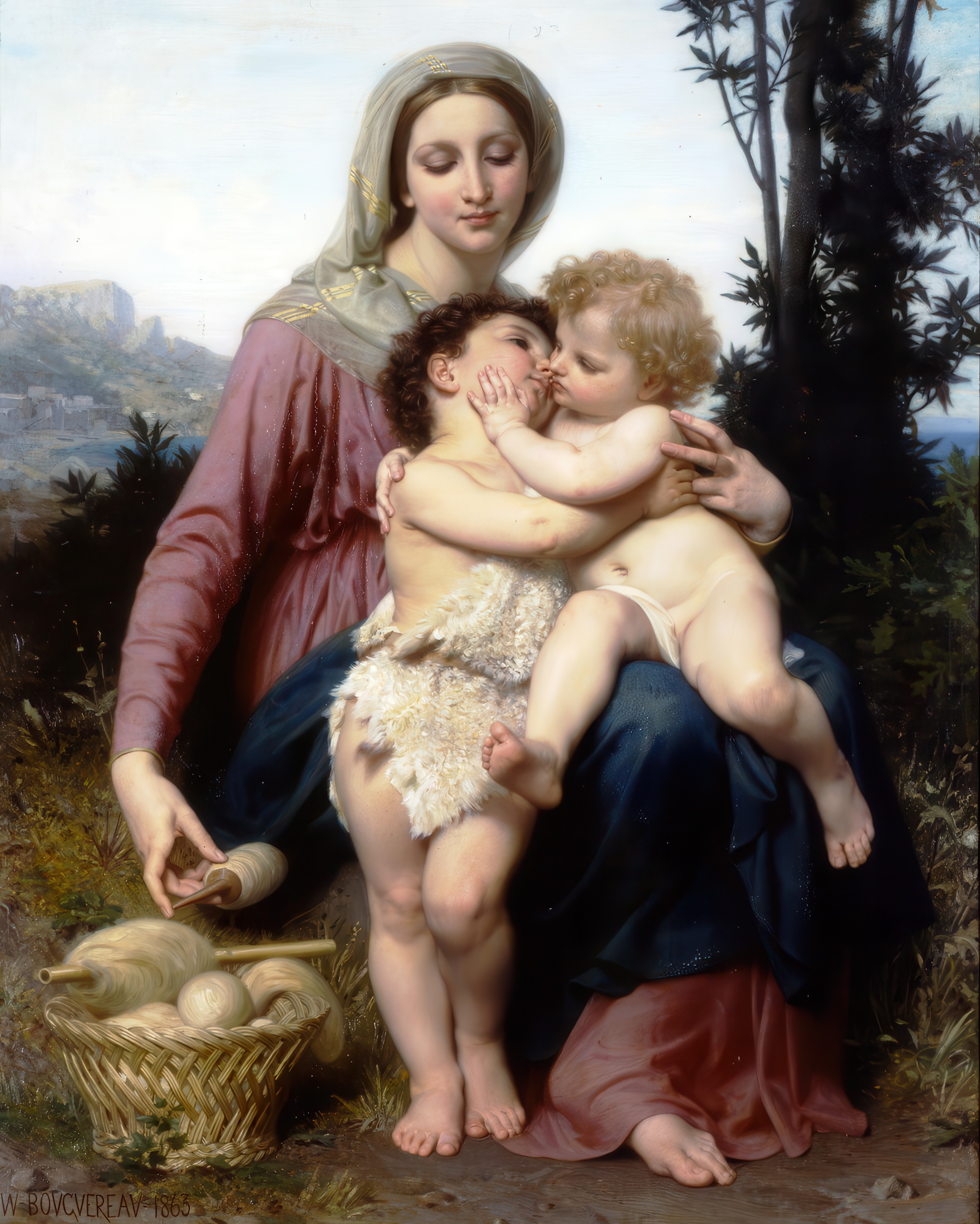
Details from SAINTE FAMILLE
These close views use the high-resolution public-domain source while keeping annotation markers in CSS rather than in the image file.
Central figures
The central group anchors the subject and gives the surrounding movement a visual center.
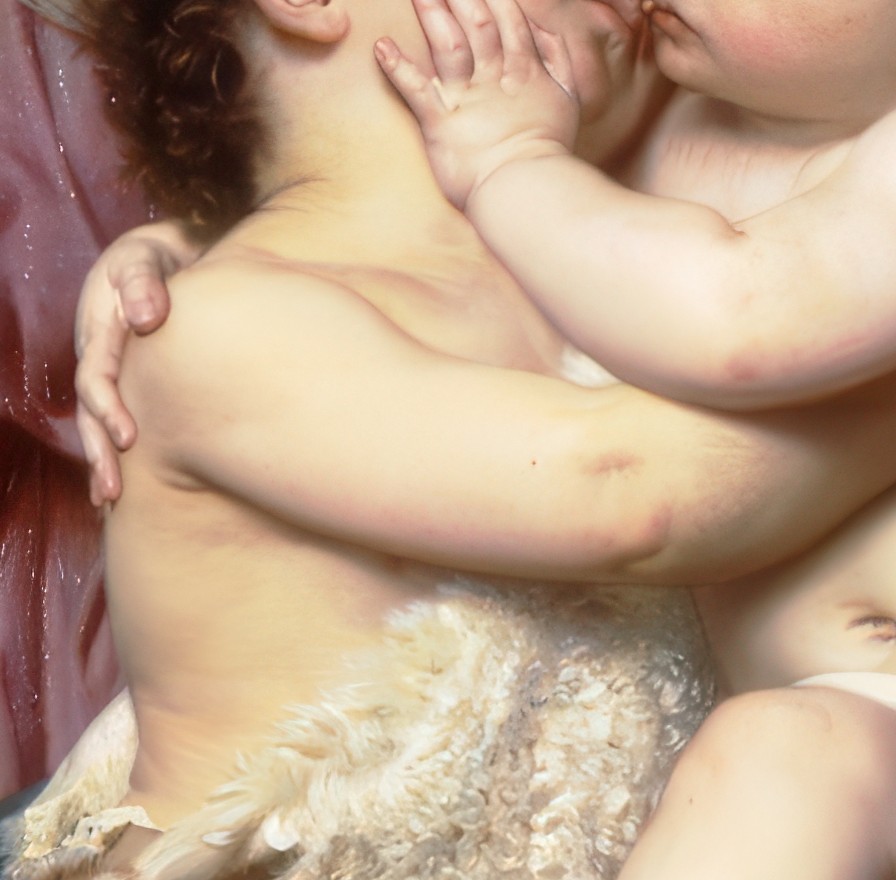
Faces and glances
Small changes of gaze help explain the relationship between figures without needing a separate narrative cue.
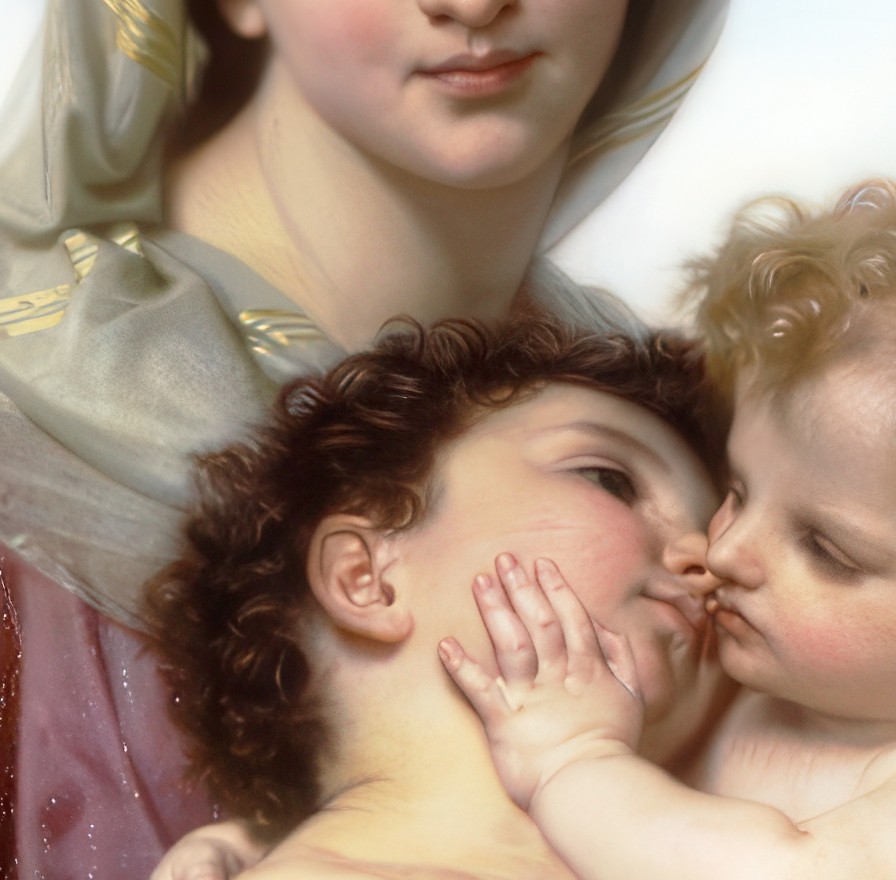
Hands and contact
Hands and points of contact make the figure group feel constructed through touch rather than simple placement.
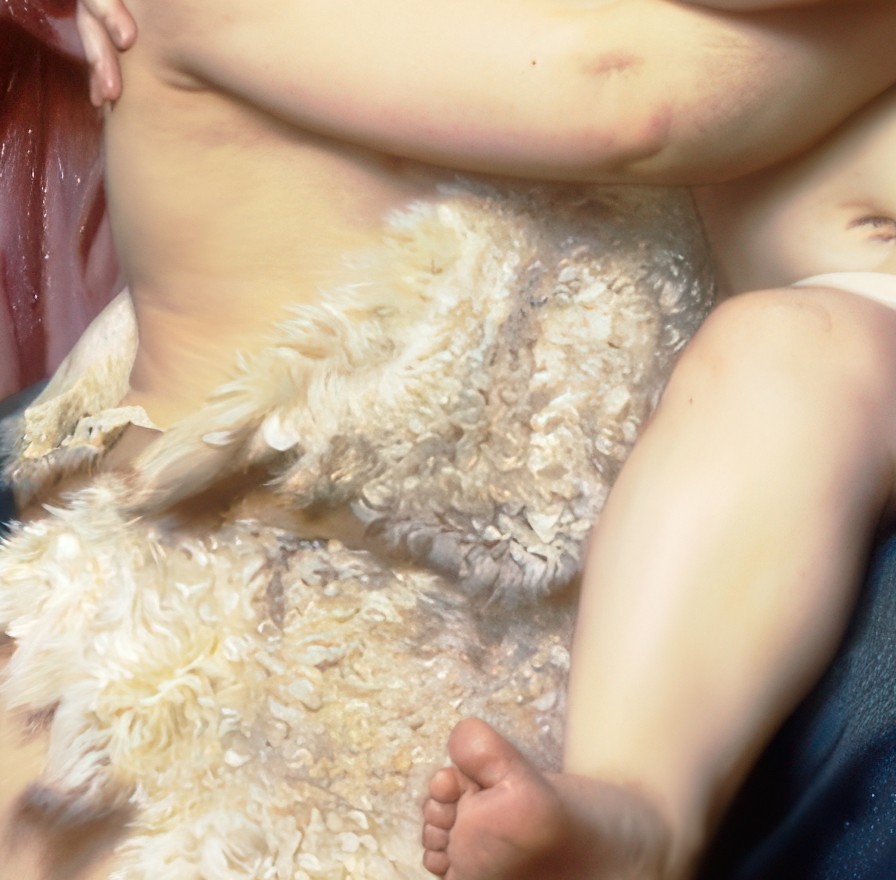
Drapery and light
Drapery gathers the brightest passages into a readable rhythm around the bodies.
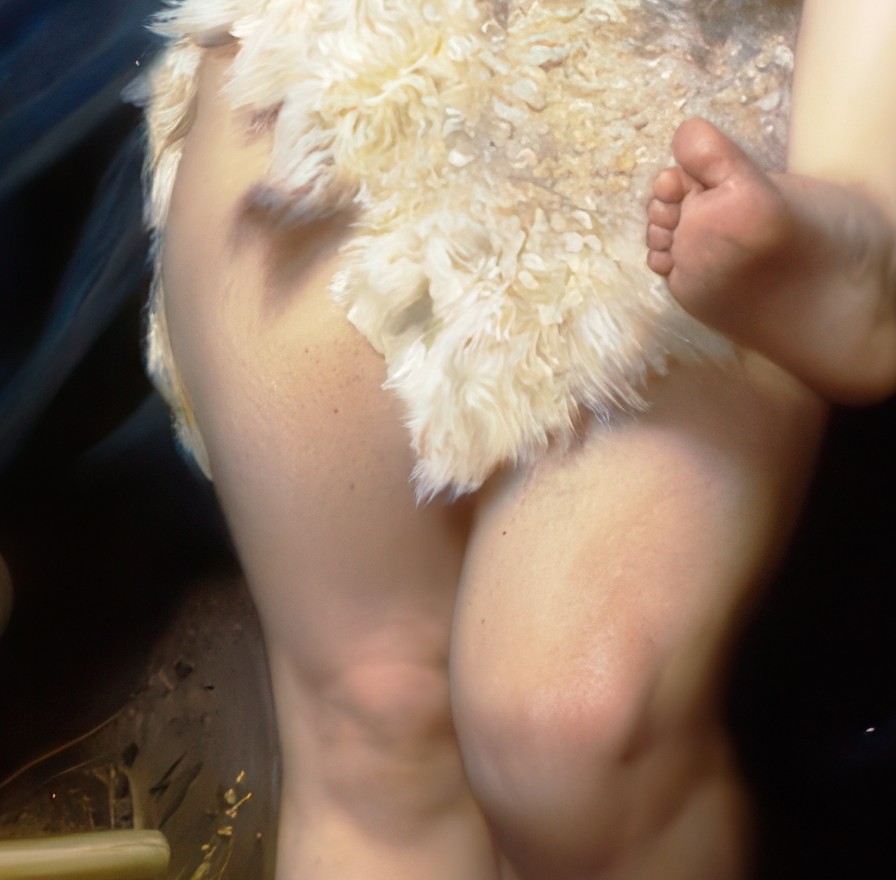
Setting edge
The background and edges create depth while keeping the main figures close to the viewer.
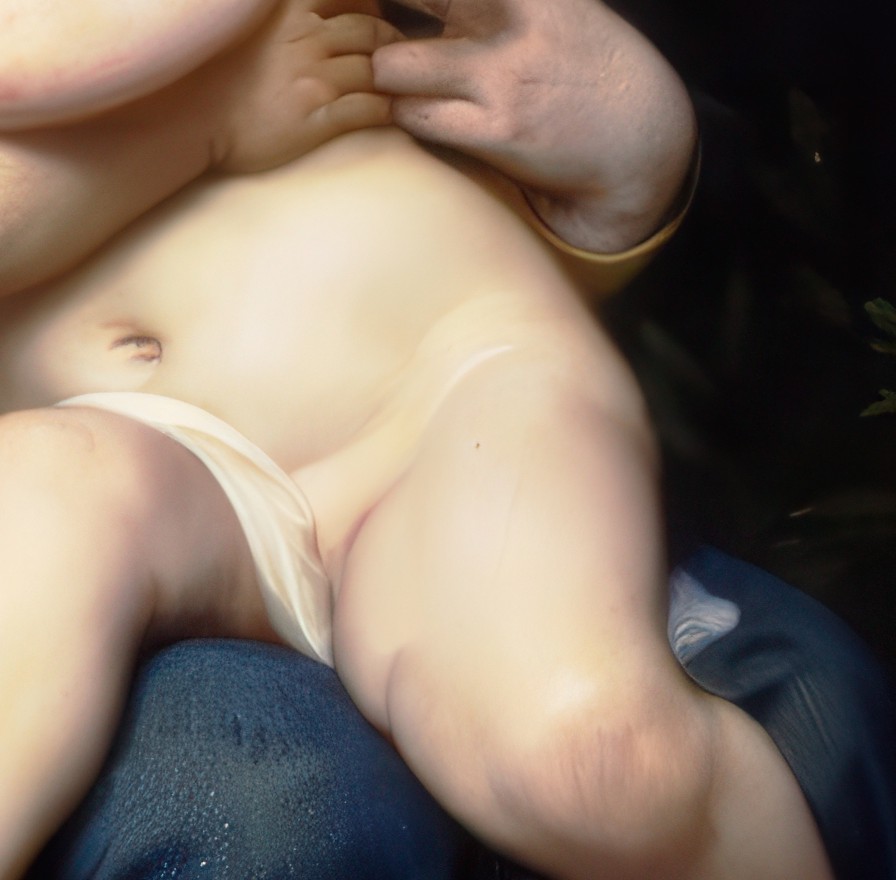
Lower movement
The lower passage supplies balance, weight and directional movement for the composition.
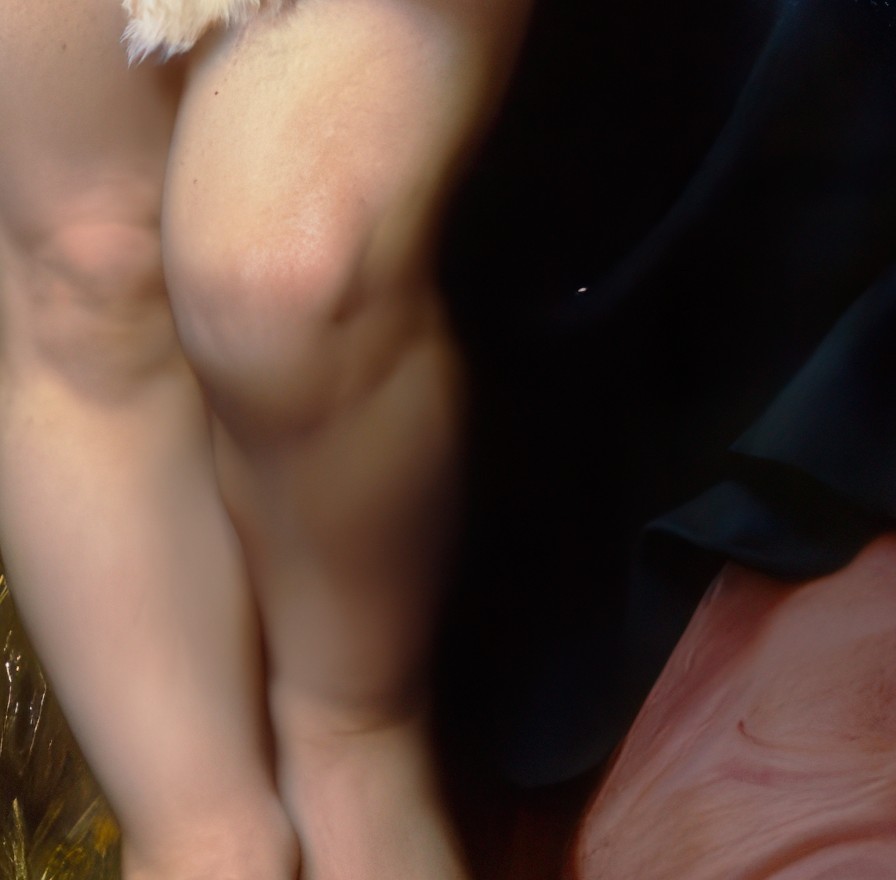
Upper light
The upper tones frame the figures and set the emotional temperature of the scene.
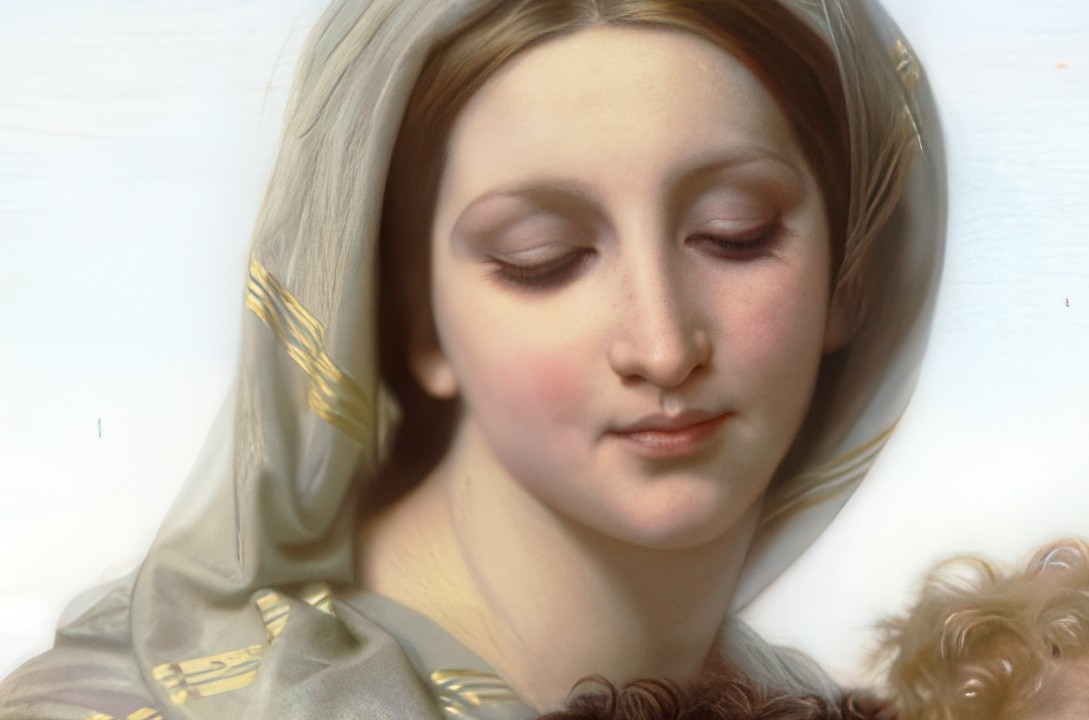
Source Caution and Current Location
One reason this page needs careful handling is the current-location evidence. Wikimedia Commons preserves a useful object and image metadata route under title variants including The Holy Family and Virgin and Child with John the Baptist. That route gives Bouguereau, 1863, oil on canvas, dimensions of 138.5 x 109 cm, a Chimei Museum association, accession 0011121, and a signature/date reference. It is valuable metadata, especially for recognizing the image family. [3]
At the same time, the source trail preserves a conflict. Sotheby's frames the original Sainte Famille as a private-collection work, while the Commons route points toward Chimei Museum metadata. Without a stable official object page resolving that conflict, it is safer not to state an evergreen current owner, museum location or on-view status. The secure ground is the painting's tie to Bouguereau's 1863 Salon composition and imperial-era provenance context.
The same discipline applies to size and image use. Commons gives one dimension set, while secondary routes show variant or reversed dimensions. Those details should be source-specific rather than presented as settled universal fact. The image metadata can help readers recognize the composition, but it should remain subordinate to the documented Salon, study and reduction evidence. [4]
Why Sainte Famille Matters
Sainte Famille is valuable because it brings together several sides of Bouguereau's career. It is a religious painting, a Salon work, a composition with study and reduction evidence, and a picture with an imperial collection story. It also shows how Bouguereau could make sacred emotion accessible without abandoning academic discipline.
The painting belongs naturally beside later religious pages such as Pieta, but it has a gentler register. Where Pieta depends on mourning, Sainte Famille depends on protection, recognition and sacred childhood. It also connects to Bouguereau's wider interest in children and idealized family feeling, while remaining more explicitly devotional than mythological works such as L'Amour et Psyche, enfants or grand display pieces such as The Birth of Venus.
A careful modern reading should therefore start with what the sources support. Sainte Famille is an 1863 Bouguereau religious composition exhibited at the Salon and later connected with Empress Eugenie. Its study and reduction routes show how the composition circulated beyond a single finished canvas. Its subject shows Bouguereau using academic polish to make sacred family feeling clear, legible and publicly persuasive.
Related Devotional Pages


Frequently Asked Questions
Discussion
Sainte Famille rewards careful looking at Bouguereau's religious subject, Salon history and source trail.
Use the prompts below to compare the Holy Family composition with other devotional pages.
Reader Insights
How does Bouguereau make the Holy Family both intimate and formally public?
What changes when a page is led by Salon, study and reduction evidence rather than a single object page?
How does this 1863 religious composition compare with Bouguereau's later Marian works?
Join the Conversation
Share your reading of Bouguereau's Holy Family imagery and source history below.
References
- Sotheby's, William Bouguereau, Sainte Famille (reduction), accessed 29 July 2026.
- Christie's, A Study for Sainte Famille, accessed 29 July 2026.
- Wikimedia Commons, William Adolphe Bouguereau The Holy Family file page, accessed 29 July 2026.
- WikiArt, Sainte Famille, 1863, accessed 29 July 2026.
- Sotheby's, Le Sommeil catalogue note, accessed 29 July 2026.
- Bouguereau.org, Sainte Famille / The Holy Family reproduction page, accessed 29 July 2026.


