



 by Tom Gurney
Tom Gurney BSc (Hons) is an art history expert with over 20 years experience
Published on June 19, 2020 / Updated on October 16, 2026
Email: tomgurney1@gmail.com / Phone: +44 7429 011000
Two Sisters by William-Adolphe Bouguereau: Introduction
Two Sisters is a late work by William-Adolphe Bouguereau, dated to 1901, in which the artist returned to one of his most familiar emotional registers: childhood, closeness and idealized family feeling. The painting is commonly connected with the French title Deux Soeurs, and available source trails identify it as an oil on canvas. The strongest public route found for the object links it to Lawrence University Art Collection and Wriston Art Center Galleries, with the accession number `77.011`, although the work does not currently have the kind of stable museum object page that anchors some other Bouguereau paintings.
That source caution matters because Two Sisters has circulated widely through image and reproduction sites. It is easy to find the picture online, but not every page that reproduces it is equally useful for object facts. The safest way to approach the painting is to begin with the shared core: Bouguereau, 1901, two young girls, oil on canvas, and a Lawrence/Wriston collection trail. More detailed claims about display status, provenance, exact image rights or final dimensions should be handled with care unless stronger institutional documentation is added later.
At a Glance
- ArtistWilliam-Adolphe Bouguereau
- TitleTwo Sisters
- French Title VariantDeux Soeurs / Deux soeurs [2]
- Date1901 [1]
- MediumOil on canvas [1]
- Collection TrailLawrence University Art Collection / Wriston Art Center Galleries [1]
- Accession77.011 [1]
- Source NoteOfficial collection/exhibition trail supported; stable object page not captured for this lift
Contents
- Introduction
- Composition and Title
- Late-Career Family Image
- Source Trail and Comparisons
- Why the Painting Matters
- Annotated Details
Composition and Title
The composition is direct and intimate. Two girls stand close together, one slightly taller than the other, their heads and bodies drawn into a single affectionate grouping. Bouguereau does not build the scene around a dramatic story. Instead, he concentrates on touch, posture and the quiet pressure of the figures' nearness. The girls' faces, hair and clothing are rendered with the polished finish that made Bouguereau famous, while the simple arrangement keeps attention on their relationship rather than on a complicated setting.
The title encourages a family reading, but it should not be pushed beyond the evidence. The painting presents the figures as sisters, or at least as a sisterly pair, yet the available source trail does not identify named sitters or provide a biographical episode. Bouguereau often shaped childhood subjects into ideal types rather than documentary portraits. In Two Sisters, the figures are believable as children, but they also serve a larger pictorial purpose: they embody tenderness, protection and harmony in a form that is easy to read at a glance.
Late-Career Family Image
That balance between lifelike observation and idealization is central to Bouguereau's late style. By 1901 he had spent decades refining a language of smooth skin, clear contour, balanced gesture and carefully controlled sentiment. Modern viewers sometimes find that polish almost too complete, but it is exactly what gives works like Two Sisters their appeal. The picture does not ask to be read as a rough glimpse of everyday life. It offers an ordered image of affection, made durable through drawing and finish.
The painting belongs naturally beside several other Bouguereau pages in this cluster. Elder Sister, held by the Museum of Fine Arts, Houston, is a more securely documented family image in which Bouguereau presents two children through frontal calm and protective closeness. Fraternal Love, governed by the Museum of Fine Arts, Boston route, similarly turns sibling affection into a polished composition. Breton Brother and Sister and Young Mother Gazing at Her Child, both connected with The Met, show how Bouguereau adapted childhood and family themes to different formats, costumes and emotional tones.
Annotated Details from Two Sisters
This annotated view follows the paired figures through glance, touch, fabric and the quiet setting around them.
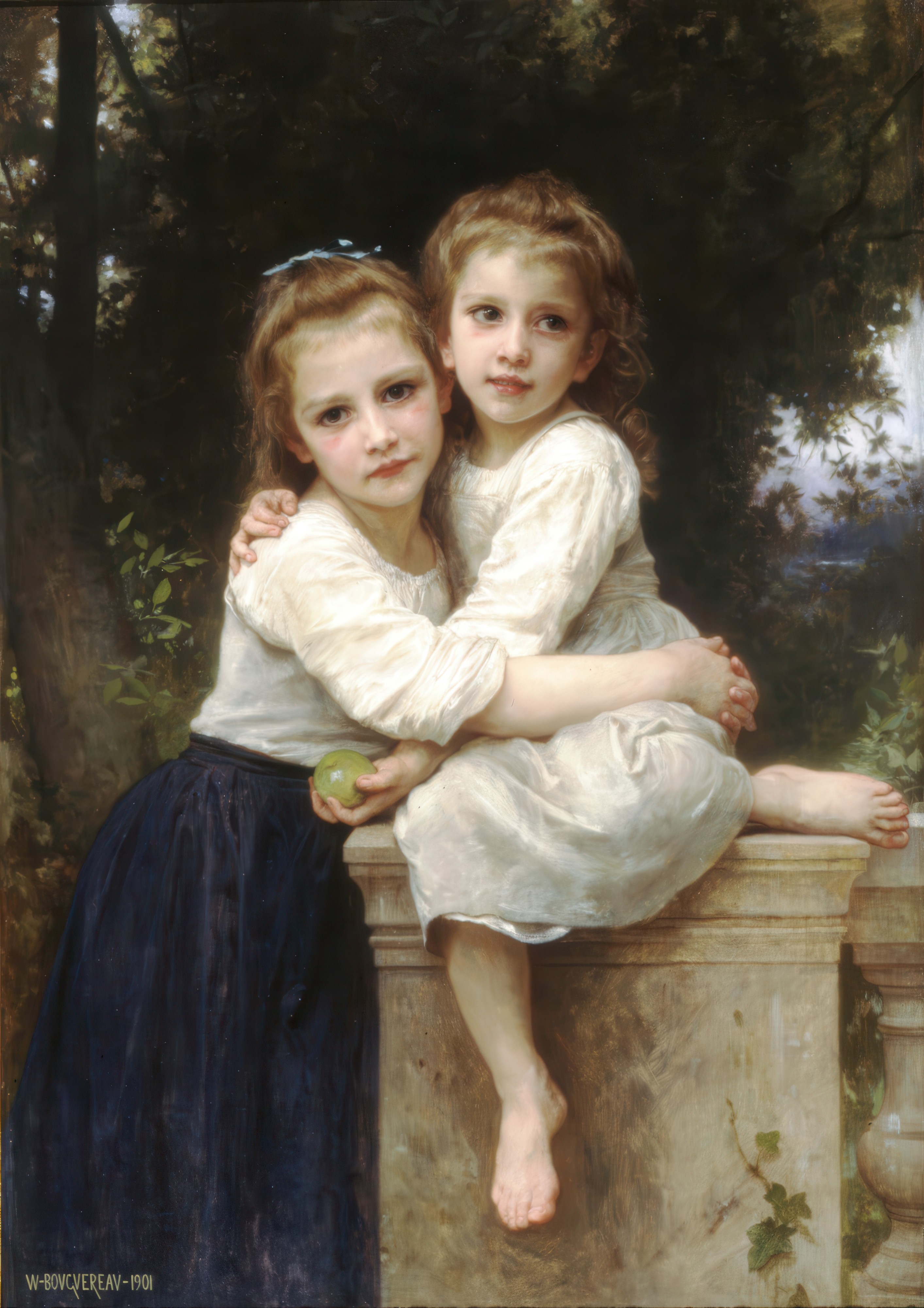
Details from TWO SISTERS
These close views use the high-resolution public-domain source while keeping annotation markers in CSS rather than in the image file.
Central figures
The central group anchors the subject and gives the surrounding movement a visual center.
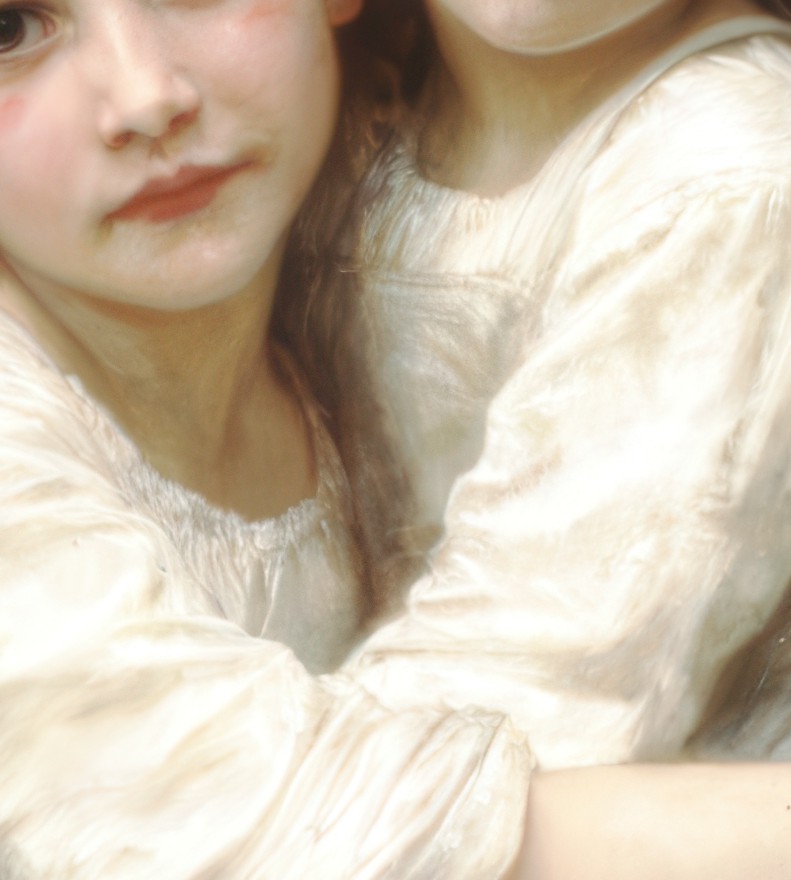
Faces and glances
Small changes of gaze help explain the relationship between figures without needing a separate narrative cue.
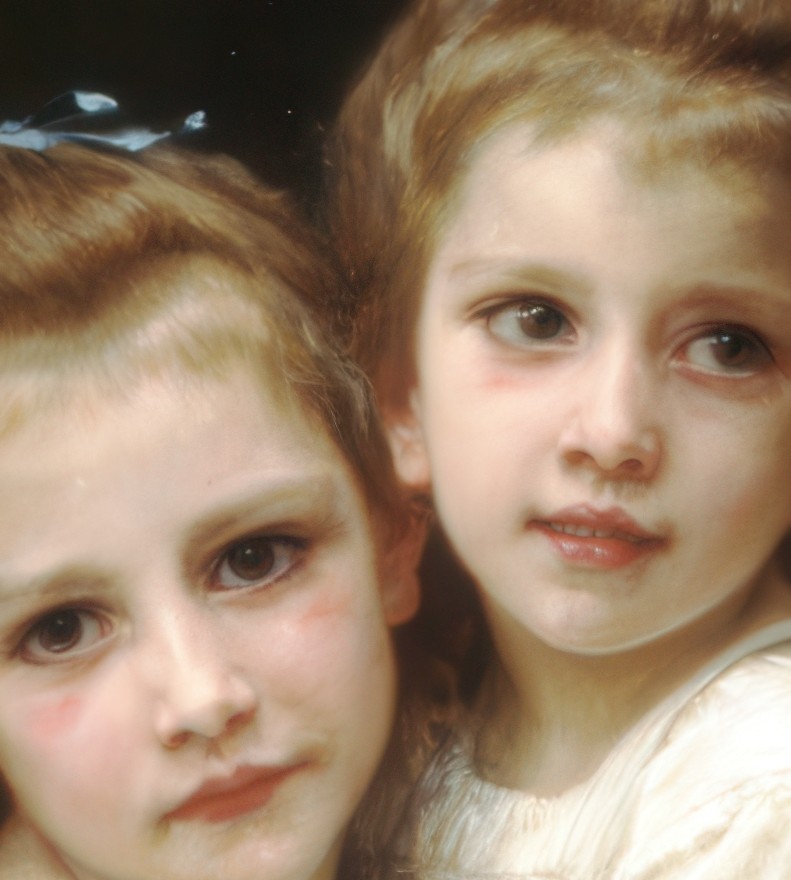
Hands and contact
Hands and points of contact make the figure group feel constructed through touch rather than simple placement.
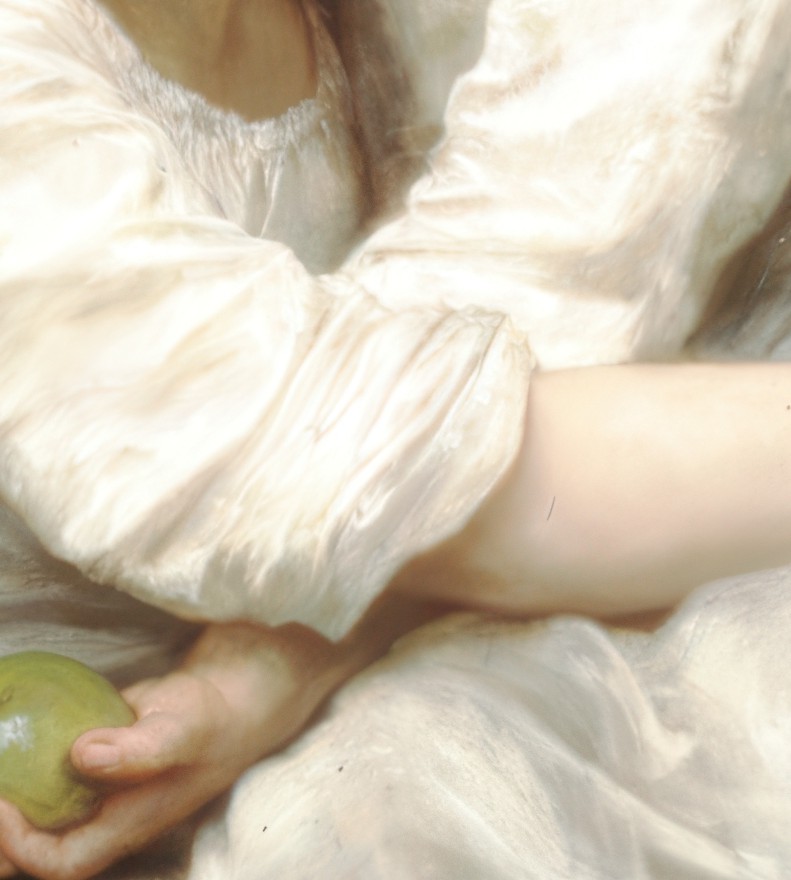
Drapery and light
Drapery gathers the brightest passages into a readable rhythm around the bodies.
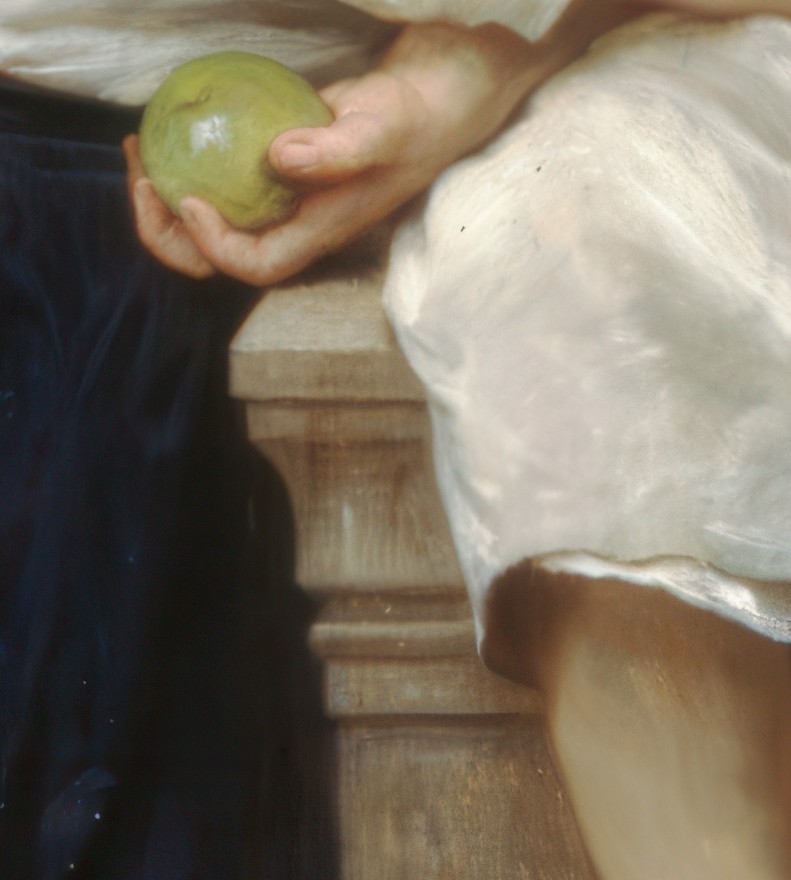
Setting edge
The background and edges create depth while keeping the main figures close to the viewer.
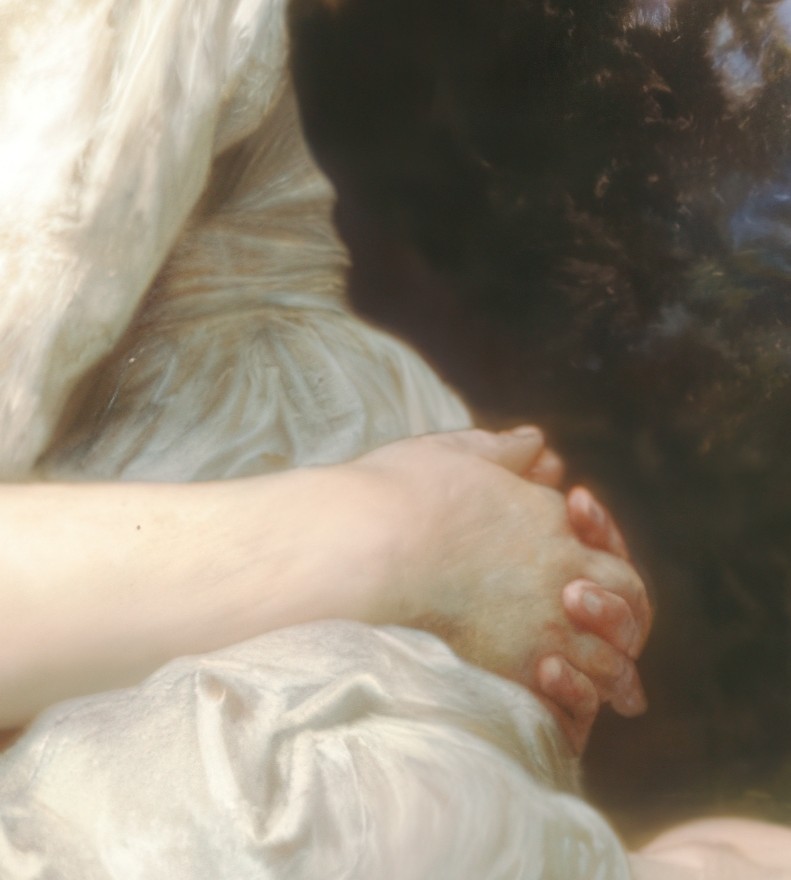
Lower movement
The lower passage supplies balance, weight and directional movement for the composition.
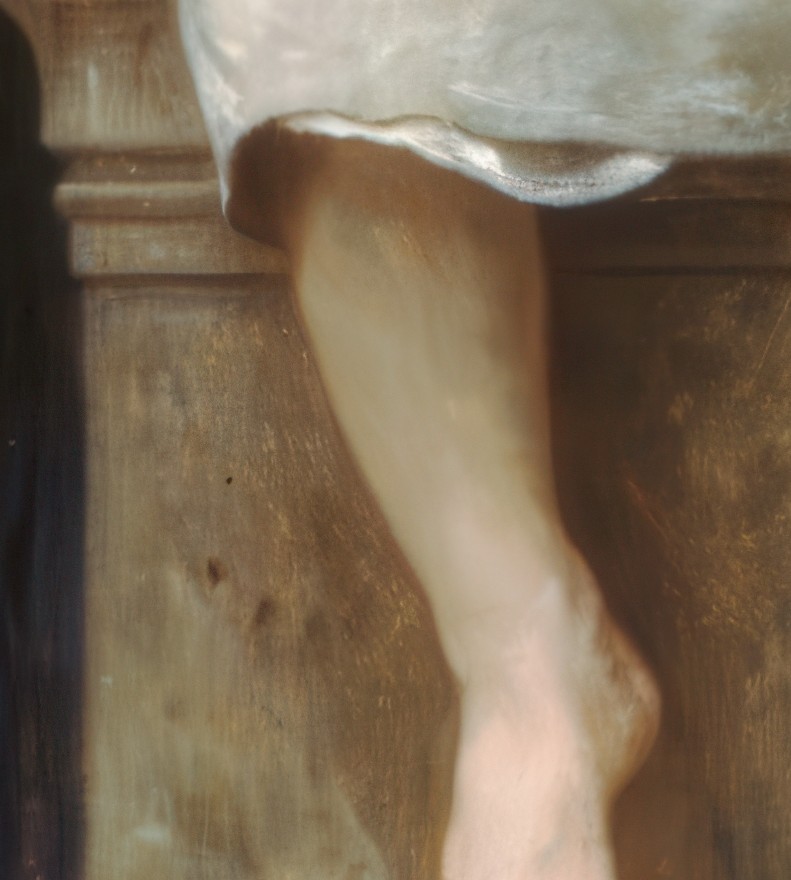
Upper light
The upper tones frame the figures and set the emotional temperature of the scene.
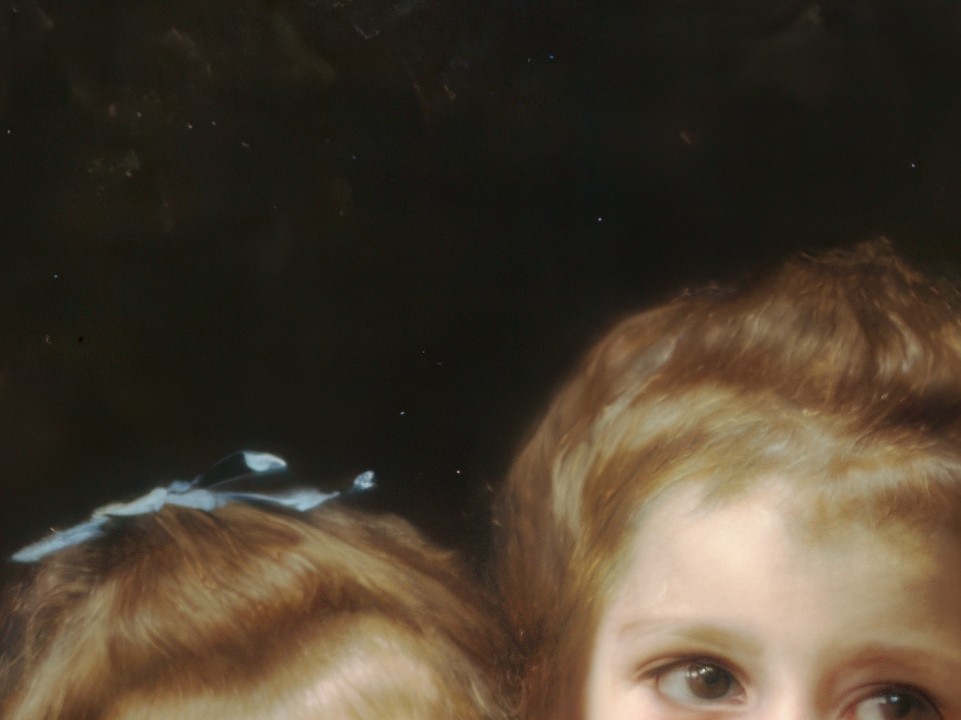
Source Trail and Comparisons
Those comparisons help define what Two Sisters is and what it is not. It is not simply a duplicate of Elder Sister, nor a different title for Fraternal Love. It has its own late date, title tradition and collection trail. At the same time, it shows Bouguereau returning to a trusted subject area at the end of his career. The artist continued to present childhood as a realm of composure and tenderness, even as artistic taste around him was moving toward very different forms of modern painting.
The year 1901 also gives the work a late-career significance. Bouguereau was then in his seventies and remained closely associated with the Academic system: refined figure drawing, Salon culture, studio discipline and a high level of finish. Two Sisters does not need mythological drama or religious iconography to show those commitments. Its ambition is quieter. It demonstrates how Bouguereau could make a small emotional situation feel complete by controlling pose, surface and expression.
The painting's online record also shows why careful sourcing matters for Bouguereau. Wikimedia Commons and Wikidata provide useful breadcrumbs, including the French title, catalogue code `1901/01`, oil-on-canvas medium and dimensions often given as 109 by 80 cm. WikiArt and reproduction pages repeat parts of the same identity. Yet those routes are secondary to the Lawrence/Wriston trail and contain enough variation that they should not be treated as final authority for every object detail. A responsible reading can use them to understand the work's circulation while keeping the firmest claims modest.
Why the Painting Matters
Seen in that way, Two Sisters is a valuable part of the Bouguereau childhood group. It may not have the same source depth as the best museum-object pages, but it speaks clearly within the artist's larger practice. Bouguereau turns a pair of children into an image of closeness that is almost emblematic. The tenderness is legible, the forms are carefully closed, and the emotion is held in place by technique. For a painter often judged by his finish, this late work shows how finish could become a language of affection.
The page should therefore present Two Sisters as a source-cautious but meaningful late Bouguereau painting. Its strength lies in the meeting of subject and method: two young figures, an intimate bond, and an Academic surface designed to make that bond seem calm, permanent and immediately visible. It should be read alongside Bouguereau's better-documented sibling and childhood paintings, while preserving the limits of what the current public source record can prove.
Related Childhood and Family Pages


Frequently Asked Questions
Discussion
Two Sisters is a careful route into Bouguereau's late family and childhood imagery.
Use the prompts below to compare its affectionate grouping with the better-documented sibling and family works in this Bouguereau cluster.
Reader Insights
How does Bouguereau make the figures' closeness readable through pose, touch and surface finish?
How does a cautious collection trail change the way this page handles object facts and image circulation?
How does Two Sisters differ from Elder Sister, Fraternal Love, Breton Brother and Sister or Young Mother Gazing at Her Child?
Join the Conversation
Share your reading of Bouguereau's late childhood and family imagery below.
References
- Lawrence University / Wriston Art Galleries, academic-year exhibitions page, accessed 28 July 2026.
- Wikidata, Two Sisters (Q87207190), accessed 28 July 2026.
- Wikimedia Commons, Two Sisters (1901), accessed 28 July 2026.
- WikiArt, Two Sisters, 1901, accessed 28 July 2026.
- Bouguereau.org, Deux Soeurs [Two Sisters], accessed 28 July 2026.
- TheHistoryOfArt.org, The Elder Sister, accessed 28 July 2026.
- TheHistoryOfArt.org, Fraternal Love, accessed 28 July 2026.
- TheHistoryOfArt.org, Breton Brother and Sister, accessed 28 July 2026.


