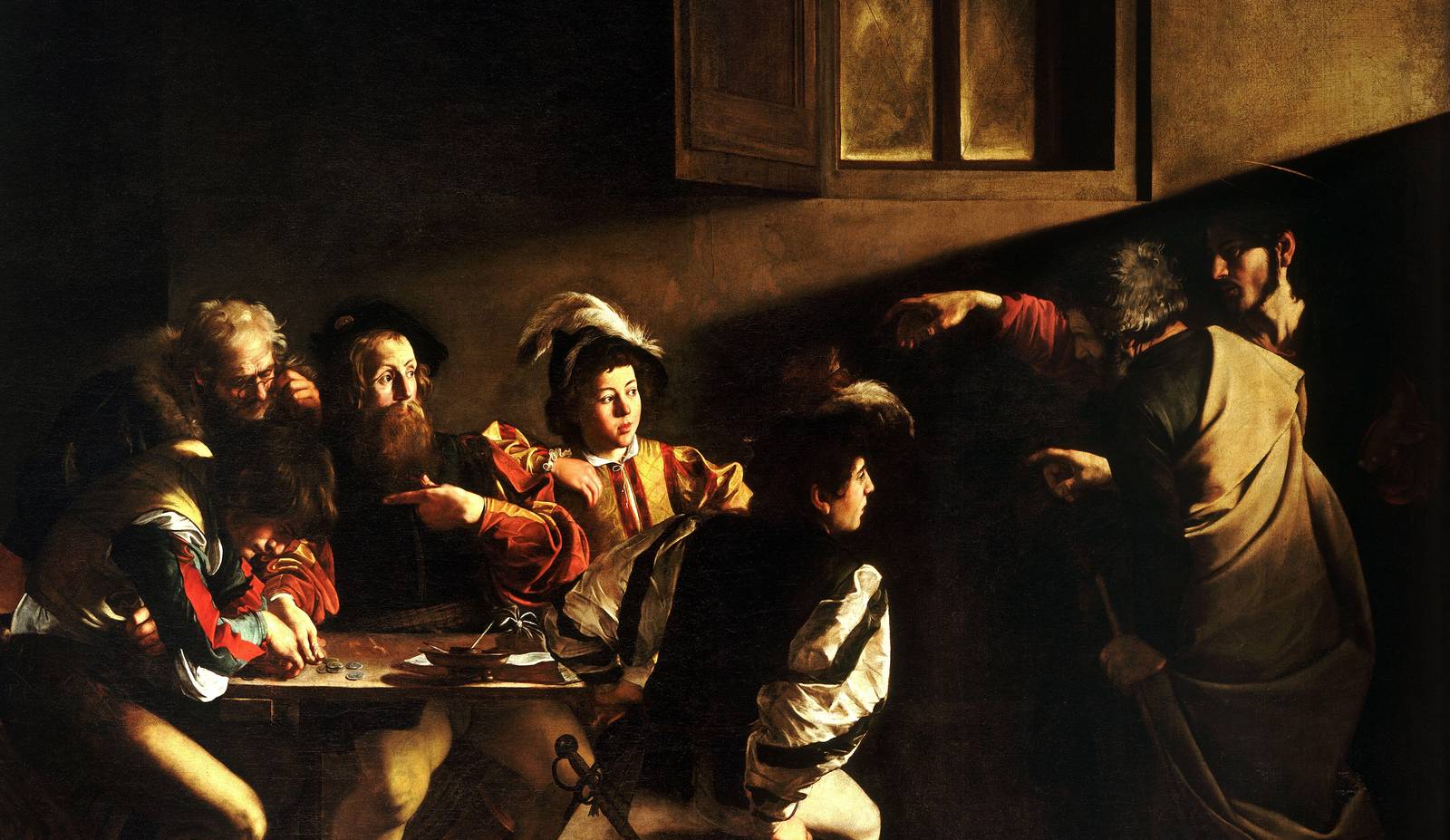
Image reference: Caravaggio, The Calling of Saint Matthew.
At a Glance
- Core periodc. 1600–1650, with later tenebrist afterlives
- Catalytic centreRome
- Major centresRome · Naples · Utrecht · networks across France and Spain
- Known forposed models · shallow space · forceful light-dark contrasts · close cropping · ordinary bodies
- Key distinctionCaravaggism is an artistic field; tenebrism is a lighting tendency
- Leading artistsCaravaggio · Orazio and Artemisia Gentileschi · Ribera · Honthorst · Ter Brugghen · Valentin · La Tour
- Main subjectsreligious histories · musicians · gamblers · drinkers · fortune tellers · saints · philosophers
Contents
- Where Caravaggism fits
- Caravaggism, chiaroscuro and tenebrism
- Rome around 1600
- How Caravaggio constructed immediacy
- Chapels, collectors and markets
- Orazio and Artemisia Gentileschi
- Naples as a second centre
- Utrecht and the visible night
- French and Spanish transformations
- People and places to know
Where Caravaggism fits
Caravaggio
Principal careerOrazio Gentileschi
Principal careerArtemisia Gentileschi
Principal careerBartolomeo Manfredi
Principal careerCarlo Saraceni
Principal careerBattistello Caracciolo
Principal careerJusepe de Ribera
Principal careerGerrit van Honthorst
Principal careerHendrick ter Brugghen
Principal careerDirck van Baburen
Principal careerValentin de Boulogne
Principal careerGeorges de La Tour
Principal careerCaravaggism was one of the great chain reactions in European painting. Around 1600, pictures by Caravaggio made sacred histories, card games, concerts and moments of recognition feel startlingly close. Figures crowd the front of the canvas. Hands break into our space. Light catches a cheek, a blade, a feather or a dirty foot while the surrounding room withdraws into shadow. Yet there was no Caravaggist brotherhood, academy or manifesto. The name was applied later to artists who responded to Caravaggio directly, through other painters, or through works moving across Europe.[1] [2] [3]
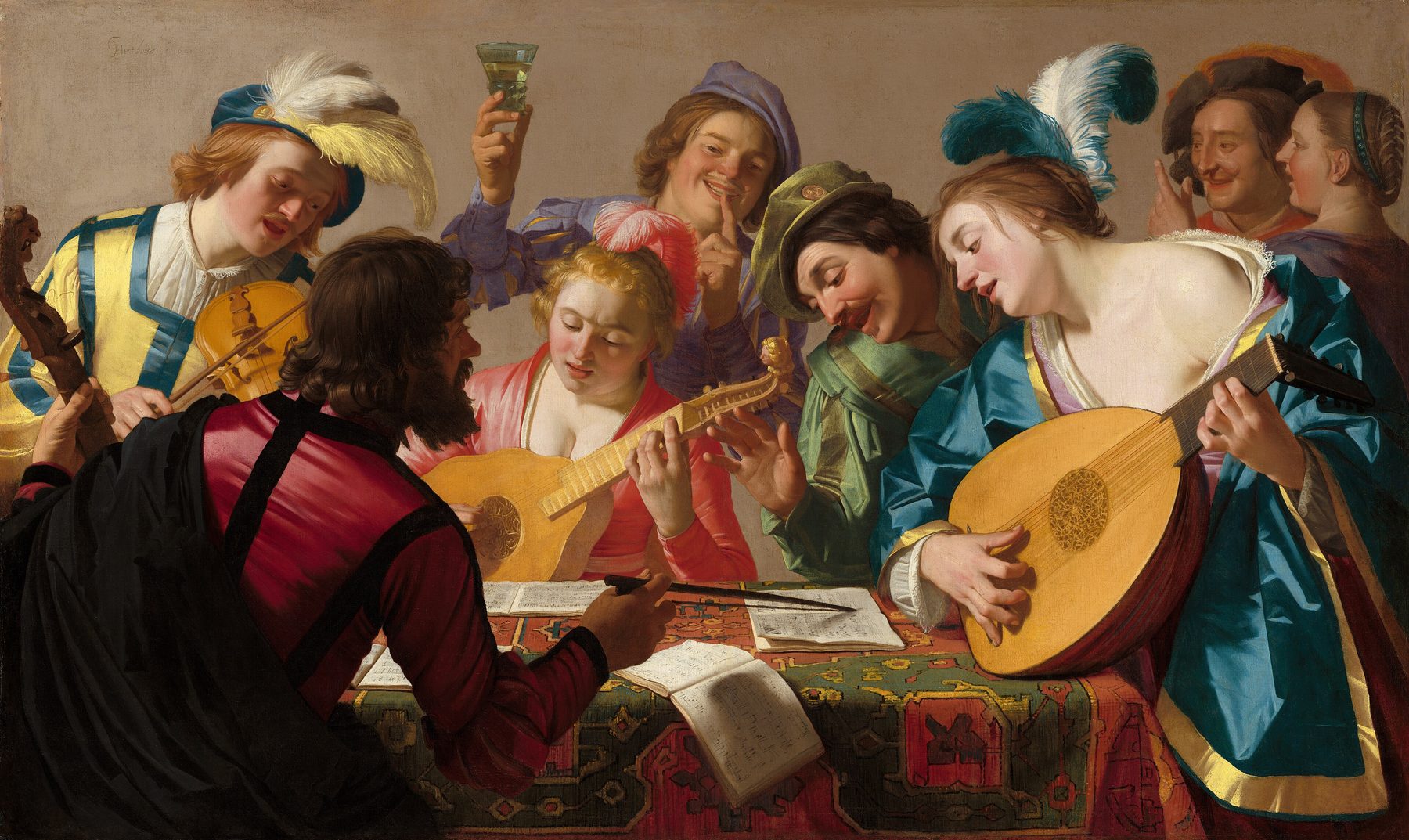
The movement's most useful central period is about 1600–1650. Rome was its catalyst, but Naples, Utrecht and networks of French and Spanish artists became independent centres of invention. Orazio Gentileschi made Caravaggio's methods lyrical and courtly. Artemisia Gentileschi gave them bodily force and psychological concentration. Gerrit van Honthorst turned artificial light into spectacle; Hendrick ter Brugghen combined rugged figures with pale, surprising colour; Valentin de Boulogne made tavern companies solemn and intricately social; Jusepe de Ribera made skin, cloth and stone almost tangible.[17] [18] [21] [27] [30] [35]
Tenebrism overlaps with this history but does not mean the same thing. It is the use of extensive darkness against strongly concentrated illumination. Chiaroscuro is the broader modelling of form with light and shade. A painting may be Caravaggist without being exceptionally dark, and a later artist may use tenebrism without belonging to Caravaggio's immediate artistic network. Keeping those terms separate reveals the movement's variety: colour, daylight, touch, pose and proximity mattered as much as blackness.[1] [43] [44]
Caravaggio's followers did not preserve a sealed style. They took his art apart. One artist retained the close half-length figure but brightened the palette. Another kept the sharp light but made its source a visible candle. Another transformed Roman gamblers into Dutch musicians, or Catholic martyrs into quiet domestic meditations. Caravaggism matters because influence here was active: a choice about what to carry, what to change and what to leave behind.
Caravaggism emerged between two simplified stories about European art. One says that the elegant distortions of late Mannerism exhausted themselves and Caravaggio restored truth by looking at ordinary life. The other makes him the inventor of the Baroque, as if seventeenth-century drama began in a single dark studio. Both capture something of his disruptive effect, but neither explains his sources or the range of responses to him.
Caravaggio had trained in Lombardy, where close observation, devotional intensity and northern Italian traditions of light already mattered. In Rome he encountered Venetian colour, antique sculpture, Raphael and Michelangelo, contemporary theatre, markets for small cabinet pictures, and ambitious church patronage. Annibale Carracci was developing a different reform of painting at the same time, joining observation to ideal selection and classical order. Maíno, Ribera, Saraceni and many others could learn from both currents rather than swear allegiance to one.[24] [33] [35] [42] [49]
The first public landmark came in the Contarelli Chapel at San Luigi dei Francesi. The Calling of Saint Matthew and Martyrdom of Saint Matthew, revealed in 1600, established Caravaggio's reputation beyond a circle of private owners. Their impact depended on more than darkness. Large figures in contemporary dress occupy spaces continuous with the viewer's world; action arrives at a decisive instant; light helps make spiritual change visible. Foreign artists visiting Rome could study these works in a church rather than needing entry to a private palace.[3] [4] [5]
From this public encounter, the story branches. In Rome, Bartolomeo Manfredi and other painters made half-length companies of musicians, gamblers and drinkers widely legible. Naples developed a darker, materially forceful naturalism after Caravaggio worked there. Artists from Utrecht carried Roman ideas home and made artificial illumination a speciality. French painters in Rome refined the language, while Georges de La Tour probably encountered it through intermediaries. Spanish reception combined direct Italian formation in Maíno and Ribera with more uncertain or indirect affinities in Velázquez and Zurbarán.[21] [25] [29] [33] [37]
The practical endpoint near 1650 is equally porous. Classicising and courtly forms gained prestige, and artists who had experimented with Caravaggism often changed direction. But tenebrist painting continued in Naples, Spain, Venice and northern Europe. The date marks a shift in the movement's concentration, not the moment when darkness or dramatic naturalism disappeared.[1] [2] [39] [45]
Caravaggism, chiaroscuro and tenebrism
These three terms answer different questions. Chiaroscuro asks how changes from light to dark describe volume, depth or narrative emphasis. It had a long history before Caravaggio and can be gentle or abrupt. Tenebrism describes a more extreme arrangement: much of the image remains dark while selected forms emerge under concentrated illumination. Caravaggism concerns an art-historical relationship to Caravaggio's example, which may involve lighting but also models, scale, gesture, subject, cropping and the relation between the painted world and the spectator.[1] [43] [44]
The distinction prevents several common mistakes. Caravaggio did not invent shadow, naturalism or working from life. Nor did every painter influenced by him reproduce an optically plausible room lit by one source. Light in these paintings is often intelligently artificial. It can strike the main action, omit nearby surfaces and create a visual path that the eye follows before asking where a lamp or window could actually stand. What looks immediate has been staged.[3] [46]
The Calling of Saint Matthew makes this clear. A band of illumination enters from the right above Christ's hand, crossing a room whose occupants still bend over money. The light has physical direction, but it also functions as revelation: it binds Christ's gesture to the startled group and makes the act of being called visible. The painting does not simply record illumination in a tavern. It gives light narrative agency.
Tenebrism can also alter time. A bright face against darkness appears momentarily seized, as if the action exists only for an instant. In Caravaggio's late Denial of Saint Peter, pointing hands condense three accusations and three denials into one taut exchange. The restricted palette and abbreviated handling move away from the more descriptive surfaces of his early Roman work. Darkness becomes psychological and temporal, not decorative.[47] [48]
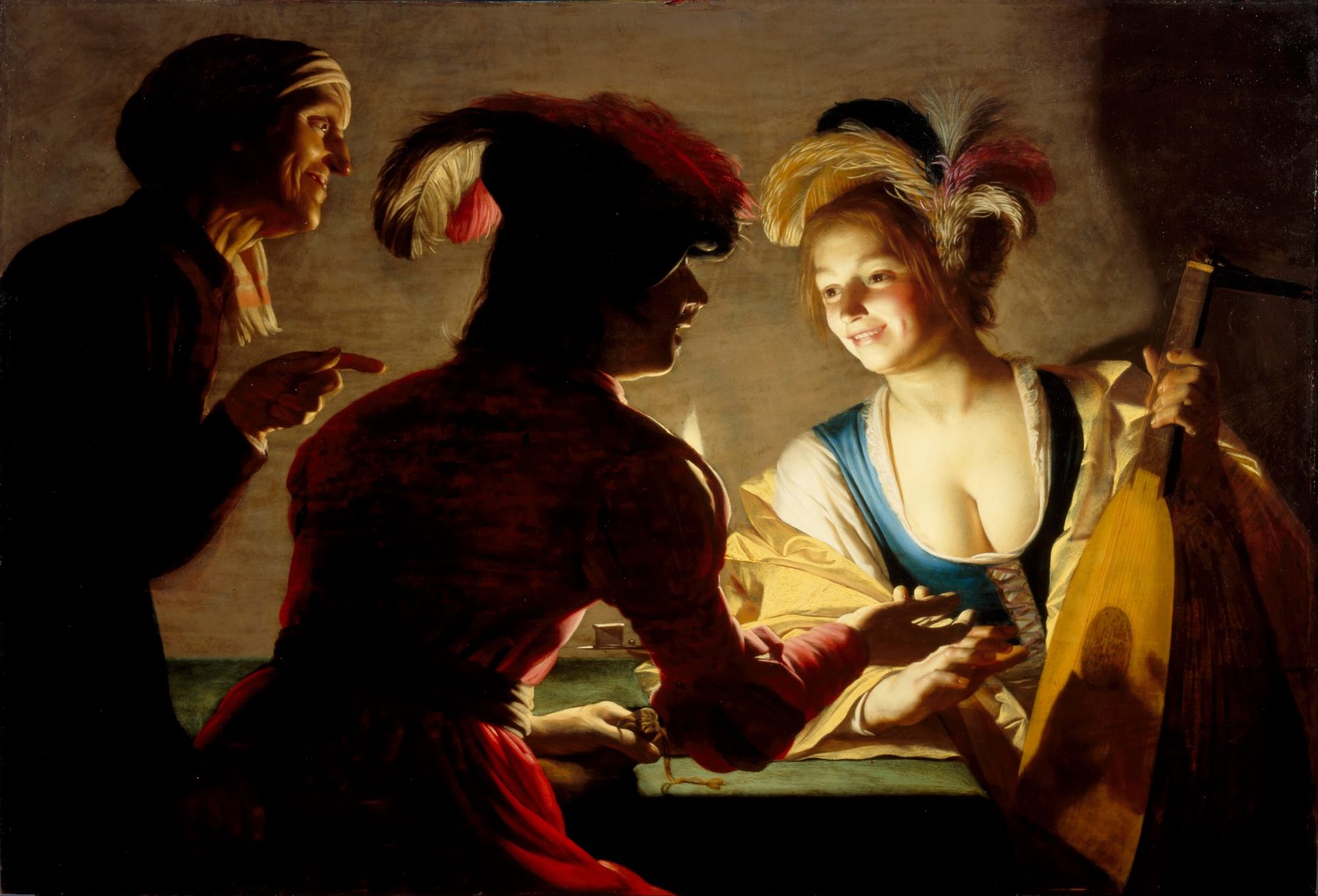
Visible candlelight shows followers thinking beyond the model. Caravaggio is famous for nocturnal effect, but no painting by him shows a candle as the visible source within the scene. Honthorst, La Tour and others placed flames in the picture or hid them behind a hand, a figure or an object. That decision creates new problems: how translucent fingers glow, how faces turn towards a source, how a room becomes communal or private, and how sacred meaning can reside in ordinary fire.[25] [26] [41]
Colour further loosens the label. Carlo Saraceni brought Venetian warmth and a smaller, brighter manner to Roman subjects. Orazio Gentileschi set lucid blues, yellows and pinks against carefully graduated shadow. Ter Brugghen sometimes used lavender, cool yellow and chalky flesh where a stereotype of Caravaggism expects brown. Darkness is therefore one tool in a wider system of selection.[18] [24] [28] [31]
Rome around 1600
Caravaggio arrived in Rome during the 1590s and worked first within a competitive market for relatively small pictures. The Cardsharps shows a well-dressed youth being cheated by two accomplices. The fraud is readable through glances, exposed cards and fingers. Each figure appears studied separately, then locked into a shallow theatre of deception. The picture brought Caravaggio to the attention of Cardinal Francesco Maria del Monte, whose seal was later found on the canvas and whose patronage changed the painter's prospects.[8]
Del Monte gave Caravaggio accommodation in Palazzo Madama and access to a sophisticated culture of music, collecting and ecclesiastical connection. Through him, Caravaggio's work became known to figures including Vincenzo Giustiniani, Federico Borromeo, Ciriaco Mattei and other powerful patrons. These owners did not merely purchase finished objects. They provided rooms, subjects, introductions and opportunities; they placed paintings where other collectors and artists could see them. Del Monte also helped secure the Contarelli commission, joining a private experimental career to public fame.[9]
The early secular paintings already contained much that followers would reuse. Half-length figures are pressed close to the front. Plain or dark backgrounds suppress distracting architecture. Fruit, feathers, instruments, fabrics and cards reward exact looking. Desire, risk and deception pass through gesture. These were portable subjects: a northern artist did not need to copy a particular saint to absorb the relation among model, object and viewer.
Public church paintings changed the scale and stakes. In the Calling of Saint Matthew, Christ enters a contemporary room with Saint Peter. His extended hand meets a group absorbed in counting. Debate continues over which figure is Matthew, and that uncertainty helps the work: several people react differently, so recognition spreads through a social body rather than residing in an isolated emblem. The spectators standing in the chapel see another group confronted by an arrival from their own side of the composition.
The Martyrdom uses a more explosive structure. Bodies recoil around the executioner; the apostle falls into the foreground; witnesses flee or reach. Caravaggio included a small self-portrait among the onlookers, but the picture is not a simple eyewitness record. Posed figures and revisions were assembled into a public drama. The convincing body and the constructed event depend on one another.
Rome's attraction to foreign artists amplified the effect. Painters came to draw antiquities, study Raphael and Michelangelo, seek patrons and enter communities of compatriots. By 1603, reports in the Netherlands already described foreign painters turning towards Caravaggio's methods. Some saw his pictures while he was alive; many arrived after his death in 1610. Direct personal contact was never required for the movement to grow.[21] [46]
Caravaggio himself did not maintain a formal teaching workshop. “Follower” therefore covers different degrees of access: friendship or professional proximity, shared patrons, study of public paintings, familiarity with private collections, copying, or exposure to another follower's version of the language. Orazio Gentileschi knew him. Honthorst and Valentin absorbed the Roman field. La Tour probably knew that field at a distance. The term is useful only when it keeps those distances visible.
How Caravaggio constructed immediacy
The phrase “painted from life” can sound as if Caravaggio simply placed a model before the canvas and copied what he saw. His art is more deliberate. No securely attributed preparatory figure drawings survive, and technical evidence shows him establishing forms directly on prepared canvas. Yet direct work included incisions, brush indications, revisions and the planned use of the ground as a middle or dark tone. A model's presence supplied information; it did not design the whole picture.[6] [8] [10]
Consider the London Supper at Emmaus. The risen Christ blesses food at the instant two disciples recognise him. One throws his arms open; the other pushes against his chair. A basket projects over the table edge and a foreshortened elbow enters the viewer's space. The figures were observed with striking specificity, but the composition is organised through geometry and controlled projection. Objects form a threshold between painted table and actual room. Recognition becomes not only a story represented beyond the frame but an event addressed to whoever stands before it.[6] [7]
Still life is active in that encounter. Fruit displays ripeness and decay; bread has been broken; the basket seems precarious. Such objects demonstrate skill but also slow attention. The viewer moves between the sudden human gestures and things whose surfaces invite patient inspection. Caravaggist naturalism often works through this tension between the instantaneous and the prolonged.
Close cropping heightens pressure. A whole architecture can be replaced by four bodies and a table. A martyrdom can be brought to waist or shoulder level. A philosopher's worn hand can occupy as much visual importance as his face. The strategy does not make every scene informal. Instead, it relocates dignity from distant setting and ideal type to the organisation of present bodies.
Ordinary appearance carried risks. Bare feet, lined faces, work-worn hands and contemporary clothes could make sacred history immediate, but patrons and clergy still judged whether a figure suited its site and function. Accounts of rejected or revised altarpieces became part of Caravaggio's legend. These episodes should not be flattened into the heroic artist fighting a Church hostile to realism. Catholic patrons commissioned, collected and defended his work; objections could concern iconography, decorum, legibility, physical placement or a patron's specific expectation.[3] [5] [49] [50]
The Sacrifice of Isaac demonstrates how concentrated form creates moral unease. Abraham's hand grips the boy while an angel intervenes and the ram waits nearby. Light selects faces and flesh, but gesture establishes the crisis: force, fear and restraint occur at once. Whether viewers read the scene through obedience, rescue or paternal violence, the painting gives doctrine a bodily cost.[10]
Late works reduce description further. In The Denial of Saint Peter, a woman points twice while a soldier's single gesture supplies the count of three. Peter's hands turn towards his chest in anxious refusal. The scene is not large in cast, architecture or colour, yet it contains accusation, memory and remorse. Caravaggio's influence cannot therefore be reduced to the bright, detailed surfaces of his Roman breakthrough. Followers inherited a moving target.[47] [48]
Essential works
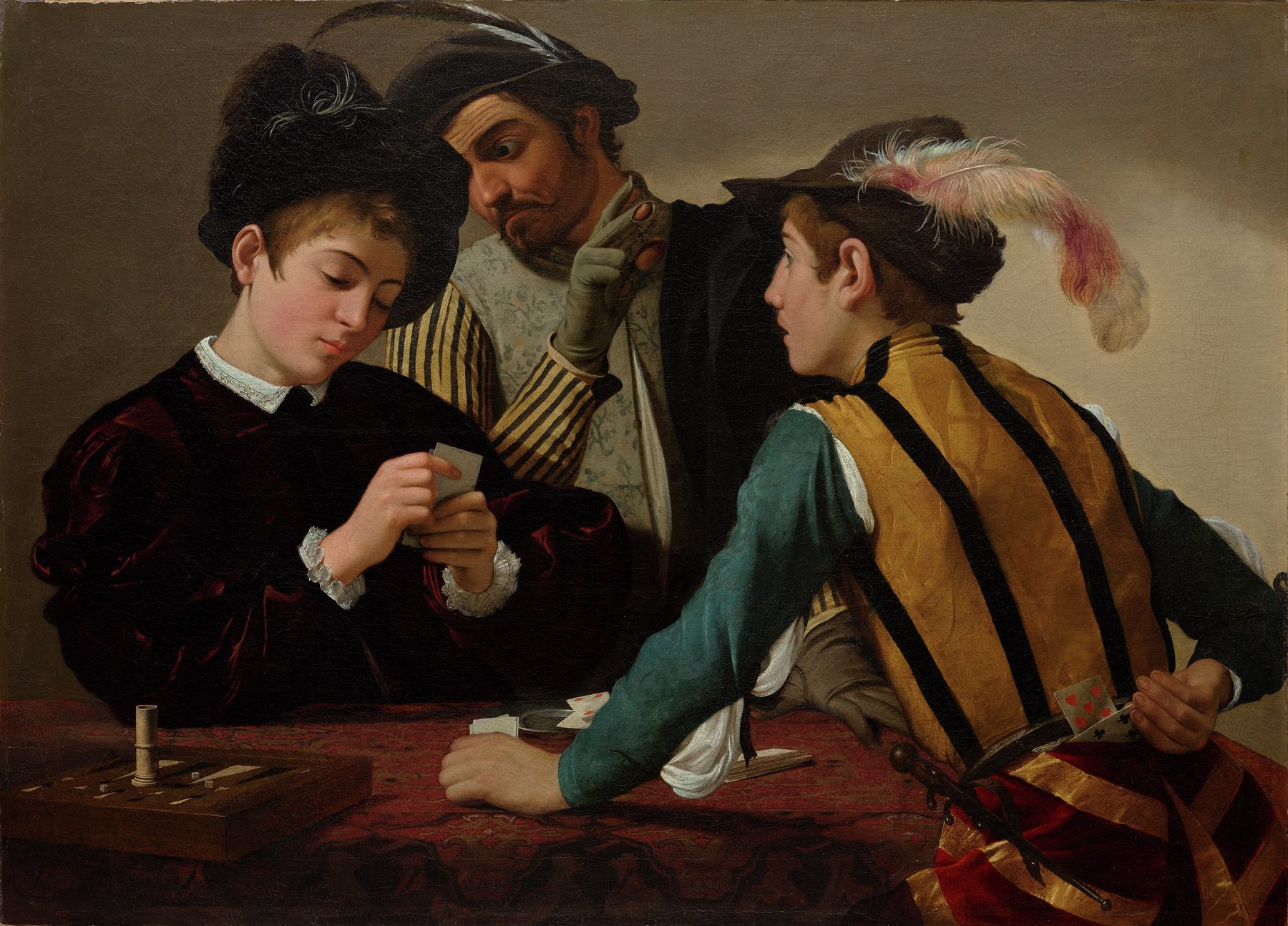
The Cardsharps
Caravaggio, c. 1595
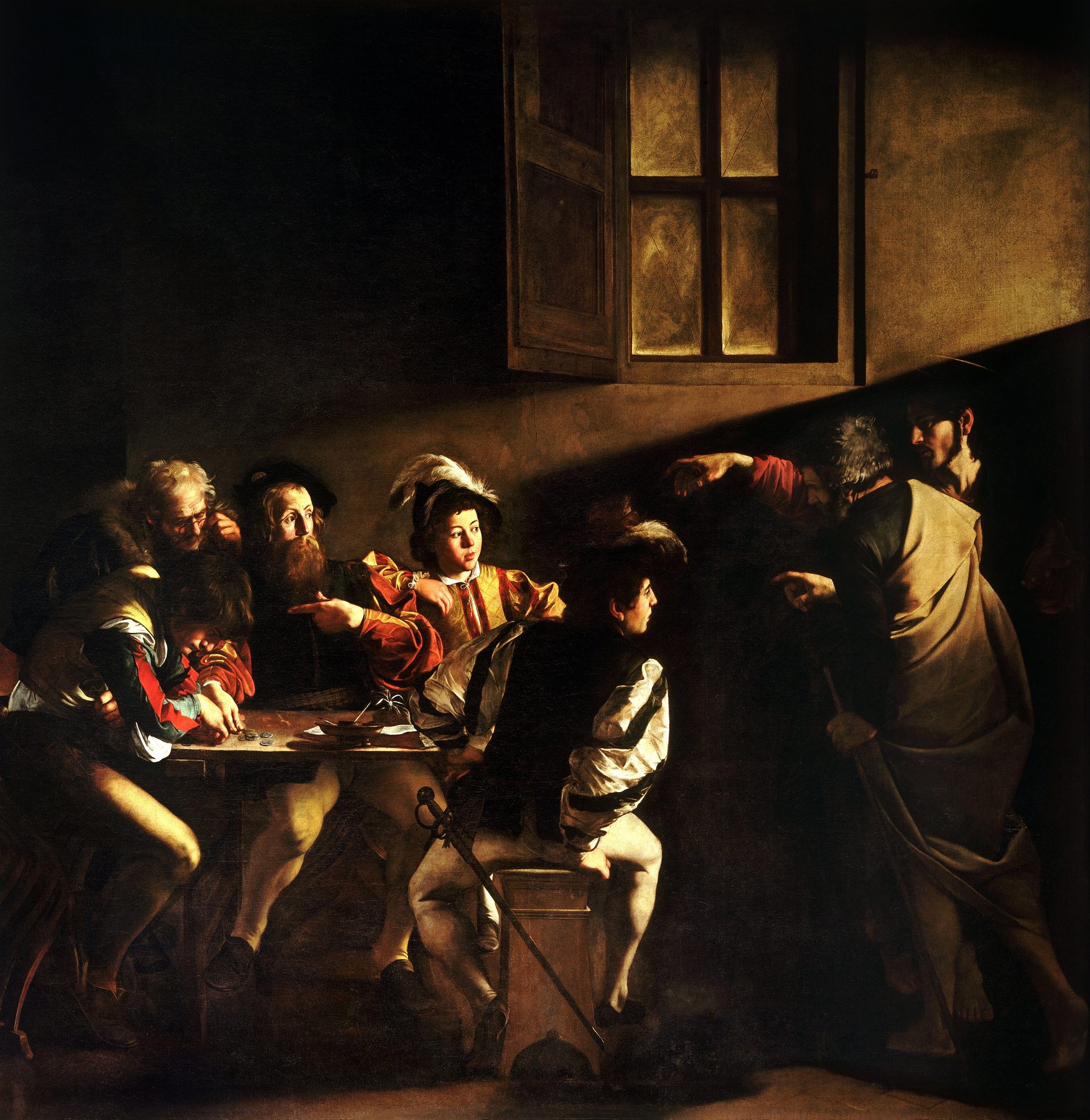
The Calling of Saint Matthew
Caravaggio, 1599–1600
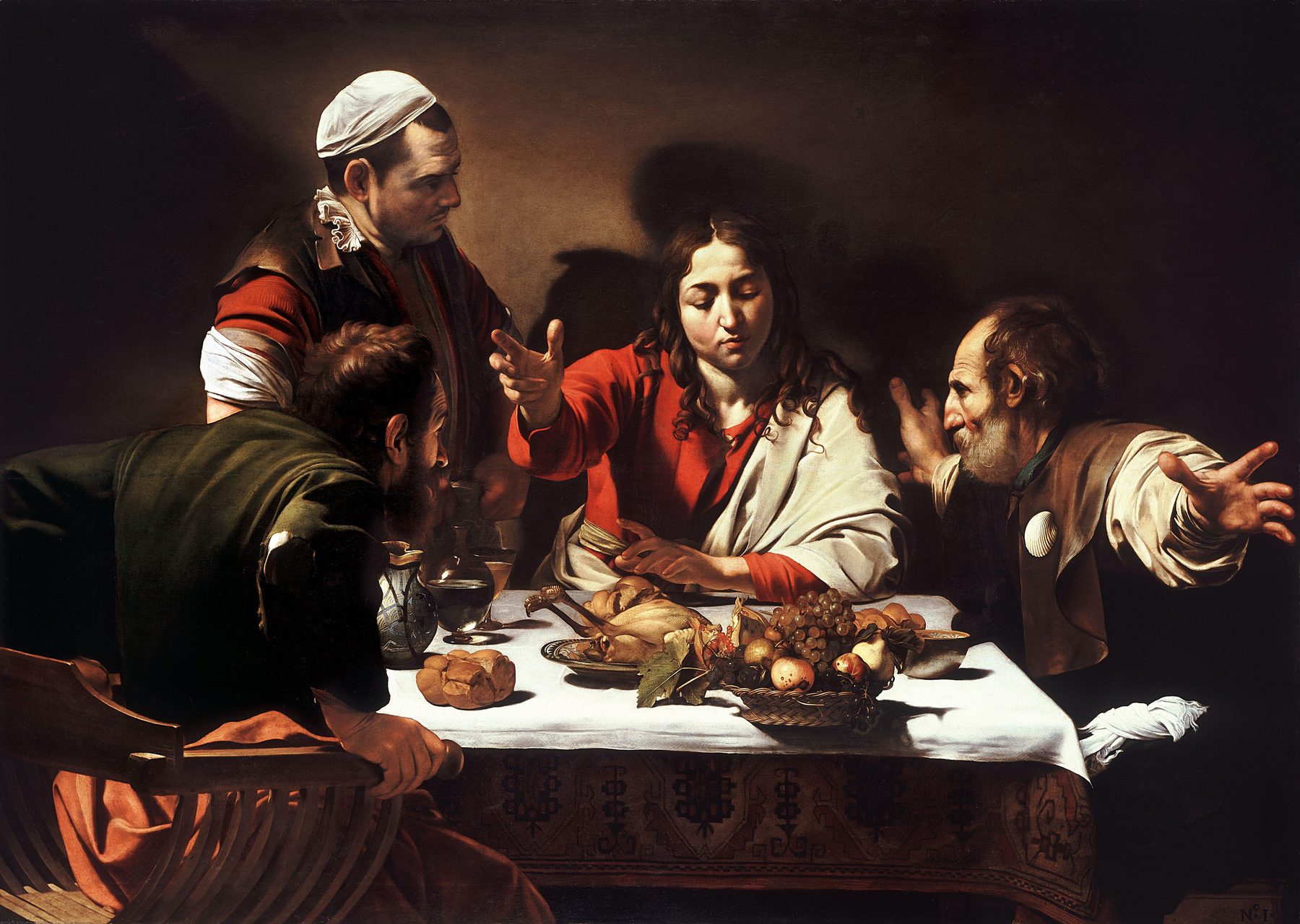
The Supper at Emmaus
Caravaggio, 1601
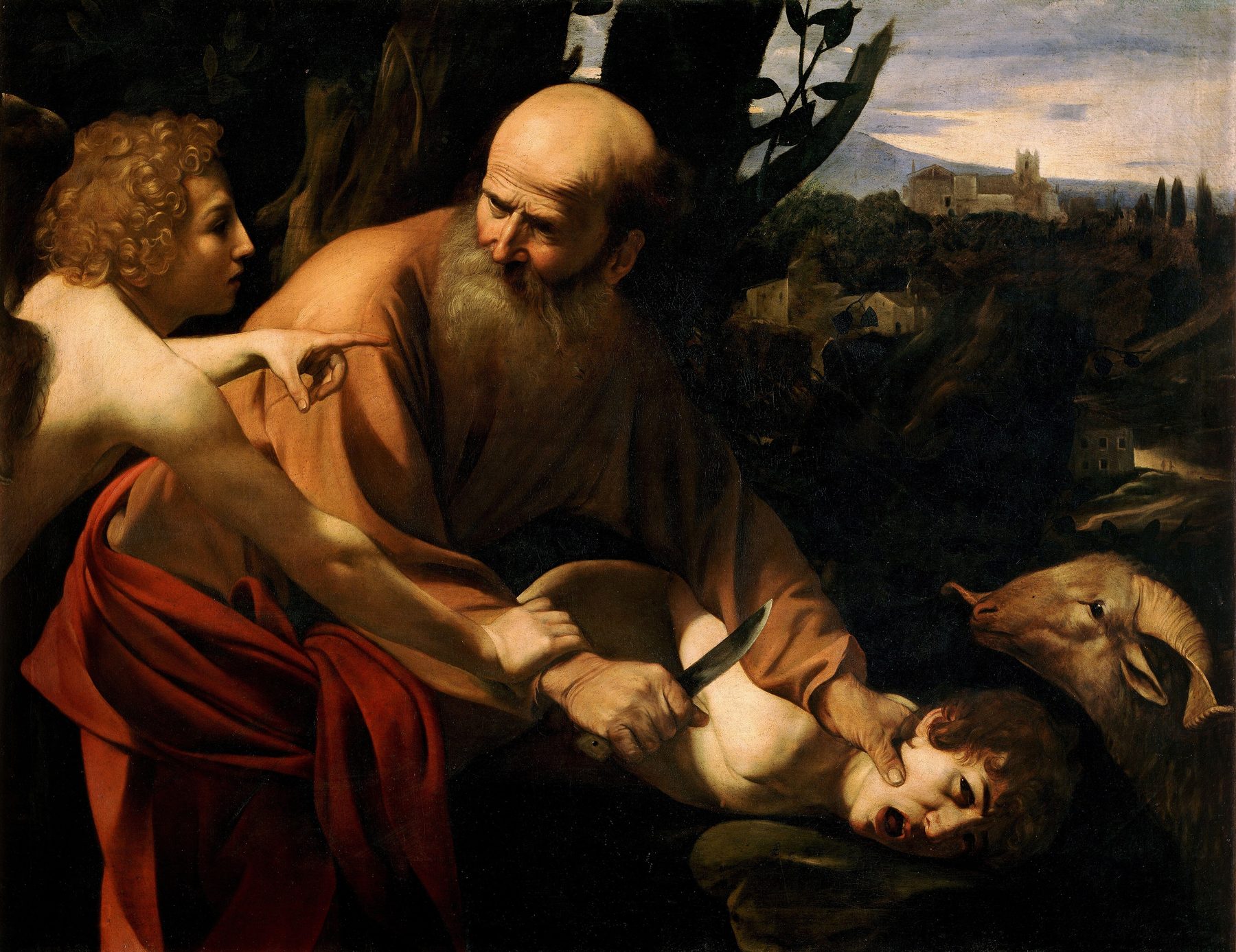
The Sacrifice of Isaac
Caravaggio, c. 1603
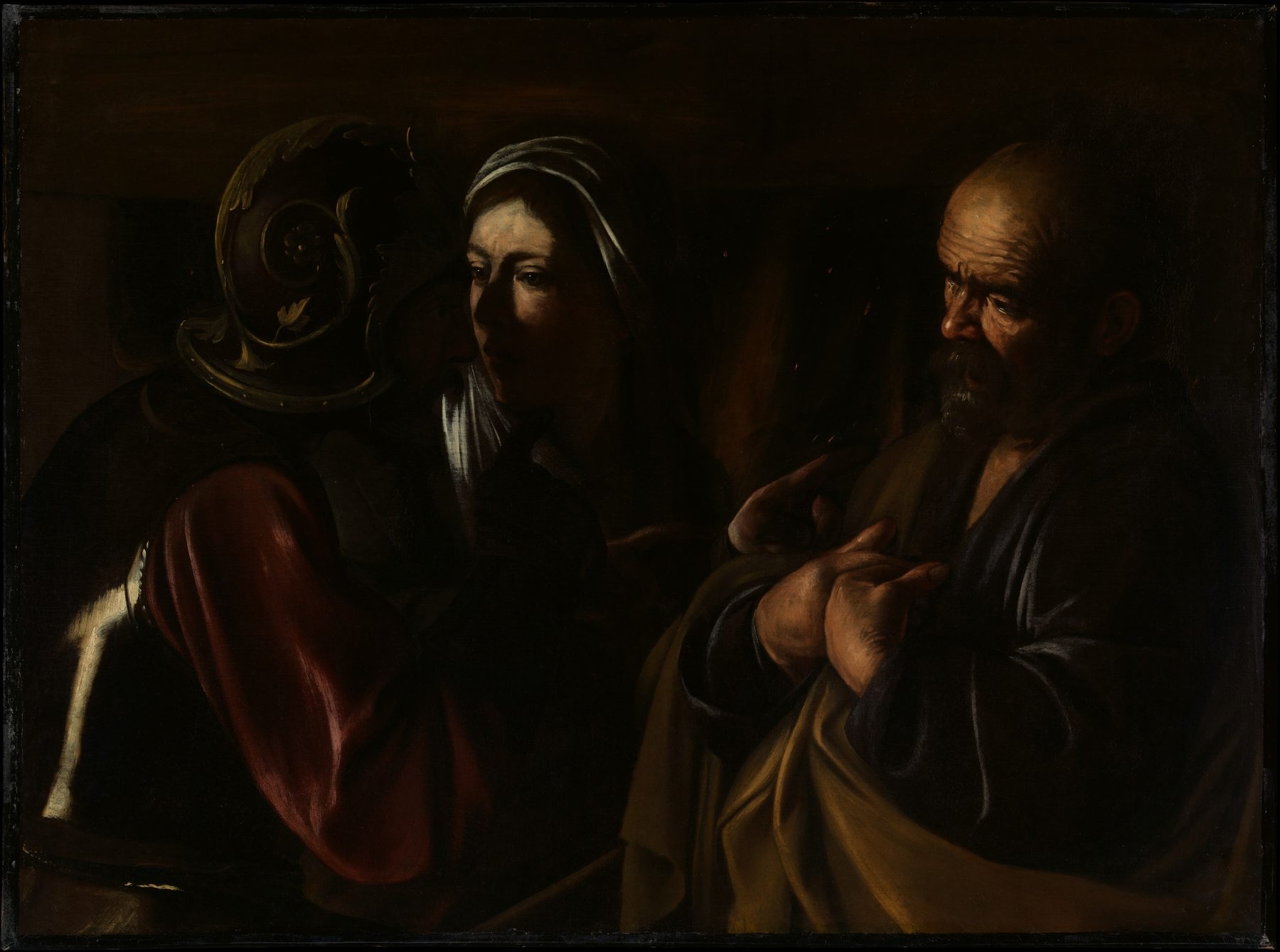
The Denial of Saint Peter
Caravaggio, 1610
Chapels, collectors and markets
Caravaggism moved because paintings occupied social routes. Public chapels offered repeat access to large works. Private palaces brought artists, connoisseurs, diplomats and agents into contact with smaller ones. Copies carried compositions beyond their originals. Gifts connected courts. Dealers supplied buyers who wanted a recognisable kind of musician, card game or half-length saint. Travel linked these objects to artists able to transform them.[9] [11] [12]
Religious patronage was crucial, especially within a Catholic culture seeking clarity, emotional engagement and renewed devotional experience. Yet “Counter-Reformation art” is too blunt as a complete cause. The Council of Trent did not issue a style manual telling Caravaggio to use a dark ground. Reform unfolded over decades and differed among orders, churches, patrons and cities. A chapel's dimensions, existing light and viewing angle could be as important to a commission as general theology.[3] [49] [50]
Private subjects complicate the picture productively. Musicians and drinkers invited interpretation through pleasure, performance and appetite. Fortune tellers and cheats turned looking into a contest: viewers identify the trick that a painted victim misses. Such scenes could be moralising, comic, erotic or knowingly theatrical. Their ambiguity made them adaptable across courts and markets.
Collectors also preserved rejected works and versions. A picture unsuitable for one altar could become desirable in a palace. The movement was not produced by institutional acceptance alone, nor by scandal alone. It grew through the ability of images to change status and address as they moved.
Florence provides an instructive route. Caravaggio's works entered Medici collecting, and later exhibitions reconstruct a local field involving Artemisia, Battistello Caracciolo, Manfredi, Honthorst, Ribera and Theodoor Rombouts. The city was not simply a destination at the end of Roman influence. Artists and objects passed through it, meeting a strong Tuscan culture of drawing and court patronage.[11] [12]
A movement without membership
The absence of a formal school made mediation central. Bartolomeo Manfredi became especially important after Caravaggio's death. His half-length groups of drinkers, gamblers, musicians and fortune tellers offered arrangements that other painters could understand and remake. The later expression Manfrediana methodus acknowledges this transferable repertory. It should not be imagined as a written set of rules.[3] [21]
Other Roman artists occupied very different positions. Orazio Gentileschi knew Caravaggio personally. Giovanni Baglione alternated between stylistic engagement and bitter rivalry. Cecco del Caravaggio appears to have worked with unusual closeness to the master's models and motifs, though much about his identity and oeuvre remains debated. Carlo Saraceni joined Caravaggist staging to Venetian colour. Simon Vouet and Guercino used the idiom during part of larger careers. “Caravaggist” describes a relation at a time, not the total identity of an artist.[16] [21] [24]
Attribution remains unusually volatile. Similar subjects were repeated; popular compositions were copied; documents are sparse; artists shared models and patrons. A painting assigned at one time to Caravaggio may later be given to Manfredi, Ribera, Valentin, Cecco or an anonymous follower. This does not make the field unknowable. It requires a distinction between a secure name, a plausible circle and a broader visual culture.[8] [21] [49]
The movement is therefore best studied through decisions. Does a painter keep the shallow band of figures but open a landscape behind them? Does light strike from outside, appear as a candle, or dissolve into colour? Are coarse hands a sign of poverty, age, philosophical endurance or sacred humility? Does a tavern group address us or remain absorbed in itself? Comparison becomes more revealing than a checklist.
Copies deserve particular attention because modern expectations of originality can hide their historical work. A copy might train an artist, preserve a composition, satisfy a collector unable to obtain the original, or carry a celebrated invention into another city. Differences of scale, colour and handling could substantially change the experience even when the arrangement remained recognisable. The multiple versions and derivatives of The Cardsharps show how a successful design could become both a commercial type and an attribution problem.[8] [9]
Repetition also helped create the idea of a movement. A buyer encountering several close-cropped fortune tellers or candlelit musicians could recognise a fashionable visual language without knowing exactly who had originated each device. Dealers and collectors grouped works through appearance, subject and supposed authorship. Modern catalogues then inherited collections in which names had been upgraded, lost or confused. Technical examination, provenance research and comparison can restore distinctions, but responsible interpretation still leaves some pictures with qualified attributions.[21] [49]
This uncertainty changes how the word “original” should be used. Manfredi was original not because he escaped Caravaggio's subjects, but because he made a socially transferable arrangement from them. Ter Brugghen could reverse a known composition and alter its gestures, colour and emotional rhythm. Artemisia could revisit Judith more than once because a second version was an opportunity to rethink bodies, fabric, space and address. In a culture of workshops, replicas, variants and copies, invention often occurred through difference within repetition.
The same principle applies to models. A familiar face appearing in several canvases does not prove that the painted person retained one stable identity. Bodies could serve different saints, musicians or mythological figures. Costume and gesture redirected meaning. Caravaggist immediacy depends on recognising a person-like presence while accepting a theatrical transformation. The movement's realism is therefore neither anonymous formula nor portrait record; it is a continual negotiation between a particular body and a role.
Follow the movement through four stages
–1610
Caravaggio’s Roman catalyst
Private genre pictures and public chapel paintings make staged bodies, shallow space and directed light newly urgent.
–1625
A Roman network without membership
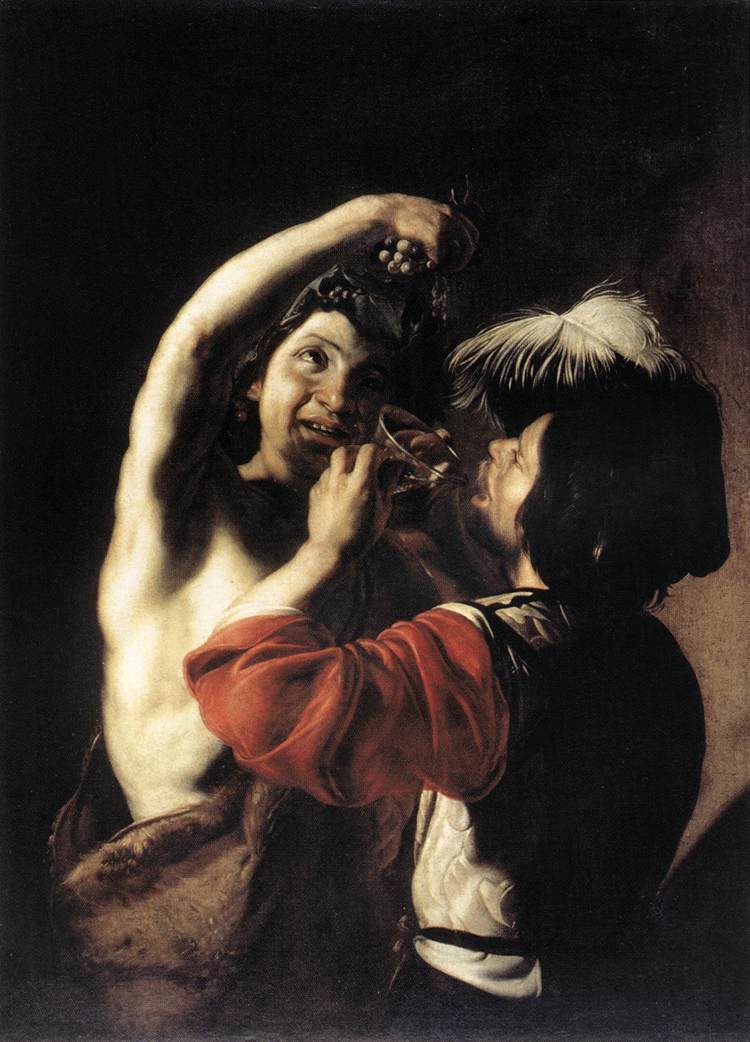
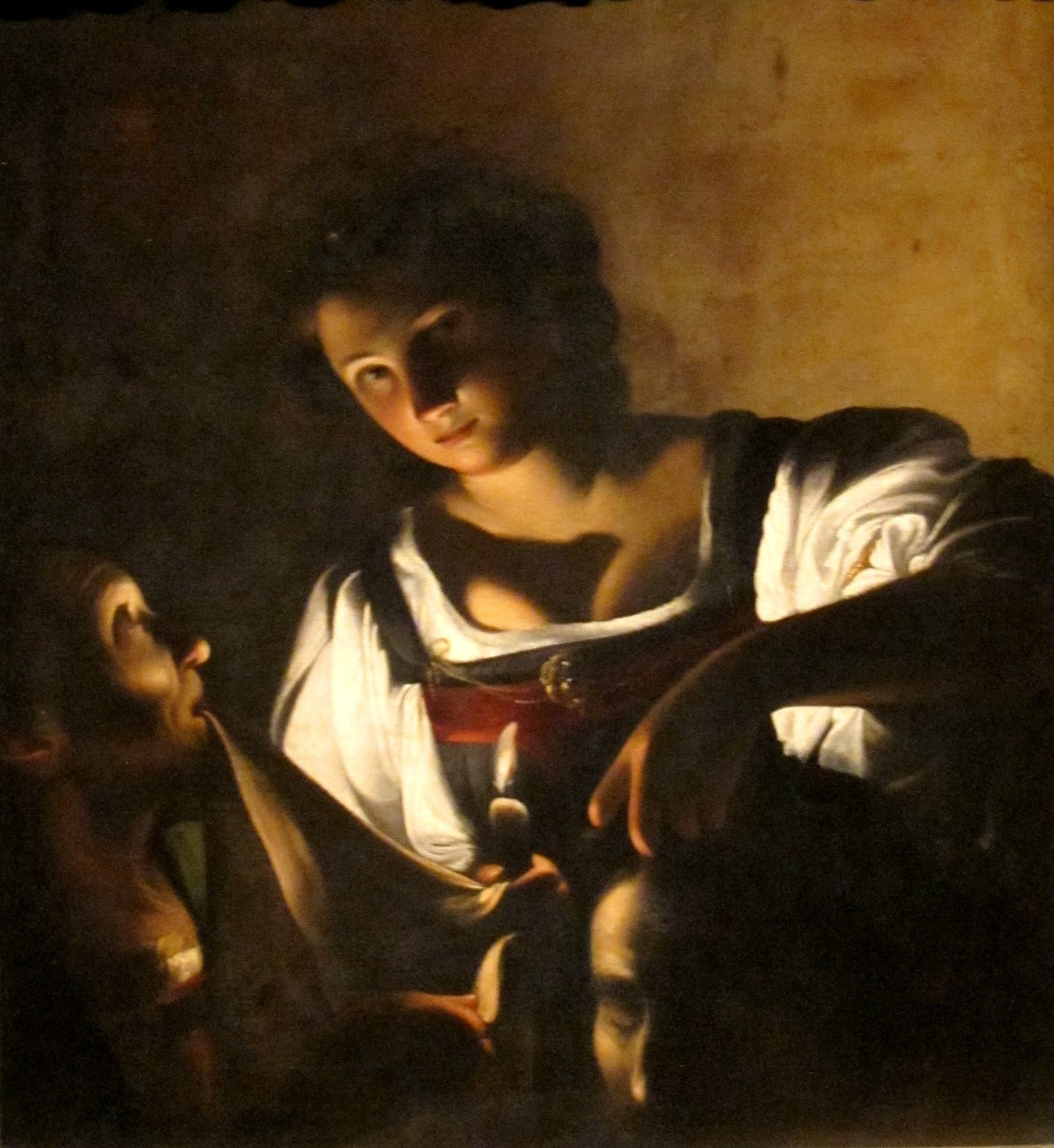
Orazio, Artemisia, Manfredi, Saraceni and others select different possibilities from a language transmitted through chapels, collections and markets.
–1640
Naples and Utrecht become centres
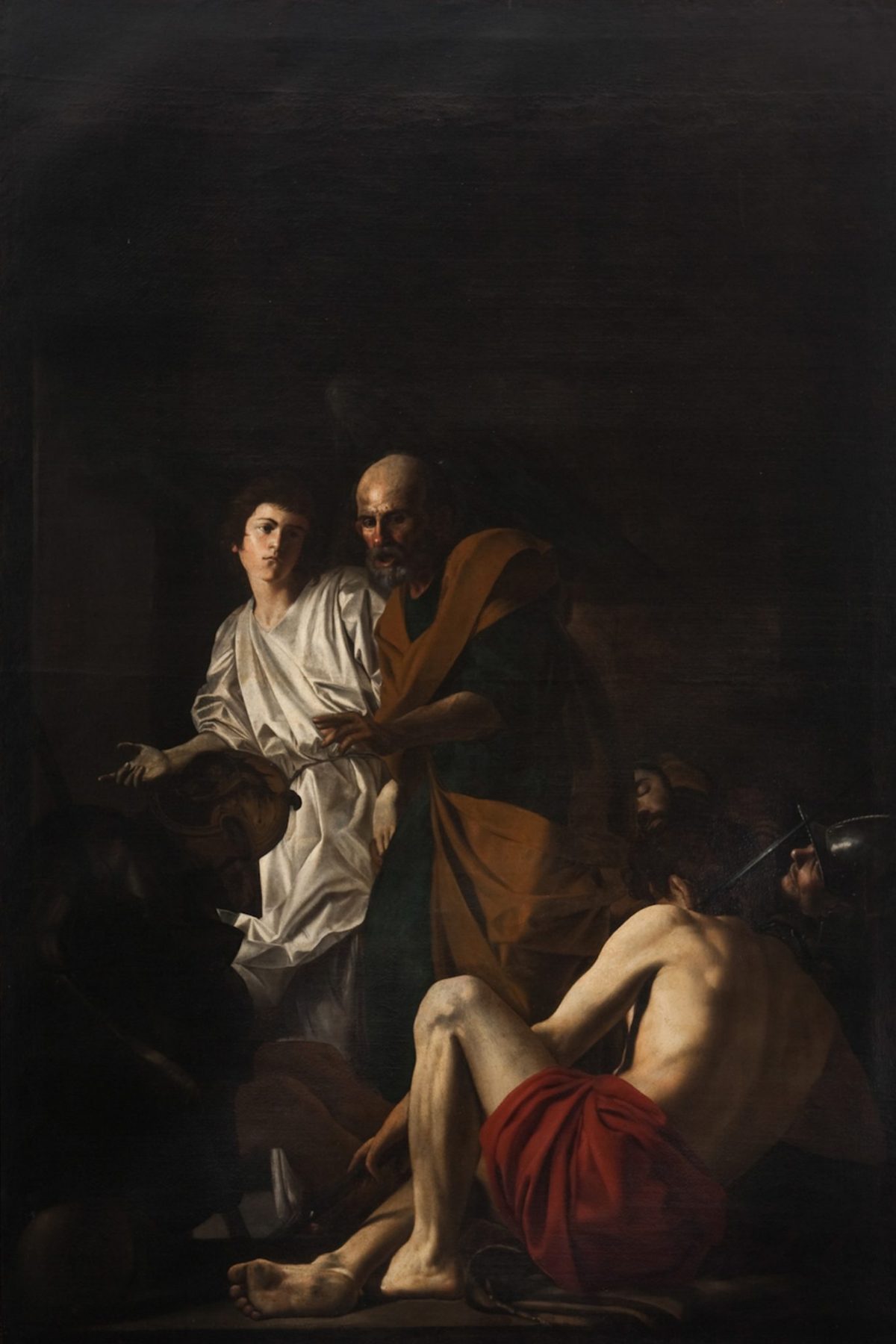
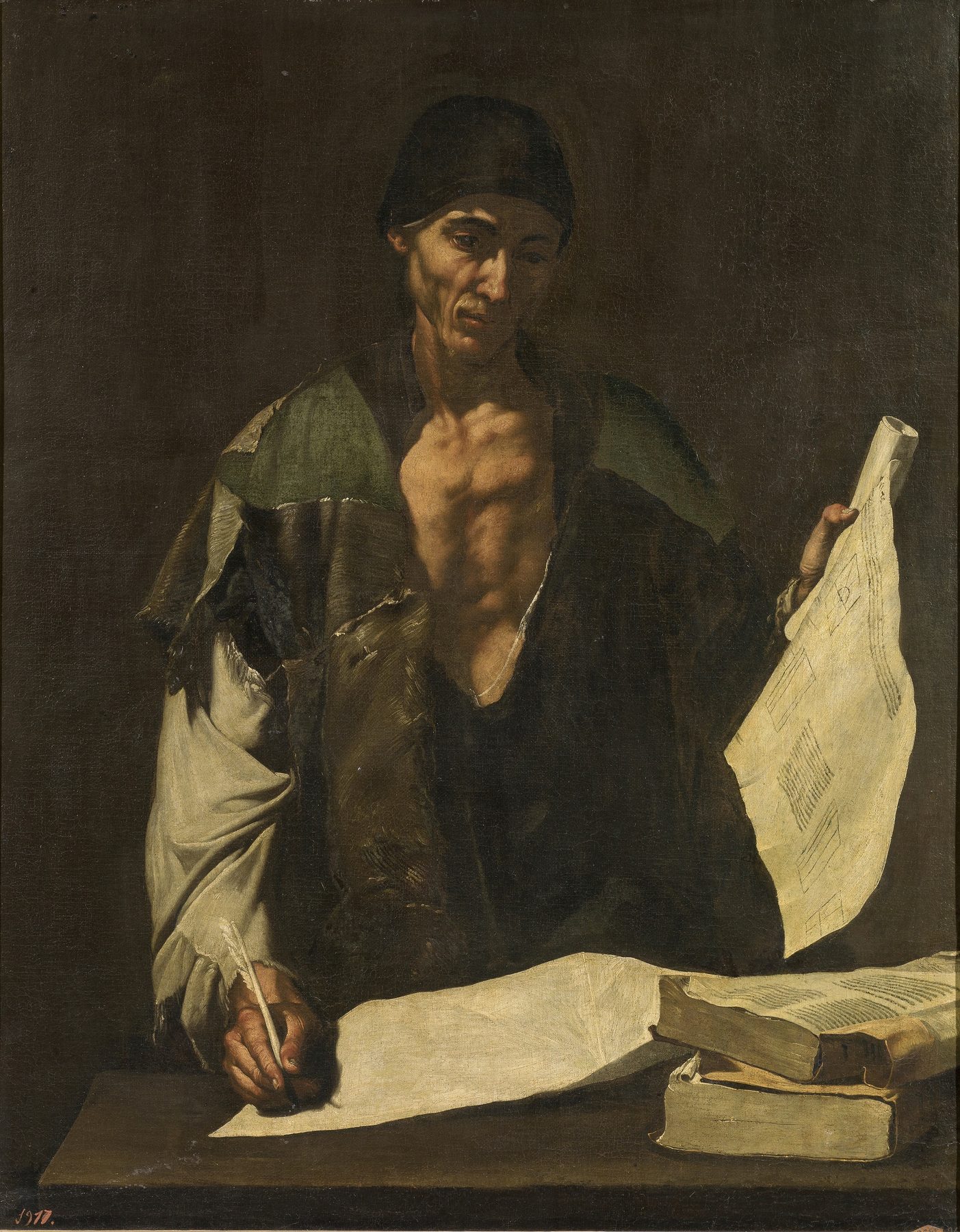
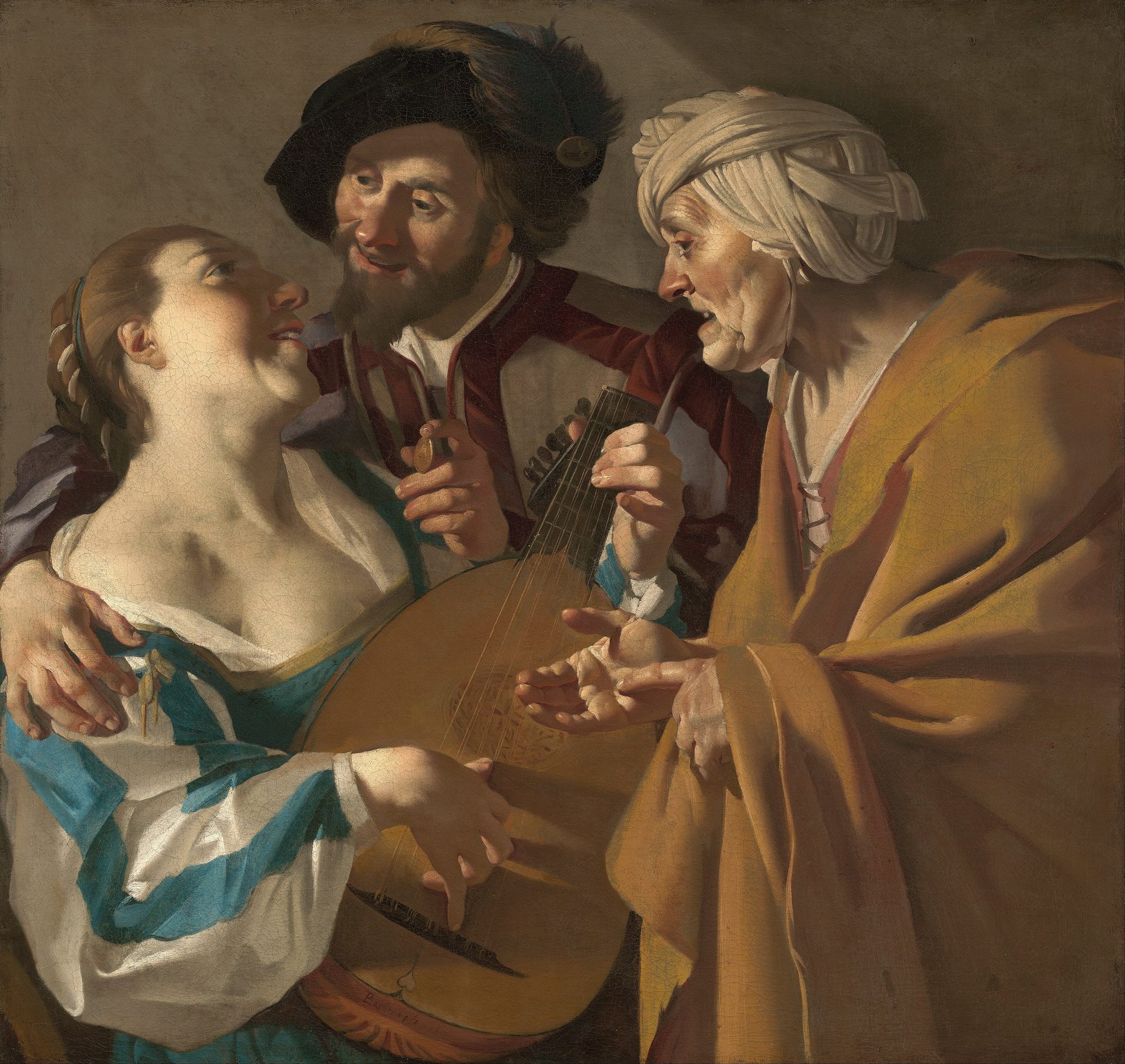
Caracciolo and Ribera build a Neapolitan response while Honthorst, Ter Brugghen and Baburen transform Roman experience after returning north.
–1655
French and Spanish transformations
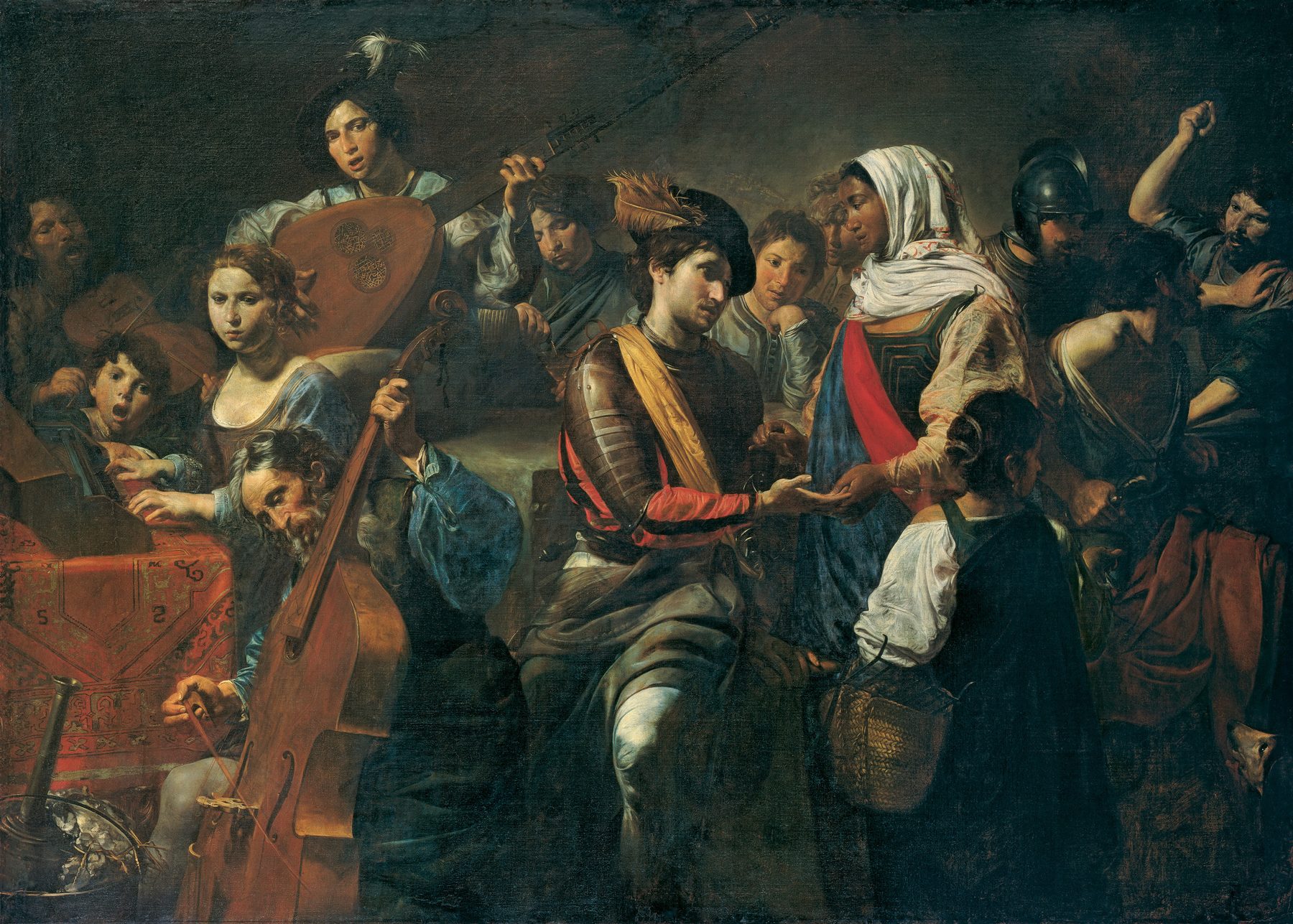
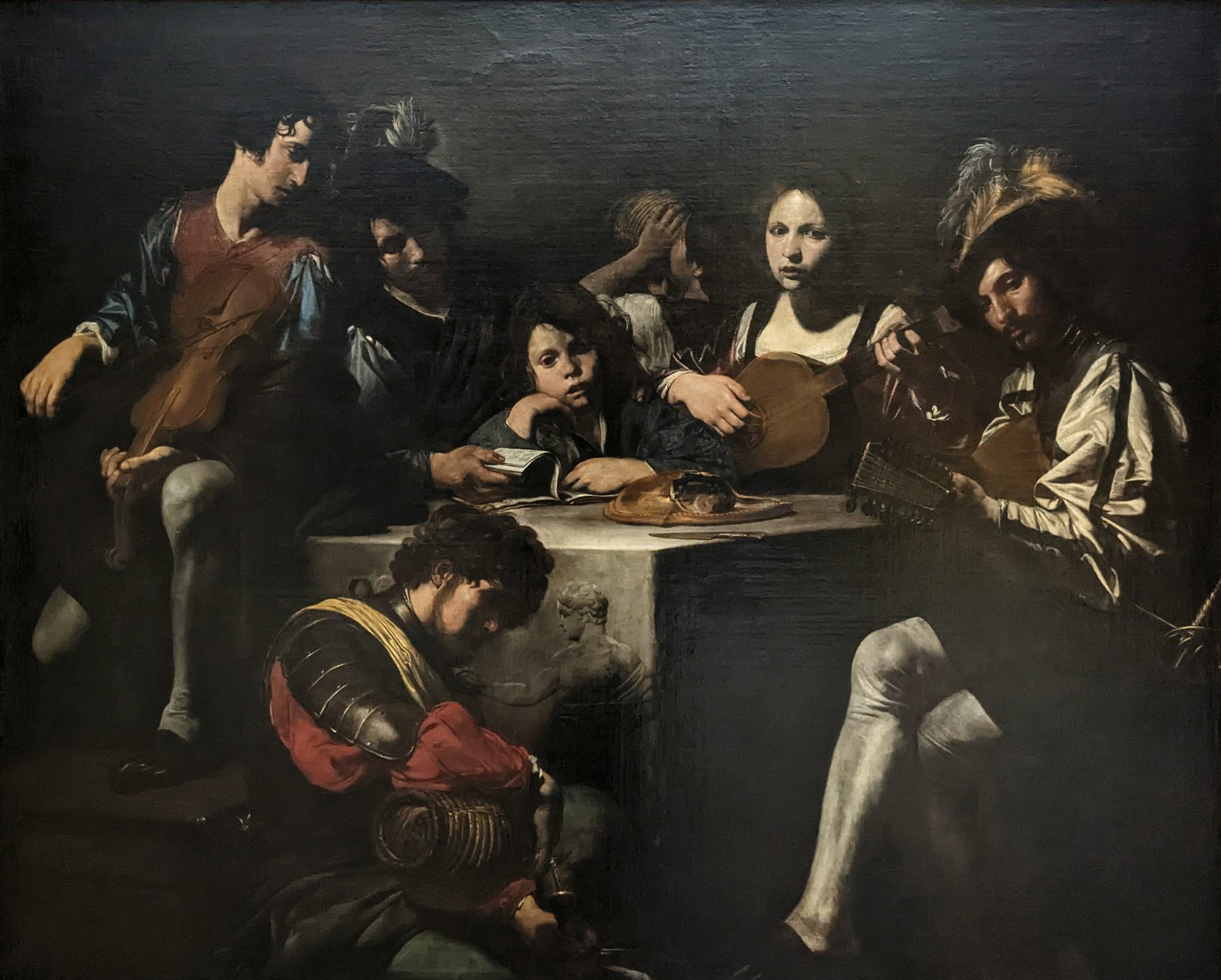
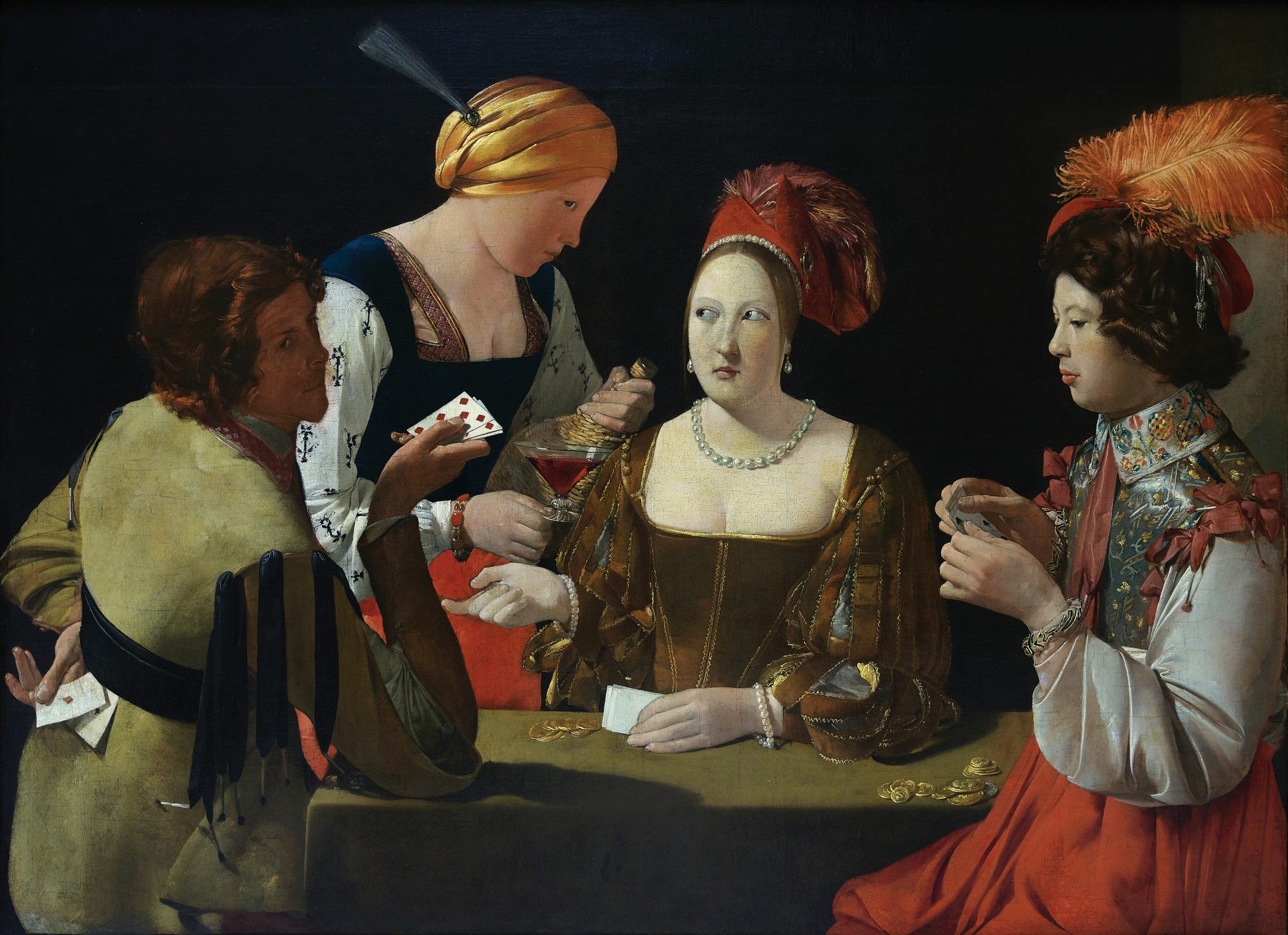
Valentin, La Tour, Maíno, Velázquez and Zurbarán reveal how direct experience, mediation, local traditions and later tenebrism resist a single formula.
Orazio and Artemisia Gentileschi
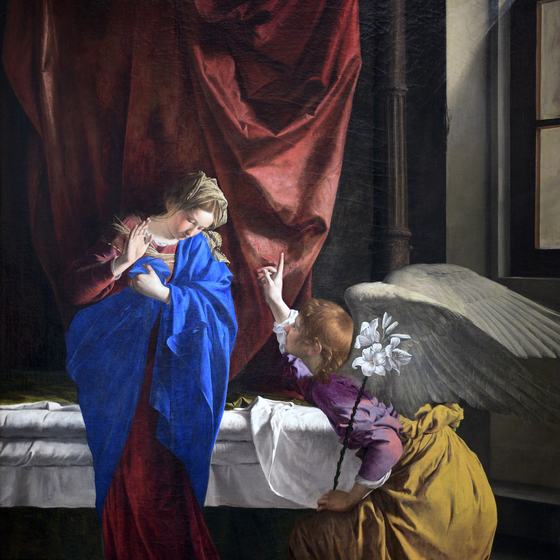
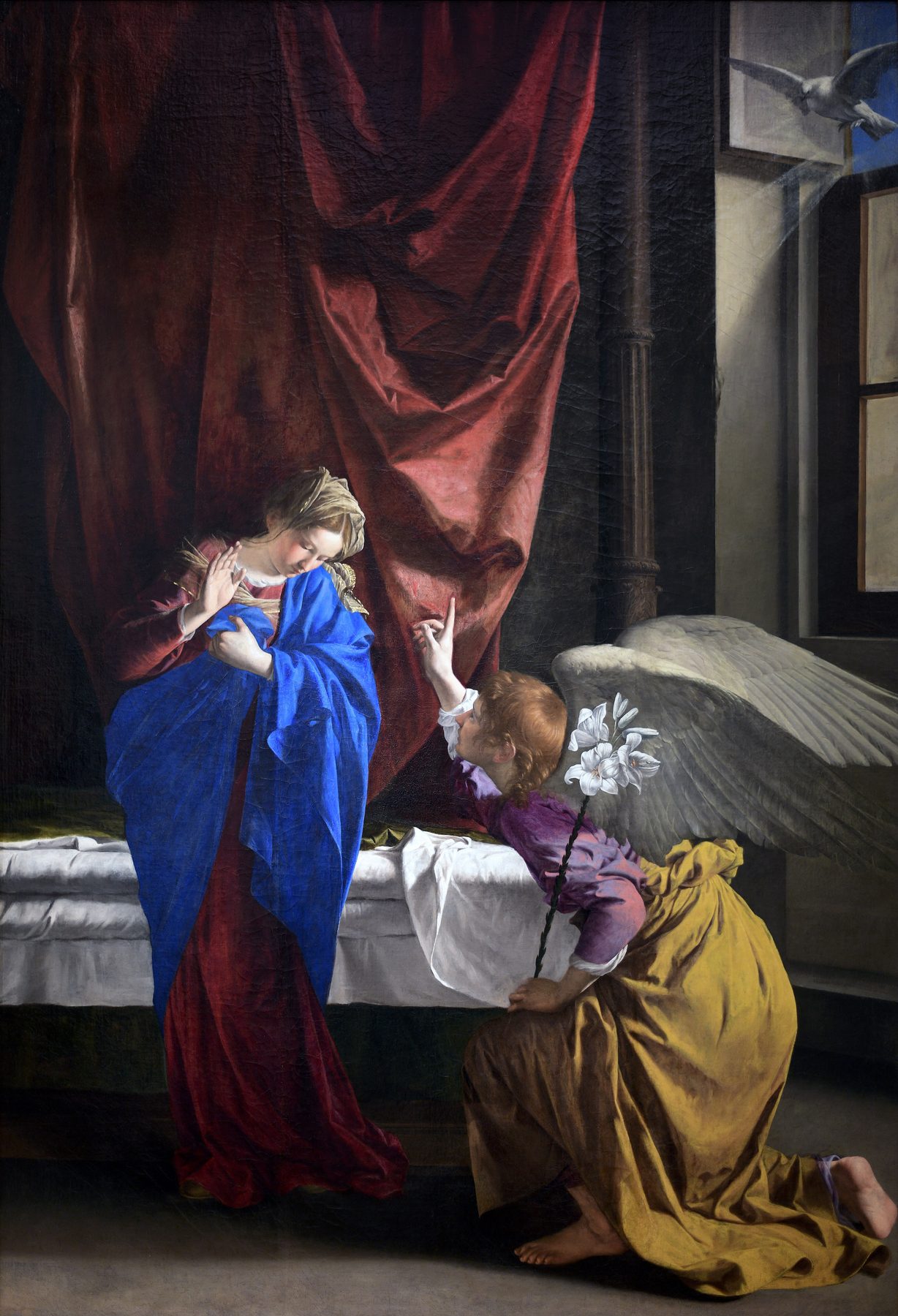
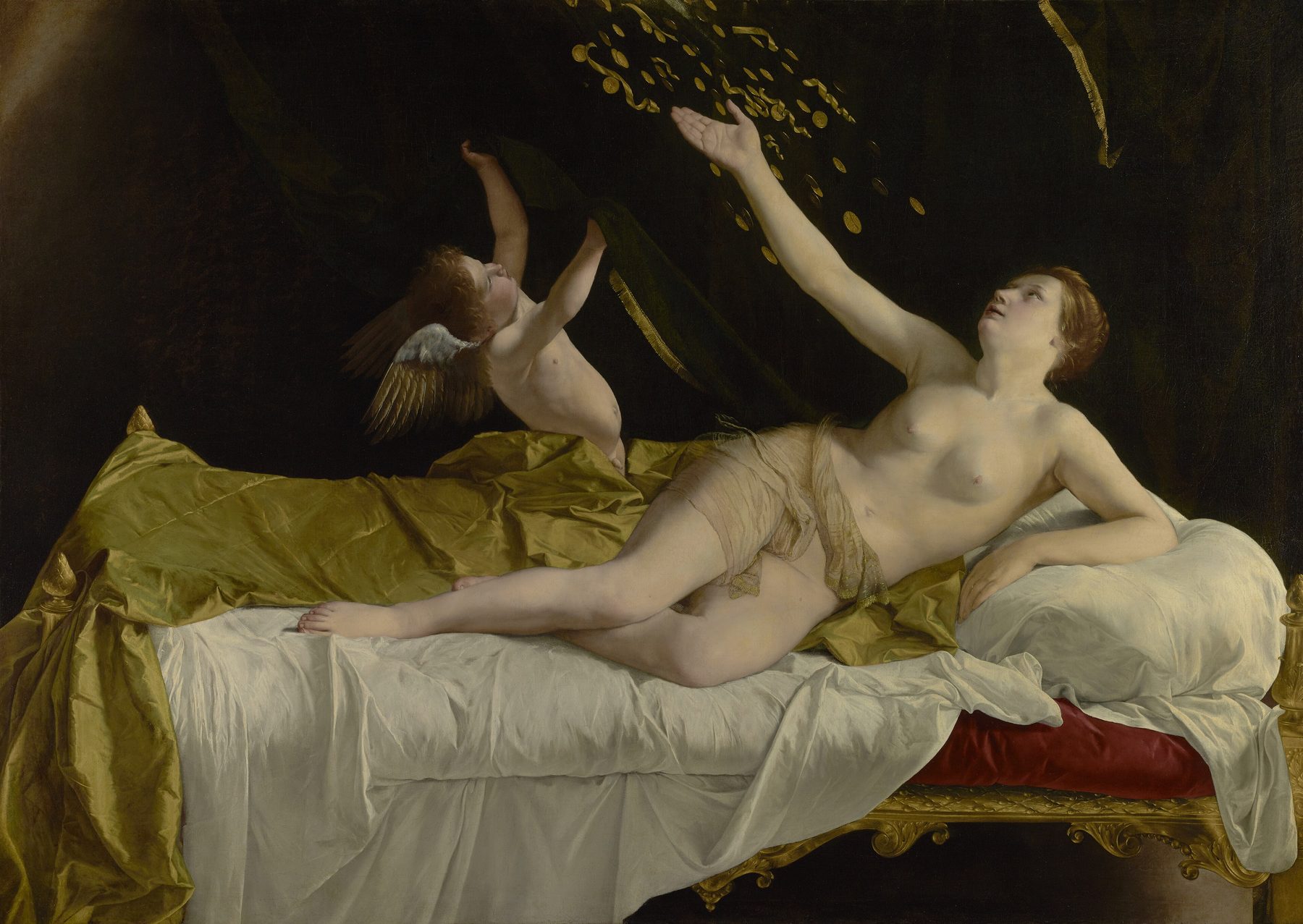
Orazio Gentileschi demonstrates how close contact can produce difference. Documents place him in Caravaggio's Roman world, including the 1603 legal conflict involving Giovanni Baglione. Orazio's testimony records practical exchange as well as rivalry: studio materials, props and models belonged to a working social environment. He adopted posed figures, concentrated light and immediate religious presence, but joined them to controlled drawing, refined fabric and clear, often cool colour.[16]
In works made for the Genoese patron Giovan Antonio Sauli, Orazio's figures possess physical weight without Caravaggio's abrasive pressure. Satin, skin and landscape are patiently distinguished. The subjects remain morally charged, yet the paint can feel courtly and lyrical. His later movement through Genoa, Paris and London placed this transformed naturalism within aristocratic networks far from Rome.[17] [18]
Artemisia Gentileschi learned in Orazio's studio when women were excluded from many routes of artistic training. Her early art was shaped by Caravaggio through her father's highly individual response, but she quickly developed a different narrative intelligence. Bodies do not merely pose; they coordinate, resist and act. Colour can be richer, and dramatic action often unfolds through the physical and moral agency of women.[19] [20]
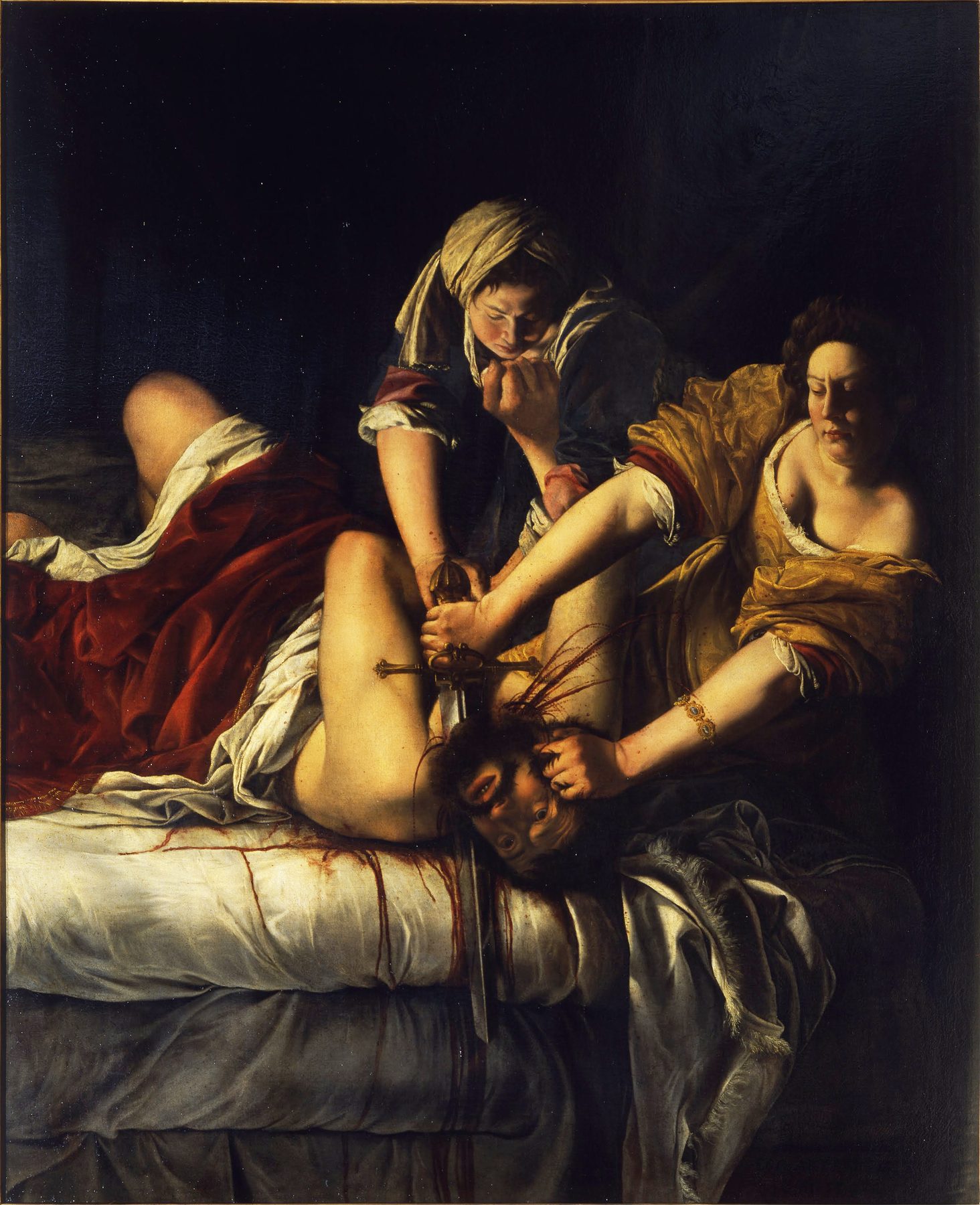
Her Judith Slaying Holofernes exists in major versions associated with Naples and Florence. In the Florentine canvas, Judith and her maid lean into the work of killing. Their arms form a forceful structure against the recoiling body; directional light clarifies faces, sleeves, hands and blood. Comparison with Caravaggio's treatment of the subject is illuminating, but Artemisia did not simply intensify his violence. She changed the relation among the women, making coordinated action central.
The painting has frequently been read through Artemisia's rape by Agostino Tassi and the 1612 trial. That history cannot be ignored: it shaped her life, has affected the recovery of her art, and helps explain why modern audiences attend to questions of gender and power. But a one-to-one revenge interpretation makes the painting smaller. Judith was an established biblical subject; versions answered patrons and markets; Artemisia built a long professional career across Florence, Rome, Naples and London. Formal knowledge, religious interpretation and ambition are evidence too.[17] [19]
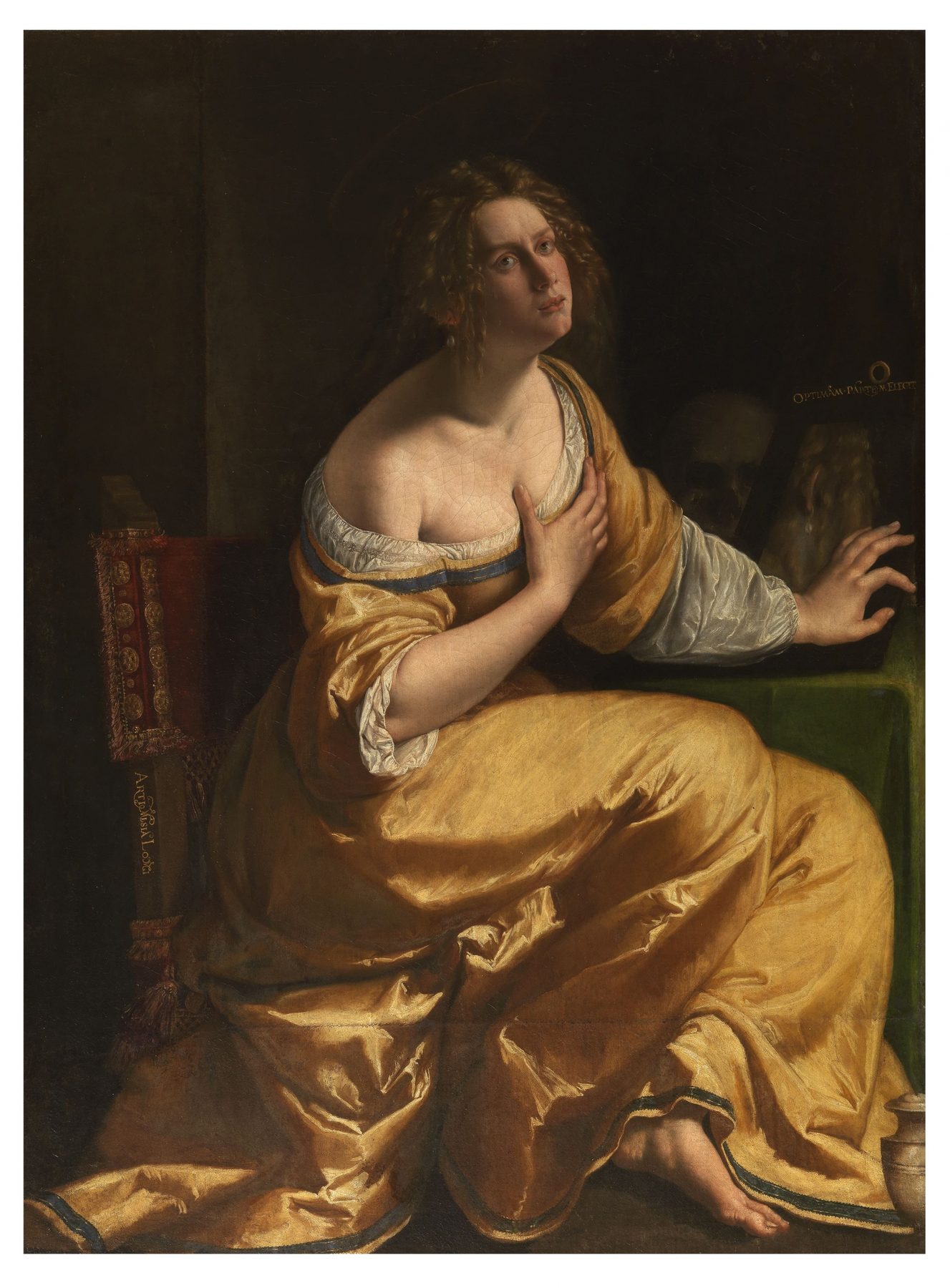
Artemisia's Caravaggism also changed over time. The Uffizi's Saint Mary Magdalene uses strong lateral light learned in Rome, but the sumptuous yellow dress, emotional reserve and social identity of the sitter complicate a simple penitence type. Her work can combine sacred role, courtly fashion and self-aware performance. To call her a follower is accurate only if following includes sustained invention.[20]
Father and daughter together show why lineage is not identity. Orazio's restraint should not be mistaken for weakness, nor Artemisia's intensity treated as biography made visible. Each selected different possibilities from a shared environment. Their careers also reveal that Caravaggism travelled through family training, lawsuits, courts and commissions as well as through masterpieces.
Naples as a second centre
Caravaggio reached Naples in 1606 after fleeing Rome and returned in 1609 following Malta and Sicily. The city was one of Europe's largest, governed within the Spanish imperial system and rich in churches, charitable foundations, aristocratic collections and artistic competition. His presence did not create Neapolitan painting from nothing, but it supplied a compelling new structure for local naturalism.[5] [13] [14]
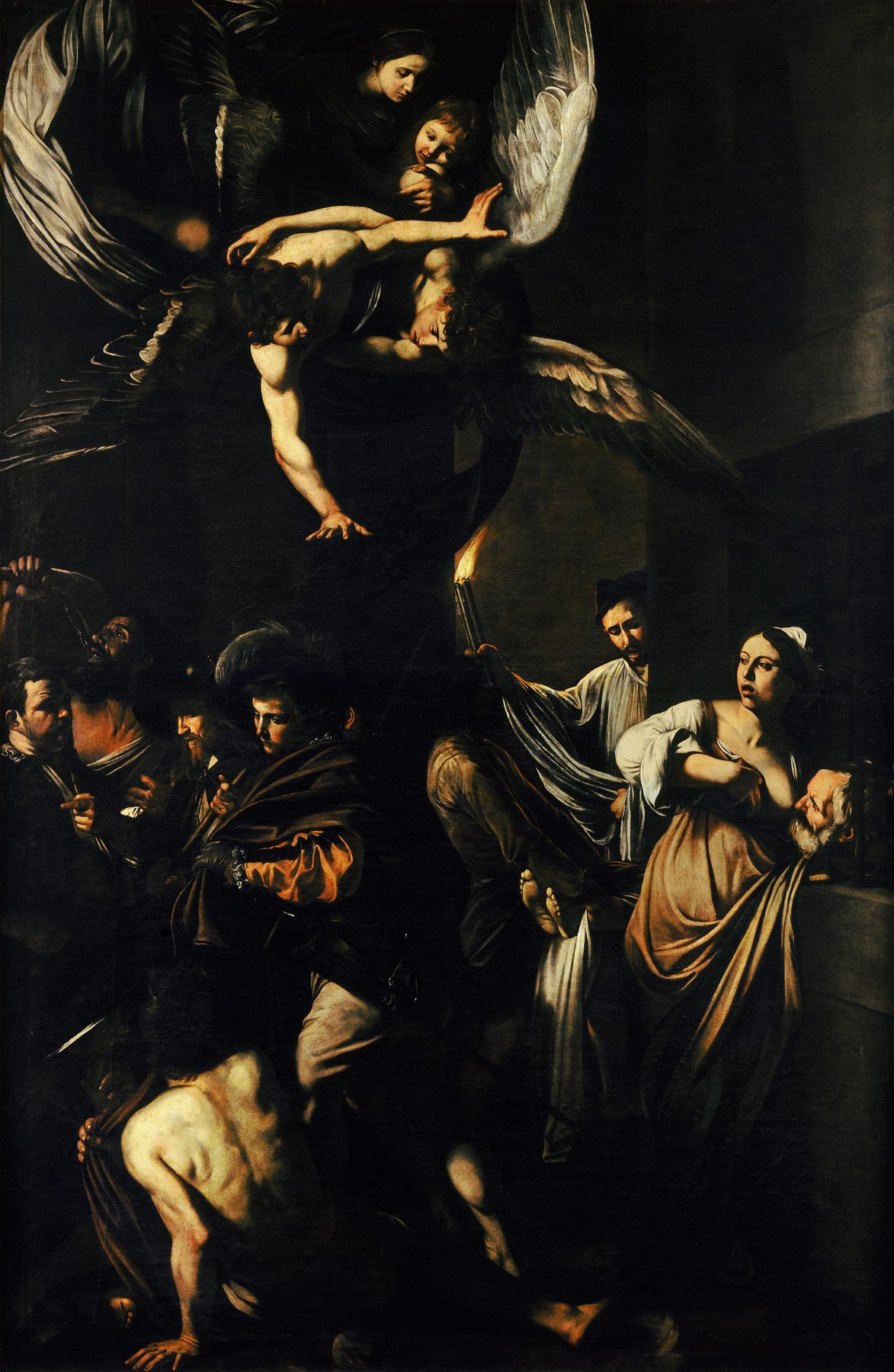
The Seven Works of Mercy, commissioned by the Pio Monte della Misericordia in 1606–07, compresses several acts of charity into a single nocturnal field. Burial, feeding, visiting prisoners, sheltering travellers, clothing the naked, caring for the sick and giving drink are distributed among bodies that overlap like people meeting in a narrow street. Above, the Virgin and Child descend with angels. Strong light connects gestures without turning the scene into seven separate illustrations.[15]
The commission mattered institutionally as well as stylistically. The Pio Monte had been founded to carry out charitable work, and the painting functioned as a visual statement of its mission. Its recorded payment of 400 ducats indicates the value attached to the artist even while he was a fugitive. Sacred duty, civic identity and artistic prestige met in one permanent site.[15]
Battistello Caracciolo was among the earliest Neapolitan painters to respond closely. Caravaggio's Flagellation of Christ and other works provided examples of figures isolated by light and suffering made bodily present. Louis Finson, a northern artist active around Caravaggio, also copied and circulated compositions. Massimo Stanzione later balanced naturalist force with classicising order and colour. Naples became a laboratory of combinations, not a provincial echo.[13] [14]
Jusepe de Ribera gives the network an especially international shape. Born in Spain, he is documented in Parma and Rome before settling in Naples by 1616. He adopted a forceful version of Caravaggio's naturalism: rough faces, strong contrasts and bodies close to the surface. Yet his thick impasto, tactile textures, drawings, prints, philosophers and engagement with Bolognese classicism and Roman colour make his art distinct.[35] [36]
Ribera's nationality and location both mattered. Spanish viceroys in Naples commissioned and sent his works to Spain; Philip IV eventually possessed a remarkable group. Pictures crossed political routes while the painter remained rooted in Naples. Calling him simply a Spanish Caravaggist obscures the very network that made his influence possible.[35]
The early Denial of Saint Peter associated with Ribera shows how a Caravaggio subject could become socially denser. Figures gather in a half-length band around accusation and denial. The Roman model remains legible, but the group behaves like a new conversation. Valentin and other painters responded in turn. Influence moves sideways among contemporaries, not only downward from a single master.[21]
Utrecht and the visible night
Utrecht formed the most concentrated northern European centre of Caravaggism. Hendrick ter Brugghen, Gerrit van Honthorst and Dirck van Baburen all travelled to Italy and encountered the Roman field. Their dates and contacts differ, but by the early 1620s their returns had made life-size figures, musicians, tavern subjects and sharp illumination newly prominent in the city.[25] [29]
Honthorst achieved substantial success in Rome. His night scenes, often organised around a concealed or visible flame, led Italians to call him Gherardo delle Notti. Candlelight was not a minor special effect. It created groups: faces turn towards a shared source, fingers glow, surfaces appear and disappear, and viewers are made conscious of their own position outside the illuminated circle.[26] [27]
In The Concert of 1623, painted after Honthorst returned to Utrecht, musicians and singers crowd forward in brilliant costume. The theme recalls Caravaggio's early music pictures, but the effect differs. Honthorst's performers are expansive, colourful and socially outward. Their theatrical address suits a Dutch market and an artist whose reputation soon extended to European courts.[27]
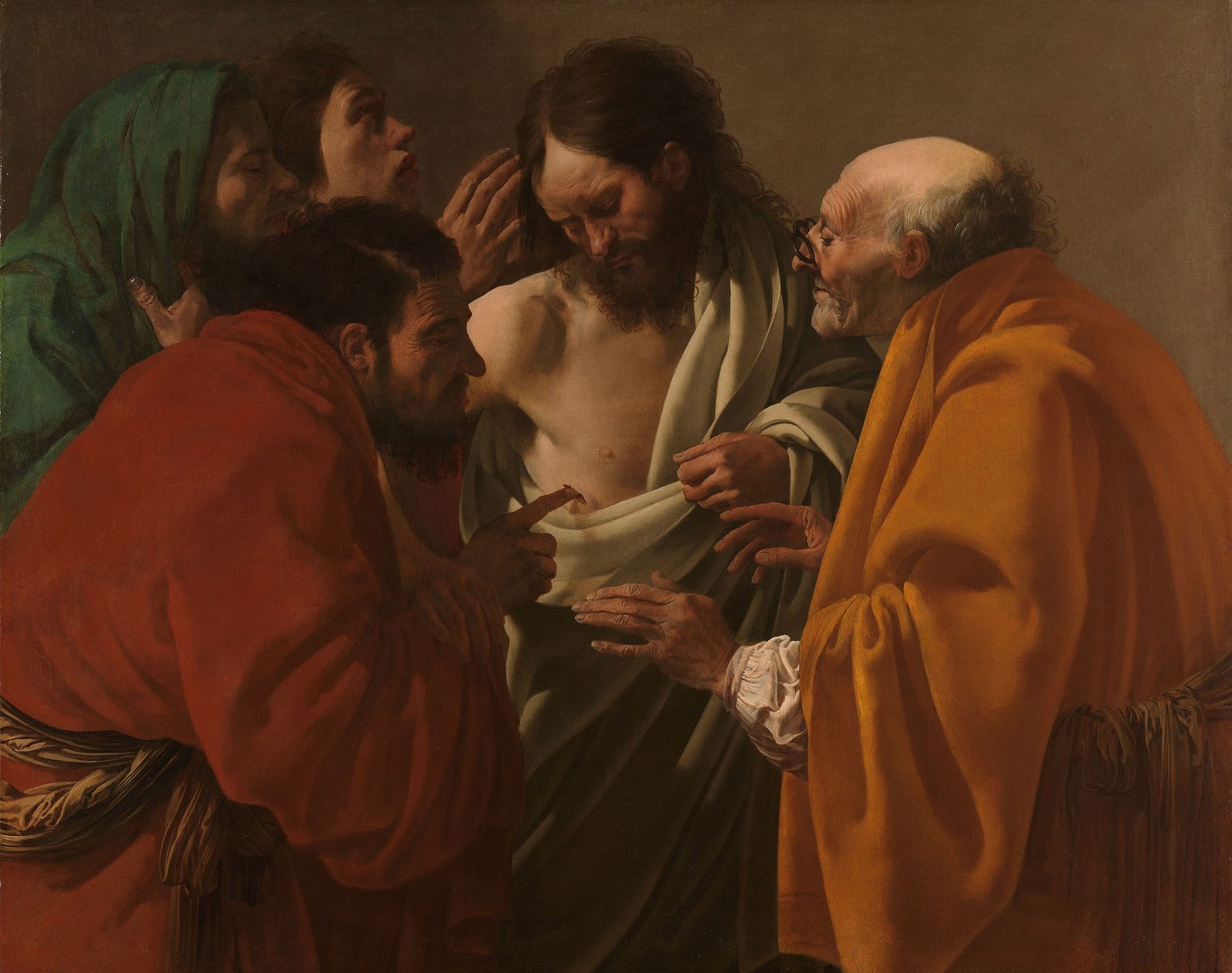
Ter Brugghen offers another kind of translation. In The Incredulity of Saint Thomas, the worn faces and hands recall Caravaggio, and the composition refers to his famous treatment of the subject. Ter Brugghen reverses and expands the group, adding gestures that distribute doubt among several witnesses. His pale colour and cool passages keep the scene from becoming a dark-ground replica.[30]
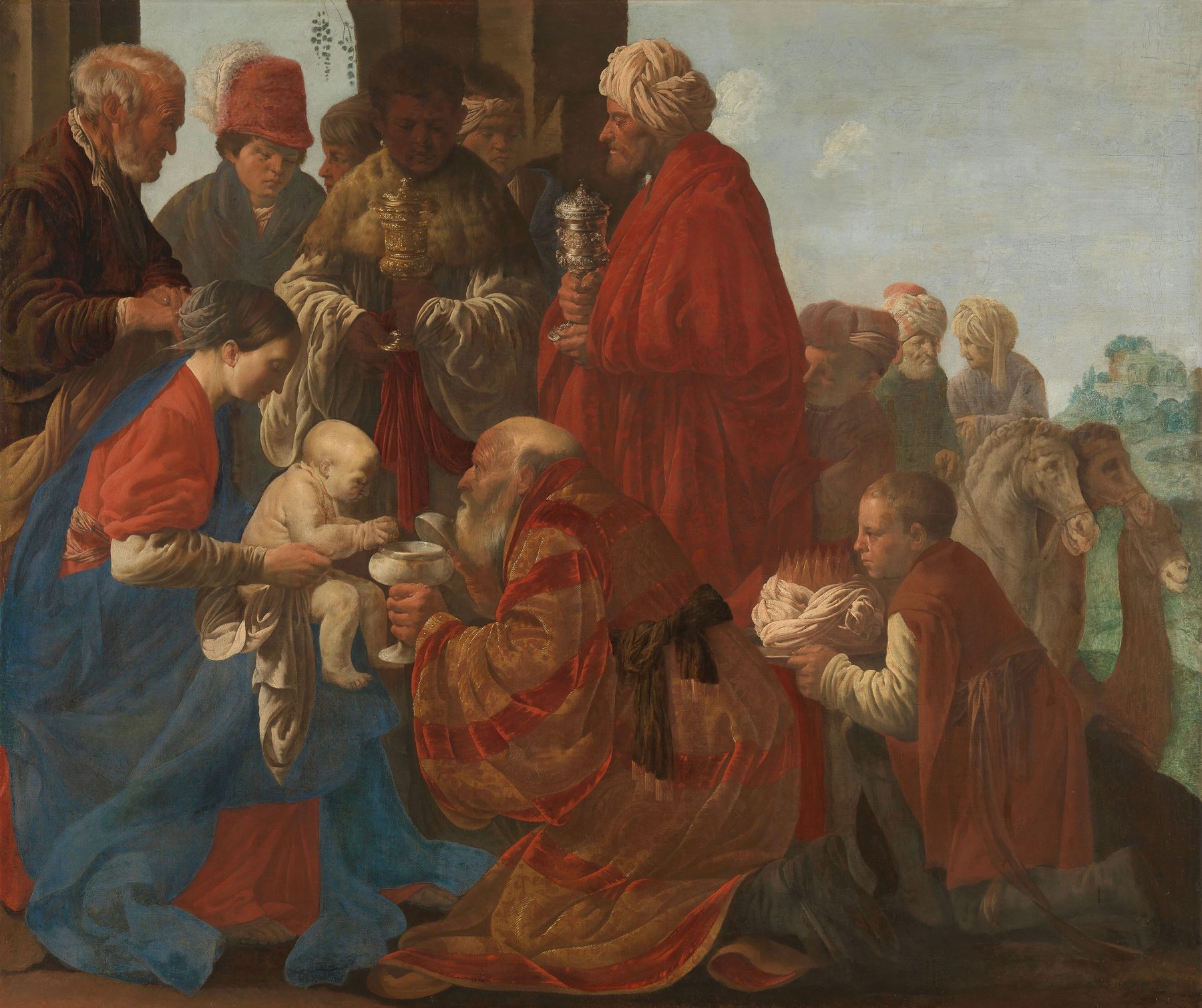
His Adoration of the Magi makes hybridity still clearer. Naturalistic types coexist with colours linked to late Mannerist and Italian traditions. A painter could return from Rome with Caravaggio's lessons and still retain other parts of his visual education. Caravaggism in Utrecht is strongest where it becomes plural.[31]
Baburen brought another muscular, compressed mode to religious and secular subjects. After his early death, paintings such as The Procuress continued to circulate through copies and family ownership. The picture later appeared in the domestic world represented by Vermeer, evidence that Utrecht Caravaggism could persist as an object within Dutch painting even after its first fashion had changed.
The Utrecht painters also affected artists who never travelled to Italy. Large half-length figures and concentrated lighting entered the early work of Jan Lievens and the visual environment of Rembrandt. This does not make Rembrandt a Caravaggist. His formation involved Pieter Lastman, Leiden practice, prints and many northern sources. The accurate claim is indirect availability: Caravaggist devices had become local resources that another artist could absorb into a separate art.[29] [32]
French transformations
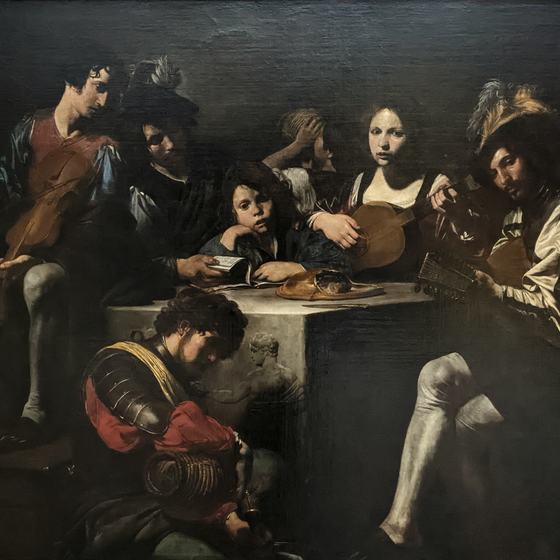
French Caravaggism is divided between artists who worked in Rome and painters whose relation was mediated. Valentin de Boulogne belongs firmly to the first group. He arrived in Italy after Caravaggio's death but made his mature career in Rome, where Caravaggio, Manfredi and Ribera provided living points of departure. Tavern companies, fortune tellers, musicians and denials of Saint Peter became settings for tightly connected human groups.[21] [22]
Valentin's paintings are often dark, but their distinction lies in more than contrast. Figures share a heavy inward attention. Hands, instruments, cards and glances weave connections across the canvas. Neo-Venetian colour can surface within shadow, while religious works convert the same social density into martyrdom and devotion. Important Roman patrons, including the Barberini, recognised that he had reinvented rather than merely prolonged Caravaggio.[22] [23]
Simon Vouet's career illustrates change over time. His Italian period included strong Caravaggist interests, but after returning to France he developed a brighter, more decorative and courtly language. An artist could leave Caravaggism without repudiating everything learned from it. The movement was a phase or resource in many careers, not a permanent membership.
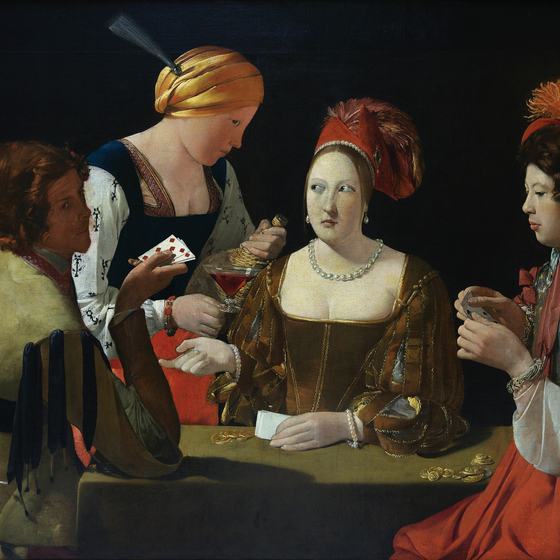
Georges de La Tour is different. No Italian journey has been proved, and his knowledge of Caravaggism was probably indirect. Daylight pictures of cheats and fortune tellers connect him to a European genre repertory, while nocturnes place candles among simplified bodies and quiet interiors. The Louvre's Cheat with the Ace of Diamonds turns looking into complicity: signals pass around the unsuspecting young victim, and the viewer is invited to detect the deception.[25] [40]
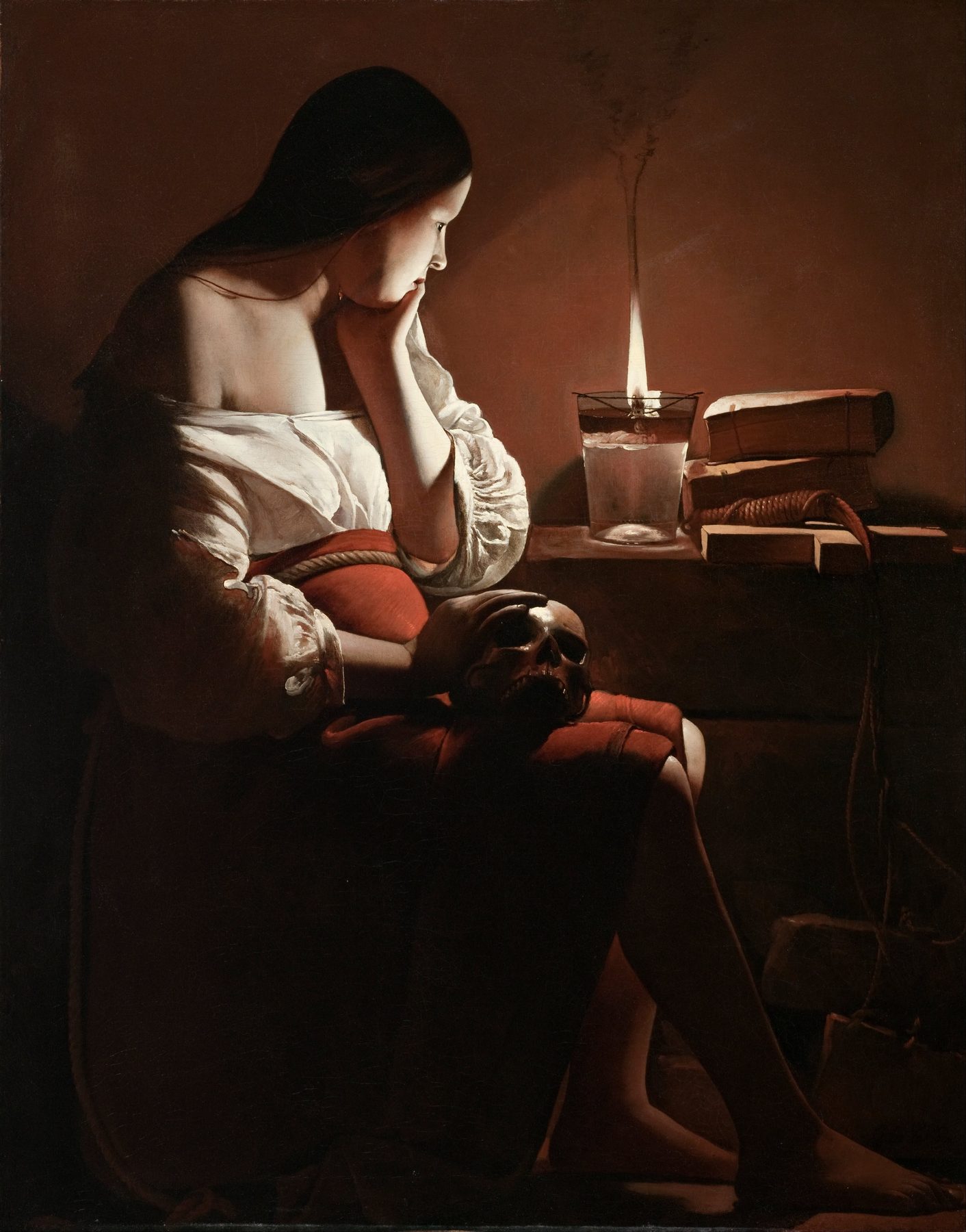
In La Tour's Magdalene pictures, a small flame, skull, mirror and folded hands create prolonged stillness. Where Honthorst often makes artificial light sociable and theatrical, La Tour makes it inward. The forms are reduced almost to geometry; silence appears constructed from intervals of darkness. His twentieth-century rediscovery helped establish him as an individual master of light rather than a provincial derivative.[41]
Spain and mediated reception
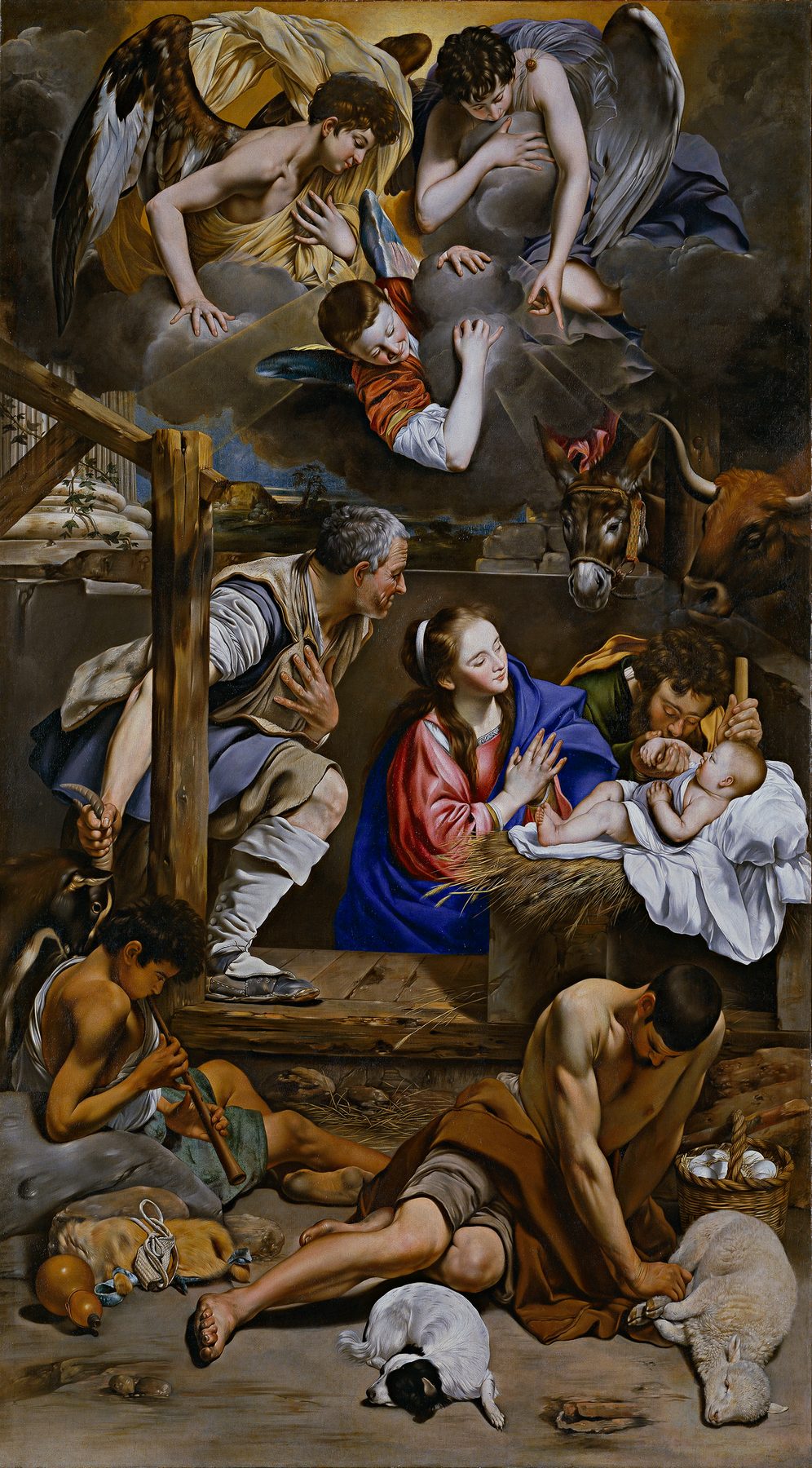
The relation between Caravaggism and Spanish painting should be described artist by artist. Juan Bautista Maíno spent formative years in Italy and learned two leading Roman alternatives: Caravaggist naturalism and the revised classicism of Annibale Carracci's circle. When he returned to Spain, works such as the altarpiece for San Pedro Mártir in Toledo combined exact plants, vivid contemporary types, balanced composition and brilliant colour. Direct experience produced synthesis, not allegiance.[33] [34]
Ribera's route was also direct, but geographically reversed. His mature art was made in Naples and moved into Spanish collections through viceregal and royal patronage. The rough bodies and forceful light of his saints and philosophers shaped Spanish taste, yet the painter's Italian location and diverse techniques remain essential. His circulation is a history of empire as well as style.[35] [36]
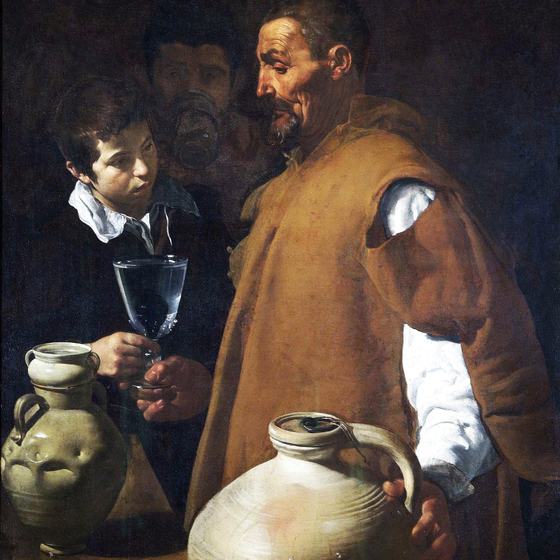
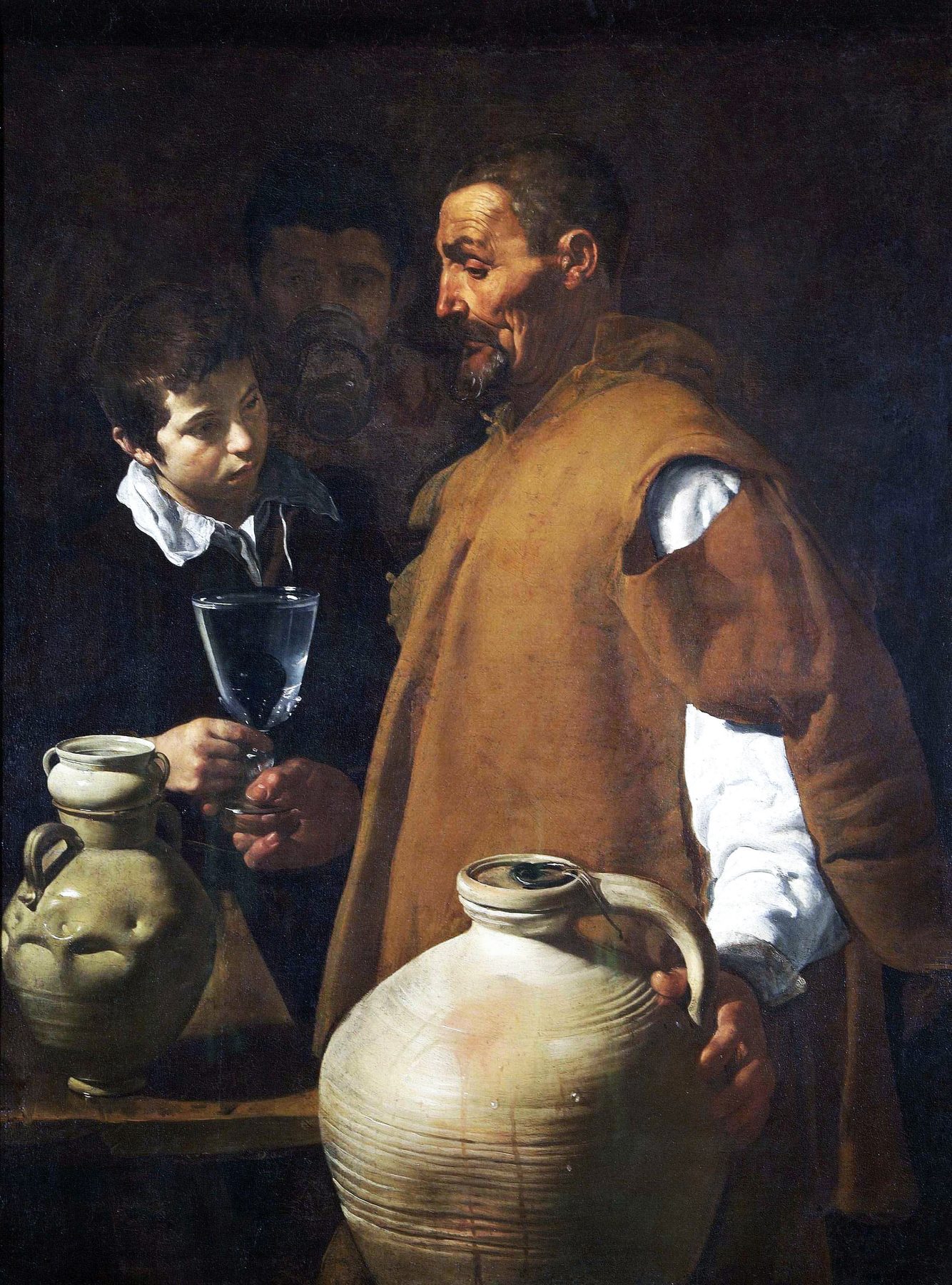
Early works by Diego Velázquez share close observation, low-life subjects, shallow rooms and marked light-dark contrasts with the international Caravaggist field. His Seville bodegones place ordinary people and kitchen objects under intense scrutiny. But technical scholarship cautions that he probably had not seen an original Caravaggio in Seville. Copies, prints, works by followers, shared naturalist traditions and later Italian travel offer more responsible routes than a claim of direct discipleship.[3] [38]
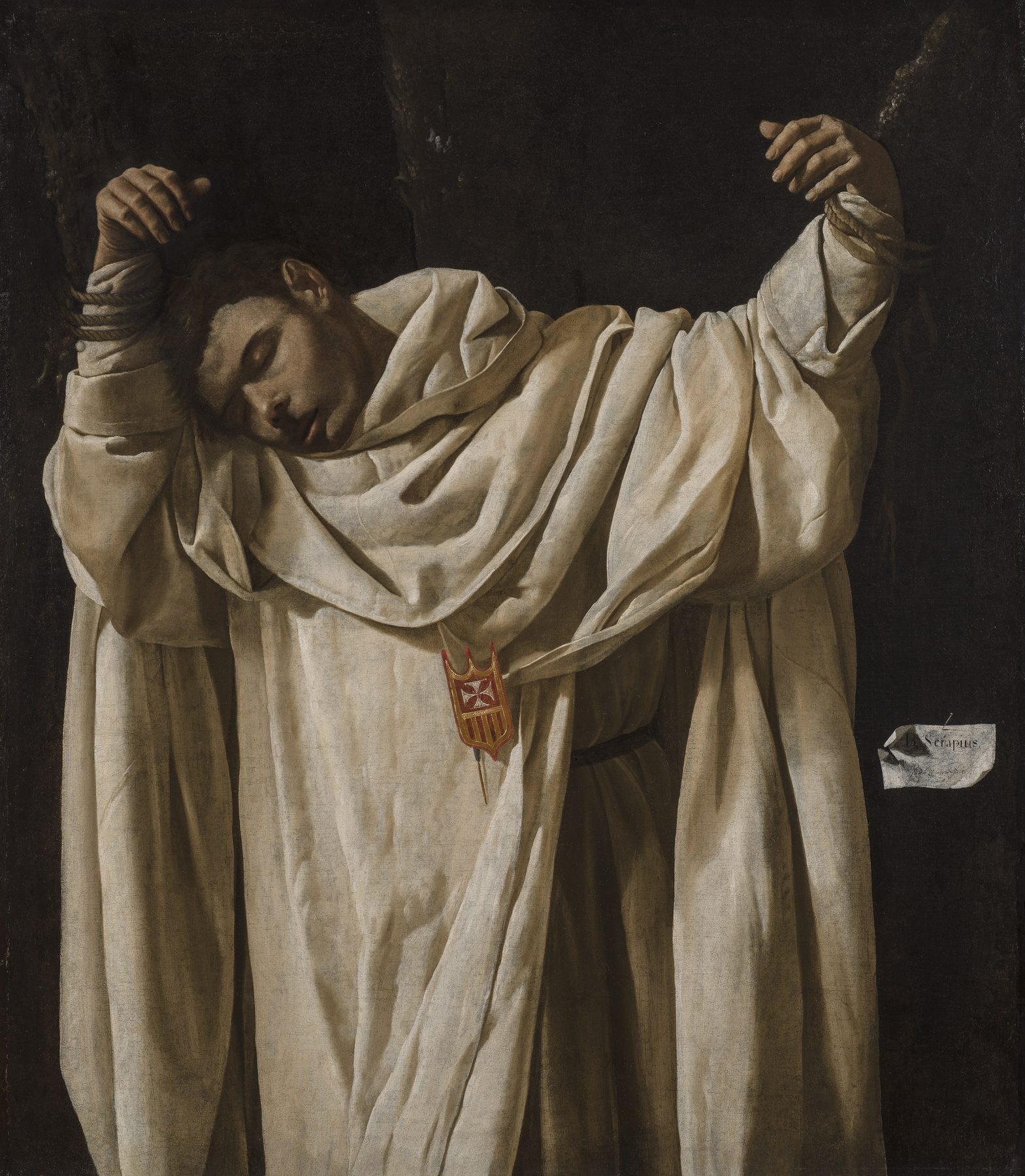
Zurbarán has likewise been described as a severe Spanish Caravaggist because of his dark grounds, isolated figures and monastic subjects. The label identifies a real affinity but can conceal his particular gifts: simplified volumes, saturated colour, exact textiles and an almost sculptural suspension of objects and bodies. Recent interpretation places that personal language ahead of a single-source explanation.[37] [39]
The Prado's comparisons among Velázquez, Maíno, Ribera, Stanzione, Zurbarán and international contemporaries make the correct balance clear. These painters shared an interest in chiaroscuro, reality, pathos and religious presence, but each formed an unmistakable style. A movement hub should reveal connections without turning similarity into dependence.[37]
Spanish patronage also returns the story to Naples. The city belonged to the Spanish crown, its viceroys commissioned artists, and paintings travelled to Madrid and royal residences. “Italian” and “Spanish” Caravaggism cannot be separated cleanly along modern national borders. Political possession, artistic residence and cultural identity overlapped.
Baroque boundaries and afterlives
Caravaggism is a major part of Baroque painting, but the terms are not interchangeable. The Baroque also includes Bernini's sculptural movement, Rubens's colour and expansive bodies, Carracci and Poussin's classicising design, illusionistic ceilings, court portraiture and many regional traditions. Caravaggio offered one powerful route: present bodies, compressed action and light that reaches towards the spectator.[3] [42]
The relation with classicism was not always hostile. Saraceni combined Venetian and Caravaggist resources. Maíno learned naturalism and Carracci together. Ribera and Stanzione absorbed classicising form. Even artists described as opposing camps shared patrons, churches and a Roman environment. The period's creativity often lies in mixture.[24] [33] [35]
By mid-century, the dense Roman network weakened as taste shifted and artists died, travelled or changed styles. Tenebrist effects persisted in Naples, Spain, Venice and northern painting, sometimes far from direct knowledge of Caravaggio. The narrower movement receded while its devices became general resources of European art.[1] [2] [39]
Caravaggio's critical fame also changed. Later classical theory could treat his reliance on models as a limitation, and attribution became confused. Twentieth-century scholars, restorers and exhibitions rebuilt an oeuvre and an international field. The recovery of La Tour, Artemisia and other painters altered the movement again by changing who counted as an original artist rather than an anonymous satellite.[11] [12] [41] [45] [49]
This afterlife warns against making influence a ranking system. Caravaggio's importance does not require every related painter to be less inventive. The best followers reveal possibilities in the model that the model never used: a visible candle, a female partnership, a Dutch concert, a silent Lorraine interior, a Neapolitan philosopher. Caravaggism became European by ceasing to be only Caravaggio's.
People and places to know
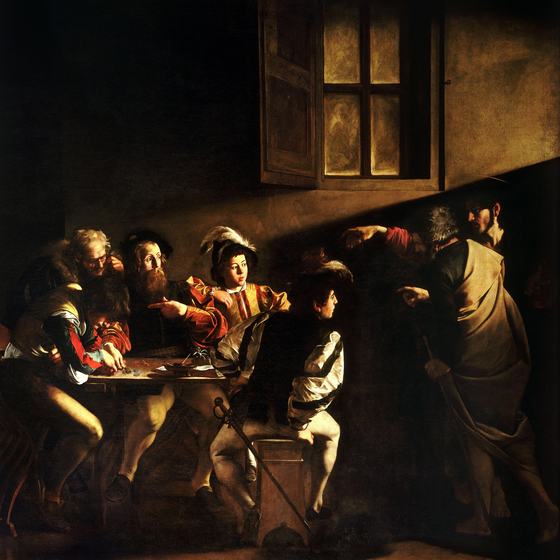
Caravaggio
The catalytic painter whose Roman public works joined posed bodies, shallow space and directed light to unprecedented immediacy.
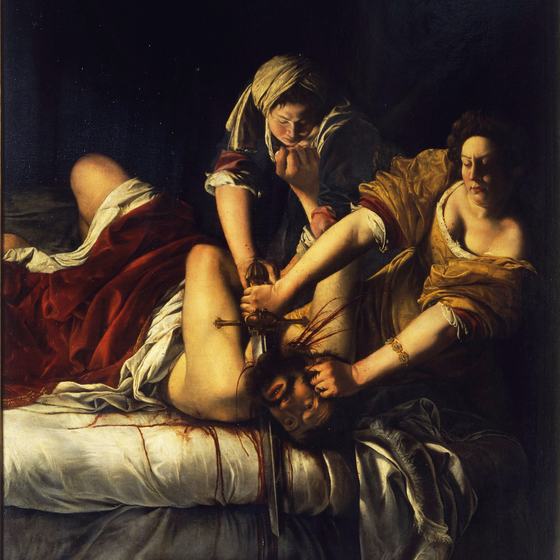
Artemisia Gentileschi
An independent interpreter of dramatic narrative, women's agency, colour and embodied action.
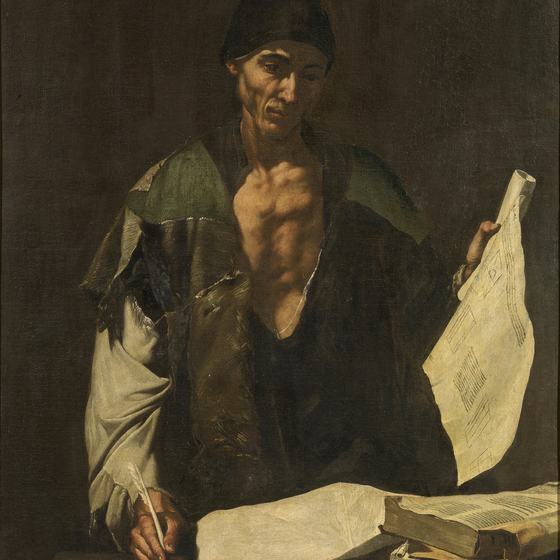
Jusepe de Ribera
A Spanish-born, Naples-based painter who joined Roman naturalism to tactile impasto, drawing and printmaking.
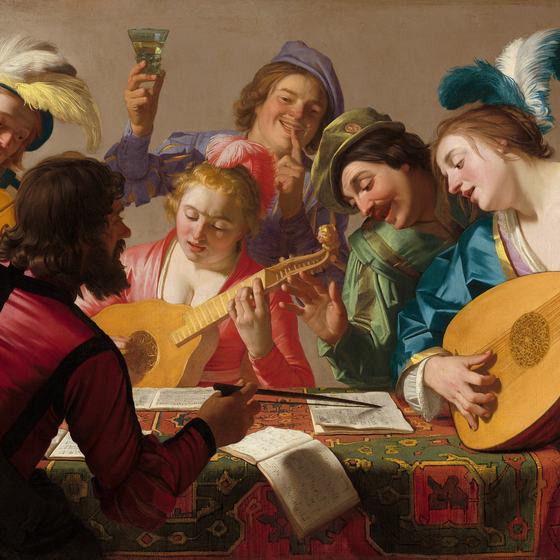
Gerrit van Honthorst
The Utrecht painter celebrated in Italy for night scenes and artificial illumination.
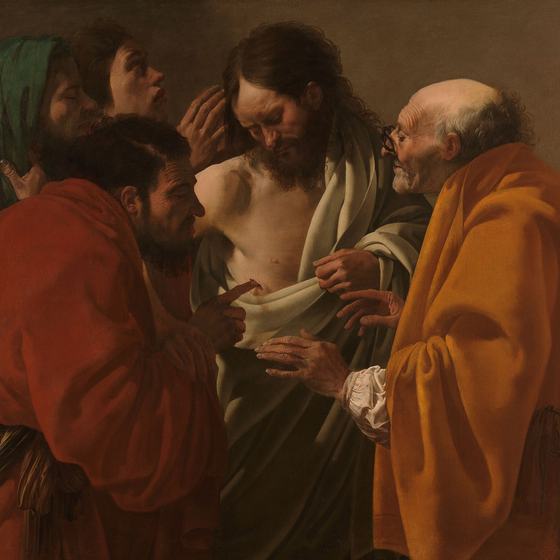
Hendrick ter Brugghen
A highly individual Utrecht interpreter known for close figures, expressive gesture and unusual pale colour.
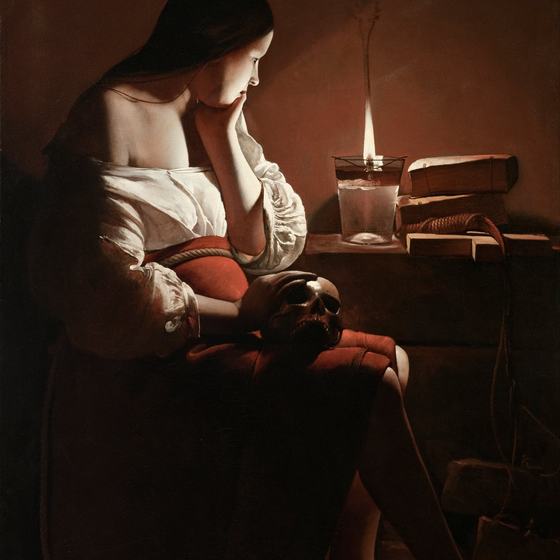
Georges de La Tour
A Lorraine painter whose probably indirect reception of the movement produced radically still candlelit scenes.
Further people and places
Bartolomeo Manfredi
A crucial mediator of half-length tavern, music, gambling and fortune-telling scenes.
Orazio Gentileschi
A direct associate who converted Caravaggist method into lucid colour, refined surface and courtly movement.
Dirck van Baburen
A forceful Utrecht Caravaggist whose religious and secular compositions circulated widely after his early death.
Valentin de Boulogne
A French painter in Rome who gave Caravaggist companies melancholy, colour and intricate social structure.
Rome
The public and private centre where chapel commissions, collections and visiting artists created the first network.
Naples
The second Italian centre, shaped by Caravaggio's two stays, local institutions and Spanish political patronage.
Utrecht
The northern city where returned Italian travellers made Caravaggism a strong local language in the 1620s.
Major artists directory
| Name | Nationality | Key Works |
|---|---|---|
| Artemisia Gentileschi | Italian | Judith Slaying Holofernes, Saint Mary Magdalene |
| Bartolomeo Manfredi | Italian | Bacchus and a Drinker |
| Battistello Caracciolo | Italian | The Liberation of Saint Peter |
| Caravaggio | Italian | The Cardsharps, The Calling of Saint Matthew, The Supper at Emmaus, The Sacrifice of Isaac, The Denial of Saint Peter, The Seven Works of Mercy |
| Carlo Saraceni | Italian | Judith with the Head of Holofernes |
| Cecco del Caravaggio | Italian | Ecce Homo, The Resurrection |
| Diego Velázquez | Spanish | The Waterseller of Seville |
| Dirck van Baburen | Dutch | The Procuress |
| Francisco de Zurbarán | Spanish | Saint Serapion |
| Georges de La Tour | French | The Cheat with the Ace of Diamonds, The Magdalen with the Smoking Flame |
| Gerrit van Honthorst | Dutch | The Concert, The Matchmaker |
| Giovanni Baglione | Italian | Divine Love and Profane Love |
| Guercino | Italian | The Raising of Lazarus |
| Hendrick ter Brugghen | Dutch | The Incredulity of Saint Thomas, The Adoration of the Magi |
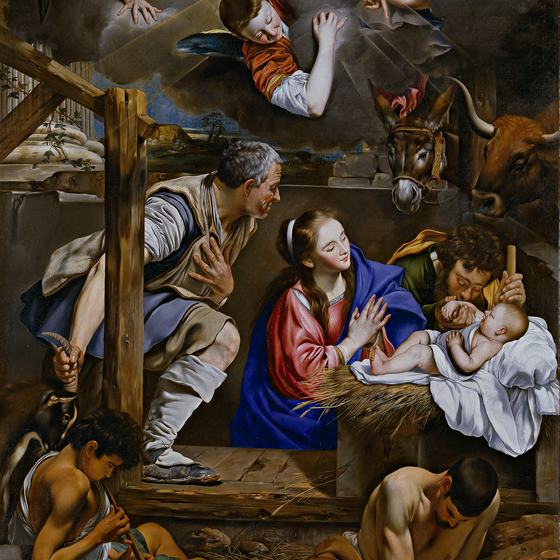
| Juan Bautista Maíno | Spanish | The Adoration of the Shepherds |
| Jusepe de Ribera | Spanish | Archimedes |
| Louis Finson | Flemish | Judith Beheading Holofernes |
| Massimo Stanzione | Italian | Judith with the Head of Holofernes |
| Orazio Gentileschi | Italian | The Annunciation, Danaë and the Shower of Gold |
| Simon Vouet | French | The Fortune Teller |
| Theodoor Rombouts | Flemish | The Card Players |
| Valentin de Boulogne | French | Musical Company with a Fortune-Teller, Concert with a Bas-Relief |
How to look at Caravaggist painting
Start with the light, but do not stop at “dramatic”. Ask what it selects. Does illumination reveal recognition, expose a trick, isolate suffering or bind a group around a flame? Then ask what remains difficult to see. Darkness can withhold information as actively as light supplies it.[43] [44]
Look at the threshold. A basket, elbow, blade or hand may project towards the frame. Figures often occupy a shallow band close to the spectator. Notice whether they acknowledge you, turn away or remain absorbed. The movement repeatedly makes viewing part of the action.
Study hands before faces. Fingers count Peter's denials, point to a card, hold a candle, restrain a victim, tune an instrument or interrupt a sacrifice. Gesture carries narrative across paintings whose architecture has been deliberately reduced.
Check the colour. If the picture is described as tenebrist, identify the blues, yellows, violets and reds within its shadow. Compare flesh under cool daylight with flesh warmed by a flame. This protects individual artists from disappearing into a generic brown-black style.
Ask where the work was meant to be seen. A chapel altarpiece addressed worshippers from a fixed angle. A cabinet picture circulated among collectors. A tavern company bought for a home could turn guests into fellow spectators. Site, scale and ownership change the meaning of immediacy.
Separate evidence from resemblance. Did the artist live in Rome, share a patron or copy a known composition? Was the contact through another painter? Is the relation only visual? The answer does not determine quality, but it makes the history more precise.
Finally, compare transformations. Put Caravaggio's Incredulity of Saint Thomas beside Ter Brugghen's version, or his Judith beside Artemisia's. List what survives, what changes position and what becomes newly important. Influence becomes visible as thought.
Landmark Caravaggism exhibitions
Five exhibitions and catalogues that materially changed how the movement and its regional transformations are understood.
The Age of Caravaggio
Metropolitan Museum of Art and Museo di Capodimonte
A landmark survey that helped reconstruct Caravaggio’s oeuvre, reputation and international field.
Caravaggio and Caravaggesque Painters in Florence
Uffizi Galleries, Florence
A regional reconstruction showing how paintings and artists moved through Medici collections and Tuscan court culture.
Beyond Caravaggio
National Gallery, London and partner venues
An international exhibition centred on how followers transformed light, subject and regional practice.
Valentin de Boulogne: Beyond Caravaggio
Metropolitan Museum of Art and Musée du Louvre
The first monographic exhibition devoted to Valentin reunited forty-five of roughly sixty surviving paintings.
Orazio Gentileschi and the Birth of Caravaggism in Rome
Gallerie Nazionali Barberini Corsini, Rome
A focused exhibition placing Orazio’s direct Roman response within the movement’s earliest network.
Frequently Asked Questions
Caravaggism is a later art-historical name for the international response to Caravaggio, especially during the first half of the seventeenth century. It includes artists who knew him, artists who saw his public or private paintings, and artists who learned through followers, copies or travelling works. It was not a formal school with rules or membership.[1] [2] [3]
Tenebrism is an intensified use of darkness in which strongly illuminated figures or objects emerge from a largely shadowed field. It is narrower than chiaroscuro, the general modelling or organisation of form through light and dark. Tenebrism is a technique or effect, whereas Caravaggism describes an art-historical relationship. The two often overlap but are not interchangeable.[1] [43] [44]
No. Artists had modelled forms with light and shade for centuries, and strong contrasts existed in earlier Italian and northern art. Caravaggio made directed light unusually forceful by joining it to close figures, dark or plain settings and concentrated moments of action. His achievement was a powerful recombination and transformation, not invention from nothing.[3] [43] [46]
He worked directly on prepared canvas and no securely attributed preparatory drawings survive. However, technical study has identified incisions, brush indications, changes and careful geometric organisation. “Without drawing” should not mean without planning. Models supplied bodily information within highly constructed compositions.[6] [8] [10]
Important Italian and Rome-based figures include Orazio and Artemisia Gentileschi, Bartolomeo Manfredi, Carlo Saraceni, Cecco del Caravaggio and Battistello Caracciolo. Ribera became central in Naples. Honthorst, Ter Brugghen and Baburen led the Utrecht current. Valentin de Boulogne was the outstanding French painter in Rome, while La Tour developed a probably indirect and highly individual response.[21] [25] [29] [35]
Her early work was strongly shaped by Caravaggio through Orazio Gentileschi's direct response, so “Caravaggist” is useful. It is not sufficient. Artemisia developed her own colour, narrative structures and representations of women acting under pressure. Her art should not be reduced either to following a male master or to autobiography.[17] [19] [20]
Honthorst, Ter Brugghen and Baburen brought experience of Roman painting back to Utrecht. They are known for musicians, tavern scenes, religious subjects, life-size half-length figures and dramatic light. Honthorst specialised in artificial illumination; Ter Brugghen often used distinctive pale colour; Baburen favoured muscular compressed bodies. Their shared journey did not produce one identical style.[27] [29] [30] [31]
The evidence requires caution. Early Velázquez shared concerns with Caravaggist naturalism, but he probably had not seen an original Caravaggio while working in Seville. La Tour's Italian travel is unproved, and his knowledge was probably mediated through French, northern or reproduced examples. Both belong to the wider reception of the movement without needing direct personal contact.[25] [38] [40] [41]
It did not end on one date. By the middle of the seventeenth century, classicising, decorative and courtly styles gained greater institutional prestige, while leading Caravaggists died, moved or changed direction. The concentrated Roman network weakened, but dramatic naturalism and tenebrist lighting continued elsewhere. Later criticism also lowered Caravaggio's standing until twentieth-century scholarship reconstructed his oeuvre and influence.[2] [39] [45] [49]
Discussion
Which transformation of Caravaggio's example feels most original to you: Artemisia's coordinated action, Honthorst's visible night, Ter Brugghen's colour, Ribera's tactile surfaces, Valentin's social melancholy or La Tour's silence? What does your choice suggest about the difference between influence and imitation?
Reader Insights
Ask what it reveals, what it withholds and whether it describes a physical source or directs narrative attention.
Notice hands, tables and cropped bodies that press the painted action towards the spectator’s space.
Track what each follower keeps, changes or rejects instead of treating resemblance as imitation.
Join the Conversation
Which transformation of Caravaggio’s example feels most original to you, and why?
References
- “Caravaggism,” Getty Art and Architecture Thesaurus, getty.edu. View Source
- “Caravaggist,” National Gallery, London, nationalgallery.org.uk. View Source
- Keith Christiansen, “Caravaggio and His Followers,” Metropolitan Museum of Art, metmuseum.org. View Source
- “Michelangelo Merisi da Caravaggio,” National Gallery, London, nationalgallery.org.uk. View Source
- “Caravaggio,” Museo Nacional del Prado, museodelprado.es. View Source
- “The Supper at Emmaus,” National Gallery, London, nationalgallery.org.uk. View Source
- “Picture of the Month: The Supper at Emmaus,” National Gallery, London, nationalgallery.org.uk. View Source
- “The Cardsharps,” Kimbell Art Museum, kimbellart.org. View Source
- Keith Christiansen, A Caravaggio Rediscovered: The Lute Player, Metropolitan Museum of Art, resources.metmuseum.org. View Source
- “Sacrifice of Isaac,” Uffizi Galleries, uffizi.it. View Source
- “Caravaggio and the Seventeenth Century,” Uffizi Galleries, uffizi.it. View Source
- “Caravaggio and Caravaggesque Painters in Florence,” Uffizi Galleries, uffizi.it. View Source
- “Caravaggio Napoli,” Museo e Real Bosco di Capodimonte, capodimonte.cultura.gov.it. View Source
- Caravaggio Napoli: comunicato stampa, Museo e Real Bosco di Capodimonte, capodimonte.cultura.gov.it. View Source
- “Caravaggio: Seven Works of Mercy,” Pio Monte della Misericordia, piomontedellamisericordia.it. View Source
- Orazio Gentileschi e la nascita del caravaggismo a Roma, Gallerie Nazionali Barberini Corsini, barberinicorsini.org. View Source
- “Orazio and Artemisia Gentileschi,” Metropolitan Museum of Art, metmuseum.org. View Source
- “Orazio Gentileschi in Genoa,” J. Paul Getty Museum, getty.edu. View Source
- “Artemisia Gentileschi: The Woman, the Artist,” J. Paul Getty Museum, getty.edu. View Source
- “Saint Mary Magdalene,” Uffizi Galleries, uffizi.it. View Source
- Annick Lemoine and Keith Christiansen, eds., Valentin de Boulogne: Beyond Caravaggio, resources.metmuseum.org. View Source
- “Valentin de Boulogne: réinventer Caravage,” Musée du Louvre, louvre.fr. View Source
- Masterpieces of Painting in the J. Paul Getty Museum, getty.edu. View Source
- “Carlo Saraceni,” National Gallery, London, nationalgallery.org.uk. View Source
- “Beyond Caravaggio: Exhibition in Focus,” National Gallery, London, nationalgallery.org.uk. View Source
- “Gerrit van Honthorst,” National Gallery, London, nationalgallery.org.uk. View Source
- “The Concert, 1623,” National Gallery of Art, Washington, nga.gov. View Source
- “Hendrick ter Brugghen,” National Gallery, London, nationalgallery.org.uk. View Source
- “Caravaggisme,” Rijksmuseum, rijksmuseum.nl. View Source
- “De ongelovige Thomas,” Rijksmuseum, rijksmuseum.nl. View Source
- “De aanbidding der koningen,” Rijksmuseum, rijksmuseum.nl. View Source
- “Old Woman Reading,” Rijksmuseum, rijksmuseum.nl. View Source
- “Fray Juan Bautista Maíno,” Museo Nacional del Prado, museodelprado.es. View Source
- “Juan Bautista Maíno (1581–1649),” Museo Nacional del Prado, museodelprado.es. View Source
- “Jusepe de Ribera lo Spagnoletto,” Museo Nacional del Prado, museodelprado.es. View Source
- “José de Ribera,” Museo Nacional del Prado, museodelprado.es. View Source
- “Velázquez y el Siglo de Oro,” Museo Nacional del Prado, museodelprado.es. View Source
- “Velázquez's Painting Technique,” National Gallery Technical Bulletin, nationalgallery.org.uk. View Source
- “Zurbarán 1598–1664,” Musée du Louvre, louvre.fr. View Source
- Le Tricheur à l'as de carreau: dossier pédagogique, Musée du Louvre, api-www.louvre.fr. View Source
- “Georges de La Tour 1593–1652,” Musée du Louvre, boutique.louvre.fr. View Source
- “Caravaggio and Bernini: Baroque in Rome,” Rijksmuseum, rijksmuseum.nl. View Source
- “How Shade Tells a Story,” J. Paul Getty Museum, getty.edu. View Source
- Finding the Terms in Sources, Getty Vocabulary Program, getty.edu. View Source
- “The Lives of Caravaggio,” J. Paul Getty Museum, getty.edu. View Source
- “Talking About Paintings: Caravaggio,” J. Paul Getty Museum, getty.edu. View Source
- “The Denial of Saint Peter,” Metropolitan Museum of Art, metmuseum.org. View Source
- “Caravaggio and Depicting Darkness at Noon,” Metropolitan Museum of Art, metmuseum.org. View Source
- The Age of Caravaggio, Metropolitan Museum of Art and Museo di Capodimonte, metmuseum.org. View Source
- “The Council of Trent and the Call to Reform Art,” Smarthistory, smarthistory.org. View Source
- Image references 51–76: open-access reproductions and institutional collection records.
View 26 image sources
01 · commons.wikimedia.org02 · commons.wikimedia.org03 · commons.wikimedia.org04 · commons.wikimedia.org05 · commons.wikimedia.org06 · commons.wikimedia.org07 · commons.wikimedia.org08 · commons.wikimedia.org09 · commons.wikimedia.org10 · commons.wikimedia.org11 · commons.wikimedia.org12 · commons.wikimedia.org13 · commons.wikimedia.org14 · commons.wikimedia.org15 · commons.wikimedia.org16 · commons.wikimedia.org17 · commons.wikimedia.org18 · commons.wikimedia.org19 · commons.wikimedia.org20 · commons.wikimedia.org21 · commons.wikimedia.org22 · commons.wikimedia.org23 · commons.wikimedia.org24 · commons.wikimedia.org25 · commons.wikimedia.org26 · commons.wikimedia.org