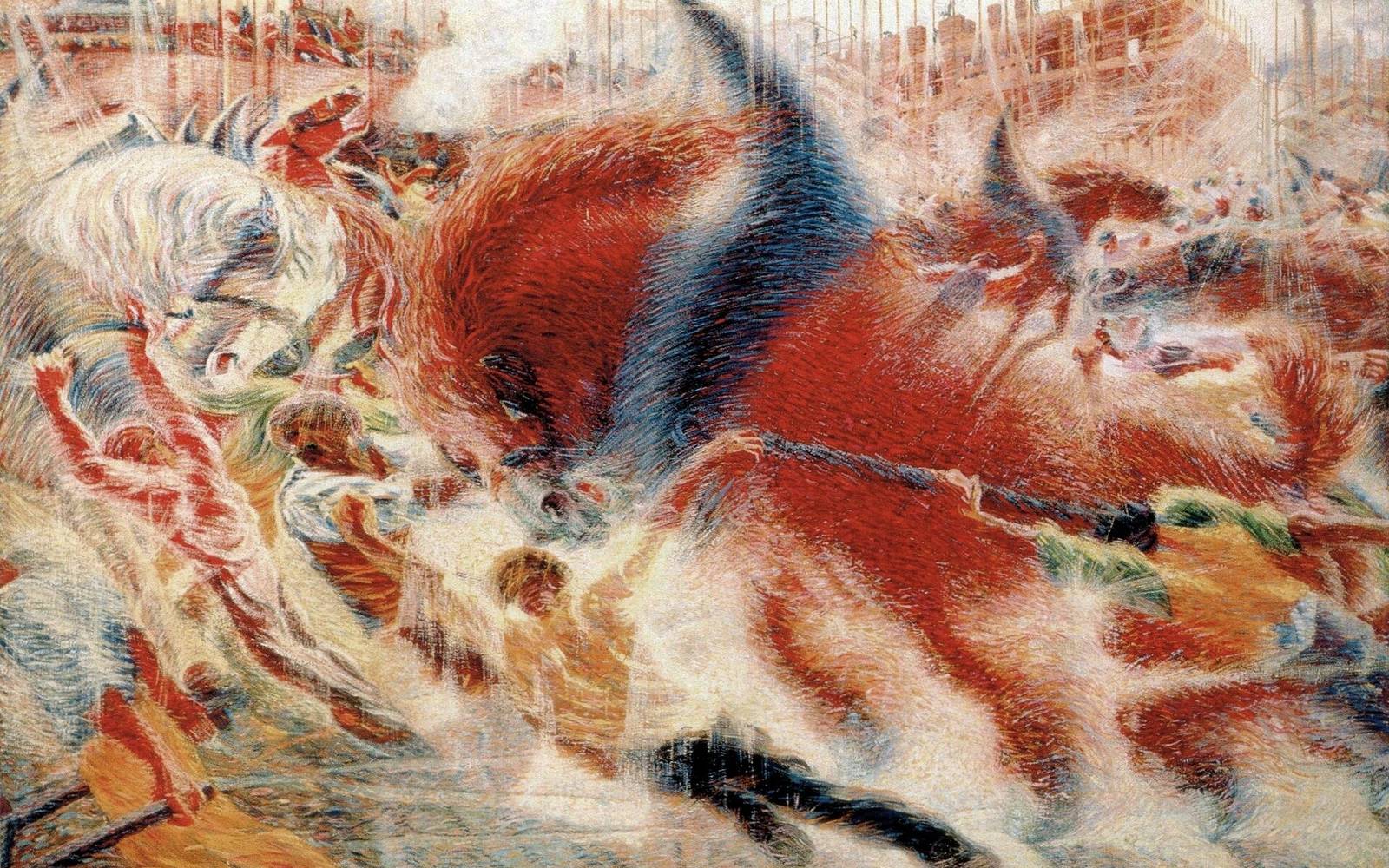
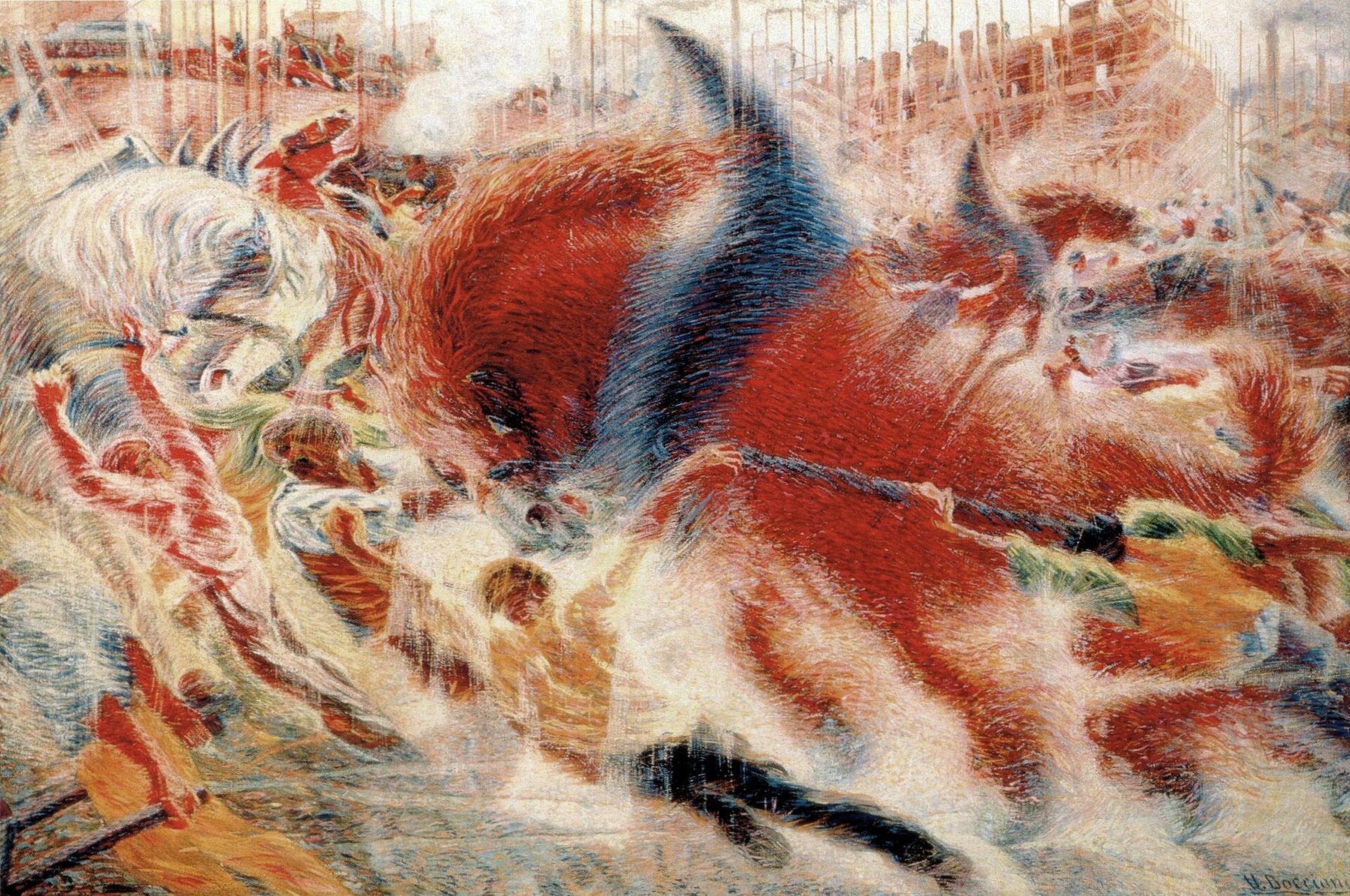
Image reference: Umberto Boccioni's The City Rises, 1910.
At a Glance
- Core period1909–1944; heroic visual phase c. 1910–1916
- Founding centreMilan, with decisive activity in Rome and Paris
- Known fordynamism, simultaneity, force-lines, manifestos, noise, total design and aeropittura
- Key figuresFilippo Tommaso Marinetti, Umberto Boccioni, Giacomo Balla, Carlo Carrà, Luigi Russolo and Gino Severini
- Later developmentmechanical art, applied design, regional groups and aerial painting
- Political contextnationalism, interventionism, misogyny, war and accommodation with Fascist institutions
Contents
- Where it fits
- How Futurism began
- Learning to paint movement
- City, crowd and state of mind
- Four stages
- Artists, writers and designers
- Words, noise and audiences
- Women remake Futurism
- War, nationalism and Fascism
- Essential works
Where Futurism fits
Giacomo Balla
Principal activityFilippo Tommaso Marinetti
Principal activityCarlo Carrà
Principal activityUmberto Boccioni
Principal activityGino Severini
Principal activityLuigi Russolo
Principal activityFortunato Depero
Principal activityBenedetta Cappa
Principal activityFuturism was the avant-garde that wanted to accelerate everything: painting, poetry, music, buildings, clothes, meals, political life and even the behaviour of an audience. Launched in Italy in 1909 by the poet Filippo Tommaso Marinetti, it made the industrial city, electric light, machines, speed and flight into signs of a new age. Its artists fragmented bodies, repeated limbs, tilted horizons, scattered words across pages and composed with noises that polite culture had excluded. Yet the movement's appetite for renewal was joined from the beginning to nationalism, misogyny and a celebration of violence. Its history is thrilling, inventive and deeply compromised at the same time.[1] [2] [3]
The familiar image of Futurism is a moving figure multiplied across a canvas: a dog with many legs, a cyclist dissolved into colour, or a striding body opening into the air. That image belongs mainly to the movement's “heroic” phase, from about 1909 to 1916. Futurism continued much longer. Under Marinetti's leadership it developed a mechanical visual language in the 1920s, an aerial one in the 1930s, and active relationships with Fascist institutions until his death in 1944. It was never one consistent style. It was an organisation, a publicity system and an argument about how art might enter every part of modern life.[4]
How Futurism began
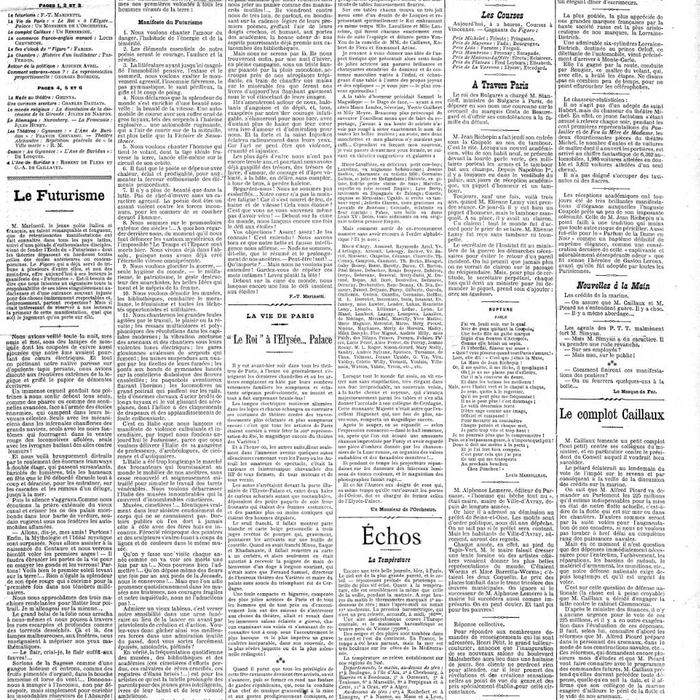
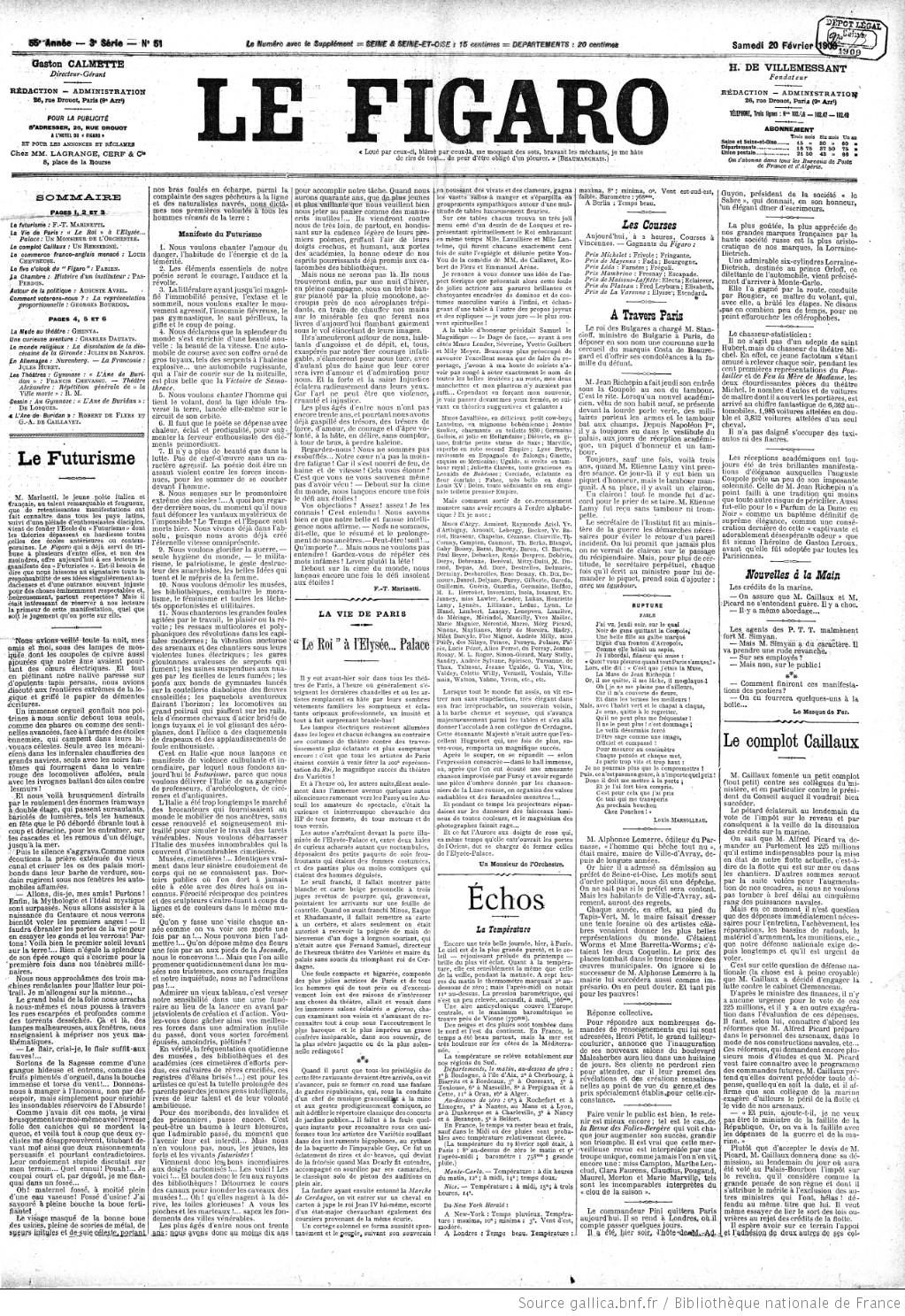
On 20 February 1909, the Paris newspaper Le Figaro published Marinetti's “Founding and Manifesto of Futurism.” A feverish fictional prologue describes young men driving through the night, crashing and emerging as heralds of a transformed world. The numbered declarations praise youth, machines, danger, aggression and speed. They attack museums and academies as institutions that keep Italy dependent on its past. They also glorify war and announce “contempt for woman,” phrases that cannot be separated from the movement's cult of militant masculinity.[5] [50]
The manifesto did not report the existence of a mature visual style. It created a name, a tone and a public platform. Marinetti understood that an avant-garde needed distribution as much as doctrine. He had the means to print pamphlets, organise events and cultivate newspapers. Futurist statements were mailed internationally, pasted into journals and thrown into crowds. Their imperatives—destroy, burn, sing, exalt—made reading feel like an event. The movement would issue programmes for painting, sculpture, literature, music, noise, architecture, theatre, photography, clothing, tactile art, aviation and cooking. The manifesto became both artwork and press release.[42] [48]
In 1910 the painters Umberto Boccioni, Carlo Carrà and Luigi Russolo in Milan joined Giacomo Balla in Rome and Gino Severini in Paris to sign a collective programme. Their “Technical Manifesto of Futurist Painting” rejected the isolated, motionless object. It argued that bodies and surroundings penetrated one another and that a running horse did not have four legs but a rhythmic multitude. The group promised not merely to represent a modern subject but to reconstruct the sensation of seeing within a world of continuous motion.[6] [40]
This founding circle was held together by declarations, exhibitions and argument rather than uniform training. Balla was older and had taught Boccioni and Severini. Severini lived in Paris and connected the Italians to French artists and galleries. Boccioni became the strongest visual theorist. Carrà brought memories of political demonstrations and urban labour. Russolo moved between painting and sound. Their differences explain why a useful definition of Futurism depends on methods—simultaneity, force, interpenetration and provocation—rather than one identifying brushstroke.
Artists, writers and designers to know
Filippo Tommaso Marinetti
Marinetti created Futurism's name, publicity system and collective voice, joining aesthetic revolt to nationalism, misogyny and the glorification of violence.
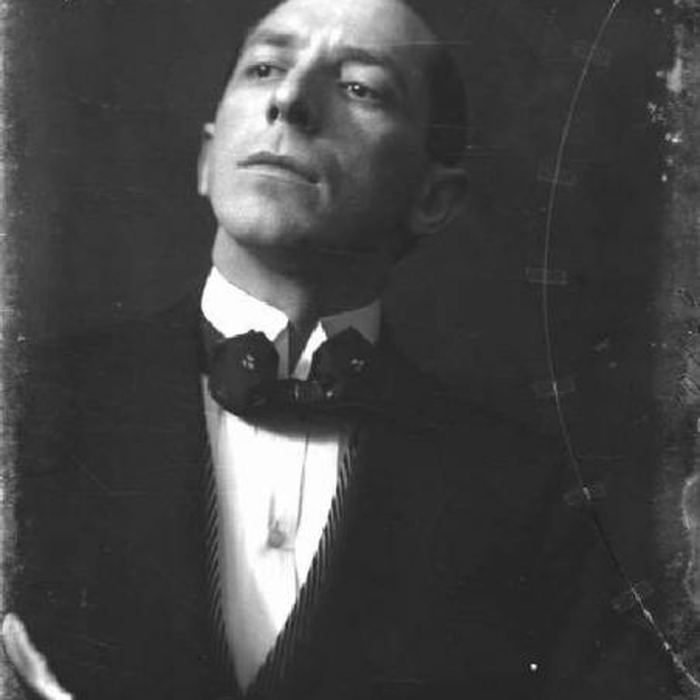
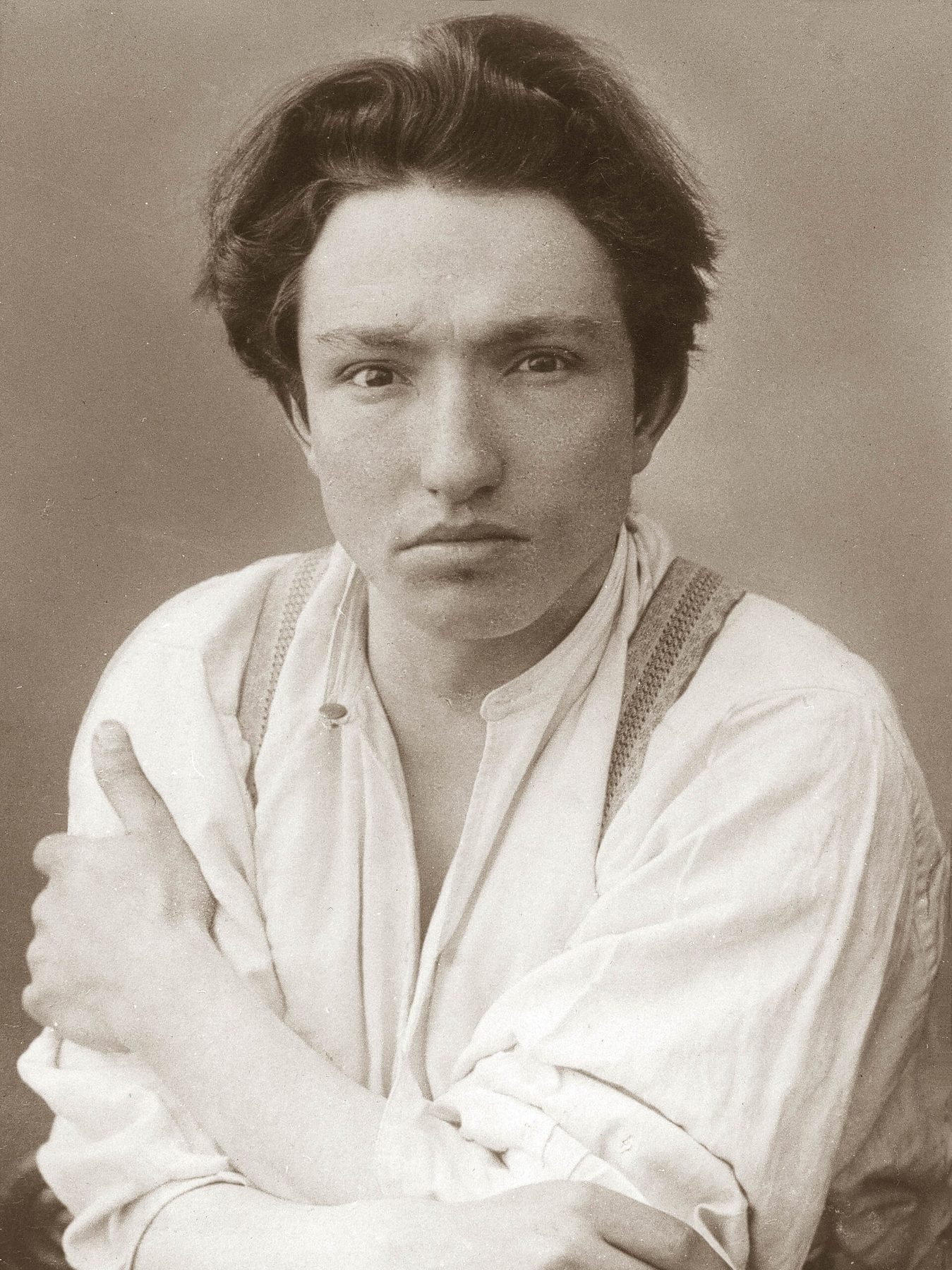
Umberto Boccioni
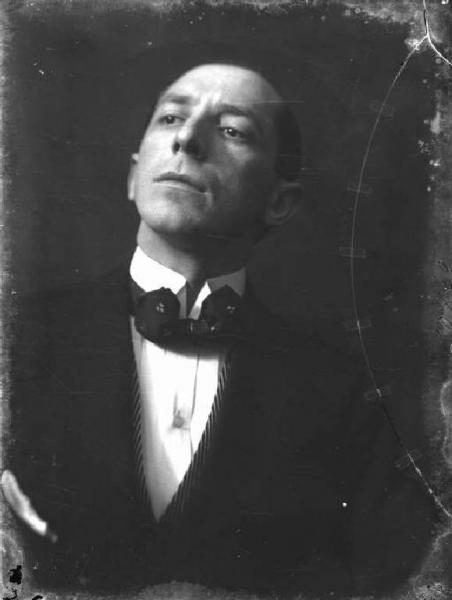
Boccioni became the movement's strongest visual theorist, making bodies, objects and modern environments continuous fields of force.
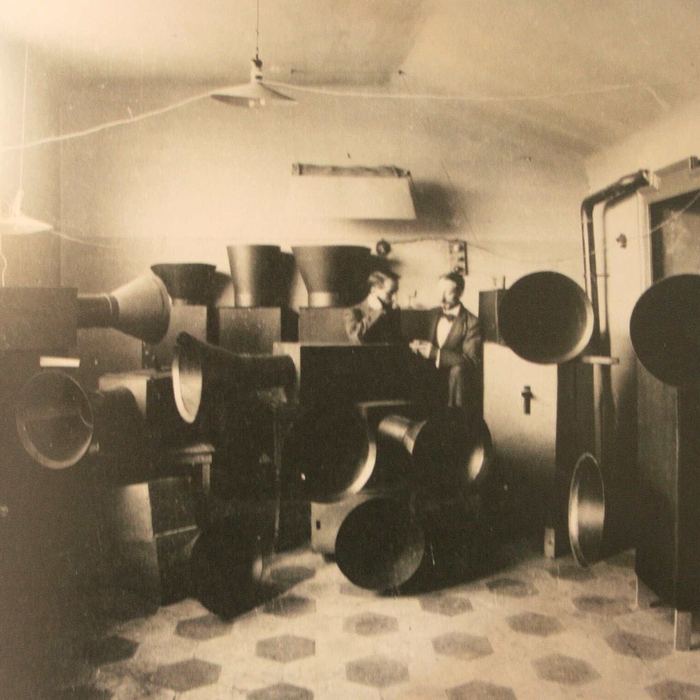
Luigi Russolo
Russolo expanded Futurism into sound by classifying industrial noises and constructing the intonarumori that performed them.
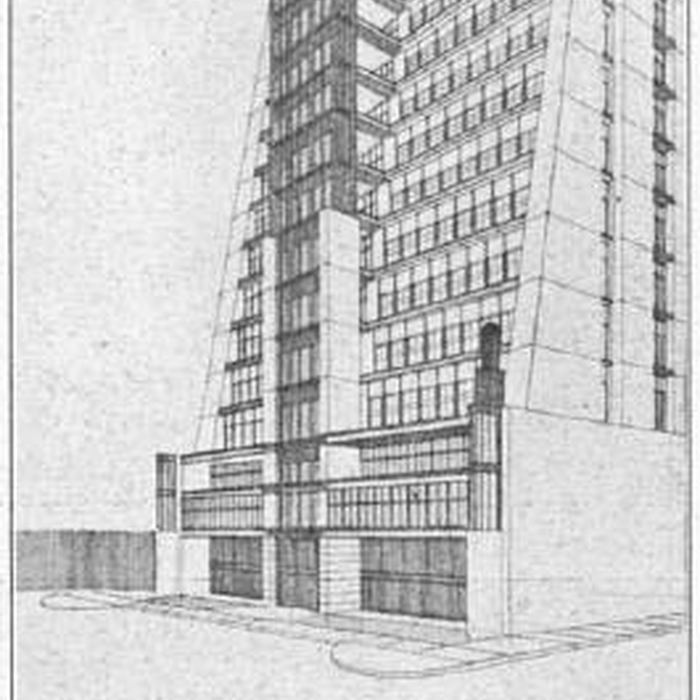
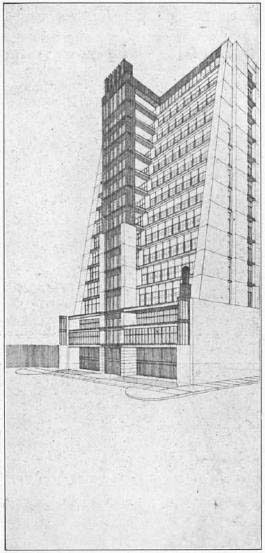
Antonio Sant’Elia
Sant’Elia made lifts, transport levels, power and circulation the monumental language of an unbuilt modern city.
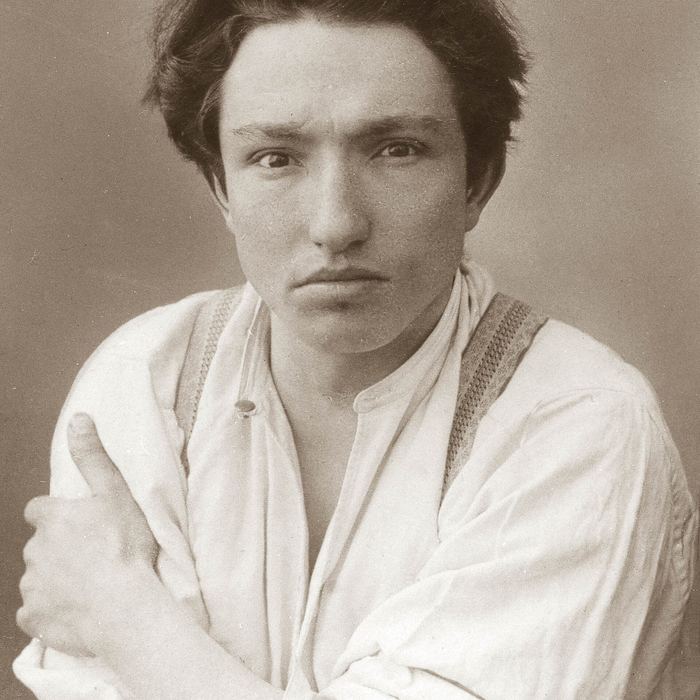
Fortunato Depero
Depero sustained total art across puppets, textile mosaics, furniture, typography, commercial design and museum-making.
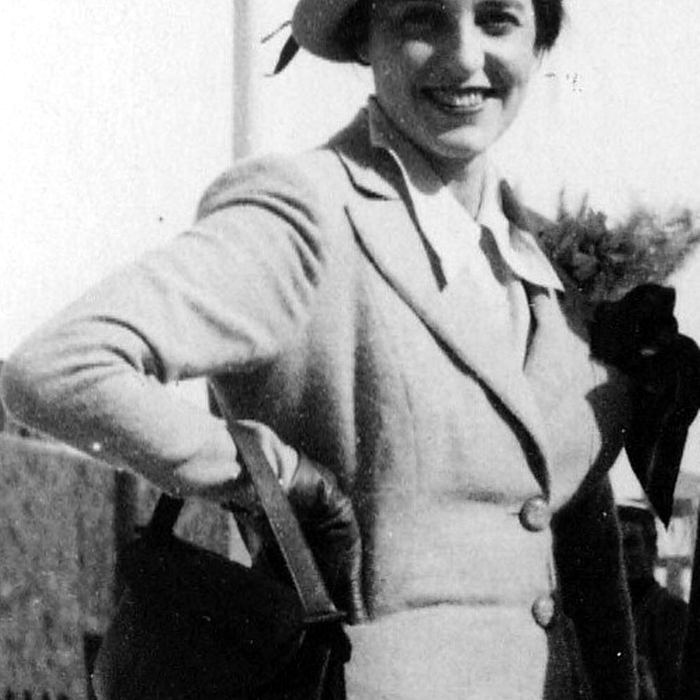
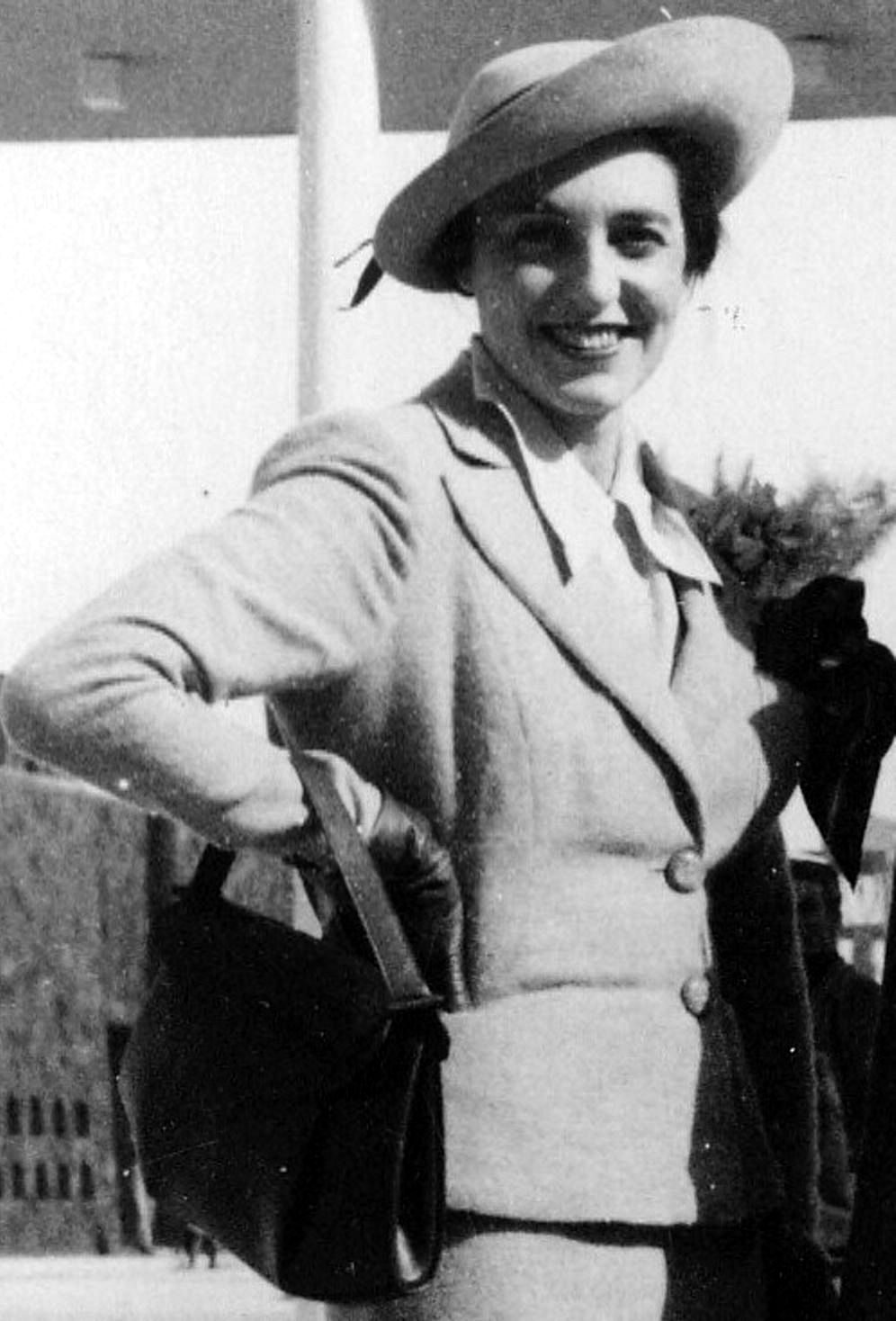
Benedetta Cappa
Benedetta joined literature and aerial painting, creating monumental communication murals that broadened later Futurism beyond combat and the isolated pilot.
Learning to paint movement
Futurist painting had a history before it had a name. Balla, Boccioni and Severini had worked with Divisionism, the Italian practice of placing small strokes of colour beside one another so that light appears to vibrate optically. Electric lamps, night streets and backlit figures already offered them modern subjects. Symbolism supplied another resource: colour and form could embody memory, emotion or invisible force instead of simply describing surfaces. Milan's current of social painting also made workers, crowds and urban change legitimate subjects.[19] [28] [31]
Photography complicated this inheritance. Nineteenth-century motion studies by Eadweard Muybridge and Étienne-Jules Marey had broken an action into successive phases. Balla's repeated hands, feet and paws plainly belong to the visual culture those experiments created. But Futurists rarely wanted the neutrality of a laboratory plate. Their claim was that an artist should synthesise what a moving body does to the observer, the room and the memory of preceding moments. Motion was physiological and psychological as well as measurable.
Paris supplied another decisive encounter. At Severini's urging, Boccioni and Carrà saw recent Cubism in 1911. Fractured planes and multiple viewpoints offered tools for breaking stable contours. The Futurists absorbed them quickly, then insisted on a difference. Early Cubist still lifes by Georges Braque often analyse how objects can be reconstructed through shifting views; Futurist paintings usually press those fractures into the service of duration, noise, contact and urban sensation. The relationship was an exchange and a rivalry, not a neat succession in which one movement simply handed a style to another.[35] [37] [39]
Several Futurist terms help make these works legible. Dynamism meant more than a thing moving from one point to another; it described the thing's continuous relation to forces around it. Simultaneity allowed different moments, viewpoints, memories or senses to occupy one image. Force-lines sent energy beyond an object's outline. Interpenetration dissolved the border between figure and environment. A state of mind translated emotional duration into colour and spatial rhythm. These were flexible propositions, and the painters did not apply them in identical ways.
City, crowd and state of mind
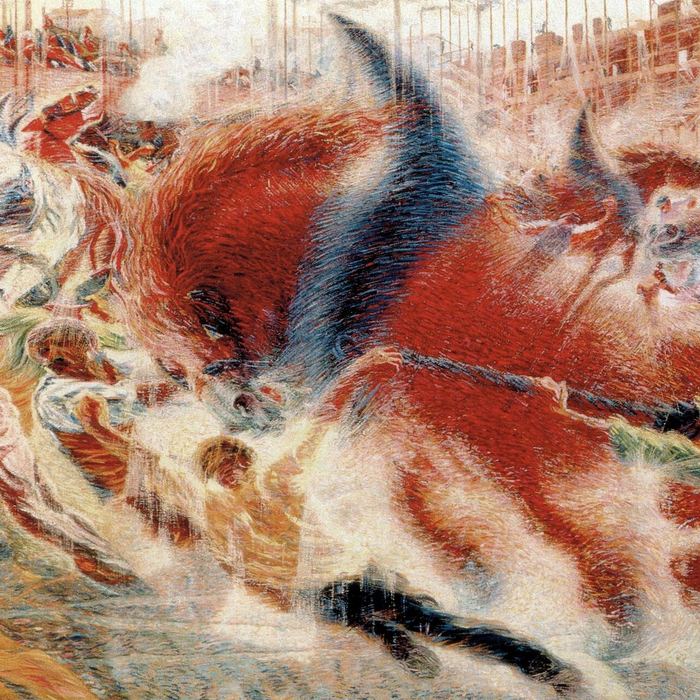
Boccioni's The City Rises of 1910 is often treated as the first major Futurist painting. Nearly three metres wide, it stages a construction site as a vortex. A red horse surges through the centre while workers strain around it; scaffolding and new buildings flicker behind. The city is not a diagram of efficient machinery. Modernisation appears as bodily labour, animal power, capital, dust and unstable colour. Divisionist strokes make every surface vibrate, while diagonals pull the event beyond the frame. The subject is not simply a city being built but the violence and exhilaration of its becoming.[7] [8] [12]
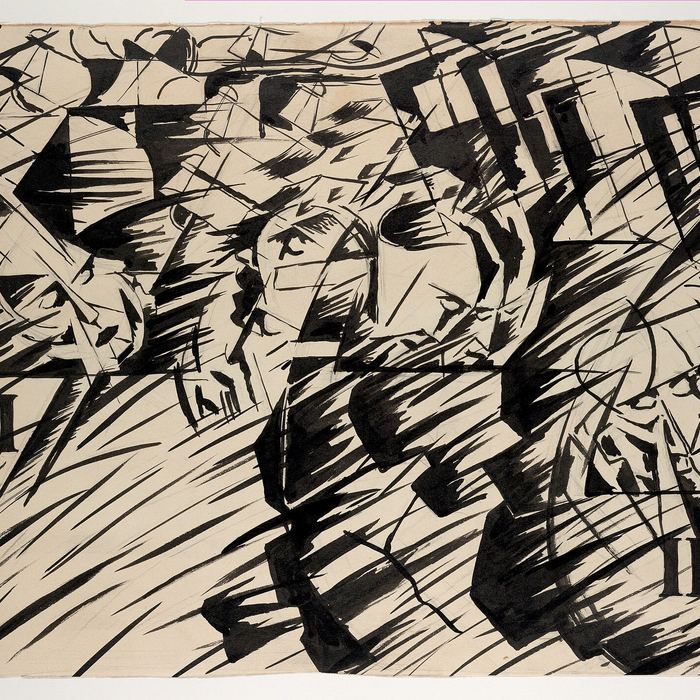
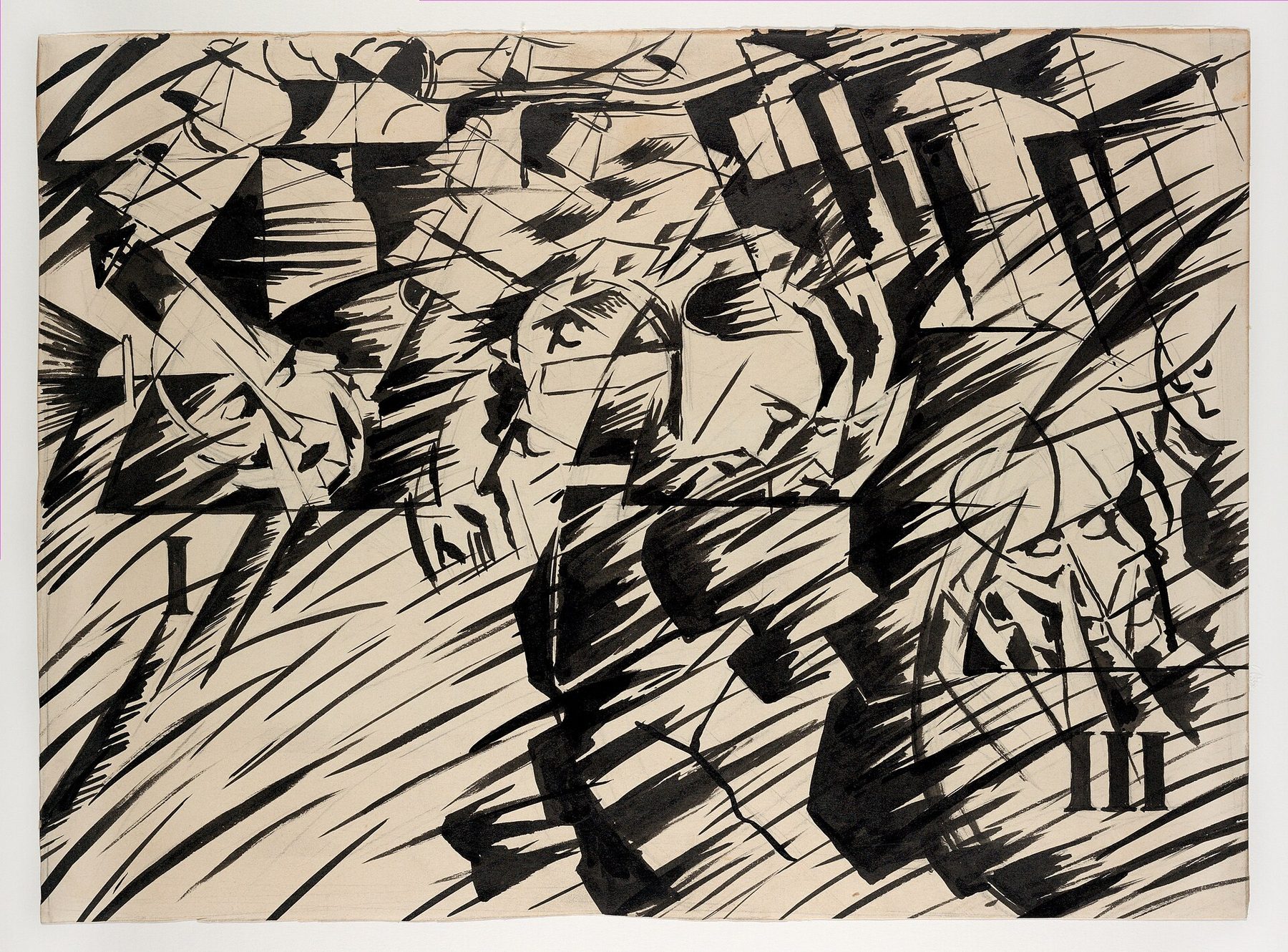
The 1911 States of Mind triptych—The Farewells, Those Who Go and Those Who Stay—moves from public construction to private separation. A railway departure becomes three different structures of feeling. In The Farewells, loops bind embracing figures while a locomotive number pushes into the scene. In Those Who Go, slanting marks and displaced profiles carry passengers away. In Those Who Stay, vertical strokes seem to pin the abandoned figures in place. Boccioni revised the paintings after encountering Cubism, but their central problem remained emotional: how can one picture the duration of leaving rather than a single instant at a station?[13]
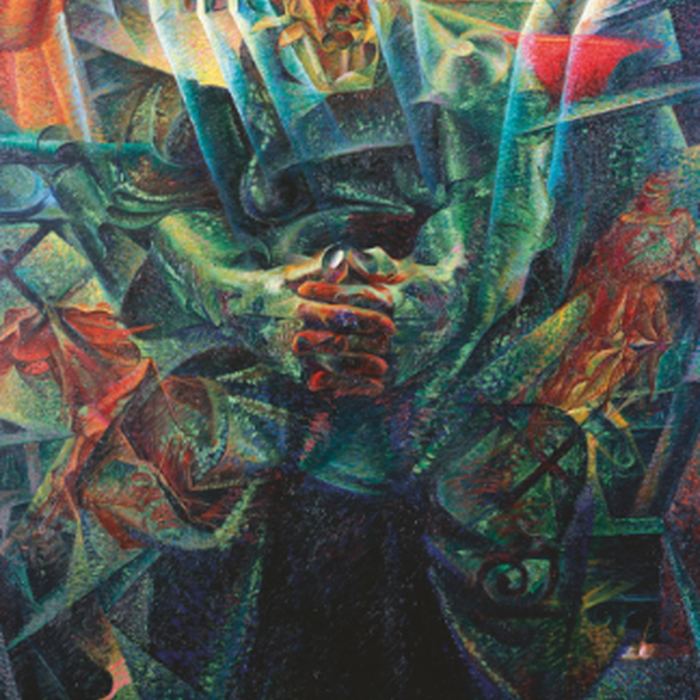
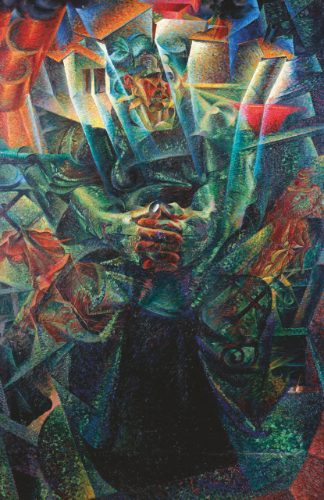
In Materia of 1912, Boccioni's mother Cecilia Forlani Boccioni sits on a balcony with her hands clasped and enlarged. The Italian title resonates between matter and mother. Railings, buildings, street and body pass through one another until portrait and city become reciprocal structures. Her hands anchor the image while her head opens to the light and architecture. Boccioni returned to his mother across painting, drawing, print and sculpture; in this work, an intimate subject carries his most ambitious claim that no object ends at its contour.[18]
Carrà's Funeral of the Anarchist Galli began from a political memory. In 1904 he witnessed mounted police confront mourners carrying the coffin of the anarchist Angelo Galli. In the painting, lances, flags, arms and bodies lock into opposing diagonals around the coffin. Red, ochre and black make the crowd feel combustible. The subject warns against imagining early Futurism as politically simple. Before Fascism existed, its participants moved among anarchist, socialist, syndicalist and nationalist cultures. Carrà's canvas does not reconcile those positions; it turns collective conflict into a field of pressure.[14]
These paintings show why Futurist urbanism cannot be reduced to cheerful worship of machines. Construction creates work and upheaval. Railway technology intensifies separation. A crowd can possess solidarity and violence at once. The movement often treated modernisation as an intoxication, but its strongest images also register the human friction that intoxication produces.
Balla, Severini and different kinds of speed
Balla approached duration through close observation and serial rhythm. In Girl Running on a Balcony, his daughter Luce's repeated head, torso, shoes and bent knees spread across a grid of balcony rails. The figure is recognisable only by assembling separate phases. Dynamism of a Dog on a Leash multiplies paws, tail, leash and the walker's feet into a comic black flutter. The Hand of the Violinist turns a bowing arm into a translucent fan. These paintings borrow the premise of photographic sequence while insisting on paint's ability to compress phases into one decorative field.[32]
By 1913, Swifts: Paths of Movement + Dynamic Sequences transformed observed birds into arcs and vectors. Abstract Speed + Sound reduced a passing motorcar to wedges, curves and repeated bands; reflected light and remembered noise mattered more than an illustrated vehicle. Balla's Iridescent Interpenetrations went further toward non-objective grids of colour. His route demonstrates that Futurist abstraction did not require abandoning sensation. It could emerge from prolonged attention to light, recurrence and passage.[15] [26]
Severini's modernity was Parisian. Dance halls, cafés, advertising and trains supplied movement that was social as well as mechanical. Dynamic Hieroglyphic of the Bal Tabarin mixes a dancer, sequins, text, flags and fractured spectators into a glittering environment. The Dance of the Pan-Pan at the Monico made cancan movement and ambiguous gender performance central to the 1912 Paris exhibition. The original was lost; Severini reconstructed it in the 1950s, so the work seen today is also an act of memory and self-historicisation.[41]
Severini served as an intermediary, but he was not a messenger carrying finished French ideas into Italy. His paintings reshaped what crossed between the two settings. The 1912 show at the Galerie Bernheim-Jeune introduced Boccioni, Carrà, Russolo and Severini to a wide Paris audience and then travelled to other European cities. Critics compared the works to Cubism, sometimes accusing the Italians of dependence. The Futurists converted even hostile reviews into publicity. Exhibition, polemic and neon-lit announcement were parts of one campaign.[36]
The proximity of Robert Delaunay helps clarify the transnational argument about simultaneity and colour, but he was not an Italian Futurist. Nor did all artists who pictured urban motion share the movement's politics or organisation. Similar visual problems could generate Orphism, Rayonism, Vorticism or independent experiments. The label is most reliable when supported by participation, publication and exhibition history.
Seeing movement without merely repeating it
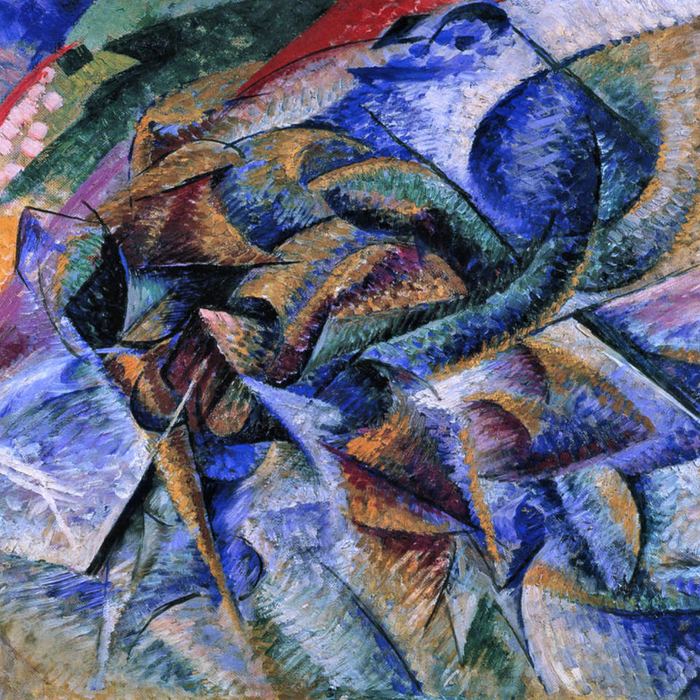
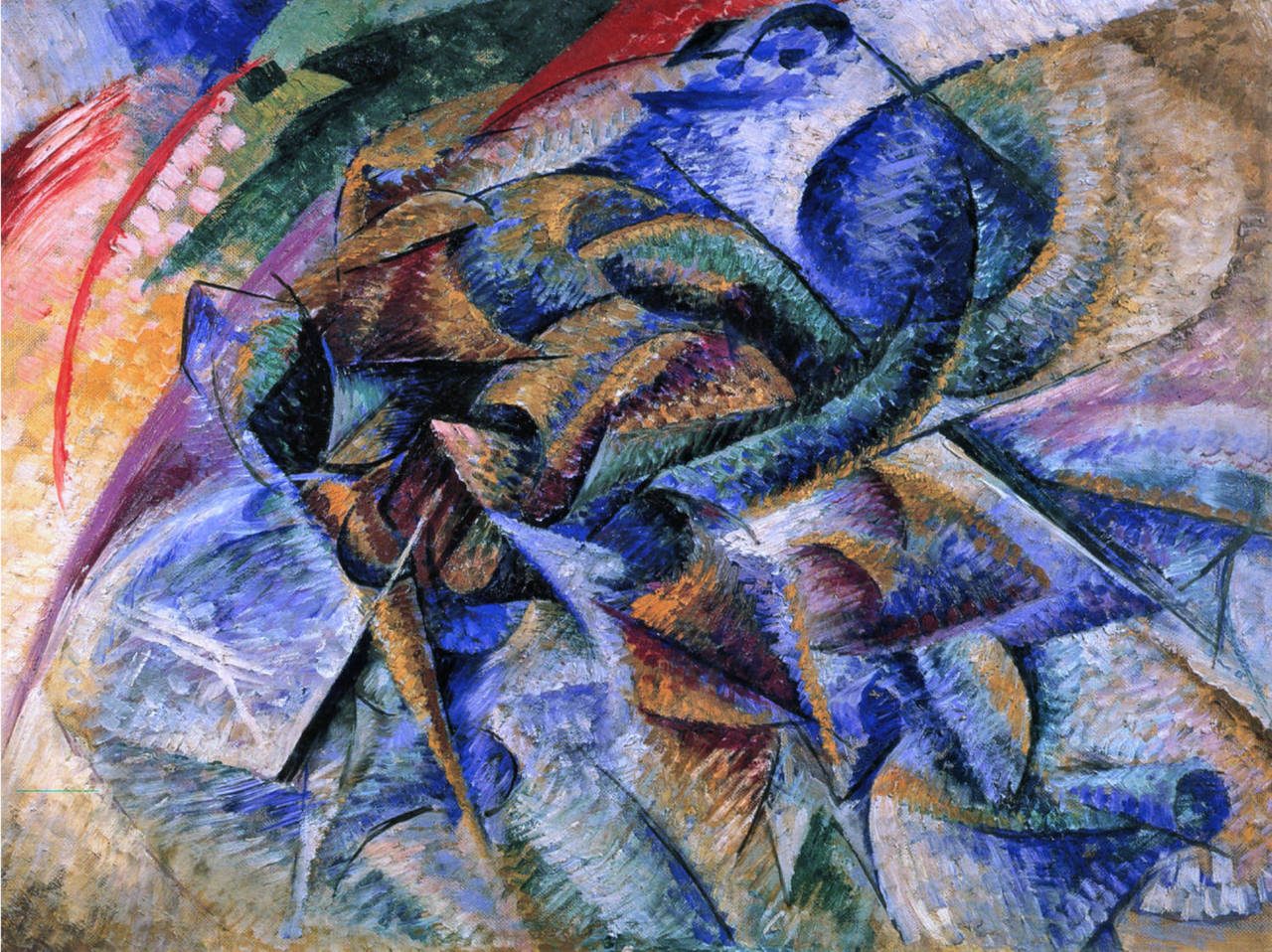
The contrast between Balla and Boccioni is particularly useful in a gallery. Balla often preserves the intervals of an action: one foot becomes six, a bird's route becomes several arcs, a motorcar leaves a chain of reflected signs. The viewer can mentally reconstruct a before and after. Boccioni more often collapses those intervals into one dense organism. In Dynamism of a Cyclist, the rider is difficult to extract from the surrounding wedges of blue, red, yellow and green because bodily effort, bicycle and atmosphere have become one event. The different solutions prevent “Futurist movement” from becoming a formula.[18]
Severini offers a third route. In a dance-hall picture the human figure is multiplied, but mirrors, lights, lettering and spectators multiply too. Motion is produced socially: by looking, music, fashion, flirtation and commercial display. Carrà's crowd scenes give it a fourth meaning, as bodies are organised by political conflict. Even a static portrait could become Futurist if multiple views and environmental pressures destabilised the sitter. The Mart's Portrait of Madame M.S., for example, creates a kaleidoscopic presence without needing a racing vehicle.[19]
Colour also carries time. Divisionist strokes make a surface shimmer as the eye tries to combine them; complementary contrasts produce optical vibration; repeated hues connect distant portions of a composition. In many early works, colour is not a skin applied to a Cubist skeleton. It acts as force. This is why black-and-white reproductions can make Futurist paintings seem more derivative than they are. The movement's arguments about duration often happen through chromatic relationships that disappear when only outlines remain.
Titles matter in a similar way. Plus signs, colons and compound nouns—Abstract Speed + Sound, Paths of Movement + Dynamic Sequences—announce that a work brings several registers into one field. They read like compressed manifestos. A title may instruct the spectator to see a painted curve as noise, memory or pressure rather than an outline. The language can be grandiose, but it is part of the experiment: naming becomes a device for moving perception beyond a represented object.
Follow Futurism through four stages
–1910
Manifesto, recruitment and the modern city
Marinetti launches a movement through mass-circulation print; the founding painters join in 1910 while Boccioni turns Milanese construction into a field of labour and force.
–1914
Painting and sculpture reconstruct sensation
The Paris encounter, states of mind, dynamism and interpenetration produce Futurism's canonical images as painting, sculpture, noise and architecture expand together.
–1928
War, rupture and total reconstruction
Intervention and wartime deaths end the first constellation, while Balla, Depero and later groups carry Futurism into theatre, interiors, books, textiles and mechanical art.
–1944
Flight, institutions and the regime years
Aeropittura tilts the horizon and widens the movement's geography as Futurists pursue state commissions, cosmic space and militarised spectacle under Fascism.
Sculpture: bodies opening into space
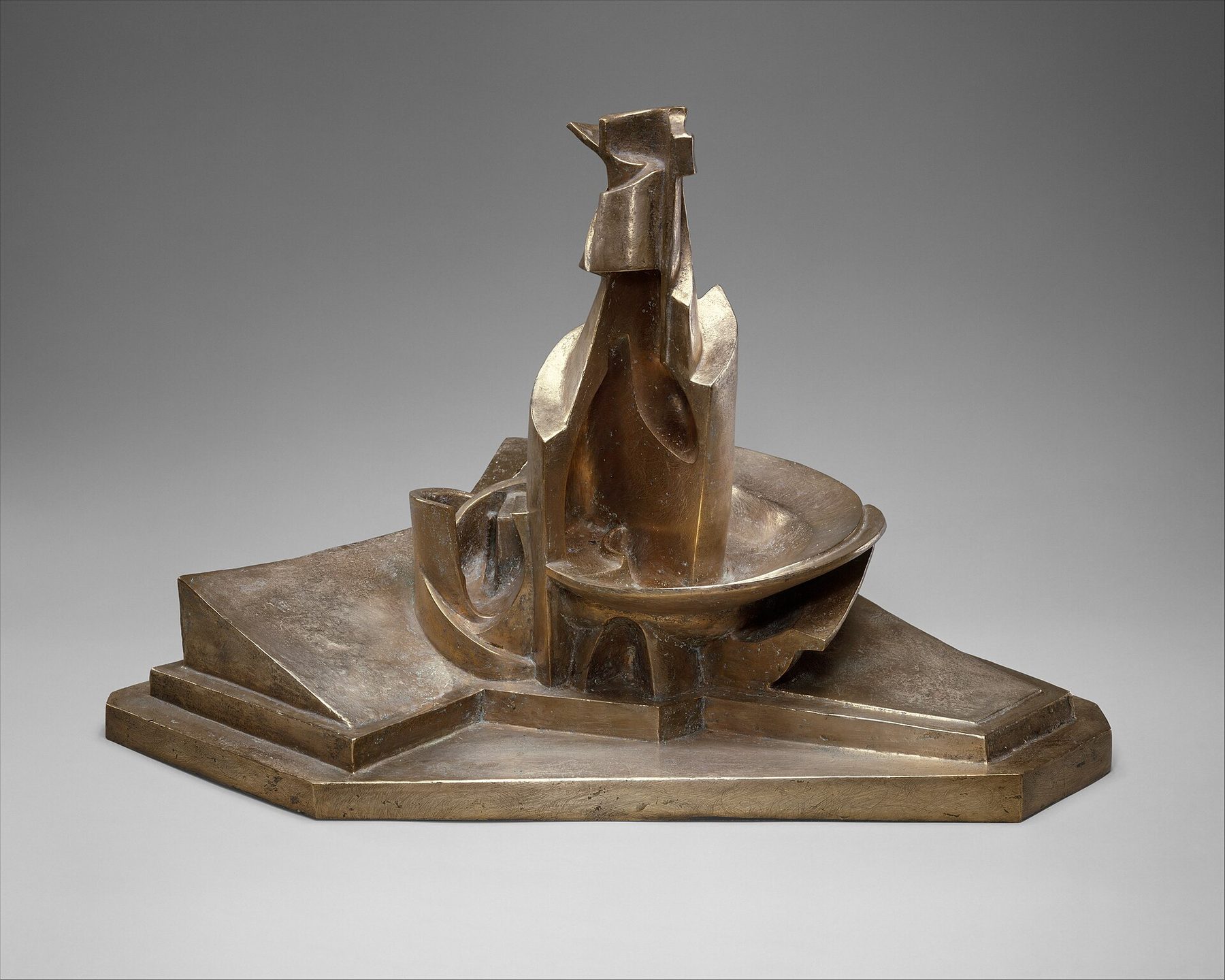
Boccioni's 1912 technical manifesto for sculpture attacked the closed, commemorative statue. He wanted sculpture to include atmosphere and to combine materials from modern life. Development of a Bottle in Space makes an ordinary bottle, saucer and table revolve as nested volumes. The work asks viewers to move around it, discovering that inside and outside cannot be held apart. A humble still-life object becomes an event in real space.[9]
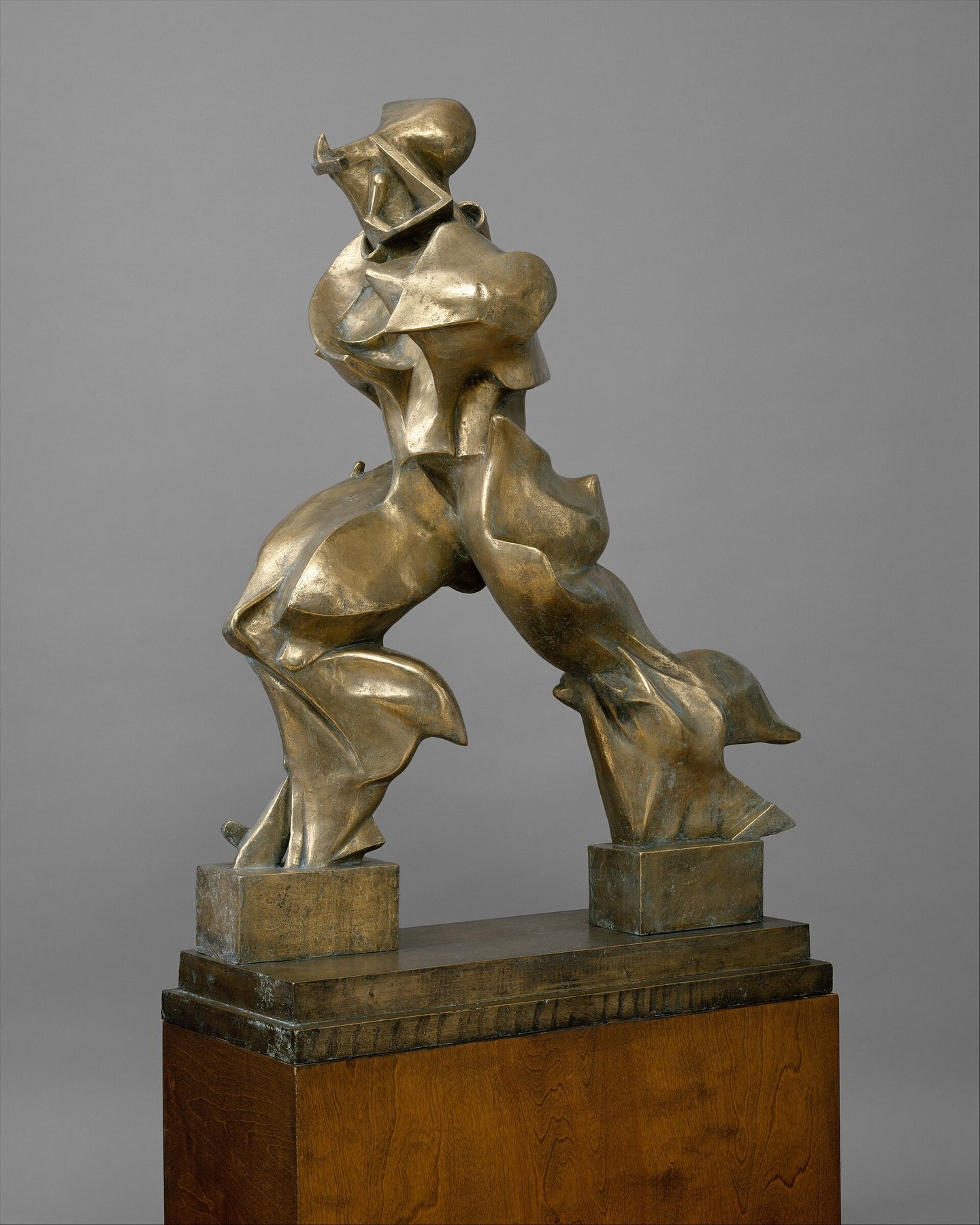
Unique Forms of Continuity in Space of 1913 transforms a striding body into projecting fins, hollows and muscular currents. It is not a naturalistic runner blurred by speed. The head is helmet-like, the arms disappear, and the legs seem to exchange mass with the air. As the viewer changes position, solid and void alternately lead the movement. The figure offers a powerful image of bodily expansion, but its monumental masculinity also belongs to Futurism's ideal of force.[11] [30]
The bronze has a complicated material history. Boccioni modelled and exhibited his sculpture in plaster, and most of the plasters were destroyed after his death. He had criticised bronze as an inherited material. The familiar metal versions of Unique Forms and Development of a Bottle are posthumous casts, some made decades later under Marinetti's direction. Their survival secured Boccioni's reputation, but their polished permanence can conceal the experimental fragility of the original objects.[10]
Words, noise and the active audience
Futurism began in literature, and the printed word never became secondary. Marinetti's “words-in-freedom” loosened or eliminated syntax, punctuation and conventional page order. Nouns might collide without connective grammar; typefaces changed size and weight; letters curved, exploded or ran diagonally. Reading became spatial and vocal. A page could suggest gunfire, a crowd, an engine or a telegram before its sentences had been decoded.[38]
Carrà's Interventionist Demonstration and Marinetti's Vive la France turn this method toward wartime politics. Flags, slogans and fragments of print spin around a centre like papers caught in an urban gust. Their formal excitement is inseparable from their campaign for intervention. Typography does not decorate an argument already complete in words; it supplies urgency, volume and command.[17] [43]
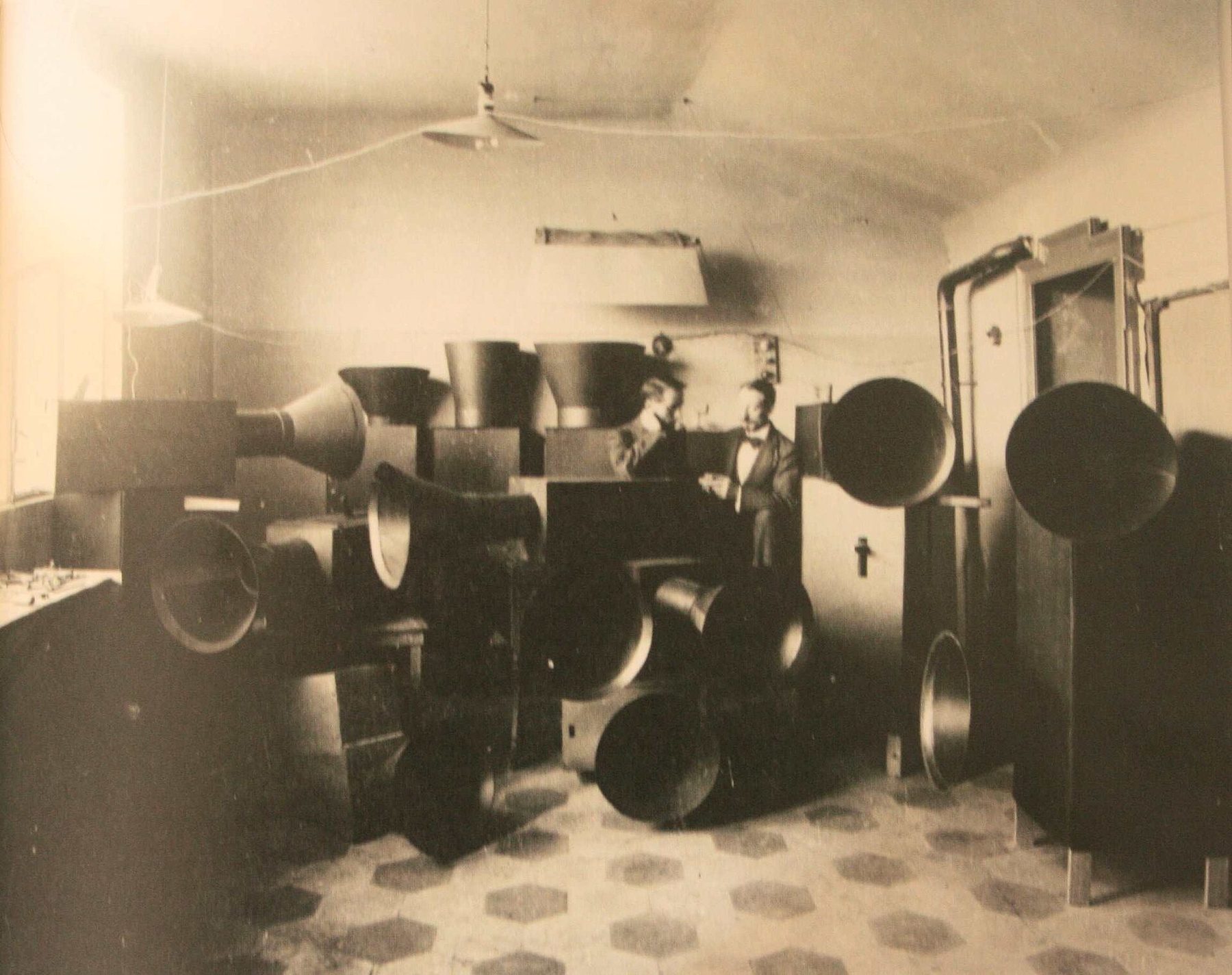
Russolo's 1913 manifesto The Art of Noises argued that the industrial city had trained modern ears for a new acoustic world. His intonarumori were boxlike instruments with projecting horns, built to create families of roars, buzzes, whistles, crackles and hums. Concerts prompted laughter and disorder, and few original instruments survived. Their enduring proposal is more important than a perfect reconstruction: sound conventionally classified as unwanted could be organised, varied and heard as compositional material.[5] [19]
The Futurist serata, or evening, combined lectures, poetry, pictures, music and provocation. Audiences applauded, jeered, fought and sometimes summoned police. This response was cultivated rather than merely endured. The Futurists attacked the idea of quiet, respectful spectatorship and treated a hostile crowd as evidence that art had entered life. The tactic enlarged participation, but it also rewarded escalation: outrage could become a substitute for sustained thought.
The printed page and the theatre supported one another. A manifesto could advertise a performance, a performance could generate newspaper coverage, and a review could be reprinted as proof that the public had been shaken. Repetition across media made a relatively small group appear omnipresent. It also created historical problems. Many performances were ephemeral, and later accounts were written by participants skilled at enlarging their own legends. Surviving leaflets, photographs, programmes and press reports must therefore be read as active promotional objects, not transparent windows onto an evening.
Futurist theatre ranged from declamation to extremely short “synthetic” plays. A few gestures, objects or lines could replace conventional plot and psychological development. Depero's mechanical puppets removed the expressive actor altogether; Giannina Censi's later aerodance translated aviation into bodily movement. The shared principle was compression. Theatre should behave like a telegram, advertisement or shock, cutting away the inherited duration of bourgeois drama.
Architecture and the photograph
Antonio Sant'Elia's drawings for the Città Nuova imagined a city organised around movement. Lifts run on facades; bridges, roads and railways occupy different levels; power stations and vast circulation systems replace the historic street as monumental form. Few designs approached construction. Their importance lies in turning infrastructure into architecture and in imagining the city as a provisional mechanism to be remade for new generations.[1]
Photography posed a productive contradiction. Anton Giulio Bragaglia's photodynamism used prolonged exposure to turn a gesture into a continuous trail. Unlike a chronophotographic sequence of separate phases, it sought the path between them. Boccioni rejected the method as mechanical description and resisted Bragaglia's place within official Futurist art. A movement that praised technology could distrust the technological medium best suited to recording movement. Futurist “modernity” was always selective.[1]
Reconstructing the universe
In 1915 Balla and Fortunato Depero issued Futurist Reconstruction of the Universe. The manifesto proposed mobile, coloured, sounding “plastic complexes” and the redesign of the environment. Futurism would leave the frame and enter furniture, clothing, toys, stage sets, gardens and streets. The aim was not to make applied art resemble a painting. It was to erase the hierarchy that placed an autonomous canvas above the objects and sensations of daily life.[22]
Balla changed his own house in Rome into a dense laboratory of painted walls, screens, lamps, tables, clothing and utensils. Angular shapes migrated among surfaces, making rooms into continuous compositions. His daughters Elica and Luce participated in the domestic studio and preserved its contents. Casa Balla is consequently both an artwork and a record of family labour. Calling it one man's total environment would repeat the hierarchy its rooms complicate.[33]
Depero turned total art into a durable practice. He designed the mechanical puppets and scenery of Balli plastici, produced textile mosaics, advertisements, furniture, waistcoats and the celebrated bolted book Depero futurista. His years in New York intensified the encounter between avant-garde identity and commercial design. He did not regard advertising as contamination from outside art; he treated the poster, shop interior and brand as modern arenas for invention.[21] [27]
The workshop depended on labour that the artist's signature could hide. Depero's wife Rosetta Amadori supervised women who cut and stitched his textile mosaics. Their making translated flat designs into large tactile surfaces and supported the Casa d'Arte. This is not a minor production detail. Futurism's promise to dissolve art into life relied on craft, repetition and management even while its rhetoric celebrated solitary male invention. The museum Depero later planned at Rovereto further reveals the movement's paradoxical desire to preserve its own anti-museum history.[23]
Women remake Futurism
Women participated in Futurism despite a founding declaration that demeaned them. Their presence does not cancel that rhetoric. It shows how an avant-garde's resources can be taken up by people whom its mythology marginalises. Valentine de Saint-Point answered Marinetti with a Manifesto of the Futurist Woman and later a manifesto on lust. She challenged passive femininity but retained much of Futurism's language of force and elite vitality. Rosa Rosà explored altered gender relations in writing and illustration. Rougena Zátková connected Italian, Central European and Russian circles. Giannina Censi turned flight into aerodance. Regina developed sculpture and tactile experiments.[47]
Benedetta Cappa—who generally signed works with her first name—was a painter, novelist and theorist, not simply Marinetti's wife. Trained in Balla's orbit, she combined text and graphic “syntheses” in Le forze umane and helped shape aeropittura. Her career exposes a recurring double bind: the movement offered a public language of transformation while its institutions and later histories often framed a woman's authority through marriage.[24]
Her five monumental paintings for the conference room of Palermo's Post Office addressed overland, marine, aerial, telegraphic, telephonic and radio communication. Bird's-eye viewpoints and curving fields integrate technology with a nearly spiritual sense of connection. Because the paintings remain in their intended architectural setting, they realise the Futurist “total work” more fully than many unbuilt manifestos. They also broaden aeropittura beyond the isolated male pilot and the spectacle of combat.[3]
The movement's gender history should therefore be read in two directions at once. Its aggressive masculinity shaped membership, subjects and reception. Women nevertheless altered its literature, dance, sculpture, painting and domestic practice. They were not a late corrective appendix to “real” Futurism; they were among the people who made its contradictions visible.
This changes how familiar works can be discussed. A picture of speed is also often a picture of who is allowed to command public space. The racing driver, soldier, aviator and mechanised athlete were coded masculine within Futurist rhetoric. Dance-hall women could embody modern motion while also becoming spectacles for male viewers. Domestic design could be celebrated as a total art while the sewing, maintenance and preservation that made it possible received less prestige. Gender is therefore not a separate topic attached to a formal history; it helps explain which kinds of movement became heroic and which kinds of work became invisible.
It also prevents a misleading division between “major” painting and “minor” practice. Benedetta's murals require architectural scale, complex planning and public negotiation. Censi's dance exists through performance and documentation. Regina's tactile and sculptural work tests material experience. Elica and Luce Balla's production inhabits the same rooms as their father's signed objects. Once Futurism is understood according to its own claim to reconstruct life, textiles, books, dance and interiors cannot logically be treated as marginal media. The expanded field changes the list of central makers.
War, nationalism and Fascism
The glorification of war was present in 1909, before Mussolini's movement existed. Italian Futurism joined aesthetic revolt to a nationalist demand that a relatively young state become modern and powerful. Marinetti and other Futurists campaigned for Italy to enter the First World War. Interventionist demonstrations, manifestos and collages made politics into performance. Boccioni, Russolo, Marinetti, Sant'Elia and others volunteered. Their premise that war would cleanse or regenerate society met the reality of mechanised mass death.
Severini's Armored Train in Action of 1915 makes that ethical collision visible. Five soldiers aim rifles from an armoured railway car while smoke and landscape fracture around them. An elevated viewpoint converts bodies and weapons into a coordinated machine. The composition is lucid and powerful; it also removes faces and distance from suffering. The painting does not become less accomplished when its ideology is named. Its accomplishment is precisely what makes the aestheticisation of organised violence consequential.[16]
Boccioni died in August 1916 after falling from a horse during cavalry training; Sant'Elia was killed in combat two months later. Carrà had already begun moving away, and Severini soon pursued a more classical direction. These changes ended the first constellation but not the movement. “Heroic Futurism” is therefore a useful period term, not a complete synonym for Futurism.[8]
After the war, Marinetti created a Futurist Political Party and participated in the early Fasci di Combattimento. Futurist anti-clericalism and hostility to monarchy did not always match Mussolini's later compromises, and individual members took different positions. Some early artists had left before Fascism took power. The regime itself did not impose one official visual style, and conservative Fascists sometimes attacked modernist experimentation. It would be inaccurate to call every Futurist a Fascist or every Futurist work propaganda.
It would be equally inaccurate to present the relationship as an unfortunate coincidence. Marinetti accommodated himself to the dictatorship and in 1929 entered the Royal Academy of Italy, despite the movement's early hatred of academies. Futurists received public platforms, competed for commissions and contributed to the regime's technological and imperial image. Exhibitions in the 1920s and 1930s placed the movement within Fascist cultural life. Its language of discipline, virility, national rebirth and machine power could readily serve authoritarian spectacle.[25]
The chronology matters because it blocks two convenient evasions. One says that Fascism arrived later and therefore cannot affect how the 1909 rhetoric is read. Yet the founding text already celebrates war, aggressive nationalism and gendered domination. The other says that Futurism was Fascist from its first moment and therefore never changed. That erases the unstable prewar mix of anarchism, revolutionary syndicalism, republicanism and nationalism, as well as the choices through which members later aligned, withdrew or adapted. Political responsibility becomes clearer, not weaker, when those choices are reconstructed precisely.
Colonial modernity belongs in this account too. The aeroplane, radio and accelerated transport that Futurists praised were instruments through which Fascist Italy imagined and exercised imperial power. A plunging viewpoint can offer a genuine perceptual experiment while also naturalising possession of territory below. Images of aerial battle or command may make danger available as visual pleasure to a spectator protected from its consequences. Asking who looks down, at what land, and under whose authority turns formal analysis into historical analysis rather than replacing it.
Nor should the politics of spectatorship be confined to explicit propaganda. The founding mythology asks viewers to identify with the driver who masters speed, not with the pedestrian placed at risk; with the attacking force, not with the body struck; with the new city, not with what displacement costs. Individual works can resist or complicate that invitation, but the recurring perspective matters. Futurism trained desire as much as it represented machinery.
Futurism's politics were neither a stain added after its formal inventions nor a code that gives every shape one fixed meaning. They affected what the movement praised, whose bodies it idealised, which technologies it celebrated and how it imagined collective action. Responsible viewing must keep those links present without assuming that close looking is therefore pointless.
Machines, flight and the later movement
During the 1920s, arte meccanica turned gears, metallic surfaces, automata and hard-edged figures into a new vocabulary. Depero, Enrico Prampolini, Ivo Pannaggi, Vinicio Paladini, Fillia and others did not simply imitate Boccioni's vortices. Their work often suited theatre, murals, graphic design and interiors. Mechanised bodies could appear playful, efficient or menacing; the style's clarity travelled readily between avant-garde experiment, commerce and political display.[20]
Aeropittura, formulated around 1929 and publicly consolidated in 1931, made flight the defining modern sensation. Aerial painters tipped the horizon, compressed fields and towns, spiralled through clouds or imagined the earth from a cockpit. Gerardo Dottori turned Umbrian landscape into spiritual curves. Prampolini approached cosmic, biomorphic abstraction. Tullio Crali plunged viewers through vertiginous battles and city approaches. Benedetta organised communications into luminous systems.[34]
These were not interchangeable pictures of an aeroplane. Flight could mean release from ground-based perspective, a new spiritual totality, technological mastery or military domination. Italian aviation was also a source of Fascist prestige. Aeropittura overlapped with air shows, imperial propaganda and the violence of colonial warfare. Some paintings investigate perception; others make bombing or territorial command exhilarating. The broad label should preserve those differences while refusing to treat air power as innocent spectacle.[19]
By the 1930s Futurism occupied an extraordinary contradiction. A movement founded on permanent youth and revolt had survived for decades, developed regional organisations, sought state patronage and built its own history. Artists who had called for museums to be destroyed preserved archives and planned museums of their work. This institutionalisation made the movement visible to later audiences, but it also shows that “the future” had become a tradition.
Later Futurism also widened geography inside Italy. Groups and exhibitions in Turin, Rome, Naples, Sicily and elsewhere weakened Milan's early dominance. Murals, ceramics, postal buildings and regional landscapes tied the movement to particular places even while its rhetoric claimed universal acceleration. Fillia's spiritual machines, Dottori's Umbrian aerial visions and Benedetta's Palermo communications room cannot be understood as diluted repetitions of Boccioni. They show how a durable organisation continually renamed modern experience in order to survive.
That durability makes period labels important. “Second Futurism” is convenient for everything after the heroic phase, but it can flatten nearly three decades into one sequel. Mechanical art and aeropittura overlap, and artists move among them. A reader gains more by following changing media, institutions and technologies than by assuming a clean break in 1916. Futurism repeatedly declared itself new; art history should test each declaration rather than accept or dismiss it automatically.
International Futurisms and exchanges
Manifestos and travelling exhibitions carried Futurist methods across borders, but the results should not be described as provincial Italian branches. Russian Futurism developed through its own poets, painters, publishers and arguments about language and popular culture. The 1913 opera Victory over the Sun joined Aleksei Kruchenykh's transrational language, Mikhail Matyushin's music and stage designs by Kazimir Malevich. Its black-square motif helped prepare Suprematism, yet the production's history cannot be reduced to Marinetti's programme.[46]
British Vorticism responded directly to Futurist publicity and machine imagery while asserting a distinct geometry, magazine culture and national position. The very name proposed concentrated energy rather than speed alone. In Paris, Orphism and Simultanism developed their own relations among colour, rhythm and modern life. Fernand Léger made the machine a major modern subject without joining Italian Futurism. Wassily Kandinsky and Paul Klee likewise belong to different networks, even where exhibition history or later design creates instructive comparisons.[29] [44] [45]
Futurism's strongest international legacy is therefore not one inherited look. It is a repertoire: the manifesto as creative form, typography as image, noise as material, provocation as performance, the audience as participant, the book as object and design as a programme for daily life. Later Dada, Constructivism, performance, sound art and graphic design used parts of that repertoire for purposes often opposed to Futurist nationalism. Influence can be a reuse, an argument or a refusal.
The idea of speed itself has also aged unevenly. Early Futurists experienced the motorcar, tram, telephone and aeroplane as disruptive technologies that reorganised distance and attention. Today's spectators inhabit faster communication systems, so the machinery in a painting may look quaint while its demand for perpetual novelty feels familiar. Advertising's merger of word, image and command; media strategies built around provocation; and political performances designed to dominate attention all make the movement's methods recognisable. That continuity is not proof that Futurism predicted the present. It is a reason to examine how aesthetic excitement can be attached to technological and political power.
How to recognise Futurist art
Look first for a work's treatment of time. Repeated contours may turn a limb, vehicle or bird into a sequence. Diagonals may carry action past the edge. Fractured planes may be brighter and more directional than early Cubist analysis. A body can merge with street, room or atmosphere. Words, numbers and sound effects may be structural rather than caption-like. Later works may use wedges, gears, automata, aerial maps or plunging horizons.
Subject matter helps: crowds, trams, construction sites, electric lamps, cafés, dancers, trains, cars, factories, aeroplanes and communication systems recur. Yet no motif proves membership. Many artists pictured machines, and not every image of speed is Futurist. Check the artist, date, city, manifesto, exhibition and publication network. The movement's objects range from oil paintings and plaster figures to dresses, books, puppets and acoustic machines, so recognition must be historical as well as visual.[49]
Scale and viewing position provide further clues. A large early canvas may surround the spectator with a crowd or construction site, while a sculptural spiral asks the body to circle it. A parolibero page invites the eyes to jump rather than descend line by line. An aerial painting places the viewer impossibly high, rotating the landscape beneath an imagined aircraft. A room by Balla or Depero spreads composition across the boundary between object and setting. In each case, Futurism tries to make the spectator perform a new kind of attention.
It is also worth looking for what the work suppresses. Repetition can make an individual body anonymous. Aerial distance can turn inhabited land into pattern. Bright colour can convert labour or conflict into spectacle. Conversely, awkward joins, unstable contours and competing signs can frustrate the promised mastery of speed. Close looking should test the manifesto against the object. The most illuminating Futurist works do not simply illustrate slogans; they reveal tensions that the slogans try to resolve through volume and command.
Essential works and experiments
The City Rises
Umberto Boccioni · 1910 · Boccioni turns a construction site into a turbulent encounter among labour, animal force, colour and urban capital.
States of Mind: Those Who Go
Umberto Boccioni · 1911 · A railway departure becomes emotional duration, with slanting strokes carrying travellers away from those who remain.
Materia
Umberto Boccioni · 1912–13 · Boccioni's mother, balcony, street and architecture interpenetrate until portrait and modern city form one reciprocal field.
Dynamism of a Cyclist
Umberto Boccioni · 1913 · Rider, bicycle and atmosphere collapse into a chromatic organism rather than a sequence of separate positions.
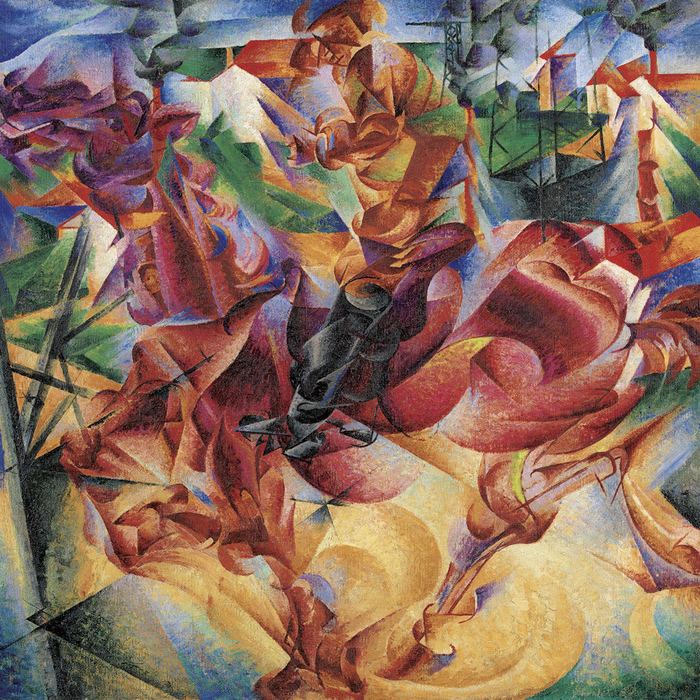
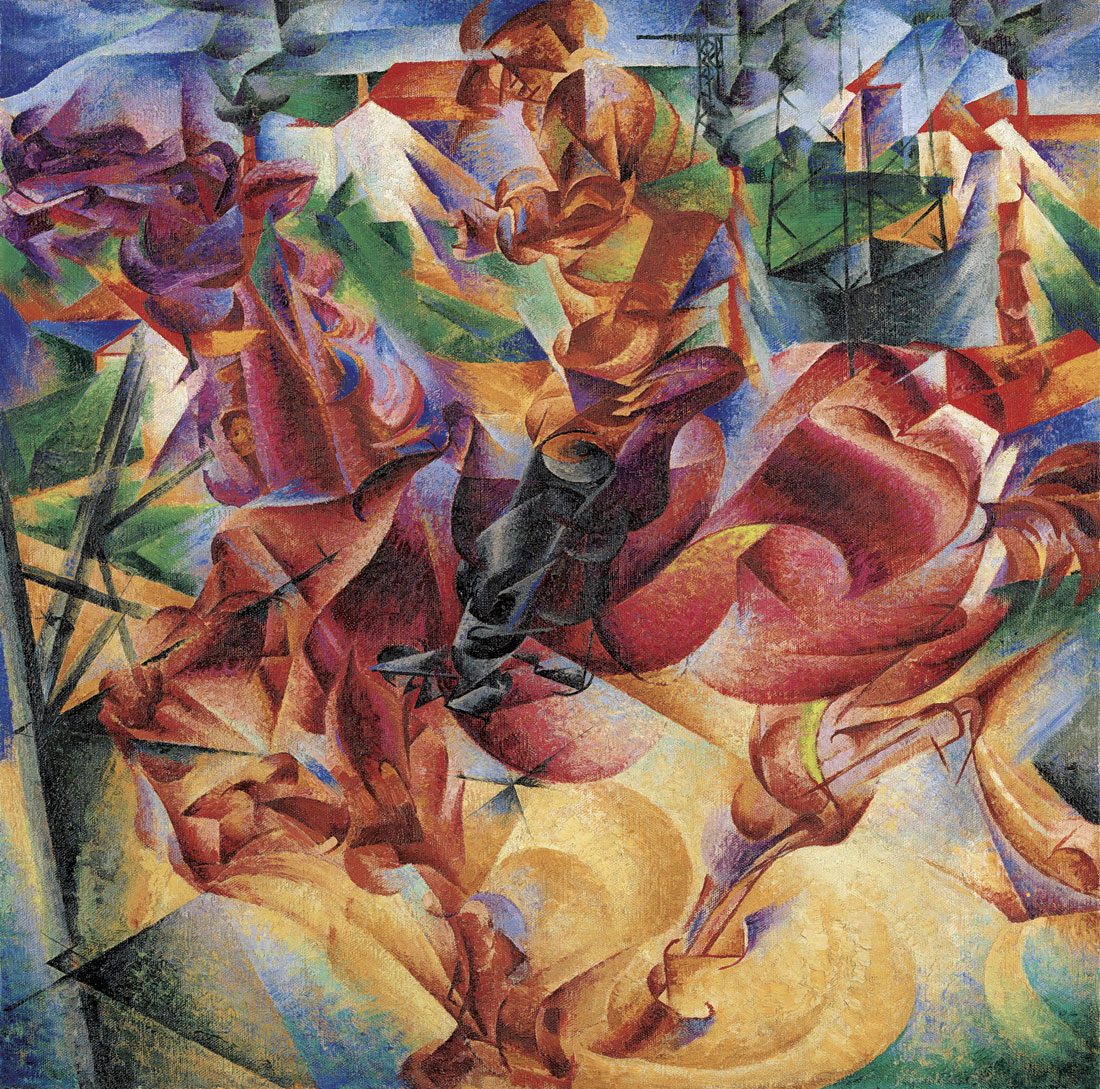
Elasticity
Umberto Boccioni · 1912 · Horse, rider, landscape and directional force meet in a square field where colour acts as temporal pressure.
Development of a Bottle in Space
Umberto Boccioni · 1912 · An ordinary vessel and tabletop open into spiralling volumes, challenging the boundary between object and surrounding space.
Unique Forms of Continuity in Space
Umberto Boccioni · 1913; posthumous bronze cast · The striding figure exchanges mass with the air; its familiar bronze permanence also conceals a complicated posthumous casting history.
Luigi Russolo and Ugo Piatti with intonarumori
Unknown photographer · 1913 · Russolo and Piatti's acoustic boxes made industrial roars, buzzes and crackles available as organised musical material.
Study for La Città Nuova
Antonio Sant’Elia · 1914 · Sant'Elia's unbuilt city treats lifts, circulation and infrastructure as the expressive architecture of a provisional future.
The Founding and Manifesto of Futurism in Le Figaro
Filippo Tommaso Marinetti / Le Figaro · 1909 · The newspaper page shows how Futurism began through distribution and provocation before it possessed a mature visual style.
Where to see Futurism
The Museo del Novecento in Milan holds an exceptional concentration of Boccioni and places his work within the city that shaped early Futurism.[28] The Mart in Rovereto combines extensive paintings and objects with the Archivio del '900 and the Casa d'Arte Futurista Depero; its online catalogue alone returns hundreds of Futurist records.[20] The Galleria Nazionale in Rome is especially valuable for Balla and Italian modernism. Casa Balla, accessible through the MAXXI programme, preserves the domestic ideal of total art.
In New York, the Museum of Modern Art holds The City Rises, Funeral of the Anarchist Galli, Unique Forms of Continuity in Space and Severini's Armored Train in Action. The Metropolitan Museum of Art has the largest Boccioni holding outside Italy and is particularly strong for his works on paper and sculpture.[10] In Venice, the Peggy Guggenheim Collection brings together Boccioni, Carrà, Severini, Balla and related modernists in a compact setting.[18] In London, the Estorick Collection of Modern Italian Art offers another concentrated route through Futurist painting, drawing and sculpture.
Displays rotate, fragile works on paper appear intermittently, and Boccioni bronzes exist in multiple casts. Consult current museum records before travelling. Archives, reconstructed sound instruments and historic interiors can reveal aspects of Futurism that a gallery of paintings alone cannot.
Museums, collections and cities to explore
Collections, archives and reconstructed works may rotate or require appointments. Check current displays and access before travelling.
- 01
Museo del Novecento
Milan, Italy
Its exceptional concentration of Boccioni places early Futurism within the city that shaped the founding painters.
Boccioni and MilanVisit collection website - 02
Mart and Casa d’Arte Futurista Depero
Rovereto, Italy
Paintings, objects, archives and Depero's purpose-built museum provide the broadest route through total Futurist practice.
Collections and archivesVisit collection website - 03
Galleria Nazionale
Rome, Italy
The national modern-art collection is particularly valuable for Giacomo Balla and the Roman history of Futurism.
Balla and Italian modernismVisit collection website - 04
MAXXI and Casa Balla
Rome, Italy
Casa Balla preserves the family-sustained domestic environment in which painting, furniture, clothing and daily objects merge.
Total domestic artVisit collection website - 05
Museum of Modern Art
New York, USA
The City Rises, Carrà, Severini and major works on paper make MoMA essential for heroic Futurism.
Early masterpiecesVisit collection website - 06
Metropolitan Museum of Art
New York, USA
The Met's extensive Boccioni holdings are especially strong for sculpture, drawings and the material history of posthumous casts.
Boccioni sculptureVisit collection website - 07
Peggy Guggenheim Collection
Venice, Italy
A compact group of Boccioni, Carrà, Severini and Balla clarifies the movement's conversation with European modernism.
Heroic FuturismVisit collection website - 08
Estorick Collection
London, UK
This specialist collection offers a concentrated route through Italian Futurist painting, drawing, sculpture and print.
Modern Italian artVisit collection website
Suggested books
Vivien Greene, ed., Italian Futurism, 1909–1944: Reconstructing the Universe. The essential broad survey, extending from the 1909 launch through aeropittura and the movement's final years. Its multidisciplinary structure is especially useful for readers who know only the famous paintings.[2]
Lawrence Rainey, Christine Poggi and Laura Wittman, eds., Futurism: An Anthology. A large selection of manifestos and related texts. Read it critically: the anthology exposes the movement's range, self-invention and political violence in its own voices.
Günter Berghaus, Futurism and Politics. A detailed account of the movement's political formations and changing relationship to nationalism and Fascism.
Christine Poggi, Inventing Futurism: The Art and Politics of Artificial Optimism. A close study of how modern media, bodies, gender and politics enter Futurist form.
Ester Coen, Umberto Boccioni. A substantial monographic catalogue for the movement's central painter-sculptor, combining works, chronology and theoretical writing.[9]
Major artists, writers and designers directory
| Name | Nationality | Key Works |
|---|---|---|
| Alfredo Ambrosi | Italian | Aeroritratto di Mussolini aviatore · aeropittura |
| Anton Giulio Bragaglia | Italian | Photodynamism · Change of Position |
| Antonio Sant’Elia | Italian | La Città Nuova · Futurist Architecture manifesto |
| Benedetta Cappa | Italian | Palermo Post Office murals · Le forze umane |
| Carlo Carrà | Italian | Funeral of the Anarchist Galli · Interventionist Demonstration |
| Elica Balla | Italian | Casa Balla designs · textiles |
| Enrico Prampolini | Italian | Interplanetary Spatial Construction · Futurist theatre |
| Filippo Tommaso Marinetti | Italian | Founding Manifesto · Zang Tumb Tuuum |
| Fillia | Italian | Mechanical Idol · aeropittura |
| Fortunato Depero | Italian | Depero futurista · Balli plastici |
| Gerardo Dottori | Italian | Aerial Triptych · Umbrian aeropittura |
| Giacomo Balla | Italian | Dynamism of a Dog on a Leash · Abstract Speed + Sound |
| Giannina Censi | Italian | Aerodance · Simultanina |
| Gino Severini | Italian-French | Dynamic Hieroglyphic of the Bal Tabarin · Armored Train in Action |
| Giulio D’Anna | Italian | Aerial views of Sicily · aeropittura |
| Ivo Pannaggi | Italian | Mechanical and Futurist Room · arte meccanica |
| Luce Balla | Italian | Girl Running on a Balcony · Casa Balla designs |
| Luigi Russolo | Italian | The Art of Noises · intonarumori |
| Mino Somenzi | Italian | Aeropittura manifestos · Futurist publishing |
| Nicolay Diulgheroff | Bulgarian-Italian | Futurist interiors · mechanical compositions |
| Regina Bracchi | Italian | Futurist sculpture · tactile experiments |
| Rosa Rosà | Austrian-Italian | A Woman with Three Souls · illustrations |
| Rosetta Amadori | Italian | Depero textile mosaics · Casa d’Arte workshop |
| Rougena Zátková | Czech | Marinetti · multi-material sculpture |
| Thayaht | Italian | TuTa garment · Futurist fashion |
| Tullio Crali | Italian | Nose Dive on the City · aeropittura |
| Umberto Boccioni | Italian | The City Rises · Unique Forms of Continuity in Space |
| Valentine de Saint-Point | French | Manifesto of the Futurist Woman · Metachoric dance |
| Vinicio Paladini | Italian | Mechanical art · Constructivist-Futurist compositions |
| Vittorio Corona | Italian | Sicilian Futurist painting · aeropittura |
Frequently Asked Questions
Futurism was an Italian-led avant-garde founded by Marinetti in 1909. It sought to transform art and life through the imagery and sensations of modernity. Painting was only one part of a programme that included literature, music, sound, sculpture, architecture, performance, photography, fashion, design, advertising and politics.[42]
It was officially launched in 1909 and remained organised under Marinetti until his death in 1944. The best-known “heroic” visual phase lasted roughly from 1910 to 1916. Later mechanical art and aeropittura are essential to the full history rather than afterthoughts.[1]
The founding five were Umberto Boccioni, Carlo Carrà, Luigi Russolo, Giacomo Balla and Gino Severini. Later Futurism included Fortunato Depero, Enrico Prampolini, Gerardo Dottori, Fillia, Tullio Crali, Benedetta Cappa and many regional participants. The personnel and aims changed substantially across 35 years.[6]
Both fractured forms and used multiple viewpoints, especially after the Italians encountered Parisian Cubism. Futurism generally emphasised duration, sensation, force and modern subjects; Cubism developed from different questions about representation and object structure. The distinction is historical, not a checklist that separates every canvas.[35]
Yes. Motion studies helped establish a visual language of successive phases, and Balla used repetition in related ways. Bragaglia's photodynamism tried to record the continuous path of movement. Boccioni rejected it, showing that the group did not agree about photography's artistic status.[1]
They wanted language to act visually and acoustically. Words-in-freedom abandoned regular syntax, punctuation and page order; changes of type, scale and direction could simulate noise, speed or collision. Posters, poems, collages and manifestos became overlapping forms rather than separate categories.[38]
They were acoustic noise instruments devised by Luigi Russolo after his 1913 manifesto The Art of Noises. Boxlike bodies and horns generated categories of roars, buzzes, crackles and other sounds. Reconstructions are used today because few originals survived.[7]
Yes. Valentine de Saint-Point, Rosa Rosà, Rougena Zátková, Giannina Censi, Regina, Benedetta Cappa, Luce Balla and Elica Balla contributed across writing, painting, sculpture, dance and design. Their participation did not erase the founding manifesto's misogyny or the movement's gendered reception.[3] [24]
Futurism began before Fascism, and not every participant shared one politics. However, its nationalism and glorification of violence created important affinities; Marinetti joined early Fascist organisation and later accepted a regime academy post. Many Futurists worked within Fascist cultural life. The relationship is neither total identity nor a detachable footnote.[25]
Aeropittura was the aerial painting developed around 1929–31. It used flight to create tilted, plunging or cosmic viewpoints. Its works range from spiritual landscape and abstraction to militarised spectacle, and they must be read in relation to Fascist aviation and imperial politics as well as formal experiment.[34]
No. Russian artists and poets interacted with Italian Futurism but developed distinct linguistic, visual and political formations. Calling them a branch of Marinetti's movement erases local sources and disagreements. “Futurisms” can be useful when it preserves that plurality rather than implying one command centre.[46]
It expanded the means by which an avant-garde could operate: manifestos, typography, performance, noise, designed objects, advertising and audience confrontation all became creative media. Its history also demonstrates that aesthetic innovation does not guarantee emancipatory politics. The movement remains valuable precisely because admiration and criticism must remain active together.[44]
Discussion
Which Futurist work most changes your sense of what an artwork can be: a painting, Boccioni's spatial sculpture, a words-in-freedom page, Russolo's noise machines, Casa Balla or an aerial mural? And does knowing the movement's political history alter how you experience its speed and colour, or make close attention more necessary?
Reader Insights
Compare what happens when Futurist force moves among painting, sculpture, typography, noise, theatre, clothing and architecture.
Ask where an individual object complicates the collective rhetoric instead of treating every work as an illustration of Marinetti.
Formal invention, nationalism, misogyny, war and Fascist accommodation belong to the same history and require attention together.
Join the Conversation
Which Futurist medium most changes your sense of what an artwork can be—and does its political history alter that experience?
References
- Italian Futurism, 1909–1944: Reconstructing the Universe. Solomon R. Guggenheim Museum. View Source
- Italian Futurism, 1909–1944: Reconstructing the Universe. Solomon R. Guggenheim Museum. View Source
- Italian Futurism teaching materials. Solomon R. Guggenheim Museum. View Source
- Futurism. The Museum of Modern Art. View Source
- Words in Freedom: Futurism at 100. The Museum of Modern Art. View Source
- Futurism. The Museum of Modern Art. View Source
- Twentieth-Century Italian Art. The Museum of Modern Art. View Source
- Umberto Boccioni (1882–1916). Metropolitan Museum of Art. View Source
- Umberto Boccioni. Ester Coen / Metropolitan Museum of Art. View Source
- Boccioni 100: A Future Cast in Bronze. Metropolitan Museum of Art. View Source
- Unique Forms of Continuity in Space. Metropolitan Museum of Art (Portuguese; consulted in Portuguese). View Source
- The City Rises. The Museum of Modern Art. View Source
- States of Mind: Those Who Go. The Museum of Modern Art. View Source
- Funeral of the Anarchist Galli. The Museum of Modern Art. View Source
- Swifts: Paths of Movement + Dynamic Sequences. The Museum of Modern Art. View Source
- Armored Train in Action. The Museum of Modern Art. View Source
- Vive la France. The Museum of Modern Art. View Source
- Masterpieces of Futurism at the Peggy Guggenheim Collection. Peggy Guggenheim Collection. View Source
- Le Collezioni del Mart. Mart Museo di arte moderna e contemporanea di Trento e Rovereto (Italian; consulted in Italian). View Source
- Opere e archivi: Futurismo. Mart Museo di arte moderna e contemporanea di Trento e Rovereto (Italian; consulted in Italian). View Source
- Depero dalla A alla Z. Mart Museo di arte moderna e contemporanea di Trento e Rovereto (Italian; consulted in Italian). View Source
- Manifesto 100: Ricostruzione futurista dell'universo. Mart Museo di arte moderna e contemporanea di Trento e Rovereto (Italian; consulted in Italian). View Source
- Casa d'Arte Futurista Depero. Mart Museo di arte moderna e contemporanea di Trento e Rovereto (Italian; consulted in Italian). View Source
- Archivio del '900. Mart Museo di arte moderna e contemporanea di Trento e Rovereto (Italian; consulted in Italian). View Source
- Il maestro e Margherita: Marinetti, Sarfatti e il Futurismo negli anni di regime. Mart Museo di arte moderna e contemporanea di Trento e Rovereto (Italian; consulted in Italian). View Source
- Giacomo Balla: Lo stile dell'avanguardia. Mart Museo di arte moderna e contemporanea di Trento e Rovereto (Italian; consulted in Italian). View Source
- Dynamic Depero 1928–30: avventure a New York. Mart Museo di arte moderna e contemporanea di Trento e Rovereto (Italian; consulted in Italian). View Source
- Umberto Boccioni 1882–1916: Genio e memoria. Museo del Novecento Milan (Italian; consulted in Italian). View Source
- FuturLiberty: Avanguardia e stile. Museo del Novecento Milan (Italian; consulted in Italian). View Source
- Arte con tatto: Forme uniche della continuità nello spazio. Museo del Novecento Milan (Italian; consulted in Italian). View Source
- Giacomo Balla: Un'onda di luce. Galleria Nazionale d'Arte Moderna e Contemporanea Rome (Italian; consulted in Italian). View Source
- Giacomo Balla: Bambina x balcone. GAM Milano (Italian; consulted in Italian). View Source
- Casa Balla: Dalla casa all'universo e ritorno. MAXXI (Italian; consulted in Italian). View Source
- L'aeroplano di Marinetti. MAXXI. View Source
- Le futurisme à Paris: une avant-garde explosive. Centre Pompidou (French; consulted in French). View Source
- Galerie Bernheim-Jeune. Centre Pompidou (French; consulted in French). View Source
- Hybridations. Centre Pompidou (French; consulted in French). View Source
- De la lettre à l'image. Centre Pompidou (French; consulted in French). View Source
- Futurisme, Rayonnisme, Orphisme. Centre Pompidou (French; consulted in French). View Source
- Manifesto dei pittori futuristi. Centre Pompidou (French; consulted in French). View Source
- La Danse du pan-pan au Monico. Centre Pompidou (French; consulted in French). View Source
- Italian Futurism: Its Past, Present, and Future. Gerald Silk / National Gallery of Art. View Source
- Full Speed Ahead. National Gallery of Art. View Source
- Futurism. Tate. View Source
- Vorticism. Tate. View Source
- Russian Avant-garde Theatre: War, Revolution and Design 1913–1933. Victoria and Albert Museum. View Source
- The Italian Futurist Collections: Introduction. Library of Congress. View Source
- Italian Futurism. Getty Research Institute. View Source
- Futurism. Encyclopaedia Britannica. View Source
- Futurist Collection Highlights. Library of Congress. View Source
- Futurism image records. Wikimedia Commons: The City Rises (Public Domain; Umberto Boccioni / Wikimedia Commons), States of Mind: Those Who Go (CC0; Metropolitan Museum of Art / Wikimedia Commons), Materia (Public Domain; Umberto Boccioni / Wikimedia Commons), Dynamism of a Cyclist (Public Domain; Umberto Boccioni / Wikimedia Commons), Elasticity (Public Domain; Umberto Boccioni / Wikimedia Commons), Development of a Bottle in Space (CC0; Metropolitan Museum of Art / Wikimedia Commons), Unique Forms of Continuity in Space (CC0; Metropolitan Museum of Art / Wikimedia Commons), Luigi Russolo and Ugo Piatti with intonarumori (Public Domain; Unknown photographer / Wikimedia Commons), Study for La Città Nuova (Public Domain; Antonio Sant’Elia / Wikimedia Commons), The Founding and Manifesto of Futurism in Le Figaro (Public Domain; Le Figaro / Wikimedia Commons), Portrait photograph of Umberto Boccioni (Public Domain; Unknown photographer / Wikimedia Commons), Portrait photograph of Fortunato Depero (Public Domain; Unknown photographer / Wikimedia Commons), Portrait photograph of Benedetta Cappa (Public Domain; Filippo Tommaso Marinetti / Wikimedia Commons).