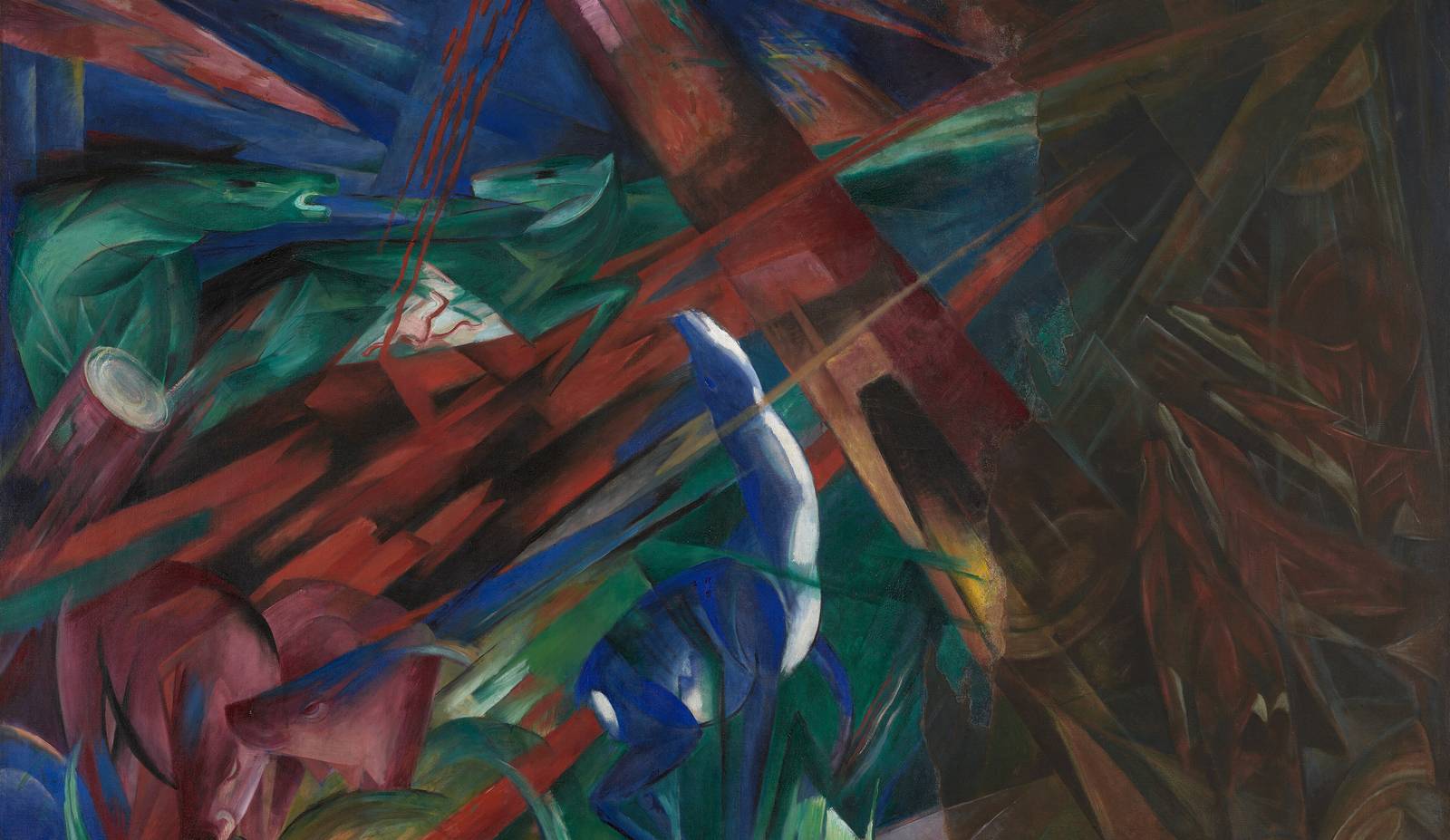
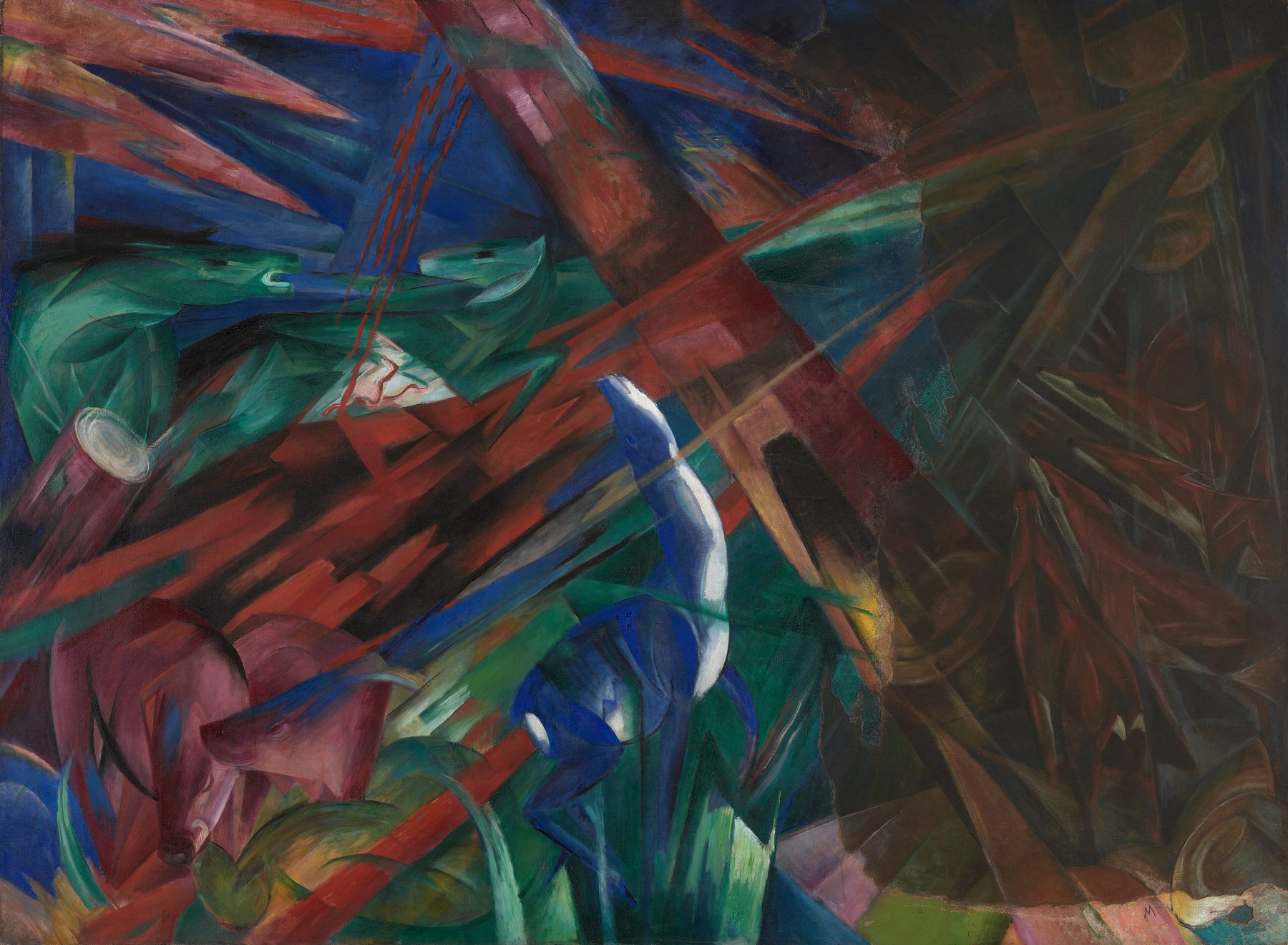
Image reference: Franz Marc, The Fate of the Animals.
At a Glance
- Core periodc. 1905–1925, with nineteenth-century precedents and later afterlives
- Major centresDresden · Berlin · Munich · Murnau · Cologne · Hamburg
- Key groups and networksDie Brücke · Der Blaue Reiter · Neue Secession · Der Sturm · Novembergruppe
- Known forintense colour · angular contour · compressed space · experimental printmaking · city scenes · animals · landscape · war imagery
- Leading artistsKirchner · Heckel · Schmidt-Rottluff · Nolde · Pechstein · Kandinsky · Marc · Münter · Macke · Kollwitz
- Key contextsindustrial modernity · artistic secession · colonial collecting · First World War · revolution · Weimar culture · Nazi repression
- Best understood asan umbrella for conflicting groups, networks and independent practices—not one style
Contents
- Where German Expressionism fits
- Conditions around 1900
- Die Brücke in Dresden
- Berlin and the modern street
- Der Blaue Reiter and Murnau
- The almanac, music and abstraction
- Women who made the networks
- Colonialism and appropriation
- The First World War
- Artists and places to know
Where German Expressionism fits
Kirchner
Principal careerHeckel
Principal careerSchmidt-Rottluff
Principal careerNolde
Principal careerKandinsky
Principal careerFranz Marc
Principal careerGabriele Münter
Principal careerAugust Macke
Principal careerKäthe Kollwitz
Principal careerMax Beckmann
Principal careerOtto Dix
Principal careerPaul Klee
Principal careerGerman Expressionism was not one movement, one organisation or even one recognisable style. It is a broad name for artists and networks that made colour, line, distortion, print and compressed space carry unusual psychological or spiritual force in early twentieth-century Germany. Some sought an unmediated encounter with bodies and nature; others imagined painting as a language comparable to music; still others used graphic art to expose the violence of modern society. What joins them is not a common formula but a conviction that art could transform visible experience rather than merely describe it.[1] [2] [3]
A useful central period runs from 1905, when four architecture students founded Die Brücke in Dresden, to the middle of the 1920s, when the New Objectivity challenged Expressionism’s claims to inwardness and intensity. Within that span, Die Brücke and Der Blaue Reiter provide the two best-known histories. The first was an actual group with members, a programme and collective exhibitions. The second was a much looser exhibition and publishing network. Around them developed independent practices, Berlin galleries and journals, wartime art, revolutionary organisations, experimental books, theatre, architecture and film.[4] [12] [25]
The familiar story is one of heroic rebellion: young artists reject academies, rediscover the woodcut, liberate colour and invent a modern art of feeling. Much of that remains important, but it is incomplete. Recent research has restored women as artists, organisers, collectors and writers; identified models previously hidden behind nicknames; and asked how colonial museums and human exhibitions shaped the avant-garde’s idea of the supposedly “primitive”. The Nazi persecution of Expressionist art must likewise be separated from the politics of individual artists, some of whom resisted while others compromised with or actively supported the regime. German Expressionism becomes more compelling, not less, when its achievements and contradictions are studied together.[16] [35] [37] [44]
Expressionism sits within a sequence of overlapping modernisms rather than replacing one style and then being replaced by another. Its artists learned from Post-Impressionism, Symbolism, Jugendstil, Fauvism and the European print revival. Edvard Munch’s anxious figures and violent spatial intervals, Vincent van Gogh’s charged brushwork, Paul Gauguin’s flattened colour and Max Klinger’s visionary graphic cycles all supplied precedents. Yet none of those artists was a member of German Expressionism. Influence gave a younger generation permission to depart from naturalistic description; it did not create a unified school.[19]
The term itself became elastic. It could describe angular figurative art, luminous landscapes, religious prints, near-abstraction, wartime lament and political caricature. Artists now gathered beneath it did not always accept the designation, and their goals could conflict sharply. A Brücke woodcut that stresses the resistance of timber, a Kandinsky composition that loosens colour from objects and a Kollwitz image of bereavement may all be Expressionist, but they do not express the same emotion or theory. “Expression” is meaningful only when we ask what is being intensified, by which formal decisions, for which audience.[1] [20]
Chronology is similarly porous. Die Brücke ended in 1913 and the shared activity of Der Blaue Reiter was destroyed by the First World War, but Expressionist practices continued. After 1918, artists used them for revolutionary hope, religious renewal, social accusation and memory. By 1925, Gustav Friedrich Hartlaub’s exhibition of New Objectivity announced a cooler, more sharply observational art, although several supposed realists retained Expressionist exaggeration. The practical date range of 1905–25 therefore describes a historical concentration, not a pair of walls.[25] [40]
German Expressionism should also be distinguished from the related art of Vienna. Oskar Kokoschka and Egon Schiele transformed portraiture and the body within the particular conditions of the Austro-Hungarian capital. They belong to a larger European Expressionist story, but calling their work German erases a different geography, institutional setting and imperial history. The border is useful precisely because it allows comparison without absorption.[39]
Conditions around 1900
The German Empire entered the twentieth century as an industrial, urban and colonial power. Berlin expanded rapidly; railways, electric lights, department stores, illustrated advertising and mass entertainment altered the texture of everyday life. Established academies and official exhibitions still carried prestige, but artists created secessions, private associations and alternative exhibition structures. Modern experience offered exhilaration and estrangement at once: mobility, spectacle and sexual possibility accompanied crowding, unequal labour and nervous pressure.[21] [26]
The first Expressionists did not simply paint this world from outside. They built social and commercial alternatives within it. Artists organised groups, rented exhibition spaces, exchanged works, courted collectors and made print subscriptions. Dealers, editors and journals connected provincial studios with international art. Reproductions allowed images to circulate far beyond an exhibition room. The movement was therefore made not only by forceful canvases but by letters, catalogues, woodblocks, printing presses, address lists and friendships.
Nature appeared to offer an opposing realm. Lakes near Dresden, Baltic beaches and the Upper Bavarian town of Murnau became sites where artists imagined life stripped of metropolitan convention. They painted bathers, shared studios and worked outdoors. Yet the opposition between corrupt city and authentic nature was itself a modern construction. Trains made seasonal travel possible; tourism, private property and social hierarchy did not disappear at the water’s edge. The countryside in Expressionist art is less an untouched place than a testing ground for alternative colour, community and selfhood.[20]
German museums also provided encounters with older European and non-European objects. Medieval sculpture and the early German woodcut could seem direct and spiritually concentrated. Ethnographic collections displayed works from Africa and Oceania, commonly detached from named makers and obtained within imperial systems. Artists treated these objects as an escape from European convention even though their own access depended upon colonial power. This contradiction would become fundamental to both Brücke and Blaue Reiter modernism.[35]
Die Brücke in Dresden
Die Brücke began in Dresden on 7 June 1905. Ernst Ludwig Kirchner, Erich Heckel, Karl Schmidt-Rottluff and Fritz Bleyl were studying architecture rather than painting at the academy. Their name, “The Bridge”, suggested movement towards a future rather than a settled style; Schmidt-Rottluff is credited with proposing it. In 1906, Kirchner cut the group’s programme into a woodblock. Its brief declaration appealed to youth and to anyone who would represent what drove them to create directly and without falsification. The rhetoric made freedom from established powers the basis of belonging.[4] [5] [7]
In practice, the group needed structure. It distinguished active artist members from passive members who paid subscriptions and received annual print portfolios. Exhibitions, catalogues and membership cards created recognition. The founders invited Emil Nolde, Max Pechstein, Cuno Amiet, Kees van Dongen and others for varying periods. Rosa Schapire, an art historian, collector and feminist advocate, became a passive member and tireless supporter. This network turned the studio experiment into a public enterprise; rebellion depended on administration as much as spontaneity.[6] [38]
The Dresden artists worked closely, sometimes on the same subject. They drew one another, shared models and visited the lakes at Moritzburg. Their studios were arranged with painted textiles, carved furniture and objects assembled into an environment that challenged the respectable bourgeois interior. Paintings of reclining or dancing figures collapse distinctions between person, fabric, sculpture and pattern. Life and art were supposed to become continuous, although the studio’s freedom was experienced unequally by those who owned the space and those who modelled within it.[5] [11]
Group style was produced through exchange, not imposed at the beginning. Kirchner’s nervous line, Heckel’s taut construction and Schmidt-Rottluff’s increasingly monumental forms remained different. Nolde’s turbulent paint and intense religious imagery never merged completely with the younger founders’ practice. Pechstein brought knowledge of French colour and later became an important organiser in Berlin. The label Brücke is therefore strongest when it identifies shared labour and exhibition history, not when it dissolves every artist into one look.[9] [10]
Berlin altered the group. Pechstein had moved there earlier, and by 1911 Kirchner and Heckel followed. The capital offered galleries, cabaret, collectors and the New Secession, but it also intensified competition. Pechstein’s participation in a separate exhibition led to his exclusion in 1912. In 1913, Kirchner prepared a self-serving chronicle that assigned himself a commanding role in the group’s development. The others rejected it, and Die Brücke dissolved. The ending reveals a tension present from the start: collective identity amplified individual careers, but each artist also wanted control of the common past.[8] [26]
Brücke art, bodies and directness
Brücke artists prized rapid drawing, simplified contour, visible brushwork and strong contrast. These qualities can make a work feel as if it arrived in one urgent action. The effect was nevertheless learned and constructed. A quick sketch rests on repeated practice; a print may pass through several states; artists sometimes revised dates to support later accounts of priority. Expressionist directness is better understood as an aesthetic decision than as untouched access to emotion.[5] [22]
Woodcut was particularly important. Cutting across grain requires pressure and leaves angular ridges, splinters and islands of unprinted paper. The resulting black-and-white rhythm made resistance visible. It also invoked Dürer and other early German printmakers, allowing a radical group to claim a national artistic ancestry different from academic painting. Hand-carved lettering joined word and image in programmes, posters and book covers. The medium’s apparent roughness was both physical fact and carefully promoted identity.[4] [11]
The nude carried the group’s claim to renewal. Academy students normally drew professional models in regulated poses; Brücke artists represented bodies moving in studios or bathing outdoors. They associated nudity with youth, sexuality and release from convention. Current scholarship has exposed what that celebration concealed. Some models were children or adolescents. Lina Franziska Fehrmann, called Fränzi, first entered the artists’ circle when she was eight. Images and records must therefore be read through differences of age, gender, class and power, not only through the artists’ vocabulary of liberation.[37]
This does not make formal analysis irrelevant. It changes its questions. An abbreviated face may register speed, anonymity or the artist’s refusal to individualise the sitter. A body absorbed into textile pattern may demonstrate compositional daring while also showing how a person was made available to an artistic project. Ethical scrutiny and close looking belong together: both resist the myth that expressive freedom erased the social conditions under which an image was made.
Berlin and the modern street
Berlin gave Expressionism one of its defining subjects. The city’s avenues brought tramlines, lamps, display windows, traffic and pedestrians into a shared visual field. Artists did not record these elements evenly. They tilted pavements, narrowed distances and used repeated diagonals to make looking itself unstable. Metropolitan freedom and metropolitan alienation appear together: strangers can encounter one another, yet the crowd also turns individuals into passing types.[21] [29]
Kirchner’s street paintings and drawings concentrate that instability. In Street, Berlin of 1913, two fashionably dressed women advance towards the viewer while clipped male figures press around them. Acid pinks, blues and blacks prevent flesh, clothes and pavement from settling into ordinary illumination. The steep street seems to rise rather than recede. Faces become masks and glances fail to meet. These women have usually been read as prostitutes, but the picture does not supply simple documentary evidence. It stages the difficulty of distinguishing sexual availability, fashionable display and commodity culture in public space.[28] [29]
The canvas’s later history adds another layer to its modernity. Berlin’s Nationalgalerie acquired it in 1920, evidence that an art once cast as insurgent had entered a public collection. The Nazis confiscated the painting in 1937 during the campaign against modern art. It passed through the dealer Karl Buchholz and reached the Museum of Modern Art in New York. A picture of circulation and unstable looking became an object moved by museum endorsement, state seizure, international trade and canon formation.[28] [42] [46]
Kirchner was not an impersonal camera. His Berlin street series transformed remembered encounters through drawing, painting and print. The sharpened bodies reflect his individual syntax as well as contemporary ideas about the “nervous” metropolis. Similar tensions appear across Expressionist city imagery, including cabarets, cafés and nocturnal streets, but no single diagnosis covers them. The metropolis might be thrilling to one artist, predatory to another and both at once within one image.[26]
Nature remained a counterpart after the move to Berlin. Kirchner continued to translate landscape and eventually made the Swiss Alps around Davos central to his art. Brücke colleagues returned to coastal settings. The oscillation matters: city and countryside were not consecutive phases but rival imaginative structures. Jagged trees can feel as activated as pedestrians, while the crowd may be arranged like a forest of verticals. Expressionist form crosses the border even when the subject changes.[46]
Essential works
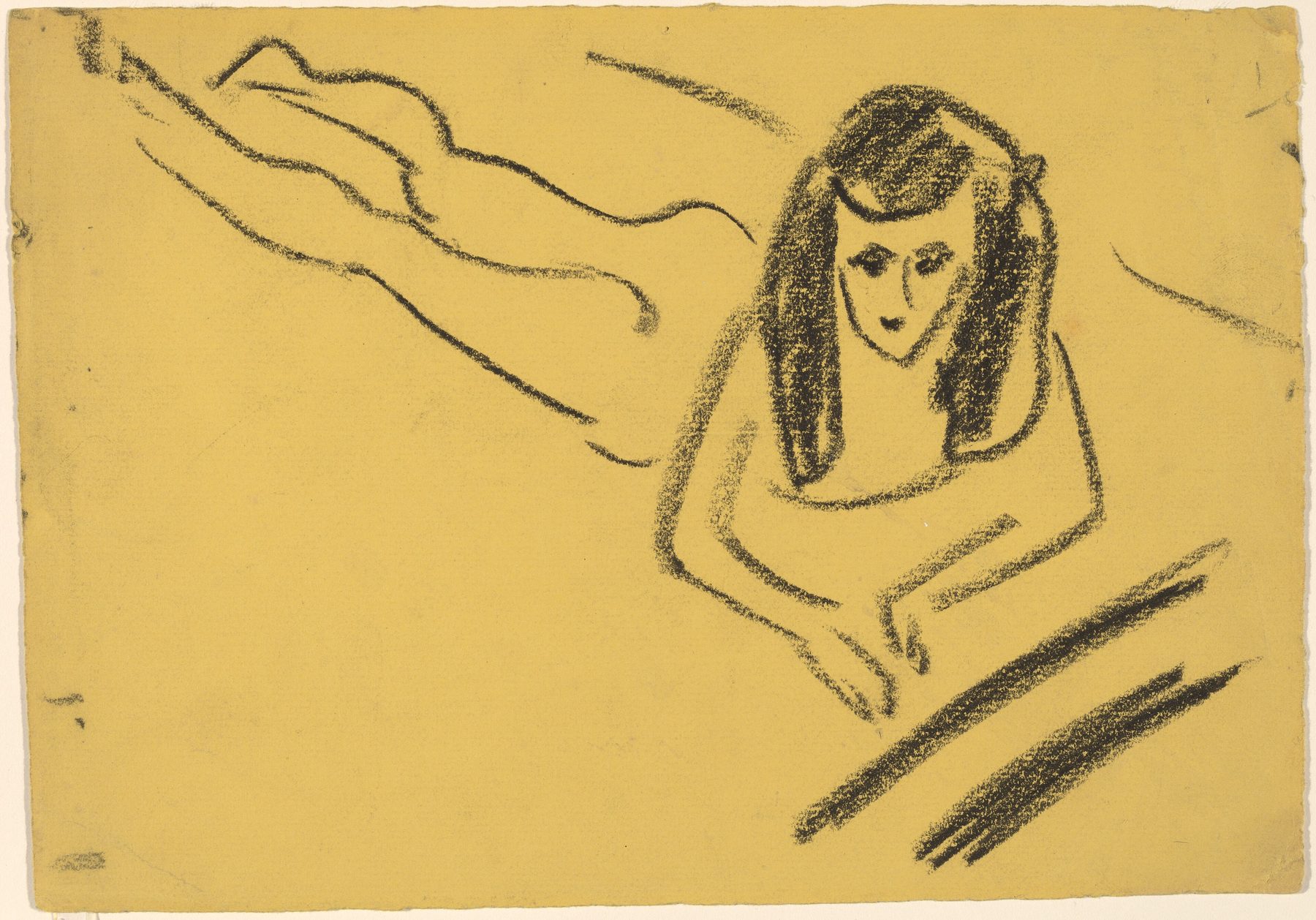
Fränzi Reclining
Ernst Ludwig Kirchner, 1910
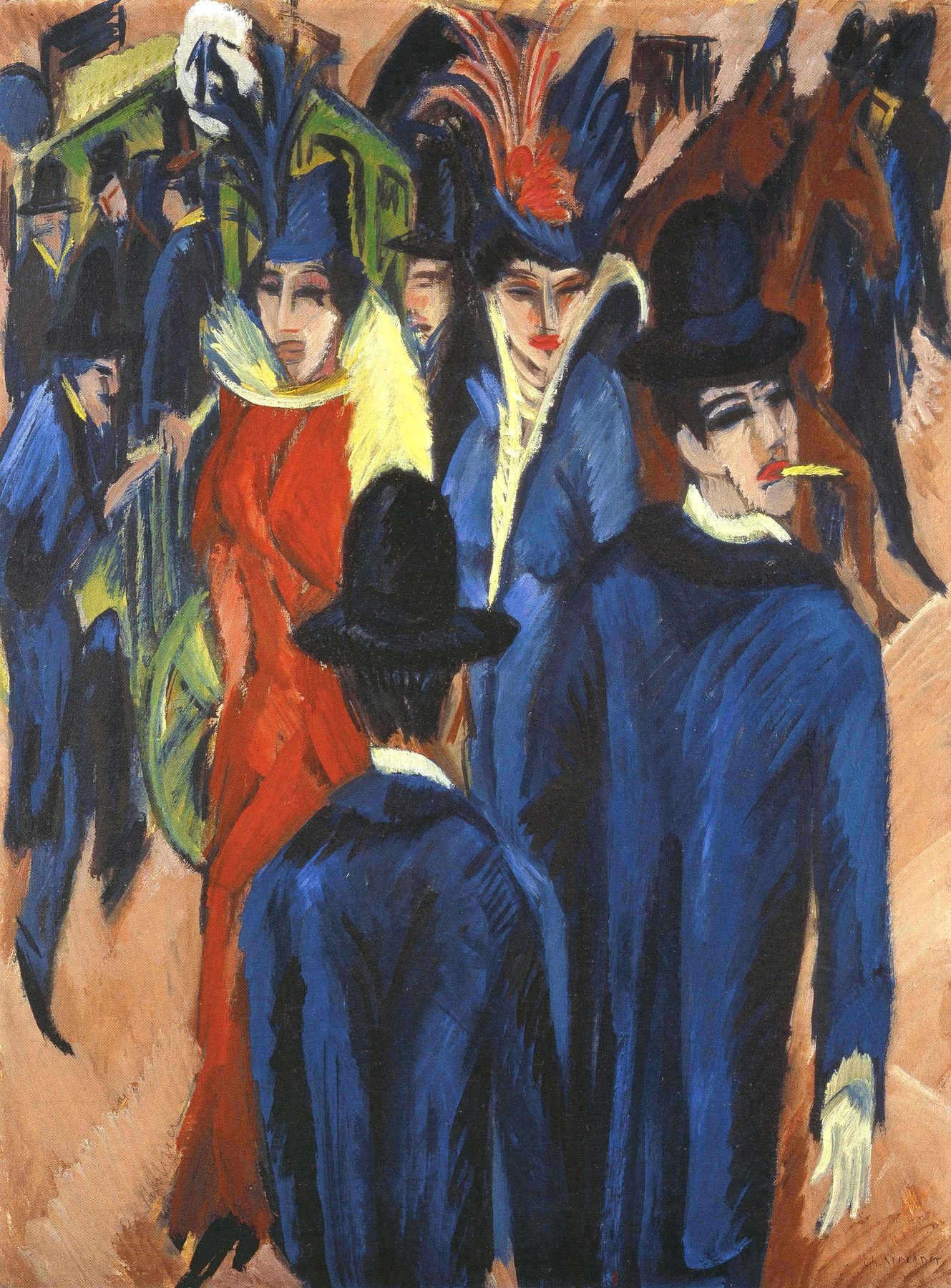
Berlin Street Scene
Ernst Ludwig Kirchner, 1913
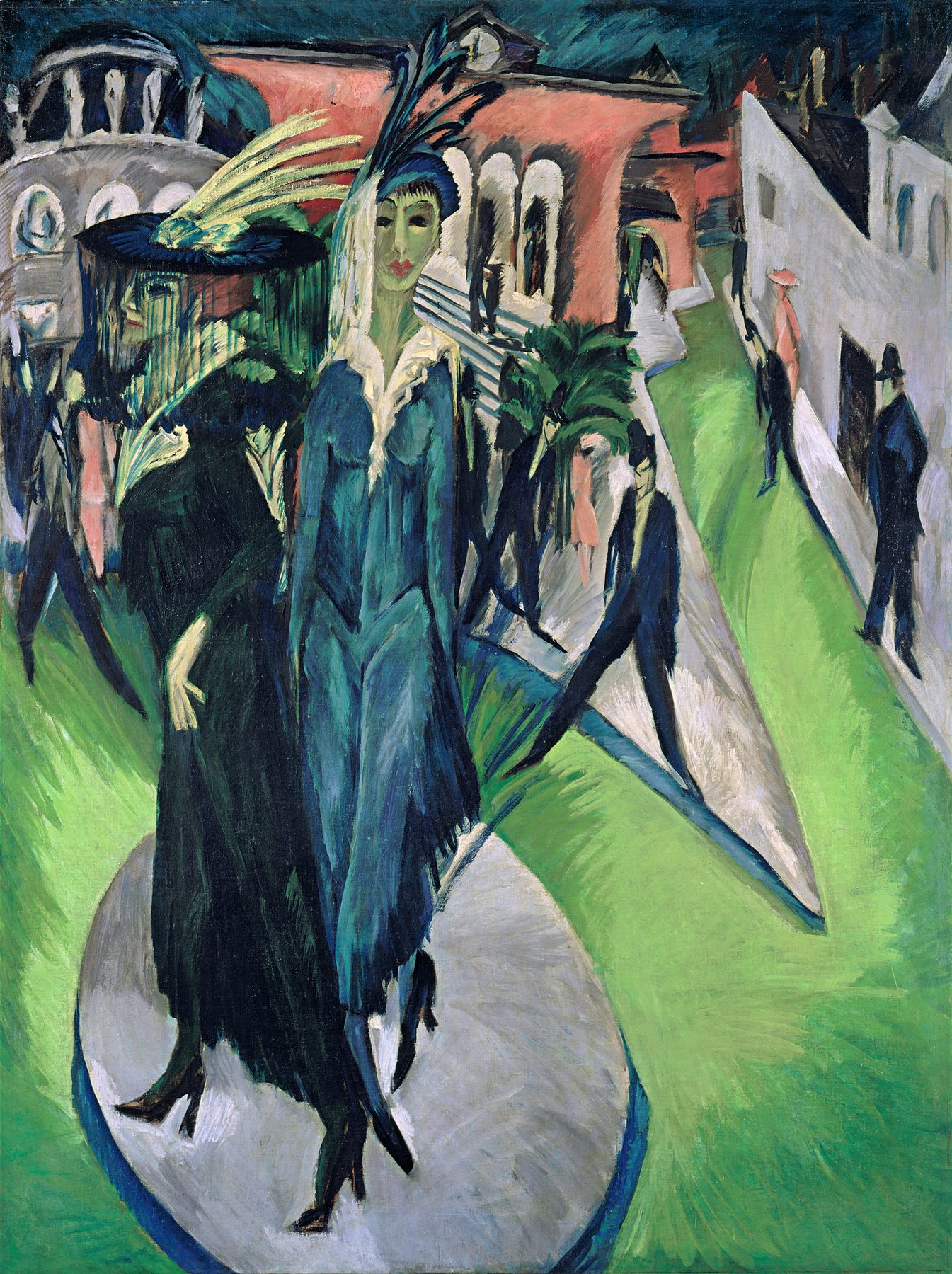
Potsdamer Platz
Ernst Ludwig Kirchner, 1914
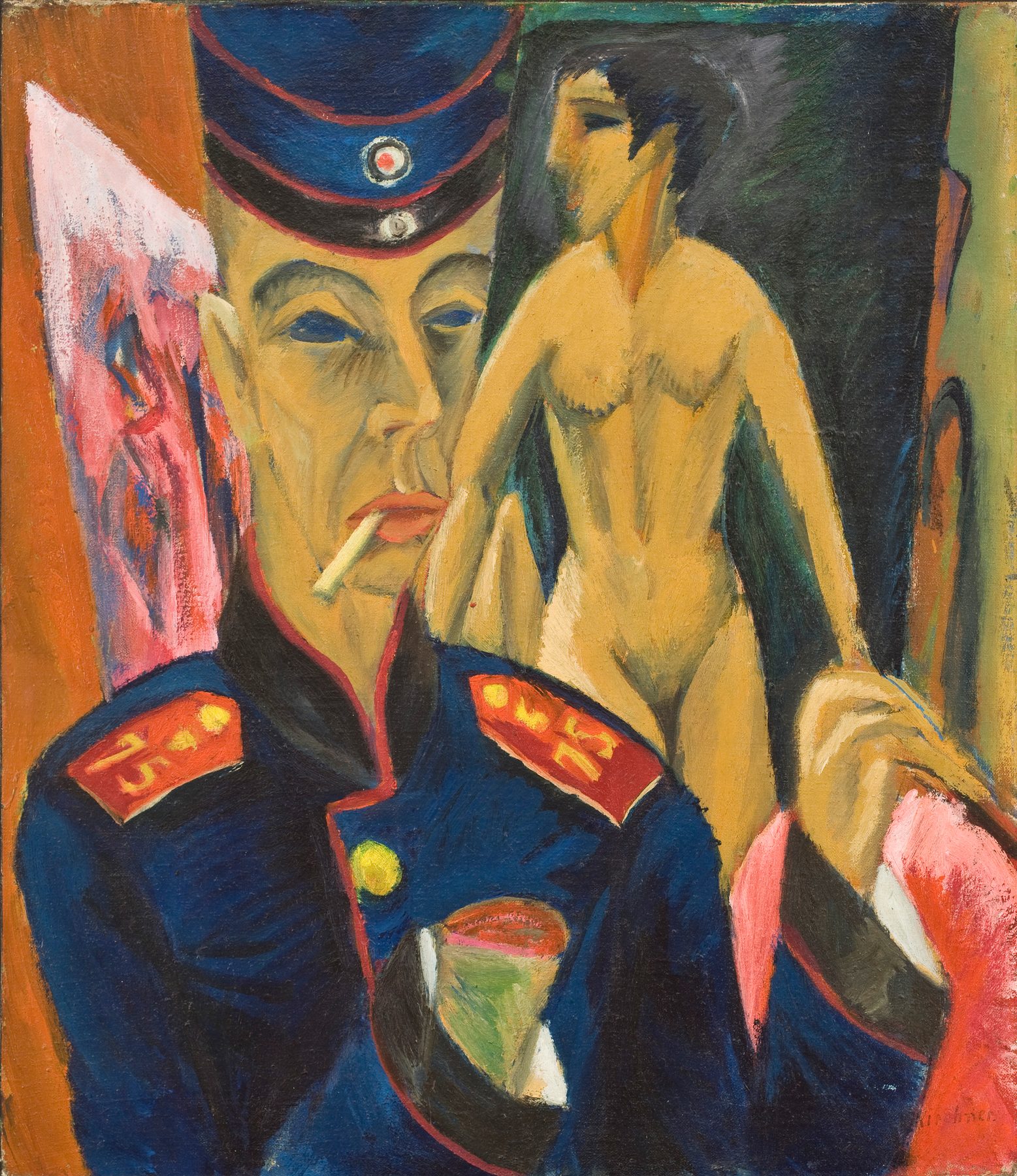
Self-Portrait as a Soldier
Ernst Ludwig Kirchner, 1915
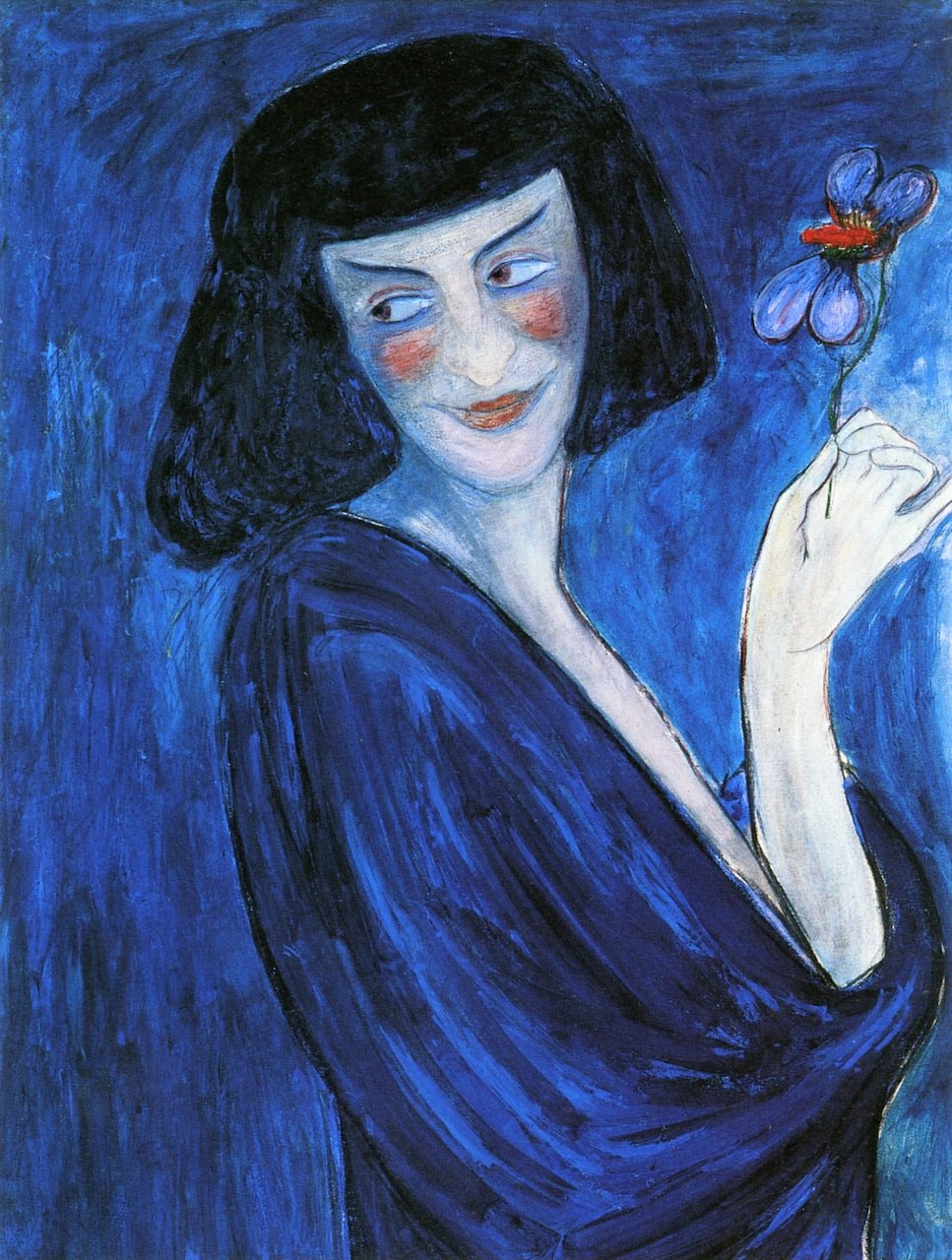
The Dancer Alexander Sacharoff
Marianne von Werefkin, 1909
Der Blaue Reiter and Murnau
Der Blaue Reiter emerged in Munich through a different organisational history. Wassily Kandinsky and Gabriele Münter had travelled widely before settling for extended periods in Murnau, south of Munich, from 1908. Alexej Jawlensky and Marianne von Werefkin worked there with them. The town’s houses, surrounding mountains, reverse-glass painting and folk traditions encouraged simplification, dark contour and luminous blocks of colour. Murnau was neither a sealed folk refuge nor the work of one couple; it was a place of collective exchange in which several artists altered one another’s seeing.[12] [15]
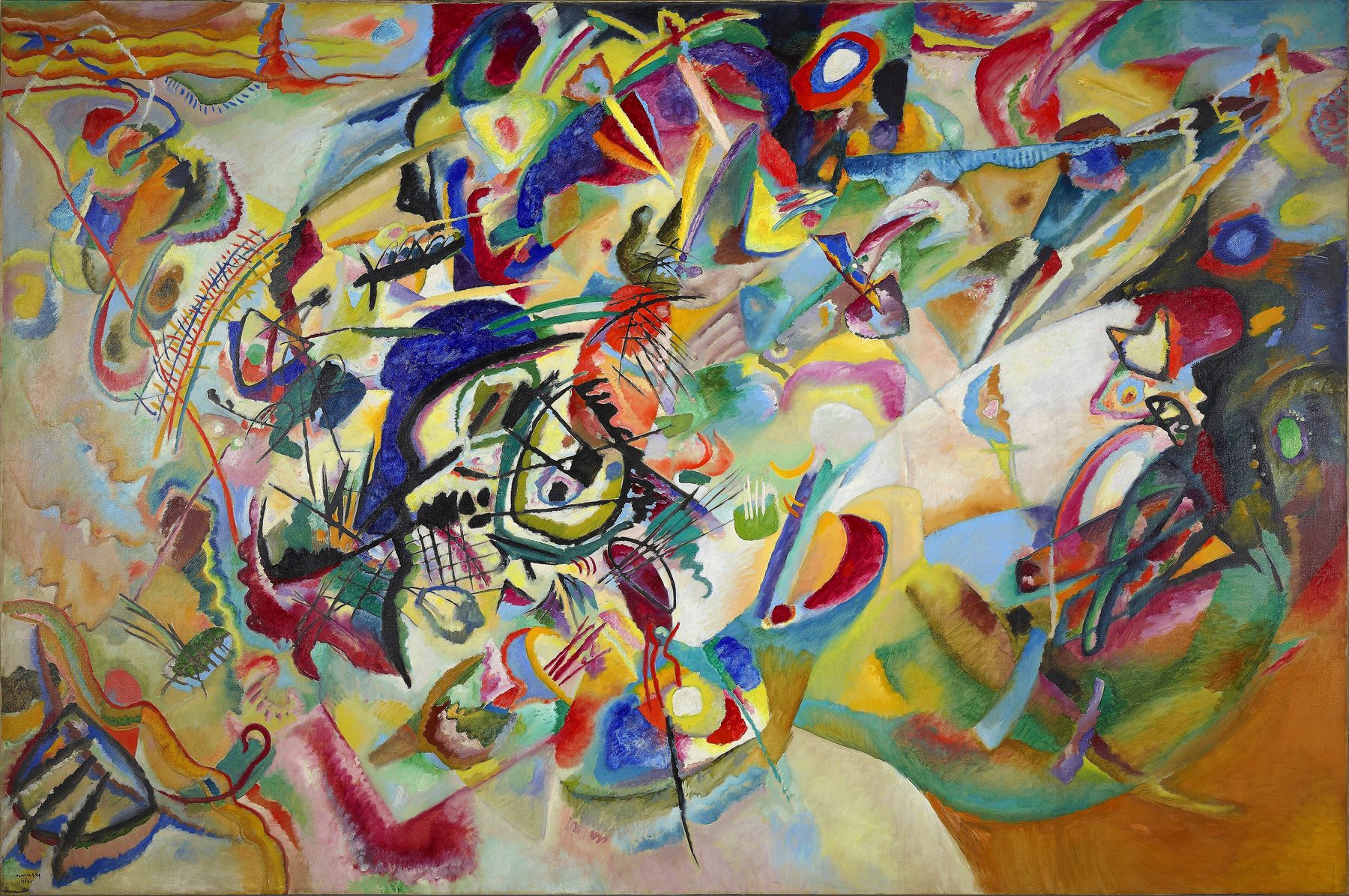
These painters were associated with the Neue Künstlervereinigung München, founded in 1909 to promote experimental art. Disagreements over the association’s exhibition policy came to a head in 1911 when Kandinsky’s large abstracting Composition V was rejected under a size rule. Kandinsky, Franz Marc and Münter broke with the association and rapidly organised the first exhibition under the editorial title Der Blaue Reiter. It opened in December 1911 in the same Munich gallery. The event included artists from different countries and backgrounds rather than announcing a closed new membership.[12] [13]
“The Blue Rider” had already been chosen for an almanac Kandinsky and Marc were planning. Later recollection linked the name to their shared love of blue, Marc’s enthusiasm for horses and Kandinsky’s for riders, although it is wiser to treat that charming explanation as part of the network’s self-story rather than a complete theory. A second exhibition in 1912 focused on graphic work. The organisers were creating a platform through exhibitions, reproductions and argument, not a permanent association equivalent to Die Brücke.[13] [14]
This distinction prevents familiar errors. There was no definitive roll of Blue Rider members, and participation could mean exhibiting once, contributing an image, assisting publication or sustaining a friendship. August Macke and Paul Klee became important figures within its orbit, while Werefkin, Jawlensky, Elisabeth Epstein and Maria Franck-Marc made indispensable contributions. French, Russian, German and Swiss positions intersected. What held the enterprise together briefly was an appetite for correspondences across media and cultures, not agreement about how a painting should look.[15] [16]
Münter’s Jawlensky and Werefkin makes that shared environment visible. Made around 1908–09, it shows the two artists seated in an interior, their faces and clothing organised by broad, decisive zones. Dark outlines do not merely contain colour; they pace the meeting between figures, table and background. Werefkin looks outward while Jawlensky turns in profile, so the image is both a double portrait and an account of intellectual proximity. The painting demonstrates why Münter cannot be reduced to Kandinsky’s pupil or companion. She was an independent artist interpreting a community in which she participated.[17] [47]
The almanac, music and abstraction
The Blaue Reiter Almanac appeared in May 1912, edited by Kandinsky and Marc with extensive practical labour by their colleagues. It brought essays, musical examples and reproductions into an unusually expansive visual argument. Bavarian reverse-glass painting, medieval sculpture, children’s drawings, contemporary European art and objects from outside Europe appeared beside one another. Scores by Arnold Schoenberg and other composers made music part of the project. The editors sought spiritual and formal energies that crossed academic hierarchies of nation, period and medium.[12] [13]
The book did not advance one style. It invited readers to see affinities between images customarily separated by museums and disciplines. Its montage could be genuinely liberating: children’s work was treated as visually serious, folk practice as a living resource and music as more than an analogy. Illustrated books also allowed word, typography, sequence and image to act together, giving Expressionist ideas a portable form distinct from the single painting.[48]
At the same time, the almanac’s universality was uneven. Reproductions stripped many objects from maker, use and place. European editors controlled the sequence and interpreted other cultures through information shaped by ethnographic collecting and colonial rule. The aspiration to overcome national limits cannot be dismissed, but neither can it be separated from the unequal systems that made global images available in Munich. Current Lenbachhaus research treats this tension as central rather than incidental.[36]
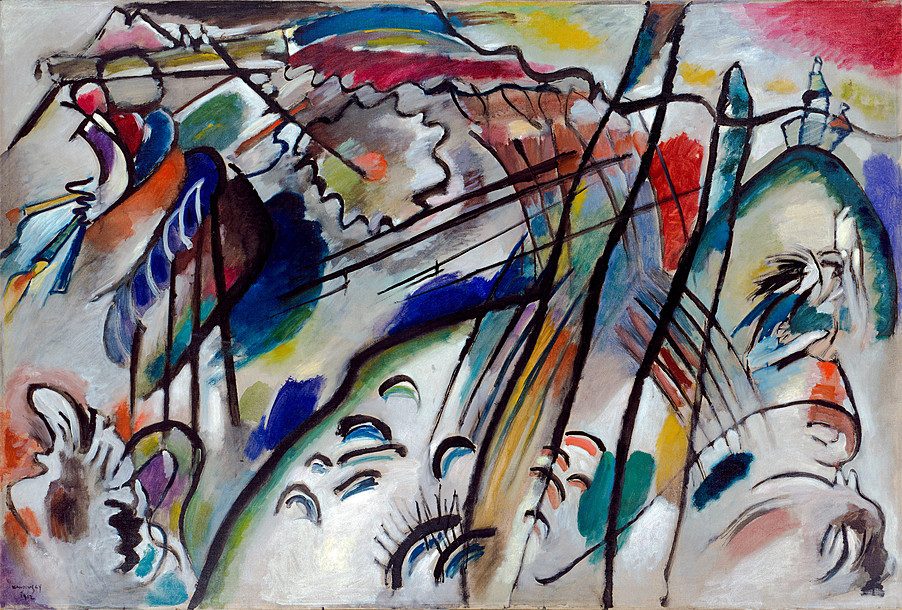
Music offered Kandinsky a model of non-representational effect. A melody does not need to resemble a horse or house to generate movement and tension; likewise colour and line might act without being tied securely to visible objects. In paintings and theoretical writing, Kandinsky increasingly loosened form from description. This was not the inevitable destination of the whole movement. Marc retained animals as symbolic presences, Münter continued to work through observed motifs, and other contributors resisted abstraction altogether.[14]
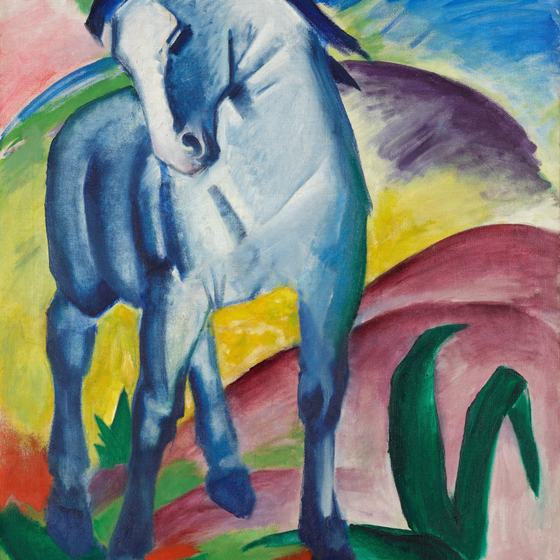
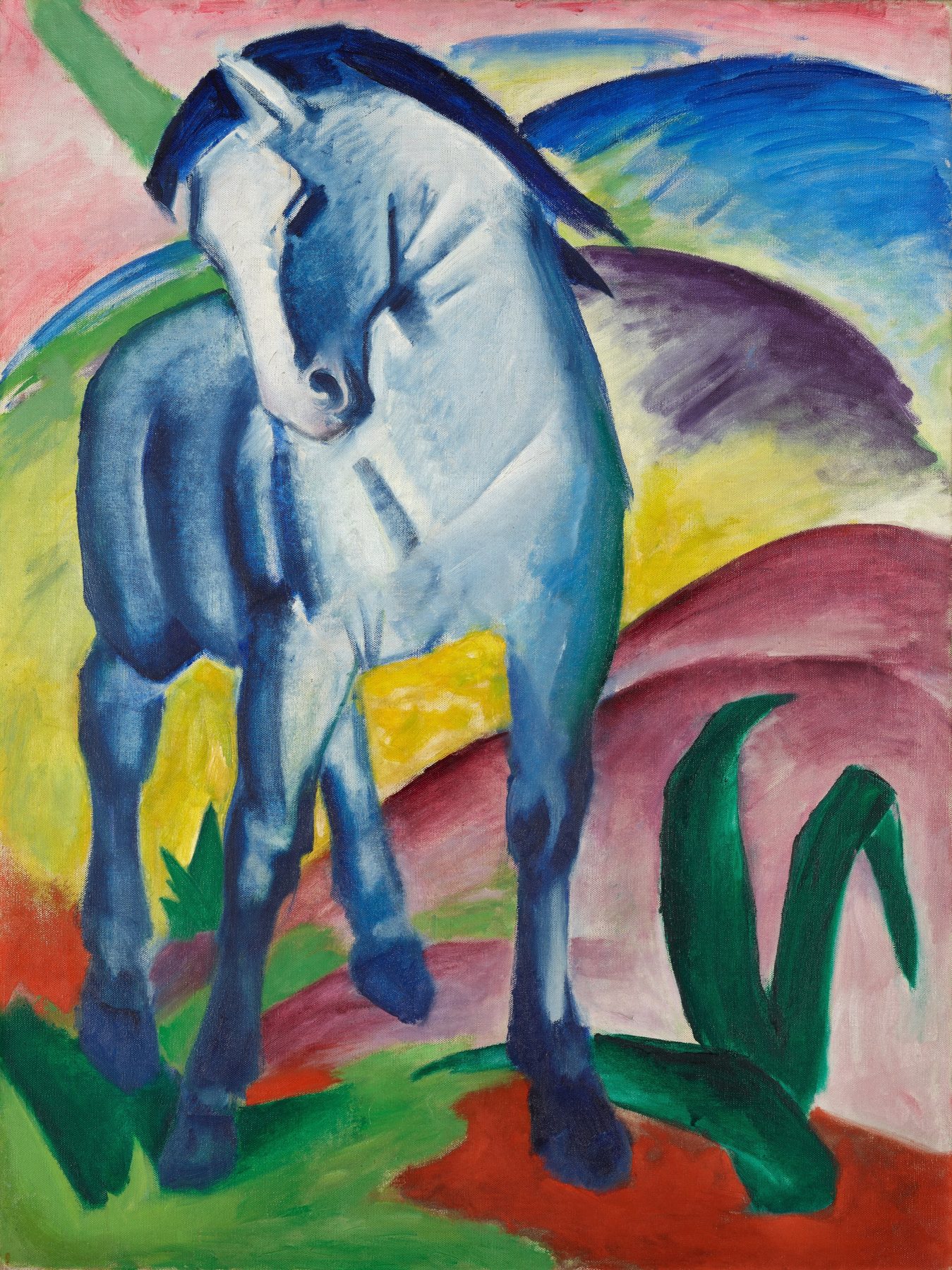
Marc’s Blue Horse I of 1911 shows how radical colour can remain attached to a recognisable body. The young horse bends its head within a landscape of curved red, yellow, green and blue forms. Its anatomy is simplified but not dissolved. Blue carried spiritual and masculine associations within Marc’s developing colour ideas, yet the painting is richer than a code in which each hue has one translation. The cool animal and warm ground make a rhythmic totality; contour turns physical volume into a calm emblem.[18]
Later history has altered how another Marc painting is seen. The Fate of the Animals of 1913 breaks animals and forest into violent diagonals, flashes and shards. Marc inscribed a prophetic-sounding phrase on the canvas before the war, but its apparent premonition became especially powerful after he died at Verdun in 1916 and the work was damaged by fire in 1917. Paul Klee assisted its restoration. The painting’s fractured surface now carries both prewar experiment and a wartime afterlife that no first viewer could have known.[34]
Women who made the networks
Older accounts cast Expressionist women as companions who supplied hospitality while men produced ideas. The archival record makes that division impossible to sustain. Gabriele Münter painted, photographed, exhibited, collected and helped organise the first Blue Rider show. During National Socialism, she protected a large body of Kandinsky’s work and later gave her collection to the Lenbachhaus, profoundly shaping what survives publicly in Munich. Marianne von Werefkin brought artistic experience, theoretical ambition and a far-reaching salon network. Elisabeth Epstein connected Munich with Paris, while Maria Franck-Marc assisted with correspondence, exhibitions and publication.[16] [47]
Their careers were not identical. Werefkin had deliberately paused her own painting for years while supporting Jawlensky, then returned with an intensely imaginative figurative language. Münter faced condescension that described her innovations as instinctive rather than intellectual. Franck-Marc’s labour could vanish under her husband’s name. The point is not to manufacture a female counterpart to a male heroic list, but to understand that avant-garde production included domestic space, translation, finance, editing, transport and preservation as well as authorship of artworks.[15] [16]
Brücke’s surrounding network also depended upon women whom membership categories marginalised. Rosa Schapire wrote about the group, secured exhibitions, collected its works and maintained relationships with artists over decades. Her status as a passive rather than active member reveals the gendered limits of the organisation’s call for youthful freedom. She exercised real critical agency even when the group’s structure did not offer equality.[38]
In Berlin, Herwarth Walden’s journal and gallery Der Sturm became an international platform. Nell Walden was not merely the dealer’s wife: she worked as organiser, collector and artist. The Dutch artist Jacoba van Heemskerck developed abstraction through Der Sturm exhibitions and publications. Restoring these figures changes the map. German Expressionism was made through transnational routes and sustained by people who controlled galleries, subscriptions, translations and collections, not only by painters in celebrated groups.[27]
Follow German Expressionism through four stages
–1905
Precedents and alternative networks
Secessions, print revivals, Symbolism, Post-Impressionism, Jugendstil and the work of Munch, Van Gogh and Gauguin create conditions for several new arts of intensity.
–1913
Die Brücke: studio, woodcut and city
Kirchner and his Dresden colleagues turn collective work, direct drawing, printmaking, studio experiment and the modern street into a public group identity.
–1914
Murnau and Der Blaue Reiter
Münter, Kandinsky, Marc, Macke, Werefkin and their international circle connect luminous colour, music, folk art, animals and abstraction through exhibitions and an almanac.
–1937
War, revolution and contested afterlives
War destroys the Blue Rider’s shared activity; prints, painting, theatre and film redirect Expressionist intensity towards grief, social accusation, politics and memory before Nazi repression.
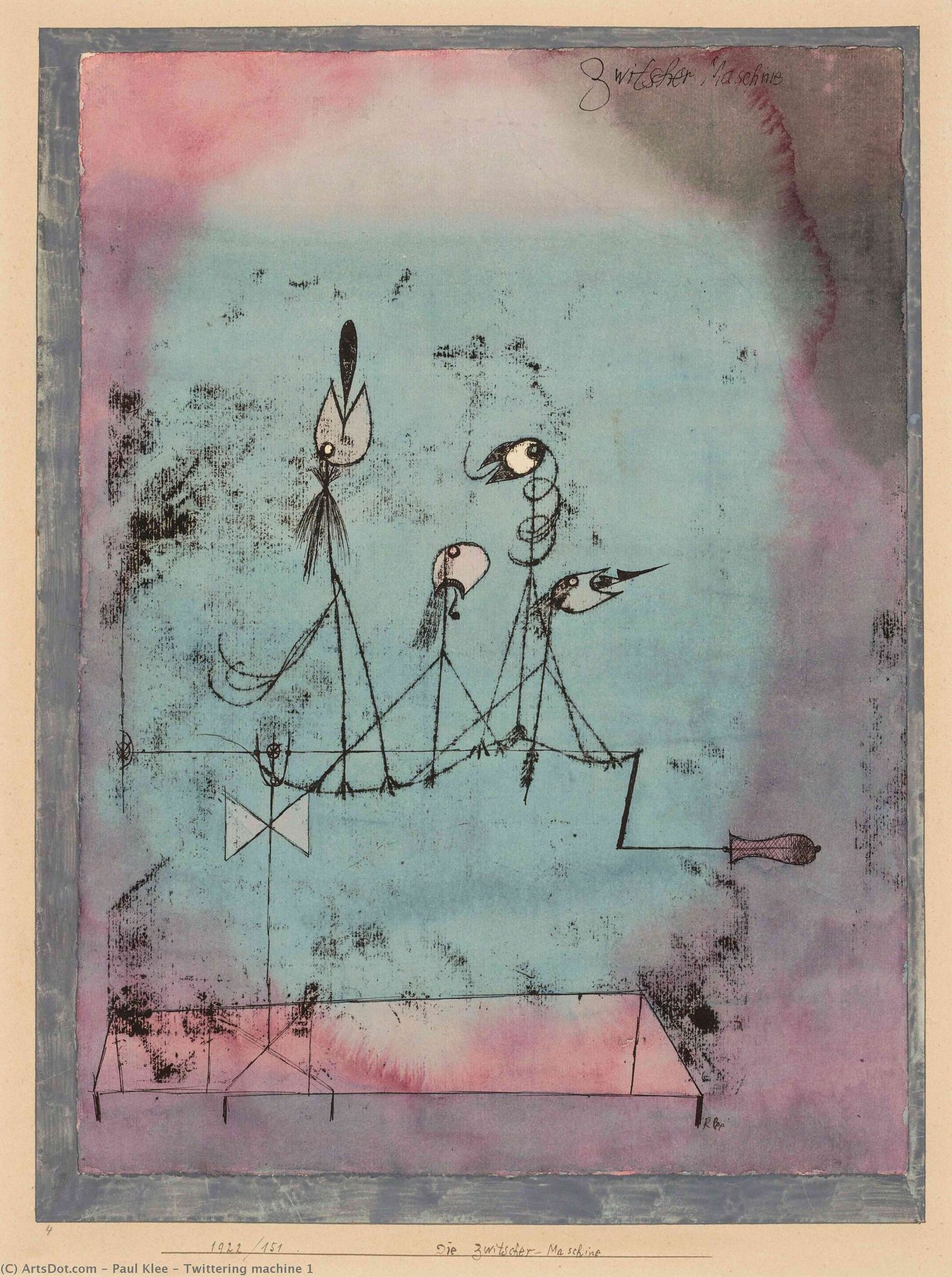
Colour, line and compressed space
Expressionist colour does not mean arbitrary brightness. It can intensify a local sensation, contradict natural appearance, distinguish emotional forces or create an independent pictorial rhythm. Brücke artists often used unmixed areas beside dark contours to make bodies and landscapes collide. In the Blue Rider network, colour might carry spiritual aspiration or move towards autonomy. These uses overlap, but they do not form a shared dictionary.[1] [18]
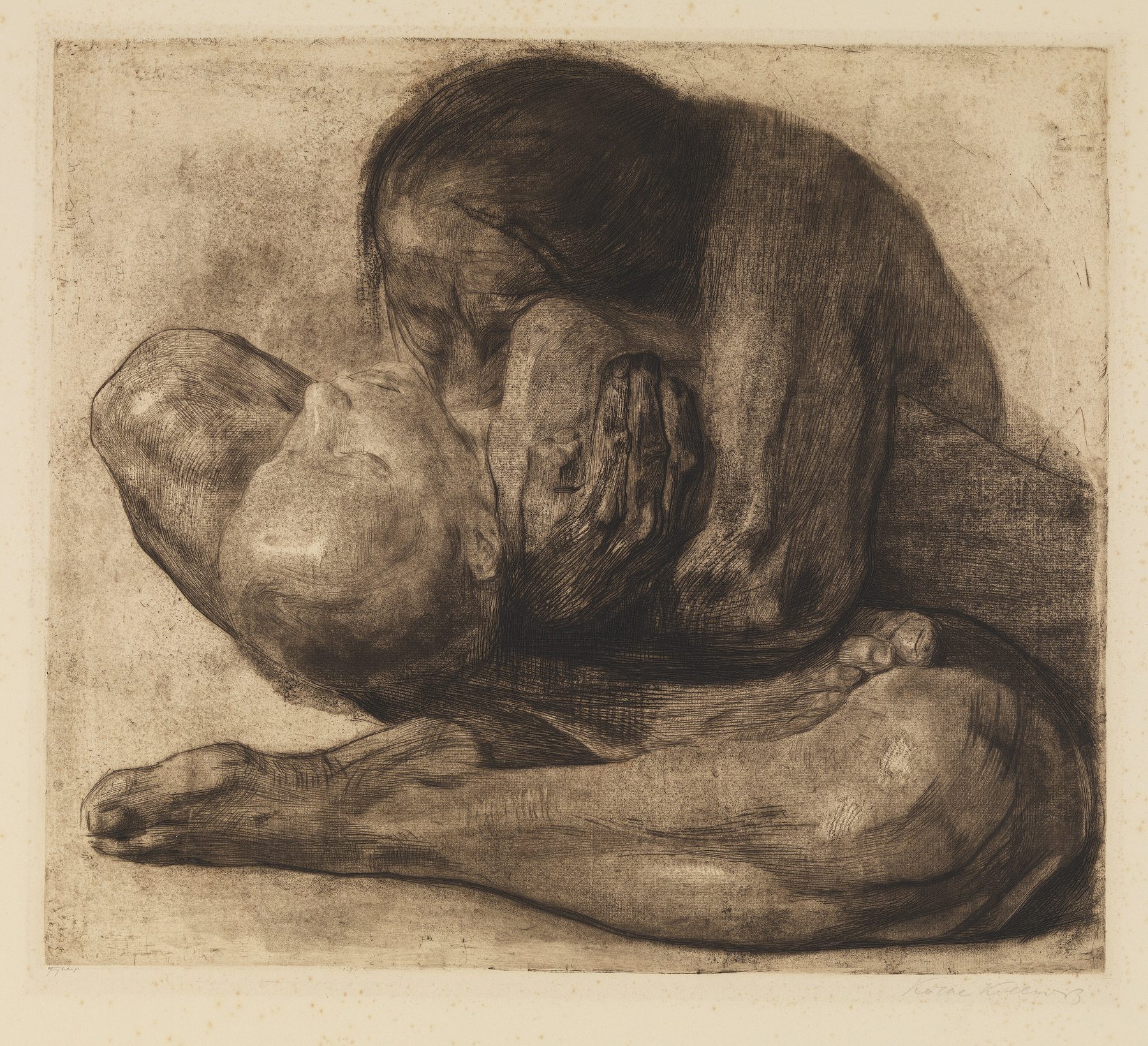
Line is equally variable. A carved contour may be blunt because wood has resisted the knife; Kirchner’s street drawing may flicker because speed is the subject; Kollwitz may deepen a curve until a mother’s body becomes shelter. Distortion is not a general symptom poured over every image. The most productive question is functional: what relationship has been altered, and what does that alteration make visible?
Compressed space removes the safe distance of conventional recession. Floors tip, figures touch borders and background colour moves forward. In portraits, that compression can make another person’s presence difficult to evade. In city scenes, it creates crowding; in religious imagery, vision may press into ordinary space. A work need not depict an identifiable feeling to produce bodily tension in its viewer. Expression exists in the construction of an encounter.
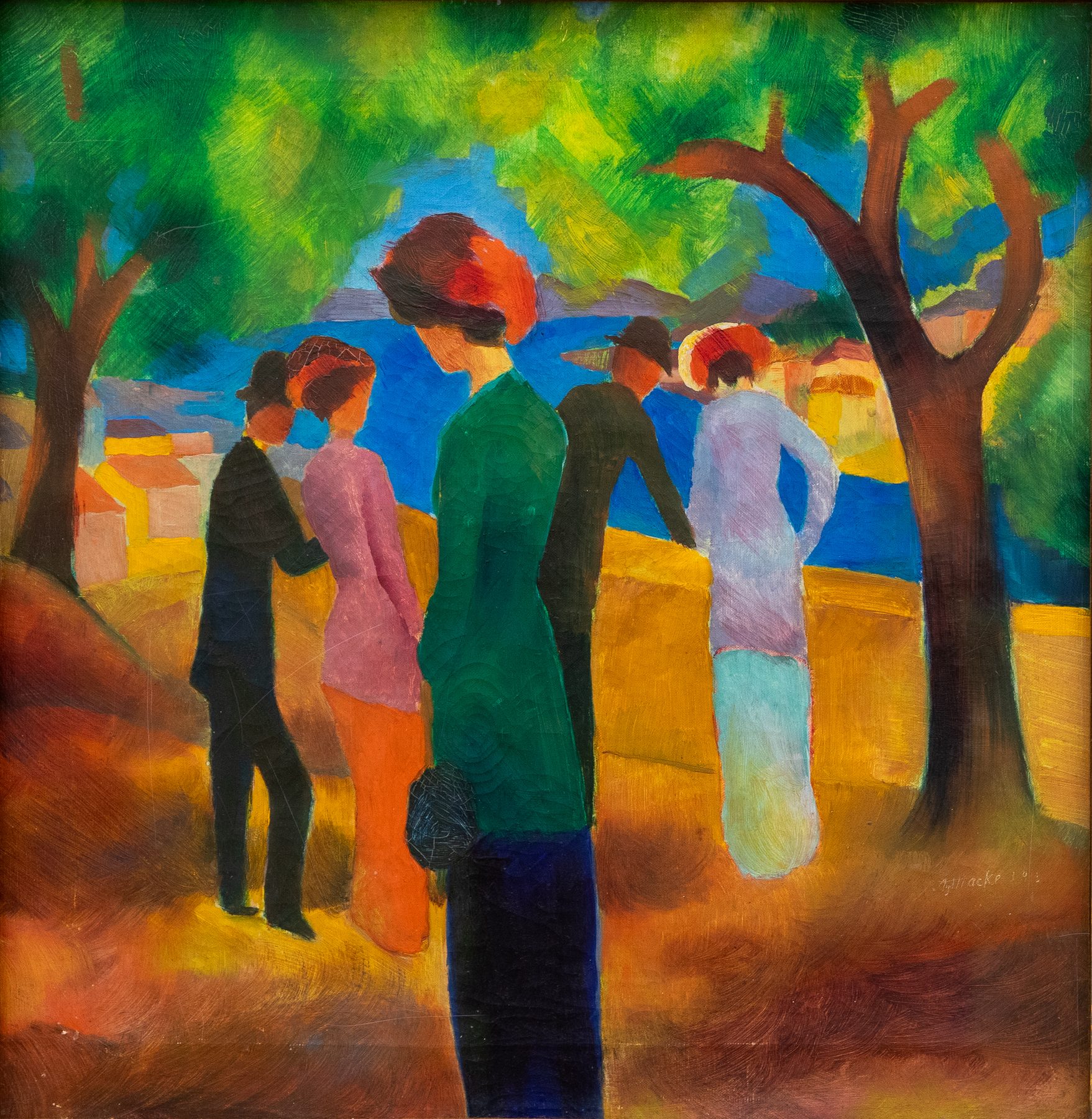
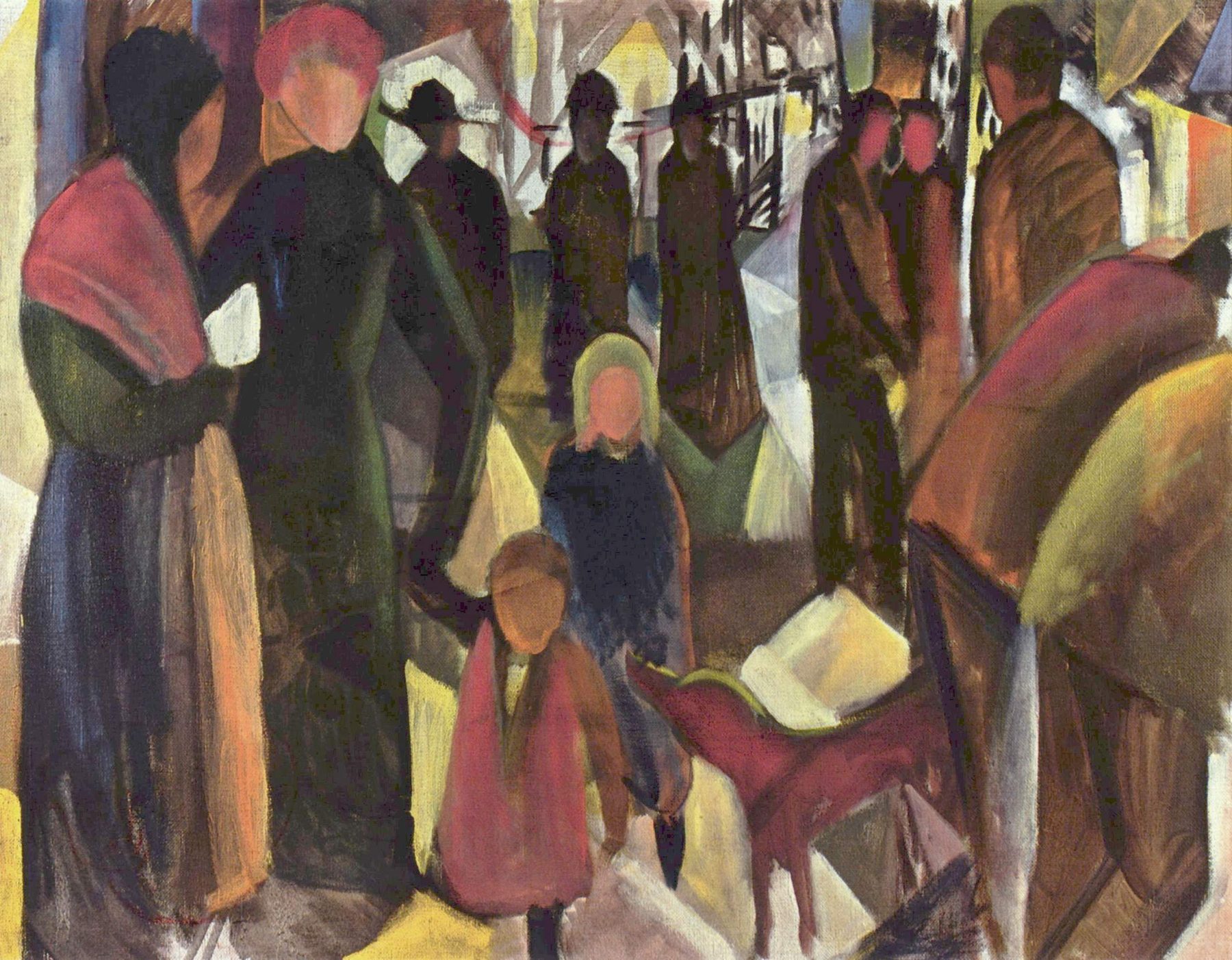
The same devices can also create pleasure. August Macke arranged shoppers, arcades and gardens through translucent colours and measured intervals. Münter’s Murnau landscapes can be joyous, lucid and humorous. Marc’s animals often carry calm or kinship rather than anxiety. German Expressionism is impoverished when every angular line becomes alienation and every bright colour a scream. Its emotional range includes tenderness, exhilaration, contemplation, satire and decorative delight.
Printmaking, books and periodicals
Print was a primary laboratory for German Expressionism, not a cheaper copy of painting. Woodcut, lithography, drypoint, etching and engraving required different negotiations with tools and surfaces. A woodblock could make contour monumental; lithography could preserve the speed of a drawn mark; intaglio could produce bitten haze or nervous scratched detail. Artists chose and combined techniques according to the pressure an image required.[2] [22]
Print also joined experiment to circulation. Brücke’s annual portfolios rewarded subscribers and asserted group identity. Periodicals reproduced arguments and images in recurring issues, building an audience over time. Der Sturm, Die Aktion and other journals placed art beside poetry, criticism and politics. Publishers and dealers commissioned portfolios, marketed individual sheets and connected artists with collectors. The movement’s public was manufactured through these repeated encounters.[23] [24]
The illustrated book became a distinct artistic object. Images could interrupt, echo or resist a text; type and paper affected pacing; a sequence created time. Expressionist artists illustrated modern poetry, biblical narratives and their own literary projects. Because a book can be held and revisited, its intimacy differs from both a wall painting and a poster. It made the avant-garde domestic without necessarily making it tame.[48]
Economic conditions shaped this market. After the First World War, German buyers turned eagerly to prints, which could appear more affordable than paintings even as inflation accelerated. Publishers issued large portfolios and artists revisited wartime or revolutionary subjects. When the currency stabilised in 1923, speculative demand fell sharply and many ventures collapsed. The history of Expressionist print therefore belongs to paper supply, pricing and monetary crisis as well as artistic revival.[24] [25]
Colonialism and appropriation
Expressionists frequently described African and Oceanic art through the period term “primitive”. The word suggested to them an origin outside academic refinement, but it collapsed many societies into a European fantasy. Objects in ethnographic museums had makers, patrons, ceremonies and political lives. Display cases commonly removed that information, while colonial conquest, missionary activity, trade and punitive expeditions determined what reached Germany. The avant-garde encountered not a timeless universal source but selections produced by empire.[35]
Brücke artists visited Dresden’s ethnographic museum and drew from works there. They also attended Völkerschauen, commercial spectacles in which colonised people were displayed for European audiences. Motifs related to Benin bronzes, Palauan house beams and other objects entered carvings, prints and studio decoration. Formal borrowing could help the artists overturn European conventions, yet their accounts largely ignored the names of makers and conditions of acquisition. The claim to radical freedom therefore rested partly upon unequal access to other people’s culture.[1] [35]
Travel did not resolve the imbalance. Pechstein travelled to Palau in 1914, then part of German New Guinea, and later represented the journey as an encounter with an unspoiled paradise. Nolde participated in the German medical-demographic expedition to New Guinea in 1913–14. His watercolours show close observation of individuals, but his wider thought retained racial hierarchy and fantasies of cultural authenticity. Colonial administration, coerced labour and local resistance recede when territory becomes scenery for European renewal.[9] [10]
Die Brücke was not alone. The Blue Rider editors challenged national and academic hierarchies by placing global objects beside European masterpieces, but their montage often offered minimal context. They opposed cultural chauvinism while relying on colonial systems of classification and reproduction. That combination is historically significant: an artwork can contest one hierarchy while perpetuating another.[13] [36]
Critical interpretation does not require erasing these pictures or denying that artists responded powerfully to unfamiliar forms. It requires restoring relationships the modernist story excluded. Which community made the source object? How did it leave? What function did a museum label suppress? Who was represented in a human exhibition, and under what control? Asking such questions turns “influence” from a flattering list of visual similarities into a history of people, objects and power.
The First World War
The outbreak of war in 1914 shattered networks that had seemed international and mobile. Some artists initially welcomed conflict as a cleansing break with bourgeois society; others were doubtful or opposed from the beginning. Mobilisation soon replaced abstraction with military routine, injury and death. Macke died in France in September 1914, and Marc was killed at Verdun in March 1916. Their deaths helped transform the Blue Rider’s brief prewar activity into a lost cultural moment.[14] [30]
Kirchner volunteered for artillery training but could not sustain service and suffered a severe physical and psychological crisis. His 1915 Self-Portrait as a Soldier presents him in uniform with a severed hand, although no such physical amputation occurred. The imagined loss pictures artistic incapacity rather than documenting an injury. Max Beckmann served as a medical orderly and underwent a breakdown. Artists who had hoped extreme experience might renew culture found that industrial warfare exceeded the forms through which they had imagined it.[30] [46]
Otto Dix served as a machine gunner and experienced the Western and Eastern fronts. Years later, his portfolio The War assembled fifty etchings, aquatints and drypoints. Corpses, ruined trenches, disfigured veterans and exhausted soldiers appear without a continuous heroic narrative. The small sheets require repeated close encounters; corrosive processes make atmosphere itself seem contaminated. Dix drew upon memory, photographs and earlier traditions of war print, turning witness into a deliberately mediated sequence rather than claiming an untouched report.[32]
Käthe Kollwitz approached war from bereavement and the home front. Her younger son Peter volunteered and was killed in Belgium in October 1914. She spent years working through grief and political reconsideration. The seven woodcuts of her War cycle, published in 1923, do not illustrate battles. Parents, widows and volunteers gather into dense, dark forms. In The Mothers, interlocked arms turn bodies into a defensive wall around children. Cutting away the block makes absence and protection belong to the same material action.[30] [31]
No single political lesson emerged. Some works mourn, some accuse, some search for spiritual resurrection. Religious imagery returned because sacrifice, apocalypse and lament gave artists inherited structures for unprecedented pain. Other artists embraced caricature and documentary detail. The importance of war to Expressionism lies not in producing a common style but in destroying the confidence that formal renewal alone could remake society.
Postwar Expressionism and politics
The German Revolution of 1918–19 released new organisational energy. The Arbeitsrat für Kunst and Novembergruppe joined artists, architects and designers who hoped culture could help build a more democratic society. Exhibition access, public architecture and the integration of arts became political questions. In Dresden, younger collectives adapted Expressionist form to communist, anarchist and utopian commitments. These organisations were plural and unstable, but they made the social purpose of art explicit.[25] [30]
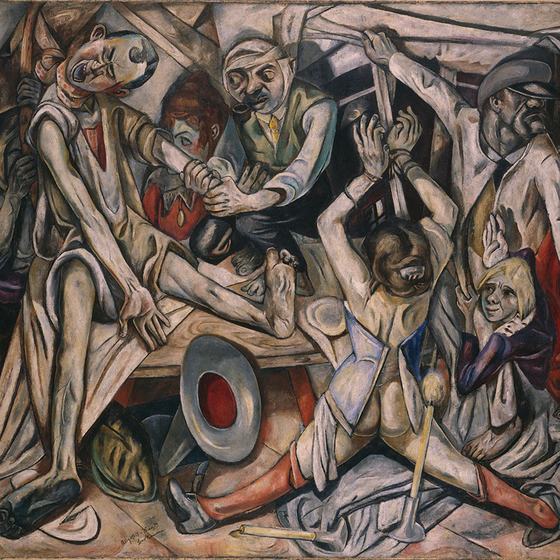
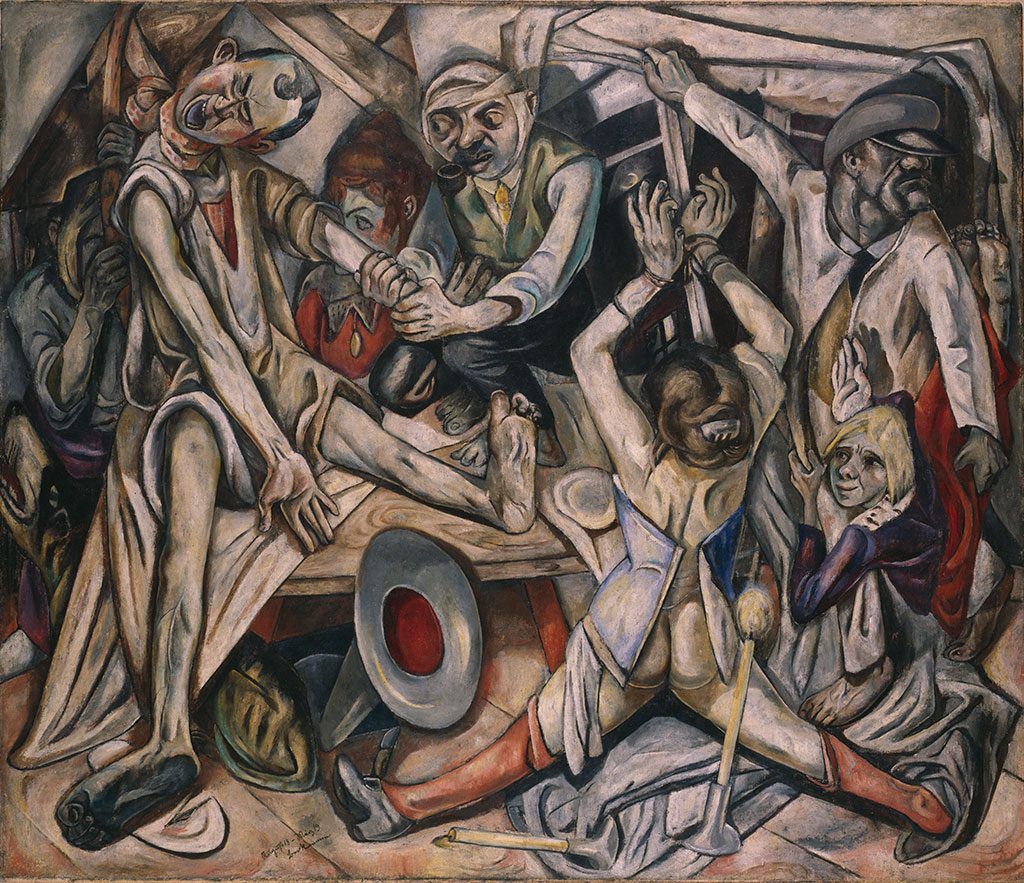
Berlin also supplied a bitterer language. Beckmann’s portfolio Hell, published in 1919, compresses revolution, hunger, prostitution and violence into crowded interiors. In The Night, bodies are trapped within a room that seems to twist around assault. Beckmann rejected the Expressionist label, yet his fractured space and moral pressure demonstrate why he remains close to its history. Categories can describe formal and historical relationships without overriding an artist’s own dissent.[33]
George Grosz and Dix sharpened caricature against profiteers, militarists and damaged veterans. Their pictures often look more descriptive than prewar Expressionism, but scale, contour and montage still deform the world for critical ends. Postwar art could abandon spiritual inwardness while retaining expressive exaggeration. The line between continued Expressionism and a new realism is therefore a field of argument rather than a precise date.
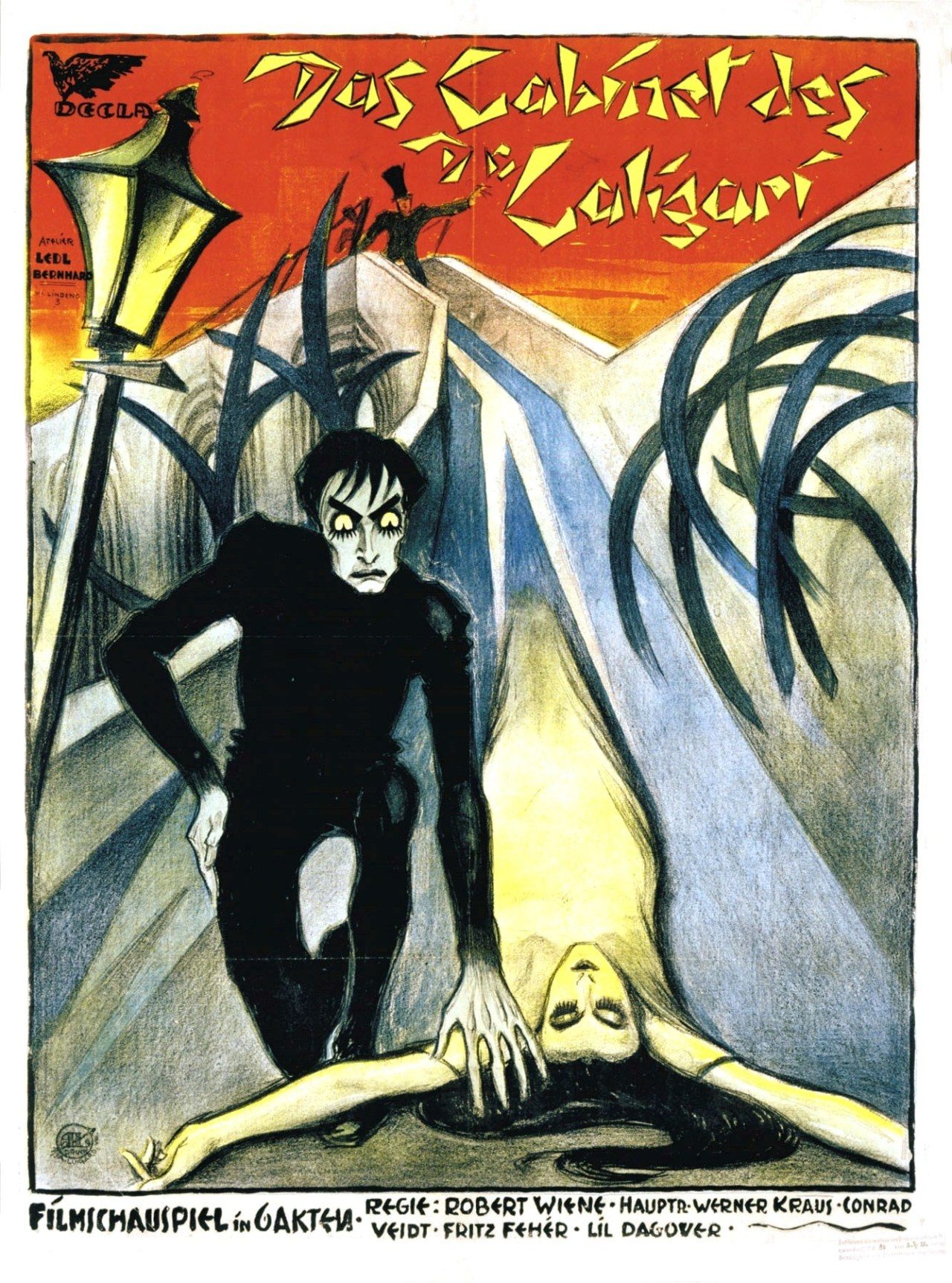
Expressionist design extended beyond galleries. Stage sets tilted architecture around actors; sharp lighting turned faces into masks. Architects imagined crystalline communal buildings, theatres and towers, often more visionary on paper than feasible in construction. The 1920 film The Cabinet of Dr. Caligari, directed by Robert Wiene, made painted shadows and warped sets into a total psychological environment. Its premiere helped associate Expressionism internationally with distorted cinema, even though German film of the period was far more diverse.[41]
The graphic movement also persisted through political journals and book illustration. Repetition enabled images to join demonstrations, private reading and activist networks. Yet not every bold woodcut was radical, and Expressionist language could serve religious or nationalist ends as well as socialism. Formal intensity carries no automatic politics. Its meaning depends on subject, distribution and use.
Austria and the New Objectivity
Austrian Expressionism developed through Vienna’s different institutions and crises. Kokoschka’s portraits expose faces and hands through nervous brushwork; Schiele’s bodies bend against largely empty grounds, making gesture and vulnerability inseparable. Their art shares distortion and psychological pressure with German examples, and both exhibited within German networks. Nevertheless, the collapse of the Habsburg world, Viennese psychoanalysis, Klimt’s legacy and Austrian patronage give the work a distinct history.[39]
New Objectivity, or Neue Sachlichkeit, is a closer chronological challenge. Hartlaub used the phrase for a Mannheim exhibition in 1925 that identified artists turning towards a hard, socially alert description after the emotional and spiritual claims of Expressionism. The new label gathered opposed tendencies: cool classicism, meticulous portraiture and corrosive social satire. It signalled changed priorities rather than a clean replacement.[40]
Dix, Grosz and Beckmann make the boundary permeable. Dix’s precise surfaces can be brutally observational, but his war prints distort and corrode. Grosz combined recognisable social types with impossible urban transparency. Beckmann sought formal order while compressing figures into claustrophobic allegory. Rather than asking which single box each artist occupies, it is more useful to ask when and why methods of intensity were redirected towards fact, typology and social diagnosis.[1] [40]
National Socialism and “degenerate art”
By the Weimar years, works by Kirchner, Heckel, Schmidt-Rottluff and other modernists had entered German public museums. This institutional acceptance did not protect them after the National Socialists took power in 1933. Museum directors were removed, artists lost posts and modern works were seized. Research into the 1937 campaign has identified more than 21,000 confiscated objects. Brücke artists were represented in especially large numbers because public collections had acquired their work so extensively.[42] [43]
The Munich exhibition Entartete Kunst—“Degenerate Art”—used crowded, polemical displays and mocking inscriptions to present modernism as cultural and racial corruption. Confiscated works were then sold abroad, exchanged, stored or destroyed. The campaign did not simply censor current production; it rewrote the history of German museums and scattered collections internationally. The later location of a painting may therefore encode coercive removal even when it now hangs securely in a celebrated museum.[42]
The artists’ political conduct varied sharply. Pechstein opposed racist doctrine and was targeted, while Heckel signed a declaration of loyalty to Hitler in 1934. Nolde was a committed antisemite and Nazi supporter who hoped his art would be recognised as authentically German. Internal rivalries also mattered: he denounced Pechstein with a false allegation about Jewish ancestry. Nonetheless, the regime confiscated more than a thousand Nolde works and restricted his professional activity. Repression did not turn him retrospectively into a political opponent.[9] [44] [45]
Nolde’s postwar reputation long rested on a simplified image of the persecuted artist secretly painting in resistance. Current scholarship has replaced that myth with evidence of ideological allegiance, opportunism and continuing antisemitism. The case establishes a wider rule: the state’s judgement of an artwork tells us about the state, not automatically about the ethical position of its maker.[10] [45]
Kirchner had lived in Switzerland since the war years. Nazi confiscations and the public attack on modern art deepened the crisis surrounding his legacy, although his suicide in 1938 cannot be reduced to one event. Münter survived in Germany and concealed the Kandinsky works in her possession. Later gifts, museum acquisitions and specialist collections helped rebuild the movement’s canon after catastrophe. What viewers now understand as German Expressionism has been shaped by preservation choices as well as original group activity.[12] [46] [47]
Artists and places to know
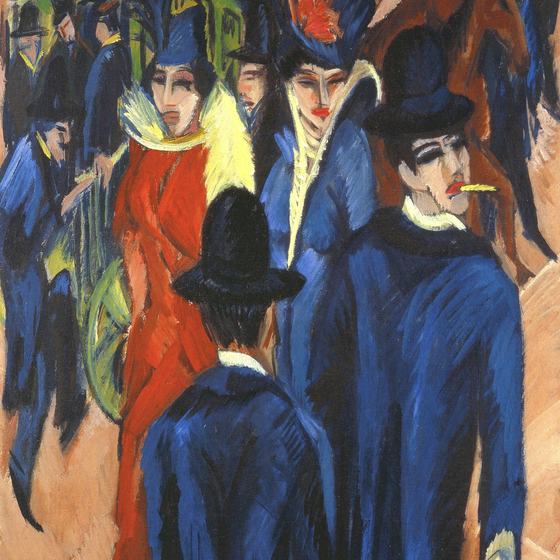
Ernst Ludwig Kirchner
A Brücke founder whose rapid drawing, woodcuts, studio nudes and unstable Berlin streets made the movement’s claims to directness both compelling and ethically complex.[5] [28] [37]
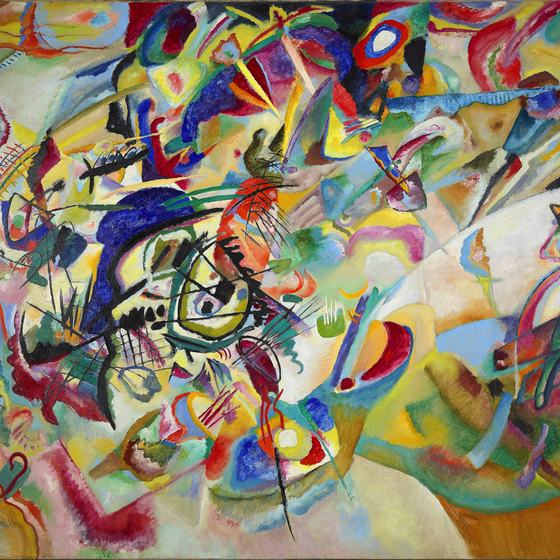
Wassily Kandinsky
Painter, writer and Blue Rider organiser who explored correspondences between colour, music and inner necessity while moving increasingly towards abstraction.[12] [14]
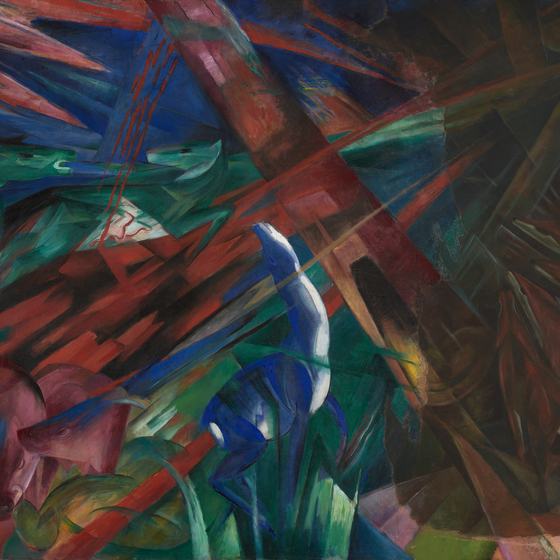
Franz Marc
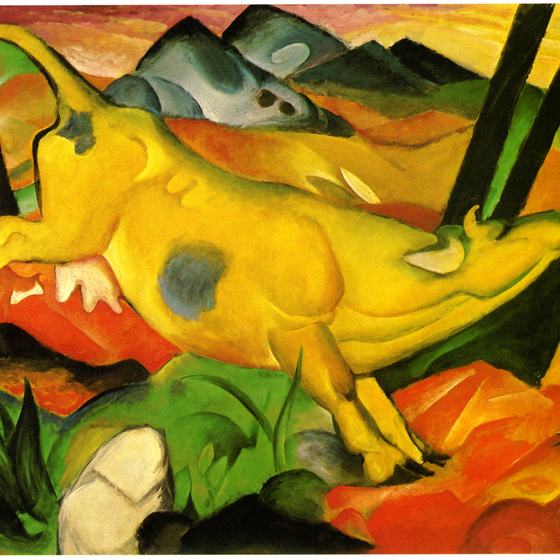
Co-editor of the Blue Rider almanac, best known for animals constructed through symbolic and rhythmic colour.[18]
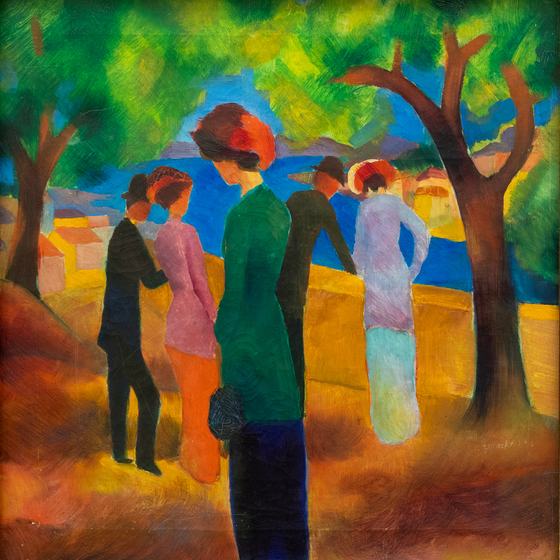
August Macke
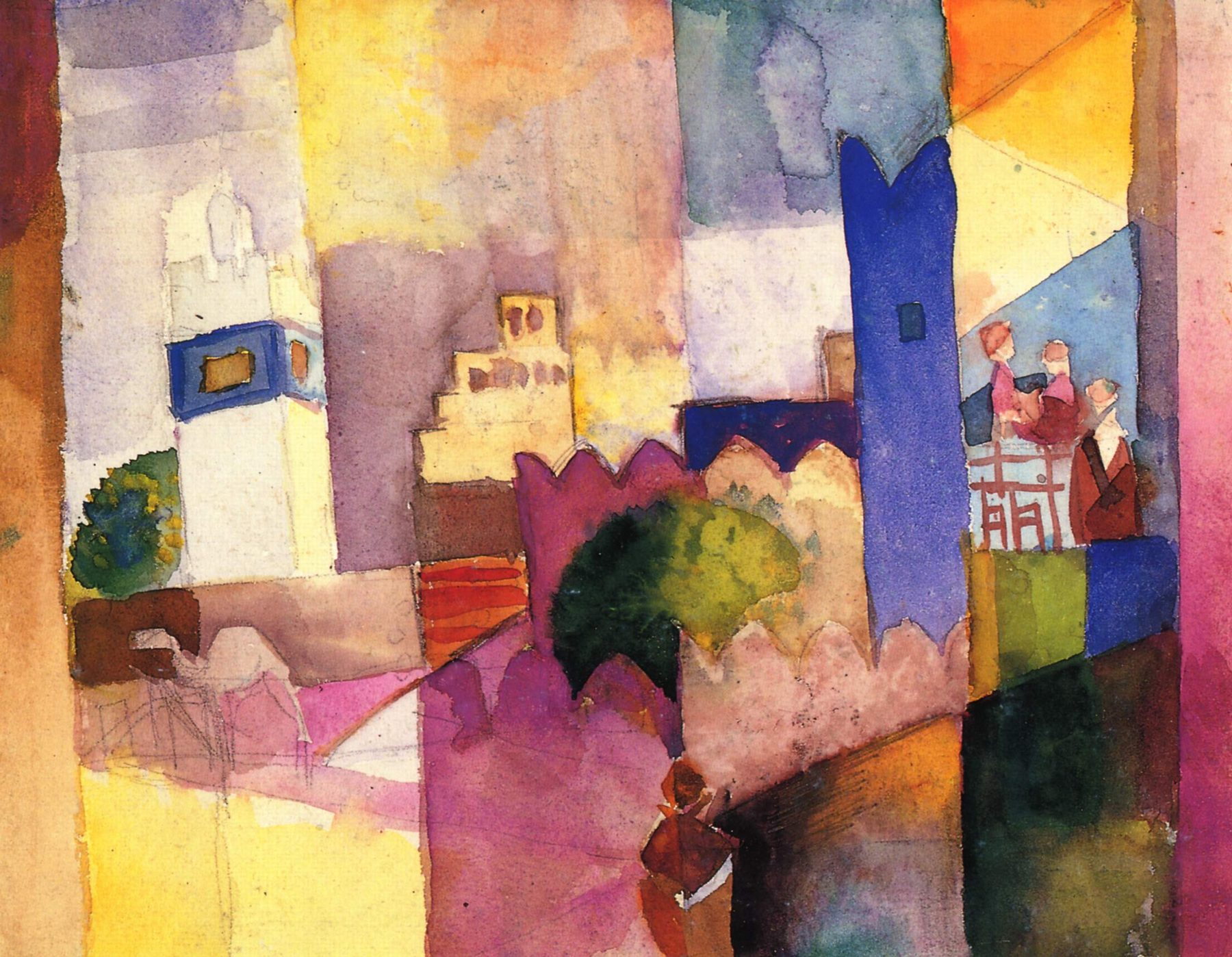
A central Blue Rider associate whose luminous colour, promenades and Tunisian watercolours joined modern urban leisure to a highly ordered pictorial rhythm.[14]
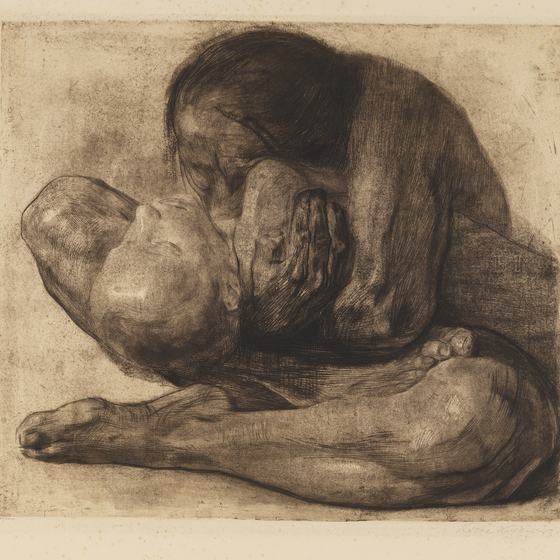
Käthe Kollwitz
Independent graphic artist whose images of work, revolt, grief and maternal protection belong to Expressionism’s social and ethical history without fitting either famous group.[31]
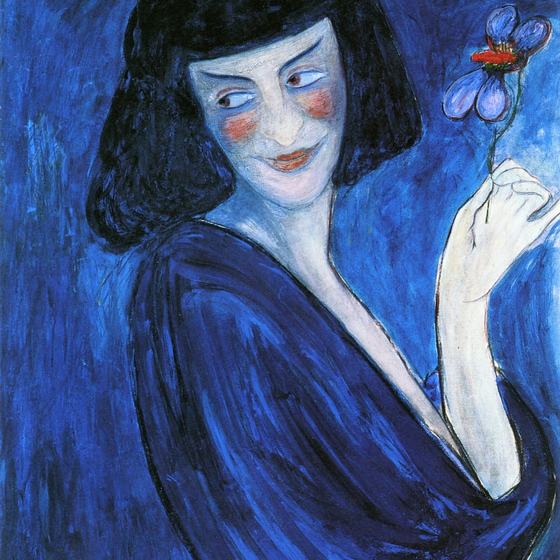
Marianne von Werefkin
Artist and theorist whose Munich salon and richly staged figurative paintings connected Russian, German and French modernism.
Further people and places
Dresden
The birthplace of Die Brücke and the setting for its first studios, exhibitions and collective trips to nearby lakes. The city’s ethnographic museum also formed part of the group’s colonial field of vision.
Berlin
The metropolis that accelerated Brücke’s fragmentation and supplied street imagery, dealers, journals, galleries and postwar politics. It was both subject and distribution centre.
Munich and Murnau
Munich provided associations, galleries and publishing contacts; Murnau supported the colour experiments and exchanges that fed Der Blaue Reiter.
Erich Heckel
Brücke founder, organiser and printmaker whose taut figures, landscapes and portraits reveal the group’s collective language without becoming interchangeable with Kirchner.[6]
Karl Schmidt-Rottluff
Brücke founder credited with its name. His woodcuts and paintings often simplify heads, houses and trees into weighty, architectonic forms.[7]
Gabriele Münter
Painter, photographer, organiser and collector central to the Blue Rider network and to the later preservation of its history.[47]
Emil Nolde
Powerful colourist and printmaker whose short Brücke association, colonial gaze, antisemitism and Nazi allegiance require an account very different from the older victim legend.[10] [45]
Max Beckmann and Otto Dix
Artists who converted war and postwar disorder into compressed or corrosive images and make any strict division between Expressionism and New Objectivity difficult.[32] [33]
Major artists directory
| Name | Nationality | Key Works |
|---|---|---|
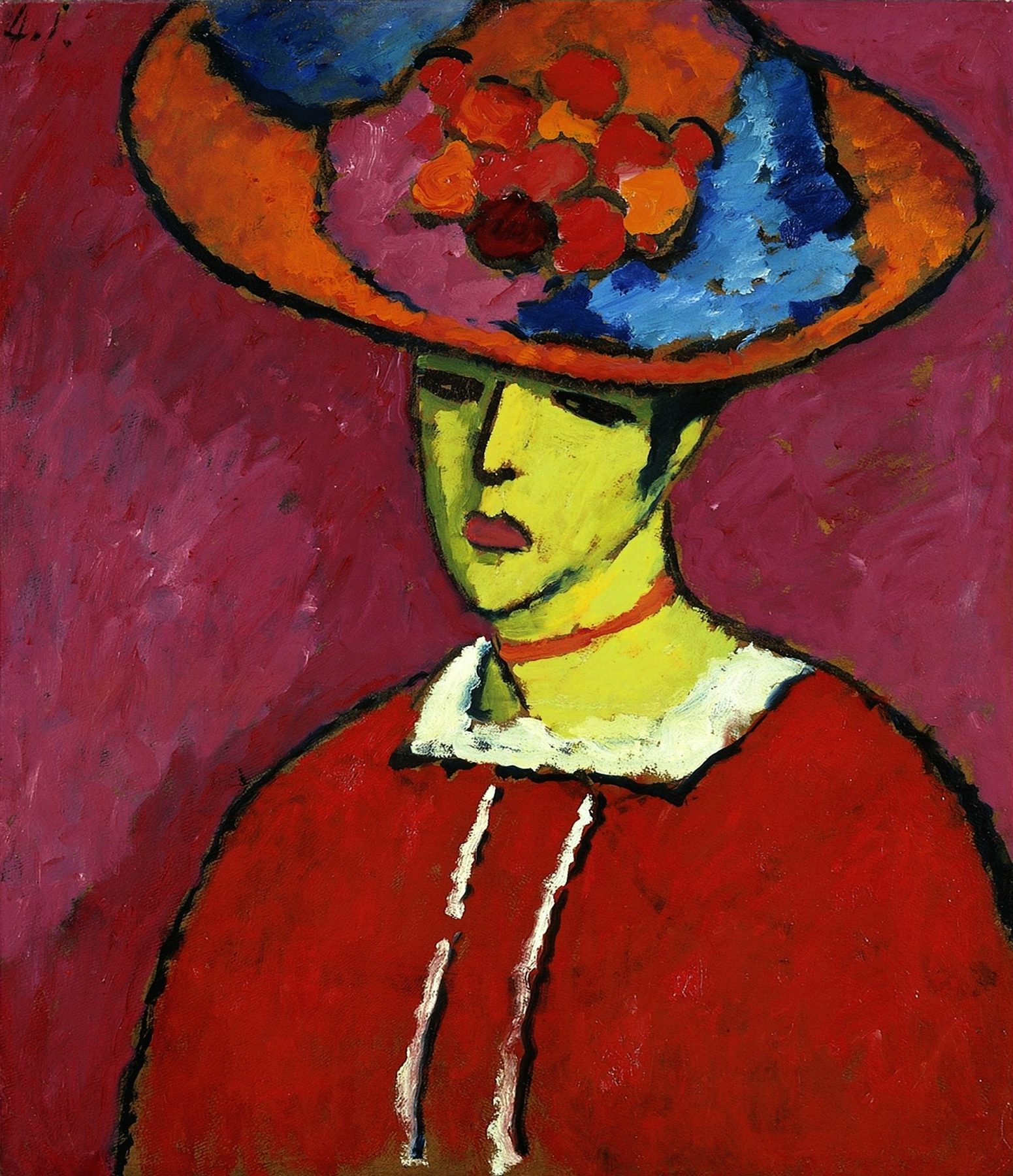
| Alexej von Jawlensky | Russian-German | Schokko with Wide-Brimmed Hat |
| August Macke | German | Woman in a Green Jacket, Kairouan, Farewell |
| Emil Nolde | German-Danish | Prophet, The Last Supper |
| Erich Heckel | German | Glass Day |
| Ernst Ludwig Kirchner | German | Fränzi Reclining, Berlin Street Scene, Potsdamer Platz, Self-Portrait as a Soldier |
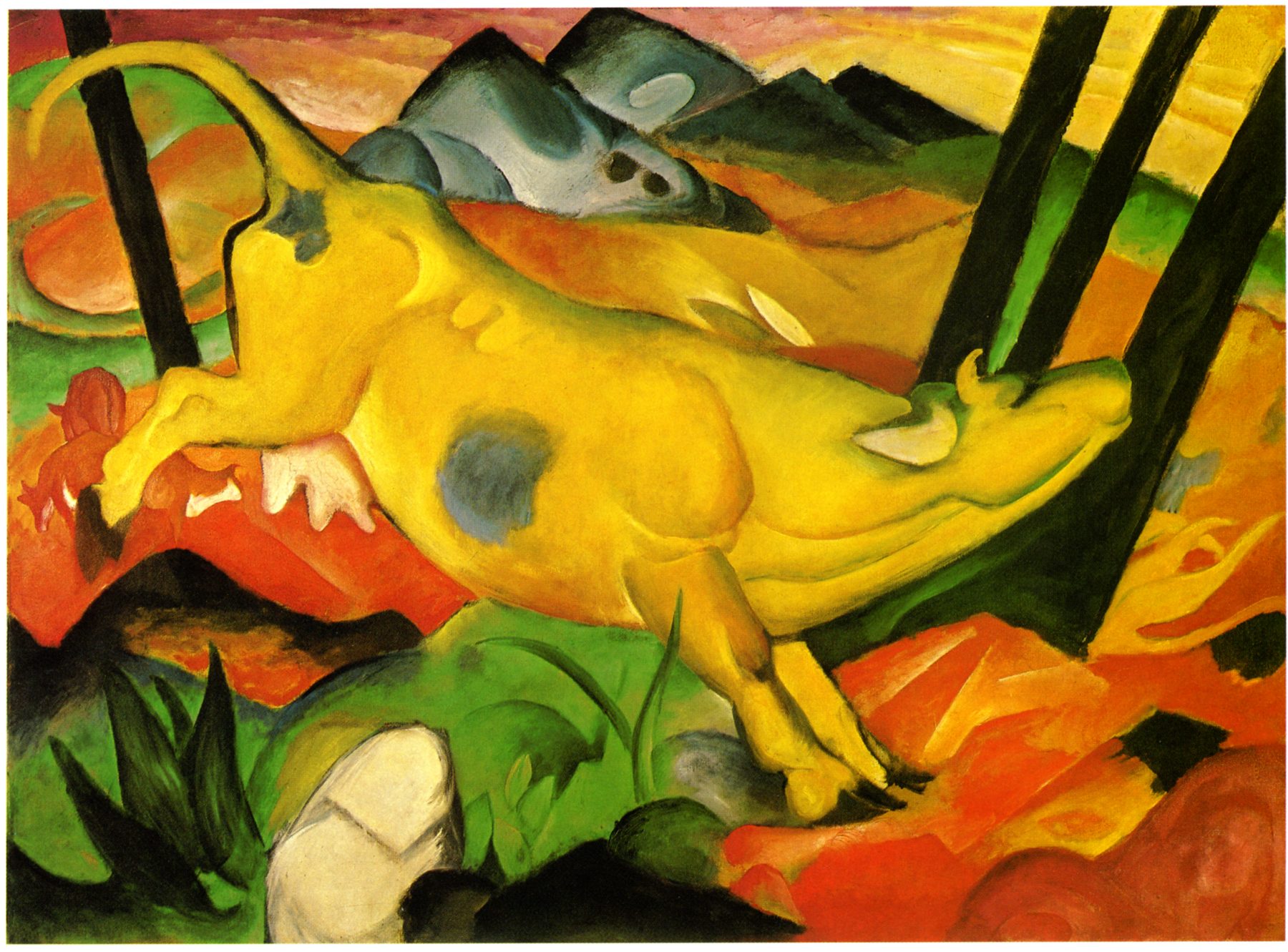
| Franz Marc | German | Blue Horse I, Yellow Cow, The Fate of the Animals |
| Gabriele Münter | German | Jawlensky and Werefkin |
| George Grosz | German-American | Metropolis |
| Karl Schmidt-Rottluff | German | Self-Portrait with Monocle |
| Käthe Kollwitz | German | Woman with Dead Child |
| Marianne von Werefkin | Russian-Swiss | The Dancer Alexander Sacharoff |
| Max Beckmann | German | The Night |
| Max Pechstein | German | Under the Trees |
| Otto Dix | German | The War |
| Paul Klee | Swiss-German | Twittering Machine |
| Wassily Kandinsky | Russian-German | Improvisation 28 (Second Version), Composition VII |
How to look at German Expressionism
Begin with the medium. A jagged line cut into wood behaves differently from one drawn on a lithographic stone or dragged in oil paint. Look for ridges, wiped tone, exposed paper, overprinting and the direction of a brushstroke. “Roughness” may be a controlled technical achievement.
Next, compare colour with structure. Instead of deciding that red means anger, trace where it recurs and what it connects. Does a blue contour separate a figure from space or bind them? Does a warm background advance until it competes with the subject? Colour works relationally before it becomes symbolic.
Examine the edges. Expressionist compositions often crop bodies, press figures against frames or let lines escape the image. These decisions regulate your physical distance from the scene. A tipped pavement may deny stable observation; a large dark shape may slow looking and make grief weighty.
Ask who controls the encounter. In a portrait, is the sitter named? In a studio nude, what were the model’s age and circumstances? If an African or Oceanic form appears, can its source community and object history be recovered? Formal invention does not cancel these questions; it gives them a precise place to begin.[35] [37]
Finally, look for circulation. A print may belong to a portfolio; an image in an almanac may have been deliberately juxtaposed with music or folk art; a painting’s museum label may record confiscation. German Expressionism was made through sequences and migrations. The isolated masterpiece is only one part of its history.[23] [43]
Frequently Asked Questions
German Expressionism is a retrospective umbrella for several early twentieth-century artists, groups and cultural networks in Germany. Their works often intensify colour, line, space or material in order to transform experience rather than imitate appearances. Die Brücke and Der Blaue Reiter are its most famous formations, but neither represents the whole field.[2] [3]
The founding of Die Brücke in 1905 provides a useful beginning. The mid-1920s provide a practical ending because New Objectivity had become a prominent challenge and the postwar print boom had collapsed. These dates are permeable: nineteenth-century precedents shaped the movement, and Expressionist practices continued long afterwards.[24] [25]
Die Brücke was a defined artists’ group, founded in Dresden, with active and passive members, a programme, subscriptions and shared exhibitions. Der Blaue Reiter was a loose Munich-based exhibition and editorial network centred on an almanac. Brücke often foregrounded bodily directness, studio experiment and woodcut; the Blue Rider network more explicitly explored music, spirituality, folk art and abstraction. Those are tendencies, not rigid opposites.[4] [14]
Colour could heighten sensation, reorganise a composition, create symbolic relationships or move away from representation altogether. Its function varies from artist to artist. Marc developed personal associations around colours; Kandinsky explored increasingly autonomous relationships; Brücke painters used sharp contrast to activate bodies and landscape. There is no universal Expressionist colour code.[1] [18]
Woodcut made cutting, pressure and black-white contrast visible. It connected modern artists with older German print traditions while allowing programmes, portfolios and illustrated books to circulate. Its rough appearance was not evidence of lack of skill; artists used the block’s resistance to build emphatic form.[11] [22]
Colonial collecting and display gave artists access to African and Oceanic works while removing many objects from makers and functions. Brücke artists studied ethnographic museums and human exhibitions, and Pechstein and Nolde travelled in German colonial territories. The Blue Rider almanac also reproduced global objects through incomplete colonial knowledge. These encounters enabled formal innovation but were structured by unequal power.[35] [36]
The war ended the Blue Rider’s shared activity, killed Macke and Marc, and brought service, breakdown and bereavement to other artists. Later works by Kollwitz and Dix rejected heroic battle through images of parents, civilians, corpses and devastated terrain. Postwar Expressionism became more political and socially accusatory, although artists drew different conclusions.[30] [31] [32]
Yes, it is the canonical example of Expressionist production design in cinema. Painted shadows, slanting architecture and distorted sets turn physical space into psychological pressure. Its fame should not imply that every German film of the period used the same approach.[41]
No. The regime confiscated and vilified Expressionist art, but the artists held different political positions. Nolde remained antisemitic and supportive of National Socialism despite suffering extensive confiscation. Others opposed racial policy, withdrew, emigrated or made compromises. Persecution of an artwork is not proof of its maker’s resistance.[43] [44] [45]
Discussion
Which changes your response most strongly in an Expressionist work: colour, line, material, compressed space or knowledge of the conditions in which it was made?
Reader Insights
Distinguish a line cut into wood from one drawn on stone or dragged through oil paint; apparent roughness may be highly controlled.
Ask what a red or blue connects across the composition before assigning it a fixed emotional meaning.
Identify sitters, models, source objects and collection histories wherever possible; expressive freedom never erased unequal conditions.
Join the Conversation
Which changes your response most strongly in an Expressionist work: colour, line, material, compressed space or knowledge of the conditions in which it was made?
References
- “What is German Expressionism? 8 Things to Know,” National Gallery of Art, nga.gov. View Source
- “German Expressionism,” Museum of Modern Art, moma.org. View Source
- “German Expressionism: Styles,” Museum of Modern Art, moma.org. View Source
- “Künstlergruppe Brücke,” Brücke-Museum (German), bruecke-museum.de. View Source
- “Ernst Ludwig Kirchner,” Brücke-Museum (German), bruecke-museum.de. View Source
- “Erich Heckel,” Brücke-Museum (German), bruecke-museum.de. View Source
- “Karl Schmidt-Rottluff,” Brücke-Museum (German), bruecke-museum.de. View Source
- “1913,” Brücke-Museum (German), bruecke-museum.de. View Source
- “Max Pechstein,” Brücke-Museum (German), bruecke-museum.de. View Source
- “Emil Nolde,” Brücke-Museum (German), bruecke-museum.de. View Source
- “German Expressionism: Brücke,” Museum of Modern Art, moma.org. View Source
- “Der Blaue Reiter,” Lenbachhaus (German), lenbachhaus.de. View Source
- “Group Dynamics: Der Blaue Reiter,” Lenbachhaus, lenbachhaus.de. View Source
- “German Expressionism: Der Blaue Reiter,” Museum of Modern Art, moma.org. View Source
- “Der Blaue Reiter: A New Language,” Lenbachhaus (German), lenbachhaus.de. View Source
- “The Women Riders of the Blue Rider,” Lenbachhaus (German), lenbachhaus.de. View Source
- “Jawlensky and Werefkin by Gabriele Münter,” Lenbachhaus, lenbachhaus.de. View Source
- “Blue Horse I by Franz Marc,” Lenbachhaus, lenbachhaus.de. View Source
- “German Expressionism: Early Influences,” Museum of Modern Art, production-gcp.moma.org. View Source
- “German Expressionism: Themes,” Museum of Modern Art, moma.org. View Source
- “German Expressionism: City Life,” Museum of Modern Art, moma.org. View Source
- “German Expressionism: Techniques,” Museum of Modern Art, moma.org. View Source
- “German Expressionism: Featured Periodicals,” Museum of Modern Art, moma.org. View Source
- “German Expressionism: Featured Print Publishers,” Museum of Modern Art, moma.org. View Source
- “German Expressionism: Chronology,” Museum of Modern Art, moma.org. View Source
- “Inner Worlds and the Nervous Metropolis,” Berlinische Galerie (German), berlinischegalerie.de. View Source
- “Sturm Women,” Berlinische Galerie (German), berlinischegalerie.de. View Source
- “Street, Berlin,” Museum of Modern Art, moma.org. View Source
- “Kirchner and the Berlin Street,” Museum of Modern Art, moma.org. View Source
- “German Expressionism: War,” Museum of Modern Art, moma.org. View Source
- “Cutting into the Light: Käthe Kollwitz and Woodcut,” Käthe-Kollwitz-Museum Berlin (German), kaethe-kollwitz.berlin. View Source
- “Otto Dix: The War,” Museum of Modern Art, moma.org. View Source
- “Night from Hell,” Museum of Modern Art, moma.org. View Source
- “Classical Modernism Collection,” Kunstmuseum Basel (German), kunstmuseumbasel.ch. View Source
- “Whose Expression? The Brücke Artists and Colonialism,” Brücke-Museum, bruecke-museum.de. View Source
- “Der Blaue Reiter, 2024,” Lenbachhaus (German), lenbachhaus.de. View Source
- “Artistin,” Brücke-Museum (German), bruecke-museum.de. View Source
- “The Art Historian Rosa Schapire,” Brücke-Museum (German), bruecke-museum.de. View Source
- “German Expressionism: Austrian Expressionism,” Museum of Modern Art, moma.org. View Source
- “German Expressionism: New Objectivity,” Museum of Modern Art, moma.org. View Source
- “The Cabinet of Dr. Caligari,” Deutsches Filminstitut (German), difarchiv.deutsches-filminstitut.de. View Source
- “Nazi Propaganda: Degenerate Art,” Brücke-Museum (German), bruecke-museum.de. View Source
- “The Brücke Artists and the Nazi ‘Degenerate Art’ Campaign,” Brücke-Museum and Freie Universität Berlin (German), bruecke-museum.de. View Source
- “The Situation of Brücke Artists under National Socialism,” Brücke-Museum (German), bruecke-museum.de. View Source
- “Emil Nolde: A German Legend — The Artist under National Socialism,” Nolde Stiftung Seebüll (German PDF), nolde-stiftung.de. View Source
- “Ernst Ludwig Kirchner,” Museum of Modern Art, moma.org. View Source
- “Gabriele Münter,” Lenbachhaus (German), lenbachhaus.de. View Source
- “German Expressionism: Illustrated Books,” Museum of Modern Art, moma.org. View Source
- Image references 49–66: open-access reproductions and institutional collection records.
View 18 image sources
01 · commons.wikimedia.org02 · commons.wikimedia.org03 · commons.wikimedia.org04 · commons.wikimedia.org05 · commons.wikimedia.org06 · commons.wikimedia.org07 · commons.wikimedia.org08 · commons.wikimedia.org09 · commons.wikimedia.org10 · commons.wikimedia.org11 · commons.wikimedia.org12 · commons.wikimedia.org13 · commons.wikimedia.org14 · commons.wikimedia.org15 · commons.wikimedia.org16 · commons.wikimedia.org17 · commons.wikimedia.org18 · commons.wikimedia.org