by Tom Gurney
Tom Gurney BSc (Hons) is an art history expert with over 20 years experience
Email: tomgurney1@gmail.com / Phone: +44 7429 011000
Leda: Introduction
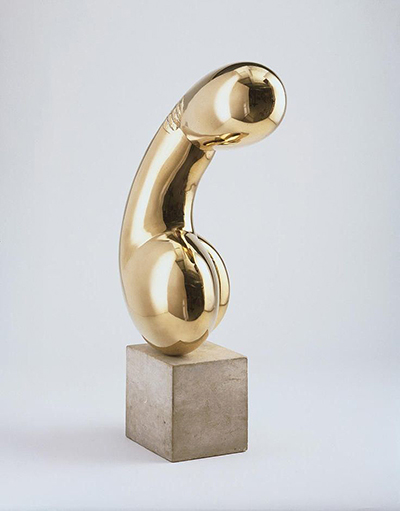
A rounded body lies low on a shining disk. A long form rises from one side and pulls the eye away from the centre. As the viewer circles Constantin Brâncuși’s Leda, the juncture between those volumes shifts and patches of reflected light make the outline alternately sharp and hard to follow. The bronze was made in 1926. The Centre Pompidou, which holds it, records a nickel-silver disk added later and a separate two-part stone support. Brâncuși also gave the sculpture the capacity to turn under its own power. [1] [2] [3]
The title comes from the Greek myth of Leda and the swan. Brâncuși used that story to work out a form in which the implied recognition of woman and bird could change with the angle of view. The turning sculpture and its reflection supplied a way to make that transformation perceptible in real time. A related marble, an early photograph and a later film show how many different sorts of object can help explain this particular work. [2] [4] [5] [6]
At a Glance
- Anchor objectLéda, 1926, Centre Pompidou, AM 4002-85. [1]
- Medium and sizePolished sand-cast bronze, 53 × 79 × 24 cm. The museum also records a nickel-silver disk 93 cm in diameter. [1]
- Disk and supportThe disk, AM 4002-85 (1), dates from 1932. The black marble and granite pedestal is separately catalogued. [1] [3]
- MovementA repurposed gramophone motor could turn the sculpture. Brâncuși filmed it in motion around 1936. [3] [4]
- Earlier exampleThe Art Institute of Chicago records a separate marble on a concrete base, c. 1920, 1953.195. [5]
Contents
- A low body and an angled rise
- The disk, the bearings and the motor
- A related marble and a photograph sold on its own
- Leda on film
A low body and an angled rise
From the side, a rounded lower body takes up much of the length of the bronze. The form above it rises at an angle, narrowing as it moves away from that volume. The rise has the firmness of a bent neck or an extended part of a turned body. An eye following it from the tip can be drawn back into the sculpture by the way the two forms meet off centre. Viewed end-on, much of the lower sweep is hidden behind the upper part. This changes which line seems to give the sculpture its direction. The form is sufficiently precise for its two main components to be recognised from several positions. Their apparent relationship is in constant change. [1] [2]
The myth supplies a way to think about that change. In the familiar version, Zeus takes the form of a swan when he approaches Leda. The Pompidou’s account gives Brâncuși’s own point of departure as imagining a transformation of Leda herself. The sculptor’s account, as reproduced in the exhibition’s educational material, lets a viewer ask where a kneeling or leaning human figure might be perceived in the changing shape. Past a certain angle the upper form may look most like the raised part of a bird. Elsewhere a reclining body is easier to imagine. The tilt and the balance between two curved volumes make the subject open to these different ways of looking. [2] [7]
The broad disk underneath also contributes an outline. It appears circular from above and much narrower when seen close to the level of the sculpture. The bronze across it retains a less regular contour, so the edges of the two parts are easy to tell apart from the side. As the disk reflects the object, the edge of the reflection can become difficult to separate from the edge of the physical form. The Pompidou connects that effect with the impression of a mirrored water surface. The interpretation comes from what light can actually do in front of the sculpture. It is possible to start with a visible patch of reflected bronze and then see why water would be an apt point of comparison. [1] [2]
The disk, the bearings and the motor
The support was developed in stages. The Pompidou records the bronze in 1926 and gives 1932 for the nickel-silver disk. The disk has a separate inventory suffix. The dark two-part pedestal also has its own catalogue number. When assembled for display, the fairly small bronze and its broad reflecting surface stand at the top of a dark mass of marble and granite. This helps separate the sparkling upper surfaces from the floor. The date of the bronze describes the core work. There is further history in the other dates and numbers, which identify the elements that gave the form its later mode of display. [1] [3]
MoMA’s gallery account explains that Brâncuși used ball bearings and repurposed a motor from a gramophone player. As the moving arrangement turned slowly, the encounter changed from the viewer comparing a series of positions to a work presenting those positions in succession. The changes in light do not come from the motor alone. Even when the bronze stands still, people moving around it appear to some degree in the reflecting surface. A stationary person watching the rotation would experience the changing contour in another way, with the sculpture generating the change in relation to a spot in the room. [3] [4]
Brâncuși’s Fish at MoMA provides a closely related comparison. The museum explains that the marble was set up so that it could be turned by hand. In Leda, the motor could supply the movement. The two works also differ in the surfaces through which the movement is perceived. The blue-grey veining of Fish helps carry the eye across a very long marble. Leda takes in reflections from its surroundings. It also presents a strongly angled upper body, making differences between its views particularly noticeable. The pairing shows that the mechanism served a visual question in each case. The manner of turning and the choice of material belonged to how a particular subject would be seen. [3] [8]
A related marble and a photograph sold on its own
The Art Institute of Chicago’s marble is a distinct object. The museum’s historical publication identifies the piece as Leda, around 1920, on a concrete base, and documents its entry through the bequest of Katherine S. Dreier. The earlier material changes the way one sees the relation of the body to the support. The marble gives the contour a quieter, more continuous tonal range than the highly polished bronze. The surface and proportions deserve attention as properties of an independent carving. Its documented base is different from the motorised arrangement of the sculpture in the Centre Pompidou. [1] [2] [5]
There is also a gelatin-silver print titled Léda, dated 1920–21 in a Christie’s sale record. Its date belongs to the photograph. The catalogue records the print mounted on card and its provenance from Agnes Ernst Meyer, who acquired it from Brâncuși, to the eventual gift from Elizabeth Meyer Lorentz in 1996. The print preserves an early view of the sculpture and the way it was supported. The photograph circulated with its own material, dimensions and ownership history. If a record lists a photographic size or makes reference to the print’s mount, those measurements describe the image and its mounting board. They are separate from the measurements of the sculpture depicted. [5] [6]
The difference matters when assembling a chronology of the work. An image of Leda published early may show a stage before the familiar disk was attached to the bronze. A later view may show the reflective disk but omit part of the dark pedestal by framing the upper portion. The museum object records, photographs and exhibition descriptions can be compared to work out why a support looks different. They also let a visitor distinguish a sculpture under changing display conditions from a completely separate physical object or a related version. [1] [2] [5] [6]
Leda on film
A silent film catalogued around 1936 shows Brâncuși observing the movement with a camera. The recording is in black and white. It can follow how a reflected point of light shifts along a curve through time, and how one broad area briefly gives way to a band of darkness. This is something a single still photograph can imply but can only show in one position. The moving camera record also gives the viewer a timeframe for looking. The sculpture’s shifts can be slow enough to let the eye linger on each contour as it emerges, then move attention to a different part as the pattern of reflection changes. [4] [9]
The film belongs to the series of investigations Brâncuși carried out in his Paris studio. There he could arrange the sculpture relative to a light source, change its surroundings and choose which parts of the view to include in the record. The surroundings matter because the polished bronze brings part of them with it into the picture. If a bright area moves across the surface, a viewer can follow it as the outline changes. That simple act of looking makes the subject of transformation available through an observable phenomenon. The story gave Brâncuși a body to imagine. The sculpture, support and film together give its changes a duration. [2] [4] [9]
The presentation of the bronze in exhibition catalogues also makes it possible to follow the distinction between the sculpture and its later display. The Centre Pompidou lists a 1927 Salon des Tuileries catalogue in the bronze’s exhibition and publication record. The polished disk entered the work’s configuration later. That difference prevents a contemporary viewer from assuming that a combination now shown in a museum looked the same when the bronze was first exhibited. Some modern photographs show the disk directly beneath the bronze, while others show the much taller stone support and the disk together. Describing the support pictured in the particular view helps clarify what is visible in each record. [1] [3]
The silent film changes how that visual evidence reads. The length of a studio shot permits parts of the light pattern to recur as the sculpture turns. Seeing a highlight for the second time can help a viewer work out which part of the dark volume produced it, even though for some of the rotation the edge almost merges into the room beyond. The film makes that process of following and recovering the outline part of seeing the work. [4] [9]
Browse sculptures and drawings
Browse articles on the sculptures and separately catalogued museum objects. A work can have several physical versions. Drawing records from the Tate catalogue retain their October 2014 snapshot wording where present.
| Name | Date | Medium |
|---|---|---|
| Arch | Sculpture | |
| Bird in Space | Sculpture | |
| The Blond Negress | Sculpture | |
| The Cock | Sculpture | |
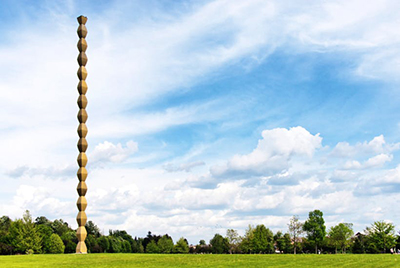
| The Endless Column | Sculpture | |
| The First Cry | Sculpture | |
| Fish | Sculpture | |
| The Gate of the Kiss | Sculpture | |
| Golden Bird | Sculpture | |
| Head | Sculpture | |
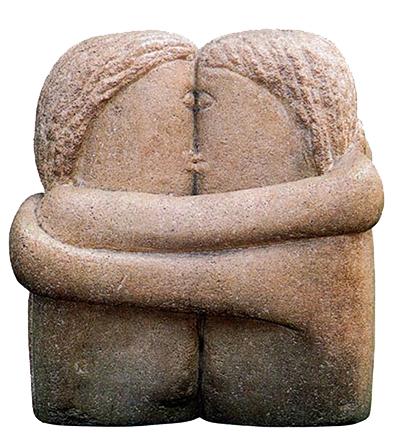
| The Kiss | Sculpture | |
| Leda | Sculpture | |
| Madame L.R. | Sculpture | |
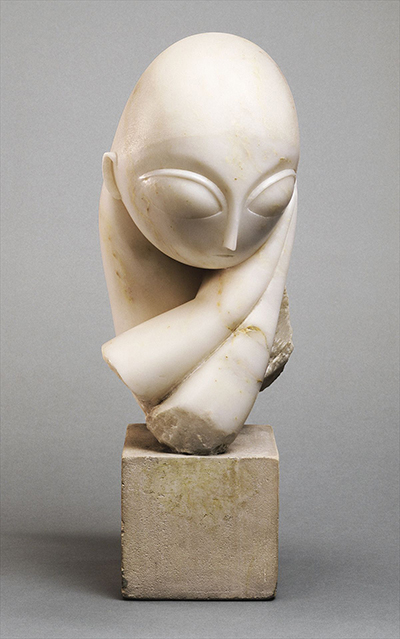
| Mademoiselle Pogany II | Sculpture | |
| Mademoiselle Pogany | Sculpture | |
| Maiastra | Sculpture | |
| The Newborn | Sculpture | |
| Phoque II | Sculpture | |
| The Prayer | Sculpture | |
| Princess X | Sculpture | |
| Prometheus | Sculpture | |
| Târgu Jiu monumental ensemble | Sculpture | |
| Sculpture for the Blind | Sculpture | |
| The Seal | Sculpture | |
| The Signal | Sculpture | |
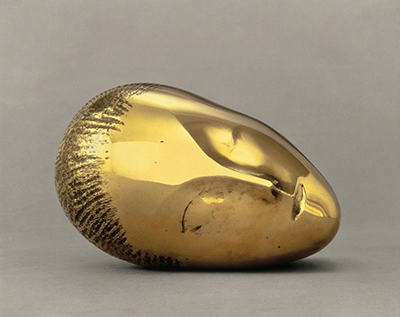
| Sleeping Muse | Sculpture | |
| The Sorceress | Sculpture | |
| The Table of Silence | Sculpture | |
| Torso of a Young Man | Sculpture | |
| Two Lamps | Sculpture | |
| Vitellius | Sculpture | |
| The White Negress | Sculpture | |
| The Wisdom of the Earth | Sculpture | |
| Young Bird | Sculpture | |
| The Kiss (Philadelphia, fourth version) | 1916 | Sculpture Catalogue. |
| Sleeping Muse (Pompidou bronze) | 1910 | Sculpture Catalogue. |
| Mlle Pogany, version I (MoMA bronze) | 1913, after a marble of 1912 | Sculpture Catalogue. |
| Maiastra (Venice brass) | about 1912 | Sculpture Catalogue. |
| Bird in Space (MoMA bronze) | about 1941 | Sculpture Catalogue. |
| Bird in Space (Venice brass) | 1932–40 | Sculpture Catalogue. |
| Endless Column, version I (oak) | 1918 | Sculpture Catalogue. |
| Brâncuși Monumental Ensemble of Târgu Jiu | 1937–38 | Sculpture Catalogue. |
| Bust of a nude woman in profile, head inclined | about 1910 | Drawing Catalogue. |
| Nude study, head inclined (recto) | — | Drawing Catalogue. |
| Self-portrait (ink) | — | Drawing Catalogue. |
| View of the Artist’s Studio | 1918 | Drawing Catalogue. |
| Study for the cock (lost clay Grand Coq) | about 1923 | Drawing Catalogue. |
| Portrait of a woman in profile | — | Drawing Catalogue. |
| Animal head | — | Drawing Catalogue. |
| Animal sketch (2002 checklist) | 1929 | Drawing Catalogue. |
| Plans of the studio (verso) | about 1930–38 | Drawing Catalogue. |
| Danaïde (Tate T00296) | c.1918 | Sculpture Catalogue. |
| Maiastra (Tate T01751) | 1911 | Sculpture Catalogue. |
| Head (Tate T03066) | c.1919–23 | Sculpture Catalogue. |
| Fish (Tate T07107) | 1926 | Sculpture Catalogue. |
Frequently Asked Questions
The Centre Pompidou holds the bronze, catalogue AM 4002-85, from the artist’s 1957 bequest. The holding institution’s record supplies current loan or display information. [1]
Discussion
Look again at the images and ideas explored in Leda. These editorial prompts invite your observations.
Reader Insights
Follow the line of the raised form in a side view. At what point do you recognise a body or a bird, and would that recognition change from another angle?
Imagine the sculpture still and then turning. Which kind of motion is easiest to see in a reflection on the bronze?
Join the Conversation
Share a detail, comparison or question about Leda below.
References
- Centre Pompidou. Léda, 1926, AM 4002-85 and AM 4002-85 (1), detailed object record and support fields (French). View source.
- Centre Pompidou. Léda, interpretation, motion and series of photographs (French). View source.
- Museum of Modern Art. Movement and Stillness, Mia Matthias’s gallery commentary and object specification. View source.
- Museum of Modern Art. Leda in Motion, catalogue and gallery transcript for the film, circa 1936. View source.
- Art Institute of Chicago. One Hundred Years at the Art Institute, figure 15, marble 1953.195. View source.
- Christie’s. Léda, 1920–1921, gelatin-silver print, previous ownership, mounting and dimensions. View source.
- Centre Pompidou. Brancusi exhibition podcast transcript, Léda discussion, p. 17 (French). View source.
- Museum of Modern Art. Fish, Paris, 1930, object record and gallery label. View source.
- Centre Pompidou. Le mouvement des images, cinema, Brâncuși’s studio experiments and the Léda film (French). View source.
More BRÂNCUȘI Sculptures
Bird in Space
Compare the marble and metal versions of Brâncuși’s sculpture.