 by Tom Gurney
Page Updated October 2, 2026
Introduction
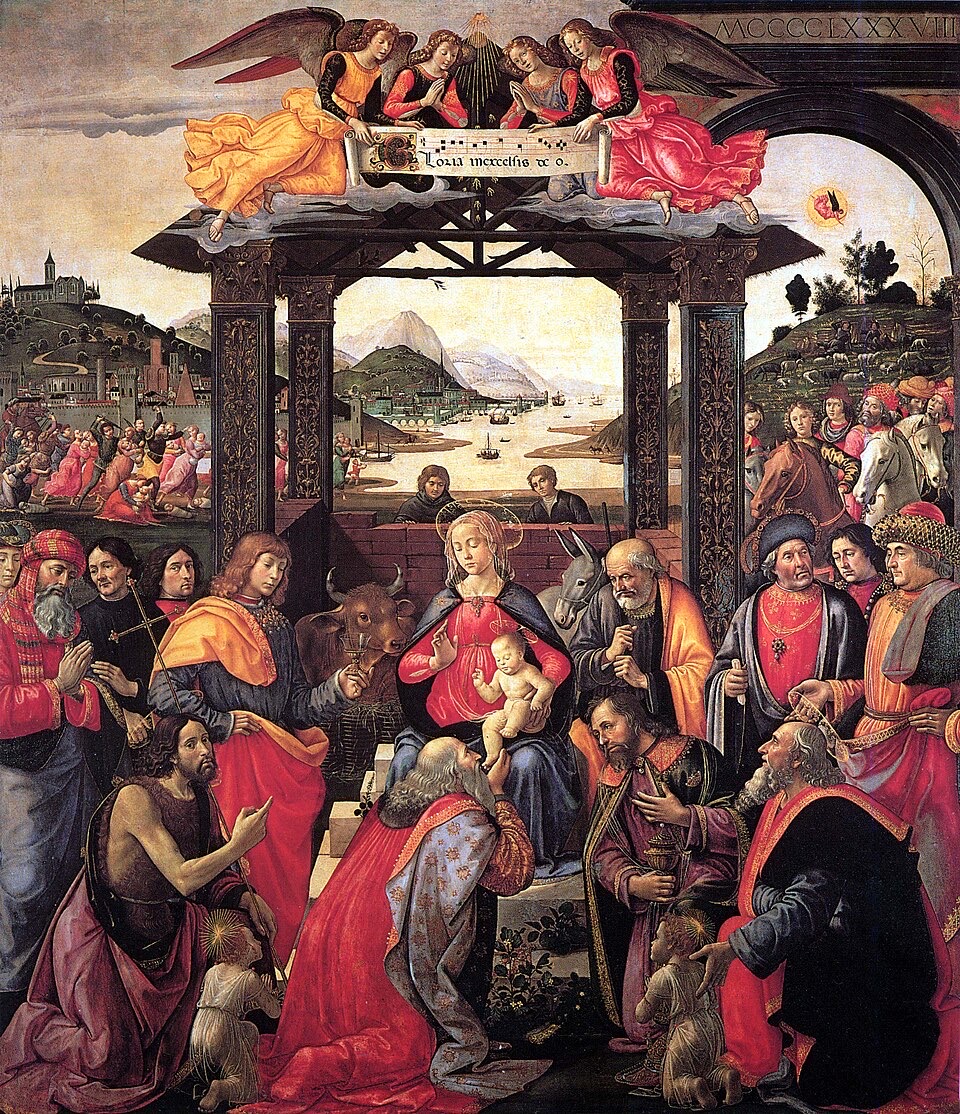
The painting belongs to the art collection of the Museo degli Innocenti, an institution whose identity is inseparable from Florence's civic, charitable and religious history. In that setting, the Adoration subject carries more than narrative beauty. The Magi's arrival before the Christ Child becomes a scene of devotion, gift-giving, hierarchy and public splendour, all themes that suited Ghirlandaio's gift for making sacred stories readable through contemporary detail. [1]
The Innocenti altarpiece is the main object here. A second Ghirlandaio Adoration, the Uffizi tondo of 1487, matters only as a point of disambiguation. Both works share artist and subject, but their date, format, dimensions, medium records and likely contexts are different. [1][3]
At a Glance
- ArtistDomenico Ghirlandaio.
- TitleAdoration of the Magi.
- Main objectMuseo degli Innocenti altarpiece.
- Date1488-89.
- Mediumtempera and oil on panel.
- Dimensions285 x 240 cm.
- Collection contextMuseo degli Innocenti art gallery.
- Separate work to distinguishUffizi Adoration of the Magi tondo, dated 1487, tempera on panel, 171.5 cm diameter, inventory 1890 n. 1619.
- Medium posturethis object helps correct the old absolute claim that Ghirlandaio never painted with oils, but it should not be used to claim that oil was central to his whole practice.[4]
Contents
- Introduction
- Object Facts
- The Innocenti Setting
- The Adoration Subject
- Scale, Medium and Panel Practice
- Ghirlandaio's Narrative Clarity
- Not the Uffizi Tondo
- The Image Identification Issue
- Why the Altarpiece Matters
Object Facts
The Museo degli Innocenti records the painting as Domenico Ghirlandaio's Adoration of the Magi, dated 1488-89. The museum gives the medium as tempera and oil on panel and the dimensions as 285 by 240 cm. Those details distinguish the Innocenti altarpiece from other Ghirlandaio works on the same subject. [1]
The scale is important. At nearly three metres high, the painting is not a small domestic devotional object. It is a large panel work designed to command attention in an institutional and religious setting. Its dimensions are easy to underestimate on a screen. The panel's monumentality would have shaped how visitors encountered its procession and gathered figures in person. [1]
The medium line is equally important. The Innocenti record states tempera and oil on panel. That phrasing should be repeated carefully, not simplified into a generic label and not ignored because older summaries sometimes describe Ghirlandaio too absolutely as a painter who did not use oils. The object record is one of the source-backed reasons to correct that claim. [1][4]
The Innocenti Setting
The Museo degli Innocenti presents the work within its art route, where the collection is tied to the institution's history. That context matters because the Adoration of the Magi is a subject about recognition, offering and sacred arrival. In an Innocenti setting, the work sits within a larger Florentine world of charity, devotion and civic identity. [1]
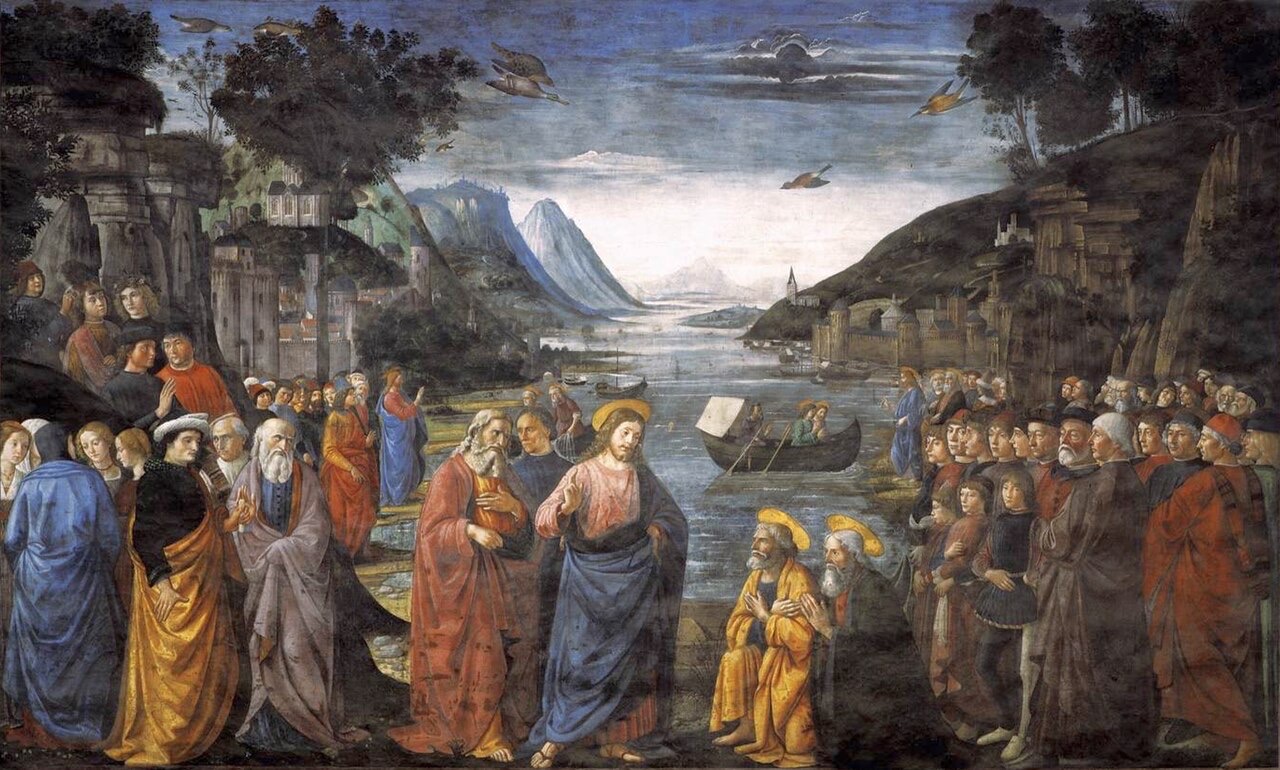
Ghirlandaio was especially good at making sacred stories feel socially legible. His career ranged across fresco cycles, portraits and devotional panels, supported by a busy Florentine workshop. The Innocenti Adoration belongs to that broader practice: it is a religious image, but it also depends on procession, display, costume, gifts and the orderly presentation of many figures. [5]
The setting is important, but the available source basis remains concise. The work is recorded by the Museo degli Innocenti in its art gallery context, and its public interpretation should begin with that official object record before moving into deeper commission or institutional history. [1]
The Adoration Subject
The Adoration of the Magi shows the moment when the Magi come before the Christ Child. In Renaissance art, the subject often allowed painters to combine devotion with spectacle: kings, attendants, animals, landscape, architecture and rich gifts could all be gathered around the central holy family. For Ghirlandaio, that kind of subject matched a talent already visible in his fresco practice: he could organise many figures without losing the clarity of the story. [1][5]
The subject also gave patrons and institutions a way to imagine sacred history through a recognisably ordered world. The Magi bring gifts; viewers bring attention; the painter arranges both ceremony and worship into a coherent image. Even without pressing unsourced patronage claims, the subject itself helps explain why the painting could carry public meaning in a Florentine institutional setting. [1]
The cited sources do not settle every figure's identity, but the central framework is clear: this is a large Innocenti Adoration, by Ghirlandaio, dated 1488-89, and best understood as a major devotional and narrative panel painting. [1]
Scale, Medium and Panel Practice
The Innocenti Adoration sits at the meeting point of Ghirlandaio's panel practice and his larger narrative ambitions. It is painted on panel, but its scale and subject connect it to the public clarity often associated with his frescoes. The painting helps readers avoid the false split between "Ghirlandaio the fresco painter" and "Ghirlandaio the panel painter." Both modes could serve public religious storytelling. [1][5]
The medium record also matters for the cluster's correction posture. The old claim that Ghirlandaio never painted with oils is too rigid because the Museo degli Innocenti records this work as tempera and oil on panel, and the National Gallery of Art records Lucrezia Tornabuoni as tempera and oil on poplar panel. Those records do not make oil central to every account of Ghirlandaio, but they do make an absolute denial unsafe. [1][4]
The careful conclusion is that Ghirlandaio is especially associated with fresco cycles and tempera/panel painting, while current museum records include works attributed to him with oil in the stated medium. That wording corrects the inherited error without replacing it with a new overstatement. [1][4][5]
Ghirlandaio's Narrative Clarity
Ghirlandaio's strength was not only invention, but legibility. His art often makes complex sacred stories accessible by arranging figures, architecture and social detail in a way that viewers can follow. That gift is central to his fresco cycles, but the Innocenti Adoration shows how it could operate in a large panel painting as well. [1][5]
The Adoration subject naturally invites crowded richness. There are visitors, offerings, gestures, a holy centre and a wider world arriving around it. A weaker painter could let spectacle overwhelm devotion. Ghirlandaio's reputation rests partly on the opposite skill: he could fill an image with detail while keeping the central story intelligible. [1][5]
The Innocenti painting belongs near the centre of a small Ghirlandaio cluster. It connects the paintings route's medium correction, the frescoes route's narrative clarity, and the biography route's Florentine institutional world. It is not merely an illustration; it helps explain how Ghirlandaio made religious narrative social, orderly and memorable. [1][5]
Not the Uffizi Tondo
The Uffizi also records an Adoration of the Magi by Ghirlandaio, but it is a different work. The Uffizi painting is dated 1487, described as tempera on panel, and has a diameter of 171.5 cm. The museum records its inventory number as 1890 n. 1619. It is a tondo, a circular painting, whereas the Innocenti work is a large altarpiece measuring 285 by 240 cm. [3]
The distinction affects the basic facts a reader receives: date, format, medium, size, context and image. The Innocenti object is the 1488-89 tempera-and-oil panel that anchors this account. The Uffizi object is a 1487 tempera-on-panel tondo and belongs here only as a disambiguation point, not as the main subject. [1][3]
The Uffizi source also links its tondo with Tornabuoni domestic or patronal context and the birth of Giovanni Tornabuoni. That context is useful for the Uffizi work, but it cannot be imported onto the Innocenti altarpiece without a source that directly supports the connection. Similar title, artist and period do not make the two works interchangeable. [3]
The Image Identification Issue
Why the Altarpiece Matters
The Innocenti Adoration matters because it gathers several Ghirlandaio problems into one object. It is a panel painting by an artist often introduced through fresco. It is a religious narrative that depends on social display and compositional order. It is a tempera-and-oil work that helps correct an inherited medium claim. And it is an image that can easily be confused with other Ghirlandaio Adorations if captions are careless. [1][3][4][5]
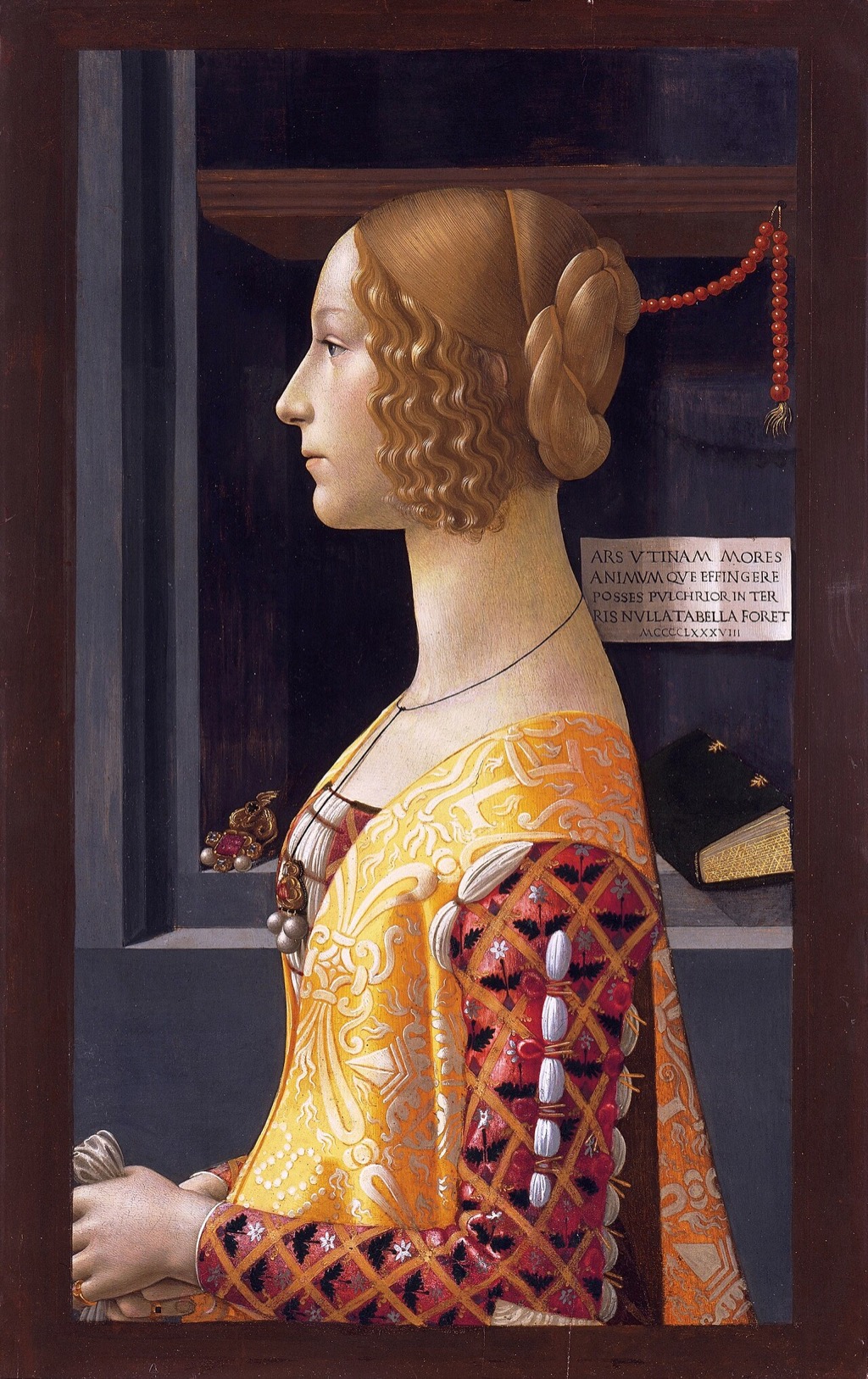
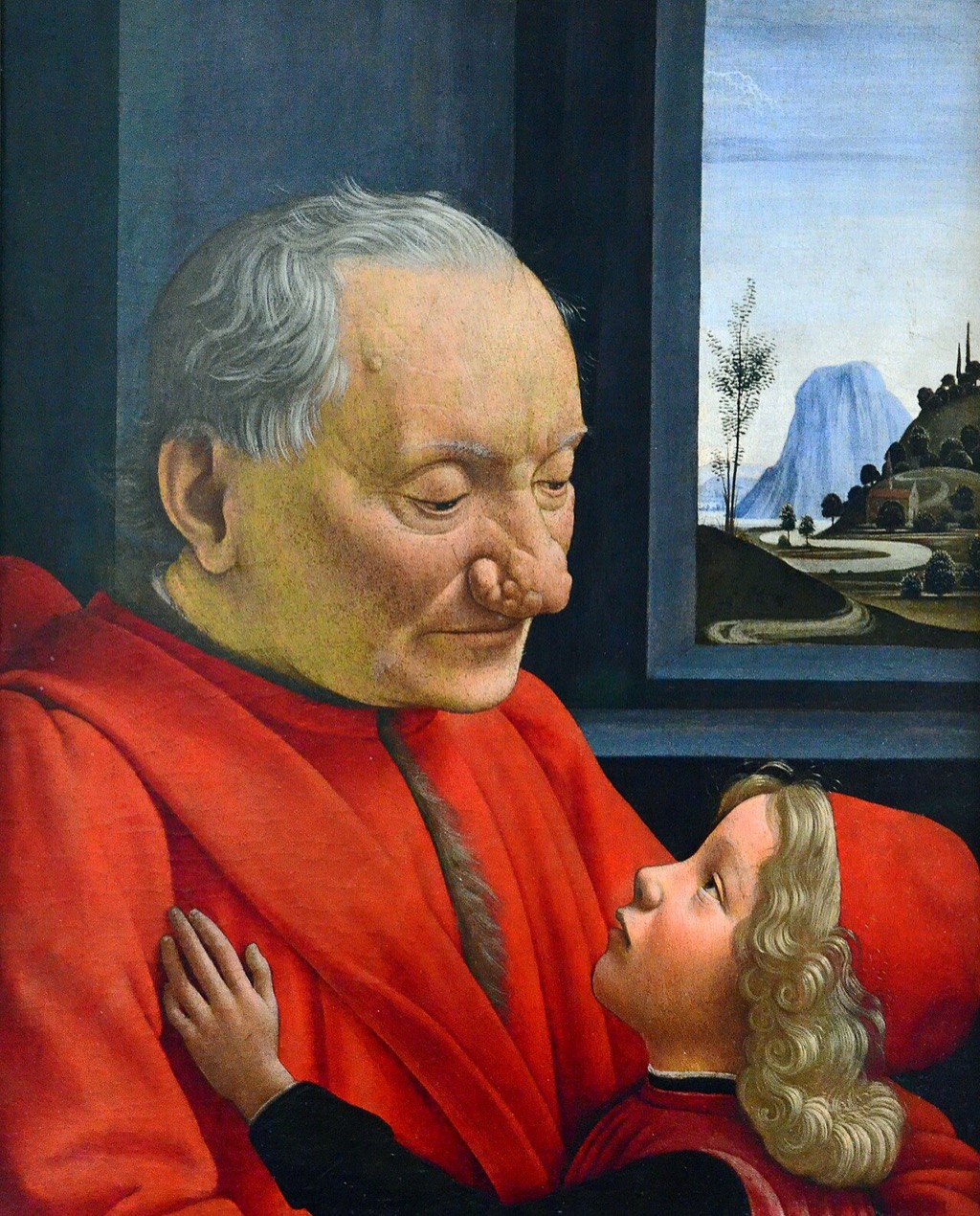
It also helps balance the portrait-heavy side of the cluster. Giovanna Tornabuoni and the Louvre Old Man and Young Boy show Ghirlandaio's portrait intelligence in different ways: one formal and dynastic, the other intimate and uncertain. The Innocenti Adoration shows him handling a larger sacred subject, where many figures and a major devotional theme must be organised around a central event. [1][6][7]
The work also shows why precise object identification matters. The title alone is not enough. Identifying the Innocenti panel precisely, and following the museum's record for its date and medium, keeps this Adoration distinct from other works with the same title. That precision produces a clearer account of Ghirlandaio's art. [1][2][3]
Frequently Asked Questions
Discussion
The Innocenti Adoration is a reminder that Ghirlandaio's clarity was not limited to portraits or frescoes. A large panel could also become a theatre of attention, where procession, devotion, gift-giving and institutional meaning are arranged around the Christ Child. [1][5] Object First: Before interpreting an Adoration by Ghirlandaio, confirm which object you are looking at. Innocenti 1488-89 and Uffizi 1487 are not the same work. [1][3] Medium Matters: "Tempera and oil on panel" should be preserved as the Innocenti museum wording. It corrects an old overstatement without turning Ghirlandaio into an oil-first painter. [1][4] Image Labels Matter: A file named for an artist can still show an artwork, not the artist. Captioning needs to say what the image actually depicts. [1] When you look at an Adoration scene, what do you notice first: the holy family, the procession, the gifts, the architecture or the crowd around the event?
Reader Insights
What detail most changes how you read Adoration of the Magi?
How do source, setting and provenance affect the interpretation?
Which internal link gives the most useful next step through this cluster?
Join the Conversation
Share your reading of this page below.
References
- Museo degli Innocenti, "Art", , accessed 4 August 2026: View Source
- Museo degli Innocenti, "Riproduzione dei beni culturali", , accessed 4 August 2026: View Source
- Uffizi Galleries, "Adoration of the Magi", , accessed 4 August 2026: View Source
- National Gallery of Art, "Lucrezia Tornabuoni", , accessed 4 August 2026: View Source
- National Gallery, London, "Domenico Ghirlandaio (1449 - 1494)", , accessed 4 August 2026: View Source
- Museo Nacional Thyssen-Bornemisza, "Portrait of Giovanna degli Albizzi Tornabuoni", , accessed 4 August 2026: View Source
- Louvre Collections, "Portrait d'un vieillard et d'un jeune garcon", , accessed 4 August 2026: View Source