 by Tom Gurney
Page Updated October 2, 2026
Introduction
Domenico Ghirlandaio's life belongs to the working world of fifteenth-century Florence: family workshops, church commissions, patrons, assistants, civic display and religious storytelling. Michelangelo's apprenticeship in his studio is an important part of the story, but it is only one thread in a larger career. The National Gallery, London identifies him as Domenico Bigordi, active in Florence, Rome, San Gimignano and Pisa, and records him as a painter whose studio specialised in extensive fresco cycles. [1]
Ghirlandaio's biography is inseparable from the systems that made his art possible. He worked within a network of family collaboration, workshop production and patronage, producing frescoes, portraits and panel paintings that made Florentine religious and social life visible. The same source records his brother David as his partner, his son Ridolfo as a painter, and Michelangelo as an apprentice in his workshop. [1]
The secure life story begins with museum records for dates, places, workshop structure, major settings and selected works. Detailed training chronology still needs specialist confirmation, so the most reliable account emphasises evidence over anecdote and workshop reality over later myth. [1][2]
At a Glance
- NameDomenico Ghirlandaio, also identified as Domenico Bigordi.
- Dates1449-1494.[2]
- SchoolFlorentine Renaissance.
- Main centres recorded by the National GalleryFlorence, Rome, San Gimignano and Pisa.
- Main reputationfresco cycles, portraits, devotional panel paintings and workshop production.[2]
- Family/workshopbrother David worked with him; son Ridolfo became a painter.
- Famous apprenticeMichelangelo.
- Major Florentine settings named by the National GallerySanta Maria Novella and Santa Trinita.
- Major Roman settingthe Sistine Chapel fifteenth-century wall program, where Vatican Museums sources include Ghirlandaio and his workshop among the painters active in 1481-82.
Contents
- Introduction
- Name, Family and Florentine Identity
- Formation and Workshop Culture
- Family Collaboration and Assistants
- Florence, Patrons and Public Storytelling
- Rome and the Sistine Chapel
- Tornabuoni and Sassetti Context
- Michelangelo, Ridolfo and Legacy
- Reputation After Death
Name, Family and Florentine Identity
The National Gallery gives the artist's real name as Domenico Bigordi, while the Louvre identifies him more fully as Domenico di Tommaso Bigordi, called Ghirlandaio. That naming pattern is a useful reminder that Renaissance artists often moved between family name, workshop identity and the name later remembered by art history. "Ghirlandaio" is now the name that carries his reputation, but the Bigordi identity keeps him grounded in a Florentine family and workshop world. [1][5]
Ghirlandaio was born in 1449 and died in 1494, according to the National Gallery and the National Gallery of Art. Those dates place him in the generation before the High Renaissance artists who often dominate popular accounts of Italian art. He worked before Michelangelo's Sistine ceiling, before Raphael's Roman frescoes and before Leonardo's later fame changed expectations about psychological drama and artistic invention. [1][2]
The geography of his career was broader than one chapel or one city block. The National Gallery records activity in Florence, Rome, San Gimignano and Pisa. Florence remained the centre of his identity, but that wider geography matters because it shows him as a professional painter whose work moved through different civic and religious settings. [1]
Formation and Workshop Culture
The detailed story of Ghirlandaio's early training requires care. Later biographies often repeat traditional accounts, while the captured museum sources securely show him emerging as a leading Florentine painter with a workshop capable of major fresco cycles, portraits and panel paintings. [1][2]
For Ghirlandaio, workshop context is central biography. A Florentine painter's career depended on training, assistants, patron relationships, design habits, repeatable methods and the ability to complete demanding commissions. Ghirlandaio's mature work shows those capacities through clarity, order, figure grouping, social detail and a disciplined way of translating sacred narrative into public image. [1]
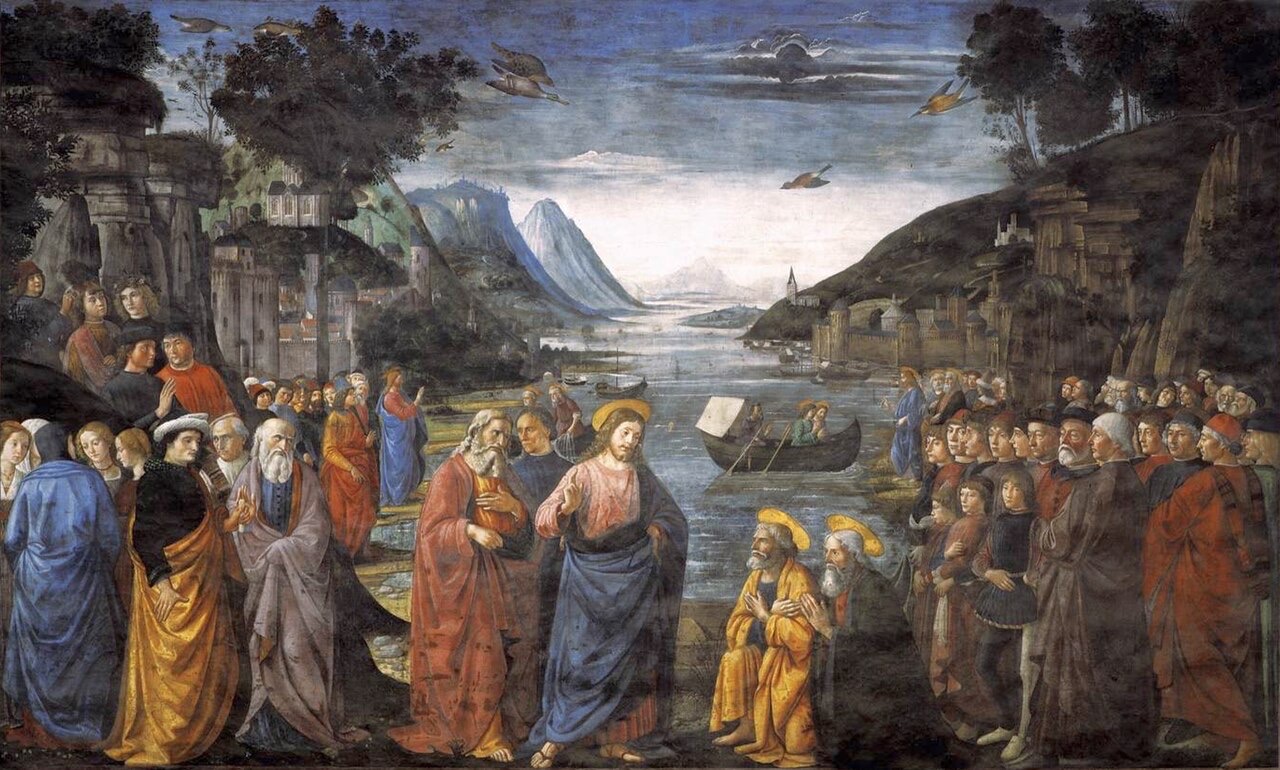
The National Gallery's account of his studio helps frame his working life. His studio specialised in extensive fresco cycles, including work at Santa Maria Novella and Santa Trinita. Those projects required practical organisation as much as artistic imagination: designs, schedules, assistants, patrons, scaffolding and repeated execution across large surfaces. [1]
Family Collaboration and Assistants
Ghirlandaio's career was family-shaped. The National Gallery records his brother David as his partner, and it also notes that his son Ridolfo became a painter. That family frame matters because it keeps the artist from being imagined as a solitary figure. His career unfolded inside a workshop household where artistic identity, labour and training could cross generations. [1]
The workshop also explains why attribution around Ghirlandaio needs caution. Some museum records identify works as by Domenico Ghirlandaio, while others use terms such as workshop of or style of. Those distinctions tell readers whether a work is treated as autograph, studio-related or associated with the broader visual language around him. [1]
This collaborative environment also shaped Michelangelo's early story. The National Gallery identifies Michelangelo as an apprentice with Ghirlandaio. That connection is important, but it should not reduce Ghirlandaio to the role of someone else's teacher. It shows that his workshop was a serious training environment in late fifteenth-century Florence. [1]
Florence, Patrons and Public Storytelling
Ghirlandaio's Florentine reputation rests heavily on church fresco cycles. The National Gallery singles out Santa Maria Novella and Santa Trinita, two settings that help explain why his art became associated with public storytelling. Fresco asked a painter to think in walls, episodes, sightlines and patrons, not only in single portable images. [1]
His work was well suited to that environment because he could make sacred stories readable while filling them with contemporary presence. Figures are often arranged clearly; architecture organises the scene; clothing and faces bring Florentine society into religious history. This is why Ghirlandaio can feel both devotional and documentary: he shows biblical events while preserving the social world of the patrons and viewers around them. [1][6]
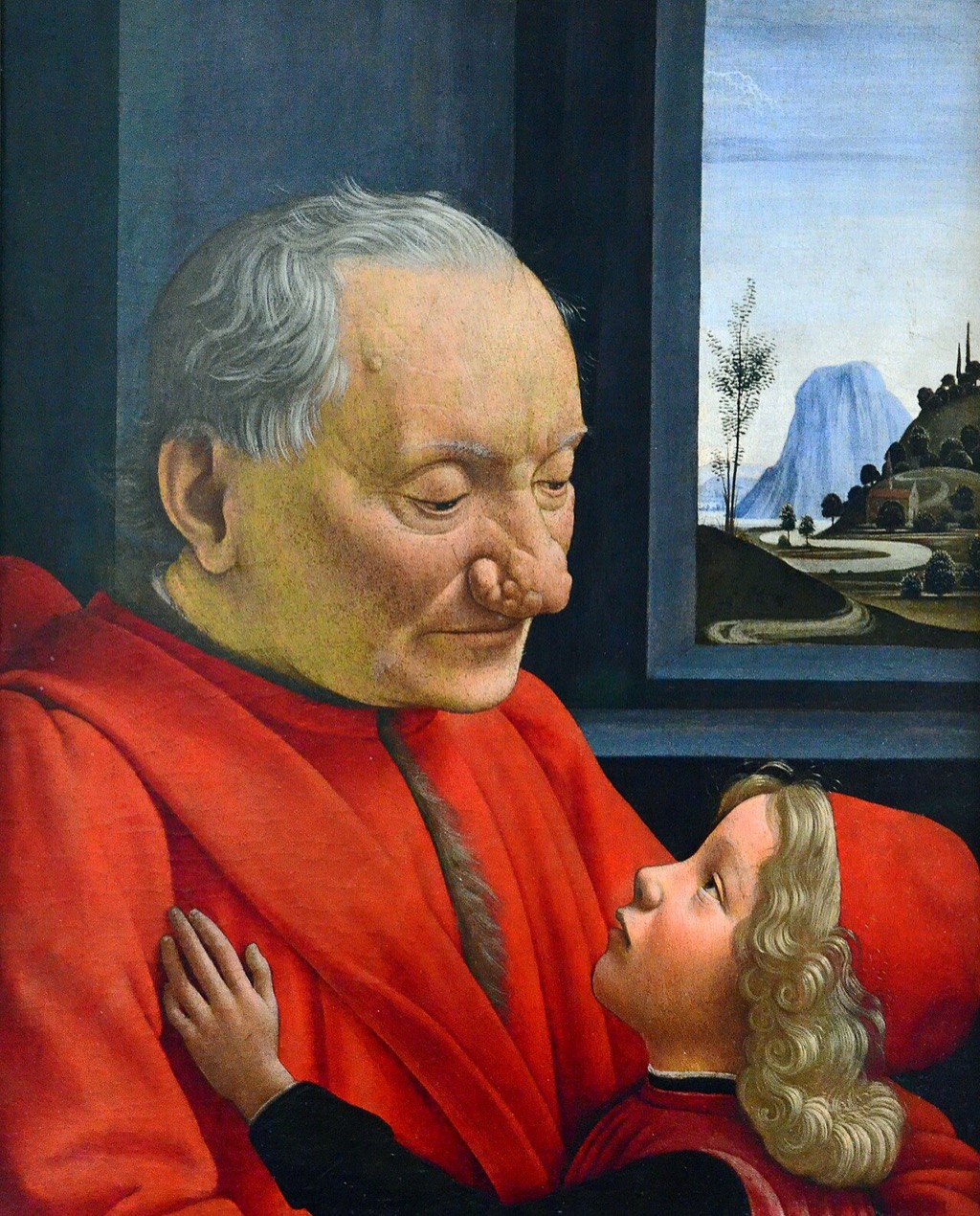
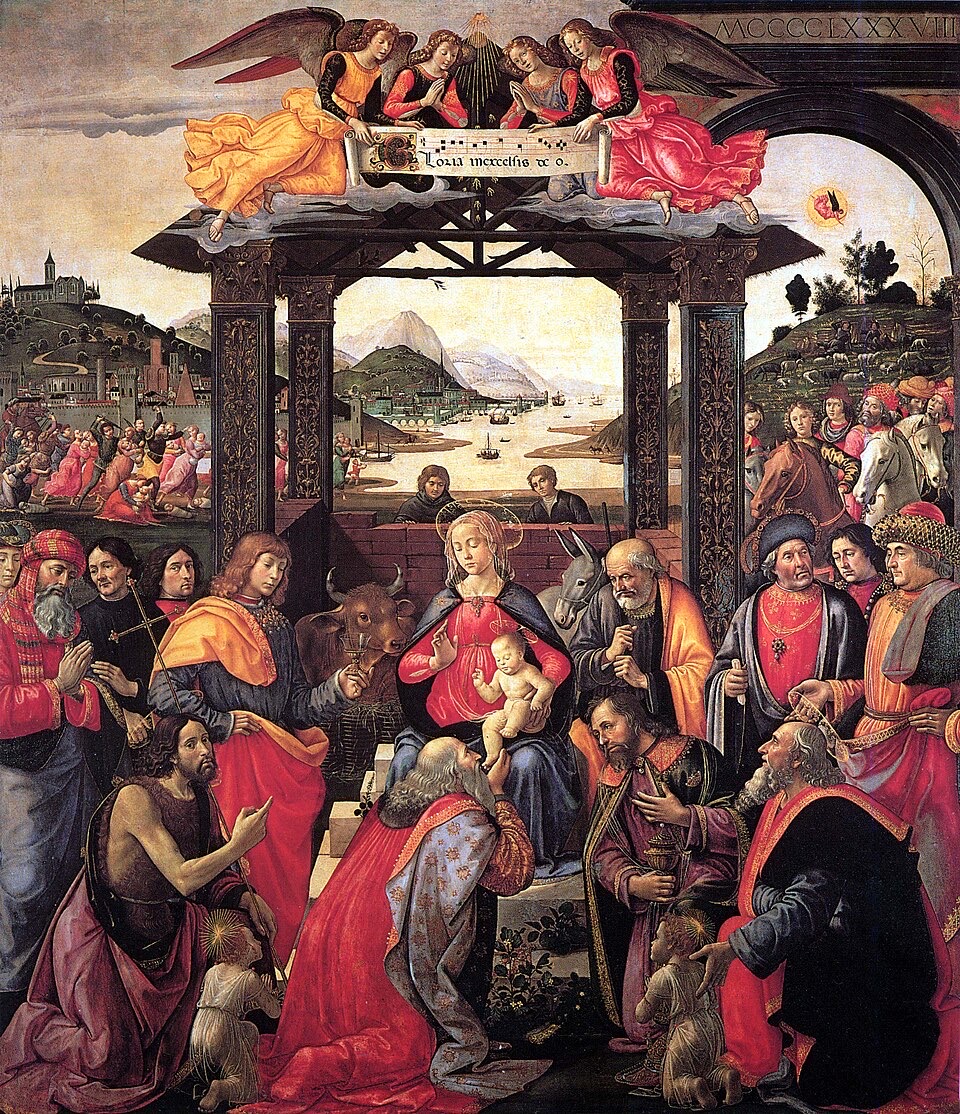
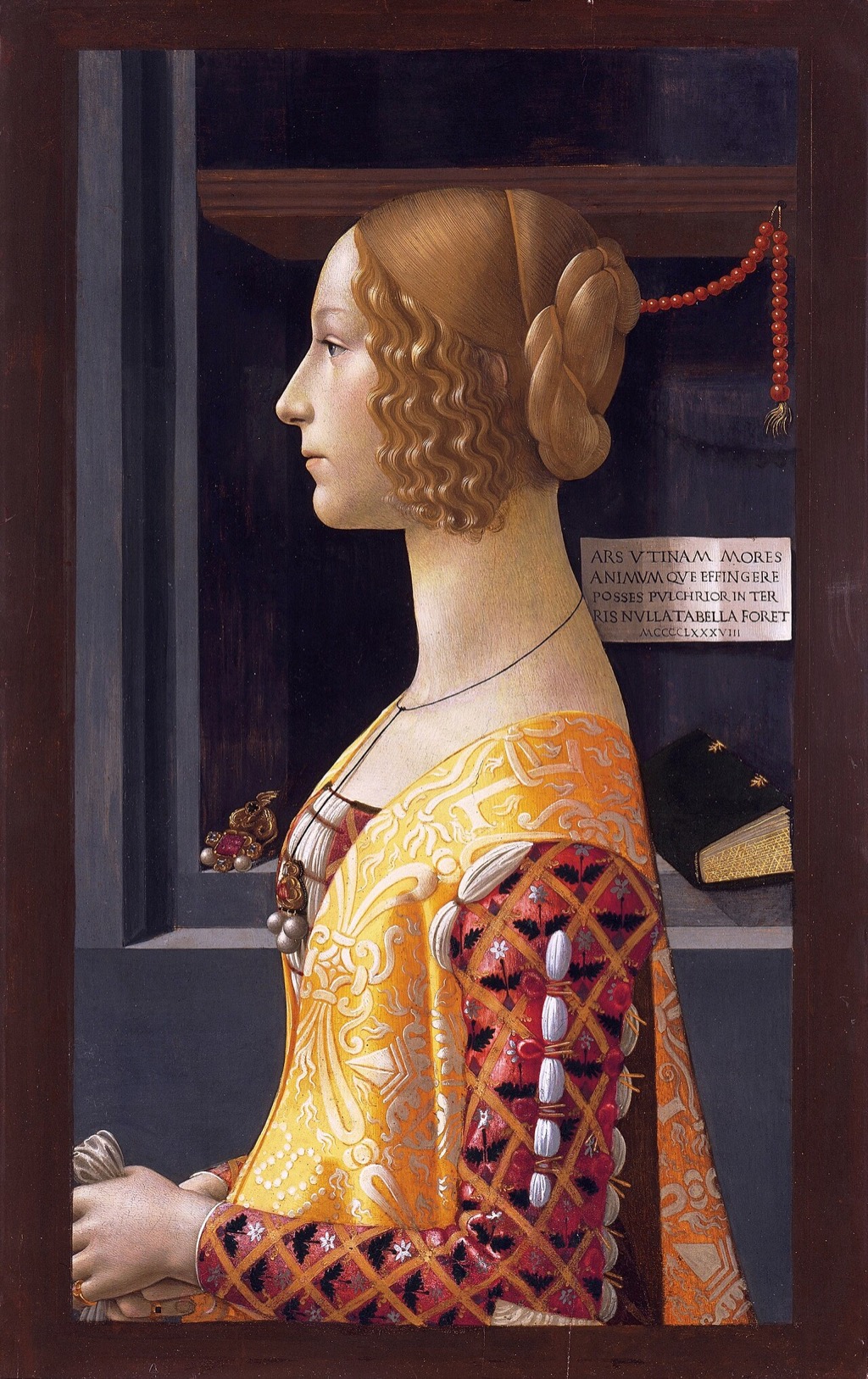
His paintings and portraits deepen that same pattern. The Thyssen Portrait of Giovanna degli Albizzi Tornabuoni, the Louvre Portrait of an Old Man and a Young Boy, and the Innocenti Adoration of the Magi show that Ghirlandaio's art moved between portrait, panel and large religious narrative. His biography is therefore not only a list of places; it is a record of how one Florentine workshop served memory, devotion and display. [6][7][8]
Rome and the Sistine Chapel
Ghirlandaio's career also reached Rome. The Vatican Museums describe the Sistine Chapel wall decoration as a fifteenth-century program that included the Stories of Moses, the Stories of Christ and papal portraits. The initial team included Pietro Perugino, Sandro Botticelli, Domenico Ghirlandaio and Cosimo Rosselli, assisted by their workshops. The Vatican dates the work from 1481 to 1482. [3]
This Roman episode places Ghirlandaio among the leading painters called into a major papal project before Michelangelo's ceiling transformed the chapel's later reputation. The Sistine Chapel was not yet the single-artist monument many visitors imagine today. It was a coordinated decorative program in which several workshops contributed to a unified sacred and institutional setting. [3]
The Sistine commission confirms the standing of Ghirlandaio's workshop beyond Florence. A painter selected for that project needed reputation, reliability and the ability to coordinate assistants within a larger scheme. The Roman work belongs in the life story as evidence of professional status. [1][3]
Tornabuoni and Sassetti Context
The Tornabuoni context is one of the clearest places where Ghirlandaio's biography meets patronage, portraiture and family memory. Thyssen records Giovanna degli Albizzi Tornabuoni's birth, marriage and death, and relates her panel portrait to her appearance in the Tornabuoni Chapel Visitation fresco at Santa Maria Novella. Those links connect a private or memorial portrait with a larger chapel program. [6]
The Sassetti context also belongs to Ghirlandaio's Florentine world, but the current source basis supports only a broad treatment. The National Gallery names Santa Trinita among the settings for his extensive fresco cycles, and the Louvre notes Francesco Sassetti as one proposed identity for the old man in Portrait of an Old Man and a Young Boy. Those facts should not be stretched into a detailed Sassetti biography without additional sources. [1][7]
Together, the Tornabuoni and Sassetti references show how Ghirlandaio's career depended on powerful families, chapel settings and the desire to place contemporary Florentines inside lasting images. The point is not simply that he had patrons. It is that patronage shaped the visual form of his art: portraits, fresco cycles and religious narratives became vehicles for devotion, lineage and civic memory. [1][6][7]
Michelangelo, Ridolfo and Legacy
Michelangelo's apprenticeship is one of the best-known facts attached to Ghirlandaio. The National Gallery records Michelangelo as an apprentice with him, and that fact gives the biography an important bridge to later Renaissance art. But the bridge should not become the whole building. Ghirlandaio was already a successful workshop head, painter of major fresco cycles and maker of portraits and panels. [1]
Ridolfo Ghirlandaio, Domenico's son, also matters for the family legacy. The National Gallery identifies Ridolfo as a painter, which places Domenico's artistic world into a second generation. In a workshop culture, legacy was not only fame after death. It could also mean family continuity, trained assistants, repeated visual habits and a studio name that remained meaningful. [1]
Ghirlandaio's influence is therefore best understood through workshop transmission and visual discipline. His art taught clarity, compositional organisation and the integration of contemporary portraiture into sacred settings. Those qualities may look quieter than the later drama of Michelangelo, Leonardo or Raphael, but they were central to the Florentine visual world from which those later artists emerged. [1][3]
Reputation After Death
Ghirlandaio died in 1494, before the High Renaissance had fully transformed Italian art. His reputation has often been overshadowed by younger or later masters, especially Michelangelo. Yet that later comparison can distort the way his own art should be seen. Ghirlandaio's achievement lies in fresco cycles, workshop organisation, portrait intelligence and the disciplined public clarity of his religious scenes. [1][2]
His paintings also prevent a narrow biography. The Thyssen Giovanna portrait shows formal memory and family identity; the Louvre Old Man and Young Boy shows tenderness and uncertain identity; the Innocenti Adoration shows large-scale panel narrative and a medium record that helps correct inherited simplifications. These works make his career feel broader than a single chapel or a single famous apprentice. [6][7][8]
Ghirlandaio belongs in the middle of Florentine workshop culture, not at the edge of someone else's story. He was a painter of walls and panels, a coordinator of assistants, a recorder of patrons, and a maker of images where sacred history and contemporary Florence meet. [1][3][6]
Frequently Asked Questions
Discussion
Ghirlandaio's biography is a reminder that Renaissance art was made by people inside systems: families, studios, patrons, churches, cities and institutions. His art becomes richer when those systems are visible. [1][3] Workshop First: Try reading Ghirlandaio's life through the workshop rather than through isolated masterpieces. His family, assistants and patrons are part of the story. [1] Patrons and Memory: The Tornabuoni and Sassetti contexts show how portraiture and chapel decoration could preserve family presence inside sacred settings. [1][6][7] Michelangelo in Context: Michelangelo's apprenticeship matters, but Ghirlandaio's biography should not collapse into Michelangelo's origin story. [1] Which part of Ghirlandaio's life feels most revealing: the family workshop, the Florentine chapel commissions, the Sistine Chapel episode, or the portraits connected to patron memory?
Reader Insights
What detail most changes how you read Biography?
How do source, setting and provenance affect the interpretation?
Which internal link gives the most useful next step through this cluster?
Join the Conversation
Share your reading of this page below.
References
- National Gallery, London, "Domenico Ghirlandaio (1449 - 1494)", , accessed 4 August 2026: View Source
- National Gallery of Art, "Domenico Ghirlandaio", , accessed 4 August 2026: View Source
- Vatican Museums, "Sistine Chapel", , accessed 4 August 2026: View Source
- Vatican Museums, "Parete Nord", , accessed 4 August 2026: View Source
- Louvre Collections, "Portrait d'un vieillard et d'un jeune garcon", , accessed 4 August 2026: View Source
- Museo Nacional Thyssen-Bornemisza, "Portrait of Giovanna degli Albizzi Tornabuoni", , accessed 4 August 2026: View Source
- Museo Thyssen-Bornemisza, "Ghirlandaio and Renaissance Florence", , accessed 4 August 2026: View Source
- Museo degli Innocenti, "Art", , accessed 4 August 2026: View Source
- National Gallery of Art, "Lucrezia Tornabuoni", , accessed 4 August 2026: View Source