 by Tom Gurney
Page Updated October 2, 2026
Introduction
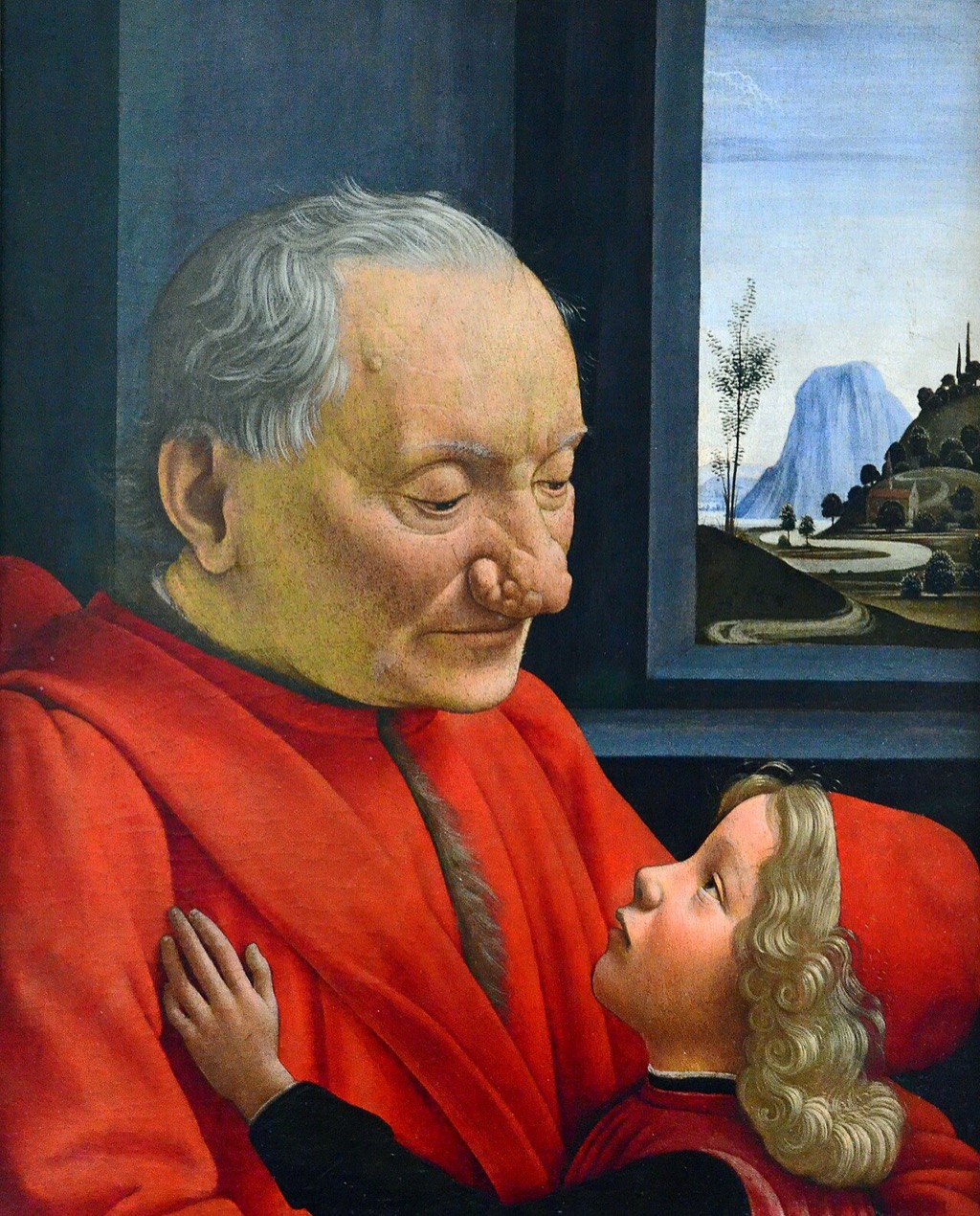
Domenico Ghirlandaio's Portrait of an Old Man and a Young Boy is one of the most tender images in Florentine Renaissance portraiture. The painting shows an elderly man and a child facing one another at close range, their bodies drawn into a compact exchange of attention. The Louvre records the work under the French title Portrait d'un vieillard et d'un jeune garcon, dates it to 1490, attributes it to Domenico Ghirlandaio, and gives the inventory number RF 266. [1]
The painting is famous partly because it refuses the emotional distance often associated with formal Renaissance portraiture. The old man's face is shown with striking particularity, while the child's face is turned upward in trust. Ghirlandaio does not identify the relationship for the modern viewer, and the Louvre treats proposed identities with caution. That uncertainty gives the portrait some of its power: the image feels specific without becoming fully solved. [1]
The work is best approached as a portrait, not as a medical case or sentimental anecdote. The visible condition of the old man's face is central to how viewers encounter the painting, but disease or diagnosis should remain outside the account unless tied to a specific scholarly source. The secure facts already sustain a close reading: a Florentine panel by Ghirlandaio, dated 1490, now in the Louvre, acquired from Stefano Bardini in 1880. [1]
At a Glance
- ArtistDomenico Ghirlandaio.
- Title recorded by the LouvrePortrait d'un vieillard et d'un jeune garcon.
- English title used herePortrait of an Old Man and a Young Boy.
- Date1490.
- SchoolFlorentine school.
- Material / techniquewood, poplar.
- Dimensions0.627 m high x 0.463 m wide, with additional framed/accessory measurements recorded by the Louvre.
- CollectionDepartment of Paintings, Louvre.
- Inventory numberRF 266.
- Current Louvre location recorded in the sourceDenon, Salle 710, Grande Galerie.
- Acquisitionacquired in 1880 from Stefano Bardini.
- Identity posturethe old man has been proposed as a Ridolfi family member or Francesco Sassetti, but the Louvre presents these as proposed identifications rather than settled fact.
Contents
- Introduction
- Object Facts and Louvre Location
- The Old Man and the Child
- Possible Identities
- Portraiture, Age and Tenderness
- Material, Condition and Restoration Caution
- From Bardini to the Louvre
- Reception and Exhibition History
- Why the Portrait Endures
Object Facts and Louvre Location
The Louvre records the painting as a work by Domenico Ghirlandaio, dated 1490, belonging to the Florentine school. Its inventory number is RF 266, and it is held in the Department of Paintings. The museum gives the material and technique as wood, poplar, and records the primary dimensions as 0.627 m high by 0.463 m wide. [1]
Those object facts anchor the portrait before interpretation begins. The painting is small enough to feel intimate, yet formal enough to remain a carefully constructed Renaissance panel. Its scale suits the closeness of the figures: the old man and child appear within a narrow field where looking, touch and bodily nearness carry the emotional force. [1]
The Louvre records the current location as Denon, Salle 710, Grande Galerie. The setting places the work among major Italian paintings, while the portrait itself remains unusually private. It does not depend on a crowded narrative or a famous biblical subject; it depends on a relationship held inside a painted room, with a landscape opening beyond. [1]
The Old Man and the Child
The composition is built around mutual attention. The old man turns toward the child, and the child turns toward him. Their faces are close enough that the viewer feels the relationship before knowing its name. The child's hand rests against the old man's chest, a small gesture that makes the image feel less like a formal double portrait and more like a moment of trust. [1]
Ghirlandaio's portrait language often depends on clarity and order, but here that order has emotional warmth. The figures are arranged plainly, and the space is not crowded with symbolic objects. The painting asks the viewer to read contact: the lifted face of the child, the lowered face of the old man, the exchange of gazes, and the hand that bridges the two bodies. [1][2]
The old man's face is recorded with exceptional attention to surface and irregularity. Without a specific medical source, the safest wording is that the face shows a conspicuous skin condition or facial irregularity, not that the painting proves a modern diagnosis. Ghirlandaio makes this particularity part of the man's dignity rather than a spectacle. [1]
Possible Identities
The Louvre notes proposed identifications for the old man, including a member of the Ridolfi family or Francesco Sassetti. The museum does not present these as certain. That caution should govern the whole page. The portrait can be discussed as a powerful image of age and childhood without forcing a name onto the sitter. [1]
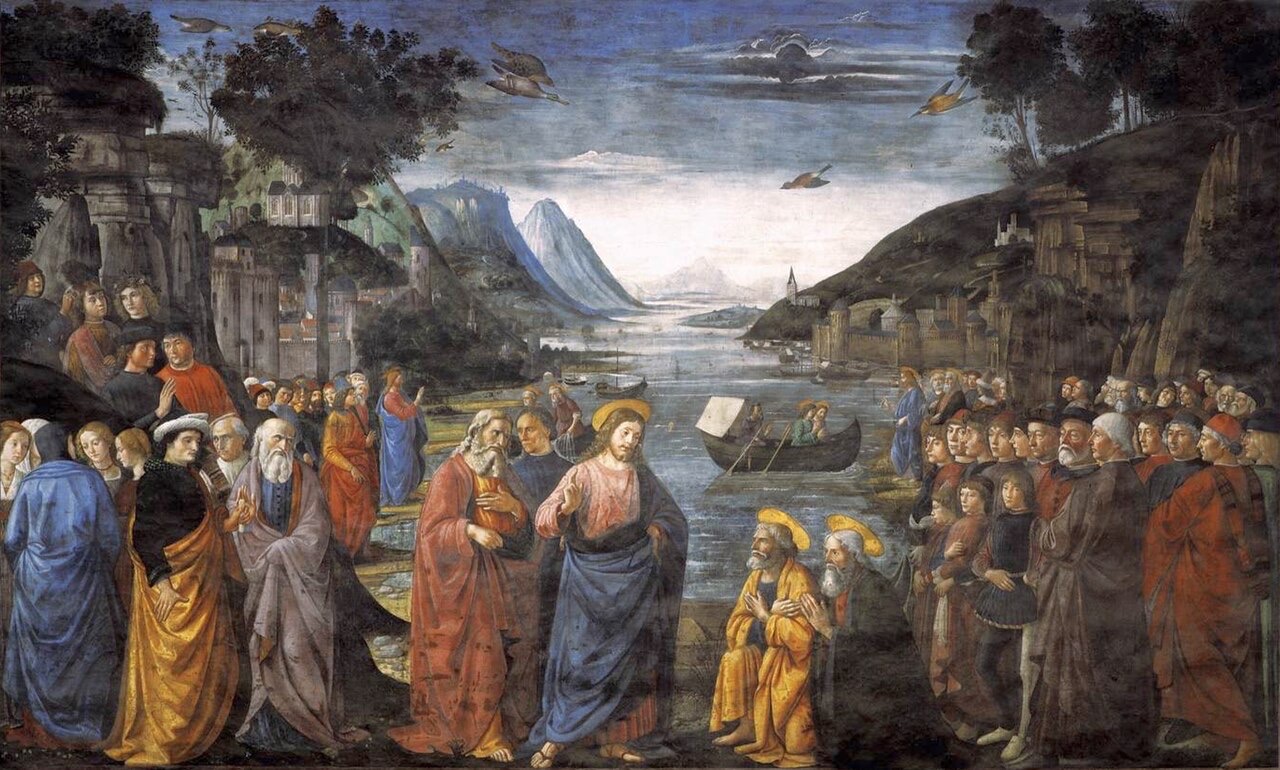
Francesco Sassetti is an important Florentine patron in Ghirlandaio's wider world, and the Sassetti Chapel belongs to the cluster's fresco context. Even so, the Louvre's wording means the identification remains conditional. Sassetti can be discussed as a proposed possibility, not as the solved identity of the old man. [1][2]
The Ridolfi proposal requires the same restraint. A name can help readers imagine social context, but it can also narrow the painting too quickly. The Louvre's record supports the statement that identities have been proposed; it does not support a caption or lead sentence presenting either identification as fact. [1]
Portraiture, Age and Tenderness
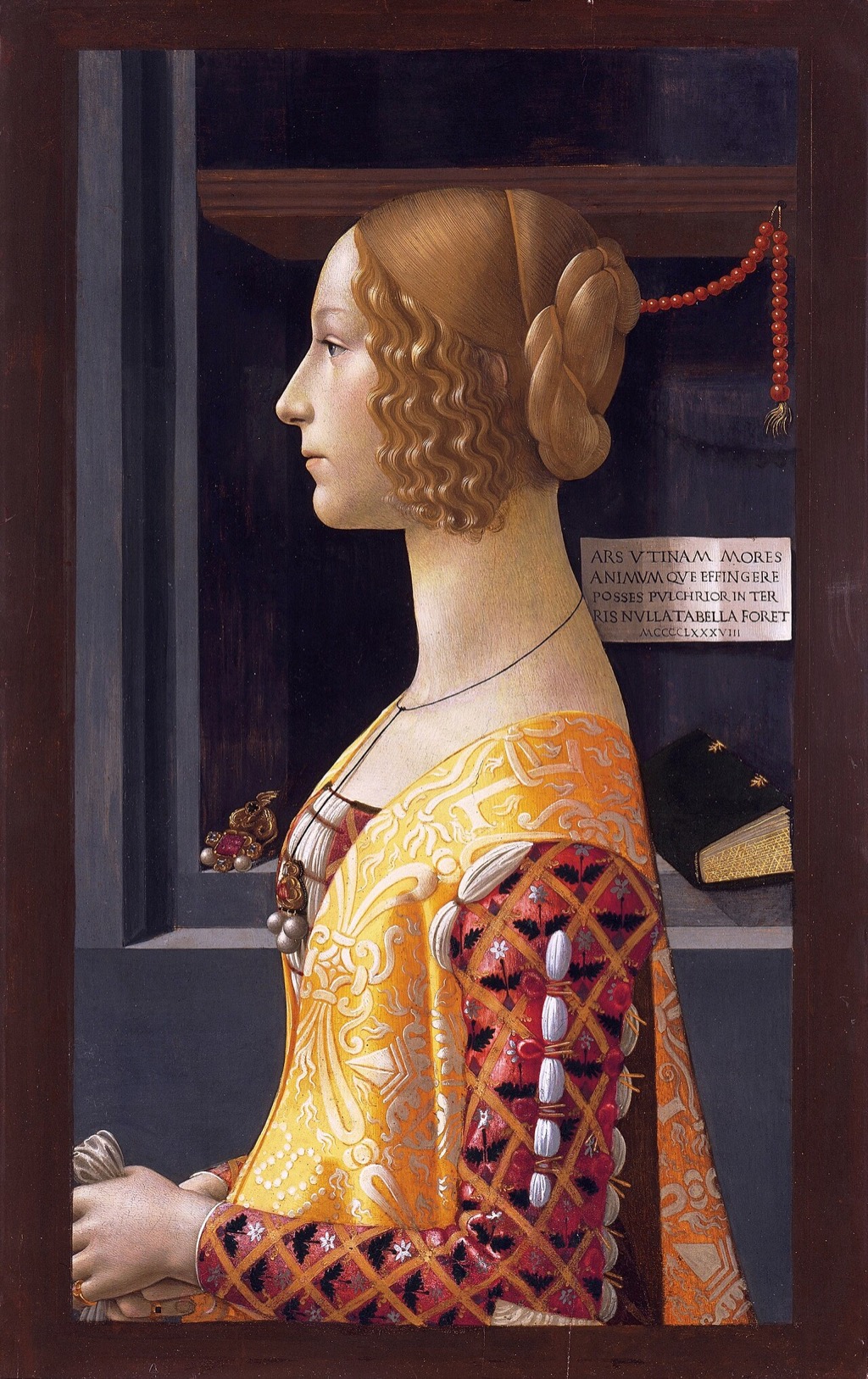
Renaissance portraiture often served family memory, social identity and dynastic display. Ghirlandaio's Portrait of Giovanna degli Albizzi Tornabuoni, for example, uses profile, costume and objects to create a controlled image of status and remembrance. The Louvre portrait belongs to that same broad Florentine portrait world, but its emotional structure is different. It is less ceremonial, more intimate and more dependent on contact between two people. [2][3]
The child matters as much as the old man. Without the child, the portrait might read primarily as a study of age, likeness and facial particularity. With the child, the image becomes relational. The young face softens the old man's presence, and the old man's attention gives the child a secure place inside the painting. [1]
This is why the portrait has often seemed so modern to viewers. It does not idealise the old man into smooth perfection, and it does not treat the child as a decorative accessory. Instead, the painting lets tenderness emerge from difference: age and youth, roughness and softness, downward and upward gaze. The result is emotionally direct without becoming theatrical. [1]
Material, Condition and Restoration Caution
The Louvre records the support as wood, poplar, and its bibliography includes restoration and portrait scholarship. That bibliographic context shows that the painting's surface and history have attracted close attention, but restoration details should be added only from specific reviewed sources. [1]
The visible condition of the old man's face can be acknowledged because it is central to the viewing experience, but it should not become a diagnosis in the absence of a controlling source. Words such as "condition," "facial irregularity" or "skin condition" are safer than naming a disease without evidence. [1]
The same caution applies to restoration. The Louvre bibliography signals that restoration history exists, but the public account should not invent details about what was restored, when or how. A specific restoration publication from the Louvre bibliography could deepen the object history in a later pass; until then, the account should stay with the confirmed museum record. [1]
From Bardini to the Louvre
The Louvre records the painting's acquisition in 1880 from Stefano Bardini. Bardini was a major dealer, and his name appears in many nineteenth-century histories of Italian Renaissance objects moving into public and private collections. For this page, the confirmed point is the Louvre acquisition line itself: the painting entered the museum from Bardini in 1880. [1]
That provenance baseline gives the work a stable collecting-history point without overstating the earlier chain of ownership. The account should not fill gaps with speculation about where the portrait hung in the fifteenth century or how it moved before Bardini unless those details are supported by a captured source. [1]
The Louvre's object record supports the painting's attribution, history and description. The work rewards close attention to the contrast between the old man's marked features and the boy's gentle gaze. [1]
Reception and Exhibition History
The Louvre bibliography includes modern portrait scholarship and exhibition-related literature, including Renaissance Faces and other catalogue entries recorded by the museum. That bibliography shows that the portrait has been treated as an important object in the study of Renaissance likeness, age and emotional expression. [1]
The bibliography should not be turned into unsupported claims about reception. It points toward scholarship that can deepen a later version, especially around restoration, portraiture and condition, while the present account remains conservative until those sources are directly reviewed. [1]
The portrait continues to draw attention because it feels both historically specific and emotionally legible. The identities remain uncertain, but the relationship is immediate. That combination gives the image unusual force. [1]
Why the Portrait Endures
The portrait endures because it resists simplification. It is not only a study of age, not only an image of childhood, not only a technical portrait, and not only a famous face with an uncertain name. It is a painting about nearness. The old man and child are held together by gaze and touch, and the viewer is brought close enough to feel the tenderness without being told exactly how to define it. [1]
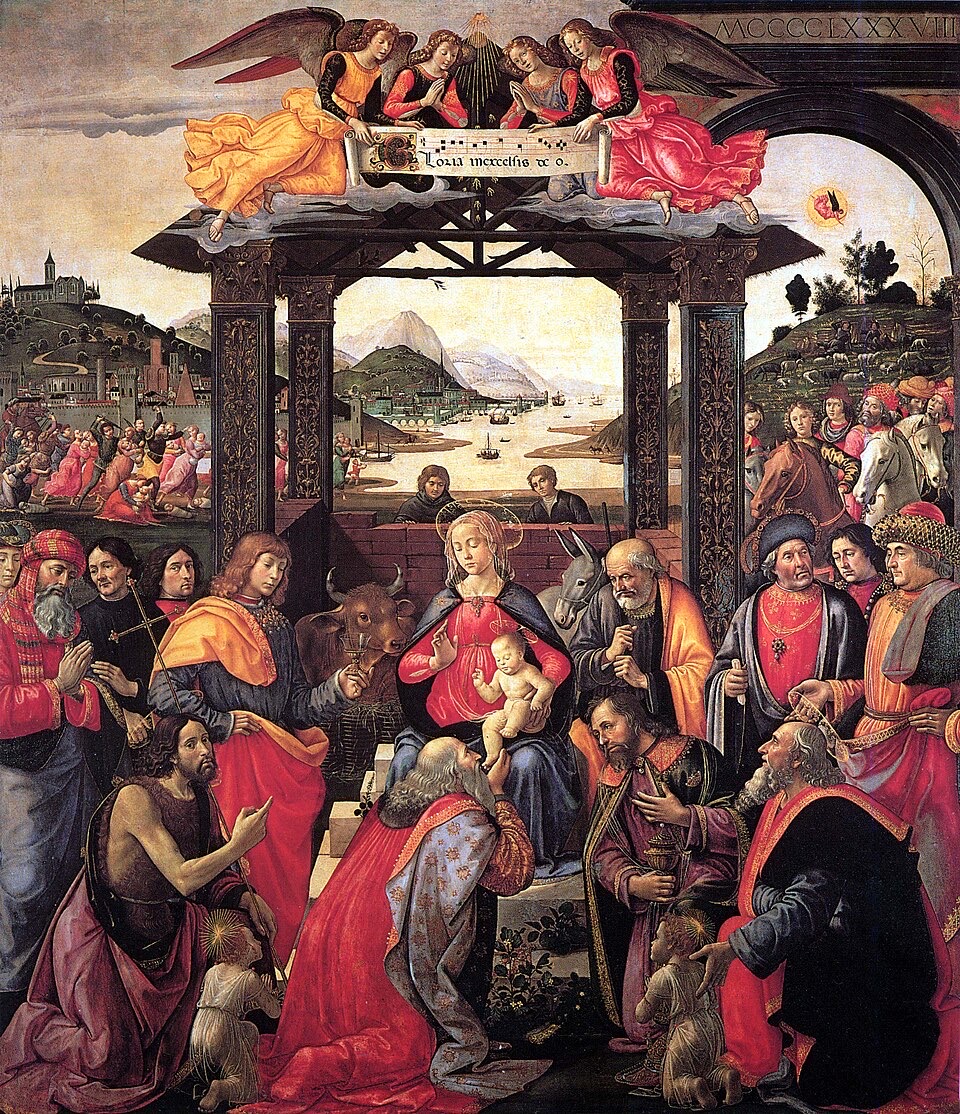
It also shows why Ghirlandaio deserves attention beyond his role in fresco cycles or his connection to Michelangelo. The same artist who organised large sacred narratives could also make a compact panel feel psychologically expansive. His clarity becomes compassion here: every element is legible, but the meaning remains open. [1][2]
This work is a necessary companion to the Giovanna portrait. Giovanna shows the formal, dynastic and memorial side of Florentine portraiture; the Louvre portrait shows intimacy, age and uncertain identity. Together, they show that Ghirlandaio's portrait practice cannot be reduced to one formula. [1][3]
Frequently Asked Questions
Discussion
The Louvre portrait is one of those paintings that changes tempo when you stay with it. The old man's face may catch the eye first, but the child's hand and upward gaze slowly become the emotional centre. [1] Look at the Hands: The child's hand on the old man's chest turns the portrait from a study of two faces into a scene of trust. [1] Keep Identity Open: The Ridolfi and Sassetti possibilities are useful context, but the painting does not need a settled name to be meaningful. [1] Avoid Diagnosis by Reflex: The old man's facial condition is visible and important, but careful looking is not the same as medical certainty. Description needs source support. [1] What feels most powerful in the portrait: the old man's face, the child's gesture, the exchange of gazes, or the fact that the sitters remain uncertain?
Reader Insights
What detail most changes how you read Portrait of an Old Man and a Young Boy?
How do source, setting and provenance affect the interpretation?
Which internal link gives the most useful next step through this cluster?
Join the Conversation
Share your reading of this page below.
References
- Louvre Collections, "Portrait d'un vieillard et d'un jeune garcon", , accessed 4 August 2026: View Source
- National Gallery, London, "Domenico Ghirlandaio (1449 - 1494)", , accessed 4 August 2026: View Source
- Museo Nacional Thyssen-Bornemisza, "Portrait of Giovanna degli Albizzi Tornabuoni", , accessed 4 August 2026: View Source