 by Tom Gurney
Page Updated October 2, 2026
Introduction
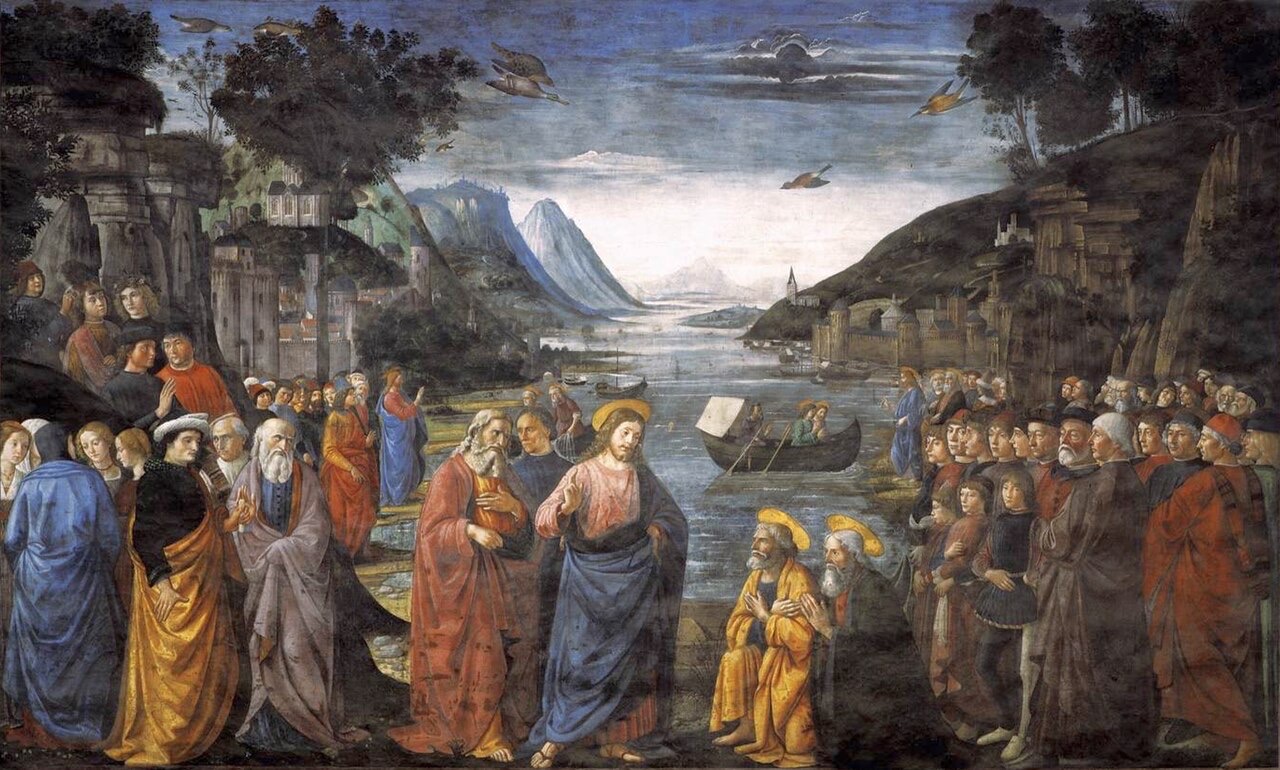
Domenico Ghirlandaio is often introduced through fresco, but his art was not confined to walls. Panel pictures, portraits, devotional images and narrative works show the same Florentine strengths: clear structure, close social observation and a workshop practice able to serve both private memory and public religious storytelling. The National Gallery, London identifies him as Domenico Bigordi, active in Florence, Rome, San Gimignano and Pisa, and describes a studio run with his brother David that specialised in extensive fresco cycles. That fresco reputation sits beside a substantial body of panel painting. [1]
The best way to approach Ghirlandaio's paintings is to treat them as a bridge between intimate likeness and civic display. A portrait can preserve a marriage alliance, a family loss or a social ideal. A devotional panel can turn a sacred subject into something ordered, legible and materially refined. A narrative picture can share habits with his frescoes, especially in the way figures are arranged, contemporary detail is folded into older stories, and workshop execution is kept under disciplined control. [1][3][4]
Here, "paintings" means portraits, devotional panels and narrative panel works recorded by major collections. The category does not make Ghirlandaio primarily an oil painter. His reputation remains strongly tied to fresco and tempera traditions, but museum records do not support the old absolute claim that he never painted with oils. The National Gallery of Art records Lucrezia Tornabuoni as tempera and oil on poplar panel, while the Museo degli Innocenti records its Adoration of the Magi as tempera and oil on panel. Both facts belong in a responsible summary of his practice. [3][6]
At a Glance
- ArtistDomenico Ghirlandaio, also known as Domenico Bigordi.
- Dates1449-1494.[2]
- Main painting types covered hereportraits, devotional panels, narrative panel paintings and selected workshop-related works.[2]
- Best-known portrait examplesPortrait of Giovanna degli Albizzi Tornabuoni and Portrait of an Old Man and a Young Boy.[5]
- Important devotional and narrative examplesMadonna and Child, Lucrezia Tornabuoni, Adoration of the Magi, and National Gallery, London panel paintings.[2][3][6][7]
- Medium posturestrongly associated with fresco and tempera/panel work, with some institutional records including oil in the stated medium.[3][6]
- Attribution posturedistinguish autograph works from works listed as workshop, style of, or otherwise associated with Ghirlandaio's circle.
Contents
- Introduction
- Ghirlandaio Beyond Fresco
- Portraits and the Florentine Profile Tradition
- Devotional Panels and Narrative Works
- Mediums: Tempera, Mixed Media and Oil-in-Medium Records
- Workshop and Attribution Language
- Selected Paintings
- How the Paintings Connect to the Frescoes
Domenico Ghirlandaio Paintings to Explore
Ghirlandaio Beyond Fresco
Ghirlandaio's reputation rests heavily on fresco cycles, but the paintings in museum collections show how his habits of clarity and organisation worked at a smaller scale. The National Gallery, London presents him as a Florentine painter whose studio specialised in extensive fresco cycles, yet its works list also includes panel paintings by him and works connected to his workshop or style. That range reflects the conditions of a Renaissance studio, where patrons needed images for chapels, homes, devotion, memory and status. [1]
In a fresco cycle, Ghirlandaio could organise crowds, architecture and sacred narrative across a large wall. In a panel portrait, he had to compress identity into a face, profile, garment, gesture or object. In a devotional image, he had to make sacred presence legible at close range. The difference in scale matters, but the visual language remains recognisable: ordered composition, calm surfaces, carefully placed figures and a strong sense that the painting has been designed to be understood. [1][4]
The panel paintings also correct a common misunderstanding about artistic hierarchy. Fresco is not the "real" Ghirlandaio while portraits and panels are side notes. Instead, they show another part of the same career. His portraiture preserves Florentine ideals of lineage, virtue and remembrance, while his devotional and narrative panels show how workshop clarity could serve private or semi-public religious use. [1][3][4]
Portraits and the Florentine Profile Tradition
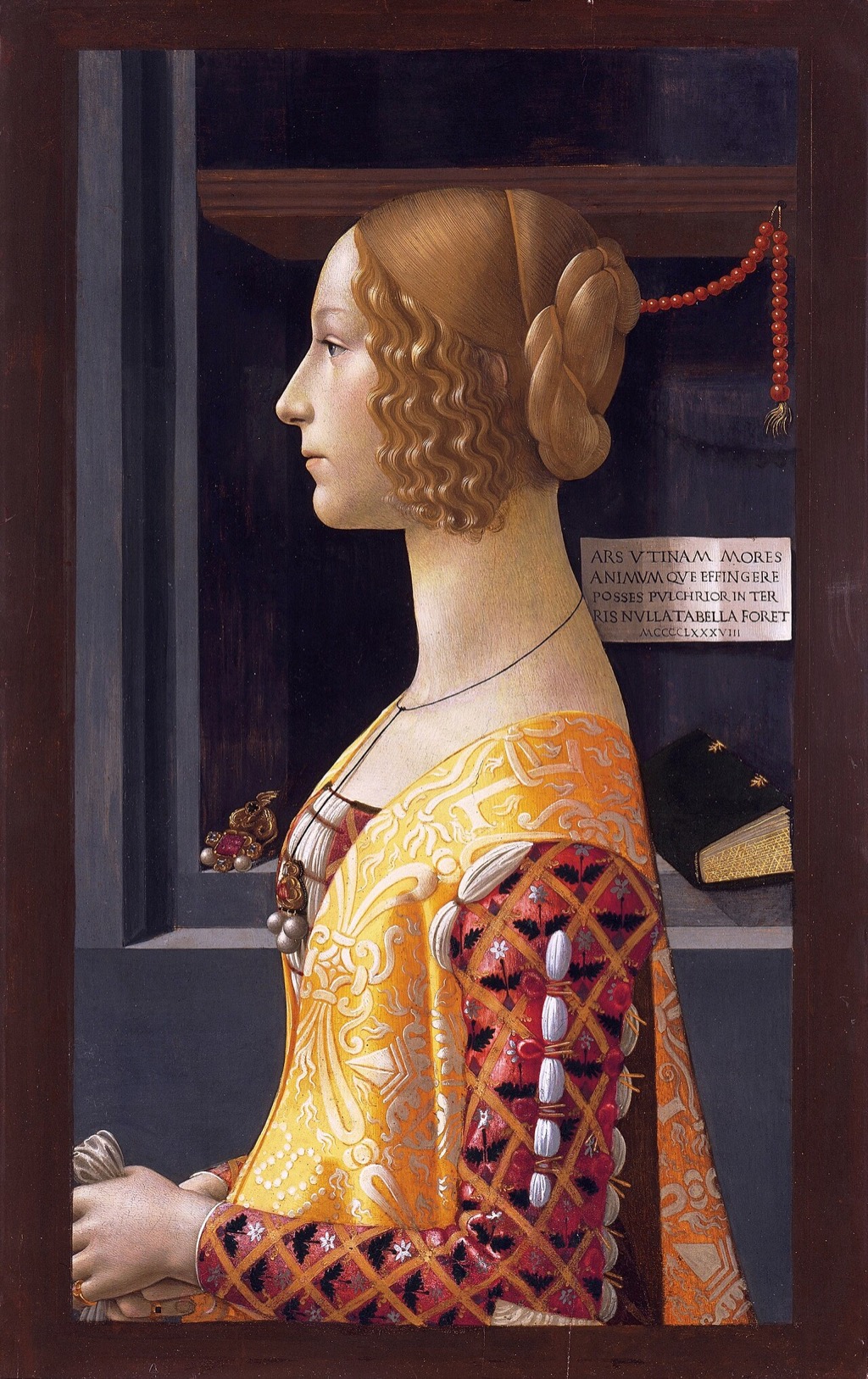
Ghirlandaio's portraits often turn likeness into social language. The Portrait of Giovanna degli Albizzi Tornabuoni, now at the Museo Nacional Thyssen-Bornemisza, is one of the clearest examples. The museum dates the painting to 1489-1490, describes it as mixed media on panel, and records its dimensions as 77 by 49 cm. Giovanna appears in strict profile, with her hands together, set before personal objects arranged in a shallow space behind her. [4]
That profile format matters. It gives the sitter dignity, distance and legibility. The viewer is not invited into a fleeting psychological exchange so much as a carefully composed act of remembrance. Thyssen connects the portrait to Giovanna's identity through a medal by Niccolo Fiorentino and records biographical details that sharpen the image's poignancy: Giovanna was born in 1468, married Lorenzo Tornabuoni in 1486, and died in 1488 during childbirth. The portrait therefore stands at the intersection of likeness, marriage, dynastic memory and grief. [4]
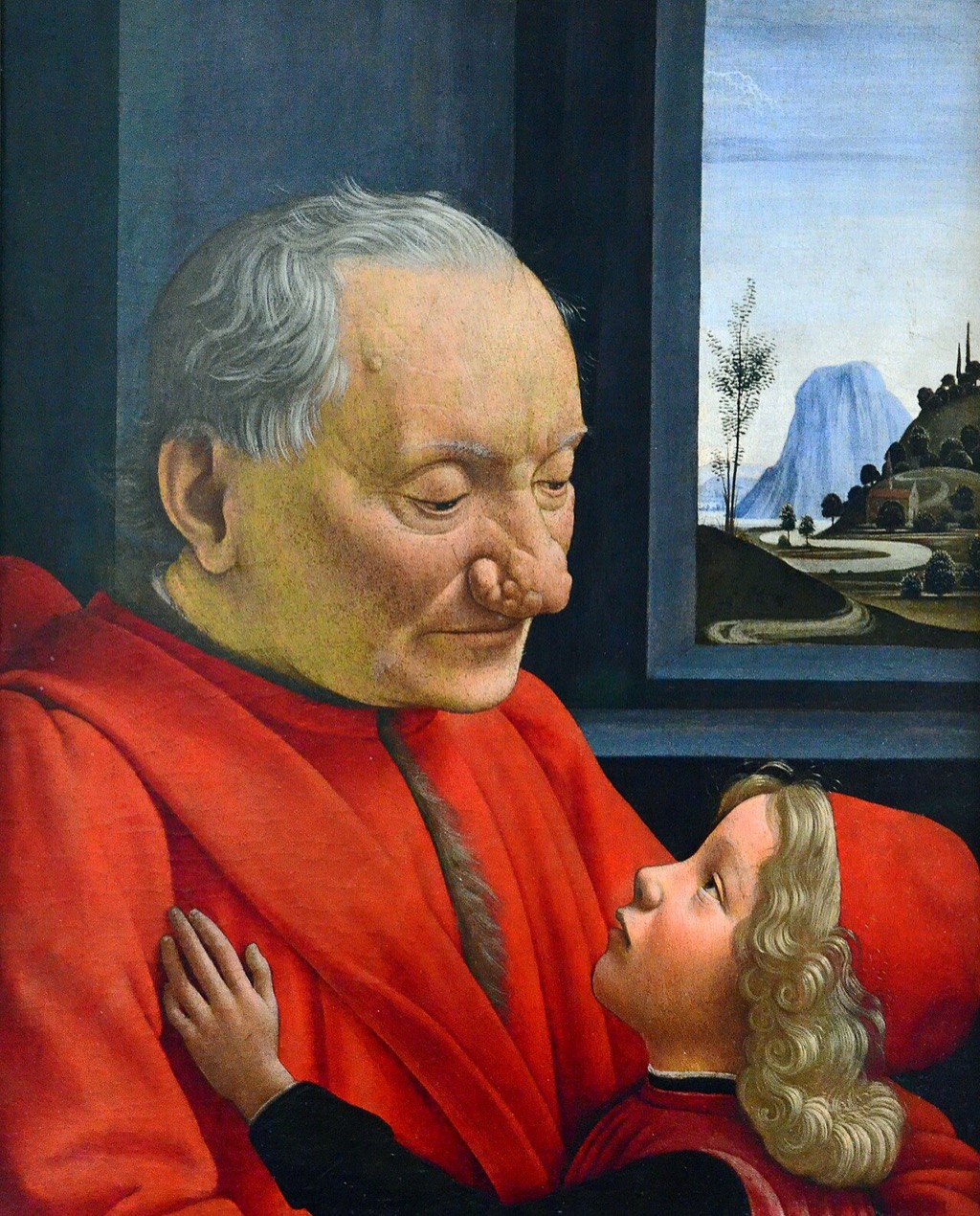
The Louvre's Portrait of an Old Man and a Young Boy is built from a different emotional grammar. The Louvre records the painting as a work by Ghirlandaio dated 1490, with the inventory number RF 266. The museum notes that the older sitter has been linked, without certainty, to a member of the Ridolfi family or to Francesco Sassetti. Here the uncertainty of identity does not weaken the image. The force of the painting lies in contact: the old man and child face each other closely, and the picture makes tenderness visible without needing a fully secure name. [5]
Taken together, these portraits show Ghirlandaio's range. Giovanna is formal, profile-based and dynastic; the Louvre picture is intimate and relational. Both depend on clarity of arrangement, and both turn the sitter into more than a face. Clothing, posture, hands, objects and proximity all become evidence. [4][5]
Devotional Panels and Narrative Works
Ghirlandaio's devotional panels show how his disciplined storytelling could work in private or portable formats. The National Gallery of Art records Madonna and Child, c. 1470-1475, as tempera on panel transferred to hardboard. That early devotional format belongs to a long Florentine tradition, but it also helps readers see how Ghirlandaio's art could work away from the scale of public fresco. A small or medium-sized panel still required order, tact and devotional focus. [2]
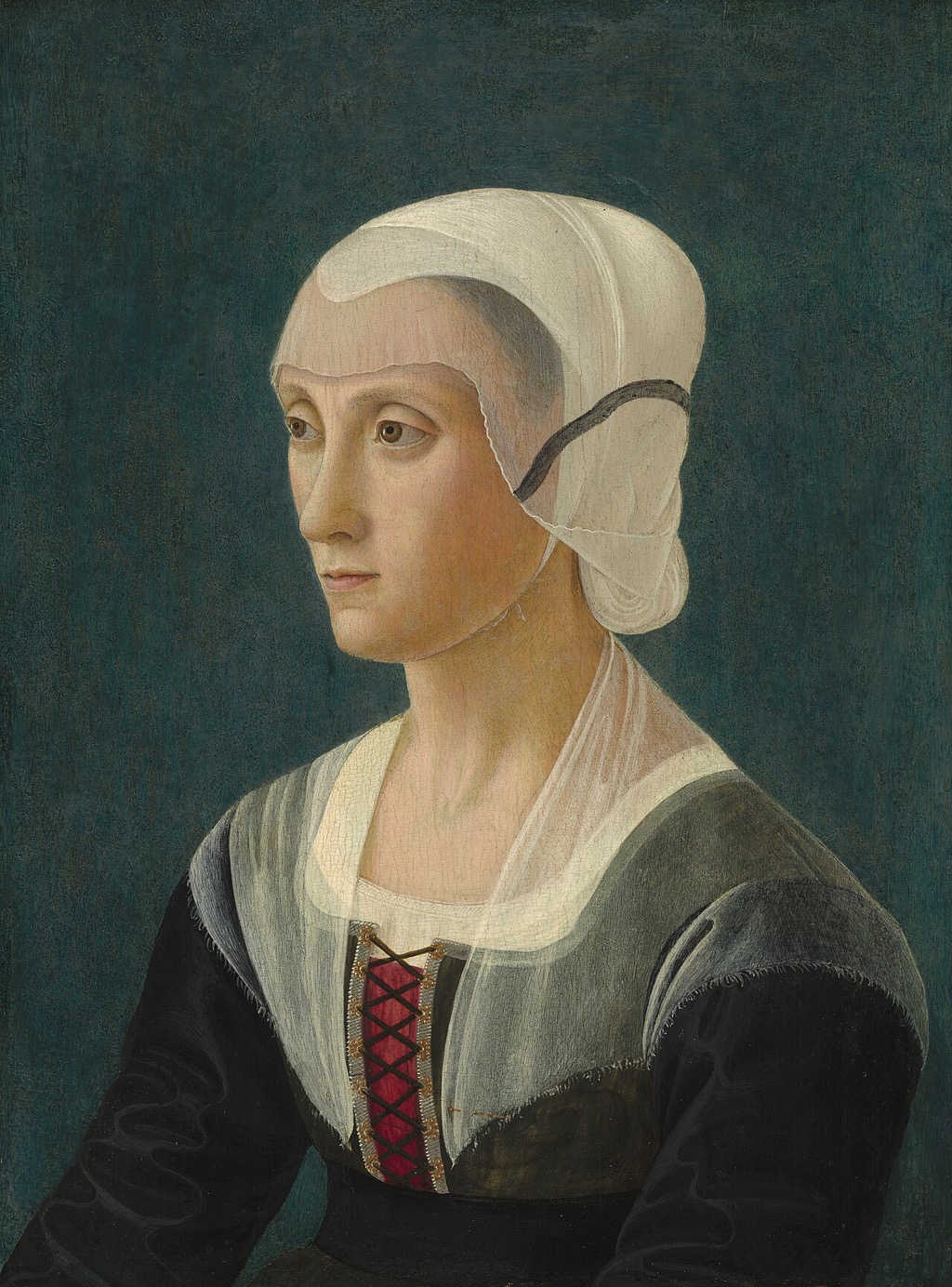
The NGA's Lucrezia Tornabuoni, dated c. 1475, adds another kind of painting to the picture. The museum records it as tempera and oil on poplar panel. Lucrezia was a central figure in the Medici world as mother of Lorenzo de' Medici, and the painting's institutional record matters here for two reasons: it broadens the portrait context beyond Giovanna, and it provides one of the source-backed corrections to the claim that Ghirlandaio never painted with oils. [3]
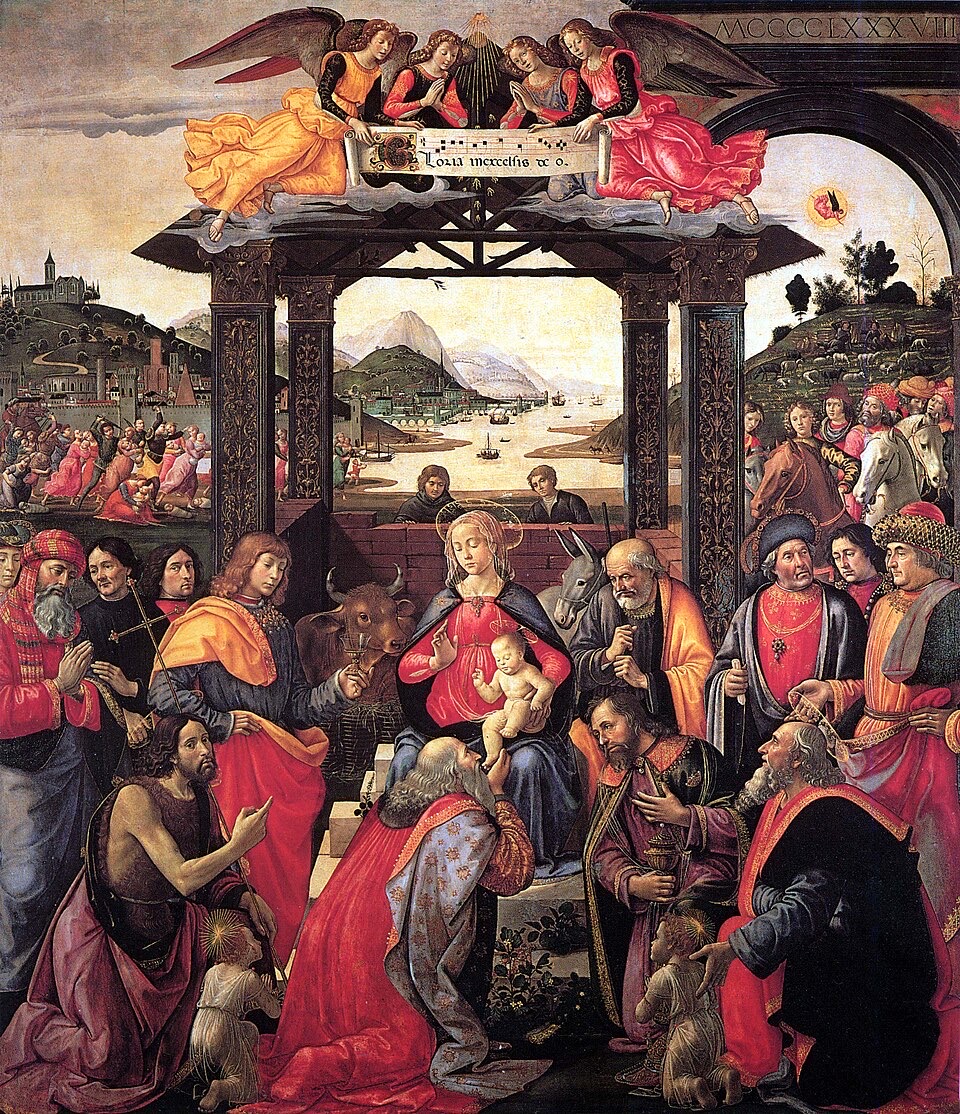
The Museo degli Innocenti Adoration of the Magi expands the range again. The museum identifies its Adoration of the Magi as a work by Domenico Ghirlandaio from 1488-89, describes the medium as tempera and oil on panel, and gives the scale as 285 by 240 cm. This is not a minor domestic panel. It is a major altarpiece, large enough to show how narrative, devotion and public institutional setting could converge in painted form. [6]
That Innocenti painting also needs to be distinguished from another Ghirlandaio Adoration. The Uffizi records a separate Adoration of the Magi, dated 1487, as a tempera-on-panel tondo with a diameter of 171.5 cm. The two works share an artist and subject, but they should not be collapsed into one object. For readers, this distinction is especially important because images and captions can easily blur "Ghirlandaio Adoration" into a single generic label. [6][7]
Mediums: Tempera, Mixed Media and Oil-in-Medium Records
Ghirlandaio should not be described with a simple medium slogan. He is strongly associated with fresco and with panel painting traditions grounded in tempera, and that remains the safest broad statement. The problem comes when an older claim turns that association into an absolute: that he never painted with oils. Museum records make that wording too rigid. [1][2][3]
The National Gallery of Art records Madonna and Child as tempera on panel transferred to hardboard, while Lucrezia Tornabuoni is listed as tempera and oil on poplar panel. Thyssen records Portrait of Giovanna degli Albizzi Tornabuoni as mixed media on panel. The Museo degli Innocenti records Adoration of the Magi as tempera and oil on panel. These statements do not prove that oil was central to Ghirlandaio's whole career, and they do not require the page to recast him as an oil specialist. They simply mean that the blanket denial must be retired. [2][3][4][6]
Medium terms affect how readers understand workshop practice, surface, colour, finish and conservation history. A panel painting transferred to hardboard, a mixed-media panel and a large tempera-and-oil altarpiece are different objects, not interchangeable examples. Each should be described through its own institutional record and, where available, technical or conservation sources. [2][3][4][6]
Workshop and Attribution Language
Ghirlandaio's paintings also require careful attribution language. The National Gallery, London lists works by Domenico Ghirlandaio alongside works described as workshop of or style of Ghirlandaio. Those labels tell the reader whether an object is treated as Domenico's own work, a product of his studio practice or a later work related to his visual language. [1]
A Renaissance workshop could produce objects under several kinds of relationship to a master's name. A painting might be accepted as by Ghirlandaio, associated with his workshop, made by a follower, or understood as close to his style. These distinctions are central to responsible looking because they separate autograph works from studio practice and later influence. [1]
Ghirlandaio-related images should therefore not be treated as equally secure. Autograph works can stand as core examples. Workshop or style-of works can explain influence, repetition, demand and studio language, provided their museum labels remain visible. [1]
Selected Paintings
Portrait of Giovanna degli Albizzi Tornabuoni is the strongest starting point for Ghirlandaio's portraiture. It combines a strict Florentine profile with personal objects, a cartellino and a posthumous or memorial atmosphere shaped by the sitter's early death. It should lead readers toward the dedicated Giovanna page when that route is available. [4]
Portrait of an Old Man and a Young Boy gives the paintings route a different centre of gravity. It is less ceremonial than the Giovanna portrait and more emotionally direct. The Louvre's cautious handling of sitter identity should be preserved, because the picture's meaning does not depend on forcing the old man into a single name. [5]
Lucrezia Tornabuoni is a key bridge between portraiture, Medici history and medium correction. The NGA record supplies a reliable object basis and the tempera-and-oil wording that helps correct the legacy no-oils claim. It should be used carefully, without turning one object record into a broad claim about all Ghirlandaio painting. [3]
Madonna and Child gives the page a devotional-panel anchor. The NGA record places it early, around 1470-1475, and identifies the medium as tempera on panel transferred to hardboard. It is useful for showing that Ghirlandaio's paintings include more than elite portraiture and large narrative works. [2]
The Uffizi Adoration of the Magi should be listed separately from the Innocenti altarpiece. The Uffizi describes a 1487 tempera-on-panel tondo with a diameter of 171.5 cm. Because both works share the same subject, date range and artist, captions and internal links must keep them distinct. [7]
The National Gallery, London works list supplies additional examples for a later browse module, including A Legend of Saints Justus and Clement of Volterra, Portrait of a Young Man in Red and The Virgin and Child. It also records related works under workshop or style labels, which can help explain Ghirlandaio's circle without flattening attribution. [1]
How the Paintings Connect to the Frescoes
The paintings and frescoes are not separate personalities. They share a taste for clarity, social observation and legible narrative. In Giovanna's case, the connection is especially direct. Thyssen notes that Giovanna appears in the Tornabuoni Chapel fresco of the Visitation in Santa Maria Novella, and that the panel portrait relates to that chapel context. The painting and the fresco therefore belong to the same world of family memory, status and sacred setting. [4]
The same principle helps explain why Ghirlandaio's panel works can feel architectural even when they are small. Figures often stand with composure; objects are placed with care; spaces are ordered enough for the viewer to read them quickly. These qualities made sense in fresco, where the story had to hold across distance, but they also made sense in panel painting, where patrons wanted images that could preserve identity or devotion with clarity. [1][4]
Seeing the paintings beside the frescoes also prevents a false choice between public and private Ghirlandaio. His art moves between the two. A chapel fresco could include recognisable Florentine patrons within sacred narrative, while a portrait panel could turn one person into a controlled image of family, virtue or remembrance. Ghirlandaio's gift was not only scale; it was the translation of social meaning into clear visual form. [1][4][5]
Frequently Asked Questions
Discussion
Ghirlandaio's paintings reward a slower kind of looking. They often seem orderly at first glance, then become richer as the viewer notices how profile, garment, object, gesture and setting carry social information. Portrait Clues: In Ghirlandaio's portraits, look beyond the face. Hands, jewellery, books, inscriptions and background objects can explain how the sitter was meant to be remembered. [4] Medium Matters: A museum medium line is not just technical detail. Tempera, mixed media, oil in a stated medium and later transfer histories all affect how the work should be described. [2][3][4][6] Attribution Matters: When a museum labels a painting as by Ghirlandaio, workshop of Ghirlandaio or style of Ghirlandaio, keep that wording visible. It changes what the picture can safely prove. [1] Which side of Ghirlandaio feels most alive to you: the formal profile portraits, the tender Louvre portrait, the devotional panels or the large narrative works?
Reader Insights
Which panel or portrait best shows Ghirlandaio working beyond fresco?
Does the hub balance fresco reputation and panel-painting evidence clearly?
Which work page should receive the strongest internal-link emphasis?
Join the Conversation
Share your reading of this page below.
References
- National Gallery, London, "Domenico Ghirlandaio (1449 - 1494)", , accessed 4 August 2026: View Source
- National Gallery of Art, "Domenico Ghirlandaio", , accessed 4 August 2026: View Source
- National Gallery of Art, "Lucrezia Tornabuoni", , accessed 4 August 2026: View Source
- Museo Nacional Thyssen-Bornemisza, "Portrait of Giovanna degli Albizzi Tornabuoni", , accessed 4 August 2026: View Source
- Louvre Collections, "Portrait d'un vieillard et d'un jeune garçon", , accessed 4 August 2026: View Source
- Museo degli Innocenti, "Art", , accessed 4 August 2026: View Source
- Uffizi Galleries, "Adoration of the Magi", , accessed 4 August 2026: View Source