 by Tom Gurney
Page Updated October 2, 2026
Introduction
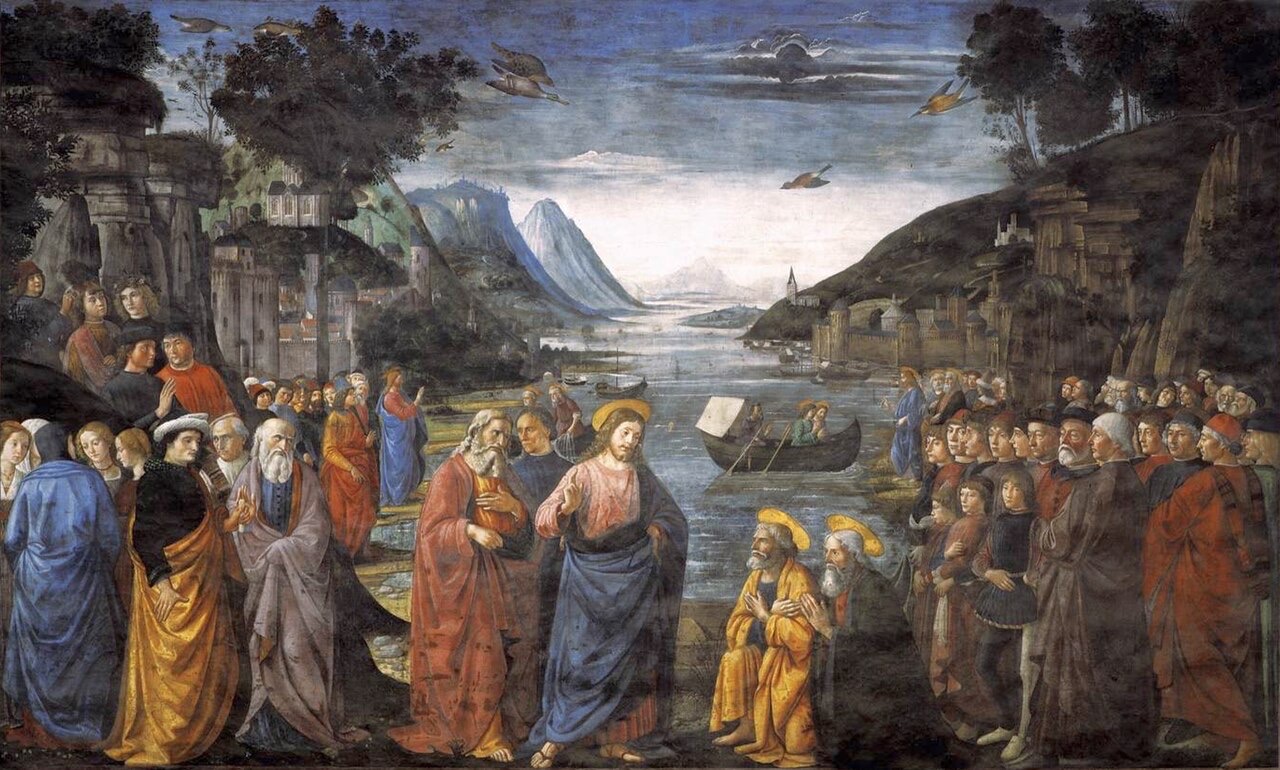
Vocation of the Apostles belongs to the fifteenth-century wall decoration of the Sistine Chapel, before Michelangelo's ceiling transformed the chapel's later fame. The Vatican Museums describe that earlier program as a coordinated cycle of the Stories of Moses, the Stories of Christ and papal portraits. The initial team included Pietro Perugino, Sandro Botticelli, Domenico Ghirlandaio and Cosimo Rosselli, assisted by their workshops, with the work dated to 1481-82. [1]
For Ghirlandaio, the Sistine Chapel commission placed his workshop inside a major papal project. The National Gallery, London identifies him as a Florentine painter whose studio specialised in extensive fresco cycles. In Rome, that ability to organise narrative at architectural scale became part of a larger chapel program involving several leading painters and their workshops. [1][3]
The Vocation or Calling of the Apostles is best read within that Sistine context rather than as a general article on the chapel. The Vatican sources securely support the subject, placement, biblical sequence and workshop context, while broader fresco issues belong to the Ghirlandaio frescoes overview. [1][2][3]
At a Glance
- ArtistDomenico Ghirlandaio, in the Sistine Chapel fifteenth-century fresco context.[2]
- Subjectthe calling or vocation of the first apostles.
- SettingSistine Chapel, within the Stories of Christ wall sequence.[2]
- Vatican programStories of Moses, Stories of Christ and papal portraits.
- Date frame for the fifteenth-century wall campaign1481-82.
- Team contextPerugino, Botticelli, Ghirlandaio and Cosimo Rosselli, assisted by their workshops.
- Episode structure recorded by the Vatican north-wall sourceChrist calls Peter and Andrew in the foreground, and John and James in the background.
Contents
- Introduction
- The North Wall and the Stories of Christ
- Calling Peter, Andrew, John and James
- Ghirlandaio in the Sistine Team
- Fresco Storytelling and Workshop Clarity
- Before Michelangelo's Ceiling
The North Wall and the Stories of Christ
The Vatican Museums' Sistine Chapel history describes the fifteenth-century decoration as a program joining the Stories of Moses, the Stories of Christ and papal portraits. That structure matters because Vocation of the Apostles was not conceived as an isolated museum picture. It was part of a theological and institutional sequence arranged across the chapel walls. [1]
The Vatican north-wall page identifies the calling episode within the Christ-story sequence. This placement gives the fresco its immediate narrative role: it belongs to the story of Christ gathering the first apostles and establishing the human community around his ministry. Within the chapel program, that subject participates in a broader pattern of sacred history and church authority. [1][2]
The evidence remains modest. The Vatican sources support the cycle context, wall-program frame and basic subject sequence. They establish the cycle's setting and subject more firmly than the identities of every figure or the fresco's technical condition. Those details remain uncertain on the evidence cited here. [1][2]
Calling Peter, Andrew, John and James
The Vatican north-wall source describes the fourth Christ-story panel as the vocation or calling episode. It identifies Christ calling Peter and Andrew in the foreground and John and James in the background. That two-part structure gives the scene its narrative movement: the call is not a single frozen encounter, but a sequence of apostolic response. [2]
The subject is important because the apostles stand at the beginning of Christian witness and mission. In the foreground, Peter and Andrew receive Christ's call; in the background, John and James are also drawn into the story. The fresco therefore shows vocation as both individual encounter and expanding community. [2]
A close reading can begin with that structure: Christ as the source of the call, then the paired responses of the apostles. The fresco should not be treated as a modern psychological drama. Its purpose within the chapel sequence is narrative, theological and institutional. [1][2]
Ghirlandaio in the Sistine Team
The Vatican Museums list Ghirlandaio among the painters in the initial Sistine wall-decoration team, alongside Perugino, Botticelli and Cosimo Rosselli, with their workshops. This matters for attribution language. The chapel program was a coordinated project, not a single-artist monument in the modern sense. [1]
Ghirlandaio's inclusion fits what the National Gallery says about his studio. A painter known for extensive fresco cycles was well suited to a papal commission that required large-scale narrative clarity and coordinated workshop execution. His role in the Sistine project confirms that his fresco reputation extended beyond Florence. [1][3]
Vocation of the Apostles can be discussed as Ghirlandaio's Sistine work, but it also belongs within the collective wall campaign of 1481-82. That balance keeps the account close to the Vatican source frame. [1][2]
Fresco Storytelling and Workshop Clarity
Ghirlandaio's broader fresco practice is known for public legibility. The frescoes hub describes how his workshop could make sacred stories readable across walls while allowing contemporary detail and social presence to enrich the scene. In the Sistine Chapel, that skill was placed within a papal program where clarity mattered across multiple artists, subjects and walls. [1][3]
Vocation of the Apostles is therefore best approached first as a work of narrative order. The Vatican source gives a clear subject sequence: Peter and Andrew in the foreground, John and James in the background. Even without an extended iconographic apparatus, that structure lets readers understand how the fresco tells the calling of the first apostles in a legible visual sequence. [2]
Image-based claims require caution. The cited sources do not securely identify every portrait, workshop hand or detail of condition. The clearest account begins with the subject and its place in the chapel programme. [1][2]
Before Michelangelo's Ceiling
Modern viewers often think of the Sistine Chapel through Michelangelo first. The Vatican's account of the fifteenth-century wall program restores the earlier layer: before Michelangelo's ceiling, the chapel already contained an ambitious program of biblical history and papal portraiture by several leading painters and their workshops. [1]
This context changes the reading of Vocation of the Apostles. It is not an isolated prelude to Michelangelo. It belongs to an earlier Sistine visual order, where the stories of Moses and Christ, the papal portraits and the architectural space of the chapel worked together. Ghirlandaio's fresco participates in that order on its own terms. [1][2]
Michelangelo's later fame should sharpen rather than obscure the earlier campaign. Ghirlandaio's contribution shows the Sistine Chapel as a layered monument: papal, biblical, collaborative and historical before it became the place many visitors associate with a single ceiling. [1]
Frequently Asked Questions
Discussion
Vocation of the Apostles is a useful reminder that the Sistine Chapel was already a major collaborative fresco environment before Michelangelo's ceiling. Ghirlandaio's scene belongs to that earlier order of biblical sequence, papal space and workshop storytelling. [1][2] Follow the Sequence: Begin with Peter and Andrew in the foreground, then move to John and James in the background. The Vatican source presents the subject as a layered calling episode. [2] Think in Cycles: This fresco was part of the Stories of Christ, not an isolated picture. Its meaning depends on the wall sequence around it. [1][2] Keep Michelangelo in Perspective: Michelangelo's later Sistine work is essential, but this fresco belongs to an earlier collaborative campaign by leading fifteenth-century painters. [1] When you think about the Sistine Chapel, do you picture Michelangelo first, or the earlier wall cycle by Perugino, Botticelli, Ghirlandaio, Rosselli and their workshops?
Reader Insights
What detail most changes how you read Vocation of the Apostles?
How do source, setting and provenance affect the interpretation?
Which internal link gives the most useful next step through this cluster?
Join the Conversation
Share your reading of this page below.
References
- Vatican Museums, "Sistine Chapel", , accessed 4 August 2026: View Source
- Vatican Museums, "Parete Nord", , accessed 4 August 2026: View Source
- National Gallery, London, "Domenico Ghirlandaio (1449 - 1494)", , accessed 4 August 2026: View Source
- Domenico Ghirlandaio Phase 2 Image Source-Lock and Correction Posture, 2026-08-04.