 by Tom Gurney
Page Updated October 2, 2026
Introduction
Domenico Ghirlandaio's reputation rests most heavily on fresco. He painted portraits and panels, but fresco cycles show the public scale of his art: sacred stories arranged across walls, contemporary Florentines folded into biblical scenes, and workshop labour turned into visual order. The National Gallery, London identifies him as a Florentine painter whose studio specialised in extensive fresco cycles, including work in Santa Maria Novella and Santa Trinita. [1]
Fresco suited Ghirlandaio because it rewarded clarity. A chapel cycle had to be readable from a distance, coherent across multiple scenes, and persuasive to patrons whose family memory and civic standing were often bound to the imagery. Ghirlandaio's strength was not only that he could fill walls. It was that he could make large religious programs feel orderly, social and intelligible. [1]
The main fresco contexts currently supported by captured sources are Santa Maria Novella, Santa Trinita and the Sistine Chapel. A full chapel-by-chapel catalogue would require deeper church-specific sources, and the Sistine Chapel Vocation of the Apostles is best treated in its own focused account. The central point here is how fresco shaped Ghirlandaio's career: public storytelling, workshop organisation and the integration of patron identity into sacred narrative. [1][2][3]
At a Glance
- ArtistDomenico Ghirlandaio, also identified as Domenico Bigordi.
- Dates1449-1494.[4]
- Main fresco reputationextensive fresco cycles and workshop production.
- Key Florentine settings recorded by the National GallerySanta Maria Novella and Santa Trinita.
- Roman settingSistine Chapel fifteenth-century wall program.
- Sistine team contextVatican Museums records an initial team including Pietro Perugino, Sandro Botticelli, Domenico Ghirlandaio and Cosimo Rosselli, assisted by their workshops.
- Sistine date frameVatican Museums dates the fifteenth-century fresco work to 1481-82.
- Related routethe Vocation of the Apostles is a focused Sistine artwork account, distinct from this broader fresco overview.
Contents
- Introduction
- Fresco Cycles as Public Art
- Workshop Logistics and Assistants
- Santa Trinita and the Sassetti Context
- Santa Maria Novella and the Tornabuoni Context
- Rome and the Sistine Chapel
- Contemporary Portraits in Sacred Narrative
- Frescoes as Social Record
- Selected Fresco Routes
Fresco Cycles as Public Art
Fresco is an architectural art. It asks painters to think in wall surfaces, sightlines, sequences and rooms, not only in isolated pictures. Ghirlandaio's studio reputation makes sense in that environment. The National Gallery's statement that his studio specialised in extensive fresco cycles places him among painters whose success depended on planning, coordination and narrative visibility at public scale. [1]
A fresco cycle in a Florentine church was not merely a sacred image enlarged onto a wall. It could become a place where biblical history, patron identity, family memory and civic display met. Ghirlandaio's frescoes are remembered partly because they make religious stories feel inhabited by the people, clothing and architecture of fifteenth-century Florence. [1][6]
Ghirlandaio's frescoes are best understood through function as well as style. His walls had to teach, commemorate, decorate and organise attention. Their clarity was a public virtue: viewers could follow the story, recognise social types, and understand how patronage and devotion had been joined into one visual field. [1]
Workshop Logistics and Assistants
Large fresco cycles required a workshop. The National Gallery records that Ghirlandaio's brother David was his partner and that the studio specialised in extensive fresco cycles. That source-backed workshop frame is essential because no serious account of Ghirlandaio's frescoes should imagine them as private, solitary acts. [1]
Fresco demanded practical organisation. Designs had to be planned for large surfaces; assistants had to work within a consistent visual language; scenes had to retain clarity even when seen from below or across a chapel. The National Gallery's studio summary supports a cautious account of this collaborative setting, though detailed technical or day-by-day workshop claims should wait for specialist sources. [1]
The workshop also explains why Ghirlandaio's frescoes can feel both abundant and controlled. A large painted program can easily become crowded. Ghirlandaio's strength was the ability to marshal figures, buildings and contemporary details without losing narrative legibility. That kind of order is as much organisational as stylistic. [1]
Santa Trinita and the Sassetti Context
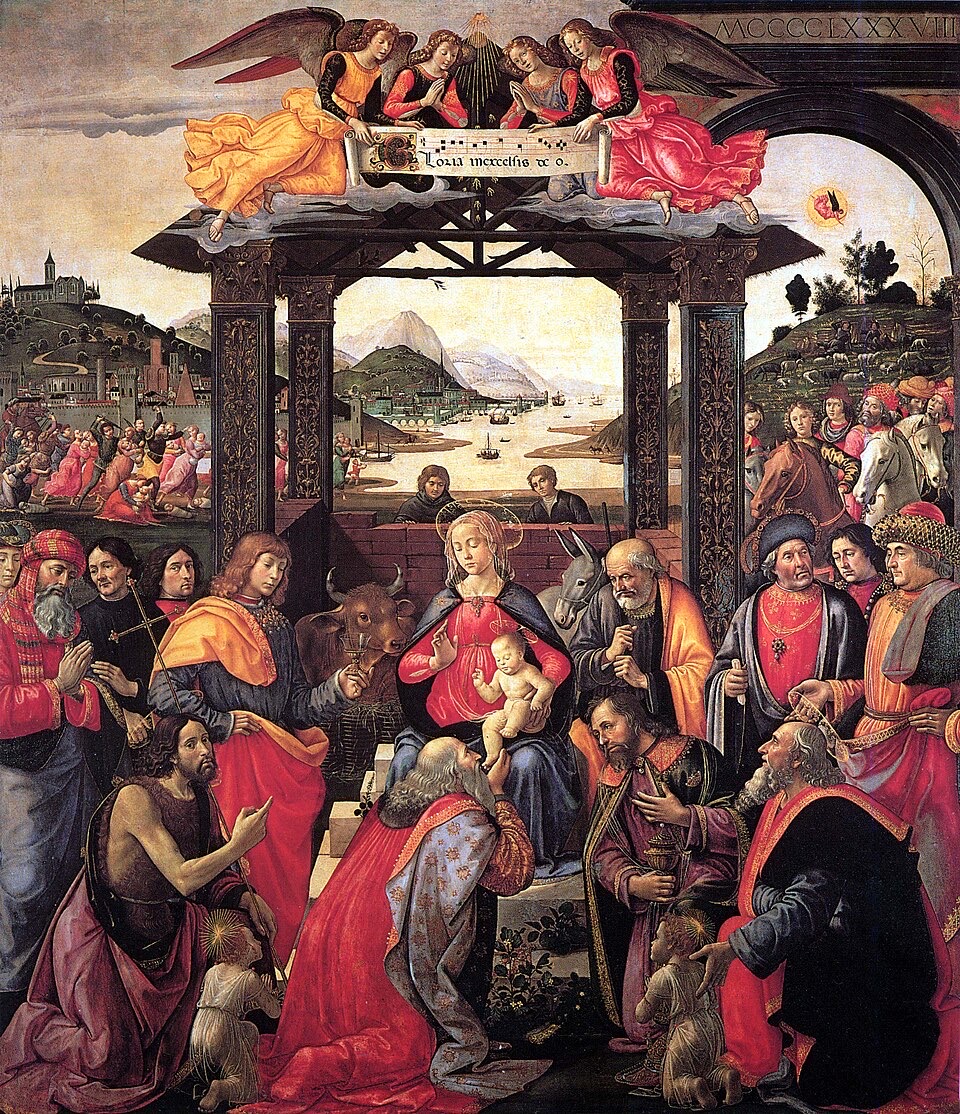
Santa Trinita is one of the Florentine settings named by the National Gallery in connection with Ghirlandaio's extensive fresco cycles. That fact is secure, but detailed chapel interpretation should remain conservative until stronger church-specific and specialist sources are available. [1]
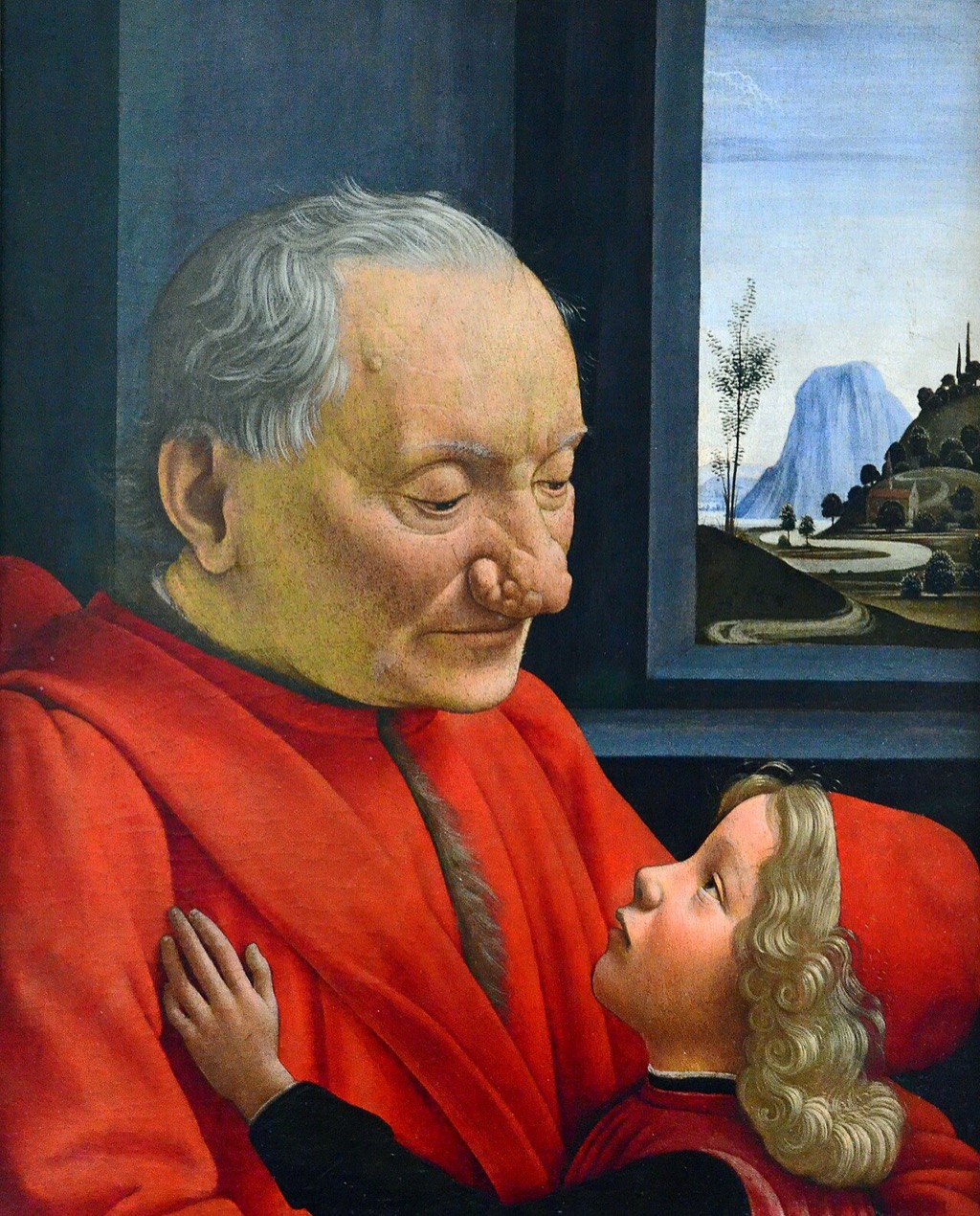
The Sassetti context belongs near Santa Trinita, but it should be handled carefully. The Louvre record for Portrait of an Old Man and a Young Boy notes Francesco Sassetti as one proposed identity for the old man in that portrait, while Sassetti also belongs to the broader patronage world described in the biography. That context does not establish the old man's identity with certainty. [5]
What can be said safely is that Santa Trinita represents the patronage-and-chapel environment in which Ghirlandaio's fresco practice operated. The setting reminds readers that a fresco cycle was not only an image sequence. It was a durable act of religious, family and civic presence inside a church. [1][5]
Santa Maria Novella and the Tornabuoni Context
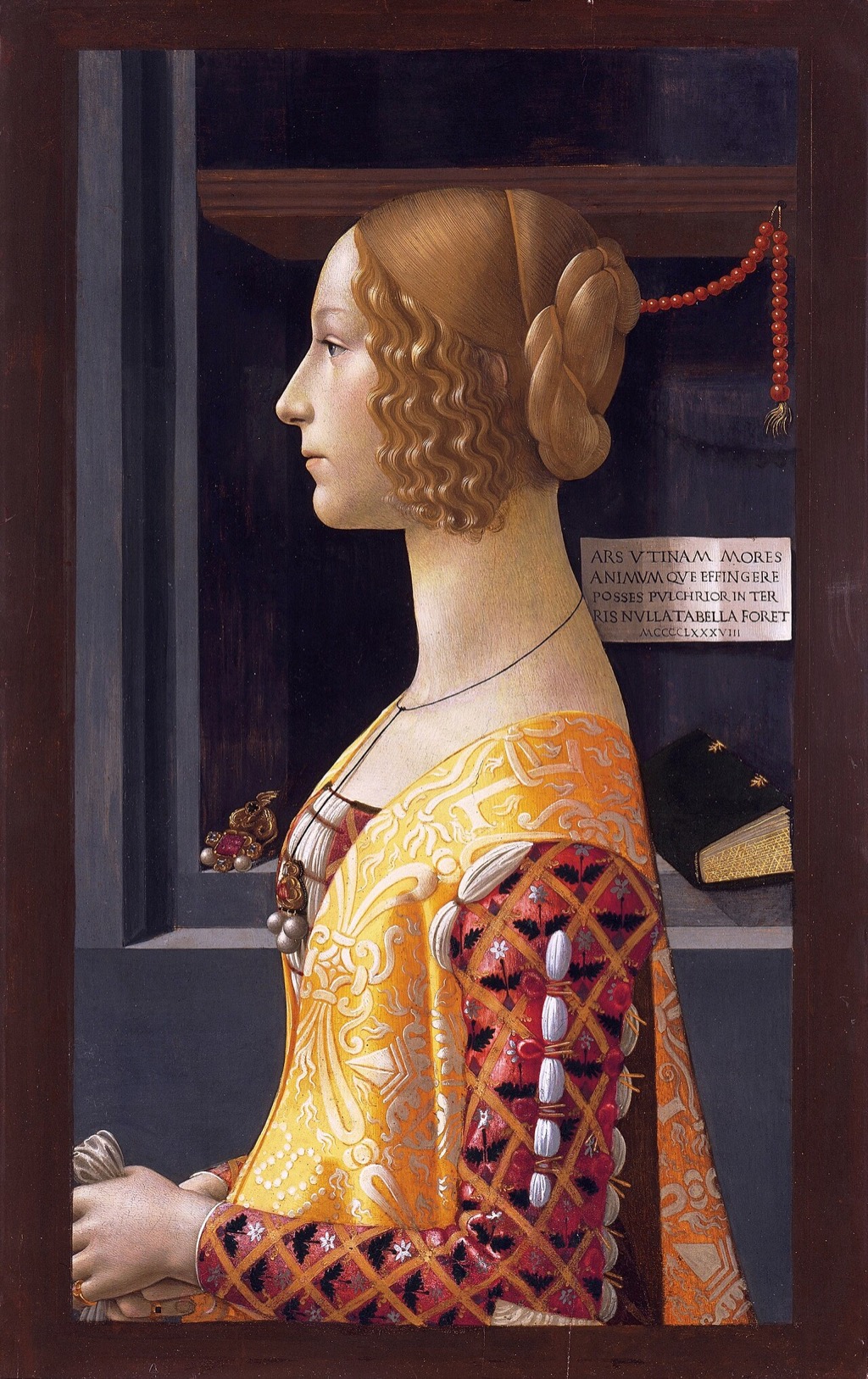
Santa Maria Novella is the other major Florentine setting named by the National Gallery for Ghirlandaio's extensive fresco cycles. It is especially important because the Thyssen-Bornemisza Museum connects Giovanna degli Albizzi Tornabuoni's panel portrait to her appearance in the Tornabuoni Chapel Visitation fresco in Santa Maria Novella. [1][6]
That connection gives the fresco hub one of its strongest source-backed examples. Giovanna's portrait in Madrid and her appearance in the chapel context show how Ghirlandaio's art could move between panel portrait and fresco cycle. The panel isolates a sitter; the chapel places family memory inside sacred narrative. Both forms participate in the same visual culture of patronage, devotion and remembrance. [6]
The Tornabuoni context should remain bounded by the captured source. Thyssen connects Giovanna's panel portrait to the Tornabuoni Chapel Visitation, and that relationship helps explain Ghirlandaio's habit of joining portraiture with sacred setting. A full Tornabuoni Chapel guide would require dedicated church or specialist sources. [6]
Rome and the Sistine Chapel
Ghirlandaio's fresco career extended beyond Florence to Rome. The Vatican Museums describe the Sistine Chapel wall decoration as a fifteenth-century program including Stories of Moses, Stories of Christ and papal portraits. The initial team included Pietro Perugino, Sandro Botticelli, Domenico Ghirlandaio and Cosimo Rosselli, assisted by their workshops. The Vatican dates that fresco campaign to 1481-82. [2]
This Roman commission confirms Ghirlandaio's standing as a painter whose workshop could participate in a major papal project. The Sistine Chapel was not yet defined by Michelangelo's later ceiling in the way many modern visitors imagine it. Before that later transformation, the chapel walls were a coordinated program by several leading painters and their shops. [2]
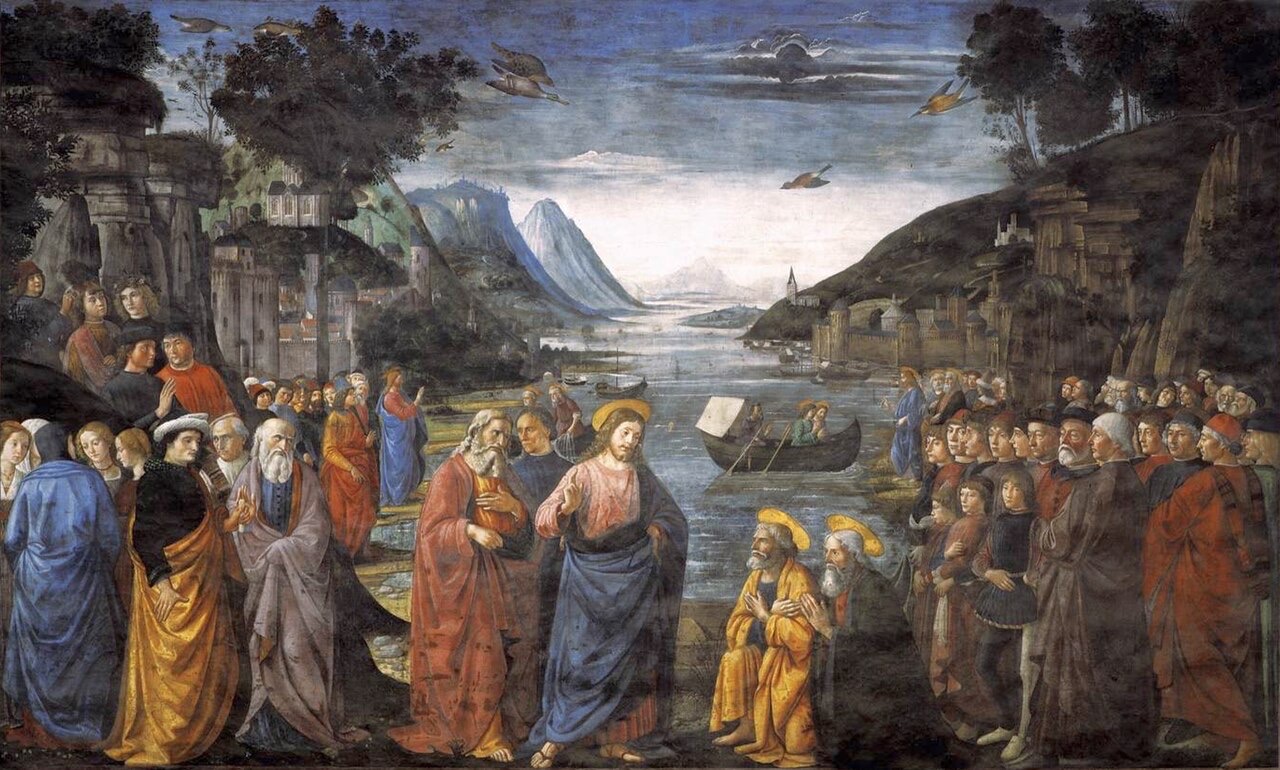
The Vatican Museums' north-wall source identifies the calling or vocation episode within the Christ-story sequence and names Ghirlandaio among the authors of the chapel series. That source supports a concise mention here, while the full account of Vocation of the Apostles belongs in a focused article of its own. In the frescoes overview, the Sistine work functions as part of Ghirlandaio's fresco career rather than as a complete object study. [3]
Contemporary Portraits in Sacred Narrative
One of Ghirlandaio's most important fresco habits was the integration of contemporary presence into sacred narrative. Across the biography and major fresco commissions, religious story meets Florentine social record. The frescoes are valuable because they can preserve faces, clothing, gestures and civic self-presentation inside scenes whose subjects come from scripture or sacred history. [1][6]
The Giovanna evidence gives a concrete example. Thyssen relates her panel portrait to her appearance in the Tornabuoni Chapel Visitation fresco. That relationship shows how portraiture could move between media: a person remembered in a panel could also appear inside a larger chapel cycle. The fresco did not erase identity into religious narrative; it could embed identity within it. [6]
This is one reason Ghirlandaio's frescoes still reward looking. They are not only stories told on walls. They are social documents, patronal statements and devotional images at once. Their clarity is therefore historical as well as compositional: they help the viewer see how late fifteenth-century Florence wanted to remember itself. [1][6]
Frescoes as Social Record
Ghirlandaio's frescoes are often described as lucid, orderly and richly observed because they make social detail legible. Clothing, architecture, ranks of figures and spatial organisation all help viewers understand both the sacred story and the human world brought around it. That balance is central to the artist's reputation. [1]
The social record should still be handled with care. Without chapel-specific sources, the page should avoid naming every portrait or reconstructing every patronage decision. It can explain the principle: Ghirlandaio's fresco practice joined sacred narrative to the contemporary society that commissioned, inhabited and viewed those images. [1][6]
The frescoes connect closely to Ghirlandaio's panel paintings. His panel portraits show individuals and families in concentrated form, while fresco cycles expand that social language across architectural space. The media differ, but the artistic problem is related: how to make people, devotion and memory visible in a stable, readable image. [1][6][7]
Selected Fresco Routes
Santa Maria Novella should be treated as a major Florentine fresco context for Ghirlandaio, especially because the Thyssen Giovanna source connects the sitter to the Tornabuoni Chapel Visitation. A fuller fresco-cycle account should add church or specialist sources before offering a scene-by-scene discussion. [1][6]
Santa Trinita is a major Florentine fresco context because the National Gallery identifies it among Ghirlandaio's extensive fresco-cycle settings. Detailed Sassetti Chapel interpretation remains source-conservative until stronger chapel-specific sources are captured. [1]
The Sistine Chapel should be treated as the main Roman fresco context. Vatican Museums sources support the team-project frame, the 1481-82 date, the wall program of Moses and Christ stories with papal portraits, and Ghirlandaio's presence among the named painters and workshops. [2][3]
Vocation of the Apostles belongs as a focused artwork route rather than as a full subsection of the frescoes overview. The frescoes account can introduce the Sistine setting and explain why the Vocation matters, while the dedicated page carries the object-specific subject, placement and episode discussion. [3]
Frequently Asked Questions
Discussion
Ghirlandaio's frescoes make the Renaissance chapel feel like a meeting place: scripture, patrons, workshop labour, architecture and contemporary Florence all share the wall. [1][6] Read the Wall, Not Just the Scene: Frescoes operate in architectural space. Ask how the story works across a chapel or wall, not only within a single image. [1] Look for Contemporary Presence: Ghirlandaio often makes sacred history feel inhabited by Florentine society. Clothing, faces and architecture may carry social memory as well as visual richness. [1][6] Keep the Sources Honest: Santa Maria Novella, Santa Trinita and the Sistine Chapel are secure contexts, but detailed scene-by-scene claims need stronger chapel-specific or specialist sources. [1][2][6] When you look at a Renaissance fresco cycle, what draws you first: the sacred story, the crowd, the architecture, the portraits or the sense of a whole room being organised by paint?
Reader Insights
Which fresco-cycle context needs more source depth before release?
Does the page keep broad cycle claims separate from individual work interpretation?
Where should the Vocation page remain the focused next step?
Join the Conversation
Share your reading of this page below.
References
- National Gallery, London, "Domenico Ghirlandaio (1449 - 1494)", , accessed 4 August 2026: View Source
- Vatican Museums, "Sistine Chapel", , accessed 4 August 2026: View Source
- Vatican Museums, "Parete Nord", , accessed 4 August 2026: View Source
- National Gallery of Art, "Domenico Ghirlandaio", , accessed 4 August 2026: View Source
- Louvre Collections, "Portrait d'un vieillard et d'un jeune garcon", , accessed 4 August 2026: View Source
- Museo Nacional Thyssen-Bornemisza, "Portrait of Giovanna degli Albizzi Tornabuoni", , accessed 4 August 2026: View Source
- Museo degli Innocenti, "Art", , accessed 4 August 2026: View Source