


 by Tom Gurney
Tom Gurney BSc (Hons) is an art history expert with over 20 years experience
Published on June 19, 2020 / Updated on October 11, 2026
Email: tomgurney1@gmail.com / Phone: +44 7429 011000
Jean-Michel Basquiat biography: introduction
Jean-Michel Basquiat's life moved through Brooklyn, Puerto Rico, downtown New York, European galleries and a rapidly expanding art world. He was born in 1960 and died in 1988, but the short span between those dates contained more than a simple story of early fame. He drew with his mother, made writing in public with Al Diaz, performed with musicians, worked on paper and canvas, travelled for exhibitions and collaborated with artists who had very different methods. The chronology matters because it keeps these experiences in their own time instead of making each one a prediction of the end.[1][2][3]
This biography follows documented events and names the limits of what they can explain. The homepage introduces the art across media; individual work pages examine objects closely. Here the question is how Basquiat's family, schools, friendships, studios, exhibitions and travels formed the settings in which he worked. A painting is never just a diary entry, yet a reliable life chronology can prevent a viewer from placing it in the wrong city, under the wrong dealer or in a collaboration that had not begun.[2][3]
At a glance
- Born22 December 1960, Brooklyn, New York
- ParentsGérard Basquiat, born in Port-au-Prince, Haiti; Matilde Andrades, born in Brooklyn to Puerto Rican parents
- SistersLisane and Jeanine
- Early school and collaboratorCity-as-School, New York; Al Diaz
- First one-artist exhibitionGalleria d'Arte Emilio Mazzoli, Modena, 1981
- First US one-artist exhibitionAnnina Nosei Gallery, New York, March 1982
- Died12 August 1988, New York, aged 27
The Estate chronology is the main dated spine for this table. Exhibition institutions and archives provide independent checks for the public milestones. The family's Puerto Rican and Haitian connections are specific histories, not interchangeable labels.[1][2][3][4]
Explore Basquiat’s career
SAMO with Al Diaz
1977–79First exhibitions
1980–82Work across media
1983–85Later work
1986–88Four stages of the work
SAMO and downtown networks
Basquiat and Al Diaz placed short texts in public space. Follow the shared SAMO project before the gallery paintings.
Canvas, paper and new scale
The 1981 head and Daros Suite sheet show different forms of drawing and painting.
Names, source books and shared surfaces
Works such as In Italian sit alongside the Warhol collaboration without collapsing into one method.
Continuing variation
Late works including Riding with Death ask for individual attention rather than a single closing narrative.
Contents
- Brooklyn, family and early looking
- Puerto Rico and the return to New York
- Al Diaz, SAMO and work in public
- Music, television and the downtown network
- The first public exhibitions, 1980–81
- 1982: New York, Los Angeles and a wider audience
- The notebooks within a travelling career
- 1983: Los Angeles, the Whitney and new subjects
- 1984–85: exhibitions and painting with Warhol
- 1986: exhibitions across several cities
- 1987–88: later work and death
- After 1988: scholarship, exhibitions and reception
Brooklyn, family and early looking
Basquiat was born at Brooklyn Hospital on 22 December 1960. His father, Gérard, had been born in Haiti; his mother, Matilde, in Brooklyn to Puerto Rican parents. He grew up with two younger sisters, Lisane and Jeanine. The Estate places the family first in Park Slope and later in East Flatbush and Boerum Hill. These neighbourhood changes are part of a family chronology, not a map of exactly where a later work was conceived.[1]
Matilde had an interest in fashion and drawing and made drawings with her son. She took him to museums in New York, including the Brooklyn Museum, MoMA and the Metropolitan Museum of Art. His father brought home paper from work; the Estate describes the young Basquiat making drawings inspired by television cartoons. This combination of domestic materials, popular imagery and museum visits is more precise than calling him either an entirely self-taught outsider or a child formed only by high art. The sources establish opportunities to look and make; they do not let us identify the origin of every later image.[1]
The Brooklyn Museum adds a specific fact to that account: Matilde enrolled him as a Junior Member when he was six. The detail is useful because it identifies an actual institutional relationship rather than merely assuming that he must have encountered art in museums. Membership did not make him a student in a formal art course, and it should not be used to invent lessons or teachers. It shows a parent creating repeated opportunities for a child to see art while his own drawing continued at home.[17]
The museum archives also identify Basquiat's surviving membership card, which the Estate lent for the 2018 One Basquiat exhibition. The card confirms membership as a recorded relationship, while the museum's account of the programme describes opportunities open to Junior Members generally. It does not establish which workshops Basquiat attended. That distinction keeps the childhood story concrete without adding an undocumented education.[17]
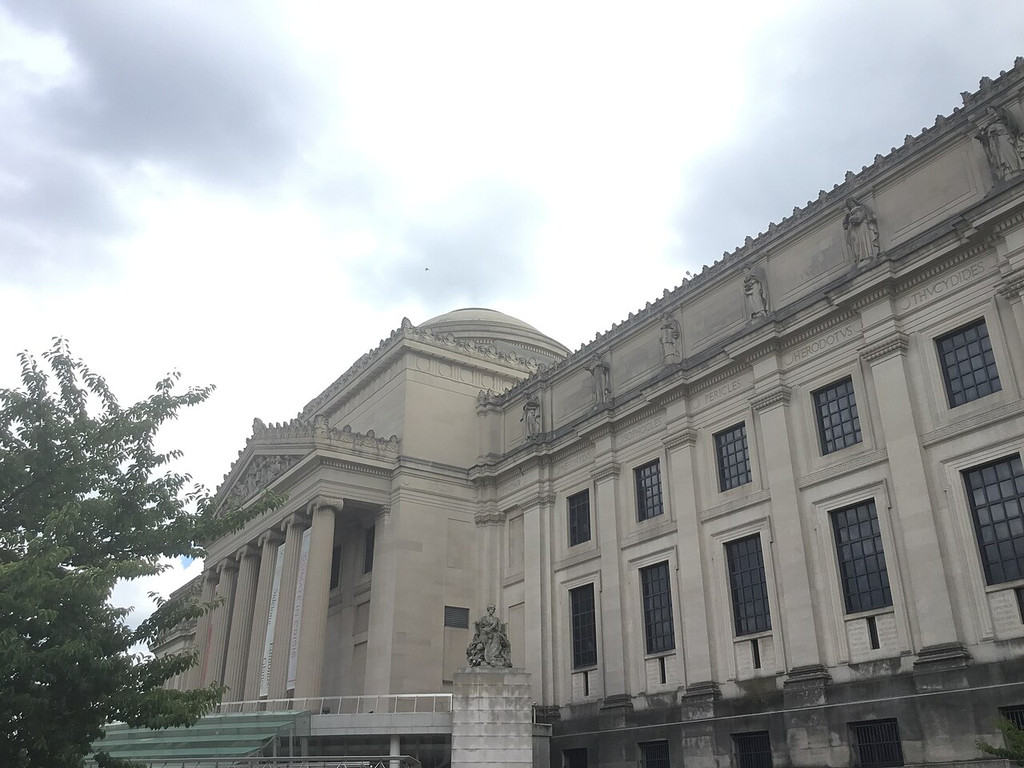
In May 1969 he was hit by a car while playing in the street and was hospitalised. During his recovery, his mother gave him a copy of Gray's Anatomy. The Estate links that book to his later anatomical interests and to the name of Gray, the band he helped form in 1979. The dates clarify a small but common error: born in December 1960, Basquiat was eight during the May 1969 accident. The Estate's own page also calls him seven in a later sentence; the dated information is the sounder guide.[1]
The story of the anatomy book is important without becoming a magic key. Body parts, medical terms and diagram-like forms later entered works made in a world full of other books and images. The Barbican's exhibition guide documents Basquiat's wider use of art histories, symbol books, film and recorded music. The words and anatomy guide tests those sources against particular works. The biography can state the gift and its documented afterlife while leaving each painting to be read on its own support and in its own date.[1][5]
Gérard and Matilde separated in 1969, and the children lived with their father. Their family life changed while Basquiat was still drawing and visiting cultural spaces in the city. A precise biography can record both without treating the separation as a predetermined cause of particular pictures. Claims about his childhood command of several languages or the publication of a children's book need firmer documentation before they can add to this account.[1]
Puerto Rico and the return to New York
Gérard moved with his three children to Puerto Rico in 1974 for work. The family lived near San Juan until returning to Brooklyn in 1976. This two-year move is frequently left out of short English biographies, although it belongs to the household's story and to Basquiat's adolescent experience. It should be neither ignored nor turned into a claim that a particular later word or colour must have come from Puerto Rico.[2]
After the return, Basquiat attended Edward R. Murrow High School and then City-as-School, an alternative public school in Manhattan. There he met Al Diaz. The Estate describes Diaz as an early friend and artistic collaborator, and the partnership became central to the SAMO project. Later work and later fame can make the school period look inevitable in retrospect, but the documented point is more concrete: two young people met in a particular educational and city setting and began making language together.[2]
The family's places also resist an overly neat identity narrative. Basquiat was a Brooklyn-born artist with a Haitian-born father and a mother from a Puerto Rican family. He spent time in Puerto Rico, then worked among New York communities whose art and music crossed neighbourhood lines. These are connected facts, not a licence to call one place the sole source of his visual language. Specific cultural references should be checked work by work rather than inferred from ancestry alone.[1][2]
Al Diaz, SAMO and work in public
Basquiat and Diaz developed SAMO as a shared character and written project. Short statements appeared on subway and downtown city surfaces in the late 1970s. The Estate's chronology includes later recollections from Diaz as well as dated events; the two kinds of evidence should remain distinct. The writings themselves were deliberately public and passed among readers who might encounter them without an artist's name or a gallery label.[2][5]
The project was not merely an early signature that Basquiat later enlarged on canvas. It treated a sentence as something that could inhabit the city, advertise an idea, challenge a convention and implicate a passer-by. That method remained relevant to his later word-image work, but the relation is one of transformation. A written phrase in a notebook or painting has a different support, pace of reading and audience. The dedicated SAMO and the Street page examines the collaboration and its visual language without reproducing protected SAMO text.[2][5][6]
The Estate dates the end of the Diaz collaboration to 1979. Stories about how the two felt afterward depend heavily on later testimony; this biography need not settle a private dispute to establish that SAMO had more than one maker. Basquiat's later celebrity can make the shared work look like a solo prelude, but Diaz was part of its formation. To follow the project accurately means preserving that partnership and the public conditions in which the writings first appeared.[2]
Basquiat left home in 1978 and spent time with friends while selling hand-painted postcards and shirts. The Estate records an early encounter with Andy Warhol in a SoHo restaurant when Basquiat approached him with postcards. This was not the beginning of the 1984–85 joint painting project. The later collaboration had several intervening years of independent work, exhibitions and changing relationships. Keeping the 1978 encounter at its proper date helps separate an appealing origin anecdote from the actual production history.[2][7]
Music, television and the downtown network
Basquiat's downtown life included musicians, filmmakers and artists. He participated in Gray, a band formed in 1979 with a changing group of collaborators, and was involved in the world of Glenn O'Brien's TV Party. The Barbican's exhibition account places music, performance and film beside painting, drawing and copied imagery. The point is not that Basquiat temporarily “tried” music before finding his true medium. These activities overlapped and gave him other ways to organise sound, text and presence.[2][5]
The film later released as Downtown 81 was shot around 1980–81 with Basquiat in the lead role. The Barbican notes that it was not released until 2000 and that the original dialogue audio was lost, so Saul Williams later dubbed Basquiat's voice. That production and release gap is worth stating when the film is cited as evidence of the early scene. It is a filmed work rooted in that period, yet the version viewers usually encounter was assembled for a much later release.[5]
Basquiat also took part in the visual and social exchange around hip-hop. The Barbican traces his connection to Rammellzee and describes Beat Bop, a 1983 record produced by Basquiat with cover art by him and vocals by Rammellzee and K-Rob. It was not a solo Basquiat album, and its production does not mean that every later painting was structured like a rap track. The music and boxing guide follows his named musicians and performers across works without turning the biography into a sequence of musical analogies.[5]
Keith Haring, Diego Cortez, Fred Braithwaite, Glenn O'Brien and others appear in accounts of this network. Such a list can become a celebrity roll call if the relationships are not specified. Cortez later curated New York/New Wave; Haring showed work in the same downtown circles; O'Brien made a television platform and wrote the script for Downtown 81. Each connection affected a different activity. Basquiat's career emerged within this exchange of people and formats, even as his paintings developed a distinct visual language.[2][5]
The first public exhibitions, 1980–81
The Times Square Show in 1980 was a group exhibition organised by Colab and Fashion Moda. The Estate records Basquiat's SAMO installation there. The event brought together artists associated with downtown and uptown scenes rather than presenting one coherent movement. It placed his writing before a wider art public but did not yet make SAMO equivalent to his later paintings under his own name.[3]
In February 1981 Diego Cortez's New York/New Wave opened at P.S.1 in Long Island City. Basquiat installed more than twenty paintings and drawings, according to the Estate. MoMA PS1's later archive checklist adds a remarkable detail: he wrote pencil labels for the exhibition, and the institution describes it as his first museum-context presentation under his own name rather than SAMO. The labels are a small but telling piece of evidence. Writing did not vanish when the work entered the gallery; he used it in the exhibition's own apparatus.[3][4]
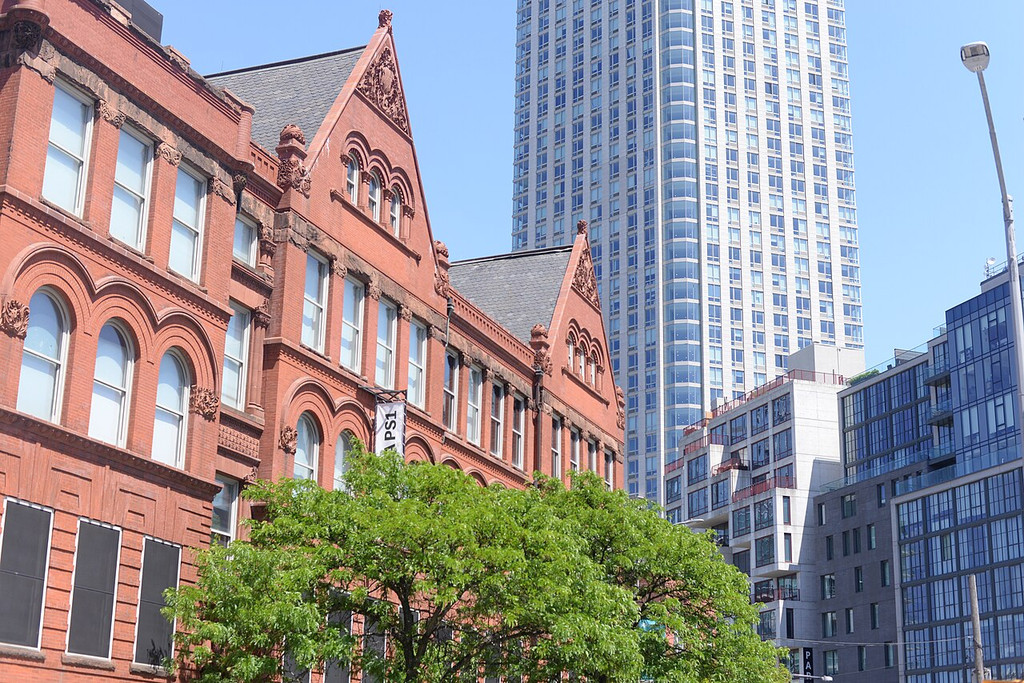
That show attracted attention from dealers, including Emilio Mazzoli, Bruno Bischofberger and Annina Nosei. It is tempting to describe it as the moment Basquiat was “discovered,” but the term makes earlier work and networks disappear. More accurately, it was a large exhibition in which existing activity became newly visible to a group of art institutions and dealers. A paintings guide can follow what changed in scale and material; the life chronology records the new opportunities without pretending they arose from nothing.[3][4][5]
Basquiat travelled to Modena in May 1981 for his first one-artist exhibition at the Galleria d'Arte Emilio Mazzoli. The work was shown under the SAMO name. Later that year he participated in Public Address at Annina Nosei Gallery in New York. Nosei offered him space in the gallery basement to work because he lacked a studio of his own. That basement was a studio arrangement, not the site of his first one-artist exhibition. In March 1982 the Annina Nosei Gallery presented his first US solo.[3]
Exact months matter because the career was moving quickly: a group show in 1980, museum-context group exhibition and European solo in 1981, then the US solo in 1982. This sequence shows how a network of alternative spaces, international galleries and New York dealers formed around work that was already changing in size and form. The events were related, but each offered a different public and kind of attention.[3][4]
The word “basement” has acquired a misleading weight in retellings of this period. Nosei's offer gave Basquiat somewhere to work at a time when studio space was a practical problem. That fact can help explain how larger paintings became possible without suggesting that the room alone created them. The gallery's exhibition programme, the artist's existing contacts and the work made in the studio belong to different parts of the story. The 1981 Modena solo and 1982 New York solo must remain separate events, even when a brief biography has room for only a few dates.[3]
1982: New York, Los Angeles and a wider audience
The 1982 Annina Nosei show included works such as Arroz con Pollo, Self-Portrait and Untitled (Per Capita), according to the Estate chronology. In April Basquiat travelled to Los Angeles for an exhibition at Larry Gagosian Gallery. He also took part in exhibitions abroad, and the network of dealers and collectors around his work expanded. A biography should name those settings, while object pages confirm exactly which picture appeared where. Similar or repeated titles make memory alone a poor guide to the works.[3]
Several 1982 paintings now often stand for Basquiat's breakthrough, but they address different subjects. Obnoxious Liberals uses words and figures to stage an argument about power; Slave Auction addresses the slave trade; Untitled (Boxer) brings an upright figure into monumental space. Their later museum or sale histories are not their original circumstances. Placed in a year of rapid production and exhibition, each work still needs a close reading grounded in its own sources.[8][9][10]
Basquiat's first dealer relationships also require care. Nosei provided a studio and a New York exhibition platform, while Bischofberger would become important in Europe and in later collaboration. Describing either as the single person who “made” the career would erase the artist's own work and the earlier exhibition network. It would also miss how the art world could simultaneously offer visibility and frame a young Black artist through its own expectations.[3][11]
The notebooks within a travelling career
The move between studios, galleries and cities did not make portable work incidental. Basquiat kept notebooks in which words, small drawings, lists and visual fragments could be developed on a different scale from a large canvas. Brooklyn Museum's exhibition research describes the notebooks as a substantial part of his practice and says that the total number he made is unknown. The museum displayed eight notebooks from one collection, not a complete surviving set. Their existence gives a more continuous view of making than an exhibition calendar alone can provide.[6]
The notebook texts were not simply captions for paintings waiting to be finished. Brooklyn Museum describes poems, wordplay, street observations and lists among their contents. It notes a repeated working format—predominantly block-capital black ink on right-hand pages—in the examples it studied. Those facts point to attention given to placement and sequence even in a portable object. They also help explain why writing in the paintings should be taken seriously as material, rather than dismissed as decoration left over from the street.[6]
There is a limit to what a notebook can prove about a particular painting. A similar word or figure may appear across media, but one entry does not necessarily reveal an exact preparatory chain. The drawings guide treats paper works as objects with their own purposes, while Words, Anatomy and Symbols follows documented recurring procedures. In the biography, the notebooks remind us that studio time was not exhausted by the large paintings that happened to be shown or sold in a given year.[6]
1983: Los Angeles, the Whitney and new subjects
In March 1983 Basquiat showed again at the Larry Gagosian Gallery in Los Angeles. The Estate lists works with subjects including boxers, musicians and Hollywood films. In the same month he was included in the Whitney Biennial. This exhibition record matters because it places several now familiar paintings within a specific year and public setting, rather than describing them as products of one vague “early 1980s” moment.[3]
Hollywood Africans was made in Los Angeles and includes Basquiat with Toxic and Rammellzee. The Whitney identifies written references to restricted roles offered to Black performers in film. Horn Players places Charlie Parker and Dizzy Gillespie across three canvases, according to The Broad. These works share a year and a concern with named Black cultural figures, but their locations, materials and forms are different. The biography can point to both without reducing either to a direct illustration of Basquiat's personal mood at the time.[12][13]
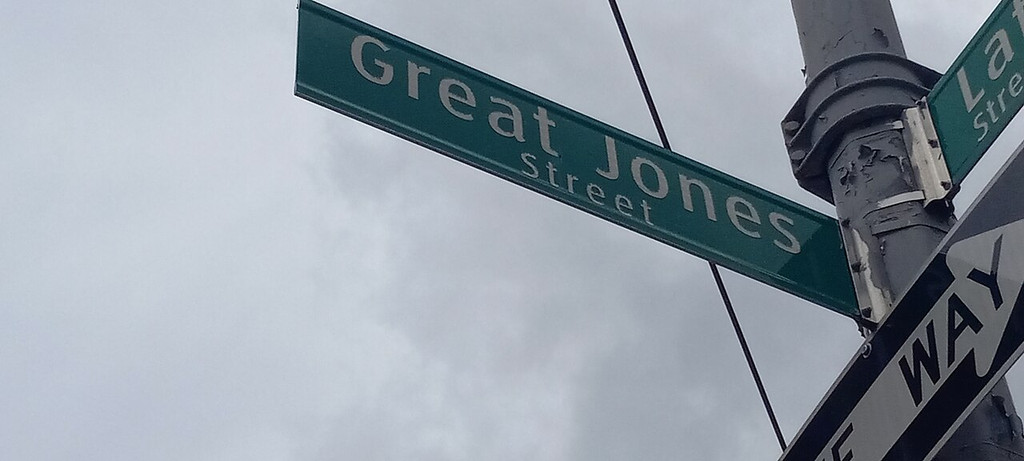
Basquiat travelled widely during the year and moved into 57 Great Jones Street in New York in August, leasing the building from Warhol, according to the Estate. Later in 1983 he, Warhol and Francesco Clemente began collaborative paintings arranged through Bruno Bischofberger. That three-person phase preceded the larger body of Basquiat–Warhol two-person work. This is why the familiar story of a sudden Warhol partnership beginning with a restaurant meeting is chronologically misleading.[3][7]
The death of artist Michael Stewart after being detained by New York transit police in 1983 deeply affected Basquiat, according to testimony presented in the Estate chronology and to the Guggenheim's later exhibition. Defacement (The Death of Michael Stewart) requires its own careful history of the event, work and later display. The biography should register that the event belonged to Basquiat's life and community without claiming that every subsequent police image came from one episode.[3][14]
1984–85: exhibitions and painting with Warhol
Basquiat spent time in Los Angeles and Hawaii across 1983–84 and returned to New York for a one-artist show at Mary Boone Gallery in May 1984. The Estate's dated record also places him in a MoMA exhibition that year. These exhibitions were part of a widening, international career, but contemporary reviews did not speak in a single voice. The Estate reproduces criticism that was admiring, sceptical and sometimes constraining in its language about the artist's youth and background.[3]
The Warhol collaboration is often described in terms of a famous friendship, yet it was also a body of objects made through repeated exchange. Fondation Louis Vuitton estimates around 160 joint paintings from 1984–85 and distinguishes them from the earlier group with Clemente. Its 2023 exhibition showed joint canvases, separate works and documents. The Andy Warhol Museum has exhibited paintings, sculptures and studio material from the relationship. Those institutions support a study of the methods and records of collaboration, not a story in which one artist merely assisted the other.[7][15]
Warhol might begin with a logo or a recognisable image, with Basquiat adding or changing it; the process could continue back and forth. That account comes from the Fondation's exhibition materials and should not be assumed to describe every canvas in the same sequence. The Basquiat and Andy Warhol page separates a joint work from Dos Cabezas, Basquiat's earlier portrait of the two artists, and examines the 1985 Tony Shafrazi exhibition on its own terms.[7][15]
In 1985 a New York Times Magazine cover and article made Basquiat's fame itself a public subject. The Estate chronology places it in February; a Mary Boone exhibition followed in March, and sixteen Basquiat–Warhol paintings were shown at Tony Shafrazi Gallery in September. Publicity and critical reaction were part of the career, but it is too simple to say fame automatically destroyed the work or that success made every later painting a self-commentary. The paintings and exhibitions continued to have particular subjects and histories.[3]
The chronology's account of contemporary reviews reveals disagreement rather than an uncontested verdict. Some writers attended to colour and composition; others framed Basquiat through age, presumed lack of training or a label of rawness. A review is evidence of how an exhibition was received by one critic at one moment. It is not an inventory of the pictures, nor a neutral measurement of the artist's ability. Later museum research can challenge the terms of those early responses by recovering notebooks, source books and the actual work of collaboration.[3][5][6]
The Warhol Museum's 2015 large-print exhibition text identifies the three-person series as fifteen paintings made by passing partly finished canvases among the studios. It also records the later two-person exhibition in 1985 and its difficult reception. That material gives the collaborations a physical and institutional history: separate artists added to the same surfaces, rather than simply posing together as famous friends. The Warhol Museum's later collection exhibition has continued to examine paintings, sculpture and studio records from their relationship.[7][15][18]
1986: exhibitions across several cities
In 1986 Basquiat showed in Los Angeles and Atlanta and travelled to Côte d'Ivoire for an exhibition in Abidjan, according to the Estate chronology. In November the Kestner-Gesellschaft in Hannover opened a survey of more than sixty paintings and drawings. This happened before Warhol's death and before the 1988 shows. The survey presented a body of work substantial enough to be reconsidered across several years and media while the artist was still making new work.[3]
The Abidjan trip should be described as a documented exhibition and visit, not as a simple “return” based on his father's Haitian background. Côte d'Ivoire and Haiti are different places with different histories. The trip is part of Basquiat's international career and his own choices, but a broad claim about what he felt there would require stronger personal evidence than the exhibition chronology supplies.[3]
The year's activities also show why a New York-centred timeline can be misleading. Basquiat's work was circulating in Europe, the United States and West Africa while dealer relationships changed. An exhibition at a specific institution is evidence of public presentation; it is not in itself proof of a stable career condition or a fixed reception among all critics. The biography keeps these events visible without forcing them into a simple upward or downward graph.[3]
1987–88: later work and death
Basquiat had a Paris exhibition in January 1987. Warhol died on 22 February, and the Estate records Basquiat making Gravestone as a memorial. Friends later described the loss as profound. Their testimony is relevant to the relationship, but it should not be made into an assertion that Basquiat's own death became inevitable. That fatalistic idea appears in some later recollection; it is a judgement made after the event, not a fact established by the artwork or chronology.[3]
He continued to make and exhibit work. In 1988 shows in Paris and Düsseldorf preceded a New York exhibition at Vrej Baghoomian Gallery in April. The Estate lists Riding with Death among paintings in the New York show. Fondation Louis Vuitton's later retrospective also singled it out. These records give the late painting a living exhibition context. Its imagery may invite questions about mortality, but it was a work made, displayed and seen before August 1988.[3][16]
Basquiat died on 12 August 1988 in his Great Jones Street loft at age 27. The Estate chronology cites the medical examiner's finding of acute mixed drug intoxication. The fact should be stated accurately and without euphemism, while recognising that it does not explain the value or meaning of his art. Accounts that make his death the inevitable outcome of Warhol's loss impose a psychological sequence that the exhibition record cannot establish. The work's history remains larger than the end of its maker's life.[3]
The career had lasted less than a decade from the first public exhibitions, yet it produced a wide range of objects. Fondation Louis Vuitton's 2018 retrospective presented 120 works; the number belongs to that exhibition, not to a definitive total. Questions of complete output are difficult because works on paper, editions, collaborations, studio objects and uncertain titles need different kinds of inventory. A life story should not casually convert a museum exhibition count into a catalogue raisonné.[16]
After 1988: scholarship, exhibitions and reception
Posthumous exhibitions have changed which parts of Basquiat's practice receive attention. Brooklyn Museum's The Unknown Notebooks treated writing and notebook pages as significant work. The Barbican's Boom for Real placed paintings beside film, music, television, source books and downtown networks. Fondation Louis Vuitton devoted separate exhibitions to the broad career and to the Warhol collaboration. These projects help recover activities obscured when attention falls only on a few expensive canvases.[5][6][7][16]
Two 2026 museum projects show that this process is continuing in different directions. Louisiana Museum of Modern Art's Headstrong concentrated on oilstick heads on paper, chiefly from 1981–83, many of which Basquiat kept and which were rarely seen publicly during his life. The museum presents them as independent drawings, not preparatory steps to paintings. Pérez Art Museum Miami's Figures, Signs, Symbols instead brings together nine paintings and a sculpture from one private collection, placing familiar works such as In Italian and Pez Dispenser in a focused display. These are curatorial selections, not rival inventories of the full career. The contrast makes visible how much a biography of the artist depends on which objects a public has had the chance to encounter.[19][20]
Market prices and licensed products are part of later reception, but they should not be confused with artistic evidence. A reproduction can make a crown widely familiar while concealing a painting's size, support, neighbouring words or exact date. An auction record can establish an object's provenance and material details even though its headline price says little about the work's original purpose. The paintings, drawings and prints guides follow those distinctions.[8][16]
The chronology leaves questions that biography alone cannot answer. Why does a particular word recur? How does a crown act beside one figure but not another? What did the change from paper to canvas or from a solo painting to a collaboration allow? The dated life provides context for those questions. Museum records, interviews and close attention to individual objects are needed to answer them. Basquiat's work becomes easier to place when the sequence is reliable, without turning every painting into a clue to an already decided story.[3][4][5]
The life also shows continuity across apparent breaks. Writing was present in the SAMO project, the P.S.1 exhibition labels, notebooks and major paintings, though it did different work in each place. Music entered both social activity and pictured subjects. Drawing continued beside canvas painting. Returning to these threads across the dates gives a fuller biography than a sequence of firsts, famous friendships and sales, while leaving room for the individual works to remain distinct.[2][4][5][6]
Explore the Basquiat guide
Basquiat artworks in this guide
| Name | Date | Medium |
|---|---|---|
| Bird on Money | 1981 | Acrylic and oil on canvas |
| Boy and Dog in a Johnnypump | 1982 | Acrylic, oil stick and spray paint on canvas |
| Charles the First | 1982 | Acrylic and oil pastel on three canvas panels |
| Defacement (The Death of Michael Stewart) | 1983 | Acrylic and marker on wall-derived support (support records differ) |
| Dos Cabezas | 1982 | Acrylic and oilstick on canvas with wood supports |
| Dustheads | 1982 | Acrylic, oilstick, spray enamel and metallic paint on canvas |
| Eyes and Eggs | 1983 | Acrylic, oilstick and paper collage on hinged cotton drop cloth |
| Flexible | 1984 | Acrylic and oilstick on wood |
| God, Law | 1981 | Drawing; precise materials not established |
| Hollywood Africans | 1983 | Acrylic and oil stick on canvas |
| Horn Players | 1983 | Acrylic and oil stick on three canvas panels mounted on wood |
| In Italian | 1983 | Acrylic, oil stick and marker on canvas mounted on wood |
| Irony of a Negro Policeman | 1981 | Acrylic and oilstick on wood |
| King Alphonso | 1982–83 | Works on paper; suite materials vary by record |
| Obnoxious Liberals | 1982 | Acrylic, oilstick and spray paint on canvas |
| Pez Dispenser | 1984 | Acrylic and oil stick on canvas |
| Riding with Death | 1988 | Acrylic and oil crayon on canvas |
| Self-Portrait with Suzanne | 1982 | Oil pastel on paper (Paris dossier) |
| Self-Portrait | 1984 | Acrylic and oil stick on paper mounted on canvas |
| Untitled (Head), often called Skull | 1981 | Acrylic and oilstick on canvas |
| Slave Auction | 1982 | Crumpled-paper collage, oil pastel and acrylic on canvas |
| Untitled (Sugar Ray Robinson) | 1982 | Acrylic and oil pastel/oil stick on canvas (record terms differ) |
| Untitled (Titian) | 1982 | Oil stick on canvas |
| Trumpet | 1984 | Acrylic and oil paintstick on canvas |
| Tuxedo | 1982–83 | Silkscreen on canvas, edition of ten |
| Untitled (Rotterdam figure) | 1982 | Acrylic paint and oil stick on canvas |
| Untitled (Crown) | 1982 | Acrylic, ink and paper collage on paper |
| Untitled (Boxer) | 1982 | Acrylic and oil paintstick on linen |
| Untitled (Fallen Angel) | 1981 | Acrylic and oil pastel on canvas; aerosol appears in a second record |
Frequently Asked Questions
Basquiat was born at Brooklyn Hospital on 22 December 1960. His father, Gérard, had been born in Haiti; his mother, Matilde, in Brooklyn to Puerto Rican parents. He grew up with two younger sisters, Lisane and Jeanine. The Estate places the family first in Park Slope and later in East Flatbush and Boerum Hill. These neighbourhood changes are part of a family chronology, not a map of exactly where a later work was conceived.[1]
Gérard moved with his three children to Puerto Rico in 1974 for work. The family lived near San Juan until returning to Brooklyn in 1976. This two-year move is frequently left out of short English biographies, although it belongs to the household's story and to Basquiat's adolescent experience. It should be neither ignored nor turned into a claim that a particular later word or colour must have come from Puerto Rico.[2]
Basquiat and Diaz developed SAMO as a shared character and written project. Short statements appeared on subway and downtown city surfaces in the late 1970s. The Estate's chronology includes later recollections from Diaz as well as dated events; the two kinds of evidence should remain distinct. The writings themselves were deliberately public and passed among readers who might encounter them without an artist's name or a gallery label.[2][5]
In February 1981 Diego Cortez's New York/New Wave opened at P.S.1 in Long Island City. Basquiat installed more than twenty paintings and drawings, according to the Estate. MoMA PS1's later archive checklist adds a remarkable detail: he wrote pencil labels for the exhibition, and the institution describes it as his first museum-context presentation under his own name rather than SAMO. The labels are a small but telling piece of evidence. Writing did not vanish when the work entered the gallery; he used it in the exhibition's own apparatus.[3][4]
Basquiat travelled widely during the year and moved into 57 Great Jones Street in New York in August, leasing the building from Warhol, according to the Estate. Later in 1983 he, Warhol and Francesco Clemente began collaborative paintings arranged through Bruno Bischofberger. That three-person phase preceded the larger body of Basquiat–Warhol two-person work. This is why the familiar story of a sudden Warhol partnership beginning with a restaurant meeting is chronologically misleading.[3][7]
Basquiat died on 12 August 1988 in his Great Jones Street loft at age 27. The Estate chronology cites the medical examiner's finding of acute mixed drug intoxication. The fact should be stated accurately and without euphemism, while recognising that it does not explain the value or meaning of his art. Accounts that make his death the inevitable outcome of Warhol's loss impose a psychological sequence that the exhibition record cannot establish. The work's history remains larger than the end of its maker's life.[3]
Discussion
Which documented detail changes how you read Jean-Michel Basquiat biography?
Reader Insights
Start with a visible mark, material or word.
Check date, support and collection before comparing images.
Which reading still needs an object-specific source?
Join the Conversation
Share an observation grounded in the work or its documented history.
References and further reading
- Estate of Jean-Michel Basquiat, 1960s chronology, birth, family, early drawing, museums, accident and Gray's Anatomy.
- Estate of Jean-Michel Basquiat, 1970s chronology, Puerto Rico, City-as-School, Al Diaz, SAMO, postcards, Warhol encounter and Gray.
- Estate of Jean-Michel Basquiat, 1980–84 chronology and 1984–88 continuation, exhibition and life dates. Personal recollections embedded there are attributed testimony, not independent proof of cause.
- MoMA PS1, A Bit of Matter: The MoMA PS1 Archives 1976–2000 checklist, p. 6, New York/New Wave installation, handwritten labels and first museum-context display under Basquiat's own name.
- Barbican, Basquiat: Boom for Real gallery guide, sections on SAMO, Downtown 81, Beat Bop, jazz, source books and films.
- Brooklyn Museum, Basquiat: The Unknown Notebooks press release, on notebook language and its relation to the broader practice.
- Fondation Louis Vuitton, Basquiat × Warhol: Painting Four Hands, 1984–85 joint work and preceding Clemente series; Andy Warhol Museum, Warhol and Basquiat in Focus, collection and archive exhibition.
- The Broad, Obnoxious Liberals collection record.
- Centre Pompidou, Slave Auction collection record; Sophie Duplaix, curatorial account.
- Christie's, Untitled (Boxer) lot record, dated object and medium.
- Estate of Jean-Michel Basquiat, 1980s chronology; Fondation Louis Vuitton, 2018 retrospective, historical exhibition framing.
- Whitney Museum of American Art, Hollywood Africans record, object and Los Angeles context.
- The Broad, Horn Players record, date, three-part support and named musicians.
- Guggenheim, Basquiat's “Defacement”: The Untold Story exhibition release, Michael Stewart context, work and later display.
- Andy Warhol Museum, Warhol and Basquiat in Focus, archival and collection treatment of the friendship and joint work.
- Fondation Louis Vuitton, 2018 Basquiat retrospective account, later works and exhibition scope; Estate, 1988 chronology.
- Brooklyn Museum, One Basquiat press release, which records Matilde enrolling him as a Junior Member at six; Brooklyn Museum Archives, Junior Membership programme record, which identifies his surviving card and describes the programme generally.
- Andy Warhol Museum, 2015 large-print exhibition text, pp. 72–73, on the three-person collaboration and 1985 exhibition.
- Louisiana Museum of Modern Art, Basquiat – Headstrong exhibition account, January–May 2026, works on paper and the museum's account of their earlier limited visibility.
- Pérez Art Museum Miami, Basquiat: Figures, Signs, Symbols press account, 2026–27 scope, lending collection and named paintings.
