


 by Tom Gurney
Tom Gurney BSc (Hons) is an art history expert with over 20 years experience
Published on October 11, 2026 / Updated on October 11, 2026
Email: tomgurney1@gmail.com / Phone: +44 7429 011000
Music and boxing in Basquiat: performers, fighters and public heroes: introduction
Jean-Michel Basquiat made work about musicians and boxers, and he also made music himself. A painting can name Charlie Parker or Sugar Ray Robinson; another can show a fighter without naming him. These choices matter. A named performer brings a specific history to the canvas, while an anonymous raised-arm figure can engage a wider story of visibility, race and public admiration. Music and boxing meet in Basquiat's work because both offered highly visible Black figures whose skill and fame existed alongside unequal social conditions. The comparison is strongest when each painting keeps its own subject, date and form, rather than treating every horn as jazz improvisation or every raised arm as a documented win.[1][2][3]
Where to start. The Estate's chronology places Basquiat in the experimental band Gray and later records his work on a rap record. The Broad identifies Charlie Parker and Dizzy Gillespie in Horn Players (1983). Fondation Louis Vuitton groups several Parker paintings and, separately, works naming Sugar Ray Robinson, Joe Louis and Cassius Clay. Guggenheim Bilbao interprets a Rotterdam-owned Untitled (1982) as an anonymous boxer. These sources support a recurring interest across media and subjects, not a single code by which a whole painting can be translated into a song or sports report.[1][2][3][4]
Contents
- Basquiat as a maker of sound
- Charlie Parker as a named subject
- Other musicians and the problem of a single genre
- Fighters with names
- The anonymous raised-arm figures
- Why music and boxing belong together
- A route through the works
Basquiat as a maker of sound
The Basquiat Estate dates the formation of a group that became Gray to 1979 and describes Basquiat playing clarinet and synthesizer. Its chronology says he left the group in 1980. This was one part of a New York scene in which musicians, filmmakers and artists met in clubs, lofts and alternative exhibition spaces. Basquiat's own participation is important context for paintings about music; it should not be used to assert that every canvas was composed while a specific track played. The band was a collaborative sound project, not a hidden soundtrack with which the paintings must be synchronized.[1]
The Estate also records Basquiat's involvement in a rap record with artists including Rammellzee and others. Schirn Frankfurt's Boom for Real guide identifies the 1983 record Beat Bop, with Rammellzee and K-Rob on vocals and Basquiat connected to production and sleeve art. These source details help separate the music object from the paintings. A sleeve, a performance, a vinyl record and a canvas have different authorship and media, even when Basquiat moved among them. The record makes him a participant in sound culture, rather than merely a painter who listened to records.[1][5]
His listening was broad. The Barbican's exhibition guide recalls a studio full of sound and a substantial record collection, with particular attention to jazz and blues. Some accounts compare his brushwork with bebop's movement and rhythm. That can be an illuminating formal analogy if it stays an analogy. It is not evidence that a given painting follows a song's chord sequence or that spontaneity replaced planning. The same guide names books, records and historical knowledge that could enter his work. A musician's name or composition title on a canvas is more concrete evidence than a critic's assertion that the whole canvas “looks jazzy.”[5]
The difference between playing, listening and painting is worth keeping visible. A Gray performance happened with other people in time and produced sound. A printed record could travel and be replayed. A painting holds marks in one material field through which the eye can move in several orders. Basquiat crossed these practices, and a viewer may hear rhythmic effects in a painted repetition. Yet an artwork remains a visual object with its own scale, support and arrangement. Treating all three practices as equivalent can erase the different work each required.[1][5]
Charlie Parker as a named subject
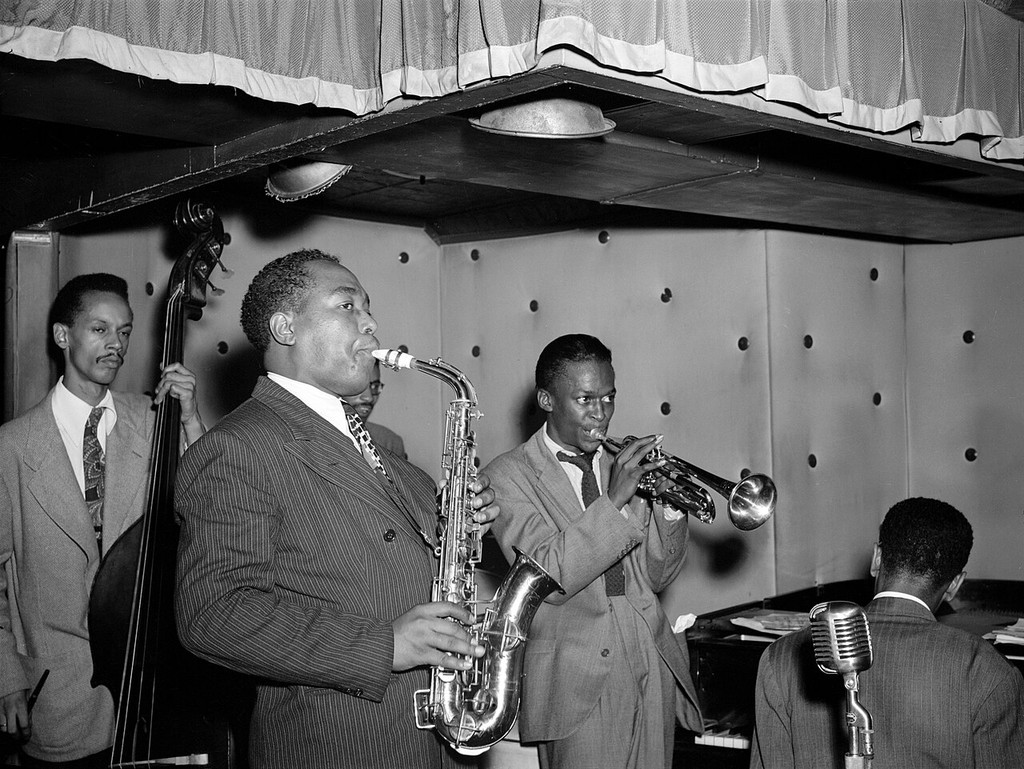
Charlie Parker is among the musicians most clearly documented in Basquiat's painted work. Fondation Louis Vuitton's 2018 retrospective grouped CPRKR (1982), Charles the First (1982), Horn Players (1983), Discography (One) (1983) and Now's the Time (1985) around him. This does not mean all five are portraits of the same type. Their titles, forms and objects differ, and the museum's room grouping is a curatorial account of a sustained subject. Parker's saxophone playing, reputation and biography supplied Basquiat with more than a generic emblem of music.[2]
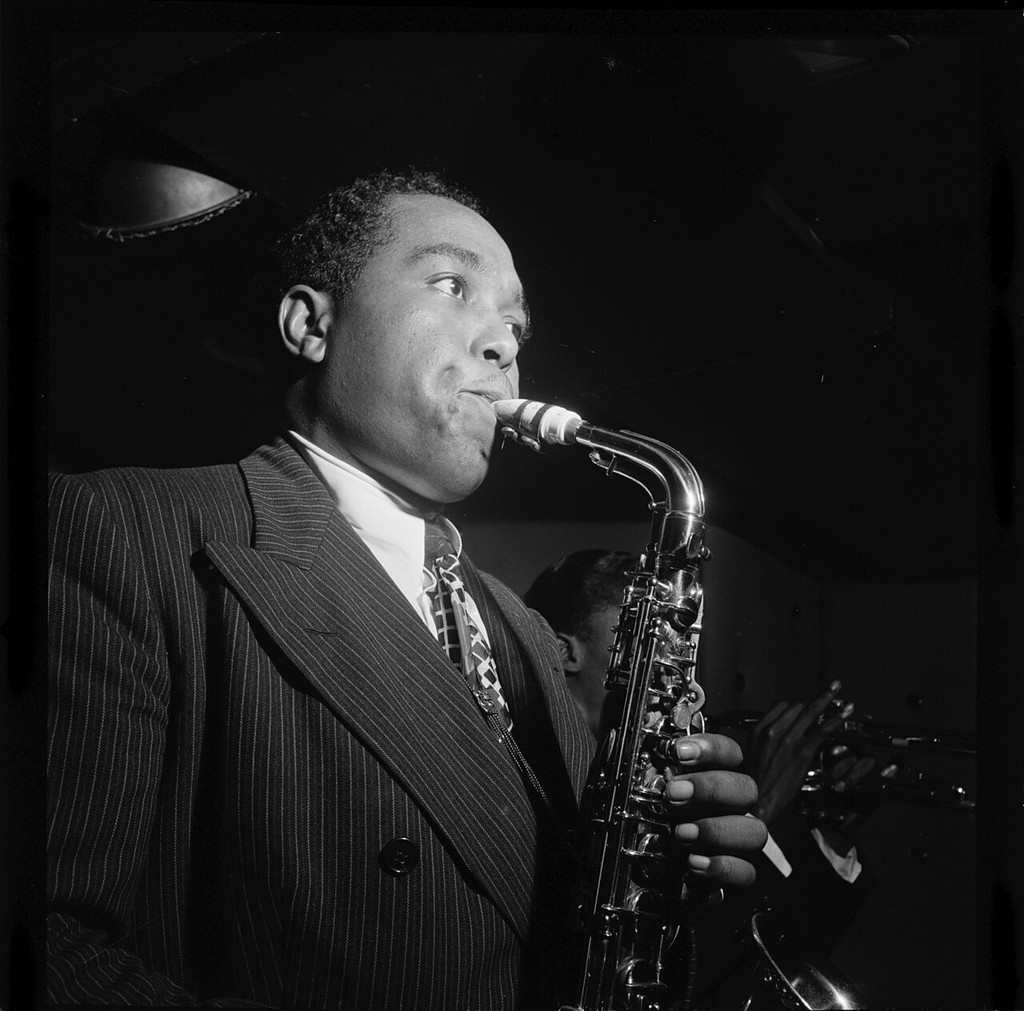
Horn Players gives the clearest pairing. The Broad, which owns the 1983 three-panel painting, identifies Parker with his alto saxophone at left and Dizzy Gillespie with trumpet at right. It also identifies Parker's “Ornithology” in the centre panel. Names, instruments and a composition title therefore work together as specific references. The Broad offers an analogy between bebop structure and Basquiat's painterly movement. That is its curatorial interpretation of the image; the named musicians and object label are catalogued facts. A viewer can consider the analogy while attending to the three actual canvas panels and the words that distinguish the players.[3]
The Charles the First guide concerns a different 1982 three-panel painting. Fondation Louis Vuitton places it in the Parker group, and its title can also suggest a king. The canvas includes crowns, a phrase about kings and a marked reference to “CHEROKEE.” These elements complicate any idea that the picture is a straightforward musician likeness. Parker's connection is well supported by curatorial grouping, but the work also asks how a celebrated artist is named, elevated and exposed. Its words and panel joins matter as much as the music association.[2]
In this painting, the listener's knowledge of Parker can be helpful but is not a substitute for looking. A title that names “Charles” and a term linked to Parker's repertoire may lead the eye toward music. The crowns and words about kings can simultaneously lead toward rank and its cost. The three panels ask the viewer to keep those paths in contact, rather than declare one to be the secret answer and the rest decoration. That is a different reading task from identifying two players and their instruments in Horn Players.[2][3]
Bird on Money brings Parker's nickname “Bird” into contact with monetary imagery. The existing artwork guide identifies the original object through its own records; the point here is comparative. Basquiat could place a musician's identity next to systems of value rather than showing the act of playing. The painting's title invites a question about how cultural achievement is honored, sold or counted. That question should be explored through the work's visible imagery and documented title, not answered by inventing a statement that Basquiat made about every musician's finances.[2][6]
Across these works, a named artist can become a subject in several ways: instrument, written name, recorded tune, nickname and analogy. The paintings are not interchangeable simply because Parker connects them. Their dates run from 1982 through 1985; their supports and layouts differ. A viewer who follows Parker through the group can watch Basquiat return to a hero without repeating one fixed portrait formula. This is one reason a thematic page is useful beside individual artwork guides: it reveals recurrence while allowing each object to keep its material and interpretive distinctions.[2][3]
Other musicians and the problem of a single genre
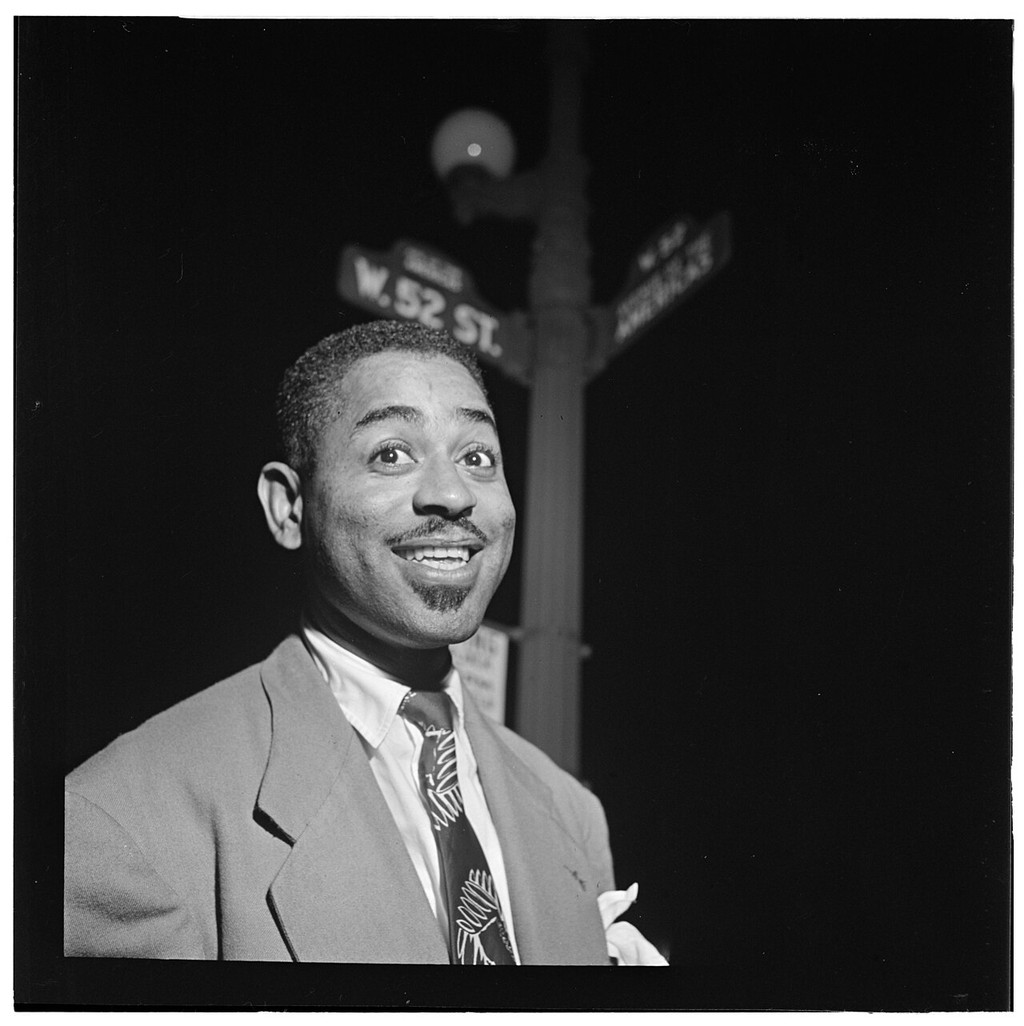
Gillespie's presence in Horn Players prevents Parker from becoming Basquiat's sole music subject. The Estate's chronology names works and inspirations connected to Miles Davis, Billie Holiday and Max Roach as well. It is tempting to make all these figures stand for a single “jazz” idea, but their music, lives and public images were different. Where a title names a person, the research should identify that person and the work's other content. Where no name is supplied, a similar-looking horn should not be assigned to a famous player simply because he appears elsewhere in Basquiat's art.[1][3]
The Trumpet guide is a useful caution. Trumpet presents one crowned horn player in a red-and-white field, but its exact original-object metadata remain less complete than The Broad's record for Horn Players. A single instrument does not make it a detail of the 1983 three-panel painting, and the figures need not be the same individual. A museum or owner label should anchor such identifications before a thematic interpretation asks what the horn might signify. The label “trumpeter” is sometimes the strongest justified statement.[3][7]
Basquiat also used words that refer to music without drawing a musician. A discography names and organizes recordings; a painted term can bring a history of performance into an image while remaining visually a block of letters. Fondation Louis Vuitton's Parker grouping includes Discography (One) and Now's the Time alongside more figural works. The titles alone do not prove that the paintings illustrate tracks. They do indicate that Basquiat could work with the culture surrounding music—records, names, catalogues, reputation—as well as pictured bodies and instruments.[2]
Fighters with names
Boxing offered another set of Black public heroes. Fondation Louis Vuitton identifies works naming Sugar Ray Robinson, Joe Louis and Cassius Clay in its discussion of Basquiat's 1982 figures. The Estate's chronology likewise lists Robinson and Louis among admired athletes, and documents Untitled (Sugar Ray Robinson) in exhibitions. The Robinson artwork guide deals with that particular object. A named champion has a biography and an era; the painting's title can bring that history into view even when the image is not a realistic ringside scene.[1][2]
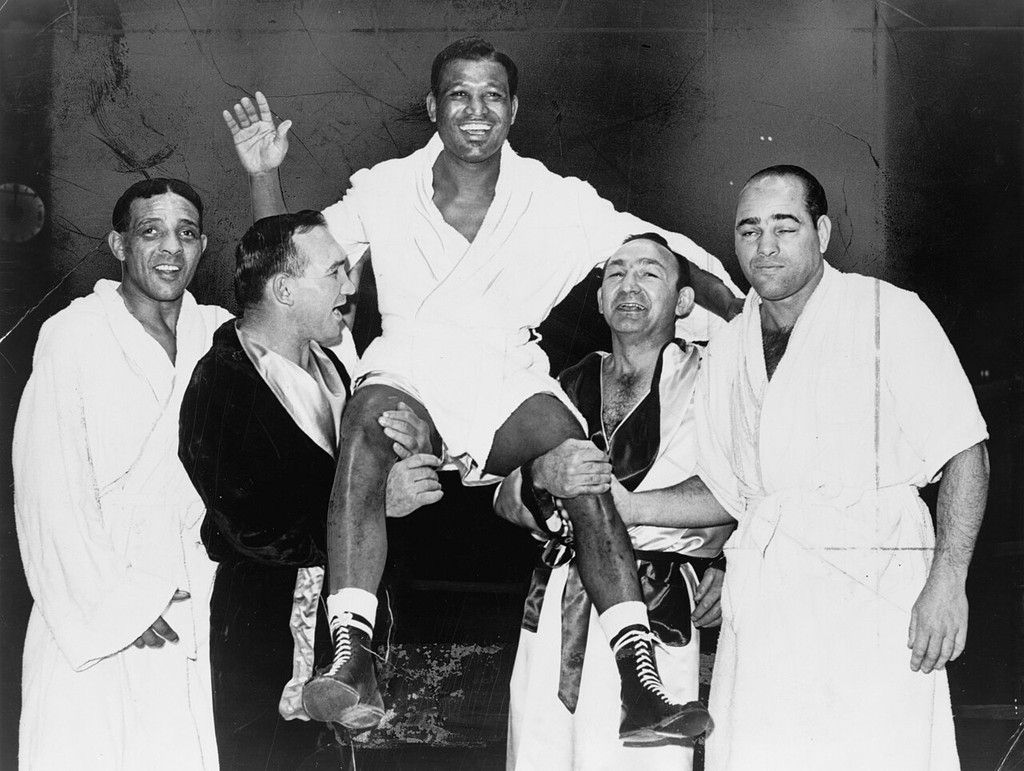
Names need careful handling here as well. Cassius Clay later became Muhammad Ali. A painting titled Cassius Clay should retain its catalogued title while an explanatory paragraph can give the athlete's later name. Joe Louis and Robinson were different fighters; a photograph of one cannot illustrate a page about the other simply because both are boxers of Basquiat's interest. A recognizable historical face does not establish the identity of a figure in a Basquiat painting. The sitter and object record must be checked separately.[2]
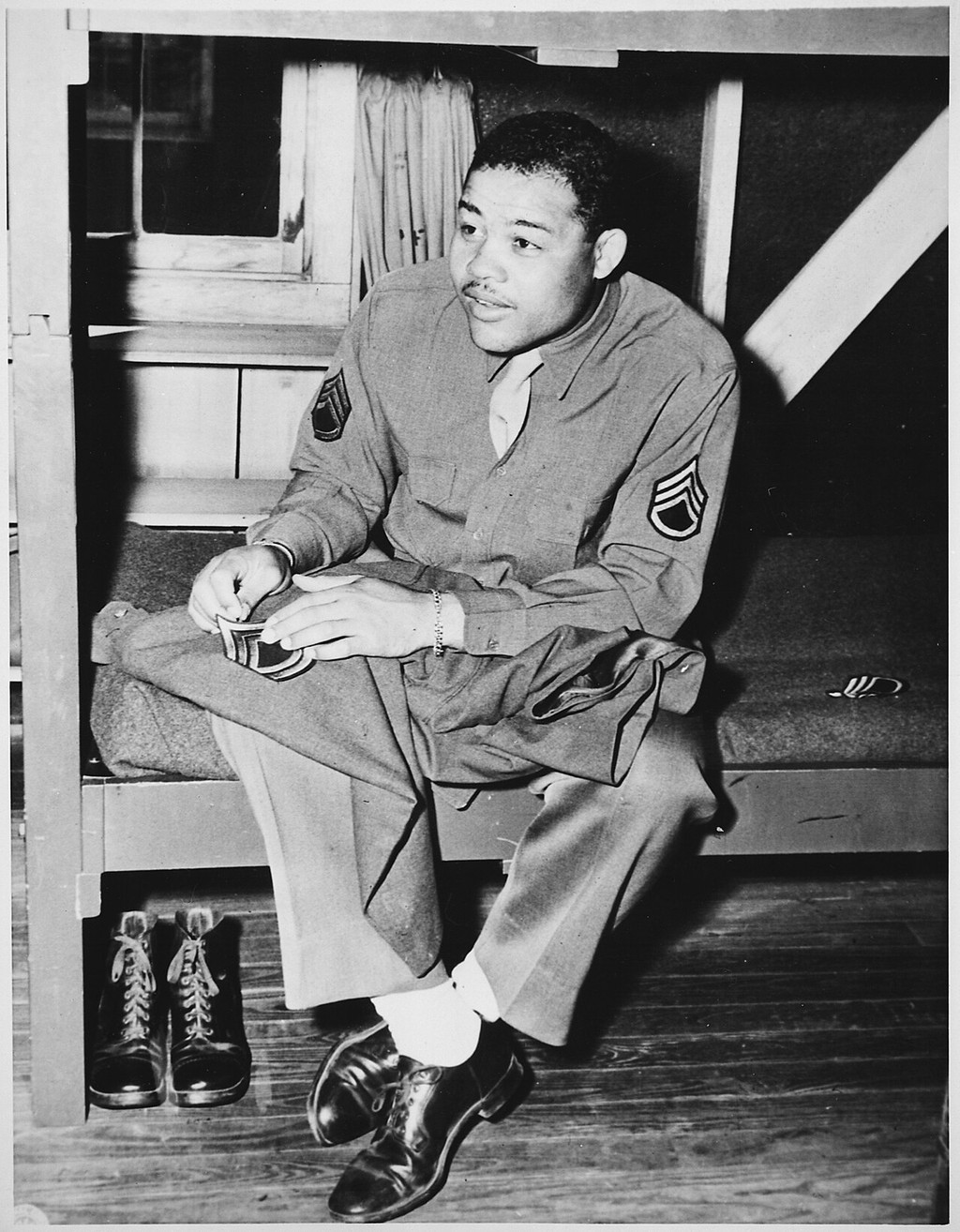
The social significance of these athletes goes beyond a list of famous names. Guggenheim Bilbao's educational guide treats Basquiat's boxer imagery as part of his attention to Black achievement and histories of racial injustice. Fondation Louis Vuitton places the fighters among heroic figures who also face threat and constraint. These are curatorial frames, not evidence that Basquiat painted every specific bout as a coded racial contest. In a named work, the fighter's public history can inform interpretation, but the canvas's own words and marks still decide how that history appears there.[2][4]
The anonymous raised-arm figures
Two large 1982 works make the difference between name and type clear. The Boijmans Van Beuningen Untitled has a small head under radiating marks, one arm stretching left and another dark form rising at right. Guggenheim Bilbao describes it as an anonymous boxer. The separate Untitled (Boxer) places a broad, frontal figure with both arms raised across a pale field. The latter conventional subtitle says “Boxer,” but neither primary object record identifies the pictured athlete by name. Similar year, near-identical approximate dimensions and boxer reading do not make them the same canvas.[4][8][9]
An arm held aloft may evoke a victory pose. Guggenheim Bilbao reads the Boijmans figure as celebrating; other museums connect the raised-arm works with heroism and exposure. But a posture is not a dated sports photograph. Neither canvas names an opponent, round, result or venue. The figures may carry a memory of how Black boxers were celebrated and made to stand for more than themselves, while their unsettled faces and visibly interrupted bodies complicate a simple “winner” caption. The anonymous subject allows a broader reading only if we do not quietly replace him with a famous champion.[2][4][9]
The contrast with the named Robinson work is productive. One painting can call on a particular life; another can focus attention on what a boxer signifies as a public figure. Both may speak to dignity and racialized reception, but they do so with different degrees of identification. A viewer should ask first which object is in front of them, then whether the title names a person, a role or nothing at all. This avoids a common online error in which a boxer image is captioned with whichever famous name is most searchable.[1][2][4]
Why music and boxing belong together
Music and boxing differ in their actions. A horn player produces sound with an instrument in an ensemble; a boxer confronts another body under sporting rules. Their histories of practice, audiences and violence cannot be collapsed into one metaphor. Yet Basquiat returned to both because musicians and fighters could be extraordinarily skilled, publicly admired Black figures whose achievements were shaped by unequal institutions and commercial systems. Museum groupings at Fondation Louis Vuitton and Guggenheim Bilbao make that shared concern visible across works, though they remain interpretations of a large, diverse practice.[2][4]
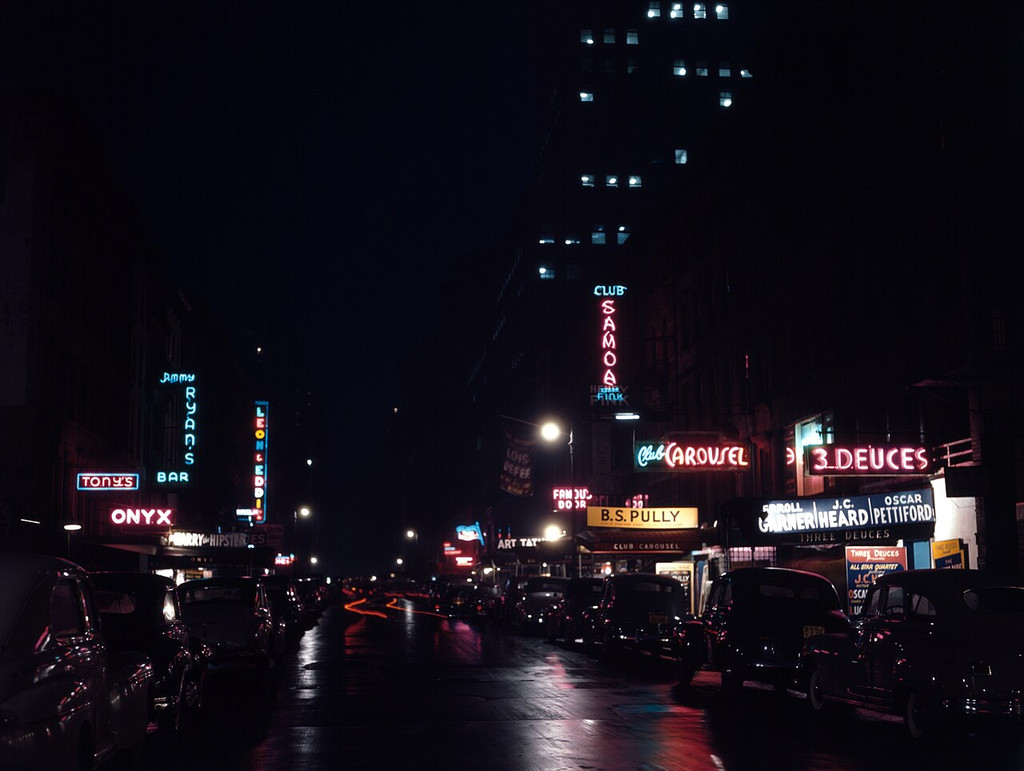
The paintings also ask how fame is made legible. Parker's name, instrument or recording title can be written or pictured; a champion's name can be inscribed; an anonymous body can be monumental without being named. Crowns and haloes may intensify recognition, but do not give every hero the same meaning. The crowns guide traces the motif separately. Here the sign is one means of viewing status alongside the painted names, bodies and historical sources.[2][4]
Commercial value is another point of contact, but it should be handled with evidence. A celebrated musician's record, a fighter's public image and a painting all move through markets. Basquiat sometimes placed names near numbers, currency or other marks of value. That does not authorize a claim that he made the same critique in every musician or boxer painting. Bird on Money invites a particularly direct question through its title; Horn Players anchors individual performers and a tune; the Boijmans boxer makes anonymity and a body central. Similar social pressures become different pictorial problems.[2][3][6]
The idea of improvisation is similarly bounded. The Broad compares the movement of Basquiat's marks in Horn Players with bebop's relation between structure and melody. It is a helpful way to ask how a three-panel work holds repeated terms and lively marks together. It is not a factual report that Basquiat abandoned planning or that he was painting the sound of “Ornithology” note by note. A repeated shape can feel rhythmic, while still being chosen, revised or printed through a deliberate process. The analogy works best when returned to the visible structure of a named object.[3]
A route through the works
For music, begin with the Horn Players object: two named musicians, instruments and a composition reference across three panels. Continue to Charles the First, where Parker's association meets royal language, and to Bird on Money, where a nickname meets questions of value. For boxing, start with the named Robinson work, then compare the two different anonymous 1982 fighters. In each step, keep the title and object record beside the interpretive question.[2][3][4]
Finally, remember Basquiat's own activity in sound. Gray and Beat Bop show a maker moving among media and people, not a painter illustrating music from a distance. The paintings of musicians and athletes give that activity a wider social horizon: who becomes a hero, how an audience sees them, and what a name does within an image. The artist guide and paintings overview place these works in his larger practice. Individual artwork records remain the place to verify what each surface contains.[1][2][5]
Explore the Basquiat guide
Basquiat artworks in this guide
| Name | Date | Medium |
|---|---|---|
| Bird on Money | 1981 | Acrylic and oil on canvas |
| Boy and Dog in a Johnnypump | 1982 | Acrylic, oil stick and spray paint on canvas |
| Charles the First | 1982 | Acrylic and oil pastel on three canvas panels |
| Defacement (The Death of Michael Stewart) | 1983 | Acrylic and marker on wall-derived support (support records differ) |
| Dos Cabezas | 1982 | Acrylic and oilstick on canvas with wood supports |
| Dustheads | 1982 | Acrylic, oilstick, spray enamel and metallic paint on canvas |
| Eyes and Eggs | 1983 | Acrylic, oilstick and paper collage on hinged cotton drop cloth |
| Flexible | 1984 | Acrylic and oilstick on wood |
| God, Law | 1981 | Drawing; precise materials not established |
| Hollywood Africans | 1983 | Acrylic and oil stick on canvas |
| Horn Players | 1983 | Acrylic and oil stick on three canvas panels mounted on wood |
| In Italian | 1983 | Acrylic, oil stick and marker on canvas mounted on wood |
| Irony of a Negro Policeman | 1981 | Acrylic and oilstick on wood |
| King Alphonso | 1982–83 | Works on paper; suite materials vary by record |
| Obnoxious Liberals | 1982 | Acrylic, oilstick and spray paint on canvas |
| Pez Dispenser | 1984 | Acrylic and oil stick on canvas |
| Riding with Death | 1988 | Acrylic and oil crayon on canvas |
| Self-Portrait with Suzanne | 1982 | Oil pastel on paper (Paris dossier) |
| Self-Portrait | 1984 | Acrylic and oil stick on paper mounted on canvas |
| Untitled (Head), often called Skull | 1981 | Acrylic and oilstick on canvas |
| Slave Auction | 1982 | Crumpled-paper collage, oil pastel and acrylic on canvas |
| Untitled (Sugar Ray Robinson) | 1982 | Acrylic and oil pastel/oil stick on canvas (record terms differ) |
| Untitled (Titian) | 1982 | Oil stick on canvas |
| Trumpet | 1984 | Acrylic and oil paintstick on canvas |
| Tuxedo | 1982–83 | Silkscreen on canvas, edition of ten |
| Untitled (Rotterdam figure) | 1982 | Acrylic paint and oil stick on canvas |
| Untitled (Crown) | 1982 | Acrylic, ink and paper collage on paper |
| Untitled (Boxer) | 1982 | Acrylic and oil paintstick on linen |
| Untitled (Fallen Angel) | 1981 | Acrylic and oil pastel on canvas; aerosol appears in a second record |
Frequently Asked Questions
The Basquiat Estate dates the formation of a group that became Gray to 1979 and describes Basquiat playing clarinet and synthesizer. Its chronology says he left the group in 1980. This was one part of a New York scene in which musicians, filmmakers and artists met in clubs, lofts and alternative exhibition spaces. Basquiat's own participation is important context for paintings about music; it should not be used to assert that every canvas was composed while a specific track played. The band was a collaborative sound project, not a hidden soundtrack with which the paintings must be synchronized.[1]
Charlie Parker is among the musicians most clearly documented in Basquiat's painted work. Fondation Louis Vuitton's 2018 retrospective grouped CPRKR (1982), Charles the First (1982), Horn Players (1983), Discography (One) (1983) and Now's the Time (1985) around him. This does not mean all five are portraits of the same type. Their titles, forms and objects differ, and the museum's room grouping is a curatorial account of a sustained subject. Parker's saxophone playing, reputation and biography supplied Basquiat with more than a generic emblem of music.[2]
Boxing offered another set of Black public heroes. Fondation Louis Vuitton identifies works naming Sugar Ray Robinson, Joe Louis and Cassius Clay in its discussion of Basquiat's 1982 figures. The Estate's chronology likewise lists Robinson and Louis among admired athletes, and documents Untitled (Sugar Ray Robinson) in exhibitions. The Robinson artwork guide deals with that particular object. A named champion has a biography and an era; the painting's title can bring that history into view even when the image is not a realistic ringside scene.[1][2]
Two large 1982 works make the difference between name and type clear. The Boijmans Van Beuningen Untitled has a small head under radiating marks, one arm stretching left and another dark form rising at right. Guggenheim Bilbao describes it as an anonymous boxer. The separate Untitled (Boxer) places a broad, frontal figure with both arms raised across a pale field. The latter conventional subtitle says “Boxer,” but neither primary object record identifies the pictured athlete by name. Similar year, near-identical approximate dimensions and boxer reading do not make them the same canvas.[4][8][9]
Discussion
Which documented detail changes how you read Music and boxing in Basquiat?
Reader Insights
Start with a visible mark, material or word.
Check date, support and collection before comparing images.
Which reading still needs an object-specific source?
Join the Conversation
Share an observation grounded in the work or its documented history.
References and further reading
- Estate of Jean-Michel Basquiat, 1970s and 1980s chronology and 1980s entries, Gray, the rap record, jazz figures, boxer works and exhibition listings.
- Fondation Louis Vuitton, 2018–19 Basquiat retrospective account, 1982 boxers and fighter names; gallery 5 Parker grouping and listed works.
- The Broad, Horn Players collection record, object facts, Parker/Gillespie identification, “Ornithology” and attributed bebop analogy.
- Guggenheim Bilbao, “Heroes of history” teaching guide, curatorial reading of the anonymous Boijmans boxer and Black athletic heroism.
- Schirn Kunsthalle Frankfurt, 2018 Basquiat: Boom for Real wall panels, Gray/record context and music-focused curatorial discussion; Barbican large-print guide, bebop room text.
- Rubell Museum, Bird On Money collection record, 1981 title and original-object facts; Library of Congress, Gerry Mulligan collection essay on Charlie Parker, “Bird”/“Yardbird” identification. See the linked artwork guide for the full object analysis.
- Gagosian, Trumpet derivative-object description, distinguishes the 1984 single horn player from 1983 Horn Players; plate dimensions are not painting dimensions.
- Museum Boijmans Van Beuningen, Untitled (1982), accession 3047 (MK), object record and photograph.
- Christie's, original Untitled (Boxer) lot record, separate 1982 object and interpretation; Fondation Louis Vuitton places it in a “Heroes and Warriors” grouping.
