 Buy Art Prints Now
from Amazon
* As an Amazon Associate I earn from qualifying purchases.
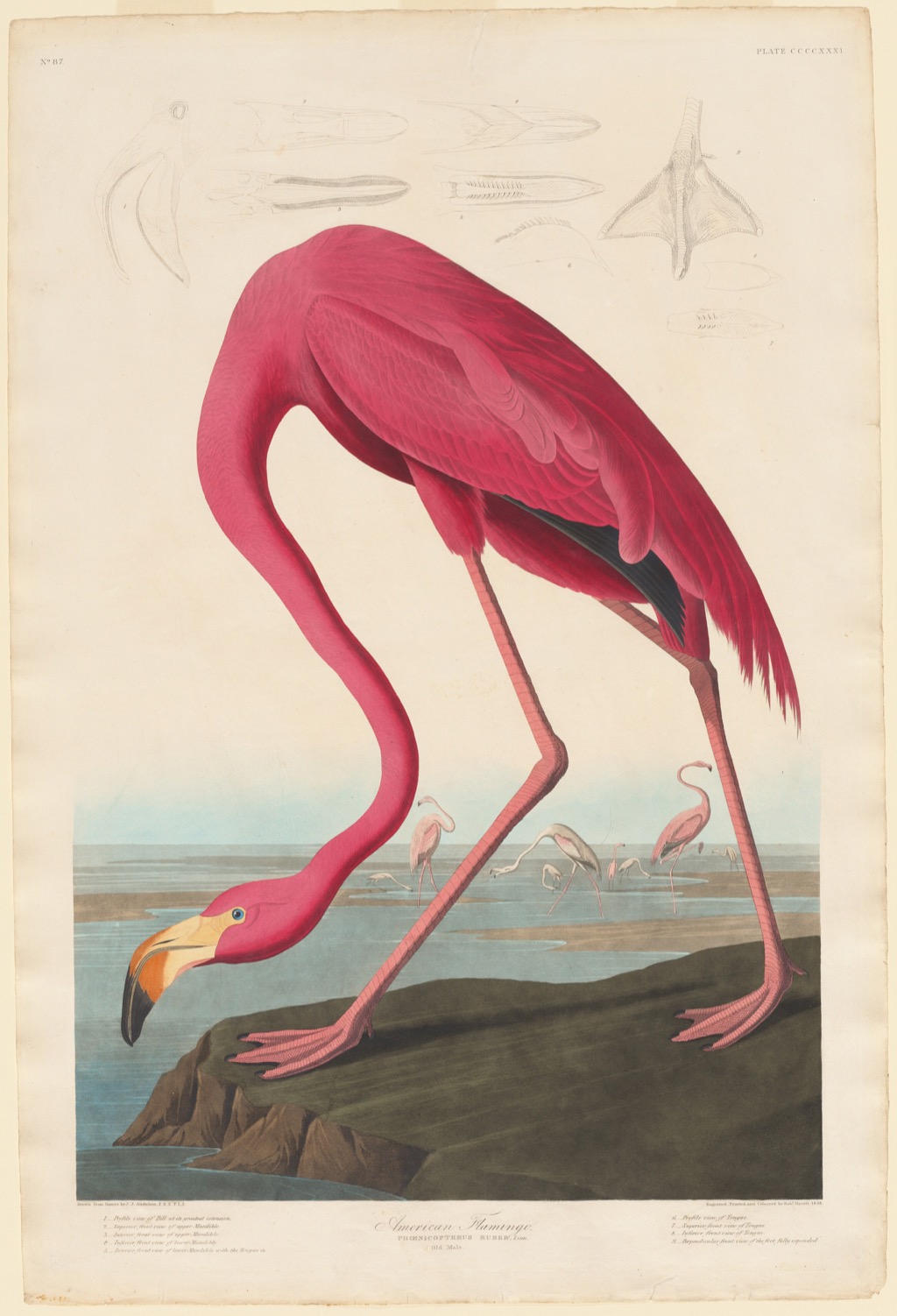
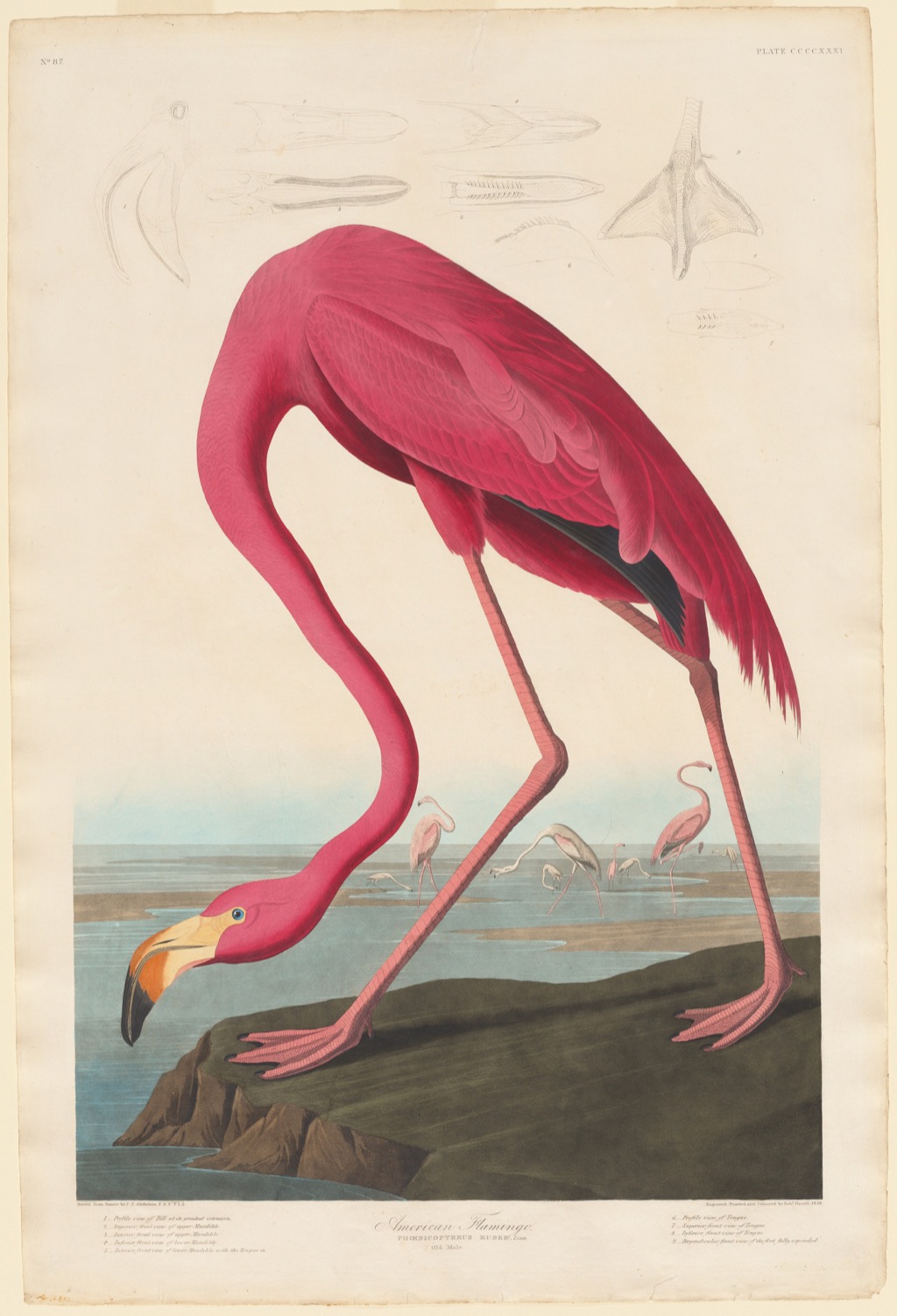
American Flamingo by John James Audubon, National Gallery of Art, public-domain object route. Used here as a cleared plate-image fallback for the biography page.
 by Tom Gurney
Tom Gurney BSc (Hons) is an art history expert with over 20 years experience
Published on July 26, 2026 / Updated on September 6, 2026
Email: tomgurney1@gmail.com / Phone: +44 7429 011000
John James Audubon Biography: Introduction
John James Audubon built one of the most famous careers in the history of natural history art from restlessness, ambition, fieldwork, performance and extraordinary visual skill. He is remembered above all for The Birds of America, the vast illustrated publication that presented North American birds at life size in dramatic, active poses. Yet his biography is not a simple story of a lone genius moving through untouched wilderness. It is also the story of a migrant shaped by the Caribbean, France, Britain and the United States; a failed businessman who remade himself as an artist; a husband and father whose work depended heavily on family labor; and a historical figure whose racism, slaveholding and self-mythmaking now have to be faced alongside his artistic achievement.
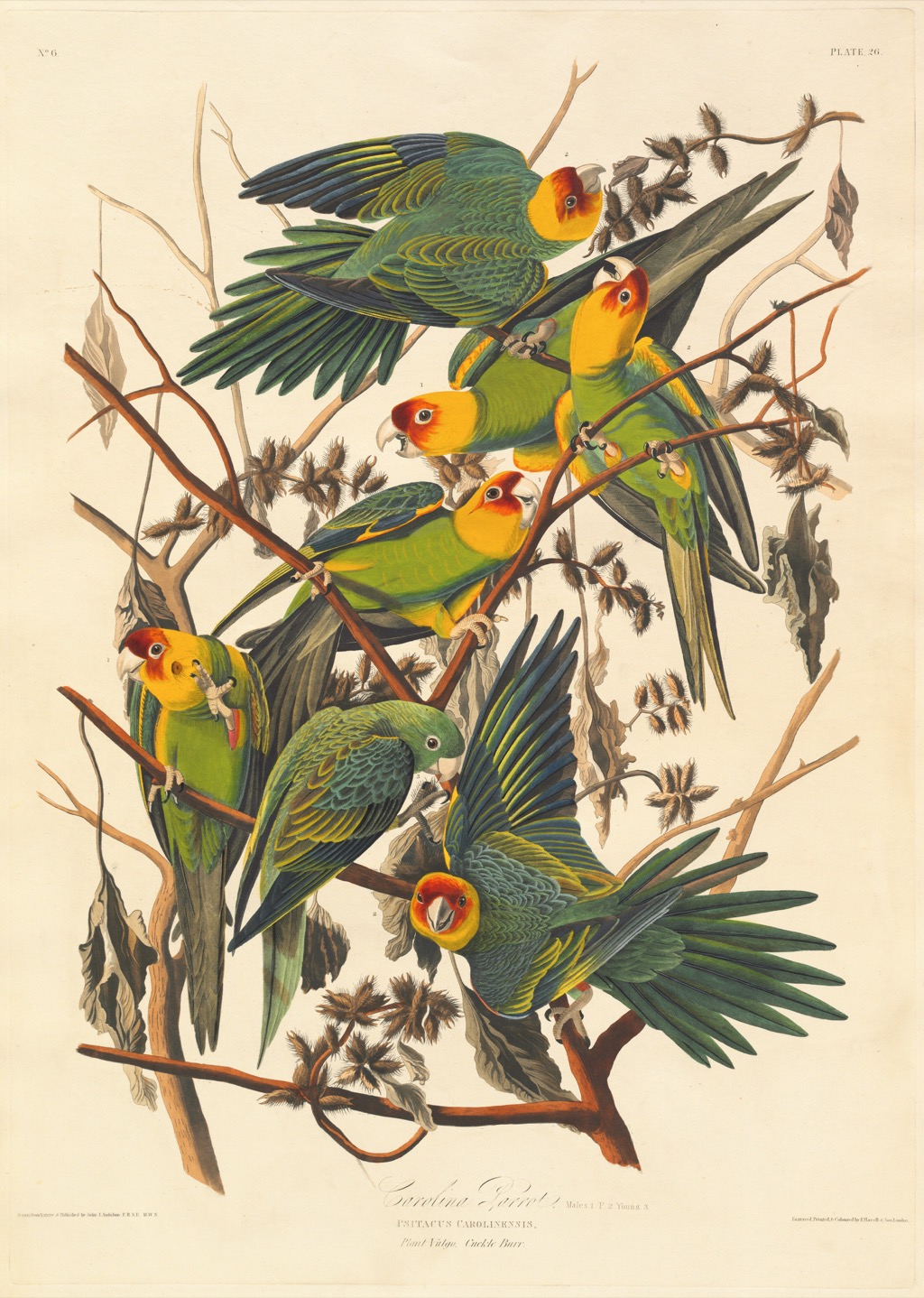
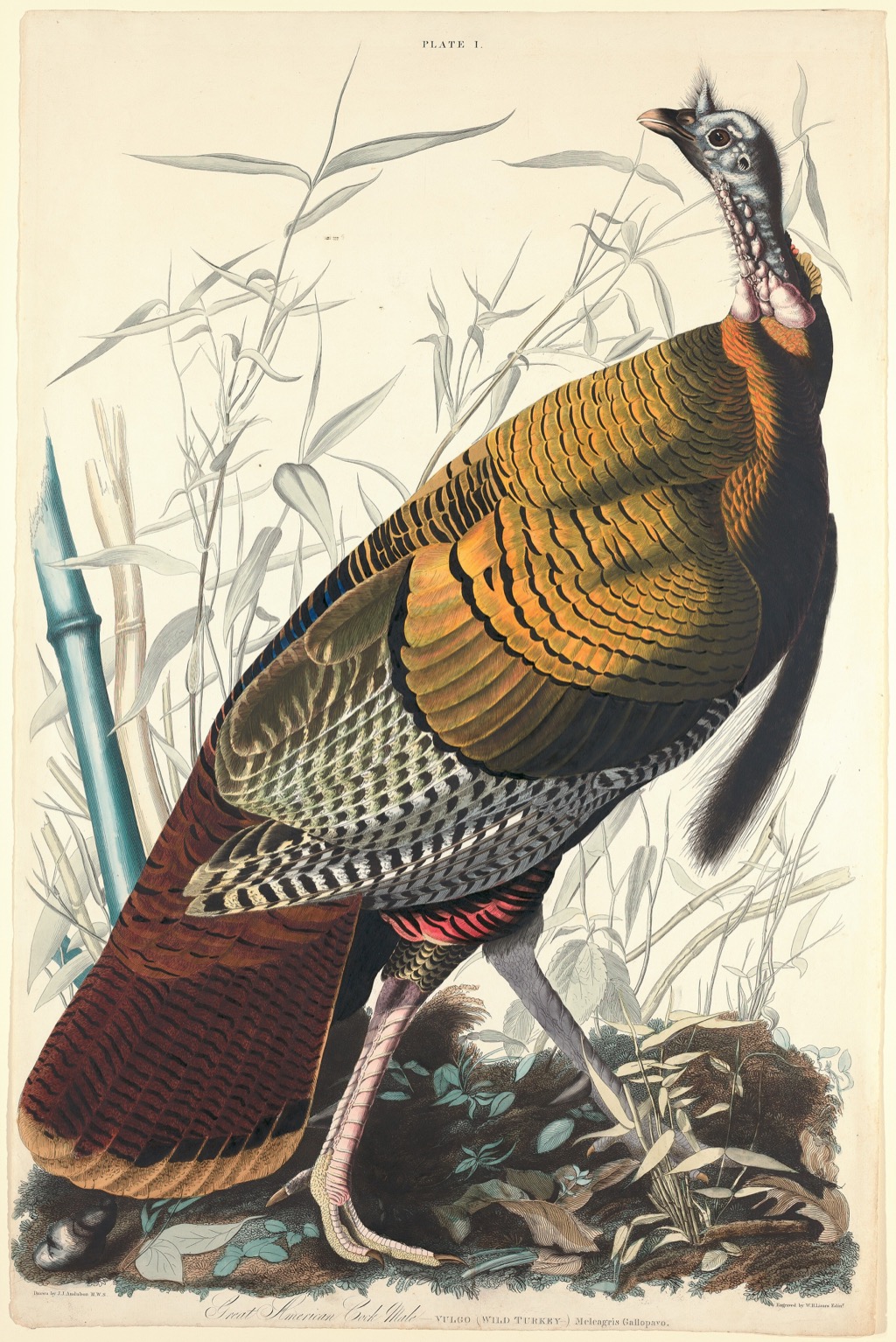
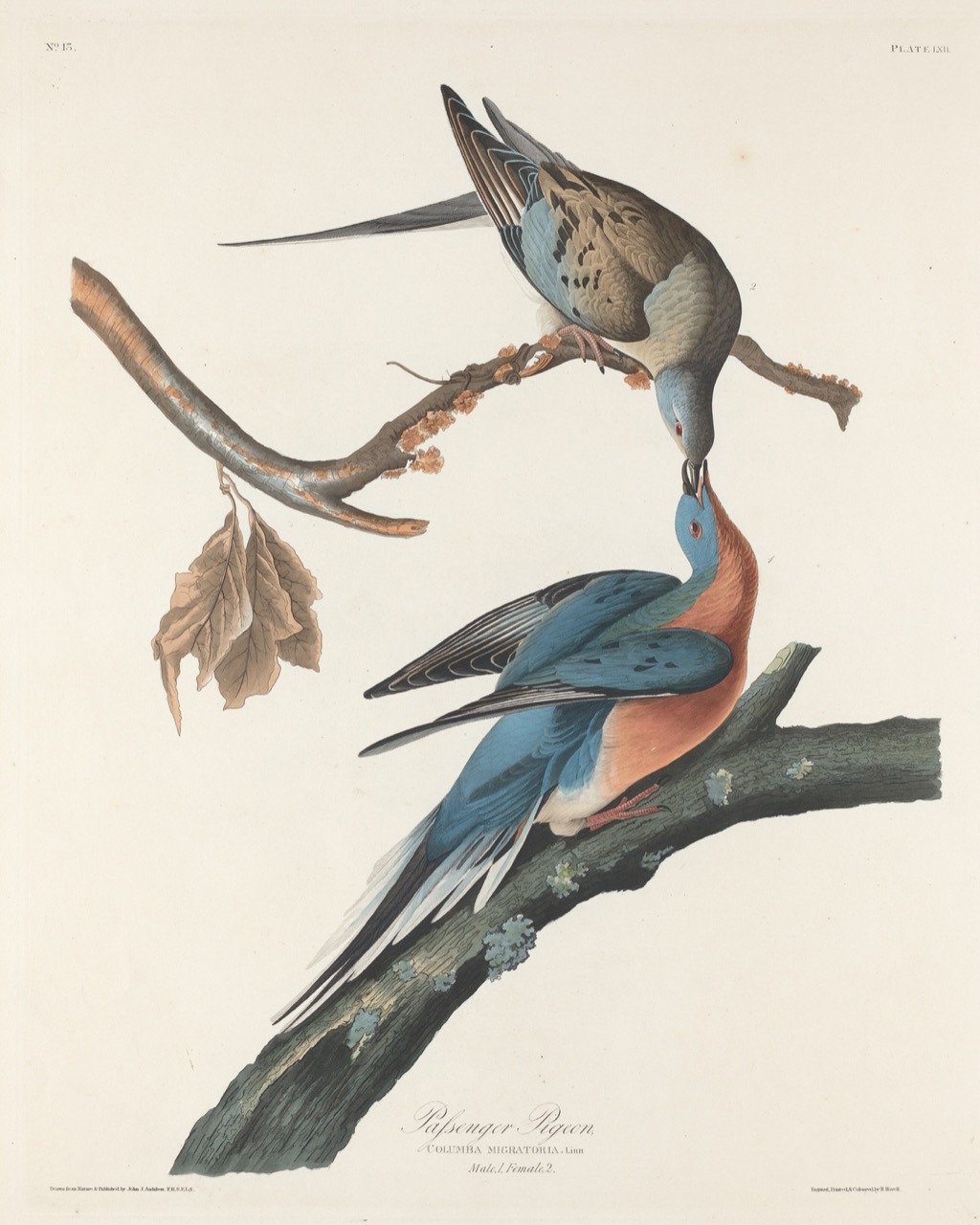
Audubon matters because he changed how birds could be seen in print. Earlier ornithological illustration often arranged specimens in static, comparative poses. Audubon wanted birds to look animated, vulnerable, aggressive, social, feeding, courting or struggling inside the environments he associated with them. That ambition gives works such as American Flamingo, Wild Turkey, Carolina Parakeet and Passenger Pigeon their lasting force. They are scientific images, but they are also theatrical pictures.
His life explains why those pictures feel both observant and staged. Audubon was constantly inventing methods, identities and stories around the work. He hunted birds, studied bodies, arranged specimens, drew from memory and observation, courted patrons, performed the role of the American woodsman in Britain and sold an enormous book by subscription. He was at once a naturalist, artist, entrepreneur and storyteller. The best biography of Audubon has to keep all of those roles visible.
At a Glance
- Born26 April 1785, Les Cayes, Saint-Domingue, now Haiti [1]
- Died27 January 1851, New York City [1]
- SpouseLucy Bakewell Audubon, a central practical and financial support for the long publication project [4], [13]
- Known forThe Birds of America, field observation, natural history illustration and subscription publishing [6], [8]
- Major publication435 hand-colored plates, issued 1827-1838 in double-elephant folio format [6], [9], [10]
- Print collaboratorsWilliam Home Lizars and Robert Havell Jr. [8], [9]
- Read nextWorks and The Birds of America
Contents
- Introduction
- Early Life in Saint-Domingue and France
- Marriage, Business Failure and the Turn Toward Birds
- The Ambition to Paint the Birds of America
- Britain, Patrons and the Making of The Birds of America
- Fame, Family Labor and Later Work
- Audubon's Art and Its Costs
- Legacy
Early Life in Saint-Domingue and France
Audubon was born in 1785 at Les Cayes in Saint-Domingue, now Haiti. Smithsonian American Art Museum records his birthplace as Les Cayes and his death in New York City in 1851. The circumstances of his birth were complex. His father, Jean Audubon, was a French sea captain and plantation owner in the Caribbean world of sugar, slavery and Atlantic trade. Audubon later obscured parts of his origin story, and modern accounts continue to treat his early identity with care because his own statements were not always reliable.
He spent much of his childhood in France, where he was raised in his father's household. The French setting matters because Audubon was never simply a frontier American from the beginning. He arrived in the United States as a young man with French language, manners and family connections behind him, then gradually fashioned a public identity that suited American wilderness, British patronage and the market for natural history. His later name, clothing, anecdotes and self-presentation all belonged to that long act of reinvention.
In 1803 his father sent him to the United States. Institutional accounts commonly connect the move with avoiding conscription in Napoleonic France. Audubon settled at Mill Grove, the family property near Philadelphia, where he encountered the birds, woods and streams that helped form his early American work. The John James Audubon Center at Mill Grove still presents the site as central to his development, especially his practice of studying birds closely and trying to represent them with greater vitality.
At Mill Grove he met Lucy Bakewell, the daughter of a neighboring family. They married in 1808. Lucy would become one of the most important people in Audubon's career, not merely as a spouse in the background but as a practical support, correspondent, educator and financial anchor during the long years when his bird project brought more risk than income.
Mill Grove also gave Audubon a setting in which looking at birds could become disciplined practice rather than casual pleasure. Later accounts connect the property with his early experiments in observing living birds and his interest in whether individual birds returned to the same nesting places. The famous story of tying threads to young eastern phoebes has often been treated as an early contribution to bird banding in North America. Whether one approaches the episode as science, anecdote or part of Audubon's self-fashioning, it shows the habit that shaped his mature art: he wanted birds to be known through movement, place and repeated attention.
His American identity was therefore built in stages. He arrived from France, lived on land connected to his father's Atlantic business interests, married into a Pennsylvania family and then moved westward into the expanding United States. That movement gave him access to birds, patrons and stories, but it also placed him inside the settler world of the early republic. His later images often make North America look abundant and available. His biography reminds us that this abundance was seen through the eyes of a man moving through contested landscapes, plantation economies and communities whose knowledge he sometimes used without fully recognizing its sources.
Marriage, Business Failure and the Turn Toward Birds
The early Audubon household moved through Kentucky, Ohio and Louisiana rather than settling into a stable artistic career. Audubon tried business ventures as a merchant and miller, and for a period he lived in Henderson, Kentucky. Those enterprises eventually failed. The Panic of 1819 and Audubon's own uneven business habits helped push him into bankruptcy and financial crisis.
This failure was decisive. Audubon had drawn birds since youth, but bankruptcy changed drawing from an obsession into a possible career. He worked as an itinerant portraitist, drawing teacher, taxidermist and collector while building a portfolio of bird pictures. The National Endowment for the Humanities describes this transition as the beginning of a nomadic career in which Audubon gathered material for what became The Birds of America while Lucy supported the family through teaching.
Lucy Bakewell Audubon's role is essential here. Archives of American Art summarizes letters from Audubon to Lucy and to their son Victor as dealing with personal affairs, ornithology and publications. Modern Audubon writing has also emphasized that Lucy's labor and income helped keep the project alive. She taught, managed household responsibilities and endured repeated separations while Audubon travelled. Any account that treats The Birds of America as only the achievement of one man misses how much of its survival depended on her work.
Audubon's method was physically demanding and often violent. He usually killed the birds he studied, then arranged specimens with wires so that the body could be posed more dynamically than a conventional stuffed mount. This practice helped produce the sense of movement for which his art is famous, but it also reminds modern viewers that early natural history illustration was often built on collecting, shooting, skinning and preserving animals. Audubon made pictures of life through methods that frequently began with death.
The tension is visible throughout his career. Audubon wanted to make birds appear alive, yet he often reached that effect by manipulating dead bodies. He wanted scientific authority, yet he lacked the secure institutional credentials that would have made acceptance easier in Philadelphia or London. He wanted to describe American birds, but he also needed to persuade buyers that his project was more vivid and more valuable than the ornithological works already in circulation. The pressure of those contradictions helps explain both the brilliance and the instability of his public persona.
For Lucy, the project meant long separations and practical burdens. She raised children, earned money, managed uncertainty and later helped sustain the publishing enterprise. Audubon's letters and family papers, preserved through institutions such as the Archives of American Art and Harvard, matter because they keep this domestic and logistical history visible. The finished plates look self-contained, but the work behind them passed through households, schools, letters, debts, journeys, studios and business negotiations.
The Ambition to Paint the Birds of America
By about 1820 Audubon had committed himself to the enormous goal of representing North American birds. He was not the first artist-naturalist to attempt such a project. Alexander Wilson's American Ornithology had already established an important model. Audubon's ambition was to surpass Wilson in scale, drama and comprehensiveness.
He travelled widely along rivers, through settlements, plantations, woods, coastal places and frontier regions. He gathered specimens, made drawings, wrote notes and cultivated contacts who could provide information or access. The work depended on many kinds of knowledge, including information from Black and Indigenous people whose contributions were often unacknowledged or filtered through Audubon's racial assumptions. The modern biography of Audubon has to name that dependency rather than imagining the bird project as purely solitary observation.
Audubon also worked in competition with other naturalists. Wilson's American Ornithology showed that an illustrated survey of American birds was possible, and it gave Audubon a rival standard against which to measure himself. Audubon believed he could offer more dramatic images and a broader visual record. That belief was partly artistic confidence and partly commercial necessity. A project as expensive as The Birds of America needed to look different enough to justify subscription, patronage and years of risk.
His drawings grew out of both field encounter and studio arrangement. Audubon wanted to show birds at life size whenever possible, and he often placed them with plants, prey, nests or fragments of habitat. This helped make his plates feel vivid and particular. It also created practical problems. Large birds had to be twisted, compressed or staged to fit the enormous sheets that would later be used for the double-elephant folio.
The resulting art sits between science and theatre. In Osprey and Weakfish, the subject is not a calm specimen but a moment of predatory force. In the later printed plates, birds bite, feed, court, turn, strain, perch and confront the viewer. Audubon wanted recognition, but he also wanted impact. He understood that a bird image could be accurate enough to instruct and dramatic enough to be remembered.
That mixture also shaped his writing. Ornithological Biography does more than identify birds and describe habits. It includes episodes of travel, danger, encounter and American scenery. Some passages are valuable evidence of observation and nineteenth-century natural history practice; others are better read as literary self-presentation. Audubon knew that the narrator could strengthen the authority of the images. By making himself vivid, he made the project easier to sell and easier to remember.
Britain, Patrons and the Making of The Birds of America
Audubon struggled to find support in the United States, so in 1826 he travelled to Britain with his portfolio. Liverpool was especially important. The Victoria Gallery & Museum at the University of Liverpool records his arrival in July 1826 and his connection with the Rathbone family, who helped open doors for him. In Britain, Audubon found audiences willing to treat his drawings as both natural history and spectacle.
He also performed himself. British sources describe his presentation as the American woodsman, a figure dressed and narrated for social effect. That persona helped him in drawing rooms and exhibition spaces, where patrons and subscribers needed to believe in the man as well as in the project. Audubon was not only selling bird pictures. He was selling proximity to the American wilderness, filtered through his body, stories and portfolio.
The production of The Birds of America was technically demanding. William Home Lizars in Edinburgh began the engraving work, but Robert Havell Jr. in London became the crucial collaborator for most of the plates. The original work was published between 1827 and 1838 as a double-elephant folio, with 435 hand-colored plates. Smithsonian, the Natural History Museum and other institutions emphasize the size and ambition of the project: the sheets were large enough to show birds at or near life size, and subscribers received plates over time rather than buying a finished book all at once.
The subscription model made Audubon both artist and entrepreneur. He had to keep collecting material, manage engravers, maintain confidence among subscribers and continue presenting himself as the person capable of completing an unprecedented work. The technical side was demanding enough: drawings had to be translated into engraved and aquatinted plates, printed, hand colored and distributed in sets. The social side was just as important. Without subscribers, the plates could not be paid for. Without a compelling public identity, Audubon would have struggled to secure those subscribers.
Audubon returned to the United States during the publication years to collect more material and maintain the project. The accompanying text appeared separately as Ornithological Biography, published from 1831 to 1839, with scientific assistance from William MacGillivray. That separation of image and text was partly practical and legal, but it also means that Audubon's great project exists as both a visual monument and a written self-portrait. The texts describe birds, landscapes and encounters, but they also create the persona of Audubon as observer, traveller and narrator.
The plates' scale is central to the biography because it expresses Audubon's temperament. He did not choose a small, cautious form that would have been easier to publish. He insisted on a format large enough for life-size birds, even when that meant forcing the largest species into bent or compressed poses. The ambition was impractical, expensive and brilliant. It also turned the book into an object of performance. To open a volume was to encounter not only bird illustration but evidence of nerve, money, paper, printing skill and social persuasion.
Fame, Family Labor and Later Work
The success of The Birds of America made Audubon famous, but fame did not erase the practical pressures around his work. His sons Victor Gifford Audubon and John Woodhouse Audubon assisted in the business and artistic life of the family. Archives of American Art notes that both sons were artists and helped with the business of publishing his work. Lucy remained central to the family structure and to the long aftermath of the publication.
Audubon continued to work beyond the original double-elephant folio. Smaller octavo editions widened access to his bird images, and the later Viviparous Quadrupeds of North America, made with collaborators including his sons and John Bachman, extended the family enterprise from birds to mammals. These later projects did not displace The Birds of America, but they show that Audubon's career was not a single burst of inspiration. It became a publishing system, a family business and a recognizable brand of American natural history art.
The Harvard John James Audubon Collection helps show the breadth of what survives around the artist: early drawings, correspondence, manuscripts, ledgers, journals and specimens. That archive is important because Audubon's public image can otherwise become too smooth. The surviving materials show the labor behind the legend: letters, accounts, drafts, relationships with patrons, exchanges with engravers and the practical burden of turning observation into a costly printed work.
Audubon's later years were marked by declining health. He died in New York City in 1851. By then his name had already become attached to one of the most celebrated visual projects in American natural history. The National Audubon Society was founded decades after his death, but later bird-protection movements took his name because his reputation had become almost synonymous with bird art.
His family helped maintain that reputation. Lucy lived until 1874 and remained an important keeper of Audubon memory. The later adoption of his name by conservation organizations depended partly on the public afterlife of the images and partly on the way family, collectors, libraries and admirers preserved his story. Harvard's Audubon holdings, for example, include early drawings, correspondence and related materials that passed through collectors and benefactors before entering institutional care. Such archives allow modern readers to study Audubon as a working artist rather than only as a name attached to famous plates.
Audubon's Art and Its Costs
Audubon's achievement remains considerable. He made bird images that still feel immediate because they combine close observation with composition, gesture and drama. He understood that a bird's body could carry narrative. A turkey could become an opening declaration; a flamingo could become a problem of scale and elegance; a parakeet or pigeon could later become an image of loss.
At the same time, his career belongs to a nineteenth-century world in which science, collecting, empire, slavery and racial hierarchy were deeply entangled. The National Audubon Society has acknowledged that Audubon enslaved people, held racist views and wrote against emancipation. It has also described more disturbing parts of his record, including his role in sending human remains to a colleague connected with racist science. These facts are not incidental footnotes. They affect how his authority, fieldwork and self-presentation should be read.
The issue is not simply that Audubon lived in a flawed period. Many people in the same era opposed slavery and argued against racial hierarchy. Audubon's choices belong to him as well as to his time. That distinction matters because it prevents his achievement from being protected by a vague appeal to historical context. Context explains the systems around him; it does not remove responsibility for how he acted within them.
Audubon's writings also require caution. Natural History Museum and National Audubon accounts both note that he was a powerful storyteller whose autobiographical episodes cannot always be treated as reliable fact. Some stories shaped his public persona as much as they recorded experience. His claim around the so-called Bird of Washington, for example, has long been treated as scientifically suspect. The same talent for narrative that helped him gain attention can make his record difficult to use without cross-checking.
This does not make the art disappear. It makes the biography more honest. Audubon's plates can be admired for their invention, color and ambition while also being understood as products of violence toward animals, unacknowledged labor, racial hierarchy and self-mythology. The point is not to replace admiration with denunciation, or criticism with admiration. The point is to look at the whole historical figure.
That full view also improves the way his images are read. The extinct birds in his work are not only beautiful historic illustrations; they are reminders that abundance can vanish. The spectacular poses are not only evidence of sympathy with living nature; they are also evidence of collecting practices that modern viewers may find troubling. The publication's grandeur is not only a triumph of art and print; it is also a record of patronage, wealth and social access. Audubon's biography gives those layers their necessary frame.
Legacy
Audubon's legacy is unusually divided because his name now belongs to several histories at once. In art history, he is a central figure in wildlife illustration and American works on paper. In book history, The Birds of America remains a landmark of scale, subscription publishing, engraving and hand coloring. In natural history, his plates and writings preserve observations of many species, including birds now extinct or severely threatened. In modern conservation culture, his name still carries symbolic power even as institutions debate what that name should mean.
The best reason to read Audubon's biography is that it clarifies the tension inside the images. His birds are beautiful, but they are not innocent objects. They come from travel, ambition, patronage, killing, drawing, printing, family sacrifice and a culture structured by inequality. They also come from genuine attention to wings, beaks, feathers, posture, habitat and movement.
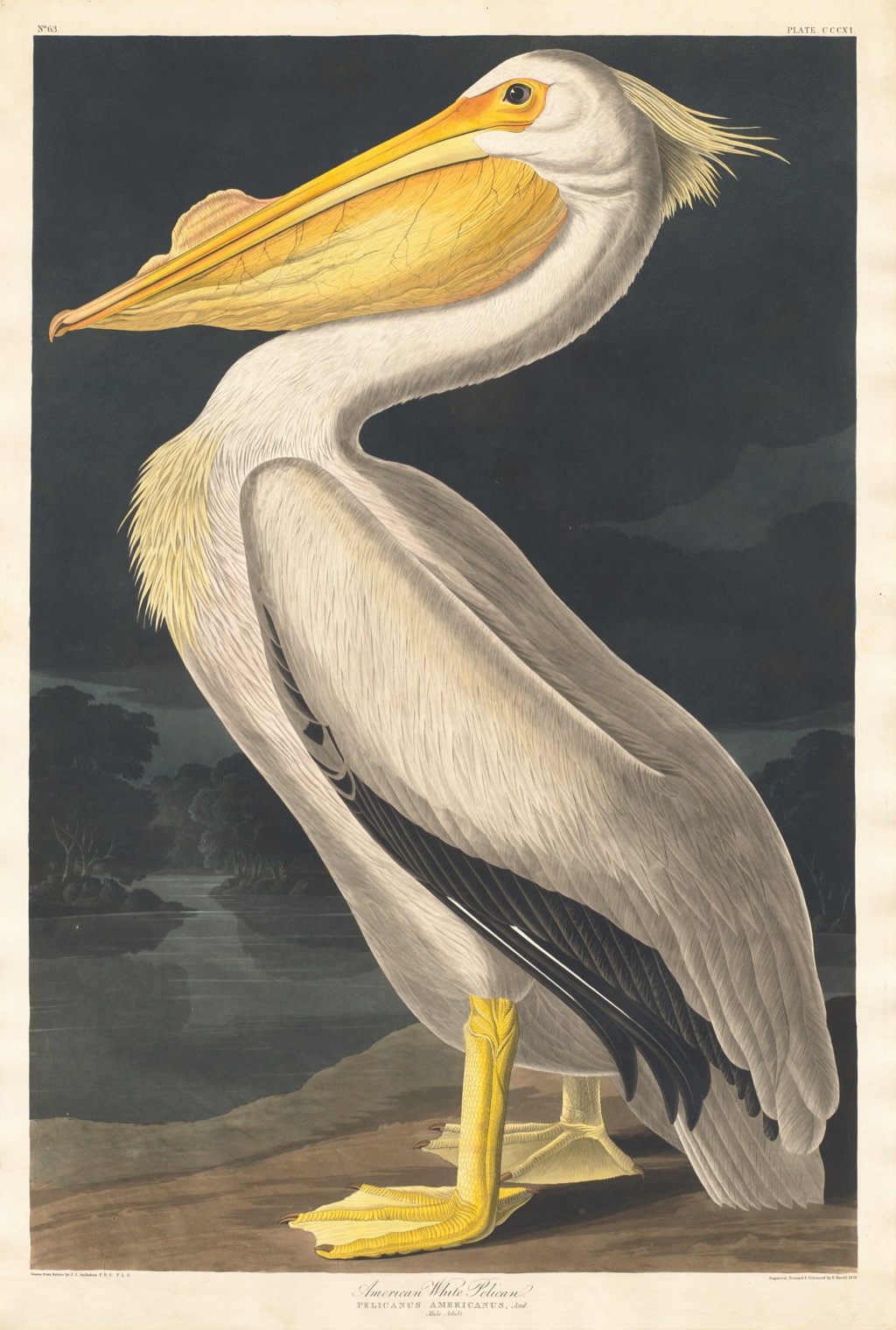
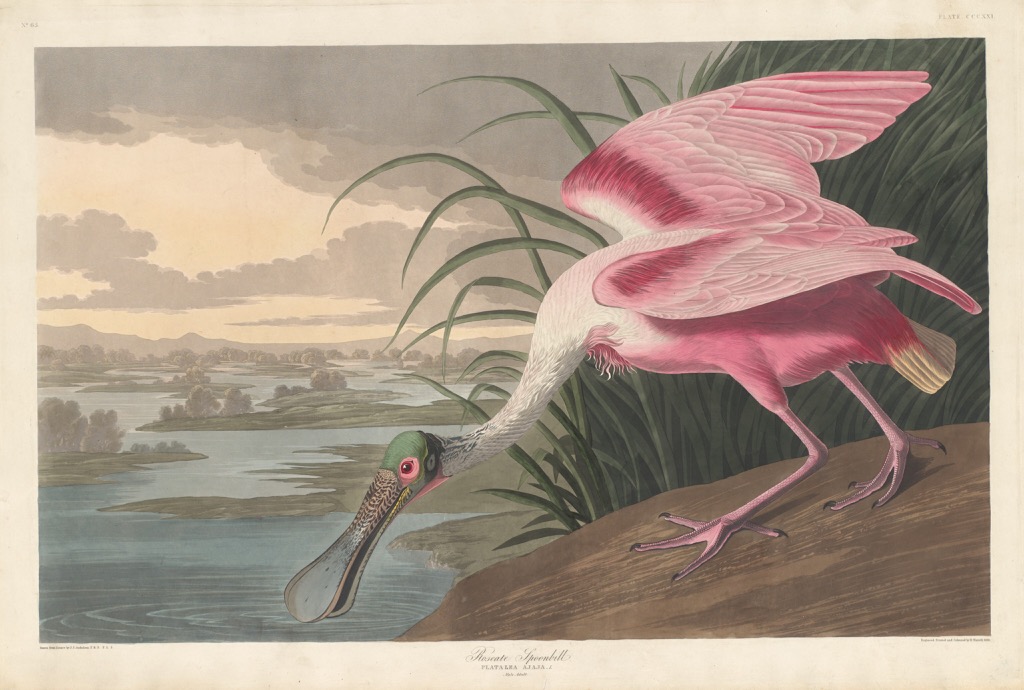
That is why the biography belongs at the center of this cluster. The John James Audubon works section shows the range of his output, while The Birds of America explains the great publication in depth. Individual studies of plates such as American White Pelican, Roseate Spoonbill, Snowy Owl and Ivory-billed Woodpecker focus on specific images. The biography holds the person together: talented, driven, dependent on others, brilliant in visual invention, compromised by his world and by his choices, and still impossible to ignore.
Frequently Asked Questions
Discussion
Audubon's biography asks readers to hold artistic ambition, publication labor and difficult historical context in the same frame.
Use the prompts below to think about how the life changes the way the bird images are read.
Reader Insights
Which part of Audubon's life most changes how you read the apparent liveliness of the bird plates?
How does the subscription, engraving and hand-coloring process change the idea of Audubon as a solitary artist?
Where should a careful biography place the balance between visual achievement, family labor, specimen collecting and racial history?
Join the Conversation
Share your reading of Audubon's life, art and legacy below.
References
- Smithsonian American Art Museum, John James Audubon artist record, accessed 26 July 2026.
- Harvard Library, John James Audubon Collection, accessed 26 July 2026.
- Harvard Houghton Library, John James Audubon letters and drawings, accessed 26 July 2026.
- Archives of American Art, John James Audubon and Audubon family letters, accessed 26 July 2026.
- Biodiversity Heritage Library, Ornithological Biography, accessed 26 July 2026.
- Biodiversity Heritage Library, The Birds of America, accessed 26 July 2026.
- Smithsonian Libraries and Archives, The birds of America, accessed 26 July 2026.
- Natural History Museum, London, John James Audubon and The Birds of America, accessed 26 July 2026.
- Natural History Museum, London, The Birds of America overview, accessed 26 July 2026.
- Yale Beinecke Library, The Double Elephant Folio, accessed 26 July 2026.
- National Audubon Society, John James Audubon, accessed 26 July 2026.
- National Audubon Society, Gregory Nobles, The Myth of John James Audubon, accessed 26 July 2026.
- National Audubon Society, The Woman Behind Birds of America, accessed 26 July 2026.
- National Audubon Society, Frequently Asked Questions About the Audubon Name, accessed 26 July 2026.
- National Endowment for the Humanities, Audubon the Writer, accessed 26 July 2026.
- Victoria Gallery & Museum, University of Liverpool, Gallery 8, accessed 26 July 2026.
- University of Liverpool Digital Heritage Lab, Audubon Collection, accessed 26 July 2026.
- National Gallery of Art, American Flamingo, accessed 26 July 2026.