 by Tom Gurney
Tom Gurney BSc (Hons) is an art history expert with over 20 years experience
Published on July 26, 2026 / Updated on September 6, 2026
Email: tomgurney1@gmail.com / Phone: +44 7429 011000
Wild Turkey: Introduction
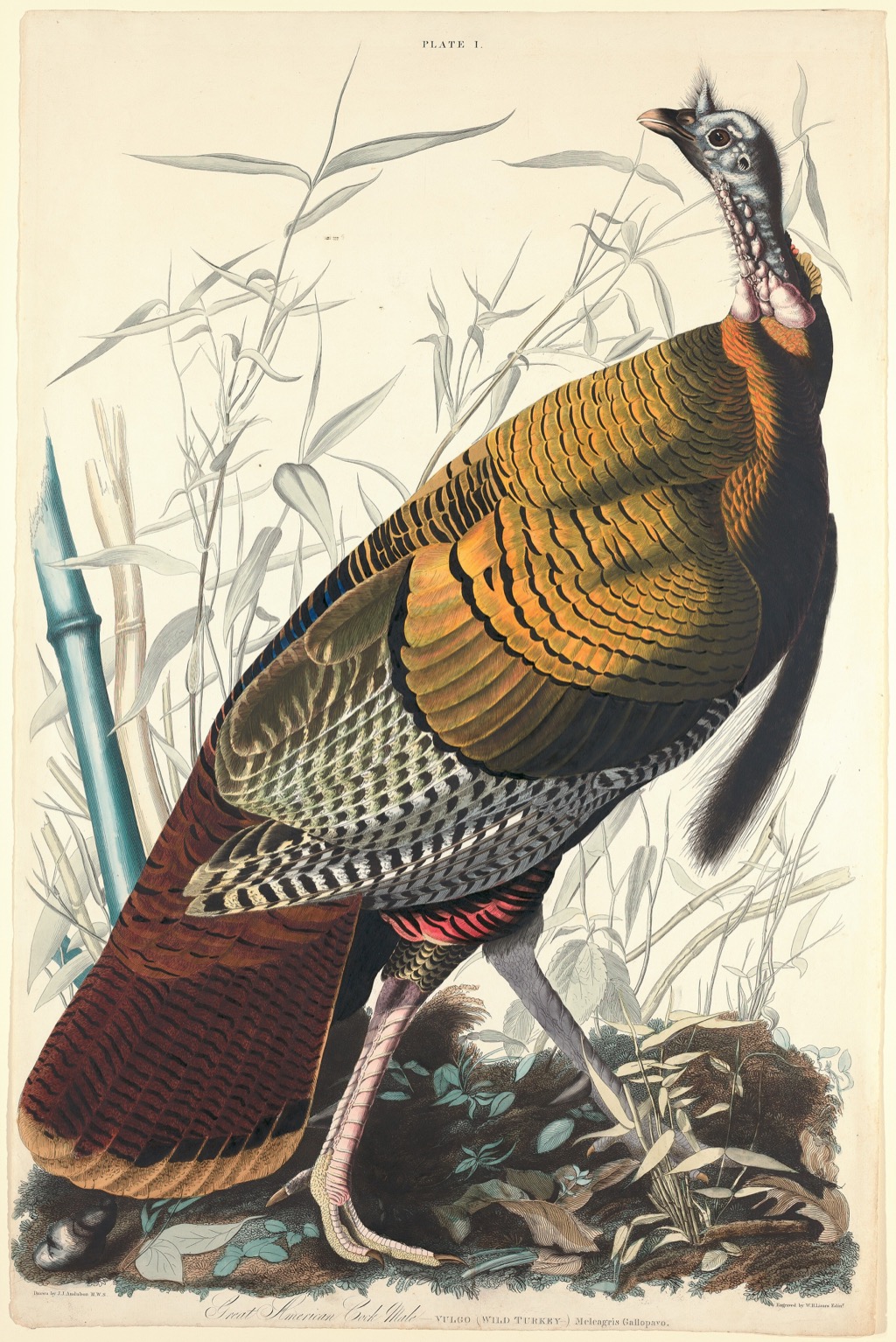
John James Audubon opened The Birds of America with a bird that could hold the sheet. His Wild Turkey, first published under the historic title Great American Cock, was not a decorative preface or a modest scientific specimen. It was Plate I of the great folio, a male Wild Turkey placed almost life-size before the viewer, stepping through reeds and grasses with a body broad enough to test the whole promise of Audubon's project.
The image remains one of the clearest introductions to Audubon as an artist. It joins natural-history observation, theatrical composition, ambitious printmaking and a strong sense of American subject matter. The bird is recognisable, but the plate is more than identification. It asks the viewer to meet a living creature as a physical presence: heavy, alert, mobile and commanding.
At a Glance
- Public titleWild Turkey
- Historic titleGreat American Cock [1]
- Date1827 [1]
- MakerWilliam Home Lizars after John James Audubon [1]
- Mediumetching and engraving with hand coloring on Whatman paper [1]
- Dimensionssheet: 99 x 64.5 cm [1]
- CatalogueThe Birds of America, no. 1 / Plate I [1]
- SpeciesWild Turkey, Meleagris gallopavo [2], [4]
Contents
- Introduction
- Annotated Details
- Object Facts
- Historic Title and Plate I
- What the Plate Shows
- The Bird Behind the Image
- Wild and Domestic Turkey
- Place in The Birds of America
- Printmaking and First Impressions
- How to Look at Wild Turkey
- Why This Plate Matters
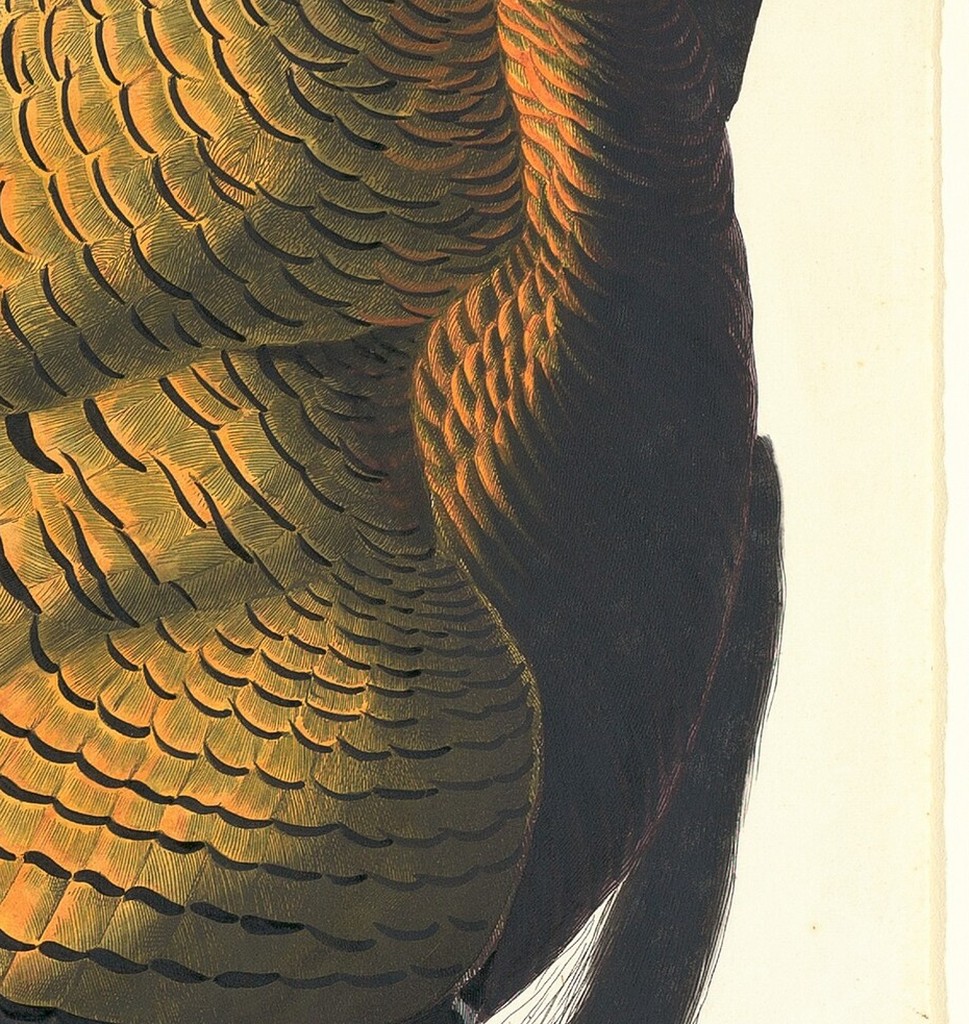
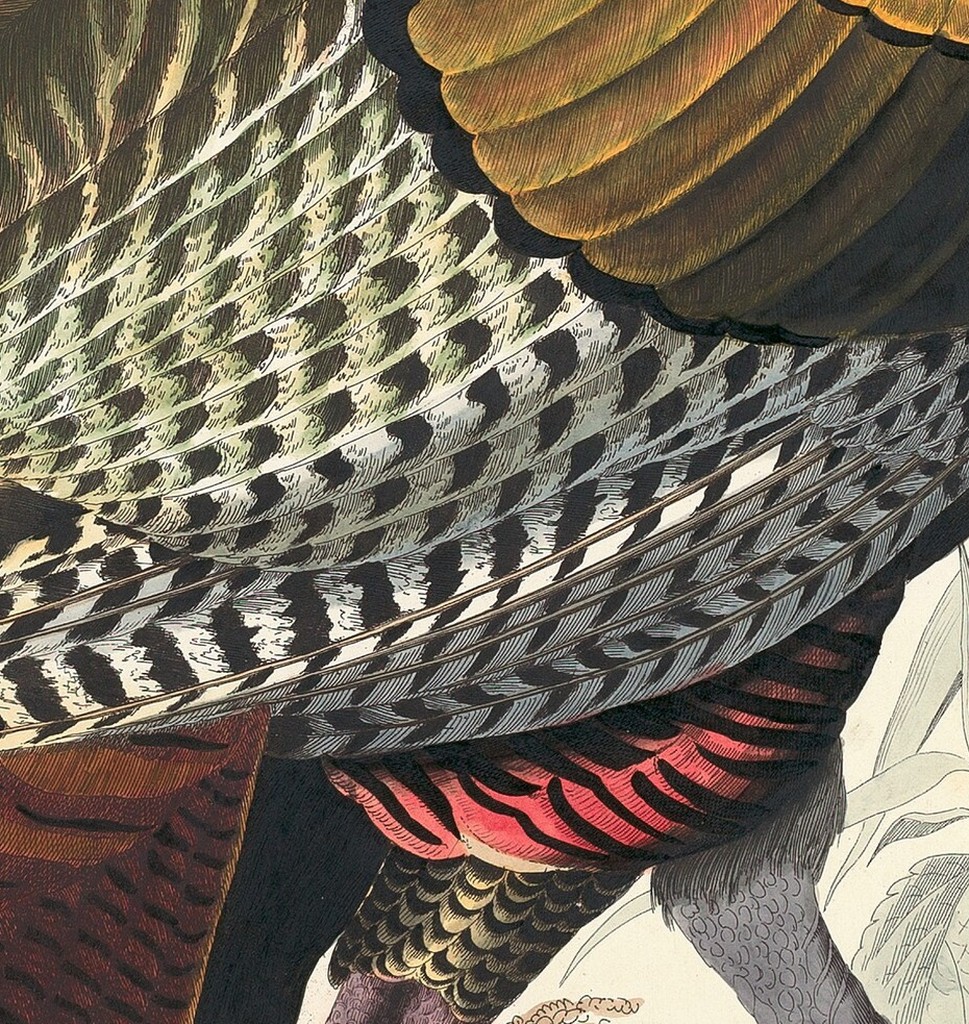
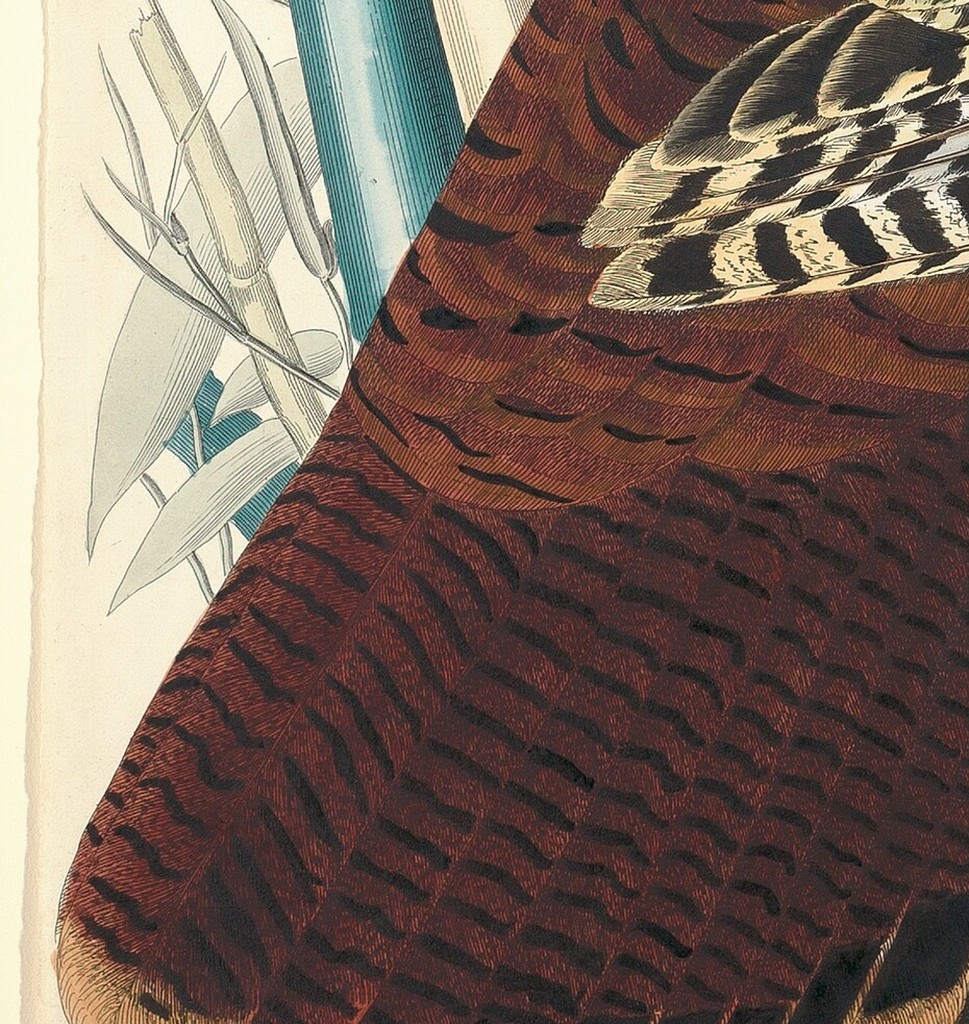
Annotated Details from Wild Turkey
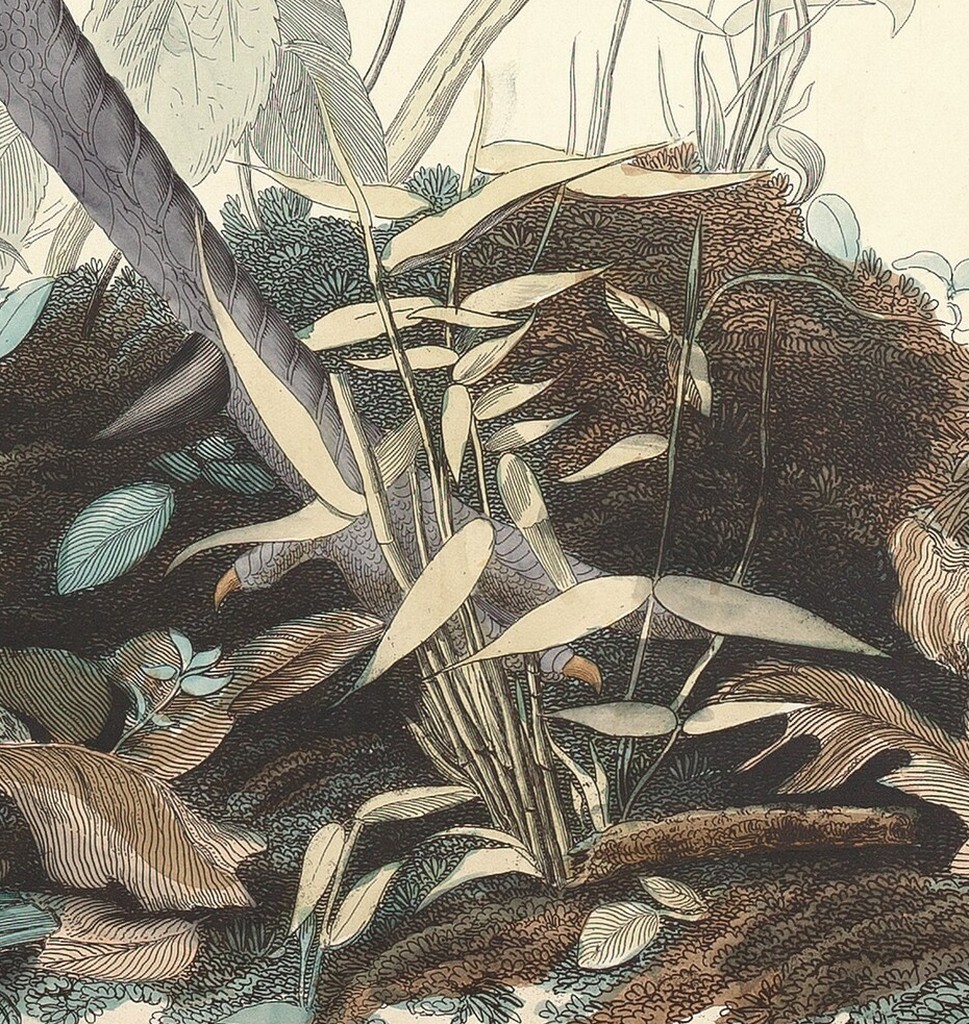
These annotated details follow Audubon's Wild Turkey through the head, wattles, bronze body feathers, barred wing, tail, legs, ground plants and pale cane-like background foliage.
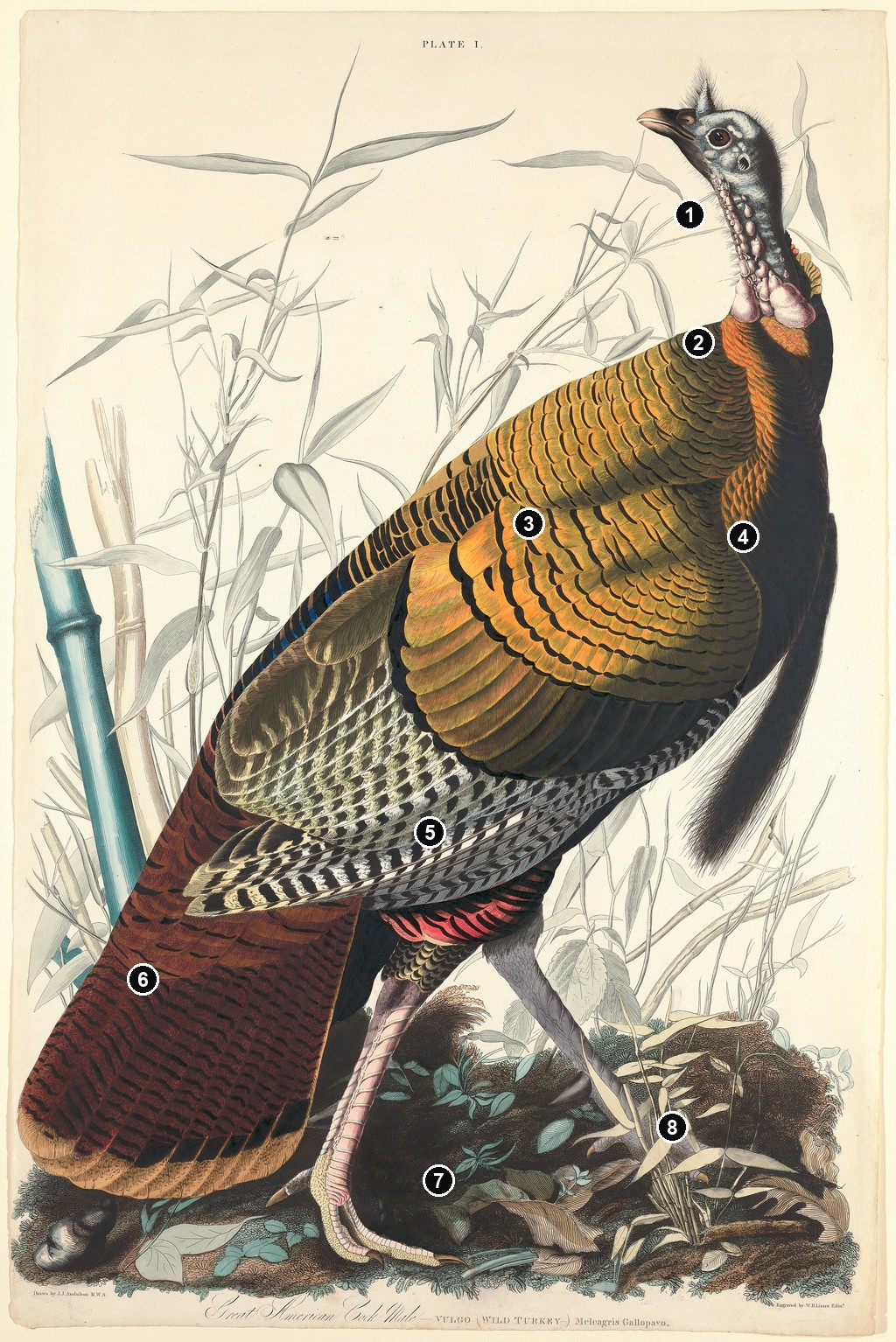
Details from WILD TURKEY
Close looking shows why Plate I announces the ambition of The Birds of America: a large bird, rendered with monumentality, surface variety and habitat detail.
Head and watchful eye
The head is small in relation to the body but highly active in colour and expression. The eye and open beak pull attention upward.
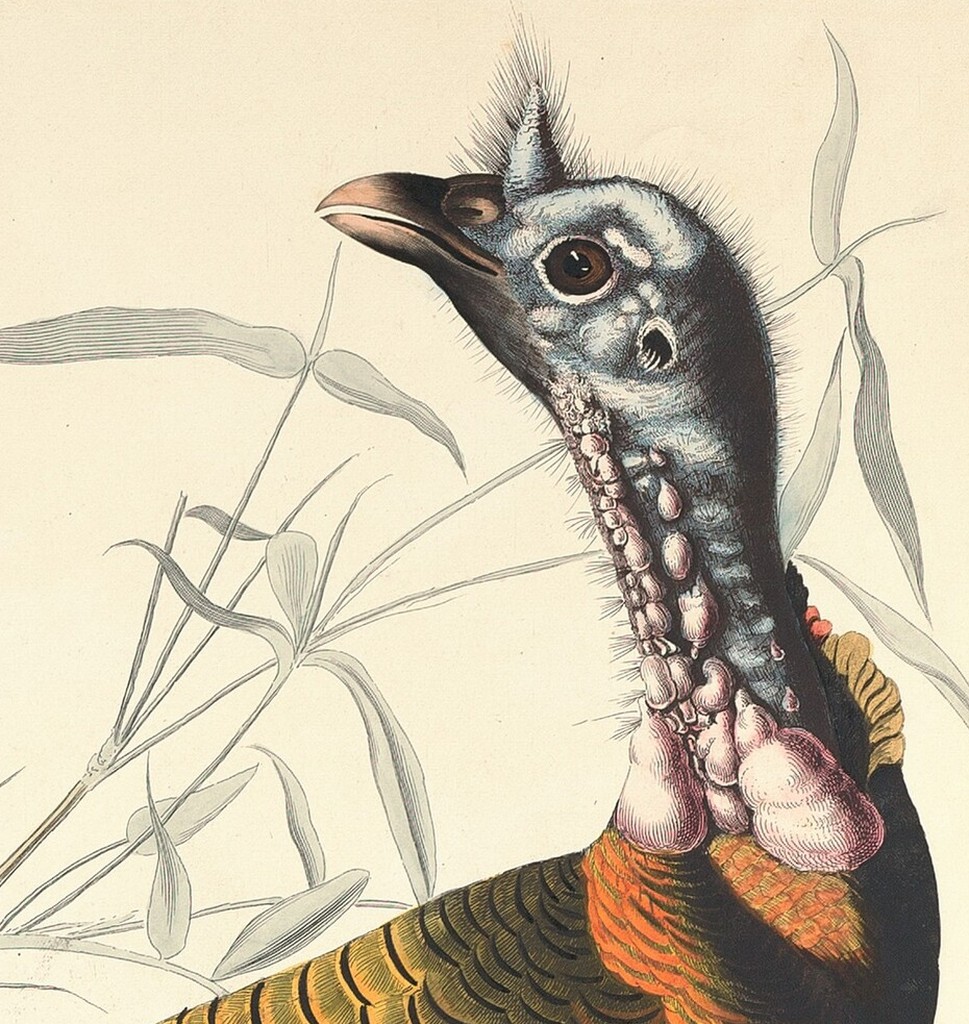
Wattles and throat
The pale wattles and pink throat add anatomical specificity beside the darker neck. Their texture contrasts with the smooth feathers below.
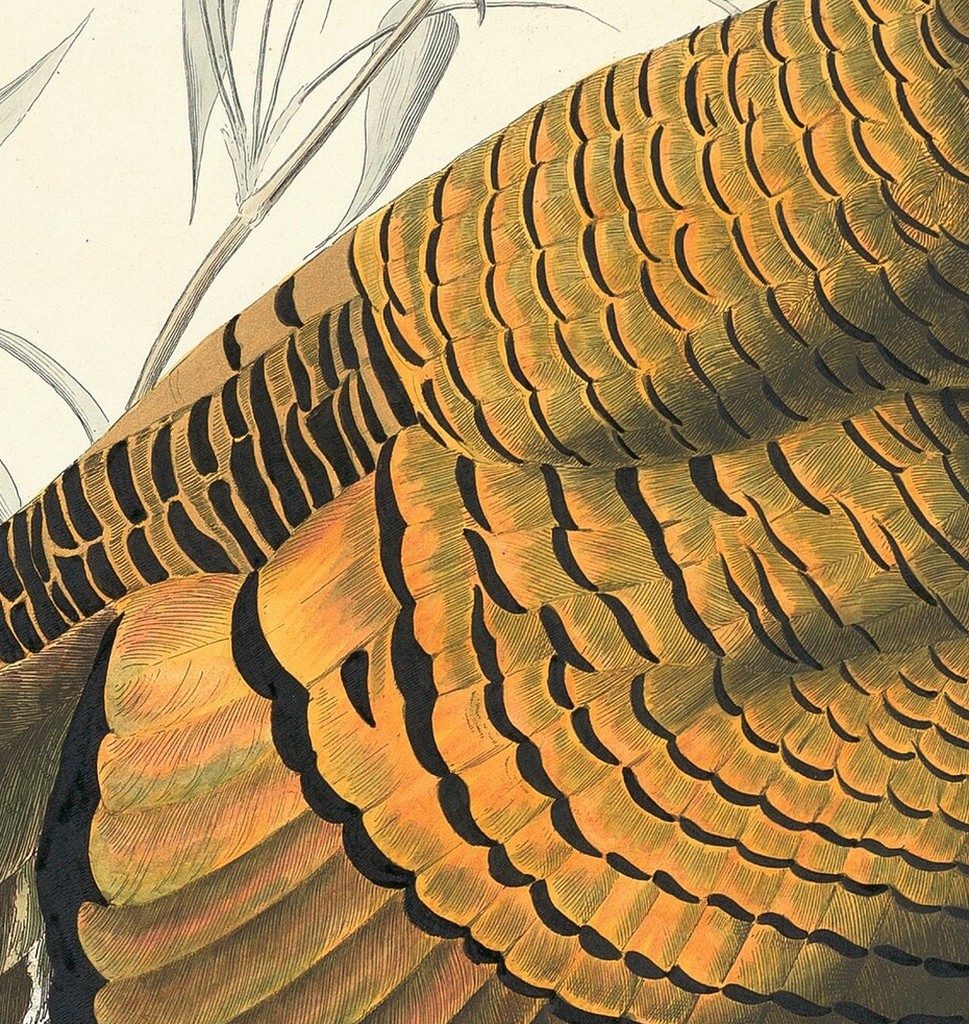
Bronze body feathers
Overlapping bronze feathers make the body a broad patterned surface. The repeated scallops give the large form rhythm instead of flat mass.
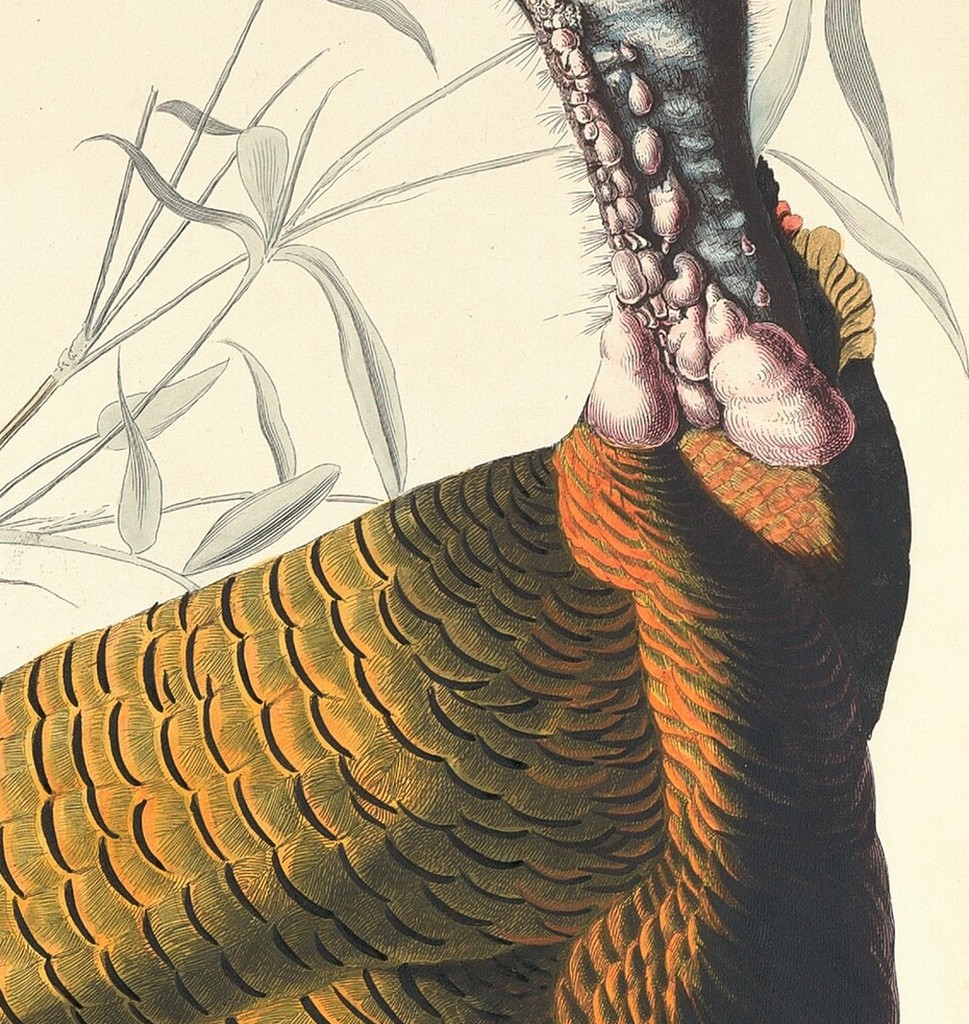
Dark breast edge
The dark breast edge creates a strong boundary on the right. It helps the bird stand forward from the paler plant drawing behind it.
Barred lower wing
The barred wing introduces black-and-white contrast below the golden body. It complicates the bird's surface with a second pattern system.
Broad tail feathers
The tail fills the lower left with deep red-brown bands. Its scale makes the turkey feel monumental rather than merely descriptive.
Long legs and feet
The long legs and planted feet carry the weight of the oversized body. Their placement gives the plate a firm vertical stance.
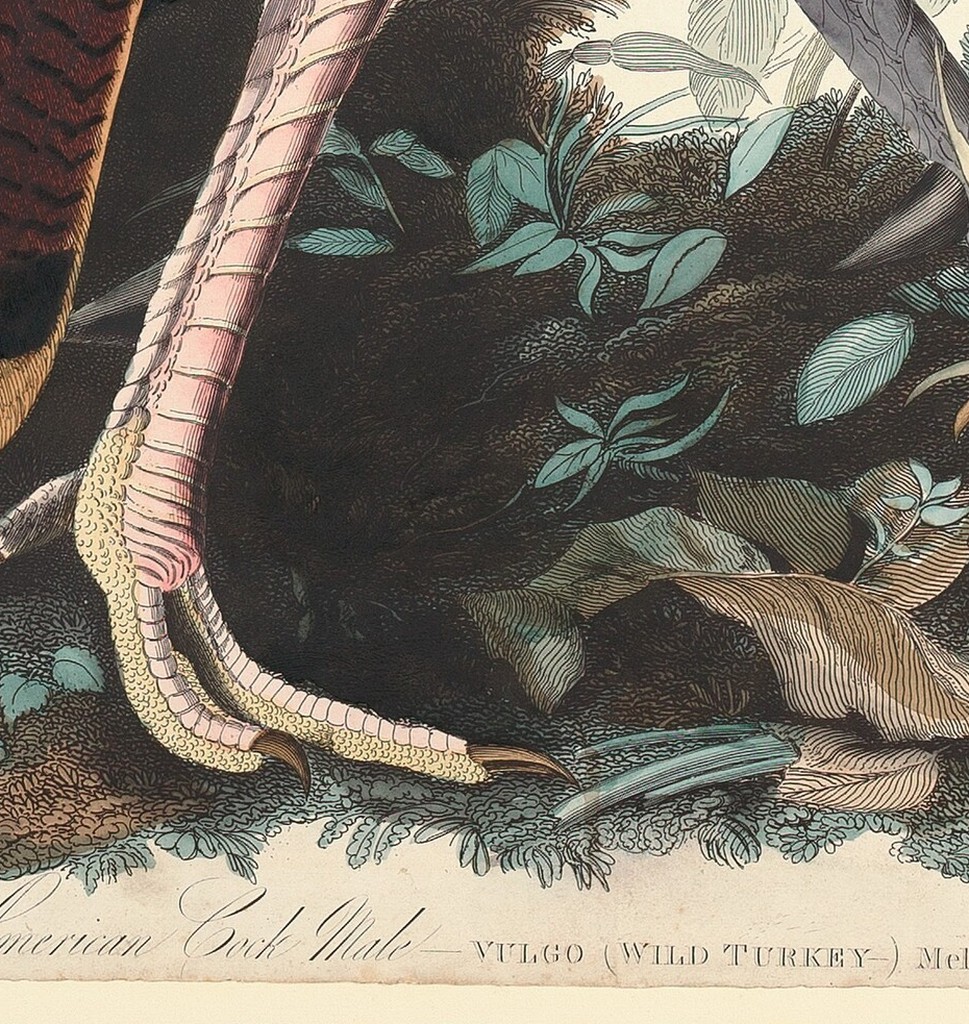
Ground and pale foliage
Leaves, soil and pale stems fill the lower setting with fine line work. The quieter drawing lets the turkey's saturated body colour dominate.
Object Facts
Audubon's Wild Turkey is represented in the National Gallery of Art record as Great American Cock, dated 1827, after John James Audubon and engraved by William Home Lizars. The medium is etching and engraving with hand colouring on Whatman paper. The sheet measures 99 by 64.5 centimetres, placing it within the large double-elephant folio format that made The Birds of America so visually dramatic.
The plate is catalogued as The Birds of America, no. 1, and as Plate I in the series. Its current public subject is the Wild Turkey, Meleagris gallopavo. That distinction matters. The modern reader knows the bird by its current common name, while the historic plate preserves the early nineteenth-century language of the published work.
As an opening plate, it carries unusual weight. It introduces Audubon's interest in scale, posture and habitat before the reader has moved into the dozens of smaller birds, paired birds, water birds and complex multi-figure scenes that follow.
Historic Title and Plate I
The original title, Great American Cock, sounds strange to modern ears, but it belongs to the naming habits and display language of Audubon's period. The plate also identifies the subject with the common name Wild Turkey and with the scientific name Meleagris Gallopavo.
Later discussions of the print often return to the title because Audubon and his publisher had to manage wording, numbering and presentation across an expensive multi-year publication. Princeton's Graphic Arts account of the plate records Audubon's concern over the lettering of early plates and the desire to revise the title treatment. That history helps explain why a single image can appear in records through both its historic title and its familiar modern subject name.
For this cluster, Wild Turkey is the clearest public title. It matches how most readers search for the image and the species today, while the historic title should stay close at hand in captions and object facts. The two names tell different parts of the same story: one identifies the bird for modern readers; the other preserves the publication record.
What the Plate Shows
The bird stands among tall grasses and reeds against a pale ground. Its body faces to the right, but the neck and head turn back to the left, giving the figure a coiled, watchful energy. The legs are planted in a forward stride, so the turkey appears to be moving through the picture rather than posing on a studio perch.
Audubon gives the male bird a dense body, a rounded breast and a broad fan of tail feathers. Dark iridescent plumage is broken by warmer brown and golden tones, while the wings show stronger graphic contrast. The bare head and neck are small beside the body but visually important. Their colour and texture draw attention to the living animal at the centre of the display.
The setting is restrained. Reeds and grasses give enough habitat context to make the bird feel grounded, but they do not turn the sheet into a landscape view. That restraint is part of the plate's force. The turkey fills the image as subject, object and event.
The Bird Behind the Image
The Wild Turkey, Meleagris gallopavo, is a large North American ground bird. Modern ornithological sources place it among the Galliformes, the order that also includes pheasants and other heavy-bodied land birds. Cornell Lab of Ornithology describes it as a bird of open woodlands, clearings and forest edges, with year-round populations across much of the United States, parts of Mexico and parts of southern Canada.
The species is primarily a ground forager. It eats a varied diet that includes acorns, nuts, seeds, berries, other plant matter and animal food such as insects. It walks and runs strongly, yet it also flies to roost and to escape danger. This combination of weight and mobility is one reason Audubon's plate works so well. He does not flatten the bird into a static emblem. He gives it a body that seems capable of moving at any moment.
Adult males are known for display behaviour, including puffed body feathers, spread tails and vocal courtship. Audubon's plate does not show a full courtship strut, but it uses the male's size, plumage and long profile to create a related sense of display. The bird is not merely illustrated; it is presented as a creature with social presence.
Wild and Domestic Turkey
Modern readers often meet turkeys first through farming, food culture or holiday imagery, but Audubon's plate belongs to the wild species. That difference is important. The Wild Turkey is native to North America, and Cornell notes that domesticated turkeys have deep connections with Wild Turkeys from Mexico, where Native peoples had domesticated them before European contact and transfer.
That background should not reduce the plate to a barnyard subject. Audubon's bird is an outdoor male, placed in a natural setting and presented as part of a larger survey of North American bird life. The plate also predates the later conservation recovery story that now shapes how many people understand the species.
Cornell describes the Wild Turkey's severe decline in the nineteenth and early twentieth centuries, driven by hunting pressure and habitat loss. The species later recovered dramatically through habitat changes, regulated hunting and reintroduction work using wild-caught birds. Today Cornell lists the species as Low Concern, while the Animal Diversity Web records the species as Least Concern. Those modern summaries should be read as a recovery story, not as permission to ignore the historical pressure that made recovery necessary.
Place in The Birds of America
The Birds of America was published between 1827 and 1838 in a large format designed to show birds at or near life size. The double-elephant folio format made it possible for Audubon to present large birds with extraordinary scale and small birds with unusual space around them. Wild Turkey, as Plate I, immediately demonstrates why that format mattered.
The turkey was a bold beginning. A smaller or more conventionally graceful bird could have introduced the work more gently. Instead, Audubon chose a heavy-bodied, distinctly North American bird and set it before the subscriber as a declaration of method. The folio would not merely list species. It would make birds visible as bodies, gestures and encounters.
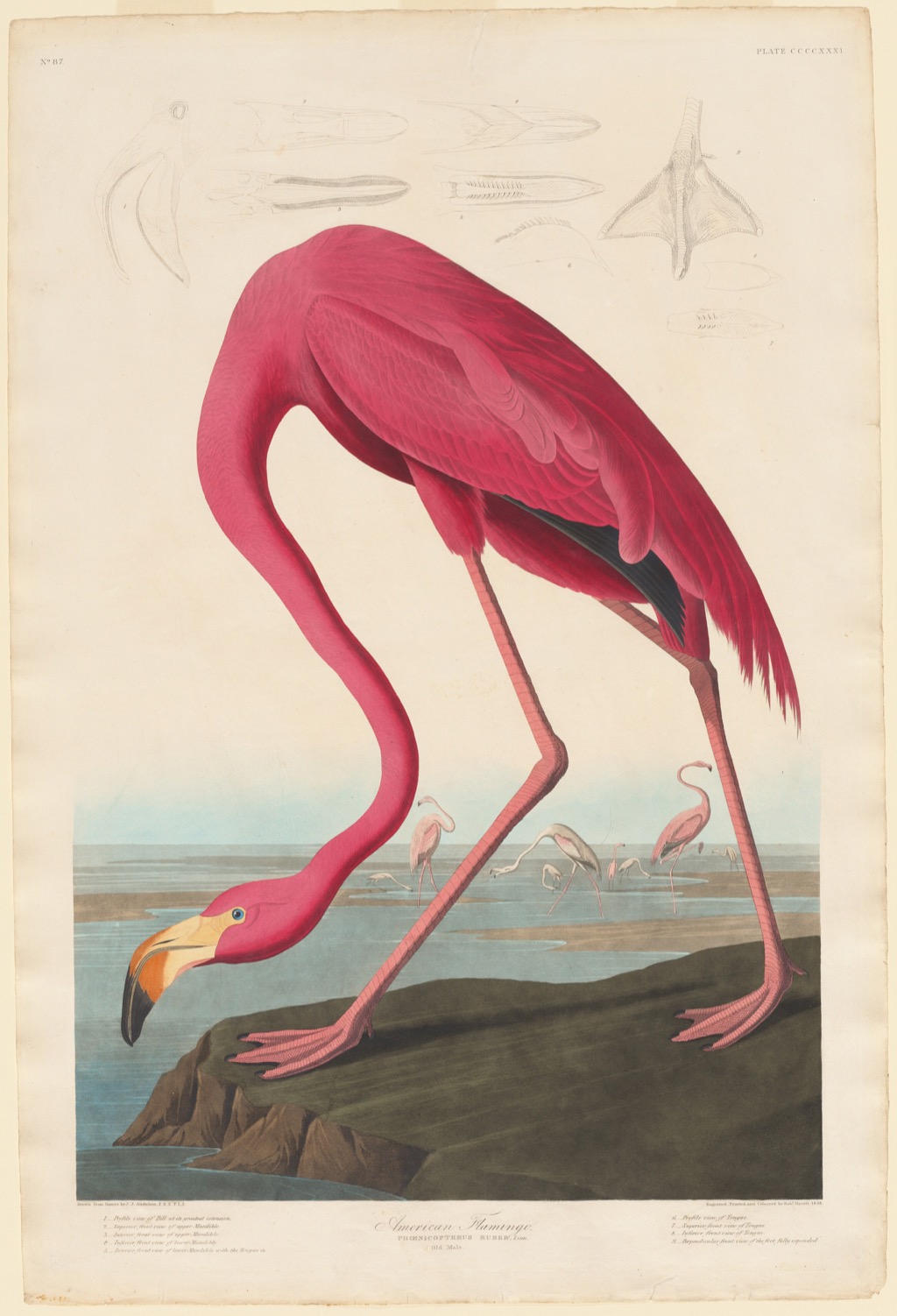
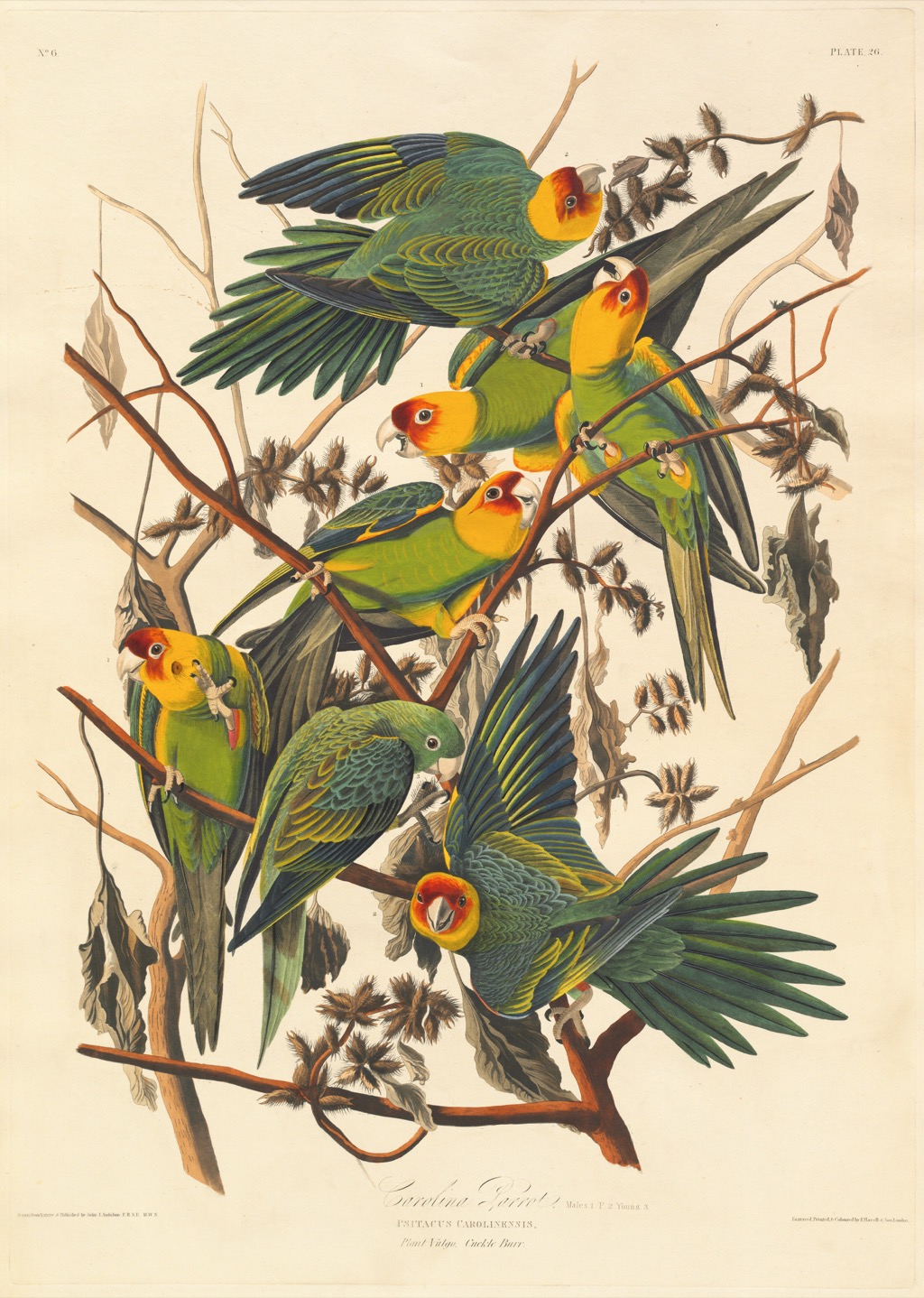
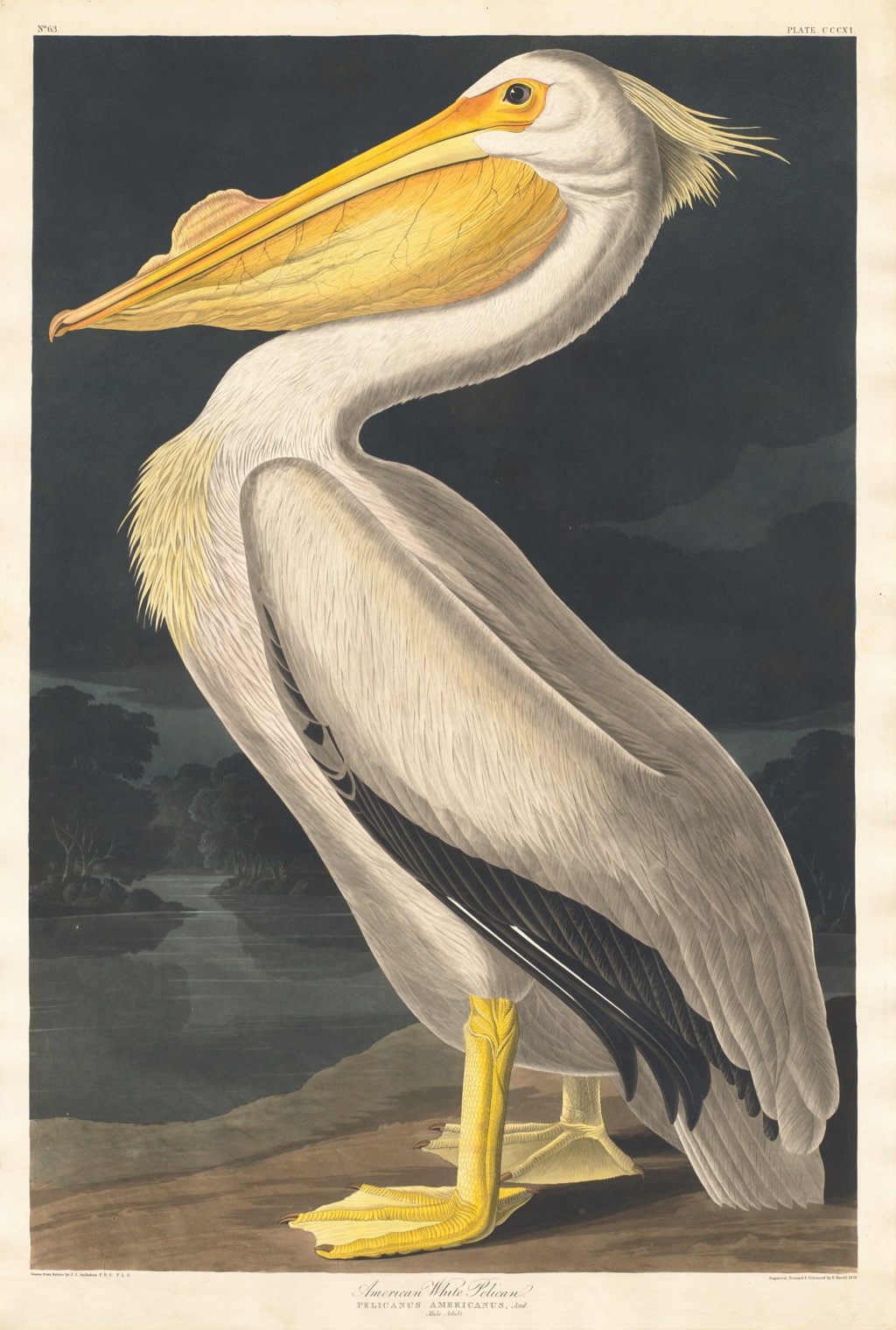
This opening also helps readers move through the rest of the Audubon cluster. The monumental scale of Wild Turkey connects naturally with American White Pelican and American Flamingo. Its strong single-bird presence contrasts with the grouped composition of Cardinal Grosbeak and the historical urgency of Carolina Parakeet.
Printmaking and First Impressions
The National Gallery of Art credits the plate to William Home Lizars after Audubon. Lizars, working in Edinburgh, engraved the earliest plates before production shifted to Robert Havell in London. That production history makes Wild Turkey especially valuable: it is not only Plate I in the published sequence, but also part of the earliest technical stage of the project.
The medium combines etched and engraved line with hand colouring. Line gives the body its structure, the feathers their pattern and the grasses their spare framework. Colour then turns the print from a diagram into a vivid natural-history image. The viewer sees form and plumage at once.
Because the sheet is so large, the turkey does not need to be miniaturised into a small vignette. The scale allows the long legs, broad tail, rounded body and bare head to appear as a physical arrangement. Audubon's ambition depends on that relationship between paper, print process and bodily presence.
How to Look at Wild Turkey
Start with the feet. Audubon places the bird low in the sheet, on firm ground, so that its weight is felt before the eye moves upward. The legs do not simply support the body; they create the sense of forward motion.
Then follow the turn of the body. The mass of the turkey moves to the right, while the head turns left. That twist gives the plate its alertness. It suggests a bird attentive to something outside the picture, and it keeps the composition from becoming a side-on specimen profile.
Finally, compare the large tail and compact head. The fan is broad, patterned and decorative, while the head is smaller, bare and sharply particular. Audubon uses that contrast to balance spectacle and observation. The image feels grand because of the tail and body, but it feels alive because of the head, neck and stance.
Why This Plate Matters
Wild Turkey matters because it announces Audubon's project in one image. It shows his confidence in large scale, his attraction to animated posture and his willingness to make natural-history illustration feel dramatic without leaving the domain of bird study.
It also matters because it complicates easy assumptions about familiar animals. The turkey can seem ordinary to modern viewers because it is culturally familiar. Audubon's plate asks for a slower encounter. It restores the bird's scale, wildness and visual authority.
Seen beside the rest of The Birds of America, Wild Turkey is both an opening statement and a standard. It tells the reader that the publication will be a visual event as much as a catalogue. From here, the cluster opens outward into The Birds of America, John James Audubon Works and the broader world of bird drawings.
Frequently Asked Questions
Discussion
Wild Turkey asks readers to look at Plate I as both a bird image and a declaration of Audubon's folio ambition.
Use the prompts below to think about scale, historic title, wild species identity and early print production.
Reader Insights
What does the choice of a large male turkey tell you before the rest of The Birds of America begins?
How does the title Great American Cock change your sense of the familiar name Wild Turkey?
How do the feet, tail and turned head make the bird feel heavy but alert?
Join the Conversation
Share your reading of Audubon's Wild Turkey, its Plate I role and its visual force below.
References
- National Gallery of Art, Great American Cock, accessed 26 July 2026.
- Cornell Lab of Ornithology, All About Birds, Wild Turkey overview, accessed 26 July 2026.
- Cornell Lab of Ornithology, All About Birds, Wild Turkey life history, accessed 26 July 2026.
- Animal Diversity Web, Meleagris gallopavo species account, accessed 26 July 2026.
- Princeton University Graphic Arts, The Great American Cock, accessed 26 July 2026.
- Biodiversity Heritage Library, The Birds of America, accessed 26 July 2026.
- Biodiversity Heritage Library, Ornithological Biography, accessed 26 July 2026.
- Natural History Museum, London, The Birds of America overview, accessed 26 July 2026.
- Yale Beinecke Library, The Double Elephant Folio, accessed 26 July 2026.