 by Tom Gurney
Tom Gurney BSc (Hons) is an art history expert with over 20 years experience
Published on November 6, 2026 / Page Updated on November 6, 2026
Email: tomgurney1@gmail.com / Phone: +44 7429 011000
Introduction
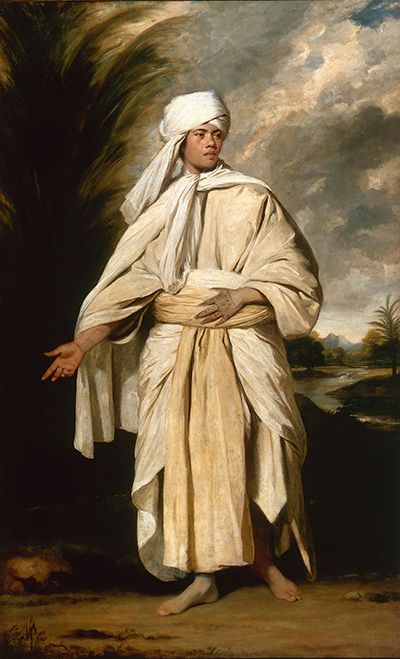
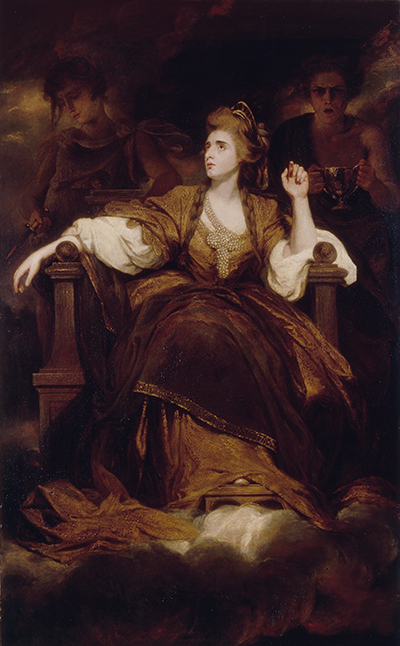
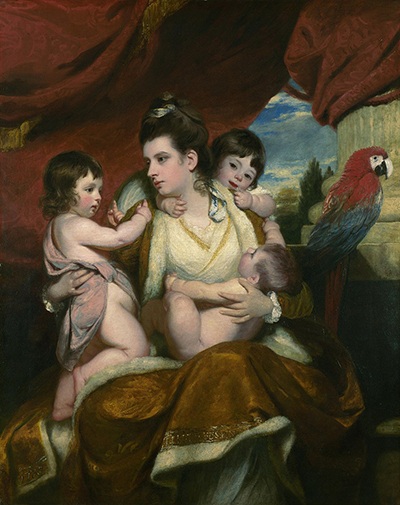
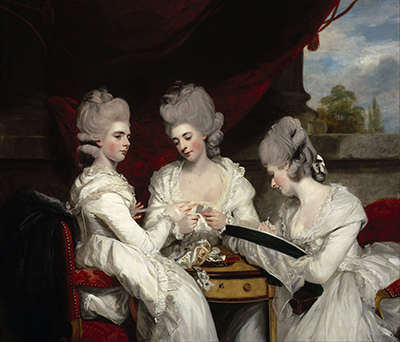
Joshua Reynolds's technique is one of the most revealing contradictions in British art. He was the great advocate of disciplined study, general principles and Old Master authority, yet his own paintings were often materially restless. He wanted portraits to possess depth, glow, warmth and historical grandeur. To achieve those effects, he experimented with supports, grounds, pigments, oils, resins, varnishes, waxes, glazes and layered paint structures. The result could be magnificent. It could also be unstable.
The technical story should not be reduced to a joke about bad materials. Reynolds was not careless because he lacked ambition. He was vulnerable because his ambition entered the paint itself. He did not simply wish to paint fashionable faces. He wanted modern British portraiture to carry the rich tonal depth he admired in older European paintings. That desire shaped his methods from the support upward.[1][3]
Modern conservation research has changed how Reynolds should be read. The National Gallery's major 2014 technical study, written by Alexandra Gent, Ashok Roy and Rachel Morrison, stresses that the fragility of his works was already recognised by contemporaries, with flesh tones especially prone to alteration.[1] The same research connects those problems with complex material choices and unpredictable conservation needs. To understand Reynolds's technique is therefore to understand both the original seduction of his surfaces and the altered condition in which many survive.
At a Glance
- PainterSir Joshua Reynolds (1723–1792)
- Technical aimOld Master depth, glow, warmth and elevated portrait surfaces
- SupportsMostly prepared canvas; occasional unprimed canvas and wooden panels [3]
- Layer structureGrounds, underlayers, opaque paint, scumbles and glazes
- Colour riskFading red lakes and changing flesh tones [1]
- Modified mediaDrying oils with resins, varnishes and occasional wax [3]
- Cracking cautionComplex layering and incompatible materials resist a single-cause story
- Experimental cultureSociety of Arts trials and recorded material experiments [4]
- Studio systemAssistants, drapery painters, copyists and coordinated delivery
- Case studyLord Heathfield of Gibraltar, 1787 [5]
Contents
- Introduction
- Technique as ambition
- Supports, grounds and first structures
- Layers, glazes and Old Master depth
- Pigments and unstable colour
- Binding media, resins and wax
- Experiment in an experimental age
- Studio labour and delegated technique
- Conservation and changed appearance
- Why Reynolds's technique matters
Technique as ambition
Reynolds's technical practice begins with ambition rather than defect. He wanted portraiture to look richer, older and more intellectually serious than ordinary likeness-making. The National Gallery identifies him as the leading English portraitist of the eighteenth century and notes his study of ancient art, Italian Renaissance painting, Rembrandt, Rubens and Van Dyck.[2] That study was not only compositional. It was material. Reynolds wanted new paintings to carry something of the depth, bloom and authority he associated with old pictures.
This makes his technique inseparable from his theory. The Discourses praise disciplined study and the elevation of art beyond mere surface, but Reynolds's own paintings show that surface mattered enormously. Flesh, shadow, textile, background and glaze were not secondary pleasures. They were the means by which a portrait could feel noble, mellow and alive. A sitter's dignity had to be built through paint.
The Wallace Collection's material account makes this clear. Reynolds trained in Thomas Hudson's studio between 1740 and 1743, where he would have learned an economical and systematic portrait method, including stock poses and the use of drapery painters.[3] Yet after his Italian journey, he increasingly diverged from that formula.[3] The problem was not that Hudson's method failed. It was that Reynolds wanted something more charged: surfaces that suggested Venetian richness, Rembrandtian depth, Van Dyckian elegance and modern social presence at once.
That pursuit helps explain why Reynolds is so technically fascinating. He did not settle into a single safe recipe. He adjusted, layered, tested, repeated and changed. His paintings often look ceremonious from a distance, but close study reveals experiment, revision and material complexity. He was an academic president with the habits of a laboratory painter.
Supports, grounds and first structures
The support is the physical beginning of a Reynolds painting. By the middle of the eighteenth century, the Wallace Collection notes, pre-stretched canvases were readily available from artists' colourmen in standard sizes, and Reynolds seems to have bought most of his canvases already prepared with a priming.[3] This detail matters because it places him inside a professional supply system. Portrait production depended on colourmen, standard formats, prepared materials and the practical speed expected by elite clients.
Reynolds was not locked into one support. Wallace records that he sometimes used bare or unprimed canvas and, on a few occasions, wooden panels.[3] Such variation fits the broader pattern of his career. He accepted the conveniences of a commercial painting trade, but he also altered procedure when an effect required it. The prepared canvas gave him a conventional base; the layers above it became the field of experiment.
Grounds and early paint layers shaped the later appearance of his works. Technical samples reveal that Reynolds often built surfaces through thick, many-layered structures rather than thin, economical paint alone.[3] This is crucial for understanding both splendour and deterioration. A Reynolds surface may contain multiple stages of preparation, revision, colour, glaze and adjustment. What looks like a single unified tone may be a stack of decisions.
The phrase "dead colour" appears in eighteenth-century practice to describe early blocked-in paint before finishing. In Reynolds, such early stages were not simply mechanical preparation. They gave him a tonal bed from which flesh, costume and background could emerge. Later glazes and scumbles could warm, deepen or blur the structure beneath. The painting's final mood depended on the relationship between visible surface and hidden strata.
Modern technical imaging and cross-section analysis have made these structures more visible. The Reynolds Digital Research Resource explains that technical imaging, material analysis and archival records are being gathered to reconstruct his working methods and materials across many collections.[6] This matters because Reynolds's technique cannot be understood from appearance alone. The visible painting is only the final state of a layered history.
Catalogue identity matters in this technical work. Mannings's complete catalogue, with Martin Postle's catalogue of the subject pictures, remains the essential ordering structure for Reynolds's painted production.[9] Technical claims need to be tied to exact works, dates, titles, versions and collections because Reynolds's practice was not uniform. A finding from one canvas cannot be casually transferred to every portrait. The catalogue framework helps keep the object before the generalisation.
That precision is especially important because Reynolds often repeated or varied compositions. A technical examination may reveal one version's alterations, pigment choices or layer structure, while another version of the same subject may have a different history. The same title can therefore hide multiple material stories. Technique is not only a property of "Reynolds" in the abstract; it belongs to particular paintings, each with its own support, sequence, handling, damage and treatment record.
Layers, glazes and Old Master depth
Reynolds often built richness through layers. Wallace explains that he created substantial surfaces with numerous paint layers and glazes while striving to imitate the translucent appearance of aged oil paint and the rich glazes he saw in Old Master works.[3] This is perhaps the key to his technical identity. He did not simply copy old compositions. He tried to manufacture the look of time.
The ambition was daring because old paintings did not look old when they were made. Their mellow depth was often the result of ageing, varnish, alteration and historical distance. Reynolds admired that appearance and tried to reach it directly. In practice, this meant combining pigments, oils, resinous additions, varnish-like layers and textured brushwork in ways that might look beautiful quickly but could become unstable over decades.
The Wallace account of Mrs Mary Nesbitt gives a clear example of complex construction. A sample from the sky showed red and brown underlayers, then Prussian blue, then a warm final glaze containing red and yellow pigments.[3] The sky is therefore not only blue. It is a layered colour event, with warmth and coolness built in sequence. That layering gave Reynolds tonal richness, but it also increased the number of possible material interactions.
Glazes were central to Reynolds's effects. A glaze could unify a passage, warm a surface, deepen a shadow or give flesh a bloom that direct opaque paint could not easily supply. Yet glazes are also vulnerable. Their transparency depends on delicate relationships among pigment, binder, resin, varnish and underlying colour. When those relationships alter, the whole emotional temperature of a portrait can change.
This is why modern viewers must be cautious. A Reynolds painting now seen as brown, pale or cracked may once have had a livelier balance of colour, depth and translucency. Present condition is evidence of history, but not always a faithful record of original appearance. The conservator's task is not to restore fantasy. It is to understand what remains, what has changed and how the painting came to look as it does.
Brushwork, texture and light
Reynolds is sometimes imagined as a smooth academic painter, but technical evidence gives a more animated picture. Wallace states that he became a masterful handler of paint, with vigorous textured brush marks frequently visible in thick passages.[3] He could use stiff paint, swift strokes and broken lines to create textured effects. His technique was not all glaze and polish.
Miss Jane Bowles offers a particularly vivid example. Wallace describes the sleeve of her dress as built with thickly brushed cream-coloured paint, grey worked into the wet surface, and liquid brown and yellow applied over it in thin zigzags.[3] This is not a timid procedure. It is fast, tactile and responsive. The painter is thinking through the motion of the brush as much as through the idea of the portrait.
The same picture also shows how Reynolds handled light. Wallace notes that golden rays passing through trees in Miss Jane Bowles were made with small quick strokes of yellow paint that skipped across the canvas weave, creating the effect of dappled sun.[3] This kind of passage matters because it complicates the divide between Reynolds and more overtly painterly contemporaries. Reynolds's Grand Manner could include lively, broken, almost improvised handling when the effect demanded it.
Texture also served social meaning. Flesh had to appear living; satin or lace had to carry rank and allure; woodland light could soften a child; a dark background could create theatrical emergence. Technical handling was never neutral. It helped determine whether a sitter appeared tender, heroic, seductive, youthful, grave or monumental.
This is also why Reynolds's studio practice matters. Some passages, especially drapery or accessories, could involve assistants or specialist painters. Yet the overall effect remained part of Reynolds's authorship. Technique in his practice included management: deciding what could be delegated, what needed his hand, how a portrait should be staged and how different kinds of labour would resolve into a single image.
Pigments and unstable colour
Colour was one of Reynolds's great pleasures and one of his great risks. Wallace states that he was never completely settled in his use of pigments, tried many combinations and experimented with new pigments as they became available.[3] That unsettled quality belongs to the spirit of his practice. Reynolds was chasing effects, not merely following recipes.
The most famous colour problem is fading flesh. The National Gallery Technical Bulletin states that Reynolds's flesh paints had a notorious tendency to fade.[1] Wallace identifies the responsible pigment in many cases as red lake or carmine and notes that the face of the Duke of Queensberry from 1759 faded significantly because of red lake pigment.[3] A portrait could lose warmth not because the painter wanted pallor, but because a once-vivid component had changed.
Reynolds did respond to this problem. Wallace notes that once fading became apparent, he adapted his technique and turned instead to vermilion and red lead pigments.[3] This is important because it shows learning rather than stubborn incompetence. Reynolds was experimental, but he was not blind to consequences. He modified practice when experience demanded it.
New pigments attracted him too. Wallace records that patent yellow, registered in England in 1781, was found in a sample from the foreground of Mrs Robinson, painted only a few years later.[3] That example places Reynolds in the modern colour world of his day. He was not merely imitating old paintings with old materials. He was combining historical ambition with newly available substances.
Blacks and dark passages need special caution. The National Gallery's artist record gives the broad museum statement that bitumen used in blacks tended to crack.[2] But Wallace's technical account adds an essential correction: bitumen has often been blamed for much of the cracking and alligator-like surface appearance in Reynolds's paintings, yet analysis suggests extensive layering and sometimes incompatible materials were more often the significant factor.[3] The old shorthand is therefore inadequate. Some dark materials mattered, but the deeper issue is the whole material system.
This is a useful place to separate pigment from effect. Reynolds cared about colour as atmosphere, not merely as labelled substance. A red lake might contribute warmth to skin; a blue might structure sky or fabric; a yellow might animate light or foreground; a dark mixture might create drama. When one ingredient changes, the effect changes too. The technical loss is therefore also an interpretive loss, because the sitter's expression, social presence and pictorial mood may all depend on small colour relationships.
Fading flesh is particularly damaging because portraiture is so dependent on the face. If warmth drains from a cheek, the sitter may appear cooler, older, more distant or less alive than Reynolds intended. If shadow darkens too much, theatrical depth may become heaviness. If a glaze yellows, a carefully balanced harmony may shift toward brown. Technical change can therefore alter character. Conservation is not only about chemistry; it is about recovering the conditions under which likeness and meaning were made.
Binding media, resins and wax
The binder holds pigment together and affects how paint behaves. Wallace states that Reynolds used a range of binding media, and that most of his paints were based on conventional drying oils.[3] This is important because it prevents overstatement. Reynolds did not abandon oil painting for some wholly eccentric system. His practice began from familiar materials.
The difference lies in modification. Wallace explains that Reynolds almost always altered his paint mixture by adding a proportion of natural resin or varnish.[3] These additions could make paint more translucent, glossy, deep or enamel-like. They helped him pursue the Old Master richness he admired. They also made the paint more prone to cracking.[3]
Wax formed part of the experimental vocabulary as well. Samples from Miss Jane Bowles revealed that Reynolds applied a beeswax coating before final glazing in some areas.[3] Wallace's science essay also describes Miss Jane Bowles as built from complex media including pigments blended with walnut oil, pine resin, mastic gum and beeswax.[4] Such mixtures show a painter willing to treat the surface as a changing field of optical and material possibilities.
These choices make Reynolds's technique more understandable and more precarious. Resin, varnish and wax can alter gloss, handling, drying, adhesion and later treatment. They may produce immediate beauty, but they can complicate ageing and cleaning. A Reynolds surface is often not a simple oil paint film. It may be a layered composite whose ingredients age at different rates.
This is why conservation decisions can be difficult. Cleaning a Reynolds painting may expose unstable relationships among glaze, varnish, original paint and later additions. The Reynolds Digital Research Resource specifically notes that defects and vulnerability to cleaning have posed significant conservation challenges.[6] Technical knowledge is therefore not optional background. It is necessary for ethical treatment.
Experiment in an experimental age
Reynolds's technical adventurousness belongs to a wider eighteenth-century culture of experiment. The Wallace science essay frames his portraits as material trials and places them in relation to the era's interest in experimental knowledge.[4] This matters because Reynolds's practice was not merely eccentric temperament. It participated in a broader world of trial, improvement, chemistry, industry and practical investigation.
The Society of Arts gives this context concrete form. Wallace records that Reynolds was elected a member on 1 September 1756, joined a 1757 committee for trials of verdigris, and in May 1760 helped assess Johann Heinrich Müntz's treatise on encaustic painting along with experimental works on the subject.[4] These details are revealing. Reynolds's interest in materials was connected to public institutions devoted to practical improvement, not confined to private studio curiosity.
The encaustic connection is especially suggestive because it involved wax-infused methods and experimental surface treatments.[4] Reynolds's own use of wax and resinous mixtures fits this climate of inquiry. He was searching for effects that might make oil painting richer, more durable, more antique or more luminous. Some of those hopes were mistaken, but the search itself was serious.
The Wallace science essay also mentions Reynolds's experimental canvases and notes at the end of two Ledger Books now housed at Cambridge's Fitzwilliam Museum, where he recorded methods and materials for selected paintings.[4] Such records are precious because they show technique as something Reynolds thought about explicitly. He did not merely improvise and forget. He observed, recorded and tested.
This experimental context should change the moral tone of the discussion. Reynolds was not simply a cautionary tale about what not to do. He was one of the artists who made eighteenth-century painting a field of inquiry. The tragedy is that some experiments shortened the life of the effects they sought to perfect.
The experimental culture also connects Reynolds with industry, science and commerce. Pigments were manufactured, sold, tested and improved. New materials promised brighter colour, faster handling or more durable effects. Artists could be conservative craftsmen, but they could also be participants in a culture of practical innovation. Reynolds's election to the Society of Arts places him inside that world.[4] His studio was not isolated from eighteenth-century improvement culture; it was one of the places where improvement was tested through paint.
This context helps explain why Reynolds's choices could seem reasonable at the time. The long-term behaviour of complex layered media could not always be predicted. Some combinations looked successful when fresh. Some paintings remained in good condition, while others changed dramatically. Experimental practice inevitably produced uneven evidence. Reynolds's technique was risky, but the risk was part of an age that believed experiment could produce advancement.
Studio labour and delegated technique
Technique in Reynolds was not only chemistry and brushwork. It was also organisation. A large portrait practice required labour, scheduling, specialist skills, financial management and delivery. Wallace records that after his return from Italy in 1752, Reynolds increasingly relied on pupils, assistants, drapery painters and copyists.[7]
Giuseppe Marchi became an important assistant, painting draperies and accessories and making copies in both oil and print form.[7] Reynolds also sent work to specialist drapery painters such as Peter Toms and George Roth. Wallace gives the practical economy clearly: when Reynolds charged 48 guineas for a full-length portrait, Toms received 15 guineas for his part.[7] The portrait was therefore a coordinated object, shaped by artistic authority and specialist labour.
This does not diminish Reynolds's achievement. It helps explain how the achievement was possible. Elite portraiture involved faces, costumes, backgrounds, frames, inscriptions, replicas, engravings and delivery. Wallace notes that Reynolds recorded clothing, inscriptions and frame types in a memorandum book; garments belonging to patrons might travel with unfinished portraits to the specialists responsible for drapery passages.[7] Technical practice included paper records, fabric samples, logistics and workshop trust.
The Leicester Square studio made that system visible. Reynolds moved in 1760 to grander premises, where he later built a spacious octagonal painting room behind the house.[7] Sitters entered a professional theatre of portraiture. The leather chair, the lighting, the assistant network, the memorandum book and the portrait surface all belonged to the same operation.
James Northcote's role reminds us that pupils were both participants and witnesses. Wallace records that Northcote executed draperies for prestigious portraits and prepared replicas, while later becoming Reynolds's biographer.[7] Such figures complicate authorship but also enrich it. Reynolds's technique was personal, but his practice was social.
Fashion, drapery and the theory-practice gap
Reynolds's theory sometimes sounds suspicious of textile detail. Wallace's fashion essay cites his 1771 Royal Academy lecture, where he argued against minute attention to varieties of stuff and insisted that clothing should become general drapery rather than wool, linen, silk, satin or velvet.[8] This aligns with his wider Grand Manner thinking. Temporary fashion could date a picture and weaken its claim to permanence.
Yet the paintings resist any simple theory. Wallace points to Nelly O'Brien as a work full of vivid dress detail, fresh handling and attention to lace, hat, wrap, complexion and bodily presence.[8] Reynolds may have warned against the tyranny of fashion, but he also knew that fabric, skin and fashionable display could make a portrait breathe.
This gap between theory and practice is not hypocrisy. It is productive tension. Reynolds wanted portraits to avoid triviality, but he also understood that likeness was made from particulars. A hand emerging from lace, a black wrap against pale flesh, a hat shading complexion or a sleeve catching light could carry character as powerfully as allegory.
Drapery painters make the tension still more interesting. If Reynolds delegated some textile work, he still had to decide how dress would function in the portrait. Would it declare rank? Would it soften a sitter? Would it make modern clothing look timeless? Would it preserve the fashionable moment? Technical handling and pictorial theory met in these decisions.
The best Reynolds portraits often succeed because they do not obey his theory too austerely. They keep enough fashion, texture and surface life to hold the sitter in the world. Technique becomes the place where doctrine softens.
This point also matters for cleaning and conservation. Dress passages can contain subtle information about status, gender, fashion, intimacy and display. A lace ruffle, a straw hat, a black wrap or a satin sleeve is not a decorative extra once it has become part of the sitter's social identity. If later darkening or abrasion dulls such passages, interpretation changes. The technical life of drapery is therefore part of the historical life of portraiture.
At the same time, Reynolds's reliance on specialists requires caution when assigning every brushstroke to him personally. A drapery passage may be part of the Reynolds image while involving another hand. This does not make the work less important. It shows how elite portraiture functioned as a coordinated practice. Authorship was centred on Reynolds's conception, face painting, final authority and reputation, but the object could contain skilled contributions from others.
Conservation and changed appearance
Conservation has become central to Reynolds scholarship because many paintings no longer present their original colour and surface relationships. The National Gallery Technical Bulletin explains that the 2014 study brought together observations from twelve Wallace Collection paintings and five National Gallery paintings to evaluate supports, grounds, pigments, binders and complex conservation needs.[1] That kind of study lets viewers move beyond vague disappointment toward precise understanding.
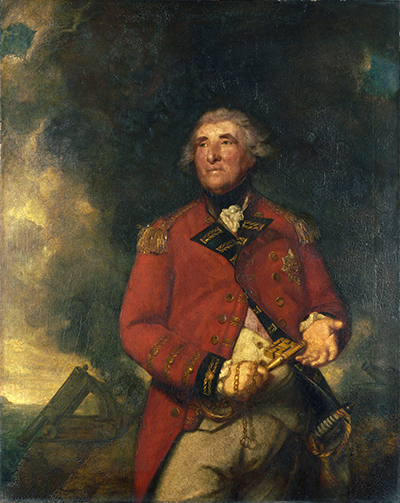
Lord Heathfield of Gibraltar is one of the clearest case studies. Rachel Morrison's National Gallery Technical Bulletin article records that the portrait was painted in 1787, showed deterioration early in its history, and now has major cracking and drying defects of a kind often associated with Reynolds.[5] The essay discusses a resin-containing binding medium such as megilp as a possible cause and investigates varnish-like glaze layers.[5]
The wording matters: possible cause, investigated, assessed. Technical evidence can identify materials and structures, but conservation history is rarely a single-cause story. Lord Heathfield is not simply "bad bitumen." It is a late Reynolds painting whose ambition depended on complex media, dramatic darkness, glaze and surface depth. Its damage is part of that material history.
The Reynolds Digital Research Resource broadens the case. It gathers heritage-science data from multiple collections so conservators and researchers can understand materials, defects, cleaning vulnerability and working methods across many paintings.[6] This multi-collection approach is crucial because Reynolds's practice changed over time and varied by work. One object cannot explain the whole career.
Modern viewers should therefore look at Reynolds with double awareness. The painting in front of us is real; its cracks, fading and darkened passages are part of its survival. But those changes may obscure the original balance of warmth, flesh, shadow and glow. A technically informed reading does not excuse the damage or pretend it away. It allows us to imagine the force that made Reynolds worth preserving in the first place.
This double awareness is particularly important with Reynolds because his fame has sometimes been damaged by the damaged surfaces themselves. A viewer encountering a faded or cracked portrait may underestimate the painter's original command. Technical study restores proportion. It does not make every work pristine, nor does it remove the evidence of ageing. It allows us to understand why contemporaries admired effects that may now be weakened.
Conservation also changes the emotional rhythm of looking. Instead of treating cracks as interruptions, the viewer can begin to read them as traces of a historical experiment. A dried or wrinkled dark passage may reveal the painter's desire for depth. A faded cheek may reveal the cost of seeking warmth through unstable colour. A heavily layered sky may show how much work went into an atmospheric effect that first appears simple.
This does not mean that damage is aesthetically desirable. It means that damage can be historically eloquent. Reynolds's paintings ask for sympathy without sentimentality: sympathy for the painter's ambition, and clear-eyed recognition of the material consequences.
Original effect and later reputation
Reynolds's reputation has always depended partly on surface. His sitters needed to look alive, elevated and persuasive. If flesh colours faded or shadows darkened, the public image of his art inevitably shifted. Later criticism sometimes responded to paintings whose original tonal relationships had already changed. The technical afterlife therefore became part of the critical afterlife.
This is one reason Reynolds can seem more austere or brown than he may once have been. The Wallace materials essay stresses that the best preserved paintings still show the qualities that captivated contemporaries: light and shade, harmonious colouring, richness of tone and lively texture.[3] That statement should guide interpretation. Reynolds's appeal was not merely intellectual. It was visual, sensuous and immediate.
The point is not to reconstruct a lost fantasy of perfect colour. It is to avoid confusing survival with intention. Many Old Master paintings also changed over time, and Reynolds's own ambition was shaped by the aged appearance of earlier art. The irony is sharp: he tried to imitate the mellow authority of old painting, but some of his own methods produced accelerated ageing. He wanted time's richness; sometimes he got time's damage.
This irony deepens rather than weakens the art. Reynolds becomes a painter caught between theory, market, memory and matter. He wanted British portraits to look as if they belonged to a long tradition, yet he worked in a modern culture of experiment and supply. The paintings are therefore historical objects in two senses: they represent eighteenth-century society, and they embody eighteenth-century material risk.
Why Reynolds's technique matters
Reynolds's technique matters because it reveals the material underside of the Grand Manner. His art was not only a set of ideas about dignity, general nature and Old Master study. It was a set of physical procedures: prepared supports, layered grounds, changing pigments, resinous additions, wax, varnish-like glazes, assistants, drapery labour, studio records and repeated trials.
It also matters because it makes Reynolds more human. The official president of the Royal Academy becomes a restless experimenter, chasing effects that sometimes betrayed him. His failures are not separate from his greatness. They show how far he was willing to push portraiture in order to make it look rich, learned and alive.
The best way to understand Reynolds is therefore neither to worship the damaged surface nor to mock it. His technique should be read historically. He wanted new British portraits to carry the visual authority of old European painting. He worked in an age that trusted experiment and improvement. He used materials that could produce extraordinary immediate effects. Some of those materials and combinations aged badly.
That knowledge changes the act of looking. A faded cheek, cracked shadow or darkened glaze is not just a flaw. It is evidence of ambition under pressure. Reynolds's paintings survive as images, objects, experiments and conservation puzzles. Their condition asks us to see the cost of brilliance, and the brilliance that made the cost matter.
Frequently Asked Questions
Discussion
Does knowing the material risks behind Reynolds's surfaces change how you judge their beauty?
Reader Insights
When does technical experiment become inseparable from artistic achievement?
How should fading or cracking affect interpretation without being mistaken for original intention?
How does delegated drapery or copying alter your understanding of a Reynolds portrait?
Join the Conversation
Share your reading below.
References
- Alexandra Gent, Ashok Roy and Rachel Morrison, “Practice Makes Imperfect: Reynolds's Painting Technique,” National Gallery Technical Bulletin, Vol. 35, 2014, https://www.nationalgallery.org.uk/technical-bulletin/vol-35-essay-2-2014.
- National Gallery, London, “Sir Joshua Reynolds 1723-1792,” https://www.nationalgallery.org.uk/artists/sir-joshua-reynolds.
- Wallace Collection, “The Materials and Techniques,” https://www.wallacecollection.org/explore/explore-in-depth/reynolds/the-paintings/the-materials-and-techniques/.
- Wallace Collection, “The Science of Experimentation,” https://www.wallacecollection.org/explore/explore-in-depth/reynolds/the-paintings/the-science-of-experimentation/.
- Rachel Morrison, “Mastic and Megilp in Reynolds's ‘Lord Heathfield of Gibraltar’,” National Gallery Technical Bulletin, Vol. 31, 2010, https://www.nationalgallery.org.uk/research/publications/technical-bulletin/mastic-and-megilp-in-reynolds-s-lord-heathfield-of-gibraltar.
- Reynolds Digital Research Resource, project overview, https://reynolds.nationalgallery.org.uk/project/.
- Wallace Collection, “Reynolds's Studio,” https://www.wallacecollection.org/explore/explore-in-depth/reynolds/the-artist/reynoldss-studio/.
- Wallace Collection, “Reynolds and Fashion,” https://www.wallacecollection.org/explore/explore-in-depth/reynolds/the-artist/reynolds-and-fashion/.
- David Mannings, Sir Joshua Reynolds: A Complete Catalogue of His Paintings, with subject pictures catalogued by Martin Postle, Yale University Press / Paul Mellon Centre for Studies in British Art, 2000.