


Fruit can be a sacred attribute, a portrait made from the harvest, a meal shared by children, or the centre of an experiment in colour and space. Its familiarity makes it immediately legible, but not simple. A pomegranate held by the Christ Child does different work from the apples on Cézanne’s table; grapes gathered for an autumn scene do not carry the same meaning as grapes fractured and rebuilt in a Cubist composition.
This chronological guide follows ten paintings in which fruit is essential to the image. The sequence begins before independent fruit still life, when fruit helped define a religious or allegorical subject. It then reaches paintings that concentrate attention on baskets, peaches and lemons, before ending with modern artists who used familiar objects to reconsider balance, viewpoint and structure.
The selection is deliberately work-led. It is not a complete history of Still Life Art, a dictionary of symbols, or a catalogue of every artist who painted food. Those larger questions belong to Painting Genres and Iconography in Art. Here, each fruit is read within the painting that contains it, with links to the individual artwork and artist for closer study. Readers can also return to the Paintings hub or browse Famous Paintings across many subjects.
Before fruit still life: attribute and personification
In the first three works, fruit does not yet stand alone. It accompanies sacred figures or supplies the material from which a ruler’s likeness is constructed. These uses reveal why a universal key—pomegranate means this, pear means that—cannot adequately explain fruit in painting. Placement, action, genre and historical setting all matter.
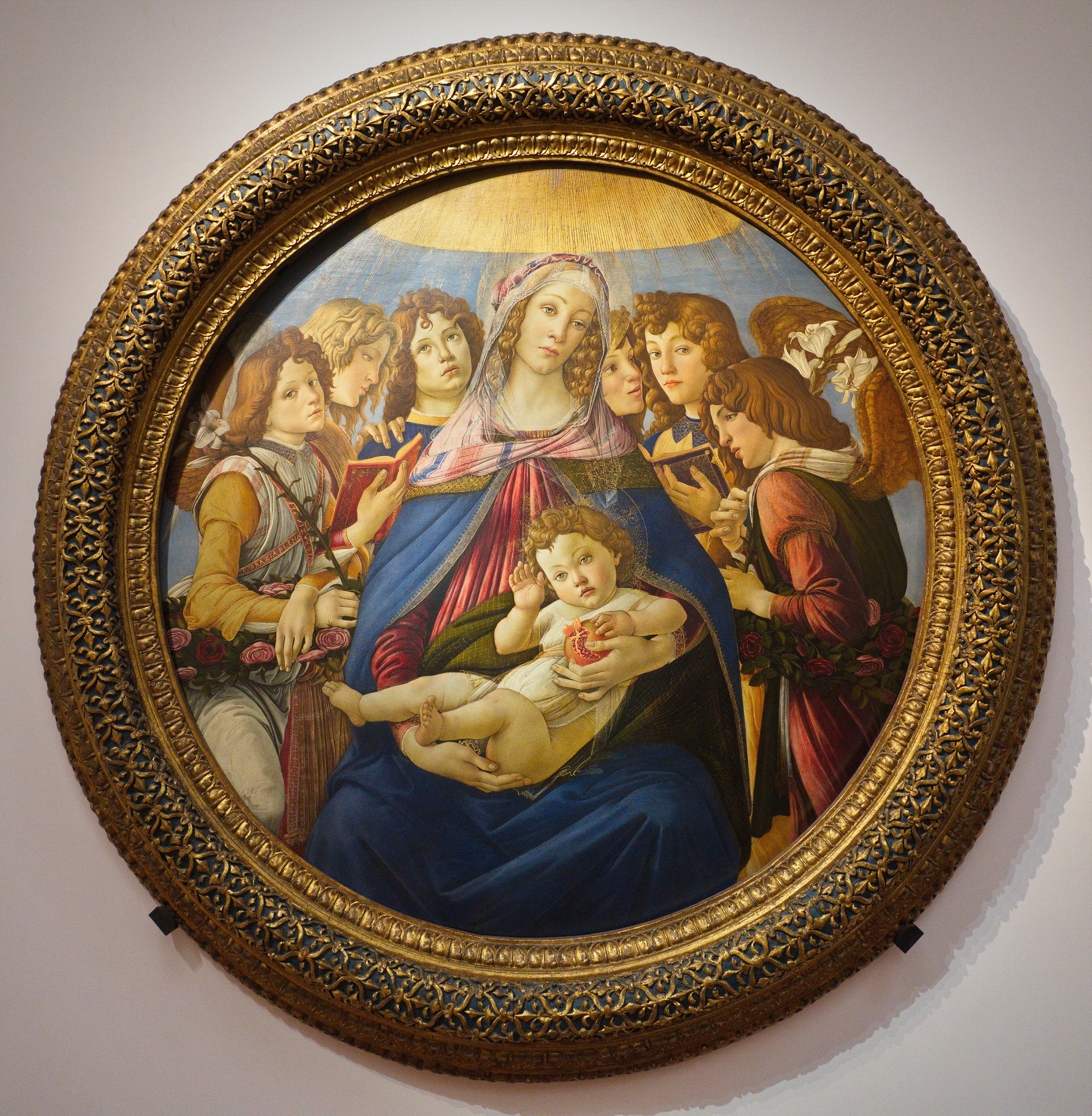
1. Virgin and Child with Angels (‘Madonna of the Pomegranate’) — Sandro Botticelli, circa 1487
In Madonna of the Pomegranate, the Virgin and Child occupy the centre of a circular composition, surrounded by six angels. Their hands converge on an opened pomegranate. The fruit is small beside the gathered figures, yet its position at the image’s core makes it impossible to dismiss as ornament. Its red interior echoes the carefully controlled accents of colour around it, while the radiating arrangement of heads and hands reinforces the tondo’s shape.
The Uffizi records the work as tempera on wood, about 1487, with a diameter of 143.5 centimetres.[1] The museum relates the pomegranate’s many seeds to Christ’s suffering and to the unity of the Church. That is a work-specific iconographic reading, supported by the sacred figures who hold the fruit; it should not be transferred automatically to every painted pomegranate. Botticelli’s image makes fruit meaningful through touch, position and devotional context. Explore Sandro Botticelli for the artist’s wider use of gesture and symbolic detail.
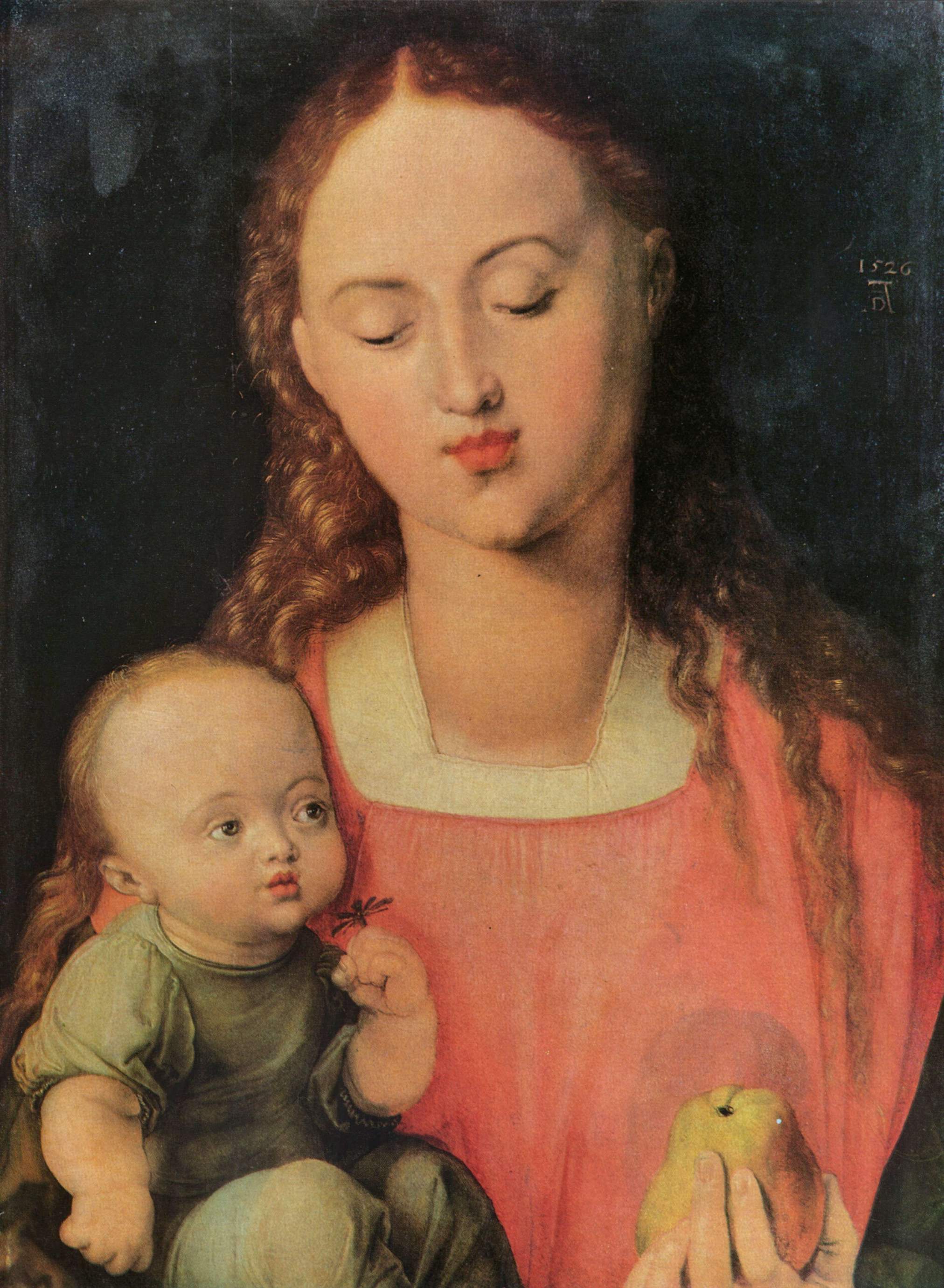
2. Madonna and Child with the Pear — Albrecht Dürer, 1526
Madonna and Child with the Pear brings the fruit into an unusually close encounter. The Virgin looks downward as the Child holds a small flower and reaches near the pear presented in her hand. Unlike the abundant display of a market or laden table, this is one carefully described object. Its rounded weight, the pressure of fingers around it and its proximity to the infant give the fruit a tactile presence.
The Italian national heritage catalogue identifies the painting as Dürer’s 1526 oil on panel in the Uffizi, inventory 1890 no. 1171.[2] The pear participates in a devotional exchange rather than becoming an independent subject. Its scale matters: it is ordinary enough to be held, but conspicuous enough to guide attention through the figures’ hands. The painting shows how close observation can support religious meaning without turning the image into a still life. See more by Albrecht Dürer.
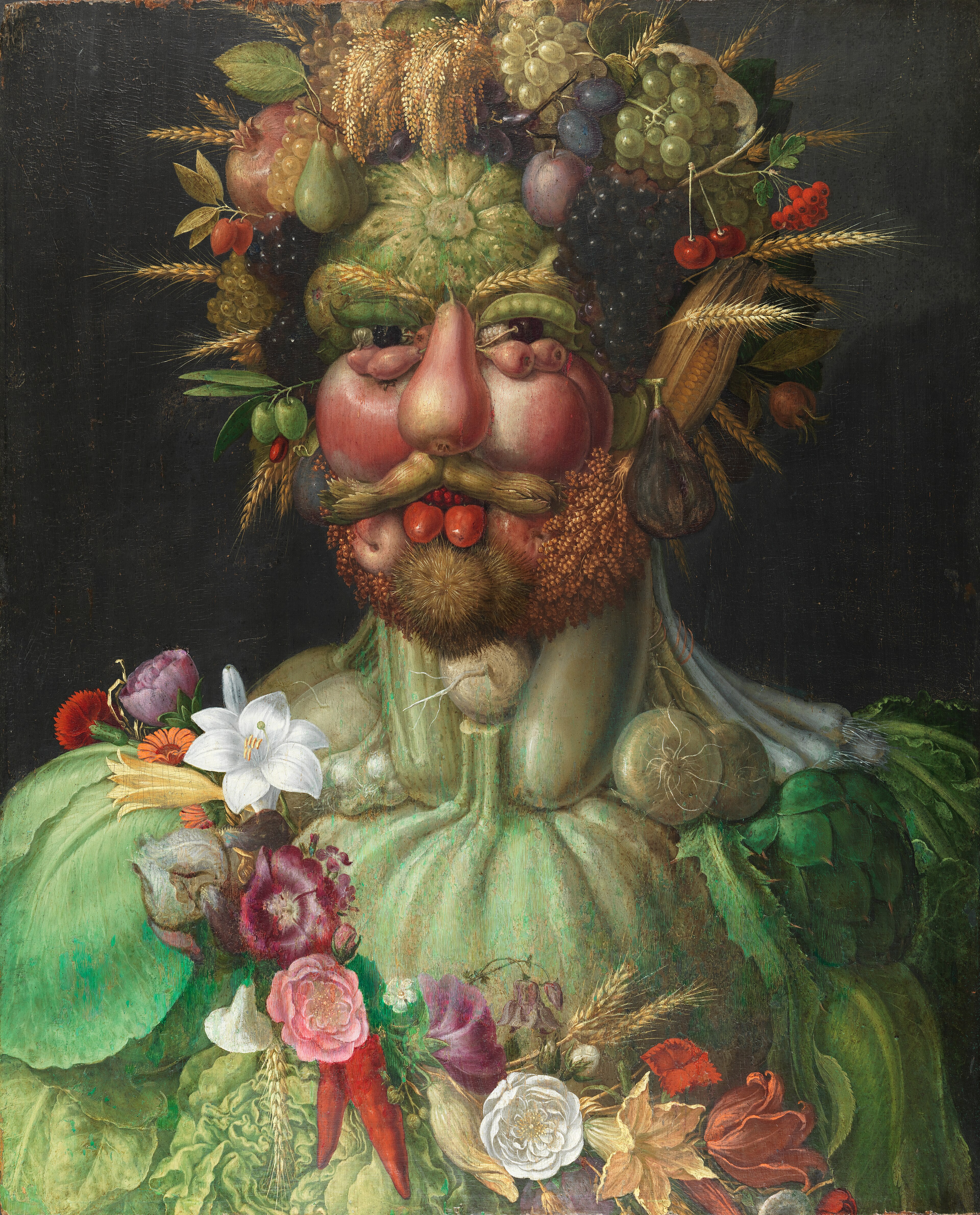
3. Vertumnus — Giuseppe Arcimboldo, 1591
Giuseppe Arcimboldo’s Vertumnus changes the relationship between fruit and figure completely. Pears and apples swell into cheeks; cherries suggest lips; grapes, grain, flowers and vegetables become hair, clothing and ornament. Seen separately, the ingredients resemble a harvest display. Seen together, they form the recognisable presence of a person.
Skokloster Castle identifies the sitter as Emperor Rudolf II represented as Vertumnus, the Roman god associated with seasonal change. The museum dates the oil-on-panel work to 1591 and records its dimensions as 70 by 58 centimetres without the frame.[3] Fruit is therefore neither accessory nor autonomous still life. It is the substance of a court portrait and a seasonal personification. Arcimboldo asks the eye to alternate between inventory and likeness, abundance and authority. That double reading distinguishes the painting from later baskets of fruit while establishing how powerfully produce can organise an entire image. Continue to Giuseppe Arcimboldo for related composite heads.
Fruit becomes a concentrated pictorial subject
Around the turn of the seventeenth century, fruit could command sustained attention without needing to construct a sacred figure or imperial face. The next three works remain very different from one another: a basket isolated against a light wall, two boys eating outdoors, and a restrained arrangement of peaches and tableware. Together they show that a fruit painting may concern close observation, appetite, social life or material balance.
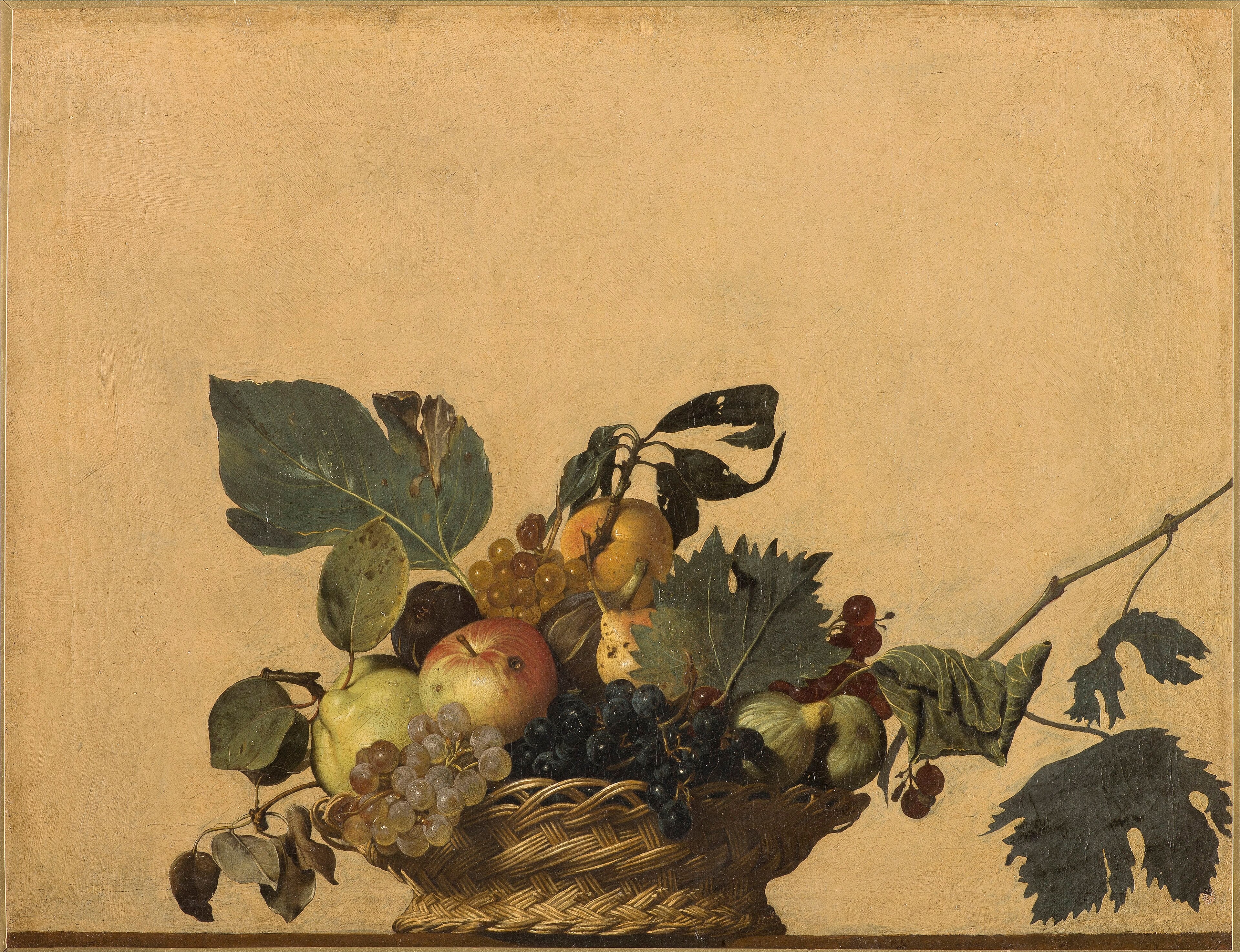
4. Basket of Fruit — Caravaggio, after 1597 to the early seventeenth century
Caravaggio’s Basket of Fruit places a wicker basket on the narrow edge of a ledge. Apples, grapes and figs press forward, while leaves curl, dry and cast delicate shadows against a pale background. The basket projects slightly beyond its support, making the arrangement feel both offered to the viewer and precariously exposed.
The Pinacoteca Ambrosiana records the oil on canvas as inventory 151, measuring 47 by 61 centimetres, and dates it from after 1597 into the early seventeenth century.[4] The museum draws attention to the extraordinary concentration lavished on natural elements. Ripeness here includes imperfection: blemishes, split skin and failing leaves prevent the display from becoming an abstract emblem of plenty. Yet decay does not supply a single moral answer. The painting’s force also lies in its shallow space, controlled light and the tension between overflowing produce and geometric restraint. Visit Caravaggio for a broader view of his work.
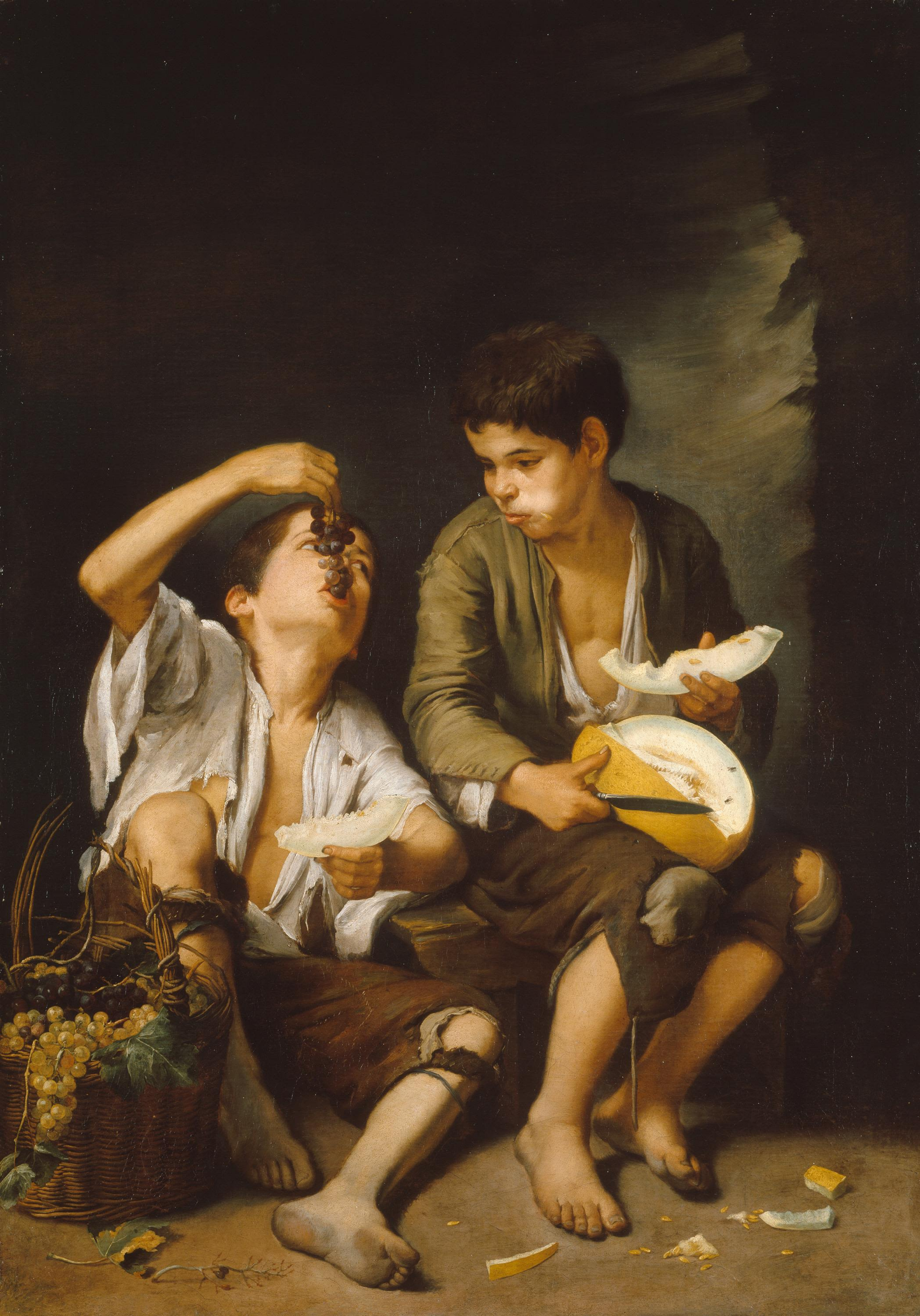
5. Grape and Melon Eaters — Bartolomé Esteban Murillo, 1645
In Grape and Melon Eaters, fruit is handled, divided and consumed. One seated boy raises grapes towards his mouth while the other holds a slice of melon. A basket rests beside them, but the human actions—not the container alone—structure the picture. Glances, hands and bent limbs create a compact exchange around food.
The Bayerische Staatsgemäldesammlungen dates the oil-on-canvas painting to 1645 and records it as Alte Pinakothek inventory 605, measuring 145.9 by 103.6 centimetres.[5] The institution’s preferred English title keeps attention on eating, while the local artwork page retains the familiar descriptive route title Two Children Eating a Melon and Grapes. Fruit here is inseparable from appetite and social circumstance. The image invites close attention to rind, pulp and grapes, but it also shows food as an event shared between people. More works by Bartolomé Esteban Murillo extend that context.
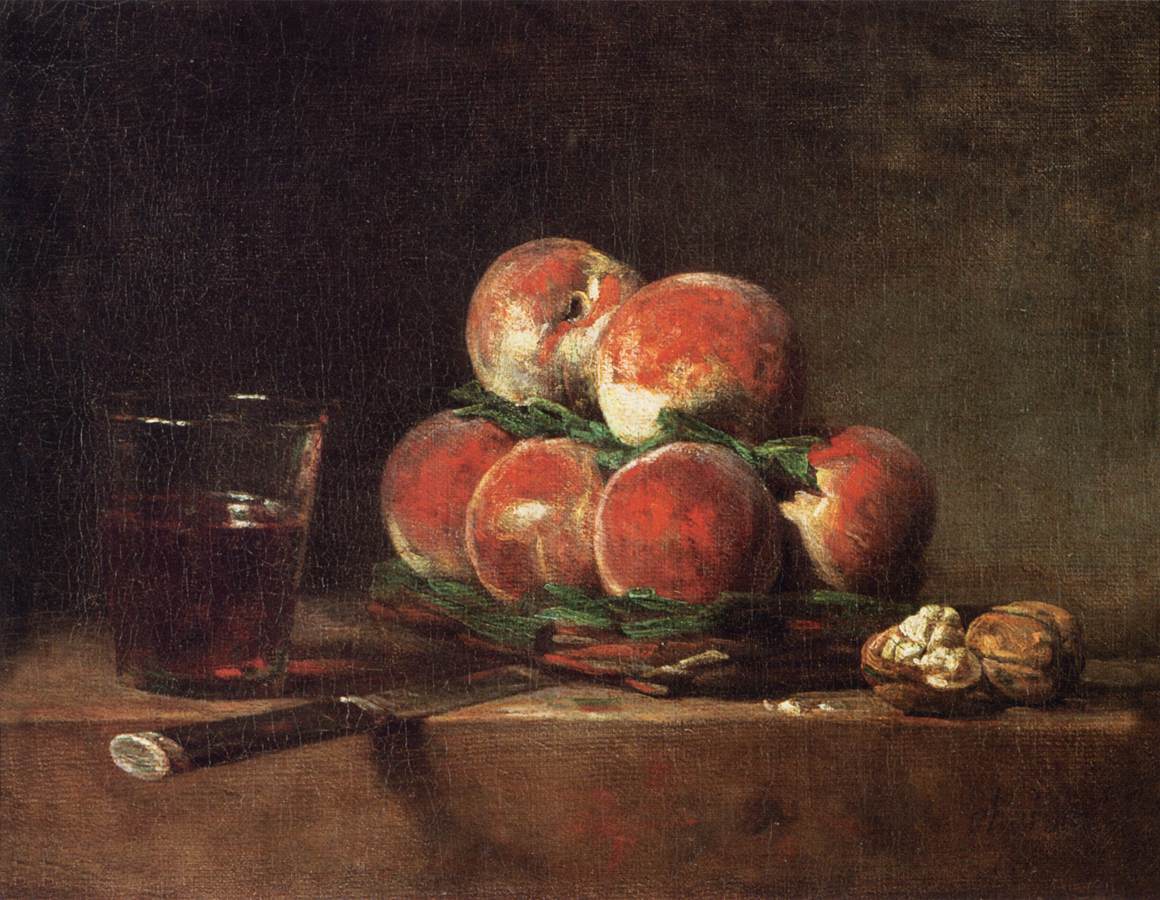
6. Basket of Peaches, with Walnuts, Knife and Glass of Wine — Jean-Baptiste-Siméon Chardin, 1768
Chardin’s Basket of Peaches lowers the temperature of abundance. A small basket holds softly coloured peaches; nearby walnuts, a knife and a glass of wine spread across a modest surface. The objects do not form a lavish banquet. Their different textures—fuzzy skin, hard shells, clear glass and reflective metal—reward slow comparison.
The Louvre dates this oil on canvas to 1768, records it as MI 722 and gives its dimensions as 32.5 by 39.5 centimetres.[6] Its compact scale suits the intimate concentration of the arrangement. Chardin creates order without making the objects rigid: the knife extends outward, the glass catches light, and the scattered walnuts loosen the basket’s mass. Fruit is now fully capable of sustaining attention through colour, surface and spacing. The work belongs within still-life painting, but its particular achievement is not a summary of the genre. It is a measured encounter with a few things. Browse Chardin for related still lifes and domestic subjects.
Harvest, observation and modern form
The final four paintings expand and then compress the subject. Goya connects grapes to season, labour and court decoration; Manet isolates one lemon; Cézanne makes apples anchors in a shifting tabletop; Gris reconstructs fruit within Cubist space. Chronology here is useful not because styles advance in a straight line, but because the same ordinary material keeps offering new pictorial problems.
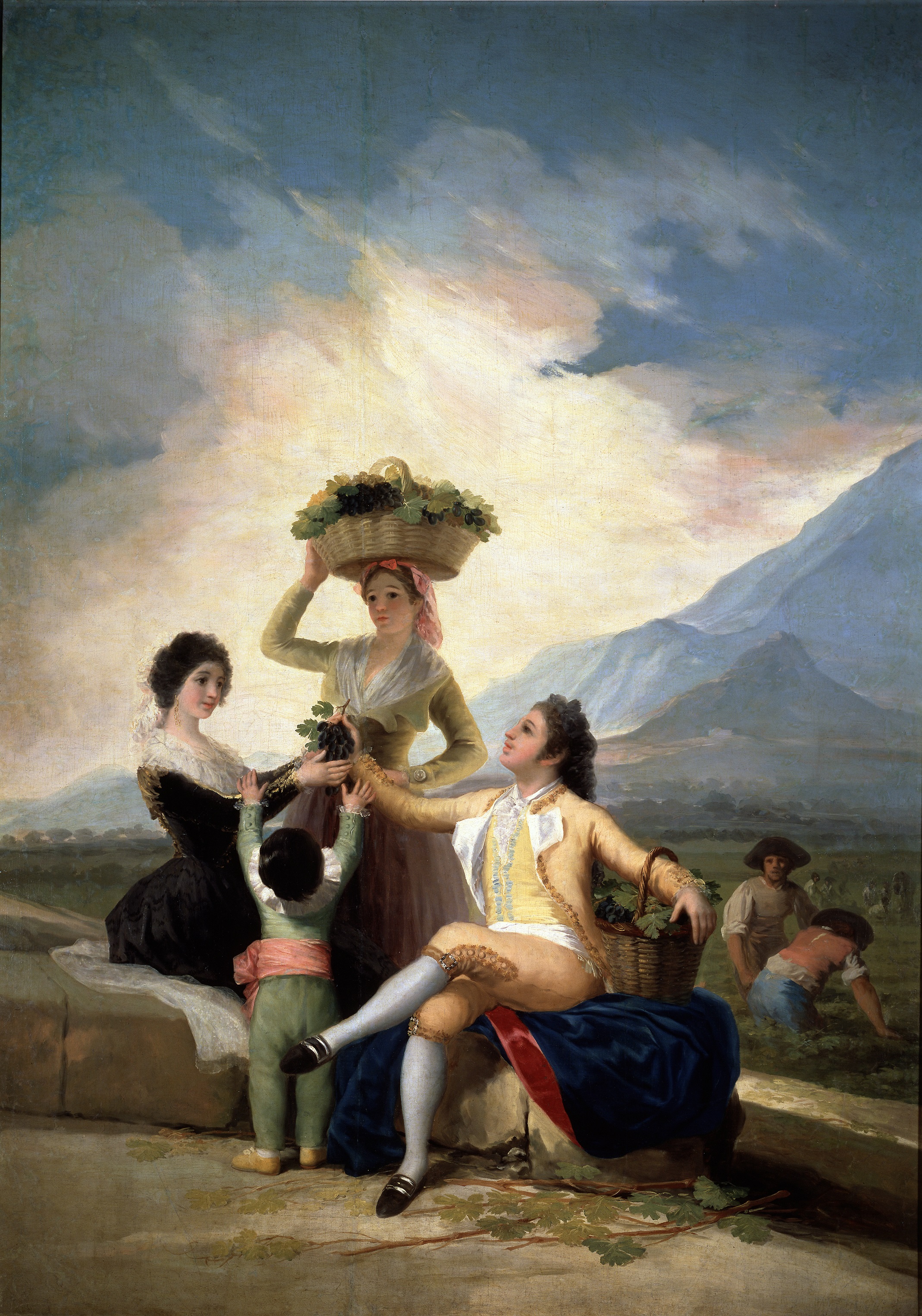
7. The Grape Harvest or Autumn — Francisco de Goya, 1786
In The Grape Harvest or Autumn, a seated man offers grapes to a finely dressed woman while a child reaches upward. Behind them, figures gather the crop beneath a broad sky. The fruit passes between cultivation and consumption: distant harvest becomes a close, elegant gesture.
The Prado dates the oil-on-canvas work to 1786, records it as P000795 and explains that it was designed as a tapestry cartoon for the dining room of the Prince and Princess of Asturias at El Pardo.[7] Autumn is therefore represented through both agricultural work and sociable enjoyment, within a painting made for a court interior. The grapes cannot be understood only as a symbolic attribute or still-life motif. They connect background labour, foreground exchange, season and destination. See Francisco de Goya for more of his tapestry designs and later paintings.
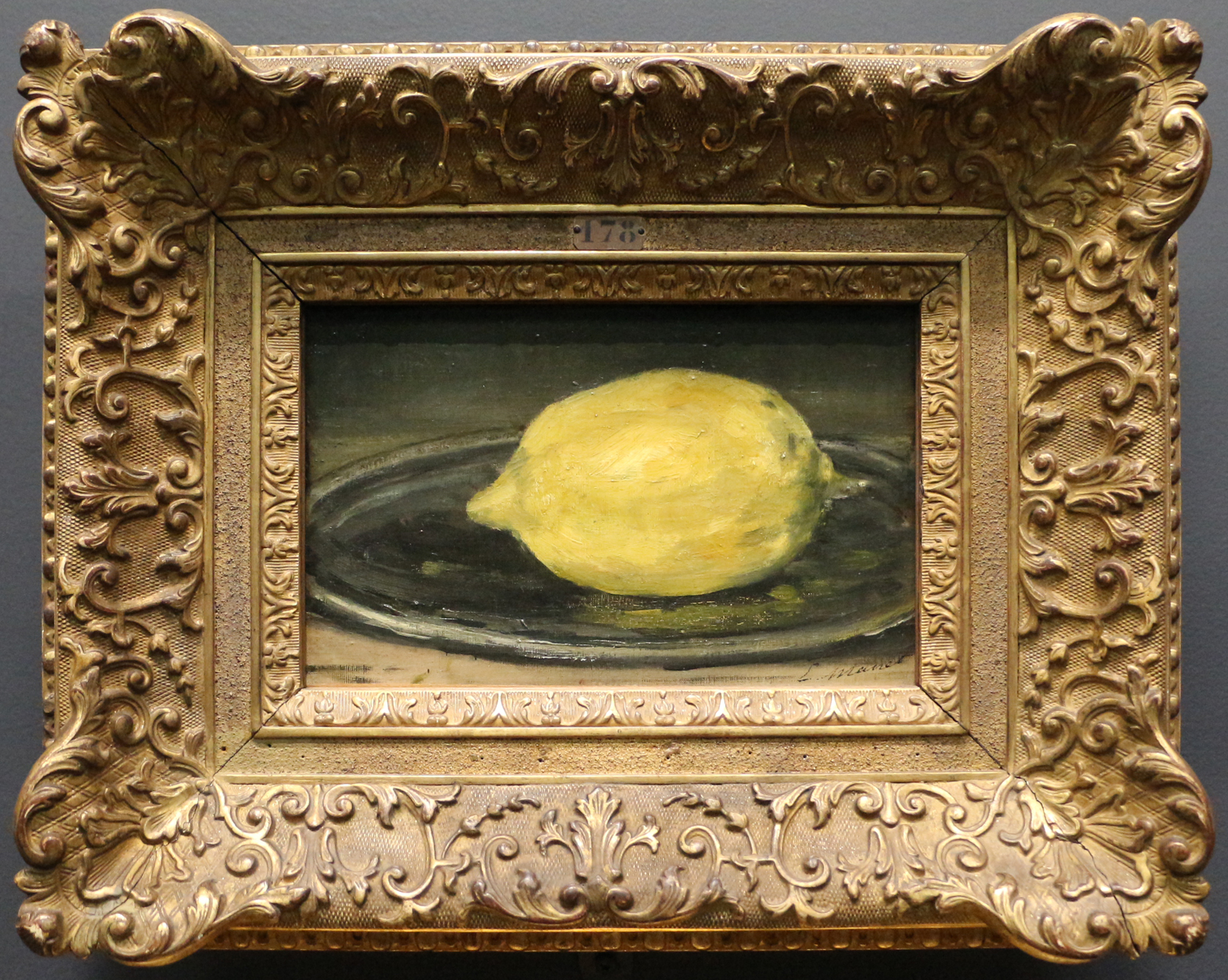
8. Le Citron (The Lemon) — Édouard Manet, 1880
The Lemon reduces fruit painting to a single yellow form on a dark plate. The lemon’s irregular contour and concentrated colour stand against a loosely worked, shadowed setting. With no feast, figure or narrative to compete for attention, modest differences in hue and touch become the event of the painting.
The Musée d’Orsay records Le Citron as an 1880 oil on canvas measuring just 14 by 22 centimetres, inventory RF 1997.[8] That small scale intensifies rather than diminishes the encounter. The subject can be recognised instantly, yet Manet’s brushwork prevents it from becoming a diagram of a lemon. Light, paint and surrounding darkness determine how the fruit exists on the surface. The radical economy of the composition demonstrates that concentration is not the same as simplicity. Explore Édouard Manet for further still lifes and scenes of modern life.
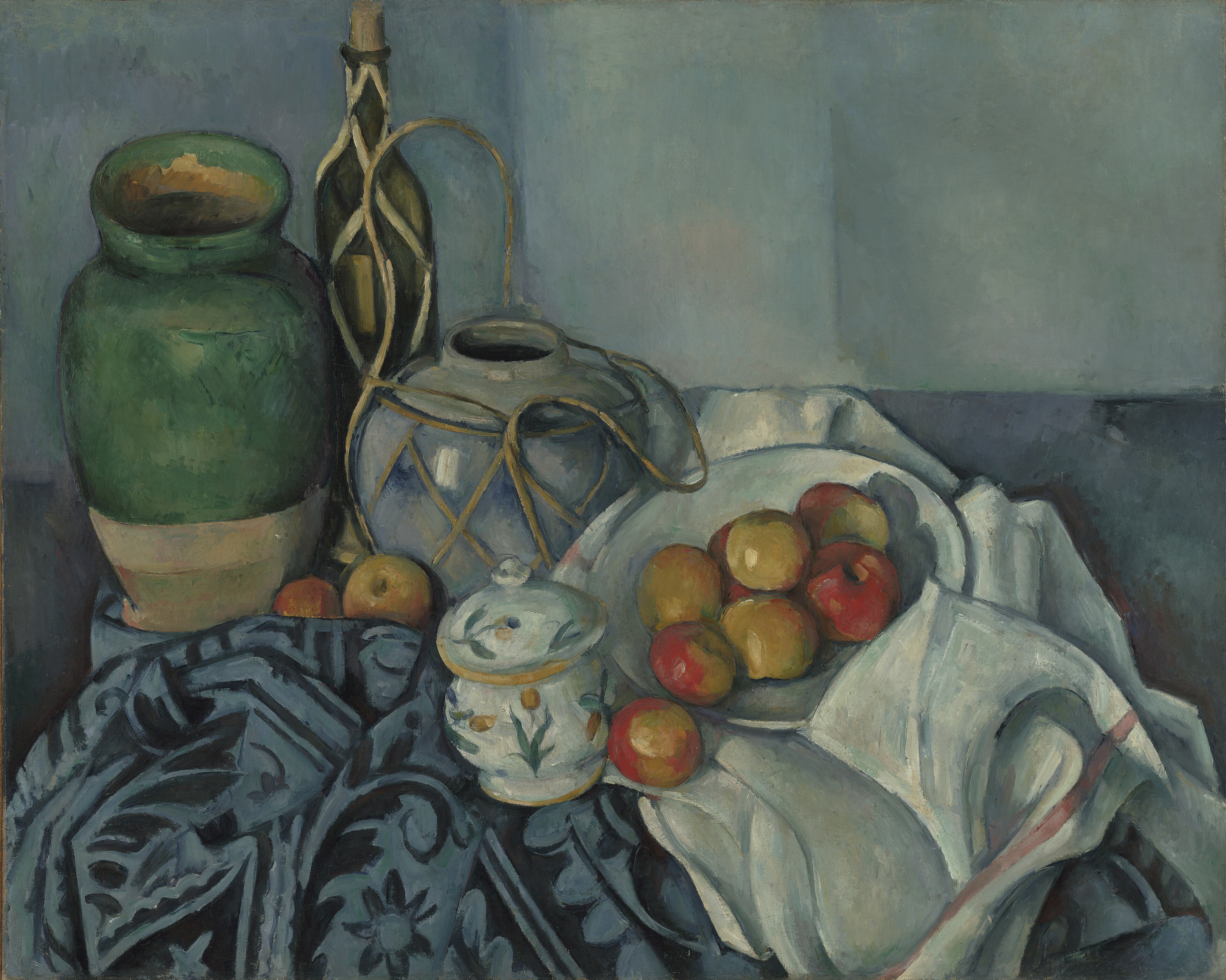
9. Still Life with Apples — Paul Cézanne, 1893–1894
Paul Cézanne’s Still Life with Apples restores abundance but unsettles stable space. Apples gather between ceramic vessels, a rum bottle and patterned cloths. Edges tilt, folds rise and fall, and objects appear to be seen from subtly different positions. The fruit supplies repeated rounded forms and patches of warm colour that help hold the arrangement together.
The J. Paul Getty Museum dates the oil on canvas to 1893–1894, records it as 96.PA.8 and measures it at 65.4 by 81.6 centimetres.[9] The museum describes Cézanne’s adjustments to conventional perspective and his use of varied viewpoints. The apples are therefore more than edible things or symbols: their recognisable weight lets viewers feel how the surrounding space has been reorganised. Pattern, colour and geometry remain attached to observed objects, even as observation becomes visibly constructed. Continue to Paul Cézanne for other landscapes, figures and still lifes.
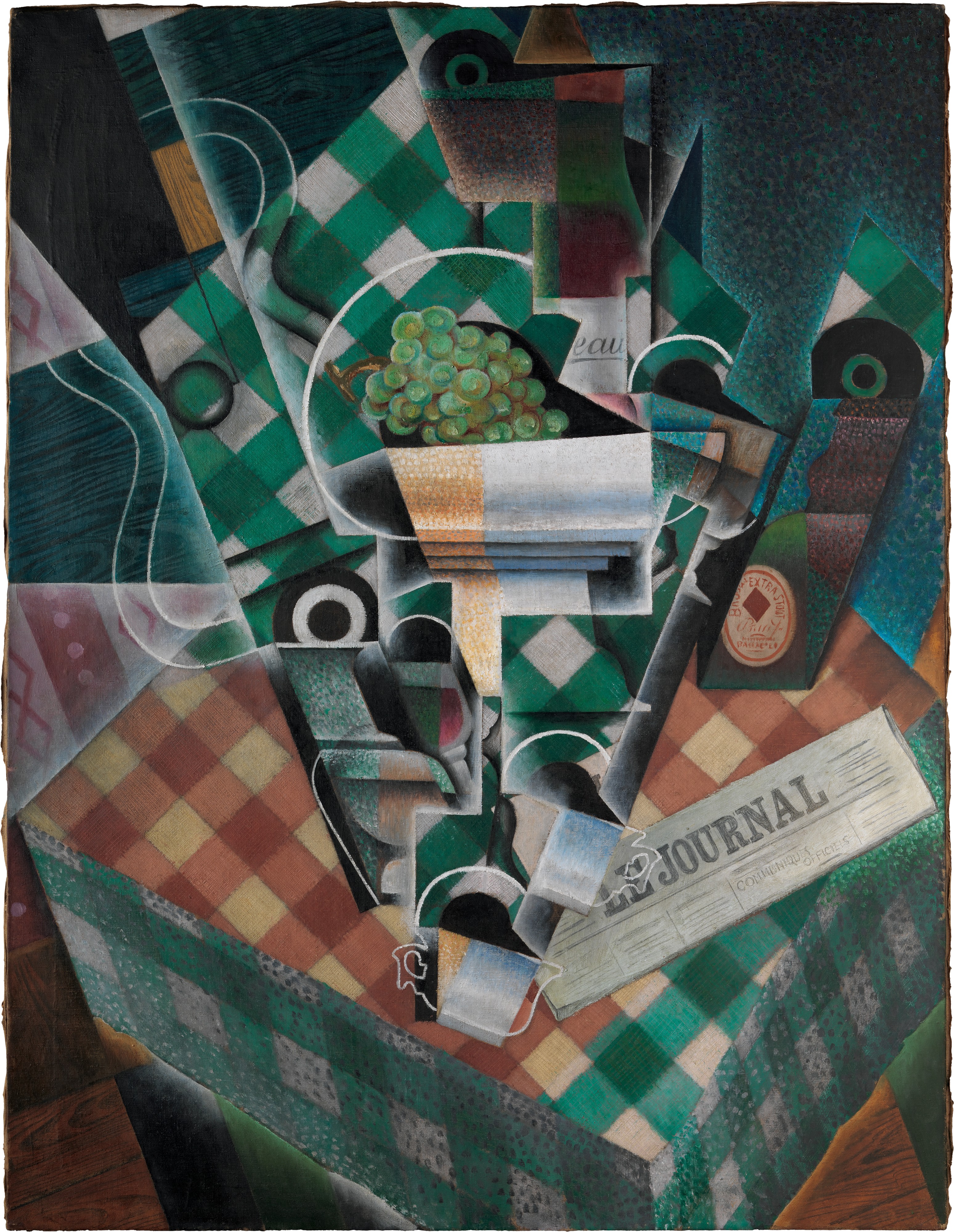
10. Still Life with Checked Tablecloth — Juan Gris, Paris, spring 1915
Juan Gris’s Still Life with Checked Tablecloth concludes the sequence with a tabletop built from overlapping planes. Grapes, bottles, cups, a guitar and newspaper fragments appear across green and checked cloths. Some objects announce themselves through contour or printed clue; others emerge gradually from the structure.
The Metropolitan Museum of Art records the work as an oil-and-graphite painting on canvas made in Paris in spring 1915, measuring 116.2 by 89.2 centimetres and catalogued as 2014.463.[10] Gris does not abandon fruit’s material identity. Grapes remain a familiar cluster within the composition, but familiarity now helps viewers navigate a space that refuses a single viewpoint. The checked tablecloth supplies a repeated measure, then bends and breaks across intersecting forms. Fruit has moved from attribute and observed object to an active element in Cubist reconstruction. Visit Juan Gris for more of his precisely organised compositions.
Reading fruit without a universal symbol key
Across these ten paintings, fruit repeatedly attracts meaning because it can be touched, offered, eaten, harvested, stored and watched as it changes. Those qualities make it useful to painters, but they do not generate one permanent interpretation. Botticelli’s pomegranate belongs to a devotional relationship; Arcimboldo’s produce builds an imperial and seasonal identity; Murillo’s grapes and melon are being consumed; Goya’s grapes connect work to sociability. Context changes the question.
Material condition matters too. Caravaggio’s blemishes and drying leaves make ripeness inseparable from vulnerability, while Chardin’s peaches establish a quieter conversation among surfaces. Manet can ask one lemon to carry an entire composition through colour and touch. Cézanne and Gris retain the recognisable fruit while testing how objects inhabit painted space. None of those achievements needs a universal symbolic code to become meaningful.
The safest way to read fruit in painting is therefore to begin with the particular work: who or what holds it, what surrounds it, how it is painted, and what the collection record can establish. Comparisons become richer once those differences remain intact. A subject-led sequence can cross religious painting, portraiture, social narrative and still life without claiming ownership of those broader histories. What links these works is not a genre label, but the sustained ingenuity with which painters made familiar fruit carry visual attention.
References
- Uffizi Galleries, “Virgin and Child with Angels (‘Madonna of the Pomegranate’)”.
- Catalogo Generale dei Beni Culturali, “Madonna and Child with the Pear”.
- Skokloster Castle / Swedish History Museum, “Vertumnus”.
- Pinacoteca Ambrosiana, “Basket of Fruit”.
- Bayerische Staatsgemäldesammlungen, “Grape and Melon Eaters”.
- Musée du Louvre, “Panier de pêches, avec noix, couteau et verre de vin”.
- Museo Nacional del Prado, “The Grape Harvest or Autumn”.
- Musée d’Orsay, “Le Citron”.
- J. Paul Getty Museum, “Still Life with Apples”.
- The Metropolitan Museum of Art, “Still Life with Checked Tablecloth”.