by Tom Gurney
Tom Gurney BSc (Hons) is an art history expert with over 20 years experience
Page created on September 3, 2026 / Page updated on September 13, 2026
Email: tomgurney1@gmail.com / Phone: +44 7429 011000
How Visible Clues Become Historically Grounded Meaning
Iconography is the study and description of what images represent: named figures, stories, objects, gestures, attributes, symbols and recurring themes. It helps us move from “a person beside a wheel” to “Saint Catherine,” or from “a winged youth” to “Cupid.” Interpretation goes further, asking what those subjects meant to the artist, patron and audience in a particular place and time.[1][2]
That distinction matters because symbols are not a universal second language. A flower, animal or colour may carry different associations in another century, culture, medium or religious setting. Even within one tradition, an object can identify a figure, advance a story, create a pun, display wealth or simply belong to the scene. Good iconographic reading begins with visible evidence and historical sources, not a ready-made dictionary.
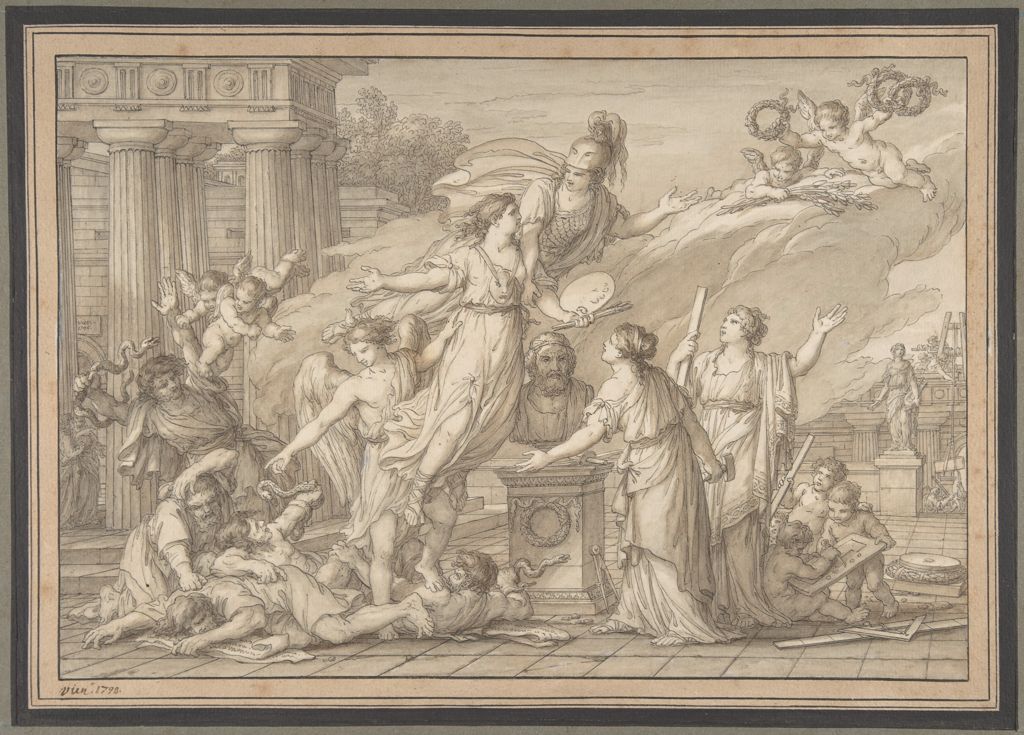
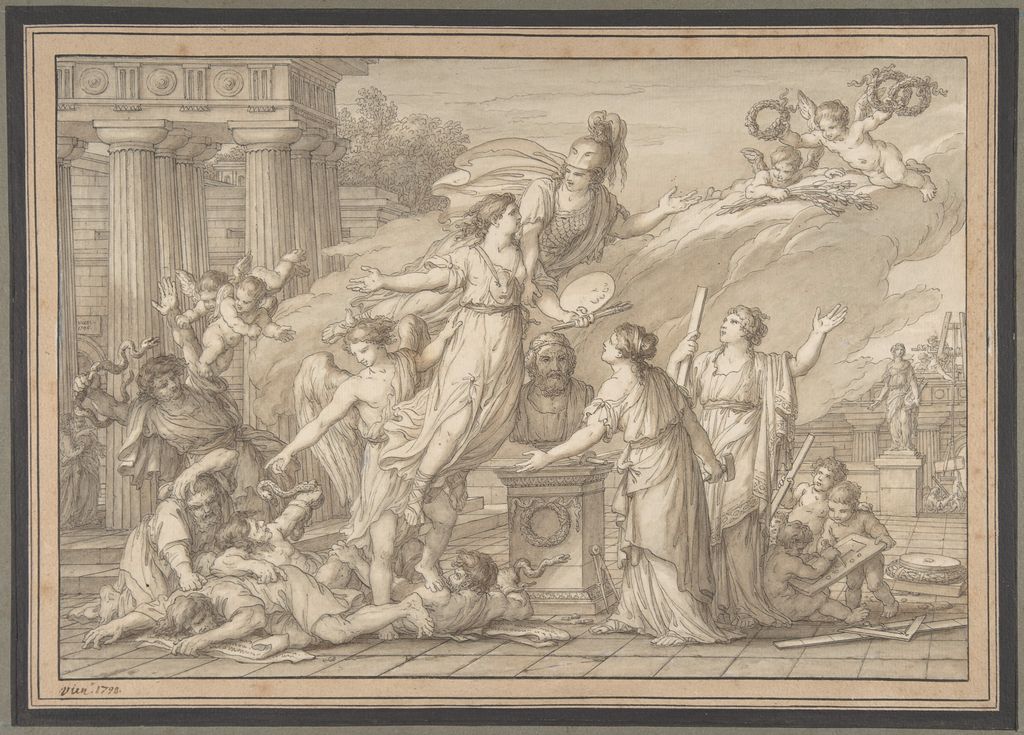
Joseph Marie Vien, Allegory of the Arts, 1796. Personified arts, their attributes and the central bust of Homer show how identification, relationship and institutional context work together in an iconographic reading. Image: The Metropolitan Museum of Art, public domain, Open Access CC0.
At a Glance
- Iconography identifiessubjects, stories, figures, attributes, motifs and recurring themes.
- Interpretation askswhat those visible subjects meant in a specific historical setting.
- Context controls meaningthe same animal, flower, colour or object can serve different functions across cultures and periods.
- Grade the claimdistinguish securely identified, commonly interpreted, plausible and disputed readings.
- Test the whole worka useful interpretation explains connected details, function and composition rather than one isolated sign.
Contents
What does iconography mean in art?
In ordinary museum use, iconography can mean either the subject matter found in an artwork or the method used to identify it. The first sense lets us speak of “the iconography of the Annunciation”: the figures, setting and signs through which artists represented that biblical episode. The second describes the work of recognising those elements and relating them to texts, conventions and comparable images.
The Getty's vocabulary guidance separates identification from interpretation.[1] Identification names what is represented: a dove, a skull, Hercules, the Annunciation. Interpretation asks about significance: whether the dove refers to the Holy Spirit in this Christian scene, how a skull addresses mortality in a seventeenth-century still life, or why an artist changed an inherited type. The two stages support each other, but certainty at the first does not guarantee certainty at the second.
Iconography is also different from formal analysis. Formal analysis attends to line, colour, scale, texture, space and composition—the visible organisation explained in the Elements of Art and Principles of Art. Iconography attends to represented content. A strong reading uses both. The position of an object may make it prominent, while historical evidence explains why that object matters.
Finally, iconography is not the same as the Symbolism movement. Symbolism names a historical tendency associated especially with late nineteenth-century art. Artists in every period have used symbols, and iconographic study can be applied far beyond that movement.
Symbol, motif, attribute, personification and allegory
These words overlap, but they answer different questions.
An attribute identifies a figure. The National Gallery describes it as an object associated with a person, often through the story of a saint: keys for Saint Peter or a wheel for Saint Catherine.[2] The Getty's ancient statue of Hercules provides a classical example. His club and lion skin recall the Nemean lion and distinguish him from an otherwise unnamed athletic male figure.[3]
A motif is a recurring visual element: a wave, garden, halo, mirror or skull. Recurrence alone does not settle meaning. A symbol is an element understood to stand for something beyond its literal identity.[1] A dove may be only a bird in one image and a sign of the Holy Spirit in another. A personification gives human form to an abstract idea, such as Justice holding scales. An allegory makes one apparent subject carry another, more abstract subject; identifying its figures is a beginning, not always a complete solution.[8]
Early modern emblem books made such relationships unusually explicit by combining a motto, an image and an explanatory verse. Artists and viewers used them as resources for moral and allegorical imagery.[9] Paintings rarely provide such a neat key. Their symbols can reinforce one another, conflict, or acquire new force from the work's original location and audience.
Four works: how iconography changes the way we look
Jan van Eyck: attributes inside a sacred narrative
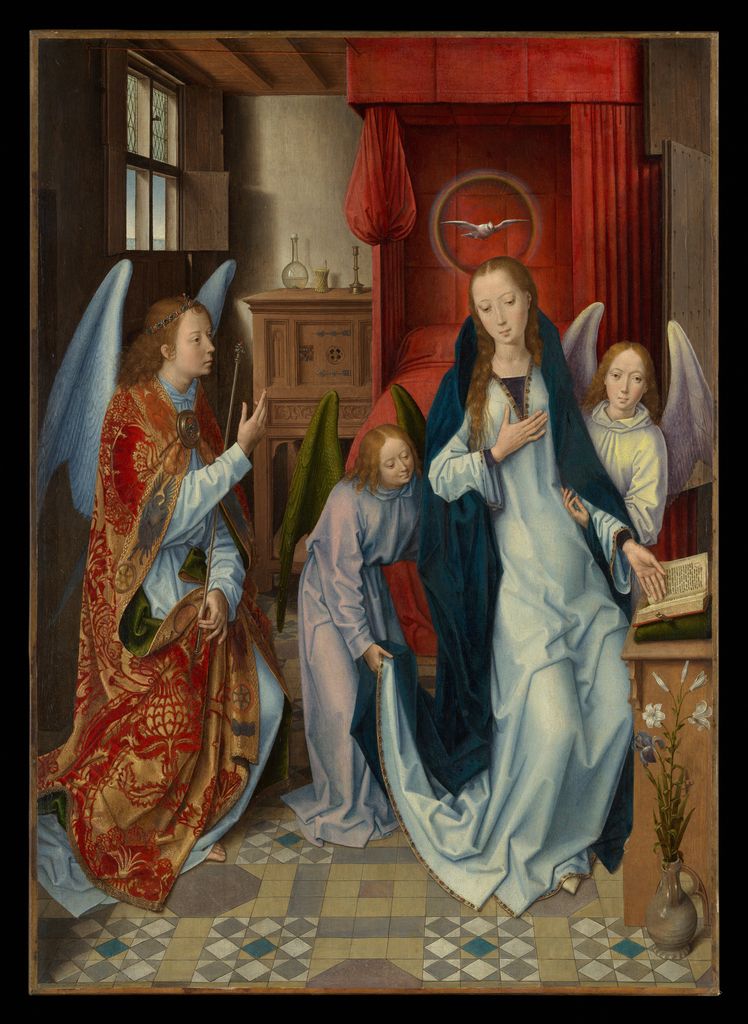
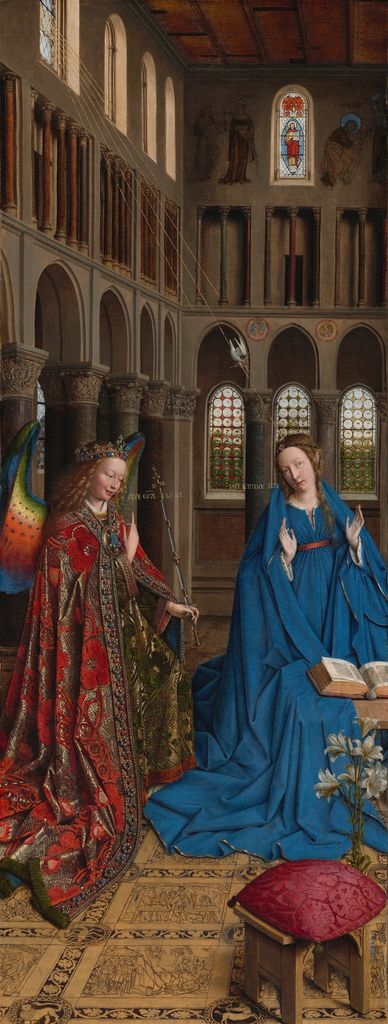
Jan van Eyck's The Annunciation (c. 1434/1436) shows Gabriel addressing Mary inside a richly detailed church. The National Gallery of Art identifies the dove and seven rays descending toward Mary, the lilies near her, the inscriptions of Gabriel's greeting and Mary's answer, and Old Testament scenes in the floor.[4] These are not loose decorative additions. Within this Christian image, they locate a specific Gospel episode and connect it to theological ideas about incarnation and salvation.
Yet the painting is not solved by listing objects. Scale, architecture, direction of writing and the relationship between natural and sacred time all shape the encounter. The museum record and the biblical story provide evidence; close looking shows how Van Eyck made that evidence visible. The example also marks the boundary with Religious Art, which owns the broader genre rather than iconographic method.
Hokusai: a famous image without a universal code
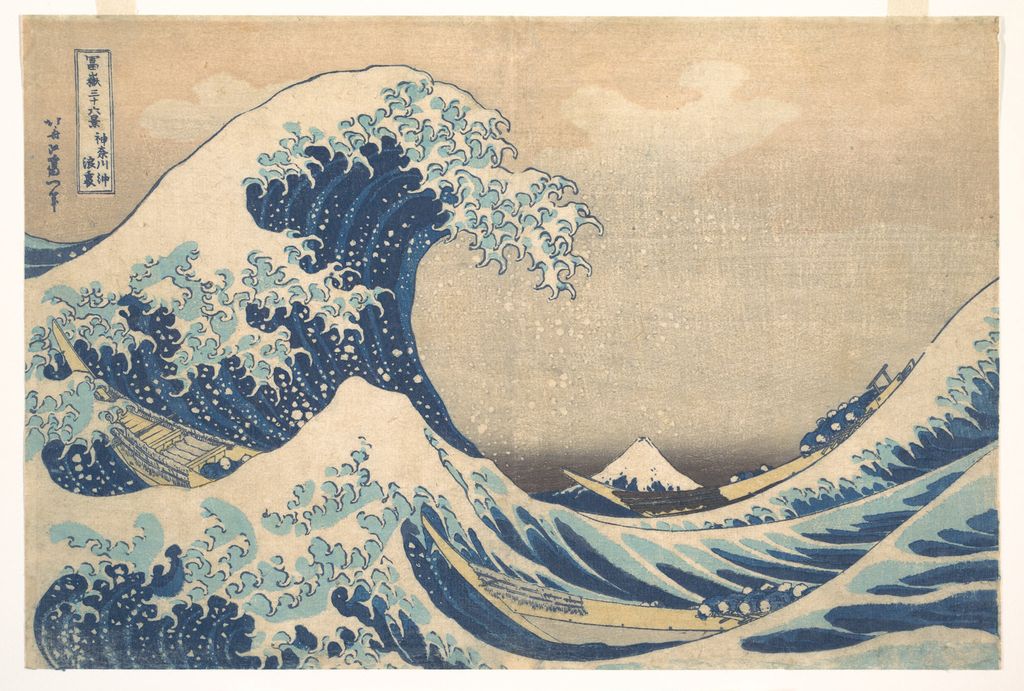
Katsushika Hokusai's Under the Wave off Kanagawa (c. 1830–32) belongs to the series Thirty-six Views of Mount Fuji.[6] The towering wave, vulnerable boats and small distant mountain are plainly visible. It is tempting to translate them immediately into a general code—danger, endurance, permanence—but such words are interpretations, not objects printed into the sheet.
A responsible reading first identifies the series, Edo-period publishing context, boats, wave and Fuji, then asks what contemporary visual and textual evidence supports. Later international fame is part of the print's reception, not proof that every viewer or every Japanese image assigned the same meaning to waves and mountains. The work reminds us that powerful visual relationships can invite symbolic thought without becoming a timeless dictionary entry.
Vermeer: object, action and setting
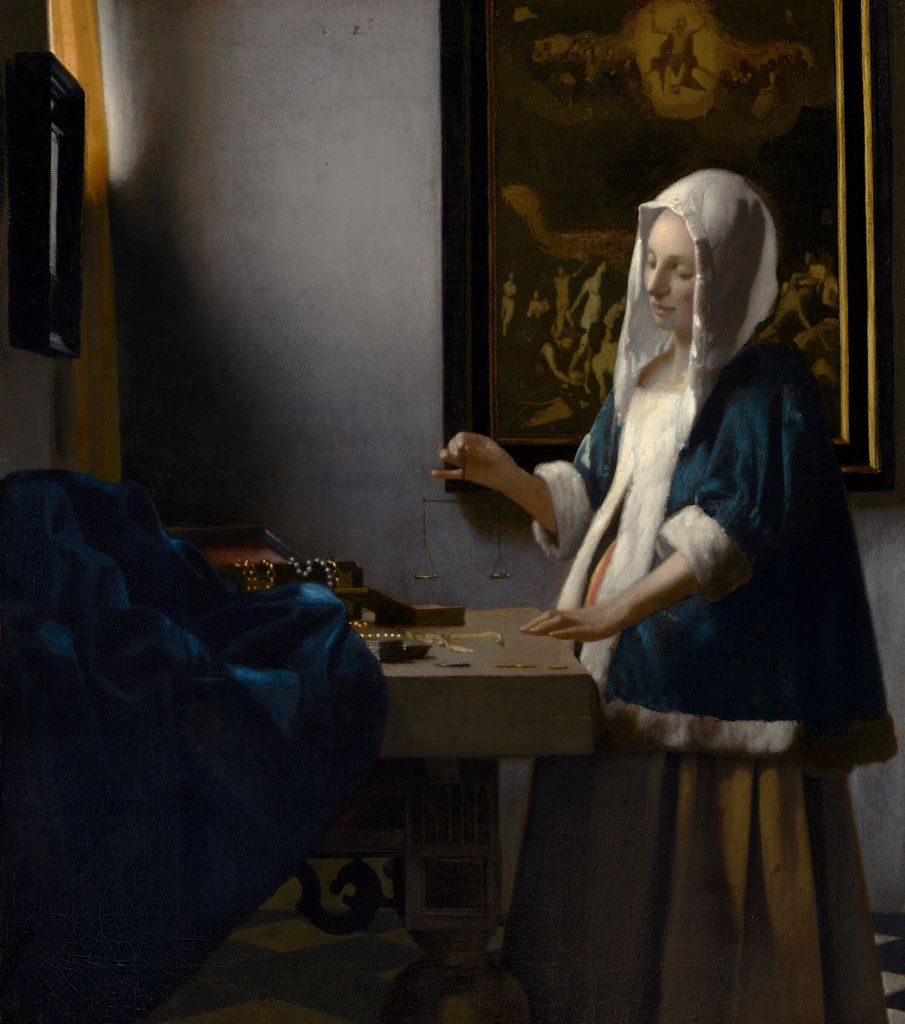
In Johannes Vermeer's Woman Holding a Balance (c. 1664), a woman stands before a table of valuables while a Last Judgment hangs on the wall behind her.[5] The balance is an object she holds, an action she performs and a form echoed by the painted judgment. Those relationships have encouraged moral and spiritual interpretations concerning weighing, value and judgment.
Iconography helps organise that evidence, but it does not require one final paraphrase. We can state with confidence that the balance and background picture are deliberately placed together. We should distinguish that observation from claims about precisely what the woman thinks or which single lesson Vermeer expected every viewer to reach. The visual clue is exact; its interpretive range is historically argued.
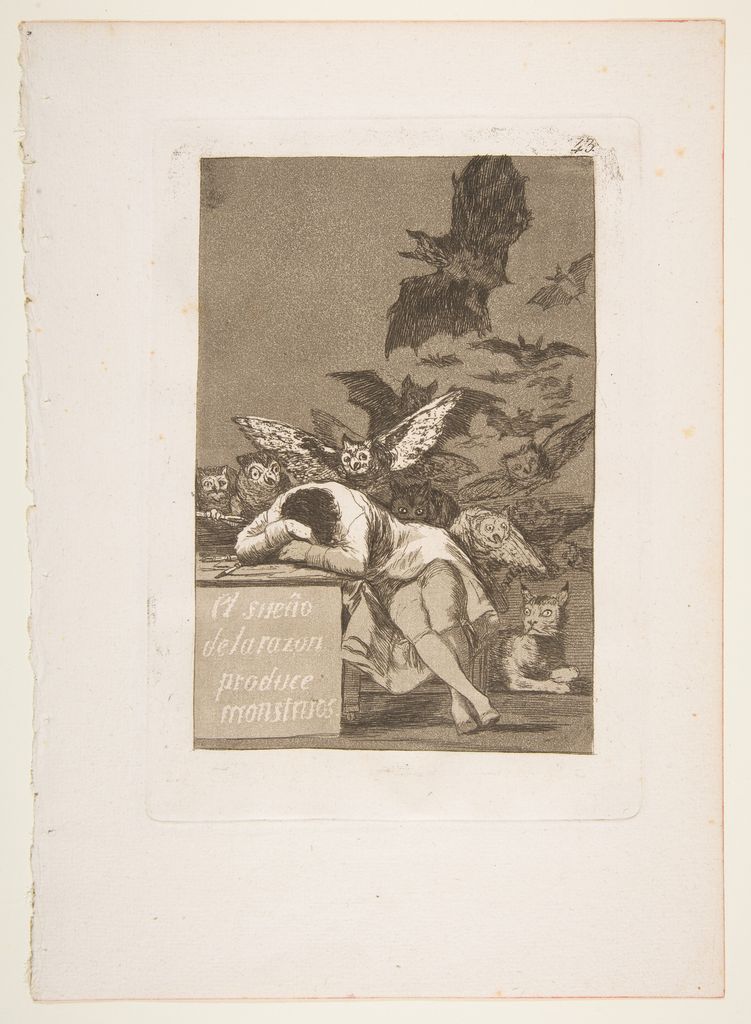
Goya: when interpretation stays open
Francisco de Goya's The Sleep of Reason Produces Monsters is plate 43 of Los Caprichos, published in 1799.[7] A figure slumps over a desk while owls, bats and other creatures crowd out of darkness. The title links sleep, reason and monsters, giving viewers unusually strong verbal evidence. The animals contribute associations of night, folly, fear and disturbed imagination, yet their roles are not exhausted by matching each species to one fixed definition.
Goya shows why iconographic interpretation can remain plural without becoming arbitrary. The title, series, historical satire and visible creatures constrain what may reasonably be said. They do not collapse the print into a slogan. Uncertainty is not failure when it accurately reflects the evidence.
A practical way to read symbols in art
Begin with description. List people, objects, animals, plants, gestures, inscriptions and unusual relationships without assigning meanings. Notice which details recur or occupy conspicuous positions. Then identify the probable subject through the title, collection record, original function and established attributes.
Next, locate the work historically. Ask where it was made, for whom, in which medium and within which religious, political, literary or social tradition. Compare related works from the same context. A lion beside Saint Jerome belongs to a different evidence chain from a heraldic lion, a royal emblem or an animal study. Dürer's Saint Jerome in His Study includes the saint's lion within a learned devotional interior; Stubbs's Whistlejacket presents an individual horse without requiring the same symbolic method.
Only then interpret. Connect details to relevant texts and scholarship, and grade the claim: securely identified, commonly interpreted, plausibly suggested or disputed. The Bosch symbolism guide and Bruegel proverbs and iconography demonstrate why artist-specific worlds need their own evidence rather than generic symbol lists.
Finally, test the reading against the whole work. Does it explain several related details, the commission and the composition, or only one isolated object? Does a simpler explanation fit better? Have later associations been projected backward? The method should make the artwork more coherent while leaving genuine contradictions visible.
Common mistakes
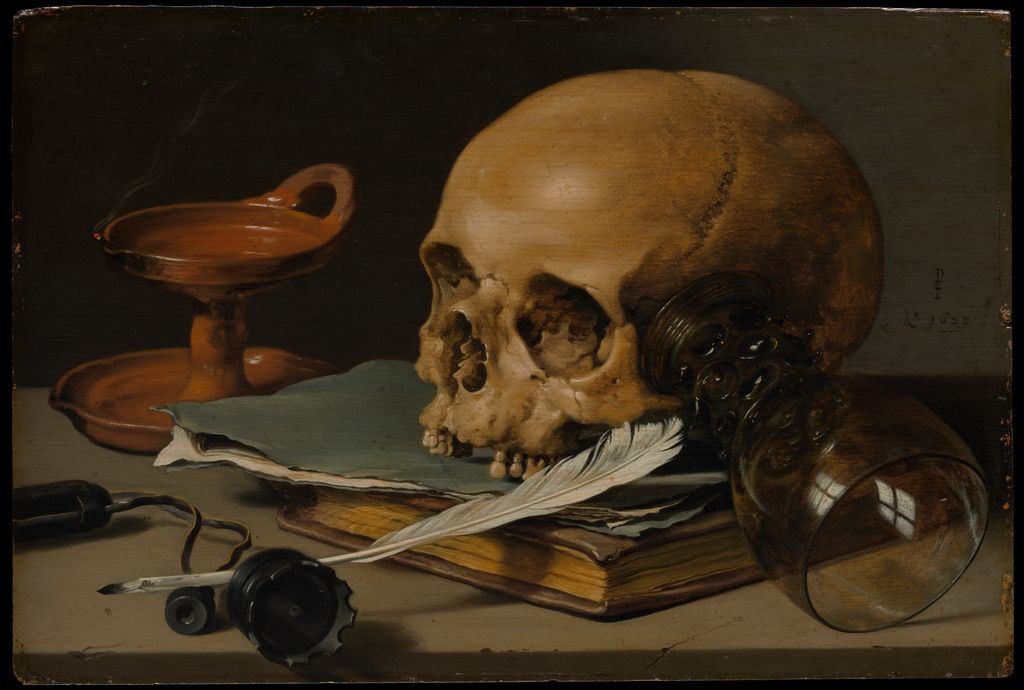
The most common mistake is to begin with “What does this symbol mean?” before asking where and when it appears. A skull can function as an attribute, a study of anatomy, a reminder of death or part of a vanitas arrangement. A flower can be a botanical specimen, a Marian attribute, a sign of season, a commodity or the principal subject of a still life. Even colour symbolism depends on material and cultural context rather than automatic mood rules.
Another mistake is to assume that the artist privately invented every meaning. Workshops, patrons, liturgies, court cultures, print markets and inherited stories all shaped visual language. The opposite error is to deny artistic change: makers could adapt familiar attributes, combine sources or make a convention newly strange.
A third mistake is to treat absence of certainty as permission for any reading. Interpretation remains answerable to the object. Titles, inscriptions, provenance, contemporary texts, comparable images and the work's setting narrow the field. An imaginative response may be personally valuable, but it is different from a historical claim.
What iconography can—and cannot—tell us
Iconography can reveal a subject that is no longer immediately familiar, explain why a small object matters, connect an image to a story, and show how visual traditions change. It can also expose the history of interpretation: which viewers possessed the relevant knowledge, which meanings later museums emphasised, and which older certainties have been questioned.
It cannot recover every intention or guarantee that all historical viewers understood a work in the same way. Symbols can be conventional and personal, public and private, stable and altered. The best iconographic reading therefore combines confidence with restraint: precise about what the evidence supports, explicit about cultural and period boundaries, and willing to leave an image richer than a decoded message.
Watch: Iconography and Symbols through Formal Analysis
Choose a museum-led whole-work analysis, a close reading, or a foundations overview for considering iconography and symbols.
Introducing Formal Analysis: Landscape
Follow how recurring shapes, colours and intervals contribute to a larger visual organisation.
Watch on YouTubeFrequently Asked Questions
Iconography identifies and studies represented subjects, stories, figures, attributes, motifs and symbols in artworks.
Iconography establishes what is represented; interpretation asks how and why those subjects carried meaning in a particular context.
No. An object may identify a figure, advance a story, display material culture or simply belong to the scene; evidence must determine its role.
Yes. Meanings vary by culture, period, medium, function, audience and relationship to other visible details.
Describe it first, identify the work and context, consult reliable object records and historical sources, then state the strength and limits of the interpretation.
Discussion
Which example on this page most clearly changes when you move from naming a visible object to reconstructing its historical context?
Reader Insights
List visible people, objects, gestures and inscriptions without assigning meanings.
Use the object record, original function, comparable images and relevant texts.
A constrained range of interpretations is stronger than a universal symbol dictionary.
Join the Conversation
Share one precise observation or a useful museum example below.
References
- Getty Vocabulary Editorial Guidelines — Depicted Subject and Iconography
- National Gallery — Attribute
- Getty Education — Using Attributes to Identify Stories in Art
- National Gallery of Art — Stories and Symbols in Jan van Eyck's Annunciation
- National Gallery of Art — Woman Holding a Balance
- The Metropolitan Museum of Art — Under the Wave off Kanagawa
- The Metropolitan Museum of Art — The Sleep of Reason Produces Monsters
- National Gallery — Allegories
- Getty Research Institute — Emblem Books