by Tom Gurney
Tom Gurney BSc (Hons) is an art history expert with over 20 years experience
Page created on September 3, 2026 / Page updated on September 13, 2026
Email: tomgurney1@gmail.com / Phone: +44 7429 011000
How Binder, Support and Working Method Shape What an Artwork Can Become
An art medium is the material or technical means through which an artwork is made. Oil paint, watercolor, bronze, marble, woodcut and photography are all media, but they do not name the same kind of thing. Some describe a paint binder, some a physical material, some a process, and some a wider art form. Museum labels often combine several of these facts because no single word tells the whole story.[1][2]
For paintings, four ideas are especially useful. Pigment supplies colour. A binder holds pigment together and helps it adhere. A support is the surface or object carrying the image, such as plaster, wood, canvas, paper or vellum. Technique describes how those materials are prepared and handled. “Oil on wood” therefore identifies both a binder-led paint medium and a support; “watercolor and graphite on paper” records two media and their support.
At a Glance
- Core ideaa medium is the material system through which an artwork is made, such as oil, tempera, fresco, watercolour or encaustic.
- Name the systempigment alone does not identify a medium; binder, support, ground and application all matter.
- Technique is differentmedium identifies material; technique describes how the artist handled it.
- Objects can combine medialabels such as oil and tempera or watercolour with gouache may accurately describe layered or local mixtures.
- Use the directorycompare seven focused painting-media guides and their identified works.
Contents
This guide begins with the seven painting-media routes in this collection, then places them within the wider field of drawing, printmaking, sculpture, photography and mixed media. It is a visual reference rather than a shopping or supply guide. The best way to understand a medium is to connect its material behaviour with the surfaces artists actually made.
Seven painting media to recognise
Encaustic painting: pigment held in wax
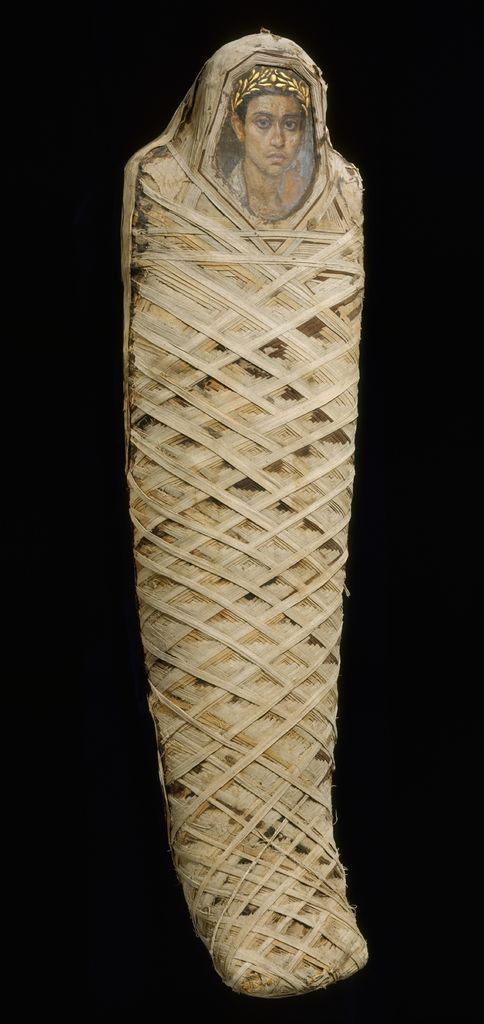
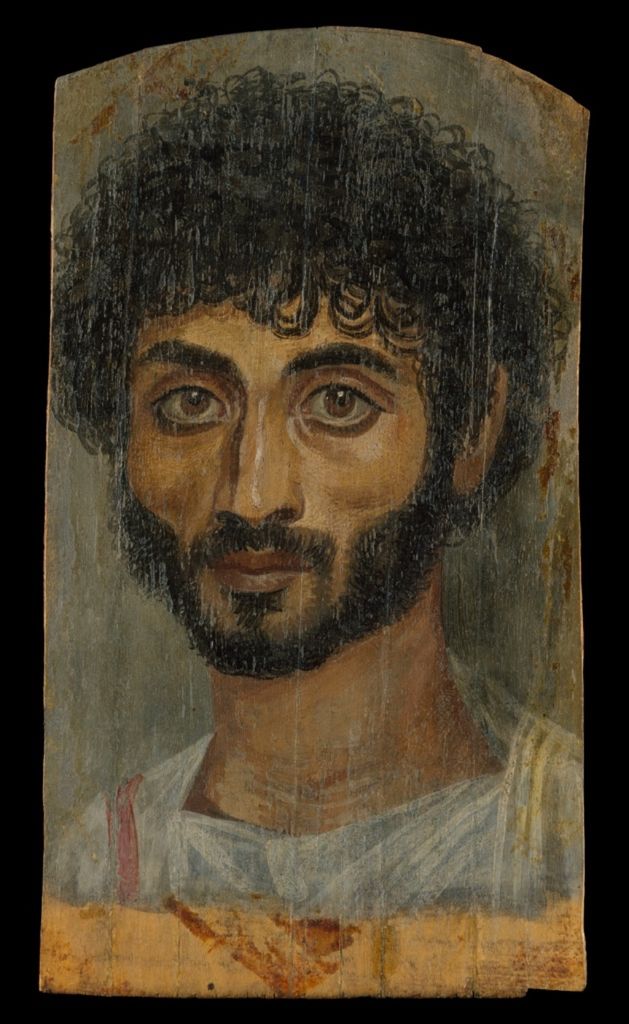
Encaustic painting uses wax as the principal vehicle for pigment. The wax can form a dense, lustrous surface and can be worked in thin strokes or more substantial passages. Ancient descriptions and surviving objects do not support one simple recipe for every period, so the term should name a broad wax-based practice rather than a single universal procedure.[3]
The Roman-period Portrait of a thin-faced, bearded man, made in Egypt in 160–180 CE, is encaustic on limewood. Creamy modelling in the face and quicker strokes in the hair and beard show that a wax-based surface need not look uniformly smooth. The wooden support matters too: this is both an encaustic painting and a panel object.
Read the guide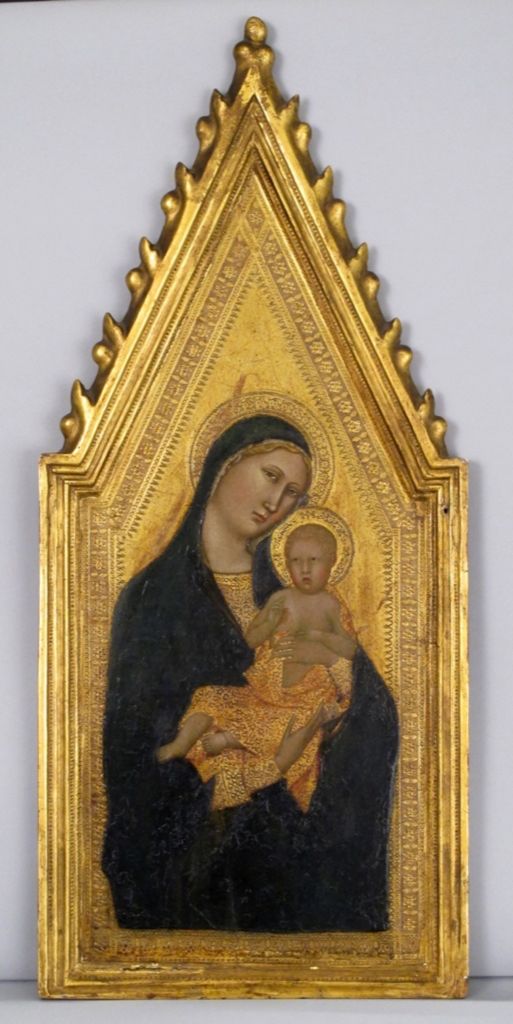
Tempera painting: quick-setting, finely controlled layers
Tempera mixes pigment with a water-miscible binder; egg tempera is the best-known historical form, but “tempera” should not be treated as a guarantee that every object uses the same binder. Compared with many oil paints, traditional egg tempera sets quickly and rewards controlled strokes and layers. It can produce crisp edges, luminous colour and finely patterned surfaces without requiring the glassy blending associated with oil.[4]
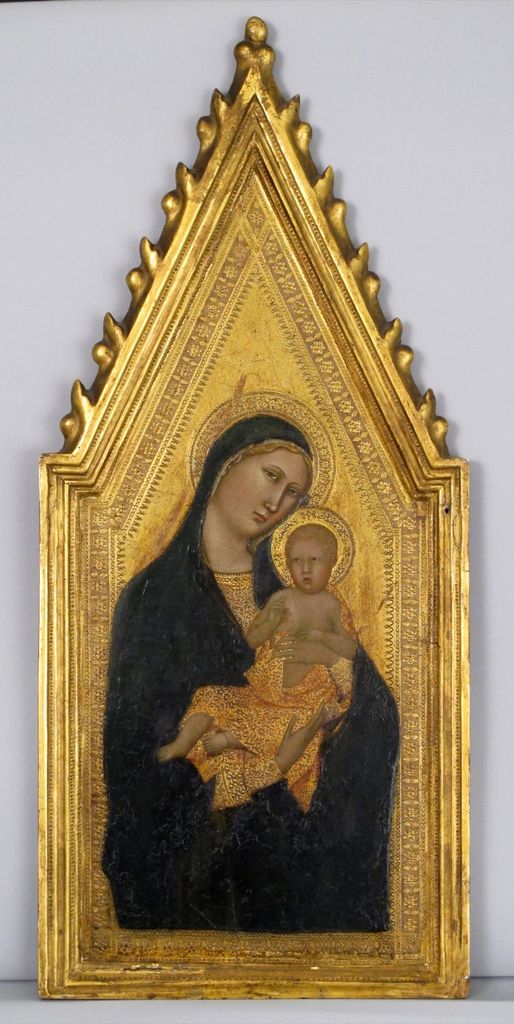
Lippo Memmi's Madonna and Child, about 1340, is tempera on wood with a gold ground. The narrow panel joins paint, prepared wood and tooled metal leaf into one devotional object. Its refinement comes from an interaction of materials, not from tempera alone.
Read the guide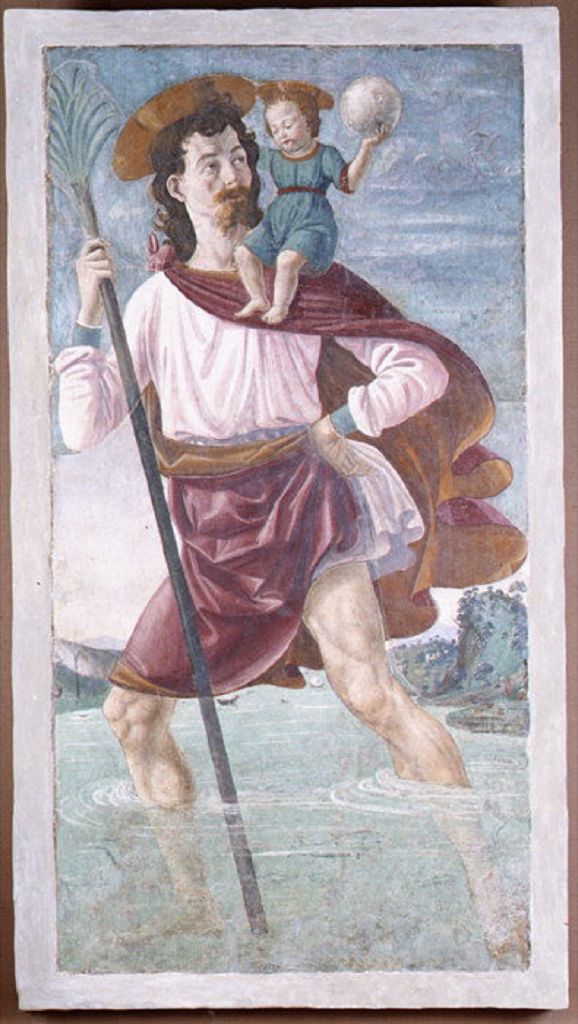
Fresco painting: colour joined to plaster and architecture
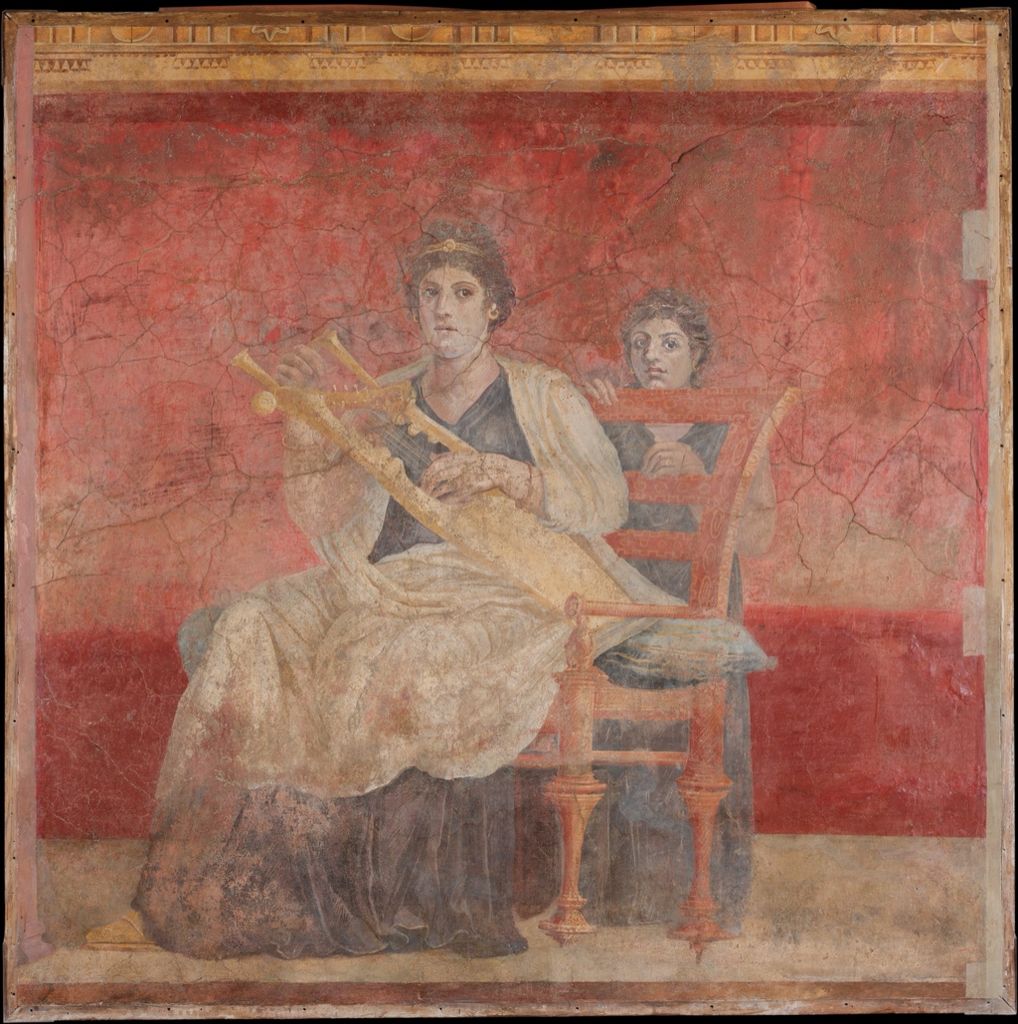
Fresco is wall painting on plaster. In buon fresco, colour is applied to wet final plaster so that the surface and pigment become closely bound as the plaster sets. Secco work is applied to dry plaster and can be used independently or to finish and revise passages. Large programmes are commonly divided into workable daily sections rather than painted across an entire wall at once.[5]
Domenico Ghirlandaio's Saint Christopher and the Infant Christ survives as a fresco fragment. Its tall format and monumental figures preserve the scale of an architectural image even after removal from its original wall. Fresco is therefore both a paint process and a relationship with a building surface.
Read the guide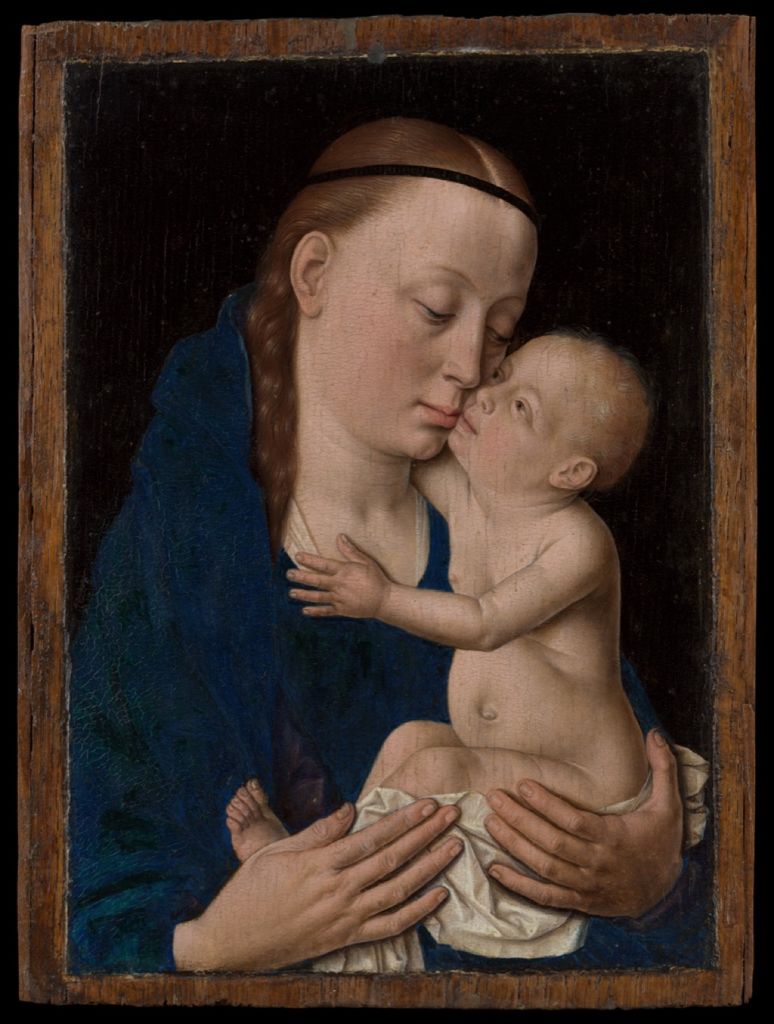
Panel painting: support rather than binder
A panel painting is made on a rigid support, most often prepared wood. Panel does not identify the paint binder: a wooden support may carry tempera, oil, wax or a mixture. Preparation layers help create a workable surface, while joins, grain movement, warping and later structural treatment all become part of the object's history.[6]
Dieric Bouts's Virgin and Child, about 1455–60, is oil on wood. Smooth transitions, minute detail and a dark spatial setting show what oil could do on a carefully prepared rigid surface. The label “oil on wood” is more informative than either “oil painting” or “panel painting” alone.
Read the guide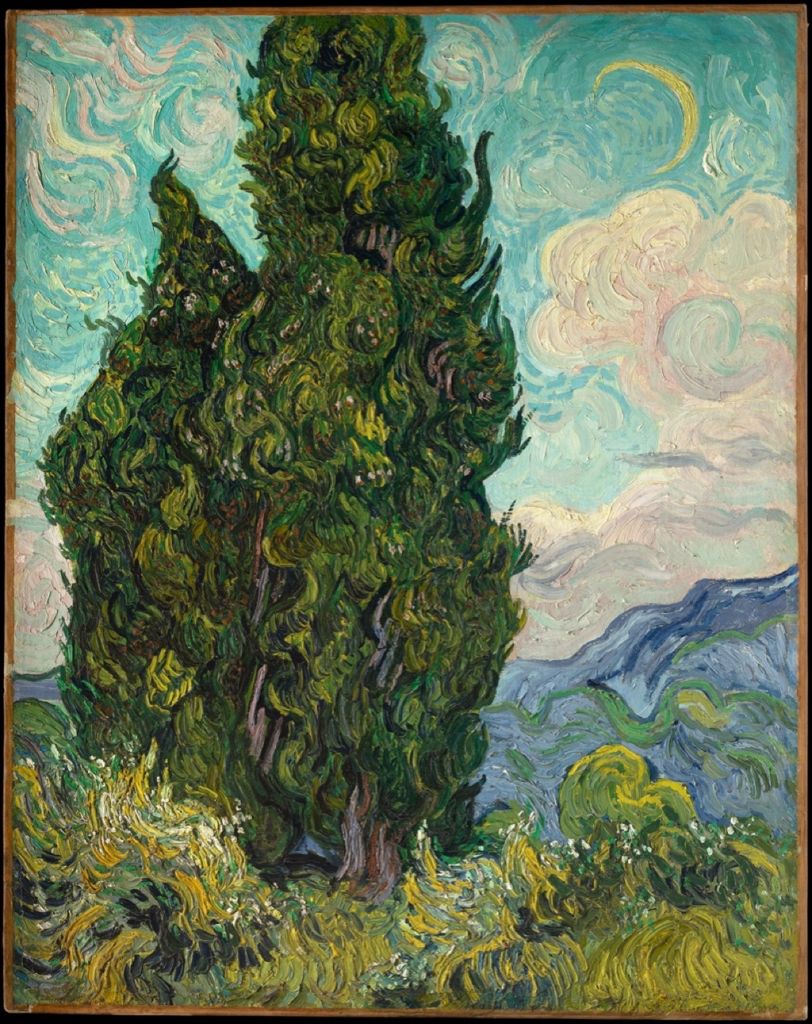
Oil painting: flexible handling and slow-building effects
Oil paint holds pigment in a drying oil such as linseed, walnut or poppy oil. Its handling varies enormously: paint may be thin and translucent, opaque and blended, or thick enough to retain the pressure and direction of a brush. Slower drying than egg tempera can allow extended modelling and adjustment, but artists have also used oil for rapid, exposed strokes.[7][8]
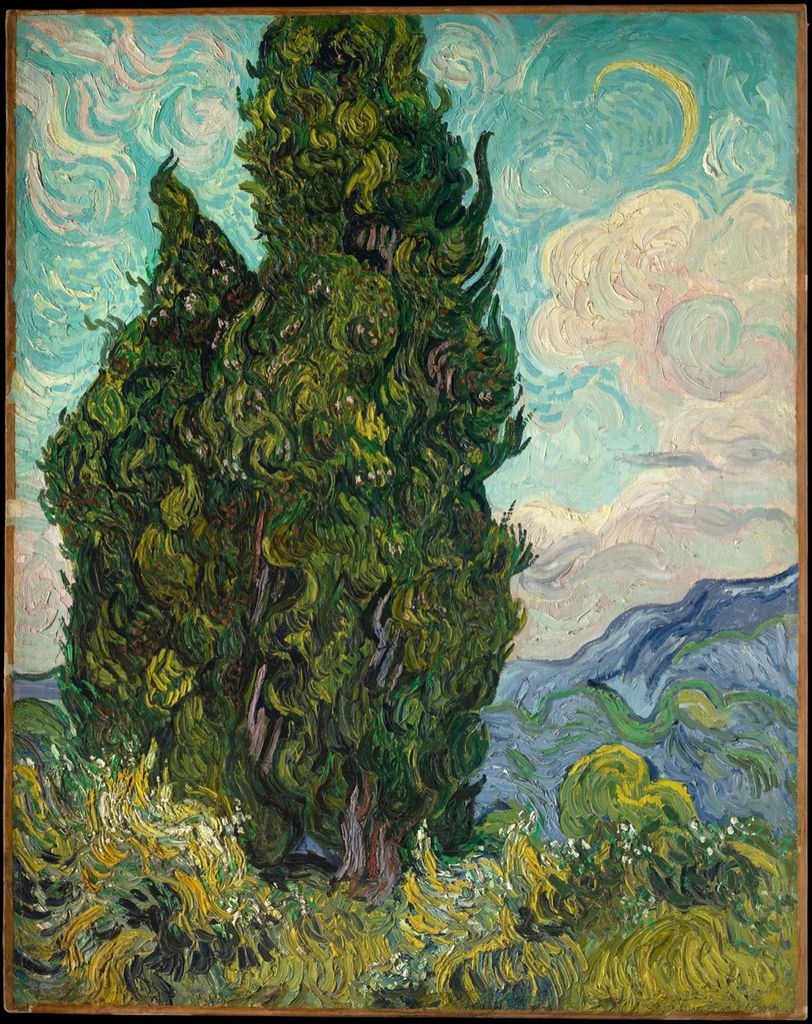
In Cypresses, 1889, Vincent van Gogh turns oil's physical body into curling, directional marks. The dark trees rise through a surface animated by ridges and changes of stroke. The same medium that supported smooth fifteenth-century glazing can therefore make a late nineteenth-century landscape feel emphatically worked.
Read the guide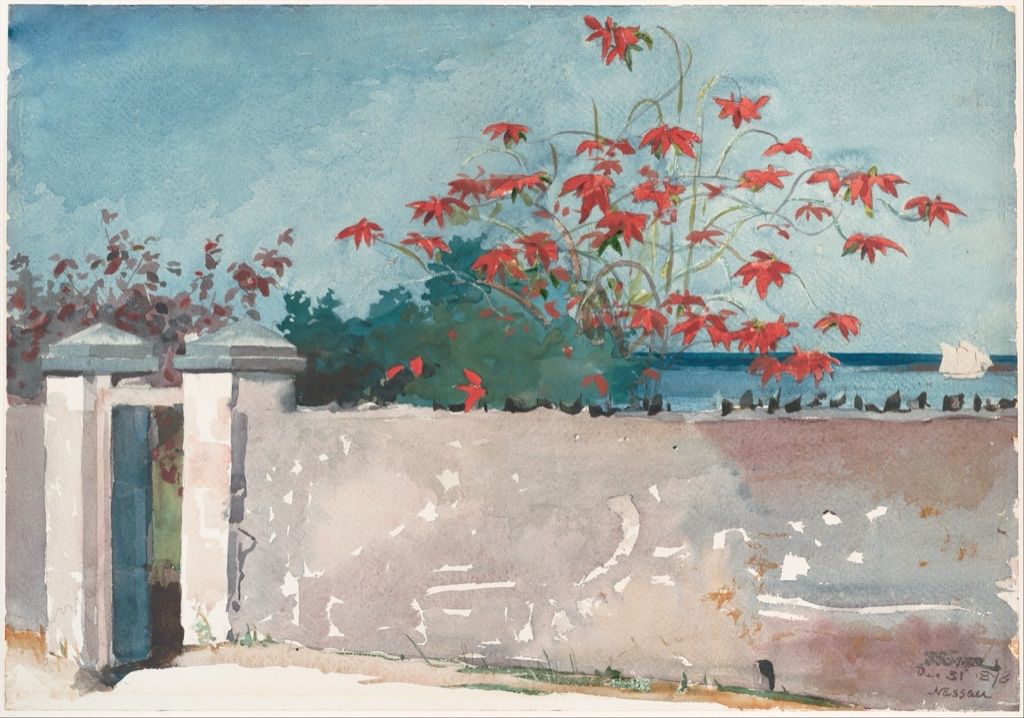
Watercolor painting: light carried through washes
Watercolor normally uses finely divided colour in a water-soluble binder and is often associated with transparent washes on paper. The paper can remain visible through the colour, supplying light rather than merely receiving it. Artists also combine watercolor with graphite, ink, bodycolour or opaque touches, so transparency is a powerful tendency rather than an absolute rule.[9]
Winslow Homer's A Wall, Nassau, 1898, uses watercolor and graphite on off-white paper. Pale washes suggest sun across masonry while stronger reds and greens punctuate the scene. The sheet's untouched and lightly painted areas are active parts of the image.
Read the guide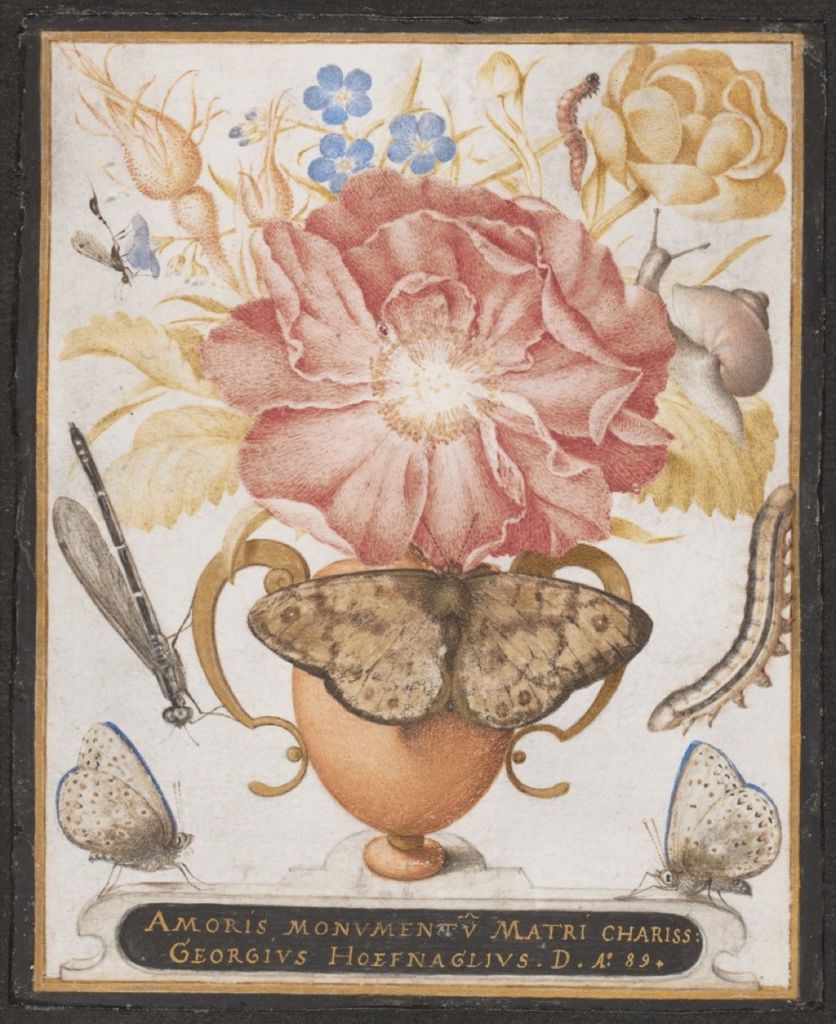
Gouache painting: opaque watercolour and adjustable surface
Gouache is a water-based paint designed or used for greater opacity than transparent watercolor. It can produce flat, matte passages, sharp revisions and strong light shapes over darker colour, although historical collection labels often place it beside watercolor and drawing media rather than in a sealed category.[10]
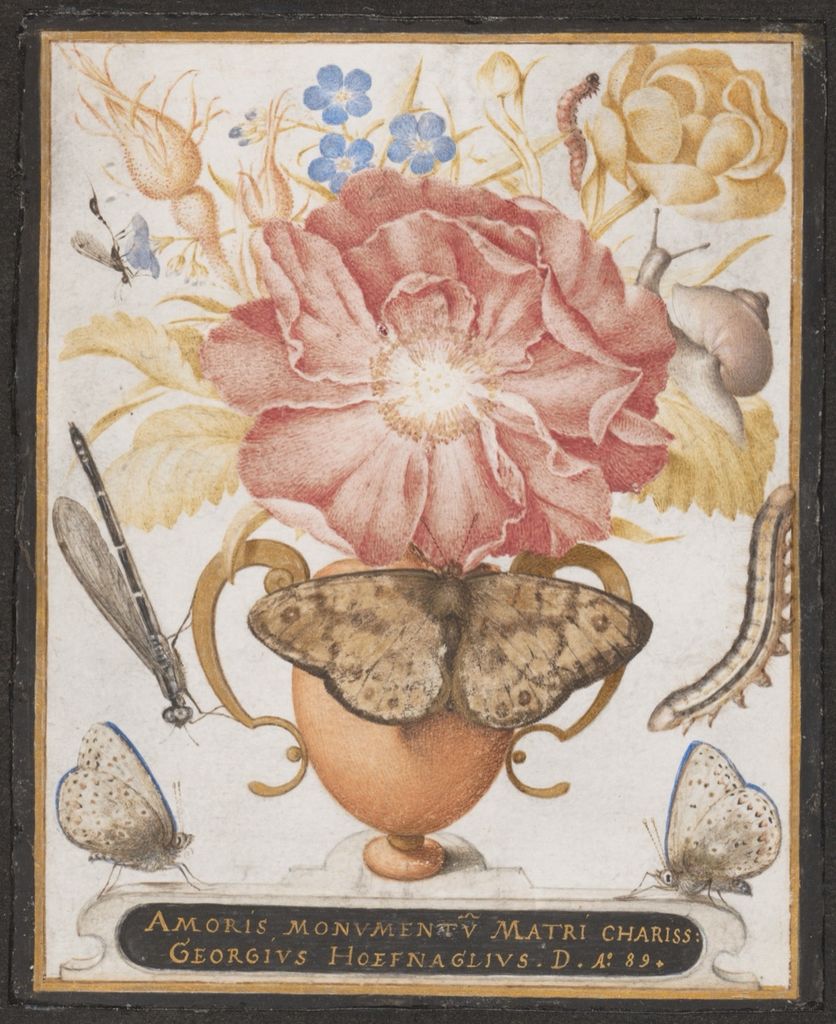
Joris Hoefnagel's Still Life with Flowers, a Snail and Insects, 1589, is catalogued as watercolor, gouache and shell gold on vellum. Fine translucent description sits beside opaque highlights and metallic detail. The mixed label is not indecision: it records how several materials cooperate on one small surface.
Read the guideHow medium changes what you see
Medium does not dictate style, meaning or quality, but it creates working conditions. Wet plaster encourages planning around fresh sections. A rigid panel responds differently from flexible canvas. Watercolor can make the brightness of paper central to an image, while opaque gouache can cover and restate a passage. Oil may support slow transitions or conspicuous texture. Wax can be fused, scraped or built into a substantial surface.
Those properties are possibilities, not rules. Two artists using oil can produce radically different surfaces, and one artist may combine binders or change handling from one passage to another. The Met's teaching material makes this point through early Italian mixtures of egg and oil, Venetian glazing, Rembrandt's impasto and Van Gogh's directional paint.[8] Material evidence should sharpen looking without reducing an artwork to a recipe.
Scale, portability and setting also matter. Fresco belongs to architecture even when a fragment enters a museum. A panel can be carried, hinged or assembled into an altarpiece. Paper supports light, portable watercolor and gouache works but remains sensitive to light and moisture. Conservators study these structures because the material history determines how an object ages and what kinds of treatment are safe.
Drawing, printmaking, sculpture and other media
Painting is only one family. Drawing media place dry or liquid marks on a support; the separate Drawing guides own charcoal, ink and related making questions. Printmaking makes images through a matrix or transfer process, so a woodcut, engraving, etching and lithograph differ in both method and mark. Sculpture may be carved, modelled, cast, assembled or constructed from materials including stone, wood, metal, clay, plaster and found objects.
Photography, film, video and digital art bring optical, electronic and computational processes into the description of medium. Textiles, ceramics, glass, performance and installation further show why no short list is complete. A useful label identifies what is materially or technically significant for the work being discussed rather than forcing every artwork into one timeless hierarchy.
Medium, technique, style and genre are different
Medium describes material or technical means.[1] Technique describes procedure and handling. Style concerns recurring visual characteristics, while genre names a subject or category such as portrait, landscape or still life. An oil portrait and an oil landscape share a medium but not a genre. Two oil portraits may share both medium and genre while differing completely in technique and style.
Movement labels add another layer. Impressionism is not a medium, and fresco is not a movement. The site's Art Movements and Schools directory follows historical groups and tendencies, while this hub follows material routes. These ways of organising art overlap, but they answer different questions.
Reading a museum label
Begin from left to right and ask what each term is doing. In “watercolor and graphite on paper,” watercolor and graphite are media and paper is the support. In “oil on wood,” oil identifies the paint binder and wood the panel. In “fresco transferred to canvas,” the label also records a later physical intervention. Terms such as gold ground, varnish, collage, mounted, transferred or laid down can describe further layers of manufacture and history.
When a label says “mixed media,” look for a fuller technical record before assuming that the materials are unknown. The phrase may be a concise public description of a deliberately complex object. Museum terminology also changes as conservation analysis identifies materials more precisely, so the collection record is normally a better authority than a simplified caption copied elsewhere.
Choose a medium guide
Start with the material relationship you want to understand. Choose Encaustic for wax; Tempera for water-miscible binder traditions centred on egg tempera; Fresco for painting on plaster; Panel for wood as a support; Oil for drying-oil paint; Watercolor for transparent wash and paper; or Gouache for opaque water-based colour. Each guide connects basic process to historical development, surface appearance, artists and famous examples without becoming a product catalogue.
Watch: Paint Media, Layer Systems and Conservation
Choose a museum introduction to paint, a historical layered panel, or conservation science focused on modern formulations.
Paint | Art Terms in Action
See how pigment, binder and application combine in the broad material category called paint.
Watch on YouTubeFrequently Asked Questions
An art medium is the material system through which a work is made, including binder, colourant, support, ground and related working properties.
No. Medium identifies material, while technique describes how an artist applies, layers or modifies it.
Yes. Artists can combine binders, supports and added materials, and museum labels may identify mixed media or multiple distinct systems.
Technical analysis, conservation work, revised terminology and new evidence can produce more accurate descriptions.
Start with the object label and institutional record, then inspect support, surface, opacity and condition without relying on appearance alone.
Discussion
Which work on this page would change most if its binder or support were replaced, and what visible evidence supports your answer?
Reader Insights
Binder, support and ground can matter as much as the familiar medium name.
The same oil paint can be glazed, scumbled, raised or worked wet.
Mixed or revised labels can be more accurate than forcing one category.
Join the Conversation
Share one precise observation or a useful museum example below.
References
- National Gallery, “Media.” https://www.nationalgallery.org.uk/paintings/glossary/media
- National Portrait Gallery, “Art materials.” https://www.npg.org.uk/collections/explore/glossary-of-art-terms/
- Metropolitan Museum of Art, “Portrait of a thin-faced, bearded man,” object 09.181.1. https://www.metmuseum.org/art/collection/search/547856
- Metropolitan Museum of Art, “Madonna and Child,” object 1975.1.10. https://www.metmuseum.org/art/collection/search/459134
- National Gallery, “Fresco.” https://www.nationalgallery.org.uk/paintings/glossary/fresco
- National Gallery, “Panel painting.” https://www.nationalgallery.org.uk/paintings/glossary/panel-painting
- National Gallery, “Oil.” https://www.nationalgallery.org.uk/paintings/glossary/oil
- Metropolitan Museum of Art, “The Role of Painting Materials and Techniques.” https://resources.metmuseum.org/resources/metpublications/pdf/looking_to_connect_with_european_paintings_visual_approaches_for_teaching_in_the_galleries.pdf
- Metropolitan Museum of Art, “A Wall, Nassau,” object 10.228.9. https://www.metmuseum.org/art/collection/search/11147
- Metropolitan Museum of Art, “Still Life with Flowers, a Snail and Insects,” object 1980.1.4. https://www.metmuseum.org/art/collection/search/382608