by Tom Gurney
Tom Gurney BSc (Hons) is an art history expert with over 20 years experience
Page created on September 3, 2026 / Page updated on September 13, 2026
Email: tomgurney1@gmail.com / Phone: +44 7429 011000
How Marks, Layers and Light Reveal the Way a Painting Was Made
A painting technique is a way of handling materials: building a face from almost imperceptible transitions, dragging a lightly loaded brush across a rough surface, laying transparent colour over a dried passage, or leaving paint thick enough to cast tiny shadows. Technique helps explain why two pictures made with the same medium can look utterly different. Oil paint can support Leonardo's smooth transitions, Rembrandt's raised highlights and Van Gogh's ridged strokes; the binder is shared, but the handling is not.[1][2]
This guide maps eleven historical techniques through exact works of art. It is designed for looking, not for buying supplies or following a studio recipe. A visible effect can suggest how a passage was made, but appearance alone is not always proof. Conservators use microscopy, infrared imaging, X-radiography and paint cross-sections to distinguish layers, revisions and later changes that an ordinary photograph cannot reveal.[2] When a museum or technical study has not established a process, it is safer to describe what can be seen than to turn resemblance into fact.
At a Glance
- Core ideaa painting technique is an observable method of applying, building or organising paint and tone.
- Look for evidencesurface texture, edge character, layer transparency, mark direction and technical imaging.
- Terms can overlapone painting may combine glazing, scumbling, impasto, dry brush and direct wet handling.
- Do not guess from reproductionscale, varnish, photography and screen display can conceal or imitate surface evidence.
- Use the directorycompare all eleven focused guides before assigning a technique label.
Contents
- section-3">References#section-1">Eleven techniques to recognise
- How to look without guessing
- References
- Watch Art and Painting Techniques in Practice
The neighbouring Art Mediums guide explains binders and supports, while Art Materials follows the physical system beneath the image. Here the focus is application: how painters made edges soften, darkness deepen, colour glow, surfaces break or paint stand proud.
Eleven techniques to recognise
Sfumato
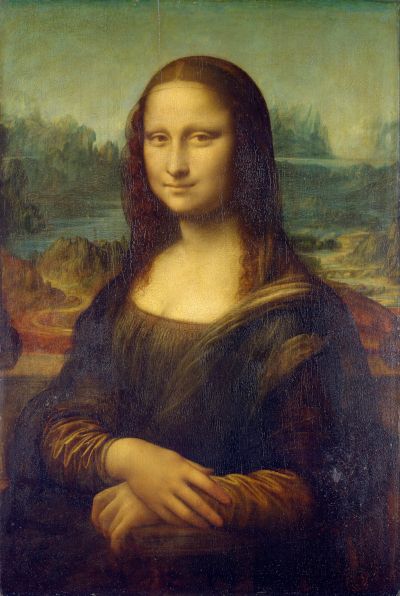
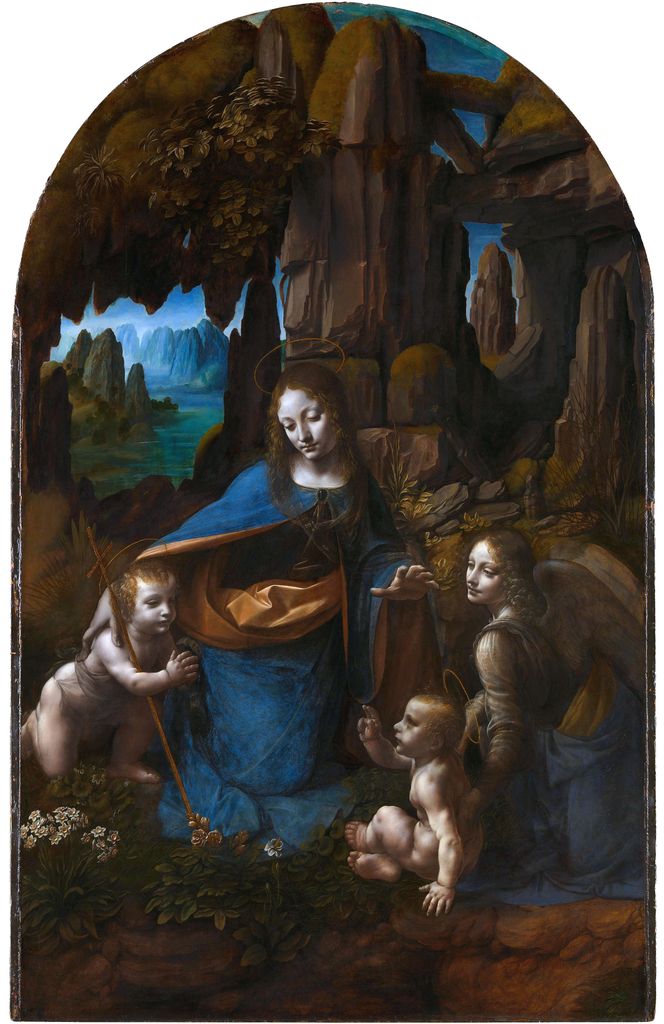
Sfumato makes boundaries seem to dissolve. Instead of enclosing a cheek, hand or distant mountain with a hard contour, the painter moves through minute changes of tone and colour. The result is not ordinary blur. Forms remain carefully modelled, but they seem to emerge through air. Leonardo da Vinci made the method central to his mature paintings, often combining very fine translucent layers with close tonal adjustments.[3]
In the London Virgin of the Rocks, the faces and bodies turn gradually from light into shadow while the rocky setting recedes into blue-grey atmosphere. The National Gallery's technical study found that Leonardo built the subtle transitions with many particularly fine translucent layers.[3] Sfumato therefore names both a visual signature—soft, smoky edges—and a demanding layered construction.
Tenebrism
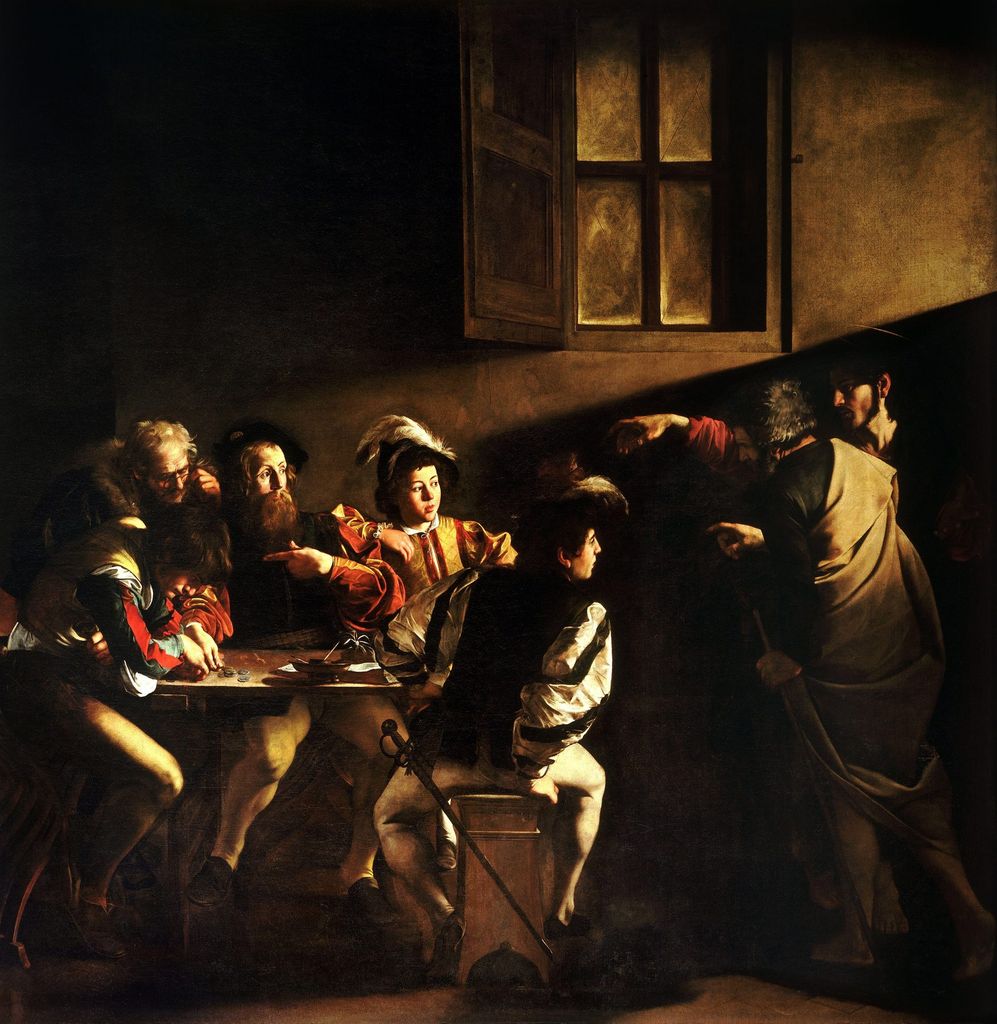
Tenebrism organises a picture around extensive darkness and concentrated illumination. Large zones may reveal little detail, while faces, hands or objects appear suddenly in light. The effect can heighten suspense, compress space and direct attention as firmly as a stage spotlight. It is more extreme than the broad category of chiaroscuro, though the two terms overlap.[4]
Caravaggio's Calling of Saint Matthew turns recognition into an event of light. A beam crosses the dim room, catching faces and a pointing hand while much of the setting remains submerged. The method became closely associated with Caravaggio and his followers, but the separate Caravaggism and Tenebrism page owns that movement's centres, networks and chronology. Here the concern is the lighting structure itself and how to recognise it.
Chiaroscuro in Art
Chiaroscuro literally joins the Italian words for light and dark. In painting it usually describes tonal contrasts used to model volume or organise a composition. A rounded forehead can be made convincing by a gradual movement from highlight to half-tone and shadow; a narrative can be clarified by making one group brighter than another. Leonardo is celebrated for giving figures three-dimensional presence through such modelling, while Caravaggio made contrast dramatically abrupt.[4]
Chiaroscuro is therefore wider than tenebrism. A picture can use subtle light-dark modelling without a black field, and a bright scene can still contain carefully structured chiaroscuro. The neighbouring Value in Art guide explains tonal relationships as a fundamental element; this technique route follows their deliberate use in modelling and pictorial drama.
Grisaille
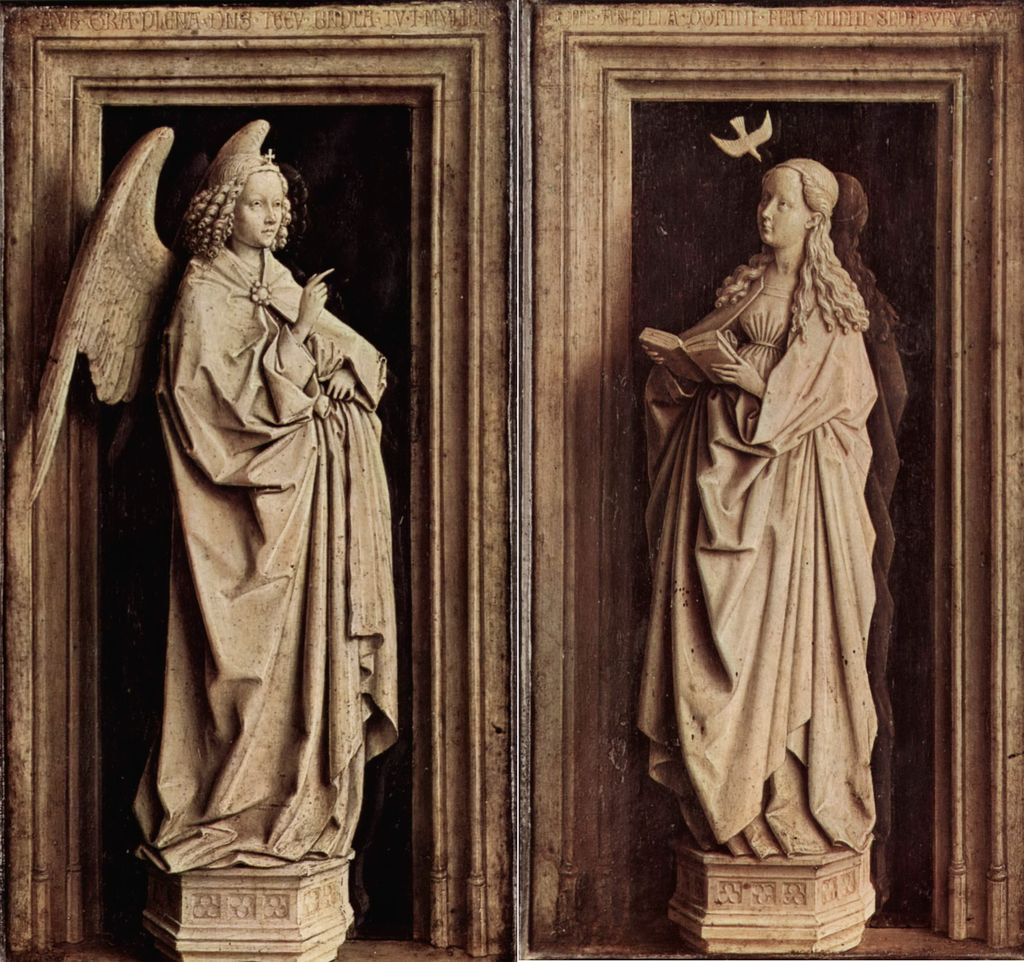
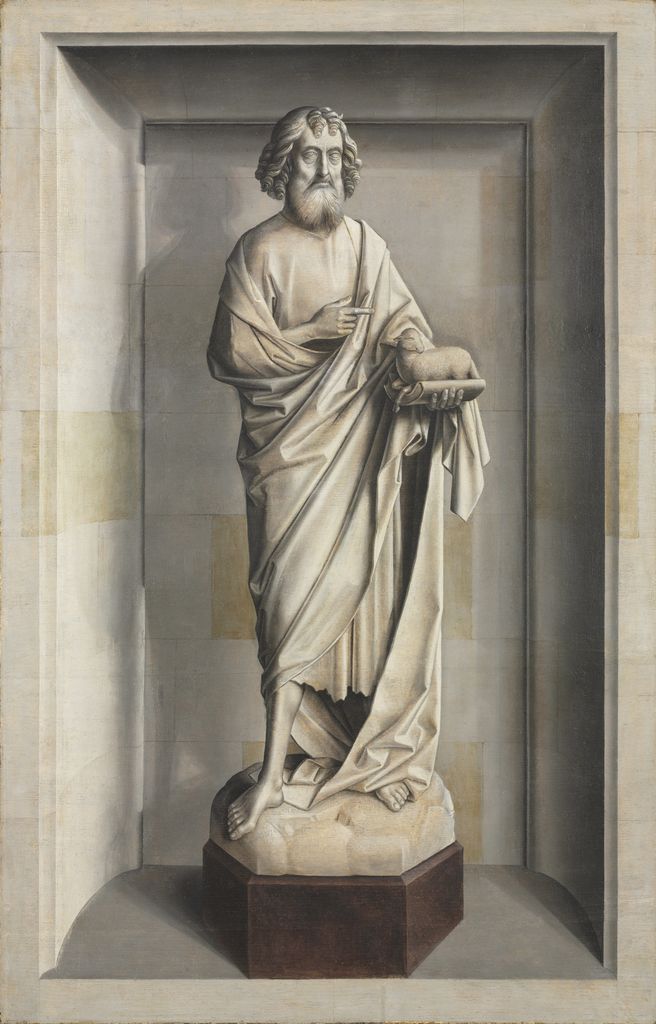
Grisaille is painting in grey or a tightly limited neutral range, with forms defined by changes of tone. It may be a finished image, an imitation of sculpture, part of an altarpiece exterior or a preparatory stage beneath colour. Those roles must not be collapsed into the claim that every grisaille is only an underpainting.[5]
Cleveland's Bouts-circle panel of Saint John the Baptist makes paint behave like carved stone. The saint and lamb stand in a shallow niche, their bodies described through grey highlights and shadows. The restricted colour directs attention to relief, drapery and pose. In other works a monochrome stage can guide later glazes, but here the sculptural fiction is the visible destination.
Underpainting
Underpainting is an early paint stage that establishes some combination of placement, value, colour bias and mass before later layers are added. It differs from underdrawing, which is a preliminary design made with drawn lines on a prepared support. It also differs from the ground or imprimatura beneath it. Historical practice varied: some painters built a complete monochrome image, others used loose dark washes, warm colour blocks or selected light passages.[2]
Because later paint can conceal the stage, underpainting is often a technical rather than purely visual category. Infrared reflectography, X-radiography and cross-sections may expose a lower design or paint mass. A dark showing through a later passage is a clue, not automatic proof of one universal layered system. Getty's survey stresses that methods changed with artist, place and period.[2]
Glazing in Painting
A glaze is a transparent or translucent paint film laid over another colour. The lower layer remains optically active while the glaze modifies its hue and tone. Several thin films can create depth without the chalkiness that would result from mixing every colour opaquely. Thickness matters: a deeper glaze can darken a fold while a thinner one lets more of the lighter base return.[6]
Glazing is not varnishing. A varnish is a later coating over the painting, while a glaze belongs to the image's paint structure. Nor is every thin layer a glaze in the strict sense. The National Gallery distinguishes a darker transparent film from a lighter scumble, and the Met notes how Bellini and Memling used oil glazes to different visual ends.[6][7]
Alla Prima and Wet-on-Wet Painting
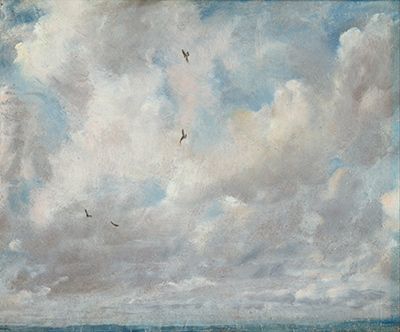
Wet-in-wet means placing one colour beside or over another before the first has dried, allowing some intermingling. Alla prima—“at the first attempt”—usually describes a more direct manner in which substantial parts of a picture are resolved while the paint remains workable. The terms often meet, but a wet-in-wet passage can occur inside a painting made over several sessions.[8]
John Constable used rapid oil sketches to study weather and changing light, while the National Gallery identifies Rembrandt, Thomas Lawrence and Manet among painters who worked wet into wet.[8][9] Look for edges that mingle, strokes laid into still-soft neighbours and corrections made within the same paint body. Speed is relevant, but direct painting is not carelessness; selection and control become more visible because extended dry-layer correction is reduced.
Impasto in Art
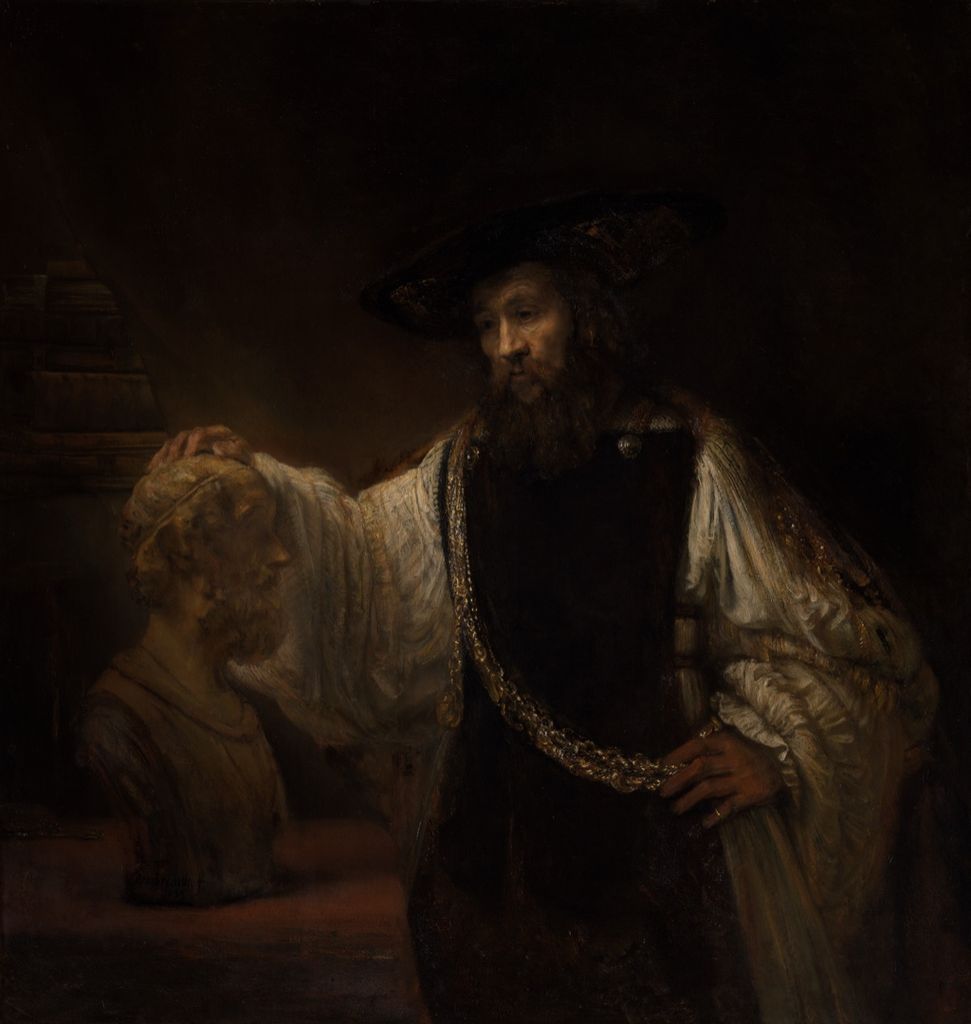
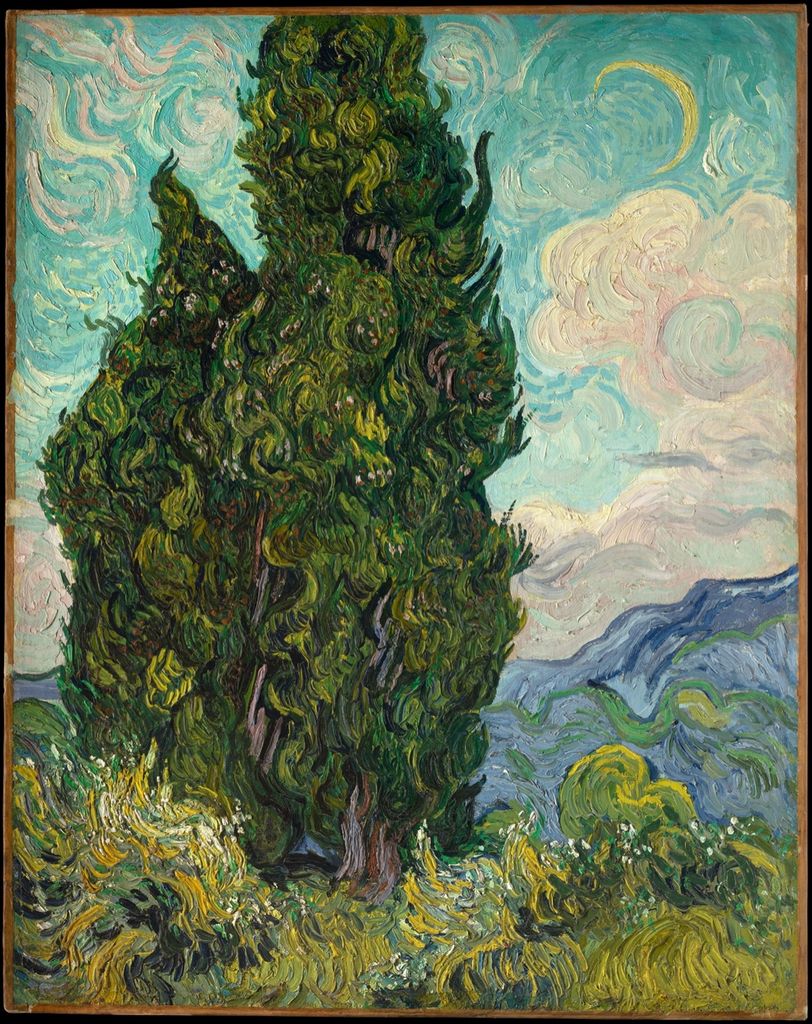
Impasto is paint built high enough for the brush or knife marks to remain physically evident. Ridges catch real light, so a highlight may shine both because its pigment is pale and because its raised surface reflects illumination. Earlier painters often concentrated impasto on jewellery, fabric or bright accents; later painters made thick handling spread across much of the picture.[10]
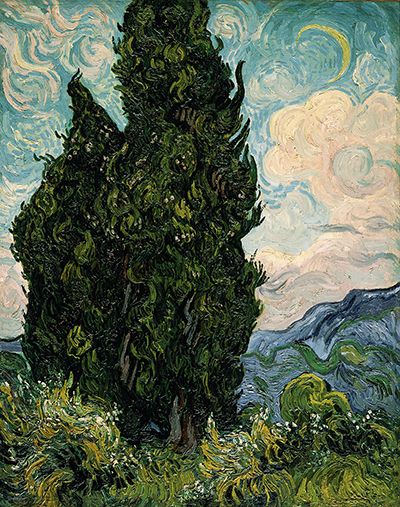
In Rembrandt's Aristotle with a Bust of Homer, the gold chain gains material weight from raised paint against a darker, thinner field. The Met uses this example to explain how impasto can evoke substance. Van Gogh's Cypresses gives the technique a different job: curling ridges make trees, sky and earth feel driven by directional energy.[7] The same physical device can therefore describe metal, light, movement or the act of painting itself.
Dry-Brush Painting
Dry brush uses a brush carrying relatively little paint or water so that it skips across a textured support, leaving a broken rather than continuous mark. The National Gallery of Art describes dragging a small amount of paint across the surface; the tooth of paper, canvas weave or lower dry paint determines where colour catches.[11]
The technique can suggest foliage, hair, weathered material, spray or flickering light, but the mark should not be treated as a genre. It can occur in watercolour, oil, tempera and other media. Look for interrupted deposits that reveal the surface or lower colour between them. A streaky mark caused by damage, abrasion or a digital reproduction is not evidence of dry-brush handling.
Stippling in Art
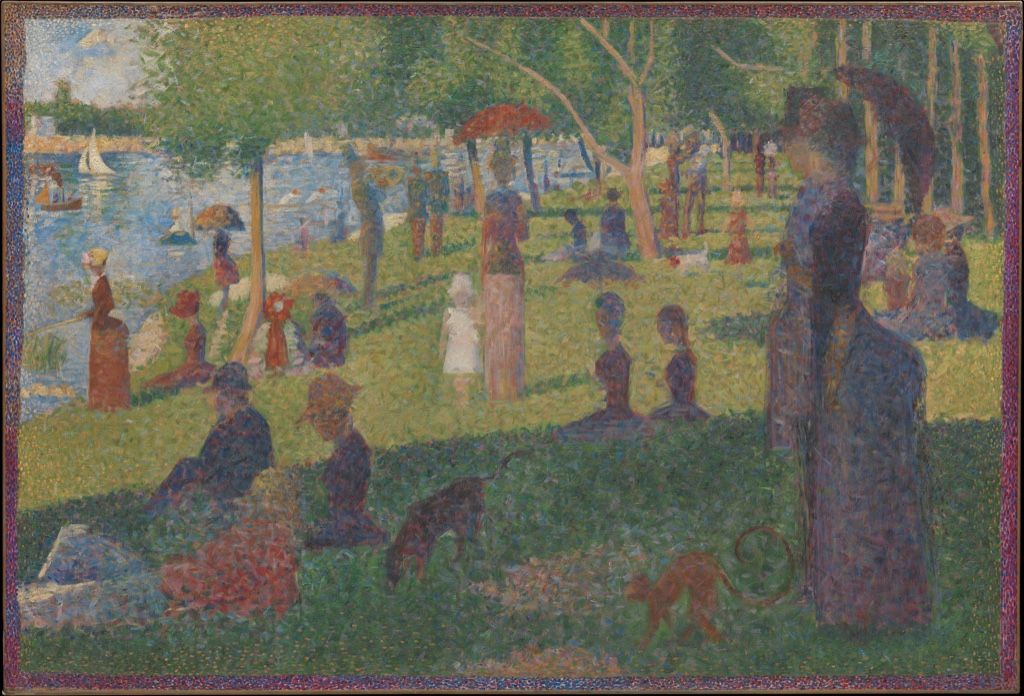
Stippling builds tone, texture or colour from dots or very short touches. Greater density can make a passage appear darker; separated coloured marks can also interact at viewing distance. The technique appears in drawing and painting, but it is not synonymous with Pointillism. Pointillism names a historically specific Neo-Impressionist practice, while stippling names the mark-making action.[7]
Seurat's Study for A Sunday on La Grande Jatte preserves a lively intermediate state. Small touches gather into figures, grass, water and shade without the surface becoming mechanically uniform. The separate Optical Color Mixing guide owns the science and viewing-distance questions; this route follows how dots are placed and varied as physical marks.
Scumbling in Art
Scumbling lays a thin, lighter, relatively opaque or semi-opaque film over a darker dry layer. Because the upper paint does not completely hide what lies beneath, the two layers produce a hazy, cool or broken effect. The National Gallery contrasts this with a glaze: a glaze darkens or colours through transparency, while a scumble usually brings lighter matter across a darker base.[12]
Painters have used scumbling for smoke, cloud, worn fabric, distant atmosphere and light trembling over foliage. The method may be dragged, feathered or touched across the surface rather than spread as an even transparent film. Its visual power comes from partial concealment. Lower darkness remains present, making the light layer seem suspended above it.
How to look without guessing
Begin with edges and thickness. Are contours hard, gradually dissolved or broken by the support? Does light come from painted value alone, or does raised paint catch the room's illumination? Do darks look like a continuous field, a transparent film or a lower layer glimpsed through broken upper colour? Move closer, then step back. Stippling and dry brush often change character with distance, while impasto becomes clearer under raking light.
Next separate what is visible from what is inferred. A smooth red may be a single opaque mixture or a glaze over a light base; a photograph rarely settles the question. A grey passage may be finished grisaille, exposed underpainting or later loss. Museum technical records are valuable precisely because they connect surface evidence to the hidden sequence of making.[1][2]
Finally, compare near neighbours. Sfumato softens transitions; chiaroscuro models or organises through light-dark contrast; tenebrism makes darkness dominate. Grisaille limits colour; underpainting describes a stage; glazing modifies a dried layer transparently. Alla prima works directly while paint remains wet; impasto concerns thickness. Dry brush breaks a low-load stroke, stippling deposits dots, and scumbling veils a darker layer with lighter paint. These distinctions turn technique from a vocabulary test into a sharper way of seeing.
Watch: Painting Techniques across Three Material Systems
Choose a museum introduction to paint, a historical watercolour survey, or a National Gallery demonstration of egg tempera.
Paint | Art Terms in Action
Begin with pigment, binder, handling and the many physical forms that painting can take.
Watch on YouTubeFrequently Asked Questions
A painting technique is a method used to apply, layer, modify or organise paint and tonal relationships.
Yes. Artists commonly combine underpainting, glazing, scumbling, impasto, dry brush and direct wet handling in different passages.
Only provisionally. Reproduction scale, lighting, varnish and photography can hide or exaggerate surface and layer evidence.
Close physical examination, raking light, microscopy, imaging and conservation records are stronger than visual resemblance alone.
Begin with whether the passage is raised or flat, opaque or transparent, wet-blended or broken, then use the focused guides and technical sources.
Discussion
Which work on this page most clearly shows why a painting can require more than one technique label?
Reader Insights
Raised ridges, skipped fibres and smooth films provide different evidence.
A dark appearance does not by itself prove glazing or underpainting.
Use “appears consistent with” when only a reproduction is available.
Join the Conversation
Share one precise observation or a useful museum example below.
References
- Wallraf-Richartz-Museum & Fondation Corboud, “Revealed! Painting Techniques.” https://www.maltechnik-wallraf.de/en
- Getty Conservation Institute, Historical Painting Techniques, Materials, and Studio Practice. https://www.getty.edu/conservation/publications_resources/pdf_publications/pdf/historical_paintings.pdf
- National Gallery, “Leonardo da Vinci's ‘Virgin of the Rocks’: Treatment, Technique and Display.” https://www.nationalgallery.org.uk/media/15698/keith_roy_morrison_schade2011.pdf
- National Gallery, “Chiaroscuro.” https://www.nationalgallery.org.uk/paintings/glossary/chiaroscuro
- National Galleries of Scotland, “Grisaille.” https://www.nationalgalleries.org/art-and-artists/glossary-terms/grisaille
- National Gallery, “Glaze.” https://www.nationalgallery.org.uk/paintings/glossary/glaze
- Metropolitan Museum of Art, “The Role of Painting Materials and Techniques.” https://resources.metmuseum.org/resources/metpublications/pdf/looking_to_connect_with_european_paintings_visual_approaches_for_teaching_in_the_galleries.pdf
- National Gallery, “Wet in wet.” https://www.nationalgallery.org.uk/paintings/glossary/wet-in-wet
- Victoria and Albert Museum, “Constable's oil sketches.” https://www.vam.ac.uk/articles/constables-oil-sketches
- National Gallery, “Impasto.” https://www.nationalgallery.org.uk/paintings/glossary/impasto
- National Gallery of Art, “Explore the Basics of Painting.” https://www.nga.gov/educational-resources/explore-basics-painting
- National Gallery, “Scumble.” https://www.nationalgallery.org.uk/paintings/glossary/scumble