by Tom Gurney
Tom Gurney BSc (Hons) is an art history expert with over 20 years experience
Page created on September 3, 2026 / Page updated on September 13, 2026
Email: tomgurney1@gmail.com / Phone: +44 7429 011000
How Transparent Paint Lets an Earlier Layer Continue to Shape the Colour Above
A glaze is a transparent or translucent film of paint applied over another, usually dry, paint layer. The lower colour remains visibly active while the film changes its hue, value or saturation. Unlike an opaque mixture that replaces what lies beneath, a glaze produces colour through the combined optical action of multiple layers.[1]
Glazing is a material operation, not a synonym for smooth finish or luminous colour. Painters can place an opaque highlight beside a glazed shadow, or use glazing only in selected fabrics and flesh. Identifying it responsibly requires attention to transparency, layer order and technical evidence.
At a Glance
- Core actiona transparent or translucent paint film modifies a dried colour beneath it.
- Optical effectlight interacts with both upper film and lower layer rather than only an opaque surface mixture.
- Thickness mattersa deeper glaze may darken or intensify a passage while a thinner film reveals more of the base.
- Do not confusevarnish is a later coating over the image; scumbling usually places a lighter, more opaque veil over darkness.
- Evidence limita smooth deep colour in reproduction does not by itself prove a glazed layer structure.
Contents
How a glaze changes colour
Light passes into a translucent paint film, interacts with pigment and binder, reflects from lower layers and returns to the viewer. Film thickness, pigment particle properties, refractive relationships and the colour beneath all affect the result. A thin red lake over a light passage can appear brilliant; the same material over darkness may deepen toward near-black.[8]
Oil binders are especially associated with historic glazing because they can form relatively transparent films and remain workable, but not every oil colour is naturally transparent. Pigments differ greatly in hiding power, tinting strength and particle behaviour, so equal-looking mixtures do not create equal films. The Met's materials guide stresses the different handling and optical properties available to painters using opaque body colour, translucent films and raised paint.[2]
Several glazes can build depth, yet more layers are not automatically better. Uneven thickness can create modelling; excessive darkening can bury the underlayer. Drying, compatibility and pigment stability also matter. A glaze placed before a lower film is secure can disturb it, while a brittle or poorly bound sequence may age badly. Painters also had to anticipate how oil and resinous additions would change as they dried. Historical recipes and modern reconstruction must therefore remain tied to specific materials rather than a generic “old master” method.[7]
Four paintings to examine
The Arnolfini Portrait
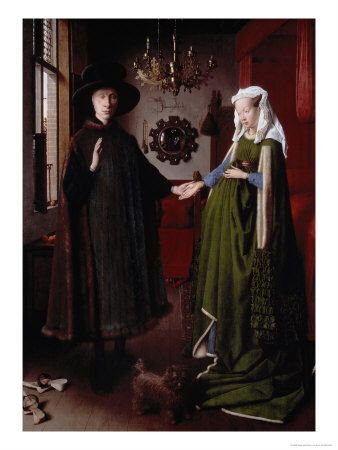
Jan van Eyck's Arnolfini Portrait combines minute description with colours that appear deep and jewel-like. The National Gallery's object record identifies its oil-on-oak construction and documents the extraordinary range of reflected surfaces, fabric and light.[3] Transparent and translucent passages help colour retain depth without erasing the precise forms below.
Look particularly at the green dress and red bed. Their colour is not visually uniform: folds deepen while light passages preserve brilliance. Glazing contributes to those changes, but fine opaque details and highlights remain equally important. Van Eyck's surface is a composite of different paint behaviours, not a single transparent skin.
Bacchus and Ariadne
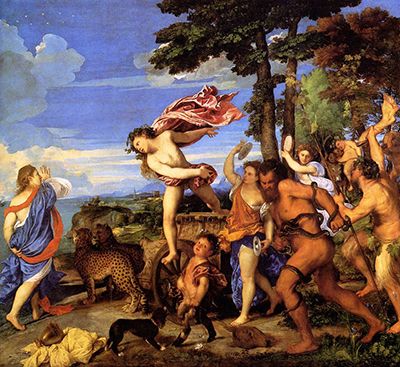
Titian's Bacchus and Ariadne is celebrated for its intense ultramarine sky and brilliant costumes. National Gallery technical study has connected the painting's colour to layered construction, costly pigments and changes made during execution.[4] Some transparent passages enrich lower colour, while opaque blues and lights establish a different material presence.
The painting demonstrates why hue alone cannot diagnose glazing. A saturated blue may come from pigment quality, preparation, film structure or their combination. Technical examination supplies the sequence that visual inspection can only propose.
Aristotle with a Bust of Homer
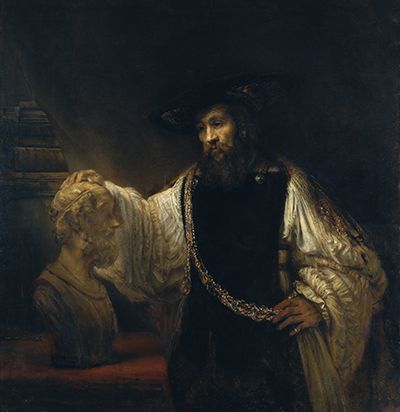
Rembrandt's Aristotle with a Bust of Homer places dark, translucent-looking passages beside raised gold, white and flesh paint. The Metropolitan Museum's study of the picture emphasises this varied handling, especially the chain and illuminated sleeve against a deep surrounding field.[5]
Glazes can enrich shadows and connect forms without flattening the impasto above them. The contrast makes each technique more legible: transparent depth seems to recede, while thick highlights catch actual light. A single painting can therefore use glazing and impasto as complementary rather than opposing systems.
Girl with a Pearl Earring
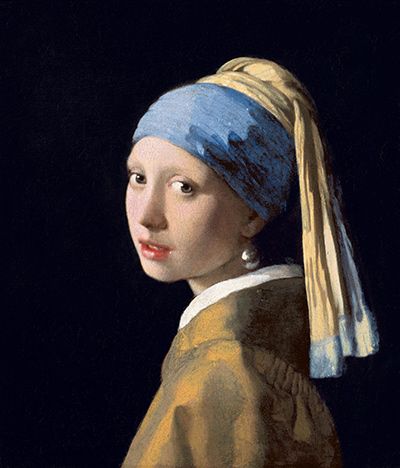
Research undertaken by the Mauritshuis shows that Vermeer's Girl with a Pearl Earring was built from a complex combination of preparation, underlayers and surface paint. Technical imaging and samples clarify details now difficult to see, including the original green curtain behind the figure and the structure of flesh and costume.[6]
Some passages use translucent upper colour, but the famous pearl depends largely on a few light strokes and the surrounding darkness. This is a valuable safeguard: luminosity does not always require many glazes. Economy, contrast and opacity can create an equally compelling effect.
Glaze, varnish and scumble
A glaze belongs to the image's paint structure. Varnish is a later coating applied over the painting, traditionally to protect and alter saturation or gloss. Old varnish can yellow and change the apparent colour of every layer beneath, which makes surface appearance an unreliable guide to original glazing.
A scumble usually places a lighter, relatively opaque or semi-opaque film over a darker layer. It partially veils the lower colour rather than allowing it to shine through a darker transparent film. The visual boundary can be subtle, especially where paint is thin, but the optical direction differs.[1]
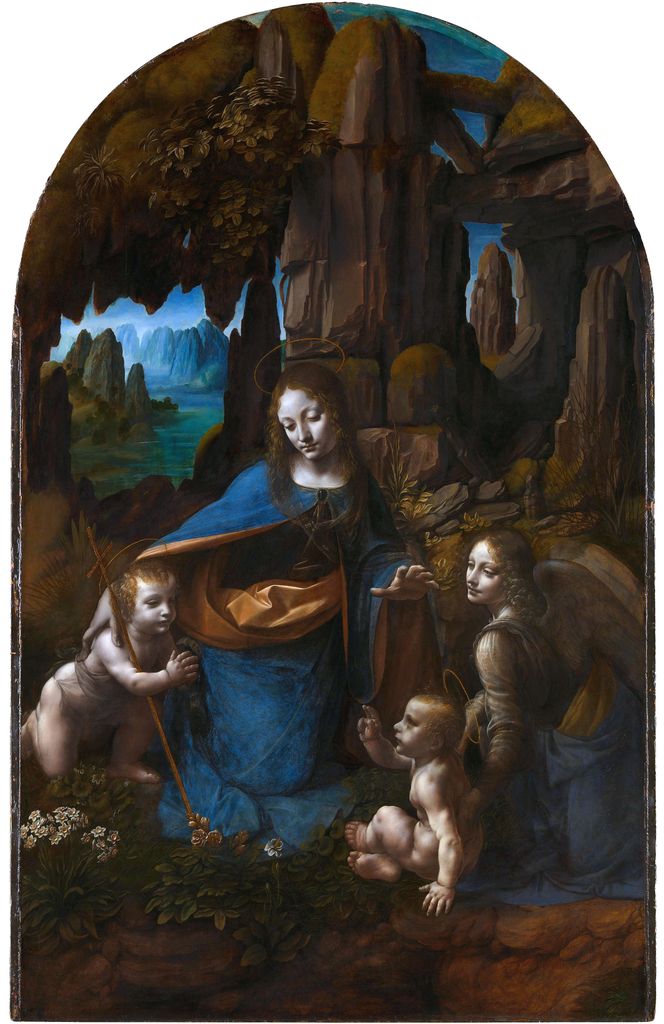
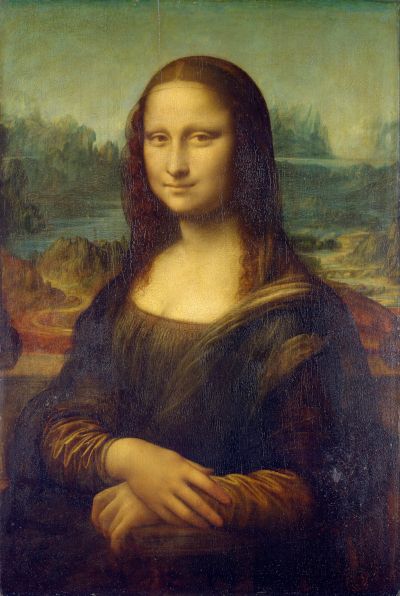
Sfumato describes gradual, smoky transitions. Leonardo often achieved such transitions with very fine translucent films, yet a glaze can preserve a sharp boundary and sfumato can involve more than glazing. One term names an operation; the other names an effect of modelling and edges.
How to recognise glazing
Begin with transitions where a lower light seems to remain active beneath deeper colour. Thin shadows may show colour rather than chalky black; folds may darken by film thickness without losing the underlayer's continuity. Compare these areas with nearby opaque highlights and corrections.
Next check whether the claim depends on a reproduction. Gloss, photography and digital contrast can make opaque paint seem transparent. Ultraviolet examination, microscopy and cross-sections can distinguish varnish from paint and reveal layer order. Museum technical reports are the strongest basis for describing a specific glaze.[4][6]
Finally, avoid turning glazing into a quality judgement. A work is not more accomplished because it contains more transparent layers. Direct opaque painting, wet-in-wet handling and scumbling offer different possibilities. Glazing matters when its transparency adds colour depth, modelling or unity that the painter could not obtain in the same way from a single opaque mixture.
Watch: Transparent Layers, Binders and Glazing
Choose a full glazing lesson, a Getty reconstruction of a layered panel, or a National Gallery binder comparison.
Glazing: Old Masters Secrets and Modern Techniques
Follow the optical purpose, sequencing and practical control of transparent oil-paint layers.
Watch on YouTubeFrequently Asked Questions
Glazing is the application of a transparent or translucent paint film over a dried underlying colour so both layers remain optically active.
No. Glazes can shift hue, deepen tone or unify passages; their effect depends on pigment, binder, thickness and the colour beneath.
A glaze belongs to the image’s paint structure, while varnish is a later coating applied over the painting for saturation or protection.
A glaze modifies through transparency, whereas a scumble usually brings a lighter, relatively opaque or semi-opaque veil over a darker dry layer.
Only provisionally. Technical imaging, cross-sections and close surface examination provide stronger evidence of layer structure.
Discussion
Which painting on this page most clearly depends on the continued optical presence of a lighter or differently coloured layer beneath?
Reader Insights
Ask whether the lower layer seems optically active rather than fully concealed.
Image-making glaze and later varnish have different functions.
Cross-sections and conservation records can confirm what photography only suggests.
Join the Conversation
Share one precise observation or a useful museum example below.
References
- National Gallery, “Glaze.” https://www.nationalgallery.org.uk/paintings/glossary/glaze
- Metropolitan Museum of Art, “The Role of Painting Materials and Techniques.” https://resources.metmuseum.org/resources/metpublications/pdf/looking_to_connect_with_european_paintings_visual_approaches_for_teaching_in_the_galleries.pdf
- National Gallery, “Jan van Eyck, The Arnolfini Portrait.” https://www.nationalgallery.org.uk/paintings/jan-van-eyck-the-arnolfini-portrait
- National Gallery, “Titian, Bacchus and Ariadne.” https://www.nationalgallery.org.uk/paintings/titian-bacchus-and-ariadne
- Metropolitan Museum of Art, “Aristotle with a Bust of Homer.” https://www.metmuseum.org/art/collection/search/437394
- Mauritshuis, “Girl in the Spotlight: Technical Examination.” https://www.mauritshuis.nl/en/what-s-on/long-term/girl-in-the-spotlight/
- Getty Conservation Institute, Historical Painting Techniques, Materials, and Studio Practice. https://www.getty.edu/conservation/publications_resources/pdf_publications/pdf/historical_paintings.pdf
- National Gallery, Making Colour. https://www.nationalgallery.org.uk/exhibitions/past/making-colour