by Tom Gurney
Tom Gurney BSc (Hons) is an art history expert with over 20 years experience
Page created on September 3, 2026 / Page updated on September 13, 2026
Email: tomgurney1@gmail.com / Phone: +44 7429 011000
When Paint Becomes a Raised Surface that Catches Real Light
Impasto is paint applied thickly enough for brush or knife marks to stand in physical relief. Its ridges and peaks catch real illumination, so the painted image changes subtly with the viewer's light and position. The term describes physical thickness, not simply energetic brushwork: a broad stroke can be thin, while a small highlight can be strongly raised.[1]
Painters have used impasto selectively to imitate glittering metal or bright flesh, and extensively to turn an entire surface into directional matter. The technique can support illusion and advertise the act of painting at the same time.
At a Glance
- Core featurepaint is built high enough for brush or knife ridges to remain physically evident.
- Real light mattersraised passages catch illumination from the viewing space as well as representing painted light.
- Use can varyimpasto may describe jewellery, flesh, fabric, weather, movement or the act of painting itself.
- Not all brushworka visible stroke can remain thin; impasto specifically concerns physical thickness.
- Best evidenceraking-light photographs and conservation records reveal relief more reliably than flat reproductions.
Contents
How raised paint works
Thick paint creates miniature topography. A ridge facing the room light may appear brighter than a hollow beside it, adding actual shadow to painted value. Direction matters: parallel strokes can describe hair, bark or cloud; short peaks can make jewellery sparkle. The Met's materials guide contrasts such body colour with thinner translucent passages.[2]
Oil paint is especially suited to retaining marks, but consistency depends on pigment, binder, additions and handling. Artists have used loaded brushes, palette knives, brush ends and other tools. Cracking or flattening can alter the original relief, and historic conservation may change surface gloss.
Impasto can be wet-into-wet or laid over dry paint. It is therefore not identical to alla prima. Nor is every textured surface impasto: exposed canvas weave, granular ground and cracked varnish belong to different material layers.
Four paintings to examine
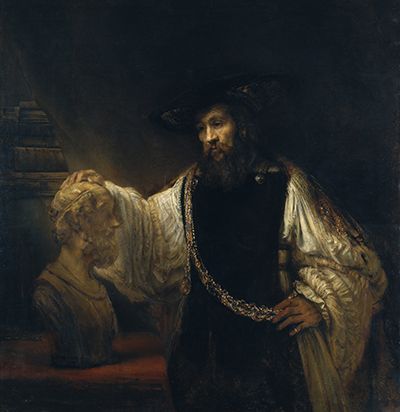
Aristotle with a Bust of Homer
Rembrandt's Aristotle with a Bust of Homer concentrates raised paint on the gold chain, lit sleeve, face and highlights around the bust. The Met's object study draws attention to the variety between thick, light-catching accents and deep thin passages.[3]
The chain gains two kinds of brightness: yellow-white pigment represents reflected light, while actual relief catches the gallery's illumination. Surrounding dark paint stays comparatively restrained, increasing the sense that metal and flesh advance into the viewer's space.
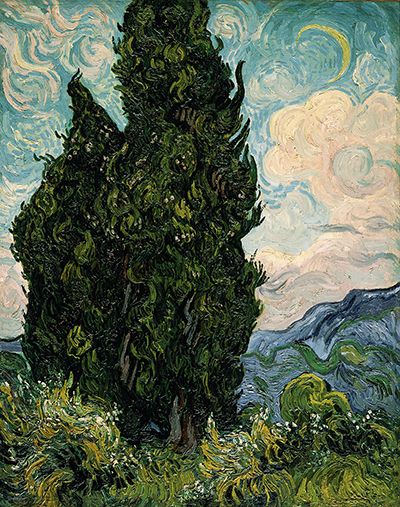
Cypresses
In Van Gogh's Cypresses, thick curling strokes climb through the trees and move across sky and earth. The Metropolitan Museum records the 1889 canvas and its dense, animated handling.[4] Ridges do not merely fill forms; their direction becomes a map of growth, wind and energy.
Van Gogh Museum research into the artist's materials shows that his forceful surfaces were grounded in specific pigments, supports and deliberate working decisions.[5] The result should not be reduced to emotional spontaneity. Repeated directions, colour intervals and changes in thickness structure the entire scene.
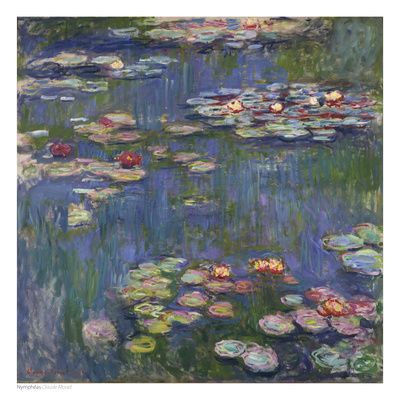
Water Lilies
Monet's late Water Lilies dissolve the ordinary division between solid objects, reflections and sky. Across the surface, layered strokes range from thin stains to heavier touches. The Musée de l'Orangerie explains how the vast decorative cycle creates an enveloping field without horizon.[6]
Raised paint makes some lilies and reflections materially present while other passages recede. Impasto here can stand for floating leaf, flash of light or the resistance of paint itself. Its meaning shifts as the viewer changes distance.
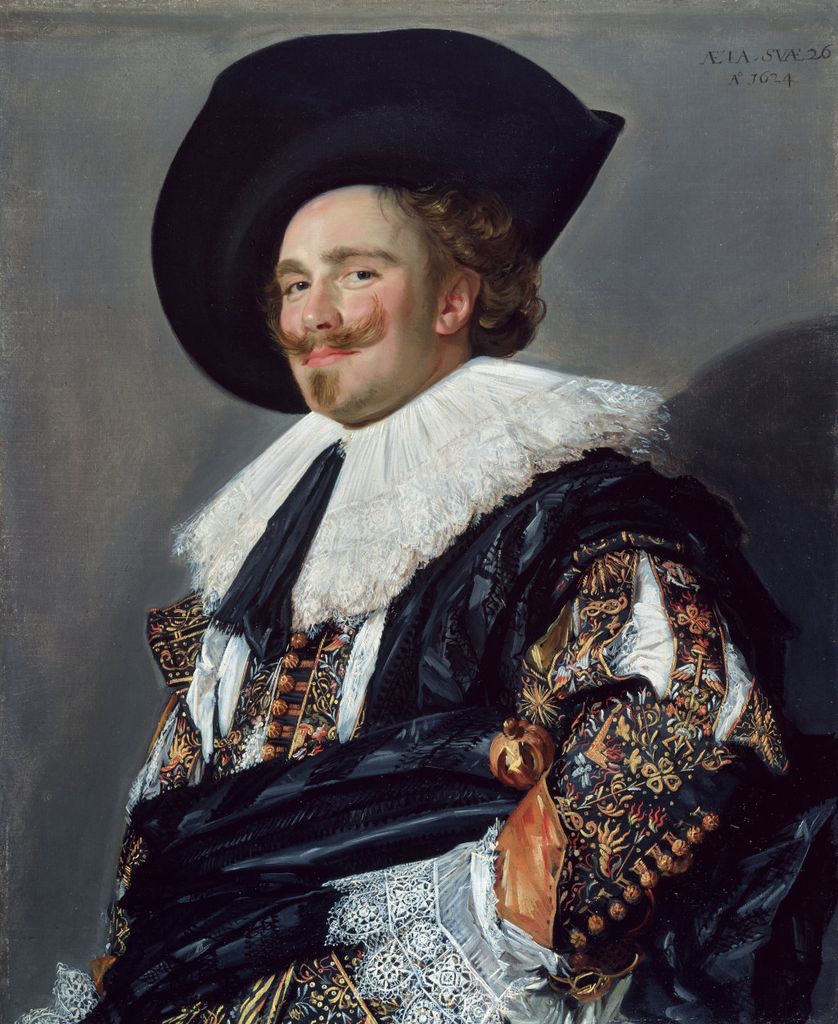
The Laughing Cavalier
Frans Hals's The Laughing Cavalier uses animated handling in hair, lace, embroidery and moustache. The Wallace Collection's account emphasises the sitter's complex costume and the work's celebrated vitality.[7] Not every visible stroke is thick, but selected highlights project against darker, smoother passages.
This economy is historically important. Before nineteenth-century painters spread raised handling widely, artists often reserved impasto for the brightest or most materially emphatic details. Small accumulations could make satin, metal thread and skin appear unusually immediate.
What impasto contributes
Impasto can imitate a substance: a dense white crest may suggest foam, a loaded yellow touch metal, a dragged ridge rough bark. It can also organise movement. Van Gogh's repeated arcs align the physical path of the brush with the represented force of the landscape.
At other times it disrupts illusion. Seen from the side, a highlight stops being “gold” and becomes a lump of paint. Modern painters exploited that double identity, but it exists in earlier works too. Impasto always belongs both to the depicted world and to the object's surface.
Scale and placement shape its effect. Uniform thickness may produce a continuous field; concentrated accents build hierarchy. Tate's definition notes how the technique makes marks conspicuous and can create an expressive surface.[8] Expressiveness, however, must be demonstrated through the individual work rather than assumed from thickness alone.
How to recognise impasto
Look for cast micro-shadows, ridge edges and highlights that change with raking light. Compare the apparent texture with canvas weave and image resolution. A sharp digital reproduction may exaggerate contrast, while frontal museum lighting may hide relief.
Then ask where thickness is distributed. Is it reserved for jewellery and flesh, aligned with directional movement, or spread across water and sky? Relate the physical mark to its pictorial job rather than treating “thick paint” as a complete interpretation.
Finally, distinguish original handling from ageing. Cracks, cupping, old fills and glossy varnish can create relief not intended by the painter. Conservation records and side-lit photography make the strongest case. Impasto is a tactile fact, but responsible reading connects that fact to placement, material history and visual purpose.
Watch: Impasto, Paint Body and Raised Surface
Choose a Getty definition of impasto, a Met examination of Van Gogh's materials, or a museum reconstruction of Monet's palette and handling.
What Is Impasto?
Begin with a concise material definition of paint applied thickly enough to retain relief and handling.
Watch on YouTubeFrequently Asked Questions
Impasto is paint applied thickly enough for raised brush or knife marks to remain physically evident on the surface.
No. A stroke can be visually obvious yet physically thin; impasto specifically concerns raised paint relief.
Its ridges catch changing illumination from the viewing space, an effect that flat photography can reduce or distort.
Yes. Earlier painters often concentrated raised paint in highlights, jewellery, fabric or textured accents.
Use raking light, side views, technical records and close surface inspection rather than relying only on contrast in a reproduction.
Discussion
Which painting on this page gives raised paint the most important descriptive or expressive role?
Reader Insights
Side lighting reveals relief that front lighting may flatten.
Impasto gains force through its relationship to quieter passages.
A pale highlight may be bright in pigment, physically raised, or both.
Join the Conversation
Share one precise observation or a useful museum example below.
References
- National Gallery, “Impasto.” https://www.nationalgallery.org.uk/paintings/glossary/impasto
- Metropolitan Museum of Art, “The Role of Painting Materials and Techniques.” https://resources.metmuseum.org/resources/metpublications/pdf/looking_to_connect_with_european_paintings_visual_approaches_for_teaching_in_the_galleries.pdf
- Metropolitan Museum of Art, “Aristotle with a Bust of Homer.” https://www.metmuseum.org/art/collection/search/437394
- Metropolitan Museum of Art, “Cypresses.” https://www.metmuseum.org/art/collection/search/437980
- Van Gogh Museum, “Van Gogh's painting materials and techniques.” https://www.vangoghmuseum.nl/en/art-and-stories/stories/all-stories/van-goghs-materials-and-techniques
- Musée de l'Orangerie, “The Water Lilies.” https://www.musee-orangerie.fr/en/node/197502
- Wallace Collection, “The Laughing Cavalier.” https://www.wallacecollection.org/explore/collection/search-the-collection/the-laughing-cavalier/
- Tate, “Impasto.” https://www.tate.org.uk/art/art-terms/i/impasto