by Tom Gurney
Tom Gurney BSc (Hons) is an art history expert with over 20 years experience
Page created on September 2, 2026 / Page updated on September 13, 2026
Email: tomgurney1@gmail.com / Phone: +44 7429 011000
How Visible Difference Keeps a Work Alive
Variety in art is sustained visual diversity or difference across an artwork. It becomes legible when two or more parts, qualities or passages can be compared: a group of related figures may change in pose, a textile may carry many kinds of motif, or one field may gather shifts of colour, size and surface.[1][2][3]
The word is relational. One red shape does not possess variety by itself. We have to see what changes beside it or elsewhere in the work, and whether those differences accumulate, recur or remain distributed. Variation names a particular change; difference is the broad relation being noticed; diversity is useful ordinary language for the range of visible differences. These terms overlap in art teaching, but they are not official types or exact synonyms.[1][3][6]
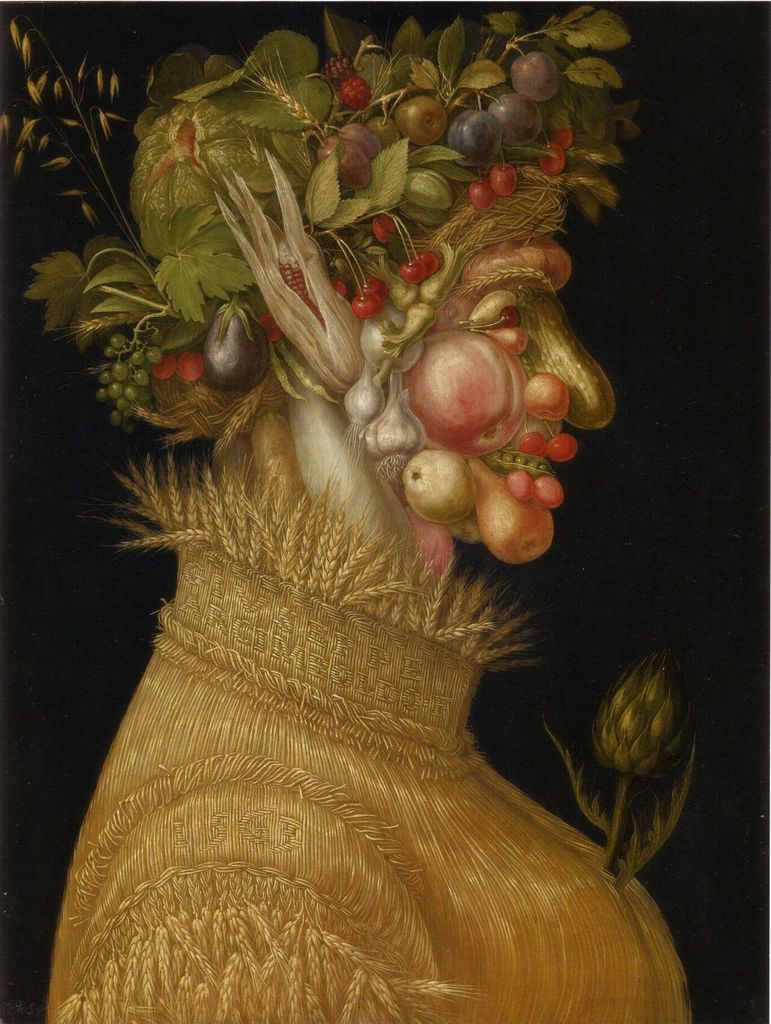
Giuseppe Arcimboldo, Summer, 1563. Fruits, vegetables and grains retain their differences while also forming an invented profile, making variety legible across one connected image. Image: Wikimedia Commons, public domain.
At a Glance
- Core ideasustained visible difference across related parts or passages.
- Look forchanges in shape, colour, size, texture, direction, figure or handling.
- Not quantity alonemore objects do not automatically create meaningful variety.
- Can coexist with unitydifferences can remain active within one connected whole.
- Close neighbourcontrast focuses on a specific opposition or degree of difference.
Contents
Variety does not require repetition. Related or repeated parts can provide a clear baseline for comparison, but non-repeating forms can also differ across a work. Nor is more variety automatically better. Differences can offer more to compare, but they do not guarantee interest, beauty, complexity or quality.[3][4][5]
Four questions for recognising variety
Begin with four practical questions:
- 1
What can be compared? Look for related forms, repeated parts, passages within a common field or different areas of one object.
- 2
Exactly what changes? Name the visible quality: perhaps shape, size, direction, colour, value, surface, spacing or pose.
- 3
How are the differences distributed? Are they clustered, repeated with change, interrupted, gradual or spread widely?
- 4
What keeps the differences legible within one work? Look for a shared field, frame, material, recurring relationship or other visible connection without requiring the parts to become identical.
Degree and range can describe how far differences extend. Grouping can gather related changes into clusters, while distribution asks where they recur or concentrate. An interruption can reveal change inside a recurrence. None of these cues is compulsory, and none forms an official category.[1][3][6]
Differences across a shared field
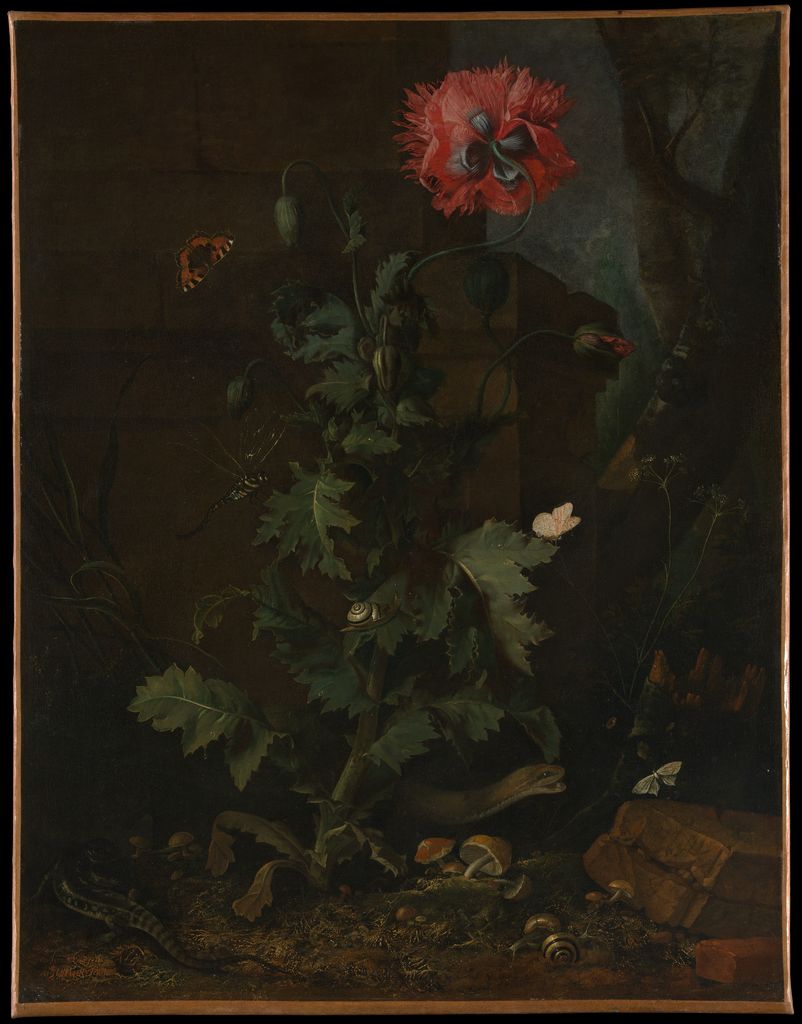
Marseus: many living forms in one dark setting
Otto Marseus van Schrieck's Still Life with Poppy, Insects, and Reptiles, ca. 1670, belongs to The Metropolitan Museum of Art, accession 53.155.[7] A red poppy rises among leafy stems, butterflies, a dragonfly, reptiles, snails, fungi and stones.
The forms are related by their forest-floor setting, yet their silhouettes and scales keep changing. Broad petals sit beside narrow leaves; delicate wings answer curled reptile bodies; small shells punctuate darker passages below. This is more than an inventory of species. Variety becomes visible because differences in form and represented surface remain distributed throughout one bounded scene.
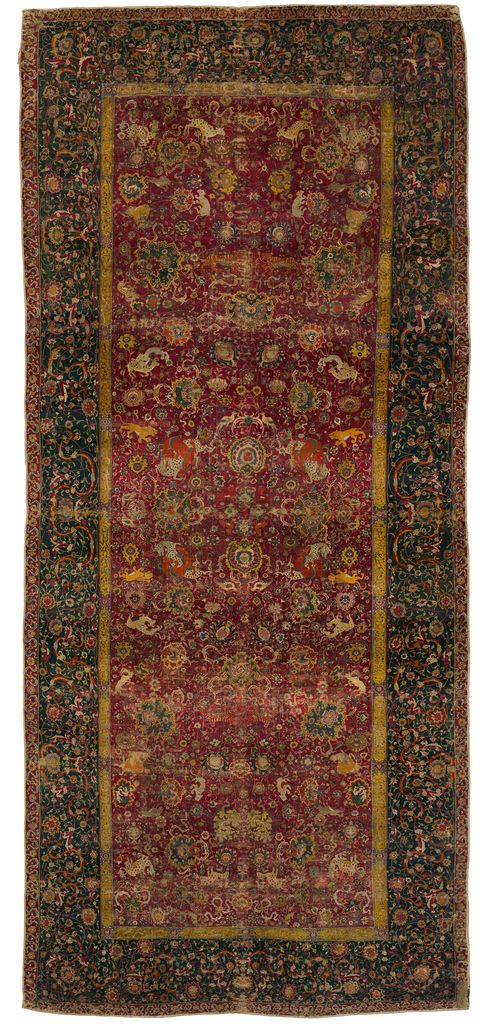
The Emperor's Carpet: difference spread through an ordered textile
The Emperor's Carpet, made by Iranian artist(s) in the second half 16th century, is in The Metropolitan Museum of Art, accession 43.121.1.[8] Its tall red centre carries flowers, animals and medallions, enclosed by dark blue floral borders.
Some motifs are compact, others branching or elongated; animals appear among botanical forms, and the surrounding bands introduce their own changes of scale and density. The complete carpet matters because it shows how widely the differences are spread. Its borders and shared textile field keep the abundance readable as one object without turning every motif into the same unit.
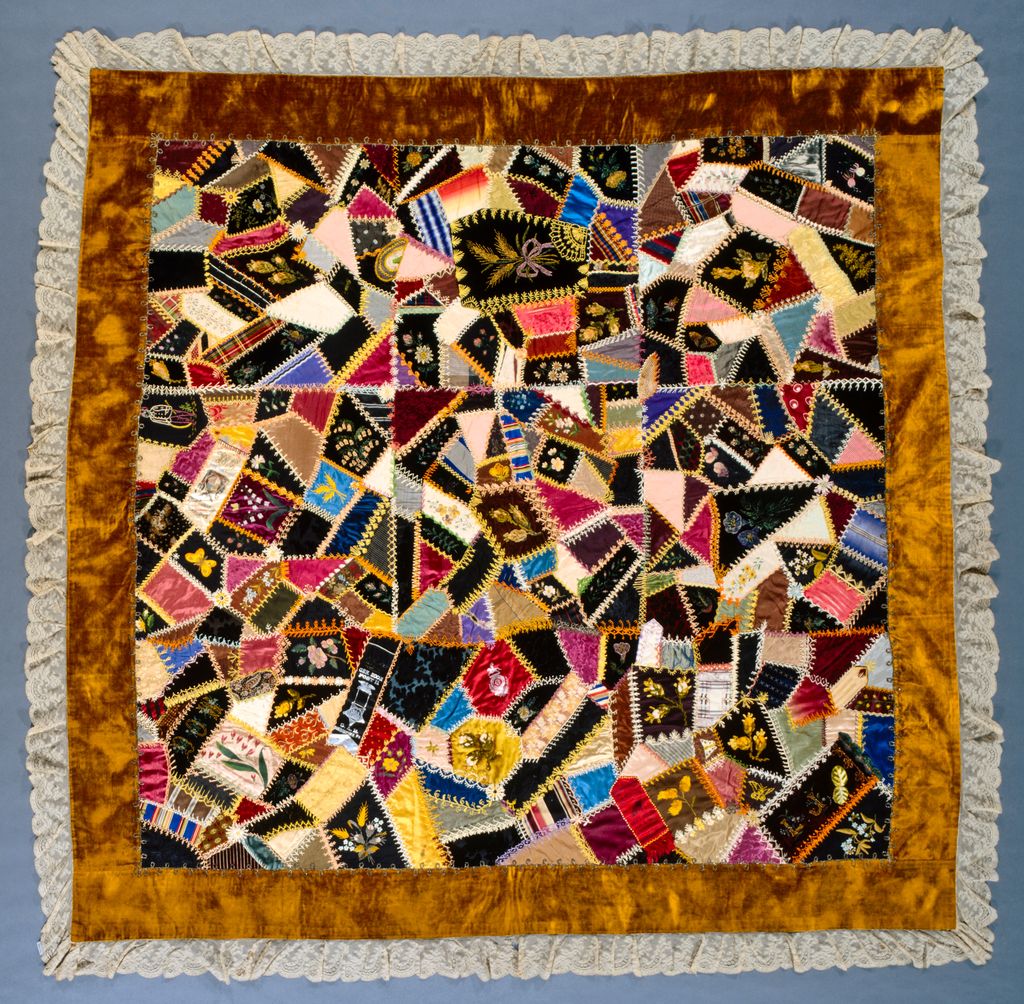
Joiner: irregular pieces joined into one quilt
The Crazy Quilt made by American maker Louisa Joiner, c. 1887–1900, belongs to the Cleveland Museum of Art, accession 2000.63.[12] Silk and velvet patches, ribbons, lace, embroidery and a heat-transfer image meet within a square textile.
Across the centre, patches change in colour, shape, size and fabric. Embroidered motifs differ too, while a gold velvet band and lace edge frame the assembled field. The varied materials have actual surface qualities, but the point here is not to catalogue technique. It is to compare how many visible differences remain present across one joined object.
Variation within recurrence
A Pichhwai: related cows, visibly differentiated
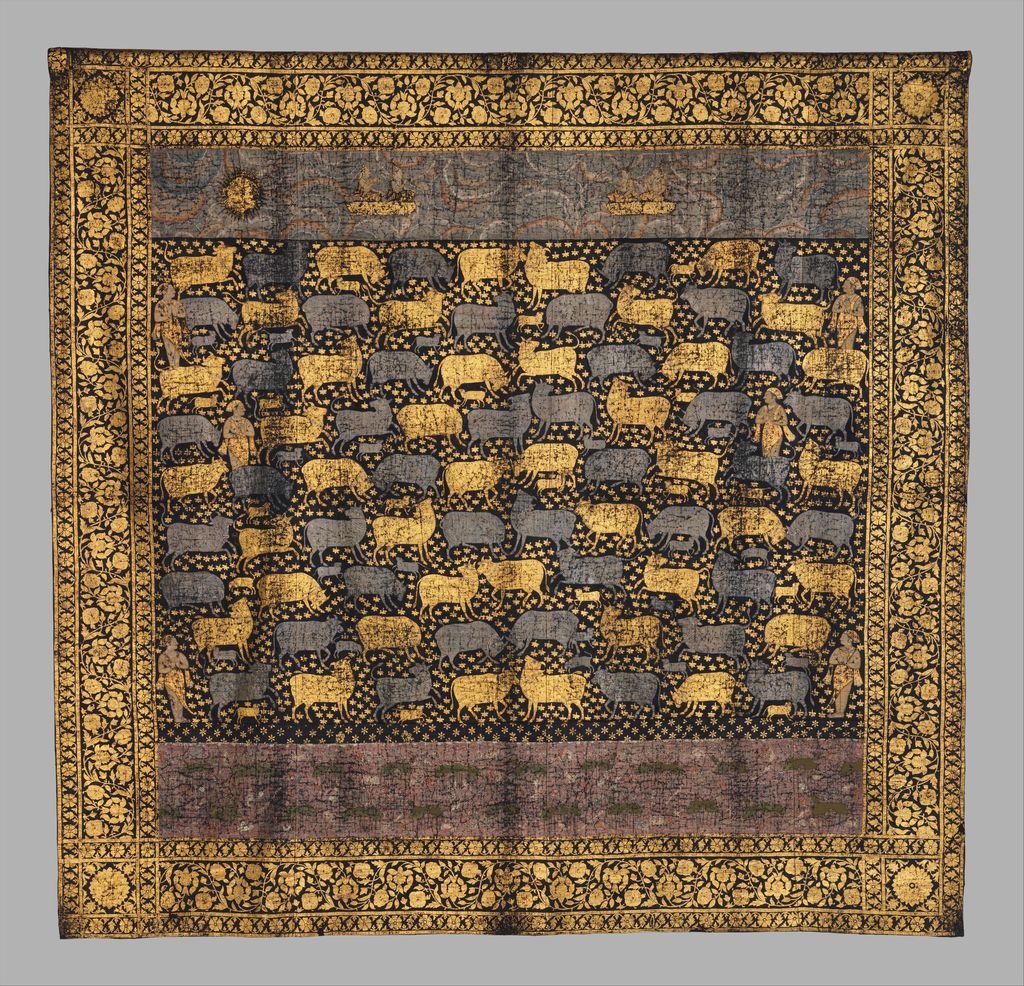
The complete Pichhwai for the Festival of Cows, made by Indian artist(s), probably Deccan, Aurangabad, in the late 18th century, is in The Metropolitan Museum of Art, accession 2003.177.[11] The devotional textile shows many gold and grey cows with attendants inside a broad floral border.
The cows recur, creating an immediate comparison baseline, but they are not exact copies. Their sizes, poses, colours and decorations change, as do their relationships to the surrounding figures. Repetition helps the variation register, but the variety lies in how the recurring forms differ. Pattern concerns the organised recurrence, while the sustained differentiation among the related figures is the useful Variety lesson.
Kanō: botanical change across two screens
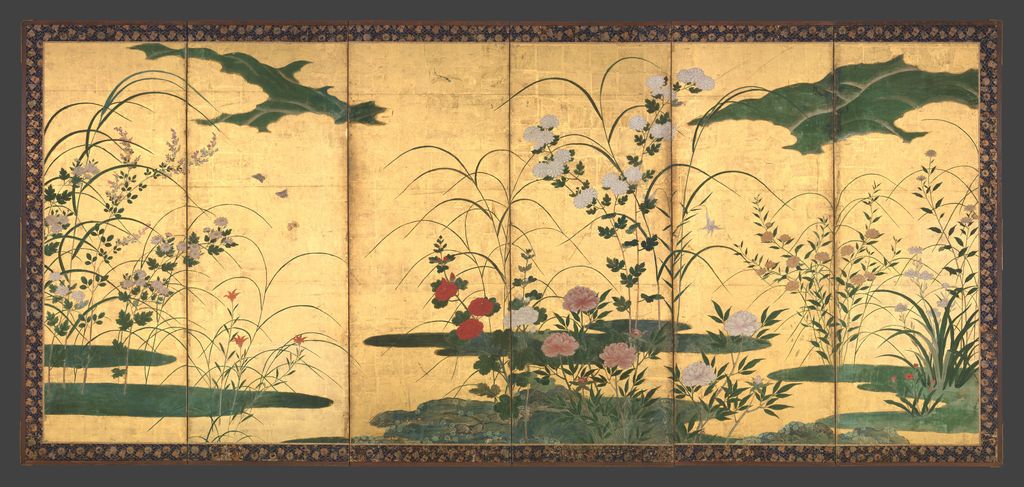
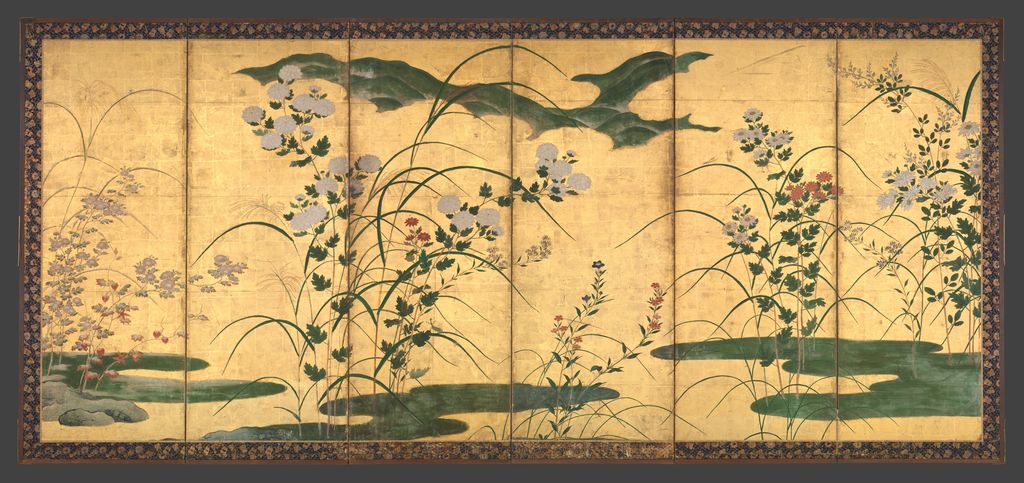
The Metropolitan Museum of Art holds Kanō Mitsunobu's Flowers and Grasses of the Four Seasons, dated late 16th century, as two six-panel screens, objects 2015.300.70.1 and .2.[9] Across both complete gold surfaces, grasses, leaves, blossoms and stems appear in changing clusters.
Some passages gather densely; elsewhere the gold opens into broad intervals. The botanical forms differ in height, direction and silhouette as one screen is compared with the other. Both screens are essential: the pair makes change across a related format visible without reducing the work to one selected panel. Recurrence is present, but Variety asks what keeps changing rather than how a motif is organised or how its intervals create pace.
Different figures, gestures and invented forms
A Maya vessel: change around a curved object
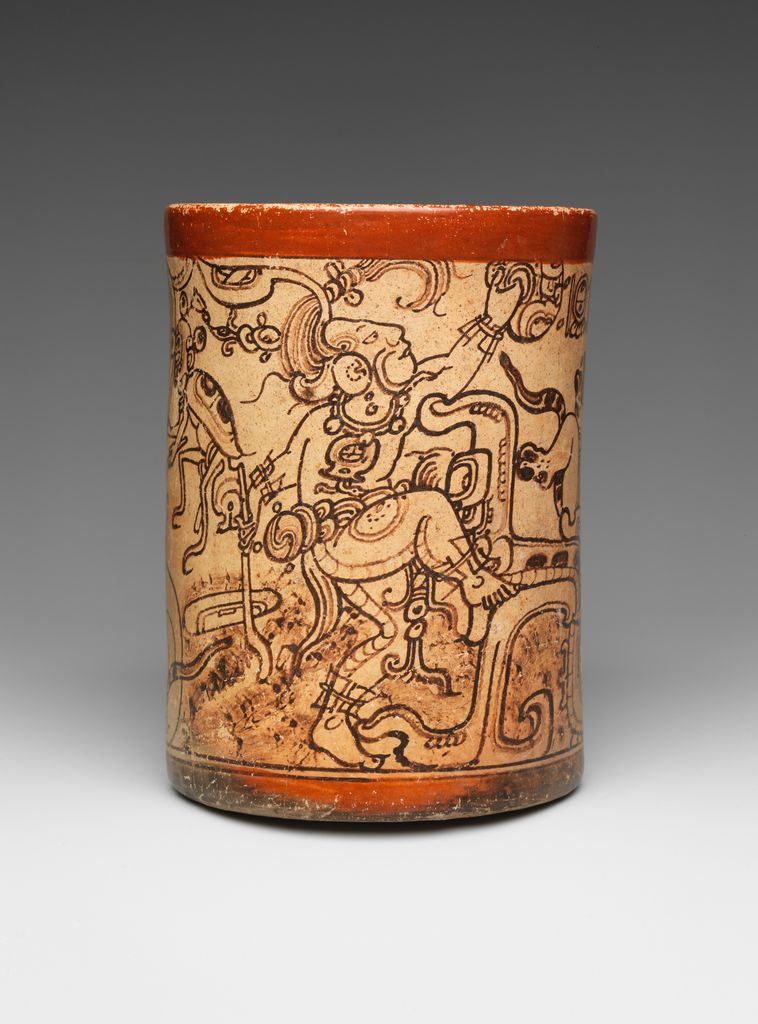
The Vessel with mythological scene, painted by the Metropolitan Painter, a Maya artist, 600–800 CE, belongs to The Metropolitan Museum of Art, accession 1978.412.206.[10] In the museum's complete primary view, profile figures, elaborate headdresses and glyphic forms occupy the cylindrical surface.
The figures differ in pose, dress, limb position and headdress, while painted signs introduce other shapes around them. Those visible changes can be described without claiming a narrative for the unseen reverse. The shared ceramic body supplies the field of comparison; the differences remain distinct as parts of one object.
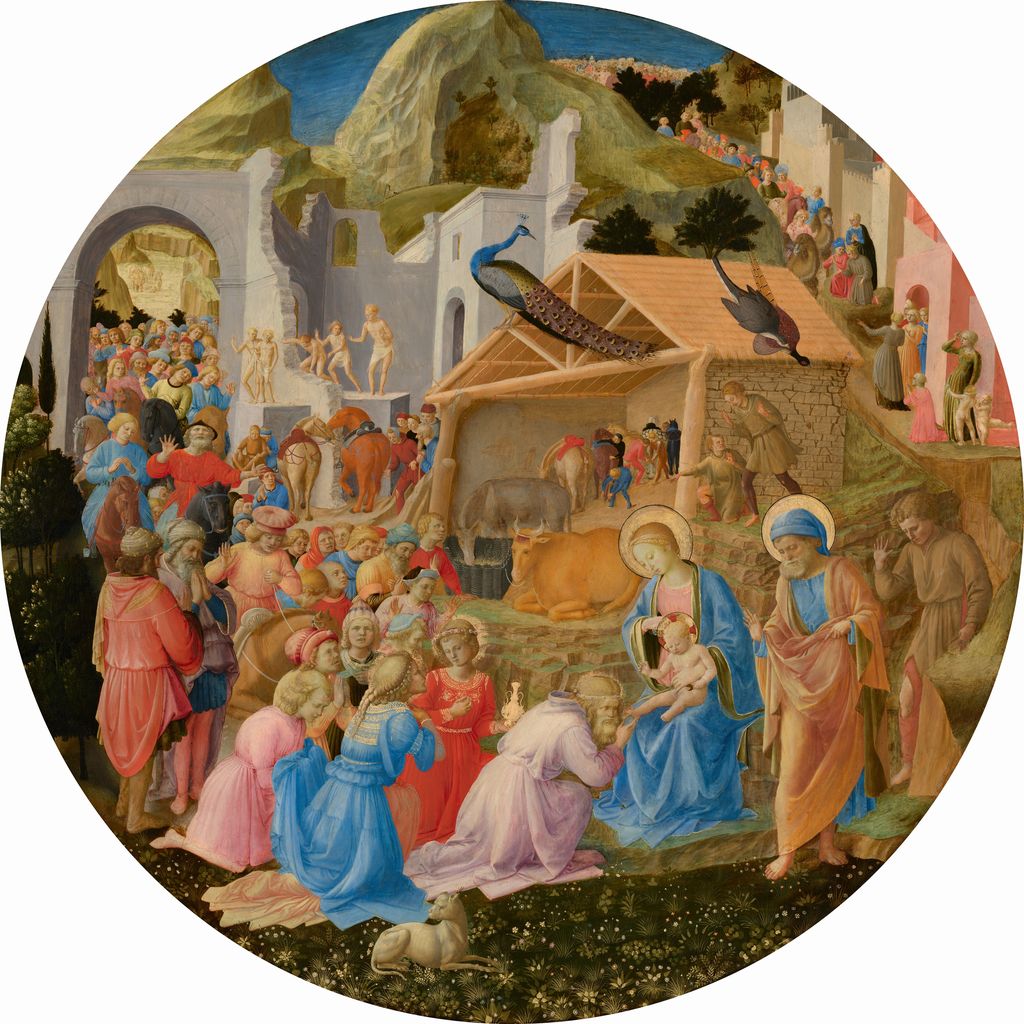
Fra Angelico and Lippi: groups around a complete tondo
The Adoration of the Magi, painted by Fra Angelico and Fra Filippo Lippi, c. 1440/1460, is in the National Gallery of Art, Washington, accession 1952.2.2.[13] The circular painting gathers Mary and the Christ child, arriving figures, animals, ruins and landscape within the complete tondo.
Variety is especially clear among the people: age, pose, dress, scale and placement change from the foreground groups to the procession beyond. The circular edge, overlapping groups and continuous setting keep those differences available for comparison. We do not need to inventory every person or retell the Christian subject to see how varied figures can remain gathered within a shared scene.
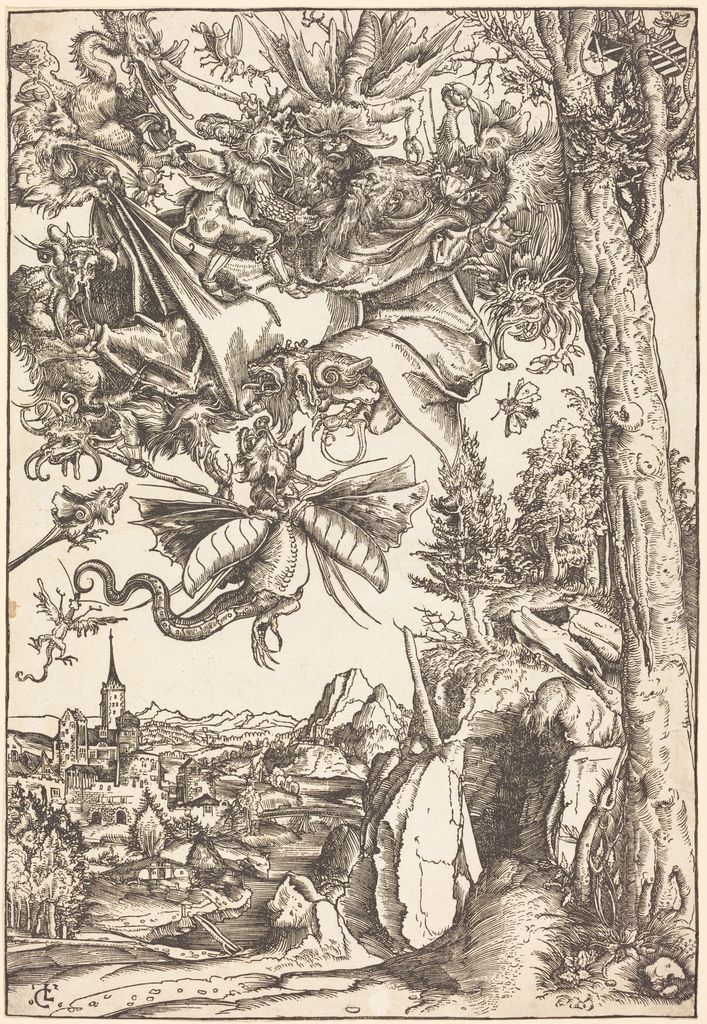
Cranach: a changing crowd of invented creatures
Lucas Cranach the Elder's 1506 woodcut The Temptation of Saint Anthony belongs to the National Gallery of Art, Washington, accession 1943.3.2861.[14] Above Saint Anthony and a quieter landscape, creatures crowd the complete trimmed sheet.
Horns, wings, beaks, limbs, contours and represented surfaces alter from one creature to the next. Because the print is monochrome, the diversity does not depend on a broad colour range. Related bodies supply comparison, while each combination changes enough to remain distinguishable. The figures imply action, but their movement is secondary here; the Variety reading rests on the sustained invention across the group.
Variety, Unity and Contrast
Variety and Unity in Art answer different questions. Variety asks what remains visibly different; Unity asks what allows distinguishable parts to belong together as a connected whole.[3][4] The two can coexist. The many patches in Joiner's quilt remain different while their joins and borders establish one object; the Kanō screens retain changing plants while gold grounds and paired formats connect them. This is not a fixed formula or proof that the works have reached an ideal balance.
Contrast in Art is narrower: it concerns a perceptible difference between qualities or parts. One sharp contrast may contribute to variety, but it is not sufficient by itself. Variety becomes the more useful term when differences accumulate, recur or remain distributed across several parts, qualities or passages.[1][2][6]
Other principles ask different questions. Emphasis in Art concerns priority; Balance in Art concerns visual weight. Rhythm in Art concerns pace through recurrence and interval, while Pattern in Art concerns organised recurrence. Movement in Art concerns implied action or an invited direction of attention. Proportion in Art compares the sizes of parts with each other and with the whole, while Composition in Art considers the complete realised organisation in which these relationships meet.
The Principles of Art places variety among other organising relationships. Shape and colour name visual resources that may vary; repetition supplies a possible baseline for comparison. Variety keeps the central question on differences sustained across several parts, qualities or passages.
Look for Variety Yourself
Choose an unfamiliar artwork and begin with comparison. Find two related parts, then name one exact difference between them. Add a third and fourth comparison. Does the same quality keep changing, or does the work sustain differences across several qualities?
Now step back. Notice whether the changes cluster, recur with variation, interrupt a related field or spread across the whole work. Finally, identify what lets you keep comparing them: a common ground, repeated relationship, surrounding border, shared material or complete object.
Variety becomes easier to recognise when “there is a lot going on” gives way to precise description. Name what changes, where the differences remain visible and how broadly they extend—without assuming that more must be better.
Watch: Variety through Formal Analysis
Choose a museum-led whole-work analysis, a close reading, or a foundations overview for considering variety.
Introducing Formal Analysis: Landscape
Follow how recurring shapes, colours and intervals contribute to a larger visual organisation.
Watch on YouTubeFrequently Asked Questions
Variety is sustained visible difference across related parts, qualities or passages of an artwork.
No. Repetition can create a baseline for comparison, but non-repeating forms can also differ across a work.
Variety concerns a range of differences, while contrast focuses attention on a particular opposition or degree of difference.
Yes. Parts can remain visibly different while a shared field, material, frame or recurring relationship connects them.
Compare several related parts, name exactly what changes, and then judge how broadly those differences extend across the work.
Discussion
Which example on this page sustains the broadest range of differences without becoming visually incoherent?
Reader Insights
Choose related parts that can be compared fairly.
Identify whether shape, colour, scale, texture or direction differs.
Follow how widely and consistently those differences extend.
Join the Conversation
Share one precise observation or a useful museum example below.
References
- J. Paul Getty Museum, “Understanding Formal Analysis — Principles of Design”
- Museum of Modern Art, A Vocabulary for Discussing Art
- Massachusetts College of Art and Design, Principles and Elements
- Neuberger Museum of Art / Purchase College SUNY, “Principles of Art: Unity and Variety”
- Buffalo AKG Art Museum, Monochromatic Assemblage
- J. Paul Getty Museum, “Vocabulary for Describing an Artwork”
- The Metropolitan Museum of Art, Otto Marseus van Schrieck, Still Life with Poppy, Insects, and Reptiles, ca. 1670
- The Metropolitan Museum of Art, The Emperor's Carpet, second half 16th century
- The Metropolitan Museum of Art, Kanō Mitsunobu, Flowers and Grasses of the Four Seasons, late 16th century
- The Metropolitan Museum of Art, Metropolitan Painter, Maya, Vessel with mythological scene, 600–800 CE
- The Metropolitan Museum of Art, Pichhwai for the Festival of Cows, late 18th century
- Cleveland Museum of Art, Louisa Joiner, Crazy Quilt, c. 1887–1900
- National Gallery of Art, Fra Angelico and Fra Filippo Lippi, The Adoration of the Magi, c. 1440/1460
- National Gallery of Art, Lucas Cranach the Elder, The Temptation of Saint Anthony, 1506