by Tom Gurney
Tom Gurney BSc (Hons) is an art history expert with over 20 years experience
Page created on September 3, 2026 / Page updated on September 13, 2026
Email: tomgurney1@gmail.com / Phone: +44 7429 011000
How Support, Preparation, Visible Layers and Tools Work Together
Art materials are the physical substances, surfaces and tools used to make an artwork. The phrase can include paint, ink, charcoal, paper, canvas, wood, plaster, brushes and many other things, but a useful reference guide does more than collect them in one list. It asks what job each material performs and how the parts work together.
A museum label often compresses several jobs into a short line. “Oil on canvas” names a binder-led paint medium and its fabric support. “Watercolor and graphite on paper” names two marking media and a support. “Tempera and gold on wood” records materials that behave differently but belong to one object. Reading by role makes these labels clearer without pretending that every artwork follows one recipe.[1][2]
At a Glance
- Supportthe paper, canvas, panel, wall or other structure that carries the work.
- Preparationsize, ground or primer can regulate absorbency, texture and adhesion.
- Visible layerpaint or marks may combine pigment, binder and optional formulation ingredients.
- Toola brush, knife, pen or other implement moves or shapes material but does not define the medium by itself.
- Best evidenceread the complete object label and technical record rather than inferring a universal recipe.
Contents
- How Support, Preparation, Visible Layers and Tools Work Together
- Supports: what carries the image or object
- Preparation: what comes between support and image
- Paint and mark layers
- Tools: what moves and shapes materials
- Material families at a glance
- How to choose materials without chasing products
- Reading variation and technical claims
- Care, safety and ageing
- Where to go next
- Art Materials reference pages
- Watch Art Materials in Practice
This guide is a map of the system, not a shopping list. It explains supports, preparation, paint components and tools, then directs you to the site's historical medium and colour guides. Product rankings, volatile prices and brand claims are intentionally excluded.
How an art-material system fits together
Most painted or drawn works can be discussed through three central questions: what carries the work, what prepares that surface, and what forms the visible mark or film? A fourth question asks which tools moved, deposited, removed or shaped the material.
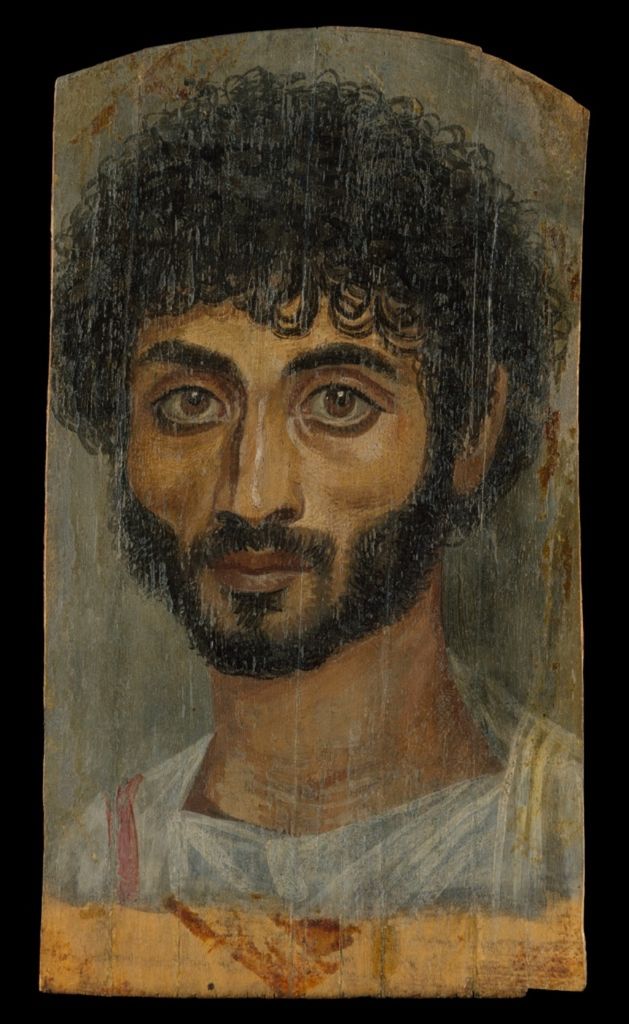
Maker unrecorded, Portrait of a thin-faced, bearded man, 160–180 CE. Encaustic on limewood. The label identifies a wax-based paint system and its rigid support rather than treating “medium” as one isolated ingredient. Image: The Metropolitan Museum of Art, Open Access, public domain.
The diagram presents a conceptual sequence. A support may receive a preparation layer and then a paint or mark layer. Paint can contain pigment, binder and other formulation ingredients. Tools act across the preparation and visible layers. Not every artwork uses every stage: an unprimed drawing sheet, a frescoed wall, an encaustic panel and an assembled mixed-media work do not share one universal cross-section.[3]
Supports: what carries the image or object
A support is the surface or structure on which a picture is made. Paper, canvas and other textiles are usually described as flexible supports. Wood panels, hardboard and metal sheets are rigid supports. Plaster belongs to an architectural surface, while a wall painting remains connected to the building even if a fragment is later removed.[3][4]
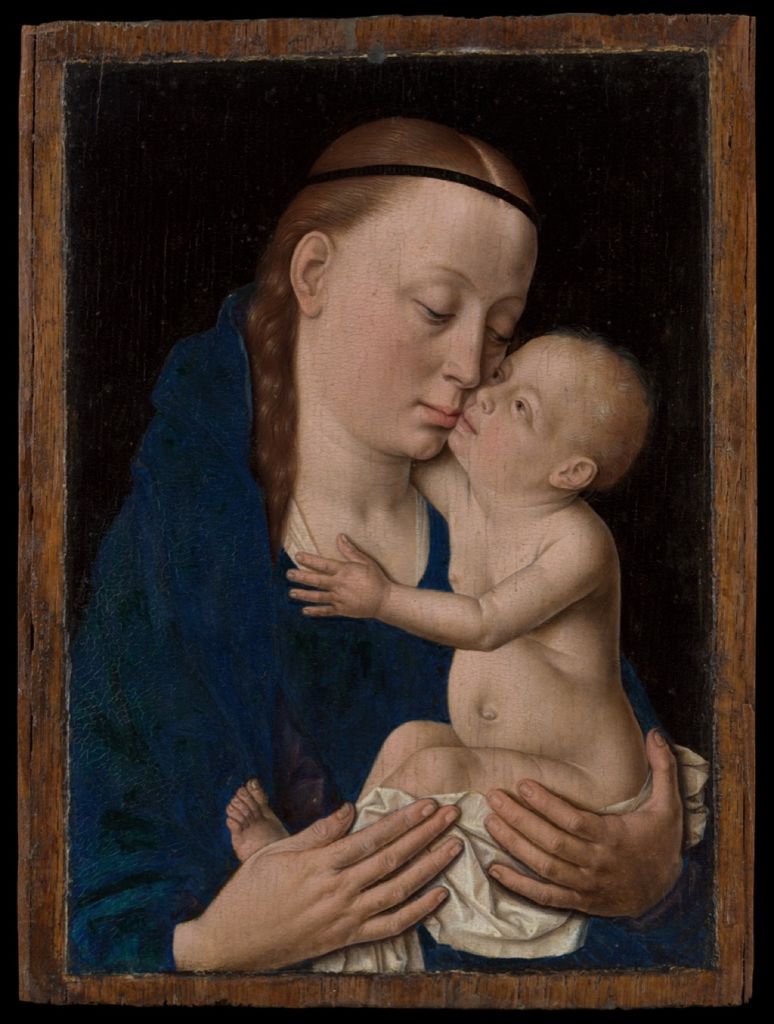
Dieric Bouts, Virgin and Child, about 1455–60. Oil on wood. The support is part of the material record: its rigidity, grain and preparation affect both making and long-term care. Image: The Metropolitan Museum of Art, Open Access, public domain.
Support is not a synonym for medium. Oil paint can be used on canvas, wood, metal or prepared paper. Watercolor is strongly associated with paper but can appear in mixed techniques and on other prepared surfaces. A wooden panel can carry tempera, oil, wax or several materials together. The support changes absorbency, movement, weight, scale and handling, but it does not dictate one visual result.
The Art Media guide follows medium definitions and histories. Its Panel Painting page explains wood as a historical painting support. This materials cluster instead compares support systems and their physical vocabulary.
Preparation: what comes between support and image
Artists often prepare a support before applying the visible layer. A size can reduce or regulate absorbency and create a relationship between the support and later coatings. A ground or priming layer can provide colour, texture, tooth and a more predictable working surface. Historical gesso may be a glue-bound preparation based on gypsum or chalk; modern products carrying the word “gesso” can have different binders and formulations.[3][4]
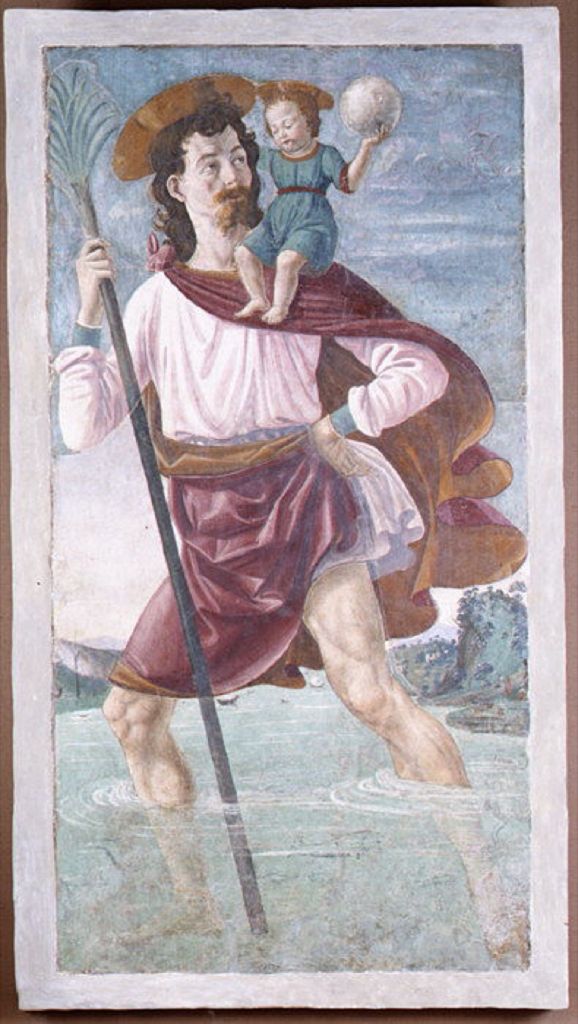
Domenico Ghirlandaio, Saint Christopher and the Infant Christ. Fresco. In a fresco system, preparation and image are bound to layers of plaster and to an architectural support. Image: The Metropolitan Museum of Art, Open Access, public domain.
These words need context. “Ground,” “primer,” “size” and “gesso” overlap across periods, regions, conservation writing and manufacturers' labels, but they are not automatically interchangeable. Some works are deliberately made on exposed or minimally prepared supports. Others contain complex preparation systems that become visible only through technical examination.
Preparation also helps explain why the same paint can behave differently on two surfaces. An absorbent ground may draw liquid from a paint layer more quickly; a smoother or less absorbent surface can leave more material mobile at the surface. That observation is a reason to read the technical record, not a universal instruction for preparing a new work.
Paint and mark layers
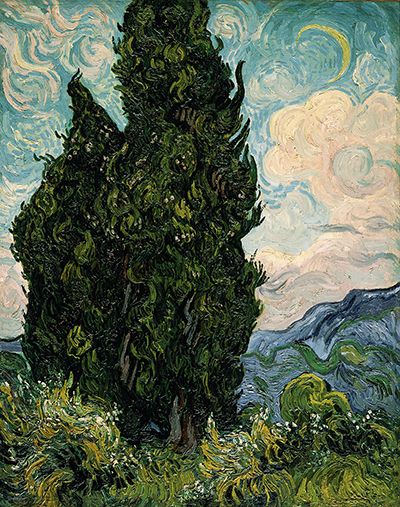
Paint is commonly described as pigment held in a binder. Pigment provides colour; the binder holds particles together and helps the coloured layer form and adhere. Drying oils, egg, gums, waxes and synthetic polymers can act as binders in different paint systems. Their optical and handling properties affect how colour looks and how the material can be worked.[2][5][6]
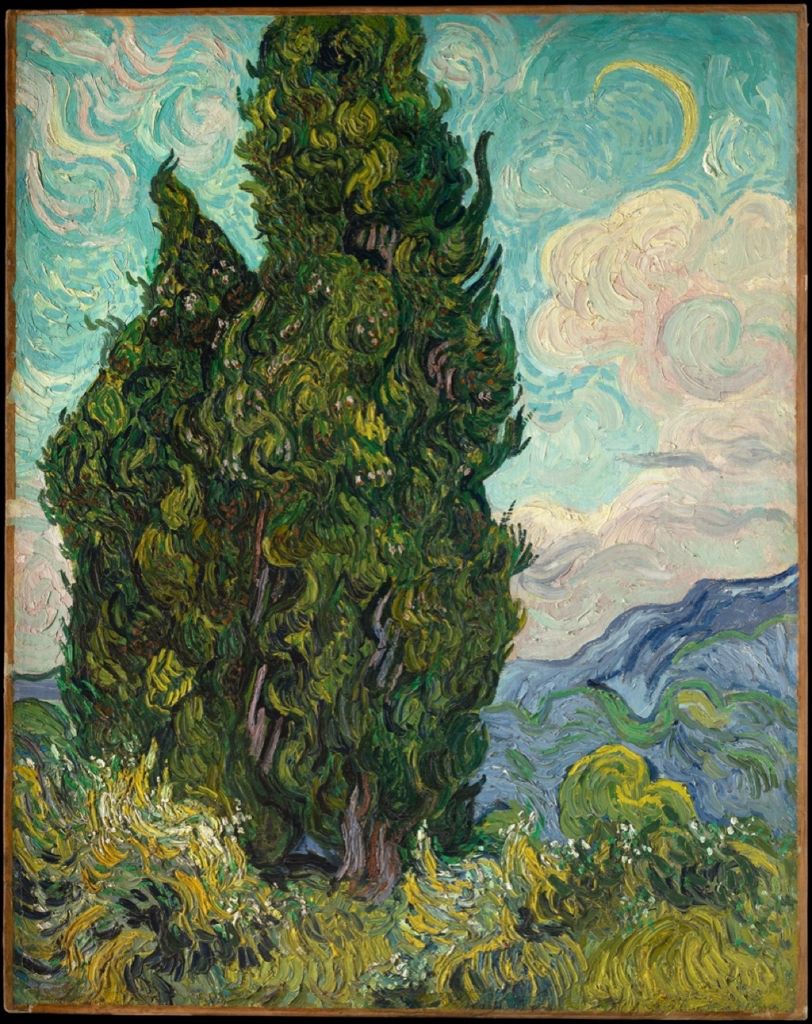
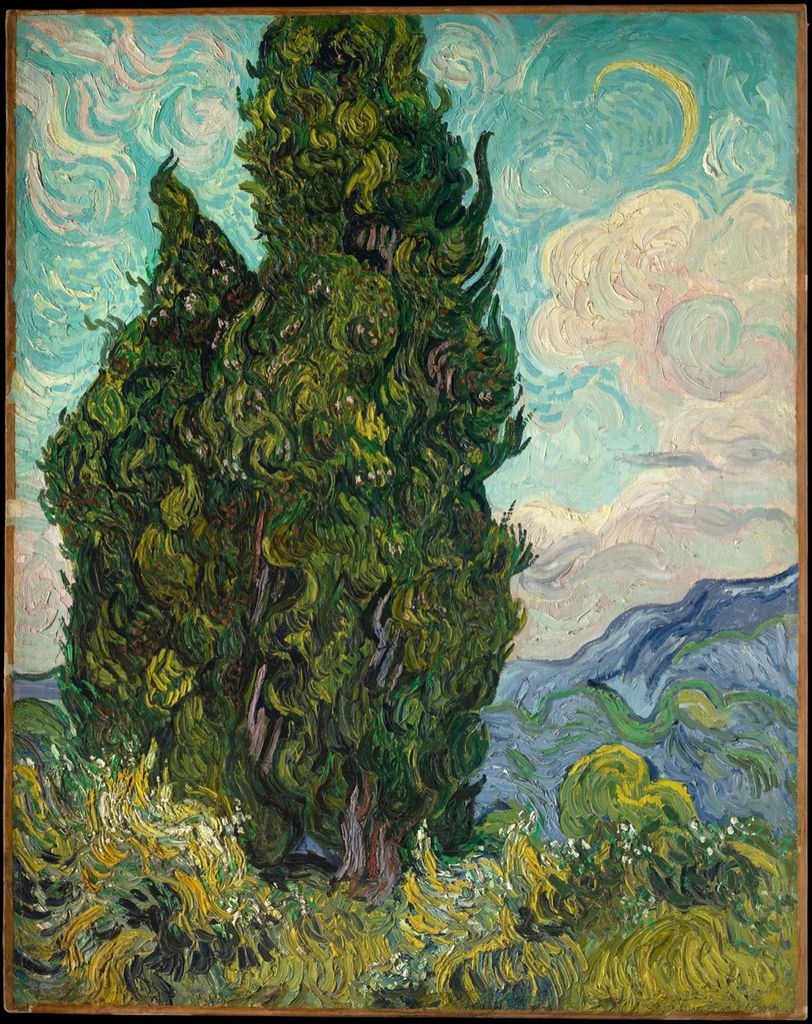
Vincent van Gogh, Cypresses, 1889. Oil on canvas. Binder, pigment, paint body, tool pressure and woven support combine in the visible ridges of the image layer. Image: The Metropolitan Museum of Art, Open Access, public domain.
Real formulations may also contain fillers, extenders, wetting agents, preservatives, driers, plasticisers or other additives. Their presence and purpose vary. A simple “pigment plus binder” model is valuable for learning, but it is not a complete formula for every historical or modern paint.
The word medium creates a common ambiguity. In one context it means the material or technical means of an artwork; in another it can mean the binder or a material added to modify paint handling. The intended meaning should come from the sentence, label or manufacturer documentation rather than from the word alone.[1][2]
The later paint-components guide in this cluster owns physical terminology such as pigment, binder, vehicle, extender and additive. Color in Art and Color Mixing retain colour relationships and controlled mixing instruction. This page does not turn chemical names into recipes or histories of individual pigments.
Tools: what moves and shapes materials
Brushes are only one tool family. A painter may use palette knives, scrapers, rollers, sponges, pens, droppers, spray equipment or hands, depending on the material and safe working practice. Drawing tools include pencils, charcoal sticks, metal points, pens and blending tools. Printmaking introduces matrices, presses, cutters and wiping tools. Sculpture and installation require still other systems.
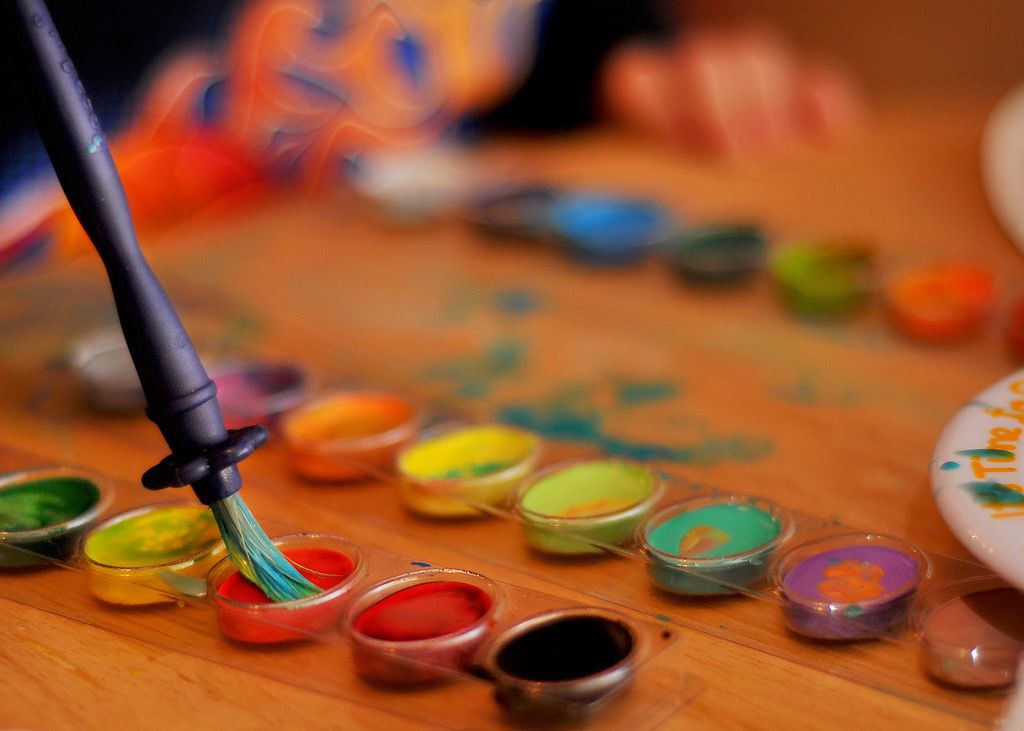
A brush used with watercolour pans. Tools mediate pressure, liquid load and mark shape; they should be chosen for the task and tested with the actual medium. Photograph by Jennifer Rensel via Wikimedia Commons, CC BY 2.0; resized without cropping.
The useful distinction is between the material deposited and the tool that handles it. A brush can carry oil paint, watercolor, ink, adhesive or varnish, yet the brush does not turn all of those substances into one medium. Its fibre, shape, spring, capacity and construction affect handling. The dedicated brush pages will separate shape-and-use taxonomy from anatomy, manufacture and care.
For charcoal, ink, graphite and related mark-making, use Drawing Mediums. This materials cluster will not duplicate those medium guides.
Material families at a glance
Painting supports
Canvas, panel, paper, board, metal and walls offer different combinations of flexibility, rigidity, absorbency, weight and scale. “Best” has no stable meaning without a paint system, intended format, preparation, handling plan and regional terminology. The support guides in this cluster therefore compare criteria rather than rank products.
Paper
Paper varies by fibre, formation, surface, sizing, thickness, weight and format. Weight may be stated in grams per square metre or pounds, but pound designations depend on a basis size and cannot be compared as though they were a single universal scale. General measurement belongs to the paper-sizes guide; watercolor-specific press, sizing and stretching belong to the watercolor-paper guide.
Brushes
Brushes combine a handle, ferrule or other attachment system, and a tuft made from natural hair, bristle, synthetic fibre or a blend. Shape names and manufacturing terms vary among regions and makers. A shape can suggest a family of marks, but it does not guarantee one use or result.
Paint components
Pigment, binder, liquid vehicle and additives interact to produce handling and a dried film. Similar colour names do not prove identical pigments or formulations. Technical labels, Colour Index information and safety documentation are more reliable than assumptions based on marketing names.
How to choose materials without chasing products
Begin with the work you want the material system to perform.
- Support: Does the work need to remain flexible, become rigid, fold, stretch or stay attached to architecture?
- Surface: Do you need absorbency, tooth, smoothness, texture or a particular colour beneath the visible layer?
- Medium compatibility: Is the support and preparation intended for the binder and application method you plan to use?
- Scale and format: Are dimensions governed by a regional convention, a paper series, a canvas name or a custom build?
- Handling: Do the tool and material provide the flow, spring, coverage or precision the work requires?
- Documentation: Can you identify the manufacturer, formulation family, safety information and date if future reference matters?
These questions stay useful when products change. A current “top ten” list ages quickly; a clear account of support, surface, medium and handling can be applied to locally available materials in different regions.
Reading variation and technical claims
Art-material terminology is not perfectly standardised. “Watercolor” and “watercolour” are spelling variants, while “hot pressed,” “cold pressed” and “rough” describe paper surfaces whose exact feel still varies by mill, mould, fibre and production method. Canvas number systems differ by country. Brush size numbers are not reliably equivalent between manufacturers. Paper pound weights depend on the basis sheet used for the calculation.
Manufacturer documentation is useful for a specific material, but it should not be inflated into an industry-wide law. Conservation sources are valuable for explaining how historic objects are constructed and age, but a museum treatment is not a studio recipe. Getty's material reference collection itself records samples across dates, geographic origins, manufacturers and commercial recipes—a reminder that a familiar material name can cover meaningful variation.[7]
Care, safety and ageing
Materials begin changing from the moment an artwork is made. Supports respond to handling and environment; coatings can yellow or gather dirt; papers can be damaged by light, moisture or poor storage; paint films can become brittle or lose adhesion. The combination of materials matters as much as any component in isolation.[3]
General care starts with accurate identification, stable handling and the maker's current label or safety data. Do not infer that a material is harmless because it is sold for art, described as natural or associated with a familiar colour. Ventilation, protective equipment, cleanup and disposal depend on the actual product and local rules. This guide does not provide conservation treatment or hazardous-material procedures; damaged or valuable works require a qualified conservator.
Where to go next
Use Art Mediums for definitions, history, visual character and examples of encaustic, tempera, fresco, panel, oil, watercolor and gouache. Use Color in Art for hue, value, intensity and colour relationships. Use Color Theory and Color Mixing for declared colour models and controlled mixing. Use Drawing Mediums for drawing tools and media.
Art Materials includes starter systems, canvas dimensions and construction, comparative painting surfaces, brush types and anatomy, artist-paper measurements, watercolor paper and tools, and the physical components of paint. Each subject keeps its own technical reader job rather than collapsing into a single supplies list.
Watch: Materials, Layers and Paint Systems
Choose a museum introduction to paint, a historical layered panel, or conservation science focused on modern paint.
Paint
See how pigment, binder and application combine in the material category called paint.
Watch on YouTubeFrequently Asked Questions
Art materials are the physical substances, supports and tools used to make an artwork, including paint, paper, canvas, wood, plaster, brushes and many other systems.
A medium describes the material or technical means that forms the image, while a support is the surface or structure that carries it.
A ground or primer can change colour, texture, tooth, absorbency and the relationship between the support and later layers.
No. Binder, formulation, support, preparation, tool and application all affect handling and the dried film.
Start with the job the support, surface, medium and tool must perform, then check compatibility, documentation and current safety guidance rather than following a universal product ranking.
Discussion
Which material label have you found hardest to decode, and which role—support, preparation, visible layer or tool—made it clearer?
Reader Insights
Separate what carries the work from what prepares, marks and manipulates it.
Regional terms, historical recipes and manufacturer systems are not perfectly standardised.
Names, dates, formulations and combinations matter more than a familiar marketing label.
Join the Conversation
Share one precise observation or a useful museum example below.
References
- National Portrait Gallery, “Art materials.” https://www.npg.org.uk/collections/explore/glossary-of-art-terms/
- National Gallery, “Media.” https://www.nationalgallery.org.uk/paintings/glossary/media
- Smithsonian Museum Conservation Institute, “What is a Painting?” https://mci.si.edu/what-painting
- Getty Conservation Institute, “Conserving Canvas: Glossary.” https://www.getty.edu/publications/conserving-canvas/glossary/
- National Gallery, “Binder.” https://www.nationalgallery.org.uk/paintings/glossary/binder
- National Gallery, “Pigments.” https://www.nationalgallery.org.uk/paintings/glossary/pigments
- Getty Conservation Institute, “GCI Reference Collection of Material Samples.” https://www.getty.edu/databases-tools-and-technologies/gci-reference-collection/