by Tom Gurney
Tom Gurney BSc (Hons) is an art history expert with over 20 years experience
Page created on September 3, 2026 / Page updated on September 13, 2026
Email: tomgurney1@gmail.com / Phone: +44 7429 011000
How Paint, Paper, Brushes and Water Become One Working System
A complete watercolour setup is a small workflow, not a long shopping list. Paint must rewet and mix on a palette; paper must accept the planned water load; brushes must carry and release the mixture; clean water and wiping control dilution; a board or block keeps the sheet manageable. Every item earns its place by performing a function.
Watercolor Paper explains fibre, sizing and surface. Types of Paint Brushes and Paintbrush Anatomy cover shapes and care. Here those materials are assembled into a compact, documented system without named-colour prescriptions or brand tiers.
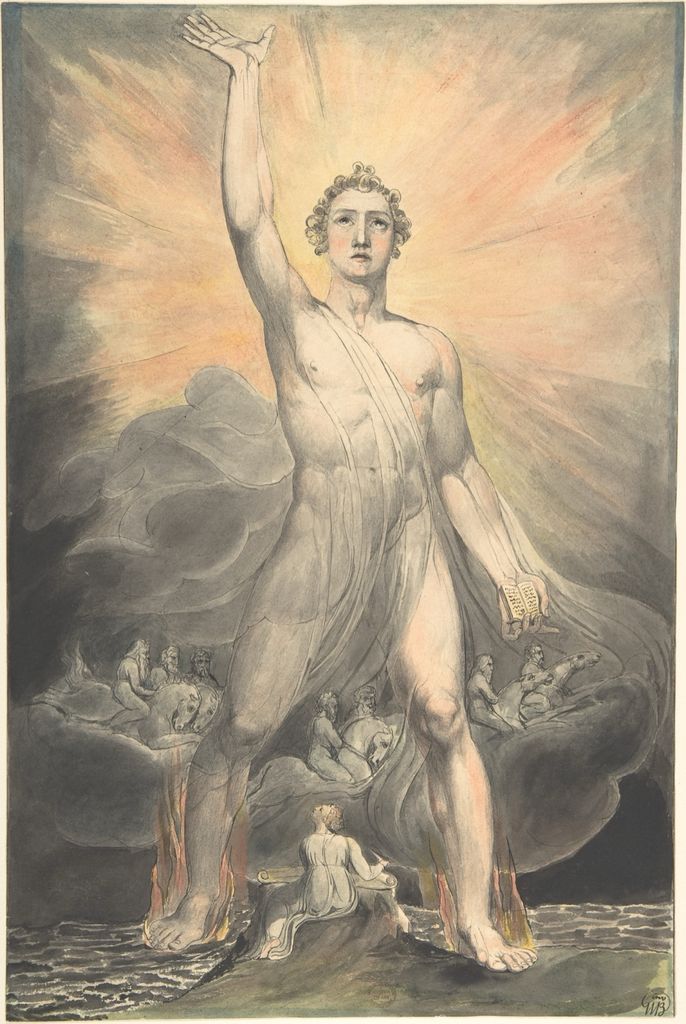
William Blake, Angel of the Revelation, about 1803–5, watercolour and ink over graphite. The catalogue records a combined material system rather than reducing the sheet to “watercolour”; a useful studio record should be equally specific. Image: The Metropolitan Museum of Art, Open Access/public domain.
At a Glance
- Paintread pigment identity, formulation, permanence scale and safety information rather than relying on a colour name.
- Papermatch fibre, sizing, surface and weight to the planned water load through a controlled wash test.
- Brusheschoose contrasting functions—wash capacity, controlled point or edge, and any genuinely needed special mark.
- Session controlsclean water, mixing space, wiping, test strips and board angle change results even though they are not permanent inventory.
- Recordkeep maker, label, paper, brush, water and test information together so the system can be reproduced or diagnosed.
Contents
- How Paint, Paper, Brushes and Water Become One Working System
- What watercolour paint contains
- Pans, half pans and tubes
- Build a palette by capability
- Paper and working support
- Brushes by function
- Palette, water and wiping
- Optional tools
- A repeatable session
- Safety and finished work
- What a paint standard does and does not say
- Water is a working material
- Separate permanent kit from session controls
- A material record for one finished work
- Art Materials reference pages
- Watch Watercolour Materials and Tools in Practice
What watercolour paint contains
Watercolour commonly suspends pigment in a water-soluble binder based on gum arabic, with formulation aids varying by maker and colour.[1][3] Water evaporates from the applied wash; the dried binder holds pigment to the paper and usually permits later rewetting. Gouache, acrylic ink, dye and water-soluble drawing materials may also dilute with water, but they are not chemically interchangeable with transparent watercolour.
Read the individual label and technical table. Useful fields include pigment identifier, opacity or transparency, permanence or lightfastness rating, staining, granulation and safety information.[2] These terms answer different questions. Transparent does not mean lightfast; granulating does not mean weak; a “permanent” colour name is not a substitute for the maker’s rating and pigment disclosure.
Testing systems and scales differ. ASTM ratings, manufacturer permanence systems and “not rated” entries need their legends retained.[4] Do not convert one scale casually into another or promise a display lifetime from a single code.
Pans, half pans and tubes
Pans hold dried paint that is activated with water. They are compact and stable for transport but may need pre-wetting before a large wash. Tubes hold moist paint, release a larger quantity quickly and can be squeezed into a palette to dry. These are delivery formats, not automatic student/professional grades.
Keep tube threads clean and caps closed. A separated clear binder can sometimes be remixed according to maker guidance; contamination, odour, damaged packaging or unknown age needs caution. Label any refilled pan with maker, colour name, pigment code and date so identity does not depend on position.
Build a palette by capability
Begin with a deliberately limited set whose labels you understand. It should permit a useful range of hue, value and neutral mixtures, but there is no universal trio or required named pigment. A colour can contain one or several pigments; mixtures built from many components may become less predictable, yet pigment count alone does not judge beauty.
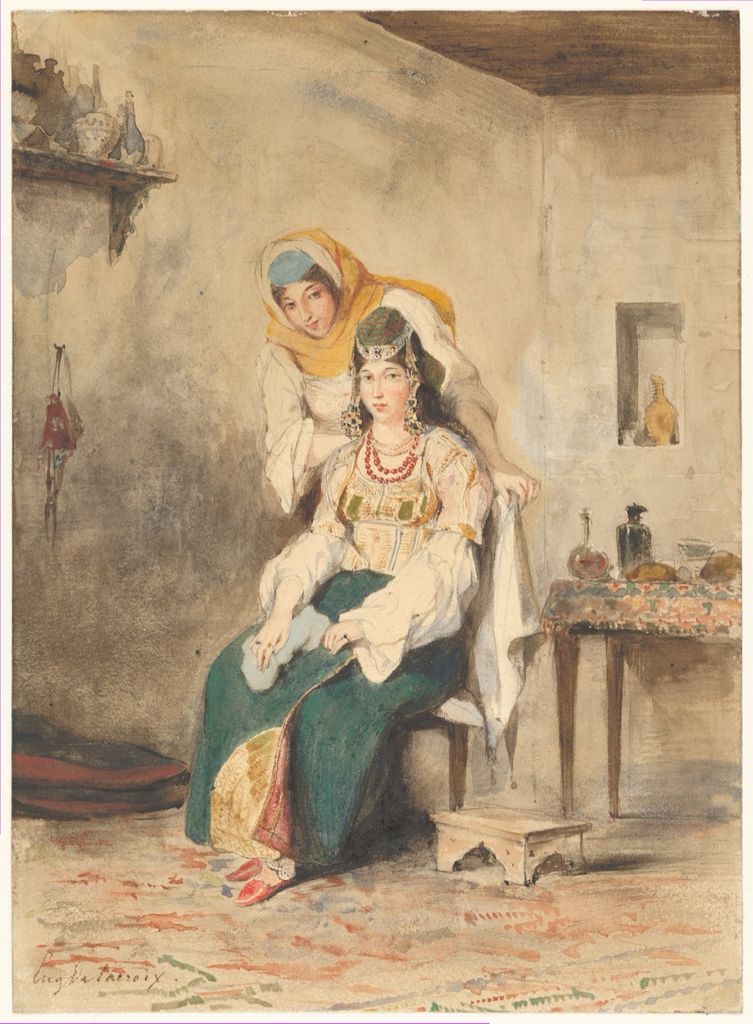
Eugène Delacroix, Saada and Préciada, 1832, watercolour over graphite. The record identifies two media but not the individual pigments or palette arrangement; those details should remain unknown rather than guessed from reproduced colour. Image: The Metropolitan Museum of Art, Open Access/public domain.
For each paint, make a card showing a strong wash, a dilution, a graded wash, a glaze over a dry mark and a lift. Record paper, brush and date. Put frequently mixed colours far enough apart that wells do not contaminate one another. Leave open mixing space rather than filling every recess.
Paper and working support
Choose paper through an actual wash test. Fibre, sizing, surface and grammage affect flow and correction.[5] The support can be a block, taped sheet or loose sheet on a clean rigid board. Tape and stretching methods must suit the paper and intended conservation outcome; test adhesive on a sacrificial margin.
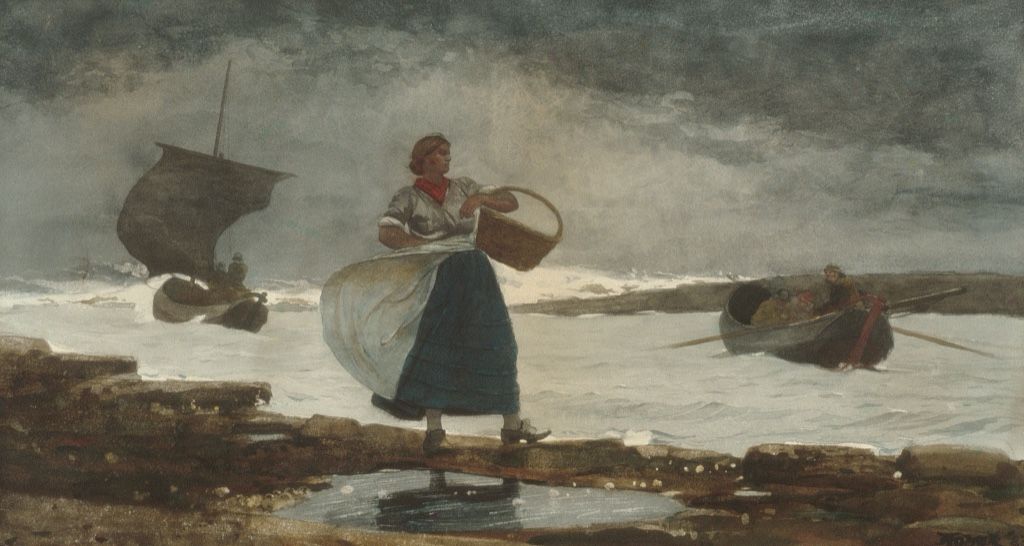
Winslow Homer, Inside the Bar, 1883, watercolour and graphite on paper. The sheet demonstrates a complete visual result while leaving paper fibre, sizing, surface and working restraint unstated—precisely the fields that a controlled studio test should add. Image: The Metropolitan Museum of Art, Open Access/public domain.
Set the board at a controllable angle. Gravity changes wash movement, so record the angle when comparing trials. Protect the back and edges from dirty studio surfaces. Keep finished sheets away from active mixing water.
Brushes by function
A compact set needs functional contrast more than many sizes: one brush that carries a wash, one that forms a controlled point or edge, and optionally one broad flat or special mark tool. Current manufacturer specifications separate hair/filament, shape, handle, ferrule and actual bundle width.[6] Use those measurements rather than assuming number 8 is constant across ranges.
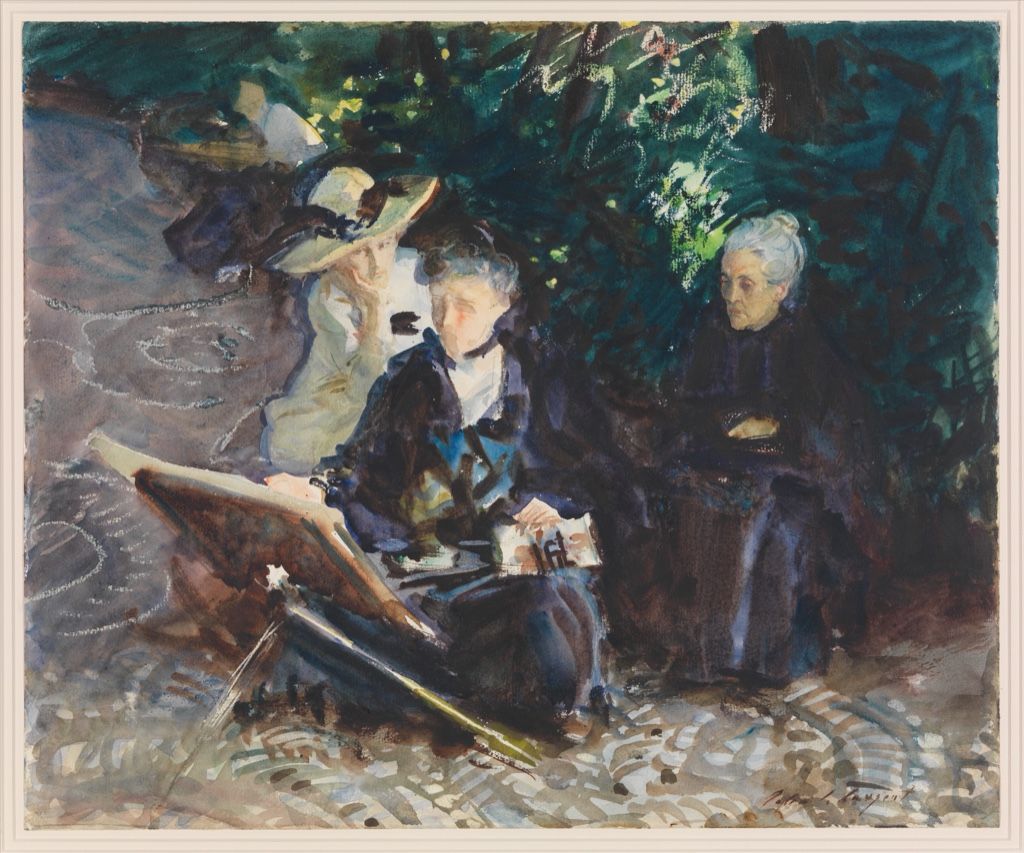
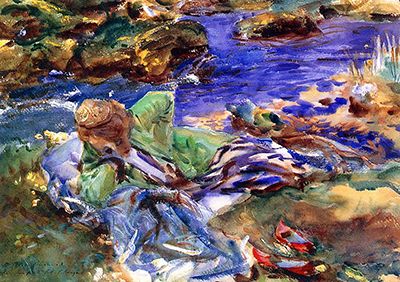
John Singer Sargent, In the Generalife, 1912, watercolour, wax crayon and graphite on white wove paper. Broad washes, broken dark marks and resisted light show different tool actions, but a reproduction cannot identify the brush shapes or sizes that made them. Image: The Metropolitan Museum of Art, Open Access/public domain.
Test capacity, point, spring and release with the actual paper. Reserve damaged or stiff brushes for masking, lifting or texture only when compatible. Never use a valued watercolour brush for a rapidly curing material unless the material maker approves it.
Palette, water and wiping
A white or neutral mixing surface helps reveal dilution. Wells hold stock colour; open areas support graded mixtures. Porcelain, enamelled metal and suitable plastic behave differently in staining, beading, weight and breakage, but cleanliness and sufficient mixing area matter more than prestige.
Use two water containers when helpful: one for the first rinse and one kept cleaner for mixing. Replace water before mud, binder or additives distort colour. A cloth or absorbent paper controls the brush load and catches drips. These studio items must remain separate from cups, plates and towels used for food.
Optional tools
A pencil and soft eraser can establish a light drawing; heavy erasing may disturb paper sizing. Masking fluid can reserve shapes but can also damage a surface if left too long or removed incorrectly. Follow the fluid and paper makers’ time and tool instructions, test first, and keep it out of fine brushes unless approved.
Sponges, spray bottles, droppers and scraping tools extend effects but are optional. Each adds a cleaning, contamination and repeatability burden. Add one only after a test proves the needed function.
A repeatable session
- Prepare labelled paint, tested paper, functional brushes, palette, water, wipe and board.
- Read labels and make a small dilution before entering the painting.
- Keep a clean-water path for mixtures and a dirty-water path for initial rinse.
- Test glaze, lift or mask on a same-paper strip before committing.
- Record unexpected separation, staining, granulation or surface damage.
- Rinse brushes before paint dries, reshape and dry according to maker guidance.
- Close, label and store paint in original or clearly identified containers.
Safety and finished work
“Water-based” does not mean edible or universally harmless. Do not point brushes with the mouth, eat in the work area or reuse art containers for food. Wash hands, supervise children according to label age restrictions, ventilate when instructed and retain original safety information. Health Canada advises following labels, avoiding food contact, storing safely and using local disposal rules.[7]
Display affects colour stability. Finished watercolours benefit from conservation-appropriate mounts, glazing with separation from the paint surface and controlled light. Lightfast materials reduce one risk but do not eliminate the effects of light, paper change, pollutants or humidity.
The most useful kit is one you can describe. A setup record should name paint and ratings, paper specification and side, brush dimensions, water practice and test results. That evidence makes a compact system more capable than an anonymous box full of materials.
What a paint standard does and does not say
ASTM D5067 establishes requirements for artists’ watercolour composition, physical properties, performance and labelling, including pigment identification, lightfastness and consistency.[8] The standard also states that compliant paints need not be identical or uniformly excellent in every respect. Conformance is evidence about specified tests and disclosures, not a ranking of handling, value or artistic suitability.
Keep three label systems separate. A pigment code identifies a colourant classification. A lightfastness or permanence rating reports performance under a defined maker or standard method. ASTM D-4236 wording concerns toxicological review and hazard labelling in the United States; it does not certify lightfastness or mean that a product is harmless in every use.[9] Retain each legend and region when documenting paint.
Water is a working material
Water activates paint, changes viscosity, transports pigment through the brush and paper surface, and becomes contaminated during rinsing. Its role changes through a session. A mixing container that looks clear can still carry enough previous colour to shift a pale wash; a rinse container can accumulate binder, pigment and additives that change flow.
Local tap water varies in dissolved minerals, treatment and pH, while stored or distilled water has different practical limits. Do not prescribe one water universally. If a mixture behaves unexpectedly, compare a small controlled sample using the usual water and a documented alternative, keeping paint, paper and brush constant. Record the result rather than attributing every granulation or edge to water chemistry.
Evaporation also changes mixtures left on a palette. A tube colour allowed to dry in a well may rewet differently from fresh paint, and repeated topping-up can concentrate contaminants. Label long-term palette wells and clean mixing areas when residue prevents a controlled comparison.
Separate permanent kit from session controls
Paint, paper and brushes are durable inventory. Clean water, wipes, sacrificial test strips, tape and masking materials are session controls that are consumed or replaced. A support board, palette and containers sit between those categories and need cleaning plus periodic inspection.
This separation improves both safety and troubleshooting. If a wash suddenly beads, test the paper surface, brush cleanliness, palette residue and added medium one variable at a time. If a colour appears weak, distinguish dilution, pigment concentration, paper reflectance and brush load before assuming a product grade.
For travel, reduce duplicate functions but keep containment: a compact palette, secure water vessel, labelled paints, protected brushes, paper in a rigid folder and a sealed route for wet wipes or waste. For a studio, extra mixing area and a second rinse stage may matter more than extra colours. The system should be designed around the session’s actions, not around filling every compartment.
A material record for one finished work
Record the paint maker and exact colour label, pigment identifiers, ratings and any added medium; paper name, fibre claim, surface, gsm, side and batch where available; brush series and measured dimensions; water source if it affected tests; masking or drawing materials; and display notes. Add swatches made on the same paper.
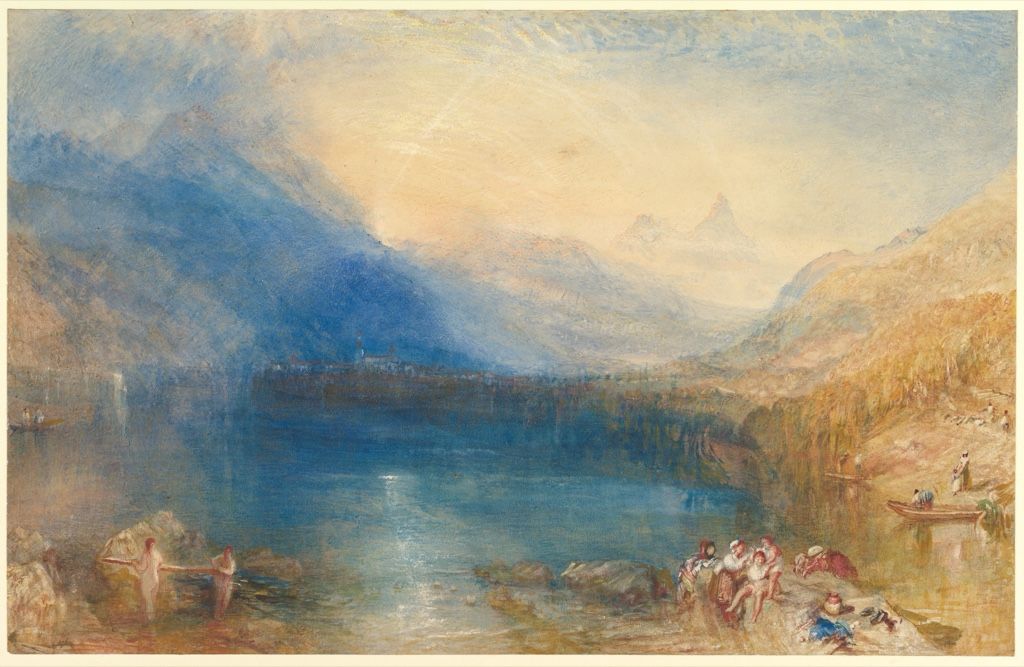
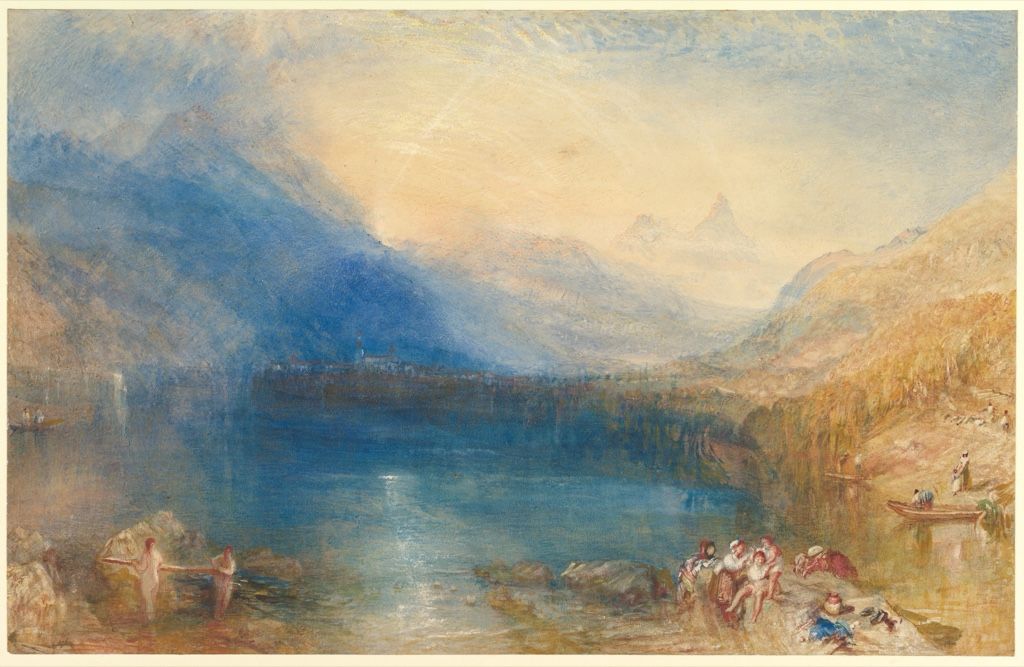
J. M. W. Turner, The Lake of Zug, 1843, watercolour, bodycolour and graphite with scraping. Its unusually detailed medium line shows the value of recording additions and removal alongside the nominal paint category. Image: The Metropolitan Museum of Art, Open Access/public domain.
This record does not need to be public or elaborate. Its value is diagnostic: if a later work behaves differently, the artist can locate which material or condition changed. A compact documented kit becomes a reproducible system rather than a collection of anonymous supplies.
Watch: Watercolour Paint, Paper and Brush in Use
Choose a museum studio lesson, a historical survey of watercolour materials, or a practical guide to brush care.
How to Use Watercolor: Still Life Tutorial
Watch paint, water, paper, brush load and reserved light operate together in a focused exercise.
Watch on YouTubeFrequently Asked Questions
A functional minimum is labelled watercolour paint, tested paper, a brush for washes and a brush for controlled edges, a mixing surface, clean water, a wipe and a rigid support or block.
Neither format is automatically better. Pans are compact dried paint; tubes release moist paint quickly. Compare the amount needed, travel, mixing area and how reliably the chosen colour rewets.
Begin with a limited set whose pigment labels and mixing behaviour you understand. Capability, testing and clean mixing space matter more than filling every palette well.
Record the maker, exact colour name, pigment identifier, opacity or transparency, permanence or lightfastness system, and any safety information while retaining the maker’s legend.
One can take the first dirty rinse while the other remains cleaner for mixing and final rinsing, reducing accidental colour and binder contamination in pale washes.
Discussion
Which part of a watercolour setup most often explains an unexpected result: paint identity, paper surface, brush load, water condition or the way the sheet is supported?
Reader Insights
A compact kit is complete when every necessary action is covered, not when every compartment is full.
Paint, paper, brush, water and board angle operate as one system.
Labels, swatches and a short session record turn a surprise into something that can be diagnosed.
Join the Conversation
Share one precise observation or a useful museum example below.
References
- Royal Talens. Paint binders.
- Winsor & Newton. Cotman Watercolour composition and permanence table.
- Daniel Smith. How to Read a Paint Tube.
- Daniel Smith. How does Daniel Smith test paint for lightfastness?.
- Arches Papers. Arches Aquarelle.
- Royal Talens. Van Gogh Watercolour Brush Series 191.
- Health Canada. Use arts and crafts materials safely.
- ASTM International. ASTM D5067-16(2021): Standard Specification for Artists’ Watercolor Paints.
- U.S. Consumer Product Safety Commission. Art Materials: LHAMA and ASTM D-4236 labelling.